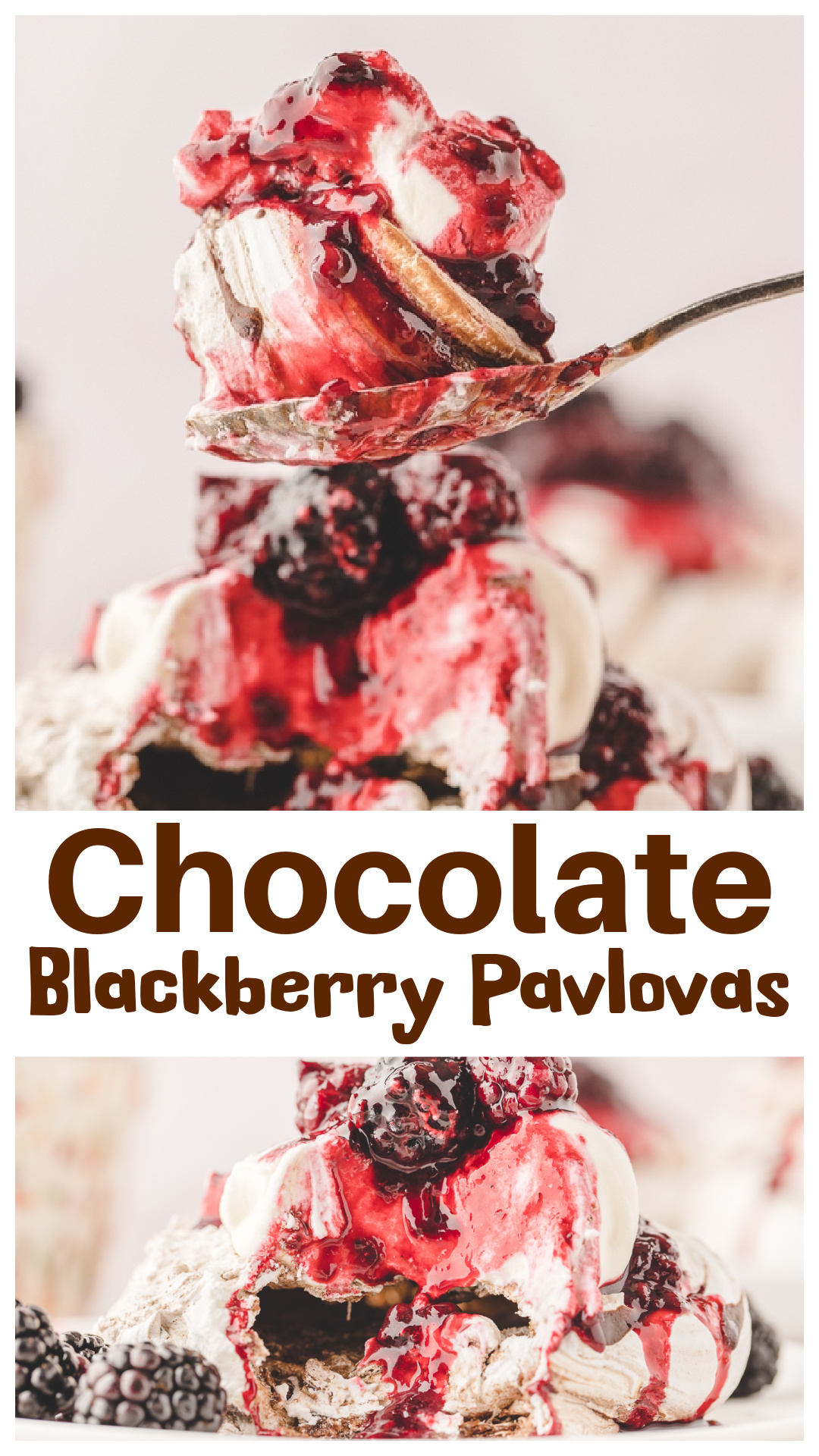
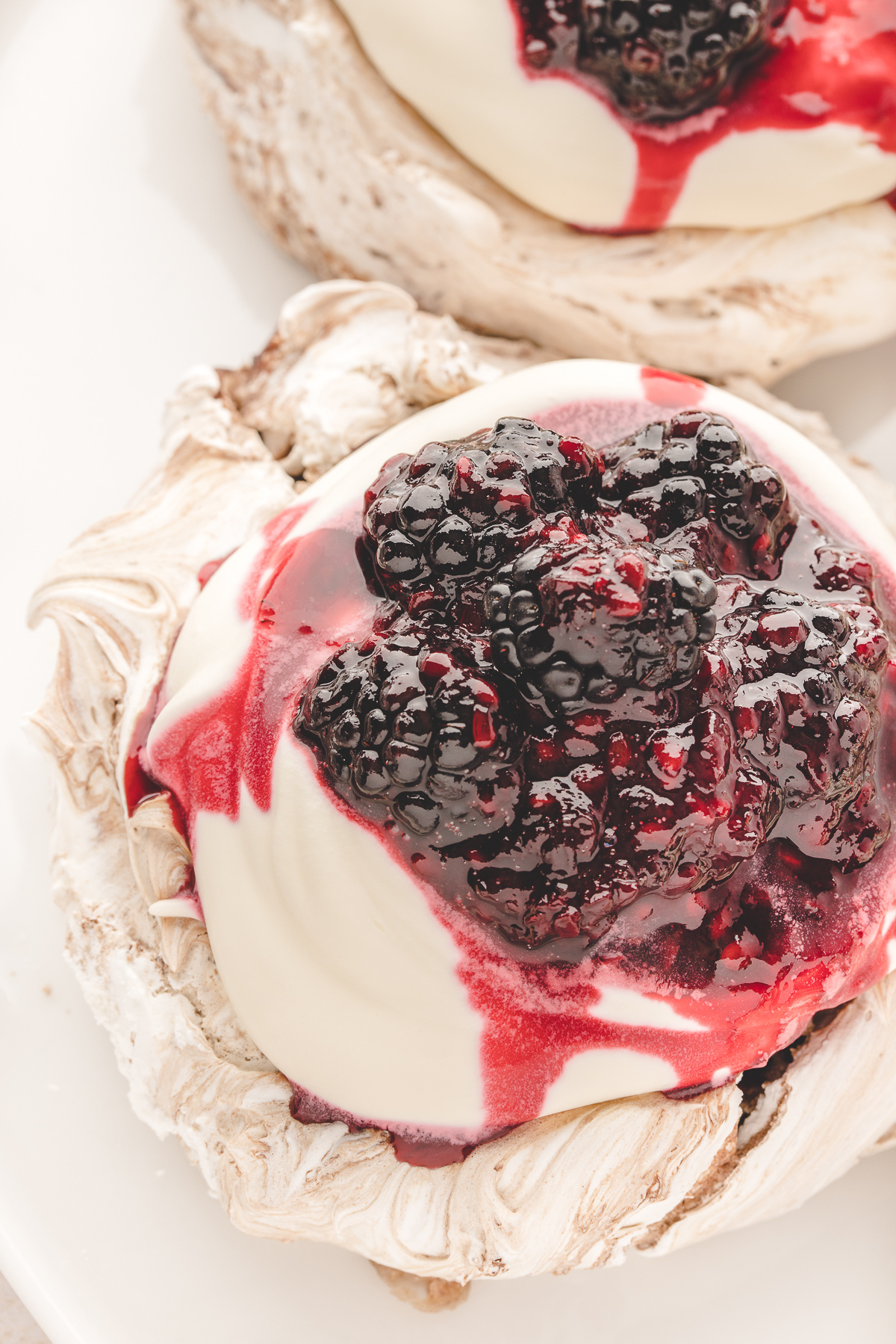
Chocolate blackberry pavlovas have ribbons of semisweet chocolate swirled through the meringue, topped with softly whipped cream and blackberry compote made from cooked and fresh berries.
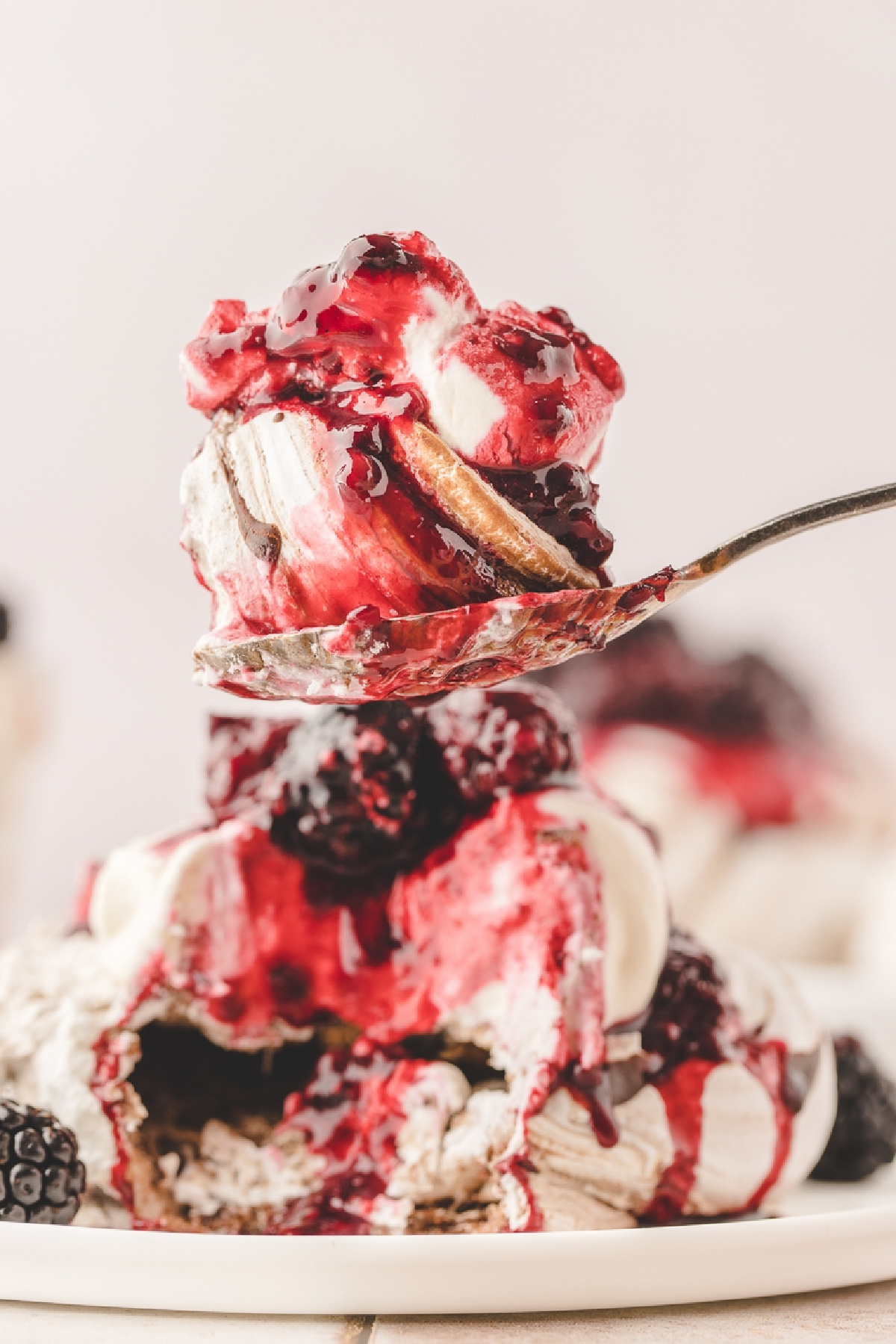
Individual Pavlovas with Chocolate Swirls and Blackberry Compote
There’s lots of times when chocolate makes fruit feel totally unnecessary. This isn’t one of them because pavlova is already sweet. And once I folded semisweet chocolate into it, it needed something dark and tart next to it. Blackberry has a way of keeping chocolate from getting too pleased with itself.
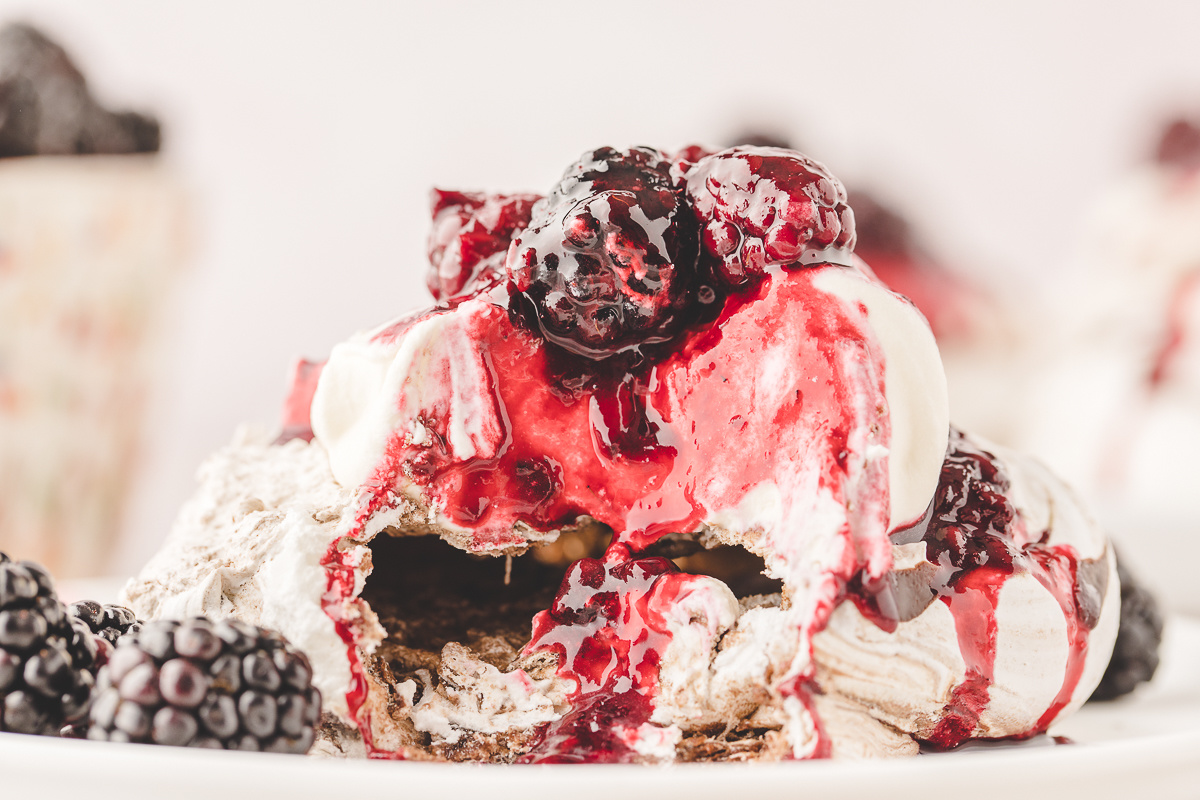
I barely stirred the chocolate through the finished meringue. The less evenly it mixes, the better the marbling looks. Half the blackberries cook down into their juices while the other half go in fresh, so the topping has both the darker cooked fruit and whole berries still intact.
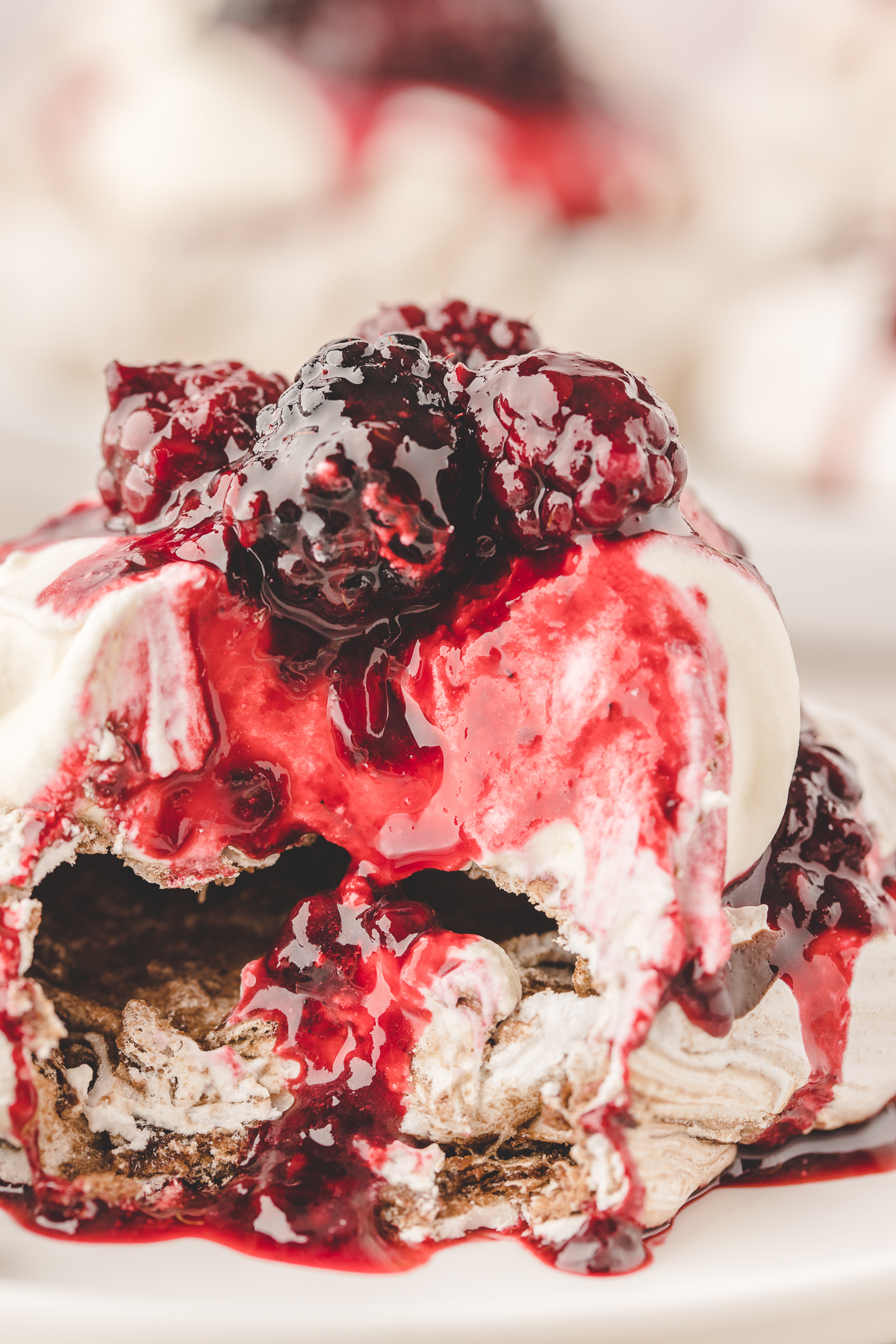
Then there’s the whipped cream, which I barely sweeten and stop whipping while it’s still very soft. It gets into the cracks and goes over the sides instead of sitting on top like frosting.
These are supposed to be a little unruly.
The Decisions Behind This Recipe
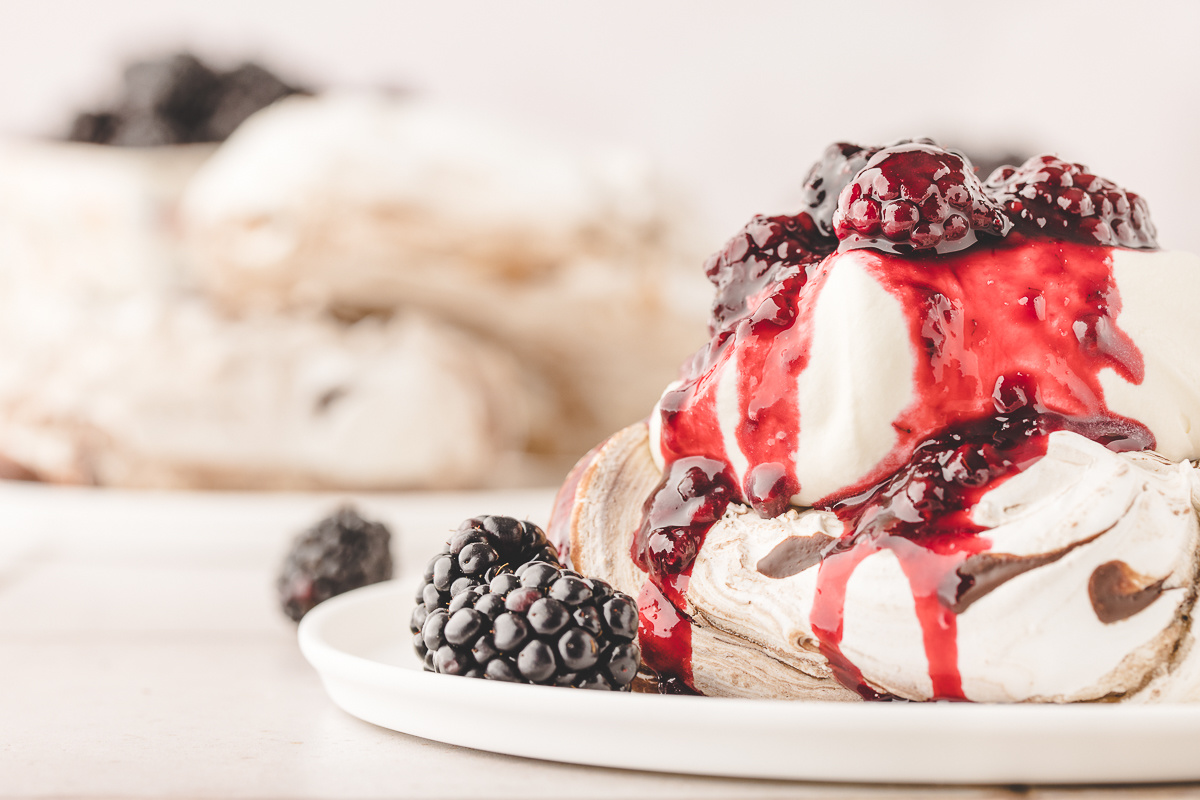
- I didn’t want these to be the kind of chocolate pavlova where cocoa gets mixed into the meringue and the whole thing turns chocolate. Melted semisweet chocolate gives me the marbling instead, while leaving most of the meringue white.
- I make them individually, mostly because I like everyone getting their own pavlova. You also get more of the crisp outside around the soft center, plus a place in the middle for the good stuff to go.
- Cooking all the blackberries would give me more sauce than I wanted. Adding half of them after the pan comes off the heat leaves whole berries in the compote and keeps some of their fresh tartness.
- I use only a small amount of confectioners’ sugar in the whipped cream because the meringue already supplies most of the sweetness. I want the cream to taste like cream, especially once the chocolate and blackberry compote are on the same spoon.
Ingredients
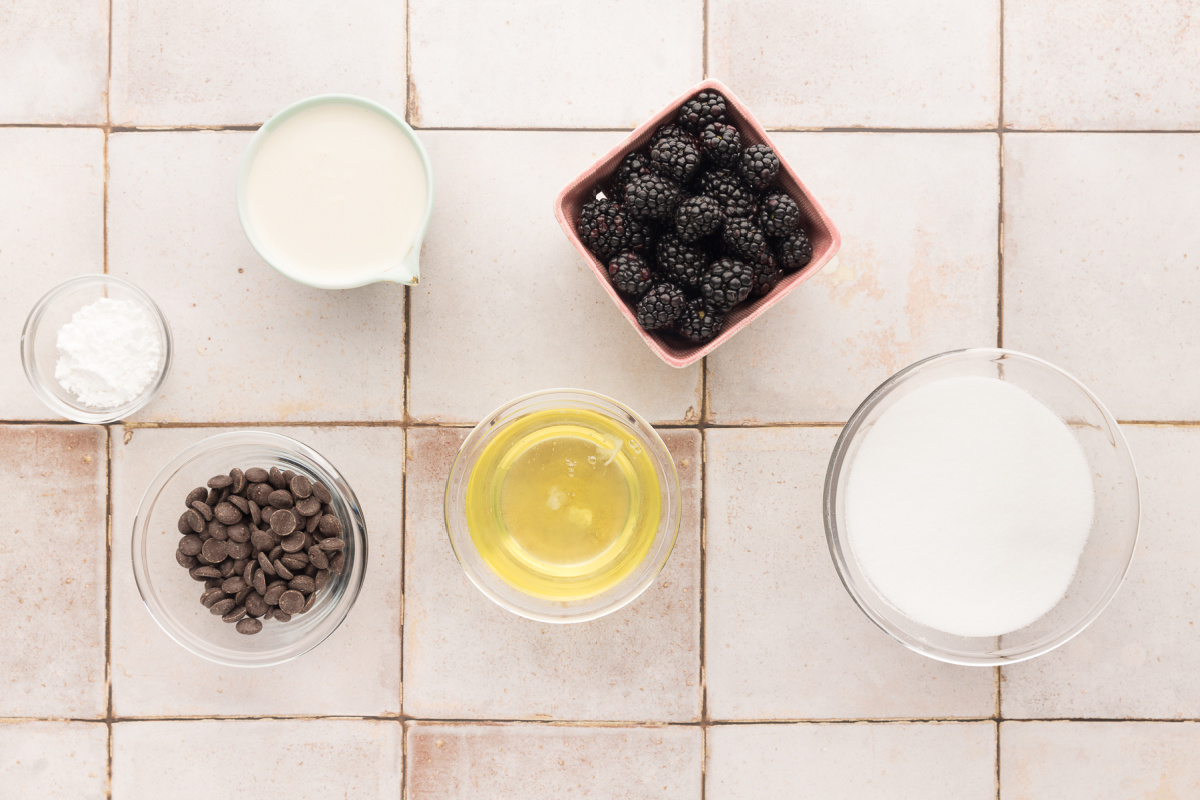
- Egg whites – Use fresh large egg whites and let them come to room temperature before you start. I don’t use pasteurized egg whites from a carton because they don’t always whip with the same volume and stability. Four large whites usually give me somewhere around 120 to 140 grams.
- Granulated sugar – This goes into the meringue, with another two tablespoons saved for the blackberries. If you like knowing the math behind these things, meringue works with sugar at roughly twice the weight of the egg whites. That’s why weighing the whites is useful if yours happen to be large or small.
- Semisweet chocolate – I like semisweet because the meringue already has enough sugar. The chocolate is melted so I can barely stir it through and keep the ribbons visible.
- Fresh blackberries – Half get cooked down for the juicy part of the compote and the other half go in fresh at the end. Fresh berries are preferred because I want to save the whole blackberries for the finished topping. Frozen blackberries are fine for the portion you’re cooking, but I’d still use fresh for the berries added afterward.
- Heavy whipping cream – I stop whipping this while it’s still very soft, which is what I want on pavlova. It should spoon into the centers and start making its way into the cracks instead of sitting there in a stiff mound.
- Confectioners’ sugar – Three tablespoons for the whipped cream, which is plenty. Between the meringue and the chocolate, this dessert doesn’t need sweet whipped cream fighting for a promotion.
- Fresh lemon wedge or white vinegar – This isn’t going into the pavlova at all. I use it to wipe down the mixing bowl and whisk before adding the egg whites. Even a little grease left behind can interfere with how well egg whites whip, so consider this cheap insurance before you start.
How to Make Chocolate Blackberry Pavlovas
Find the complete printable recipe with measurements in the recipe card at the BOTTOM OF THE POST.
- Step One (make the meringue)
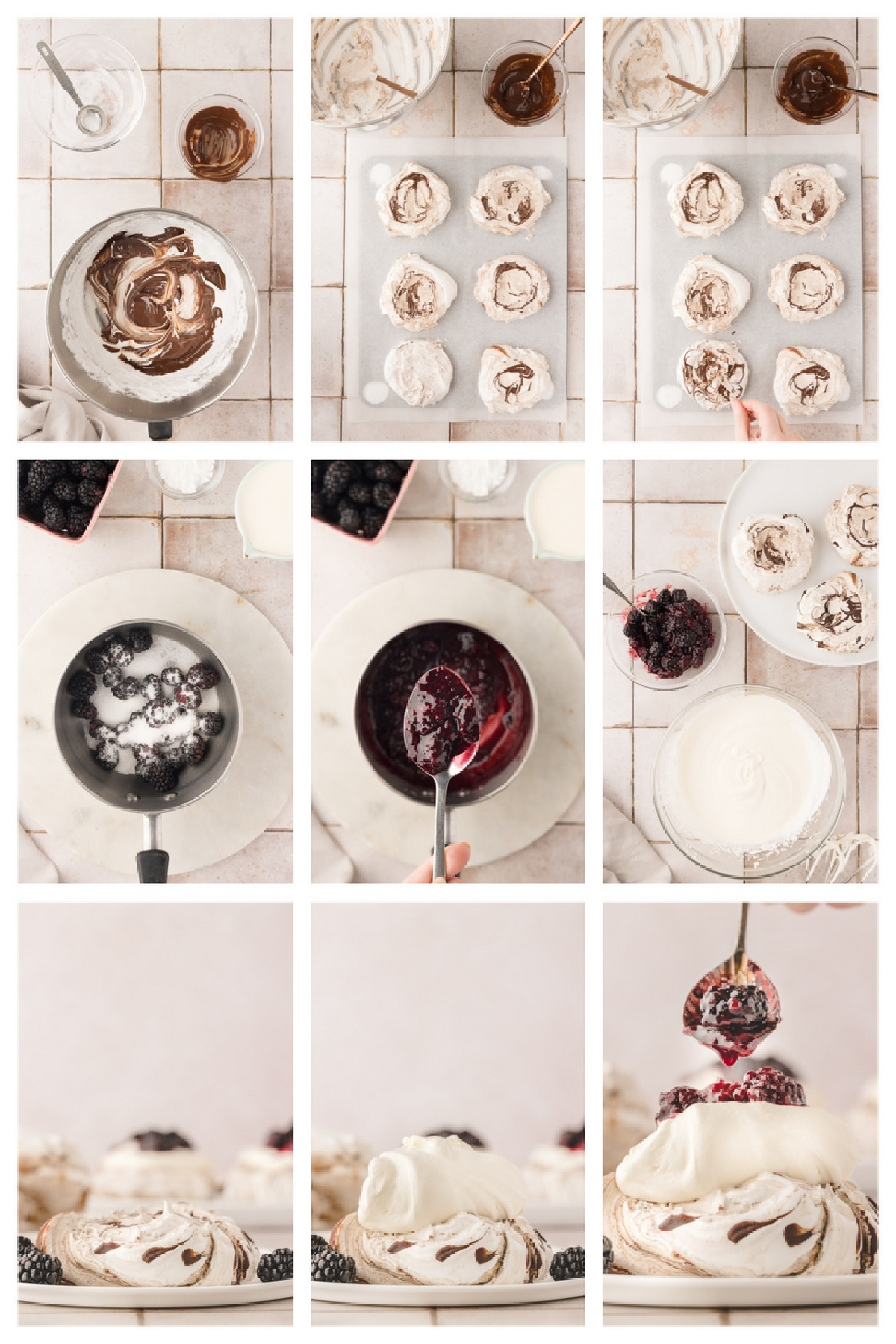
Preheat the oven to 225°F and line a large baking sheet with parchment paper. Before anything goes into the mixer, wipe the bowl and whisk attachment with a fresh lemon wedge or a paper towel dampened with white vinegar. Add the room-temperature egg whites and beat on low until foamy, about 1 minute, then increase the speed to medium-high and keep going until you have stiff peaks, about 3 minutes. - Step Two (add the sugar)
With the mixer running, add the granulated sugar 1 tablespoon at a time, letting the meringue come back to stiff peaks before adding the next spoonful. It takes a while. Let it. Once all the sugar is in, rub a little meringue between your fingers. If you can still feel sugar granules, keep whipping on high and check it again. I trust my fingers more than the clock. You want the meringue to feel smooth, because sugar that hasn’t completely dissolved is one of the reasons you’ll sometimes see little beads of liquid sugar on baked meringue. - Step Three (swirl in the chocolate)
Melt the semisweet chocolate chips in the microwave in short bursts, stirring between each one, then let the chocolate cool slightly. Set aside 2 tablespoons for the tops. Pour the rest over the finished meringue and stir it once. It’s going to look like you should stir it again. Don’t. Every time you scoop out another pavlova, you’re moving the chocolate through the meringue a little more, and too much stirring now will get rid of the uneven chocolate ribbons. Dab a little meringue underneath the corners of the parchment to keep it from sliding around, then spoon the meringue into 6 mounds and make a dip in the center of each with the back of a spoon. Drizzle the reserved chocolate over the tops and give it a few light swirls with a toothpick. - Step Four (bake and cool the pavlovas)
Bake on the center rack for about 1 hour, or until the pavlovas release easily from the parchment. Turn off the oven and leave them inside until completely cool. The meringues continue drying as the oven slowly cools, giving the outside more time to crisp while the center stays soft. Don’t worry about a few cracks. Pavlova cracks, and once the whipped cream and blackberries go on, nobody is going to care. I often bake mine the day before and leave them in the turned-off oven overnight, so this entire part is finished before I’m ready to assemble them. - Step Five (make the compote and put everything together)
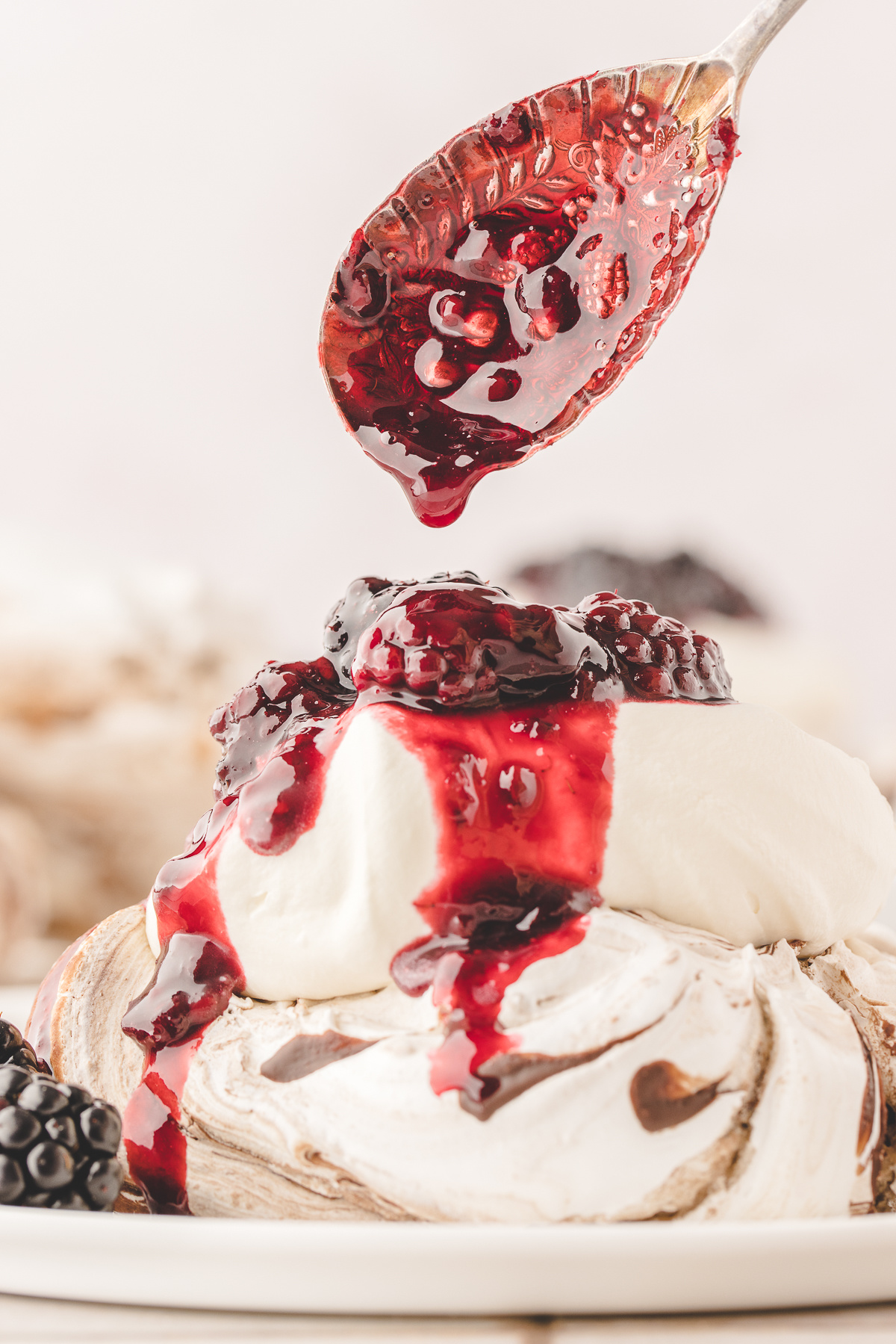
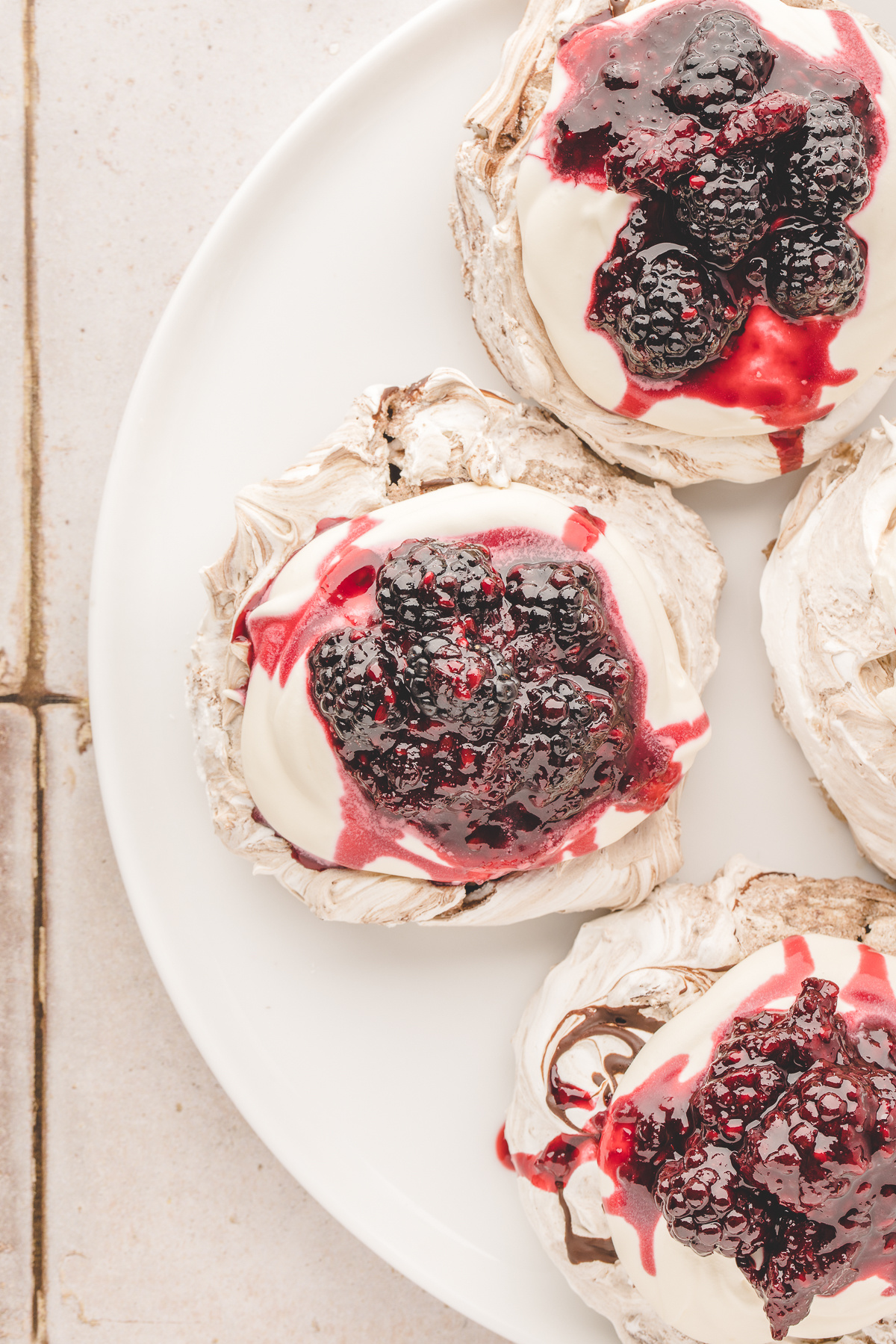
Add 1 cup blackberries and 2 tablespoons granulated sugar to a small saucepan and cook over medium heat, stirring occasionally, until the berries release their juices and mostly break down. Take the pan off the heat and stir in the remaining 1 cup fresh blackberries. If the compote is too thick to spoon easily, add a small splash of water, then let it cool completely. Beat the heavy whipping cream with the confectioners’ sugar until very soft peaks form. Don’t take it any further than that. Spoon the whipped cream into the center of each pavlova, follow with the blackberry compote and bring them straight to the table.
Recipe Tips
- Let the melted chocolate cool slightly before pouring it over the meringue. It should still be loose enough to drizzle easily, but it shouldn’t be hot when it comes in contact with the egg whites you spent forever whipping full of air.
- Use a toothpick for the final chocolate swirls on top. I tried a fork and a skewer, and both moved too much meringue around and made the tops look messier. A toothpick is small enough to make thin chocolate lines across the surface without destroying the pattern.
- Keep the oven at 225°F even though it feels low. The meringue needs time to dry slowly rather than brown, which is how you get that crisp outside with the soft, marshmallow-like center underneath.
- Make a good indentation in the center of each pavlova before baking. The whipped cream is intentionally soft and the blackberry compote is juicy, so they need somewhere to go besides immediately down the sides.
- Wait until you’re ready to serve before adding the whipped cream and blackberry compote. Both add moisture, which immediately starts softening the crisp meringue. I assemble these when everyone is ready for dessert, not twenty minutes before when dinner is almost over.
- Meringue notices humidity whether you want it to or not. On a very humid day it can take longer to dry and may stay a little stickier because sugar attracts moisture from the air. I have a commercial oven, so my baking environment is unusually consistent, but if your pavlovas need a little more time than mine, go by how they look and release from the parchment rather than forcing them onto my exact clock.
Storage
- Keep the undecorated pavlovas in an airtight container at room temperature for up to one week. Don’t refrigerate them. Refrigerators are humid, and humidity is what crisp meringue doesn’t need.
- The blackberry compote can be made ahead and stored separately in an airtight container in the refrigerator for up to one week. I prefer making the whipped cream close to serving rather than storing it ahead.
- For the easiest make-ahead version, bake and cool the pavlovas ahead of time and make the blackberry compote whenever it’s convenient. Keep the two components separate, whip the cream before serving and assemble everything at the last minute. Once the cream and berries are on top, the meringue will gradually soften, so assembled pavlovas are something I serve rather than store.
FAQs
- Can I make chocolate blackberry pavlovas ahead of time?
Yes. I often bake the pavlovas the day before and leave them in the turned-off oven overnight. The compote can be made ahead too. I wait until close to serving to whip the cream and assemble them. - Can I use frozen blackberries?
You can use frozen blackberries for the half that gets cooked down with the sugar. I would still use fresh blackberries for the second half. The berries aren’t cooked, and I want them to stay whole and have fresh tartness in the finished compote. - Why is my pavlova weeping?
Undissolved sugar is one of the usual suspects, which is why I’m so annoying about rubbing the meringue between your fingers before you stop whipping. Humidity can also cause meringue to absorb moisture, and once whipped cream and blackberry compote are added, the pavlova will naturally begin to soften. A little moisture isn’t a disaster, but a very wet or sticky pavlova usually means moisture found its way in somewhere. - Why did my pavlovas crack?
Some cracking is normal. A crisp shell surrounds a soft center, and those two textures don’t always remain perfectly intact as the pavlova bakes and cools. Big temperature changes can make cracking worse, which is another reason I leave mine in the turned-off oven to cool. Unless the pavlova has completely fallen apart, I wouldn’t consider a few cracks a failure. They’re about to be covered with cream and blackberries anyway. - Can I use dark or milk chocolate instead of semisweet?
Dark chocolate works if you want the chocolate ribbons more bitter with the sweet meringue. Milk chocolate is fine too, but it makes the overall dessert noticeably sweeter, which isn’t my preference. Semisweet is the perfect middle ground between the sugary pavlova and tart blackberries. - Can I make one large chocolate blackberry pavlova?
Yes. I tested the same recipe as one large pavlova and it worked fine. Mine needed about 5 minutes longer in the oven than the six individual pavlovas. Shape the meringue into one large round with a good indentation in the center, then start checking it around the one-hour mark and use the same cue I do for the smaller ones. It should release easily from the parchment. Let it cool completely in the turned-off oven before topping it.
From My Kitchen Notes
Small observations from the margins.
- Things tend to stay together when no one wants too much from them.
- The outside can be finished while the middle stays soft. Both can be true.
- There’s a short distance between delicate and impossible.
- Sugar can make something stronger than it has any business being.
- I’ve let things cool in the dark before finding out whether they stayed together.
- Blackberry has enough darkness to keep sweetness from becoming exhausting.
- Softness and fragility aren’t interchangeable, although people seem hell bent on confusing them.
- Meringue has unreasonable confidence.
- Things can look tough, until you put a spoon through them.
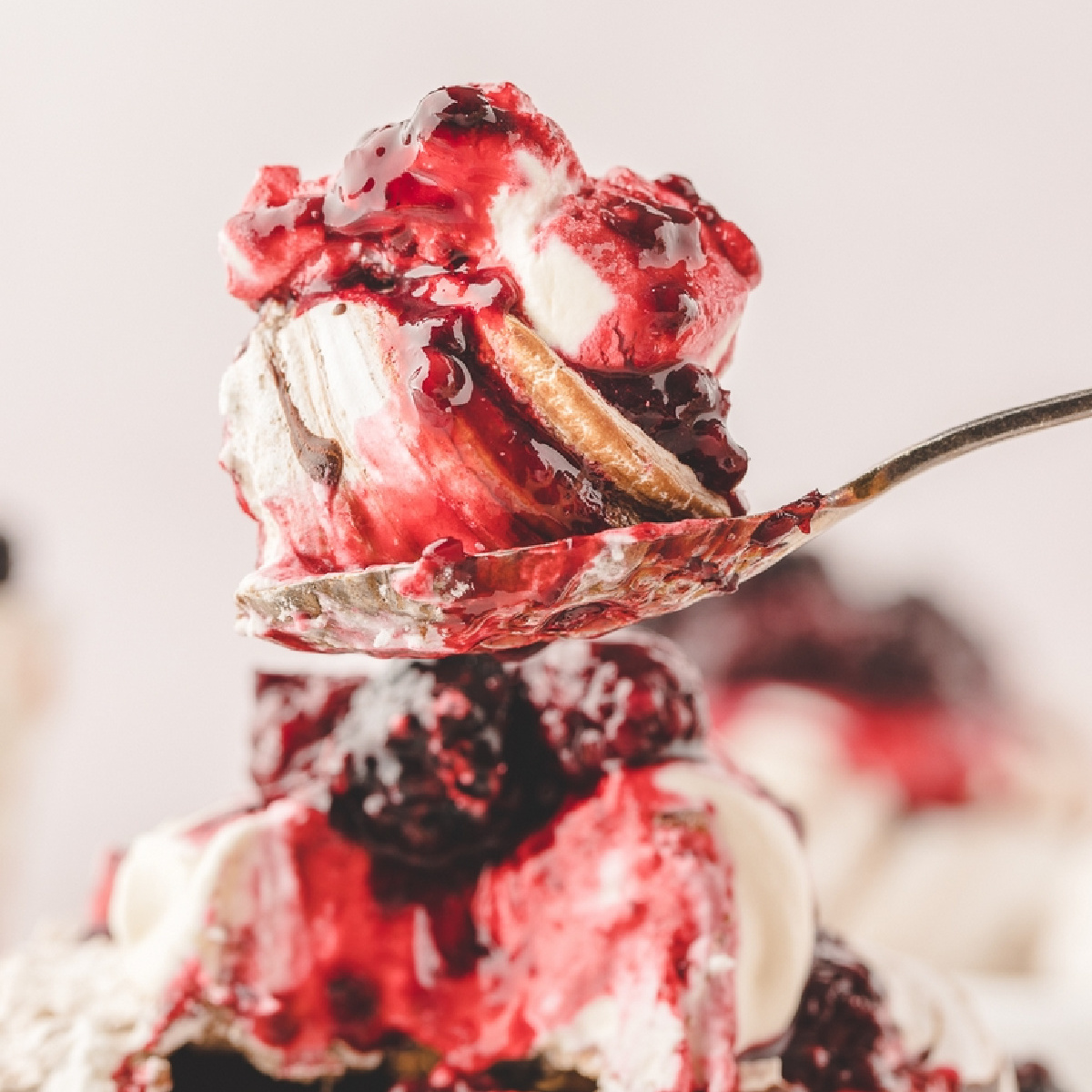
- You don’t always know what stayed together until you finally break it open.
When There Are Blackberries Around
- Blackberry Cobbler – Tender biscuits over juicy berries.
- Lemon Blackberry Bundt Cake – Lemon cake, fresh blackberry glaze.
- Blackberry Crumble Bars – Jammy berries, buttery shortbread base.
- Blackberry Lemon Oat Muffins – Buttermilk, lemon, hearty oats.
- Blackberry Puff Pastry Galette – Flaky pastry, bubbling blackberry filling.
- Blackberry Crumble – Juicy berries under toasted oats.
- Baseball Nut Ice Cream – Vanilla ice cream, blackberry jam.
- Blackberry Jam – Three ingredients, pure blackberry flavor.
- Blackberry Crumble à la Mode Ice Cream – No-churn blackberry crumble ice cream.
This post may contain affiliate links. Please read my disclosure policy.
Chocolate Blackberry Pavlovas
Equipment
- Stand Mixer with whisk attachment. Whips the egg whites to stiff peaks and gives you enough power to gradually incorporate the sugar until it dissolves. And for whipping the cream.
- baking sheet (large). Gives the six individual pavlovas enough room to bake without touching.
- parchment paper Keeps the meringues from sticking and makes it easy to check when they release after baking.
- microwave safe bowls For melting the semisweet chocolate in short intervals.
- Saucepan (small). For cooking half the blackberries into the compote.
- mixing bowls (large). For whipping the cream before serving.
- Toothpick Creates the chocolate swirls over the tops of the pavlovas.
Ingredients
Chocolate Pavlovas:
- 1 fresh lemon wedge or white vinegar, for wiping the bowl and whisk
- 4 large (120 to 140 g) fresh egg whites room temperature, not pasteurized
- 1½ cups (300 g) granulated sugar
- ½ cup (85 g) semisweet chocolate chips
Blackberry Compote:
- 2 cups (300 g) fresh blackberries divided
- 2 tbsps (25 g) granulated sugar
Whipped Cream:
- 1½ cups heavy whipping cream
- 3 tbsps (23 g) confectioners' sugar
Instructions
- Preheat the oven to 225°F (107°C). Line a large baking sheet with parchment paper.
- Wipe the bowl and whisk attachment of a stand mixer with a fresh lemon wedge or a paper towel moistened with white vinegar. Add the egg whites and beat on low speed until foamy, about 1 minute. Increase the speed to medium-high and continue beating until stiff peaks form, about 3 minutes.1 fresh lemon wedge , 4 large (120 to 140 g) fresh egg whites
- With the mixer running, add granulated sugar, 1 tablespoon at a time, allowing the meringue to return to stiff peaks between additions. Once all the sugar has been incorporated, rub a small amount of meringue between your fingers. If it still feels grainy, continue beating on high speed until the sugar has dissolved and the meringue feels smooth.1½ cups (300 g) granulated sugar
- Meanwhile, melt the semisweet chocolate chips in the microwave in short intervals, stirring between each, until smooth. Set aside to cool slightly while the meringue finishes mixing.½ cup (85 g) semisweet chocolate chips
- Reserve 2 tablespoons of the melted chocolate. Pour the remaining chocolate over the finished meringue and stir once, leaving visible streaks of chocolate throughout.
- Dab a small amount of meringue underneath each corner of the parchment paper to secure it to the baking sheet. Spoon the meringue into 6 mounds. The chocolate will become more incorporated as the meringue is portioned, so avoid additional stirring. Use the back of the spoon to make an indentation in the center of each mound for the toppings.
- Drizzle the reserved melted chocolate over the pavlovas and use a toothpick to lightly swirl it into the tops.
- Bake on the center rack for 1 hour, or until the pavlovas release easily from the parchment. Turn off the oven and leave the pavlovas inside until completely cool.
- Meanwhile, add 1 cup (150 g) blackberries and granulated sugar to a small saucepan. Cook over medium heat, stirring occasionally, until the berries release their juices and mostly break down. Remove from the heat and stir in the remaining 1 cup (150 g) fresh blackberries. If the compote is too thick to spoon easily, add a small splash of water. Set aside to cool.2 cups (300 g) fresh blackberries , 2 tbsps (25 g) granulated sugar
- Add the heavy whipping cream and confectioners' sugar to a large mixing bowl. Beat until very soft peaks form.1½ cups heavy whipping cream, 3 tbsps (23 g) confectioners' sugar
- To serve, spoon whipped cream into the center of each pavlova, followed by the blackberry compote. Serve immediately.
Notes
- Use fresh, non-pasteurized egg whites for the most reliable meringue. Make sure the mixing bowl and whisk are completely free of grease before adding the whites.
- For meringue, a useful ratio is approximately twice the weight of sugar to egg whites. If your four egg whites weigh more or less than expected, weighing them first makes it easy to adjust the sugar accordingly.
- Add the sugar gradually and give it enough time to dissolve. Rub a little finished meringue between your fingers; if it feels grainy, continue whipping. Undissolved sugar can cause the pavlovas to weep during baking.
- Do not overmix after adding the melted chocolate. Stirring once leaves the chocolate streaked through the meringue, and portioning the pavlovas distributes it further.
- Leave the baked pavlovas in the turned-off oven until completely cool. They can also be baked a day ahead and left in the oven overnight.
- Undecorated pavlovas can be stored in an airtight container at room temperature for up to 1 week. Store the blackberry compote separately in an airtight container in the refrigerator for up to 1 week.
- Assemble the pavlovas shortly before serving. Moisture from the whipped cream and blackberry compote will gradually soften the meringue. Do not refrigerate or freeze the assembled pavlovas.
- Frozen blackberries can be used for the cooked portion of the compote. For the berries stirred in after cooking, fresh blackberries give the best texture.
Nutrition
Have you made these Chocolate Blackberry Pavlovas? I’d love to hear how they turned out – leave a comment below and let me know.
As an Amazon Associate and member of other affiliate programs, I earn from qualifying purchases.
Ruth Hogan says
I usually use a small amount of either cornflour or vinegar or both in my pavlovas to ensure the soft marshmallowy centre rather than the crisp centre in meringues. Is the chocolate the equivalent here or what makes changes the meringue to pavlova? Love your recipes by the way. I have been following you for years. Keep cooking. Thanks, Ruth.
Cathy Pollak says
Hi Ruth, thank you. Hi The chocolate isn’t replacing the cornflour or vinegar. I tested these without either one added to the meringue and still got the crisp outside and soft marshmallow-like center I wanted. In this recipe the texture comes from the high proportion of sugar to egg white, the low oven temperature and letting the pavlovas cool completely in the turned-off oven. Some pavlova recipes use cornflour and vinegar to help with texture and stability, but I found I didn’t need them for this one. The lemon or vinegar I mention in the recipe is only for wiping down the bowl and whisk before whipping the egg whites. Hope that helps, and thank you so much for following along all these years.
Katie says
Absolutely loved these. Turned out so beautiful!! Loved the chocolate and blackberry combination.
Onea J says
I love chocolate and blackberry together so these were amazing. I loved the chocolate in the meringue, it was so perfect and beautiful.