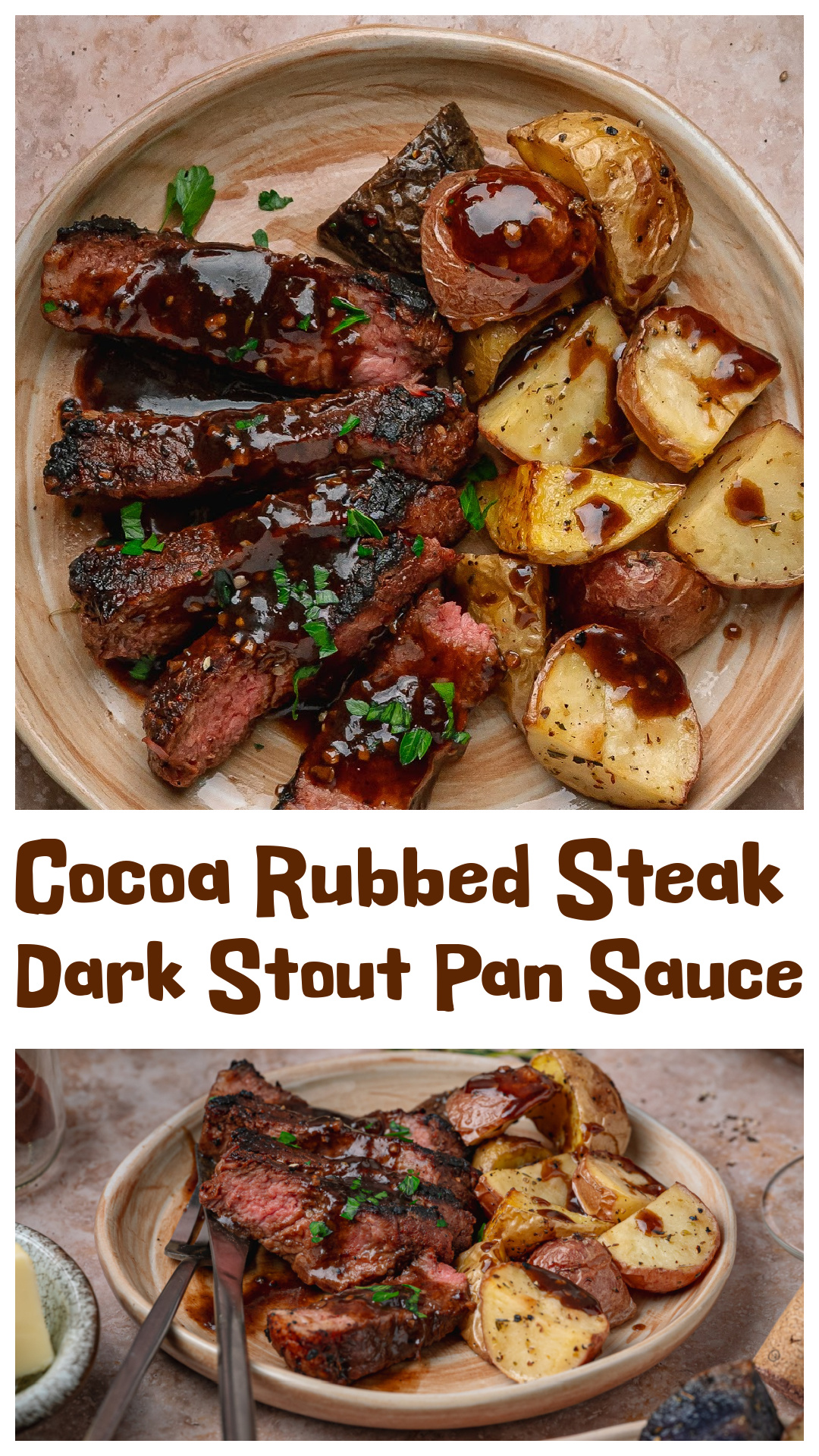
Cocoa rubbed steak with dark stout pan sauce gets a dark crust from cocoa powder, chili spices, and a hot skillet sear. The cocoa and stout bring out the kind of roasted, bitter edge that makes this feel completely different from a typical steak dinner.
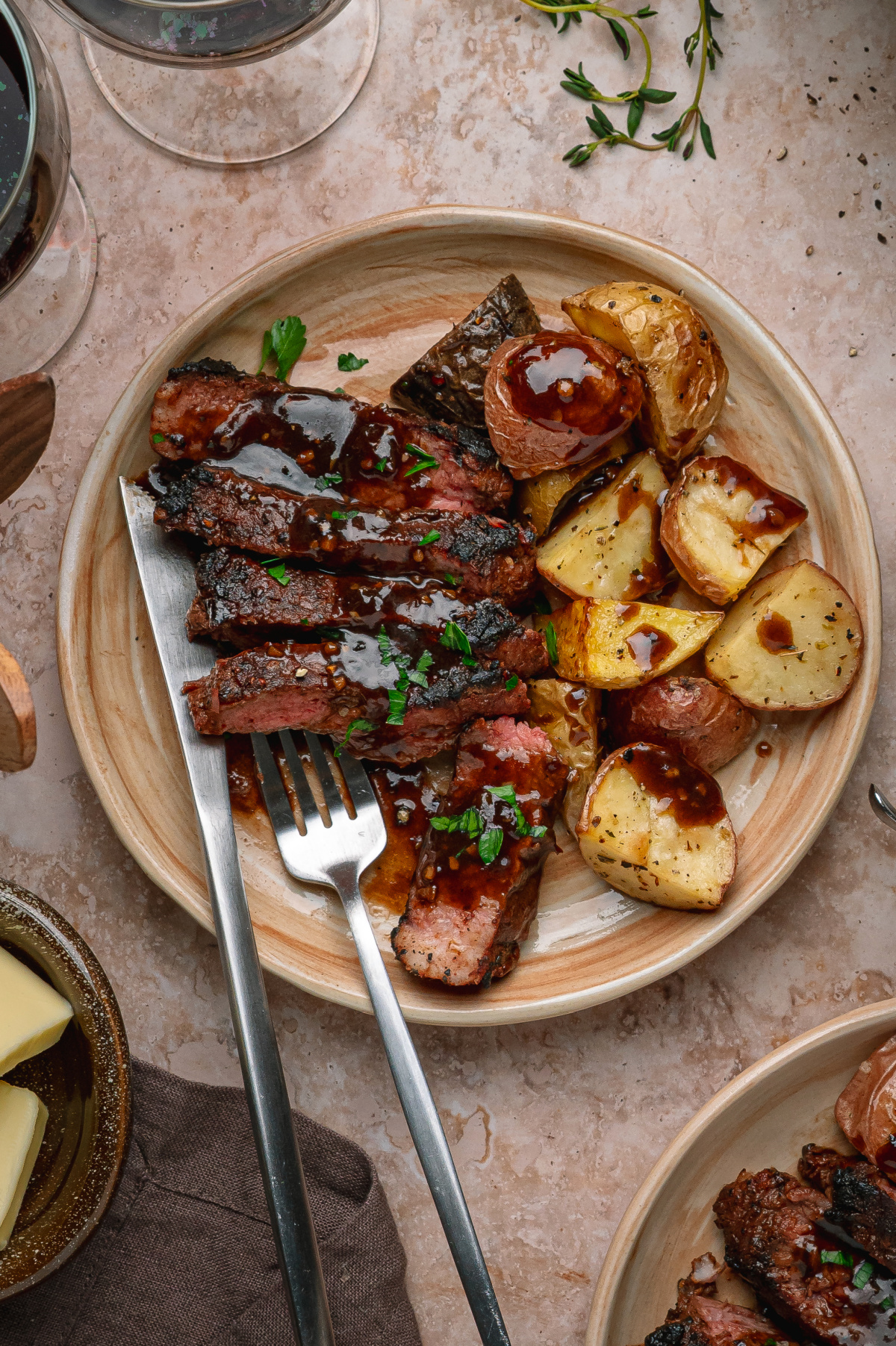
Cocoa Rubbed Steak With Dark Stout Pan Sauce Gets A Dark Crust
Cocoa rubbed steak with dark stout pan sauce is something that has evolved in my kitchen after a lot of pub-style dinners out. Most places go the coffee-rubbed route, but I kept wanting something a little darker and more roasted with that same bitter edge you get from stout or wine tannins. After a lot of trial and error, I found that cocoa powder gives the steak a dark lacquered crust with earthy flavor while the chocolate stout cooks down with garlic, thyme, and the browned bits in the pan into a sauce that tastes layered, savory, and made for sliced steak.
This is the kind of dinner you make when you need to say something emotionally consequential to someone. Or maybe when you just want everybody at the table too distracted by the steak to ask too many questions. Your choice.
I grew up eating a lot of steak. My dad was a weekend grill guy, and steak was always made over charcoal. If he wasn’t making it at home, we were out somewhere ordering it. We were a very carnivorous family, which probably explains several things psychologically, though I’m not entirely sure which ones.
Years later, in my own explorations, I found myself drawn to dark little pub places long before the term gastropub became mainstream. The cooks were always doing a lot with meat, coffee rubs, porter reductions, and all those darker bitter flavors that somehow make beef taste even more like itself. I always liked that style of cooking. And even though I can be very much a steak purist, I still think there’s a place for a good pan sauce to break up the steak-and-butter-only mindset once in a while.
My interest in cocoa with steak isn’t completely random. It comes more from my own curiosity around flavor and bitterness. Cocoa and wine share some of the same sensory qualities, especially when it comes to bitterness, tannin perception, dryness, and even some of that roasted depth. Once cocoa comes in contact with a fatty steak, it starts acting similarly to how tannic red wine will cut through rich meat.
I feel like coffee rubs usually take smoky bitterness forward. But cocoa bitterness comes across way softer, earthier, and more rounded instead, especially once it mixes with fat and browns in a hot skillet. Then everything starts tasting fuller once the pan sauce comes together. I think cocoa syncs more naturally with red meat than espresso ever will.
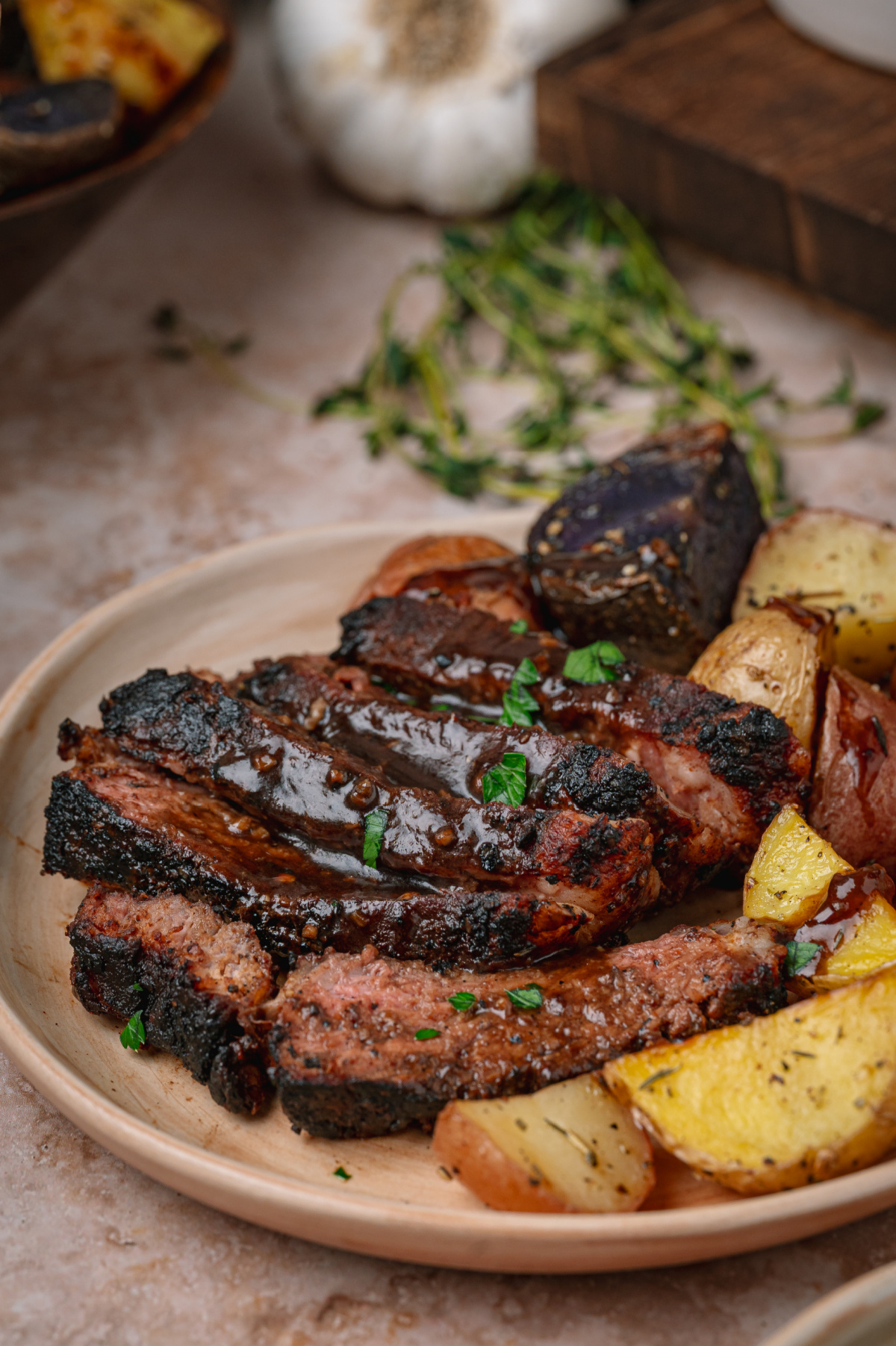
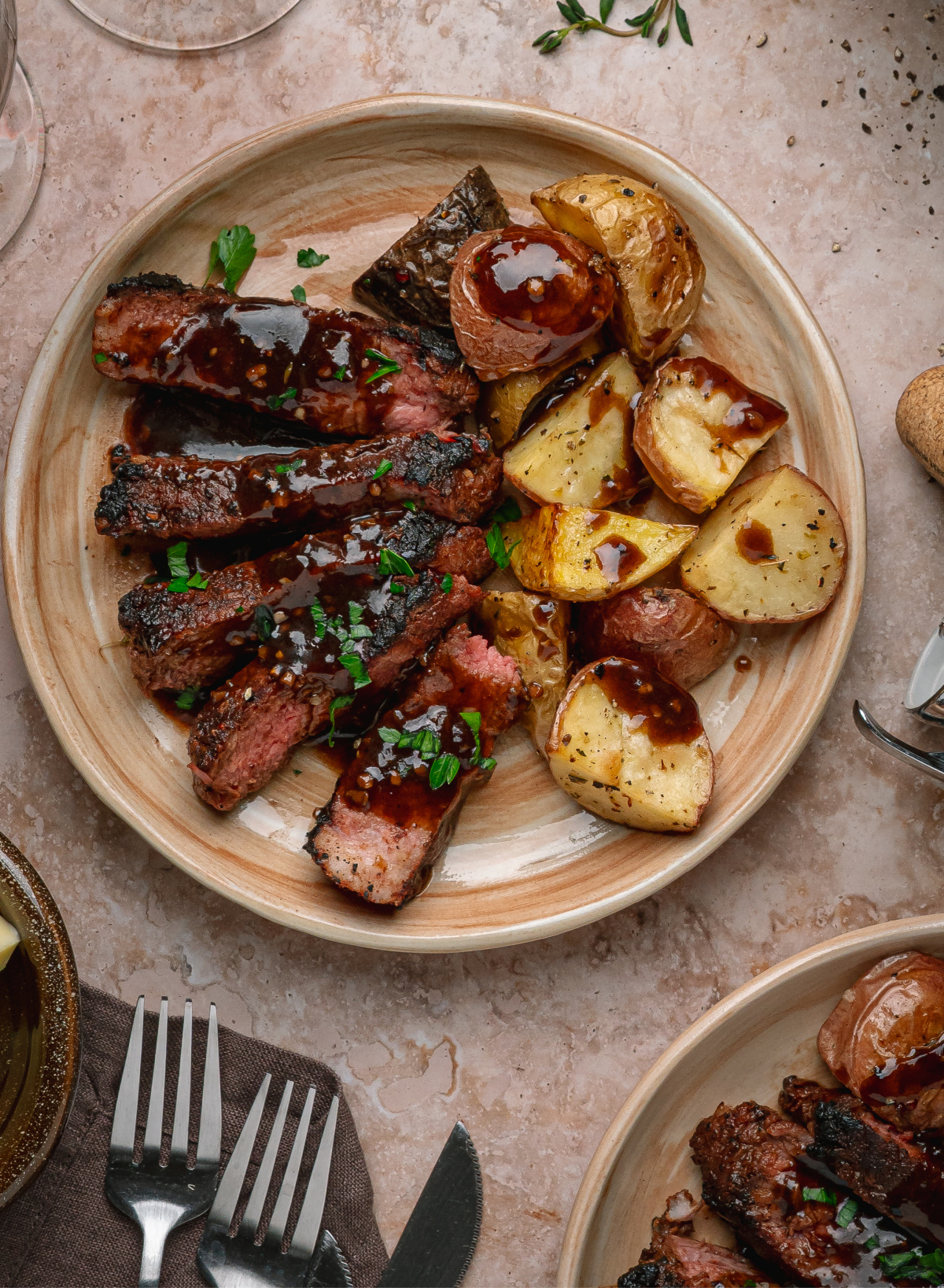
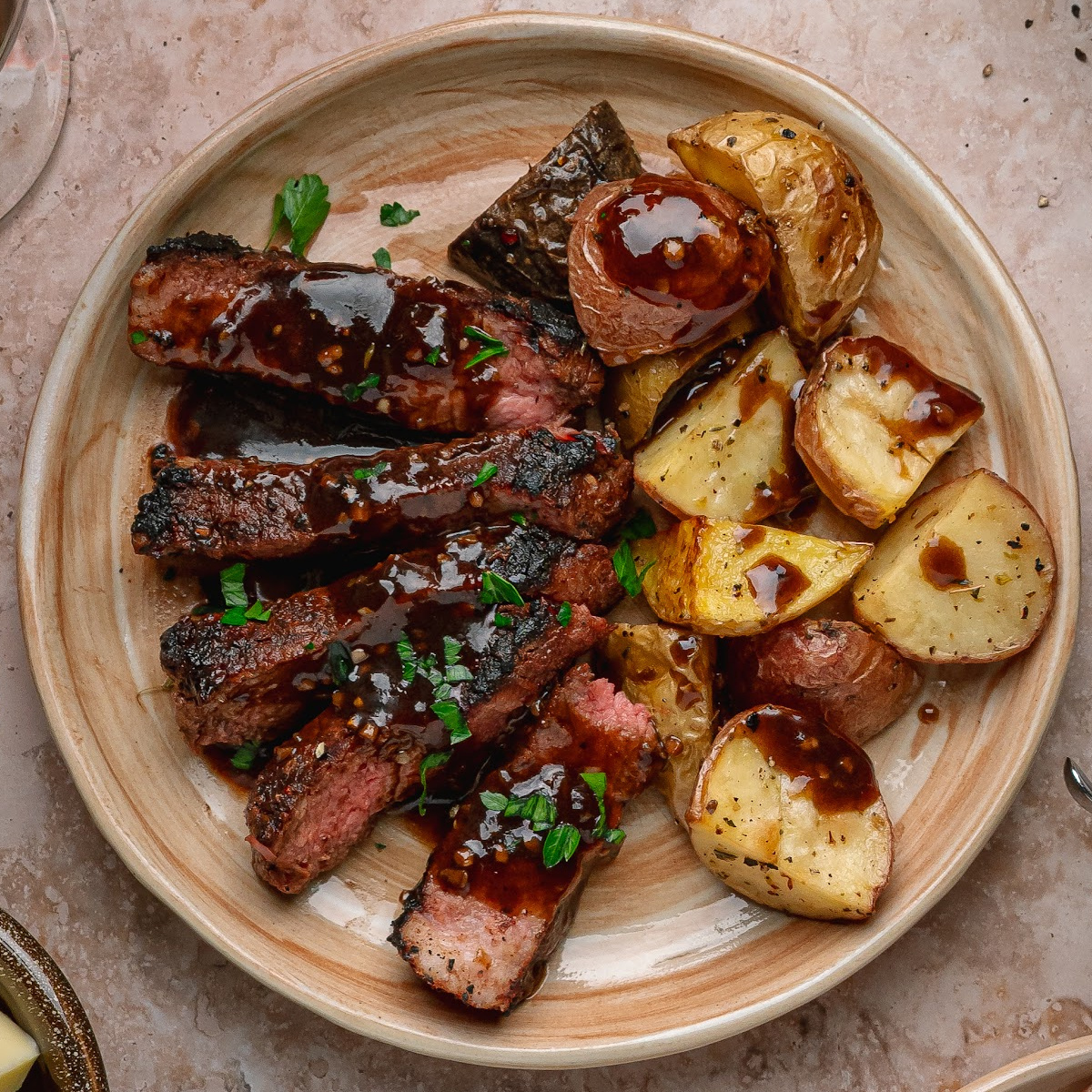
So this version became mine over the years. Cocoa-rubbed steak with a dark stout pan sauce that feels slightly unreasonable spooned over roasted potatoes. I make this year-round because some dinners stop being seasonal and this one has become another meal that is part of my operating system.
The thing I like most about this recipe is that the cocoa never tastes like chocolate once it sears onto the steak. It works more like a dark roasted bitterness in the crust, especially with the stout reduction and all the browned bits left in the skillet. The stout cooks down into something concentrated and savory, the cocoa keeps the crust dark without turning sweet, and the flavor ends up somewhere between a really good pub steak and something you’d order at a place with low lighting and a bartender who knows too much about your life.
What Makes This Different
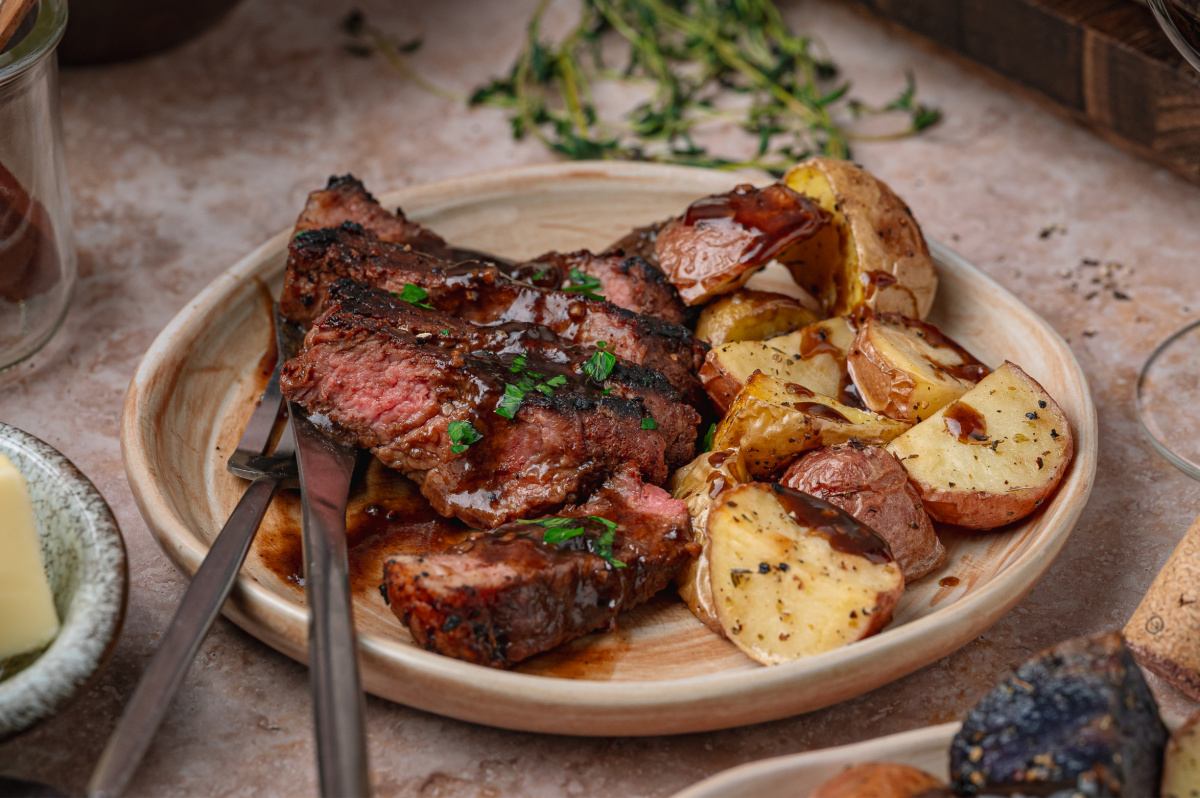
- The cocoa rub is what changes this from a regular cast iron steak into something darker and a little more complicated. The cocoa doesn’t taste sweet or chocolatey once it sears into the crust. It works more like a roasted bitterness against the fat of the New York strip, especially once the browned bits in the skillet start mixing into the stout reduction.
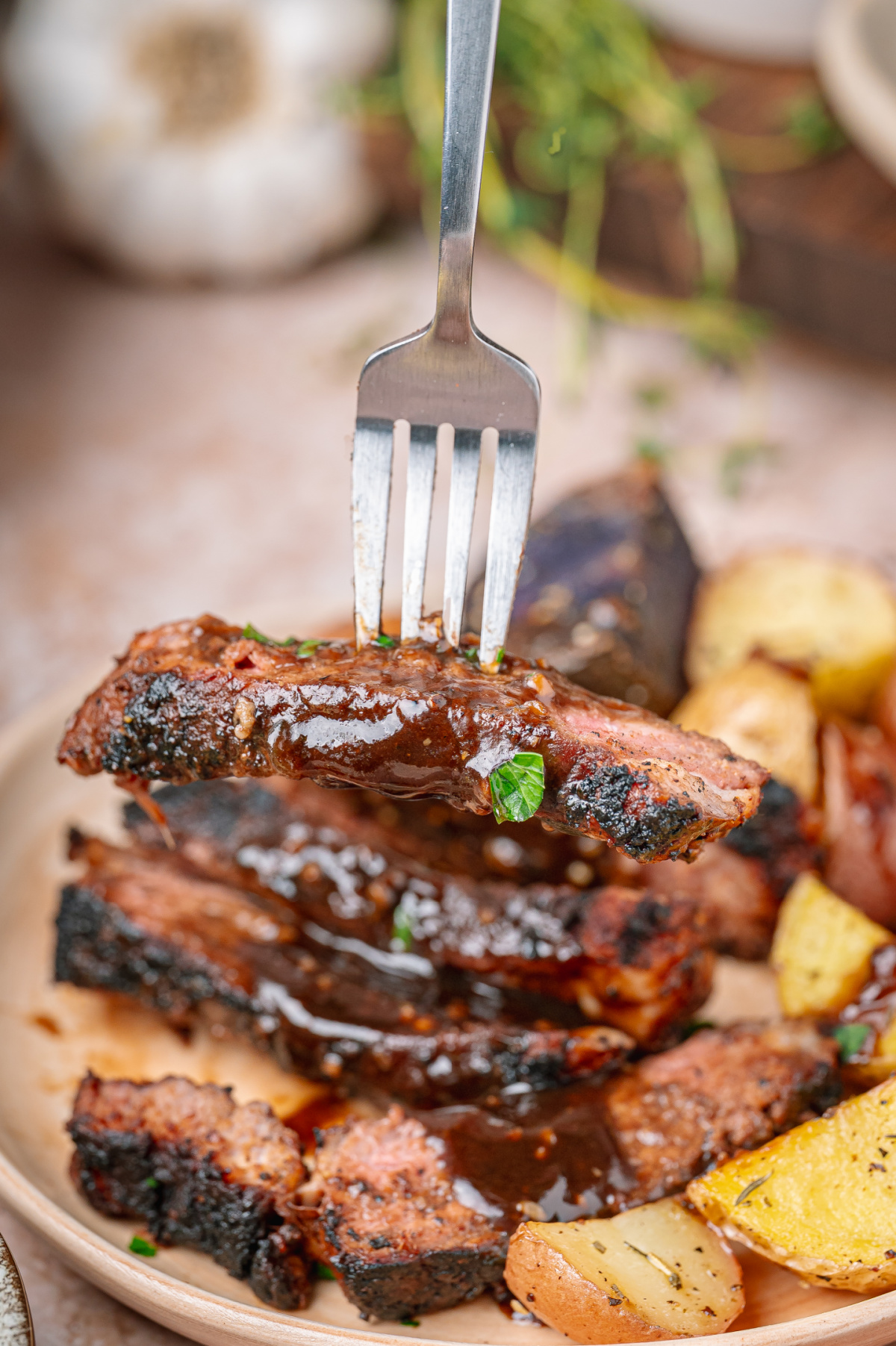
- The brown sugar in the rub helps the crust caramelize faster and gives the steak that dark lacquered exterior without needing a long cook time. Cocoa does darken quickly in a hot skillet, so there’s a difference between a properly dark crust and taking it too far. You want the heat high enough to create color fast while still keeping the center medium rare.
- As the stout reduces with the garlic, thyme, beef broth, and pan drippings, it loses a lot of the edge and becomes more savory. Stouts do vary. Some are bitter or more roasted, which is why I usually taste the sauce near the end before deciding whether it needs another pinch of salt.
- I also specifically like using a New York strip instead of a ribeye. The strip steak has enough fat to handle the dark crust and reduced sauce, but it still slices neatly and stays together once you cut into it. Since the steak gets sliced before serving, that is important.
- Using a cast iron skillet means you’ll have enough direct heat to develop the crust quickly, while also making all the browned bits that become the base of the sauce afterward. That’s where the sauce picks up most of its flavor.
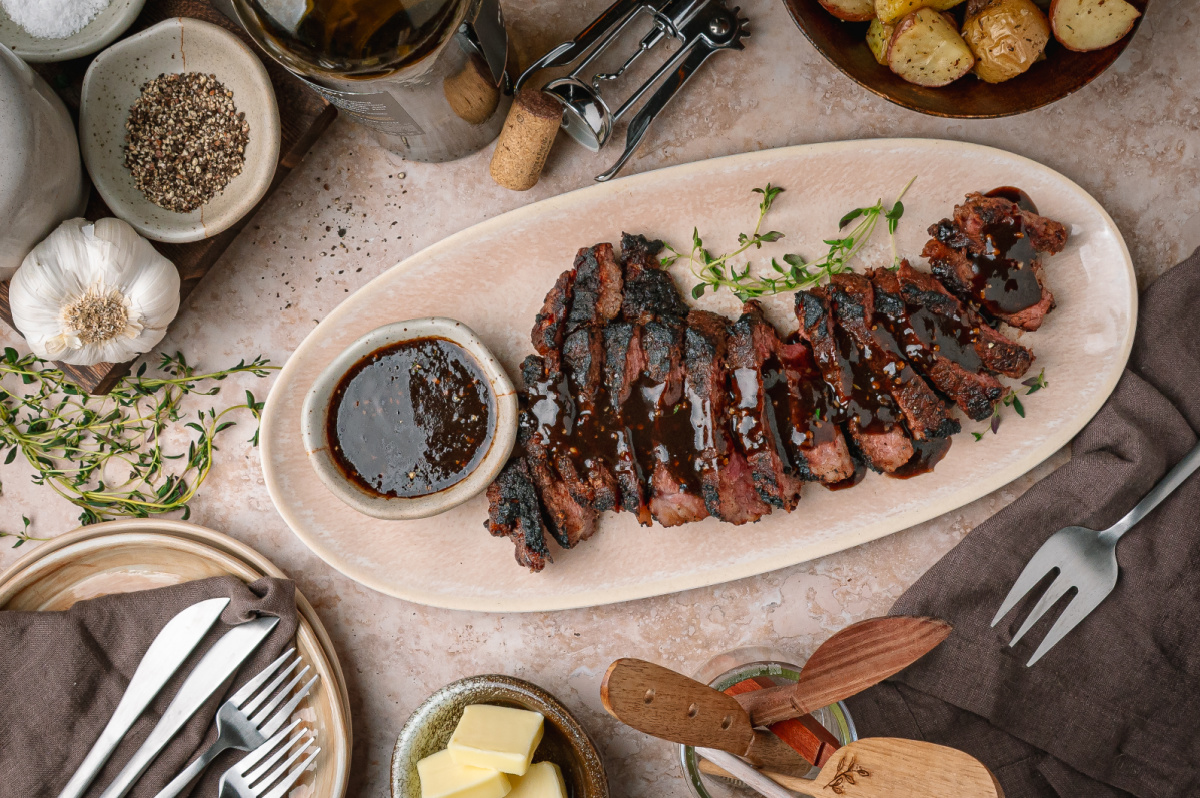
Ingredients
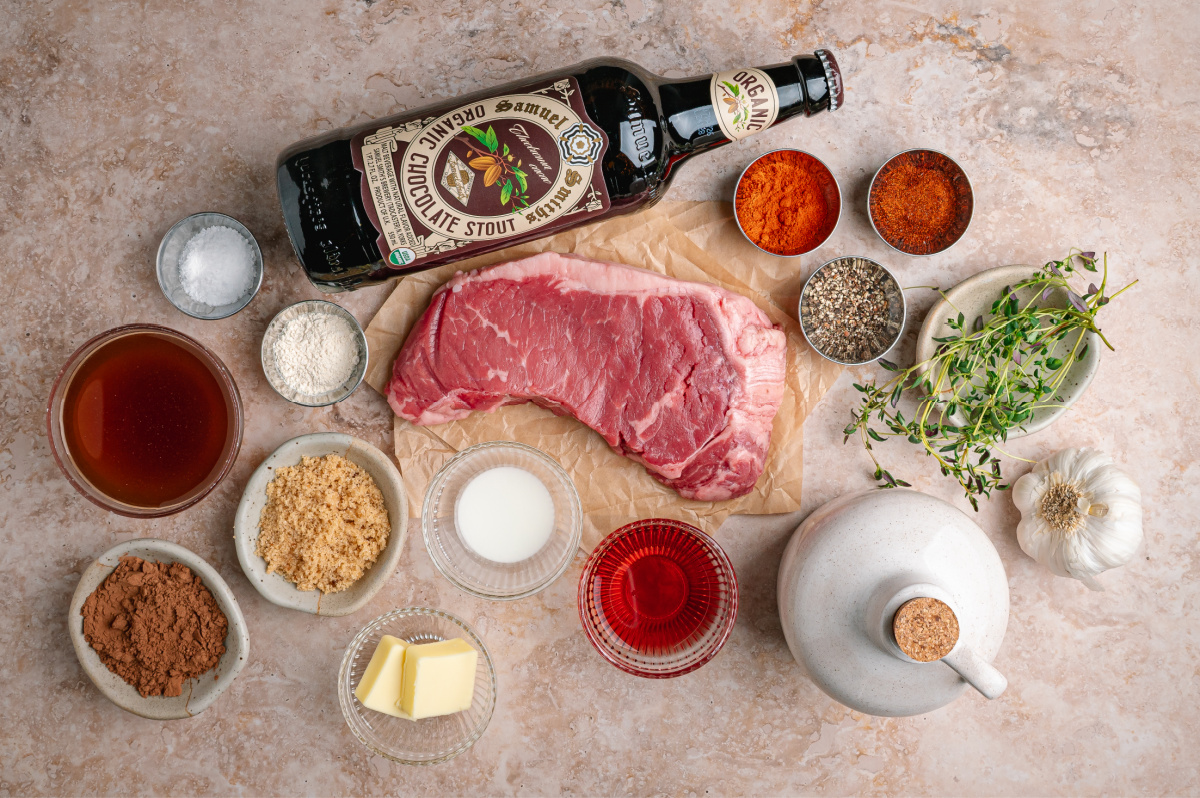
- New York strip steak – Has enough fat to stay flavorful while still keeping the firmer texture that works especially well with the dark cocoa crust and reduced stout sauce.
- Kosher salt – Seasons the steak and helps the crust develop in the skillet.
- Black pepper – Gives the crust a little bite without competing with the cocoa and stout.
- Unsweetened cocoa powder – Works more like a roasted spice than chocolate once it sears onto the steak. It deepens the crust and adds bitterness that balances the richness of the meat and sauce.
- Brown sugar – Helps the crust caramelize quickly and gives the exterior a dark lacquered look without making the steak taste sweet.
- Garlic powder – Brings savory depth directly into the rub so the flavor stays in the crust instead of only living in the sauce.
- Chili powder – Adds warmth and earthiness that works especially well with the cocoa and stout reduction.
- Cayenne pepper – Gives the rub a little heat.
- Avocado oil – Handles the high skillet heat well without smoking too quickly while the crust develops.
- Butter – Softens the bitterness in the sauce slightly.
- Fresh garlic – Adds savory depth as the stout reduces in the skillet.
- Chocolate stout beer – Reduces down into a darker roasted pan sauce that works especially well with the cocoa crust.
- Beef broth – Keeps the stout reduction balanced and savory instead of overly bitter.
- Red wine vinegar – Cuts through the richness of the sauce.
- Fresh thyme – Adds a woodsy flavor that fits naturally with the roasted flavors in the sauce.
- Cornstarch – Thickens the sauce just enough so it coats the steak.
- Cold water – Helps dissolve the cornstarch smoothly before it gets added into the hot sauce.
How To Make Cocoa Rubbed Steak With Dark Stout Pan Sauce
Find the complete printable recipe with measurements in the recipe card at the BOTTOM OF THE POST.
- Step One (season the steak)
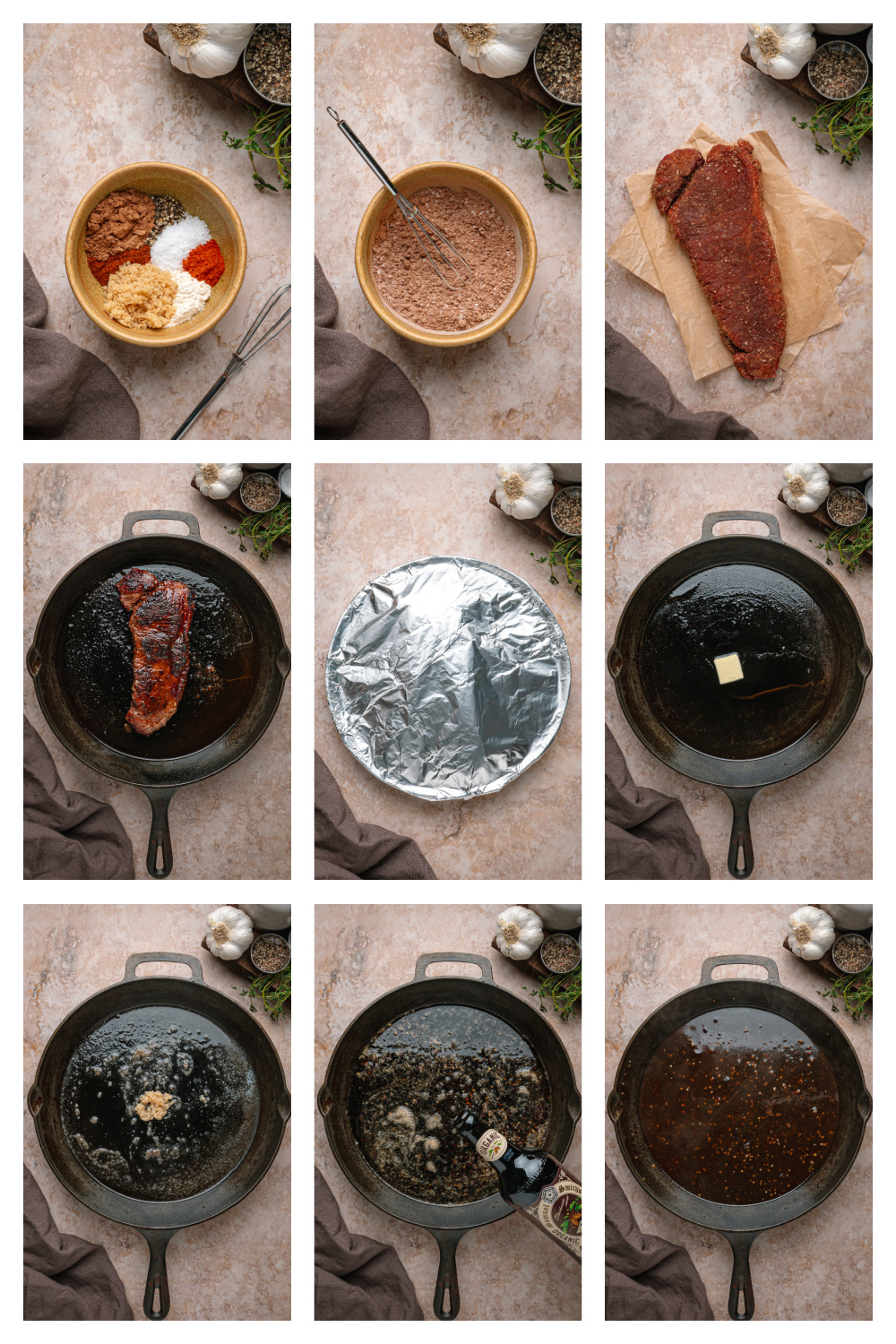
Pat the steak very dry before you start. The cocoa rub sticks better to a dry surface and gives you the kind of crust this recipe is made around once it goes into the cast iron skillet.. Mix the cocoa powder, brown sugar, chili spices, garlic powder, salt, and pepper together, then press the rub all over the steak. Let it sit at room temperature for about 20 minutes so the seasoning has time to stick and the steak loses some of its chill. - Step Two (make the crust)
Heat a cast iron skillet over medium-high heat until fully hot before adding the oil. Once the steak goes in, leave it alone long enough for the crust to form. The cocoa and brown sugar darken quickly, so the outside should look very brown and almost blackened in a few spots without smelling burnt. Flip and cook the second side until the steak reaches about 125°F (52°C) for medium rare, then transfer it to a cutting board to rest under foil. - Step Three (make the stout pan sauce)
Lower the heat and melt the butter right into the browned bits left in the skillet. Add the garlic and stir constantly for about 30 seconds since it cooks fast in the hot pan. Pour in the stout, beef broth, vinegar, and thyme, then scrape up all the browned bits from the bottom. Let the sauce simmer until darker, slightly reduced, and more savory. - Step Four (finish and serve)
Stir in the cornstarch slurry and cook just until the sauce lightly thickens. Slice the steak thinly against the grain and spoon the warm sauce over the top right before serving. The sliced steak catches more of the sauce this way, which matters with a darker reduced sauce like this.
Recipe Tips
- Pat the steak really dry before adding the cocoa rub. Moisture is the fastest way to sabotage a good crust.
- Don’t freak out when the crust darkens fast. The cocoa and brown sugar both develop fast in cast iron, so the steak will look almost blackened in spots without smelling burnt.
- Let the skillet get fully hot before the steak goes in. A not-hot-enough skillet gives you gray steak energy and this recipe absolutely does not want that.
- Use an instant-read thermometer if you tend to second-guess steak doneness. The crust gets dark enough that visual cues become slightly less trustworthy.
- Different stouts vary quite a bit, so the final salt balance sometimes needs adjusting.
- The sauce needs vinegar at the end or the darker flavors can start feeling like too much. Don’t skip it.
- Reduce the sauce long enough before adding the cornstarch slurry. That’s where the sauce picks up most of its flavor.
- Slice the steak against the grain. Especially with strip steak, that’s what keeps the slices tender instead of chewy.
- This is one of those dinners where crust matters more than perfection. A properly browned skillet steak with a good pan sauce will always beat a timid one.
- If the sauce gets thicker than you want, loosen it with a splash of beef broth before serving.
Storage
- Store leftover steak and sauce separately in the refrigerator for up to 3 days.
- The sauce thickens quite a bit once chilled because of the reduction and cornstarch, so I usually loosen it with a splash of broth or water when reheating.
- Reheat the steak gently in a skillet over low heat or in short bursts in the microwave. High heat tends to make strip steak chewy pretty quickly.
- The cocoa crust stays surprisingly good the next day, especially sliced thin and reheated with a little sauce spooned over the top. It’s great in a sandwich too.
- If you know you’re making this ahead of time, slightly undercook the steak the first time around so it doesn’t overcook during reheating.
FAQs
- Does the cocoa make the steak taste like chocolate?
No. Once it sears in the skillet, the cocoa tastes much darker and more roasted than sweet. It acts more like roasted bitterness than dessert chocolate once it sears onto the steak. - Why use cocoa powder in a steak rub?
The cocoa balances the richness of the steak and sauce. It gives the exterior a more roasted flavor that works especially well with stout reductions and cast iron searing. - What kind of stout works best?
I prefer a darker chocolate stout or porter-style beer with roasted flavor instead of anything overly sweet. The beer becomes more concentrated as it reduces, so balance matters. - Can I use ribeye instead of strip steak?
You can, but ribeye has more internal fat and can feel heavier with the stout sauce. I like New York strip because it keeps a firmer texture once sliced. - How do I know the crust isn’t burnt?
The crust should look very dark but smell roasted and savory, not bitter. Cocoa darkens faster than a standard steak rub, so smell matters just as much as color. - Can I grill this instead of cooking it in a skillet?
You can, but the pan sauce depends on the browned bits left in the skillet after searing. Cast iron gives you both the crust and the base for the stout reduction. - Why add brown sugar to the rub if this isn’t supposed to taste sweet?
The brown sugar helps the crust caramelize and balances the bitterness from the cocoa and stout without making the steak sugary. - What should I serve with this?
My salt and vinegar smashed potatoes, mashed potatoes, crusty Dutch oven bread, or anything capable of absorbing excessive amounts of stout sauce without judgment.
From My Kitchen Notes
A few observations about appetite and human behavior.
- Some dinners are casual. Others feel like everybody at the table already knows something important is about to happen.
- There’s a specific kind of confidence that comes from knowing how dark you can let a crust get before it crosses the line into ruined.
- Good pan sauces usually start with browned bits everybody else would’ve rinsed down the sink. You’re not going to do that.
- Certain restaurants permanently alter your understanding of lighting, steak, and eye contact.
- Some conversations improve dramatically once somebody places the bread basket on the table.
- Bitterness is useful in small amounts. In stout, cocoa powder, red wine, and occasionally people.
- There are meals specifically designed for lingering at the table longer than necessary. This is one of them.
- A good cast iron skillet remembers everything you’ve ever done to it. That feels metaphorical somehow.
- The best pub food always tastes emotionally complicated. And I like that.
- Some people only know how to say important things indirectly across a table.
- There’s a point in reducing a pan sauce where patience suddenly turns into reward.
- A properly rested steak and a well-timed confession have more in common than people realize.
- Certain flavor combinations only work because bitterness keeps the richness from getting out of control.
- Some forms of attraction feel less like fireworks and more like recognition under low lighting.
- A lot of adulthood is realizing appetite and honesty are closely related.
- Dark sauces, low lighting, and red wine have probably created entire generations of people if I’m being honest.
More Low Light Dinners
- Gochujang Steak Bites – sticky, spicy skillet steak.
- Oven-Braised Short Ribs – slow-cooked and deeply savory.
- Slow-Braised Beef Ragù with Pappardelle – heavy pot energy in pasta form.
- Baked Rigatoni – bubbling cheese and red sauce.
- Cottage Pie with Gruyère Mashed Potatoes – crisp edges and rich beef.
This post may contain affiliate links. Please read my disclosure policy.
Cocoa Rubbed Steak with Dark Stout Pan Sauce
Equipment
- cast iron skillet 12" (30 cm) Helps make the dark crust properly.
- Meat Thermometer Keeps the steak from overcooking.
- tongs For flipping the steak without piercing it.
- whisk For blending the slurry smoothly.
Ingredients
Steak:
- 1 (12-16 oz / 340-455 g) New York strip steak or ribeye (1 to 1½ inches (2.5 to 4 cm) thick)
- 1 tsp (5 g) kosher salt
- ½ tsp (1 g) coarse ground black pepper
- 2 tsps (5 g) unsweetened cocoa powder
- 2 tsps (8 g) light brown sugar
- 1 tsp (3 g) garlic powder
- 1 tsp (2 g) chili powder
- ¼ tsp (0.5 g) cayenne pepper
- 2 tbsps (30 ml) avocado oil or peanut oil
Dark Stout Pan Sauce:
- 2 tbsps (28 g) butter
- 2 cloves garlic minced
- 1 cup (240 ml) chocolate stout beer
- ½ cup (120 ml) beef broth
- 1 tbsp (15 ml) red wine vinegar
- 2 fresh thyme sprigs
- 1 tsp (3 g) cornstarch
- 1 tsp (5 ml) cold water
Instructions
- Pat the New York strip steak very dry with paper towels, especially around the edges. In a small bowl, stir together the kosher salt, black pepper, cocoa powder, brown sugar, garlic powder, chili powder, and cayenne pepper until evenly combined. Rub the seasoning mixture all over the steak, pressing it firmly into the surface so it adheres well. Let the steak rest at room temperature for 20 minutes before cooking so the seasoning has time to adhere and the chill comes off the meat.1 (12-16 oz / 340-455 g) New York strip steak, 1 tsp (5 g) kosher salt, ½ tsp (1 g) coarse ground black pepper, 2 tsps (5 g) unsweetened cocoa powder, 2 tsps (8 g) light brown sugar, 1 tsp (3 g) garlic powder, 1 tsp (2 g) chili powder, ¼ tsp (0.5 g) cayenne pepper
- Place a large cast iron skillet over medium-high heat and let it get fully hot before adding the oil. Add the avocado oil, then carefully place the steak into the skillet. Cook undisturbed for 4 to 5 minutes on the first side until a very dark crust forms. The cocoa and brown sugar darken quickly, so the steak should look deeply browned without smelling burnt.2 tbsps (30 ml) avocado oil
- Flip the steak and continue cooking for another 3 to 5 minutes for medium rare, adjusting slightly depending on thickness. Use an instant-read thermometer in the thickest part of the steak and pull it from the skillet a couple of degrees before it hits 125°F (52°C). Transfer the steak to a cutting board and loosely tent with foil while the sauce cooks. The temperature should continue rising about 5 to 10 degrees as it rests.
- Reduce the heat under the skillet to medium. Add the butter directly to the browned bits and residual oil left in the pan. Once melted, stir in the minced garlic and cook for about 30 seconds, stirring constantly so it softens without burning.2 tbsps (28 g) butter, 2 cloves garlic
- Pour in the chocolate stout and scrape the bottom of the skillet well to loosen all the browned bits. Stir in the beef broth, red wine vinegar, and thyme sprigs. Let the sauce simmer for 8 to 10 minutes, stirring occasionally, until reduced and darker in color with a more roasted, concentrated flavor. Different stouts vary in bitterness, so taste the sauce once reduced and add a small pinch of salt if needed.1 cup (240 ml) chocolate stout beer, ½ cup (120 ml) beef broth, 1 tbsp (15 ml) red wine vinegar, 2 fresh thyme sprigs
- Whisk together the cornstarch and cold water in a small bowl until smooth. Slowly stir the slurry into the simmering sauce and cook for 1 to 2 minutes until lightly thickened and shiny enough to coat a spoon.1 tsp (3 g) cornstarch, 1 tsp (5 ml) cold water
- Slice the steak thinly against the grain and spoon the warm stout pan sauce over the top before serving.
Notes
- The crust should look very dark once seared. Cocoa powder and brown sugar naturally deepen in color quickly in a hot skillet, which gives the steak its roasted flavor and signature appearance without tasting burnt.
- Chocolate stout gives the sauce a darker roasted flavor, but a regular stout can still be used if needed.
- Store leftover steak and sauce separately when possible so the crust keeps more of its texture.
Nutrition
Have you made this Cocoa Rubbed Steak? I’d love to hear how they turned out – leave a comment below and let me know.
As an Amazon Associate and member of other affiliate programs, I earn from qualifying purchases.
Rene says
This whole recipe sounds amazing. We are off to grab some chocolate stout because the whole concept sounds over the top. Thnak you for so many good ideas.
Cathy Pollak says
Thank you.
Keith says
Made this tonight for my wife. If was fire. The sauce came out really good and the crust on the steak was so nice.
Jacqui says
Looks incredible.
Marley Madle says
The leftovers made one of the best steak sandwiches I’ve had in a long time. I reheated the sauce, put everything onto toasted bread, and regretted not making a second steak from the start.
Kay says
I made this for friends and everybody kept talking about the crust. There was something about the combo of the cocoa and stout that made the steak taste richer. We loved it.
Ray says
This is the kind of dinner I love making on a Saturday night. The sauce was incredible over roasted potatoes and the steak sliced beautifully. We sat at the table way longer than usual.
Junie says
What a great dinner, my husband and sons loved it. It was different and exciting to make. Turned out perfect. We loved the dark, flavorful crust.