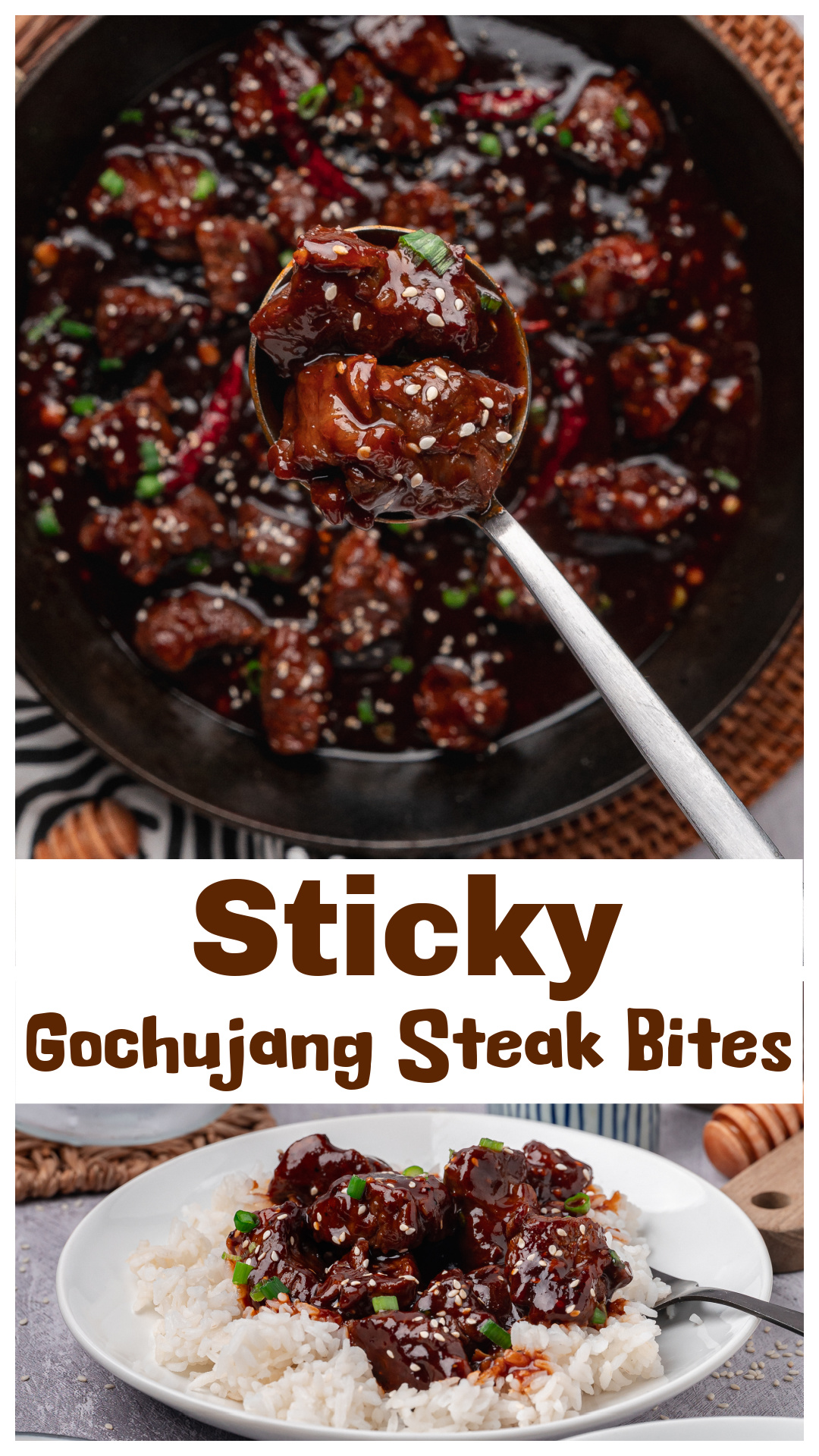
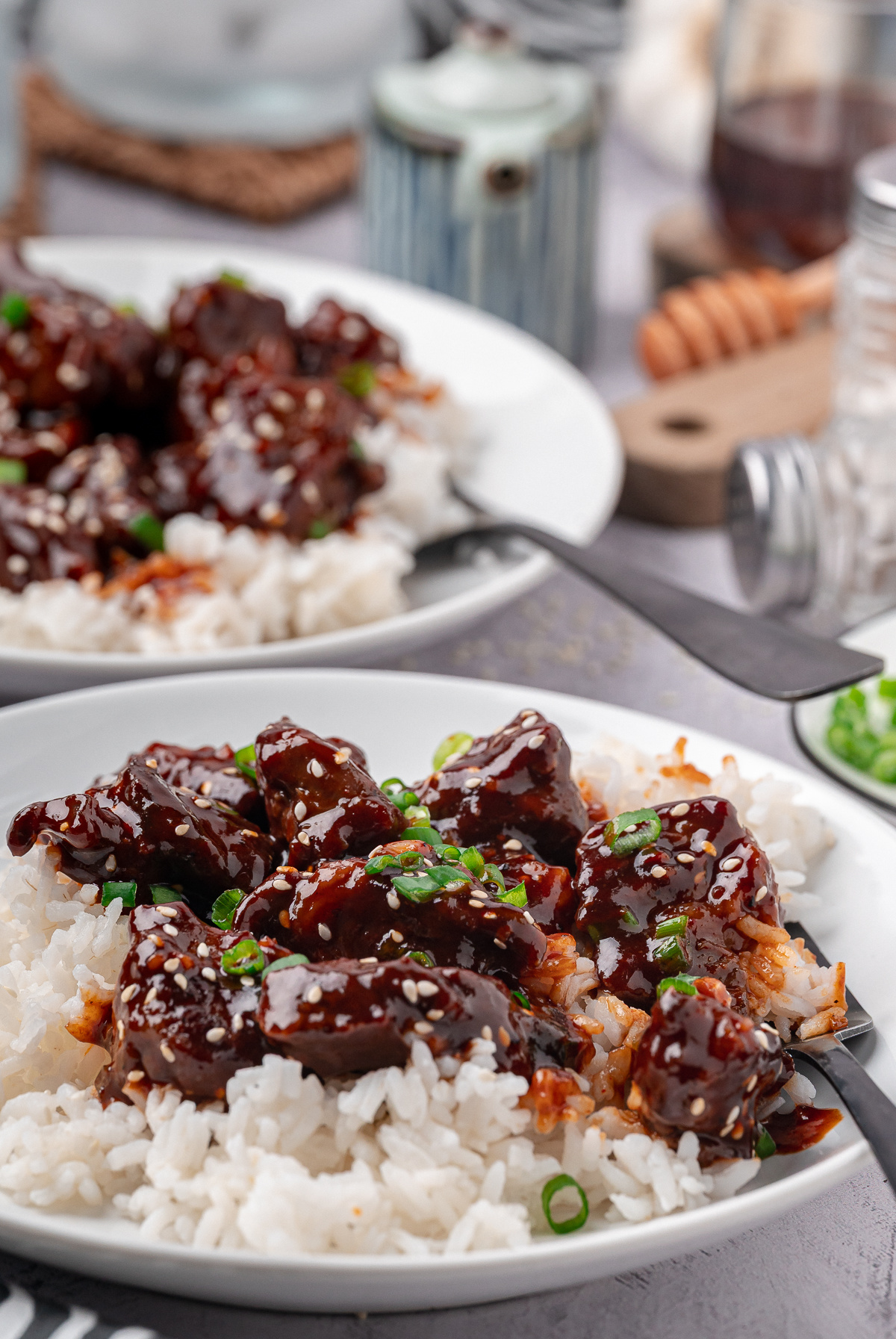
Gochujang steak bites are seared pieces of steak cooked quickly in a skillet and coated in a sticky sauce made with gochujang, honey, hoisin, soy sauce, and garlic that coats the meat in a deep red glaze. The result is savory, slightly sweet, and flavorful with just enough spice to keep things interesting.
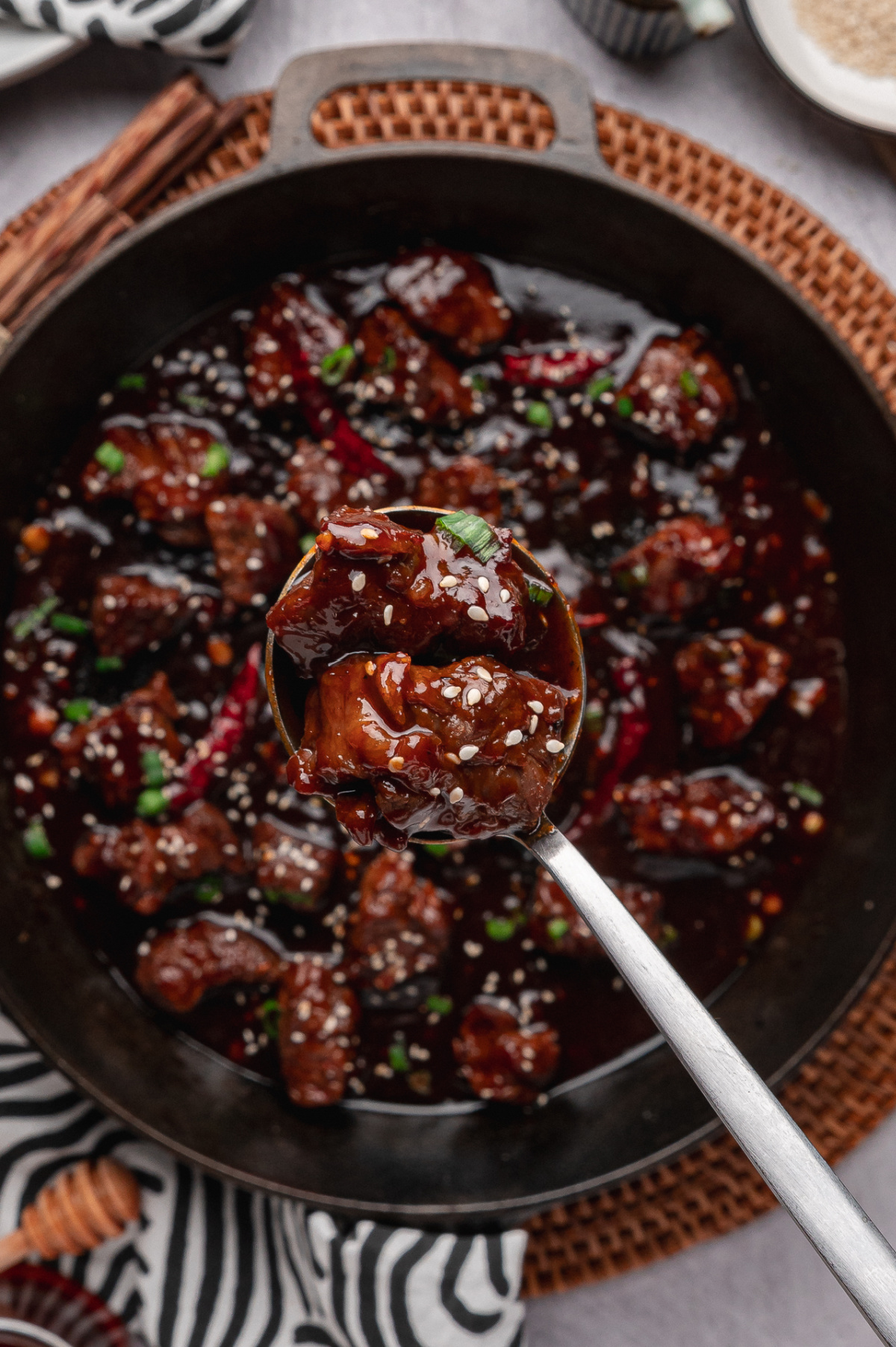
Gochujang Steak Bites, and Why This Never Felt Exotic
I learned to love Korean flavors from my Polish grandmother, who was stirring gochujang into buttered pierogi about forty years before anyone thought to call that fusion cooking. A recipe like these sticky gochujang steak bites makes perfect sense in my kitchen now, and the flavor itself has been familiar to me for a very long time.
At the time I had no idea what gochujang even was. I just knew there was always a jar of thick red paste in the refrigerator and that occasionally it ended up in the pan with whatever my grandmother was already cooking. Pierogi were fair game. So were potatoes and kielbasa.
She’d fry the pierogi in butter until the edges crisped the way most Polish cooks do. Then the jar would come out. A spoonful of the red paste would hit the skillet and she’d stir it through the butter like it was always supposed to be there.
Sometimes she said something while she did it. Not necessarily in English, but one of the other languages she carried around with her. Probably Russian, maybe Ukrainian or close to it.
She would always say something like, “this needs the red fire.” Okay, granny.
The paste would melt into the butter and the whole pan would turn this deep brick red. Her pierogi would come out spicy and a little sweet, and I certainly didn’t think this was strange.
Listening to her talk was its own adventure. A sentence would usually begin in Polish, drift into Russian, slide through into Ukrainian, and occasionally pick up Spanish from the years she spent in Mexico before eventually living in Los Angeles. Her language changed countries in the middle of conversations and that’s how I ended up having an understanding of them all.
Her cooking definitely followed the same rules. Which were zero.
My grandparents owned apartment buildings in Los Angeles and lived there with their tenants, many of those tenants were Korean families. I imagine it was the kind of community where food moved around the complex easily and neighbors shared what they were making.
And that’s where kimchi entered the story.
Someone showed my grandmother how to make it, and that part obviously made immediate sense to her. Her Polish kitchen already ran on cabbage and fermentation. Sauerkraut, kapusta, long-fermented cabbage in every possible form and I don’t think kimchi was strange to her at all. It was cabbage with a different name and flavor. Now I think about how odd it is that she was the one who taught me how to make it. Then it felt normal.
The jars of gochujang came later.
Back then she didn’t pick it up at American grocery stores. It was not available. It came from neighbors who made it themselves or brought it from Korea. My grandmother was continuously gifted jars from her tenants and I’m guessing it was explained what it was used for.
Knowing her, I’m sure she graciously accepted the gift and then proceeded to use it however she wanted to. That’s totally her.
Pierogi, potatoes, cabbage rolls, kielbasa and soups were the most common ways she mixed it into her cooking routines. If she was making me lunch, I knew her “red fire” was probably going to make an appearance somewhere.
Nobody was calling that fusion cooking in the middle of the last century, but looking back the only way I can describe it now is that she ran what I’d call a complete borderlands kitchen. Her own Polish cooking tendencies, Mexican years, Korean neighbors, and several languages floating around the room while ingredients from completely different places shared the same pan. This all seemed completely reasonable to me as a kid.
And maybe this is why Korean flavors have never felt particularly unusual or different to me.
These sticky gochujang steak bites aren’t something my grandmother ever made. This recipe is just one of the ways I use gochujang now. But my whole habit of letting fermented chili paste melt into a hot skillet and take over whatever is cooking is something I grew up with.
I cut the steak into bite-size pieces and sear it well in a hot skillet until the edges are brown and crisp. Then I toss everything together in a sticky sauce made from gochujang, honey, hoisin, soy sauce, garlic, and rice vinegar until it coats the meat. Serving it over white rice is how I prefer to eat it.
And every time I open a jar of gochujang I still think about the strange path that flavor took to get into my life: from Korean families in a Los Angeles apartment complex, a Polish grandmother who ignored culinary boundaries completely, and a skillet of pierogi or kielbasa that would turn bright red from a spoonful of chili paste.
Not a bad passport.
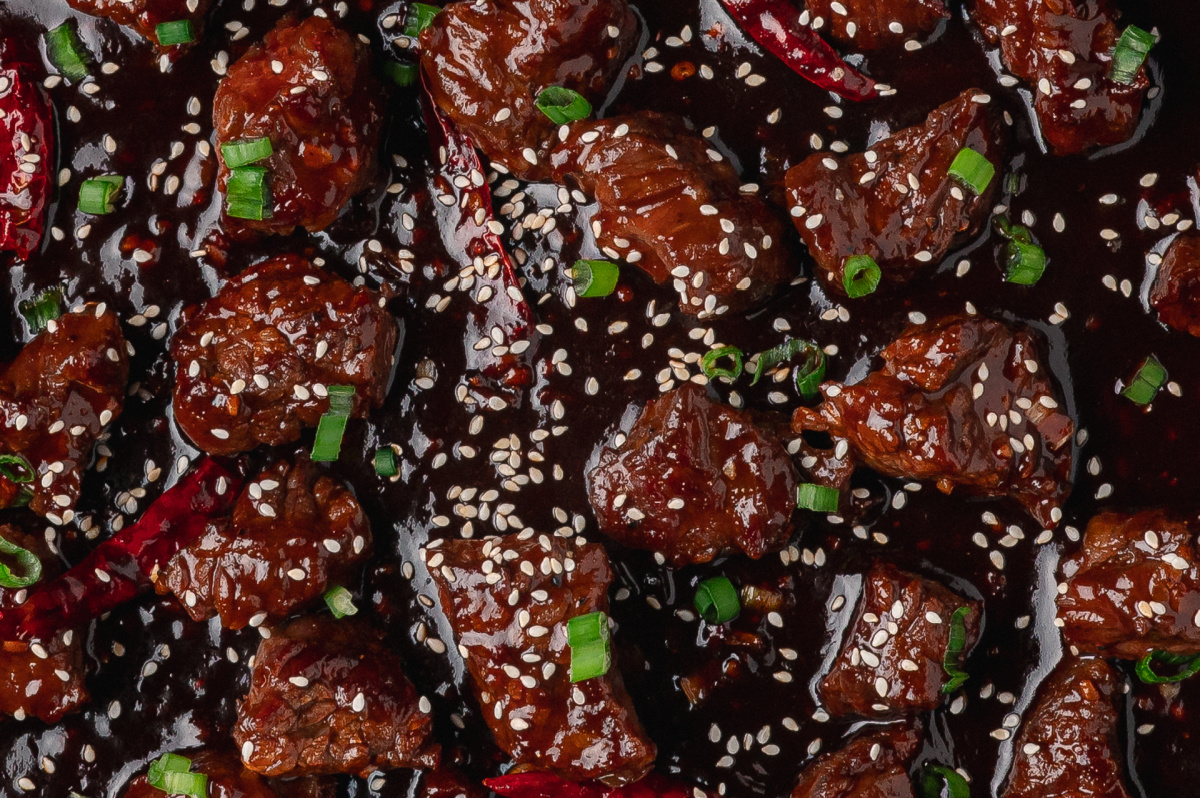
Cooking With Gochujang (Korean Chili Paste)
- It’s a fermented chili paste made from Korean red peppers, rice, soybeans, and salt. The fermentation gives it that deep savory flavor that makes everyone pause for a second and go, wait… what is that.
- You don’t need much. A spoonful is usually enough to change an entire dish.
- Gochujang and butter have a long-standing love affair. The moment they meet in a hot pan, everything else pretty much rearranges itself around them. There’s no turning back once you’ve gone that far with it.
- Once it’s put together with soy sauce, honey, and heat, it thickens up fairly quickly. Suddenly everything in the pan looks like you knew exactly what you were doing in the first place.
- After you start cooking with it, the tub of gochujang has a way of making an appearance more often than you planned. One day it’s steak, next time it’s noodles, and before long you’re opening the refrigerator just to see what it might improve.
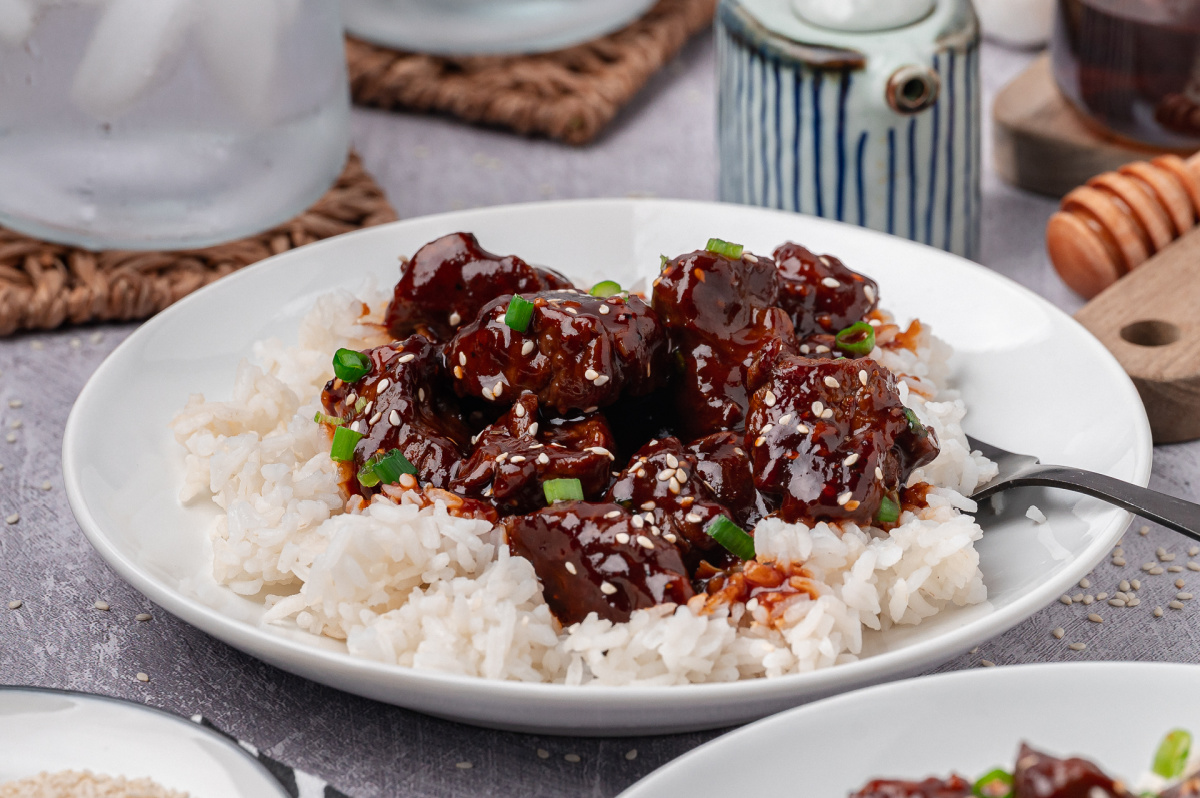
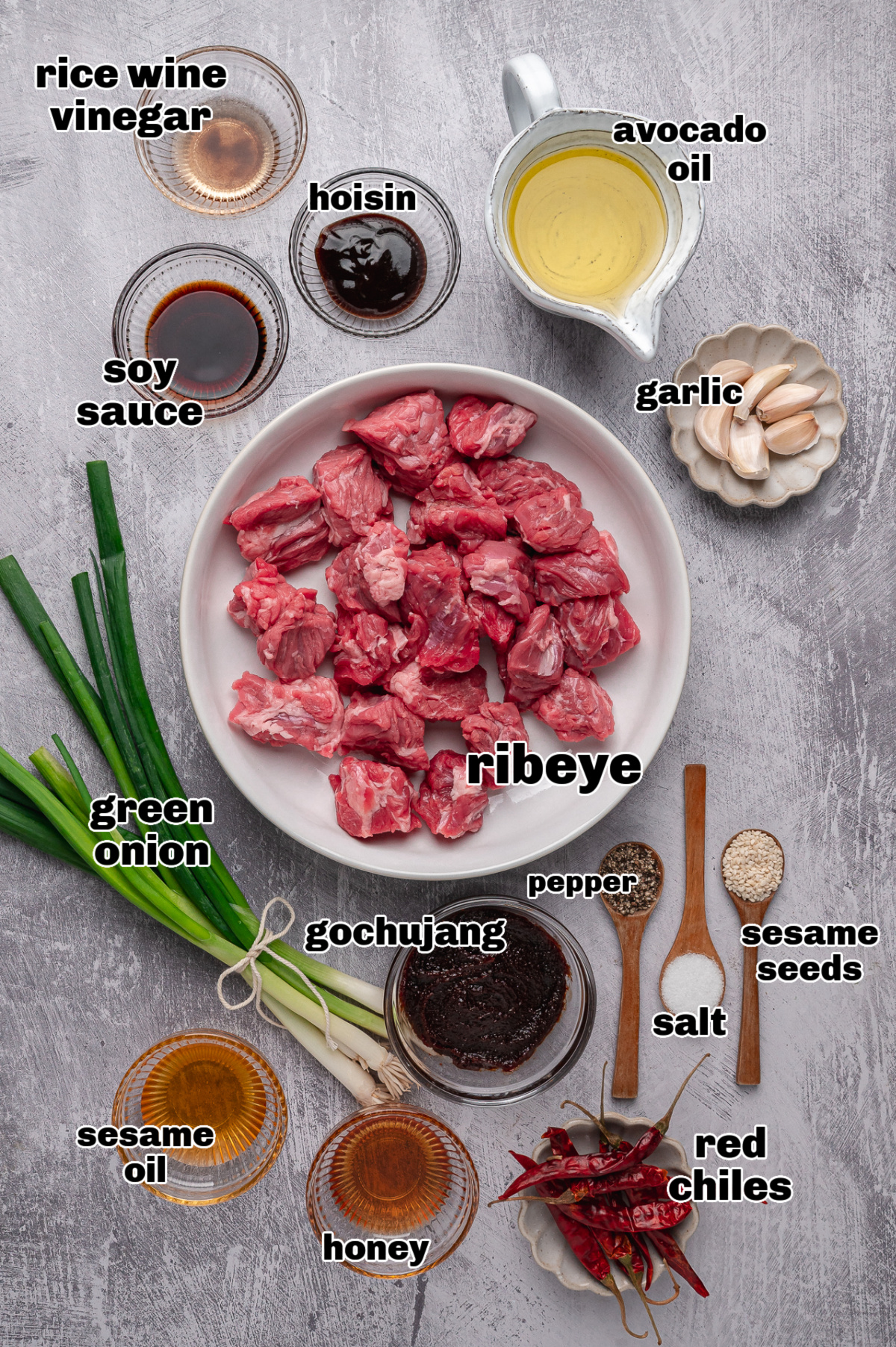
Ingredients
- Steak (ribeye, strip steak, or sirloin) – Cut into bite-size pieces so every side gets its moment in the pan. Ribeye is the show-off, strip steak is fine, and sirloin works if you need to use it.
- Kosher salt and black pepper – Steak needs seasoning.
- Avocado oil – A neutral oil that can handle the hot skillet.
- Gochujang – A very thick fermented chili paste that tastes like someone spent months thinking about salt, peppers, and time. One spoonful changes everything.
- Honey – Helps the chili paste relax a little.
- Hoisin sauce – Dark, sticky, and always mysterious.
- Rice wine vinegar – Just a splash is enough.
- Soy sauce – Salty, savory, and adds nuance.
- Sesame oil – A few drops inside the sauce and a few drops at the end. The difference between “good” and something that smells incredible.
- Cornstarch and water – Stirred together into a slurry so the sauce holds together. You don’t have to use it, but I think it comes out better with it than without.
- Garlic – Three cloves, because two never seems like enough.
- Green onions – The white parts cook in the pan. The green tops go on later for freshness.
- Dried red chiles (optional) – Throw a few in if you want more heat.
- Sesame seeds – A small scatter across the top is enough.
How to Make Gochujang Steak Bites
Find the complete printable recipe with measurements in the recipe card at the BOTTOM OF THE POST.
- Step One (prep the steak and sauce)
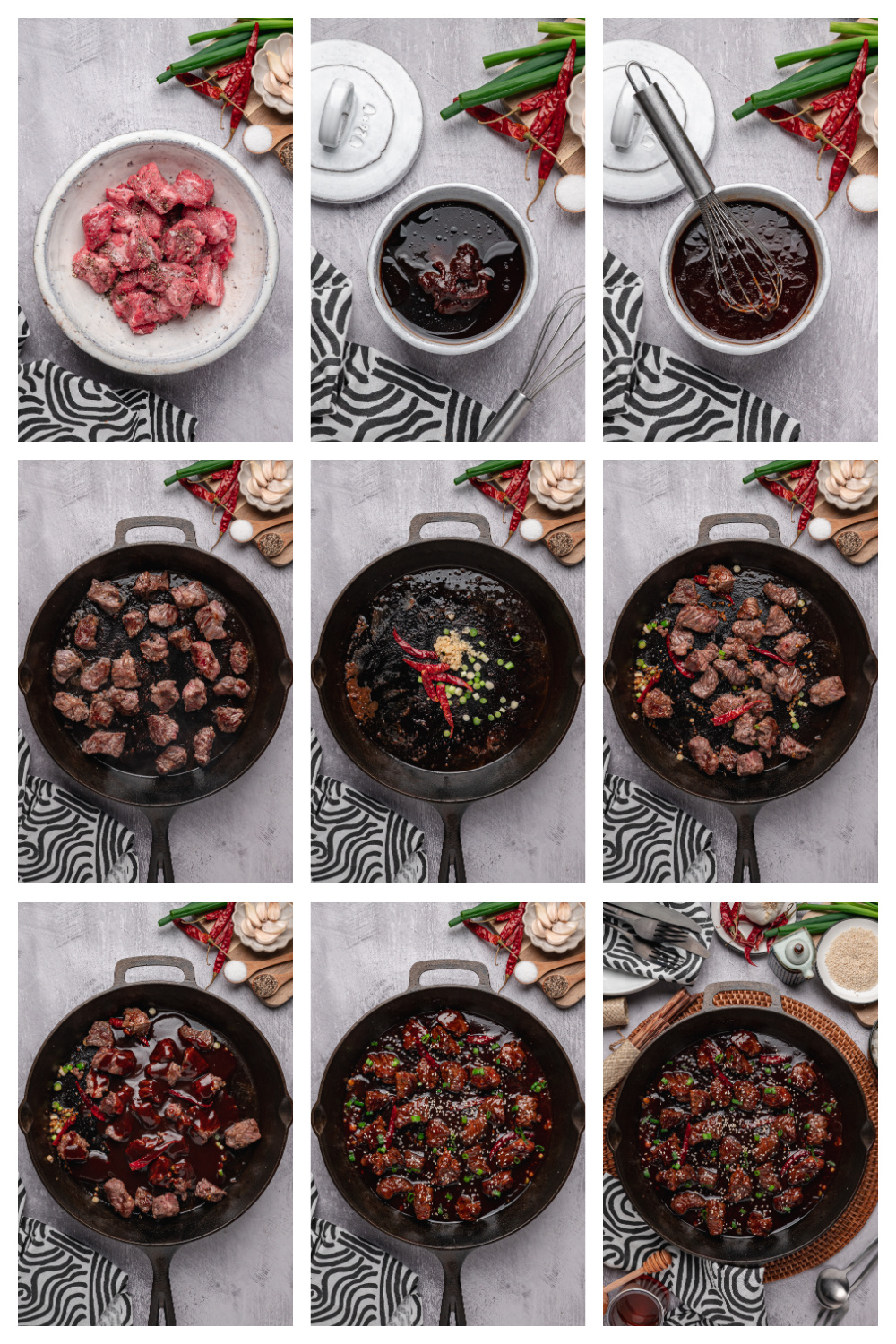
Pat the steak pieces dry with paper towels. Toss them in a bowl with 1 tablespoon avocado oil, kosher salt, and black pepper. In another bowl whisk together the gochujang, honey, hoisin sauce, rice wine vinegar, soy sauce, and sesame oil. Stir the cornstarch and water together in a small bowl, then whisk that slurry into the sauce so it’s ready when the pan gets involved. - Step Two (sear the steak)
Heat the remaining tablespoon of avocado oil in a large skillet over medium-high heat. Add the steak pieces in a single layer and leave them alone for about 2 minutes so they get good color. Flip and cook another 1 to 2 minutes until browned on the outside and still tender inside. Transfer to a bowl and repeat if you need another batch. - Step Three (build the aromatics)
Lower the heat to medium and add the garlic, the white parts of the green onions, and the dried red chiles if you’re using them. Stir for about 20 seconds, until the kitchen smells like you planned this all along. - Step Four (finish the glaze)
Return the steak to the skillet and pour in the sauce. Toss everything together as the sauce heats and thickens, about 30 to 45 seconds. If it thickens more than you like, add a splash of water. Finish with the remaining sesame oil and toss once more. - Step Five (serve)
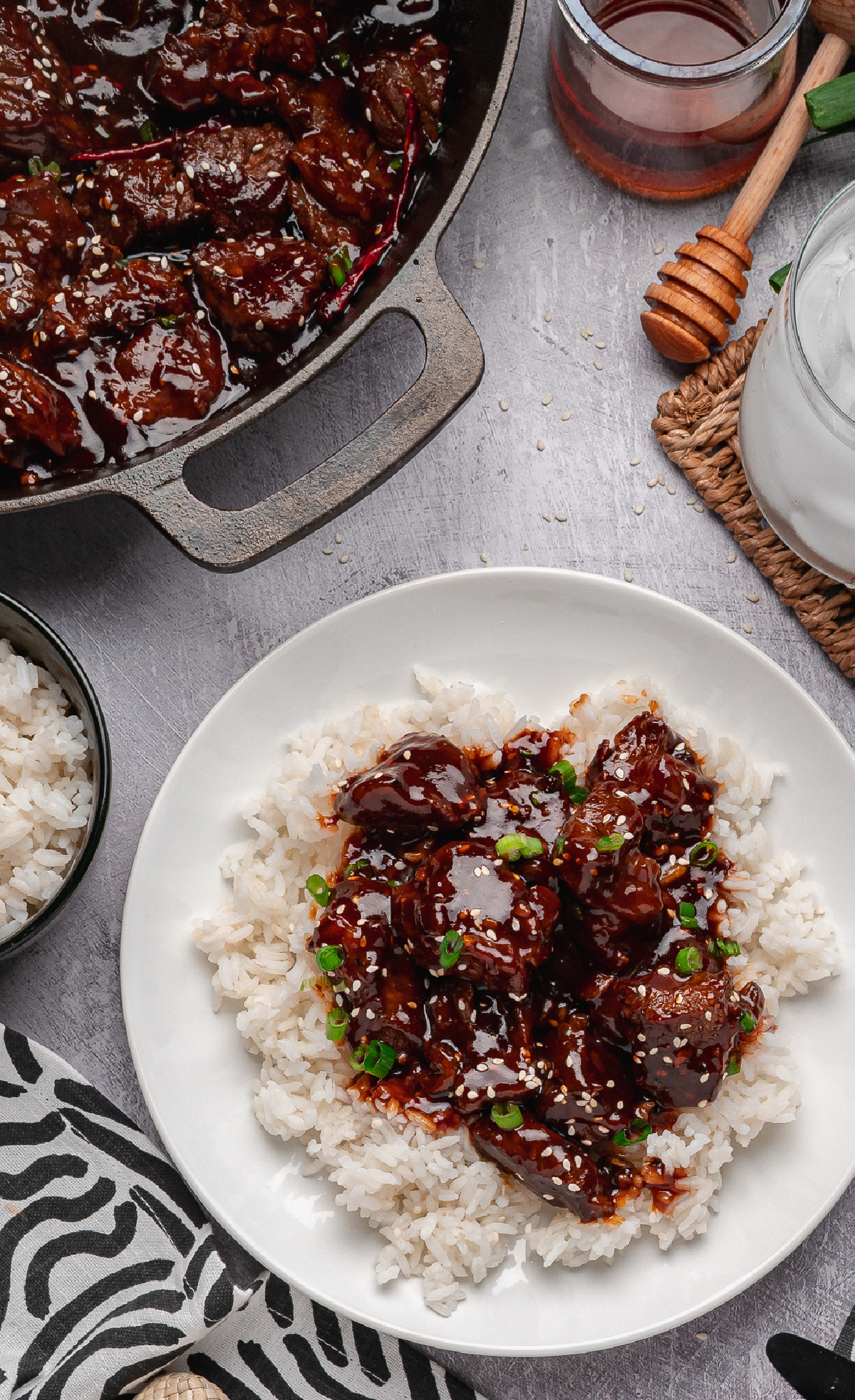
Scatter the green onion tops and sesame seeds over the steak, then serve it over rice while it’s still hot from the skillet.
Recipe Tips
- Steak bites cook fast, so cutting the pieces into 1-inch (2.5 cm) pieces is the sweet spot. They stay tender inside instead of turning into overcooked little cubes.
- A hot skillet makes all the difference here, because once the pan is hot the steak develops color almost immediately and the whole dish is finished in minutes.
- If the skillet looks crowded, cook the steak in batches so it sears instead of steaming.
- Gochujang has a lot going on already, with salt, fermentation, and chili built in, so the sauce doesn’t need a long ingredient list to feel finished. Trust this one.
Storage
- Leftover steak bites keep well in the refrigerator for about three days when stored in an airtight container.
- When reheating, a quick pass through a hot skillet works better than the microwave because it brings the sauce back and warms the steak without overcooking it.
- If the sauce thickens too much in the refrigerator, add a small splash of water while reheating and stir it through the pan until everything loosens up again.
- You can technically freeze any leftovers. I personally don’t love the texture after it’s been frozen and thawed, so it’s up to you.
FAQs
- Can I use a different cut of steak?
Yes. Ribeye, strip steak, or sirloin can all work because they cook quickly and stay tender enough when cut into bite-size pieces. Ribeye will give you the most richness, strip steak stays decent in the pan, and sirloin is a good option if that’s what you already have in the refrigerator. - Is this recipe very spicy?
Not particularly, but that’s also subjective. Gochujang has more depth than heat, especially once it’s mixed with honey and hoisin. If you enjoy a little more spice, adding the dried red chiles will take it in that direction. My grandmother called it red fire, but I think she was referring to the color more. - Can I make the sauce ahead?
You can whisk the sauce together earlier in the day and keep it in the refrigerator until you’re ready to cook. Give it a quick stir before adding it to the skillet so the cornstarch mixes back in. - Can I make these steak bites in advance?
They’re best right out of the skillet, but the leftovers reheat well if you warm them in a pan. - What should I serve with gochujang steak bites?
Jasmine rice is the obvious choice because it catches all the extra sauce, but they’re also very good with simple vegetables like sautéed green beans or roasted broccoli if you want something on the side.
From My Kitchen Notes
Observations and thoughts from my cooking journals. Take them with a grain of salt.
- My grandmother was about five feet tall, and at seventeen she got on a boat alone, left Poland before WWI, and ended up in Mexico when Ellis Island refused their boat. She still managed to carve out a whole life on the other side of it. That’s the kind of person who makes the word “badas*” feel completely reasonable.
- Every once in a while two ingredients meet and the agreement is immediate. No concession, no hesitation, just an understanding that they belong in the same pan.
- Flavors don’t always come into your life through recipes, at least mine never have. Sometimes they make their way to you through other people and never leave.
- Kitchens are a place where borders go to relax, which is kind of a fun way to look at it.
- It’s interesting that a jar of something in the refrigerator can carry more history than a cookbook ever will and outlast entire chapters of your life.
- Butter is often the first thing that convinces strangers to get along. Am I wrong?
- When steak hits a hot pan, it sounds like commitment.
- My refrigerator is an archive of former decisions. Some jars sit there for months waiting for their moment, and when it comes the whole meal shifts direction.
- Browning meat properly requires patience and the willingness to leave things alone longer than you want to.
- When a pan suddenly smells incredible, it’s usually because something unexpected agreed to stay.
- There’s a point in cooking when the pan decides what dinner is going to be, not you. You can either accept that or spend the rest of the evening fighting it.
- Have you also noticed that a hot skillet reveals character quickly? Some things develop under heat. Others fall apart before dinner even starts.
- There are combinations that make perfect sense the moment they meet heat. Others spend years circling the pan without ever committing. Don’t repeat those recipes.
- Some flavors wait in the background until the right moment comes along and suddenly everything changes. Kind of like when gochujang suddenly became trendy.
- Without warning an ingredient can show up that rewrites your instincts. You don’t plan for it, and you don’t necessarily understand it at first. Years later you realize half the things you make still begin the same way.
More Ways I Cook With Gochujang
- Gochujang Chicken Sandwich with Crispy Potato Chip Crust – Crunchy chicken, sweet and spicy gochujang glaze.
- Slow Cooker Korean BBQ Chicken – Tender chicken in a bold Korean-style sauce with gochujang.
- Ground Turkey Stir Fry – Quick skillet dinner with gochujang and honey.
- Gochujang Pasta – Creamy 20-minute easy dinner recipe.
This post may contain affiliate links. Please read my disclosure policy.
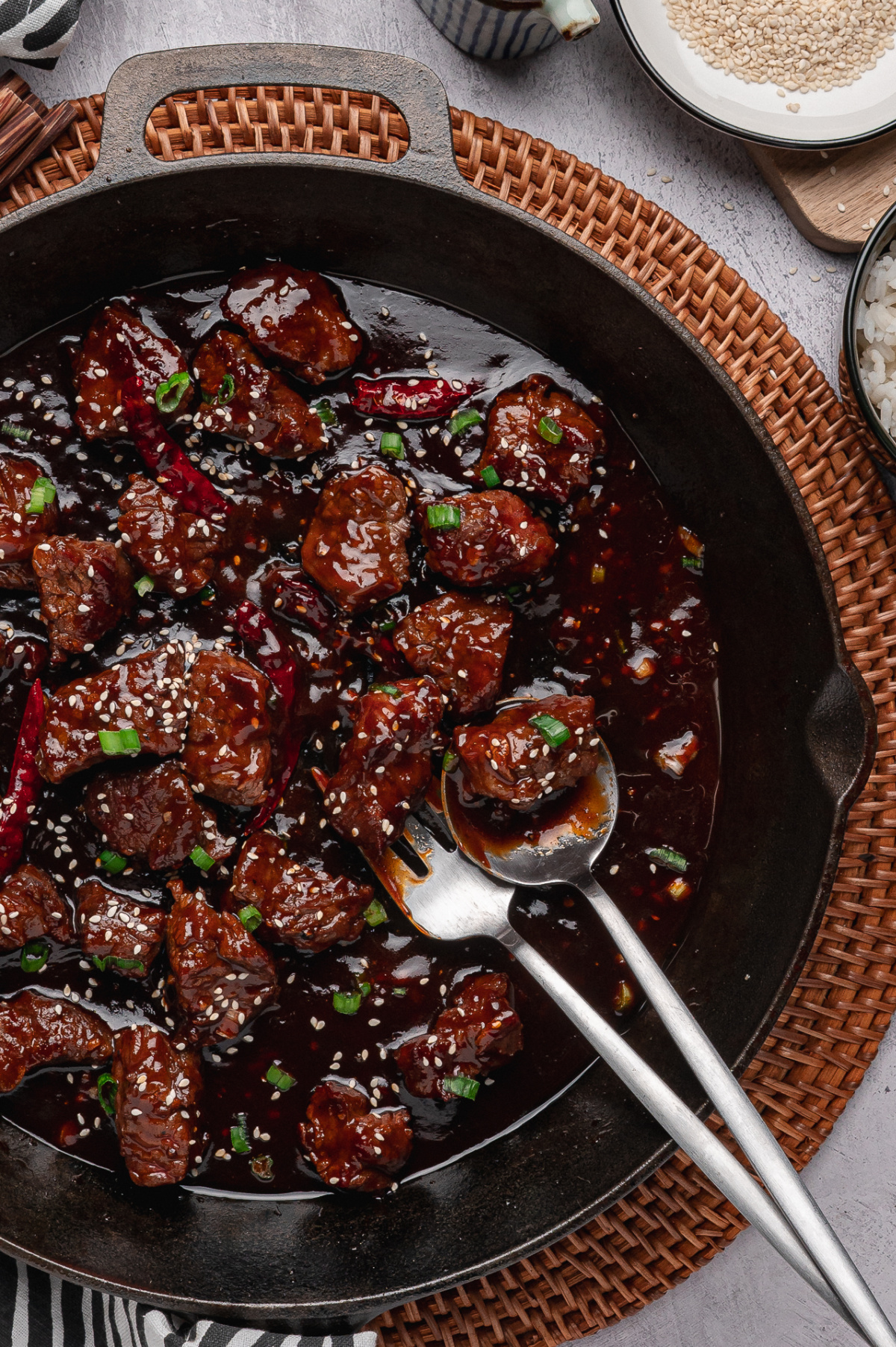
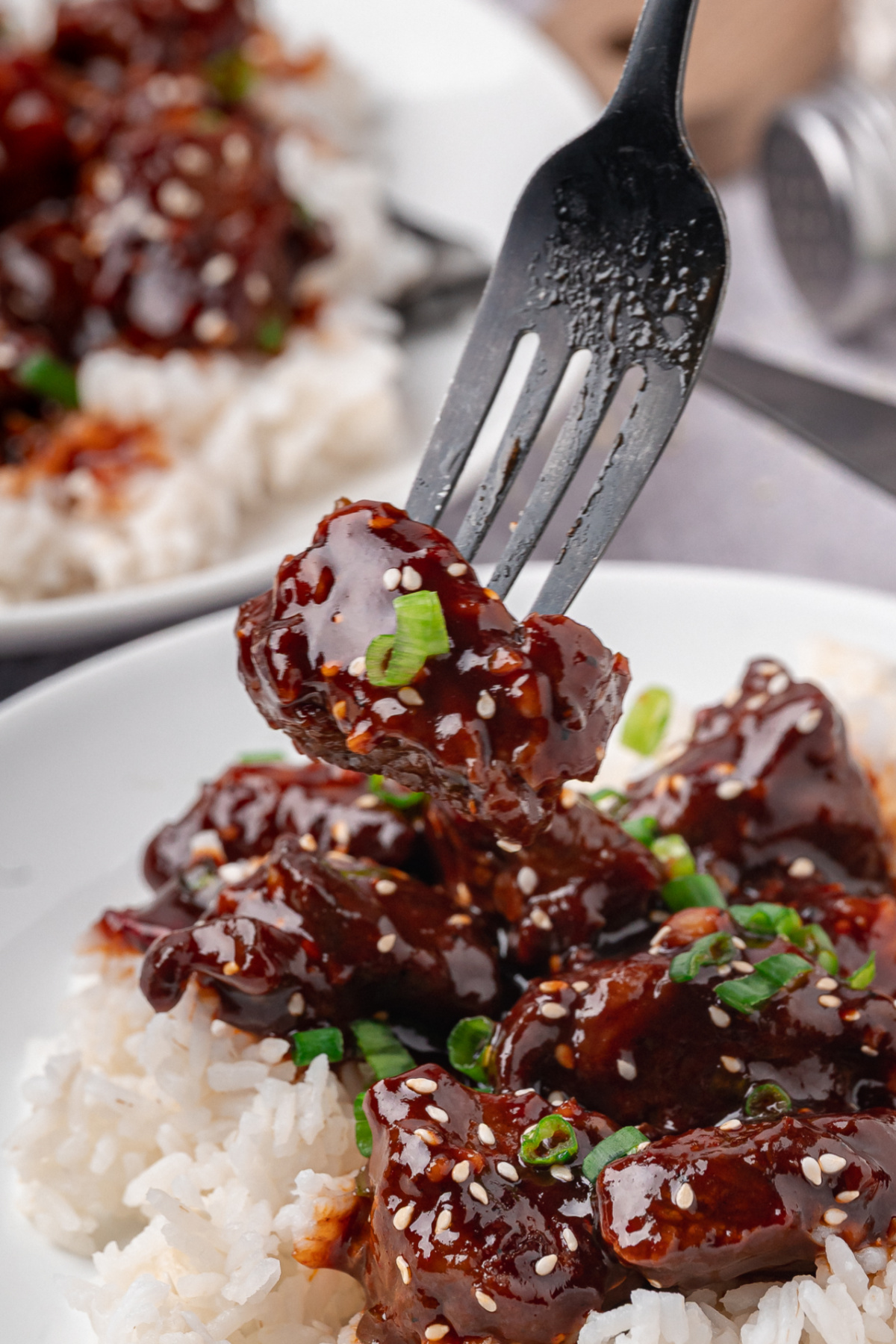
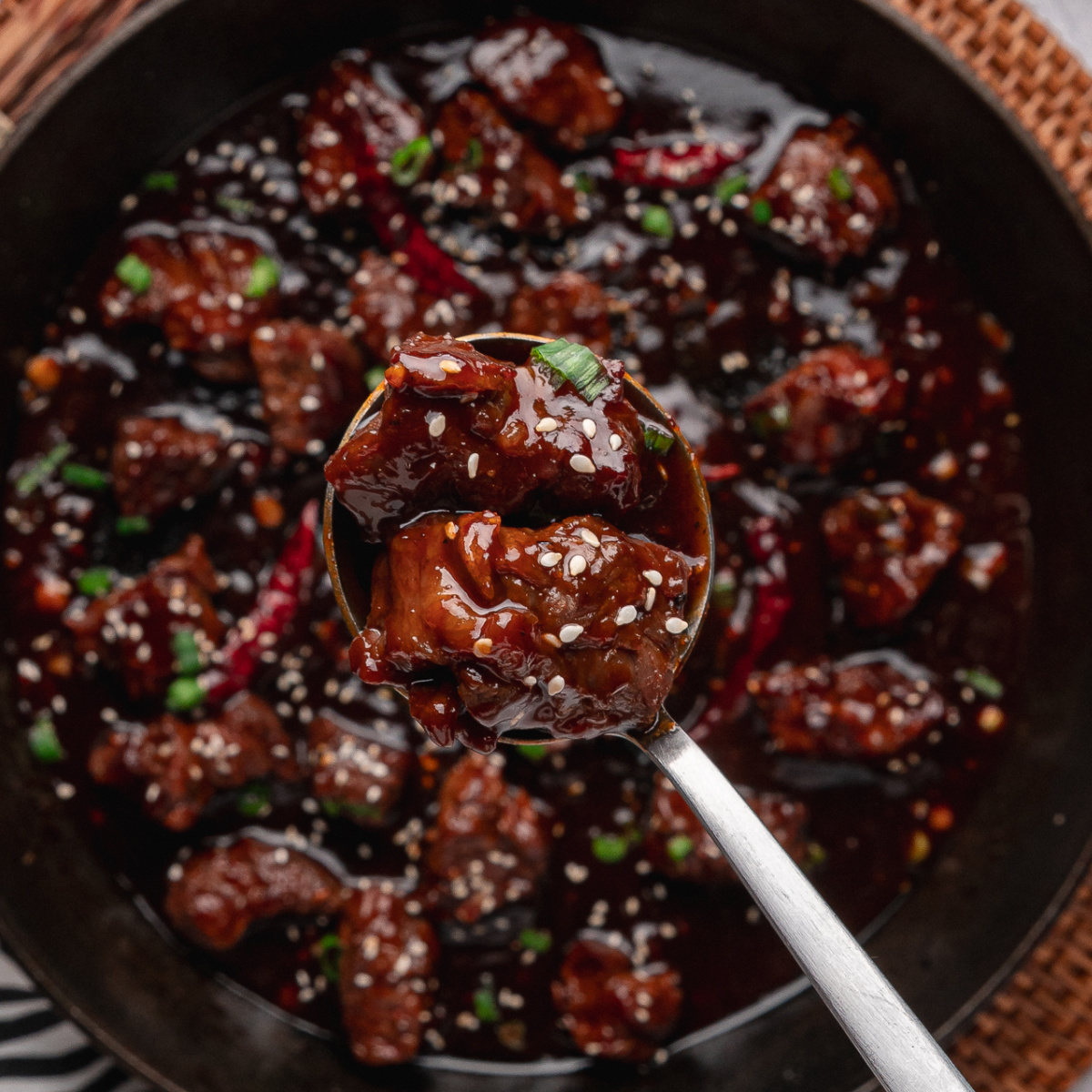
Gochujang is a fermented Korean chili paste that brings spice, sweetness, and savory flavor all at once. In this recipe it’s whisked with honey, hoisin, soy sauce, and rice vinegar to create a thick glaze that coats the steak bites as they finish in the skillet. The sauce caramelizes quickly around the seared beef and turns glossy, making these gochujang steak bites perfect to spoon over rice.
Gochujang Steak Bites
Equipment
- large skillet A heavy skillet (I prefer cast iron) helps the steak develop a proper sear and keeps the pan hot when the steak is added.
- mixing bowls Used to season the steak and whisk the sauce ingredients together.
Ingredients
Steak:
- 1 lb (454 g) ribeye or strip steak, sirloin cut into 1-inch (2.5 cm) pieces
- 2 tbsps (30 ml) avocado oil or other neutral oil, divided
- ¾ tsp (4 g) kosher salt
- ½ tsp (1 g) black pepper
Sauce:
- ¼ cup (70 g) Gochujang (Korean chili paste)
- 2 tbsps (42 g) honey
- tbsps (54 g) hoisin sauce
- 1 tbsp (15 g) rice wine vinegar
- 2 tbsps (30 ml) low sodium soy sauce
- ½ tsp (2.5 ml) sesame oil
Slurry (for sauce):
- 1 tsp (3 g) cornstarch
- 1 tbsp (15 ml) water
Aromatics and Finish:
- 3 cloves garlic minced
- 3 green onions thinly sliced, white and green parts separated
- 4-5 dried red chiles you could also use Chiles de árbol it will just be a little spicier. (optional)
- ½ tsp (2.5 ml) sesame oil for finishing
- 1 tsp (3 g) sesame seeds for garnish
Instructions
- Pat the steak pieces dry with paper towels and place them in a bowl. Add 1 tablespoon (15 ml) avocado oil, the kosher salt, and black pepper and toss to coat evenly.1 lb (454 g) ribeye, 2 tbsps (30 ml) avocado oil, ¾ tsp (4 g) kosher salt, ½ tsp (1 g) black pepper
- In a medium bowl whisk together the gochujang, honey, hoisin sauce, rice wine vinegar, low-sodium soy sauce, and sesame oil until smooth.¼ cup (70 g) Gochujang (Korean chili paste), 2 tbsps (42 g) honey, tbsps (54 g) hoisin sauce, 1 tbsp (15 g) rice wine vinegar, 2 tbsps (30 ml) low sodium soy sauce, ½ tsp (2.5 ml) sesame oil
- In a small bowl whisk together the cornstarch and water to make a slurry, then whisk the slurry into the sauce mixture until fully combined.1 tsp (3 g) cornstarch, 1 tbsp (15 ml) water
- Heat the remaining 1 tablespoon (15 ml) avocado oil in a large skillet over medium-high heat until the oil shimmers.
- Add the steak pieces in a single layer. Cook them in batches if necessary so the pan is not crowded. Let the first side sear without moving for about 2 minutes, then flip and sear the second side for 1 to 2 minutes more until browned on the outside. Transfer each batch to a bowl as it finishes.
- Reduce the heat to medium. Add the minced garlic, the white parts of the green onions, and the optional dried red chiles to the skillet. Stir constantly until fragrant, about 20–30 seconds.3 cloves garlic, 3 green onions, 4-5 dried red chiles
- Return the steak to the skillet and pour in the sauce. Toss everything together and let the sauce bubble for 30–45 seconds until it thickens and coats the steak. If the sauce becomes too thick, stir in 1 to 2 tablespoons (15-30 ml) of water.
- Drizzle the remaining sesame oil over the steak and toss once more.½ tsp (2.5 ml) sesame oil
- Top with the green parts of the green onions and sesame seeds before serving.1 tsp (3 g) sesame seeds
- Serve immediately over rice.
Notes
- Dry steak well so it sears instead of steaming.
- Cook in batches so the skillet stays hot.
- If the sauce gets too thick, add a splash of water.
- Small dried chiles like Thai chiles or chile de árbol work well here.
- Ribeye, strip steak, or sirloin all work well. Chuck eye, if you can find it would also work as more of a budget cut option.
- Serve over rice so the sauce soaks in.
Nutrition
Have you made these Gochujang Steak Bites? I’d love to hear how they turned out – leave a comment below and let me know.
As an Amazon Associate and member of other affiliate programs, I earn from qualifying purchases.
Kim says
Made these for dinner last night after you posted and absolutely loved them. Served over rice too, I also lov Korean flavor. Love how your grandma was open to it.
Bebe Kirs says
Loved how delicous this turned out. Really really good.
James says
Loved the steak bites. Never thought about adding gochujang to them before but it was a great meal.