
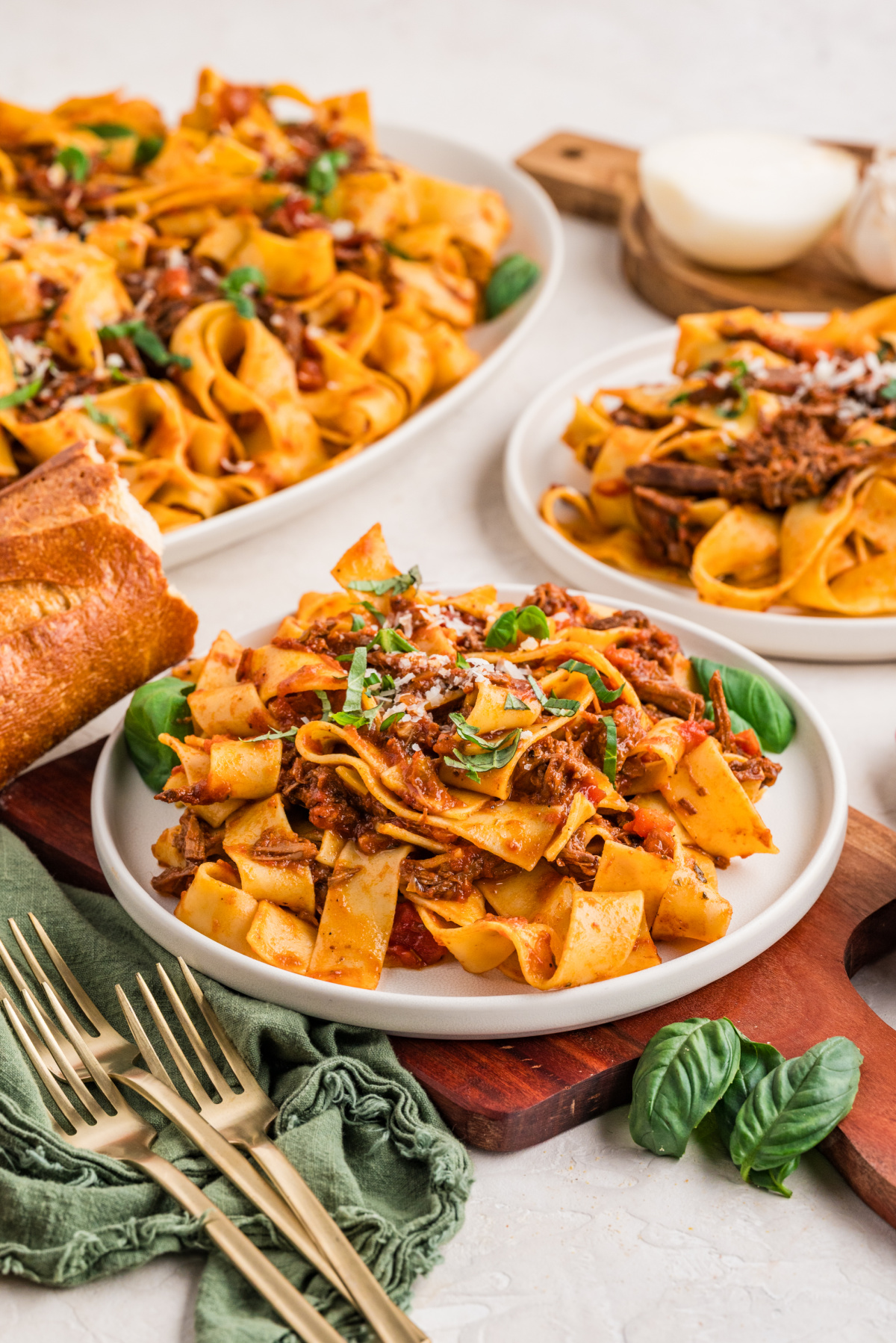
This slow-braised beef ragù starts with a good sear and ends in the oven, cooking the way old farm sauces did: silently, evenly, without hurry. Toss it with pappardelle and you get a bowl that tastes like it came from a kitchen that’s seen years of winters.

Braised Beef Ragù for the Long Evenings
Some recipes feel like they were made for houses like mine, built against the trees, dim by five, the kind of place where the old wood in the kitchen holds heat long after the oven cools. A slow-braised beef ragù definitely belongs here. It finds itself in the boards, the grain, and into the subtle the way dusk settles over rural Oregon in a slow, smoky, and without fanfare kind of way.
The work begins in a heavy pot, the kind that belongs on the stove like mine. Olive oil goes shimmery, and the chuck roast hits with a sound that fills the room – a very deep, searing hiss that smells like iron and rain-soaked earth. It leaves its story behind on the bottom of the pan, a dark lacquered fond you scrape up later like someone was gathering evidence of the day.
The soffritto softens under that history of it all with onions, carrots, celery. They are the familiar saints of cold-weather cooking. Tomato paste darkens, balsamic cuts through the sweetness and the garlic blooms. Crushed tomatoes are folded in, diced tomatoes follow, and the whole pot turns into something thick and red and certain, the kind of sauce that knows what it’s becoming long before you do.
Then you give it to the oven and let time finish the work. Hours pass the way winter afternoons do up here…unhurried and scented with something good. The beef slackens, then does this surrending type of thing, falling apart at the touch like it was waiting for the chance all along.
When you pull it from the oven and fold it into broad ribbons of pappardelle, everything holds on the way warmth holds on to skin when you open the door to the cold. It’s a very sturdy, masculine and honest recipe. The kind of meal that doesn’t flinch when you come to it tired.
Make it on a day when the fog hangs low across the treeline or when the house feels lonely and you want the kitchen to remember you. Make it because some dishes don’t just feed you, they fortify you.
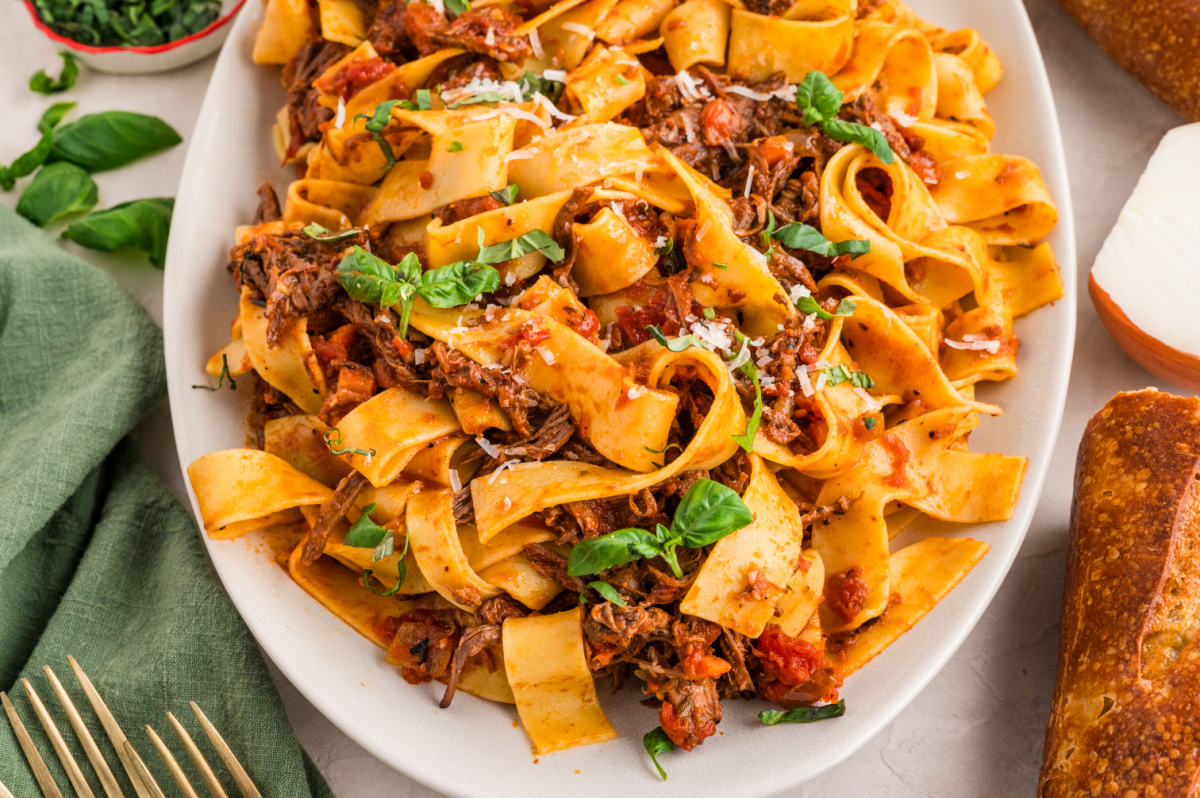
Why I Love This Recipe
- The beef turns tender in that slow, steady way only an oven braise can teach you.
- The sauce deepens hour by hour until it tastes like it came from a kitchen lined in old wood.
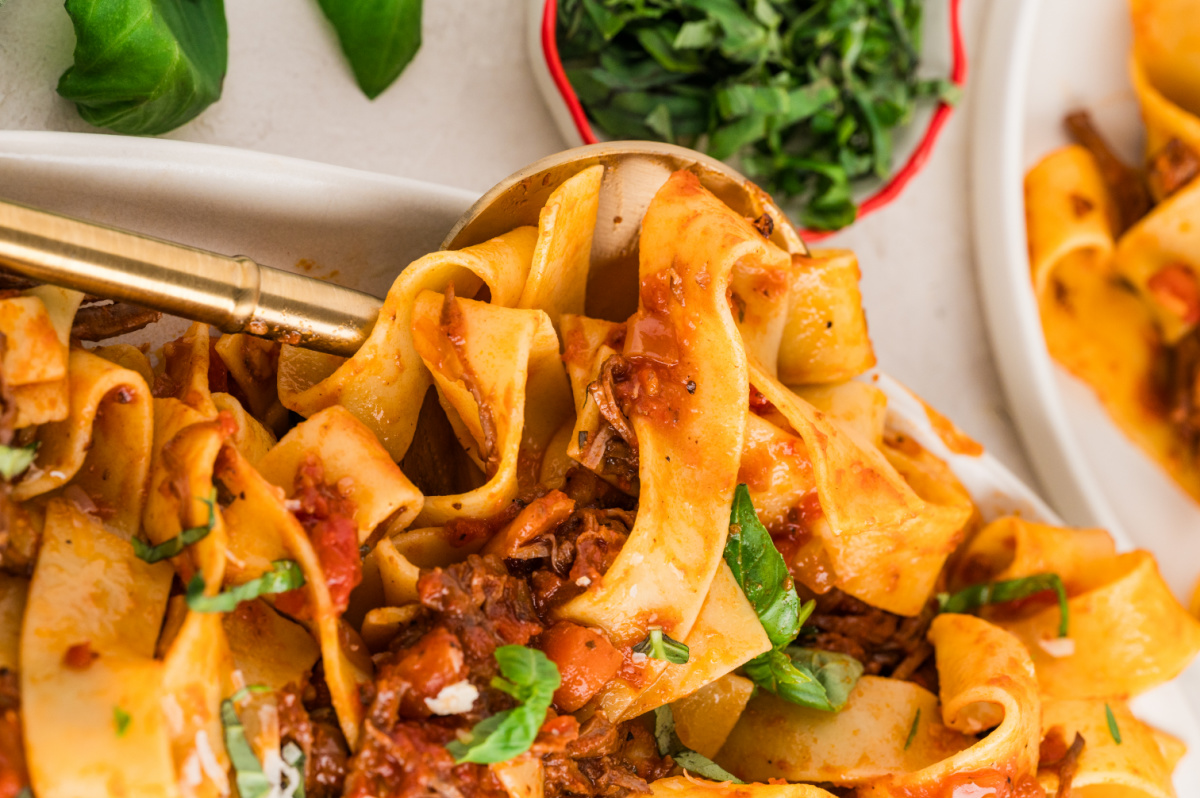
- Pappardelle catches every strand of the ragù, the way wide noodles always do in winter cooking.
- The balsamic gives a dark, quiet brightness that defines the whole pot.
- It’s the kind of meal that gathers people to the table whether you planned for company or not.
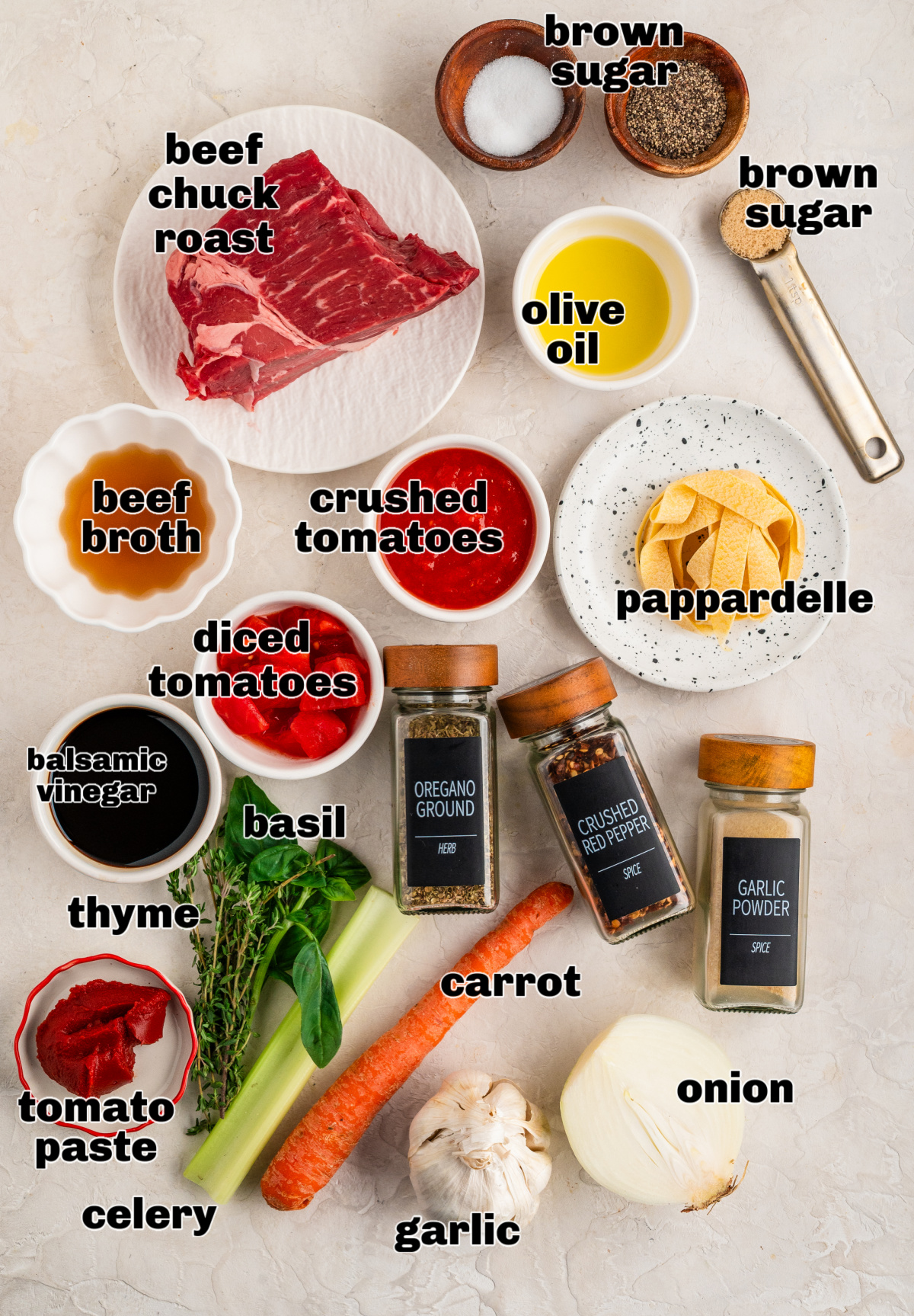
Ingredients
- Olive oil & chuck roast – Heat, sear, and that first plume of beef hitting iron.
- Salt, pepper, garlic powder – The bare-bones seasoning that sinks in and stays.
- Onion, carrots, celery – The old trio softening in the pot, the smell every cold evening remembers.
- Garlic & tomato paste – The deeper notes; they darken the sauce in all the right ways.
- Beef broth – Pulls the fond from the pan like gathering up the story so far.
- Crushed & diced tomatoes – one for body, one for bite; they thicken as the hours pass, the same slow patience that lives in my spaghetti bolognese.
- Balsamic vinegar & brown sugar – A small shadow, a small sweetness.
- Oregano, basil, thyme – Woodland herbs that feel like they’ve been drying on a hook all winter.
- Pappardelle – Wide noodles that catch the ragù the way hands catch falling heat.
- Parsley & parmesan (optional) – Only if you want a little light at the end.
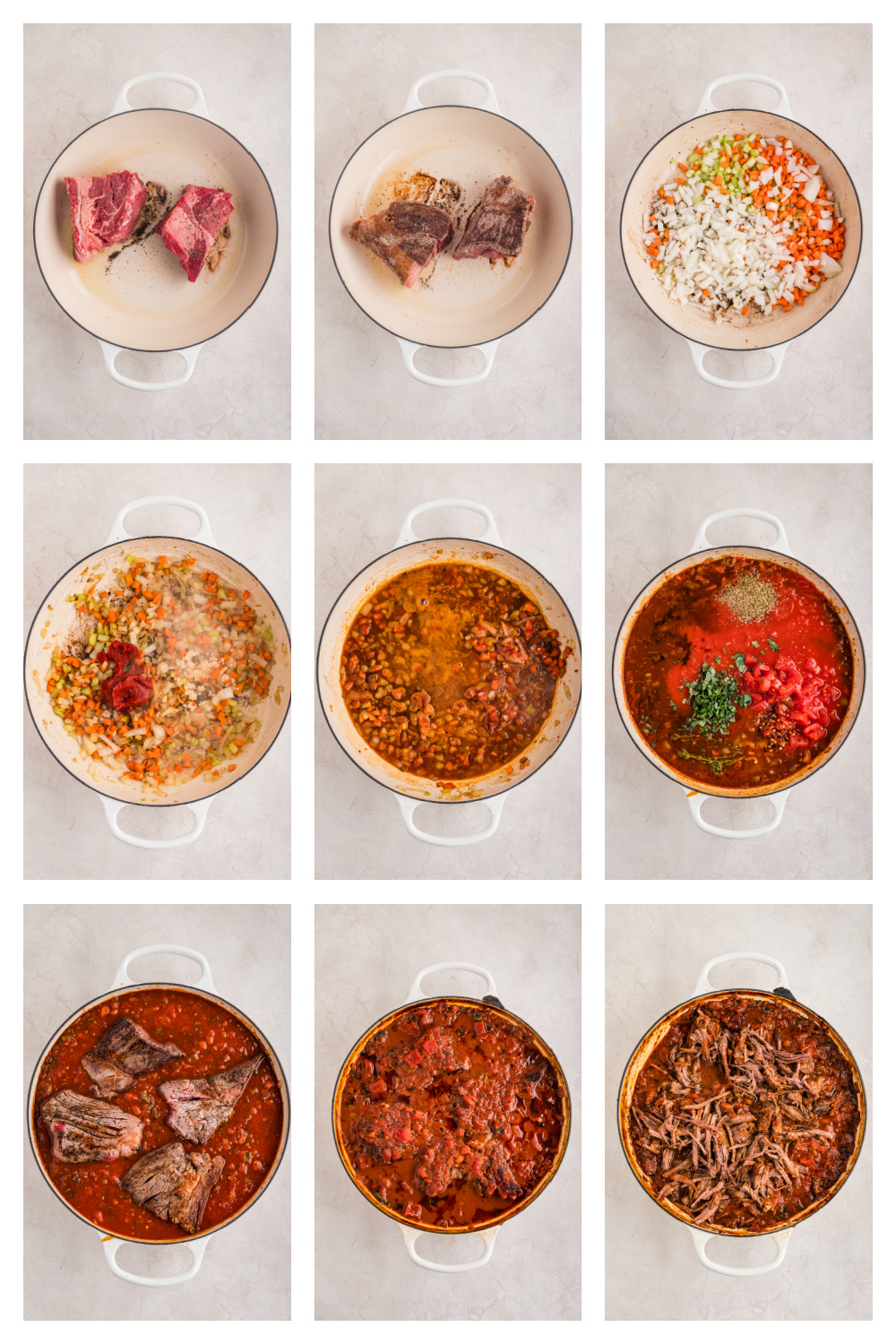
How to Make Slow-Braised Beef Ragù with Pappardelle
Find the complete printable recipe with measurements in the recipe card at the BOTTOM OF THE POST.
- Step One (sear the beef)
Heat the oven to 350°F (177°C) and pull out the heaviest pot you own. Warm the oil until it slips across the bottom, then lay in the seasoned chuck pieces. They should hit with a hiss that feels earned. Brown them deeply, working in batches so nothing clouds the heat. Move the pieces aside. - Step Two (build the base)
Add the onion, carrots, and celery to the pot and let them soften in the leftover fat. This is the moment the house changes temperature. Stir in the garlic and tomato paste and cook until everything darkens and clings to the spoon. - Step Three (deglaze and load the pot)
Pour in the beef broth and scrape the bottom clean. That fond is the whole story. Add the crushed and diced tomatoes, the balsamic, the brown sugar, the herbs, and the red pepper flakes. Give it one slow turn. Set the beef back into the pot and cover it with sauce so every piece settles where it should. - Step Four (give it to the oven)
Lid on. Slide it into the oven and let the heat carry it for 2½ to 3 hours. The beef will loosen, then surrender, then turn into something that looks like it’s been cooking all winter. Pull the pot out and let it rest while the pasta cooks. - Step Five (bring it together)
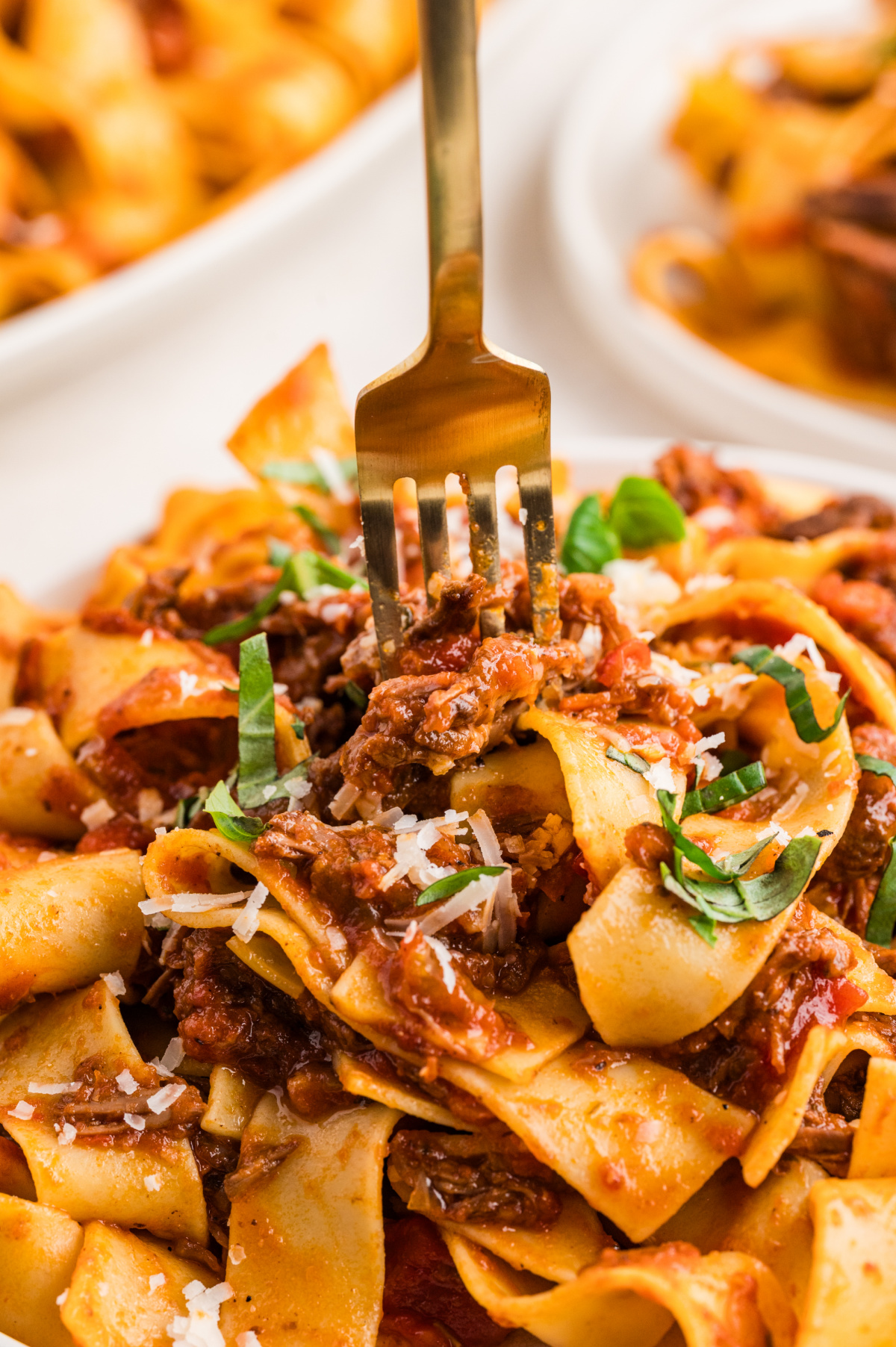
Boil the pappardelle in salted water until it softens and unravels. Save a splash of pasta water. Pull the herb bundle from the pot, lift out the beef, and shred it with two forks. Return it to the sauce and fold in the pasta. The noodles will take on the ragù the way cold hands take on heat. Add pasta water only if you want it looser. - Step Six (serve)
Spoon into bowls and finish with parmesan or parsley if you want a little brightness. It doesn’t need much, this is the kind of dish that arrives fully formed.
Recipe Tips
- Let the beef warm up before you sear it. A roast pulled straight from the refrigerator holds the cold too tightly, even after a good sear. It drags out the braise and keeps the heat from moving through the center. Give the beef time to come to room temp.
- Brown the beef until the kitchen smells like woodsmoke. If it reminds you of a fire ring on damp ground, you’ve gone far enough.
- Let the vegetables slump. Onion, carrot, celery – they should soften the way trees lean after too many storms. They are the quiet architecture of the whole dish.
- Take the tomato paste to the edge. Cook it until it darkens and clings to the pot like something that’s lived a long life there.
- If you want to use wine, add 1/2 cup (120 ml) of dry red and keep the balsamic. Use the wine right after the tomato paste, let it simmer, and burn off its sharpness before adding the broth. It deepens the ragù in a way only wine can, but the balsamic stays for balance. One brings the woods, the other brings the night air. Together, they round out the pot.
- Tie the herbs tight. Think of old twine in a shed, holding bundles together through winters no one remembers.
- Shut the lid and trust the heat. The best work happens when no one’s watching, same as most things worth waiting for.
- If you have the time and willpower, let the cooked beef rest in its silence. Pull it from the oven and leave it alone. Twenty minutes of solitude makes it fall apart the right way.
- Use pasta water to wake the sauce. A splash is all it takes, like a thin mist rolling back into the trees.
- Choose pappardelle. The wide noodles hold the ragù perfectly.

Storage
- Refrigerator: It holds for 4–5 days, sealed tight. The flavors settle into each other overnight, and by day two or three it tastes like the woods outside have moved into the pot. Warm it gently so the meat stays tender.
- Freezer: If you know ahead you want to freeze it, keep the pasta and ragù separate. Freeze only the sauce; it thaws easier and reheats without losing its softness. When you’re ready to serve, boil a fresh pot of pappardelle and fold it in like new snow disappearing into heat.
- If your thawed ragù feels too thick, loosen it with a splash of pasta water or broth until it finds its shape again.
FAQs
- Can I make the ragù a day ahead?
Yes. It’s actually better that way. The sauce settles overnight and turns deeper, richer, more sure of itself. Warm it low and slow the next day and it will taste like it was meant for that moment. - Can I use a different cut of beef?
Chuck roast is the classic because it breaks down into long, tender strands. But brisket or beef short ribs work too; they’ll give you a heavier, more rustic ragù with a deeper edge, and cooking times will vary. - What if I don’t have a Dutch oven?
Use any heavy, oven-safe pot with a tight lid. If your lid isn’t perfect, cover the pot with foil first to keep the moisture where it belongs. - Can I cook this on the stovetop instead of the oven?
Yes, but keep the flame low and steady. The ragù should barely move, just the soft, occasional bubble of something finding its way home. Stir every so often so nothing settles and burns. - How do I thicken a ragù that feels too loose?
Let it simmer uncovered for 10–15 minutes. The liquid will cook down and the beef will draw the sauce in. If it’s still thin, add a spoonful of tomato paste. - How do I thin a ragù that gets too thick?
A little pasta water, broth, or even a splash of milk softens it back into place. Start small. This sauce responds to gentleness. - Can I add mushrooms or other vegetables?
Yes. Cremini or porcini give the sauce a darker, earthier shadow, very Oregon winter. Add them after the soffritto softens so they have time to brown. - What pasta shapes work besides pappardelle?
Tagliatelle, fettuccine, or even rigatoni. Anything with enough surface to hold onto the sauce. But pappardelle is the one that feels like it was made for long-braised beef. - Can I make it spicy?
A little more red pepper, a pinch of smoked paprika, or even a cracked dried chile tossed in with the thyme sprigs will do it. This ragù takes heat well. - What wine would pair best when serving?
Something bold but not sweet. An Oregon Pinot Noir if you want to stay close to the land, or a Tuscan red if you want it to taste like its roots.
More Cold-Weather Dishes to Settle Into
- Beef Bourguignon – deep wine broth, slow surrender.
- Beef Irish Stew – Guinness heat, roots and comfort.
- Slow Cooker Beef and Tomato Stew – tomato-rich, tender all day.
- Classic Pot Roast – fall-apart beef, old-style warmth.
This post may contain affiliate links. Please read my disclosure policy.

Slow-Braised Beef Ragù with Pappardelle
Equipment
- Dutch Oven or heavy braising pot. For searing and steady oven braising.
- tongs For turning, removing and shredding the beef.
- large pot To cook the pappardelle during the resting period.
Ingredients
- 2 tbsps (30 ml) olive oil
- 2½ lbs (1.13 kg) chuck roast cut into 4 pieces, bring to room temperature
- 2 tsps (10 g) kosher salt if using table salt, use 1 tsp, 5 g
- 1 tsp (3 g) coarsely ground pepper
- ½ tsp (2 g) garlic powder
- 1 medium yellow onion diced
- 2 medium carrots diced (peel if you want, it's not necessary)
- 1 rib of celery diced
- 5 cloves garlic minced
- 3 tbsps (48 g) tomato paste
- 1⅓ cups (315 ml) low-sodium beef broth or stock
- 1 can (28 oz / 794 g) crushed tomatoes
- 1 can (14 oz / 397 g) diced tomatoes
- 3 tbsps (45 ml) balsamic vinegar
- 1 tsp (4 g) light brown sugar
- 1 tsp (1 g) dried oregano leaves
- 1 tsp (1 g) dried basil leaves
- ¼ tsp (0.5 g) red pepper flakes
- 3 sprigs fresh thyme
- 16 oz (454 g) pappardelle reserving ½ cup pasta water if needed
- parsley
- freshly grated Parmesan
Instructions
- Preheat the oven to 350°F (177°C).
- Heat the olive oil in a braising pan or Dutch oven over medium heat. While the oil heats, season each piece of the chuck roast with salt, pepper, and garlic powder. Sear two pieces at a time for 2–3 minutes per side, or until deeply browned. Transfer the seared meat to a plate or bowl.2 tbsps (30 ml) olive oil, 2½ lbs (1.13 kg) chuck roast, 2 tsps (10 g) kosher salt, 1 tsp (3 g) coarsely ground pepper, ½ tsp (2 g) garlic powder
- Reduce the heat to medium and add the onion, carrots, and celery. Sauté for 5–6 minutes, or until the onion is softened. Add the garlic and tomato paste and cook for 2–3 minutes, stirring occasionally, until the paste darkens and the garlic is fragrant.1 medium yellow onion, 2 medium carrots, 1 rib of celery , 5 cloves garlic, 3 tbsps (48 g) tomato paste
- Deglaze the pan with the beef broth, scraping up the fond from the bottom. Stir in the crushed tomatoes, diced tomatoes, balsamic vinegar, brown sugar, oregano, basil, red pepper flakes, and thyme sprigs. Return the seared meat to the pan, ensuring it is submerged in the sauce. Cover with a lid and transfer the pan to the oven. Braise for 2½–3 hours, or until the beef is tender and shreds easily.1⅓ cups (315 ml) low-sodium beef broth, 1 can (28 oz / 794 g) crushed tomatoes, 1 can (14 oz / 397 g) diced tomatoes, 3 tbsps (45 ml) balsamic vinegar, 1 tsp (4 g) light brown sugar, 1 tsp (1 g) dried oregano leaves, 1 tsp (1 g) dried basil leaves, ¼ tsp (0.5 g) red pepper flakes, 3 sprigs fresh thyme
- Remove the pan from the oven and let the ragù rest for 20–30 minutes.
- During the final minutes of resting, cook the pappardelle in a salted pot of boiling water according to package directions. Reserve 1/2 cup (120 ml) of the pasta water. Discard the thyme bundle, transfer the beef to a plate, and shred it with two forks. Return the shredded meat to the sauce. Add the cooked pasta and toss with tongs until coated, using the reserved pasta water as needed to loosen the sauce.16 oz (454 g) pappardelle
- Serve warm with parsley, parmesan, and crusty bread, if desired.parsley, freshly grated Parmesan
Notes
- Start with room temperature beef.
- Brown the beef deeply to build a stronger base.
- Let the tomato paste darken before adding liquids for more depth.
- If adding wine, use 1/2 cup (120 ml) dry red after the tomato paste; simmer before adding broth.
- Add pasta water slowly at the end, the sauce responds best to small adjustments.
Nutrition
Have you made these Slow-Braised Beef Ragù with Pappardelle? I’d love to hear how they turned out — leave a comment below and let me know.
As an Amazon Associate and member of other affiliate programs, I earn from qualifying purchases.
Sandra says
This recipe hits all the right notes and I love that I don’t have to run out and get wine which I never keep in the house. I’m wondering what other cuts of beef such a short ribs or brisket which I happen to have in the the freezer this is the best recipe for Bolognese or Ragu that I’ve seen so far…
Cathy Pollak says
I am so glad you liked it. Short ribs and brisket both work for this ragù. They just need a little more time in the oven.
For short ribs, plan on about 3½ hours. They take longer to soften, but once they do, the sauce turns deep and rich.
For brisket, start checking around the 3 hour mark. It often needs another 20 to 30 minutes. You want it to pull apart with hardly any effort.
Everything else stays the same. Same pot, same heat, same rest at the end. The cut only changes how long it takes to get there.
Seria says
Made for dinner last night, absolutely perfect. No leftovers, we polished it.
Cathy Pollak says
Happy to hear that!
Kate says
The poetic preamble to this recipe captured my interest and led me to cook with care.
Family loved the result.
Cathy Pollak says
I love that, thank you.
Jim N says
I think I could fall in love with anyone who can write about food this way. I feel all of it. Seriously.
Cathy Pollak says
Jim, thank you, that’s such a generous thing to say. I’m glad the writing reached you.
Julie says
Made this for Sunday supper and honestly it was amazing and so easy. Loved it.
Jen D. says
Not only does this look incredibly tasty, I agree with Jim, your writing is absolutely BEAUTiFUL! I typically briefly skim the preambles to recipies but with this one, I Read.Every.Word. Multiple times. Its deeply poetic.
FIVE stars for the writing and I can’t wait to try the actual recipe! Do you think this could be made equally well in a crock pot, Im thinking low and slow?
Cathy Pollak says
Hi Jen, that’s so nice of you to say. This one meant a lot to write, so I’m glad you enjoyed it.
And yes, you can absolutely in a slow cooker with a few caveats. You will still want to sear the beef on the stove and keep everything low and slow so the beef stays tender and the sauce reduces the way it should. You may want to finish the last 20-30 minutes uncovered or transfer the sauce to a pot on the stove to thicken to your liking. Cooking times may also vary in slow cooker, you’ll know it’s ready when the meat shreds easily.
Hope you love it, it’s perfect for the season.
Jen says
Thank you for the tips, I made this today in the slow cooker and it was fantastic!!!
Cathy Pollak says
You’re welcome.
Holly says
This was incredible. Perfect comfort food for a winter night. This will definitely become a go-to weekend recipe for our family.
Lauren says
I”I’ll take the second on my house and give it a try. I looked at the chuck roast yesterday, $31 to 38. Just can’t do it.
Reece says
This turned out exquisite.
Kat says
Fabulous, as usual. I love your recipes and I love the way you write about them. I made this one tonight, exactly as described, and it was wonderful. This is another one that’s going to go in our rotation. The Beef was so rich and the sauce tangy, and the red pepper flakes gave just enough heat – – perfect.
Cathy Pollak says
Thank you!