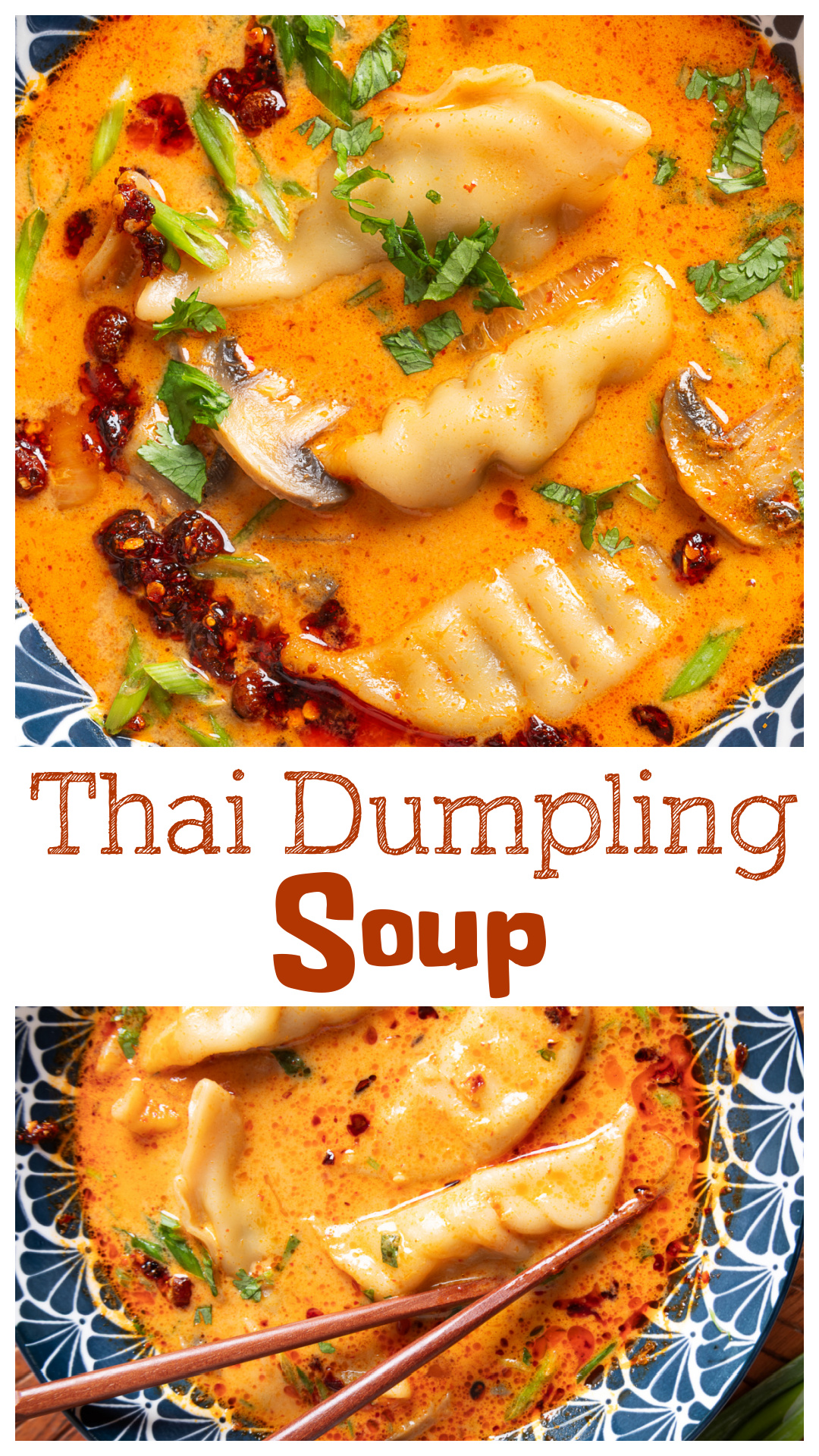
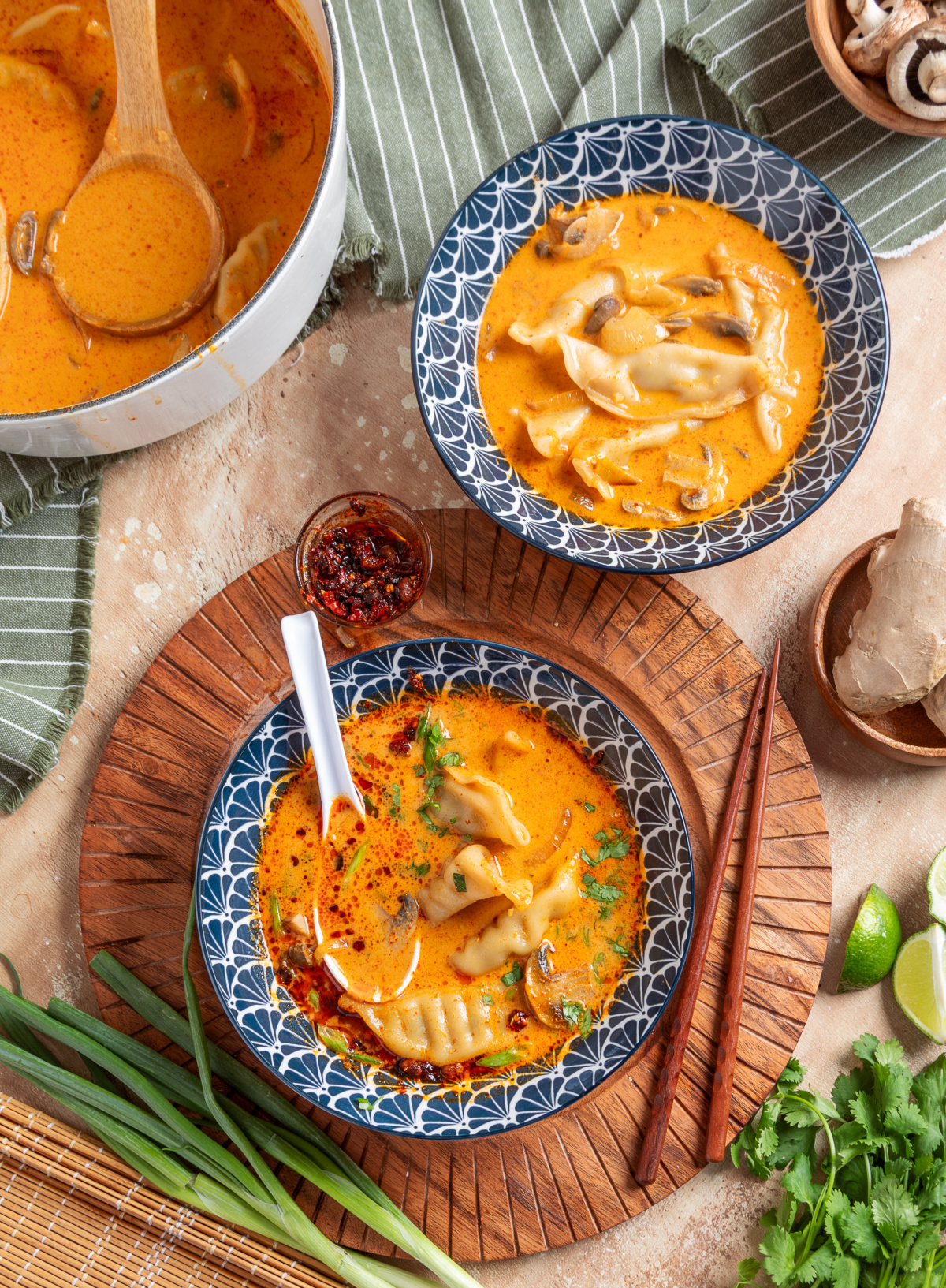
I make this Thai dumpling soup with frozen pork potstickers simmered in a coconut red curry broth with mushrooms. It’s ready in about 30 minutes, and I finish mine with chili crisp and fresh cilantro.
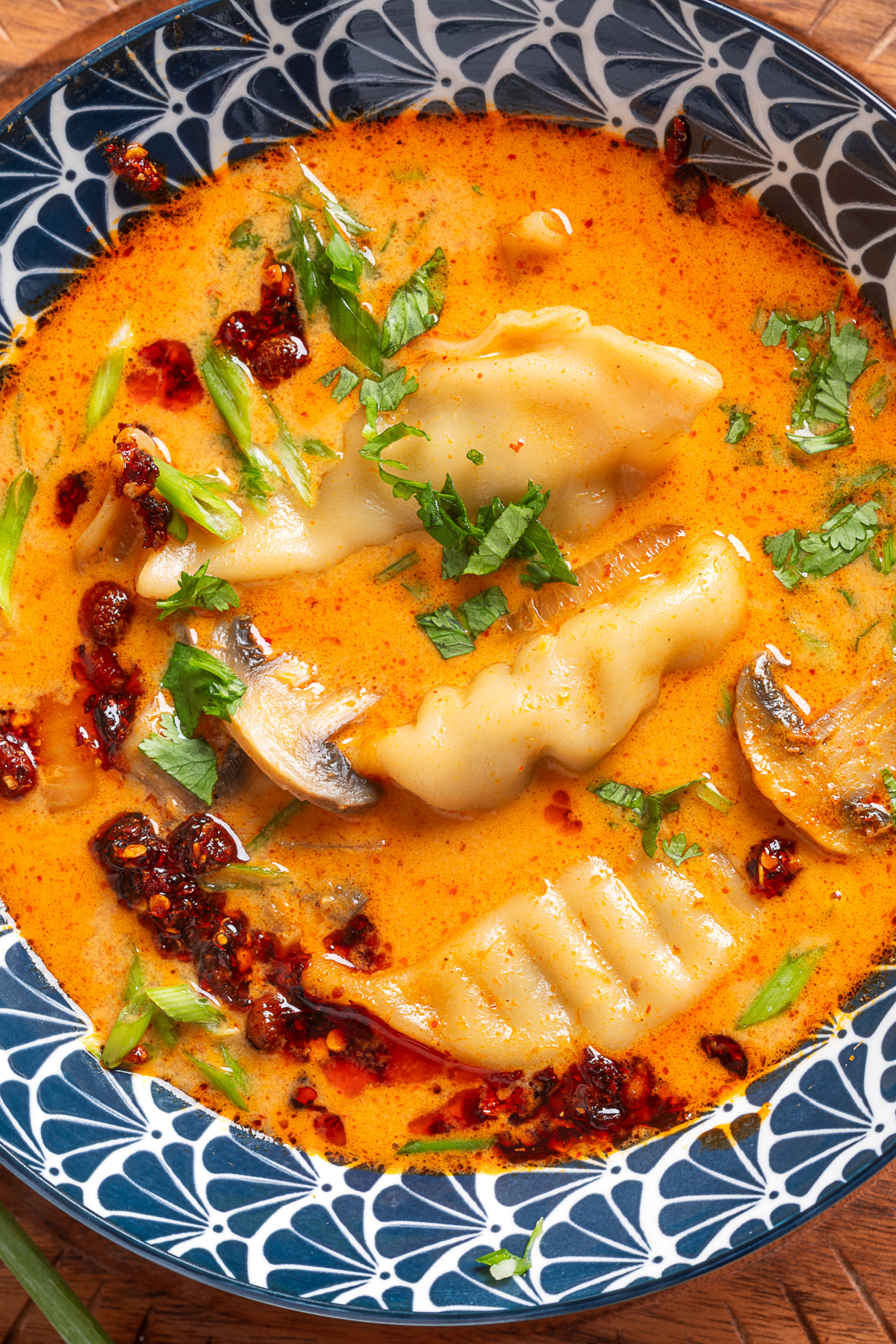
Thai Dumpling Soup with Red Curry and Coconut Milk
When I lived in Northern California for six years, there was a small Thai restaurant in town where I’d stop for soup. I went often enough that it became part of my routine. I knew I could stop, pick up soup to bring home, and have dinner taken care of without having to cook.
It was a busy time in my life, and there were days and nights when cooking wasn’t happening. Years later, I’m still thinking about that soup and how much I liked it. Eventually, I did start making something similar at home, and over time it has turned into this Thai dumpling soup.
This is my Thai-inspired take on it, with a few shortcuts that make it easy enough to cook whenever the craving for it hits. It’s not the soup from that restaurant, but it reminds me of the nights when dinner was already taken care of.
The Decisions Behind This Recipe
- Frozen pork potstickers are what make this an easy dinner to get on the table. I can make it for lunch or dinner without spending half the day in the kitchen. I add six potstickers to a bowl, and that’s dinner.
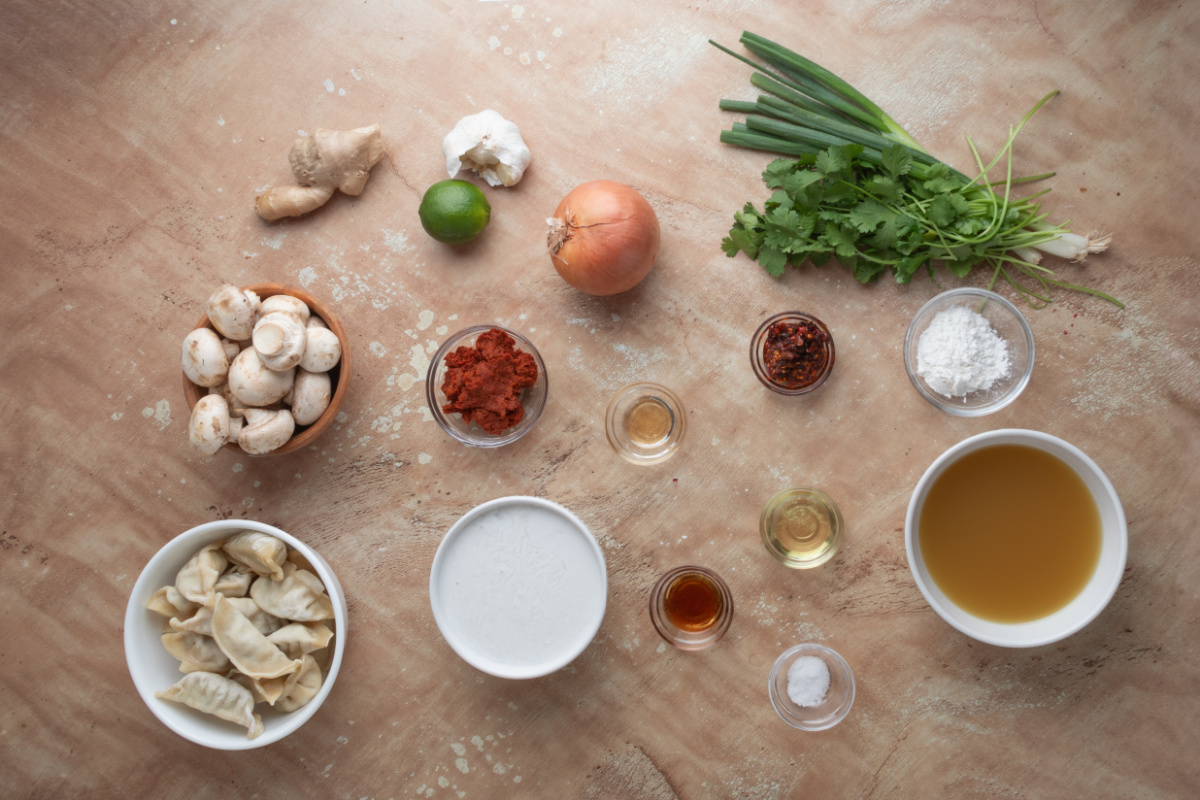
- I cook the red curry paste with the onion, ginger, garlic, and sesame oil before adding any liquid. It gives the curry paste a chance to come alive in the pot and lets the ginger and garlic get involved before the coconut milk comes in and calms everything down.
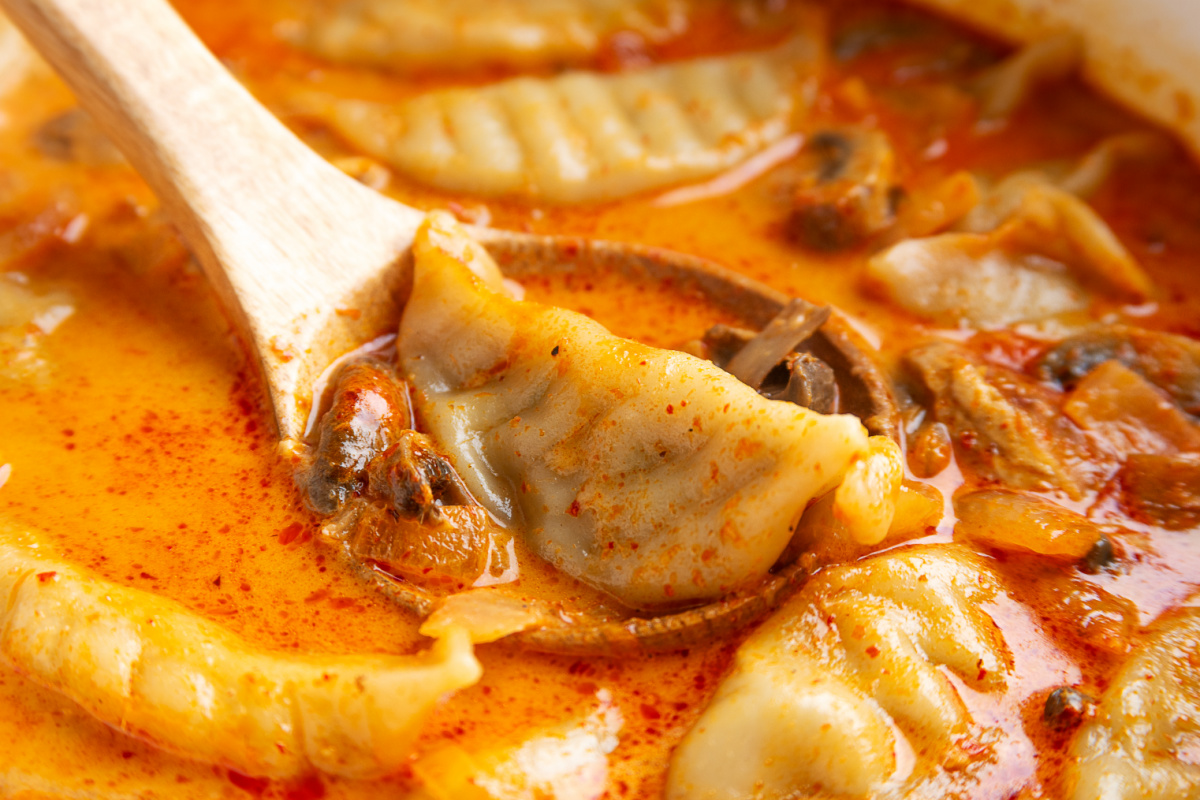
- I use full-fat coconut milk and chicken broth without thickening the soup because I want it to stay brothy enough for a spoon instead of turning it into a curry sauce with dumplings in it. The coconut milk makes it creamy on its own. I did include an optional cornstarch step for anyone who likes a thicker broth, because your bowl can have different needs than mine.
- Eight ounces of mushrooms might seem like a lot for this soup, but it really isn’t. They add an earthy flavor and another texture, making the soup more hearty without adding another protein.
- Fish sauce and lime juice go in after the soup comes off the heat. The fish sauce adds so much. Why are there so many haters of fish sauce?! It adds a savory, salty edge, while the lime helps balance the richness of the coconut milk and curry. I always taste the broth before adding more salt because the curry paste and fish sauce may have already done enough.
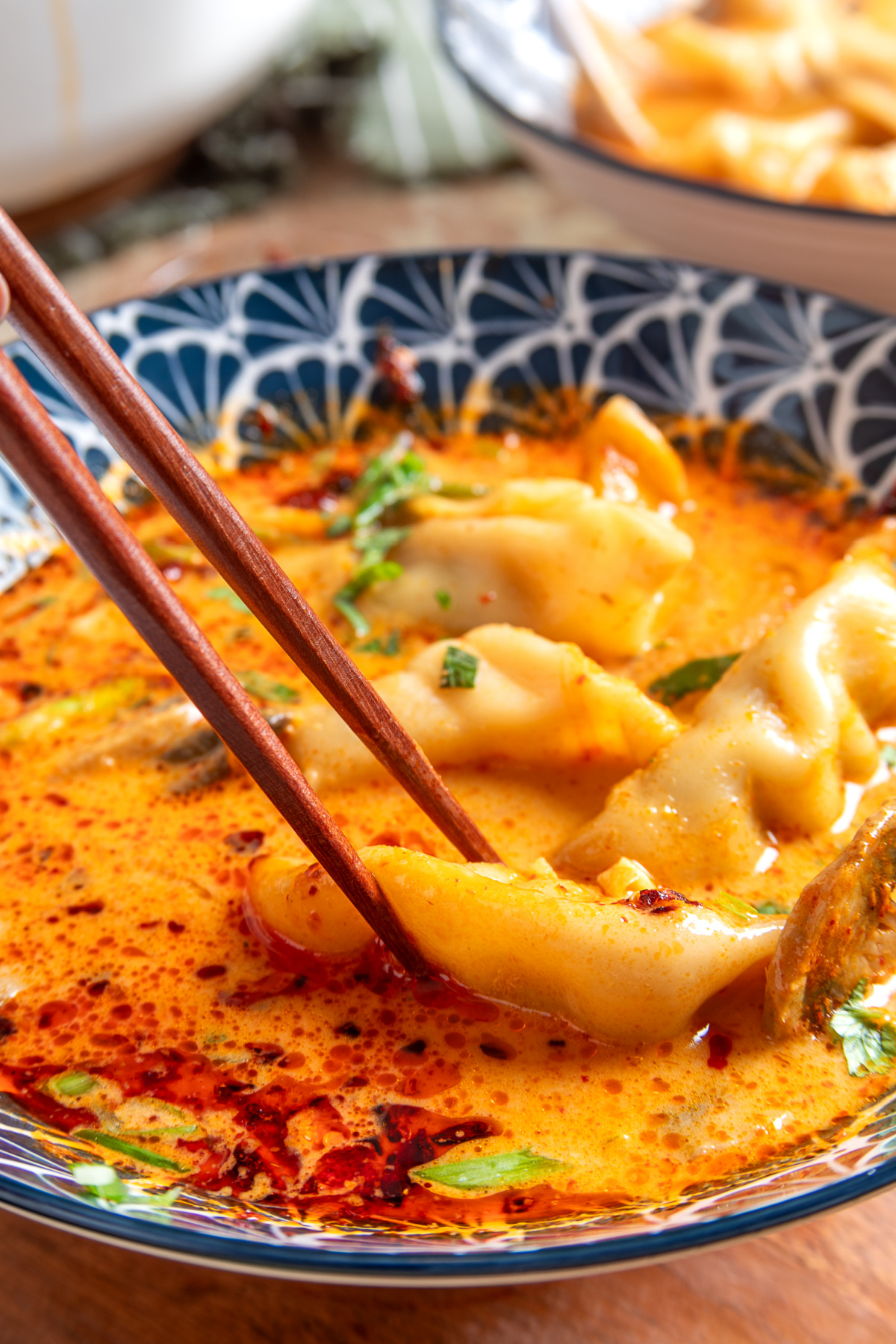
- I keep the chili crisp out of the pot and let everyone add it to their own bowl. That way, the red oil and crispy parts stay visible, and anyone else eating can make their own spice decisions.
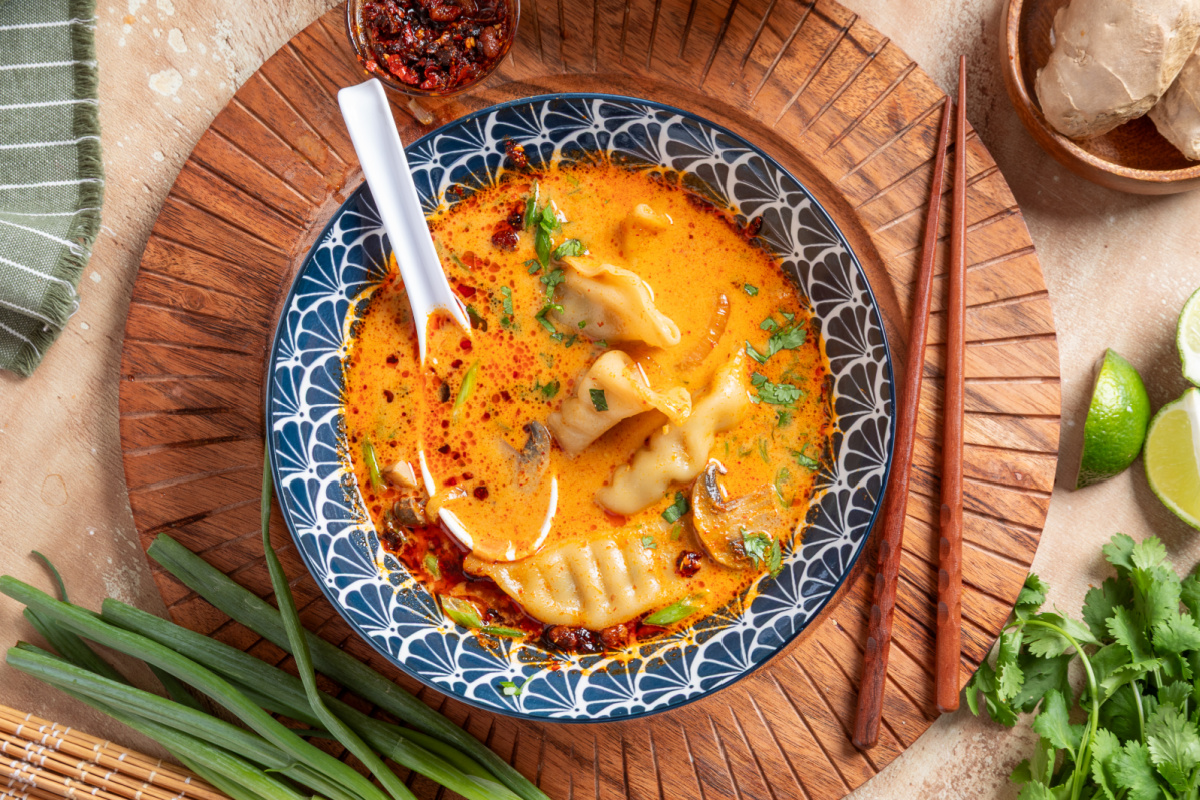
Ingredients
- Avocado oil – Start with a little, then add another drizzle if the pot looks dry while the aromatics are cooking. Any neutral oil will work, but avocado oil is what I use.
- Yellow onion – I slice it instead of dicing it so you still get soft pieces of onion in the finished soup.
- Fresh ginger, garlic, and toasted sesame oil – Fresh ginger and garlic flavor the broth before the curry paste even gets involved, and even the small amount of sesame oil adds a nutty aroma I love.
- Thai red curry paste – Different brands vary a lot in heat and saltiness, so start with less if you’re unsure. I use two tablespoons for a milder soup and add more when I want a stronger curry flavor.
- Full-fat coconut milk and low-sodium chicken broth – Use canned, unsweetened full-fat coconut milk, not the refrigerated coconut beverage. It makes the broth creamy, while low-sodium chicken broth lets you control the salt once the curry paste and fish sauce are added.
- White button mushrooms – They’re easy to find, affordable, and cook right in the curry broth. Shiitake mushrooms would also work if you want a stronger mushroom flavor.
- Frozen pork potstickers – Buy a brand you like and check the package before you start. Some can simmer directly in the soup, while others need to be cooked separately. Gluten-free pork potstickers are fine too if that’s what you need.
- Fish sauce and fresh lime juice – Fish sauce seasons the broth with a savory, salty depth, while lime keeps the coconut milk from tasting too rich. Taste before adding extra salt because fish sauce and curry paste are already doing enough.
- Cornstarch and cold water (optional) – If you prefer a thicker coconut curry broth, whisk them together and stir the mixture in before adding the potstickers.
- Chili crisp, green onions, cilantro, and dry-roasted peanuts – These are optional, but I always use chili crisp and cilantro. Green onions add freshness, peanuts add crunch, but chili crisp adds the extra spice I want.
How to Make Thai Dumpling Soup
Find the complete printable recipe with measurements in the recipe card at the BOTTOM OF THE POST.
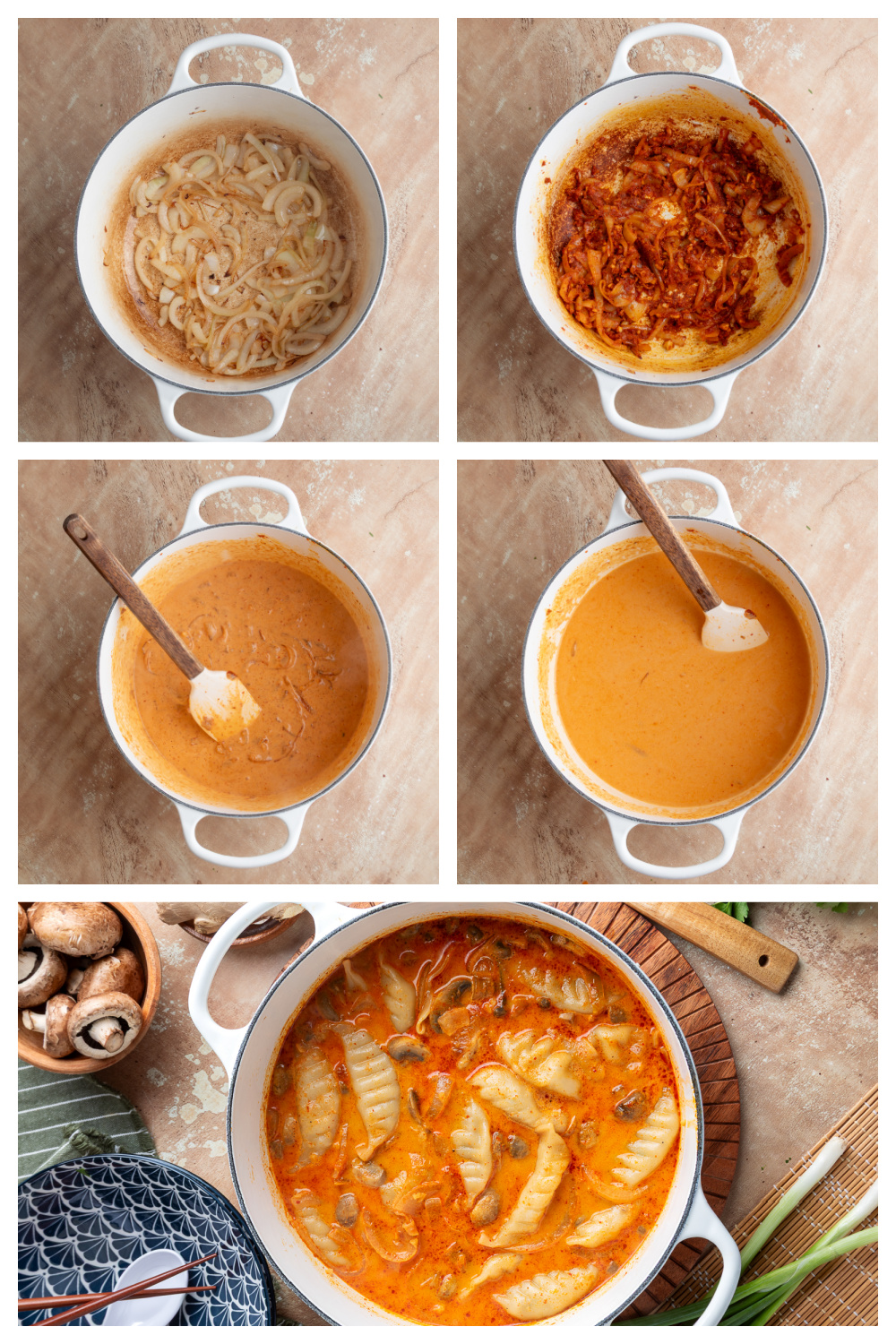
- Step One (soften the onions)
Heat the avocado oil in a large Dutch oven over medium heat, then add the sliced onion. Cook for 4–5 minutes, stirring now and then, until it softens. You’re not trying to brown it, so there’s no need to turn up the heat. - Step Two (cook the aromatics and curry paste)
Add the ginger, garlic, toasted sesame oil, and red curry paste. If the pot looks dry, add another small drizzle of avocado oil. Stir for 2–3 minutes, until the curry paste smells really good and the garlic is fragrant. Keep it moving so the garlic doesn’t brown. If it starts getting too dark, turn the heat down. - Step Three (make the coconut curry broth)
Slowly pour in the coconut milk, stirring until the curry paste is mixed into it, then add the chicken broth and sliced mushrooms. Bring the soup to a gentle boil and cook for about 5 minutes, until the mushrooms are tender. The broth should look creamy and rich, but it’s still soup. If you want a thicker broth, whisk the cornstarch and cold water together, stir it into the soup, and let it cook for another 2–3 minutes until slightly thickened. - Step Four (cook the frozen potstickers)
Check the package before adding the frozen pork potstickers because not every brand is meant to be boiled. If yours can cook directly in the soup, add them and follow the package timing. Stir gently so the wrappers don’t tear as they soften. If boiling isn’t listed as an option, cook the potstickers separately and put them into the bowls before serving. - Step Five (finish with fish sauce and lime)
Take the pot off the heat and stir in the fish sauce and lime juice. Taste the broth before adding any salt because the curry paste and fish sauce have already done some seasoning. I sometimes add another squeeze of lime if the coconut milk needs more of a wake-up call. - Step Six (serve with your favorite toppings)
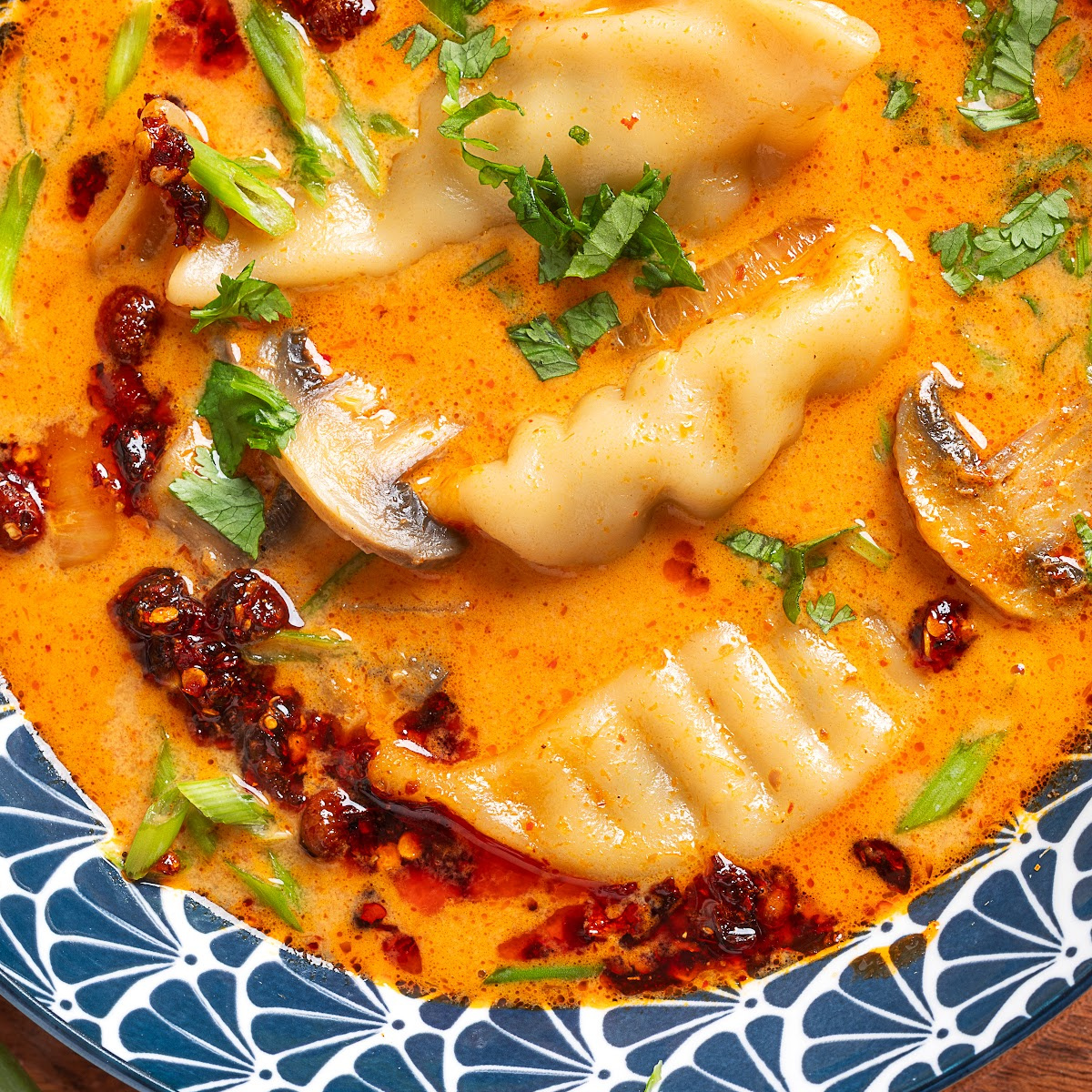
Divide the soup among four bowls, giving everyone six potstickers. I use chili crisp and fresh cilantro, but green onions and chopped peanuts are good too. Serve it while the dumplings are tender because they’ll keep absorbing broth the longer they sit.
Recipe Tips
- Don’t let the garlic brown when you’re cooking the aromatics and curry paste. You want everything fragrant, not bitter. If the pot seems too hot, turn it down.
- Curry pastes vary a lot, so start with 2 tablespoons if you don’t know how spicy yours is. Taste the broth after adding the coconut milk and chicken broth. If you want more curry flavor or heat, stir in a little more paste and give it a few minutes to cook before adding the potstickers.
- Keep the broth at a gentle boil. Coconut milk can separate if it boils too hard for too long, and you don’t need to beat it up to cook the mushrooms. Follow the heat instructions on your potsticker package, or cook the dumplings separately if boiling isn’t recommended.
- Read the potsticker package before you start. Some frozen dumplings can simmer directly in the soup, while others need a different cooking method. You don’t want to discover this after dumping an entire bag into the Dutch oven. Once they’re cooking, stir carefully because the wrappers can tear as they soften.
- Serve the soup as soon as the dumplings are cooked. They keep absorbing broth while they sit, which means softer wrappers and less soup in the pot later.
Storage and Reheating
- Store leftover soup in an airtight container in the refrigerator for up to 3–4 days. The potstickers will continue absorbing broth, so expect them to be softer the next day. They’ll still taste good, but you may need to add more broth when reheating.
- To reheat, warm the soup gently over medium-low heat until the broth and dumpling filling are hot. Don’t stir it too much because the wrappers are more fragile after sitting in the refrigerator. Add a splash of chicken broth if the dumplings absorbed more liquid than you wanted them to.
- If you’re making the soup ahead, prepare the coconut curry broth and mushrooms, then refrigerate the broth. Keep the uncooked potstickers frozen until you’re ready to serve. Warm the broth and cook the dumplings according to their package instructions so they don’t spend hours sitting in liquid.
- I’d freeze the broth without the potstickers. Freeze it in an airtight container for up to 3 months, thaw it in the refrigerator, then reheat and add freshly cooked potstickers. Frozen dumpling wrappers can get soft and fragile after thawing in soup.
FAQs
- Can I use chicken or vegetable dumplings instead of pork potstickers?
Yes. Use any frozen dumplings you like, as long as their package instructions work with the cooking method. Chicken, shrimp, or vegetable dumplings will change the flavor a little, but the coconut curry broth works with all of them. - Can I make Thai dumpling soup gluten-free?
Yes, if you use gluten-free potstickers and check the labels on your curry paste, chicken broth, fish sauce, and chili crisp. Fish sauce is often gluten-free, but it’s worth checking the brand you’re using. Check every packaged ingredient if you need to avoid gluten. - Can I use light coconut milk?
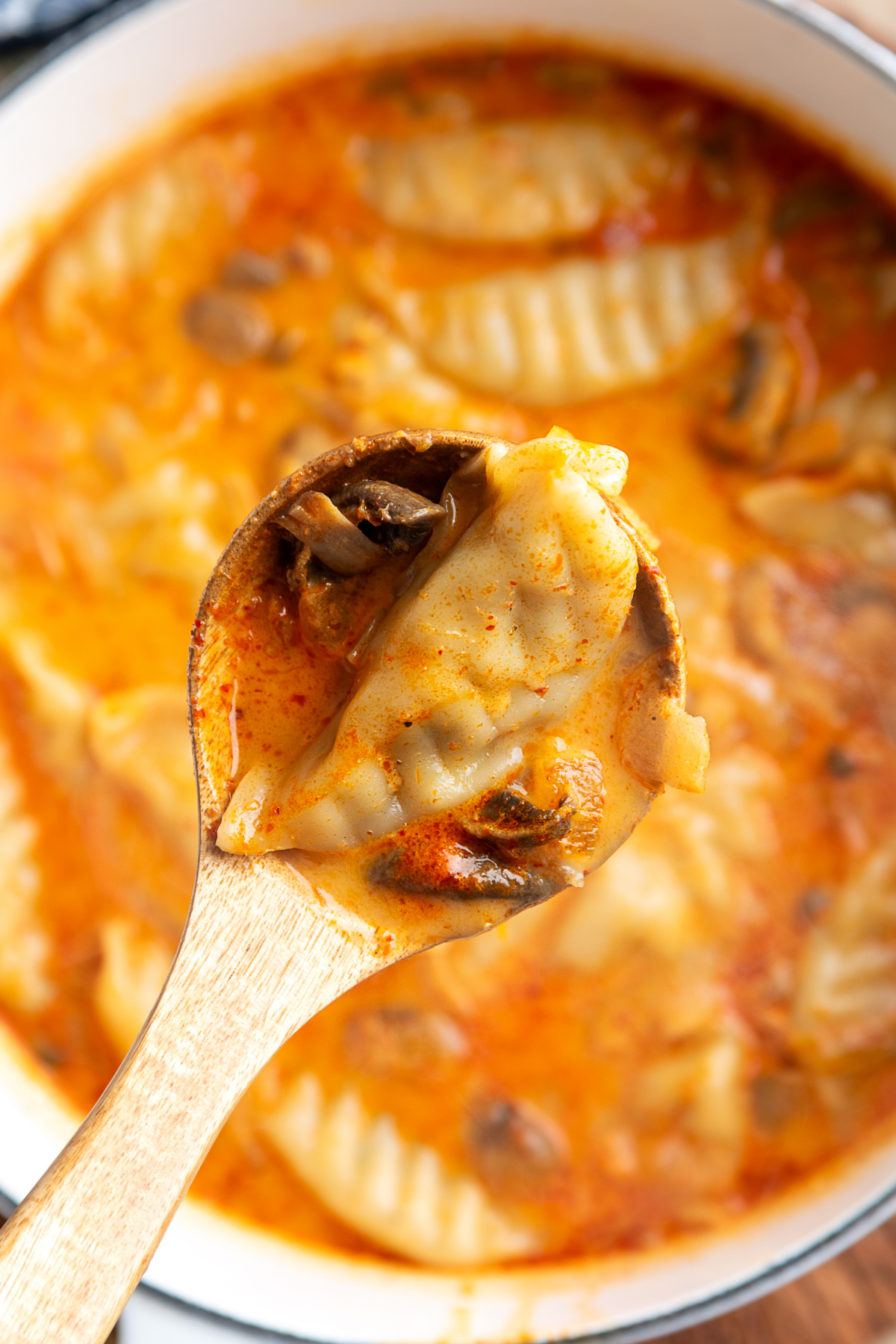
You can, but the broth will be less creamy and won’t have the same coconut richness. Full-fat coconut milk is what gives this soup the texture you see in the photos. - Can I make this soup vegetarian?
Yes. Use vegetable dumplings, vegetable broth, and a vegetarian fish sauce alternative. Check the curry paste too, since some brands include shrimp paste. - Should I add the dipping sauce packet that comes with the potstickers?
No. The broth is already seasoned with curry paste, fish sauce, and lime juice, and the dipping sauce can push it into overly salty territory. Save the packet for another recipe. - Can I thicken Thai dumpling soup?
If you prefer a thicker coconut curry broth, whisk 2 tablespoons of cornstarch with 2 tablespoons of cold water. Stir the mixture into the gently boiling soup before adding the potstickers and cook for 2–3 minutes until thickened.
From My Kitchen Notes
Small observations from the margins.
- I can tell the difference between being softened and being ruined.
- I don’t expect the same instructions to work for every package.
- Intensity and depth are not the same thing.
- I notice when someone is absorbing everything around them instead of bringing anything of their own.
- Some things absorb too much when they’re left unattended.
- I know better than to add everything at once.
- I don’t treat every tenderness like it comes with the same instructions.
- I know when more time helps and when it only makes everything weaker than it should be.
Keep Thai Food on the Menu
- Slow Cooker Thai Chicken Noodle Soup – Coconut milk, ginger, chicken.
- Thai Chicken Curry Soup with Coconut Milk – Red curry paste, rice noodles, shredded chicken.
- Spicy Thai Shrimp Pasta – Shrimp, serrano peppers, lemongrass.
- Open-Faced Thai Chicken Sandwiches – Rotisserie chicken, crisp vegetables, chili-garlic mayo.
- Slow Cooker Thai Pork – Slow-cooked pork, Thai seasonings, rice.
- Panang Curry Ramen with Crispy Chicken – Crispy chicken, coconut broth, Panang curry.
This post may contain affiliate links. Please read my disclosure policy.
Thai Dumpling Soup
Equipment
- Dutch Oven or heavy-bottomed pot 6-quart. Provides enough room for the broth and dumplings to cook without crowding.
- wooden spoon For stirring the aromatics and curry broth.
- Cutting board and knife. For preparing the vegetables and toppings.
- measuring cups and spoons For measuring the broth ingredients and seasonings.
Ingredients
Soup:
- 1 tbsp (15 ml) avocado oil plus additional as needed
- 1 cup (150 g) sliced yellow onion
- 1 tbsp (6 g) minced fresh ginger
- 2 tbsps (17 g) minced garlic
- ½ tsp (2.5 ml) toasted sesame oil
- 2-4 tbsps (30-60 g) Thai red curry paste depending on desired heat level
- 1 can (14 oz / 400 ml) full-fat coconut milk unsweetened
- 4 cups (960 ml) low-sodium chicken broth
- 8 oz (227 g) white button mushrooms sliced
- 24 frozen pork potstickers
- 2 tsps (10 ml) fish sauce
- 1 tbsp (15 ml) fresh lime juice plus additional to taste
- salt to taste
Optional Thickener:
- 2 tbsps (16 g) cornstarch
- 2 tbsps (30 ml) cold water
Optional Toppings:
- chili crisp
- chopped green onions
- chopped fresh cilantro
- chopped dry-roasted unsalted peanuts
Instructions
- Heat the avocado oil in a large Dutch oven or heavy-bottomed pot over medium heat. Add the sliced onion and cook for 4-5 minutes, stirring occasionally, until softened.1 tbsp (15 ml) avocado oil, 1 cup (150 g) sliced yellow onion
- Add the ginger, garlic, toasted sesame oil, and red curry paste, adding more avocado oil if the pot seems dry. Cook for 2-3 minutes, stirring frequently, until fragrant. Reduce the heat if the garlic begins to brown.1 tbsp (6 g) minced fresh ginger, 2 tbsps (17 g) minced garlic, ½ tsp (2.5 ml) toasted sesame oil, 2-4 tbsps (30-60 g) Thai red curry paste
- Slowly stir in the coconut milk until the curry paste is incorporated, then add the chicken broth and sliced mushrooms. Bring to a gentle boil and cook for about 5 minutes, until the mushrooms are tender.1 can (14 oz / 400 ml) full-fat coconut milk, 4 cups (960 ml) low-sodium chicken broth, 8 oz (227 g) white button mushrooms
- For a thicker coconut curry broth, whisk the cornstarch and cold water together until smooth. Stir the slurry into the gently boiling soup and cook for 2-3 minutes, stirring occasionally, until thickened. This step is optional; the full-fat coconut milk already makes the broth creamy without it.2 tbsps (16 g) cornstarch, 2 tbsps (30 ml) cold water
- Add the frozen pork potstickers if the package includes boiling instructions. Cook according to the manufacturer's directions, stirring carefully to prevent sticking or tearing the wrappers. The dumplings should be tender and the pork filling fully cooked, reaching 165°F (74°C) if specified by the package. If boiling instructions aren't provided, prepare the potstickers separately according to the package directions and divide them among the serving bowls.24 frozen pork potstickers
- Remove the soup from the heat and stir in the fish sauce and lime juice. Taste and adjust with additional lime juice or salt as needed.2 tsps (10 ml) fish sauce, 1 tbsp (15 ml) fresh lime juice, salt
- Divide the soup among four bowls, with six pork potstickers per serving. Garnish with chili crisp, green onions, cilantro, or chopped peanuts as desired. Serve immediately.chili crisp, chopped green onions, chopped fresh cilantro, chopped dry-roasted unsalted peanuts
Notes
- The cornstarch slurry is optional. I make this soup without it, but you can add it if you want a thicker coconut curry broth.
- Thai red curry pastes vary in heat and concentration. Begin with 2 tablespoons if you're unsure about the brand you're using.
- Use canned, unsweetened full-fat coconut milk for the creamy broth.
- Frozen potstickers have different cooking requirements depending on the brand. Follow the package directions and cook separately if boiling isn't recommended.
- For make-ahead preparation, refrigerate the coconut curry broth without the potstickers and cook the dumplings when ready to serve.
- The dipping sauce packets included with frozen potstickers aren't needed for this soup.
- Nutritional information is provided as a courtesy only and should be construed as an estimate rather than a guarantee. Ingredients can vary, and Noble Pig makes no guarantees to the accuracy of this information.
Nutrition
Have you made this Thai Dumpling Soup? I’d love to hear how it turned out – leave a comment below and let me know.
As an Amazon Associate and member of other affiliate programs, I earn from qualifying purchases.
Leave a Reply