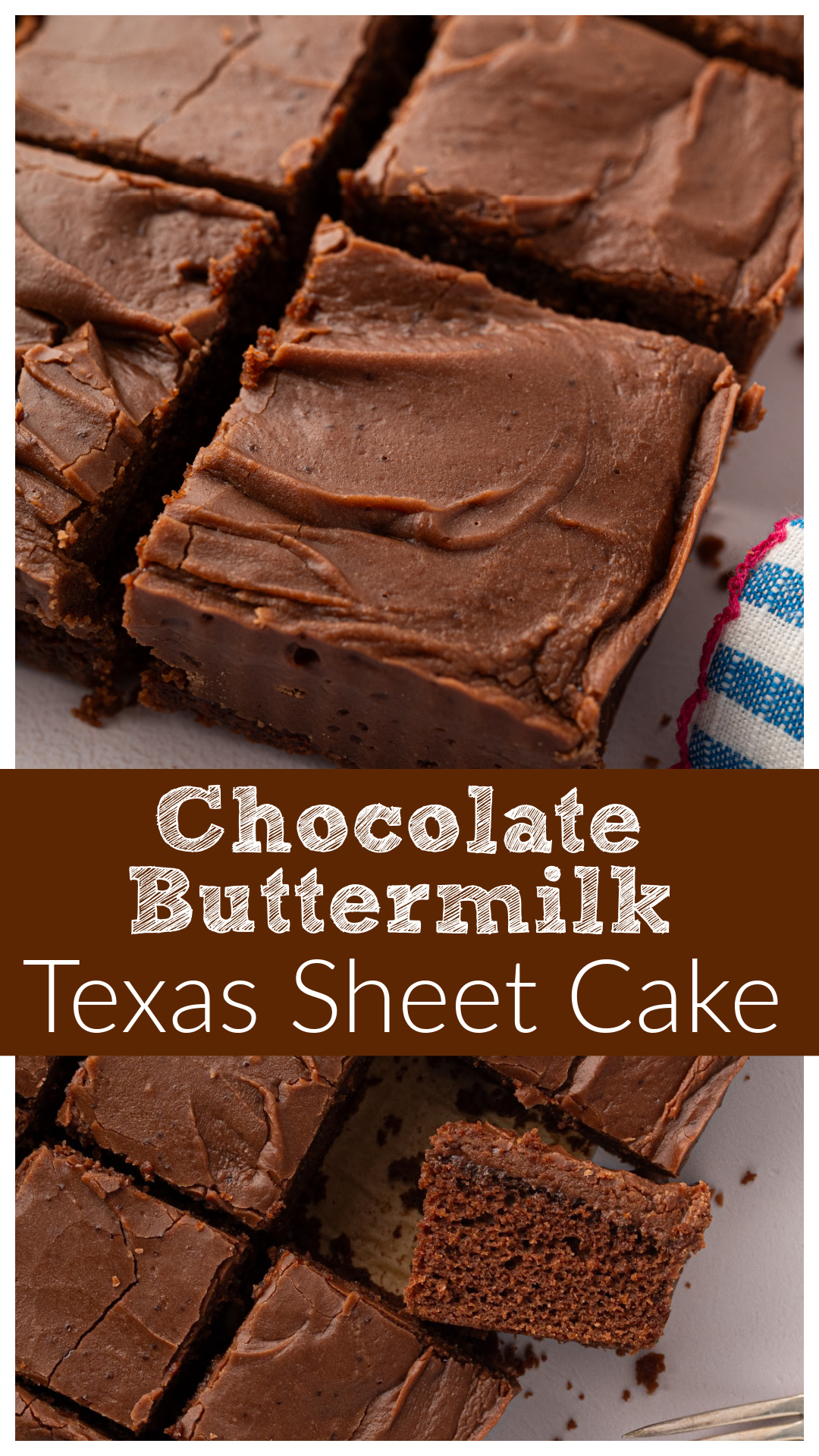
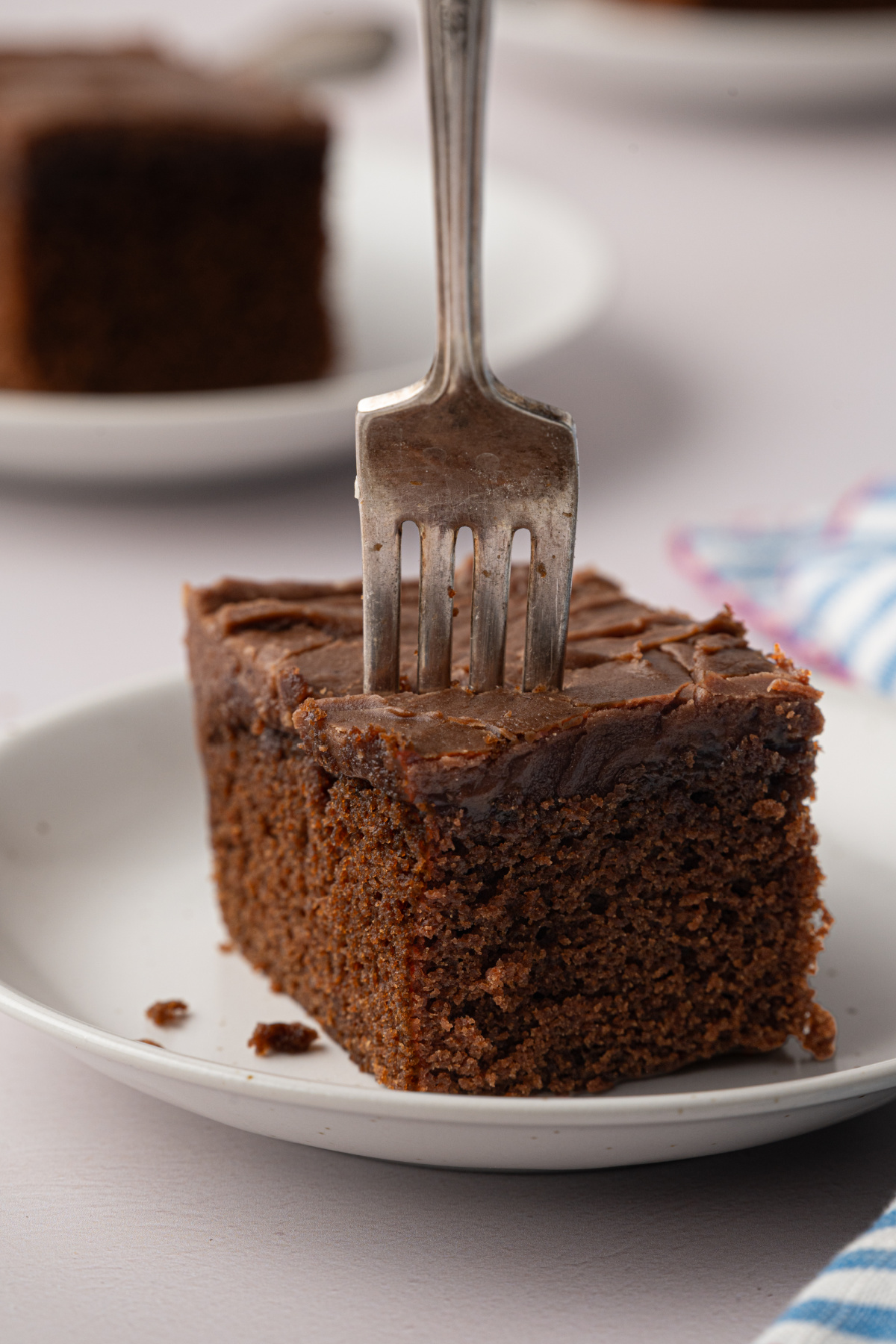
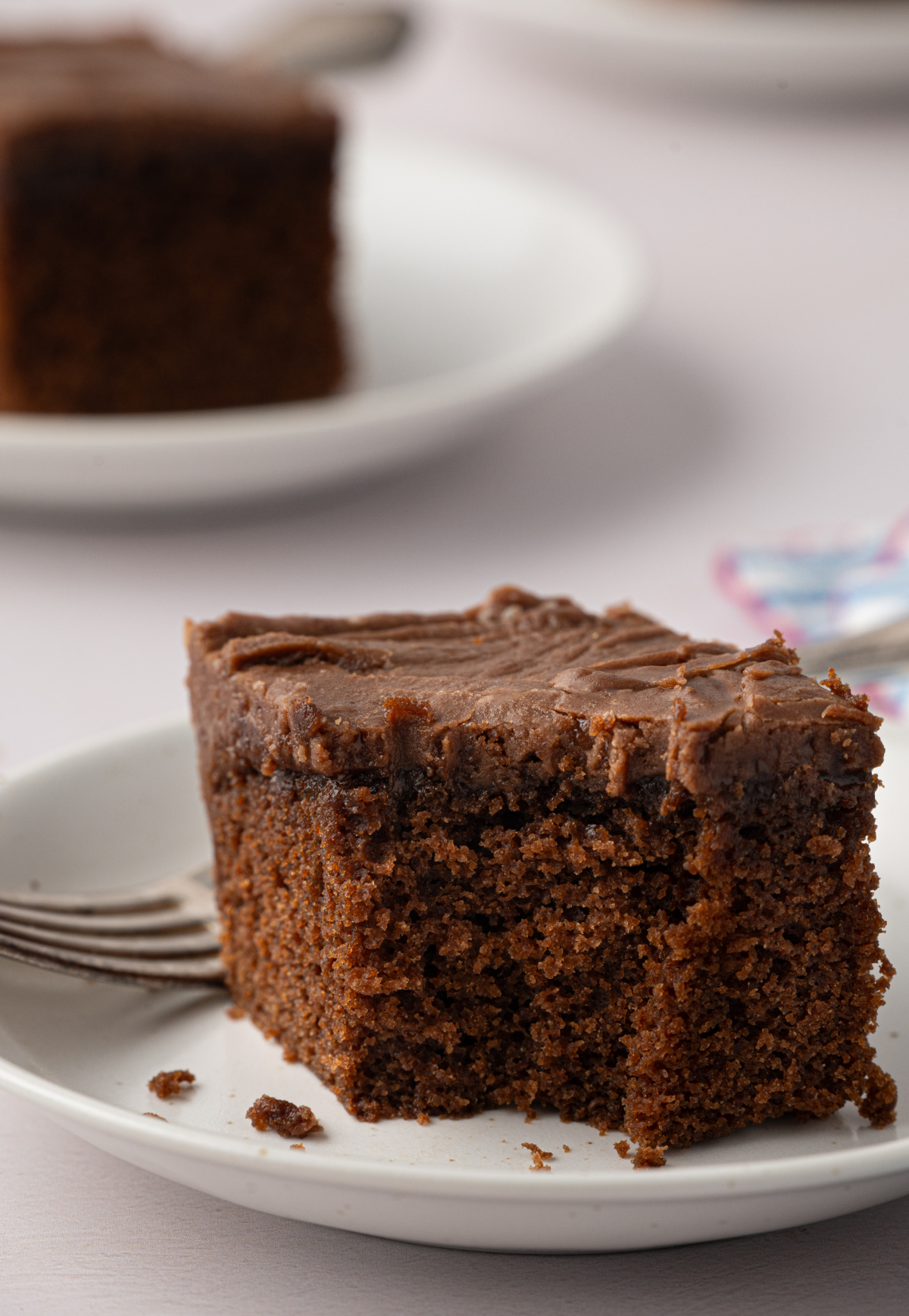
This chocolate buttermilk Texas sheet cake is baked in a 9×13 pan because a thin slice of chocolate cake doesn’t really do it for me. It has a thick layer of brown butter chocolate frosting because I wasn’t about to solve one problem and create another.
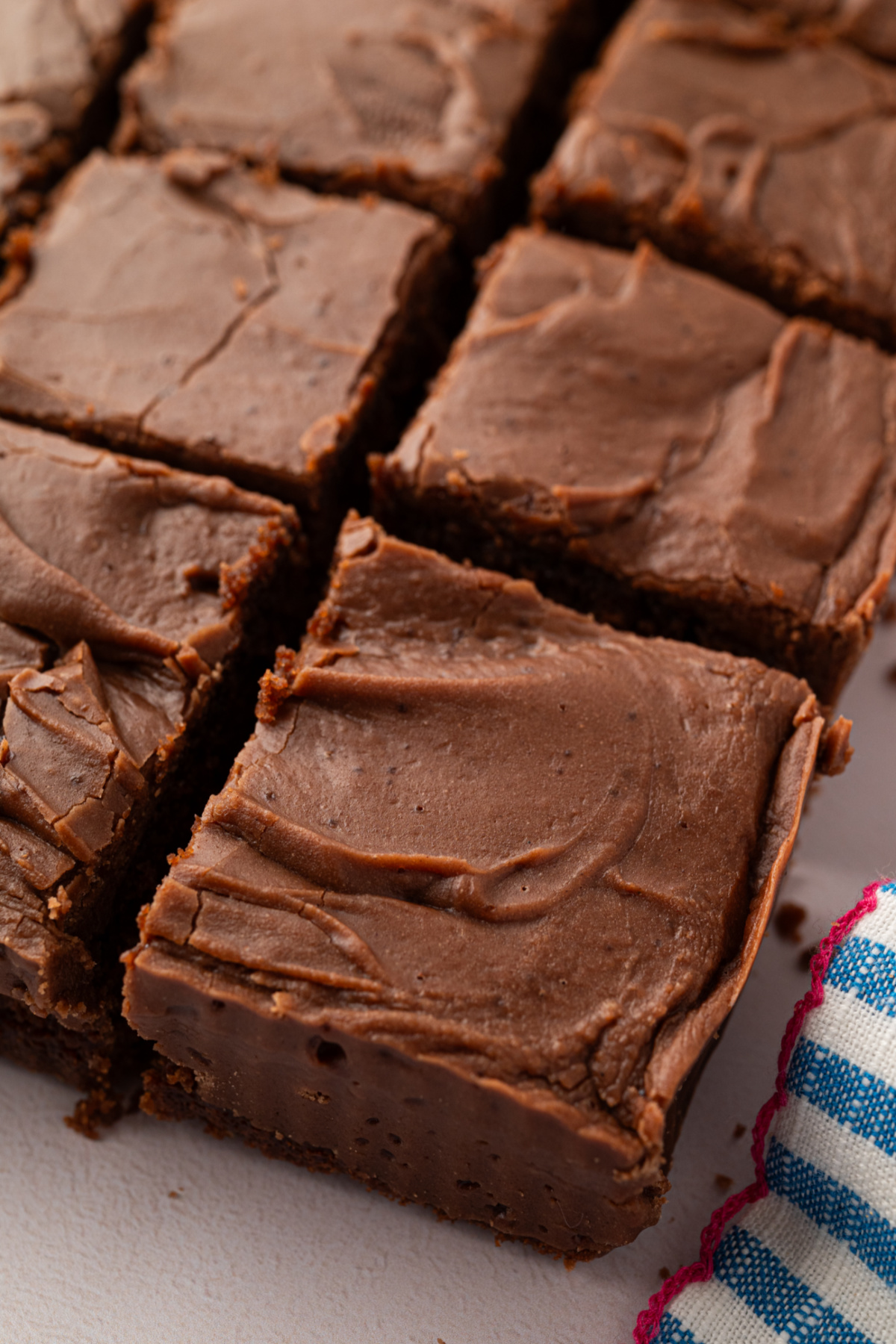
Chocolate Buttermilk Texas Sheet Cake with Thicker Cake and More Frosting
I’ve never really understood why Texas sheet cake has to be so thin. (Texas, do not come for me.) I really like the cake with the warm frosting poured all over it, but my love of cake has never been subtle. When I cut myself a piece, I want something worth putting a fork into. A thin square of chocolate cake doesn’t really do it for me, no matter how good the frosting is.
So I make mine in a 9×13 pan, but not because I want a smaller cake. I wanted a thicker one, with enough chocolate frosting to make every bite worth my trouble. I browned the butter for the frosting, added buttermilk to balance the confectioners’ sugar, and made enough of it to cover the cake with a decent layer. I wasn’t going to fix my problem with thin cake only to end up disappointed by the frosting.
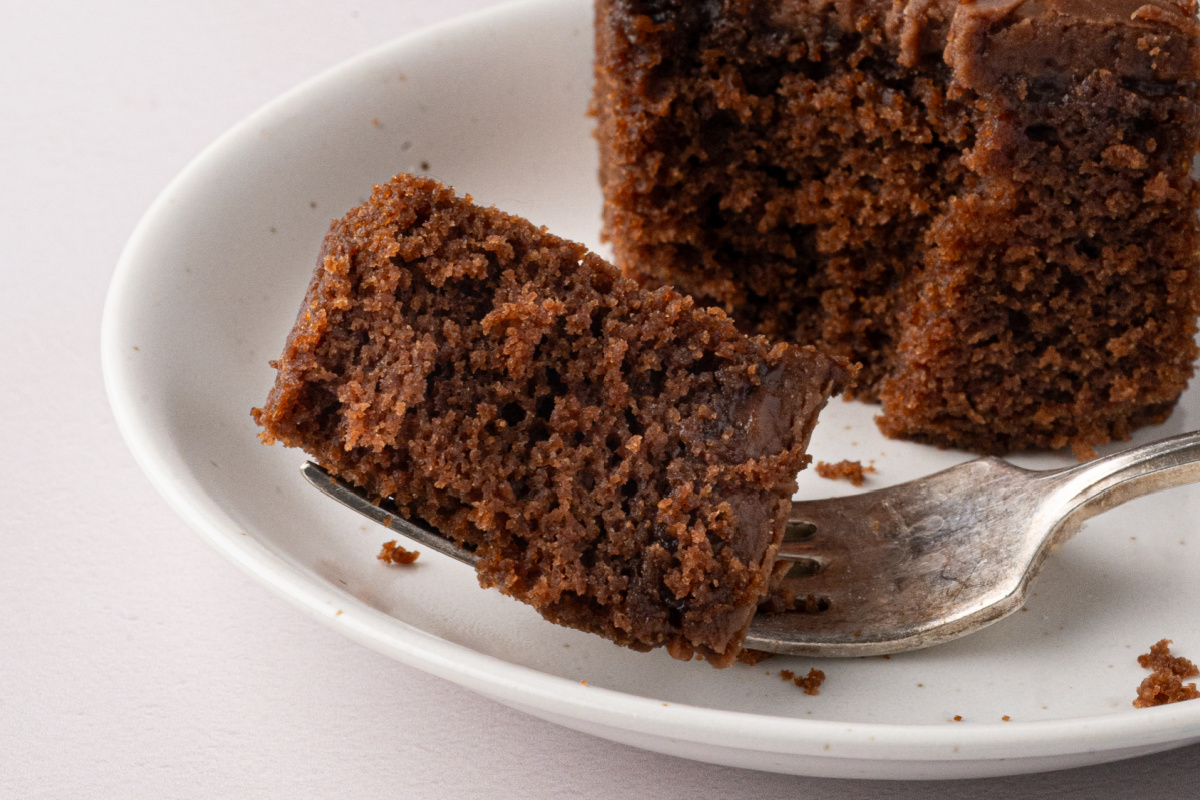
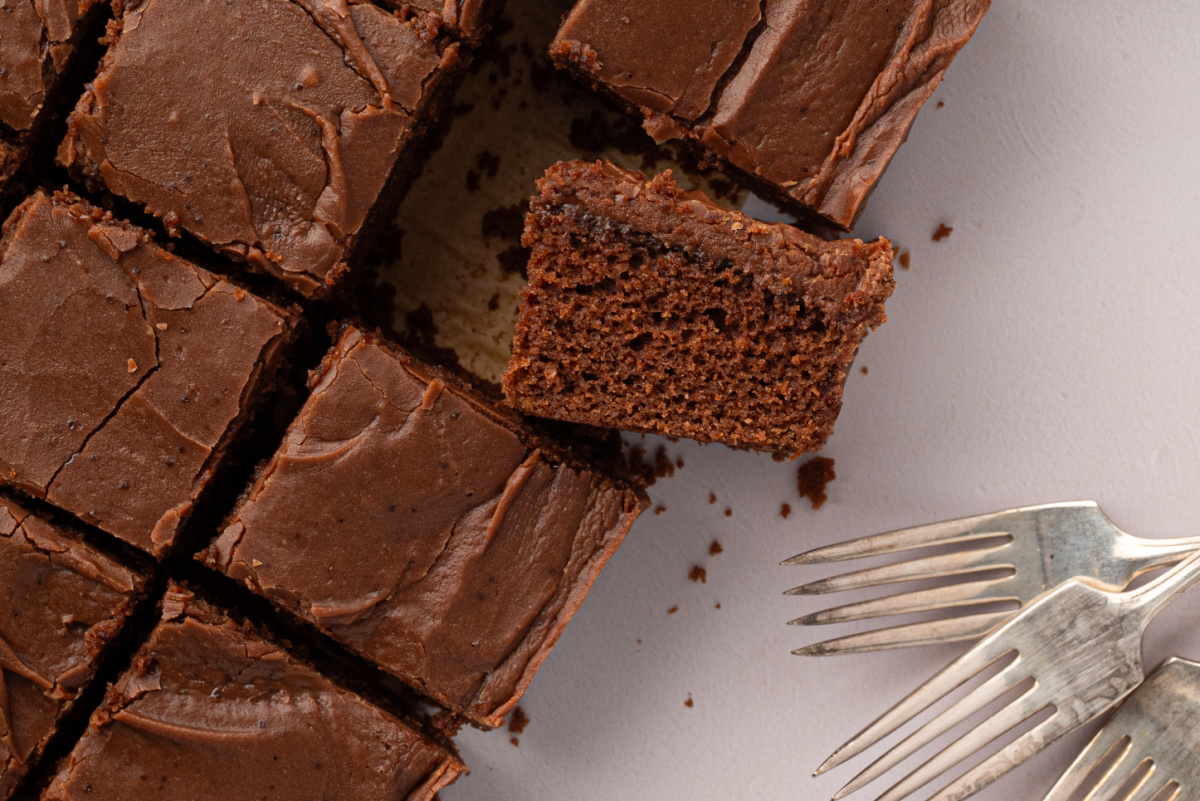
I did keep the parts of Texas sheet cake I like, especially the hot cocoa mixture stirred into the batter and the warm frosting poured over the cake as soon as it comes out of the oven. Dutch-process cocoa and coffee make the chocolate flavor more intense, and buttermilk keeps the cake tender. The frosting sets into a thick layer on top, and when I cut into it, there’s finally as much cake on my fork as I wanted in the first place.
The Decisions Behind This Recipe
- Regular chocolate frosting felt like a missed opportunity, so I browned the butter instead. The butter cooks and the milk solids turn golden and smell nutty and toasted. That flavor goes so well with cocoa, and the frosting is way more interesting than the standard sugar and chocolate version.
- I add buttermilk to the cake and the frosting. In the cake, it works with the baking soda and helps keep the cake tender. In the frosting, its acidity balances the sweetness of the confectioners’ sugar and adds a slight tang. With this much frosting on top, I wanted it sweet, but not like it was taking over the cake.
- Using Dutch-process cocoa and hot coffee in the cake is where the dark, full chocolate flavor comes from. The cocoa gets heated with the butter, coffee, and water before it goes into the batter, so it mixes evenly and gets some time in the hot liquid. The coffee supports the chocolate without making the cake taste like mocha. It’s there because chocolate and coffee are besties.
- You don’t have to cream the butter and sugar in this recipe. The hot cocoa mixture gets poured into the dry ingredients, then the buttermilk, eggs, baking soda, and vanilla go in. It’s your typical Texas sheet cake method that makes a smooth, pourable batter without taking out the stand mixer or waiting for butter to soften. I did want to keep some things classic.
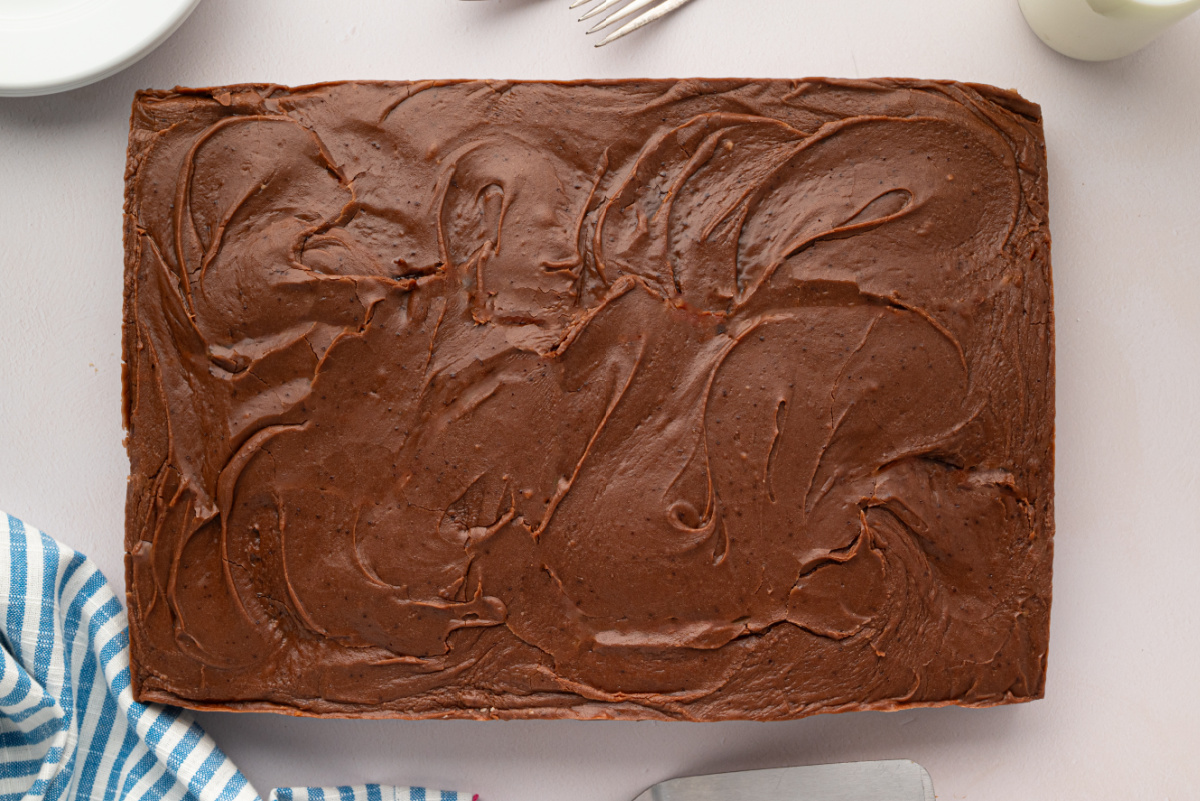
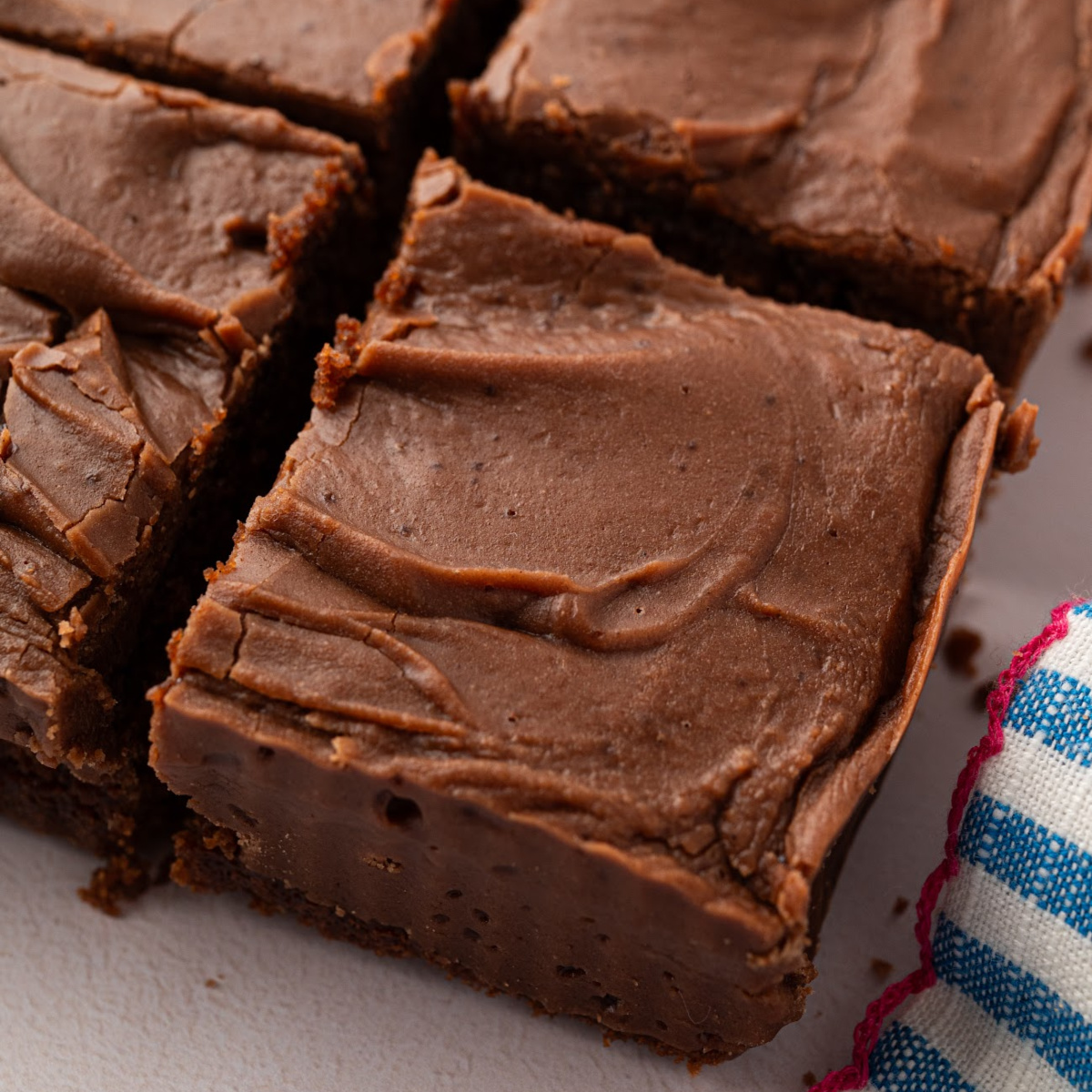
- The frosting goes over the cake while they’re both warm. I start making the frosting during the last 10 minutes of baking so it’s still warm enough to pour when the cake comes out. As it cools, it becomes a thick fudge-like layer that stays in place when you cut the cake.
Ingredients
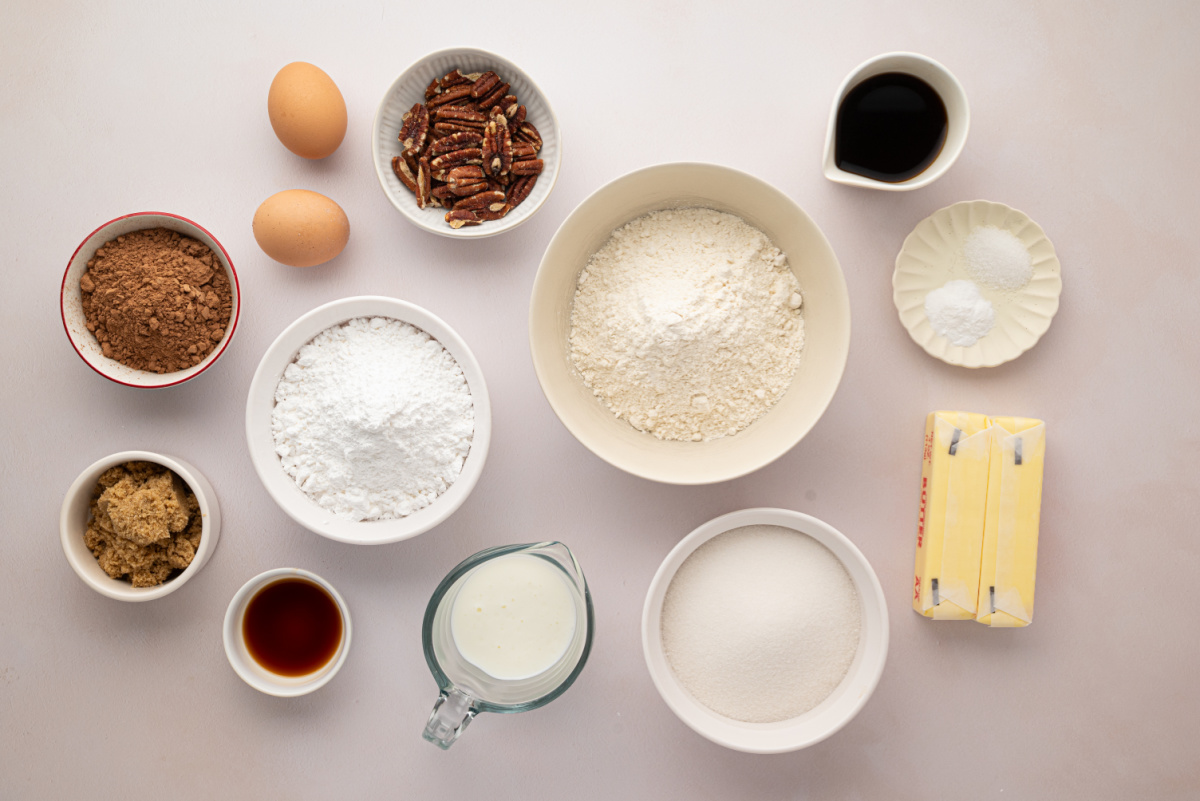
- All-purpose flour – This gives the cake enough body to support a thick layer of frosting without making it dense.
- Granulated sugar and light brown sugar – Granulated sugar does most of the sweetening, while brown sugar adds a hint of molasses and helps the cake stay soft. If you’re out, make a batch of my homemade brown sugar.
- Unsalted butter – Butter goes into both the cake and frosting. The cake uses melted butter, while the frosting gets the browned-butter treatment.
- Dutch-process cocoa powder, hot coffee, and water – Use Dutch-process cocoa for the darker color and smoother chocolate flavor in this recipe. The coffee brings out more of the chocolate flavor without making the cake taste like coffee. If coffee isn’t your thing, use hot water instead.
- Full-fat buttermilk – I like using a full-fat cultured buttermilk from the dairy case for both the cake and frosting. Low-fat buttermilk is fine if that’s what you have.
- Eggs, baking soda, and vanilla extract – Bring the eggs to room temperature if you remember, but don’t let that stop you from making cake. The baking soda works with the buttermilk to help the cake rise, and vanilla is necessary.
- Kosher salt – Salt keeps the chocolate frosting from tasting overly sweet and balances the flavor of the cake.
- Confectioners’ sugar – This makes the frosting thick and fudge-like as it sets. Break up any lumps before you start so they don’t have a chance to become little white surprises in the frosting.
- Toasted pecans – Completely optional. I love them when I want crunch, but leaving them off keeps the brown butter chocolate frosting front and center.
How to Make Chocolate Buttermilk Texas Sheet Cake
Find the complete printable recipe with measurements in the recipe card at the BOTTOM OF THE POST.
- Step One (prepare the dry ingredients)
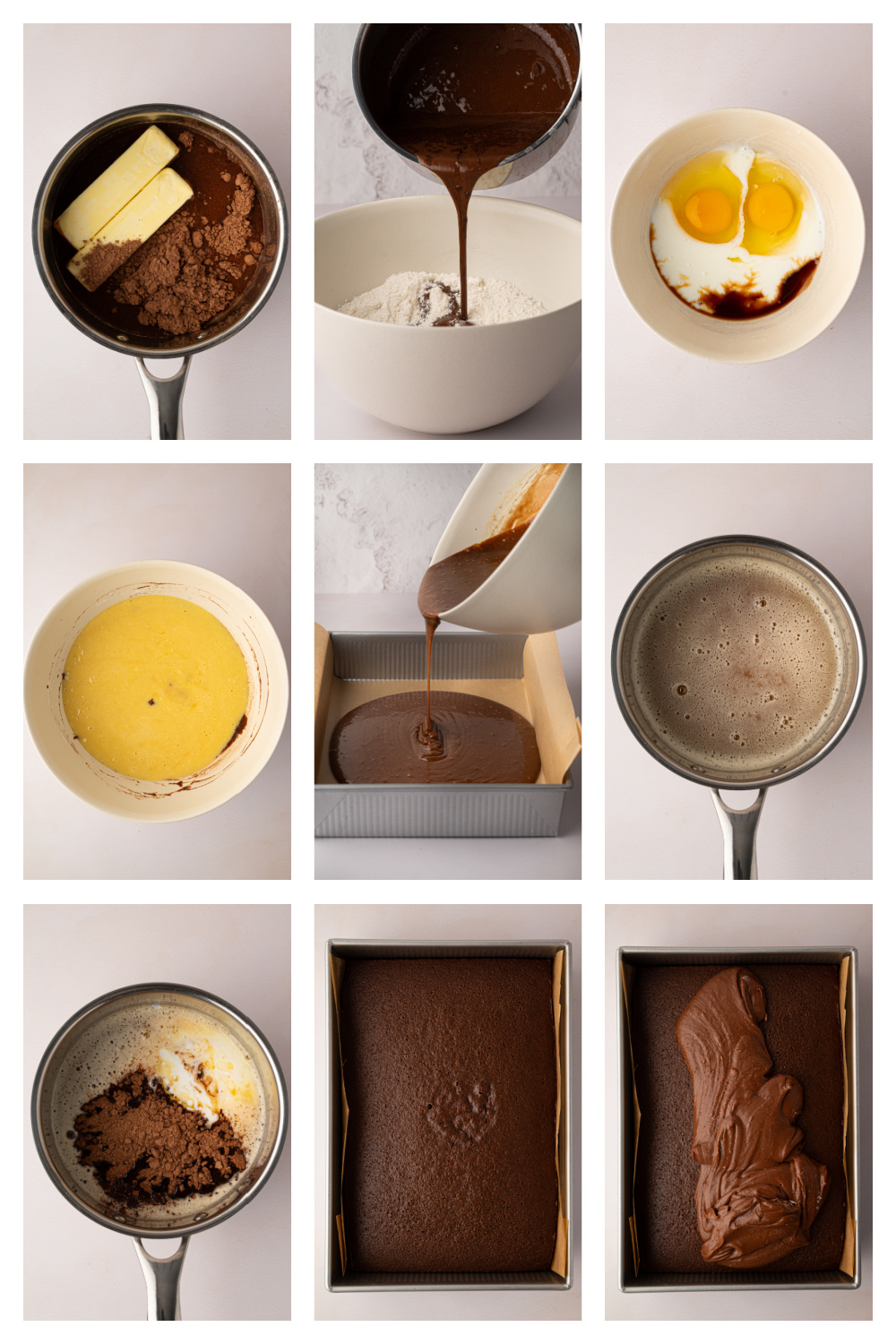
Preheat the oven to 350°F and lightly grease a 9×13-inch baking pan. Whisk together the flour, granulated sugar, brown sugar, and kosher salt in a large bowl. Set it aside while you make the chocolate mixture on the stove. - Step Two (make the chocolate cake batter)
Add the butter, Dutch-process cocoa powder, hot coffee, and water to a medium saucepan. Cook over medium heat until the butter melts and the mixture comes to a gentle simmer, then whisk for another 30 seconds. Pour the hot chocolate mixture over the dry ingredients and whisk until you don’t see any dry flour. In another bowl, whisk together the buttermilk, eggs, baking soda, and vanilla. Pour the buttermilk mixture into the chocolate batter and whisk until smooth. The batter is thin and pourable. Don’t start adding flour because you’re worried about it. This is what it’s supposed to look like. - Step Three (bake the cake)
Pour the batter into the prepared pan and spread it evenly. Bake for 25–30 minutes, until the center springs back lightly when touched and a toothpick inserted into the center comes out with a few damp cake crumbs but no wet batter. Pay attention to the middle because this cake is thicker than a traditional Texas sheet cake and needs time to bake through. Start the frosting during the last 10 minutes of baking so it’s ready when the cake comes out. - Step Four (brown the butter for the frosting)
Melt the butter in a medium saucepan over medium heat. As it foams, swirl the pan now and then and watch for golden-brown specks collecting at the bottom. Once the butter smells toasted and nutty, take it off the heat before the milk solids get too dark. Whisk in the Dutch-process cocoa powder, including every browned bit from the pan, and stir for about 30 seconds. Let it sit for 1–2 minutes, then slowly whisk in the buttermilk until the mixture is smooth. - Step Five (finish the chocolate frosting)
Add the confectioners’ sugar and kosher salt to a large bowl, breaking up any lumps before you add the warm chocolate mixture. Whisk in the chocolate mixture and vanilla until the frosting is smooth, thick, and still pourable. If it gets too thick, add warm water or buttermilk 1 teaspoon at a time until it loosens up. Don’t add more confectioners’ sugar unless the frosting is unusually thin. It’s going to keep thickening as it cools, and you want it loose enough to spread over the cake without a fight. - Step Six (frost the hot cake)
As soon as the cake comes out of the oven, pour the warm frosting over the top. Use an offset spatula or the back of a spoon to gently spread it to the edges. Try not to keep going over the same spots because it starts setting as it cools. Add toasted pecans if you’re using them, then let the cake sit for about 20 minutes so the frosting can set before cutting. Serve it right from the pan, with all the chocolate frosting sitting on top of the thicker cake I wanted in the first place.
Recipe Tips
- Use a 9×13 pan. A traditional sheet pan will give you a much thinner cake, a different baking time, and a very different cake-to-frosting scenario.
- Bring the cocoa mixture to a gentle simmer, then give it about 30 seconds of whisking. You want the cocoa fully mixed into the hot butter and coffee, not a saucepan of chocolate liquid boiling away while you get distracted.
- Make sure to watch the center of the cake, not the edges of the pan. It’s ready when the middle springs back lightly and a toothpick comes out with a few damp crumbs but no wet batter. If you like using a thermometer, the center should be around 200–205°F.
- Watch the butter closely once brown specks start appearing. You want golden-brown milk solids and a toasted smell. If they turn very dark or black, you’ve gone too far and the frosting can taste bitter.
- You’ll want to make the frosting during the last 10 minutes of baking. The cake needs to be hot and the frosting needs to be warm and pourable when they come together. This isn’t frosting you make two hours before the cake is ready and leave sitting on the counter.
- If the frosting starts thickening before you can spread it, whisk in warm water or buttermilk one teaspoon at a time. It doesn’t need to be thin, but it does need to move across the cake easily.
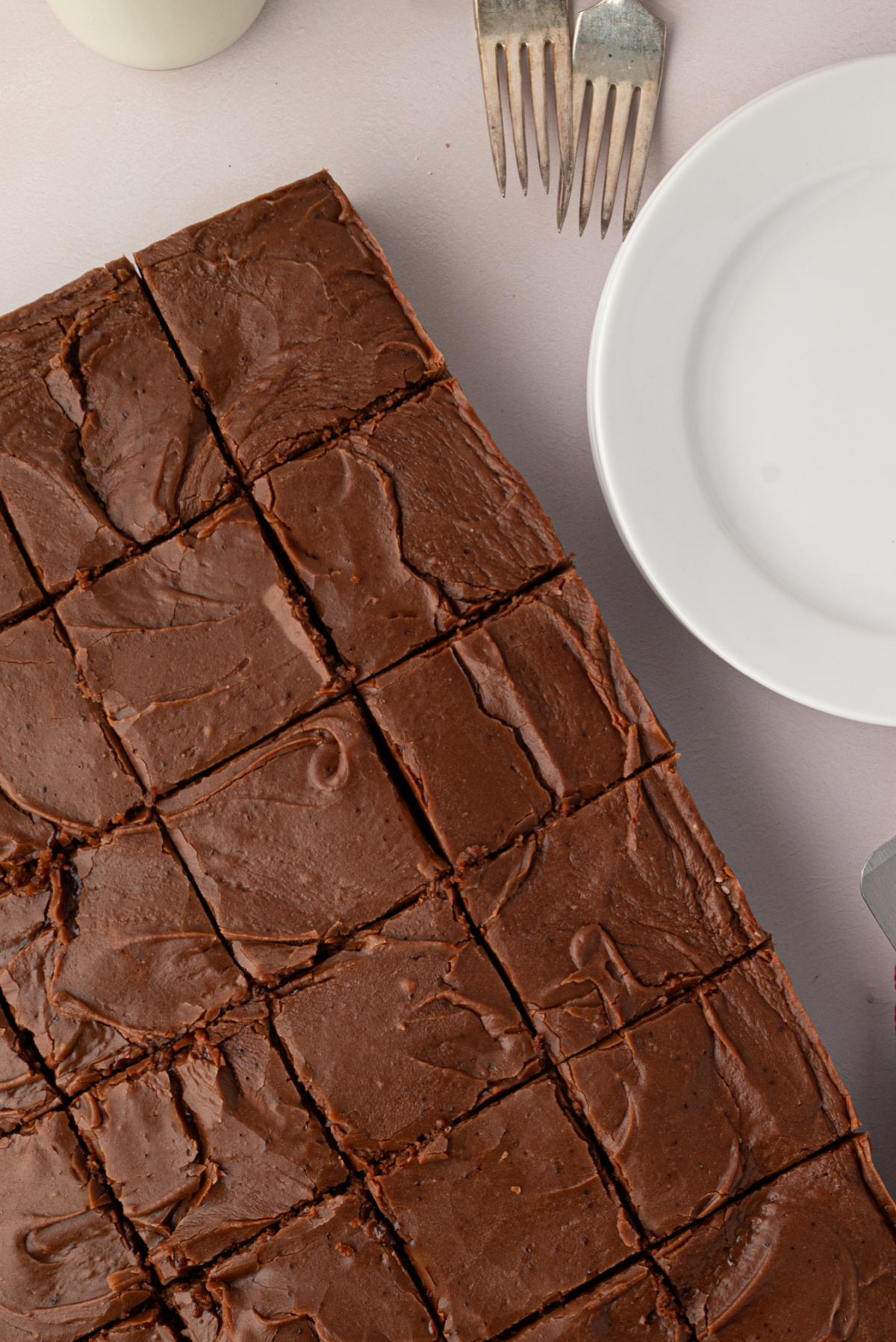
- Give the frosting about 20 minutes to set before cutting. It will still be soft, but it won’t slide off or smear itself across every piece when you lift the first square.
Storage and Make-Ahead
- Because the frosting has buttermilk, cover leftover cake and refrigerate it. It’ll keep for up to 3 days. The frosting gets firmer in the refrigerator, so let a slice sit at room temperature for 20–30 minutes before eating if you want the softer fudge-like texture back.
- You can make the cake a day ahead. Bake and frost it, let the frosting set, then cover the pan and refrigerate it. Pull it out a little before serving so the frosting isn’t cold and stiff.
- To freeze, I’d freeze the unfrosted cake. Let it cool completely, wrap it tightly in plastic wrap and foil, and freeze for up to 2 months. Thaw it overnight in the refrigerator or on the counter for a few hours, then make the frosting fresh. Since the cake is no longer hot, spread the warm frosting over the thawed cake as soon as it’s ready.
FAQs
- Can I make this in a traditional sheet pan?
You can, but it won’t be this cake. A larger sheet pan gives you a thinner cake and changes the baking time, frosting coverage, and texture. I made this recipe for a thicker 9×13 cake. - Can I use natural cocoa powder instead of Dutch-process?
I haven’t tested it. Natural cocoa is more acidic and has a different flavor, so it may affect both the color and the way the baking soda works with the buttermilk. Stick with Dutch-process cocoa for the result you see here. - Can I make this cake without coffee?
Yes. Use the same amount of hot water in place of the coffee. The cake won’t taste like coffee as written, but coffee does make the chocolate flavor feel more intense. - What can I use if I don’t have buttermilk?
I haven’t tested a substitute in both the cake and frosting, so I’d use real cultured buttermilk if possible. In a pinch, add 1 tablespoon lemon juice or white vinegar to a measuring cup, then add enough whole milk to reach 1 cup. Stir and let it sit for 5–10 minutes before using. - Why did my frosting get grainy or too thick to pour?
Graininess can come from lumps in the confectioners’ sugar, so break them up or sift the sugar before mixing. The frosting also thickens quickly as it cools. Whisk in warm water or buttermilk one teaspoon at a time until it loosens enough to spread. - Why did my cake sink in the middle?
The center may have needed more baking time, especially if your oven runs cool. Too much baking soda, inaccurate flour measuring, or opening the oven too early can contribute too. Check the center with a toothpick or thermometer before pulling it out. - Can I leave out the pecans?
Yes. They’re completely optional. The cake and frosting work exactly the same without them.
From My Kitchen Notes
Small observations from the margins.
- I know the difference between going darker and going too far.
- I’ve learned to carry a lot without losing my center.
- I’ve never needed to be flattened into softness.
- A thin layer of anything has never been enough for me.
- More isn’t excessive when it changes the whole ratio.
- I don’t wait until everything is cold to give it what it needs.
- Knowing the difference between settling in and sinking is a life skill worth having.
Not All Chocolate Cakes Are the Same
- Old-Fashioned Chocolate Cake – Chocolate icing, no eggs or mixer.
- Chocolate Zucchini Cake – Cocoa, zucchini, orange zest, cream cheese frosting.
- Chocolate Tres Leches Cake – Chocolate milk soak, cocoa whipped cream, cinnamon.
- Earl Grey Chocolate Pound Cake – Earl Grey tea, chocolate, bergamot.
- Guinness Chocolate Layer Cake – Stout, currants, bittersweet chocolate icing.
- Root Beer Chocolate Chip Cake – Root beer, espresso, mini chocolate chips.
This post may contain affiliate links. Please read my disclosure policy.
Chocolate Buttermilk Texas Sheet Cake
Equipment
- baking dish 9x13 (23×33 cm). This pan gives the cake its intended thickness and allows the frosting to be poured directly over the cake while it's still hot.
- Saucepan (medium). Used to simmer the cocoa mixture for the cake and brown the butter for the frosting.
- mixing bowls (large) For combining the cake batter and preparing the chocolate frosting.
- whisk Helps incorporate the hot cocoa mixture into the batter and makes the frosting smooth.
- rubber spatula or offset spatula. For scraping the bowl and spreading the warm frosting evenly over the cake.
- Toothpick Checks that the center of the thicker cake is fully baked.
Ingredients
Cake:
- 2 cups (260 g) all-purpose flour
- 1½ cups (300 g) granulated sugar
- ¼ cup (60 g) packed light brown sugar
- 1 tsp (3 g) kosher salt
- 1 cup (226 g) unsalted butter
- ½ cup (40 g) Dutch-process cocoa powder
- ¾ cup (180 ml) hot brewed coffee
- ¼ cup (60 ml) water
- ½ cup (120 ml) buttermilk
- 2 large eggs room temperature
- 1 tsp (5 g) baking soda
- 2 tsps (10 ml) vanilla extract
Brown Butter Chocolate Frosting:
- ¾ cup (170 g) unsalted butter
- ⅓ cup (30 g) Dutch-process cocoa powder
- ⅓ cup (80 ml) buttermilk
- 3¾ cups (450 g) confectioners' sugar
- ¾ tsp (2.5 g) kosher salt
- 1 tsp (5 ml) vanilla extract
- ¾ cup (100 g) toasted pecans chopped (optional)
Instructions
- Preheat the oven to 350°F (175°C). Lightly grease a 9×13-inch (23×33 cm) baking pan.
- Whisk together the flour, granulated sugar, brown sugar, and kosher salt in a large mixing bowl. In a medium saucepan, combine the butter, Dutch-process cocoa powder, hot coffee, and water. Cook over medium heat, whisking occasionally, until the butter melts and the mixture reaches a gentle simmer. Continue whisking for about 30 seconds to bloom the cocoa, then remove from the heat.2 cups (260 g) all-purpose flour, 1½ cups (300 g) granulated sugar, ¼ cup (60 g) packed light brown sugar, 1 tsp (3 g) kosher salt, 1 cup (226 g) unsalted butter, ½ cup (40 g) Dutch-process cocoa powder, ¾ cup (180 ml) hot brewed coffee, ¼ cup (60 ml) water
- Pour the hot chocolate mixture over the dry ingredients and whisk until combined, making sure no pockets of dry flour remain. In a separate bowl, whisk together the buttermilk, eggs, baking soda, and vanilla extract. Add to the chocolate batter and whisk until smooth and evenly combined. The batter will be relatively thin and pourable.½ cup (120 ml) buttermilk, 2 large eggs, 1 tsp (5 g) baking soda, 2 tsps (10 ml) vanilla extract
- Pour the batter into the prepared pan and spread evenly. Bake for 25–30 minutes, or until the center springs back lightly when touched and a toothpick inserted into the middle comes out with a few damp cake particles but no wet batter. Because this Texas sheet cake is thicker than the traditional recipe, check the center rather than relying on the appearance of the outer portion of the cake.
- Begin preparing the brown butter chocolate frosting during the last 10 minutes of baking so it's warm and ready when the cake comes out of the oven. Melt the butter in a medium saucepan over medium heat. Continue cooking, swirling the pan occasionally, as the butter foams and the milk solids begin turning golden brown. Watch closely once brown specks appear on the bottom of the pan. Remove from the heat when the butter smells toasted and nutty, before the milk solids become dark brown or burn.¾ cup (170 g) unsalted butter
- Immediately whisk the Dutch-process cocoa powder into the browned butter, including the browned milk solids, and stir for about 30 seconds until the cocoa is fully incorporated. Let the mixture cool for 1–2 minutes, then gradually whisk in the buttermilk until smooth and fully incorporated.⅓ cup (30 g) Dutch-process cocoa powder, ⅓ cup (80 ml) buttermilk
- Place the confectioners' sugar and kosher salt in a large mixing bowl, breaking up any lumps. Pour in the warm chocolate mixture, add the vanilla extract, and whisk until the frosting is smooth and thick but still pourable. If necessary, use an immersion blender briefly to smooth out any remaining lumps. The frosting will thicken as it cools, so if it becomes too stiff to pour, whisk in warm water or buttermilk, 1 teaspoon (5 ml) at a time, until it loosens enough to spread. Avoid adding extra confectioners' sugar unless the frosting is unusually thin, since it will continue to firm as it sets.3¾ cups (450 g) confectioners' sugar, ¾ tsp (2.5 g) kosher salt, 1 tsp (5 ml) vanilla extract
- As soon as the cake comes out of the oven, pour the warm chocolate frosting over the hot surface. Use an offset spatula or the back of a spoon to gently spread it across the entire cake, working toward the sides without repeatedly dragging through the frosting. The warmth of the cake helps the frosting spread before it begins to set into a thick fudge-like layer.
- Sprinkle with toasted pecans, if using, while the frosting is still soft. Let the cake rest for approximately 20 minutes, or until the frosting has set enough to slice without running. Serve directly from the pan.¾ cup (100 g) toasted pecans
Notes
- Use Dutch-process cocoa powder for the specified chocolate flavor and color. Natural cocoa powder has different acidity and may affect the cake's rise.
- The coffee complements the cocoa without making this an intentionally coffee-flavored cake. Hot water can replace the coffee if preferred.
- Prepare the frosting toward the end of baking. It thickens as it cools and spreads best while warm.
- The pecans are optional. If using them, toast and chop them before preparing the frosting.
- Allow the frosting to set for approximately 20 minutes before slicing.
- Store covered in a cool room for up to 2 days, or refrigerate for up to 4 days. Bring refrigerated cake to room temperature before serving.
- The unfrosted cake can be wrapped tightly and frozen for up to 2 months. Thaw before preparing and applying the frosting.
- Nutritional information is provided as a courtesy only and should be construed as an estimate rather than a guarantee. Ingredients can vary, and Noble Pig makes no guarantees to the accuracy of this information.
Nutrition
Have you made this Chocolate Buttermilk Texas Sheet Cake? I’d love to hear how it turned out – leave a comment below and let me know.
As an Amazon Associate and member of other affiliate programs, I earn from qualifying purchases.
Leave a Reply