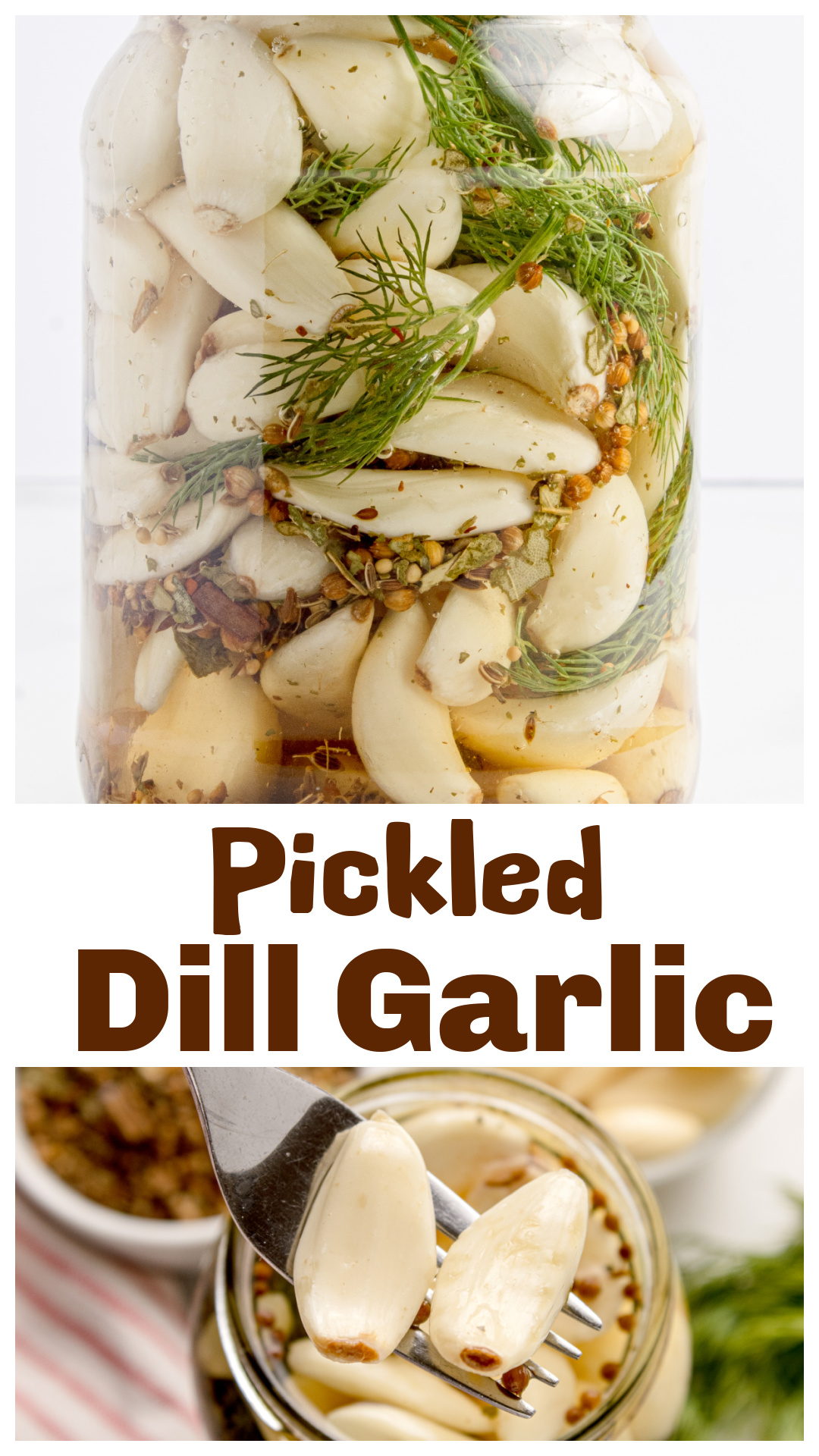
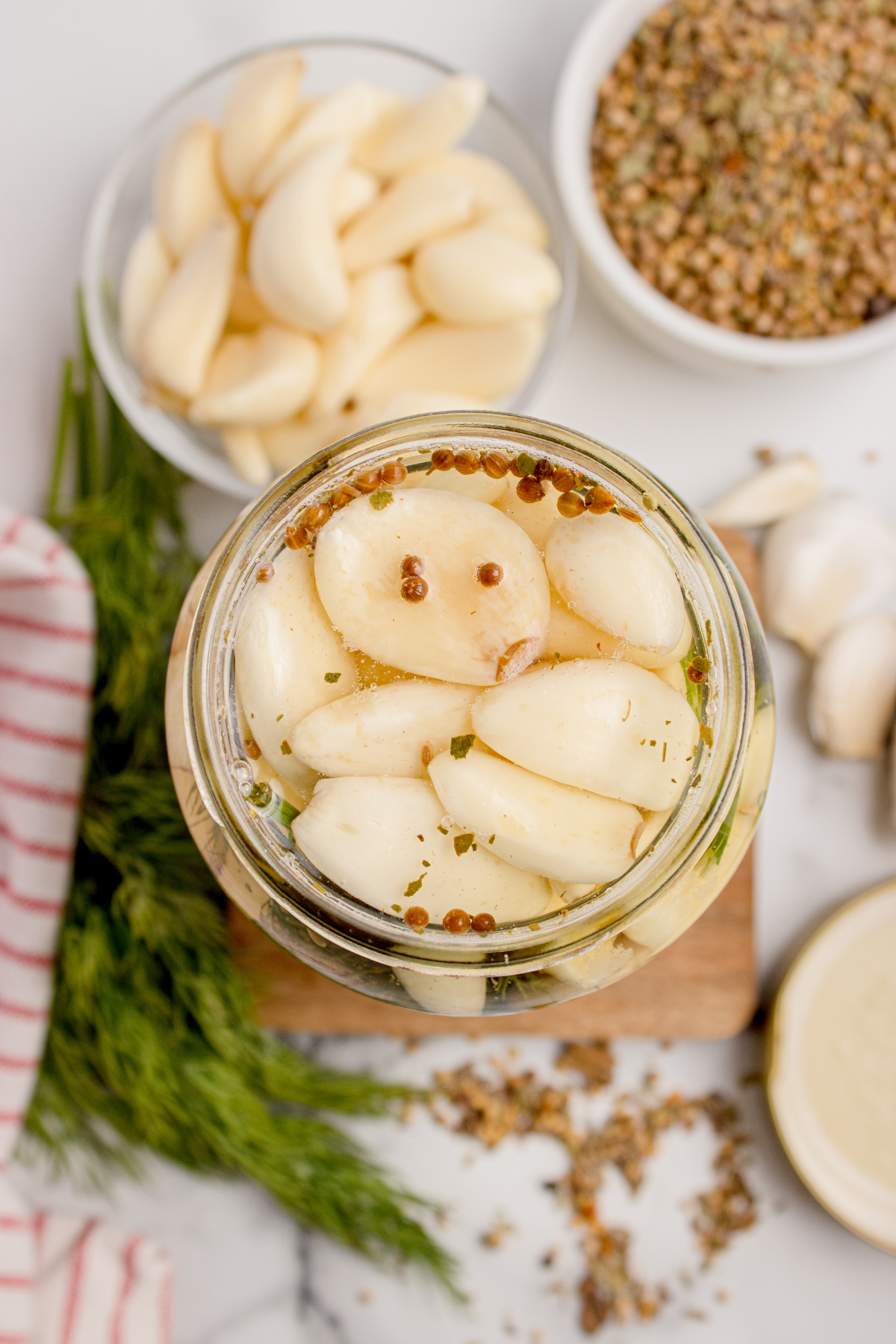
Pickled dill garlic made with whole cloves, fresh dill, and a hot vinegar brine that mellows the taste while keeping the texture intact. After a few days in the refrigerator, the cloves turn tangy, savory, and remain sturdy enough to use anywhere you’d normally want raw garlic.
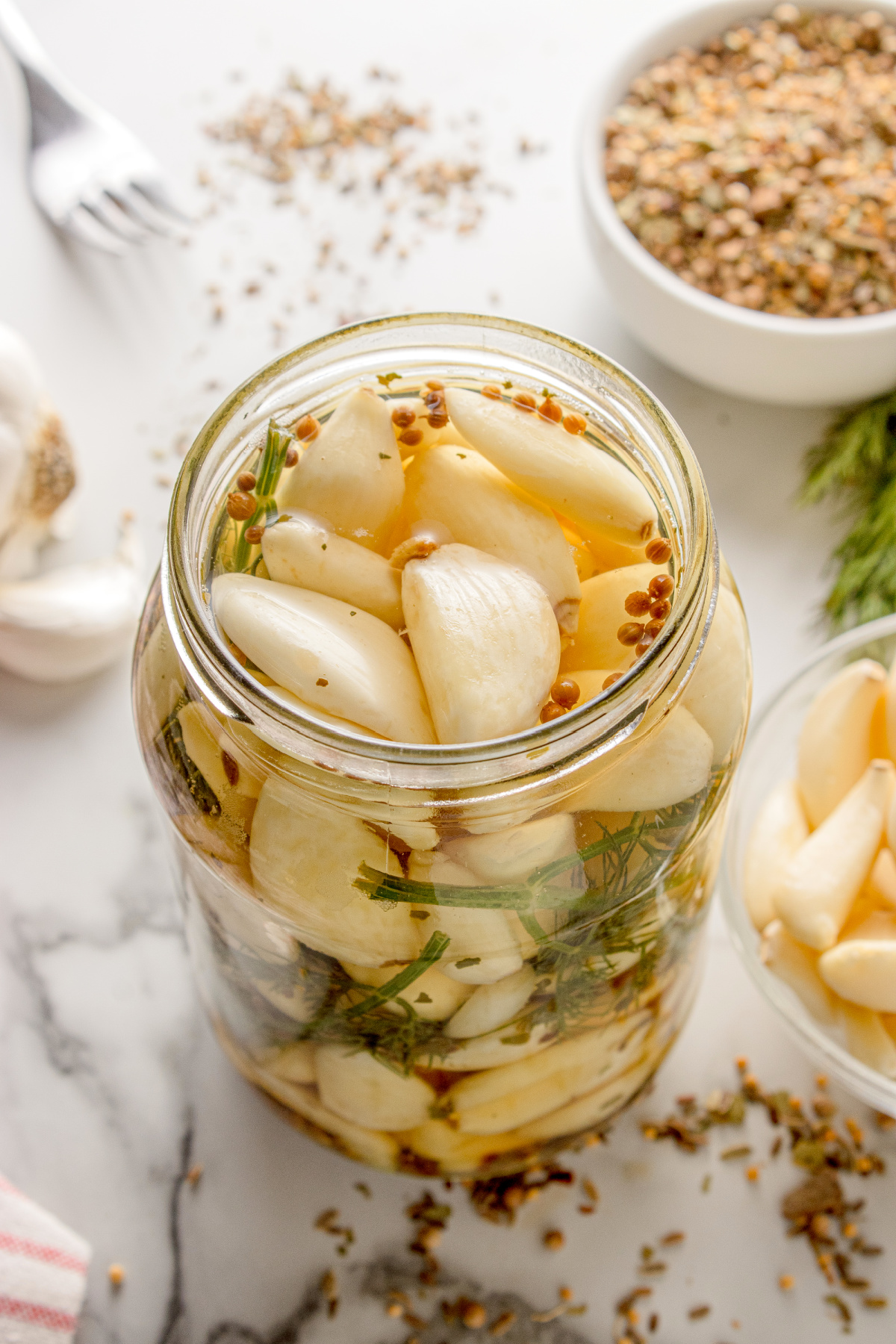
Pickled Dill Garlic, and the Kind of Work That Lasts
I’ve been making pickled dill garlic lately, partly because I once found myself with far more garlic than any one kitchen needs at once and it stuck and because I’ve been spending a lot of time thinking about how people decide what’s worth bringing forward, what gets preserved carefully and used up immediately. That line of thinking has been following me from the garden into the woody areas around my home and back inside, where my own shelves have been filling up with books written by people who assumed their work would matter later, even if they wouldn’t be around to see it.
I live under trees now, literally, old ones, the kind that make their presence felt. When I’m outside, I find myself thinking as much about their canopies, age and scale as I do about soil, which may be why I didn’t notice at first that I was assembling a small botanical library without meaning to. I’m drawn again and again to early horticultural and natural history texts written before anyone felt the need to hurry knowledge along or squash it down into something quick and portable.
One of my recent scores is The Tree Book by Julia Ellen Rogers, published in 1920, which was written at a moment when American natural history hadn’t yet split itself into categories or decided whether it belonged to science or poetry. While reading, it’s obvious that writers still assumed the reader would slow down, learn bark by touch, and understand that trees were not ornamental objects but living systems tied to culture, medicine, timber, and even time. Paired with A. Radclyffe Dugmore’s photographs, the book is less about instruction and more about stewardship, which I prefer anyway and mirrors my own experience in agriculture. If I had to pin it down, I would say it’s an attempt to teach people how to look carefully at living things before too much of the landscape disappeared. And I love that.
Another one I’ve recently acquired is The Gardener’s Omnibus from the Massachusetts Horticultural Society in 1938, a compilation from an era when cultivation was treated as a lifelong practice rather than a pastime, and estate gardening and plant societies assumed patience as a baseline. This is when men were laying out arboretums like Hoyt in Boston, knowing full well they would never walk under the mature trees or sit under the shade they were planning, because the work itself didn’t require their presence to justify it. I have so much respect for that.
There’s something clarifying about books written by people who never hurried to the ending. They assumed knowledge was cumulative and readers would meet them halfway, and understood that attention itself was the contribution. These weren’t books designed to persuade you. They were written to be useful later, by someone else, in another season, under different conditions, like myself, one hundred years later.
That same idea comes around for me in the kitchen with jars that sit unopened for days and food that’s not meant to affect anyone in the moment. It’s the pickled dill garlic that goes into the refrigerator unfinished and comes out later as something entirely different, and is ready when it’s needed and wanted.
I don’t have an urgency to use everything right away anymore. I plant or purchase, harvest, preserve, and trust that future me will know what to do with what I’ve taken the time to keep.
Arboretums, books, and jars of garlic are all made by those of us who trust the future enough to prepare for it without needing to watch it happen.
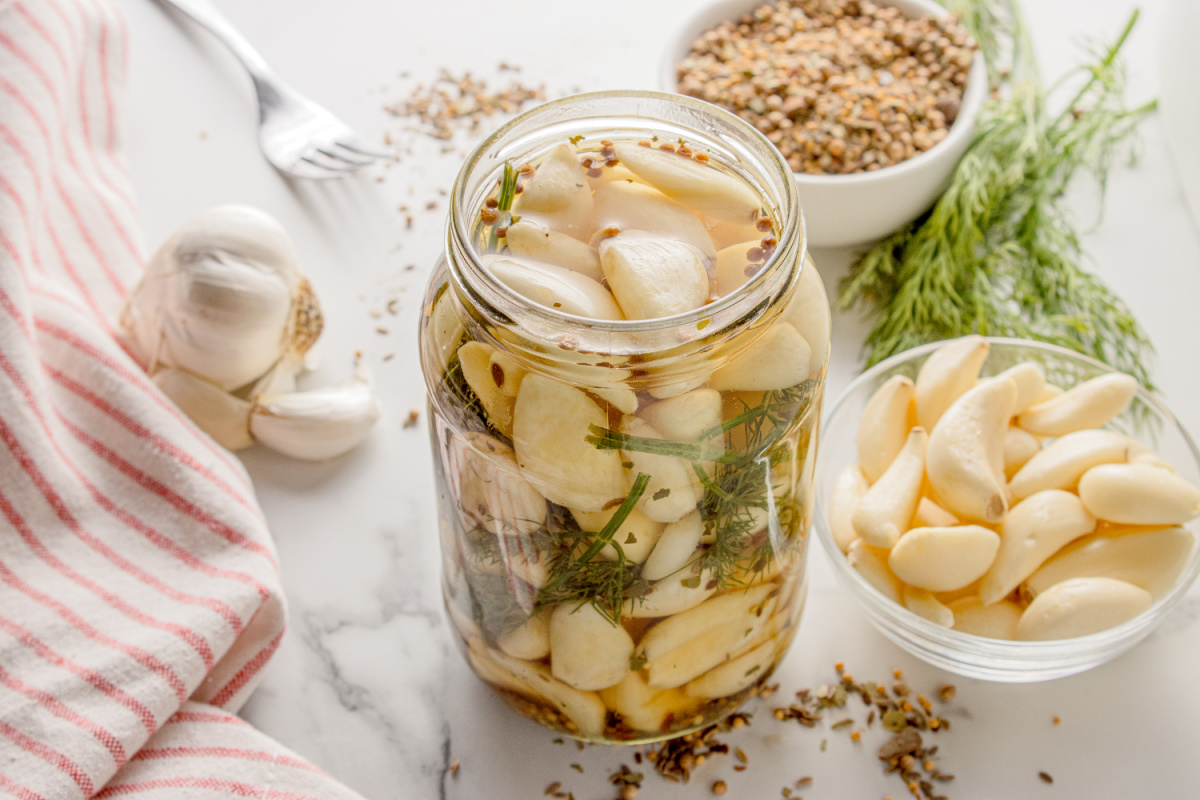
Why I Love This Recipe
- This is how I preserve a surplus of garlic without needing it to be something else.
- The garlic changes because time passes, not because you interfere with it.
- I don’t have to decide how it will be used when I make it. It’s delicious with everything.
- The work is finished early and the value arrives later, which is always my favorite kind of recipe.
- I love pickling because after you make it, you don’t have to stay involved.
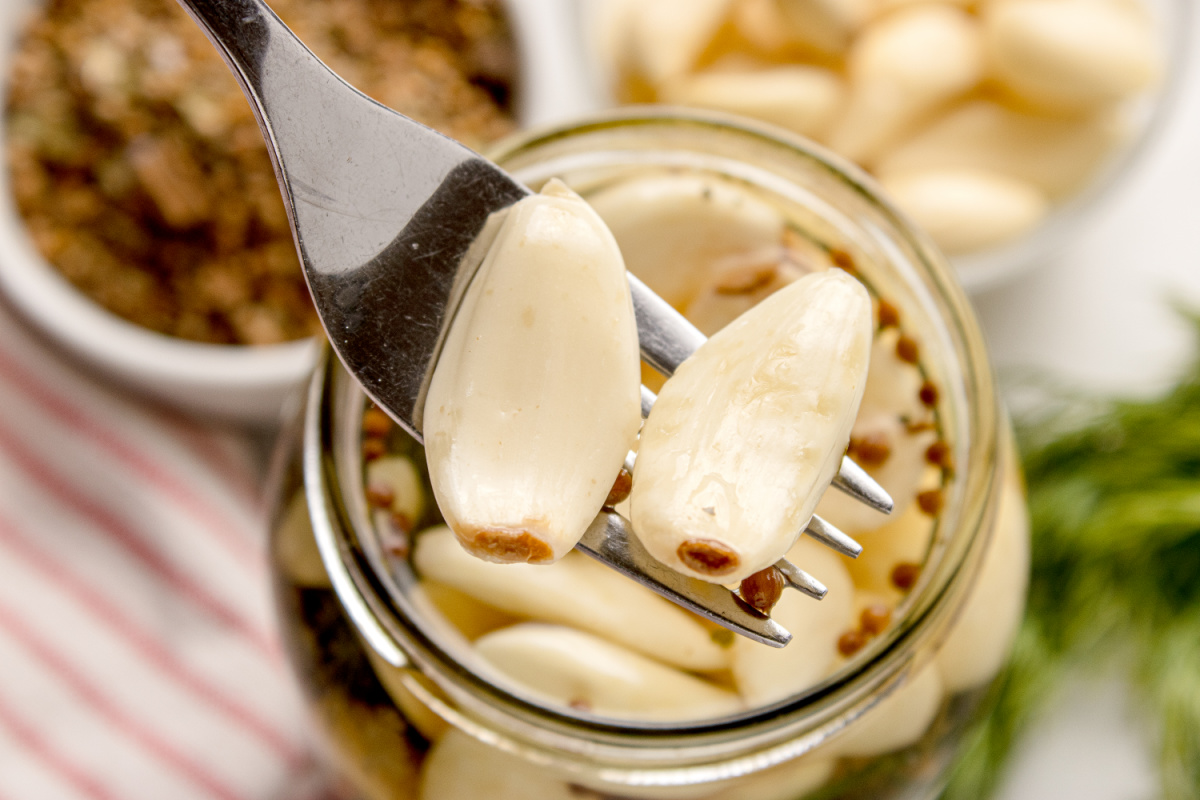
Ingredients
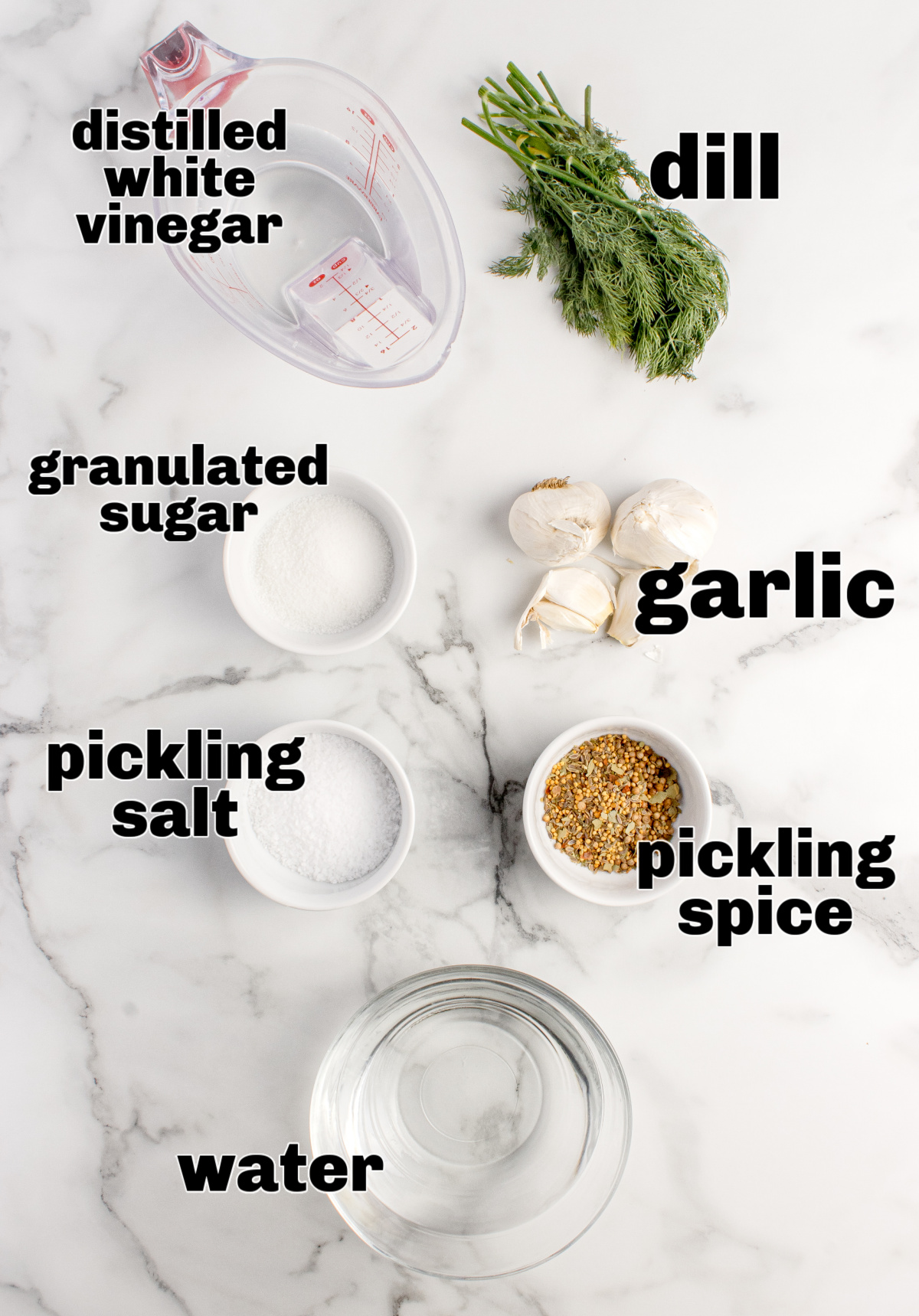
- Garlic cloves – You’ll need enough freshly peeled cloves to fill a pint jar comfortably. This recipe works best when they’re packed tightly, but not overcrowded.
- Distilled white vinegar (5% acidity) – Reliable, consistent, and neutral enough to keep the garlic from competing with the dill or other spices.
- Water – Softens the vinegar just enough so the garlic can change slowly instead of being overtaken all at once, which is what gives the finished cloves their texture instead of turning them into something brittle.
- Pickling salt – Dissolves easily without leaving residue behind, though a fine sea salt works just as well if that’s what you have on hand.
- Sugar – A small amount, not to sweeten, but to support the whole process.
- Pickling spice – Coriander, mustard seed, bay, peppercorns, this is what develops the flavor hanging out in the background.
- Fresh dill – Dill is its own presence, not as garnish but as part of the preservation itself, releasing its oils as you tuck it in amongst the cloves.
How to Make Pickled Dill Garlic
Find the complete printable recipe with measurements in the recipe card at the BOTTOM OF THE POST.
- Step One (build the jar)
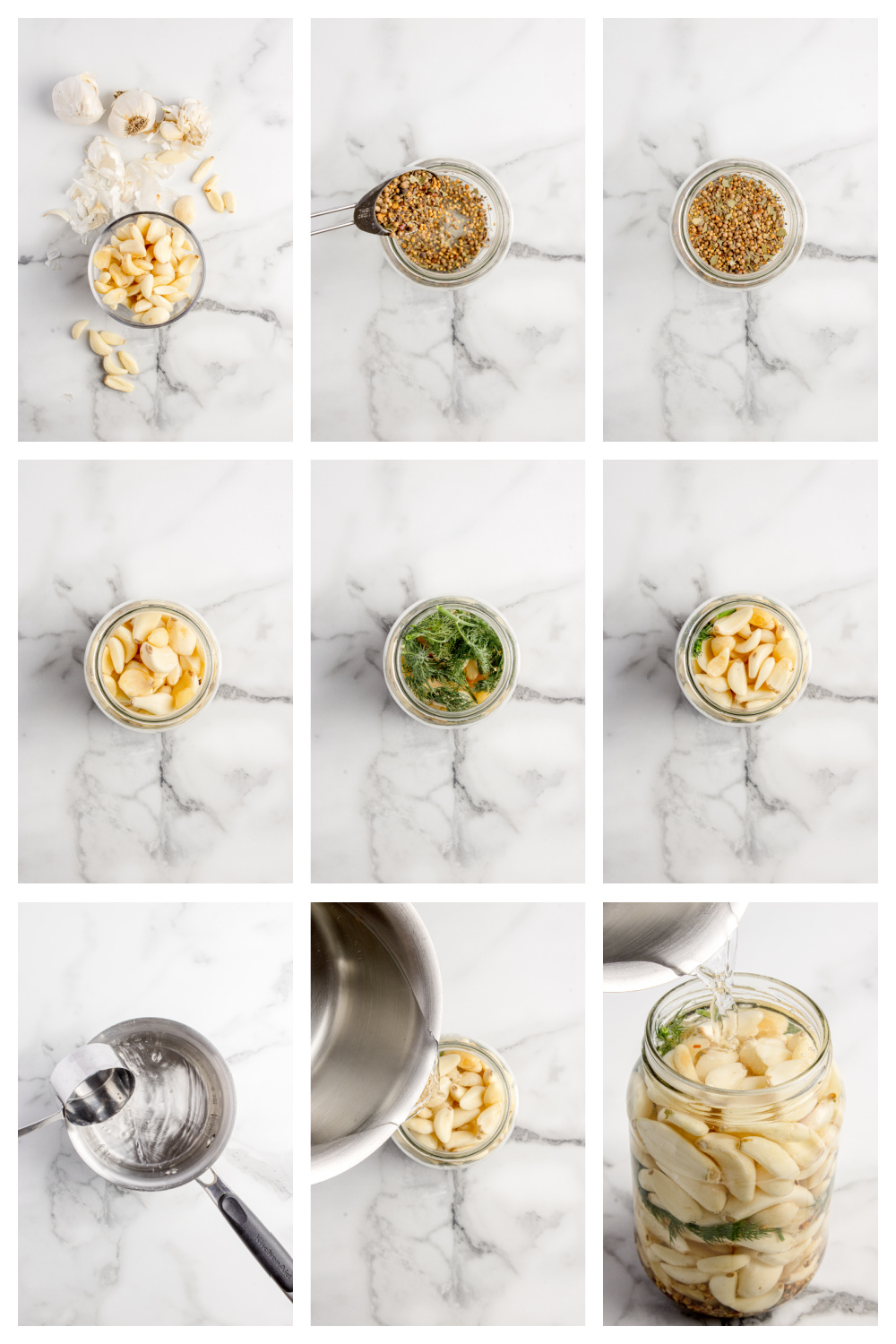
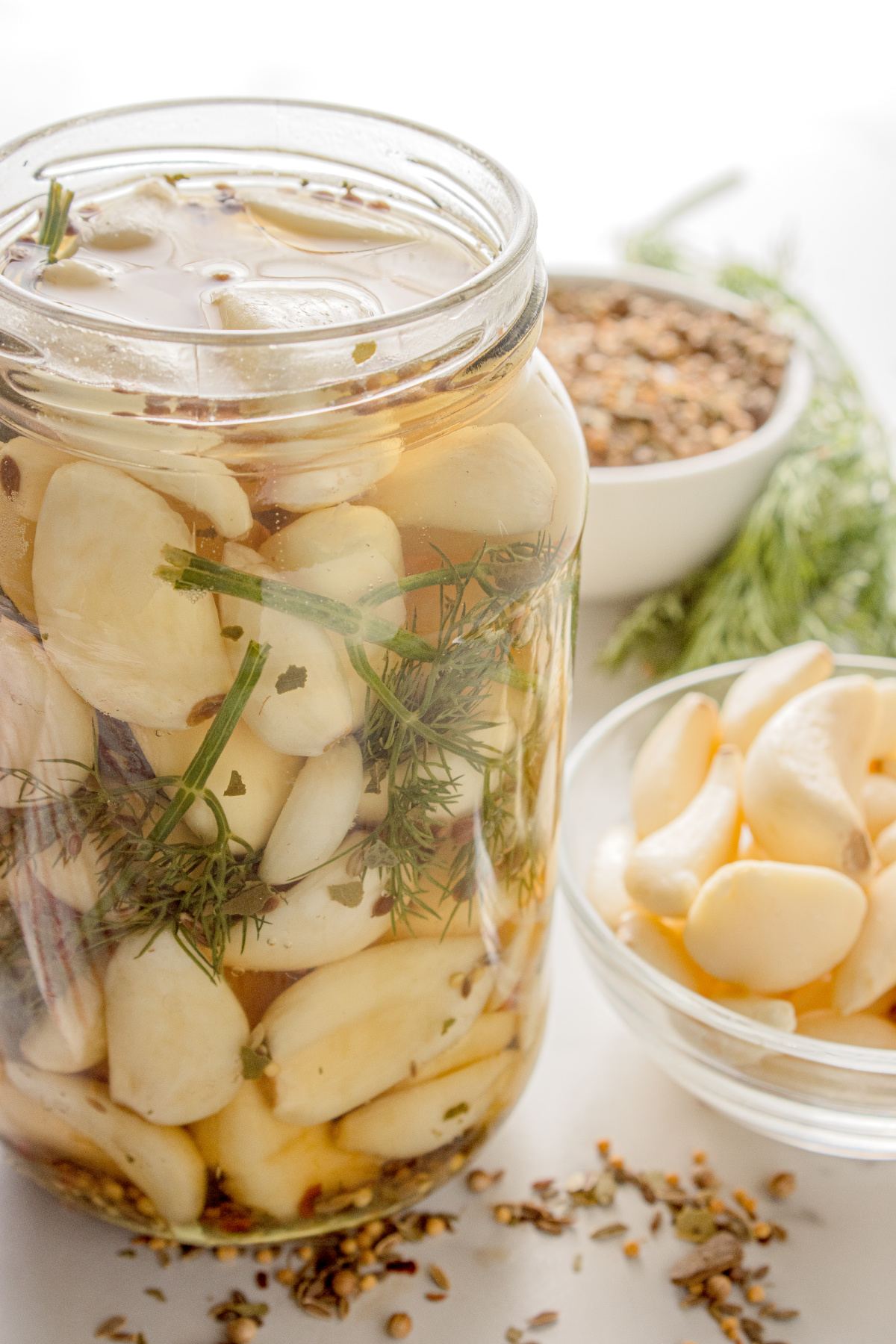
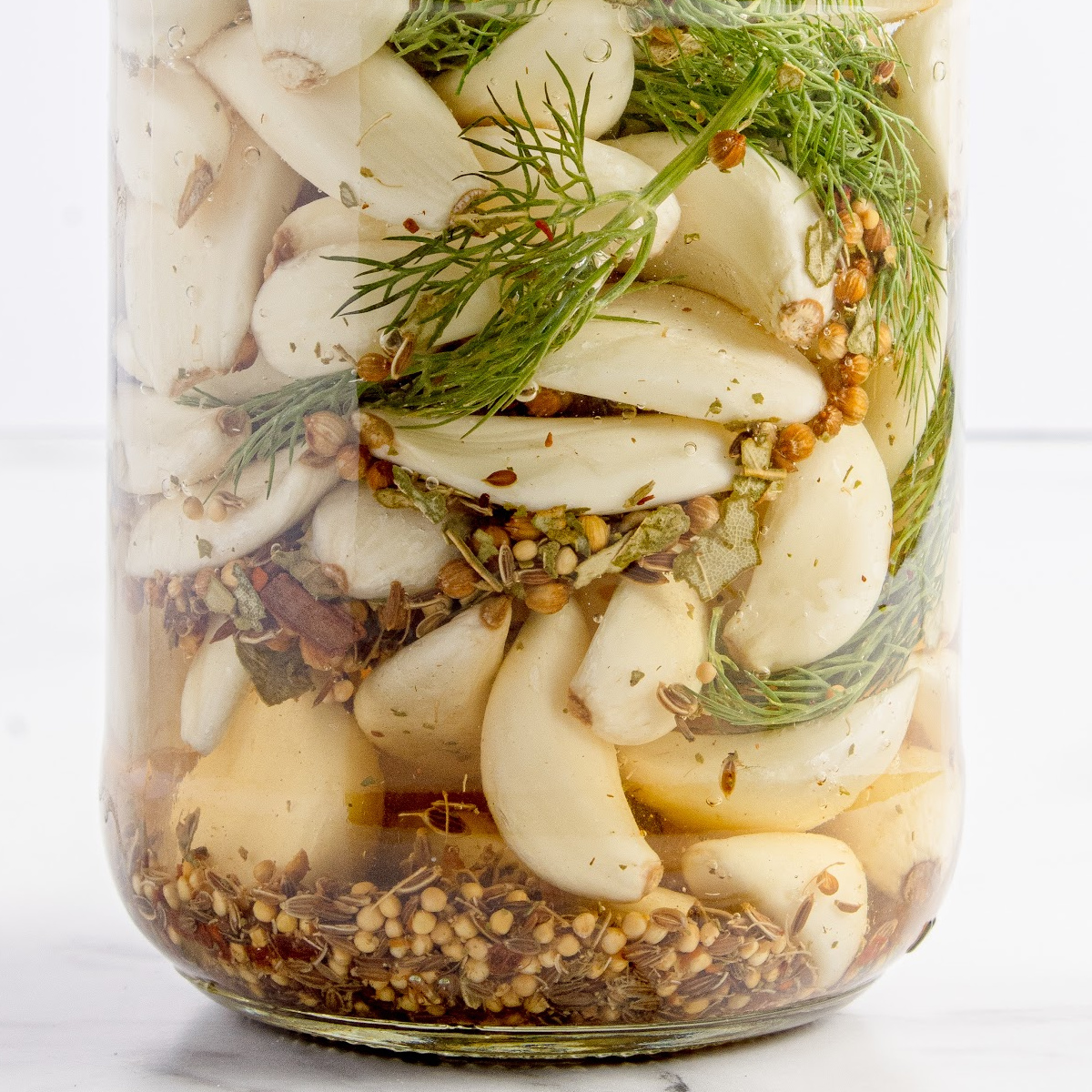
Add the pickling spice to the bottom of a clean pint jar. Fill it halfway with the peeled garlic cloves. Scrunch the fresh dill in your hands to release its oils, then tuck it along the sides of the jar. Add the remaining garlic, leaving about ½ inch of headspace at the top. The cloves should be snug but not forced. - Step Two (make the brine)
In a small saucepan, combine the distilled white vinegar (5% acidity), water, salt, and sugar. Bring it to a full boil over medium-high heat, stirring until the salt and sugar dissolve completely. - Step Three (pour and settle)
Carefully pour the hot brine over the garlic until the cloves are fully submerged. Tap the jar gently on the counter to release any trapped air bubbles. - Step Four (cool and chill)
Let the jar cool at room temperature for 1 to 2 hours, until it’s cool to the touch. Seal tightly and transfer to the refrigerator. Let it rest for at least 3 days before opening so the vinegar brine can fully mellow the cloves.
Recipe Tips
- Using fresh, firm garlic makes a real difference. Sprouting or shriveled cloves tend to go soft.
- This is the kind of recipe that works best when you have more garlic than you can reasonably cook through, because once the peeling is done, the jar takes over and buys you time.
- It’s best to use glass jars and a stainless steel saucepan, since reactive metals will interfere with the brine and sometimes affect the color of the garlic.
- If the garlic turns blue or green while it sits, it’s a natural chemical reaction with the vinegar and not a sign that anything has gone wrong. It doesn’t affect safety or flavor.
- The garlic is technically ready after a few days, but it continues to change as it rests and I usually start using it around the one-week mark and keep going from there.
- Because this is a refrigerator pickle and not shelf-stable, it should always be stored cold in a sealed jar with a clean utensil used each time.
Storage
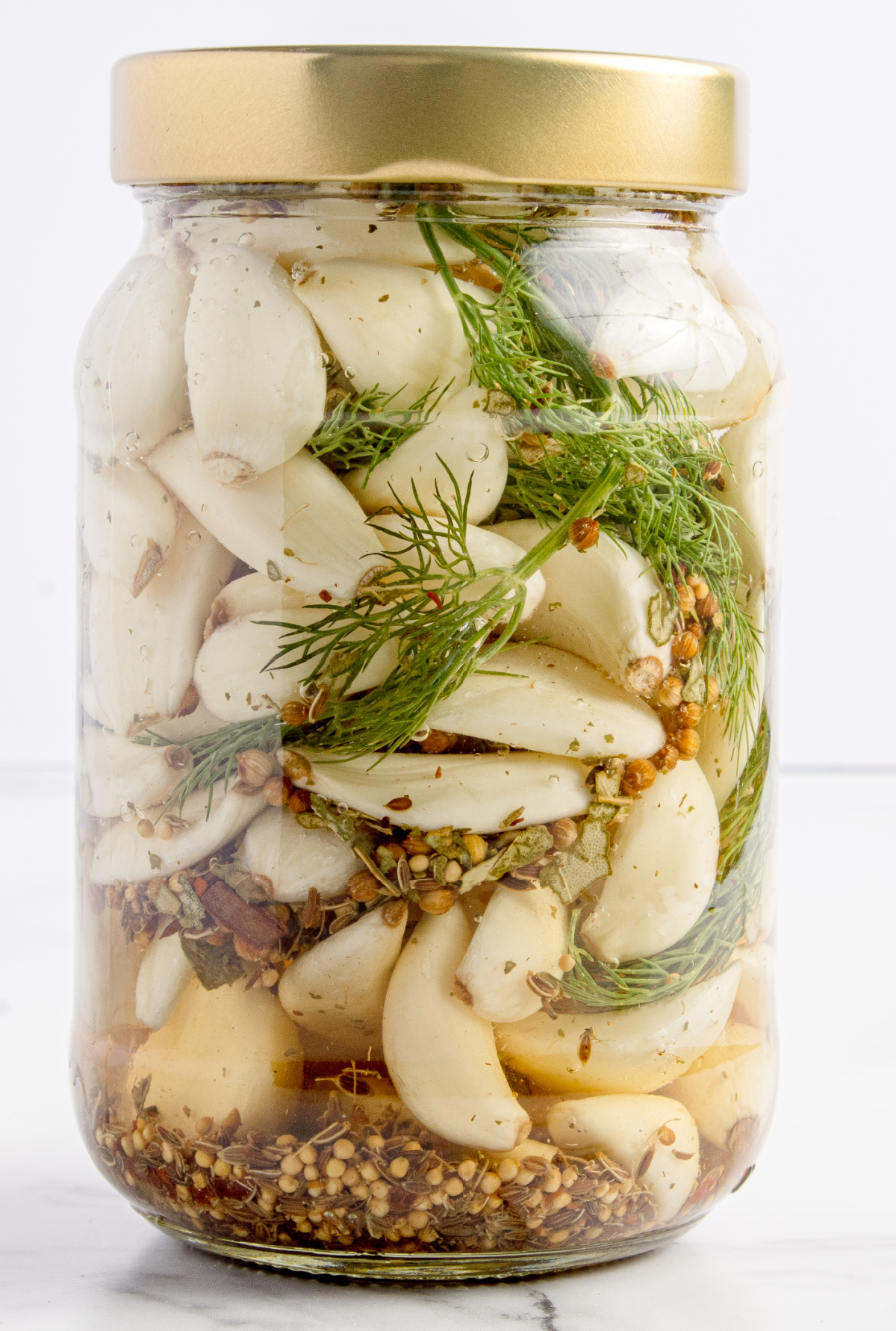
- These pickled dill garlic cloves are meant to live in the refrigerator, where the cold slows everything down and lets the flavors continue to develop without turning them into anything unstable.
- They should always be stored in a sealed glass jar, and it’s worth using clean utensils each time you reach in so the brine stays clear and the cloves keep their texture.
- Over the first few days the garlic will mellow noticeably, and over the following weeks it becomes more cohesive and tastes even better, which is why I like to think of this as something you make ahead and return to when it’s ready.
- Kept refrigerated and handled carefully, the garlic will hold well for up to three months, though I tend to use it long before that simply because it finds its way into more things than I expect.
FAQs
- Why did my garlic turn blue or green?
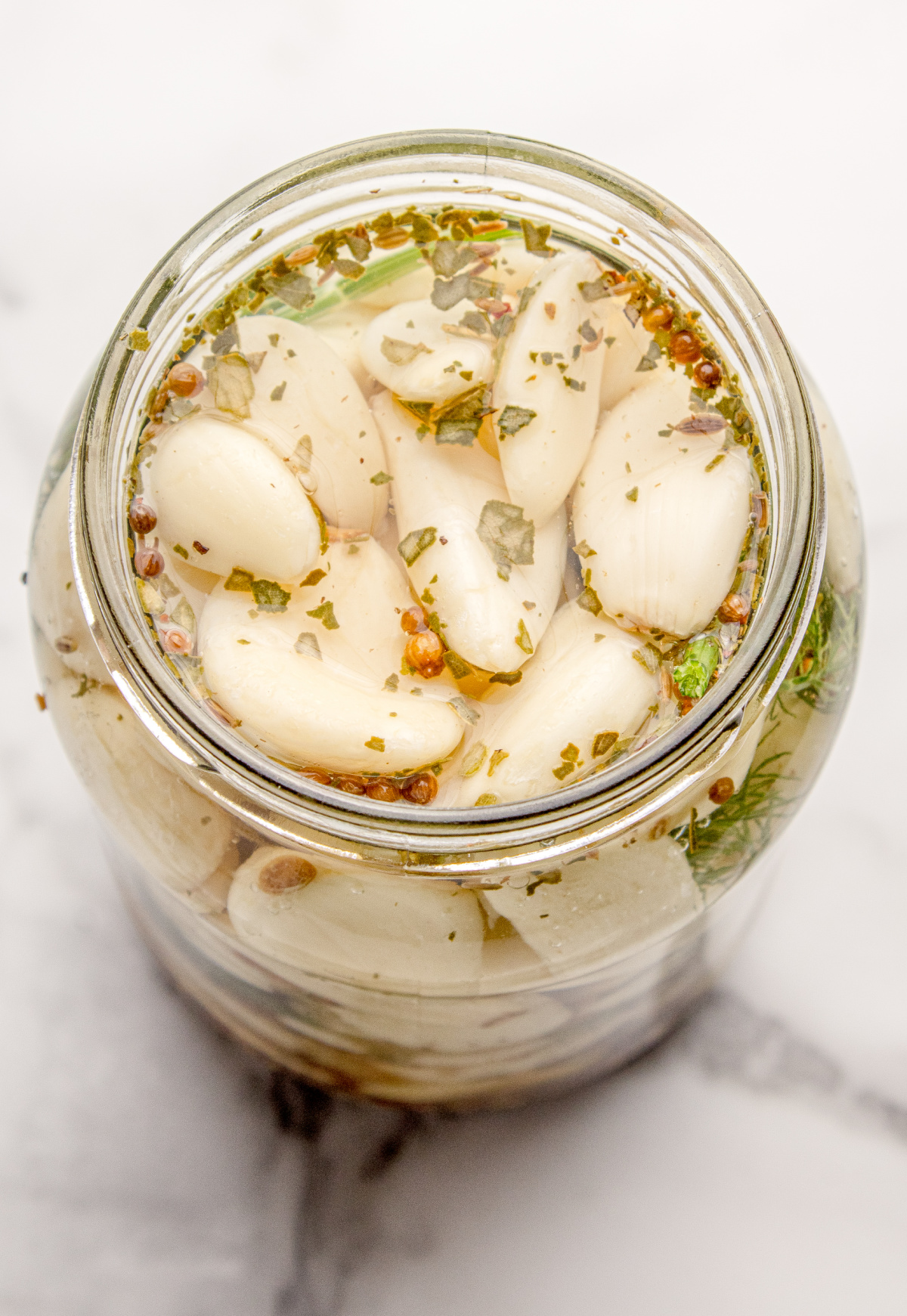
This can happen when sulfur compounds in garlic react with acid or trace minerals. It looks dramatic, but it’s harmless and the garlic is still perfectly safe to eat. The color change is cosmetic, not a sign of spoilage. - How can I keep the garlic from changing color?
Using very fresh garlic, filtered water, and non-reactive cookware helps. If you want to be extra careful, blanch the cloves briefly in boiling water for about 30 seconds before packing the jar. - Is this pickled garlic shelf-stable?
No, this is a refrigerator pickle and should always be stored cold. The acidity is correct for flavor and safety in the fridge, not for pantry storage. - How long does pickled dill garlic last in the refrigerator?
Stored in a sealed glass jar in the refrigerator and handled with clean utensils, it keeps well for up to three months. - Can I use pre-peeled garlic cloves?
Yes, they’re convenient and work just fine. Whole, freshly peeled cloves tend to have a slightly firmer texture, but both are good options. - Can I add other vegetables to the jar?
You can. Small onions, sliced peppers, or a few cucumber rounds work well, though I like keeping this one focused on garlic and dill. - How long should I wait before eating it?
Three days is the minimum. The flavor continues to deepen over the first couple of weeks, which is when I like it best. - What do you use pickled dill garlic for?
I slice it into sandwiches, chop it into salads, blend it into dressings, or eat it alongside richer foods where a little acidity goes a long way.
From My Kitchen Notes
Observations and ramblings I started connecting once the jars were already in the fridge.
- I’ve noticed I’m drawn to things that take their time without needing much else.
- Pickled garlic isn’t for the day you make it. You put it away and let time do what it does.
- I didn’t set out to build my own botanical library. It just happened the way things do when you keep noticing what you’re drawn to.
- Some books assume you’ll slow down for them and I like that assumption.
- There are people who plant trees knowing they’ll never sit under them. I think about that often and I respect that they knew the result wasn’t for them.
- My early tree books are different. They weren’t trying to influence anyone and were written by people who expected the land to outlive them, while adjusting their tone accordingly. Touché.
- My little evolving library of The Tree Book, The Gardener’s Omnibus, and The Aristocrat of Trees all share the same stance. There is no urgency or simplification, just the belief that someone, someday, would need this.
- It’s obvious to me that arboretums aren’t nostalgia projects; they’re more like acts of inheritance, created by people who understood that attention extends beyond ownership. One looks back, the other prepares forward.
- I think that’s why I like preserving food that doesn’t pay you back right away.
- Pickled garlic isn’t about fixing dinner. It’s about deciding something mattered enough to keep even if you don’t know exactly how it’ll be used.
- Vineyards are planted knowing their best years may never be witnessed by the person who put them in the ground. Even wine is made with the understanding that its best moment may belong to someone else. And that is a full-circle experience for me.
- Stewardship means doing the work without assuming you’ll be the one who gets the reward and a lot of people don’t have that drive.
- Preservation is just inheritance you can eat later.
- I don’t mind waiting for something when I know it’s working.
- It’s nice to open the refrigerator and remember I took care of something earlier.
- Not everything is meant to meet you where you are. Some things are made for who you’ll be later.
More Ways to Let Time Do the Work
- Pickled Red Onions – bright bite, electric color.
- Easy Homemade Dill Pickles – Cold brine, classic crunch.
- Fermented Honey Garlic – Sweet heat, living fermentation.
- Garlic Confit – Slow-poached, soft and rich.
This post may contain affiliate links. Please read my disclosure policy.
Pickled Dill Garlic
Equipment
- pint glass jar (16 oz / 473 ml). Non-reactive storage for safe refrigerator pickling.
- Saucepan (small, stainless steel). Prevents metallic reactions with vinegar.
Ingredients
- 1 tbsp (6 g) pickling spice
- 12 oz (340 g) freshly peeled garlic cloves (enough to fill jar)
- 3 sprigs (~5 g) fresh dill
- ½ cup (120 ml) distilled white vinegar (5% acidity)
- 1 cup (120 ml) filtered water
- 2 tsps (12 g) pickling salt or fine sea salt
- 2 tsps (8 g) granulated sugar
Instructions
- Add the pickling spice to the bottom of a clean 1-pint (16-ounce / 473 ml) glass jar.1 tbsp (6 g) pickling spice
- Fill the jar halfway with the peeled garlic cloves.12 oz (340 g) freshly peeled garlic cloves
- Gently scrunch the fresh dill sprigs in your hands to release their oils, then tuck them along the sides of the jar.3 sprigs (~5 g) fresh dill
- Add the remaining garlic cloves, leaving about ½ inch (1.3 cm) of headspace at the top.
- In a small saucepan, combine the distilled white vinegar, water, salt, and sugar. Bring to a full boil over medium-high heat, stirring until the salt and sugar are completely dissolved.½ cup (120 ml) distilled white vinegar, 1 cup (120 ml) filtered water, 2 tsps (12 g) pickling salt, 2 tsps (8 g) granulated sugar
- Carefully pour the hot brine over the garlic cloves until they are fully submerged.
- Tap the jar gently on the counter to release any trapped air bubbles.
- Let the jar cool at room temperature for 1 to 2 hours, or until cool to the touch. Secure the lid and transfer to the refrigerator.
- Refrigerate for at least 3 days before serving to allow the flavors to fully develop.
Notes
- This is a refrigerator pickle and is not shelf-stable.
- Always use vinegar labeled 5% acidity for safe pickling.
- Blue or green garlic is a harmless reaction between sulfur compounds and acid.
- Store refrigerated for up to 3 months.
- Use clean utensils each time to maintain clarity and texture.
Nutrition
Have you made this Pickled Dill Garlic? I’d love to hear how it turned out – leave a comment below and let me know.
As an Amazon Associate and member of other affiliate programs, I earn from qualifying purchases.
Leslie S in Colorado says
Love this so much. I eat them whole like a vampire.
Grady says
Turned out great, adding it to my salads.
Nancy says
This is my new favorite condiment. Really love chopping them into my salad. I had never thought about pickling garlic before.
Don says
Great pickling recipe. I’ve made this many times now. Really enjoy having it in the fridge.
Ellen says
I really love this garlic recipe. I have made it a few times and keep finding new ways to use it.