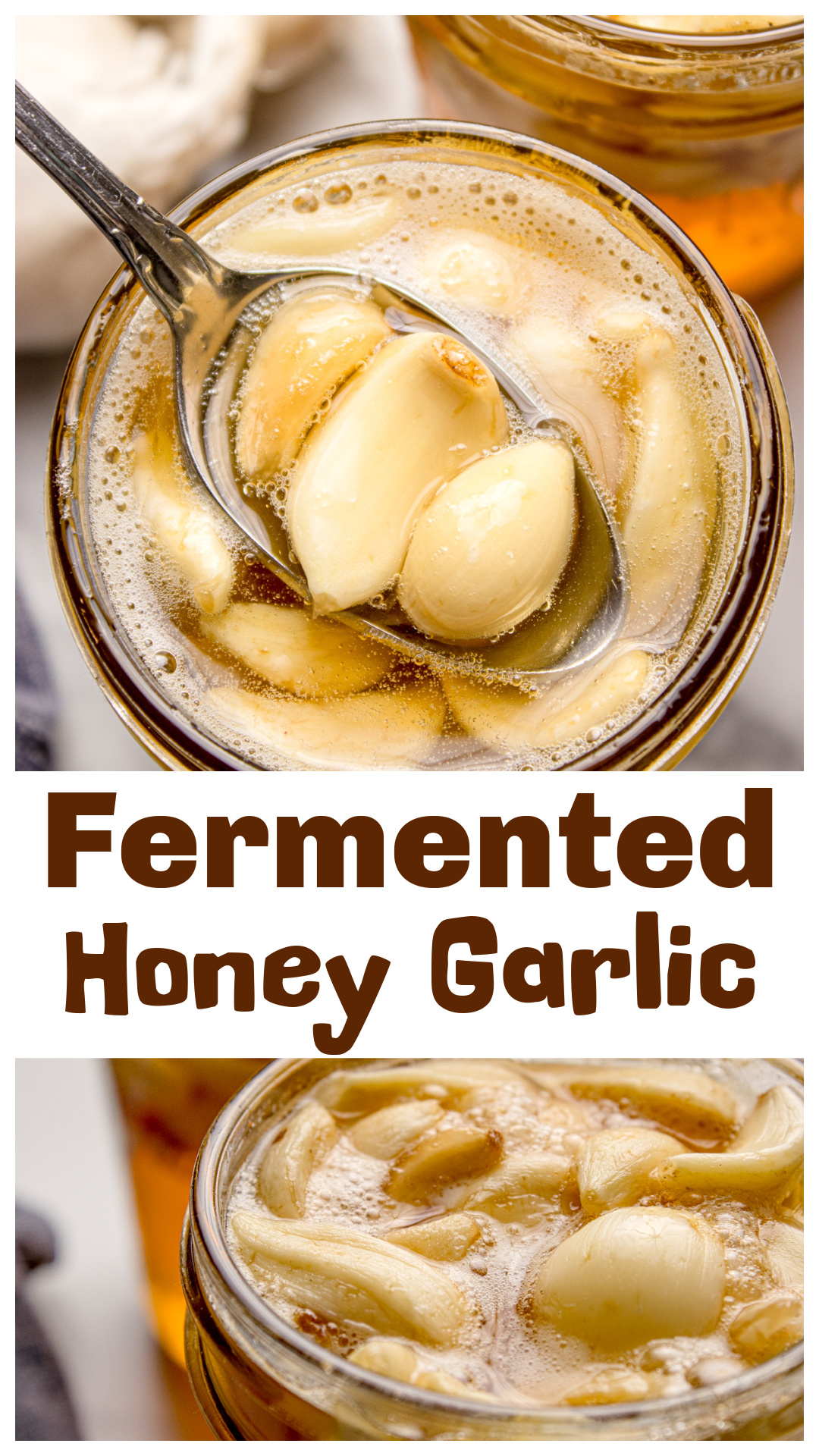
Whole garlic cloves fermented in raw honey until they soften, sweeten, and lose their bite. The flavor change is real, and it’s better than expected.
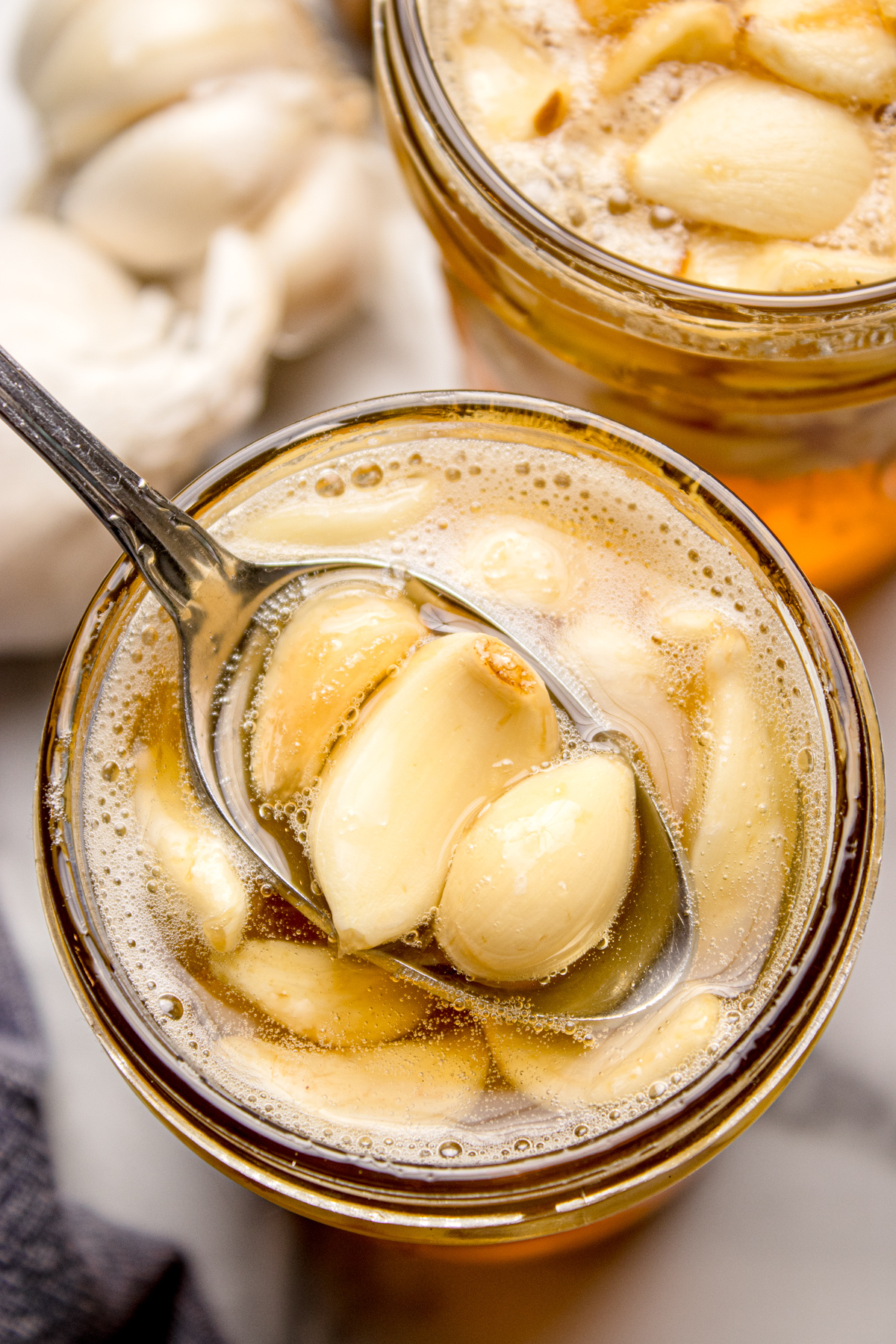
Fermented Honey Garlic, Left Alone on Purpose
There was a point where I had so much garlic that choosing one solution felt irresponsible, so I got practical. Some of it went into garlic confit for cooking, and the rest of it went into jars with raw honey, where I let fermentation pretty much take the wheel and didn’t interfere.
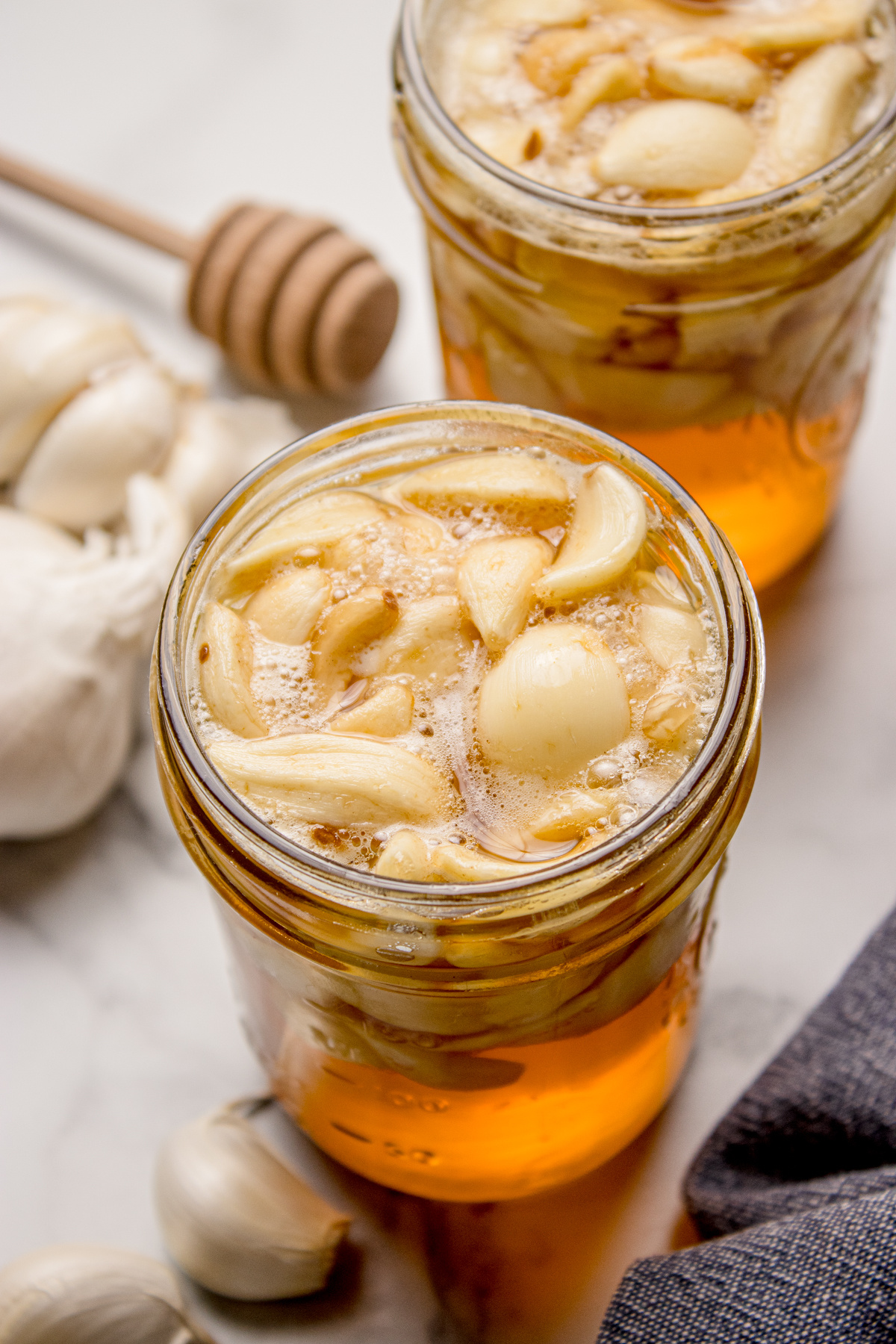
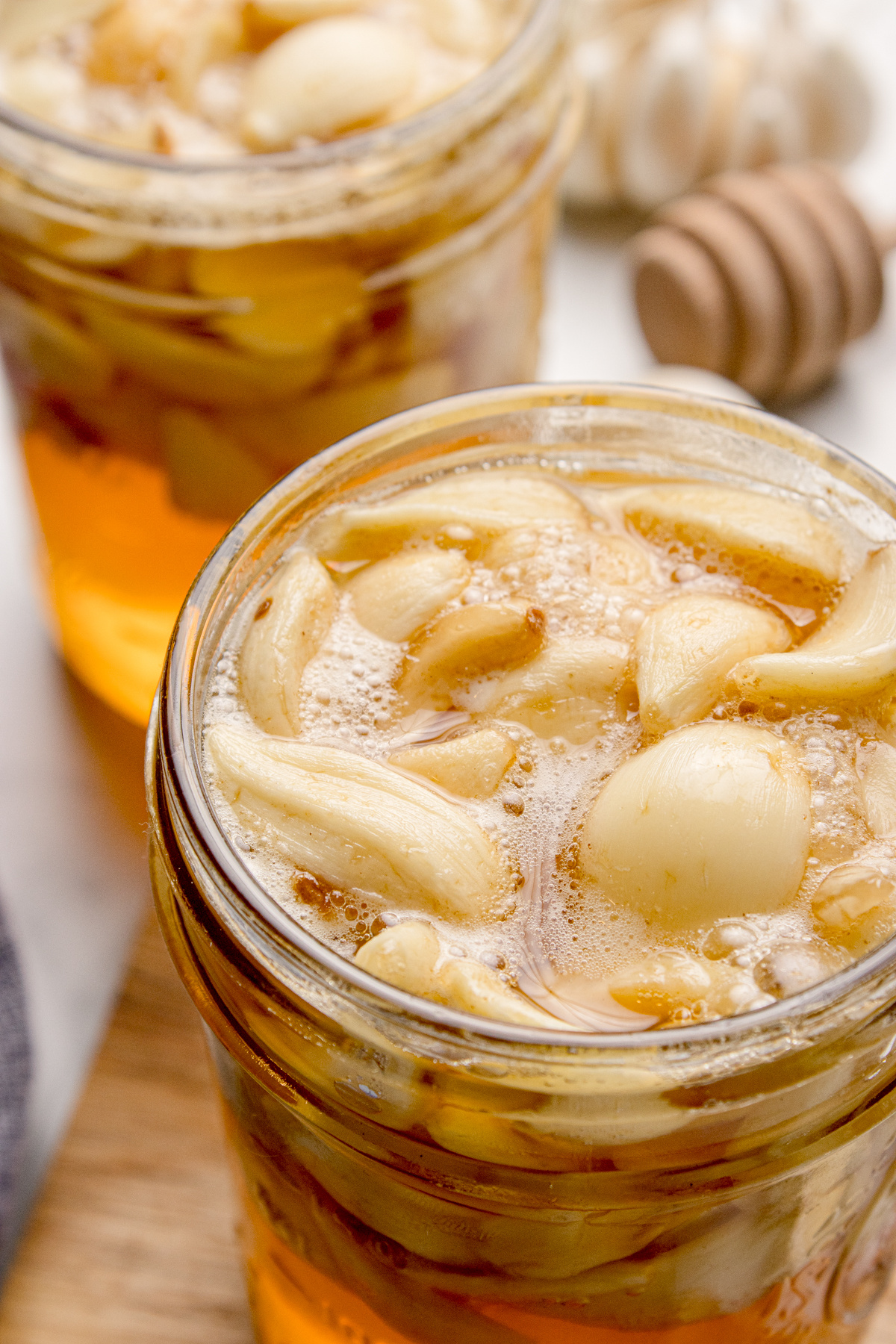
If you’ve never seen fermented honey garlic before, it looks a little strange at first. Whole garlic cloves floating in honey, bubbling away. The honey loosens up, (thins might be a better word), over time. It mostly just sits there, changing slowly, turning raw garlic into something mellow, sweet, and oddly versatile.
I’ve found this is one of those recipes most people have never heard of, and then I let them taste it. I’ll drizzle it on a piece of bread or use it in a glaze, and later they ask, “Wait, what was that?” It’s not sauce, candy, or a supplement, it’s a fermented pantry condiment that sits on the counter, rearranging itself into something way more useful.
This is the jar you’ll grab when roasted vegetables need that extra something, when a vinaigrette you’ve made feels unworthy of your salad, when a glaze wants sweetness without sugar. I use it on pizza, in salad dressings, brushed onto chicken, stirred into sauces, or spooned straight over warm bread. One clove mashed into butter does more than a whole head of raw garlic ever could!
If you’ve never fermented before, this is very a low-stakes entry point. There’s no equipment list that makes it feel like a science project, required starter cultures, or perfect timing. Just garlic, raw honey, a jar, and your patience.
After you set it up, keep an eye on it for the first week, then let time do what it’s very good at doing. The flavor develops slowly while the edges soften. Before you know it, you have something in your kitchen that didn’t exist before, which is honestly the whole appeal.
Why I Love This Recipe
- It takes something everyone thinks is aggressive and turns it into something you can use without thinking about it first. Just load it into whatever you’re making.
- The garlic softens, the honey loosens, and it works in places raw garlic never could.
- I make it once and then it just exists, ready when I am.
- The flavor has its own timeline and it doesn’t care what day it is. Early jars are sweet and garlicky. A few weeks in, it starts tasting more savory and less obvious, like it figured itself out.
- It fixes food that feels unfinished. A spoonful in yogurt with salt and olive oil is one of my favorites. Brushed onto chicken before it goes the oven. Drizzled over pizza right after it comes out (the best). Stirred into a pan sauce when everything tastes fine but not memorable.
Ingredients
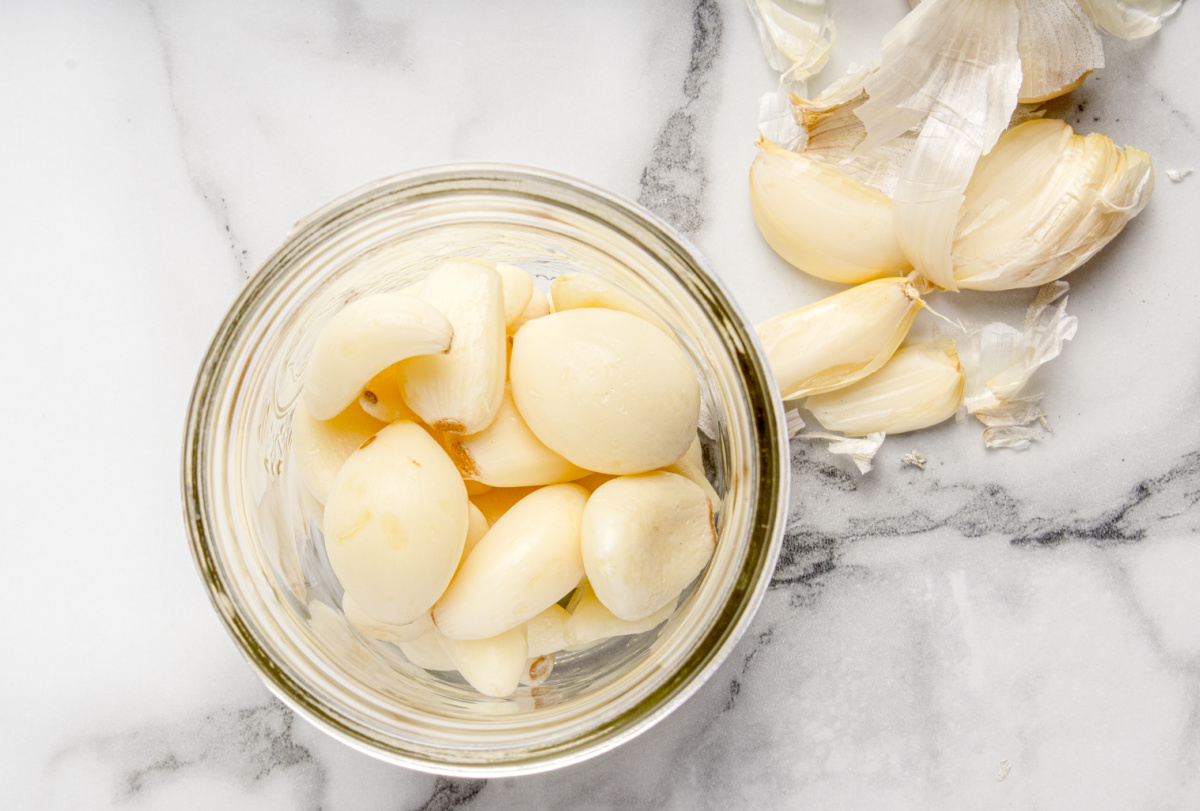
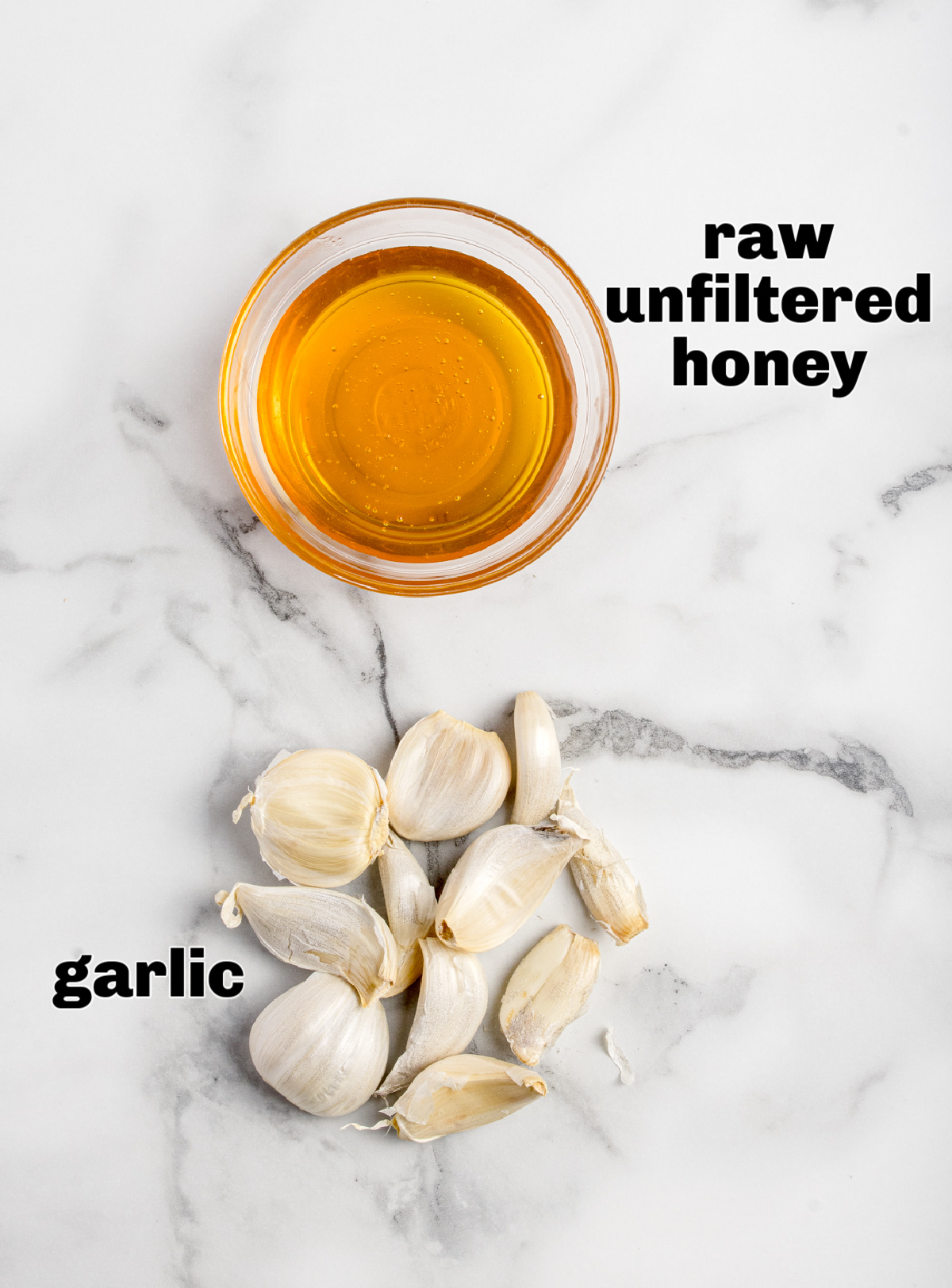
- Garlic cloves – You want fresh, firm, whole cloves only. This is not the place for sprouting garlic or anything that’s already halfway to compost. Fresh garlic has enough moisture and shape to ferment slowly. Older cloves turn dull and weird here, and then you’ve wasted weeks for nothing.
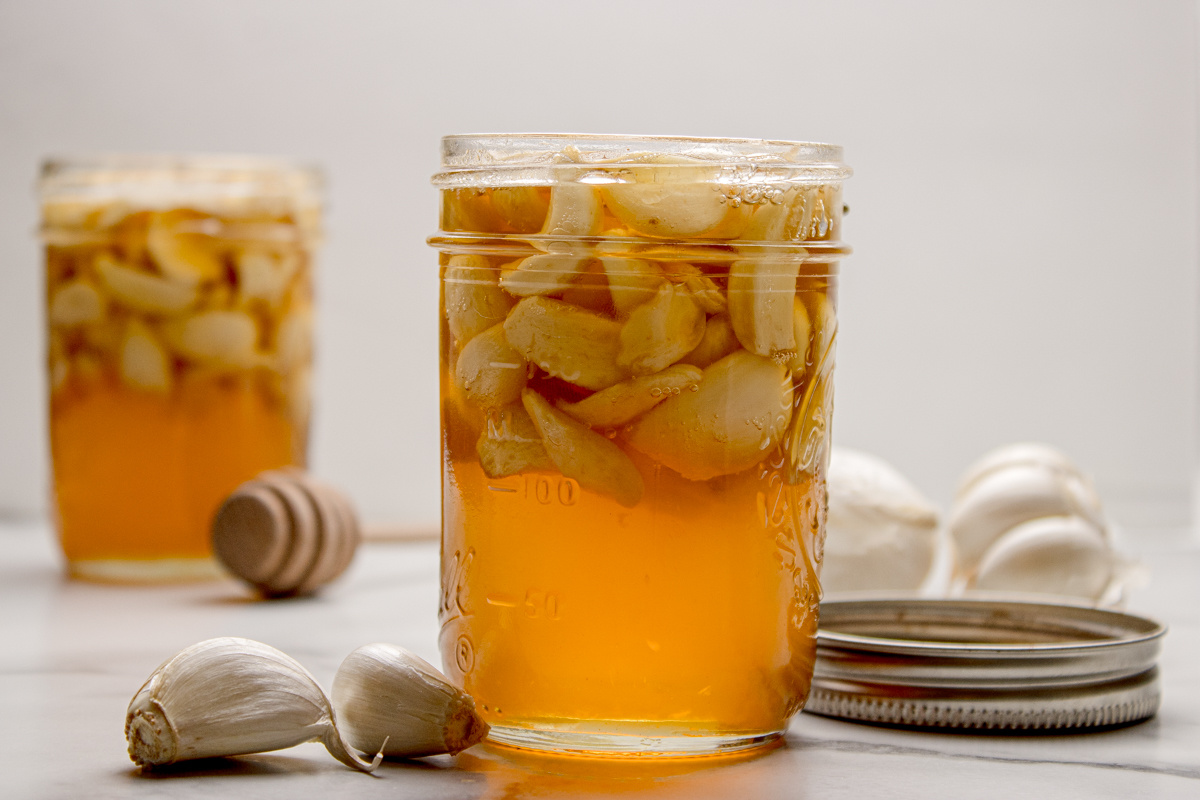
- Raw, unfiltered honey – This is the non-negotiable. Raw honey still contains the natural yeasts and enzymes that make fermentation possible. Pasteurized honey has been heat-treated to the point where nothing happens except disappointment.
Make sure to look for honey that’s labeled raw and unfiltered, usually found at farmers markets, local co-ops, or the corner of the grocery store. If it’s opaque, crystallizes over time, or looks a little wild, you’ve grabbed the right thing.
How to Make Fermented Honey Garlic
Find the complete printable recipe with measurements in the recipe card at the BOTTOM OF THE POST.
- Step One (fill the jar and commit)
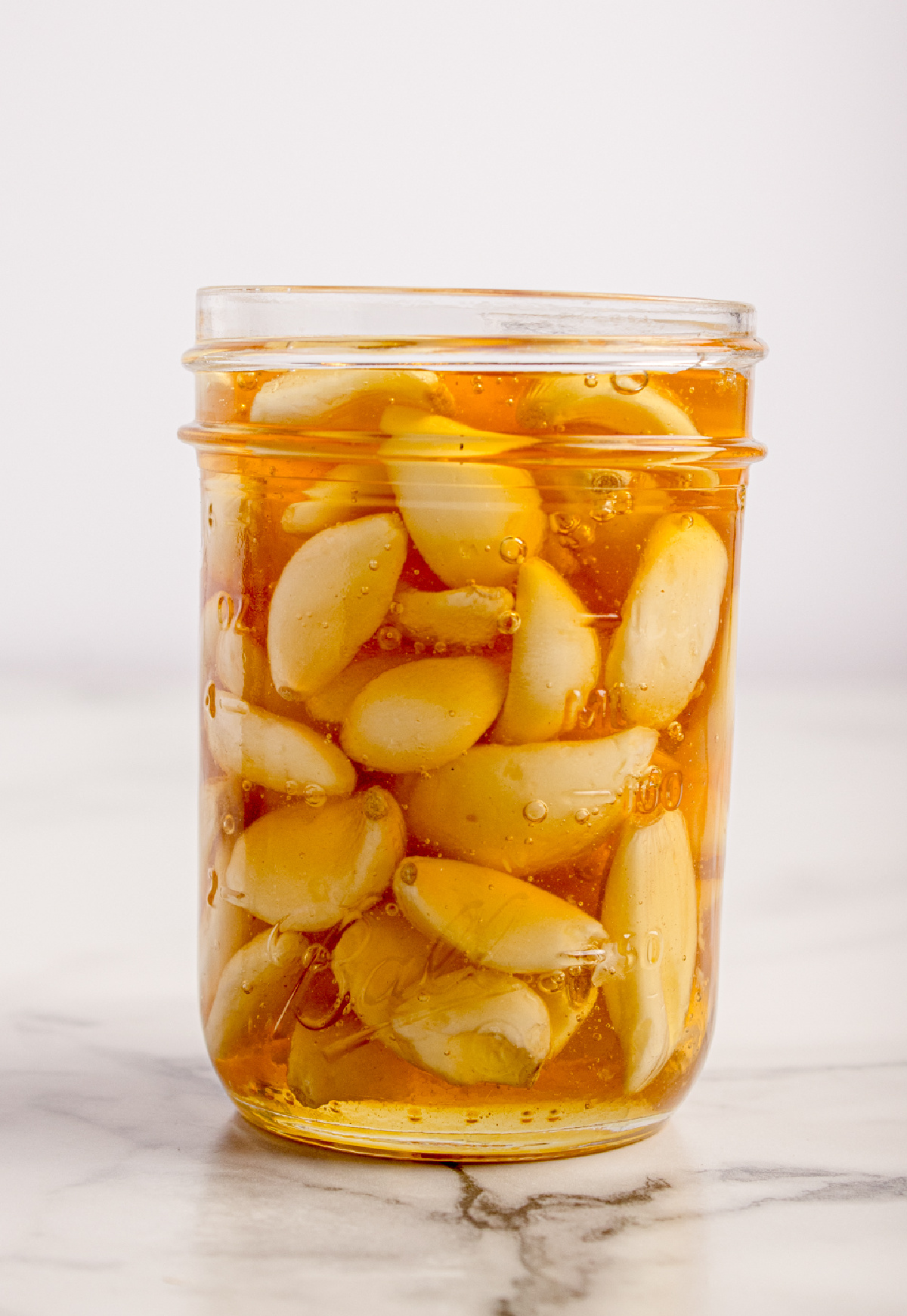
Drop the peeled garlic cloves into a clean 16-ounce wide-mouth mason jar. Don’t pack it to the top. Three-quarters full is the sweet spot. Pour the raw honey over the garlic until every clove is completely covered. Take a chopstick, skewer, or butter knife and nudge things around so the honey works its way into all the gaps and any trapped air can escape. Leave about ½ inch of space at the top. Fermentation needs room, it’s not about control here. - Step Two (close it, but not really)
Set the lid on loosely or use a fermentation lid if you have one. Do not tighten it. This jar is about to get opinionated, and the gas needs somewhere to go. Put it somewhere at room temperature, out of direct sunlight, where you’ll see it and remember it exists. - Step Three (daily attention, briefly)
For the first week, flip the jar once a day so the honey coats any garlic that wants to float. Crack the lid for a second to release pressure, then put it back on loosely. You’ll notice bubbles, thinning honey, and garlic that refuses to stay on the bottom. All of that is normal. Nothing is wrong. This is exactly what it’s supposed to do. - Step Four (hands off)
After the first 7 days, stop touching it. Let it sit and do what it does best. Start tasting around the 2-week mark if you like things sweeter and slightly sharp. Let it go 3 to 4 weeks for something more mellow and balanced. When it tastes good to you, tighten the lid. That’s the only rule that matters. - Step Five (slow it down)
Once you start using it, move the jar to the refrigerator. This slows the fermentation and keeps the flavor where you want it. Always use a clean utensil and make sure the garlic stays submerged in honey. Treat it well and it will keep giving.

Recipe Tips
- Floating garlic is normal, it happens early on and then stops. As long as the cloves stay coated in honey, it sorts itself out.
- The honey will change texture, and that’s okay. It starts thick and ends up pourable. That shift is part of the process, not a sign something went wrong.
- This is a slow recipe pretending to be simple. You do almost nothing, and then time does all the work. If you try to rush it, you will miss the whole point.
- The flavor is the finish line, you’ll want to stop the ferment when it tastes right to you. There’s no prize for waiting longer than you want, it’s all about your personal taste. This is the same way I make my sauerkraut. I stop the ferment when it tastes exactly how I prefer it.
- The cold keeps the flavor you want. Once it goes in the fridge, it stays exactly where you left it flavor-wise, which is useful when you get it to the version you like.
Storage
- When you store it properly, fermented honey garlic will keep for months in the fridge. The garlic should always stay submerged in honey, and always use a clean utensil when you dip in. Basic respect, nothing extreme.
- If the honey thickens again in the fridge, that’s normal. Let it sit at room temperature for a few minutes and it will open back up.
- You can technically keep it at room temperature longer-term, but I don’t. The fridge keeps it predictable, and predictability is the whole point once the ferment is done.
- If it ever smells unpleasant or looks off in a way that makes you think… hmmm, trust that instinct and toss it. This recipe is forgiving, but it will never be sentimental.
FAQs
- How do I know the fermentation is actually happening?
You’ll see bubbles forming, the honey will thin out, and some of the garlic may float. That’s normal. Fermentation is never subtle once it gets going. - How do I know when it’s “done”?
It’s done when it tastes right to you. Around 2 weeks it’s sweet with a noticeable garlic bite. Around 3–4 weeks it’s more mellow and integrated. There’s no finish line here, just a point where you decide to stop the clock. - Why is the honey thinner than when I started?
Garlic releases moisture as it ferments, and that naturally loosens the honey. This is expected, not a problem. - Why are some of the garlic cloves floating?
Garlic floats as gas forms during fermentation. As long as you’ve been flipping the jar during the first week and everything stays coated, you’re fine. - Does this ever stop fermenting completely?
It slows way down once refrigerated, which is why that’s where it lives after you open it. Cold keeps the flavor the same. - Does this taste like raw garlic?
No. Raw garlic is very sharp and aggressive. This is sweet, mellow, and spreadable, with garlic flavor as a nuance. - Can I cook with it?
Yes. Use it in dressings, glazes, marinades, or spoon it over roasted vegetables after cooking. Don’t fry it hard. That’s not what this is for. - What’s the biggest mistake people make with this?
Using pasteurized honey or old garlic. Both will give you very disappointing results and make you think the recipe is the problem. It’s not.
From My Kitchen Notes
Just a few of my observational scribbles as I look back through my notes.
- This is one of those jars that starts to feel like it’s part of daily life. It sits there, doing its slow thing, and somehow becomes more permanent than a lot of decisions I’ve made faster.
- I check it more than I need to. Not because anything’s wrong, but because I like seeing proof that time is actually doing something useful for once.
- There’s a moment, usually a couple weeks in, where the garlic stops feeling like an ingredient and starts feeling like a choice I made that worked out. I like that.
- I never label the jar. If you’re in my fridge at 11:23 p.m. opening random containers, you’ll figure out what this is quickly.
- When it’s finally ready, it goes on sourdough first. Always.

Recipes That Make Sense If You Liked This
- Garlic Confit Air Fryer Bread – Crisp edges, soft center.
- Slow Cooker Garlic Confit Mashed Potatoes – Smooth, buttery texture.
- Honey Champagne Vinaigrette – Honey-sweetened champagne vinaigrette.
This post may contain affiliate links. Please read my disclosure policy.

Fermented Honey Garlic
Equipment
- 1 mason Jar (wide-mouth, 16 oz / 475 ml)
- fermentation lid or a loose-fitting lid
Ingredients
- 1 to 1¼ cups (~ 4½-5 oz / 128-142 g) peeled whole garlic cloves
- 1 cup (12 oz / 340 g) raw, unfiltered honey plus more as needed
Instructions
- Add the peeled garlic cloves to a clean 16-ounce (475 ml) wide-mouth mason jar, filling the jar no more than about three-quarters full.1 to 1¼ cups (~ 4½-5 oz / 128-142 g) peeled whole garlic cloves
- Pour the raw, unfiltered honey over the garlic until the cloves are fully submerged. Use a chopstick, skewer, or butter knife to gently stir and release any trapped air bubbles, allowing the honey to settle completely around the garlic.1 cup (12 oz / 340 g) raw, unfiltered honey
- Add additional honey as needed to keep all cloves covered, leaving about ½ inch (1.25 cm) of headspace at the top of the jar to allow for fermentation activity.
- Seal the jar with a loose-fitting lid or fermentation lid. Do not tighten the lid fully.
- Place the jar at room temperature, out of direct sunlight, and allow it to ferment for 3 to 4 weeks. During the first 7 days, gently turn the jar upside down once daily to coat any floating garlic with honey. Briefly loosen the lid each day to release built-up gas, then reseal loosely.
- As the garlic ferments, bubbles may form, the honey will thin, and the cloves may float. These changes are normal.
- Begin tasting after 2 weeks. For a mild, sweet garlic flavor, use earlier. For a deeper, more mellow flavor, continue fermenting for 3 to 4 weeks or longer.
- Once the desired flavor is reached, tighten the lid and store the jar at room temperature or refrigerate after opening for longer-term stability.
Notes
- Raw, unfiltered honey is required for fermentation. Pasteurized honey will not ferment properly.
- Always keep garlic cloves fully coated in honey during fermentation.
- Use clean utensils when removing garlic or honey from the jar.
- Refrigeration slows fermentation and helps maintain the flavor once it reaches your preferred stage.
- Nutrition values were calculated assuming approximately 75% honey / 25% garlic by weight, which reflects typical use once fermented. Values will vary depending on how much honey vs garlic is consumed per serving.
- Honey contributes the majority of calories and sugars.
- Garlic contributes trace fiber, vitamin C, and potassium.
- Fermentation affects flavor and texture, not caloric density.
- Nutrition reflects typical spooned use, not jar consumption.
Nutrition
Have you made this Fermented Honey Garlic? I’d love to hear how it turned out – leave a comment below and let me know.
As an Amazon Associate and member of other affiliate programs, I earn from qualifying purchases.
Rachel says
I love this and just filled two jars full of garlic and honey, cant wait for the end result. You always make me feel confident and safe I can do something, must be your superpower. Thanks for so many great ideas.
peggy richards says
Hi, I have a question my friend gave me some blackberry honey raw can i use it for the honey garlic.
Cathy Pollak says
Oh absolutely, yes! Blackberry honey would be really good here.
Raw honey is what you want for this kind of ferment, and blackberry part will bring its own personality to the mix. It might be a little darker, floral or fruity depending on the source, but that will only makes the final result more interesting.
The garlic will mellow and the honey will thin out as it ferments, so I think starting with a flavored raw honey would be really interesting. Just make sure it’s truly raw and unpasteurized, and you’re good to go.
Let me know how it comes out.