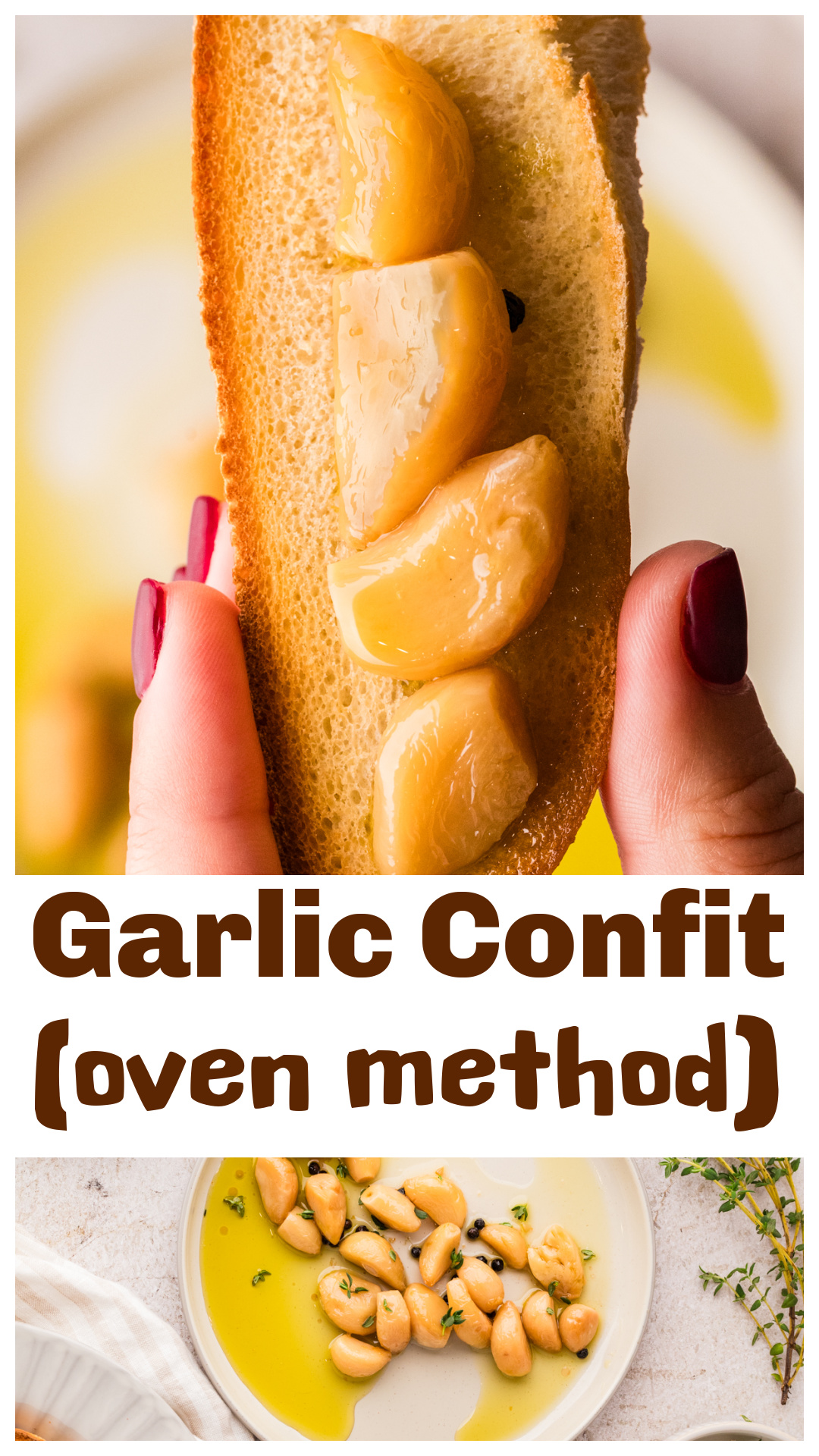
Oven-made garlic confit cooked low and slow in olive oil until the cloves are soft and mellow. This is my straightforward method, with predictable results, and absolutely no surprises.

Garlic Confit, a Practical Response to Excess
I didn’t plan to become a person with hundreds of garlic cloves drying on a deck, but that’s exactly what happened.
Five years ago I was living in a rental house that was temporary, in a Portland suburbs neighborhood I hadn’t chosen long-term (but still loved), trying to outrun a decision that refused to be outrun. The house had a huge garden, and the previous owners had planted garlic like they were preparing for a medieval siege. Raised beds full of it. Row after row. At first it was just there, tall and green, minding its business. And then it kept growing.
If you’ve ever farmed, you know the feeling. You notice when something is ready. The tops start to weaken, the bulbs push up, the ground starts to give a little. At some point, leaving it there feels wrong. Wasteful. And I hate wasting food. It’s like ignoring a responsibility I didn’t ask for but now very much have.
So I harvested it. All. Of. It. Six or seven beds’ worth. And garlic does not pull out of the ground easily, it takes muscle. Suddenly the lower deck was covered in garlic, laid out to dry in neat, unavoidable rows -curated by me, like I’d accidentally taken on a side quest I couldn’t quit (if you know me, that’s nothing unusual). But anything requiring my hands in soil is always a worthy activity. And by default, I was also one hundred percent safe from vampires at this point. Bonus.
I remember standing there thinking, what am I supposed to do with this much garlic? You can only give so much raw garlic away before people stop answering your texts.
Garlic confit was the only solution that made sense to me. A low oven. Olive oil. Time. I took an unreasonable amount of garlic and turned it into something calm, useful, and honestly quite excellent, which felt aspirational at the moment.
After that, the neighbors, who I barely knew, were suddenly interested again. I sent a usual neighborhood group text, “let me know if you want it,” and the mason jars disappeared. Fast. No one really needed convincing at that point.
I’ve been making it ever since. Not because it’s impressive in any way. Because once you solve a problem this absurd in such a simple way, you keep the method.

Why I Love This Recipe
- People assume it takes effort. I never correct them.
- You put garlic in oil, put it in the oven, and wait. That’s the whole process.
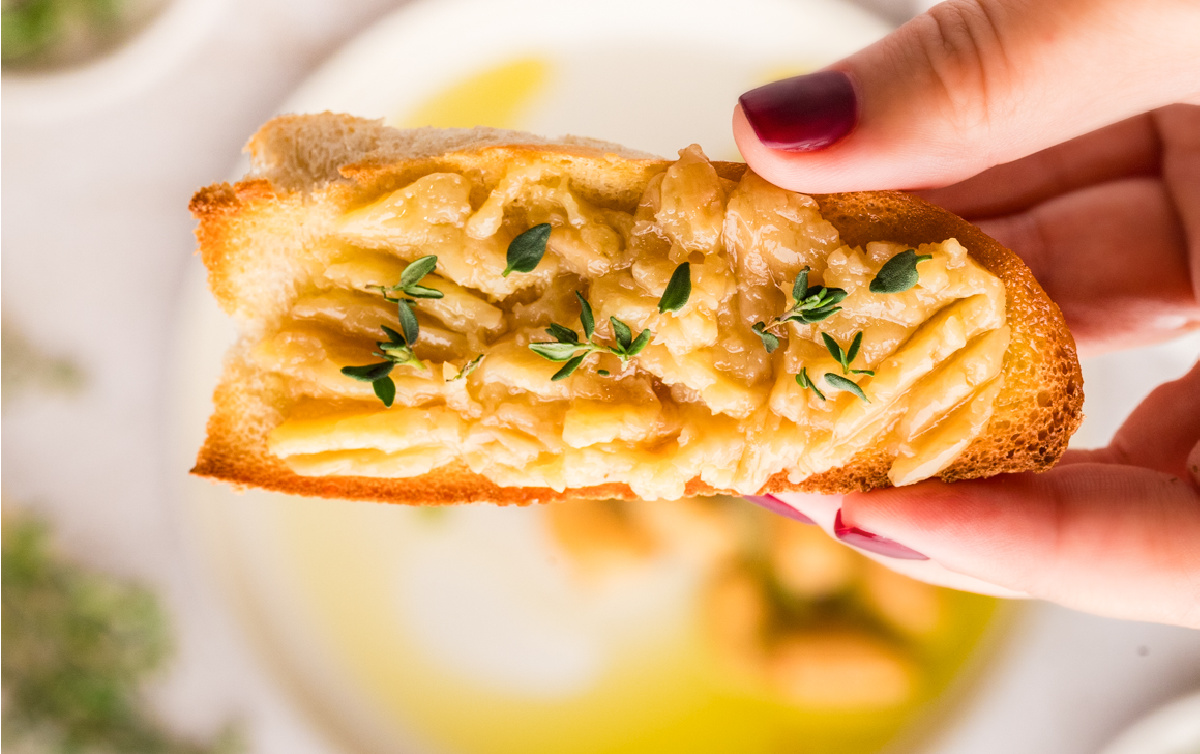
- The cloves go soft and spreadable without turning into paste or drying out.
- You end up with garlic that acts like food instead of just a seasoning.
- The oil becomes infused, which upgrades whatever you cook next.
- It makes a very basic ingredient taste amazing without turning it into a production.
- Everyone wants a jar. Fewer people want to help make it. That’s fine.
Ingredients
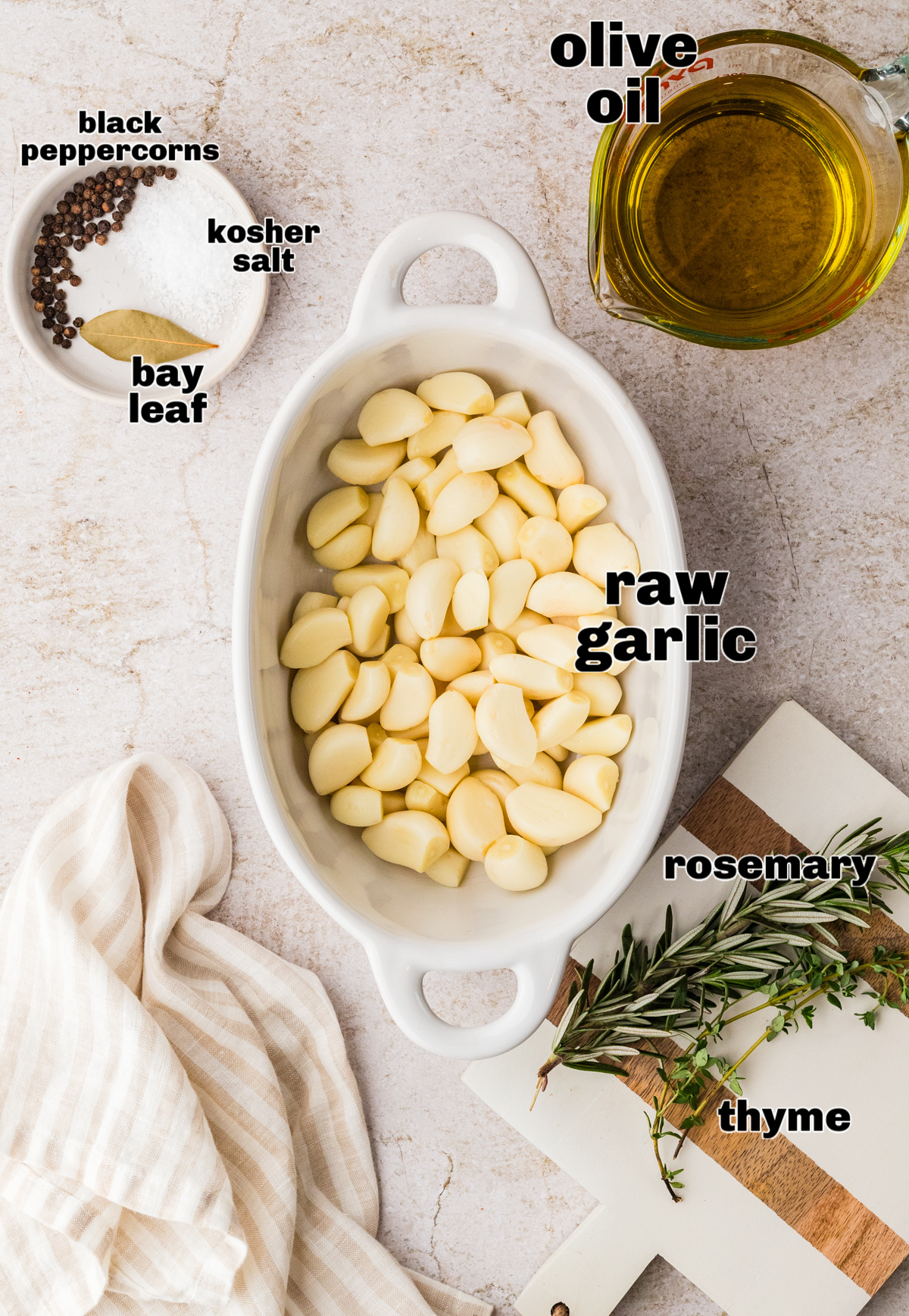
- Garlic cloves – Use fresh, firm cloves with no sprouts. Older garlic turns bitter when cooked this way, and that ruins the whole point. Don’t use this recipe to unload old cloves.
- Extra-virgin olive oil – Enough to fully submerge the garlic. This cooks low and slow in the oven, so extra-virgin olive oil works here without damaging it and gives the best flavor to the finished confit.
- Fresh thyme – Two sprigs. Adds an herbal flavor without overpowering the garlic.
- Fresh rosemary – One sprig. Just enough for nuance. Any more and it takes over.
- Bay leaf – One. It makes the oil taste finished. I know it feels like a bay leaf adds nothing to a recipe. I promise it does. Don’t skip it.
- Black peppercorns – Whole, not ground. They infuse without muddying the oil.
- Kosher salt – Enough to season the garlic as it cooks, not enough to make it salty like you’re thinking.
How to Make Garlic Confit
Find the complete printable recipe with measurements in the recipe card at the BOTTOM OF THE POST.
- Step One (set up the garlic and aromatics)
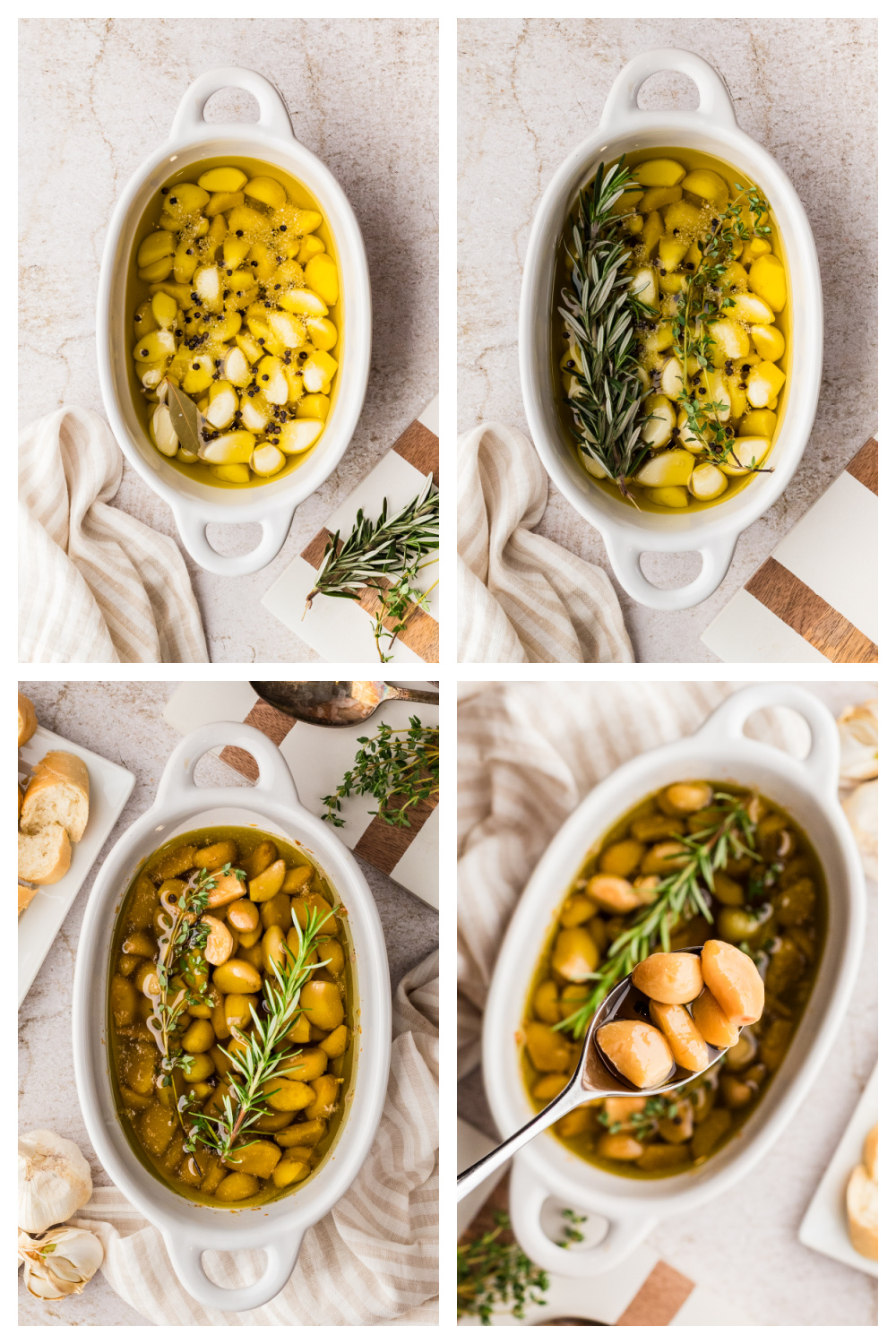
Heat the oven to 275°F (135°C). Drop the peeled garlic cloves into a mini Dutch oven or a deep, oven-safe casserole dish and spread them into an even layer. Add the thyme, rosemary, bay leaf, peppercorns, and salt, keeping the herbs around the garlic instead of stacked on top. They’re here to infuse the oil, not burn themselves into bitterness. - Step Two (submerge completely in oil)
Pour in enough extra virgin olive oil to fully cover the garlic. Every clove needs to stay underwater. This isn’t frying, and it’s not roasting. The oil is the whole point. It softens the garlic slowly and takes the edge off without turning it brown or aggressive.
Cover the dish tightly with a lid or foil so nothing evaporates. - Step Three (slow cook until spreadable)
Slide the covered dish into the oven and bake for 45 minutes. Uncover it and bake for another 15 minutes, until the cloves are pale gold and feel soft when pressed with a spoon. The oil will smell amazing at this point. If it’s bubbling, your oven is too hot.
Low heat is what makes this work. If you rush it, the garlic turns bitter. Let it take its time, and it turns sweet. - Step Four (cool and store safely)
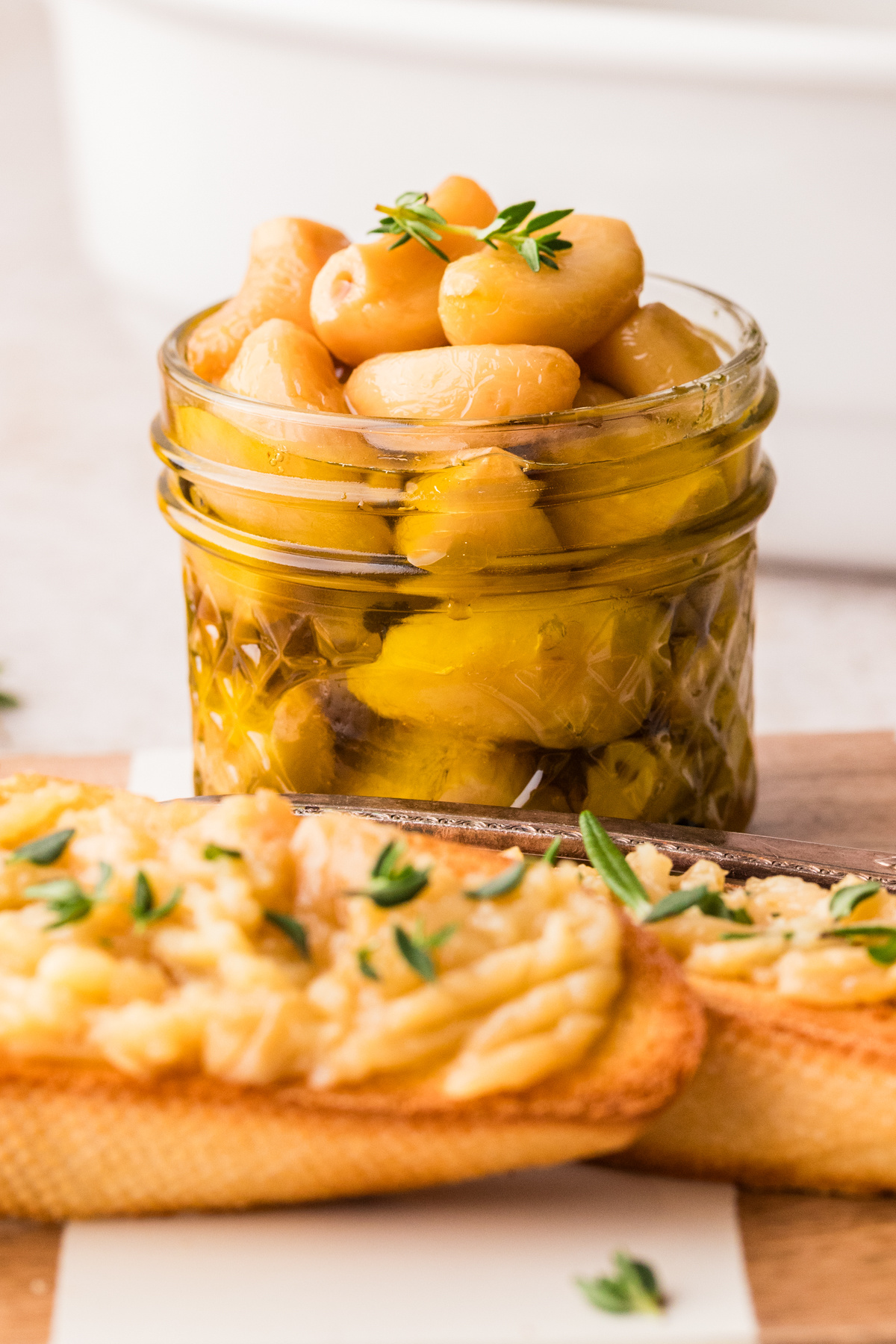
Pull the dish from the oven and let it cool slightly. Transfer the garlic and oil to a clean glass jar, pressing the cloves down so they’re completely submerged. Let it cool fully, then refrigerate.
Garlic confit always lives in the fridge and always stays under oil. Use a clean utensil every time, and plan to use it within two weeks. That’s about quality and safety, not vibes.
Recipe Tips
- If your garlic starts to take on color before it’s soft, your oven runs hot. Pull it out of the oven, lower the temp, and keep going. Burnt garlic confit is a crime you don’t want to commit.
- Use a dish where the garlic sits snugly. A mini Dutch is the best. If it’s too wide, you’ll need more oil than you want. Too shallow of a dish and things get awkward.
- Make sure not to stack the garlic. A single layer cooks evenly and saves you from fishing out underdone cloves later.
- If your herbs float on top, it’s fine. If they fry, they’re done. You’re infusing, not making potpourri.
- The garlic will mash easily with a spoon, not turn into paste. If it turns jammy, it went too far.
- Let it cool in the cooking pot before transferring. Hot oil plus cold jars is how messes happen.
- If you’re planning to gift it, wait until it’s fully cold. Warm jars sweat, and nobody wants a slippery lid.
- Make less than you think you need. You can always make another batch. Staring down a quart of garlic confit is a commitment. I’ve lived this.
Storage
You are not leaving your confit on the counter. You are not “just for a day”-ing it. Garlic confit needs the fridge.
- Once cooled, store the garlic fully submerged in its oil in a clean, airtight glass jar and refrigerate it. It keeps well for up to 2 weeks, assuming you’re using clean utensils and not double-dipping. Basically, no raccoon behavior here.
- If you want to keep it longer, remove the garlic cloves from the oil and freeze them in a small airtight container or ice cube tray for up to 3 months. The oil should be strained and stored separately in the refrigerator and used within 2 weeks.
- Never store garlic confit at room temperature. Not overnight. Not “just this once.” This is not the recipe for that kind of messy behavior.
FAQs
- Can I use peeled garlic from the store?
Yes. I do it all the time now. Just make sure it’s fresh, firm, and not sprouting any green antennae. If the cloves are yellowing or feel rubbery, skip them. Older garlic turns bitter when cooked low and slow, and that defeats the entire point. - Does this taste like raw garlic?
No. Garlic confit is soft, mellow, and spreadable, not aggressive in any way. Raw garlic tastes like a punch. This tastes and feels like butter that happens to be garlic, which is honestly the best outcome of anything I can imagine. - Why does this need to be cooked at a low temperature?
High heat browns garlic very fast and turns it harsh. Low heat gives you sweet, soft cloves that mash easily and stay pleasant instead of bitter. - Can I make this without herbs?
Yes. The garlic and oil alone still work. The herbs just add background flavor to the oil, not a real personality shift, just nuance. - What should the oil look like while it cooks?
Calm. No frying or bubbling is what you’re going for. If it’s actively bubbling, your oven is too hot. - What do I do with the oil after the garlic is gone?
Strain it, refrigerate it, and use it like a soft garlic finishing oil for veggies, pasta, bread, or vinaigrettes. Same rules apply: keep it cold and use it within two weeks. - Is garlic confit safe?
Yes, when handled correctly. This recipe is specifically designed for oven cooking, full oil submersion, refrigeration, and clean storage. Never store garlic confit at room temperature. - What’s the easiest way to use it?
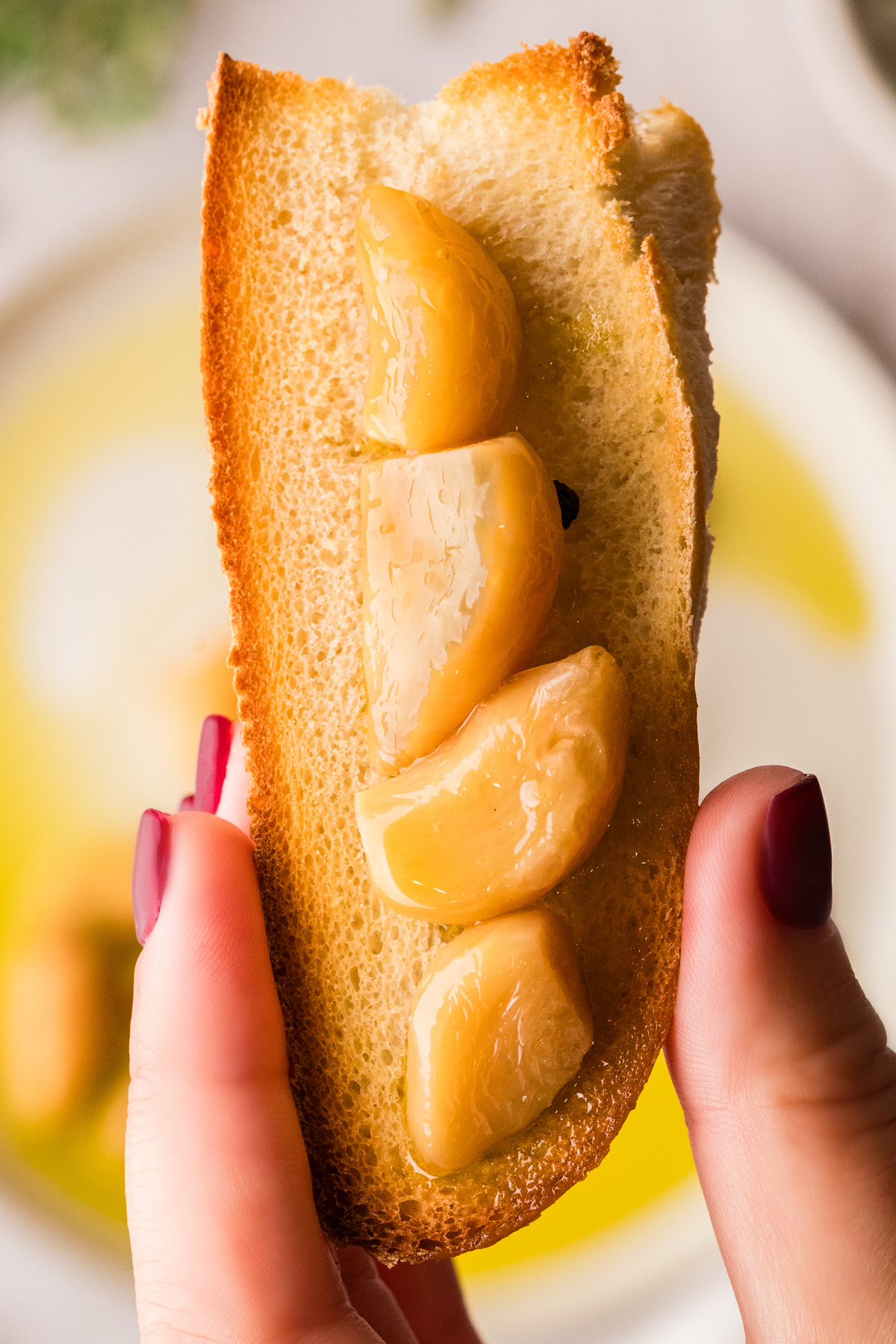
Spread it on bread. Mash it into butter. Stir it into mashed potatoes or pasta. Add a spoon to soups or sauces when you want depth without edge. Coming up, I’m going to show you how I make slow cooker garlic confit mashed potatoes and a quick garlic confit air fryer bread with this garlic confit recipe, so have your batch ready.
From My Kitchen Notes
A few things I have scribbled in my cooking journals about this recipe.
- Garlic confit multiplied faster than I ever expected. I started with one jar and somehow ended up making more than I could handle.
- I always think I’ll remember how much garlic I used. I never do. The jar tells the story later.
- The oil smells different the next day. It’s softer in a less obvious way, but more useful.
- I don’t bother labeling the jar. I know what it is, and anyone who opens my fridge will know it too.
- I’m asked about this recipe after the fact, not the one they comment on while they’re tasting it. After they get home and want to experience it again, which is fine.
- I’ve learned not to promise it to anyone until it’s already made. People get weirdly attached to the idea of garlic confit, and I won’t commit to promises I can’t keep.
- The garlic never lasts as long as the oil, no matter how confident I am at the start.
- I always intend to save some “for later.” Later never comes.
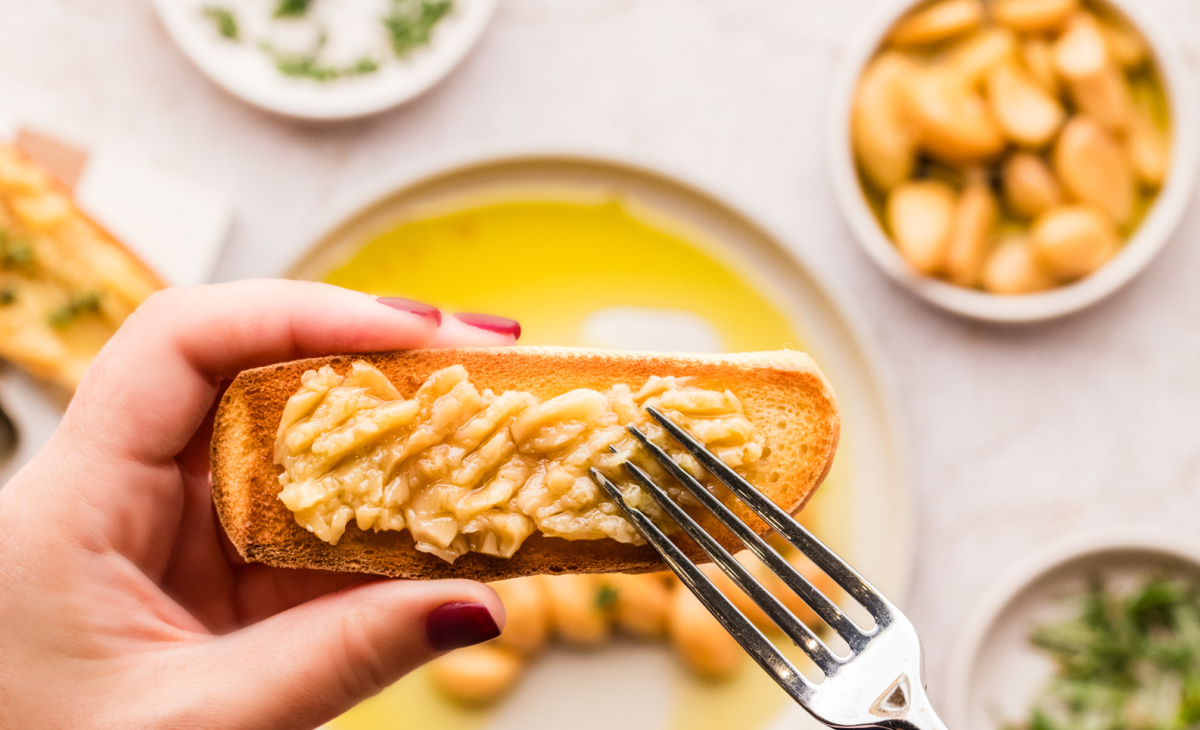
- There is a very specific satisfaction in spreading a clove on bread without chopping anything.
- Every time I make it, I think about how absurd it would have been to let that much garlic go to waste. Glad I didn’t.
Bread I Smother With Garlic Confit
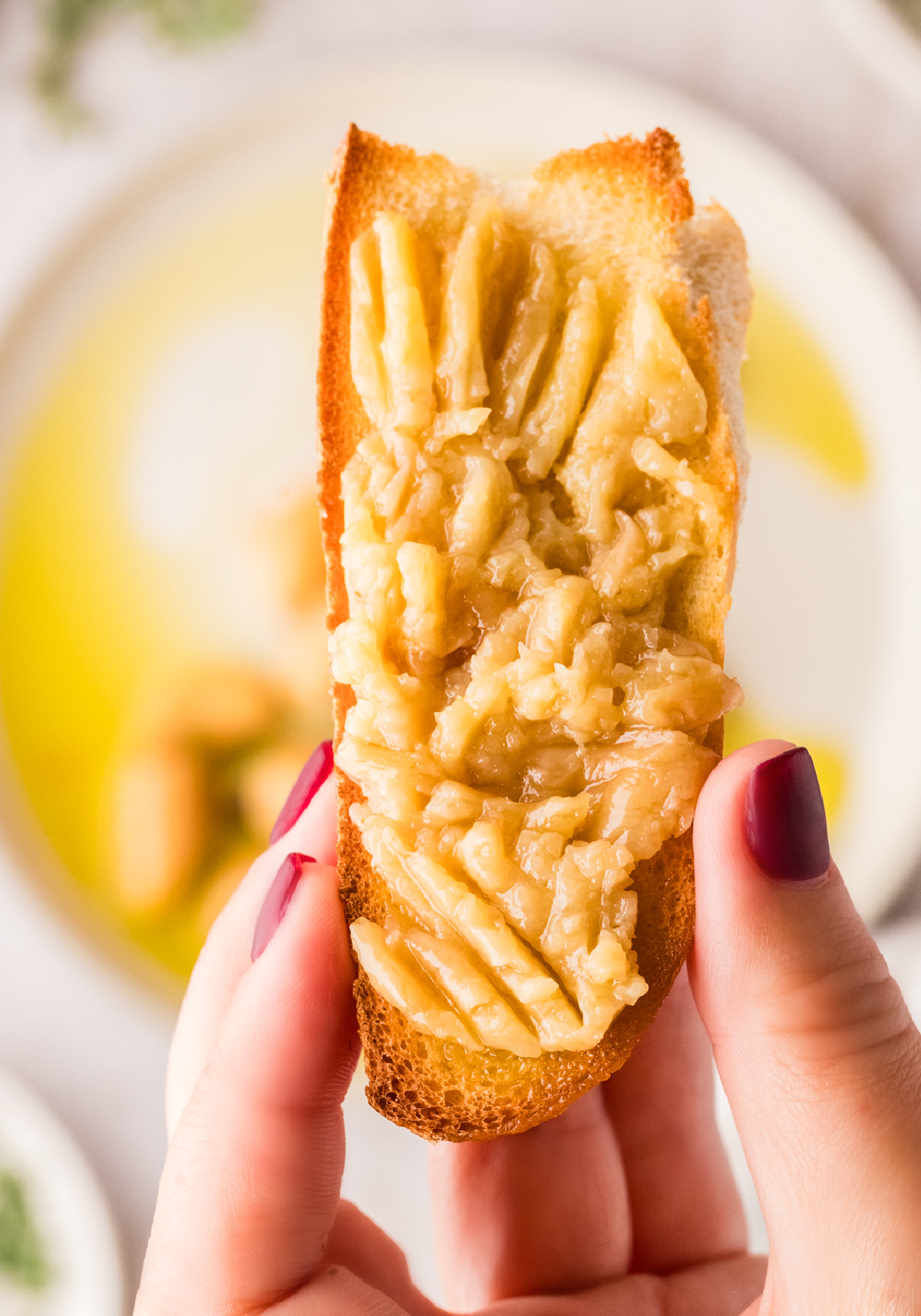
If I’m being honest, this is the main plan. Everything else is secondary.
- Dutch Oven Bread – Crackly crust, soft interior, and the kind of bread that exists to be smothered in garlic confit.
- Everything Bagel Rolls – Salty, seeded, and sturdy enough to handle a thick smear without falling apart.
This post may contain affiliate links. Please read my disclosure policy.

Garlic Confit
Equipment
- mini dutch oven or deep oven-safe casserole dish (small). It must keep the garlic fully submerged without requiring excess oil.
- mason Jar For safe storage. Or any glass jar with a tight-fitting lid.
Ingredients
- 2 cups (~300 g) peeled garlic cloves
- 2 sprigs fresh thyme
- 1 sprig fresh rosemary
- 1 bay leaf
- ½ tsp (2 g) whole black peppercorns
- ½ tsp (3 g) kosher salt
- 1 to 1¼ cups (240-300 ml) extra-virgin olive oil enough to fully submerge the garlic
Instructions
- Preheat the oven to 275°F (135°C).
- Place the peeled garlic cloves in a mini Dutch oven or deep oven-safe casserole dish and arrange them in a single, even layer. Add the thyme, rosemary, bay leaf, peppercorns, and salt, keeping the herbs around the garlic rather than stacked on top.2 cups (~300 g) peeled garlic cloves, 2 sprigs fresh thyme, 1 sprig fresh rosemary, 1 bay leaf, ½ tsp (2 g) whole black peppercorns, ½ tsp (3 g) kosher salt
- Pour in enough olive oil to completely submerge the garlic cloves.1 to 1¼ cups (240-300 ml) extra-virgin olive oil
- Cover the dish tightly with a lid or foil and transfer to the oven. Bake for 45 minutes.
- Remove the lid or foil and continue baking for another 15 minutes, until the garlic is pale gold, soft, and easily mashed with the back of a spoon. The oil should be aromatic and calm, not bubbling aggressively.
- Remove from the oven and allow to cool slightly. Transfer the garlic and oil to a clean glass jar, pressing the cloves down so they remain fully submerged. Cool completely, then refrigerate.
Notes
- Nutrition is calculated assuming garlic is consumed with a portion of oil, not drained dry.
- Serving size reflects 1 tablespoon garlic confit with oil, not straight oil alone.
- Oil absorption is estimated conservatively to reflect real-world use.
- Garlic confit must always be stored refrigerated and fully submerged in oil.
- Never store garlic confit at room temperature.
- You can purchase already peeled garlic cloves at the market to make it easy on yourself.
Nutrition
Have you made this Garlic Confit? I’d love to hear how it turned out – leave a comment below and let me know.
As an Amazon Associate and member of other affiliate programs, I earn from qualifying purchases.
Nan says
Oh this is my new favorite. Love having this in my fridge.
Geoff G. says
I’ve made garlic confit before with just garlic and olive oil, but those added spices? Absolute genius. Consider me fully inspired and already planning a repeat—your way this time. And when you mentioned schmear on an everything bagel, my brain immediately went, “Yes… but what about garlic confit cream cheese?” Clearly, a bakery run to pick up some fresh everything bagels is now mandatory for this weekend’s indulgence. I adore your recipes, I worship your writing style, and frankly, you are a culinary treasure we must protect at all costs!
Cathy Pollak says
This is incredibly kind, thank you. I love hearing how recipes are received in real kitchens, especially when they spark new ideas. Enjoy those bagels, and I appreciate you more than you know.