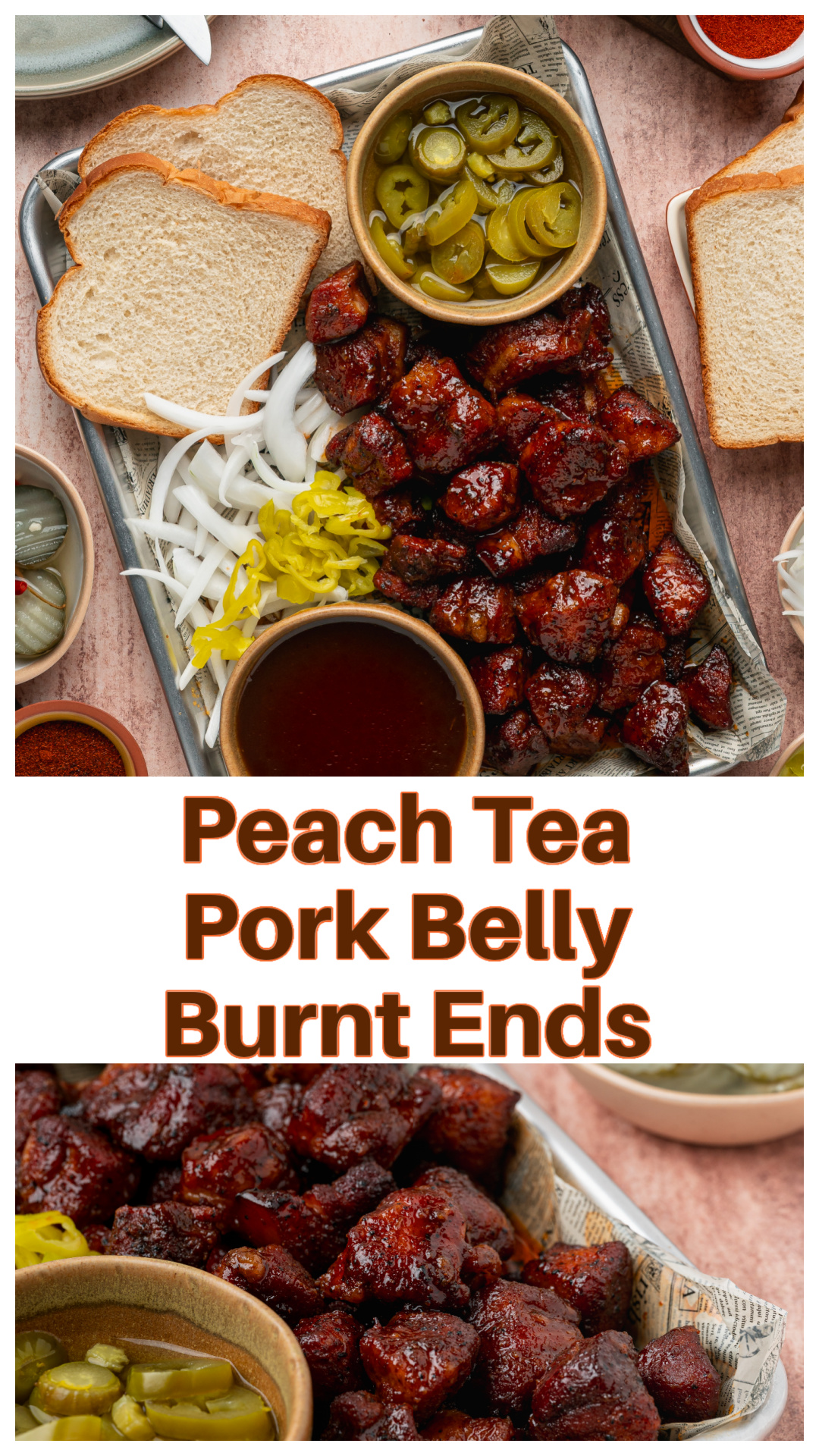
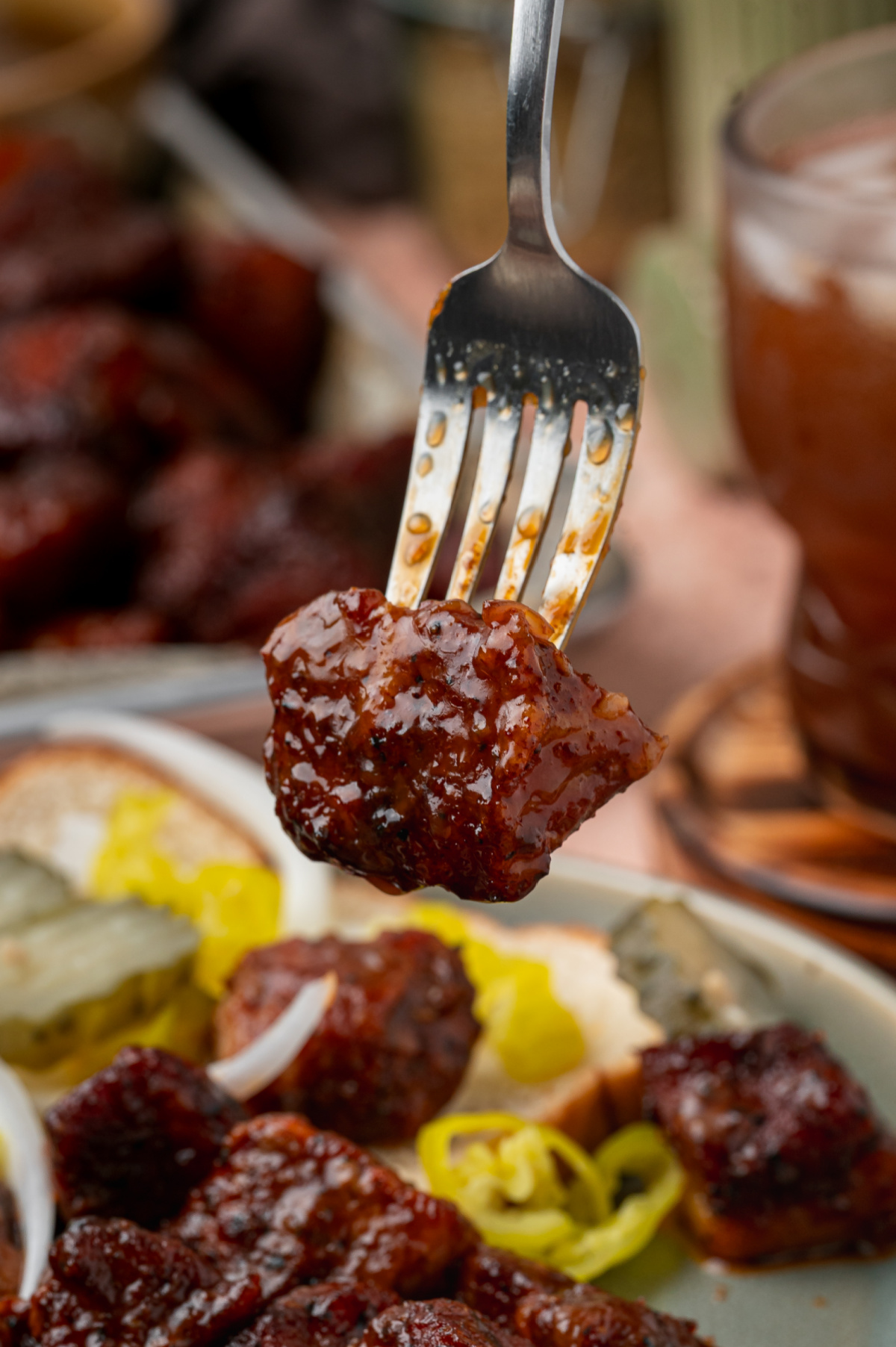
Peach tea pork belly burnt ends are made in the oven until fork tender, then coated in a sticky peach tea glaze and baked until caramelized around the edges. The reduced peach tea gives the glaze a fruity twist that makes these burnt ends unforgettable.
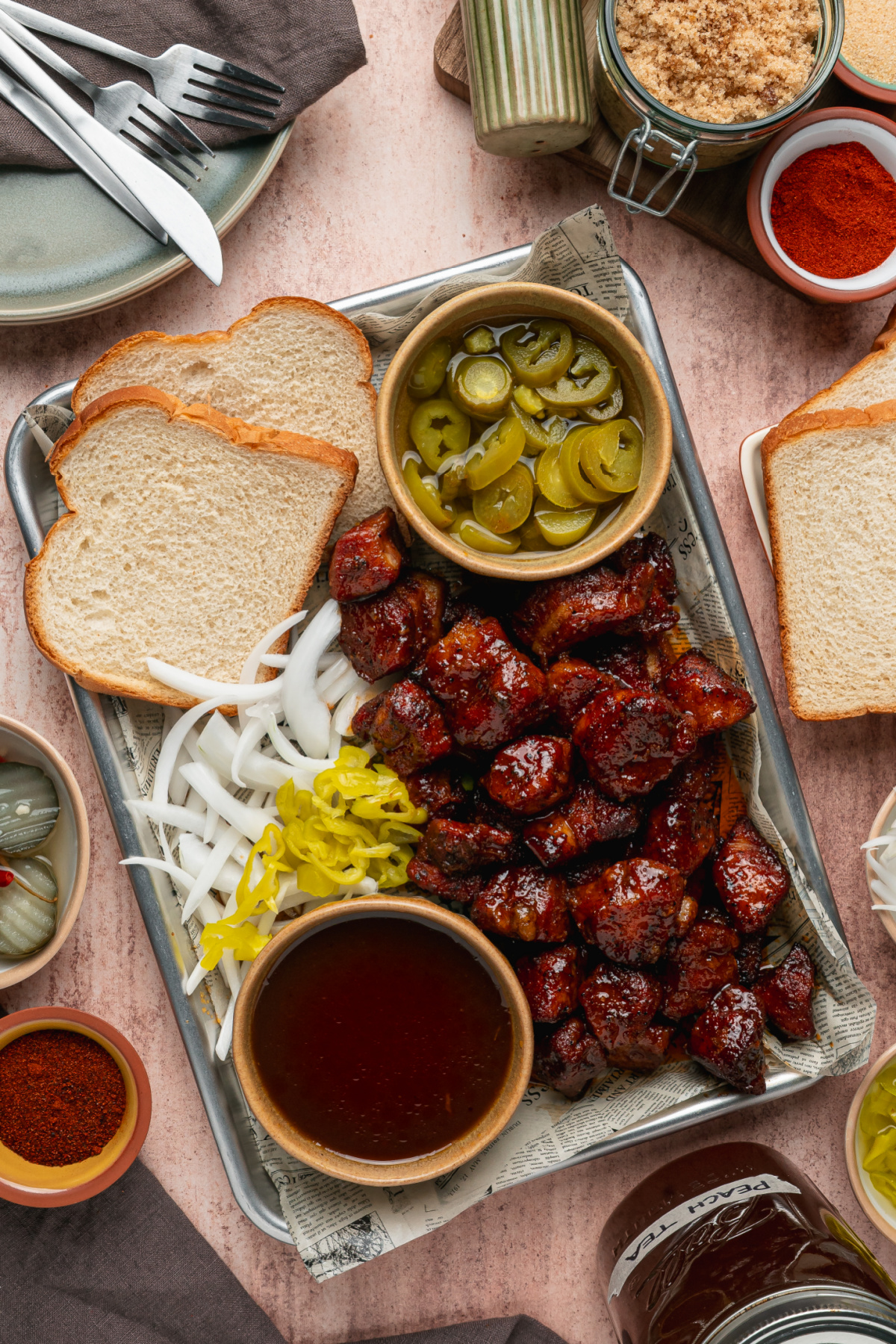
Oven Peach Tea Pork Belly Burnt Ends
I use my smoker all the time, but I know not everyone has one sitting in the backyard. I wanted pork belly burnt ends you could make entirely in the oven and still get the tender, sticky, caramelized edges we’re all after. The peach tea glaze turned out to be the part that made this recipe completely its own thing.
I know lots of you live in apartments or condos where outdoor smoking isn’t an option, and even as someone with a smoker, I’m not always interested in standing outside when the weather turns miserable. So I borrowed the same approach I use for ribs in the oven, cooking the pork belly low and covered until it was tender before adding the glaze and turning up the heat to caramelize the edges.
I originally planned to use my homemade sweet peach tea in the glaze, but the flavor was too subtle once it came in contact with the rich pork belly and heat of the oven. Bottled peach tea has a more concentrated peach flavor and enough sweetness to still come through after reducing. This was not the place to add another step so I could say everything was homemade.
The peach flavor doesn’t hit you over the head. These still taste like barbecue first. It’s more of a “what is in this?” flavor, adding something fruity and unexpected alongside the smoky seasoning and tangy glaze without making the pork belly taste like dessert.
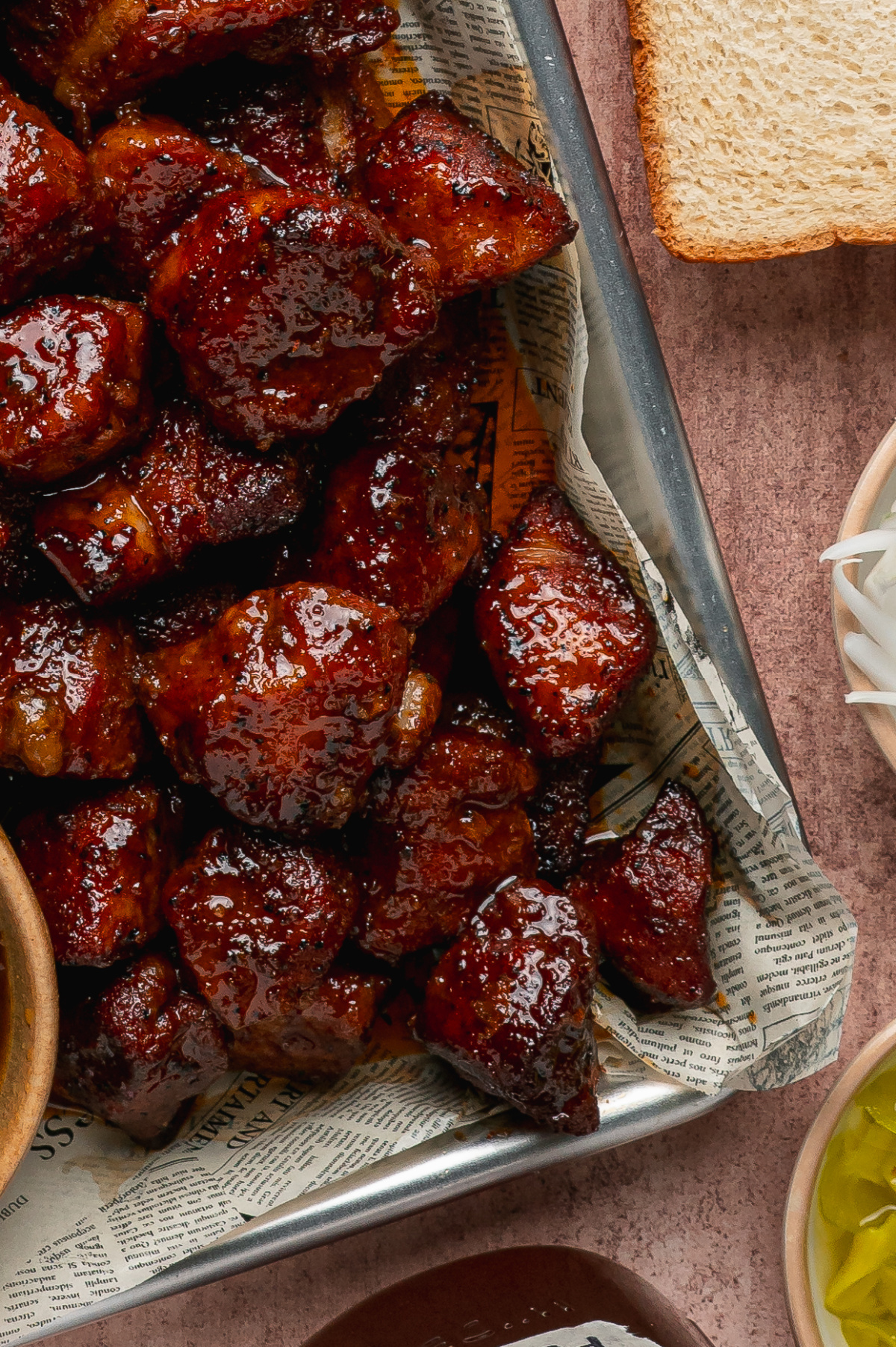
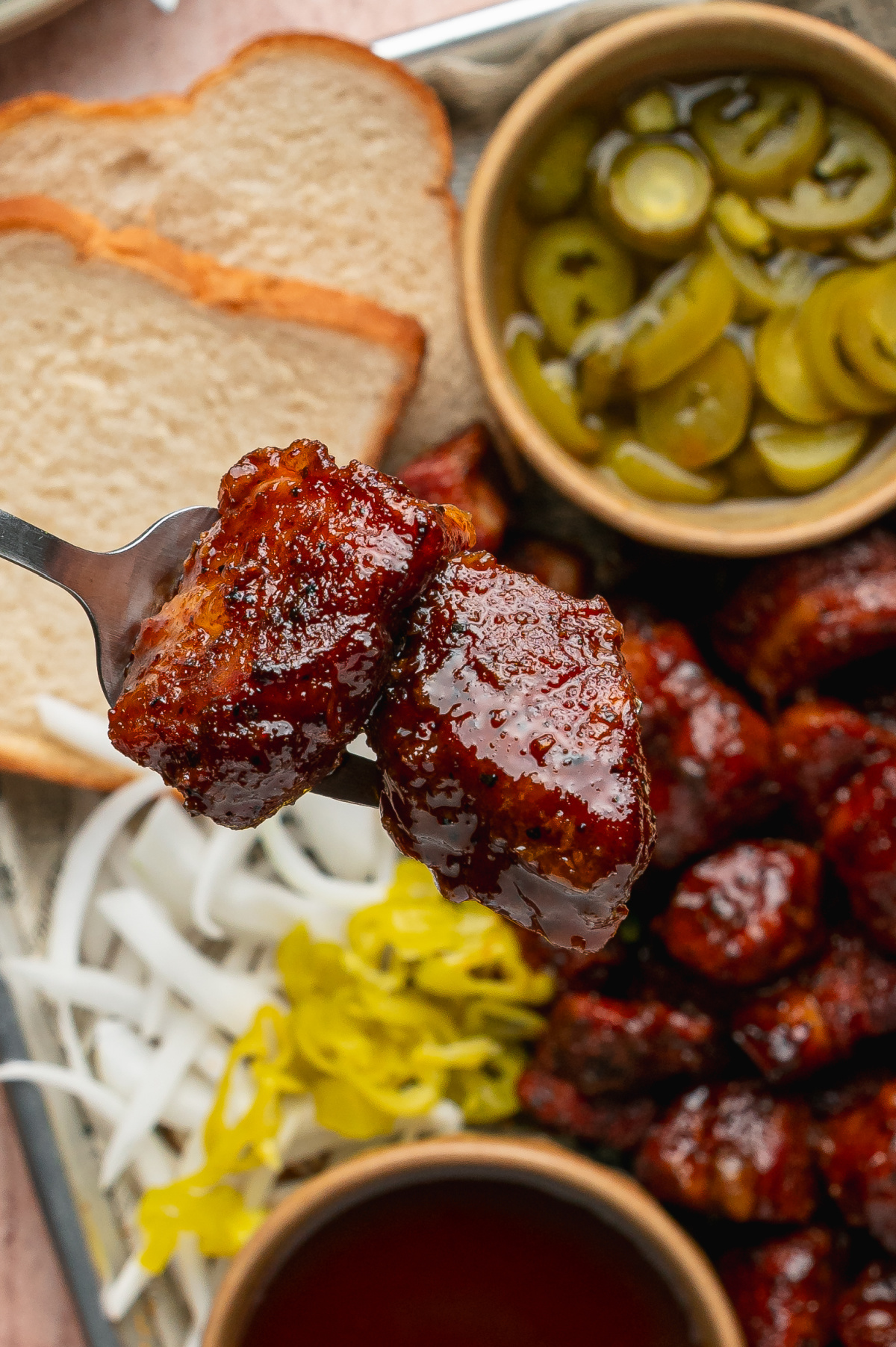
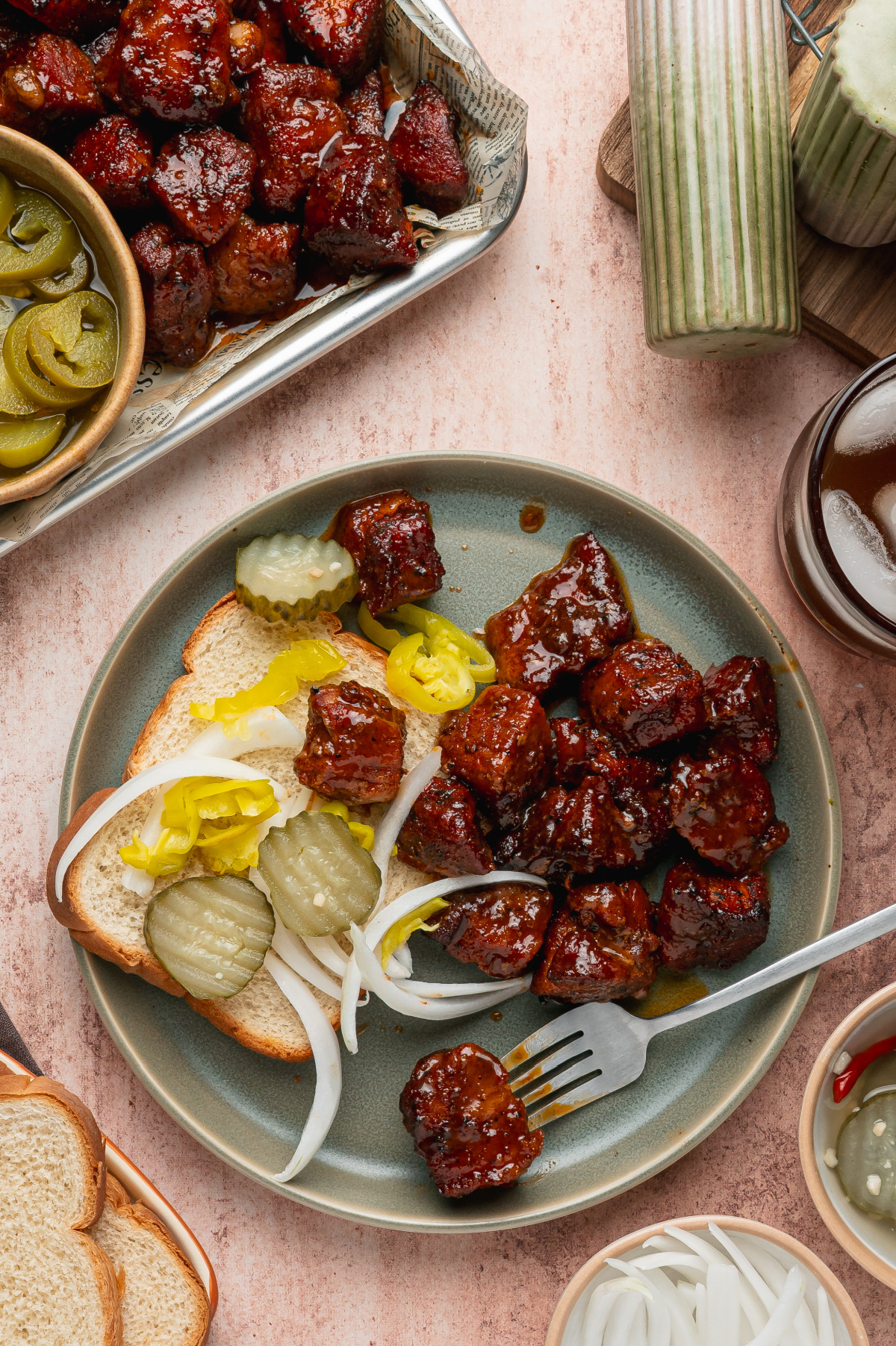
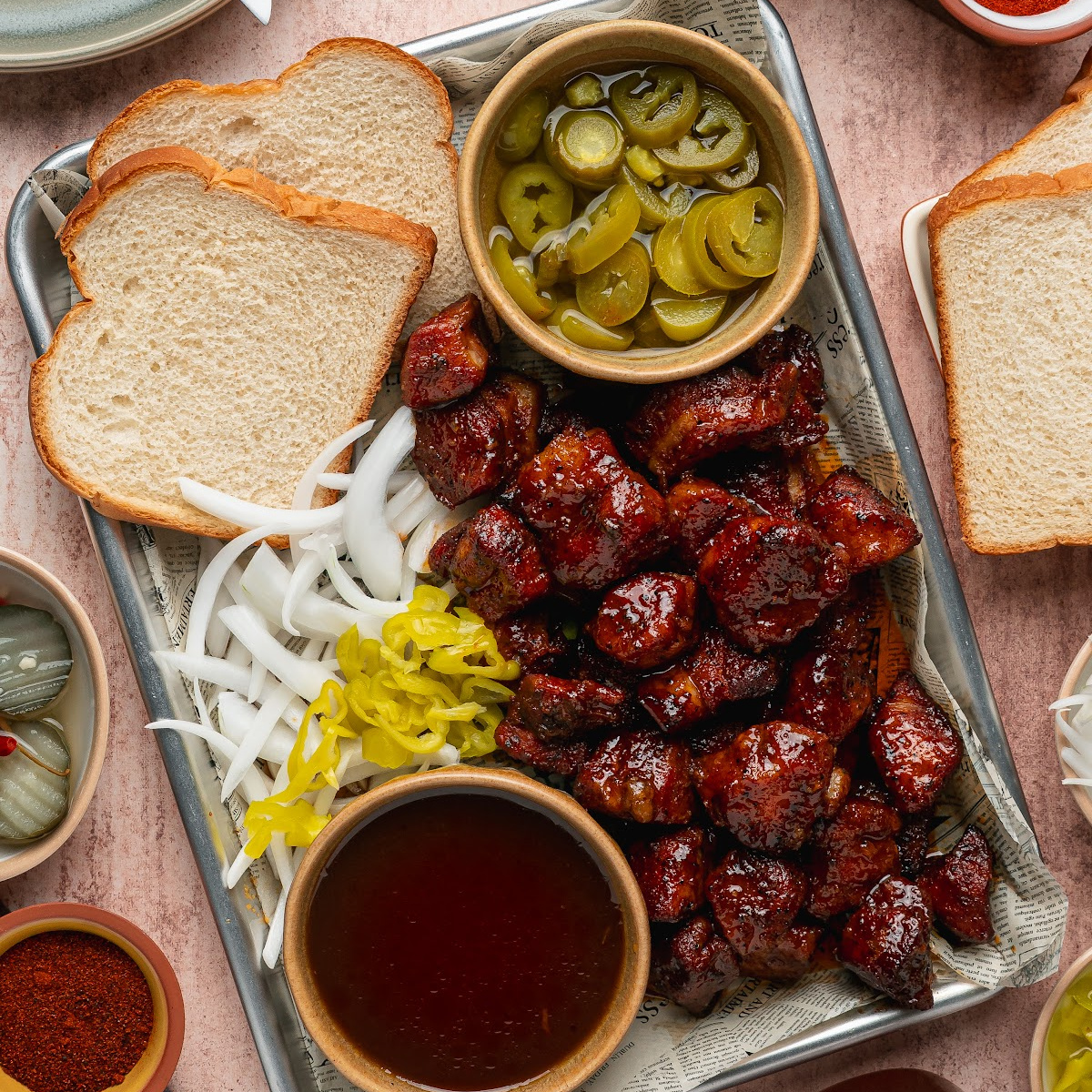
I like to serve the burnt ends as a full barbecue platter with soft white bread, refrigerator pickles, either regular onion or pickled red onions, and pepperoncini. The bread is for catching the glaze, and the sharp, tangy sides do help cut through the rich pork belly. Together, it’s the sort of meal that requires extra napkins and very little conversation.
What Makes This Recipe Different
- When I started working on this recipe, I wasn’t trying to remove the smoker from an existing recipe and hope for the best. I created the cooking method around what the oven already does well, starting with a low, covered bake to slowly tenderize the pork belly before uncovering it and turning up the heat.
- It’s really the two-stage cooking method that gets the pork belly to the right texture. During the first bake, the pork belly has time to render and soften without drying out too early. Once the first bake is finished, the pok belly is already tender. I’m just giving the glaze enough heat to bubble, darken, and caramelize around the cubes. If you like this method, I use a similar glaze-and-finish technique on my bourbon peach country style ribs, baking the pork until tender before letting the sauce caramelize during the final bake.
- Before any of the other glaze ingredients go into the saucepan, I reduce the peach tea by about half. Reducing it first concentrates the peach flavor enough to stand up to the pork belly, peach preserves, and oven heat. That’s why my homemade peach tea didn’t work. There were too many strong flavors working against it, and this was not the place to turn one recipe into two just to prove a point.
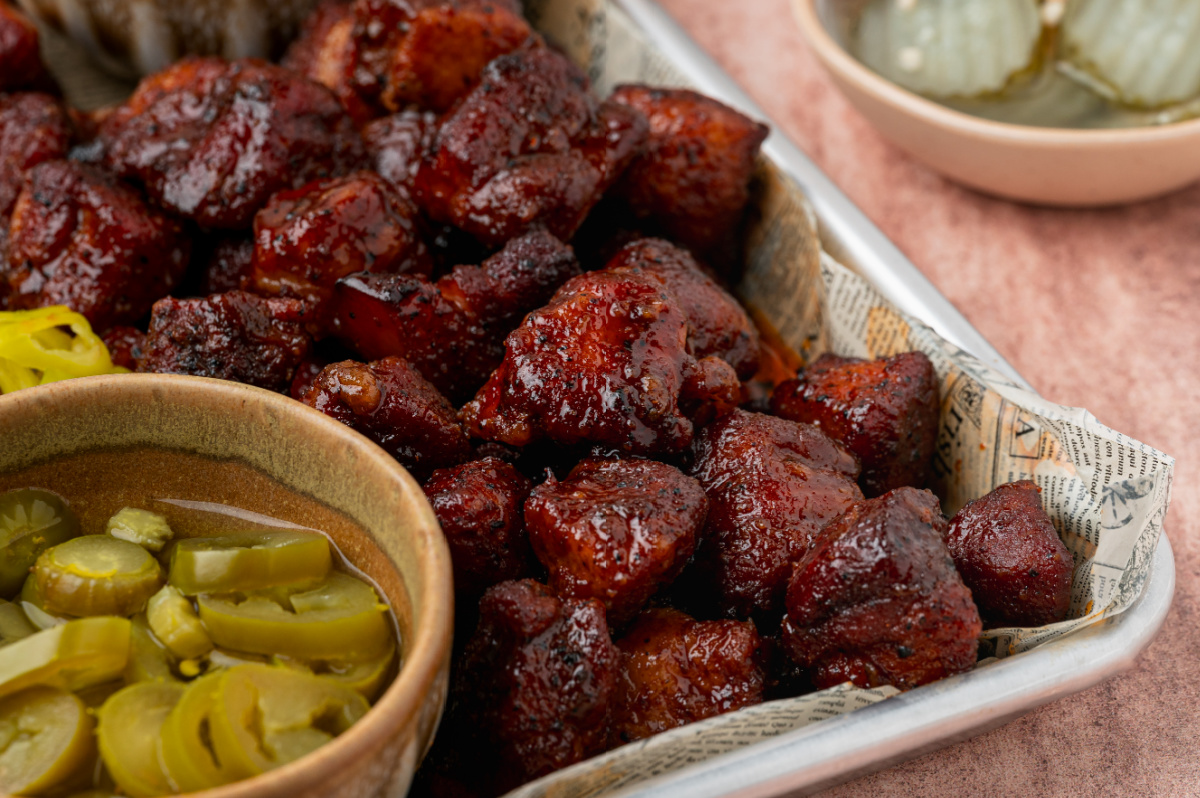
- Peach preserves reinforce the peach flavor while giving the glaze a little more body, but the finished burnt ends still taste like barbecue first. The peach flavor stays underneath everything else, and people usually can’t quite figure out what’s different until you tell them.
- I do finish the glaze completely before it ever touches the pork. By the time I toss it with the pork belly, it already has the sweetness, acidity, and consistency I want. Then I keep some of it aside and brush it over the burnt ends after they come out of the oven. The glaze that bakes with the pork becomes dark and sticky, while the last brush of glaze brings back a little more peach flavor and leaves the outside looking freshly glazed.
Ingredients
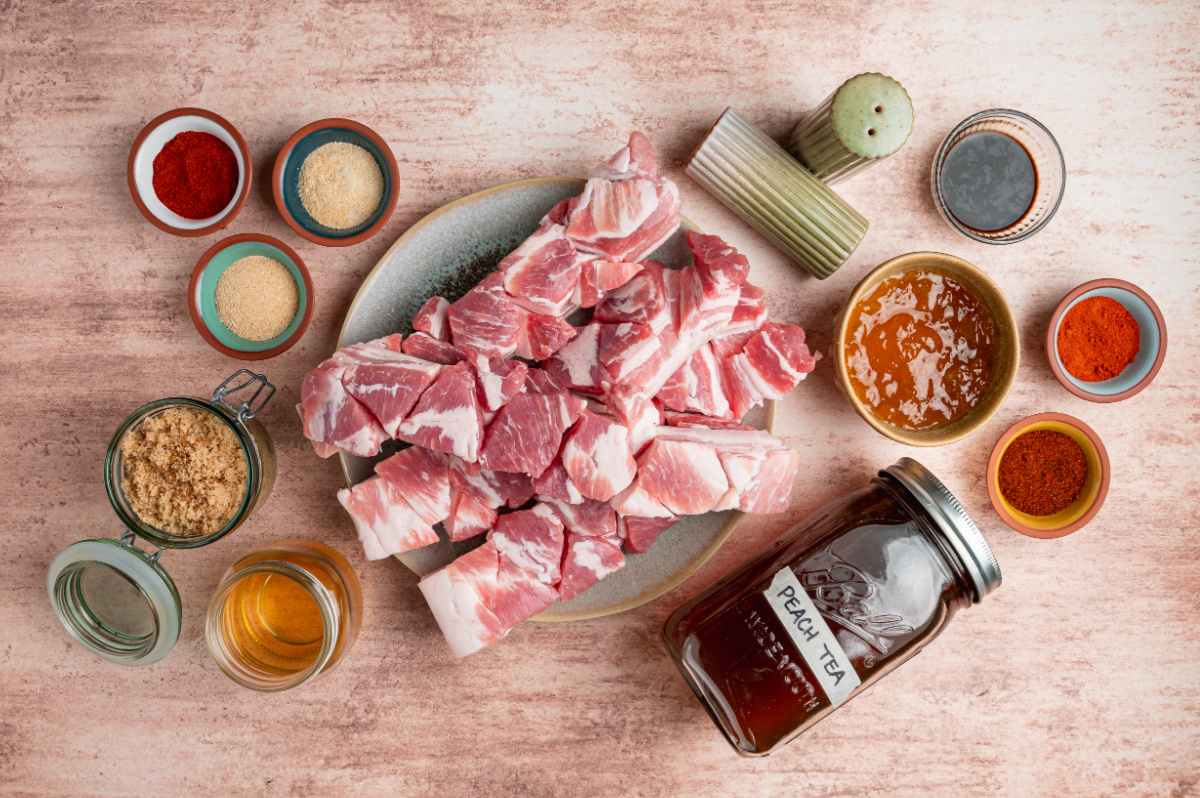
- Pork belly – Use skinless pork belly and cut it into even cubes so everything cooks at the same rate. Pork belly has the fat and collagen it needs for the rich, tender burnt ends texture, which is why a leaner cut will not give you the same result.
- Salt – This seasons the meat before the glaze ever gets involved.
- Black pepper – Adds some bite and keeps all the sweetness from becoming one-dimensional.
- Garlic powder – This works its way into every side of the pork cubes and adds a savory base without the risk of fresh garlic burning during the hotter final bake.
- Onion powder – Adds another layer of savory flavor underneath the peach tea glaze.
- Chili powder – Adds another layer of savory flavor along with a little earthy warmth without making the pork belly spicy.
- Smoked paprika – Adds smoky depth to an oven recipe that never sees a smoker. It won’t create true smoked bark, but it helps take the flavor in that direction.
- Bottled peach tea – This is the foundation of the glaze. Bottled tea is concentrated enough to survive reduction and still come through after it’s combined with the rest of the glaze ingredients. Homemade sweet peach tea can be used, but the flavor will be much softer.
- Peach preserves – Add body and concentrated fruit flavor without making the glaze thin. It also reinforces the peach flavor after the tea has been reduced.
- Brown sugar – Some goes into the seasoning mixture to help the outside of the pork darken, and the rest sweetens the glaze and helps it caramelize during the final bake. If you’re out, make my homemade brown sugar. It’s simple.
- Apple cider vinegar – This cuts through the richness of the pork belly and keeps the glaze from tasting too sweet.
- Worcestershire sauce – Adds savory flavor the glaze needs to keep the peach and brown sugar from tasting too sweet. I tested it without Worcestershire and something was missing every time.
- Cayenne pepper – This is optional, but a small amount gives the pork and glaze a little heat without turning the recipe spicy.
- Cornstarch and cold water – Mixed together into a smooth slurry, they thicken the glaze enough to hold on to the pork belly instead of pooling in the baking dish. The preserves already provide some body, so it only takes a small amount.
How to Make Peach Tea Pork Belly Burnt Ends
Find the complete printable recipe with measurements in the recipe card at the BOTTOM OF THE POST.
- Step One (season the pork belly)
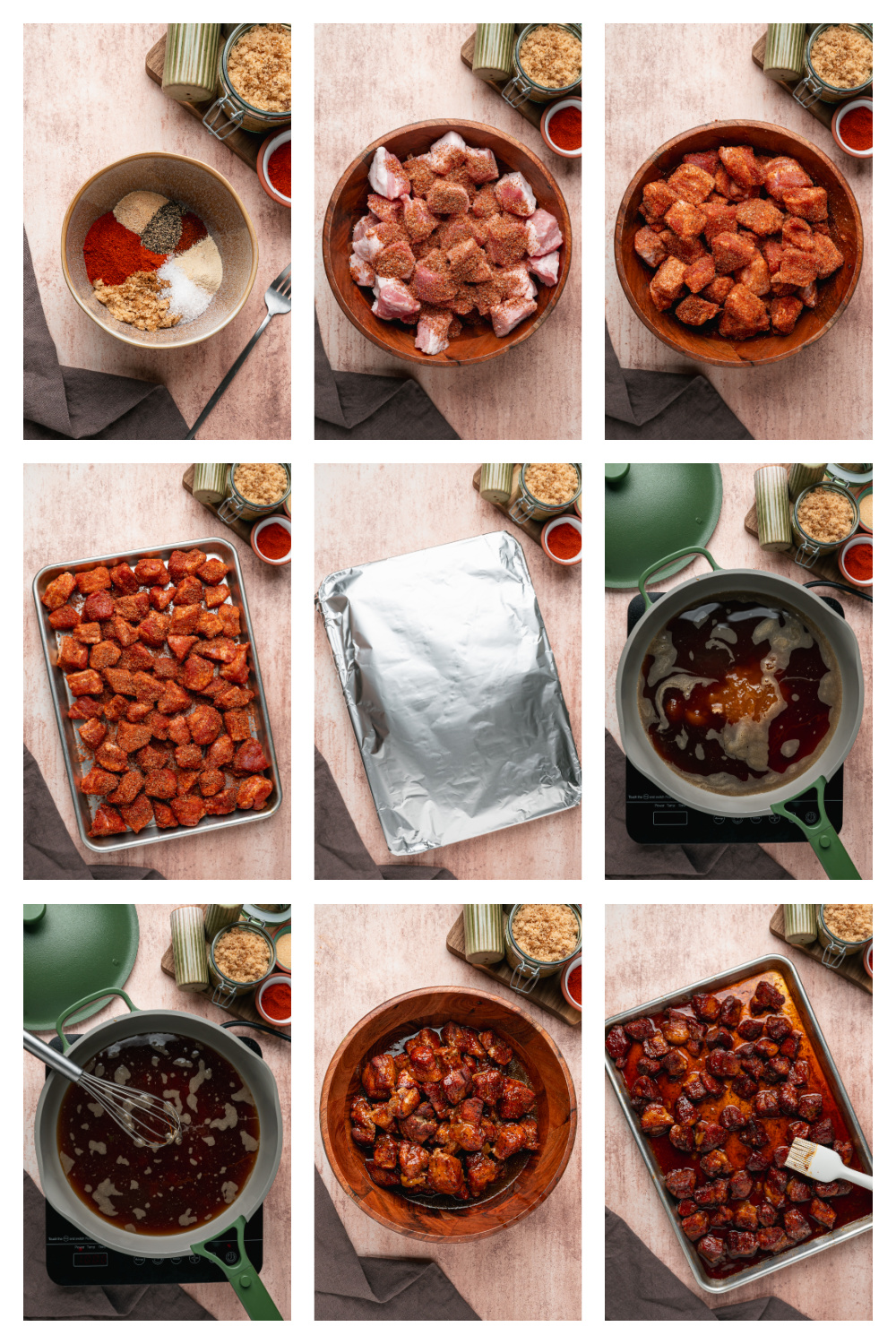
Preheat the oven to 275°F. Stir together the brown sugar, smoked paprika, garlic powder, onion powder, chili powder, salt, black pepper, and cayenne if you’re using it in a large mixing bowl. Add the pork belly cubes and toss until every piece is coated with the seasoning mixture. Taking a minute to coat everything evenly means every cube is seasoned the same way before it goes into the oven. - Step Two (slow bake the pork belly)
Spread the pork belly in a single layer on a large rimmed baking sheet and cover it tightly with aluminum foil. Bake for 2½ to 3 hours, or until the pork reaches 190 to 195°F and a fork slides into the cubes with very little resistance. If they still feel firm, keep baking. This first bake is where the pork belly goes from tough to tender before the glaze ever goes on. - Step Three (make the peach tea glaze)
While the pork bakes, bring the peach tea to a boil in a medium saucepan, then reduce the heat and simmer for 15 to 20 minutes until it has reduced by about half. Whisk in the peach preserves, apple cider vinegar, brown sugar, Worcestershire sauce, and salt, then simmer another 4 to 5 minutes until the preserves have melted completely. Stir together the cornstarch and cold water, slowly whisk it into the glaze, and cook for 1 to 2 minutes, whisking often, until the glaze lightly coats the back of a spoon but still pours easily. Reducing the tea first concentrates the peach flavor so it still comes through once it’s coating the rich pork belly. - Step Four (glaze and finish)
Carefully remove the foil, watching for the hot steam, then transfer the pork belly to a large bowl and pour the rendered fat off the baking sheet into a heat-safe container. Increase the oven to 375°F, reserve about ½ cup of the glaze, and toss the pork with the rest until every piece is coated. Spread the pork back onto the baking sheet in a single layer and bake uncovered for 15 to 20 minutes, until the glaze is bubbling around the edges, beginning to caramelize, and the pork reaches 200 to 205°F. Brush or gently toss the burnt ends with the reserved glaze, then let them rest for 5 minutes so everything has time to come together before serving.
Recipe Tips
- Cut the pork belly into cubes that are close to the same size. A few uneven pieces will not ruin anything, but if some are tiny and others are huge, the small ones will be done before the larger pieces soften.
- Use a rimmed baking sheet with enough room to keep the pork in one layer. You want the cubes sitting in the heat, not piled into a pork belly mountain where the middle pieces steam.
- I check the texture, not just the clock. The pork should give easily when you press it with a fork. If it still feels firm after about 2½ hours, cover it again and give it more time.
- Drain the rendered fat slowly and carefully. There will be plenty of it, and the cubes are very tender by then. Transfer the pork belly carefully with tongs after the first bake because the cubes will be very tender. Move them into a large bowl before pouring the rendered fat from the baking sheet into a heat-safe container.
- Keep an eye on the last few minutes of the uncovered bake. The sugar in the glaze can go from caramelized to scorched faster than you think, especially around the edges of the baking sheet.
- Serve the burnt ends with something acidic or sharp. Pickles, sliced onion, pepperoncini, or a vinegar-based slaw like my Tennessee-style mustard coleslaw are especially good with the rich pork.
Storage
- Store leftover pork belly burnt ends in an airtight container in the refrigerator for up to 4 days.
- If you have any extra glaze left after the final brush, keep it in a separate container so you can add it after reheating instead of storing the pork in too much sauce. It will become much thicker once it is chilled. Let it sit at room temperature for a few minutes or warm it gently before brushing it over the reheated burnt ends.
- For the best texture, reheat them uncovered in a 375°F oven or air fryer until hot. The microwave works, but it softens the caramelized outside and leaves the pork kind of meh.
- You can freeze the cooked burnt ends for up to 2 months, although the outside will be softer after thawing. Freeze them in a single layer first, then transfer them to a freezer-safe container once firm. Thaw overnight in the refrigerator before reheating.
FAQs
- Can I use homemade peach tea?
Yes, but the peach flavor will be faint. Bottled peach tea is sweeter and more concentrated, which helps the flavor remain noticeable after it’s reduced down. If your homemade tea is very light, reducing it will concentrate the tea, but the peach flavor will still be much milder than bottled peach tea. - Do I need a smoker to make pork belly burnt ends?
No. I created these specifically for the oven. A smoker would add real wood-smoke flavor and a more traditional bark, but the covered bake followed by the hot finish gives you tender pork and caramelized burnt ends without outdoor equipment. - Can I use pork shoulder instead of pork belly?
I would not use it as a direct substitute. Pork shoulder can make very good burnt ends, but it has a different balance of meat, fat, and connective tissue, so the cooking time and final texture will not be the same. If you’re looking for another way to cook pork belly, my air fryer pork belly bites are much quicker and have a crisp exterior instead of a sticky glaze. - Can I prepare these ahead of time?
Yes. Complete the first covered bake, drain the pork, and refrigerate it once cooled. When you are ready to serve, let it sit out briefly while the oven heats, then add the glaze and complete the uncovered bake. This is the best place to pause because the outside is caramelized right before serving. - Can I make these on a smoker?
Yes. You can use the same seasoning and glaze on a smoker, although the timing will depend on your setup. - Why are my burnt ends still tough?
They probably needed more time during the covered bake. Pork belly can be safely cooked while still feeling unpleasantly firm. The extra time at a lower temperature is what softens the connective tissue and gives you that tender center.
From My Kitchen Notes
Small observations from the margins.
- I’ve spent years circling the smoke when what I wanted was already waiting inside.
- Some things stay covered so long they mistake protection for progress.
- Tenderness hidden under foil is still tenderness no one can reach.
- Some things only change after the cover comes off.
- You can manage every detail and still lose what the heat was trying to give you.
- The safest part of the process is never the part that makes it memorable.
- Staying close to the heat is not the same as letting it touch you.
- Pork belly does not become burnt ends by remaining protected from the fire.
- A final glaze works because everything underneath it has already done the difficult part.
- A good burnt end knows how to take richness and give it a place to go.
- The trouble with knowing exactly what something could be is having to watch it stay unfinished.
- Imagine understanding every stage of pork and still failing to recognize when something rare has been cooked especially for you.
More Sticky, Saucy Favorites
- Sticky Honey Garlic Chicken Wings – crispy wings with honey garlic glaze.
- Sticky Gochujang Steak Bites – spicy-sweet steak bites with glaze.
- Brined Chicken Drumsticks with Hoisin Glaze – caramelized hoisin glaze over juicy chicken.
- Baked BBQ Chicken Skewers with Pineapple and Peppers – juicy chicken with caramelized barbecue glaze.
- Air Fryer Maple Glazed Salmon – sticky maple-soy glaze and salmon.
- Mongolian Beef Noodles – tender beef in sticky sauce.
This post may contain affiliate links. Please read my disclosure policy.
Peach Tea Pork Belly Burnt Ends
Equipment
- mixing bowls (large and small). For seasoning the pork belly and mixng the cornstarch slurry.
- baking sheet (large rimmed) Allows the pork belly to cook in a single layer.
- aluminum foil Seals in moisture during the first bake.
- Saucepan (medium). Reduces the peach tea and cooks the glaze.
- instant-read thermometer Checks the pork for doneness.
- tongs For transferring and coating the pork belly.
- whisk Keeps the glaze smooth.
Ingredients
Pork Belly:
- ¼ cup (55 g) packed light brown sugar
- 2 tbsps (14 g) smoked paprika
- 1 tbsp (9 g) garlic powder
- 1 tbsp (8 g) onion powder
- 1 tbsp (8 g) chile powder
- 2 tsps (12 g) table salt
- 1 tsp (2 g) black pepper
- ½ tsp (0.5 g) cayenne pepper (optional)
- 4 lbs (1.8kg) skinless pork belly cut into 1¼-inch (3 cm) cubes
Peach Tea Glaze:
- 2 cups (480 ml) bottled sweeteened peach tea
- ¾ cup (255 g) peach preserves
- ¼ cup (60 ml) apple cider vinegar
- 2 tbsps (28 g) packed light brown sugar
- 1 tbsp (15 ml) Worcestershire sauce
- 1 tsp (6 g) table salt
- 2 tsps (5 g) cornstarch
- 2 tsps (10 ml) cold water
Instructions
- Preheat the oven to 275°F (135°C).
- In a large mixing bowl, combine the brown sugar, smoked paprika, garlic powder, onion powder, chili powder, salt, black pepper, and cayenne pepper if using. Add the pork belly cubes and toss until every piece is evenly coated with the seasoning mixture.¼ cup (55 g) packed light brown sugar, 2 tbsps (14 g) smoked paprika, 1 tbsp (9 g) garlic powder, 1 tbsp (8 g) onion powder, 1 tbsp (8 g) chile powder, 2 tsps (12 g) table salt, 1 tsp (2 g) black pepper, ½ tsp (0.5 g) cayenne pepper, 4 lbs (1.8kg) skinless pork belly
- Arrange the pork belly in a single layer on a large rimmed baking sheet. Cover tightly with aluminum foil and bake for 2½ to 3 hours, or until the pork is fork tender and reaches an internal temperature of 190 to 195°F (88 to 90°C). A fork should slide into the cubes with very little resistance.
- While the pork bakes, pour the peach tea into a medium saucepan and bring it to a boil over medium-high heat. Reduce the heat to medium and simmer for 15 to 20 minutes, or until the tea has reduced by about half and the peach flavor becomes more concentrated.2 cups (480 ml) bottled sweeteened peach tea
- Whisk in the peach preserves, apple cider vinegar, brown sugar, Worcestershire sauce, and salt. Continue simmering for 4 to 5 minutes, whisking occasionally, until the preserves have completely melted into the glaze and no visible pieces remain.¾ cup (255 g) peach preserves, ¼ cup (60 ml) apple cider vinegar, 2 tbsps (28 g) packed light brown sugar, 1 tbsp (15 ml) Worcestershire sauce, 1 tsp (6 g) table salt
- In a small bowl, stir together the cornstarch and cold water until smooth. Slowly whisk the slurry into the simmering glaze and cook for 1 to 2 minutes, whisking frequently, until the glaze becomes shiny and lightly coats the back of a spoon instead of running right off. Remove the saucepan from the heat.2 tsps (5 g) cornstarch, 2 tsps (10 ml) cold water
- Carefully remove the foil from the baking sheet, watching for escaping steam. Transfer the pork belly cubes to a large bowl with tongs, then carefully pour the rendered fat from the baking sheet into a heat-safe container.
- Increase the oven temperature to 375°F (190°C).
- Reserve about ½ cup (120 ml) of the glaze. Pour the remaining glaze over the pork belly and gently toss until every cube is evenly coated.
- Return the glazed pork belly to the baking sheet in a single layer. Bake uncovered for 15 to 20 minutes, or until the glaze is bubbling around the edges, beginning to caramelize, and the pork reaches an internal temperature of 200 to 205°F (93 to 96°C).
- Brush or gently toss the pork belly with the reserved glaze. Let the burnt ends rest for 5 minutes so the glaze has time to become sticky before serving.
Notes
- Cut the pork belly into evenly sized cubes so everything cooks at the same rate.
- Wait until the pork is fork tender before glazing. Adding the glaze too early can cause the sugars to darken before the meat has finished cooking.
- Simmer the glaze for at least 1 minute after adding the cornstarch slurry so it has time to thicken properly.
- If the glaze becomes too thick, whisk in a small splash of peach tea or water until it reaches the consistency you like.
- Refrigerate leftovers in an airtight container for up to 4 days. Store extra glaze separately if possible.
Nutrition
Have you made these Peach Tea Pork belly Burnt Ends? I’d love to hear how they turned out – leave a comment below and let me know.
As an Amazon Associate and member of other affiliate programs, I earn from qualifying purchases.
Aaron says
Made these last night and used Snapple. They were absolutely amazing. So much flavor, the glaze was perfect and the meat was tender. Incredible recipe. really enjoyed. We soaked up all the glaze with white bread. Incredible.
Ariana says
Ok I impressed the heck out of y family with this dinner. My husband was a little flabbergasted that I made this in the oven! It turned out so good.
Tia says
The minute I saw it I knew I was making it for Sunday dinner. Was exquisite and I will be repeating this.