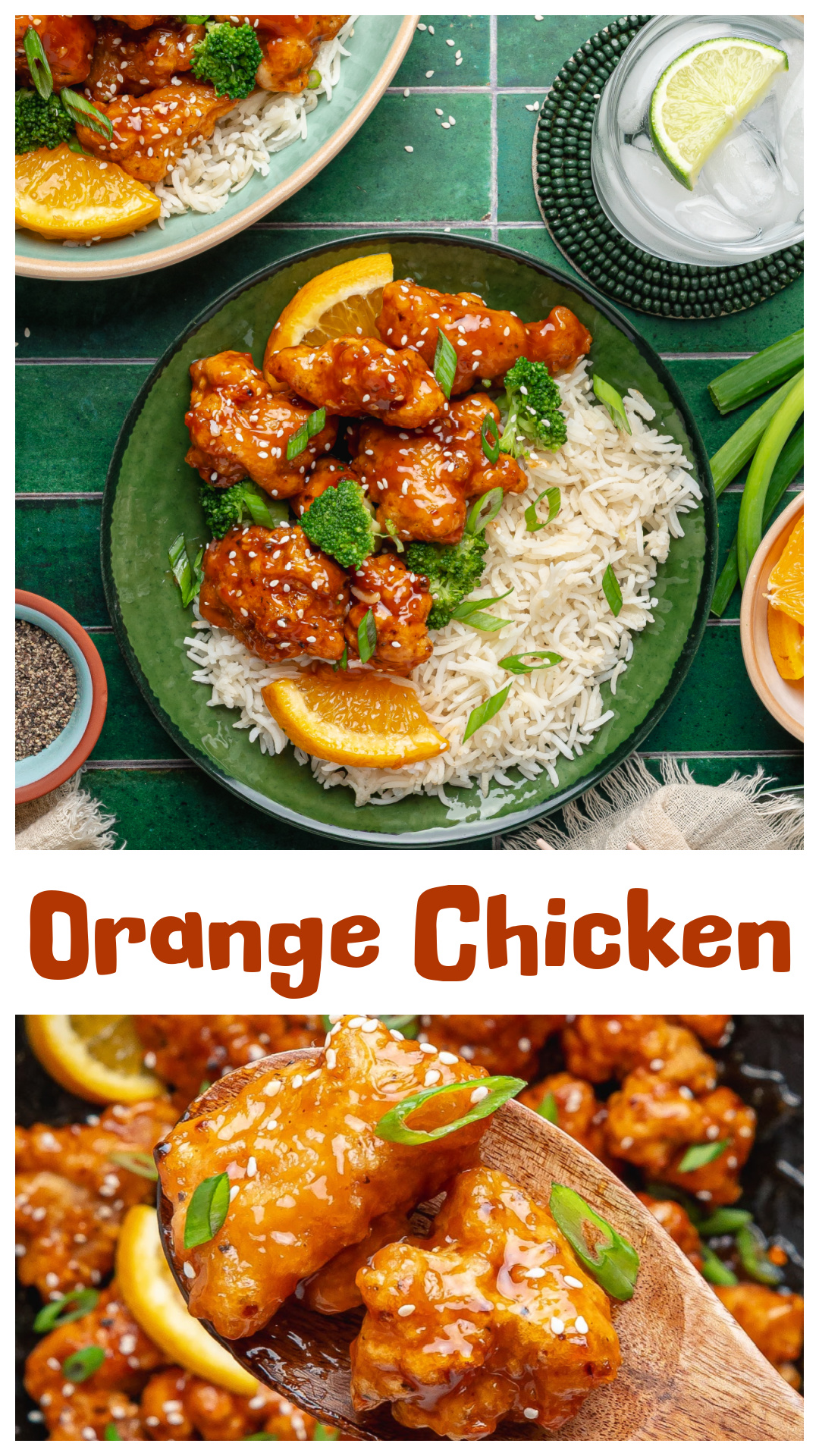
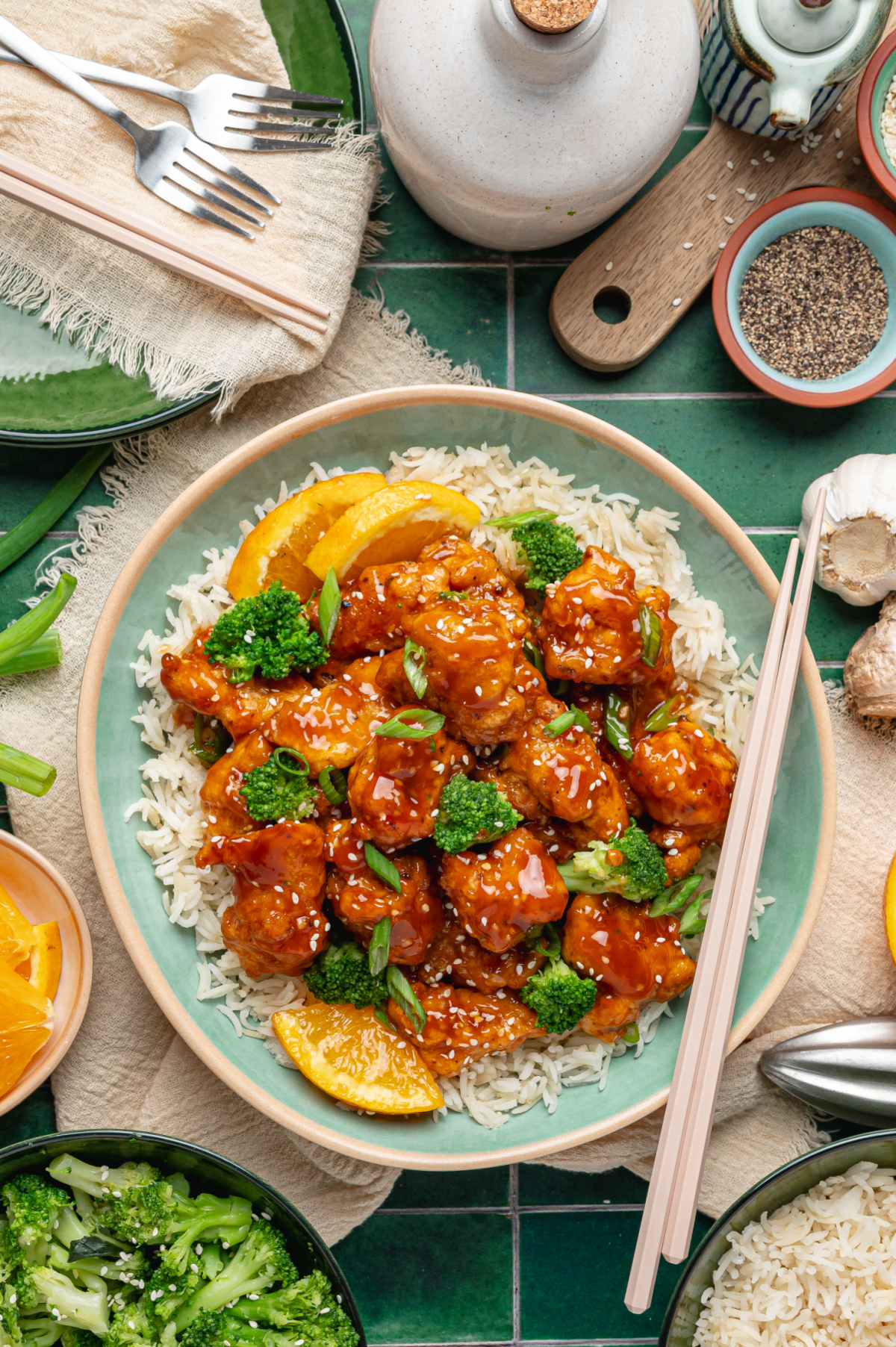
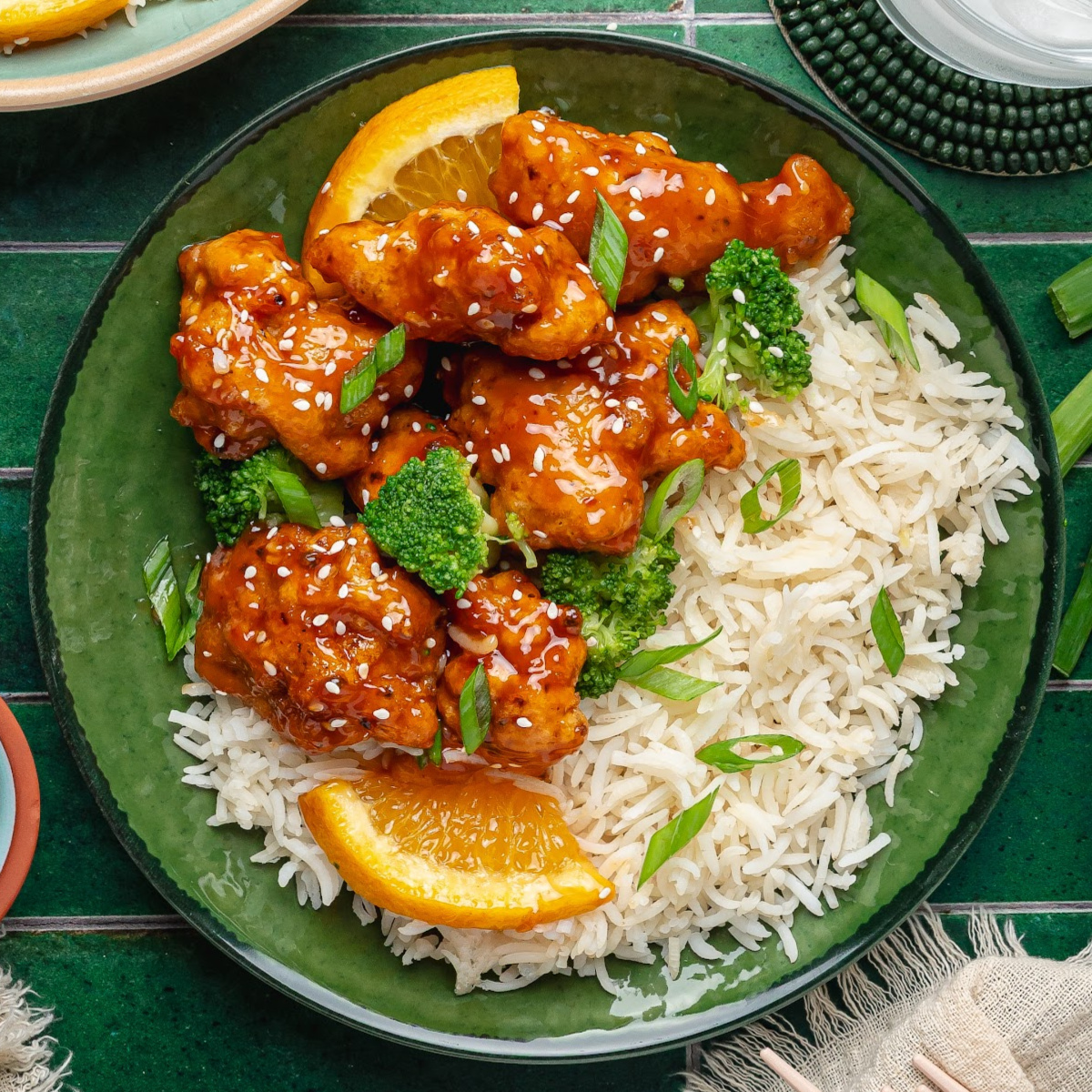
This orange chicken starts with tempura-battered chicken thighs fried until crisp, then tossed in a sweet-savory orange sauce. The coating stays substantial enough to stand up to the sauce while the chicken stays juicy inside.
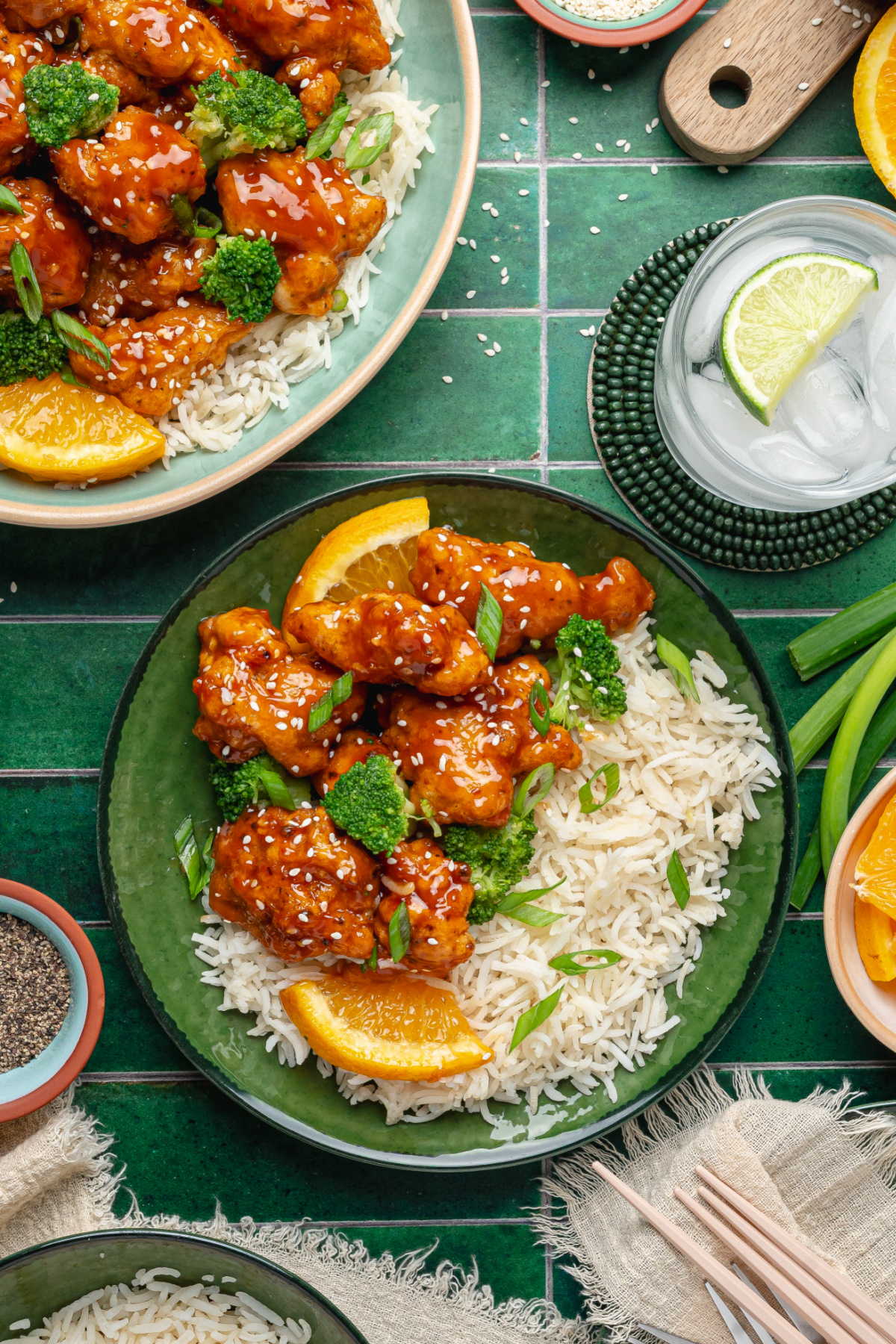
Orange Chicken with Tempura-Battered Chicken Thighs
When it comes to homemade orange chicken, everyone focuses on the sauce. Which is reasonable. Most of the testing I did on this recipe, though, wasn’t about the sauce at all. It was figuring out how to keep the batter attached to the chicken. What finally worked was dusting the chicken thighs with tempura batter mix before dipping them into the batter. From there, I fried them until golden and tossed them in the orange sauce. That one change made a noticeable difference in how well the coating stayed attached and how much sauce each piece could hold onto.
I was just the right age when Panda Express unleashed orange chicken on the world. If you spent any amount of time at the mall in the late eighties and early nineties, you probably remember it too. Suddenly we were all walking around with those little containers of orange chicken like we’d discovered something revolutionary. To be fair, nobody was putting up much of a fight against fried chicken covered in orange sauce. As a teenager, it felt like somebody had figured out a way to serve candy for dinner and somehow get away with it. We were all hooked.
I’ve been eating orange chicken ever since. Some were great. Plenty came from buffet lines and steam tables. That’s probably why I got so picky about this recipe.
The funny thing is that after all these years, I have never really been concerned about the sauce. That’s what everybody talks about. Every orange chicken recipe on the internet is determined to spend time talking only about the sauce. My interest has always been on making the chicken worthy enough to survive the sauce.
I used juicy chicken thighs instead of breast meat and worked on creating a coating that stayed attached and substantial enough to hold onto the sauce without sliding off. The sauce came together pretty quickly. The chicken took a lot more convincing.
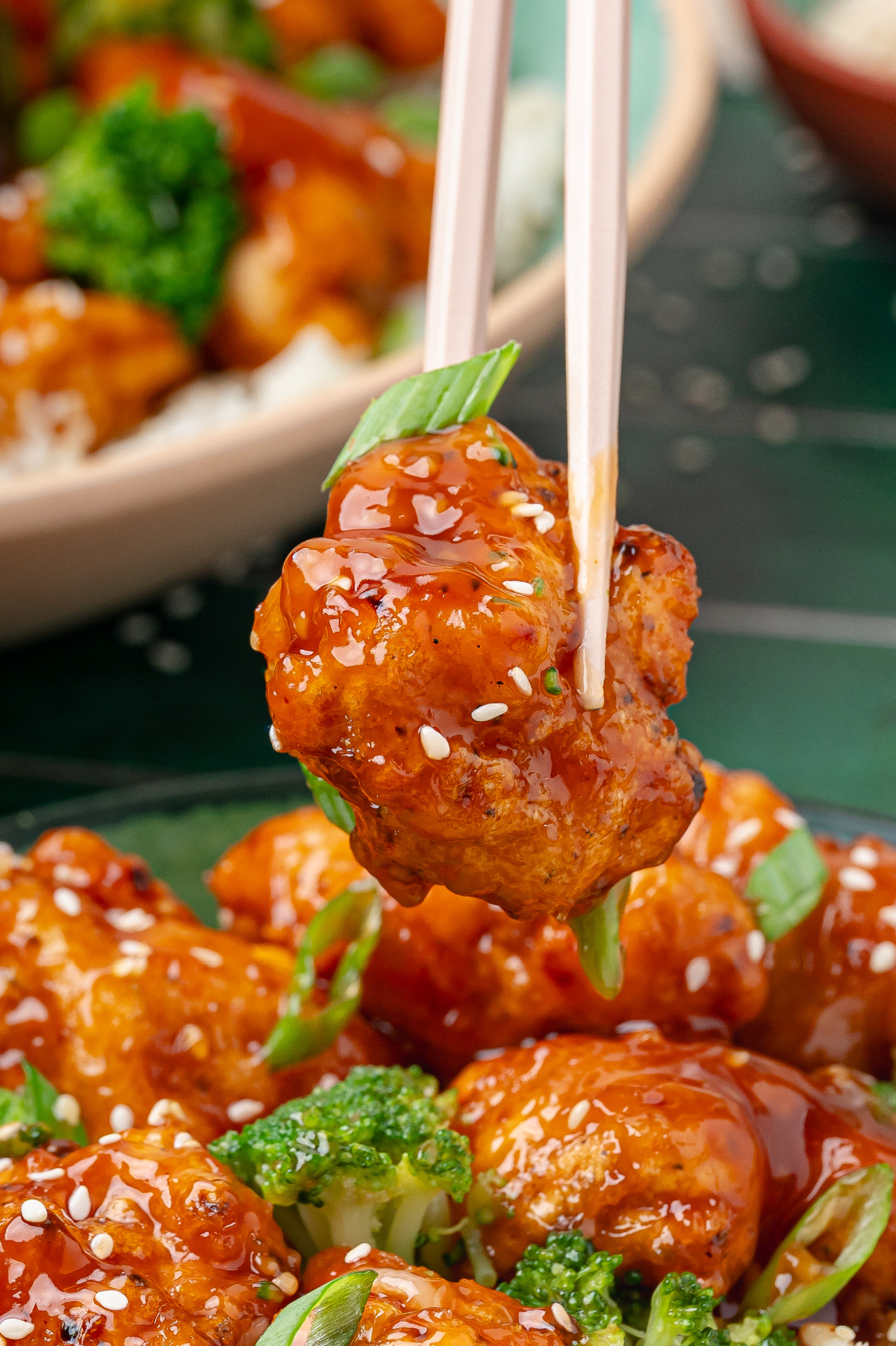
Part of the breakthrough came when I stopped treating the tempura batter mix like it was useful in only one way. I dusted the chicken with the dry mix before battering it, made the batter thicker than the package wanted me to, and it was only then that things started heading in the right direction. The coating stuck, the chicken stayed juicy, and the sauce finally had something to grab onto.
And before anyone writes me a strongly worded letter, yes, I’m fully aware there are those of you reading this with a bag of Trader Joe’s Orange Chicken in their freezer right now. Maybe even two bags or seven. My recipe is not trying to beat frozen orange chicken on convenience. That’s not even a fair fight and you know it. This is Friday and Saturday night orange chicken. It’s the recipe you make because cooking sounds better than takeout and because sometimes standing over a wok with a glass of wine nearby is exactly what you felt like doing. There’s probably a Khalid song on too.
By the time this makes its way to the table, you’ll notice it’s the kind of orange chicken I was wanting from the beginning. There are juicy chicken thighs, a coating that can handle the sauce, and pieces big enough to feel like chicken instead of breading.
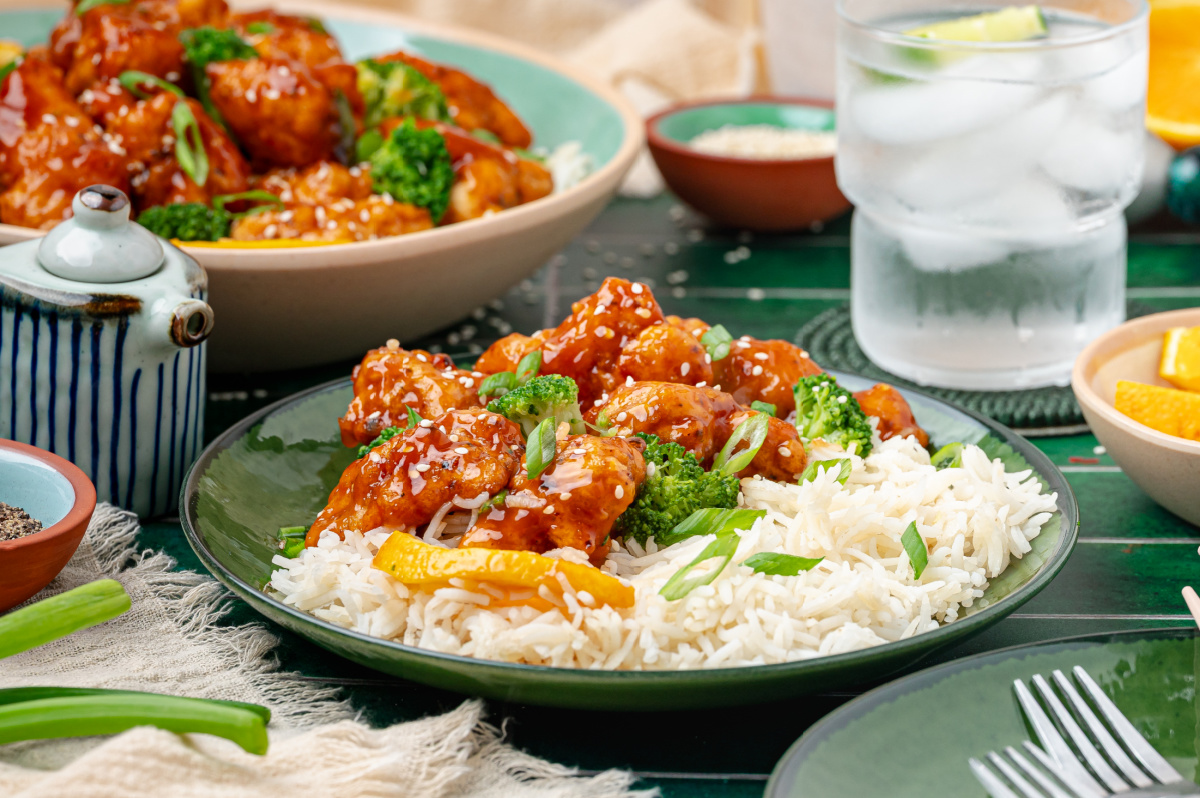
What Makes This Different
- The first thing I changed was the chicken. I chose thighs instead of chicken breast because they’re more forgiving during frying and stay juicier once they’re coated and tossed in the sauce. Sure, chicken breast is much easier to cut into cubes, but for flavor and juiciness, thighs are where it’s at.
- The coating took a little more work. After a lot of testing, I started dusting the chicken with tempura batter mix before dipping it into the batter. That extra step helped solve the biggest problem I kept running into during testing. The coating stayed attached after frying and held onto the sauce much better once everything was tossed together in the wok. I also make the batter thicker than the tempura package instructions call for because I wanted a more substantial coating that could hold onto the sauce.
- I made the sauce with fresh orange juice instead of marmalade. It keeps the sauce smooth, lets me control the sweetness, and gives the finished chicken fresh orange flavor without bits of peel throughout the sauce.
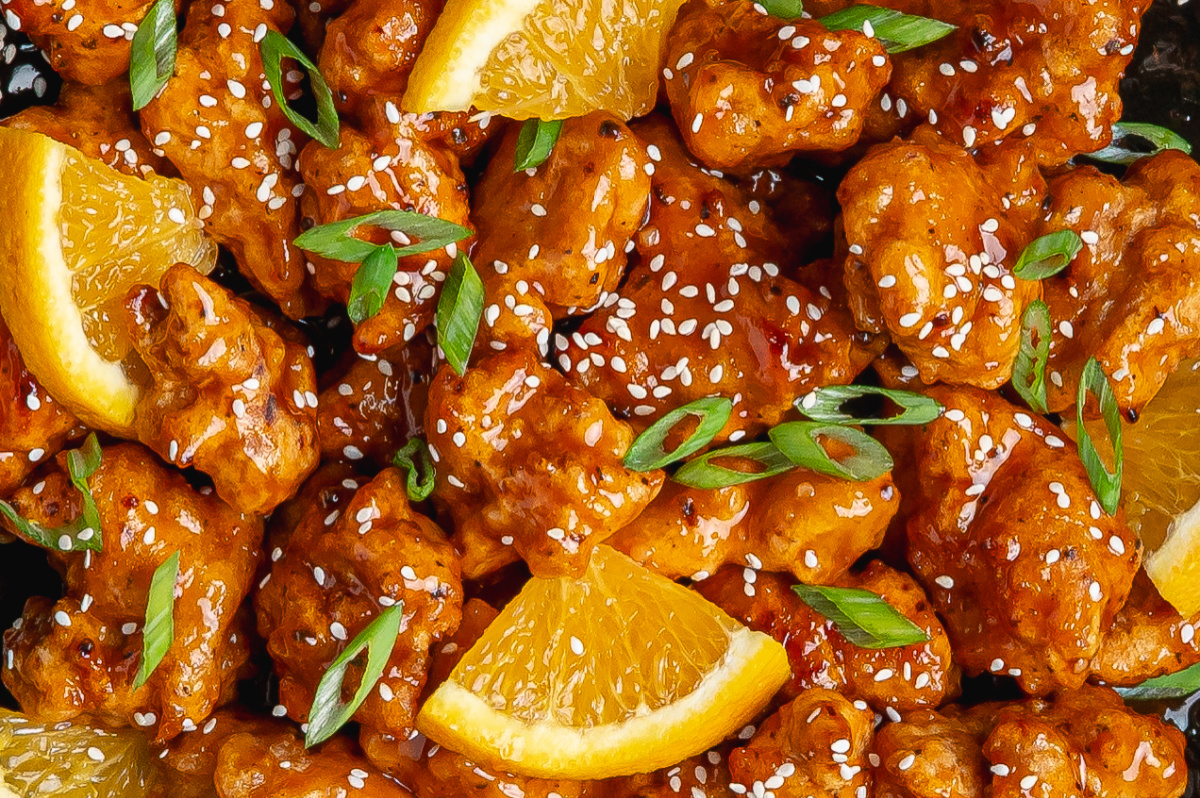
Ingredients
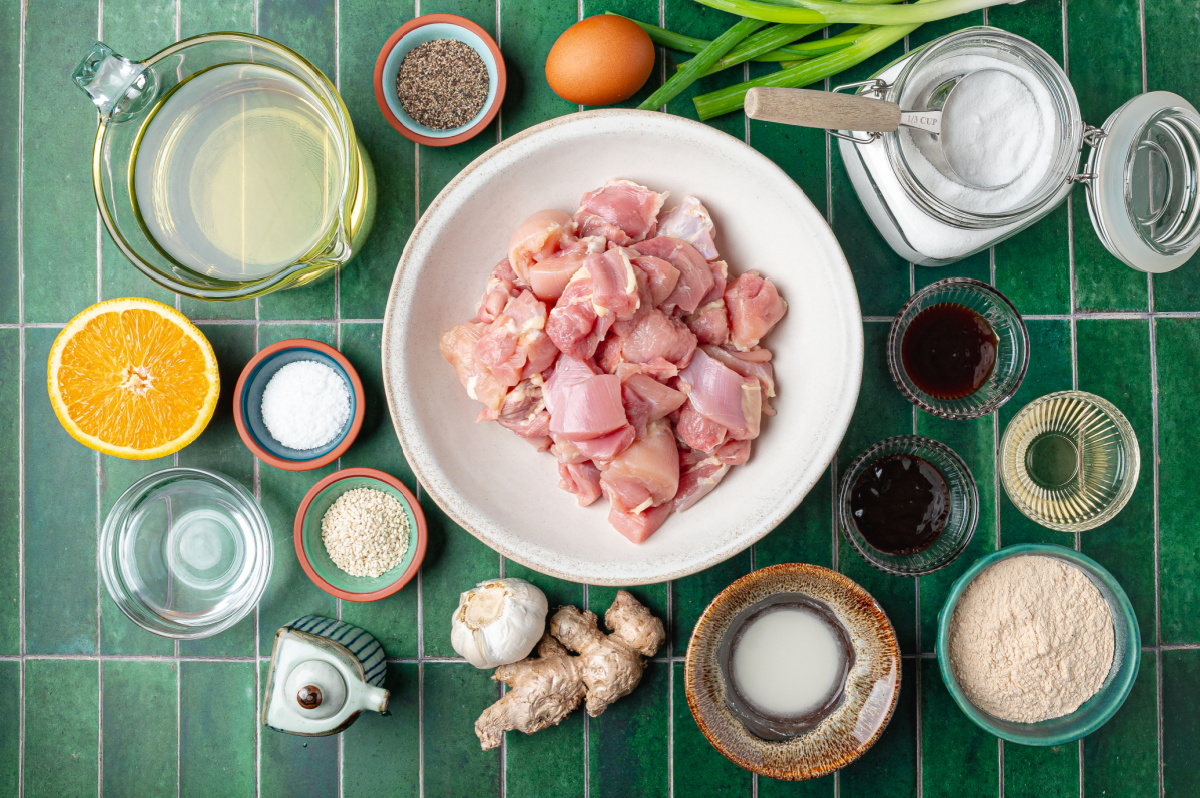
- Chicken Thighs – I use boneless skinless chicken thighs because they stay juicier during frying and are more forgiving than chicken breast. If a piece spends an extra minute in the oil, thighs will not punish you for it.
- Tempura Batter Mix – I use it for the initial dusting and the batter itself. That dusting step ended up being the key to keeping the coating intact after frying and tossing everything in the sauce.
- Egg – Helps bind the batter together and gives the coating a little more sturdiness once it hits the hot oil.
- Orange Juice – I wanted the orange flavor to come from the juice rather than marmalade. Freshly squeezed gives the orange flavor I was after, and bottled orange juice takes it into candy land.
- Soy Sauce – Adds the savory flavor you’re expecting from orange chicken.
- Oyster Sauce – Adds the savory flavor you’re expecting from orange chicken and helps give the sauce a more takeout-style character.
- Hoisin Sauce – Adds a little sweetness and helps connect the orange, soy sauce, and oyster sauce into one sauce.
- Rice Vinegar – Keeps the sauce from becoming overly sweet and gives the orange flavor a little more definition.
- Garlic and Ginger – These are part of the flavor base and help the sauce taste more like orange chicken and less like orange syrup.
- Cornstarch Slurry – The slurry thickens the sauce enough to coat the chicken without turning it into orange-colored glue.
- Neutral Oil – Use an oil with a high smoke point, such as canola, vegetable, or peanut oil. You’re frying at 350°F, so this isn’t the place for olive oil.
How to Make Orange Chicken
Find the complete printable recipe with measurements in the recipe card at the BOTTOM OF THE POST.
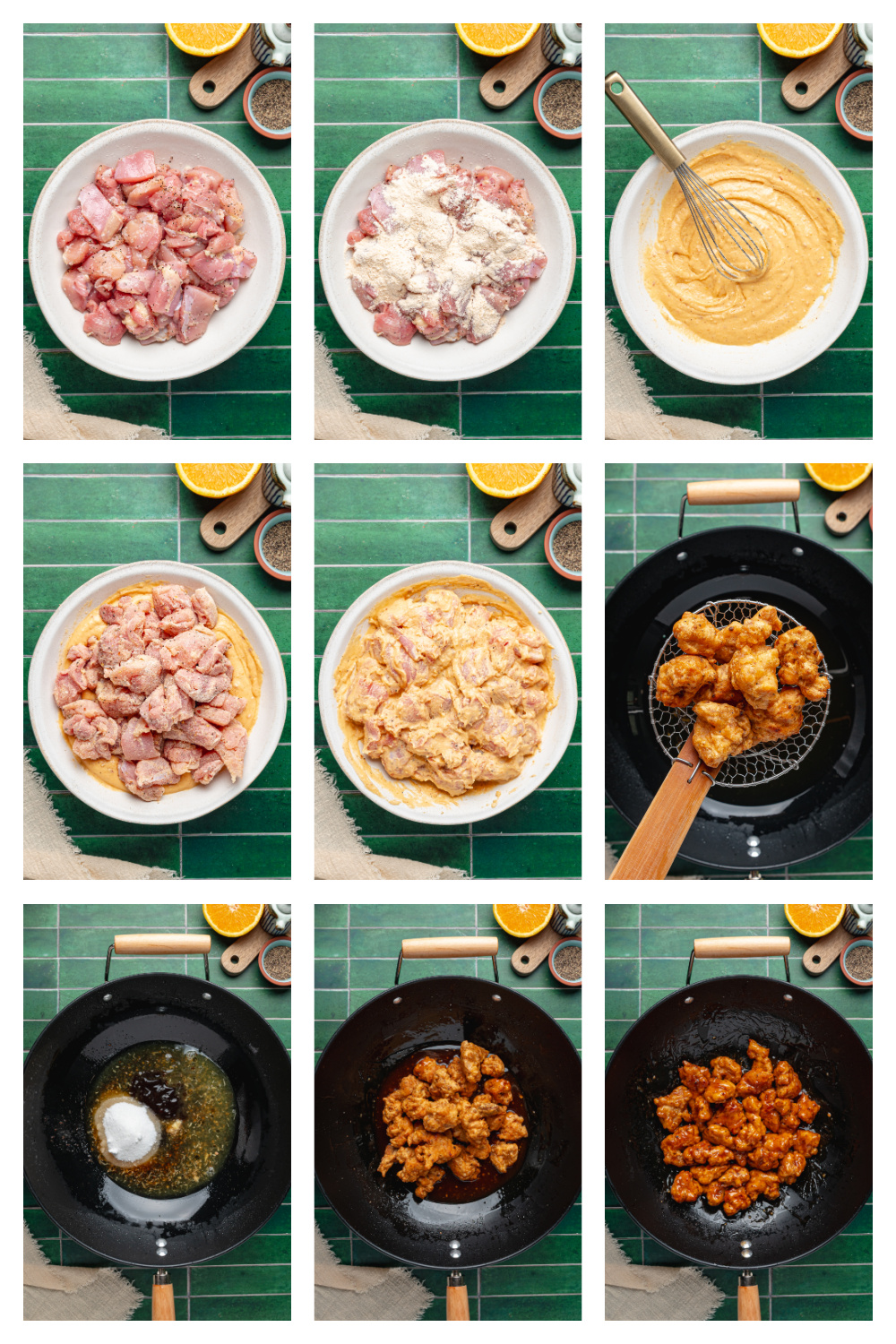
- Step One (season and coat the chicken)
Toss the chicken thighs with the salt, pepper, and a small amount of the tempura batter mix. This is the trick that finally got the coating where I wanted it. The dry coating gives the batter something to hold onto, which helps it stay attached once the chicken is fried and tossed in the sauce. - Step Two (make the batter)
Whisk the remaining tempura batter mix with the egg and cold water until a thick batter forms. I make mine thicker than the package directions call for because I wanted a coating with a little more substance. Add the chicken and toss until every piece is completely coated. - Step Three (fry until golden)
Heat the oil in a wok or deep skillet to 350°F. Fry the chicken in batches until golden brown and cooked through, then transfer it to a wire rack. Resist the urge to crowd the pan. Giving the oil a chance to come back up to temperature between batches keeps the coating crisp instead of greasy. - Step Four (build the orange sauce)
Pour off most of the oil, leaving just a thin coating in the wok, and wipe out any dark crumbs. Add the garlic and ginger and cook for about 30 seconds, just until fragrant. Then add the orange juice, soy sauce, oyster sauce, sugar, rice vinegar, and hoisin sauce. Bring everything to a simmer and stir until the sugar dissolves. - Step Five (thicken the sauce)
Give the cornstarch slurry a quick stir and add it to the sauce. Let it cook for a minute or two until the sauce thickens. You’re looking for a sauce that coats the back of a spoon without running right off. - Step Six (sauce and serve)
Add the chicken back to the wok and toss until every piece is coated. Serve it right away with green onions and sesame seeds. The coating still has plenty of texture at this point, which is exactly what I was after from the beginning.
Recipe Tips
- Tossing the chicken with a small amount of tempura batter mix before it goes into the batter makes a bigger difference than you might expect. That extra step helps the coating stay attached after frying and tossing in the sauce.
- Traditional tempura batter is much thinner. For this recipe, I wanted a coating with a little more substance that could stand up to the sauce. If the batter runs right off the chicken instead of coating it, add a little more tempura mix.
- Crowding the pan drops the oil temperature and can leave you with greasy chicken instead of crisp chicken. Give the oil time to return to 350°F before starting the next batch.
- After frying, you’ll usually have a few browned batter bits left behind. Wiping those out before making the sauce keeps the sauce smooth.
- Orange chicken is at its best the first few minutes after it’s tossed in the sauce. The coating still has texture and the chicken is exactly the way it came out of the wok.
Storage
- Store leftover orange chicken in an airtight container in the refrigerator for up to 3 days.
- The flavor stays great, but the coating will soften as it sits. That’s just the nature of fried chicken once it’s been coated in sauce.
- For the best texture, reheat the chicken in a 400°F oven or air fryer until heated through.
- The microwave works if you’re in a hurry, but the coating will be softer.
- You can freeze it, but I wouldn’t. The coating and sauce are both much better fresh.
FAQs
- Can I use chicken breast instead of chicken thighs?
Chicken breast will work, but it cooks faster and can dry out more easily during frying. If you use breast meat, keep a close eye on it and pull it from the oil as soon as it’s cooked through. It won’t be quite as juicy as thighs. - Do I have to use a wok?
No, a deep skillet or a heavy-bottomed pot works too. I like using a wok because it gives the chicken plenty of room while frying and makes it easy to toss everything together once the sauce is finished. - Can I use bottled orange juice?
You can, but I prefer fresh orange juice. Bottled juice tends to make the sauce noticeably sweeter, which wasn’t what I wanted for this recipe. - Why dust the chicken before battering it?
The biggest challenge I ran into while testing this recipe was keeping the coating attached after frying and saucing. Dusting the chicken with tempura batter mix before dipping it into the batter helped solve that problem. - Can I make orange chicken ahead of time?
You can fry the chicken ahead of time, but wait to toss it with the sauce until shortly before serving. Once the chicken is coated in the sauce, the coating gradually softens. - What should I serve with orange chicken?
Steamed rice is the obvious choice, but I usually add something green alongside it. Broccoli, snap peas, green beans, or a quick stir-fried vegetable all work well.
From My Kitchen Notes
Observations from the margins of my notebook.
- Some recipes come together immediately. Others spend a lot of time becoming the thing they were trying to be all along.
- I’ve found most coating problems aren’t really coating problems. They’re patience problems.
- The difference between “good enough” and “exactly right” is usually a handful of small decisions nobody else notices.
- Sometimes the thing worth fixing isn’t the thing everyone keeps talking about.
- A sauce can only hold onto what’s underneath it.
- The funny thing about getting what you wanted is realizing how much time you spent learning to recognize it.
- We all spend a lot of time looking for shortcuts, but sometimes the long way was the whole idea.
- Sometimes the best versions arrive a little later than expected.
- Some things are worth one more attempt than you originally planned. It’s amazing what starts working once everything is finally headed in the same direction.
- The difference between good and memorable is often smaller than people think.
- A recipe can spend months teaching you something and never say a word. You learn a lot from the things you keep noticing.
- Some ideas don’t need to be reinvented. They just need a little more attention.
- My favorite part of getting older is becoming more specific.
- The sauce gets the credit. The attachment puts in the effort.
- Once I thought about it, my version of this recipe only exists because I was trying to get one thing to hold onto another thing.
- And every time I started thinking about batter adhesion, I ended up wandering into human territory. The coating doesn’t stay attached because the sauce is good. It stays attached because something underneath gives it a place to hold on. Because some things don’t need more attention. They need something to attach to.
- The funny thing about holding on is that it works a lot better when both sides are participating.
- A surprising amount of life comes down to what actually sticks.
- The sauce wasn’t the challenge. The challenge was giving it somewhere to live.
- Some things look effortless after they’ve survived the hard part.
- You can pour all the sweetness you want over something. It still needs a foundation.
- The things that last usually have more holding them together than anyone realizes.
- Most people notice the shiny part on the outside. The interesting part is usually underneath.
- The strongest bonds are usually created one small layer at a time.
- The sauce mattered. It just wasn’t where the answer was.
More Crispy Things Worth Your Effort
- General Tso’s Chicken – Crispy coating and balanced sauce.
- Crispy Maple Mustard-Glazed Chicken Cutlets – Pan-seared with maple mustard glaze.
- Crab Rangoon – Crispy wontons and sweet spice.
- Crispy Hawaiian Mochiko Chicken with Mango Aioli – Soy-ginger chicken with mango aioli.
- Gochujang Chicken Sandwich – Crispy potato chip crust.
This post may contain affiliate links. Please read my disclosure policy.
Orange Chicken
Equipment
- wok or deep skillet. For frying the chicken and finishing the sauce.
- wire rack Keeps the coating crisp after frying.
- baking sheet Supports the wire rack.
- mixing bowls For battering and mixing.
- whisk For making the batter and sauce.
- tongs or spider strainer. For safely removing chicken from the oil.
- digital thermometer Helps maintain oil temperature.
Ingredients
Chicken:
- 1½ lbs (680 g) boneless, skinless chicken thighs cut into 1-inch (2.5 cm) pieces
- 1 tsp (6 g) kosher salt
- ½ tsp (1 g) white pepper or black pepper
- 1¼ cups (150 g) tempura batter mix divided
- 1 large egg
- ½ cup (120 ml) cold water plus 1 to 3 tablespoons (15-45 ml)
- 3 cups (720 ml) neutral oil for frying
Sauce:
- 2 cloves garlic minced
- 1 inch (knob) fresh ginger gated
- ½ cup (120 ml) freshly squeezed orange juice strained
- 2 tbsps (30 ml) low sodium soy sauce
- 1 tbsp (15 ml) oyster sauce
- ⅓ cup (67 g) granulated sugar
- 2 tbsps (30 ml) rice vinegar
- 2 tbsps (30 ml) hoisin sauce
- 1 tbsp (8 g) cornstarch mixed with 1 tbsp (15 mL) water
Garnishes:
- green onion thinly sliced
- sesame seeds
Instructions
- Season the chicken with the salt and pepper in a large mixing bowl.1½ lbs (680 g) boneless, skinless chicken thighs, 1 tsp (6 g) kosher salt, ½ tsp (1 g) white pepper
- Add ¼ cup (30 g) of the tempura batter mix to the chicken and toss until lightly coated. This dry coating helps the batter adhere to the chicken during frying.1¼ cups (150 g) tempura batter mix
- Whisk the remaining tempura batter mix, egg, and ½ cup (120 ml) cold water in a medium bowl until a thick batter forms. Add additional water, 1 tablespoon (15 ml) at a time, if needed. The batter should be thick enough to coat the chicken without running off immediately.1 large egg, ½ cup (120 ml) cold water
- Add the chicken to the batter and toss until each piece is evenly coated.
- Heat the oil to 350°F (175°C) in a wok or deep skillet.3 cups (720 ml) neutral oil
- Fry the chicken in batches for 5 to 6 minutes, turning occasionally, until golden brown and cooked through. Transfer to a wire rack set over a sheet pan and allow the oil to return to 350°F (175°C) before frying the next batch.
- Carefully transfer the oil to a heatproof container, leaving a thin coating in the wok. Wipe out any dark crumbs and return the wok to medium heat.
- Add the garlic and ginger and cook for 20 to 30 seconds, stirring constantly, until fragrant.2 cloves garlic, 1 inch (knob) fresh ginger
- Add the orange juice, soy sauce, oyster sauce, sugar, rice vinegar, and hoisin sauce. Bring to a simmer, stirring until the sugar dissolves.½ cup (120 ml) freshly squeezed orange juice, 2 tbsps (30 ml) low sodium soy sauce, 1 tbsp (15 ml) oyster sauce, ⅓ cup (67 g) granulated sugar, 2 tbsps (30 ml) rice vinegar, 2 tbsps (30 ml) hoisin sauce
- Stir the cornstarch slurry, then add it to the sauce. Cook for 1 to 2 minutes, stirring constantly, until the sauce thickens enough to coat the back of a spoon.1 tbsp (8 g) cornstarch
- Return the chicken to the wok and toss until every piece is evenly coated in the orange sauce.
- Serve immediately, garnished with green onions and sesame seeds if desired.green onion, sesame seeds
Notes
- Dusting the chicken with tempura batter mix before battering helps the coating stay attached during frying and saucing.
- This batter is intentionally thicker than traditional tempura batter to create a coating that can stand up to the sauce.
- A wire rack works better than paper towels because it prevents steam from softening the coating.
- Chicken thighs stay juicier than chicken breast during frying, but chicken breast can be substituted if preferred.
- The nutrition information includes an estimated amount of oil absorbed during frying. The full amount of frying oil is not consumed and is not included in the calculation.
Nutrition
Have you made this Orange Chicken? I’d love to hear how it turned out – leave a comment below and let me know.
As an Amazon Associate and member of other affiliate programs, I earn from qualifying purchases.
M says
“We all spend a lot of time looking for shortcuts, but sometimes the long way was the whole idea.” Doesn’t this just explain life? Thanks for the wonderful insight and a great recipe – It was amazingly good!
Cathy Pollak says
I smiled when I read this. I’m glad you understand exactly what I was trying to say. Thank you for the thoughtful comment, and I’m so glad you enjoyed the recipe.
Chelsea says
This turned out so amazing. I was nervous to fry, but it worked so well and the sauce is to die for.We loved it so much.
Marlin says
This was a great recipe and I can’t believe I mad eit. Sauce was great. Fry was great.