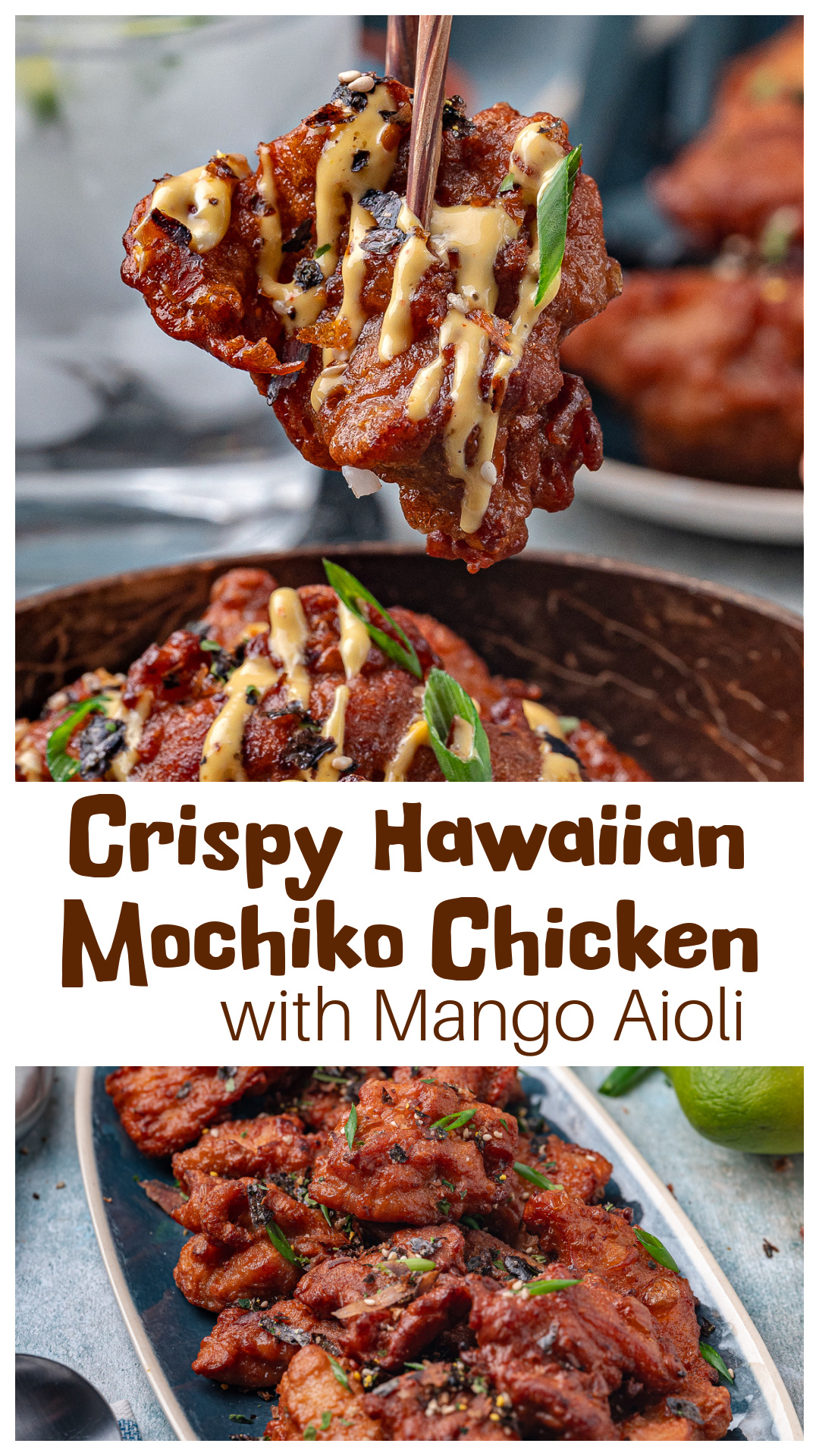
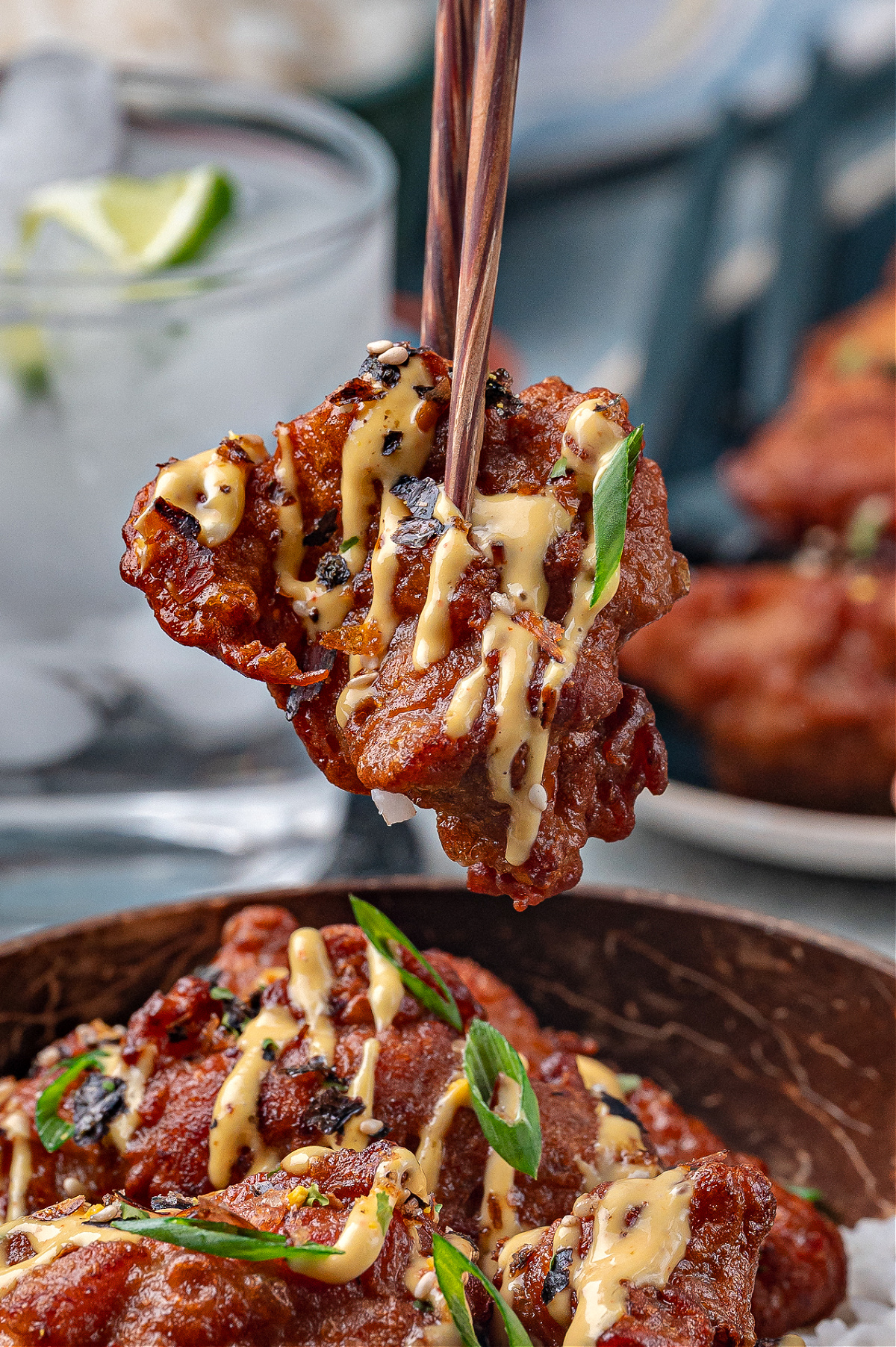
Hawaiian mochiko chicken is crispy, the right kind of chewy, fried chicken made with sweet rice flour and a soy-ginger marinade. The outside crackles, the inside stays tender, and the mango aioli ties a bow around it. Once you’ve had it, you don’t stop thinking about it.
Hawaiian Mochiko Chicken, Where I Learned to Want This Food
I’m sitting on a longboard outside the break, my legs are dangling in the water, with the inevitable saltwater drying on my shoulders, waiting for a very slow, peeling wave breaking in one direction, one that isn’t trying to kill me. A guy paddles past and says, “Hey, haole girl, that wave’s not for you.” This was never said softly or kindly, just stated. A regular type of interaction in Oahu, and I got used to it. I was also young, and in my mind, thought, yeah, what are you going to do about it if I take it.
Funny, because I wasn’t there to prove anything or to be a local. I was not trying to run a lineup (ever), but I also wasn’t going to pretend I didn’t know how to surf.
So, when the waves would line up in front of me, and I was in position, I took them. Not aggressively, but certainly not with any type of apology. I took them because they were mine.
I learned quickly that’s how you survive in a place like that. The recipe that worked was my own sheer audacity, minus any chest-puffing nonsense (I don’t chest puff, btw). Most of the important ingredients were not disappearing, showing up, paying attention, and never acting scared. I swear surfers can smell fear and they will not allow a good wave to be wasted on someone with insecurities.
Over time, people figured out what category I fell into, including the surfing locals.
Hawaii is where I learned how to longboard, even though I grew up on Southern California beaches and lived near San Onofre, where longboard surfing is basically its own religion. It was just easier to learn in Hawaii. Longboards and lessons are available everywhere. There were more soft, forgiving waves in Waikiki and especially the warm water, where I could leave the wetsuit behind. It was easier to stay up long enough to actually learn something, especially during two-to-three week stints of time.
Long days in the water turn into a very specific kind of hunger, and it’s not “snacky” hungry; it’s more plate-lunch hungry. While most of the surfing crowd ordered loco moco, I went straight for mochiko chicken.
Sweet rice flour batter, soy, sugar, garlic, ginger, and fried until the outside turns chewy and crisp in a way regular flour cannot replicate. It’s salty, sweet, sticky, and just what I wanted after a morning in the water.
My standing order at Zippy’s on King Street in Honolulu was the two-piece mochiko fried chicken plate: two scoops of white rice, one scoop of macaroni salad. Most times with a sweet miso glaze, sometimes without. The flavor of this meal imprinted on me in a way I could never shake.
Now, when I’m in Hawaii, I still enjoy a mochiko chicken plate lunch when I come across it. It’s harder to find at the places I tend to frequent now.
So, I started making it myself, because why not.
Mochiko flour is sweet rice flour (the same flour used for mochi), and it happens to be naturally gluten-free. It’s available everywhere, by the way. When you combine it with cornstarch and eggs, it creates this batter that hangs on tight, sets really fast in hot oil, and fries into that signature chewy-crisp shell. If you know, you know.
This is a gluten-free fried chicken that never feels like a compromise, which I know is important to a lot of you, and you certainly do not need to be gluten-free to enjoy it. It’s just good fried chicken.
I decided mango aioli was going to be my signature sauce with this because, one, I love mango anything, and I prefer something bright-ish and creamy next to salty fried things. Mango, garlic, lime, sriracha, mayo, it’s simple, but with enough pow to stand up to the chicken and take it over.
This recipe is my version of Hawaiian mochiko chicken, a local-style, Japanese-influenced, plate-lunch inspired dish made from a lot of meals in Hawaii and a lot of frying at home until it was right.
This is a good one for game day, because “fried.” It’s perfect for feeding people who “can’t have gluten.” It’s also great for feeding people who don’t care about gluten at all.
Mostly, it’s the best because it tastes like something I still think about.
Why I Love This Recipe
- Mochiko flour does this thing regular flour can not. It fries into a chewy-crisp shell that sticks to the chicken instead of flaking off and leaving you sad. Once you’ve had it, normal fried chicken kind of feels unfinished.
- The marinade is stupid simple on paper, but sugar + soy + garlic + ginger + egg creates this little system where flavor and texture get dealt with at the same time. It’s very effective.
- Using both mochiko flour and cornstarch gave me the texture I was remembering. Mochiko has chew, while cornstarch has lightness. Together, they are the sweet spot between crunchy and bouncy.
- It happens to be gluten-free, which is convenient, but that’s not why I make it. I make it because it’s better than a lot of wheat-based batters.
- Chicken thighs are a must for me here. They stay juicy and forgive you if you’re off by thirty seconds. Please don’t ask me if you can make this with chicken breast.
- Mango aioli completes the chicken in a way I love.
- This recipe scales up or down well. You can fry a small batch for dinner or a mountain of it for game-day without changing anything.
- Every time I make this, it takes me right back to being salty, hungry, sunburned, and standing in line for fried chicken after the water. For me, that’s not nostalgia I’m trying to manufacture, it’s just where this recipe lives.
Ingredients
- Chicken thighs – They are juicy and forgiving, and the best choice when you’re frying something that’s going to take a beating.
- Sugar – This does more than sweeten, it’s part of that lacquered outside mochiko chicken is known for. You’ll find sugar in the aioli too.
- Soy sauce (or gluten-free tamari) – The salty umami, and the thing that makes this taste like a plate lunch and not generic fried chicken.
- Garlic – Always. Used in both the chicken and the aioli.
- Fresh ginger – Adds some zing.
- Eggs – The glue that holds the batter on the chicken.
- Mochiko flour (sweet rice flour) – This is what gives you the slightly chewy, crisp shell you can’t get with wheat flour. Your grocery store will have it.
- Cornstarch – Lightens the coating so it doesn’t fry up heavy.
- Canola oil (for frying) – Neutral, high smoke point.
- Green onions – A little freshness and color.
- Furikake – Hawaii also taught me that I love furikake. On everything.
- Mayonnaise – Base of the mango aioli.
- Fresh mango – Sweet, tropical, and the reason this sauce exists.
- Lime juice – Acid to keep the aioli in check.
- Sriracha – Heat and some swagger.
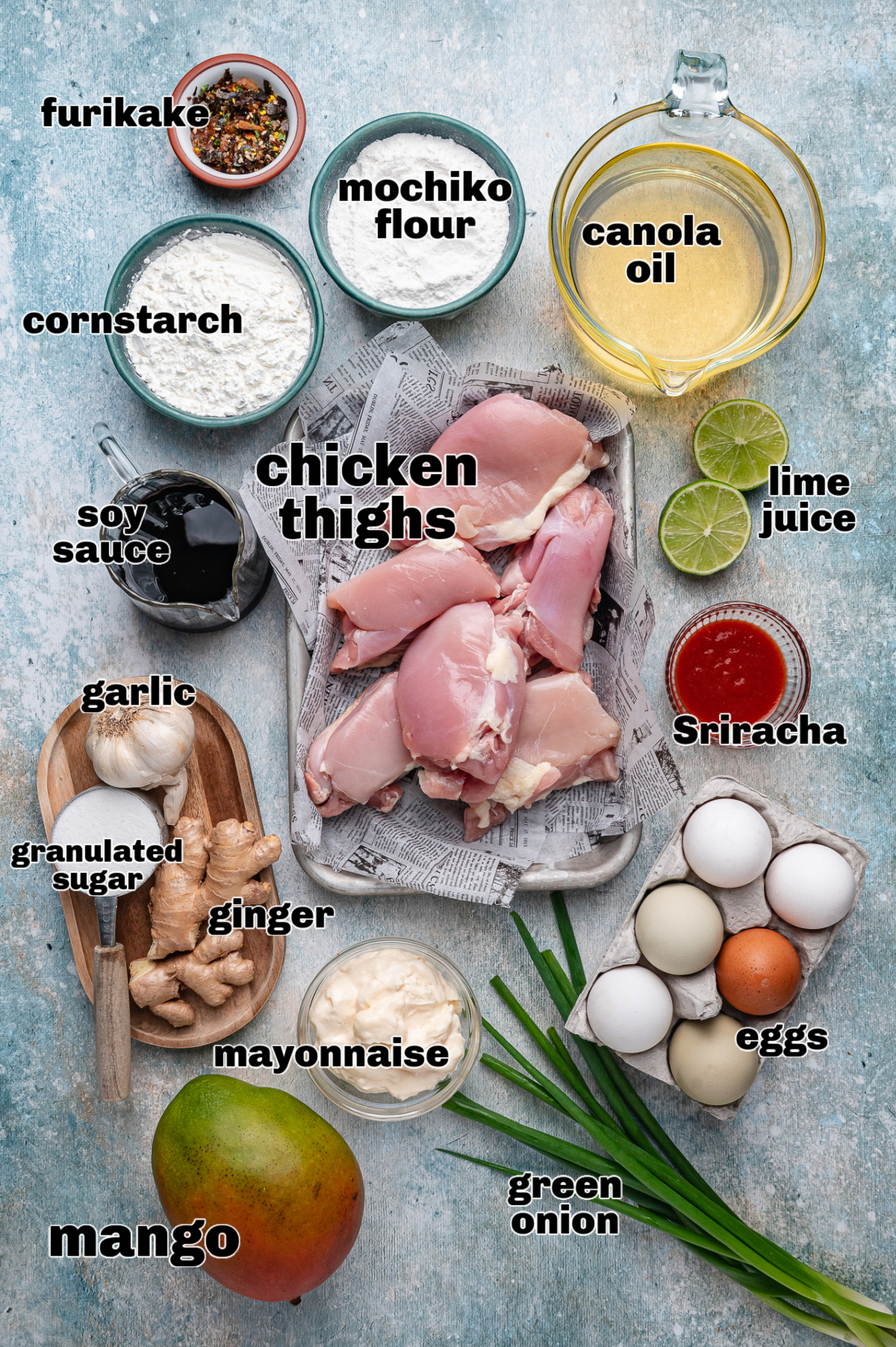
How to Make Hawaiian Mochiko Chicken
Find the complete printable recipe with measurements in the recipe card at the BOTTOM OF THE POST.
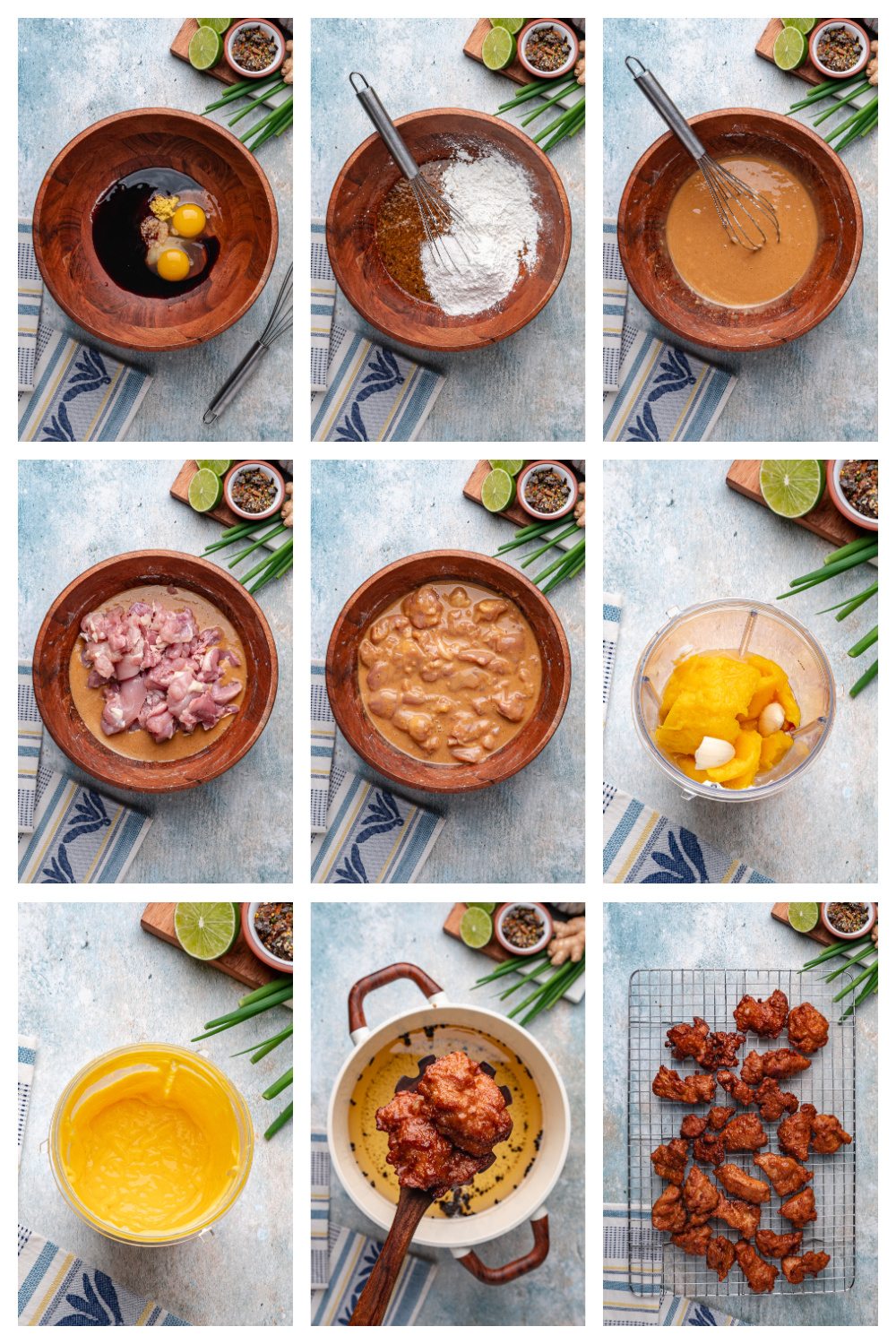
- Step One (the batter happens first)
In a big bowl, whisk together the sugar, soy sauce, garlic, ginger, and eggs until it looks unified. Sprinkle in the mochiko flour and cornstarch, then whisk again until you’re staring at a thick, sticky batter with no dry pockets hiding anywhere. It should look thick and shiny, not loose or pourable. - Step Two (introduce the chicken)
Add the chicken pieces and toss until everything is coated. Cover the bowl and slide it into the fridge for about four hours. This is not busywork. This is what lets the batter grab onto the chicken and turn into that slightly chewy, crispy thing mochiko chicken is known for once it hits hot oil. - Step Three (mango aioli, because of course)
While the chicken does its work, drop the mayonnaise, mango, garlic, lime juice, sriracha, and sugar into a blender or food processor and blend until completely smooth. Taste and adjust for heat if you want. Refrigerate until you’re ready to fry so it stays cold against the hot chicken. - Step Four (oil to temperature)
Pour the oil into a heavy pot and heat it to 350°F. Use a fry thermometer. Mochiko batter is temperamental about oil temperature. Too cool and it will slide off. Too hot and the sugar in the marinade starts browning before the chicken is done. 350°F is where you need to be. - Step Five (fry, calmly, in batches)
Working with about five or six pieces at a time, lift the chicken from the bowl, let the excess batter drip back, and lower it into the oil. Fry for 4 to 5 minutes, turning once or twice, until it’s golden and cooked through. You’re aiming for 165°F internally. - Step Six (out of the oil, reset, repeat)
Use a slotted spoon to transfer the chicken to a wire rack set over a baking sheet so excess oil can fall away. Let the oil come back to 350°F before adding more chicken. This is how you avoid greasy sadness. - Step Seven (the good part)
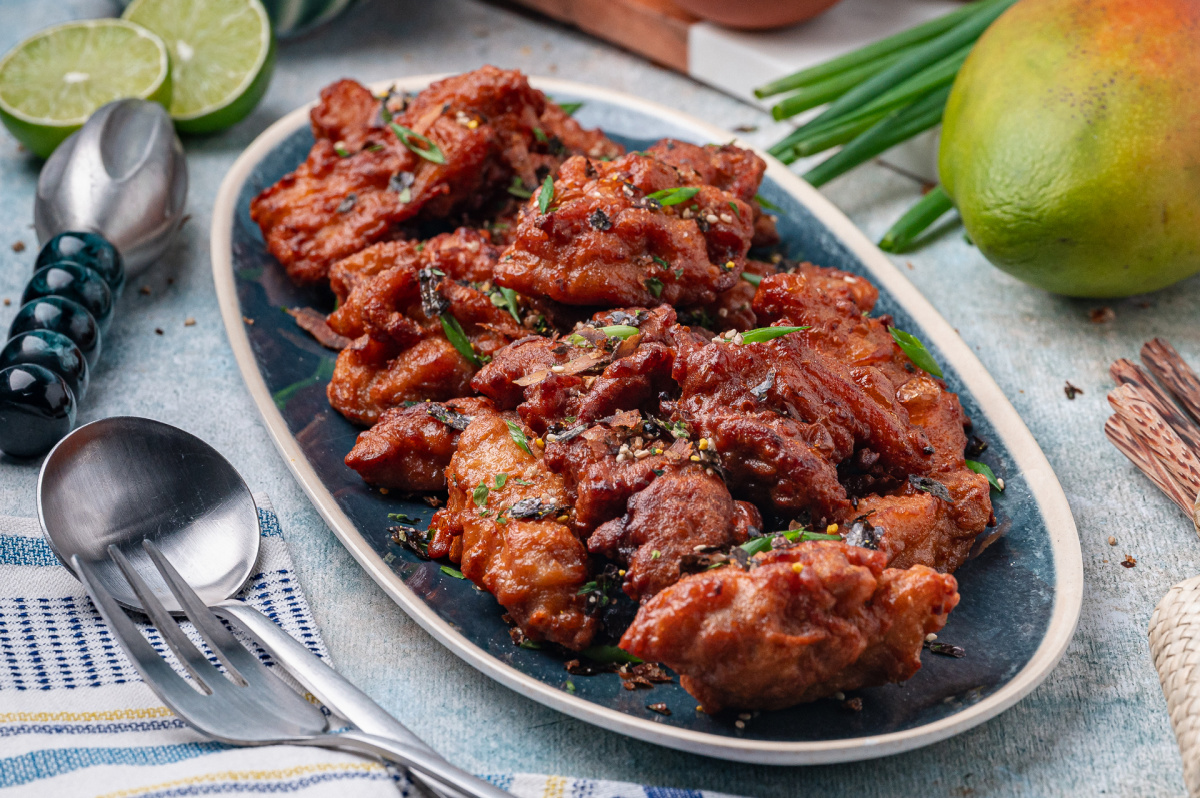
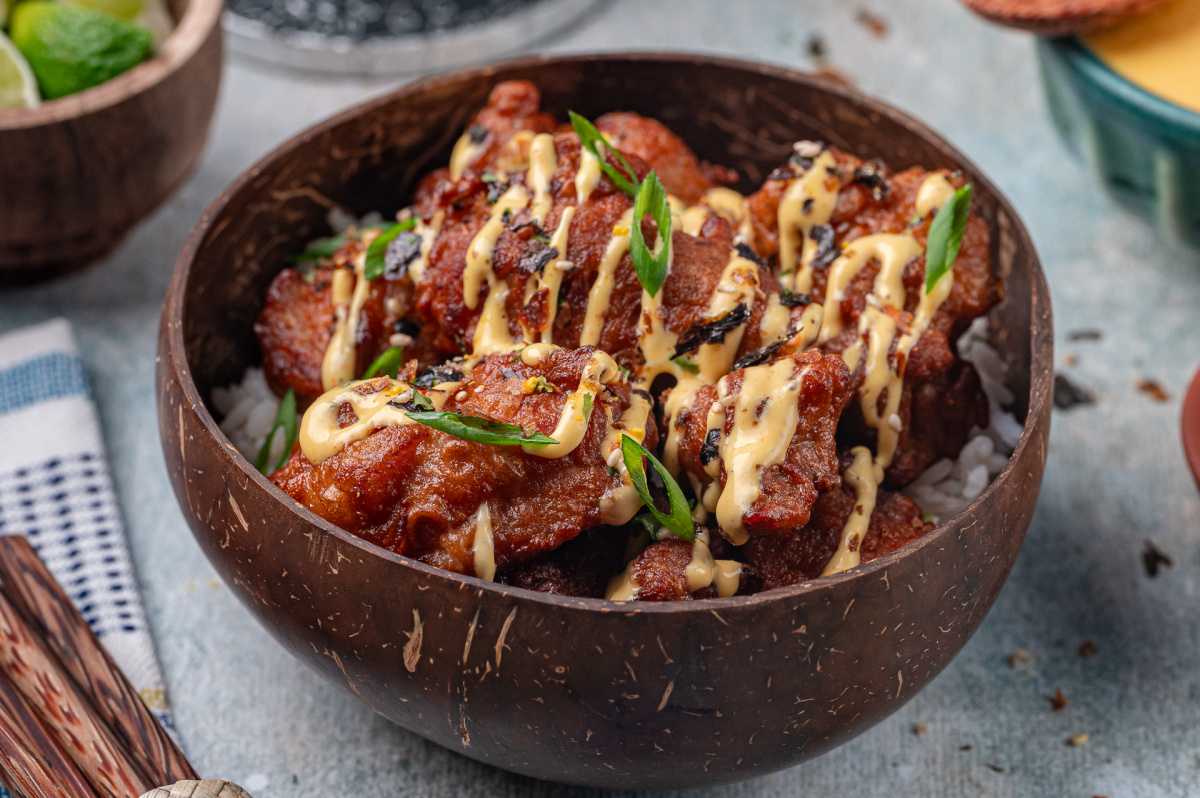
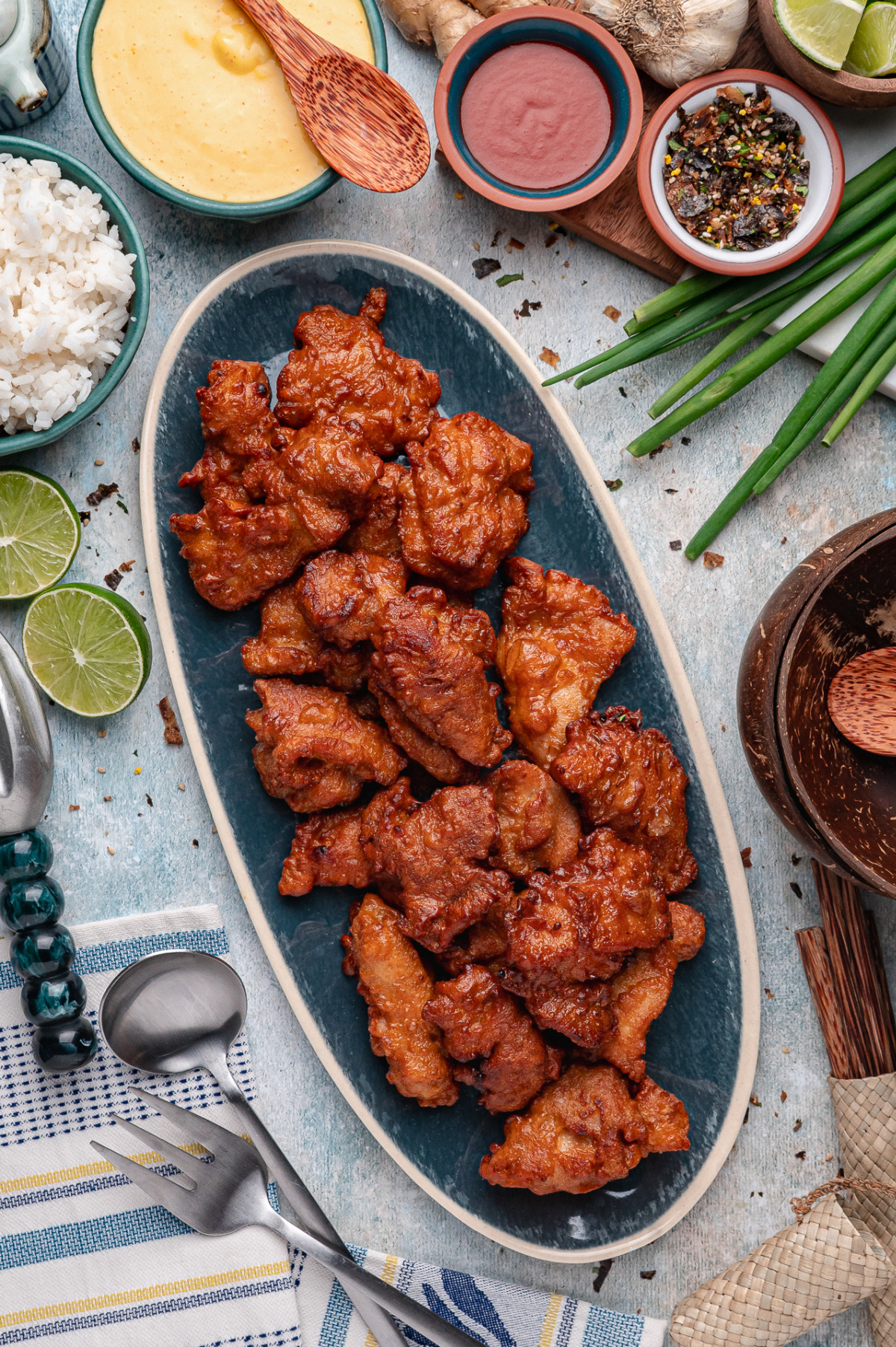
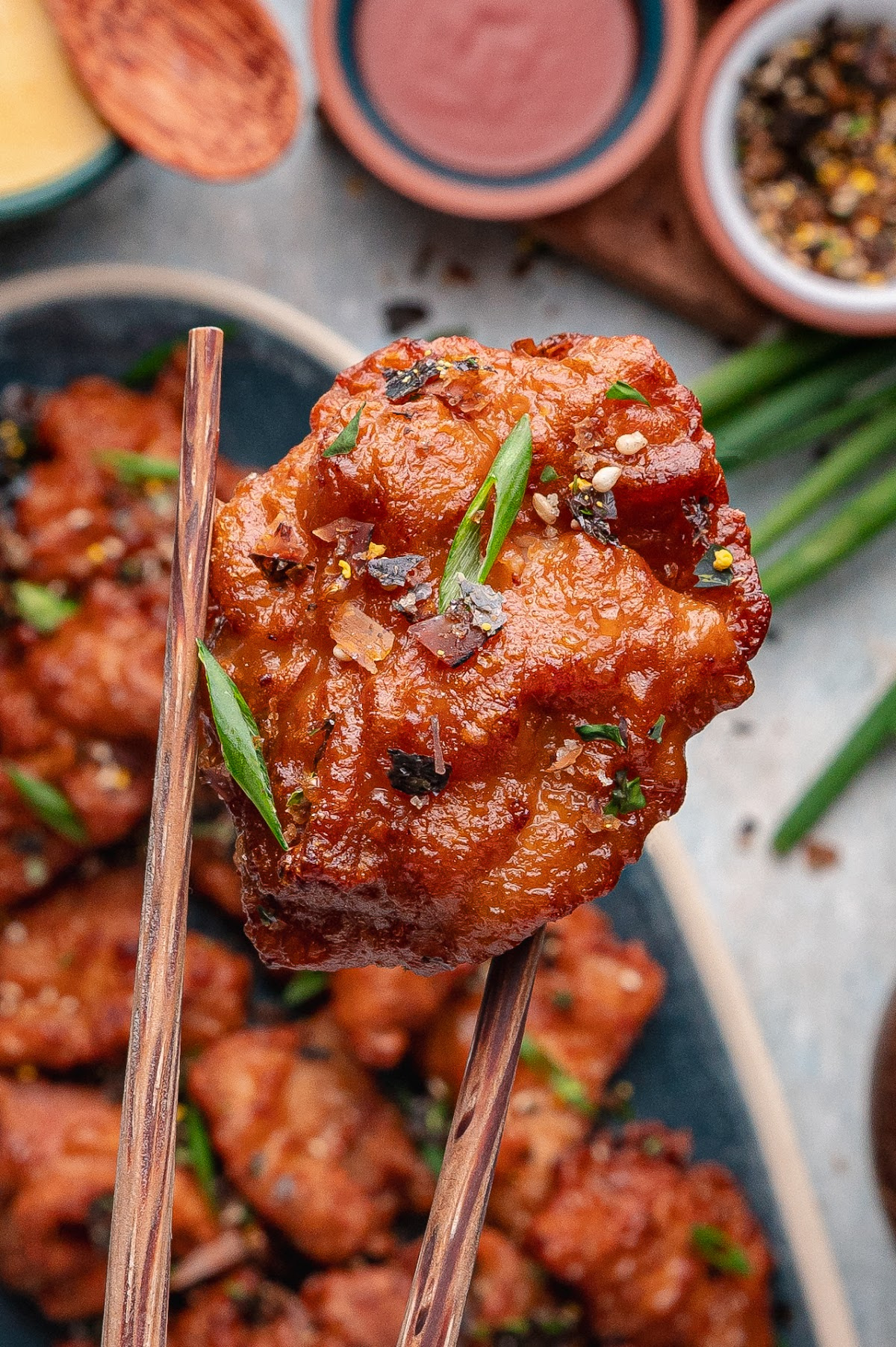
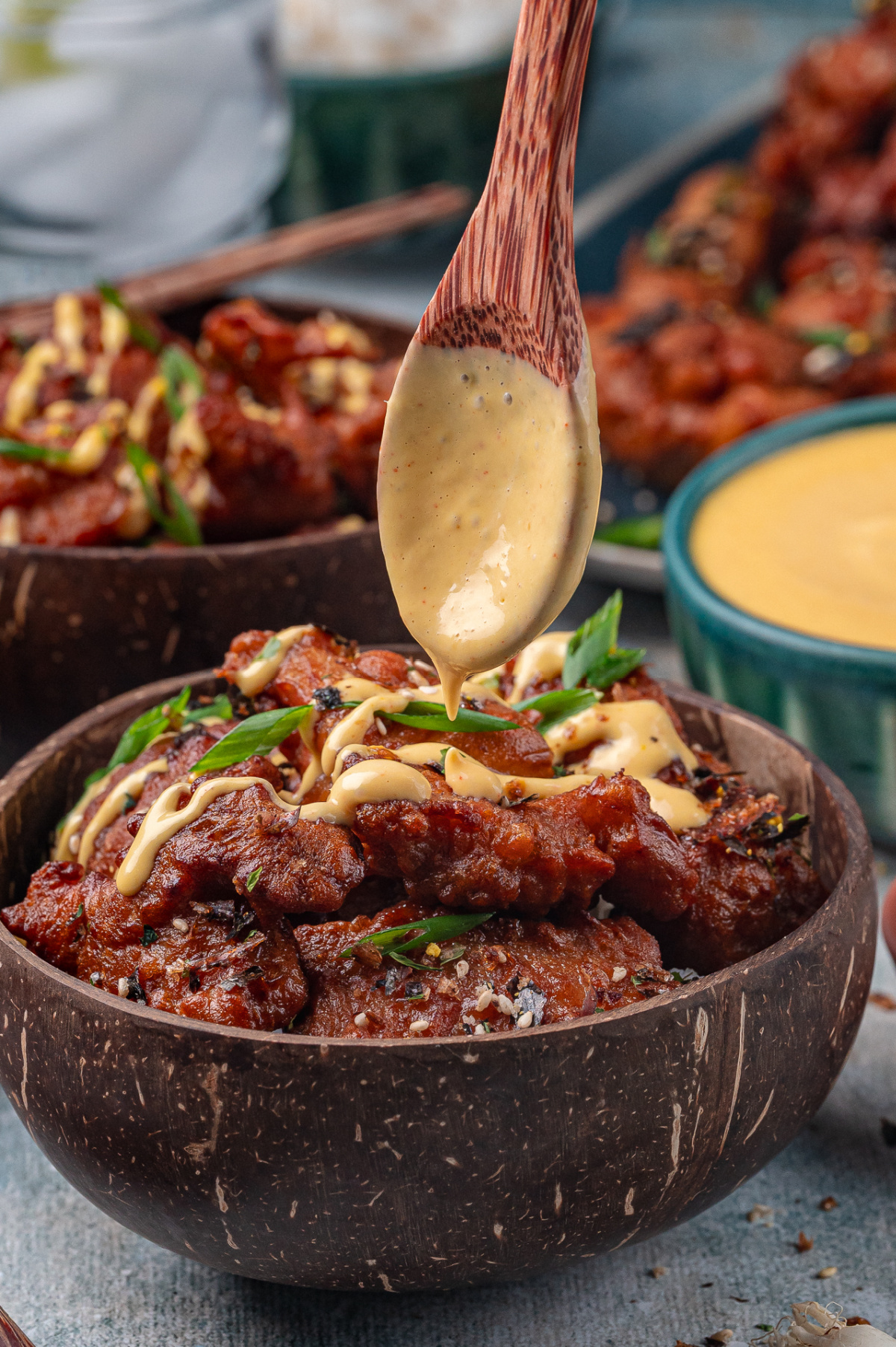
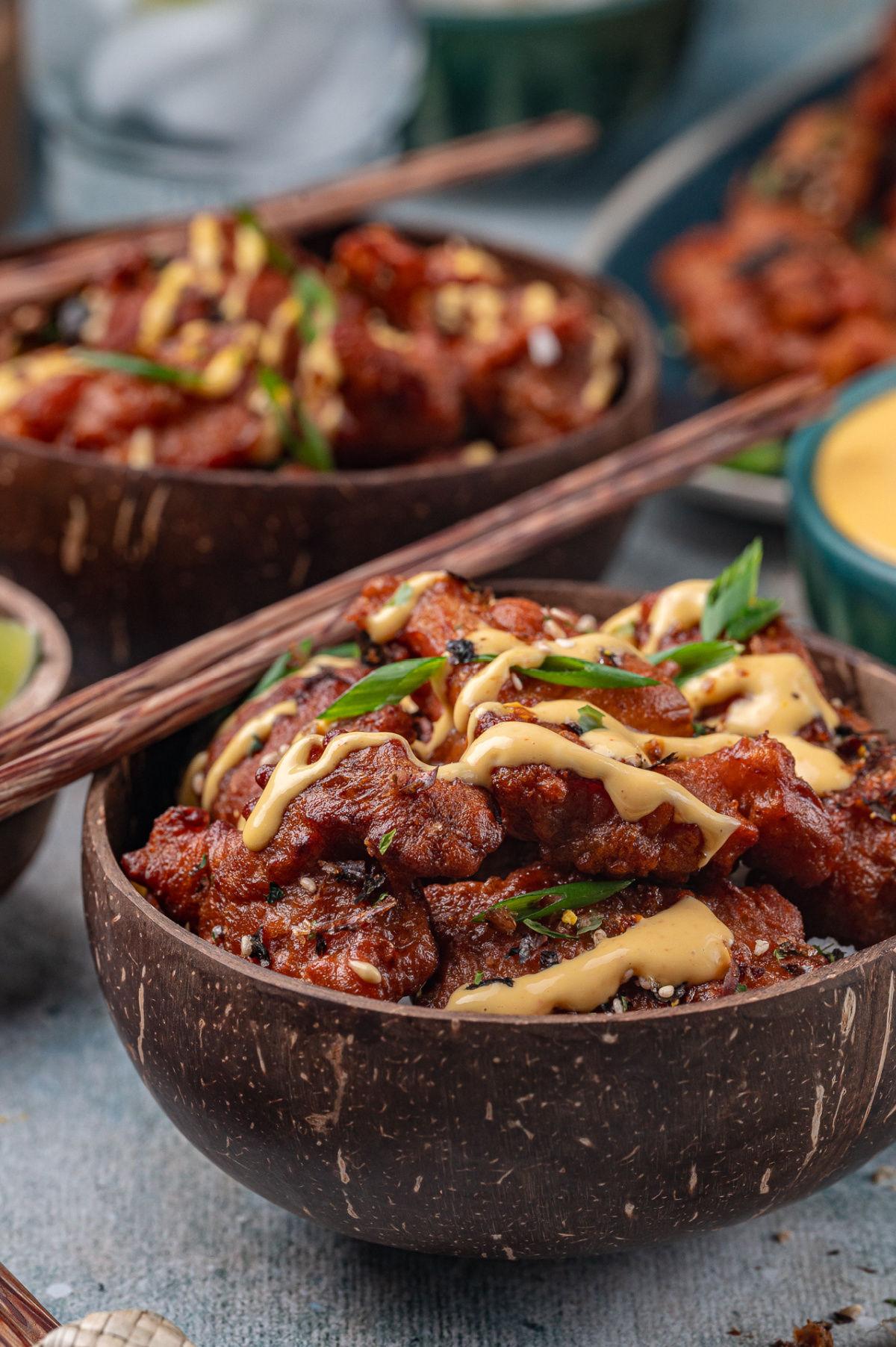
Pile the hot chicken onto a platter, drizzle it generously with mango aioli, and finish with green onions and furikake. Eat immediately while the outside is crisp and the inside still has that soft, slightly chewy pull that makes mochiko chicken crispy and quite perfect.
Recipe Tips
- Mochiko batter will look a little strange if you’ve never worked with it before. It’s thicker than pancake batter, heavier, and shiny. Think more “sticky” than “pourable.” If it looks too loose right after mixing, give it a minute. Mochiko firms up as it sits.
- That four-hour rest is necessary. You want the batter to attach itself to the chicken so it doesn’t slide off the second it hits hot oil. If you try to shorten that time, you’ll experience the difference.
- I’ll be frank, oil temperature is the boss of this whole situation. Since there’s sugar in the marinade, if it’s too hot, things brown before the chicken is ready. Too cool, and the coating gets wrecked. Somewhere around 350°F is the target.
- Let the excess batter drip off before frying. You want the coating to hug, not paddle away.
- Make sure to fry in small batches. This keeps the oil temperature steady and the pieces from sticking together, which is basically the kitchen version of not dropping in on someone’s wave.
- Use a wire rack instead of paper towels. It keeps the coating from steaming itself soft while you finish the rest.
- This chicken is best hot and fresh, but the mango aioli helps here. Even if a piece sits for a minute, that sauce brings it right back.
Storage & Leftovers
- This chicken is happiest right after frying, when the coating is still crisp and the inside has that chewy pull, but leftovers are still very much worth your time.
- Let the chicken cool completely, then store it in an airtight container in the refrigerator. It’ll keep well for up to three days.
- When reheating, skip the microwave unless you enjoy utter disappointment. Use an oven or air fryer at 375°F and heat until warmed through and re-crisped, about 5 to 7 minutes. It won’t be exactly like day one, but it gets close enough to make you smile and say, “I like this.”
- Store the mango aioli separately in a sealed container in the fridge. It keeps for about three days and actually gets better after a little time.
- If you’re planning ahead for a party, you can make the aioli a day in advance and marinate the chicken overnight. Fry right before serving for the best texture.
FAQs
- Is Hawaiian mochiko chicken gluten-free?
Yes. Mochiko is sweet rice flour, and the batter also uses cornstarch, both naturally gluten-free. The only thing you need to watch is the soy sauce. Use gluten-free soy sauce or tamari and you’re good. - Where do I find mochiko flour?
Most regular grocery stores carry it now, usually in the Asian foods aisle. If not, any Asian market will have it. It’s widely available and not a specialty unicorn ingredient anymore. I can find it in my town, so you’re probably good. - Can I use regular flour instead of mochiko?
I mean, technically you can, but mochiko is the whole point of this recipe. It’s made from glutinous rice, which is about texture, not gluten, and it’s what gives the chicken that slightly chewy, sticky coating. Regular flour does not give you the same result. - What exactly is mochiko chicken?
This is a local-style Hawaiian fried chicken dish with Japanese roots. The batter is made around sweet rice flour, eggs, sugar, soy sauce, garlic, and ginger, then fried. You’ll find versions of it at plate lunch spots all over Hawaii. It’s been around forever. - Does it taste like mochi?
If you love mochi, you’ll recognize the texture more than the flavor. The coating has that same soft chew inside with a crisp exterior. It’s not dessert-sweet, but it has that familiar bounce. You’ll like it. - Is this good for game day?
Oh yeah. It fries quickly and holds onto heat well. You can marinate the chicken earlier in the day, make the aioli ahead of time, and fry in batches right before game time. - Can I use chicken breast instead of thighs?
Just don’t. - Is this super sweet?
No. There’s sugar in the marinade, but it balances the soy sauce and helps with browning. The overall flavor is savory-sweet, not dessert. - Do I need a deep fryer?
No. A heavy-bottomed pot and a thermometer work perfectly. - Can I make it spicy?
Add a pinch of cayenne to the batter or bump up the sriracha in the aioli. Easy.
From My Kitchen Notes
A few margin scribbles, mostly observations I’ve made about this recipe over time.
- Mochiko chicken is my proof that hunger and memory live in the same place.
- Surfing and frying have the same emotional tendencies for me: long stretches of waiting, small moments of doubt, then a very fast payoff that feels good.
- Mango and fried food is a combo I think about often.
- Mochiko doesn’t just coat chicken, it commits to it, which is probably why I respect it.
- Nobody eats one piece of this and then thoughtfully stops.
- Some recipes are invented. For me, this one is remembered.
More Recipes for Crispy, Salty, Sauce-Forward Cravings
- Sweet and Spicy Furikake Popcorn – sweet-salty umami crunch.
- Air Fryer Pork Belly Bites – crispy-fatty rich bites.
- Sticky Honey Garlic Chicken Wings – sticky-sweet saucy wings.
- Bang Bang Salmon Bites – crispy-creamy spicy bites.
- Crab Rangoon – fried creamy nostalgic bites.
This post may contain affiliate links. Please read my disclosure policy.
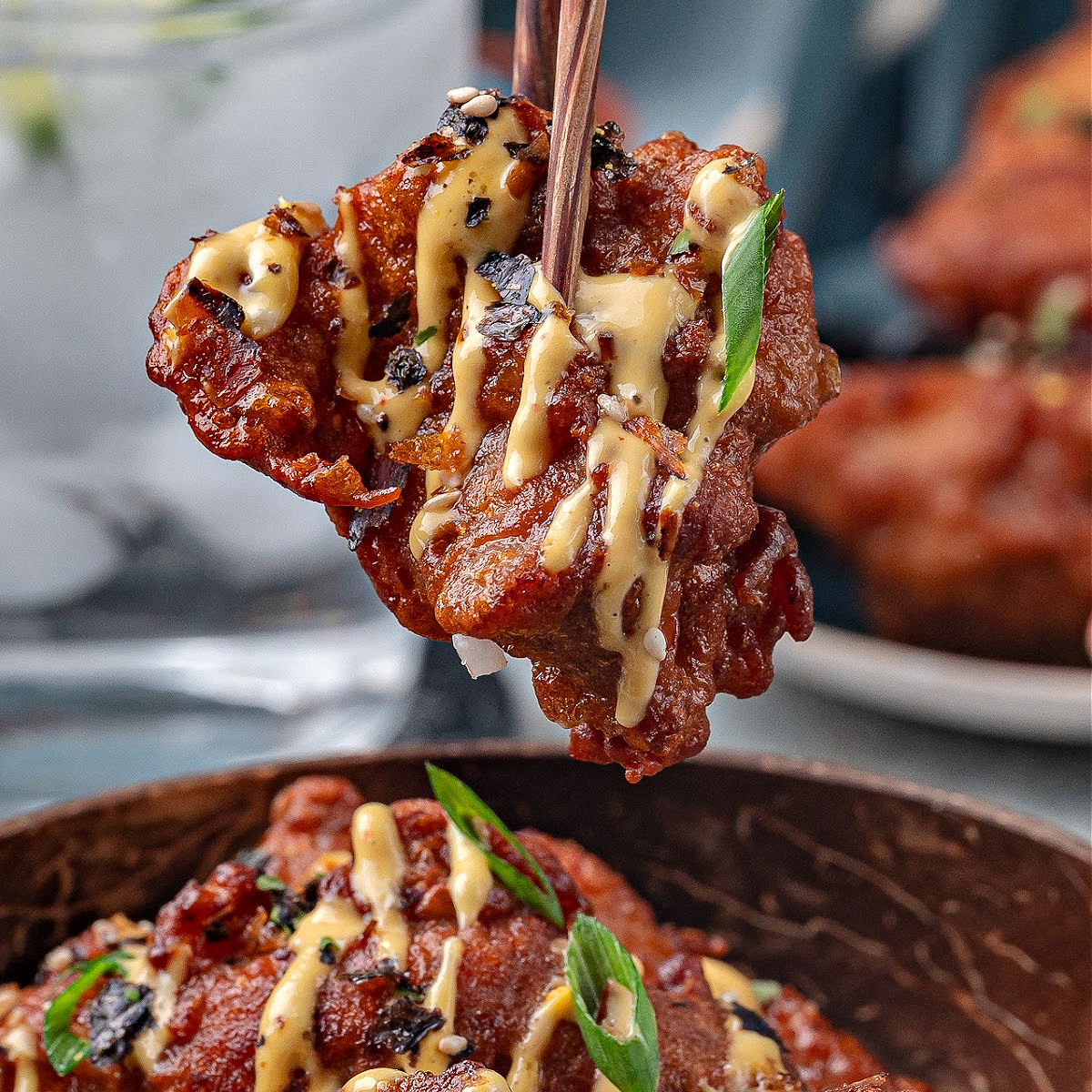
Crispy Hawaiian Mochiko Chicken with Mango Aioli
Equipment
- mixing bowls (large) For mixing the batter and coating the chicken.
- whisk Helps fully combine the batter without lumps.
- food processor or blender. For making the mango aioli smooth.
- heavy based pot or deep fryer. Helps maintain stable oil temperature.
- thermometer for frying So oil keeps temp.
- slotted spoon Safely removes chicken from hot oil.
- cooling rack + baking sheet. Allows excess oil to drain without steaming.
Ingredients
Chicken:
- ¼ cup (50 g) granulated sugar
- ¼ cup (60 ml) low sodium soy sauce or gluten free tamari
- 2 cloves garlic minced
- 1 tbsp (6 g) fresh ginger peeled and grated
- 2 large eggs
- ½ cup (80 g) mochiko flour (sweet rice flour)
- ½ cup (60 g) cornstarch
- 1½ lbs (680 g) boneless skinless chicken thighs cut into 2-inch (5.08 cm) pieces
Mango Aioli:
- ½ cup (120g) mayonnaise
- 1 fresh mango peeled and chopped
- 1 clove garlic
- 1 tbsp (15 ml) fresh lime juice
- 1 tbsp (15 ml) Sriracha
- 1 tbsp (12 g) granulated sugar
Frying:
- 4 cups (960 ml) canola oil for frying
Garnish:
- green onions sliced for garnish
- furikake for garnish
Instructions
- In a large mixing bowl, whisk together the sugar, soy sauce, minced garlic, grated ginger, and eggs until fully combined. Add the mochiko flour and cornstarch and whisk until a thick, smooth batter forms with no dry pockets.¼ cup (50 g) granulated sugar, ¼ cup (60 ml) low sodium soy sauce, 2 cloves garlic, 1 tbsp (6 g) fresh ginger, 2 large eggs, ½ cup (80 g) mochiko flour, ½ cup (60 g) cornstarch
- Add the chicken pieces to the batter and toss thoroughly to coat each piece evenly. Cover the bowl tightly with plastic wrap and refrigerate for 4 hours to allow the batter to adhere properly and flavor the chicken.1½ lbs (680 g) boneless skinless chicken thighs
- While the chicken marinates, prepare the mango aioli. Add the mayonnaise, chopped mango, garlic, lime juice, sriracha, and sugar to a blender or food processor. Blend until completely smooth. Transfer to an airtight container and refrigerate until ready to serve.½ cup (120g) mayonnaise, 1 fresh mango, 1 clove garlic, 1 tbsp (15 ml) fresh lime juice, 1 tbsp (15 ml) Sriracha, 1 tbsp (12 g) granulated sugar
- Pour the canola oil into a heavy-bottomed pot or deep fryer and heat to 350°F (177°C). Use a thermometer to monitor the temperature, as maintaining proper heat is critical for setting the batter and preventing oil absorption.4 cups (960 ml) canola oil
- Working in batches, carefully lower 5 to 6 pieces of battered chicken into the hot oil, allowing excess batter to drip off before frying. Do not overcrowd the pot. Fry for 4 to 5 minutes, turning occasionally, until the exterior is golden brown and the internal temperature reaches 165°F (74°C).
- Remove the chicken with a slotted spoon and place on a wire rack set over a baking sheet to drain excess oil. Allow the oil to return to 350°F (177°C) before frying additional batches.
- Arrange the fried chicken on a serving platter. Drizzle with mango aioli and finish with sliced green onions and furikake. Serve immediately while hot and crisp.green onions, furikake
Notes
- Frying oil absorption is estimated at approximately 12–15% by weight. Nutrition values include mango aioli and reflect typical deep-frying retention.
- Cut the chicken into evenly sized pieces so it fries at the same rate.
- Let the batter rest on the chicken for the full 4 hours so it adheres properly.
- Keep the oil steady at 350°F for the best texture and color.
- Fry in small batches to prevent the coating from slipping or turning greasy.
- Drain fried chicken on a wire rack instead of paper towels to keep it crisp.
Nutrition
Have you made this Crispy Hawaiian Mochiko Chicken with Mango Aioli? I’d love to hear how it turned out – leave a comment below and let me know.
As an Amazon Associate and member of other affiliate programs, I earn from qualifying purchases.
Kyle says
Yeah exactly, what were they going to do about, drown you?! Good work. Also one my favorites on the islands.
Cathy Pollak says
Lol.