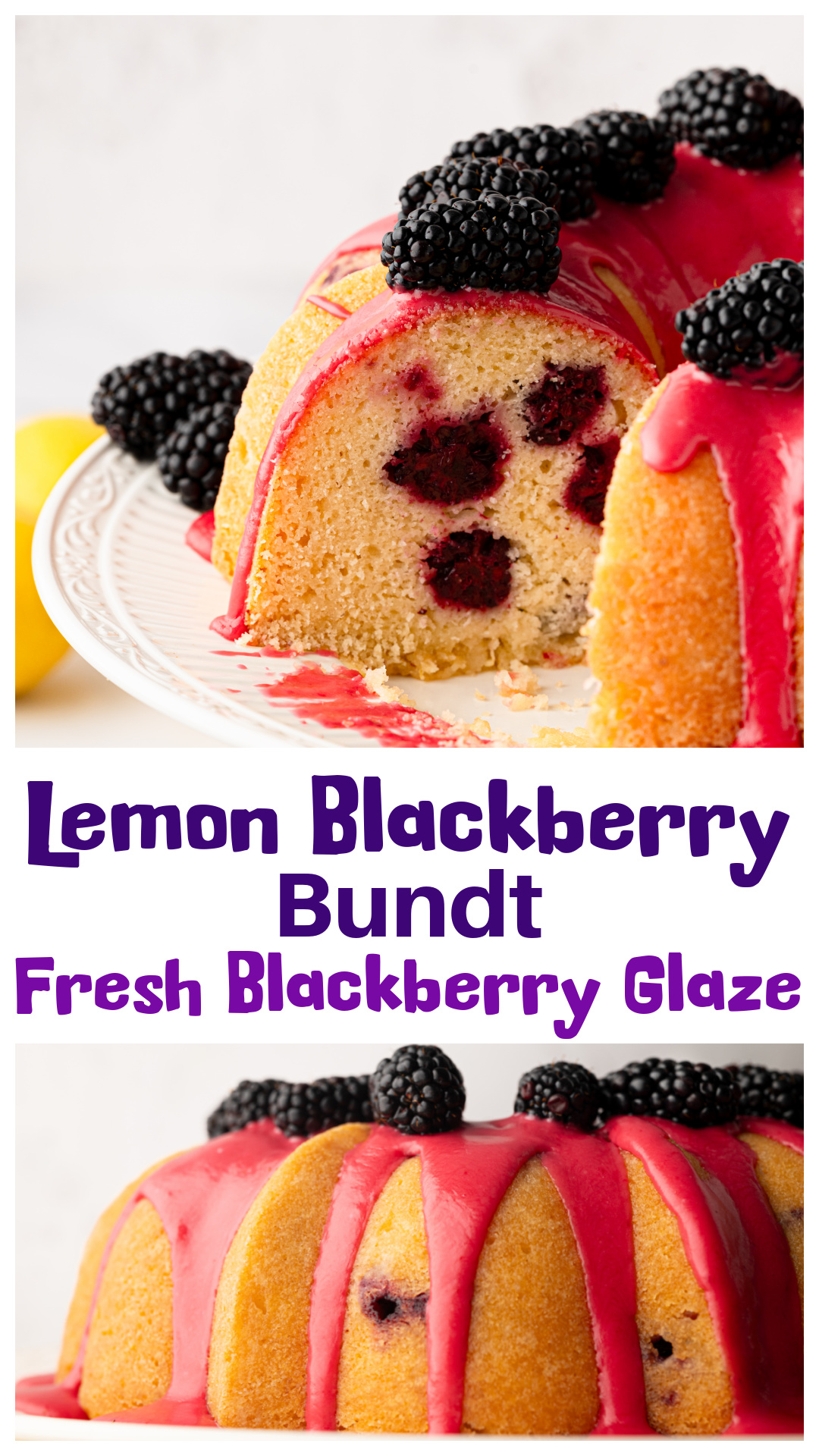
Lemon blackberry Bundt cake with fresh blackberry glaze gives blackberries two jobs, baked into the cake and blended into the glaze. A lemon soak brushed over the warm cake adds even more lemon flavor before the blackberry glaze goes on.
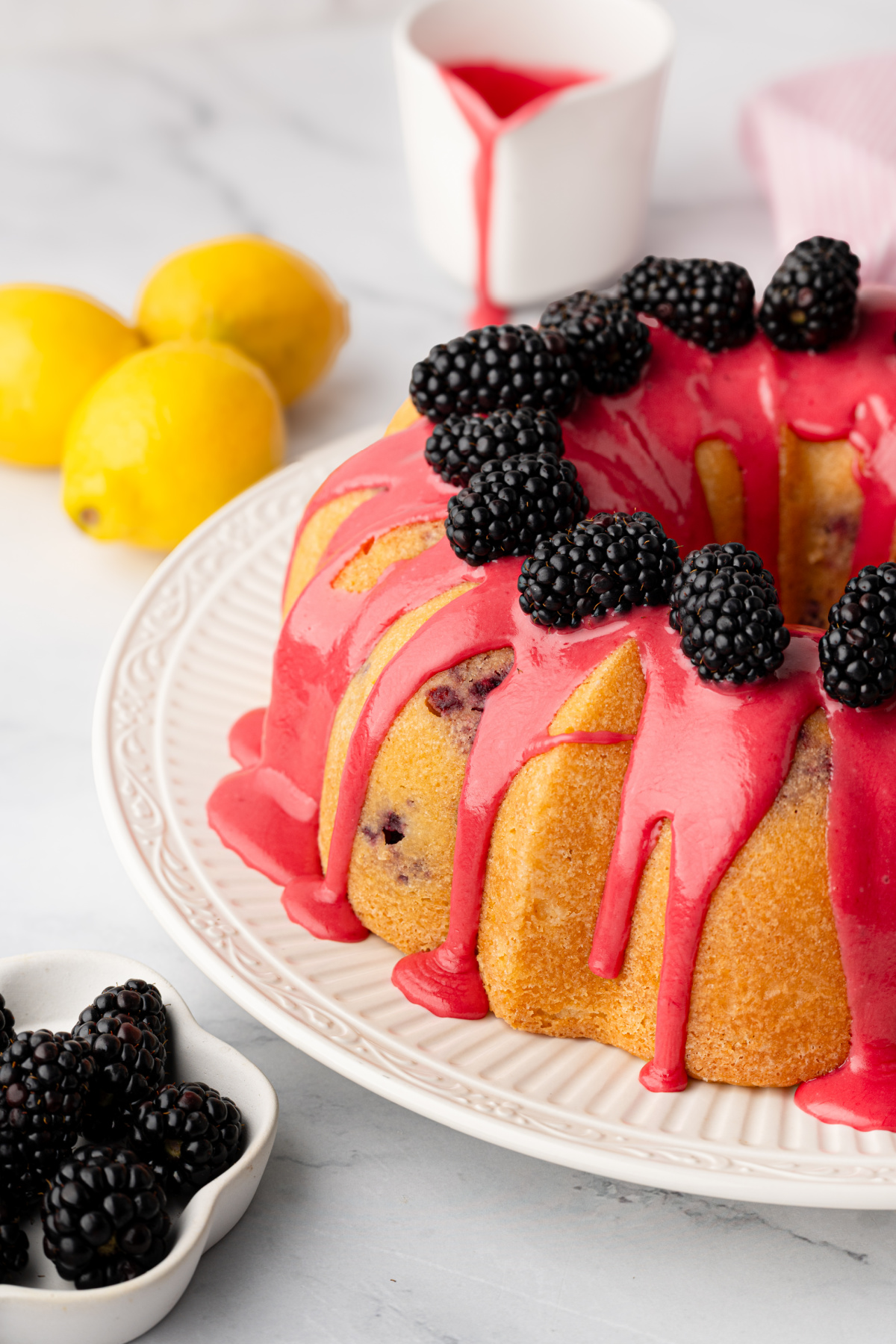
Lemon Blackberry Bundt Cake with a Lemon Soak and Fresh Blackberry Glaze
Lemon and blackberry are one of those flavor combinations that don’t need much arm-twisting to be happy together. I’ve always felt the tartness of the berries and the citrus are natural companions, which is probably why the pairing shows up in so many recipes. Here I’ve put them together in a sour cream lemon Bundt cake that’s substantial enough to hold the berries without going completely soggy, and every slice ends up with pockets of fruit throughout.
The glaze came to me first, and the cake had to play catch up.
There’s a botanical garden on the Mendocino coast that I’ve been to a bunch of times, and every time I’m there, I get to the fuchsia collection, and I end up hanging out there way longer than I mean to. Summer mornings on that stretch of coast are usually pretty misty and foggy, which fuchsias seem to think is perfect weather. They’re hanging everywhere like little upside-down lanterns in these incredible shades of pink, and I have an embarrassing amount of pictures of them on my phone.
When blackberries cook down, they foam into this fuchsia, magenta, jewel-toned pink, and every time I see it, I think of those flowers. I’d plant fuchsias here in a heartbeat, but the deer would have them eaten down to little stems in about five minutes. At this point I’ll just stick to making glaze and visit Mendocino when I can.
Once I perfected the glaze, it needed something sunny, both visually and tastefully, underneath it. A sour cream lemon-soaked Bundt cake felt like the right place to put all that color. Some of the blackberries go into the cake, the rest become the glaze, and the lemon soak brushed over the warm cake gives everything one more layer of citrus before the blackberry pink gets poured over the top.
What Makes This Recipe Different
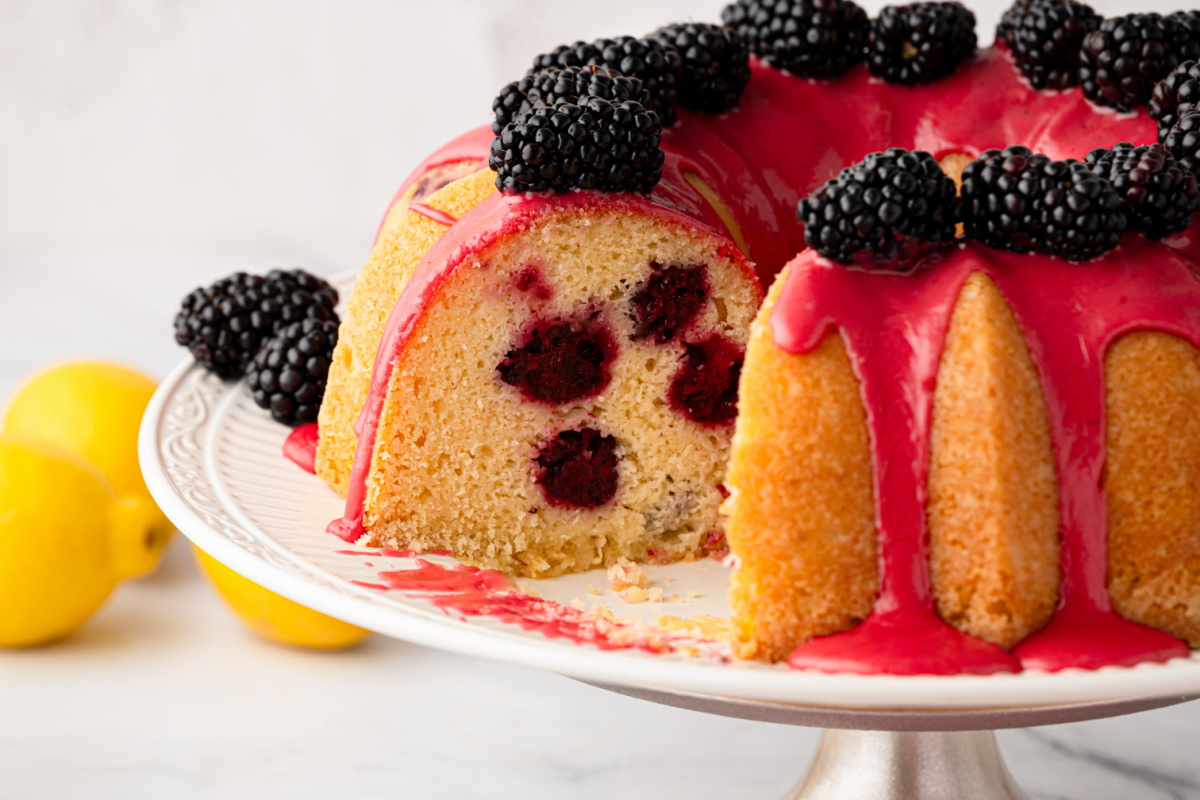
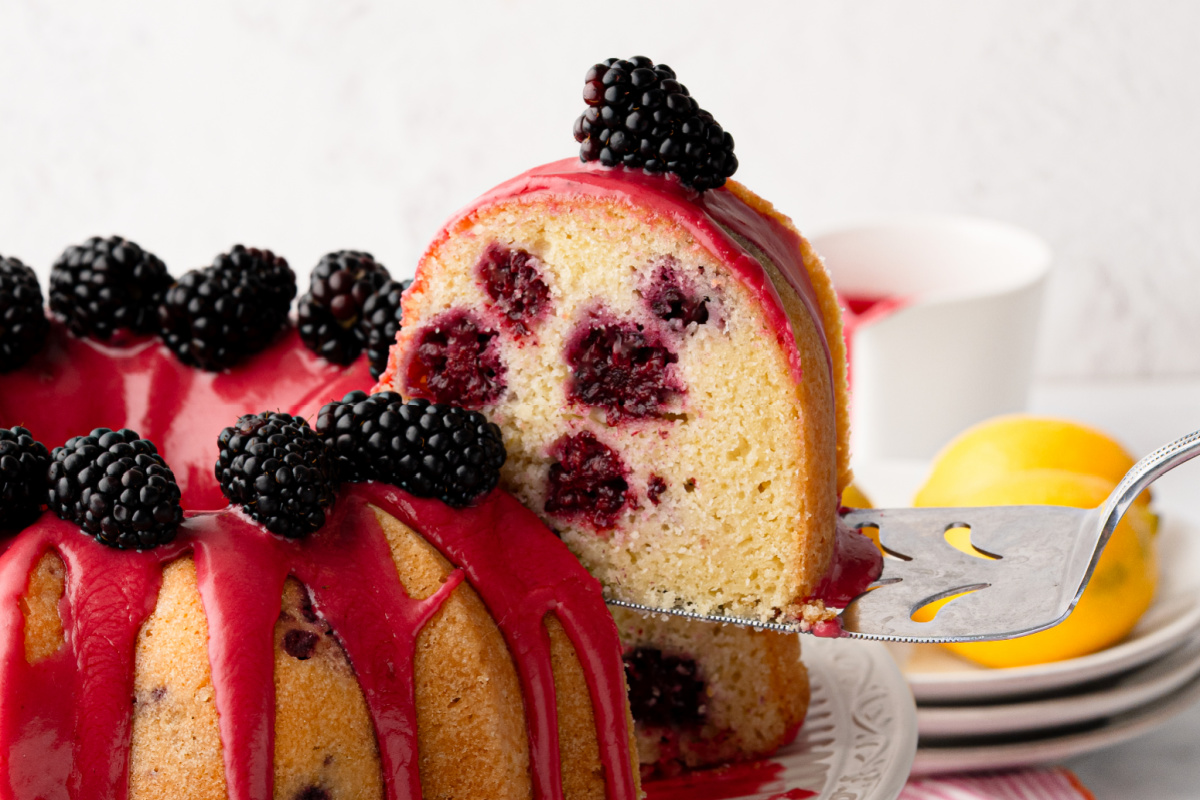
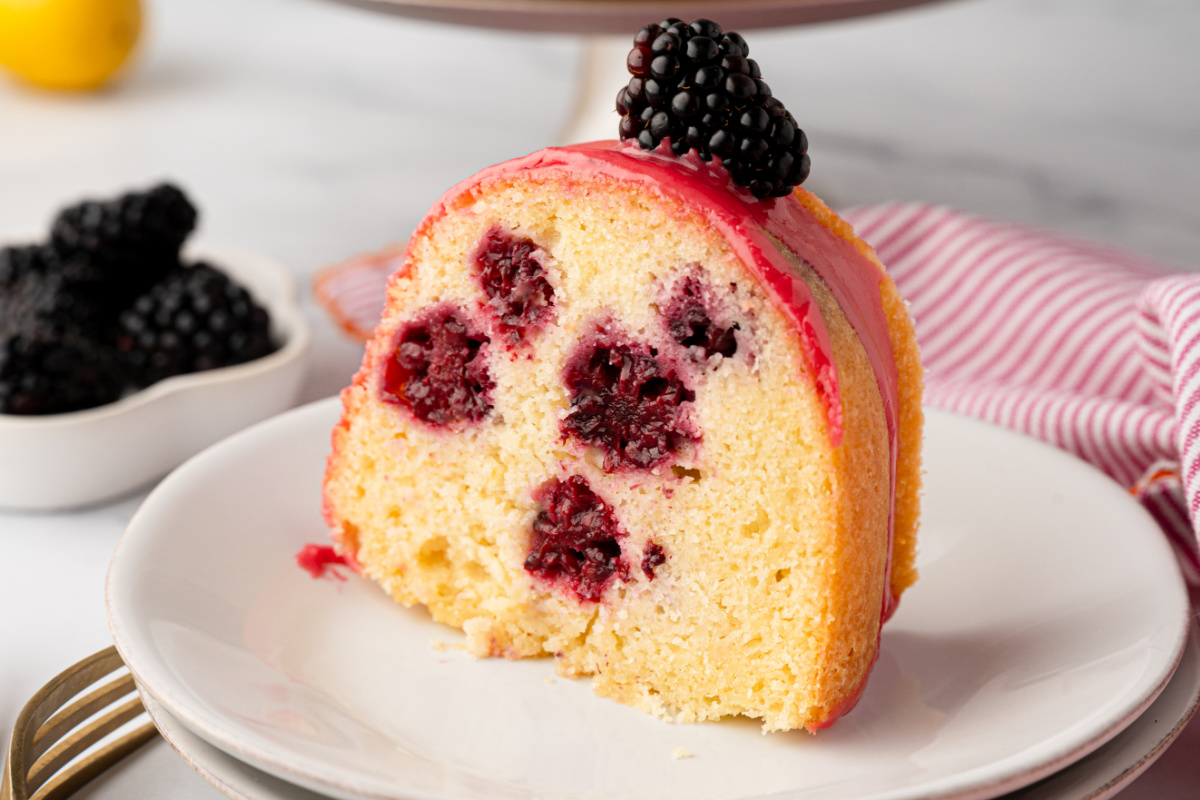
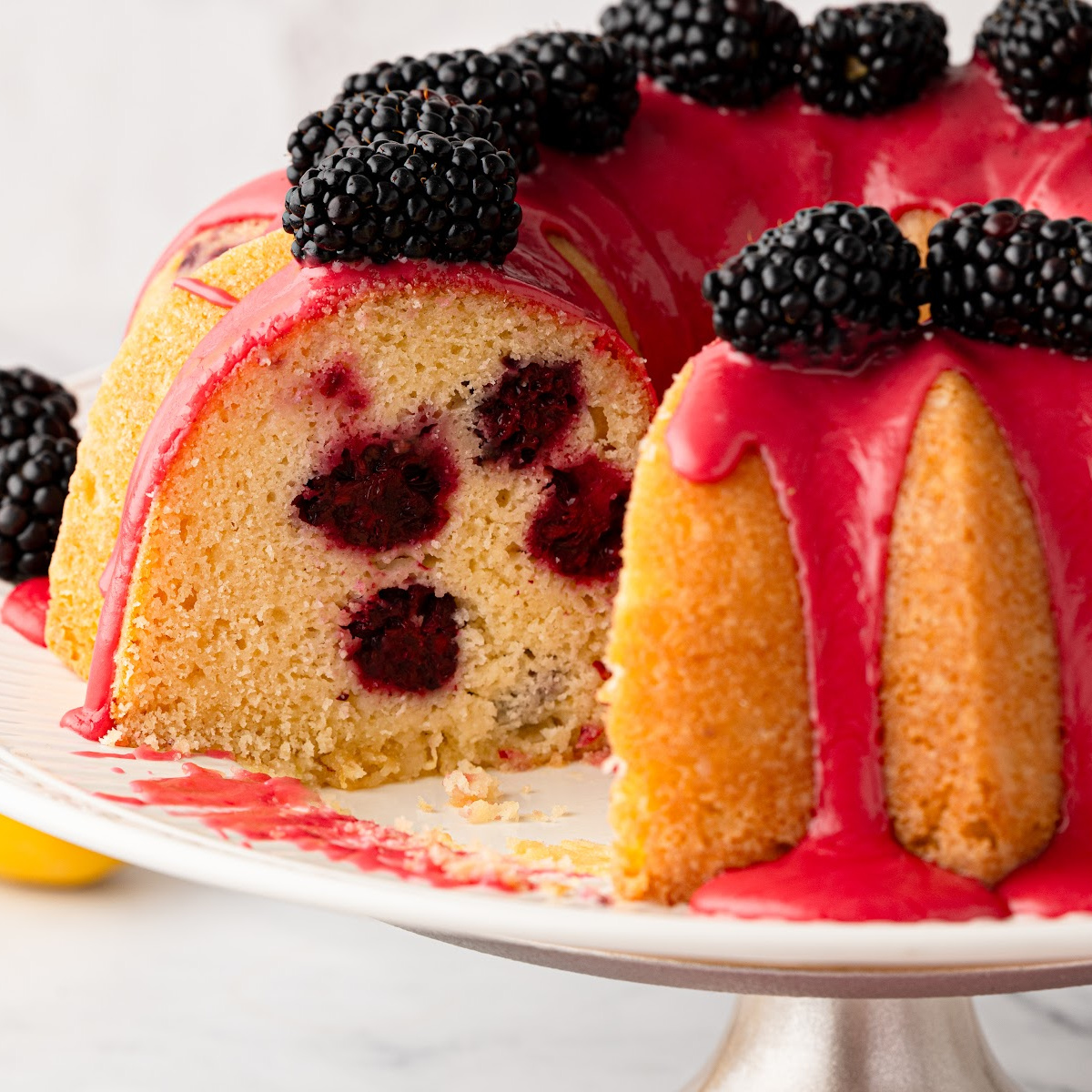
- The blackberries have two jobs in this recipe. Some are folded into the batter, where they bake into juicy pockets throughout the cake, and the rest are cooked down into a fresh blackberry glaze. The berry flavor doesn’t just sit on top in the glaze. The blackberries inside the cake make sure of that.
- Lemon comes in as its own trifecta. There’s zest and juice in the batter, juice in the glaze and then a lemon soak gets brushed over the warm cake after it comes out of the oven. The soak is what takes the lemon flavor beyond the surface. Brushing it onto the warm cake gives the lemon somewhere to go besides the top layer.
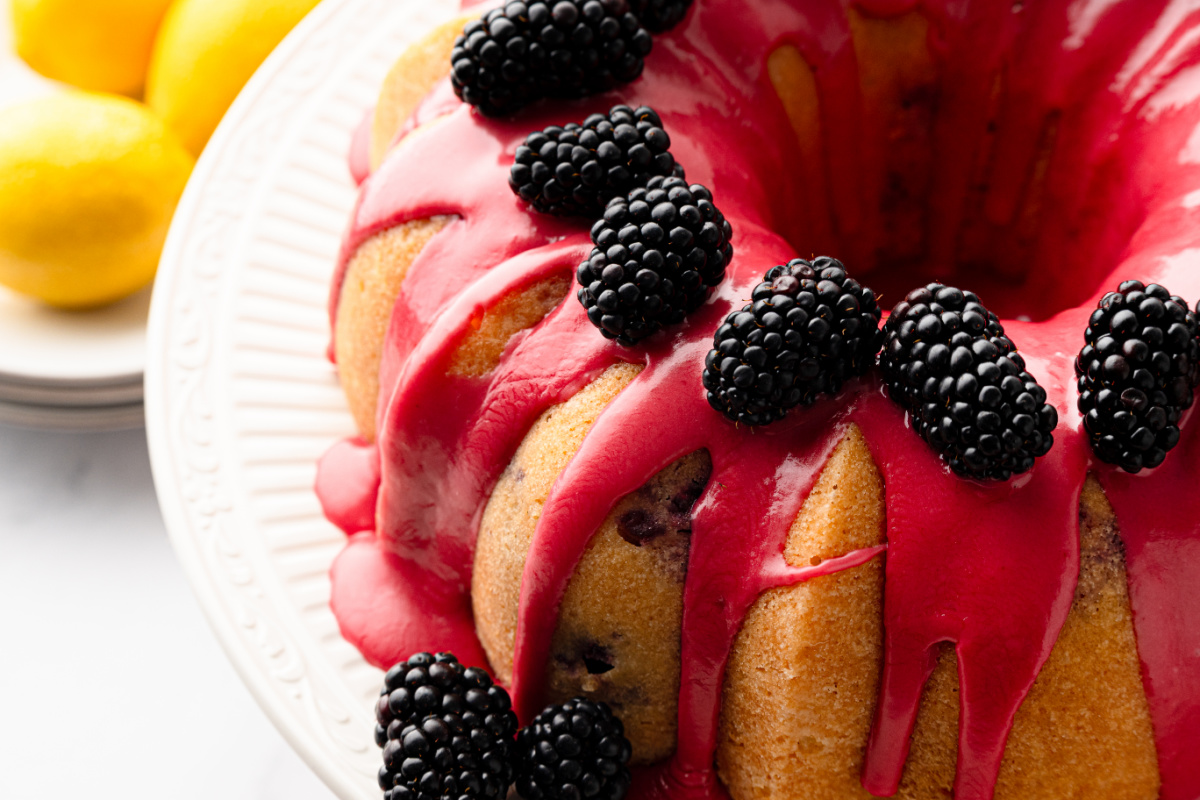
- The glaze starts with fresh blackberries instead of jam or preserves. I cook the berries until they release their juices, then strain them before being whisked into powdered sugar. It takes an extra step, but it gives the glaze a smoother texture and the fuchsia color that blackberries automatically become when you cook them down.
- Blackberries do something different than blueberries in a cake. They’re larger, release more juice, and create bigger, more noticeable sections of fruit. When you cut a slice, you can usually point right to where a blackberry baked into the cake.
- I do like this cake the day it’s made, but I like it even more the next day. The lemon soak has had time to become more pronounced, and everything tastes like it finally got to know eachother overnight.
Ingredients
- All-Purpose Flour – There are a lot of blackberries in this cake. The flour helps support them without the cake becoming overly soft around the fruit.
- Baking Powder, Baking Soda, and Fine Sea Salt – The baking powder and baking soda keep the cake from becoming too dense, while the salt helps balance the lemon and blackberry flavors.
- Unsalted Butter – This recipe uses a full cup of butter, and the finished cake tastes better for it.
- Granulated Sugar – Adds sweetness and the soft, velvety texture.
- Lemon Zest – This is where a lot of the lemon flavor comes from. I’ve found that adding more juice doesn’t make a cake taste more lemony. Adding more zest does.
- Eggs – There are a lot of blackberries in this cake. The eggs help hold everything together.
- Vanilla Extract – It’s one of those ingredients that rarely gets credit for anything but improves almost every fruit dessert.
- Sour Cream – Blackberries release more juice than you might expect. Sour cream helps create a batter that can take it.
- Fresh Lemon Juice – Used in the batter, the glaze, and the soak. Lemon shows up in three different places in this recipe.
- Fresh Blackberries – Folded into the batter and cooked down for the glaze. Have extras on hand to garnish the top of the cake if you like.
- Confectioners’ Sugar – Turns blackberry purée into a glaze thick enough to drape over the cake.
- Water – A small amount helps the blackberries break down for the glaze.
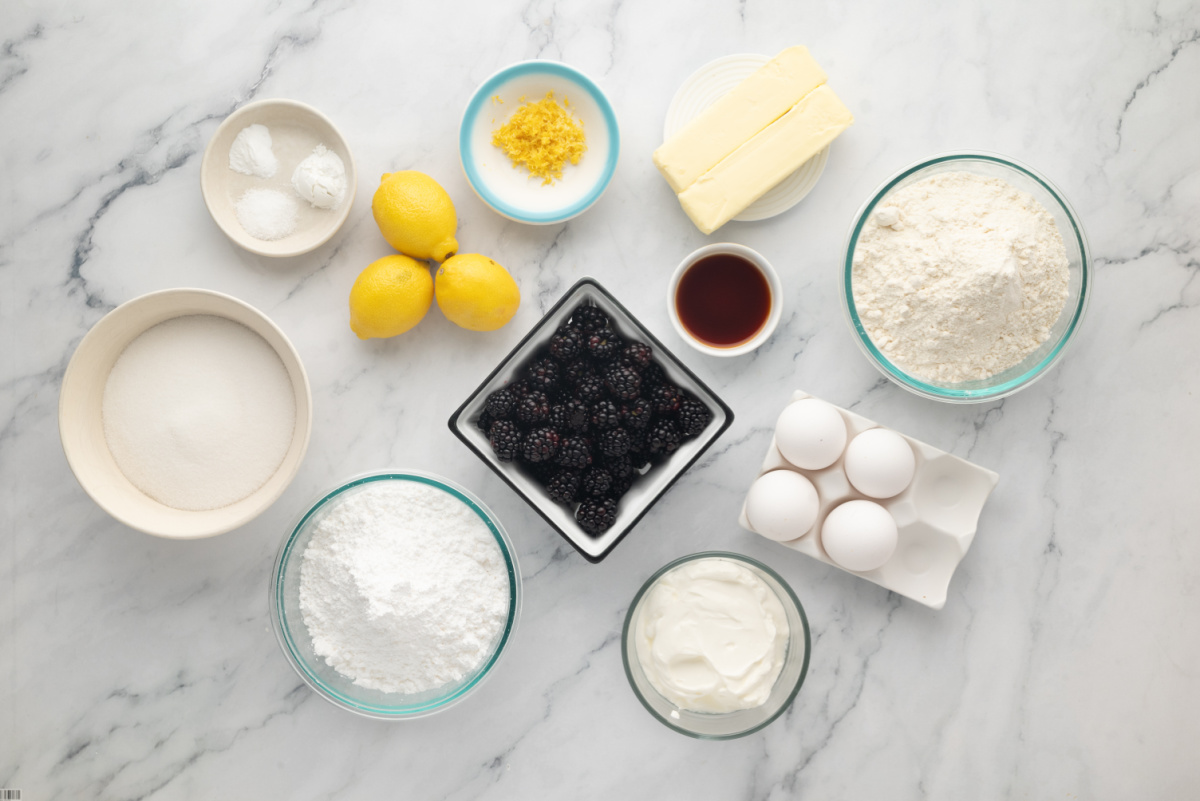
How to Make Lemon Blackberry Bundt Cake
Find the complete printable recipe with measurements in the recipe card at the BOTTOM OF THE POST.
- Step One (make the batter)
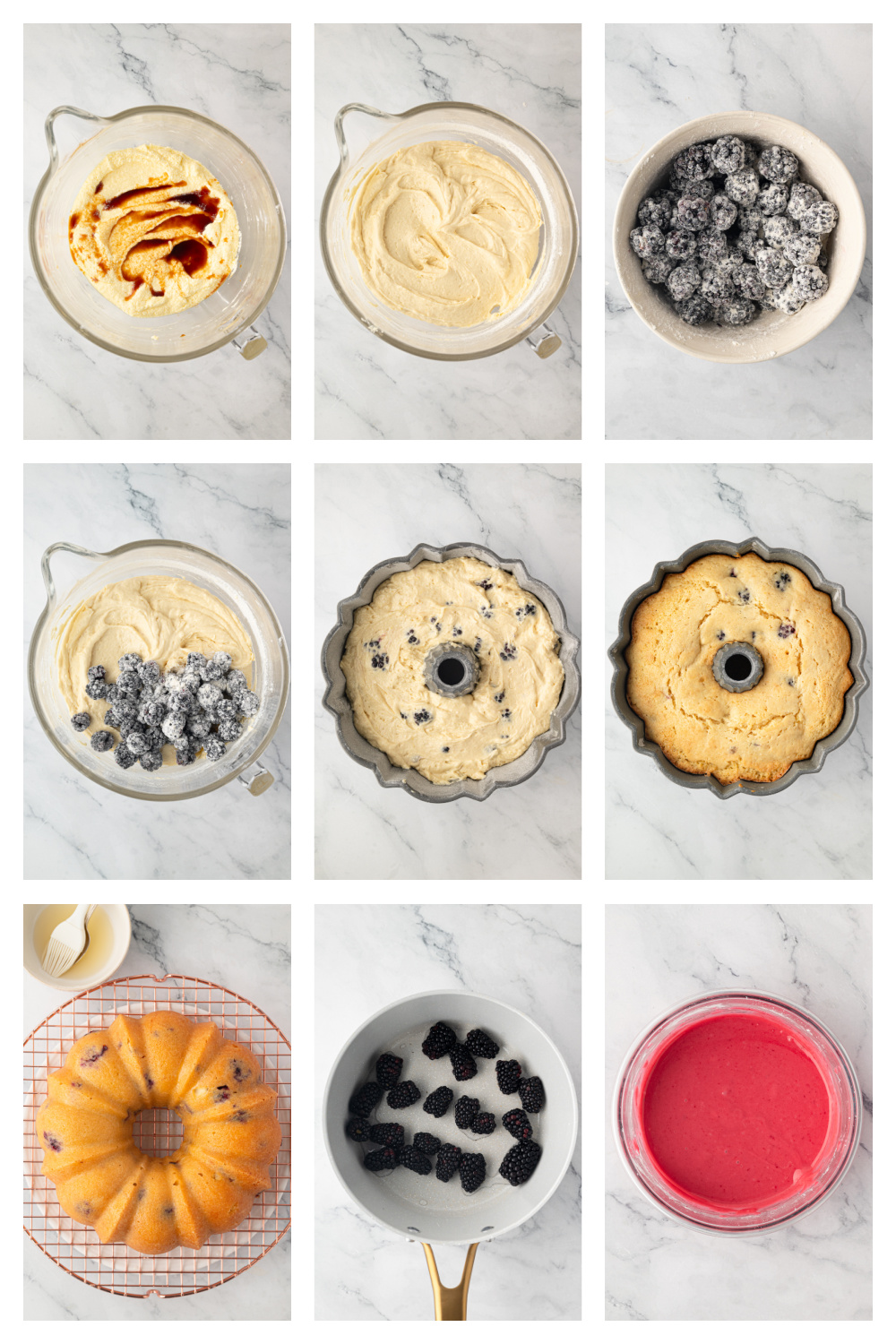
Preheat the oven to 350°F and thoroughly grease and flour a 10 to 12-cup Bundt pan. Whisk the dry ingredients together in one bowl. In a larger bowl, beat the butter, sugar, and lemon zest until light and fluffy, then add the eggs and vanilla. I always spend an extra minute doing this because mixing all the zest into the butter and sugar seems to wake up the lemon in a way that adding juice alone never does. - Step Two (finish the batter)
Mix in half of the dry ingredients, followed by the sour cream and lemon juice, then finish with the remaining dry ingredients. The batter is fairly thick, which is exactly what you want for a cake with this much fruit folded into it. - Step Three (add the blackberries and bake)
Toss the blackberries with flour and gently fold them into the batter. Transfer everything to the prepared Bundt pan, smooth the top, and bake for 50 to 60 minutes. Toward the end of baking, a few berries usually work their way close to the surface and look like they’re about one minute away from bursting. - Step Four (add the lemon soak)
While the cake bakes, make the lemon soak. Let the cake cool in the pan for about 15 minutes before turning it out onto a cooling rack. Brush the soak over the warm cake. The warm cake absorbs the lemon syrup surprisingly quickly, and most of it disappears almost as soon as it touches the surface. - Step Five (glaze and serve)
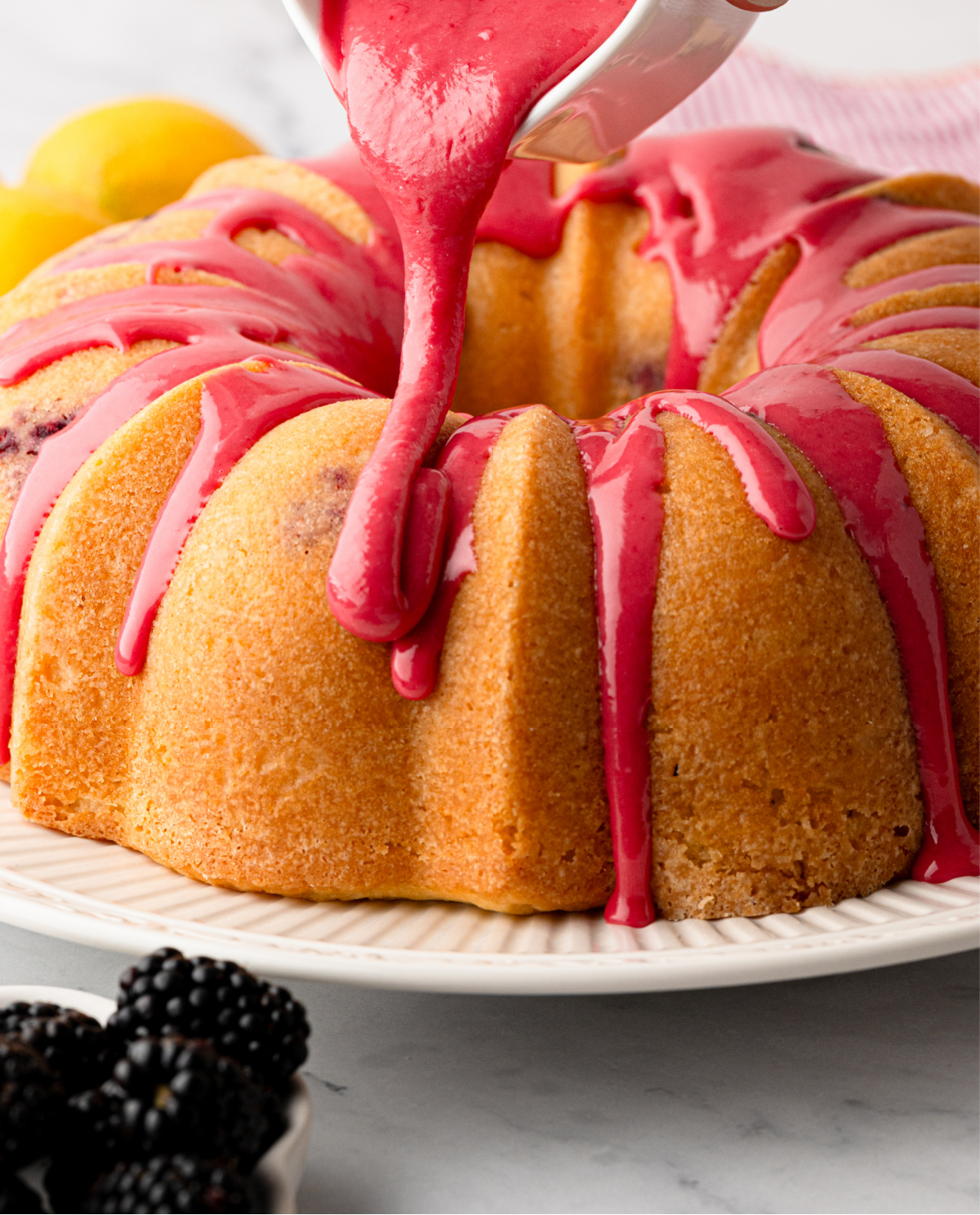
Cook and strain the blackberries for the glaze, then whisk the purée with the confectioners’ sugar and lemon juice until smooth. The color always catches me off guard. One minute it’s a saucepan of blackberries and the next it’s fuchsia pink. Drizzle the glaze over the cooled cake and let it set before slicing.
Recipe Tips
- Toss the blackberries with flour right before folding them into the batter. They’re larger and heavier than blueberries, so coating them with flour helps distribute them more evenly throughout the batter.
- Grease and flour every crevice of the Bundt pan. Decorative pans are beautiful right up until one section of the cake decides it wants to keep living there.
- Use room-temperature butter, eggs, and sour cream. Cold ingredients eventually come together, but they take the scenic route.
- Brush the lemon soak over the cake while it’s still warm. The cake absorbs it surprisingly quickly, and the lemon flavor ends up tasting like it belongs there rather than sitting on top.
- Let the cake cool completely before glazing. Warm cake and glaze tend to encourage each other to slide in directions you didn’t intend.
Storage
- Store the glazed cake covered at room temperature for up to 3 days. The lemon soak helps it stay soft, and I think the lemon and blackberry flavors become more obvious by the second day.
- For longer storage, refrigerate the cake for up to 5 days. Let slices sit at room temperature for 20 to 30 minutes before serving. Cold cake likes to keep its flavors to itself.
- To freeze, apply the lemon soak but wait to add the glaze. Freeze the cake tightly wrapped for up to 3 months, then thaw completely and glaze before serving.
FAQs
- Can I use frozen blackberries?
Yes. Add them straight from the freezer. Thawed blackberries release a surprising amount of liquid and can streak the batter purple before it ever reaches the oven. - Why do I need to coat the blackberries with flour?
It helps distribute them more evenly throughout the cake. A few may still fall to the bottom because blackberries are bigger and heavier than many other berries. - Why did my blackberries sink?
Some sinking is normal. They’re larger berries, juicier, and occasionally seem determined to head toward the bottom of the pan. - Can I skip the lemon soak?
You can, but I wouldn’t. It’s one of the things that makes this cake taste so lemony without making the batter itself overly acidic. - What does the lemon soak do?
It adds another layer of lemon flavor and helps distribute that flavor beyond the surface of the cake. Most of it disappears into the warm cake almost immediately. - Can I substitute Greek yogurt for sour cream?
Yes. Full-fat Greek yogurt works well and produces a very similar cake with a slightly tangier flavor. - How do I know when the cake is done baking?
The center should reach 195°F to 200°F, or a toothpick inserted into the thickest part of the cake should come out with a few moist crumbs attached. - Why did my Bundt cake stick to the pan?
Bundt pans have a lot of detail, and cake seems to find the one spot you forgot to grease. Thoroughly grease and flour the entire pan and let the cake cool for about 15 minutes before inverting. - Can I use other berries?
Yes. Blueberries, raspberries, black raspberries, or a mixture are fine. Just know that blackberries create larger pockets of fruit and more berry flavor. - Why isn’t my glaze deep purple?
The color depends on the variety and ripeness of the berries. I’ve had glazes turn deep plum and others turn almost fuchsia pink. Blackberries like to keep things interesting.
From My Kitchen Notes
Small observations from the margins.
- Some colors have followed me around for years before they became dessert.
- I’ve accepted that some colors become so attached to a place that seeing them anywhere else feels like running into something familiar.
- I don’t have an explanation for why certain shades of pink feel important.
- I have devoted an unreasonable amount of time to photographing flowers that were never going to change poses.
- And, I’ve taken enough flower pictures to suggest I might be documenting evidence.
- The brain keeps strange souvenirs.
- Most of us are carrying around little private collections of things we never quite got over.
- There are places we revisit because we like who we are there.
- Some things are worth revisiting because they’re still capable of getting our attention.
- A lot of beauty asks nothing from us except that we stop for a minute and take notice.
- Many of those beautiful things survive because the weather happens to suit them.
- I don’t think we realize how many decisions are made because something felt right.
- A lot of recipes begin with me looking at something and thinking, “I want more of that.”
- There are worse reasons to make a cake than wanting to spend more time with a color.
- The things that stop us in our tracks are usually trying to tell us something, even if the message turns out to be, “Take another picture.”
More Ways to Make the Best of Blackberry Season
- Blackberry Cobbler – classic blackberry cobbler recipe.
- Blackberry Crumble – warm blackberry filling and oat topping.
- Blackberry Crumble Bars – rich blackberry filling and buttery oat crumble.
- Blackberry Lemon Oat Muffins – buttermilk muffins with lemon glaze.
- Blackberry Jam – three ingredients and no pectin.
- Chocolate Blackberry Pavlovas – chocolate meringue, whipped cream, and blackberry compote.
This post may contain affiliate links. Please read my disclosure policy.
Sour Cream Lemon Blackberry Bundt Cake with Fresh Blackberry Glaze
Equipment
- Bundt pan (10 - 12 cup). A 10-cup gives the cake a taller profile and better definition in the finished Bundt pan.
- Stand Mixer or hand mixer. Creams the butter, sugar and lemon zest for a lighter texture.
- mixing bowls For preparing dry ingredients and batter.
- whisk Helps evenly distribute the baking powder, baking soda and salt.
- rubber spatula Useful for folding in the blackberries without crushing them.
- Saucepan (small). Used for both the lemon soak and blackberry glaze.
- large fine mesh sieve Removes the blackberry seeds for a smoother glaze.
- pastry brush Makes it easy to apply the lemon soak evenly over the cake.
- cooling rack Allows the cake to cool properly before glazing.
Ingredients
Cake:
- 3 cups (360 g) all-purpose flour
- 2 tsps (8 g) baking powder
- ½ tsp (3 g) baking soda
- 1 tsp (6 g) fine sea salt
- 1 cup (227 g) unsalted butter softened
- 1¾ cups (350 g) granulated sugar
- 2 tbsps (12 g) lemon zest
- 4 large eggs room temperature
- 1 tbsps (15 ml) vanilla extract
- ¾ cup (180 g) full-fat sour cream
- ¼ cup (60 ml) fresh lemon juice
- 2 cups (300 g) fresh blackberries
- 2 tbsps (16 g) all-purpose flour
Lemon Soak:
- ¼ cup (60 ml) fresh lemon juice
- ¼ cup (50 g) granulated sugar
Fresh Blackberry Glaze:
- 1 cup (150 g) fresh blackberries
- 2 tbsps (30 ml) water
- 2 cups (240 g) confectioners' sugar
- 2-3 tbsps (30-45 ml) fresh lemon juice
Instructions
- Preheat the oven to 350°F (175°C). Thoroughly grease and flour a 10-cup Bundt pan, making sure every crevice is coated. Bundt cakes have a lot of detail, and taking an extra minute here makes a big difference when it comes time to remove the cake.
- Whisk together the flour, baking powder, baking soda, and salt in a medium bowl. Set aside while you prepare the batter.3 cups (360 g) all-purpose flour, 2 tsps (8 g) baking powder, ½ tsp (3 g) baking soda, 1 tsp (6 g) fine sea salt
- In a large mixing bowl, beat the butter, sugar, and lemon zest until light and fluffy, about 3 to 4 minutes. The lemon zest does most of the work when it comes to lemon flavor, so don't rush this step.1 cup (227 g) unsalted butter, 1¾ cups (350 g) granulated sugar, 2 tbsps (12 g) lemon zest
- Add the eggs one at a time, mixing well after each addition. Stir in the vanilla extract.4 large eggs, 1 tbsps (15 ml) vanilla extract
- Add half of the flour mixture and mix just until incorporated. Add the sour cream and lemon juice, then mix until combined. Add the remaining flour mixture and mix only until no dry streaks remain. Overmixing at this stage can make the cake less tender.¾ cup (180 g) full-fat sour cream, ¼ cup (60 ml) fresh lemon juice
- Toss the blackberries with the flour and gently fold them into the batter. Blackberries are larger and heavier than blueberries, so coating them helps distribute them more evenly throughout the cake.2 cups (300 g) fresh blackberries, 2 tbsps (16 g) all-purpose flour
- Transfer the batter to the prepared Bundt pan and smooth the top. Bake for 50 to 60 minutes, or until the center reaches 195°F to 200°F (90°C to 93°C) or a toothpick inserted into the thickest part of the cake comes out with a few moist crumbs attached.
- While the cake bakes, make the lemon soak. Combine the lemon juice and sugar in a small saucepan and heat over medium-low heat until the sugar dissolves completely. Set aside.¼ cup (60 ml) fresh lemon juice, ¼ cup (50 g) granulated sugar
- Allow the cake to cool in the pan for about 15 minutes. Carefully invert it onto a cooling rack. While the cake is still warm, brush the lemon soak evenly over the entire surface. The warm cake absorbs the liquid much more readily than a cooled cake, allowing the lemon flavor to move beyond the surface.
- To make the glaze, cook the blackberries and water in a small saucepan until the berries soften and release their juices. Press the mixture through a fine-mesh strainer, discarding the seeds. This extra step creates a smoother glaze while keeping the fresh blackberry flavor.1 cup (150 g) fresh blackberries, 2 tbsps (30 ml) water
- Whisk the blackberry puree, confectioners' sugar, and enough lemon juice together to create a thick but pourable glaze. If the glaze feels too thick, add a little more lemon juice. If it becomes too thin, whisk in more confectioners' sugar.2 cups (240 g) confectioners' sugar, 2-3 tbsps (30-45 ml) fresh lemon juice
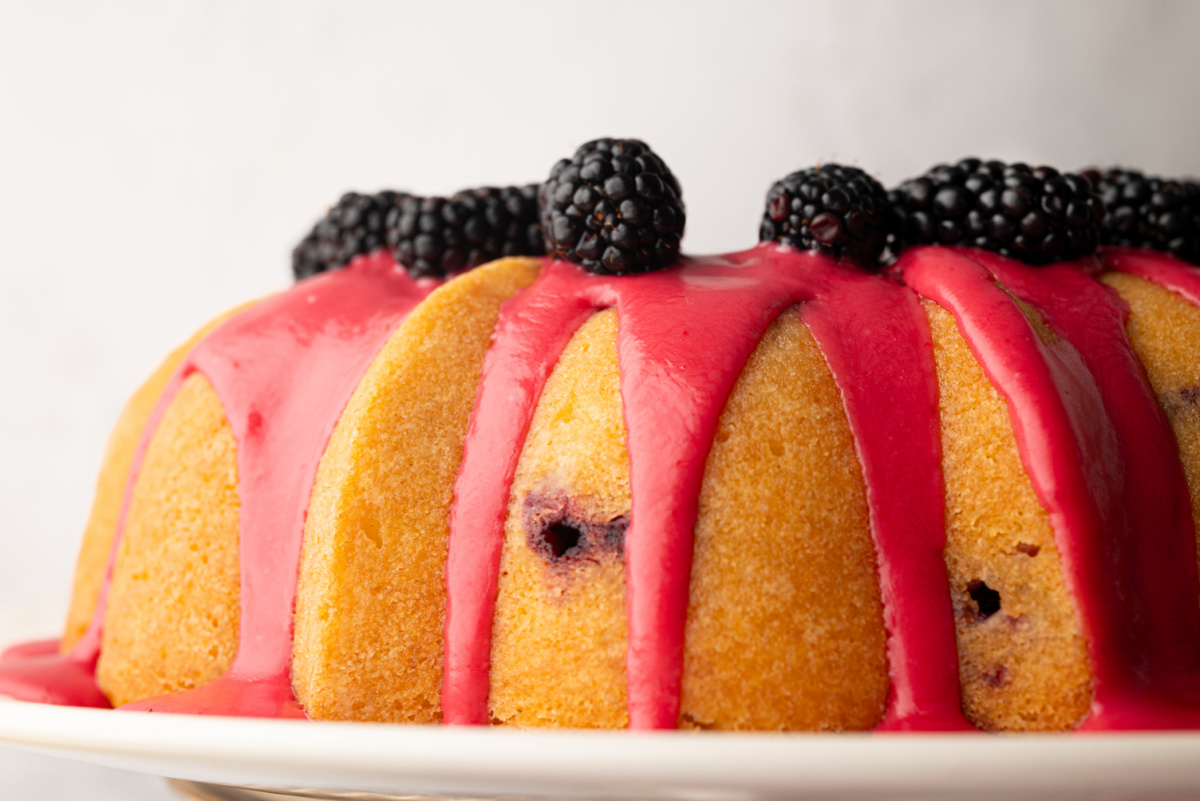
- Once the cake has cooled completely, transfer it to a serving plate and drizzle the glaze over the top. Let the glaze set before slicing. The cake is excellent the day it is made, but the lemon and blackberry flavors become even more noticeable after an overnight rest.
Notes
- Most of the lemon flavor comes from the lemon zest rather than the juice. Don't skip the zest.
- Brush the lemon soak over the cake while it is still warm. The cake absorbs the liquid much more readily at this stage than after it has cooled.
- Blackberries are larger and heavier than blueberries, so coating them with flour helps distribute them more evenly throughout the cake.
- For the smoothest glaze, strain the cooked blackberries thoroughly to remove the seeds.
- Frozen blackberries may be used in the cake. Add them directly from the freezer without thawing first.
Nutrition
Have you made this Lemon Blackberry Bundt Cake? I’d love to hear how it turned out – leave a comment below and let me know.
As an Amazon Associate and member of other affiliate programs, I earn from qualifying purchases.
Ronnie says
Made it this morning and it’s absolutely gorgeous, I can’t stop looking at it and thinking..I made this? Thank you so much. I know my Dad is going to love it tomorrow.
Kayla Sands says
What an amazing cake. The lemon soak was a nice touch and the glaze and fruit. I can’t say enough good things.
Lindsey says
We loved this cake so much. It was gorgeous and tasted perfect. Easy to make to.