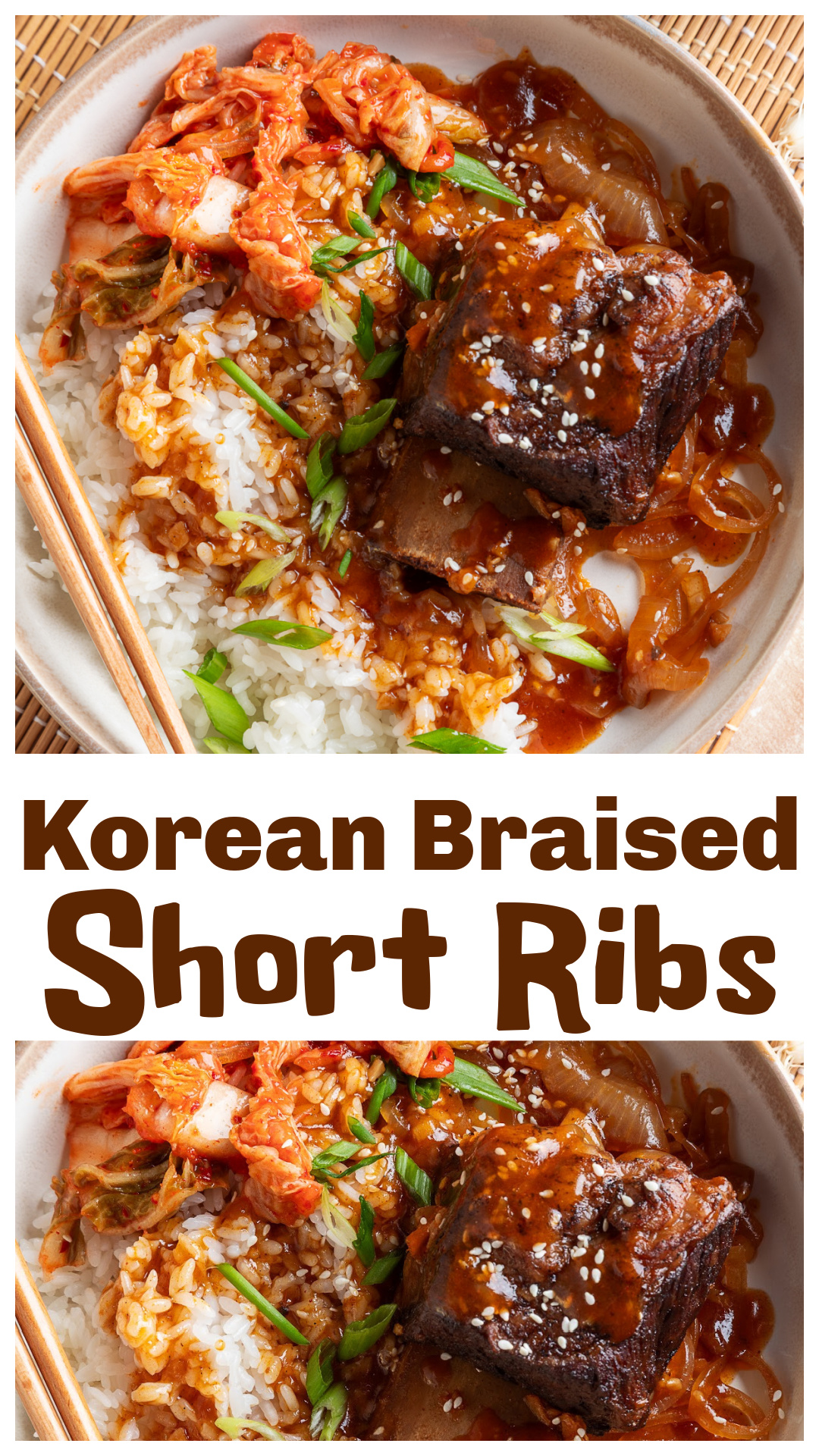
These Korean braised short ribs are seared before going into the slow cooker with gochujang, garlic, ginger, soy sauce, and brown sugar. The beef cooks until it’s fork-tender, then I thicken the sweet, spicy sauce enough to spoon over the ribs and steamed rice.
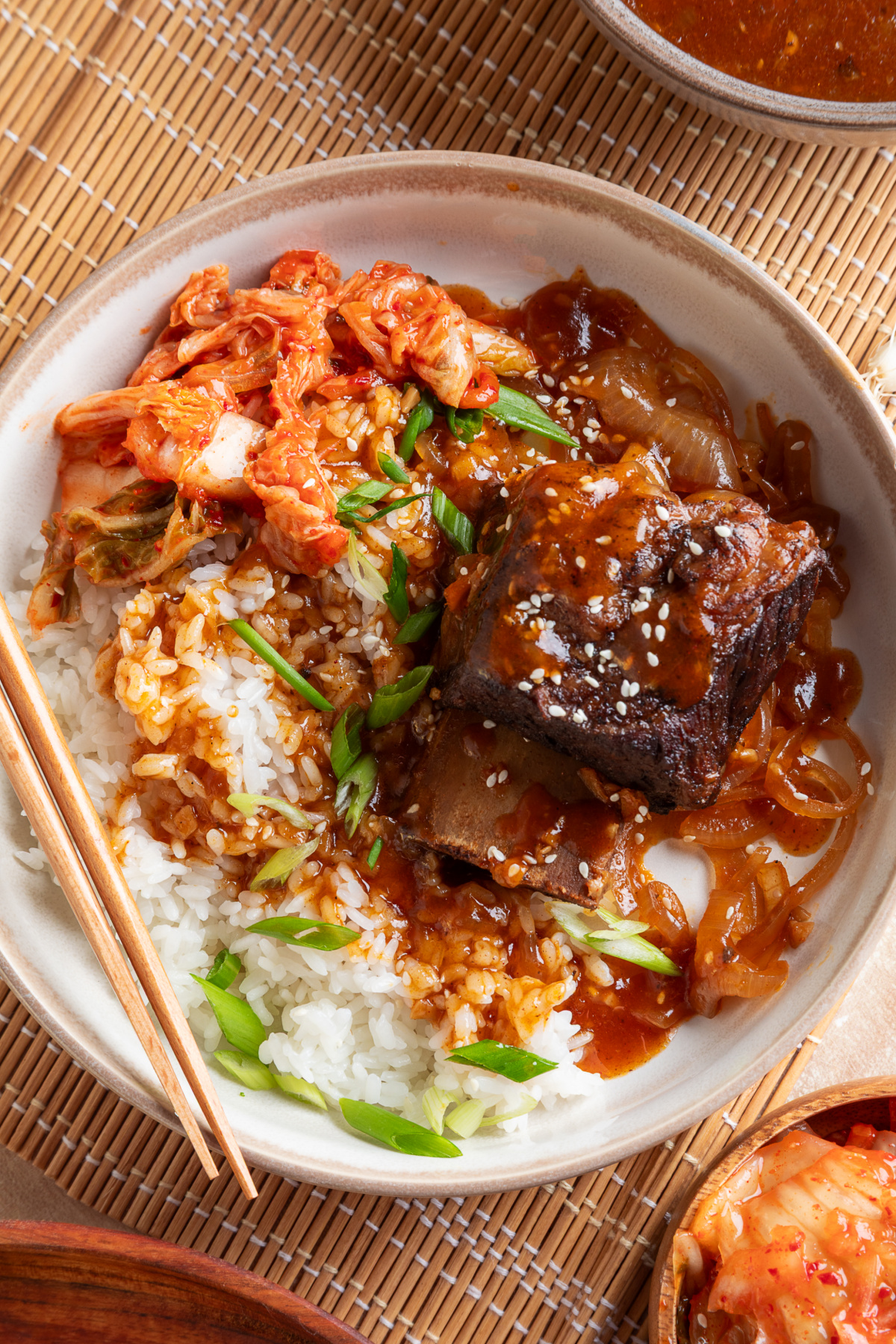
Slow Cooker Korean Braised Short Ribs with Gochujang
I make these Korean-inspired braised short ribs becuase I like tender beef with a sauce that’s both sweet and spicy. Gochujang has a spicy, fermented chile flavor I love, and with the soy sauce, brown sugar, garlic, and ginger, it turns into something I want all over my rice.
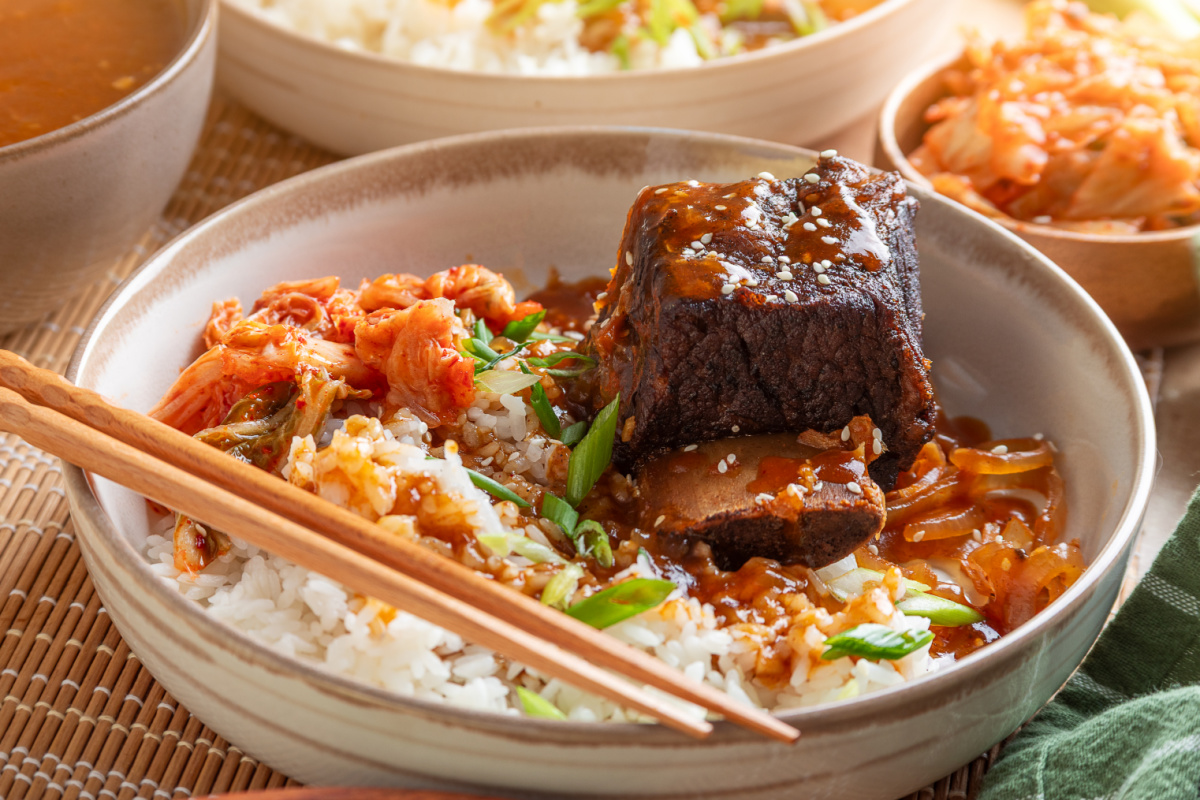
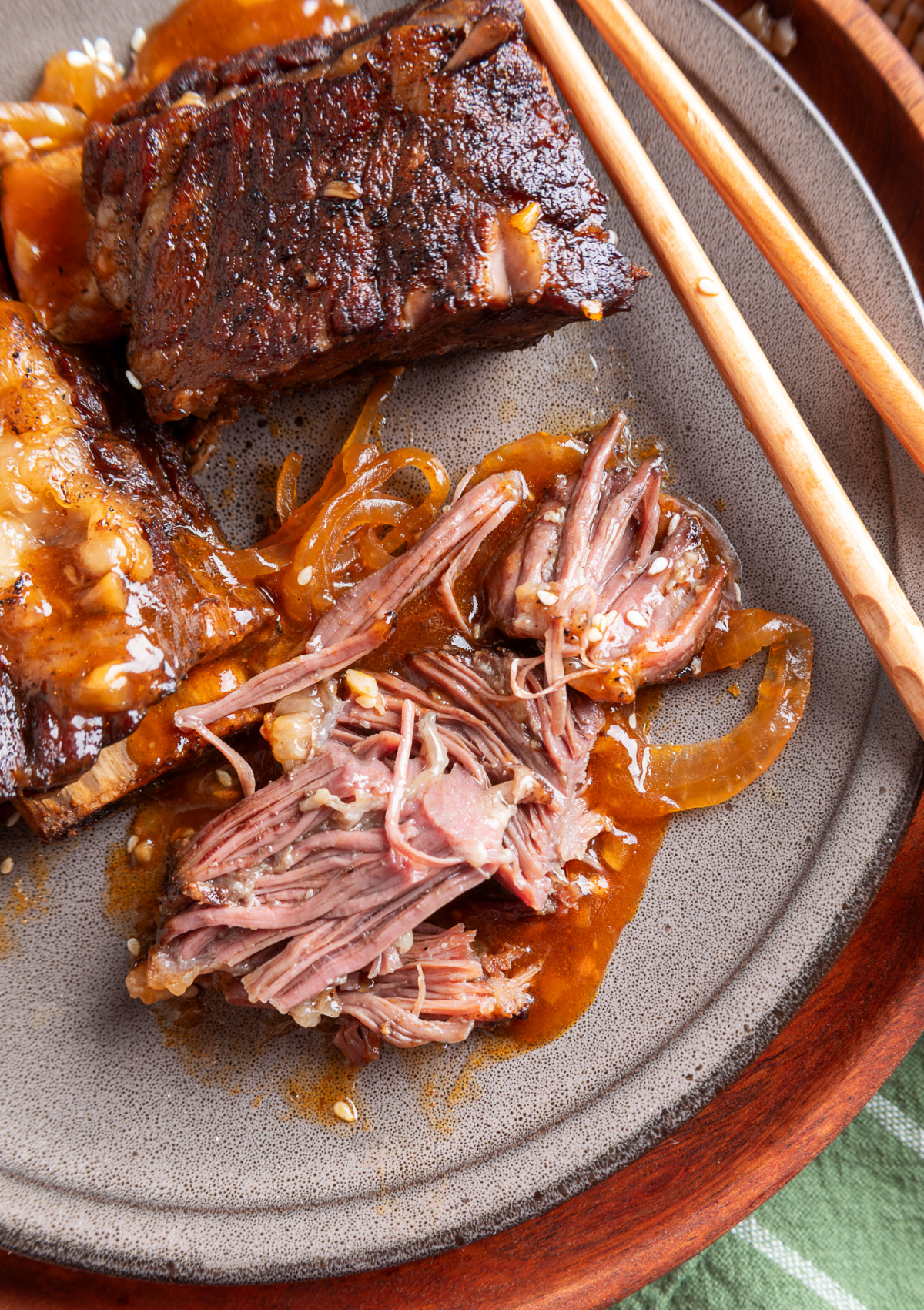
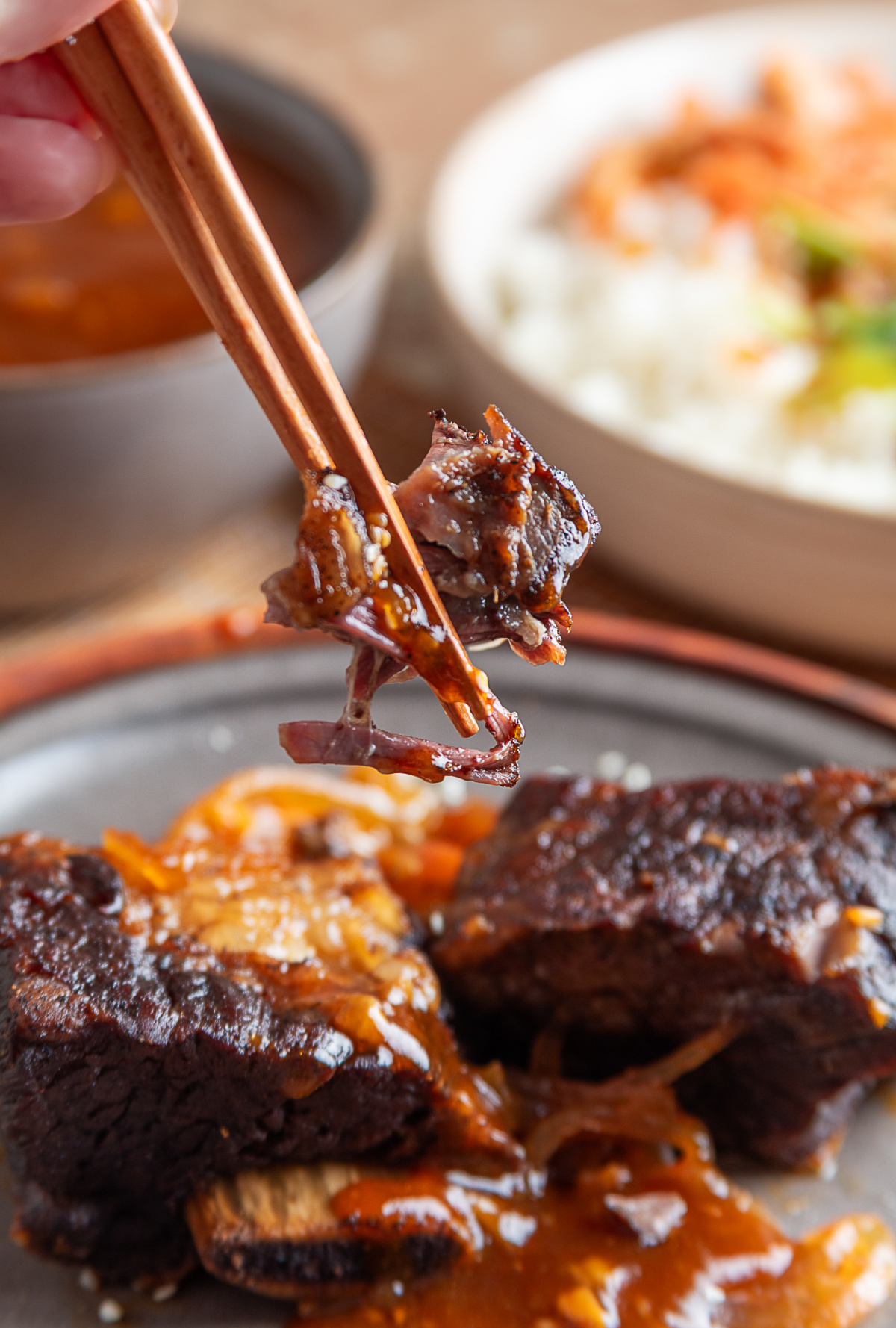
The short ribs cook for several hours until the meat is tender enough to separate from the bone with a fork. By then, the onions are soft, the beef has absorbed some of the sauce’s flavor, and there’s enough cooking liquid left to thicken for serving.
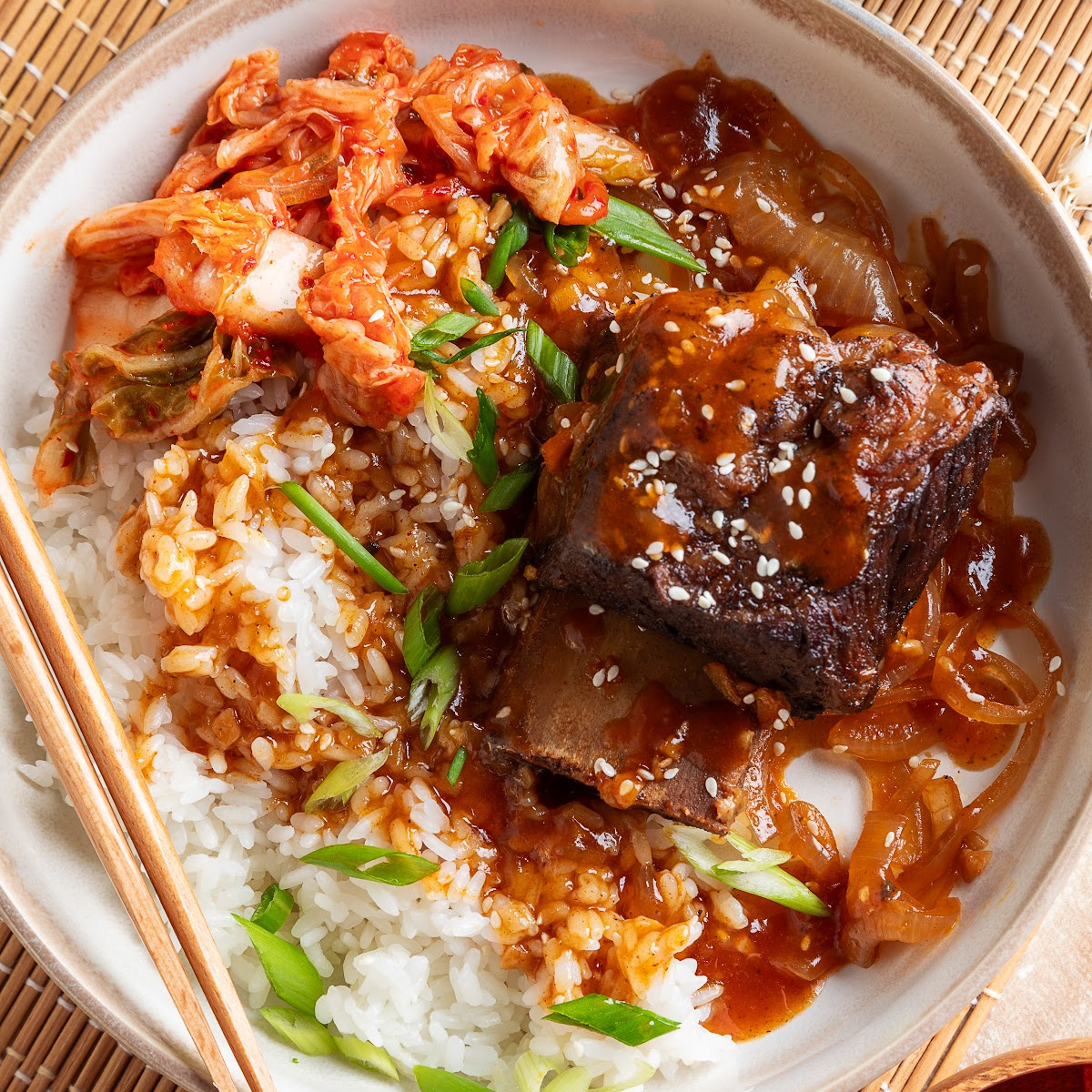
I serve the short ribs over steamed white rice with the softened onions, green onions, sesame seeds, and kimchi on the side. There’s always extra sauce afterward, and I save it all for another meal.
The Decisions Behind This Recipe
- This is my Korean-inspired short rib recipe, not traditional galbi-jjim. I use three tablespoons of gochujang because I like the fermented chile flavor to be a real part of the sauce, not something I can barely pick out under all the beef stock. The brown sugar and mirin add sweetness to the heat from the gochujang, while the soy sauce, garlic, and ginger make the sauce something I want to spoon over rice.
- Four cups of beef stock might seem like a lot for two pounds of short ribs, but I tested this with less and the sauce was too concentrated for me. With gochujang, soy sauce, brown sugar, and mirin already in the slow cooker, there’s lots of flavor to account for. I wanted enough liquid for the ribs to braise and enough sauce left afterward for the rice, onions, and whatever else ends up on my plate. I make extra sauce on purpose.
- I would not put short ribs into a slow cooker without searing them first. Even if browning only made them look better, I would still do it. I want the dark brown exterior before the ribs spend hours in the sauce, because the slow cooker isn’t going to brown them for me. That needs to happen in the skillet.
- I use bone-in short ribs because I like the flavor they have after a long braise, but I also like the way they look with the bone still attached. By the time they’re ready, the meat should pull away easily with a fork, but I don’t want it so far gone that the rib disappears into the sauce. I still want to recognize a short rib when I put it on the plate.
- The sliced onion is not there just to flavor the cooking liquid and get thrown away later. I use a full cup because I want soft, sauce-soaked strands over the rice with the beef. They cook down for hours with the short ribs, and by the end, they’re part of dinner.
- I finish the sauce separately after the short ribs are tender because I don’t want thin cooking liquid spreading all over the plate and disappearing into the rice. I skim off some of the fat first, then thicken the sauce until it lightly coats the ribs and onions but stays pourable. This way, I don’t have to reduce several cups of cooking liquid and concentrate the flavors more than I want.
Ingredients
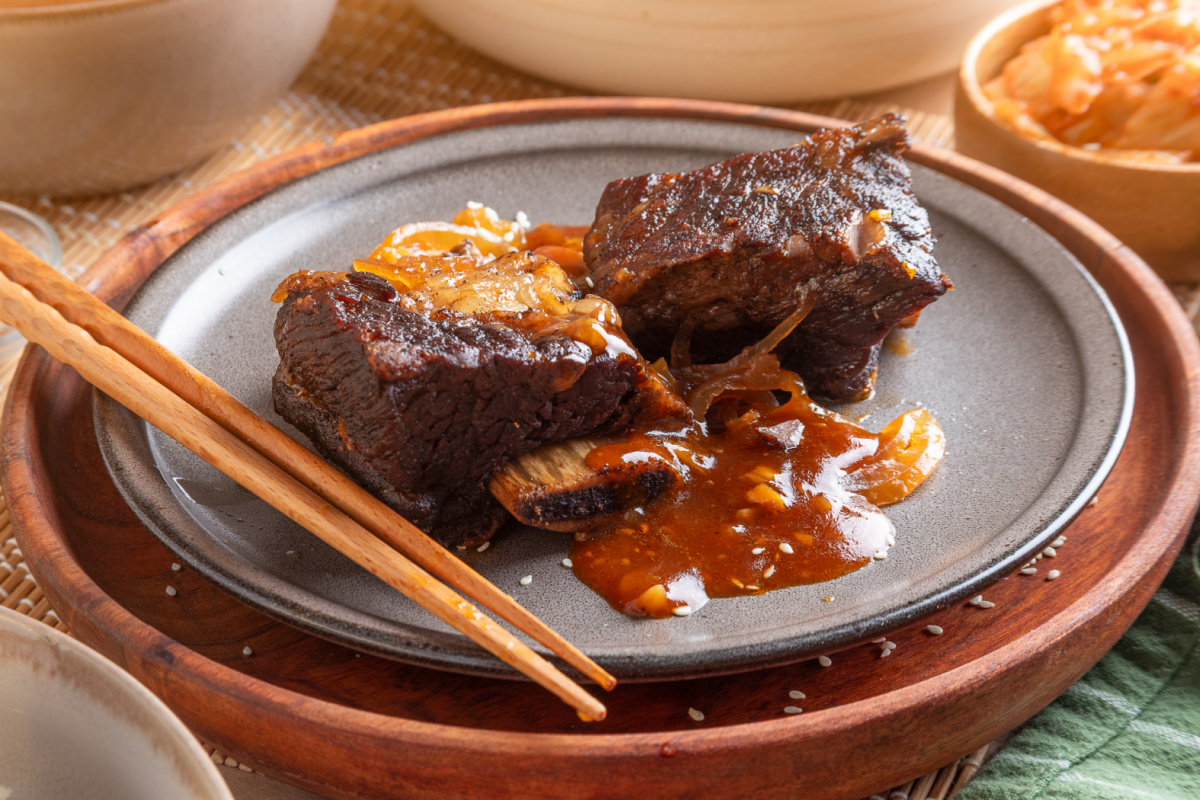
- Bone-in beef short ribs – Look for thick English-cut ribs with good marbling. These are the big, individually cut ribs you want for several hours in the slow cooker. Skip the thin flanken-style ribs for this recipe.
- Sea salt, black pepper, and avocado or a neutral oil – Season the ribs lightly before searing them in a hot skillet. Both the soy sauce and gochujang have salt, so there’s no reason to season the beef heavily at this stage.
- Yellow onion – Slice the onion thinly so it softens during the long cooking time. I leave the onions in the finished sauce and serve them over the rice with the beef.
- Brown sugar – Brown sugar adds sweetness to the sauce and keeps the heat from the gochujang from becoming too much. Light or dark brown sugar are both fine. If you’re out, you can make my homemade brown sugar.
- Fresh ginger and garlic – I use a lot of both because there’s lots of beef and sauce to season. Grate the ginger finely and use fresh garlic. Ground ginger and garlic powder aren’t going to taste the same.
- Gochujang paste – Use Korean fermented chile paste, not bottled gochujang sauce, which is usually diluted and already seasoned. Gochujang varies in heat between brands, so taste the finished sauce before deciding whether it needs more.
- Toasted sesame oil – You only need a teaspoon, but make sure it’s toasted sesame oil. It has a stronger, nuttier flavor than regular sesame oil.
- Low-sodium soy sauce and beef stock – I use low-sodium soy sauce and beef stock because there’s already salt coming from the gochujang. The stock also keeps the sauce from getting too concentrated, and I want enough left to spoon over rice. If you can only find regular beef stock, wait until the end before adding any more salt.
- Mirin or rice wine – Mirin is sweet, while unsweetened rice wine isn’t. Either is fine, but if you use rice wine, your sauce won’t be quite as sweet.
- Cornstarch and cold water – Mix the cornstarch with cold water so you don’t end up with lumps in your sauce. I start with two tablespoons of cornstarch and only add more if the sauce needs it. I want it thick enough to coat a spoon but still easy to pour over the ribs and rice.
- Green onions and sesame seeds – Scatter these over the finished ribs right before serving.
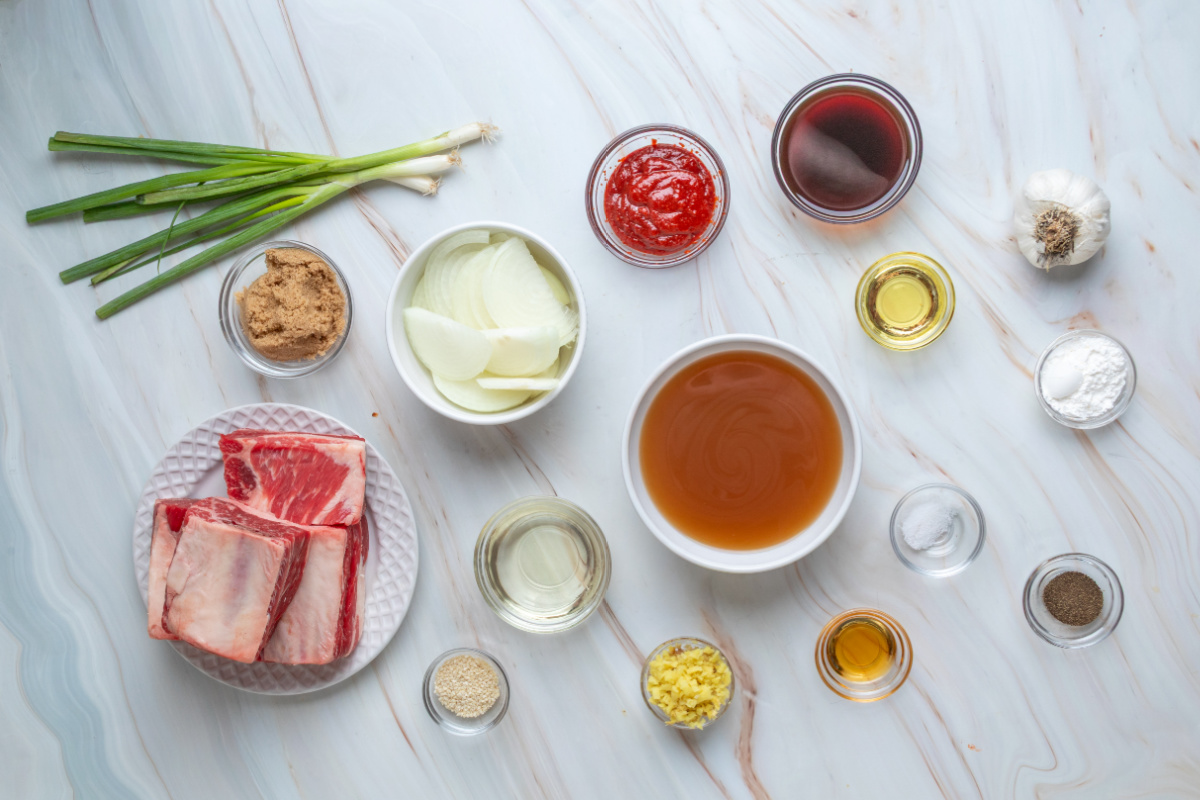
How to Make Korean Braised Short Ribs
Find the complete printable recipe with measurements in the recipe card at the BOTTOM OF THE POST.
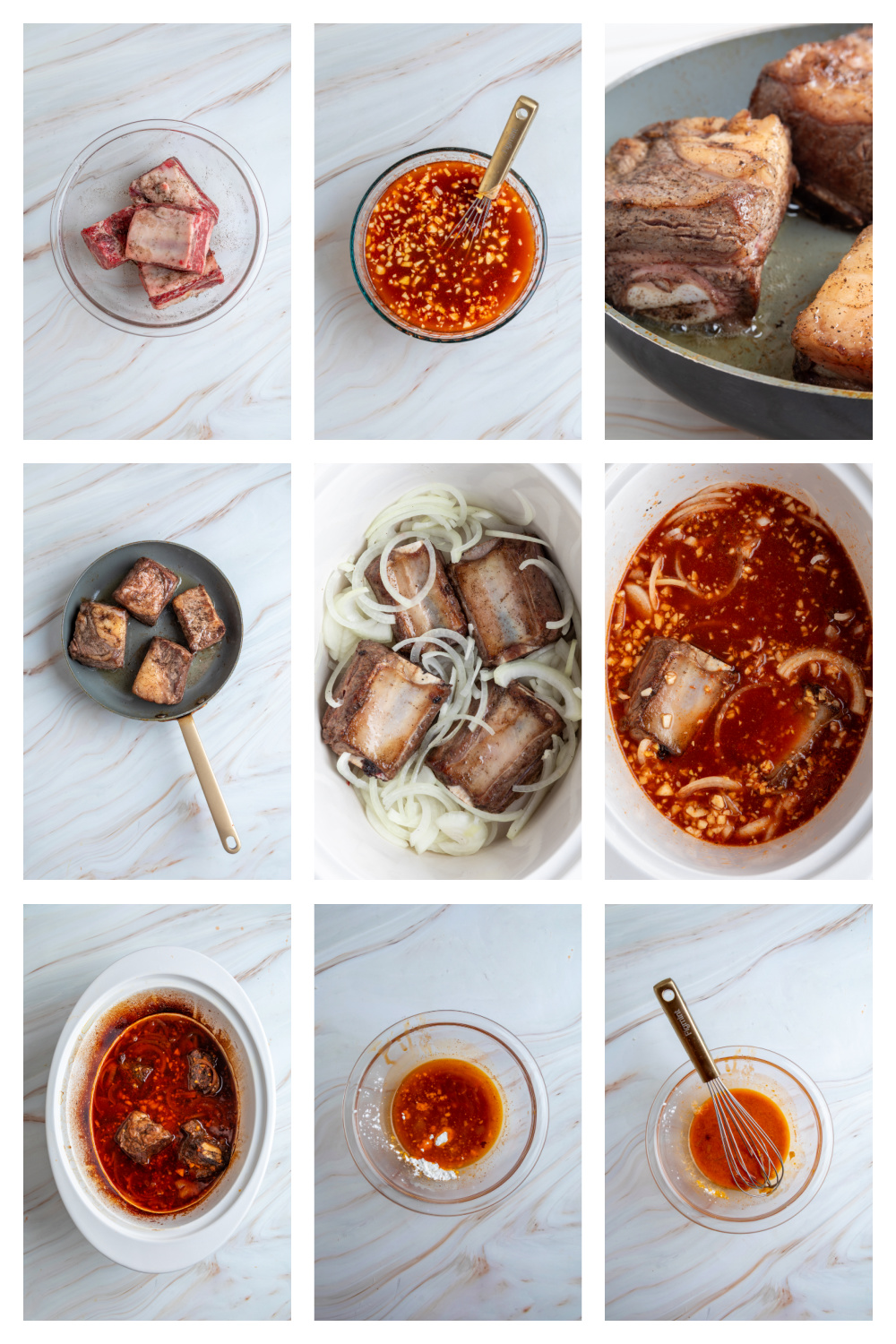
- Step One (season and sear the short ribs)
Pat the short ribs dry with paper towels, then rub them with the oil and season them all over with salt and black pepper. Heat a large, heavy skillet over medium-high heat and sear the ribs for 2 to 3 minutes per side, until they’re browned. Give them some room in the skillet and work in batches if you need to. I want the ribs browned on all sides, and they won’t get there if they’re crowded together in the skillet. - Step Two (make the gochujang braising sauce)
In a large bowl, whisk together the brown sugar, grated ginger, garlic, gochujang, toasted sesame oil, soy sauce, beef stock, and mirin until the gochujang is mixed through and the brown sugar has dissolved. The sauce will look thin at this point, which is fine. It still has several hours in the slow cooker before I thicken it on the stove. - Step Three (slow cook the short ribs)
Put the seared short ribs in the bottom of the slow cooker and scatter the sliced onions around them. Pour the gochujang sauce over everything, cover, and cook on LOW for 8 to 10 hours or HIGH for 4 to 6 hours. Start checking the ribs at 8 hours on LOW or 4 hours on HIGH. A fork should slide into the beef without much resistance, and the meat should pull away from the bone easily. If they’re not tender enough, put the lid back on and give them more time. - Step Four (finish and thicken the sauce)
Carefully move the tender short ribs to a serving dish, then skim off any extra fat from the cooking liquid. Pour the sauce and softened onions into a large saucepan and bring it to a simmer. Whisk 2 tablespoons of cornstarch with 2 tablespoons of cold water in a small bowl, then slowly whisk that into the sauce. Let it simmer for a few minutes until it lightly coats a spoon. If you want a thicker sauce, mix more cornstarch with cold water and add it gradually. Give it a minute to thicken before adding more, then taste the sauce and adjust the seasoning if needed. - Step Five (serve the short ribs)
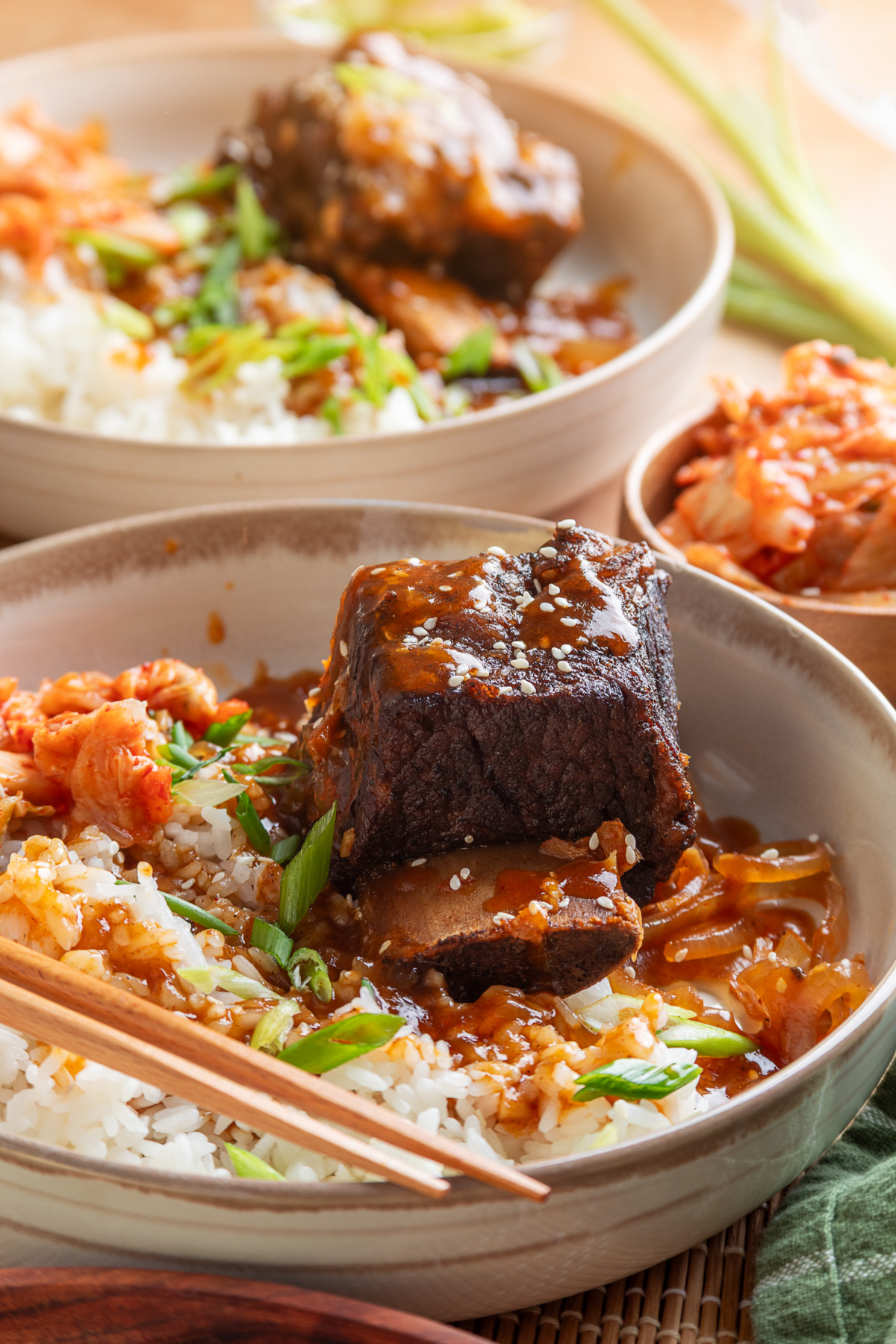
Spoon the warm sauce and softened onions over the short ribs, then finish them with green onions and sesame seeds. I serve the ribs over steamed white rice with kimchi on the side, making sure there’s enough sauce for the rice. Save whatever is left for another meal. The sauce is not done working for you.
Recipe Tips
- Don’t add all 4 tablespoons of cornstarch at once. The sauce needs a minute or two to thicken after each addition, and it’s much easier to add more than to fix a sauce you’ve made too thick.
- If you want more heat, add gochujang a small amount at a time after the sauce has thickened. It also adds sweetness and salt, so taste between additions before deciding whether you need more.
- It’s tempting to check on the ribs throughout the day, but every time you lift the lid, the slow cooker loses heat. Leave them alone until you’re getting close to the cooking time listed in the recipe. If they’re not tender when you check, give them more time with the lid on.
- By the time the ribs are tender, the meat may be barely attached to the bone. Use a wide spatula or tongs underneath each rib when moving it out of the slow cooker. If you grab the bone and lift, there’s a good chance you’ll leave the beef behind.
Storage, Freezing and Reheating
- Refrigerate leftover short ribs in shallow, airtight containers with their sauce for up to 3 to 4 days. Keeping the beef in the sauce helps prevent it from drying out when reheated.
- If you refrigerate the ribs overnight, you may find a firm layer of fat across the top of the sauce the next day. That’s normal. Lift off as much or as little of it as you want before reheating.
- Freeze the cooked ribs in their sauce for up to 3 months, using freezer-safe containers with room for expansion. Thaw overnight in the refrigerator before reheating.
- I freeze extra sauce in smaller containers so I can use it later over rice, vegetables, or another meal.
- Reheat the ribs with their sauce in a covered saucepan over low heat until they reach 165°F (74°C). Add a splash of beef stock or water if the sauce is too thick. You can also microwave individual portions with some sauce spooned over the beef.
FAQs
- Can I use boneless beef short ribs instead of bone-in?
Yes. Look for well-marbled boneless short ribs, not a lean cut of beef. I like bone-in ribs for the flavor and the way they look on the plate, but boneless ribs will still work. Start checking for tenderness a little earlier because the size and thickness of the pieces are more important than the bone itself. - Are Korean braised short ribs spicy?
They have some heat from the gochujang, but the brown sugar, mirin, and beef stock keep the sauce from tasting like straight chile paste. How spicy they turn out depends on the brand of gochujang you use. - Can I make these in the oven instead of a slow cooker?
Yes. Sear the ribs in a Dutch oven, add the onions and braising sauce, cover it tightly, and cook at 325°F for about 2½ to 3½ hours. Check the liquid a few times because an oven lets more moisture evaporate than a slow cooker. Add a little stock if it’s getting low, then finish the sauce separately as directed once the ribs are tender. - Can I substitute gochugaru for gochujang?
Not directly. Gochugaru is dried Korean red pepper in flakes or powder form, while gochujang is a fermented paste with its own sweetness, salt, and thickness. Subbing one for the other in equal amounts would change the sauce in too many ways at once. - Can I make these gluten-free?
Yes, but check your labels. Use gluten-free tamari instead of regular soy sauce, and make sure your gochujang is labeled gluten-free because some brands contain wheat. Check the beef stock and mirin or rice wine too. - What should I serve with Korean braised short ribs?
Steamed white rice is my first choice because there is lots of sauce to spoon over it. I like kimchi on the side, then green onions and sesame seeds over the ribs. Korean cucumber salad, sautéed spinach, broccoli, or any vegetable that can handle a sweet, spicy sauce would also be good.
From My Kitchen Notes
Small observations from the margins.
- I know when something needs more time, not more pressure.
- I’ve never needed to pull something apart to know it’s ready.
- There’s a difference between what adds value and what keeps me there.
- I’ll never leave the best part at the bottom of the pot.
- I can take the extra with me. I planned for it.
- Some things get easier when they finally stop resisting.
- Making room for tenderness has always been a priority.
- I can tell when something has changed overnight.
- I know how to keep something important without keeping it close.
- Some things are easier to understand once they’ve cooled down.
Your Tub of Gochujang Isn’t Empty Yet
- Gochujang Steak Bites – Seared steak, gochujang, honey, hoisin, garlic.
- Slow Cooker Korean BBQ Chicken – Chicken, gochujang, slow cooker, BBQ sauce.
- Gochujang Chicken Sandwich with Crispy Potato Chip Crust – Crispy chicken, gochujang glaze, potato chips.
- Ground Turkey Stir Fry – Ground turkey, gochujang, honey.
- Gochujang Pasta – Mushrooms, garlic, ginger, gochujang, cream.
This post may contain affiliate links. Please read my disclosure policy.
Korean Braised Short Ribs
Equipment
- slow cooker 6-quart (5.7 L) For braising the short ribs.
- large skillet (heavy). For preparing the gochujang braising liquid.
- whisk For mixing the sauce and cornstarch slurry.
- tongs For searing and transferring the short ribs.
- Saucepan (large) For finishing and thickening the sauce.
- mixing bowls (small). For preparing the cornstarch slurry.
Ingredients
Short Ribs:
- 4 large (2 lbs / 907 g) bone-in beef short ribs preferably English-cut
- 1 tbsp (15 ml) avocado oil or any neutral oil
- ½ tsp (3 g) fine sea salt
- ½ tsp (1 g) ground black pepper
- 1 cup (160 g) thinly sliced yellow onion
Gochujang Brasing Sauce:
- ⅓ cup (70 g) packed light brown sugar
- 2 tbsps (12 g) finely grated fresh ginger
- ¼ cup minced fresh garlic
- 3 tbsps (48 g) Gochujang (Korean chili paste) plus more to taste
- 1 tsp (5 ml) toasted sesame oil
- ½ cup (120 ml) low sodium soy sauce
- 4 cups (960 ml) low-sodium beef stock
- ½ cup (120 ml) mirin or rice wine
Sauce Thickener:
- 2 tbsps (16 g) cornstarch plus up to 2 additional tablespoons (16 g) if needed
- 2 tbsps (30 ml) cold water plus additional as needed
Garnish:
- 2-3 green onions chopped
- 1 tbsp (9 g) sesame seeds
Instructions
- Pat the short ribs dry with paper towels. Rub with avocado oil and season evenly with salt and black pepper.4 large (2 lbs / 907 g) bone-in beef short ribs, 1 tbsp (15 ml) avocado oil, ½ tsp (3 g) fine sea salt, ½ tsp (1 g) ground black pepper
- Heat a large, heavy skillet over medium-high heat. Sear the short ribs for 2–3 minutes per side, working in batches if necessary, until well browned on all sides. Transfer the ribs to the slow cooker.
- In a large mixing bowl, whisk together the brown sugar, ginger, garlic, gochujang, toasted sesame oil, soy sauce, beef stock, and mirin until the sugar dissolves and the gochujang is evenly distributed.⅓ cup (70 g) packed light brown sugar, 2 tbsps (12 g) finely grated fresh ginger, ¼ cup minced fresh garlic, 3 tbsps (48 g) Gochujang (Korean chili paste), 1 tsp (5 ml) toasted sesame oil, ½ cup (120 ml) low sodium soy sauce, 4 cups (960 ml) low-sodium beef stock, ½ cup (120 ml) mirin
- Arrange the sliced onions around the short ribs in the slow cooker. Pour the braising liquid over the beef and onions. Cover and cook on LOW for 8–10 hours or HIGH for 4–6 hours, until the short ribs are fork-tender and the meat separates easily from the bone. If the ribs are still firm, continue cooking and check again after 30–60 minutes.1 cup (160 g) thinly sliced yellow onion
- Carefully transfer the short ribs to a serving dish. Skim excess fat from the cooking liquid, then transfer the liquid and softened onions to a large saucepan.
- Bring the cooking liquid to a simmer over medium heat. In a small bowl, whisk 2 tablespoons (16 g) cornstarch with 2 tablespoons (30 mL) cold water until smooth. Slowly whisk the slurry into the simmering liquid. Cook for 2–3 minutes, stirring frequently, until the sauce begins to thicken.2 tbsps (16 g) cornstarch, 2 tbsps (30 ml) cold water
- For a thicker sauce, mix additional cornstarch with an equal volume of cold water and gradually whisk it into the simmering liquid, allowing the sauce to thicken between additions. Use no more than 4 tablespoons (32 g) cornstarch total. The finished sauce should lightly coat a spoon while remaining pourable. Taste and adjust the seasoning or gochujang as desired.
- Spoon the sauce and softened onions over the short ribs. Garnish with chopped green onions and sesame seeds. Serve warm over steamed rice, with kimchi or vegetables on the side, if desired.2-3 green onions, 1 tbsp (9 g) sesame seeds
Notes
- Four cups of beef stock prevent the sauce from becoming overly concentrated and leave extra for serving over rice.
- Mix cornstarch with cold water, beginning with 2 tablespoons and adding more only if needed.
- Refrigerate leftovers for 3–4 days or freeze for up to 3 months. Reheat the ribs in their sauce.
- Nutrition is estimated for one bone-in short rib with approximately ¼ cup (60 mL) of finished sauce. Extra sauce, rice, and optional garnishes are not included.
- Nutritional information is provided as a courtesy only and should be construed as an estimate rather than a guarantee. Ingredients can vary, and Noble Pig makes no guarantees to the accuracy of this information.
Nutrition
Have you made these Korean Braised Short Ribs? I’d love to hear how they turned out – leave a comment below and let me know.
As an Amazon Associate and member of other affiliate programs, I earn from qualifying purchases.
Leave a Reply