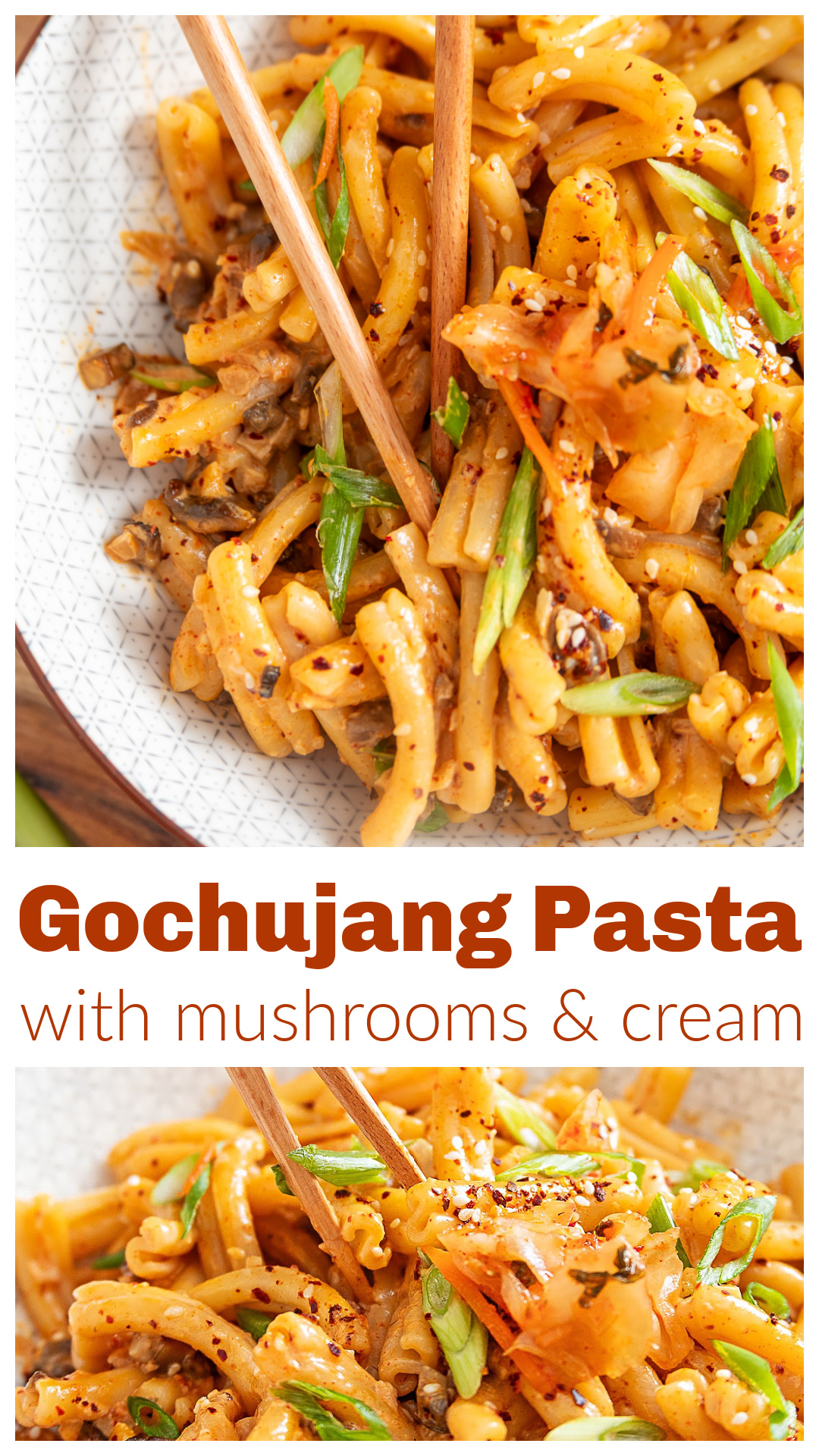
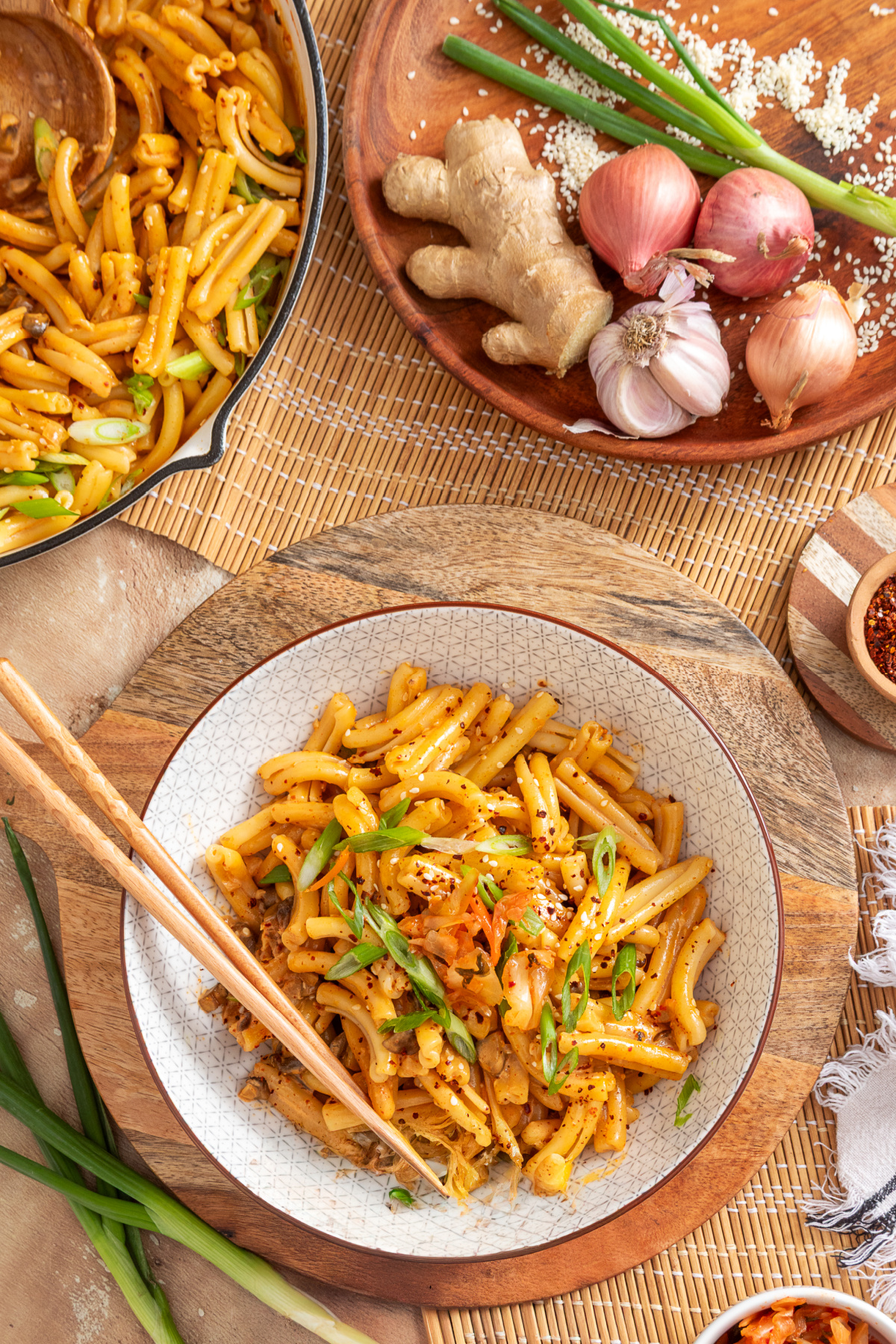
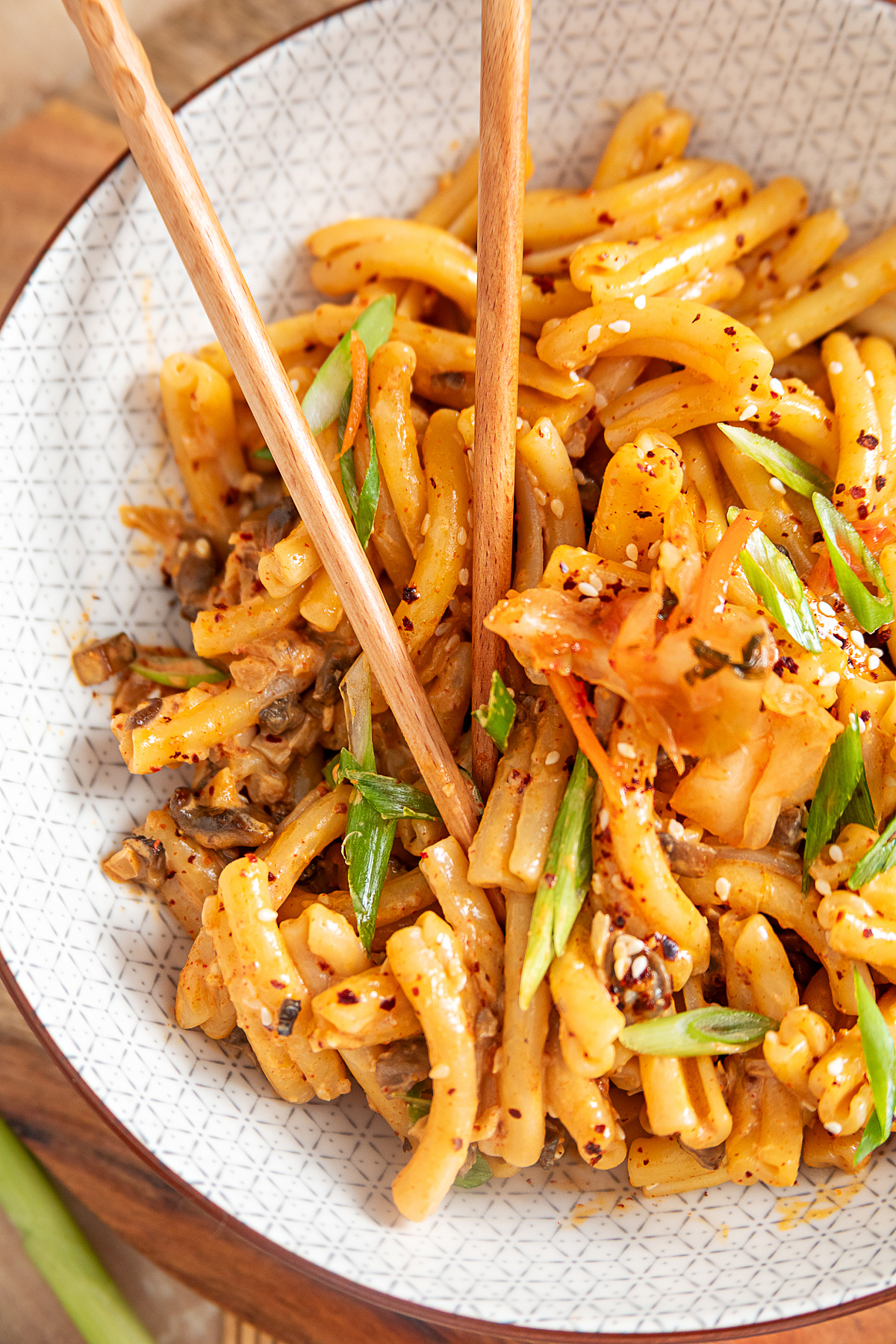
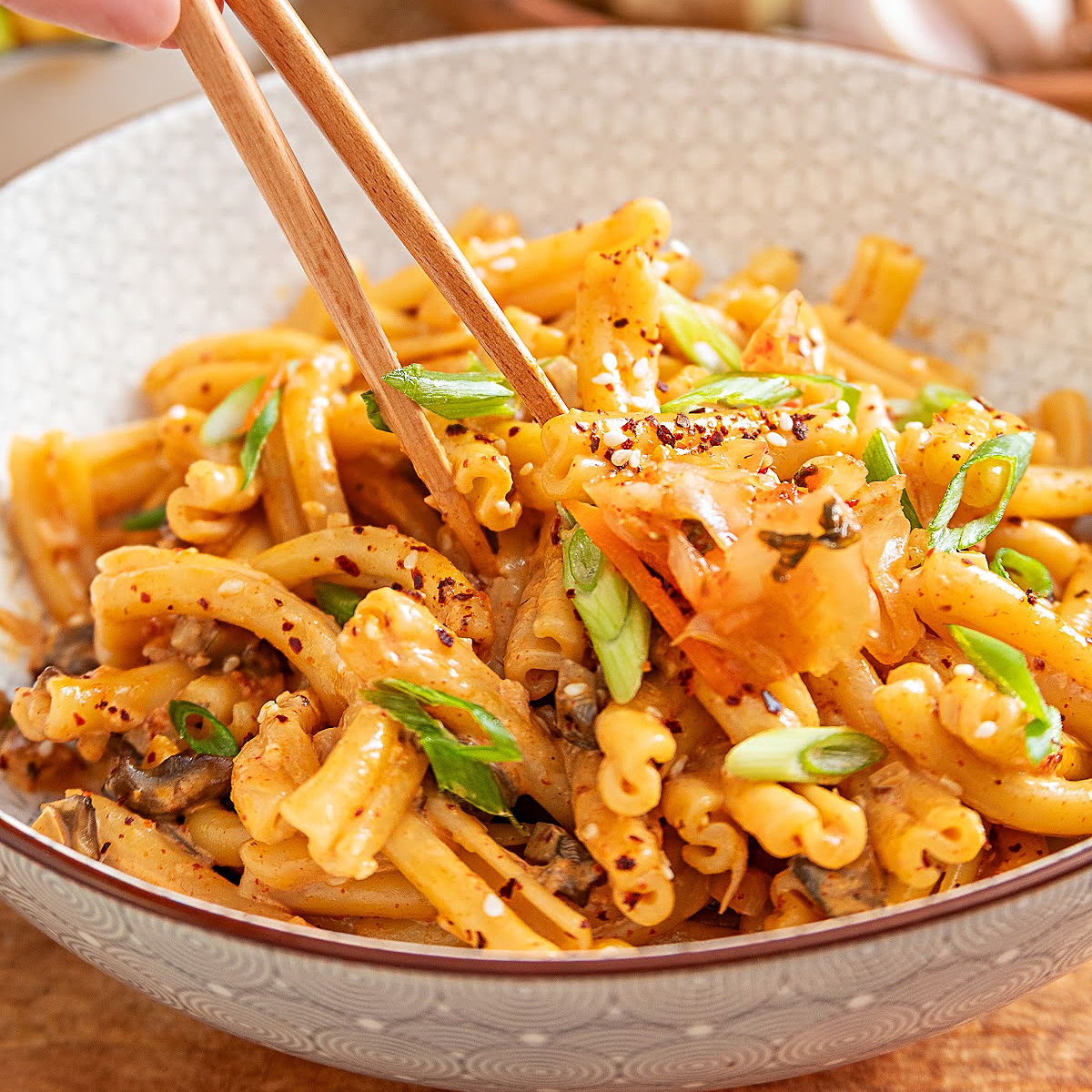
This creamy gochujang pasta has browned mushrooms, garlic and ginger in a sauce made with gochujang, soy sauce and heavy cream. Optional kimchi goes on at the end for acidity and crunch.
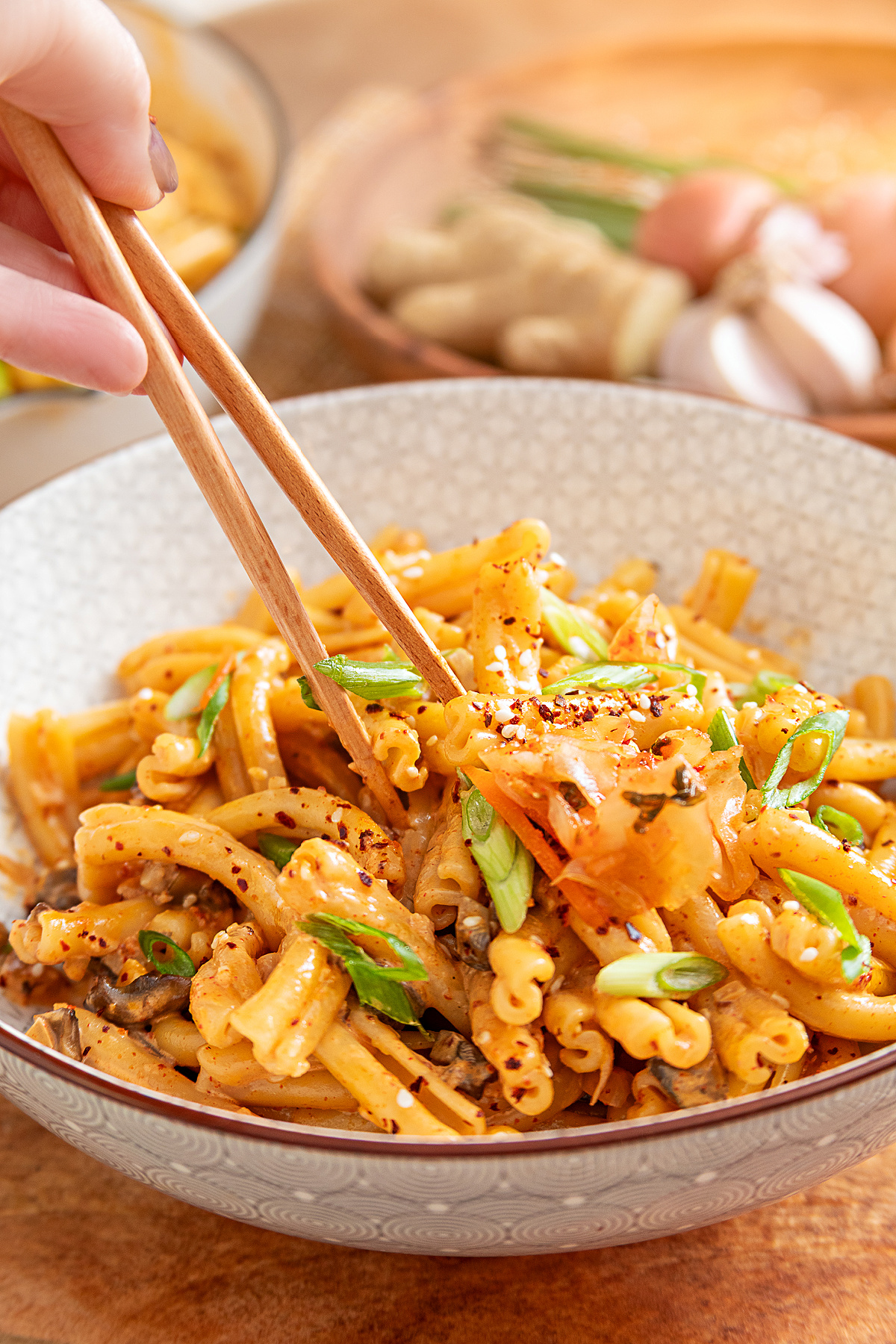
Gochujang Pasta, Without Losing the Gochujang
I’ve been eating gochujang since I was a kid, and at this point I’m always interested in finding another place to use it. I told the whole story in my gochujang steak bites, including my grandmother’s Korean neighbors and the jars of what I thought of as “red fire” when I was little.
So putting gochujang into pasta doesn’t feel strange to me. The bigger question was always what would happen once I added cream.
Cream softens strong flavors, but I didn’t want to end up with a sauce that was only spicy and creamy. I still wanted to taste the fermented chile character of the gochujang, along with the garlic, ginger, soy sauce and sesame oil around it.
That’s why I give the mushrooms time to brown before adding the aromatics, then let the gochujang mixture cook directly in the pan before the cream goes in. The sauce gets lots of richness from the cream, but there’s no cheese competing with the gochujang, and I save the butter for the final toss with the pasta.
I also keep the kimchi out of the sauce completely. I like it cold or at room temperature on top, where the acidity and crunch do more for the pasta than they would if I cooked them into the sauce.
I wanted the sauce to taste like gochujang with cream in it, not cream with gochujang in it.
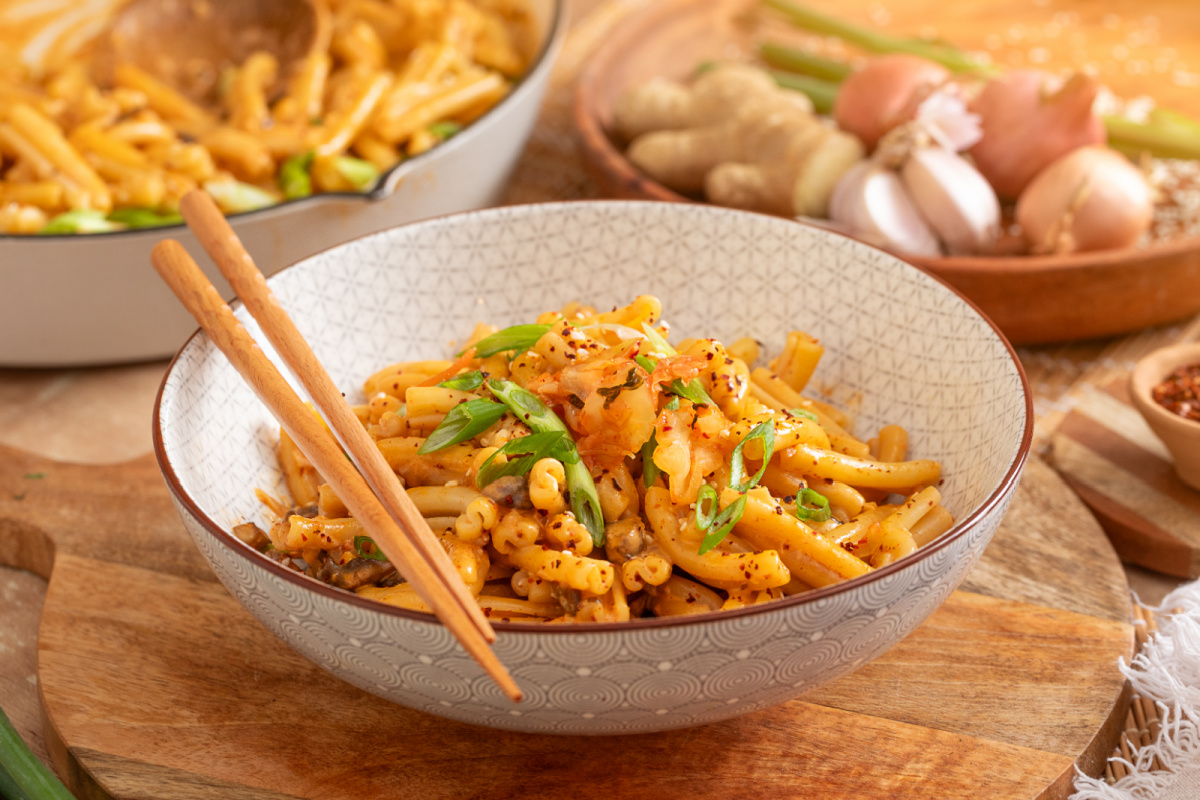
The Decisions Behind This Recipe
- I use ten ounces of mushrooms for one pound of pasta, which is enough to make them important in this recipe. I dice them instead of slicing them because I want pieces of mushroom mixed through the casarecce rather than big slices that end up on one side of the bowl, which is what happened when I tested it that way. They go into the pan first, by themselves, and I give them about six minutes to release their water, let the moisture cook off and then brown before I add the shallot, garlic and ginger. If everything goes in together, the mushrooms spend too much of that time steaming and the garlic has to sit there waiting for them to finish.
- Once the shallot has softened and the garlic and ginger are fragrant, I add the gochujang, soy sauce, brown sugar and gochugaru directly to the pan and cook that mixture for another minute or two before adding any cream. I want the gochujang to spend some time in the hot pan first rather than being whisked straight into heavy cream. You’ll notice the mixture get a little darker and the smell of the gochujang become much more pronounced during that minute or two. Just keep it moving so the garlic and chile paste don’t scorch.
- I also use gochujang and gochugaru for different reasons. Gochujang adds fermented chile, sweetness and salt along with the heat, so adding another spoonful changes several things at once. Gochugaru lets me add more chile heat without adding more paste. I use two tablespoons of gochujang as my starting point, especially if I’m also adding the teaspoon of gochugaru to the sauce. Three tablespoons is there for someone who already knows they want more gochujang flavor, not because they want the pasta hotter.
- There’s no Parmesan or other cheese in this sauce. The heavy cream gives it the richness it needs, and the butter goes in at the very end with the pasta and a little reserved pasta water. I save the butter for the final toss instead of using it to cook the mushrooms, so it melts into the cream sauce along with the starchy pasta water.
- And I don’t stir the kimchi into the skillet. I add it to individual bowls at the table. It keeps the crunch and acidity that I want with a creamy pasta, and everyone can decide how much they want, if they want it at all. The pasta is complete without it, but if you like kimchi, I would put some on top.
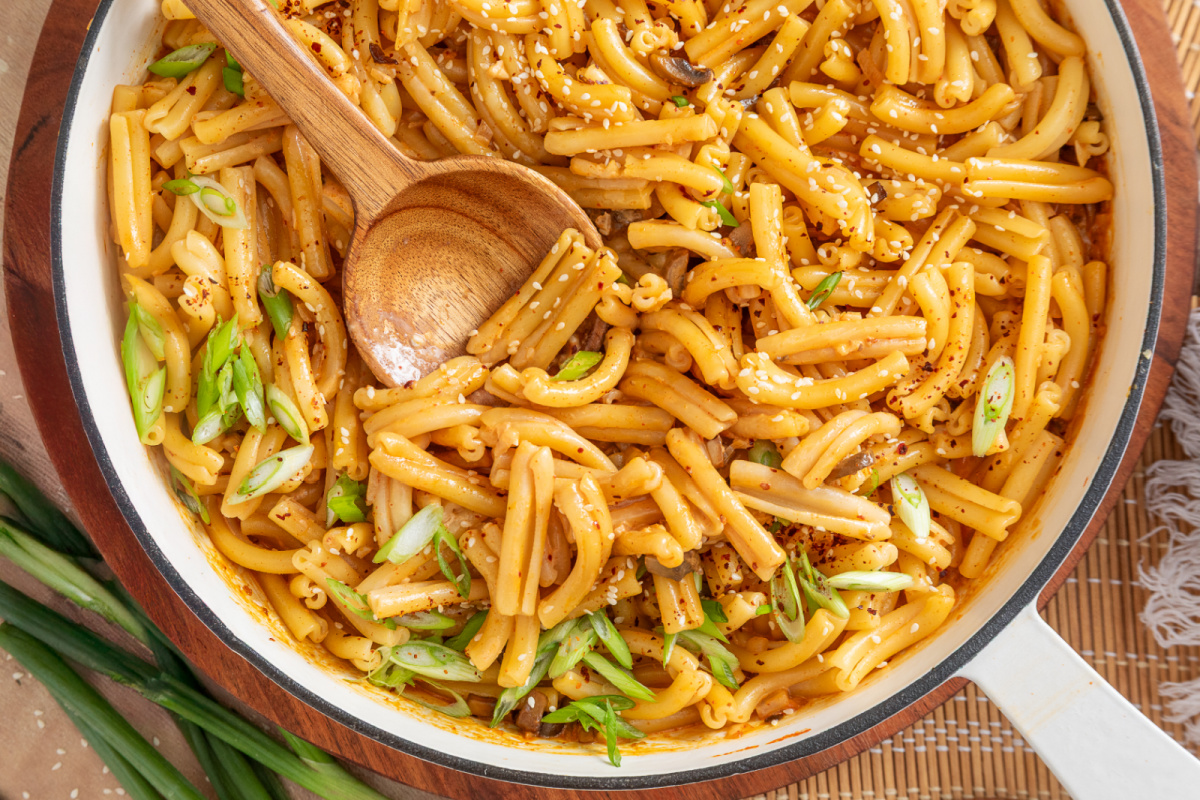
Ingredients
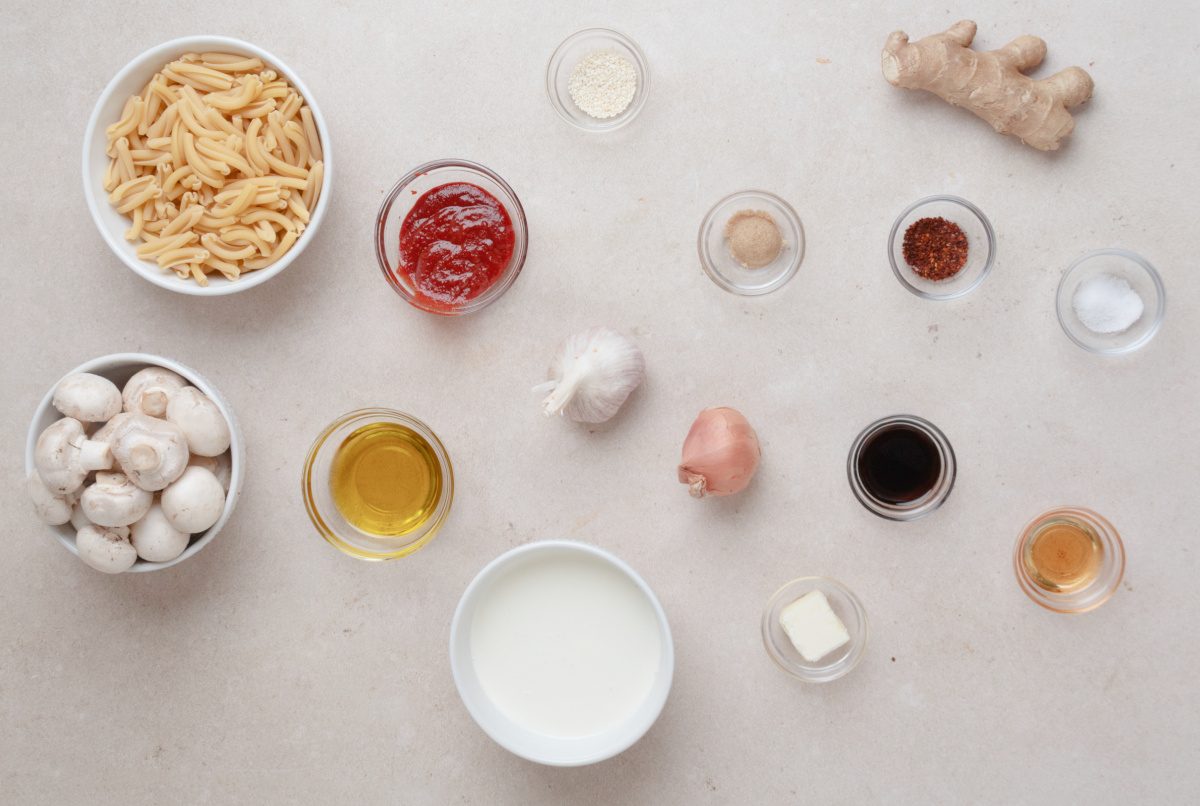
- Casarecce pasta – The curled shape grabs the cream sauce and gives the diced mushrooms places to collect, which is why I prefer it to a long pasta for this recipe. Rigatoni, penne or another short pasta with ridges, curves or openings that can catch the sauce are also fine.
- White button mushrooms – I use inexpensive white buttons because once their moisture cooks off, they brown well and have enough mushroom flavor next to the gochujang. Dice them small so they distribute through the casarecce instead of eating as a separate component.
- Olive oil – Three tablespoons gives the mushrooms enough fat to brown without using the butter this early. Some of the oil will disappear into the mushrooms as they cook, so the amount may look like a lot when it first goes into the skillet.
- Unsalted butter – I save this for the final toss, where it melts into the reduced cream sauce and starchy pasta water. Unsalted is helpful because the gochujang and soy sauce already add a lot of salt.
- Shallot, garlic and ginger – These go into the skillet only after the mushrooms have browned, which keeps the garlic and ginger from spending the mushroom cooking time over the heat. I finely chop the shallot, mince the garlic and use either fresh ginger crushed into a paste or prepared ginger paste so all three distribute easily through the sauce.
- Gochujang – Korean fermented red chile paste adds more than heat, including sweetness, salt and fermented flavor. Brands vary, so I use 2 tablespoons as my starting point and increase it to 3 when I want the gochujang to be stronger.
- Gochugaru – These Korean red pepper flakes let me increase the chile heat without adding another spoonful of fermented gochujang. I use up to 1 teaspoon in the sauce, then keep the additional teaspoon optional for anyone who wants more sprinkled over their serving. Regular red pepper flakes can stand in if that’s what you have, although the flavor won’t be quite the same.
- Soy sauce – Two teaspoons adds salt and savory flavor without making this taste like a soy-based sauce. Use tamari for gluten-free pasta, and make sure your gochujang is labeled gluten-free too.
- Light brown sugar – I use only a teaspoon because gochujang is already sweet. It’s not enough to make the cream sauce taste sweet.
- Heavy cream – The fat in heavy cream can handle a low simmer while the sauce reduces, and it softens the heat of the chile without requiring cheese to thicken the sauce. Half-and-half can be used, but expect a thinner sauce that needs more time to reduce.
- Toasted sesame oil – Use the dark, aromatic toasted sesame oil sold as a seasoning rather than the lighter sesame oil intended primarily for cooking. A small amount is enough because its roasted sesame flavor is concentrated.
- Reserved pasta water – The starchy water helps loosen the reduced cream sauce during the final toss without thinning it with plain water. I add ¼ cup (60 ml) first, then use more only if the pasta needs it.
- Green onions – Add these after cooking so their fresh onion flavor stays distinct from the cooked shallot already in the sauce.
- Sesame seeds – Sprinkle these over the pasta at serving for additional sesame flavor and a little texture.
- Kimchi – Completely optional, but I highly recommend it if you already like kimchi. Keep it cold or at room temperature and add it to individual servings rather than the skillet, so its acidity and crunch contrast with the warm cream sauce.
How to Make Gochujang Pasta
Find the complete printable recipe with measurements in the recipe card at the BOTTOM OF THE POST.
- Step One (cook the pasta)
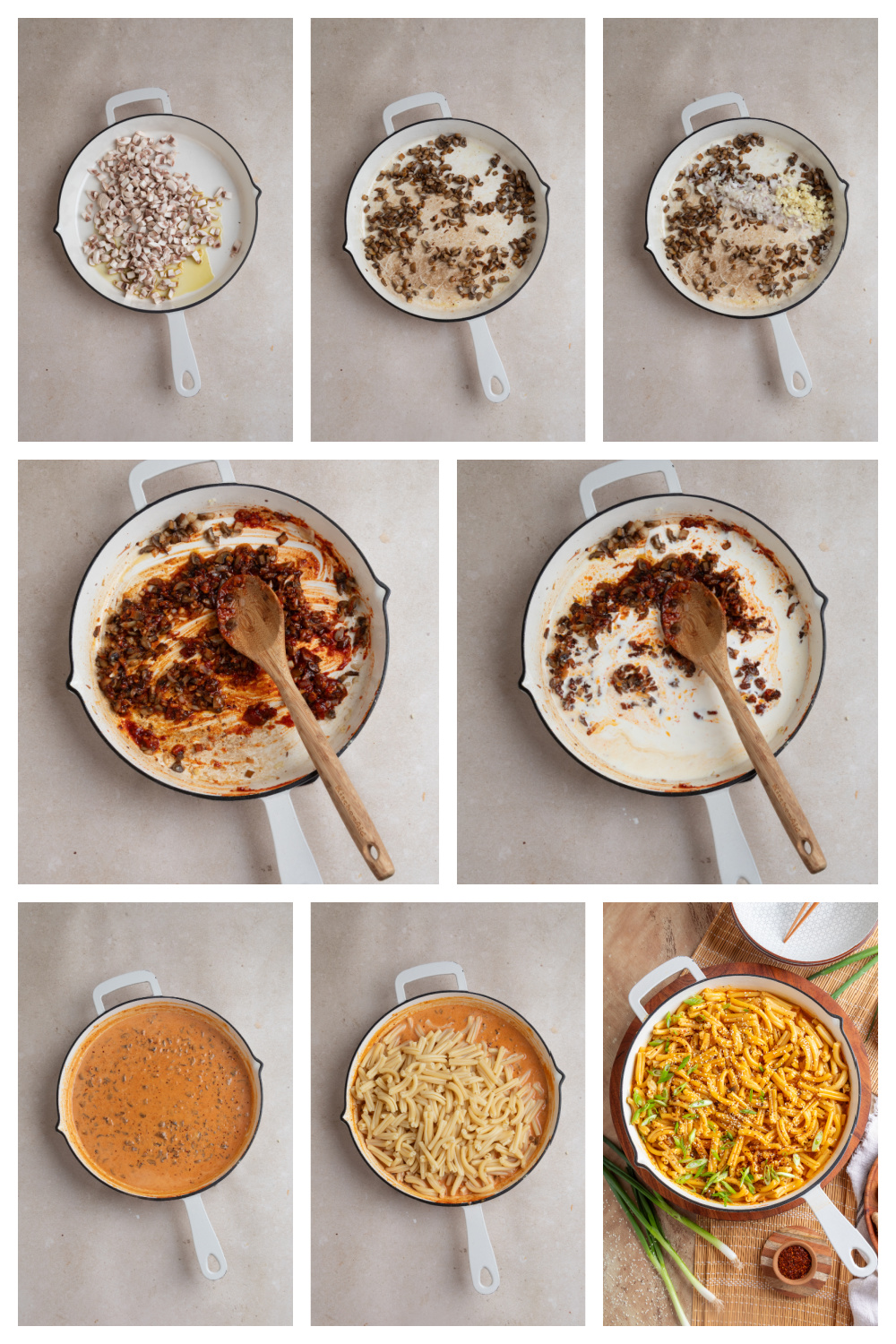
Cook the pasta in a large pot of well-salted water until al dente, using the package timing for whatever shape you chose. Before you drain it, scoop out 1 cup (240 ml) of the pasta water and set it somewhere you won’t forget about it. You probably won’t use the whole cup, but once the pasta is drained, there’s no getting it back. - Step Two (brown the mushrooms)
While the pasta cooks, heat the olive oil in a large skillet over medium heat and add the diced mushrooms. Let them cook for about 6 minutes, stirring now and then, until they’ve released their water, the moisture has cooked off and the mushrooms have started to brown. Then add the shallot, garlic and ginger and cook for another 2 minutes, stirring often. By then the shallot should be soft and the garlic should smell very good, which is also your cue not to walk away from the pan. - Step Three (cook the gochujang)
Add the gochujang, gochugaru if you’re using it, soy sauce, toasted sesame oil and brown sugar. Stir everything together and let it cook for 1 to 2 minutes before you add the cream. Keep stirring so the garlic doesn’t burn and the gochujang doesn’t stick to one hot spot in the skillet. You’ll notice the smell gets noticeably stronger during this minute or two. - Step Four (add the cream)
Pour in the heavy cream and stir until the gochujang is completely mixed through it. Keep the sauce at a low simmer for about 10 minutes, stirring occasionally, until it has reduced and thickens slightly. I don’t salt it at this point because the gochujang and soy sauce have already brought plenty to the situation. We’ll taste it after the pasta goes in. - Step Five (finish the pasta)
Add the drained pasta and butter to the skillet, then pour in ¼ cup (60 ml) of the reserved pasta water. Toss everything together over low heat until the butter has melted and the sauce is coating the pasta. Add more pasta water a little at a time only if you need it. The sauce will continue to thicken as it sits, so take that into account before you decide it needs more time over the heat. Taste it now and add salt only if it needs some. - Step Six (finish the bowls)
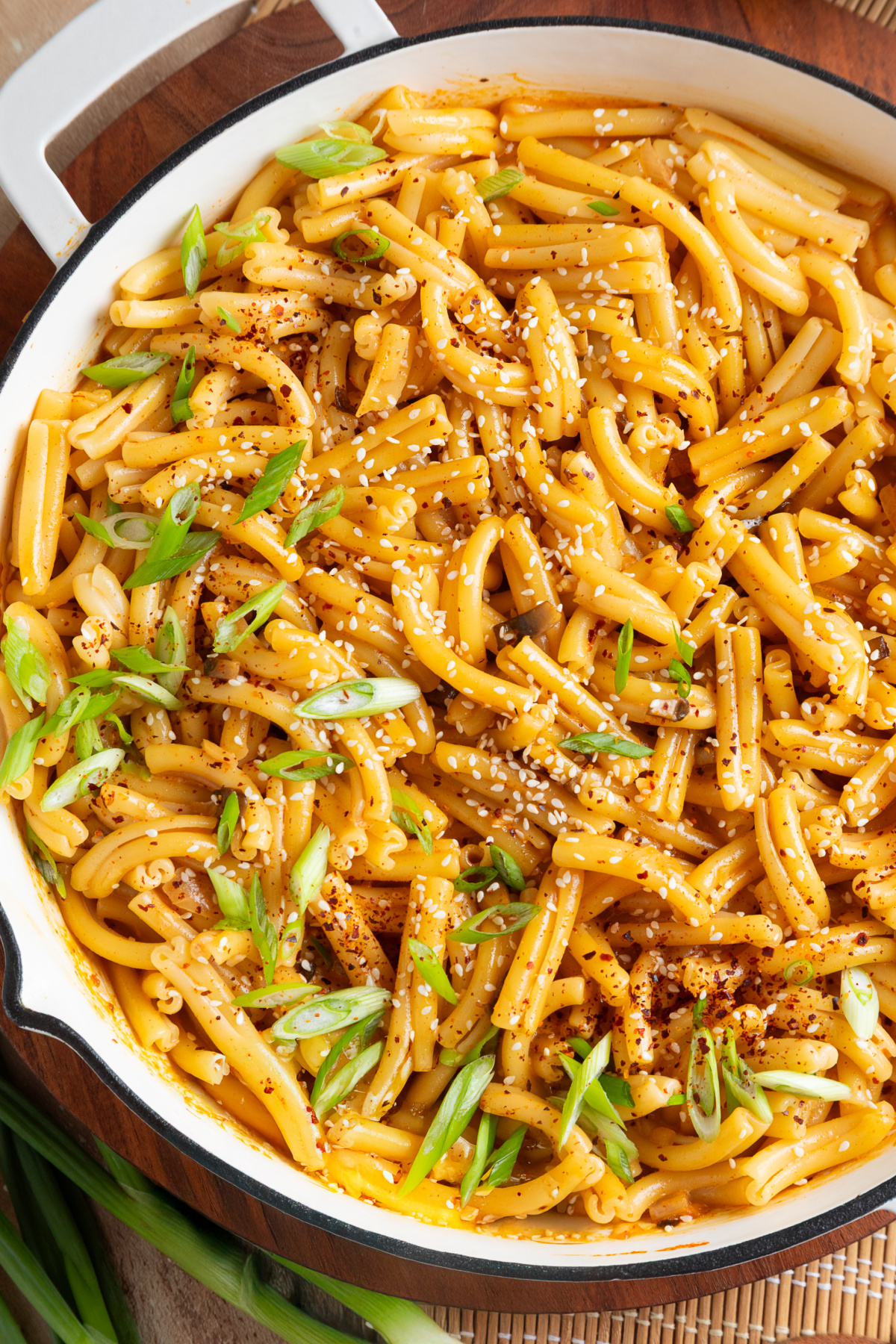
Divide the pasta among bowls and add the green onions and sesame seeds. Sprinkle on more gochugaru if you want it hotter. And if you like kimchi, put some right on top or alongside. I don’t cook it into the sauce because I want the cold crunch and acidity when I’m eating all that cream.
Recipe Tips
- Once the garlic goes in, stay near the stove. It only has about two minutes before the gochujang mixture follows, and minced garlic can scorch quickly. If your skillet is running hot, turn the heat down rather than trying to rush through the next addition.
- I never salt the sauce early. Gochujang, soy sauce and the salted pasta water are all contributing salt, so wait until the pasta has been tossed through the sauce before you taste and decide.
- Reserve a full cup of pasta water before draining, even though you may use only a small amount. I like having it sitting there unused than realize thirty seconds later that I sent it all down the drain. It’s happened.
- Add the pasta water gradually during the final toss. You’re not trying to thin the sauce into soup, only loosen it enough to coat the pasta. Remember that the sauce will continue to thicken as it sits, so give it a minute before deciding it needs more time over the heat.
Storage and Reheating
- Store leftover gochujang pasta in an airtight container in the refrigerator for 3 to 4 days. If you’ve already opened kimchi to serve with it, keep that in its own container rather than adding it to the leftover pasta.
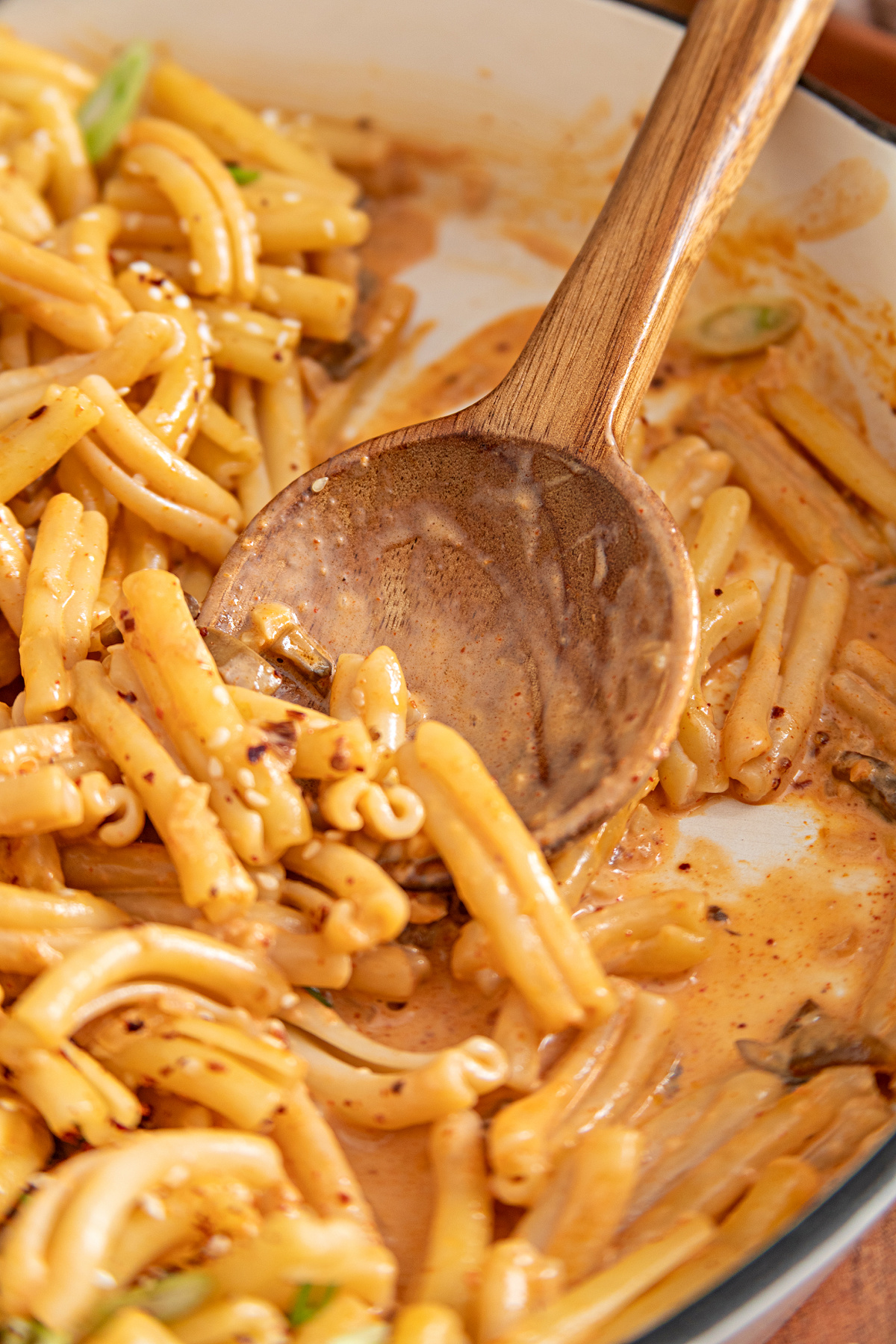
- The sauce will be much thicker after refrigeration because the cream and starch from the pasta firm up once chilled. That’s normal and doesn’t mean you need a lot of liquid when reheating it.
- For reheating on the stovetop, use low heat and add a small splash of cream, milk or water to loosen the sauce as it warms. Stir often and add a little more liquid only if it needs it.
- You can also microwave individual portions in 30-second intervals, stirring between each one and adding a teaspoon or two of liquid if the sauce looks too thick.
- Try not to overheat it. Cream sauces can turn oily when they get too hot, and the pasta gets softer every time it’s reheated.
- I don’t recommend freezing this one. The cream sauce and pasta texture are both better before they’ve been frozen and thawed.
FAQs
- What is gochujang?
Gochujang is a Korean fermented red chile paste traditionally made with red chile powder, glutinous rice, fermented soybean powder and salt. It’s simultaneously spicy, sweet, salty and fermented, which is why I don’t treat it as though it’s only a hot sauce. - How spicy is this gochujang pasta?
With 2 tablespoons of gochujang and 1 teaspoon of gochugaru in the sauce, I would call it about medium. That’s based on my own testing, though, and gochujang brands vary enough that your result may be milder or hotter than mine. - Can I make gochujang pasta less spicy?
Yes. Use 2 tablespoons of gochujang and leave the gochugaru out of both the sauce and topping. I wouldn’t reduce the gochujang much further because at that point you’re also removing one of the main flavors from the sauce. - Can I use half-and-half instead of heavy cream?
Yes, but it won’t act like heavy cream. Half-and-half has less fat and more water, so the sauce will be thinner and may need additional simmering time before you add the pasta. - Can I make this gluten-free?
Yes. Use your favorite gluten-free short pasta, a gluten-free labeled gochujang and tamari instead of soy sauce. If you’re adding kimchi, check that label too because ingredients vary by brand. - Do I have to add kimchi?
No. The pasta is complete without it. I just really like what the cold, acidic, crunchy kimchi does with the cream sauce, so if you already like kimchi, I recommend serving some with it.
From My Kitchen Notes
Small observations from the margins.
- Some ingredients stand out by changing everything around them.
- There’s a difference between making something richer and making it less interesting.
- Getting more time doesn’t always mean getting more attention.
- Not every strong ingredient needs to be softened.
- There are times when adding more is the fastest way to lose the plot.
- The best thing on the plate is not always the thing you cooked.
- Sometimes the smartest move is knowing what to leave cold.
- Heat can be beneficial. So is knowing when not to use it.
- If everything gets stirred together, eventually it all starts tasting like the same decision.
- Holding back can save you from having to fix something later.
Where Else I Put the Gochujang
- Ground Turkey Stir Fry – Gochujang, honey, ground turkey.
- Gochujang Chicken Sandwich with Crispy Potato Chip Crust – Crispy chicken, gochujang glaze, chips.
- Slow Cooker Korean BBQ Chicken – Gochujang, chicken, slow-cooked BBQ sauce.
This post may contain affiliate links. Please read my disclosure policy.
Gochujang Pasta
Equipment
- large pot For cooking the pasta.
- large skillet Enough surface area for browning the mushrooms and finishing the pasta in the sauce.
- Colander For draining the pasta after reserving the cooking water.
- measuring cups and spoons For measuring the sauce ingredients and reserved pasta water.
- wooden spoon or silicone spatula. For stirring the mushrooms, gochujang mixture and cream sauce.
- tongs or large serving spoon. For tossing the pasta thoroughly with the sauce.
Ingredients
- 16 oz (454 g) dry casarecce pasta or rigatoni
- 1 cup (240 ml) reserved pasta cooking water
- 3 tbsps (45 ml) olive oil
- 10 oz (283 g) white button mushrooms stems removed and mushroom caps diced
- ¼ cup (40 g) finely chopped shallot about 1 large shallot
- 2 tbsps (18 g) minced garlic about 4 large cloves
- 1 tsp (5 g) fresh ginger, crushed into a paste or prepared ginger paste
- 2-3 tbsps (32 - 48 g) Gochujang (Korean chili paste)
- 1 tsp (2 g) Gochugaru (Korean pepper flakes) or red pepper flakes, optional for additional heat
- 2 tsps (10 ml) low sodium soy sauce
- 1½ tsps (7.5 ml) toasted sesame oil
- 1 tsp (4 g) light brown sugar
- 1¼ cups (300 ml) heavy cream
- 1 tbsp (14 g) unsalted butter
- salt to taste
Toppings:
- 2 to 3 green onions sliced
- 1 tsp (3 g) sesame seeds
- 1 tsp (2 g) Gochugaru (Korean pepper flakes) optional
- kimchi optional for serving
Instructions
- Cook the pasta in a large pot of well-salted water according to package directions until al dente. Before draining, reserve ¼ cup (600 ml) pasta cooking water, then drain the pasta and set aside.16 oz (454 g) dry casarecce pasta
- Heat the olive oil in a large skillet over medium heat. Add the mushrooms and cook for about 6 minutes, stirring occasionally, until they have released their moisture and browned. Add the shallot, garlic and ginger and cook for about 2 minutes, stirring frequently, until the shallot has softened and the garlic is fragrant.3 tbsps (45 ml) olive oil, 10 oz (283 g) white button mushrooms, ¼ cup (40 g) finely chopped shallot, 2 tbsps (18 g) minced garlic, 1 tsp (5 g) fresh ginger, crushed into a paste
- Stir in the gochujang, gochugaru, if using, soy sauce, toasted sesame oil and brown sugar. Cook for 1 to 2 minutes, stirring frequently so the mixture cooks against the surface of the pan without scorching.2-3 tbsps (32 - 48 g) Gochujang (Korean chili paste), 1 tsp (2 g) Gochugaru (Korean pepper flakes), 2 tsps (10 ml) low sodium soy sauce, 1½ tsps (7.5 ml) toasted sesame oil, 1 tsp (4 g) light brown sugar
- Pour in the heavy cream and stir until the gochujang mixture is fully incorporated. Bring to a low simmer and cook for about 10 minutes, stirring occasionally, until the sauce has reduced and thickened slightly.1¼ cups (300 ml) heavy cream
- Add the drained pasta, butter and only ¼ cup (60 ml) of the reserved pasta water to the skillet, to start. Toss over low heat until the butter has melted and the pasta is evenly coated, adding additional pasta water only as needed to loosen the sauce. Taste and season with salt only if preferred.1 tbsp (14 g) unsalted butter, salt, 1 cup (240 ml) reserved pasta cooking water
- Divide among serving bowls and top with green onions and sesame seeds. Sprinkle with the additional gochugaru, if desired, and serve with kimchi on top or alongside.2 to 3 green onions, 1 tsp (3 g) sesame seeds, 1 tsp (2 g) Gochugaru (Korean pepper flakes), kimchi
Notes
- Casarecce works especially well because its shape catches the sauce and small pieces of mushroom. Rigatoni, penne or shells can also be used.
- For a gluten-free preparation, use gluten-free pasta, gluten-free gochujang and tamari in place of soy sauce. Check the kimchi label as well if serving it.
- Using 2 tablespoons of gochujang with the optional gochugaru in the sauce produced a medium level of heat during recipe testing. Gochujang brands vary in heat, sweetness and saltiness.
- For less heat, begin with 2 tablespoons of gochujang and omit the gochugaru from the sauce and topping.
- Half-and-half can be substituted for the heavy cream, although the sauce will be less rich and may require additional simmering to reduce.
- Reserve the full cup of pasta water, but add it gradually during the final toss. The amount needed will depend on how much the cream sauce has reduced. You might not use all of it.
- Wait until the pasta and sauce have been tossed together before adding salt since the gochujang, soy sauce and salted pasta water already contribute salt.
- Kimchi is optional, but its acidity and crunch are particularly good with the cream sauce. Add it at serving rather than cooking it into the sauce.
Nutrition
Have you made this Gochujang Pasta? I’d love to hear how it turned out – leave a comment below and let me know.
As an Amazon Associate and member of other affiliate programs, I earn from qualifying purchases.
Brad says
Really liked how this turned out. Sauce was exceptional. Great Sunday easy dinner recipe.