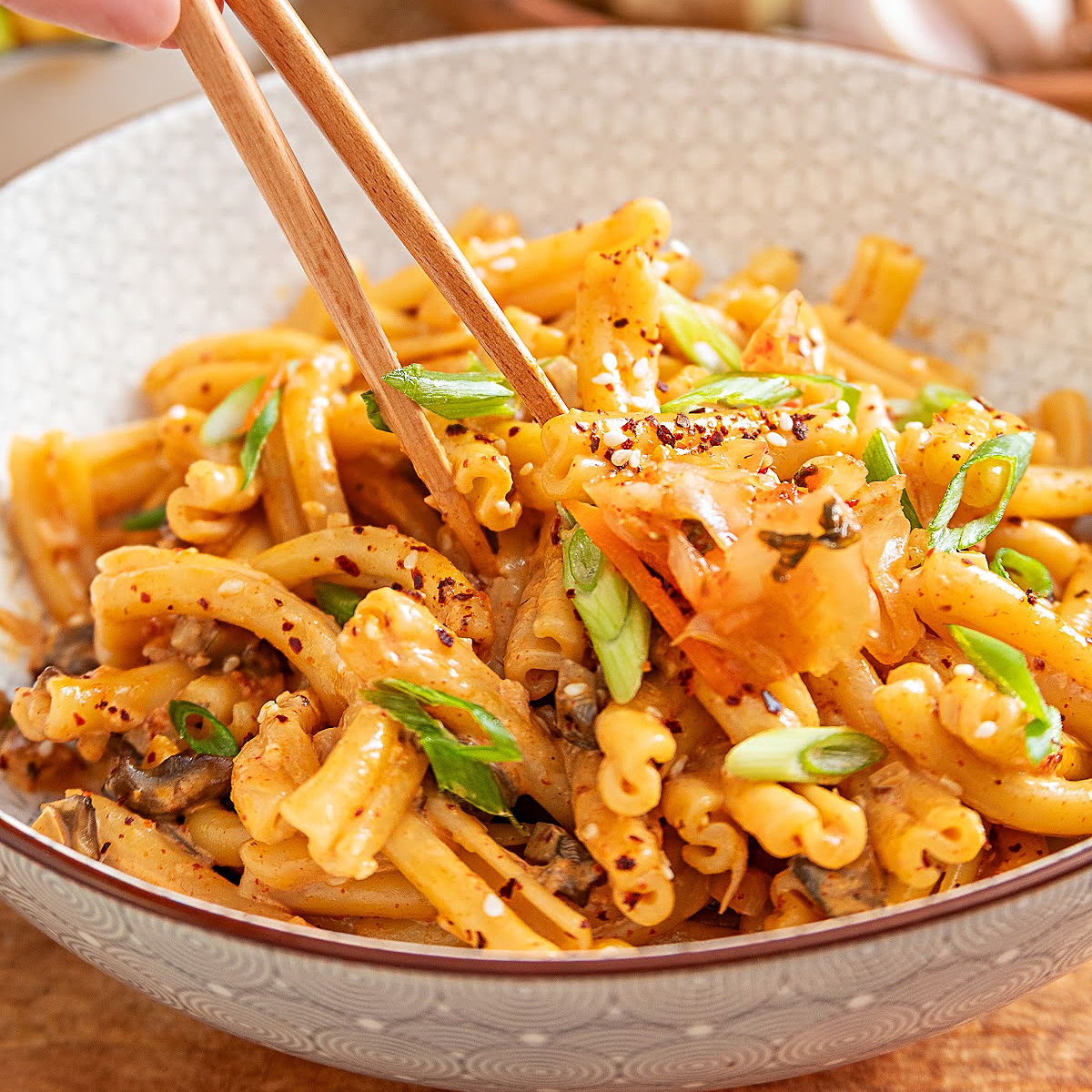
Gochujang Pasta
This Gochujang Pasta coats short pasta and browned mushrooms in a creamy sauce made with gochujang, garlic, ginger, soy sauce and toasted sesame oil, then finishes everything with butter and reserved pasta water.
Servings 4 to 5
Calories 516kcal
Equipment
- large pot For cooking the pasta.
- large skillet Enough surface area for browning the mushrooms and finishing the pasta in the sauce.
- Colander For draining the pasta after reserving the cooking water.
- measuring cups and spoons For measuring the sauce ingredients and reserved pasta water.
- wooden spoon or silicone spatula. For stirring the mushrooms, gochujang mixture and cream sauce.
- tongs or large serving spoon. For tossing the pasta thoroughly with the sauce.
Ingredients
- 16 oz (454 g) dry casarecce pasta or rigatoni
- 1 cup (240 ml) reserved pasta cooking water
- 3 tbsps (45 ml) olive oil
- 10 oz (283 g) white button mushrooms stems removed and mushroom caps diced
- ¼ cup (40 g) finely chopped shallot about 1 large shallot
- 2 tbsps (18 g) minced garlic about 4 large cloves
- 1 tsp (5 g) fresh ginger, crushed into a paste or prepared ginger paste
- 2-3 tbsps (32 - 48 g) Gochujang (Korean chili paste)
- 1 tsp (2 g) Gochugaru (Korean pepper flakes) or red pepper flakes, optional for additional heat
- 2 tsps (10 ml) low sodium soy sauce
- 1½ tsps (7.5 ml) toasted sesame oil
- 1 tsp (4 g) light brown sugar
- 1¼ cups (300 ml) heavy cream
- 1 tbsp (14 g) unsalted butter
- salt to taste
Toppings:
- 2 to 3 green onions sliced
- 1 tsp (3 g) sesame seeds
- 1 tsp (2 g) Gochugaru (Korean pepper flakes) optional
- kimchi optional for serving
Instructions
- Cook the pasta in a large pot of well-salted water according to package directions until al dente. Before draining, reserve ¼ cup (600 ml) pasta cooking water, then drain the pasta and set aside.16 oz (454 g) dry casarecce pasta
- Heat the olive oil in a large skillet over medium heat. Add the mushrooms and cook for about 6 minutes, stirring occasionally, until they have released their moisture and browned. Add the shallot, garlic and ginger and cook for about 2 minutes, stirring frequently, until the shallot has softened and the garlic is fragrant.3 tbsps (45 ml) olive oil, 10 oz (283 g) white button mushrooms, ¼ cup (40 g) finely chopped shallot, 2 tbsps (18 g) minced garlic, 1 tsp (5 g) fresh ginger, crushed into a paste
- Stir in the gochujang, gochugaru, if using, soy sauce, toasted sesame oil and brown sugar. Cook for 1 to 2 minutes, stirring frequently so the mixture cooks against the surface of the pan without scorching.2-3 tbsps (32 - 48 g) Gochujang (Korean chili paste), 1 tsp (2 g) Gochugaru (Korean pepper flakes), 2 tsps (10 ml) low sodium soy sauce, 1½ tsps (7.5 ml) toasted sesame oil, 1 tsp (4 g) light brown sugar
- Pour in the heavy cream and stir until the gochujang mixture is fully incorporated. Bring to a low simmer and cook for about 10 minutes, stirring occasionally, until the sauce has reduced and thickened slightly.1¼ cups (300 ml) heavy cream
- Add the drained pasta, butter and only ¼ cup (60 ml) of the reserved pasta water to the skillet, to start. Toss over low heat until the butter has melted and the pasta is evenly coated, adding additional pasta water only as needed to loosen the sauce. Taste and season with salt only if preferred.1 tbsp (14 g) unsalted butter, salt, 1 cup (240 ml) reserved pasta cooking water
- Divide among serving bowls and top with green onions and sesame seeds. Sprinkle with the additional gochugaru, if desired, and serve with kimchi on top or alongside.2 to 3 green onions, 1 tsp (3 g) sesame seeds, 1 tsp (2 g) Gochugaru (Korean pepper flakes), kimchi
Notes
- Casarecce works especially well because its shape catches the sauce and small pieces of mushroom. Rigatoni, penne or shells can also be used.
- For a gluten-free preparation, use gluten-free pasta, gluten-free gochujang and tamari in place of soy sauce. Check the kimchi label as well if serving it.
- Using 2 tablespoons of gochujang with the optional gochugaru in the sauce produced a medium level of heat during recipe testing. Gochujang brands vary in heat, sweetness and saltiness.
- For less heat, begin with 2 tablespoons of gochujang and omit the gochugaru from the sauce and topping.
- Half-and-half can be substituted for the heavy cream, although the sauce will be less rich and may require additional simmering to reduce.
- Reserve the full cup of pasta water, but add it gradually during the final toss. The amount needed will depend on how much the cream sauce has reduced. You might not use all of it.
- Wait until the pasta and sauce have been tossed together before adding salt since the gochujang, soy sauce and salted pasta water already contribute salt.
- Kimchi is optional, but its acidity and crunch are particularly good with the cream sauce. Add it at serving rather than cooking it into the sauce.
Nutrition
Serving: 250g | Calories: 516kcal | Carbohydrates: 58g | Protein: 12g | Fat: 26g | Saturated Fat: 12g | Polyunsaturated Fat: 2g | Monounsaturated Fat: 10g | Cholesterol: 53mg | Sodium: 286mg | Potassium: 381mg | Fiber: 4g | Sugar: 7g | Vitamin A: 832IU | Vitamin C: 4mg | Calcium: 62mg | Iron: 3mg