
Warm bread, melting cheese, and the kind of center that pulls everyone closer without asking. This baked Camembert bread roll wreath rises the way certain bonds do and with more strength than anyone realizes.

Soft bread rolls rising around a wheel of melting Camembert, brushed with garlic butter and honey, made for chilly nights and crowded tables.
Baked Camembert Bread Roll Wreath, Built To Hold
There are foods that feel like they were made from the inside out, the way a mother builds a son. Warm dough rising in steadiness. A circle forming without needing to be asked. Every roll touching the next, soft against soft. A structure that exists because something at the center deserved to be held.
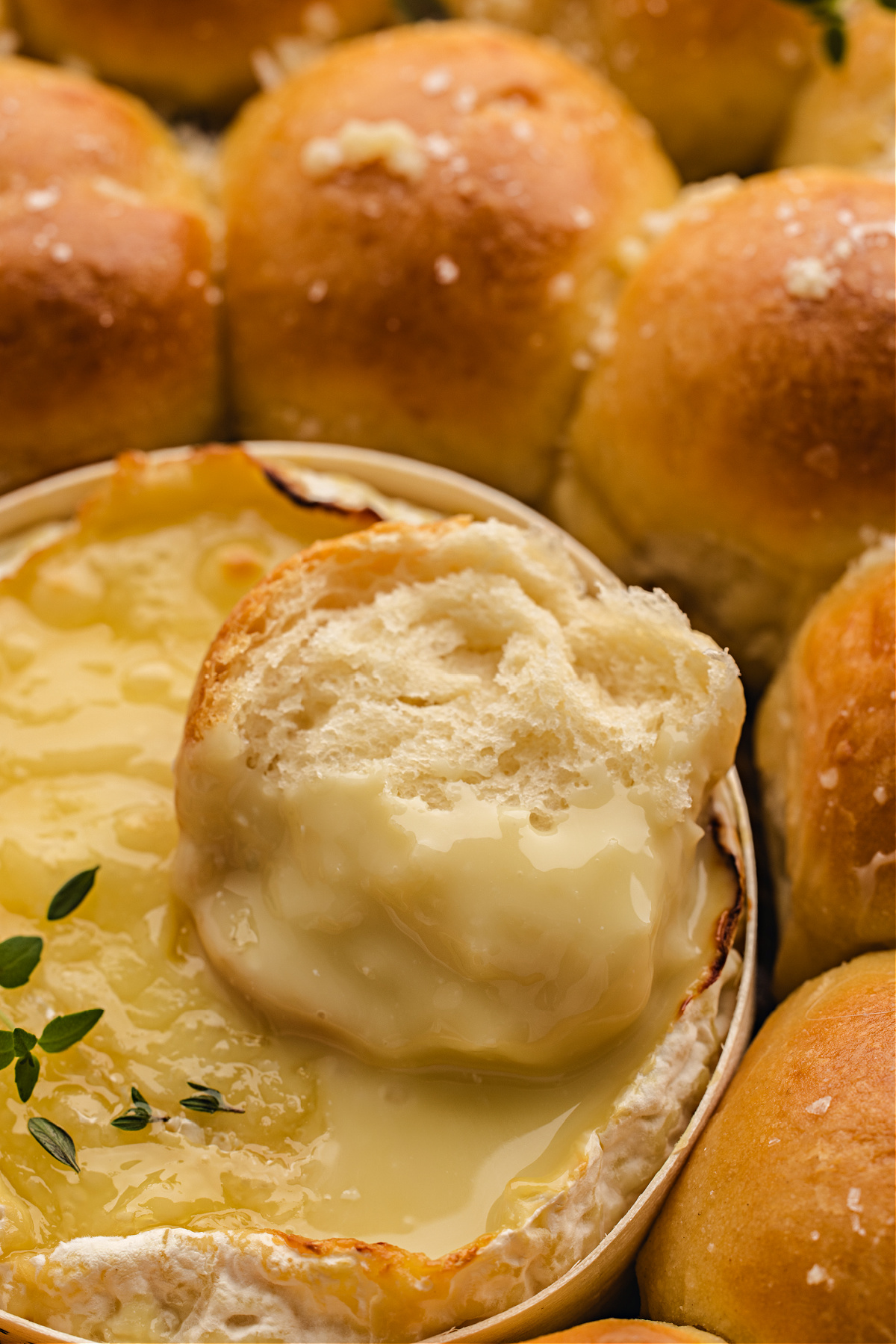
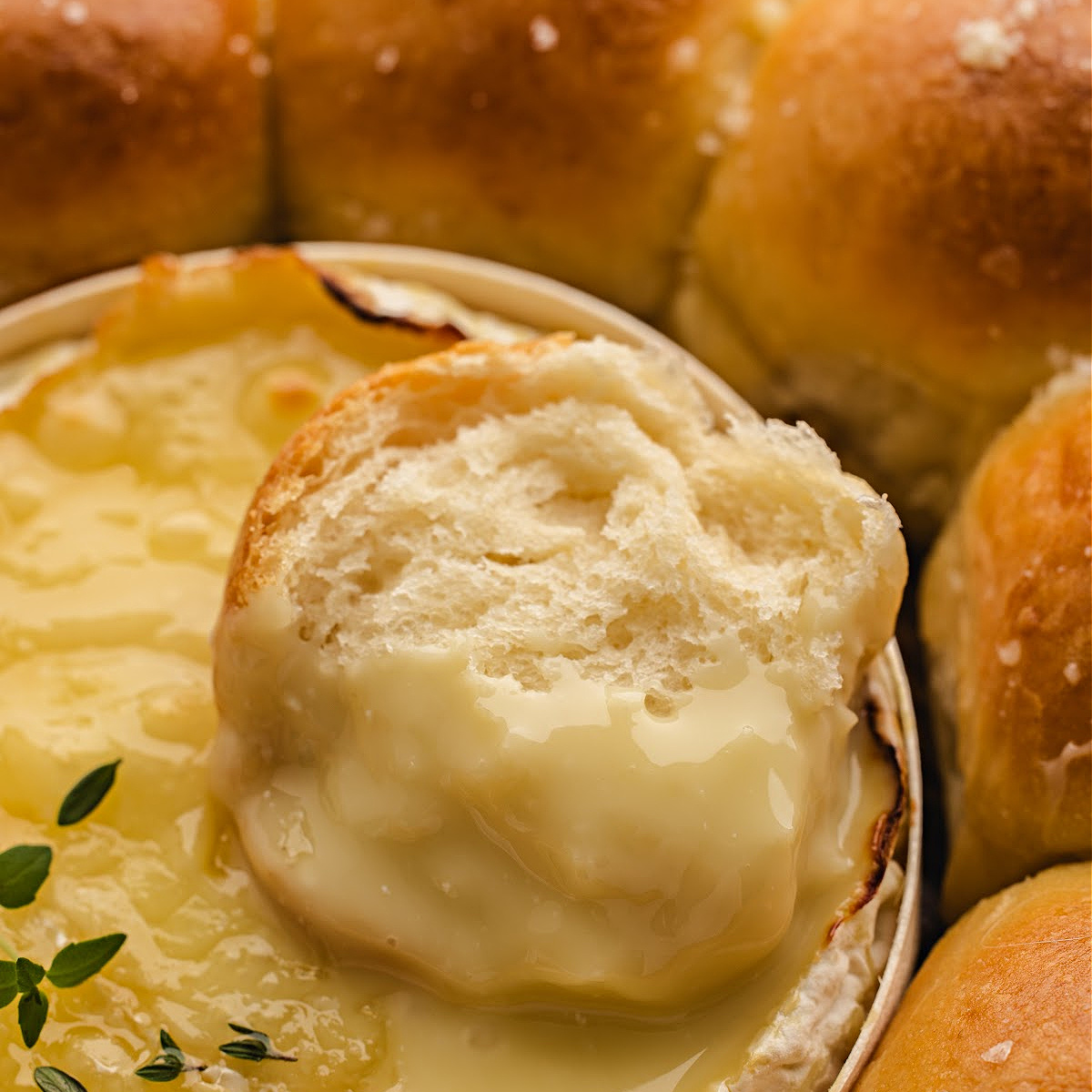
This baked Camembert in a bread roll wreath is the kind of warmth you guard without saying why. It melts low and slow, the way love settles in. Honey sinks into its surface. Steam lifts the way a child’s breath used to rise against your shoulder. You pull a roll free and the whole wreath shifts but doesn’t fall apart. It knows its job is to hold on.

There is a kind of bond that grows in rooms, the one between a mother and her son. Not boisterous, or louder, but shaped differently. A steadier one. A different kind of gravity that doesn’t need to be spoken to be understood. Maybe that’s why this recipe feels like lineage. The architecture of mother and son is made from places no one sees.
Small rises and soft landings. The center feeding the circle and the circle protecting the center. Touch one piece and the whole thing is responsive. Taste it warm and you know exactly what was asked of you and what was given. Some bonds stay standing even after life rearranges the furniture. Some warmth survives the winter and some centers never stop glowing.
Why I Love This Recipe
- The wreath shape carries the geometry of mother and son. A center that steadies. A ring that protects. A structure made to hold even as it opens outward.
- The bread rises the way boys do. Slow at first. Needing warmth. Needing space. Taking on their own shape while you stand by and watch the form reveal itself.
- The Camembert melts in the middle like a heartbeat you can’t replace. Soft enough to yield, strong enough to anchor the room.
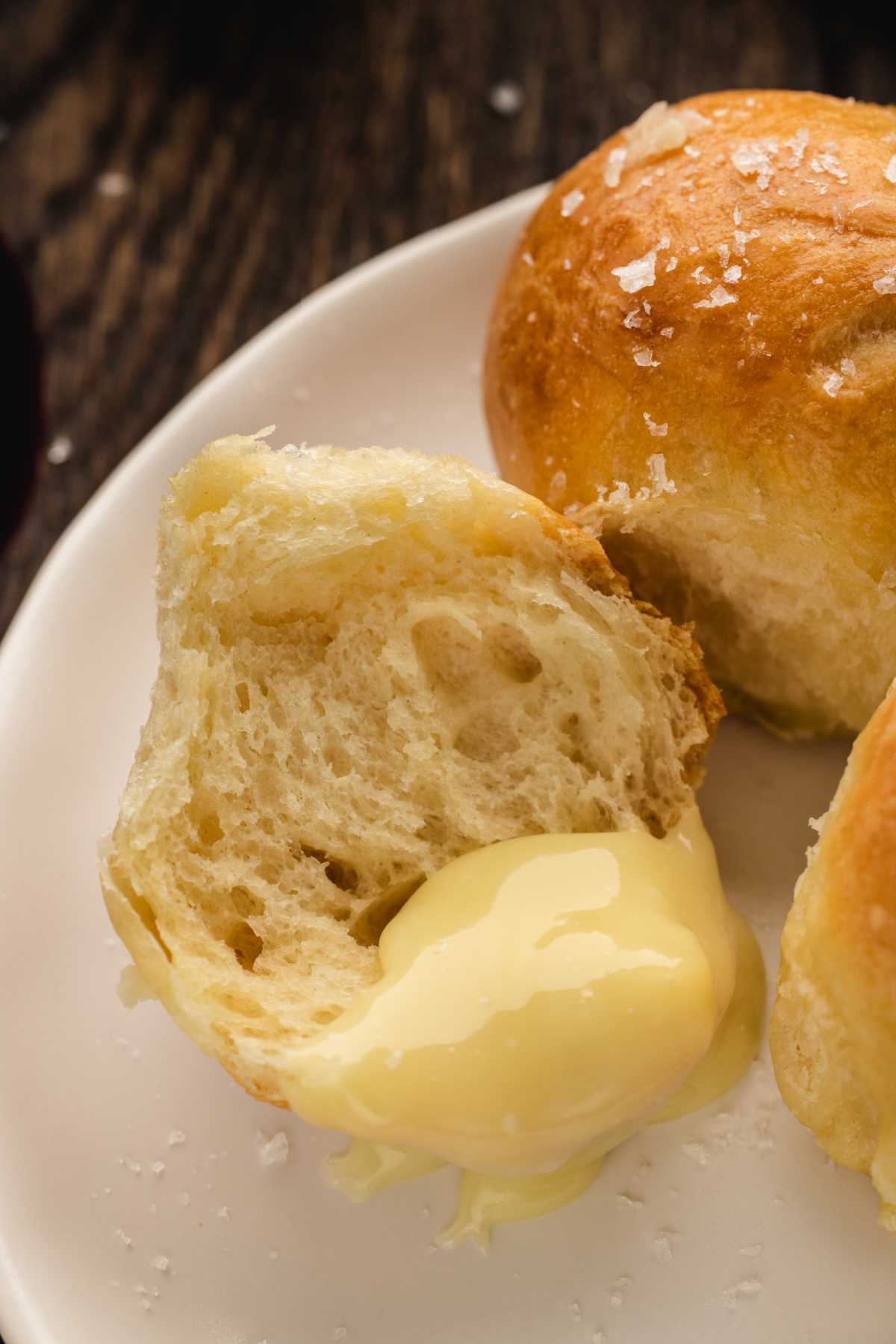
- Each roll pulls away cleanly, the way grown children do. Not breaking. Not severing. Just loosening the circle without leaving it.
- The garlic butter settles into every crease. Care that works quietly. Care that shows up even when no one names it.
- The whole thing bakes into its own kind of Southern Gothic warmth. Wild. Old. And haunted by the tenderness you never learned how to say out loud.
- And when you set it on the table, it feels like setting down something sacred. A small architecture of love. A circle that holds, releases, and holds again.
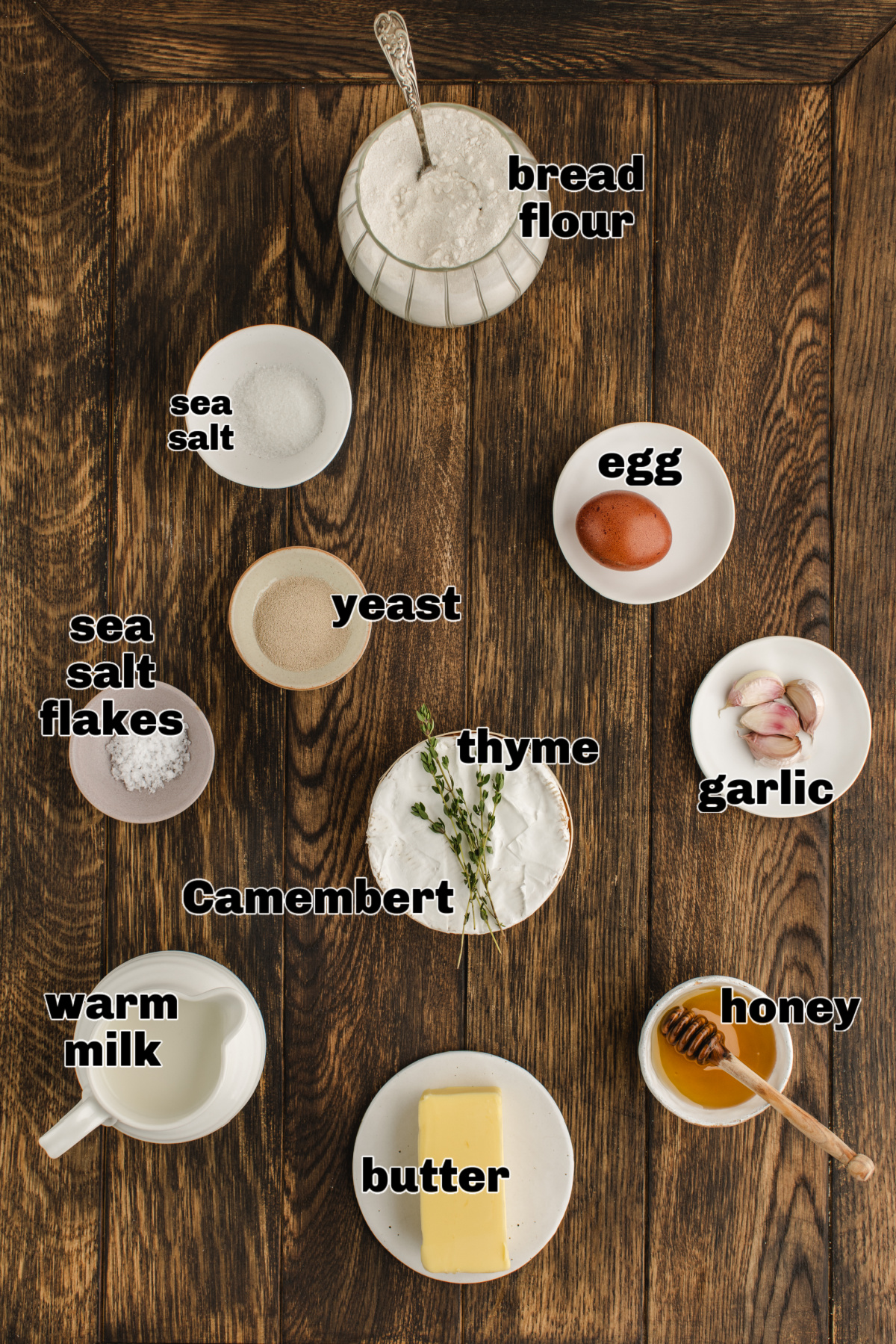
Ingredients
What holds the circle together.
- Bread flour – Gives the wreath its bones, the way mothers give boys something to rise from.
- Warm milk – Coaxes the yeast awake the same way warmth coaxes a child toward the world.
- Instant yeast – A steady lift, quiet but certain, like a hand at the back.
- Sugar – Just enough sweetness to keep the edges soft.
- Sea salt – A grounding note that keeps it from drifting.
- Butter – Tenderness folded in while the dough is still becoming itself.
- Eggs – Strength and shine. The part that holds everything together when it gets hot.
- Garlic – A low hum that melts into the butter and stays close.
- Camembert – The molten center everyone circles around because it feels like home.
- Honey – Softness that settles deeper once the heat hits.
- Thyme – A green thread that reminds the whole thing where it came from.

How to Make the Baked Camembert Bread Roll Wreath
This is how you build a circle strong enough to hold a tender center. Every roll its own small devotion.
Find the complete printable recipe with measurements in the recipe card at the BOTTOM OF THE POST.
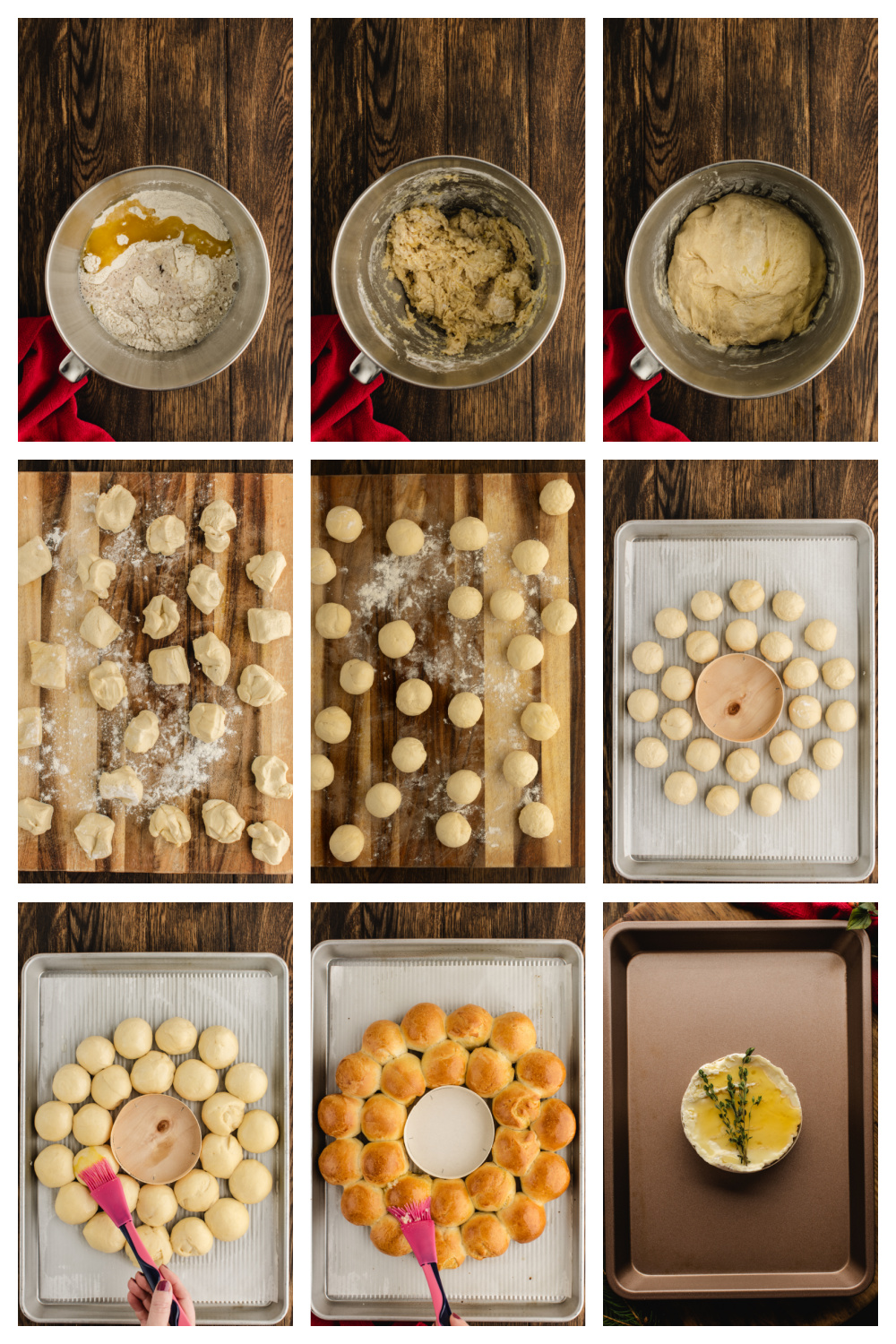
- Step One (wake the yeast):
Stir the warm milk, yeast, and sugar until it begins to breathe. It will rise like something remembering its purpose. - Step Two (mix the dough):
Add flour and salt to the mixer. Pour in the warm milk mixture, melted butter, and egg. Let it gather itself on low, then knead until the dough turns smooth and sure. - Step Three (check the feel):
Touch the surface with a dry fingertip. If it clings, add flour a little at a time. The dough should be soft, steady, and willing. - Step Four (first rise):
Move the dough to an oiled bowl, cover it, and let it lift. Follow the dough, not the minutes. Rise happens when it decides to. - Step Five (shape the rolls):
Press the air out and divide into 25 small pieces. Roll each one into a tight ball, the kind that holds its own center. - Step Six (build the wreath):
Chill the Camembert and set its empty wooden box in the middle of a baking sheet. Circle 10 dough balls around it, then 15 more around that. Leave space so they can grow. - Step Seven (second rise):
Cover and let the rolls swell until they look light, rounded, and ready. - Step Eight (prep the cheese):
Heat the oven. Trim the top rind from the cold Camembert, drizzle with honey, and settle thyme on top. - Step Nine (bake):
Place the cheese back in its box. Brush the rolls with egg wash. Bake until they turn golden and sound hollow underneath. The Camembert will soften into its molten center. - Step Ten (finish):
Melt butter with garlic and salt. Brush it over the hot rolls so it seeps into every crease and corner. - Step Eleven (serve warm):
Take it to the table while the cheese is oozing and the rolls pull apart with steam.
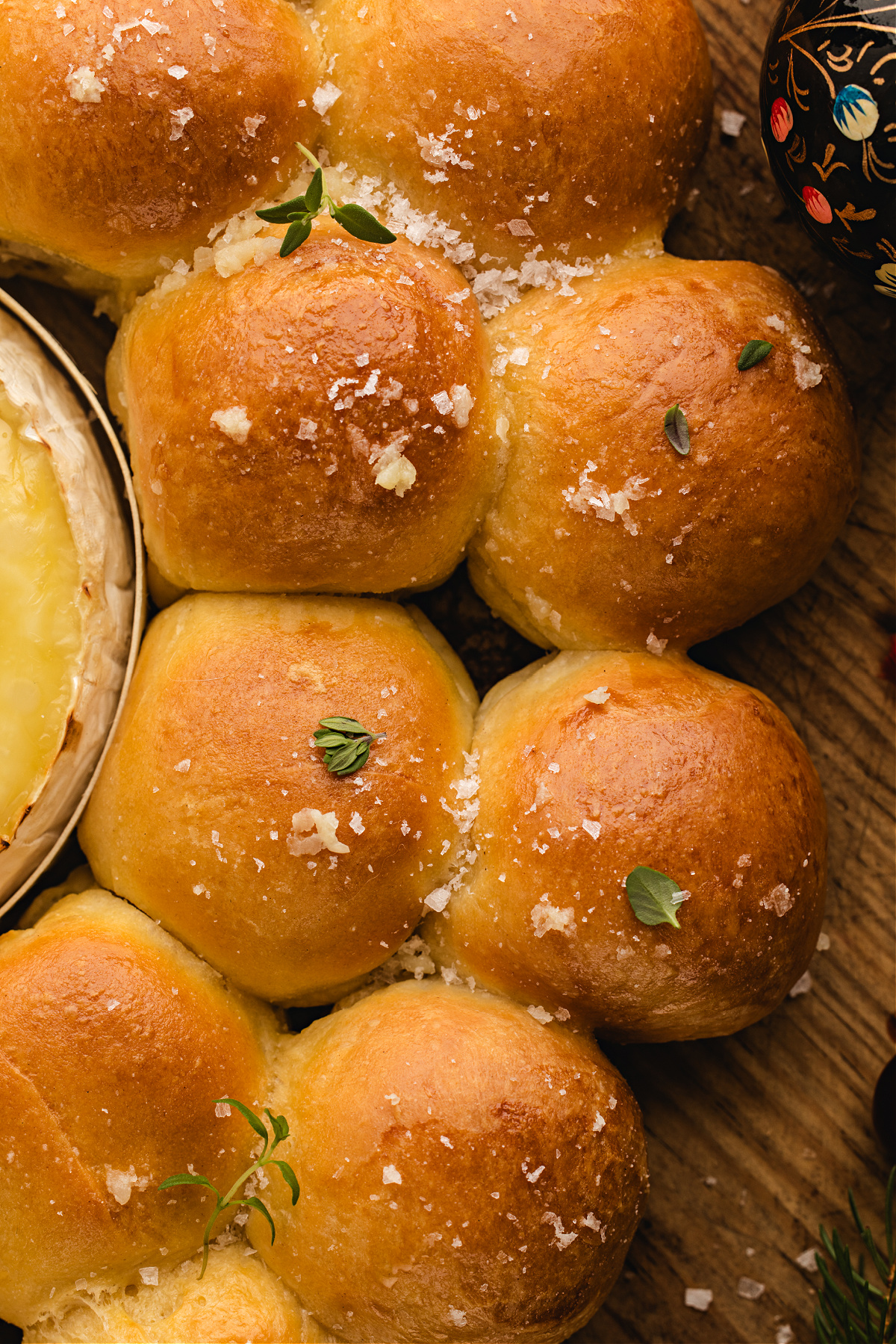
Recipe Tips
Bread rises the way children do. Slow. Quiet. Dependent on warmth that doesn’t rush them. Honor these small rituals and the wreath will hold.
- Choose bread flour. It gives the rolls a steadier archetype and a softer middle. All-purpose flour will work if that’s what you have.
- Wake the yeast gently. Warm milk should feel like a warm bath. When it foams, it’s alive.
- Knead by hand if necessary. Work it until it feels smooth and elastic, not sticky or unsure.
- Trust the rise, not the clock. Dough follows warmth, not schedules. When it doubles, it’s ready.
- Rest it overnight if that serves you. Cold dough wakes up slowly, but warmth brings it back.
- Use the finger-poke test. A slow spring and a soft dent means it’s ready.
- Trim the Camembert rind. It melts cleaner and gives you a warm, open center.
- Bake cheese and rolls separately if you want control. Bake the wreath with the box in place, cheese on another tray, then unite them when both are ready.
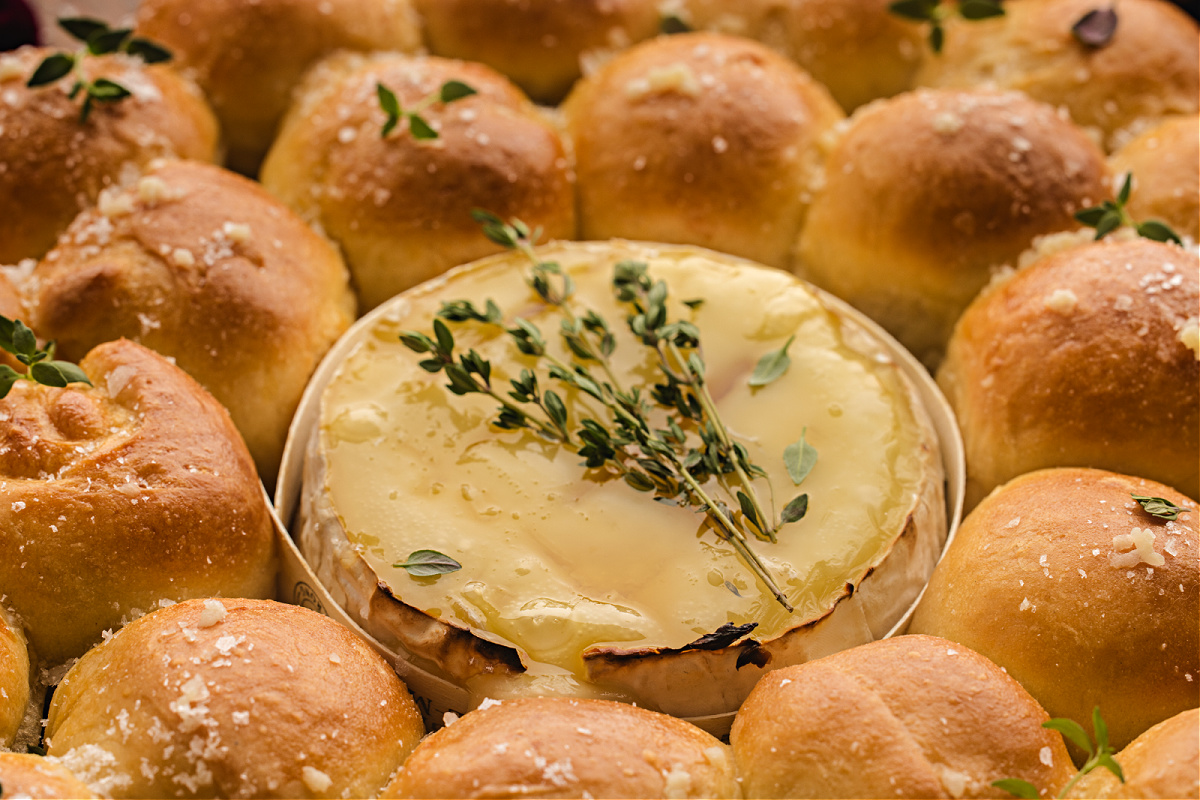
Storage
Warm bread and soft cheese never last long, but what remains can still be tended with care.
- Room temperature
Best the day it’s baked. Once cooled, wrap the rolls in foil or place them in an airtight container for up to 2 days. Reheat in a low oven at 300°F (150°C) until the warmth returns to the center. - Refrigerator
If the cheese and rolls have already been baked together, store leftovers in an airtight container for up to 3 days. Reheat at 350°F (175°C) until the Camembert loosens and the rolls feel alive again.
FAQs
The questions that show up when people want reassurance more than instructions.
- Can I shape the wreath a different way?
You can. Make one large ring or two smaller circles. The geometry changes, but the center still holds. - What if my rolls bake faster than the cheese melts?
Tent the rolls with foil and give the cheese a little more time. Some things catch fire early. Some take the long way. - Can I use Brie instead of Camembert?
You can, but Brie is gentler. Camembert carries more earth, more story. It stands up better in the center of a wreath built to hold. - Why did my rolls brown unevenly?
Ovens have moods. Rotate the pan if one side darkens quicker. - What herbs work besides thyme?
Rosemary, sage, even a clove of garlic dropped into the center. Anything that smells like it remembers where it came from. - How do I keep the bottom of the rolls from browning too fast?
Use the middle rack. The wreath does better when it isn’t too close to the heat. - Can I make this for a crowd?
You can double the dough and bake two wreaths. One for the table, one for the people who hover. - What if my Camembert leaks out of the rind?
It happens when the cheese is eager. Scoop it back with a spoon and serve it warm. - How do I serve this without it falling apart?
Use hands, not knives. Tear the rolls the way you’d pull someone in close. - Why did my dough feel tight while shaping?
It needed a moment. Cover it, let it breathe, then try again. - Can I add toppings to the rolls?
Yes. A sprinkle of sea salt or grated Parmesan. Nothing that overshadows the center.
More Winter Centerpieces for the Table
For the foods that hold you without saying a word.
- Pull-Apart Bacon Bread – Warm, salty, meant to keep everyone close.
- Cranberry Brie Pull-Apart Bread – Sweet–tart comfort that gathers a room without trying.
- Parker House Rolls – Soft and steady. The kind of bread that parents you.
- Cranberry Brie Bites – Small, molten reminders that warmth comes in pieces.
- Kahlua–Pecan–Brown Sugar Baked Brie – Dark, sweet melt. The kind you gravitate toward without meaning to.
This post may contain affiliate links. Please read my disclosure policy.
Baked Camembert Bread Roll Wreath
Equipment
- Stand Mixer with dough hook. Helps knead the dough evenly and efficiently.
- mixing bowls For rising the dough and providing room for expansion.
- baking sheet Holds the wreath shape and allows even browning.
- Saucepan Used to melt the garlic butter for finishing.
- pastry brush For brushing egg wash and warm garlic butter on the rolls.
- Knife To remove the top rind from the Camembert.
Ingredients
Bread Rolls:
- 1 cup (240 ml) warm whole milk (about 110°F / 43°C)
- 2 tsps (7 g) RapidRise yeast
- 1 tbsp (12 g) granulated sugar
- 3¼ cups (406 g) white bread flour or all-purpose flour
- 1 tsp (6 g) fine sea salt
- ¼ cup (57 g) unsalted butter melted
- 1 large egg lightly beaten, for the dough
- 1 large egg beaten for the egg wash
For the Camembert:
- 1 wheel (8 oz / 226 g) Camembert cheese in its wooden box
- 2 tbsps (42 g) honey
- 1 large sprig of fresh thyme
Garlic Butter:
- 4 tbsps (57 g) unsalted butter
- 2 small garlic cloves minced
- pinch sea salt
Instructions
- In a small bowl, combine the warm milk (110°F / 43°C), instant yeast, and sugar. Stir and let stand for 5 minutes, or until the mixture becomes frothy on top.1 cup (240 ml) warm whole milk, 2 tsps (7 g) RapidRise yeast, 1 tbsp (12 g) granulated sugar
- In the bowl of a stand mixer fitted with a dough hook, mix the bread flour and sea salt. Add the frothy milk mixture, melted butter, and lightly beaten egg, then mix on low speed until a shaggy dough forms. Increase to medium speed and knead for 8 minutes, or until the dough becomes smooth and elastic.3¼ cups (406 g) white bread flour, 1 tsp (6 g) fine sea salt, ¼ cup (57 g) unsalted butter, 1 large egg
- Touch the surface of the dough with a clean, dry finger. If it feels sticky, add flour 1 tablespoon (15 ml) at a time, mixing on low speed until the dough releases cleanly from your finger.
- Transfer the dough to a lightly oiled bowl and cover with lightly oiled cling wrap. Let rise in a warm place until doubled in size; timing may vary depending on your environment.
- Punch down the risen dough to release air. Divide into 25 equal portions, weighing for accuracy if desired. Shape each portion into a smooth ball on a lightly floured surface.
- Remove the Camembert from its wooden box and refrigerate the cheese. Place the empty box in the center of a large baking sheet. Arrange 10 dough balls around the box, then form a second outer ring with the remaining 15 dough balls, leaving space between them for rising.
- Cover loosely with oiled cling wrap and let rise for 30 minutes, or until the dough balls appear noticeably puffy.
- Preheat the oven to 375°F (190°C). Brush the tops and sides of the dough balls with beaten egg.1 large egg
- Remove the chilled Camembert from the refrigerator. Use a sharp knife to cut the top rind off the cheese, drizzle with honey, and place the thyme on top. Nestle the prepared cheese into its wooden box in the center of the wreath.1 wheel (8 oz / 226 g) Camembert cheese, 2 tbsps (42 g) honey, 1 large sprig of fresh thyme
- Bake for 20 minutes, or until the bread rolls are golden brown and sound hollow when tapped on the bottom. The Camembert should be melted and soft in the center.
- While the wreath bakes, melt the butter in a small saucepan. Add the minced garlic and a pinch of sea salt and cook for 1 minute, or until fragrant.4 tbsps (57 g) unsalted butter, 2 small garlic cloves, pinch sea salt
- Brush the garlic butter over the hot rolls as soon as the wreath comes out of the oven. Serve immediately while the rolls are warm and the Camembert is soft and scoopable.
Notes
- I normally do not proof instant yeast and you do not have to if you know for a fact it is fresh. I consider this a high stakes bake meant for guests, so I want no doubt my fermentation is awake and ready. Watching it foam in warm milk is quick insurance and gives the dough a stronger, steadier start.
- White bread flour gives the softest interior, but all purpose flour works.
- The dough can be mixed and kneaded entirely by hand. It will take longer but produces the same result.
- If refrigerating the dough overnight, allow the first rise at room temperature, then punch down before chilling. Shape the rolls cold and allow extra rising time the next day.
- The rolls and cheese can be baked separately. Bake the wreath with the empty box in the center to maintain its shape, then melt the Camembert on a separate tray and nestle it into the wreath before serving.
Nutrition
Have you made this Baked Camembert Bread Wreath Roll? I’d love to hear how it turned out — leave a comment below and let me know.
As an Amazon Associate and member of other affiliate programs, I earn from qualifying purchases.
Caleb says
Making this, but the writing, I felt every bit of yourds words to the depth. Beautiful. Writing mastery from someone who has lived and felt. Obvious. Please write a book. Any book.
Jacey says
You took my breat away here. Everything you wrote and the mother son architecture is so symbolic and the way it was compared to food was holy. Bless you this season.
Basia says
This is just beautiful, words, food, pure excellence.
Sally George says
This was a beautiful recipe, we really enjoyed iot and it came out beautiful
mignone says
Thanks, my son and I loved this recipe.
As for the garlic butter – I used normal garlic butter with a pinch of garlic powder for a better taste. Added some grated parmesan and then melted butter.
It came really good.