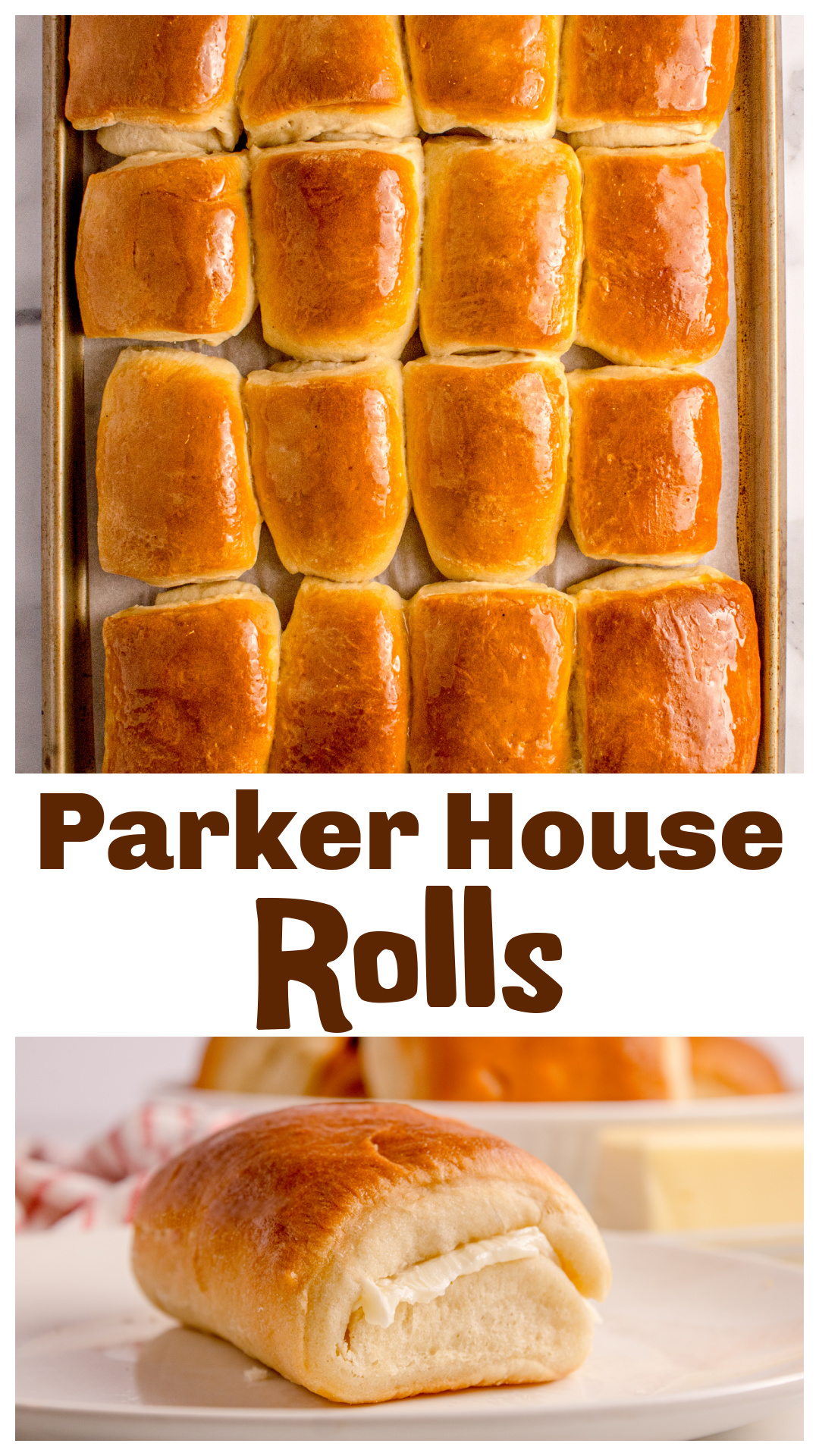
Soft, folded Parker House Rolls with the kind of confidence only butter and discipline can give. Golden, tender, and fully prepared to dominate the entire meal.
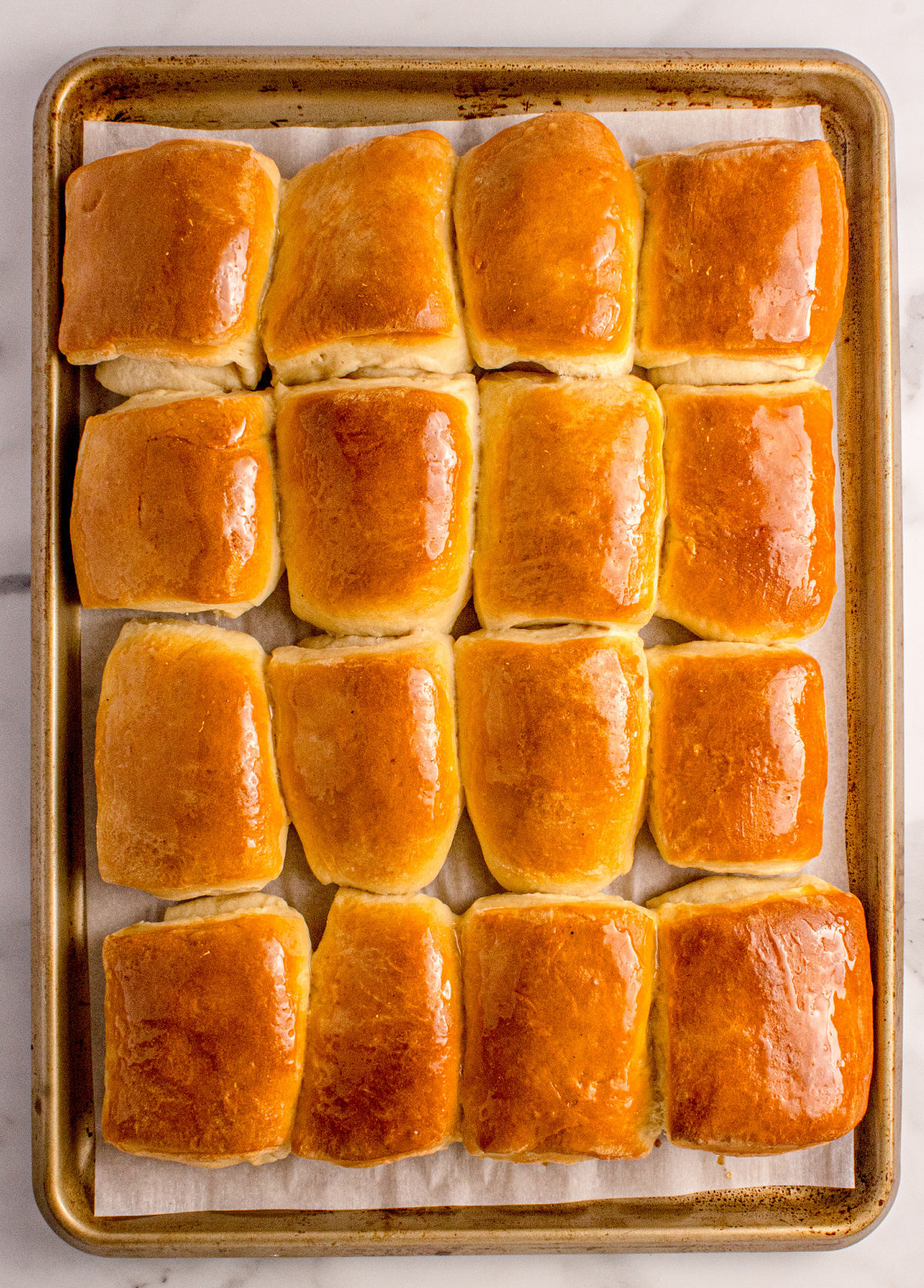
Parker House Rolls (But Faster): The Fold, the Butter, the Whole Situation
I tend to bake like I’m signing escrow papers. Focused, methodical, decisive, carrying the exact energy of someone who does not want to be interrupted for any reason, including small talk, doorbells, or the human need for oxygen. It’s probably the Slavic in me. We commit to dough and carbs like it’s a blood oath.
And naturally, all that intensity extends to yeast, my smallest, most reliable co-worker in the kitchen. I’ve stared at it through microscopes, watched the tiny bubbles that tell you a dough is waking up, and worked with the same microbial alchemy that drives full wine fermentations. Yeast is small, predictable, and honestly kind of adorable once you understand it, so I’m telling you with both hands on your shoulders: you’ve got this. These Parker House Rolls are going to rise, submit, and come out of your oven looking like the kind of carbs people fight over at dinner.
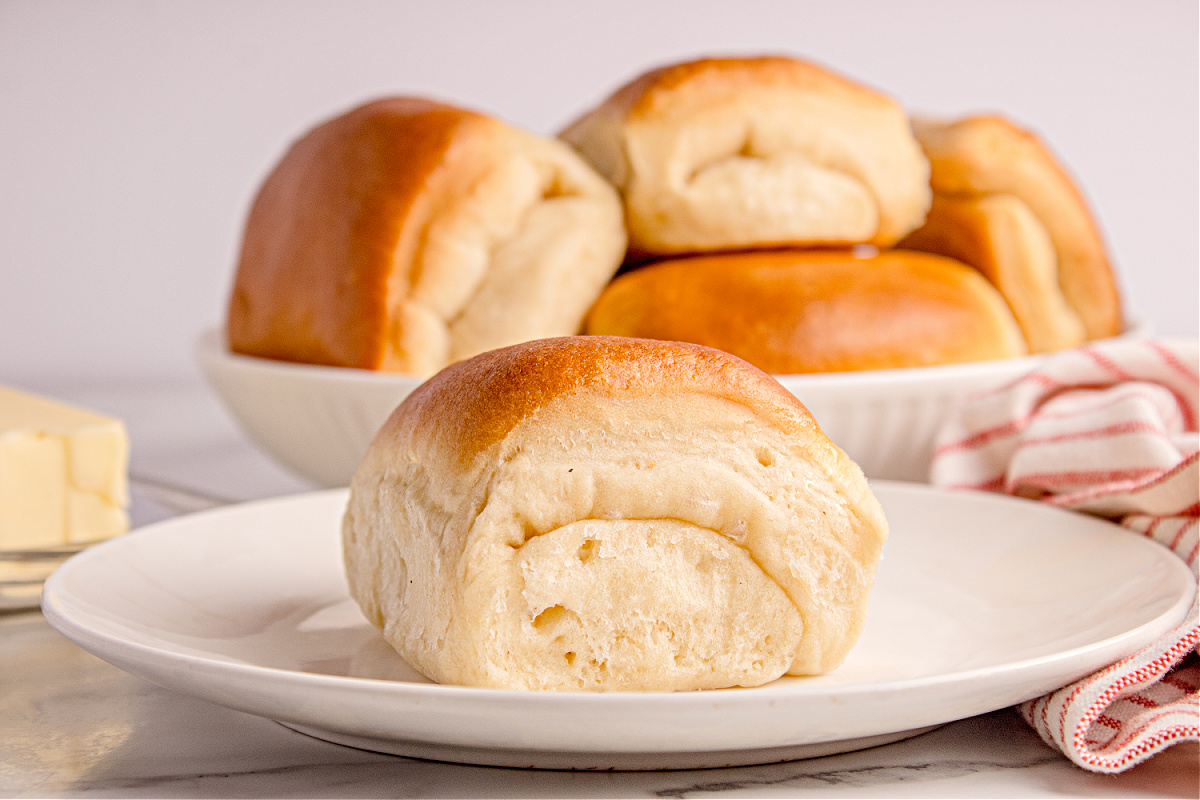
They’re fluffy, folded, buttery, and dramatic in a very old-school way. The kind of pull-apart rolls with enriched dough and the signature Parker House fold that make it look like you inherited some Boston grandmother’s secrets even though you absolutely did not. The fold, the butter, the rise, everything arrives in a tray of golden, layered rolls that feel classic without trying. No need for flexing. No fear of yeast. Just accepting that precision is your birthright when you’re working with a proper Parker House dough ball that turns into the kind of dinner roll people take two of before the basket gets passed.
Why I Love This Recipe
- Boston technique with Eastern European commitment.
- Instant yeast buys you time to act unbothered.
- Folds like buttered origami for adults.
Ingredients
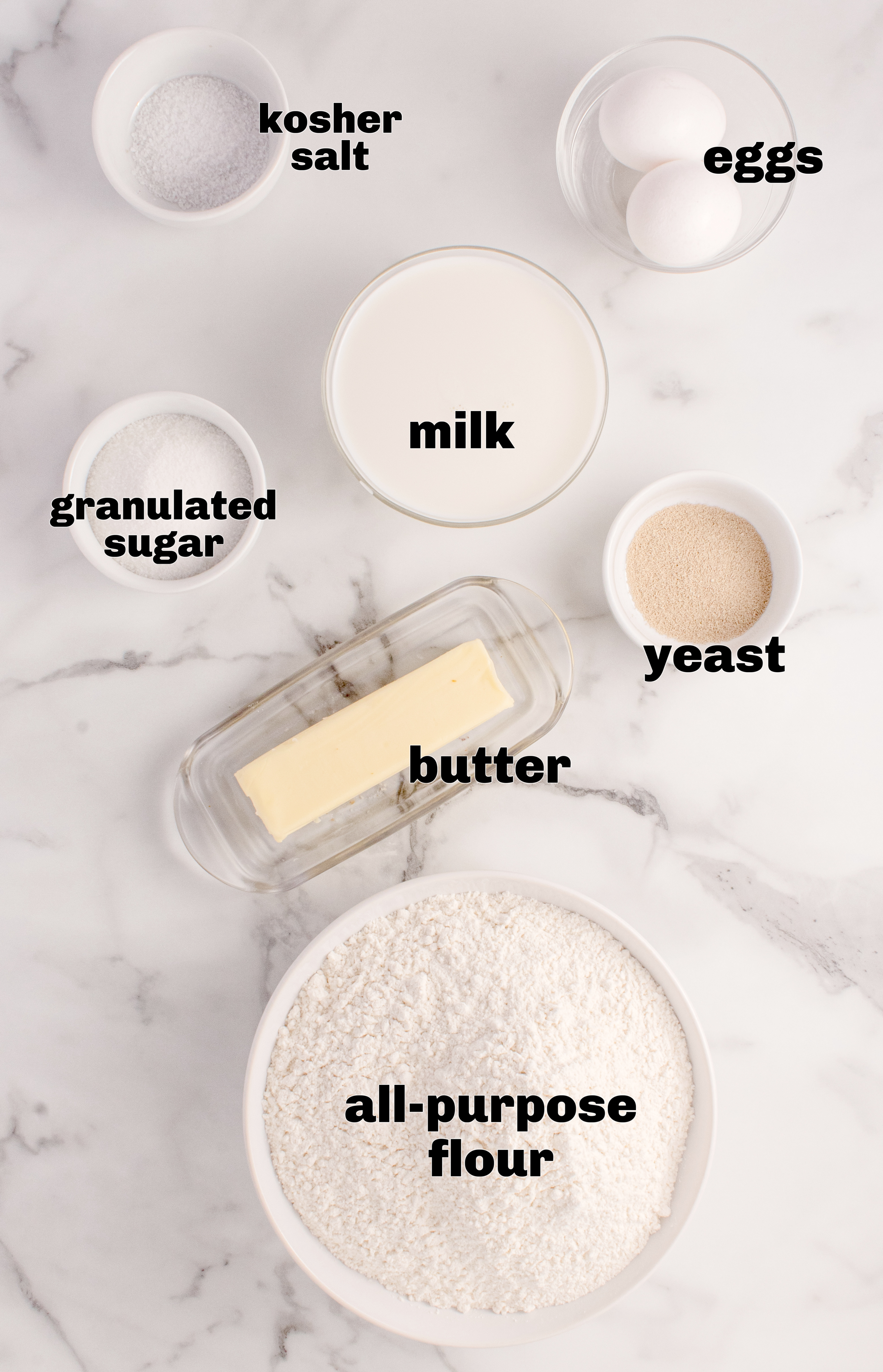
Here’s what you need to make a proper Parker House dough.
- All-purpose flour – the neutral territory where gluten and ambition shake hands.
- Sugar – yeast’s snack, keeps morale high.
- Salt – the difference between bland and memorable.
- Instant yeast – your microscopic workforce, unionized only in spirit.
- Warm milk – keeps the microbes awake and cooperative.
- Butter – the lamination-lite situation that makes Parker House Rolls…Parker House Rolls.
- Melted butter (for shaping) – lubricates the fold so it opens up like a fermentation cap breaking.
- Butter (post-bake) – the final gloss, like a barrel sample getting its first oxygen kiss.
- Eggs – give the dough its confidence to pull apart and the surface chemistry for golden tops.
How to Make Parker House Rolls
Find the complete printable recipe with measurements in the recipe card at the BOTTOM OF THE POST.
- Step One (mix the dough):
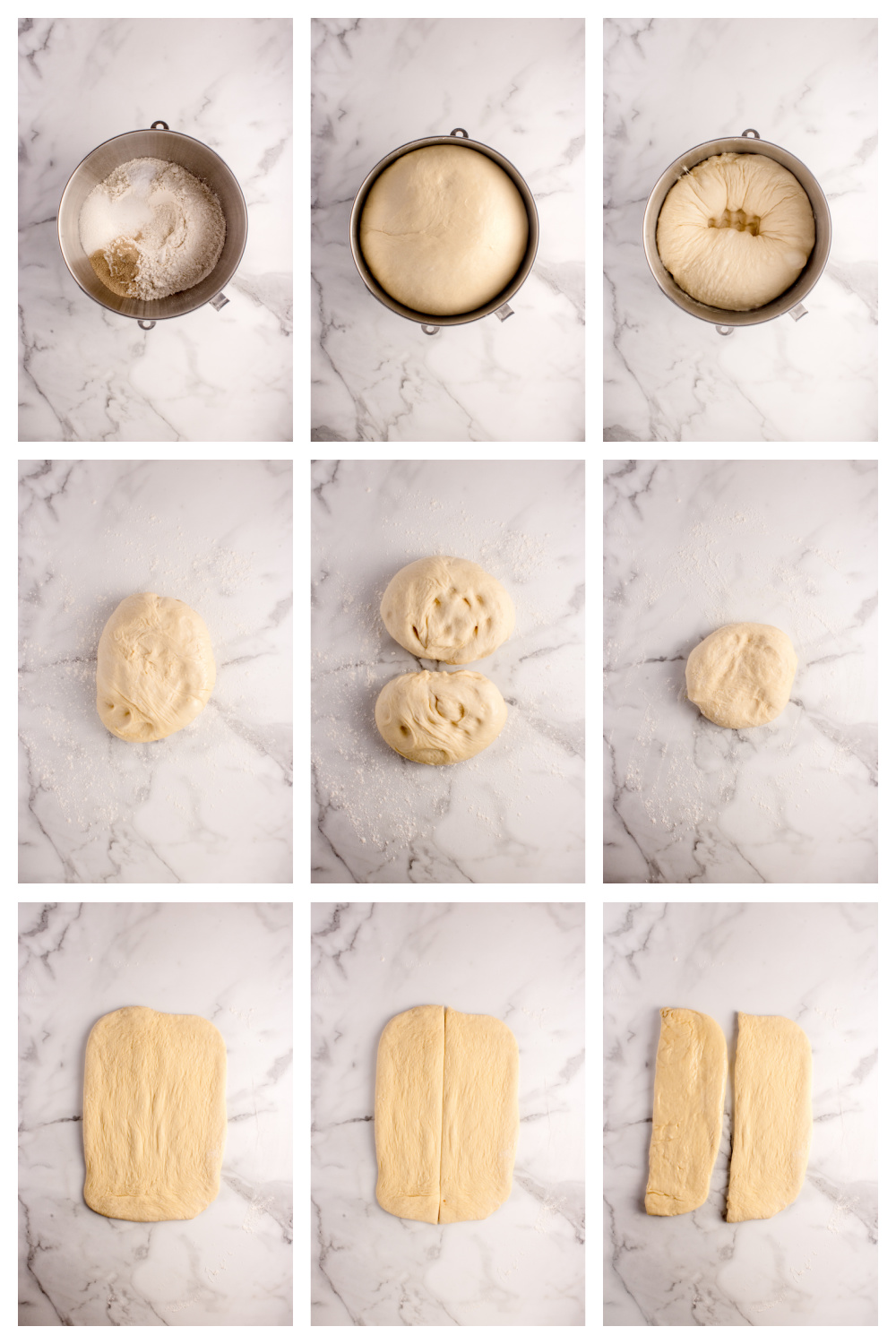
Add the flour, yeast, sugar, salt, warm milk, melted butter, and eggs to the bowl of a stand mixer fitted with the dough hook. Let the mixer pull everything together, then let it run until the dough turns smooth, slightly tacky, and starts pulling from the sides. If it feels too sticky, add flour 1 tablespoon (8 g) at a time until it settles into a soft, cooperative dough. If you’re mixing by hand, give it a solid ten minutes on the counter until it feels elastic and alive. - Step Two (first rise):
Move the dough to a greased bowl, cover it, and let it rise until it doubles. Enriched dough moves at its own pace, so let it take the full time to puff and loosen up. - Step Three (roll and fold):
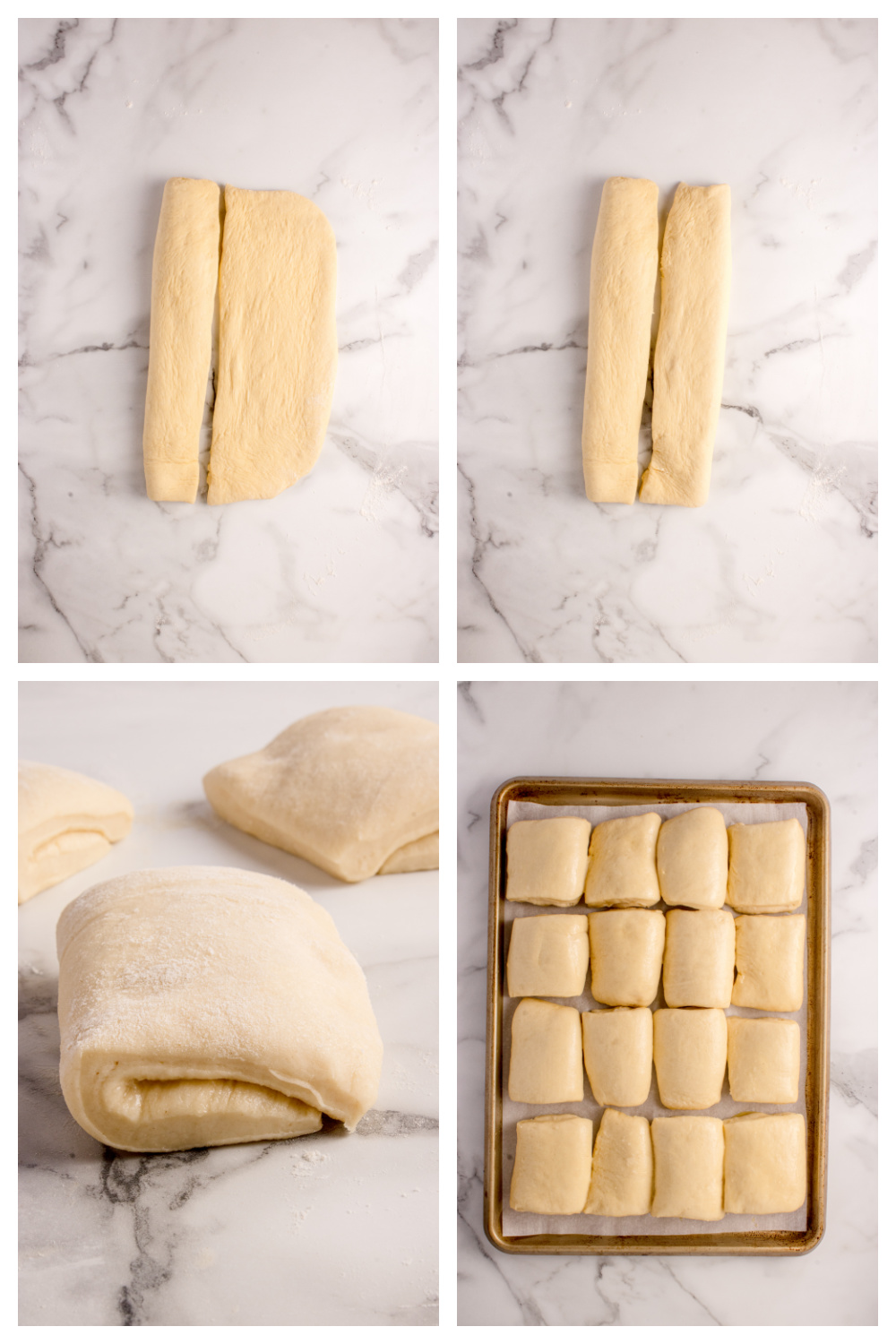
Divide the dough in half. Roll the first piece into an 8 x 12 inch (20 x 30 cm) rectangle and brush the entire surface with melted butter so the fold creates that classic Parker House crease. Slice the rectangle in half lengthwise. Brush both strips with butter again, then fold each strip lengthwise like a book so the buttered sides meet. Cut each folded strip into four even pieces. (Check the step-by-step photos in the post if you want to see exactly how the fold should look.) - Step Four (second rise):
Arrange the rolls on a parchment lined baking sheet with a little breathing room between them. Cover and let them rise for 30 to 45 minutes, until they look fuller, lighter, and a little proud of themselves. - Step Five (bake):
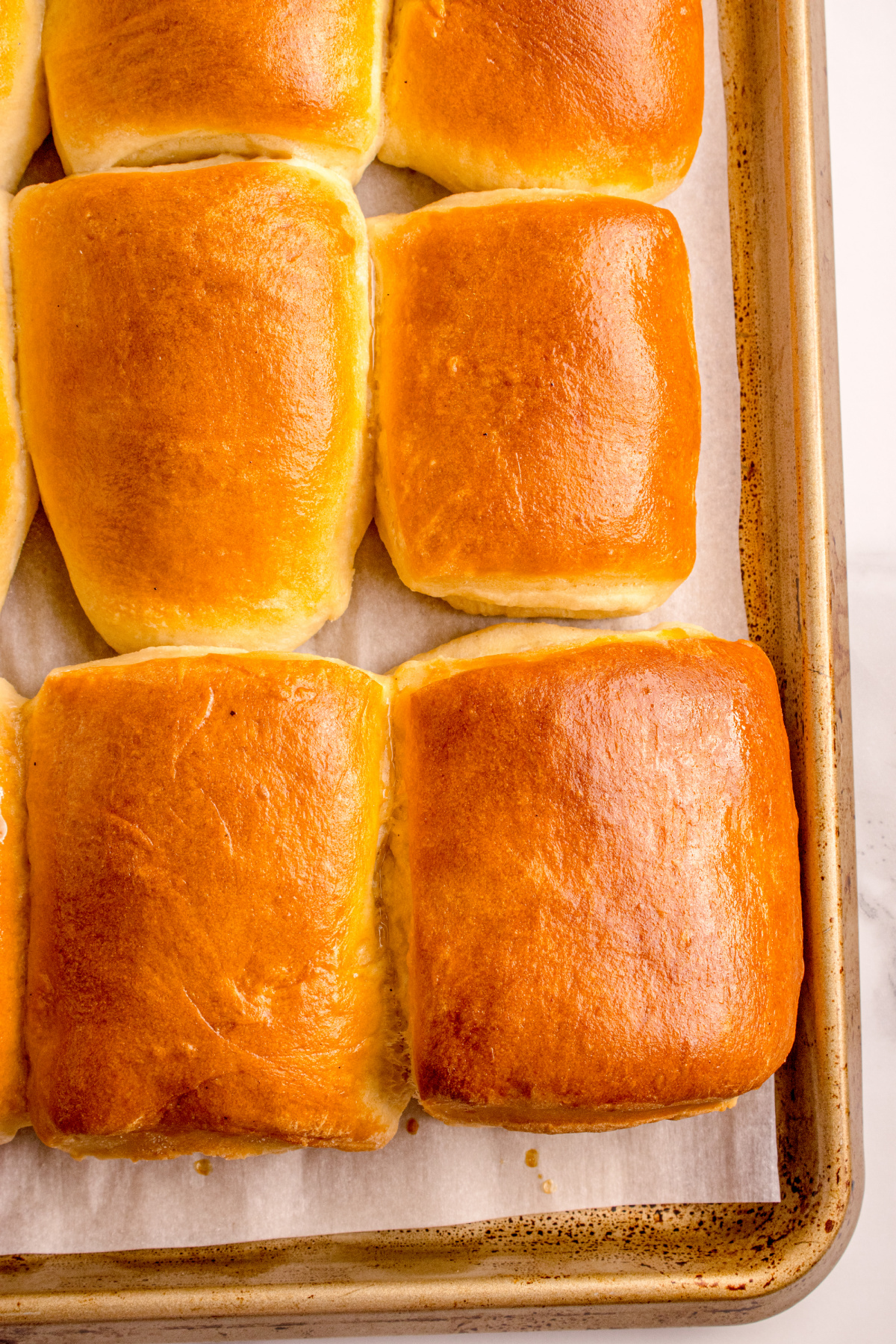
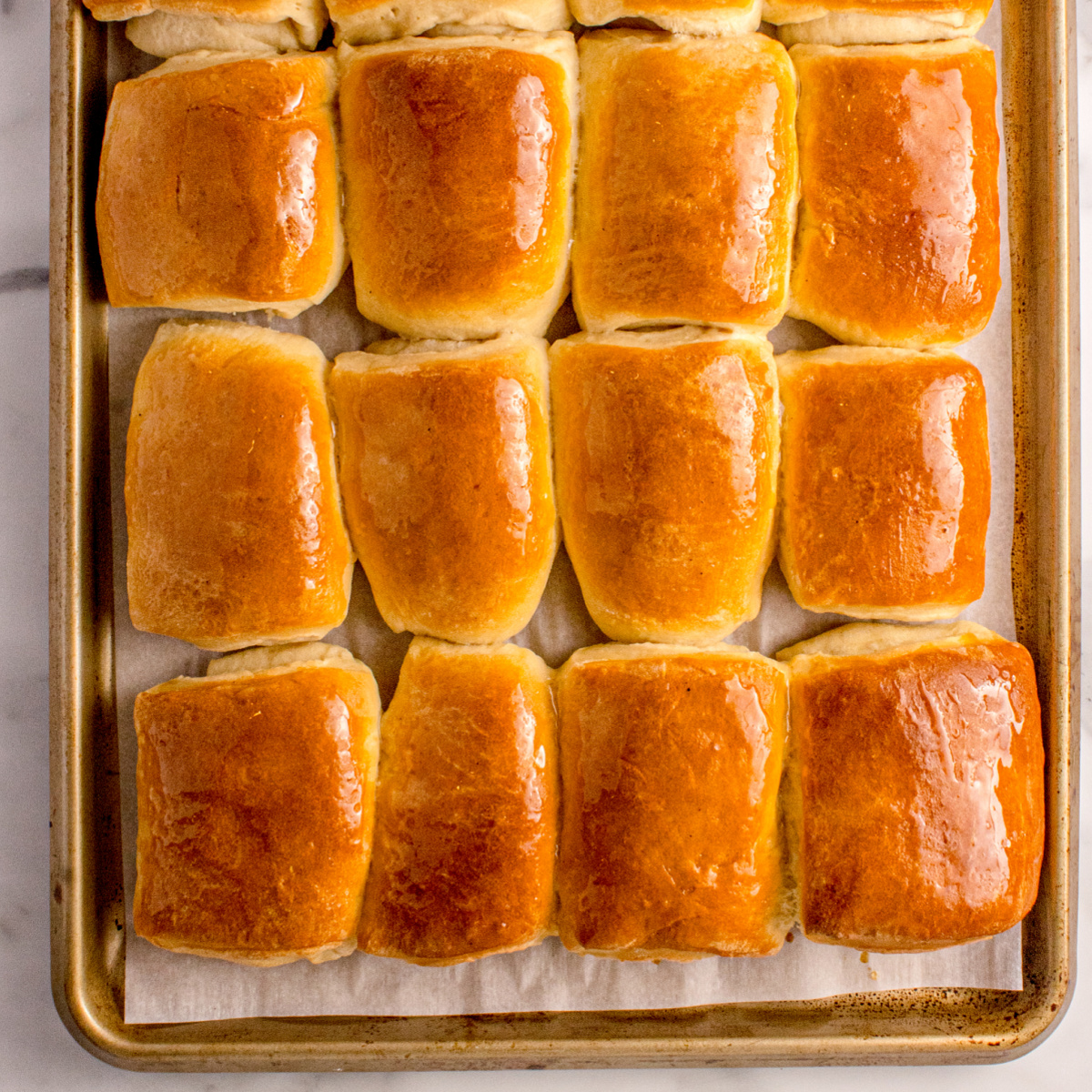
Brush the tops with egg wash and bake at 350°F (177°C) for 18 to 20 minutes, until the tops turn golden and the bottoms pick up some color. Brush them with melted butter the second they come out of the oven so the shine and aroma show up at full volume.
Recipe Tips
My tips for your Parker House rolls.
- A kitchen scale keeps you out of dough-density purgatory. Bread is tiny science – give it exact numbers and it steadies. Flour scoops lie; grams don’t.
- Stand mixer is the gold standard. Enriched dough needs commitment. The mixer keeps the warm milk, butter, and gluten doing the microscopic handshake they need without you sweating over the counter like it’s 1994. It relies on patience and the consistency of the stand mixer, just like my easy round challah 8-strand recipe.
- Flour is a scalpel, not a dump-truck. Add one tablespoon at a time. Too much and you’ve lost the dough’s tenderness; too little and it clings like stage five dough-ppression. Slow is king.
- Butter every layer like you’re signing your name. That brush of melted butter between the folds is what gives Parker House Rolls their signature crease and that soft, layered pull. It’s lamination’s casual cousin.
- Let the dough rise fully. Enriched dough is slower, heavier, and wants warmth. Give it the full time. That patience is what builds the height, softness, and “I know what I’m doing” energy.
- Space the rolls like they’re siblings who don’t get along. Too close and the folds fuse into one big carb slab. Give them room so the edges stay defined and dramatic.
- Butter after baking or don’t bother. The post-oven melt is what sets the shine, softens the tops, and reinforces the flavor of an enriched roll. Skipping it is a crime against gluten.
- If shaping feels like origami, you’re doing it right. The book-fold is the Parker House signature. The crease, the overlap, the butter, it’s classic, not complicated.
- Warm environment = reliable rise. Yeast is microscopic but not mysterious. It likes warmth, fat, and sugar. Treat it well and it performs like a tiny, predictable army.
- Instant yeast conducts itself perfectly here. No blooming, just straight into the flour like the quiet workhorse it is. If you like doughs that work with instant yeast, my orange knot rolls and homemade slider buns are made the same way.
- Your dough will feel soft and slightly sticky. That’s enriched dough done right. If it’s stiff, you’ve left “Parker House” territory and wandered into “sturdy sandwich bun.” Bring it back.
- Work quick but not chaotic. The butter should stay soft, the dough should stay warm, and the shaping should feel like a rhythm, not a sprint.
Storage and Freezing
Treat these rolls like the soft, butter-layered royalty they are:
- Room temp: Covered, they stay tender for 2 days. They don’t dry out fast because the enriched dough keeps them plush.
- Fridge: You can refrigerate them, but they lose their oomph. Room temp is better.
- Freeze (unbaked): Shape the rolls, freeze them on a sheet tray, then transfer to a bag. Thaw, let them rise, then bake. Pure sorcery.
- Freeze (baked): Wrap tightly and freeze for up to 2 months. Warm them in a low oven and brush with fresh butter so they revive like nothing ever happened.

FAQs
- How do I know the dough has risen enough?
When it looks like it’s trying to pay rent. Enriched dough won’t puff like a sourdough balloon, but it will double, look rounded at the top, and feel lighter when you lift the bowl. If it’s still dense and moody, give it more time. - Why do enriched rolls take longer to rise?
Fat slows everything down butter, eggs, milk. But once they get going, they produce the softest, tender-adjacent texture that’s worth every minute. (Yes, I said adjacent. Everyone hates the “m” word.) This is also why instant yeast saves time. - What if my kitchen is cold?
Put the bowl in your oven with the light on. Not warm, not heated, just the light. A low-key yeast spa. - Can I use active dry yeast instead of instant?
Yes. Sprinkle it into the warm milk first, let it wake up for 5 to 7 minutes, then add it in. Instant yeast jumps straight into the party. Active dry needs a personal invitation. - Why warm milk?
Because cold milk shocks yeast and warm milk coaxes it. It’s the difference between “fine, I’ll rise” and “watch me.” - Why is the fold important?
Because Parker House Rolls aren’t just rolls, they’re layered, buttered, old-money rolls. The fold creates the crease, the lift, and that dramatic “I was born with secrets” split on top. - Can I skip the egg wash?
Sure, if you want pale, witness protection program looking rolls. The wash gives you color, gloss, and that classic Parker House finish. - My dough feels sticky, should I add more flour?
Slowly. One tablespoon at a time. You’re guiding it, not punishing it. Enriched dough is naturally softer, and the moment it stops clinging like emotional Velcro, you’re done. - Can I make these ahead?
Yes. Chill the shaped rolls overnight. Pull them out, let them warm and puff, then bake. They’ll look like you spent hours rising and shaping when you did not. - Can I double the recipe?
If you have the stand mixer power, yes. If not, split it into two batches. - What pan should I bake them on?
A rimmed baking sheet lets the folds expand and stay defined. A snug casserole dish works too, it just gives you softer sides and a more communal pull-apart moment. - How do I keep leftovers from drying out?
Wrap them tightly and keep air away. They’re enriched rolls, they’re soft, and that softness needs guarding.

These Parker House Rolls have legit Boston hotel pedigree, and my Boston cream pie cupcakes exist in the same bloodline, same Boston-Americana spirit, just less buttoned up.
More Soft Dinner Rolls
Here are a few more soft dinner roll recipes worth clearing space on your table for
- Dinner Rolls (large batch) – Butter-rich and made for a crowd.
- Sour Cream Biscuits – Butter, buttermilk, and potatoes for soft layers without yeast.
- Cinnamon Cranberry Dinner Rolls – A sweet butter and egg dough from the same family.
This post contains affiliate links. Please read my disclosure policy.
Parker House Rolls
Equipment
- kitchen scale For ingredient accuracy.
- Stand Mixer Best for kneading enriched dough evenly.
- mixing bowls For rising and resting the dough.
- rolling pin To roll the dough into an even rectangle.
- pastry brush For brushing melted butter and egg wash.
- baking sheet rimmed. supports the rolls and keeps fold defined.
- parchment paper or a silicone mat. Prevents sticking.
- Pizza Cutter or sharp knife. For cutting clean, even strips and pieces.
Ingredients
Dough:
- 6 cups (750 g) all-purpose flour
- 2½ tbsps (22 g) RapidRise yeast or 2 tablespoons (18 g) active dry yeast (see recipe notes below)
- ⅓ cup (67 g) granulated sugar
- 1½ tsps (7 g) kosher salt
- 1½ cups (366 ml) warm whole milk (100–110°F / 38–43°C)
- 6 tbsps (84 g) unsalted butter melted and slightly cooled
- 2 large eggs room temperature
For Shaping:
- 2 tbsps (28 g) butter melted ( I prefer salted butter here)
Finishing:
- ¼ cup (56 g) butter melted ( I prefer salted butter here)
Instructions
- Add the flour, yeast, sugar, salt, warm milk, melted butter, and eggs to the bowl of a stand mixer fitted with the dough hook. Let the mixer bring the dough together, then keep it running until the dough turns smooth, slightly tacky, and starts pulling away from the bowl. If it feels too sticky, add flour 1 tablespoon (8 g) at a time until it settles into a soft, workable dough. If mixing by hand, knead on a lightly floured surface for about ten minutes until the dough feels elastic.6 cups (750 g) all-purpose flour, 2½ tbsps (22 g) RapidRise yeast, ⅓ cup (67 g) granulated sugar, 1½ tsps (7 g) kosher salt, 1½ cups (366 ml) warm whole milk, 6 tbsps (84 g) unsalted butter, 2 large eggs
- Place the dough in a greased bowl, cover it, and let it rise until it doubles. Enriched dough is slower than lean dough, so give it the full time to puff and relax.
- Divide the dough in half. Roll the first piece into an 8 x 12 inch (20 x 30 cm) rectangle and brush the surface with melted butter so the fold will create the classic Parker House crease. Cut the rectangle in half lengthwise. Brush both strips with butter again, then fold each strip lengthwise like a book so the buttered sides meet. Cut each folded strip into four even pieces. Check the step-by-step photos in the post to see the fold and shape.2 tbsps (28 g) butter
- Arrange the rolls on a parchment lined baking sheet with space between them. Cover and let them rise again for 30 to 45 minutes, until they look noticeably fuller and lighter.
- Brush the tops with egg wash (combine the egg with water) and bake at 350°F (177°C) for 18 to 20 minutes, until the tops are golden and the bottoms are lightly browned. Brush them with melted butter the second they come out of the oven.1 large egg, 1 tbsp (15 ml) water, ¼ cup (56 g) butter
Notes
-
Instant yeast: 22 g = a little over 3 packets (¼-oz packets are 7 g each).
Active dry yeast: 18 g = about 2½ packets.
If you bake at all, use the jar: Opening all those packets feels like community service. The jar gives you accuracy and sanity without having extra, paritally filled packets leftover. - Instant yeast can be added directly to the dry ingredients.
- Active dry yeast should be bloomed in the warm milk for 5 to 7 minutes before mixing.
- A stand mixer provides the most consistent gluten development for enriched dough.
- Dough should feel soft and slightly sticky; add flour slowly if adjustments are needed.
- Enriched dough rises more slowly than lean dough because of the butter, eggs, and milk.
- A warm, draft-free environment improves rise consistency.
- Folding the strips lengthwise creates the classic Parker House shape.
- Brushing melted butter immediately after baking keeps the rolls soft and enhances flavor.
- Feel free to sprinkle on a few Maldon sea salt flakes as a finishing touch.
- Read the whole post for more in depth tips and tricks for this recipe.
Nutrition
Have you made these Parker House Rolls? I’d love to hear how they turned out — leave a comment below and let me know.
As an Amazon Associate and member of other affiliate programs, I earn from qualifying purchases.
Selene says
I am doing a practice test batch for Thanksgiving and I am not a big baker, but everything came together perfectly. They are on their second rise and I can just tell these rolls will be perfect. Thank you for confidence push, I needed that. So easy.
Cathy Pollak says
Glad to hear it. Enjoy.
Zosia says
Absolute perfection! They turned out beautiful. I too did a practice run. They are so buttery and delicous. I did the flake salt as you suggested at the end. I feel like an accomplished baker.
Cathy Pollak says
So happy for you!
Chauncey says
These turned out perfect.
Rhonda Oien says
These look really amazing! I want to make them but I am confused with the amount of rolls it makes. On the recipe quantity it says 24. But on the instructions it says to cut into basically 16. Which on is correct?
Cathy Pollak says
Sixteen.
Lisa says
OMG they turned out amazing. How did you get me to do this? You are a magician.