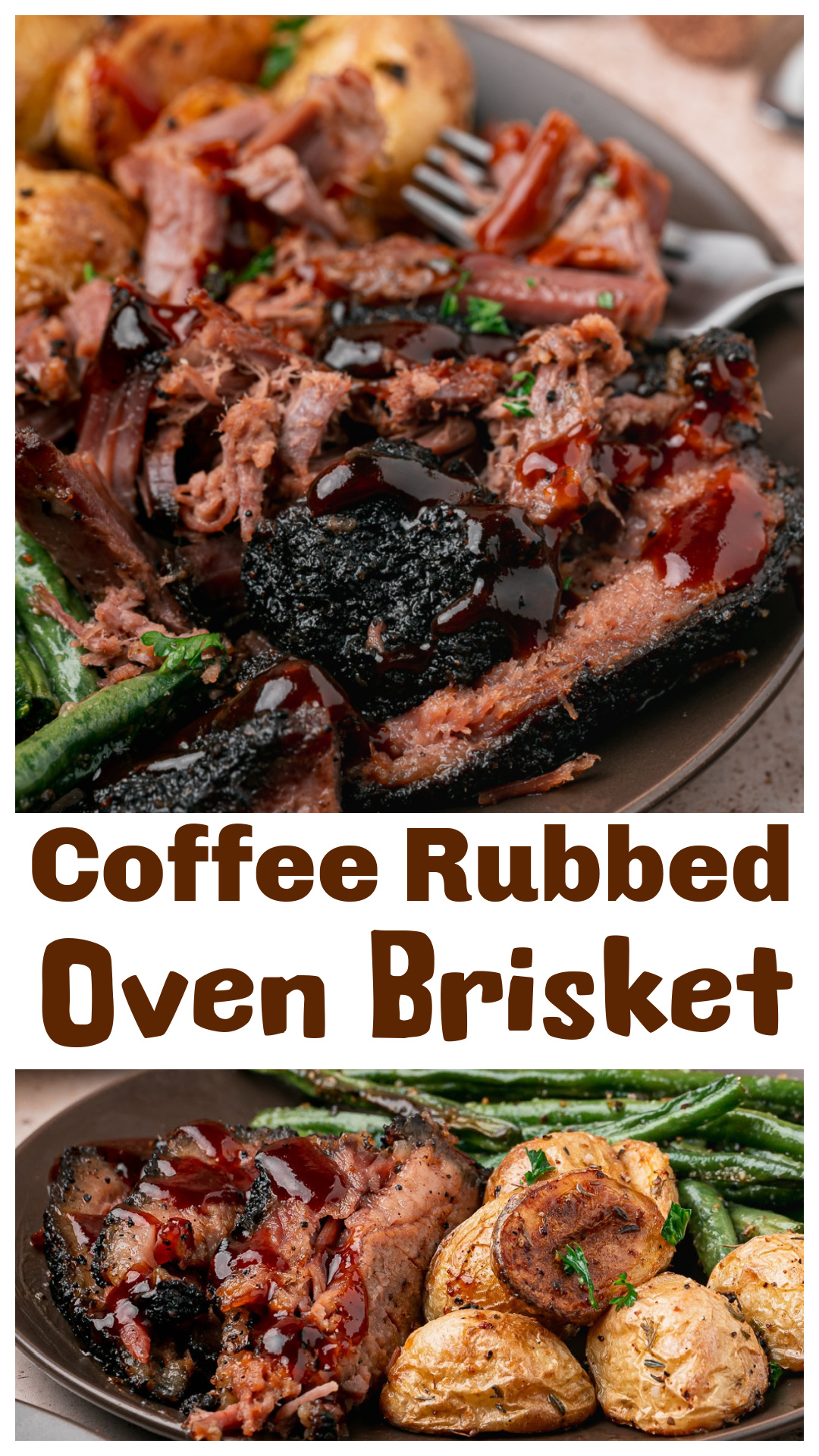
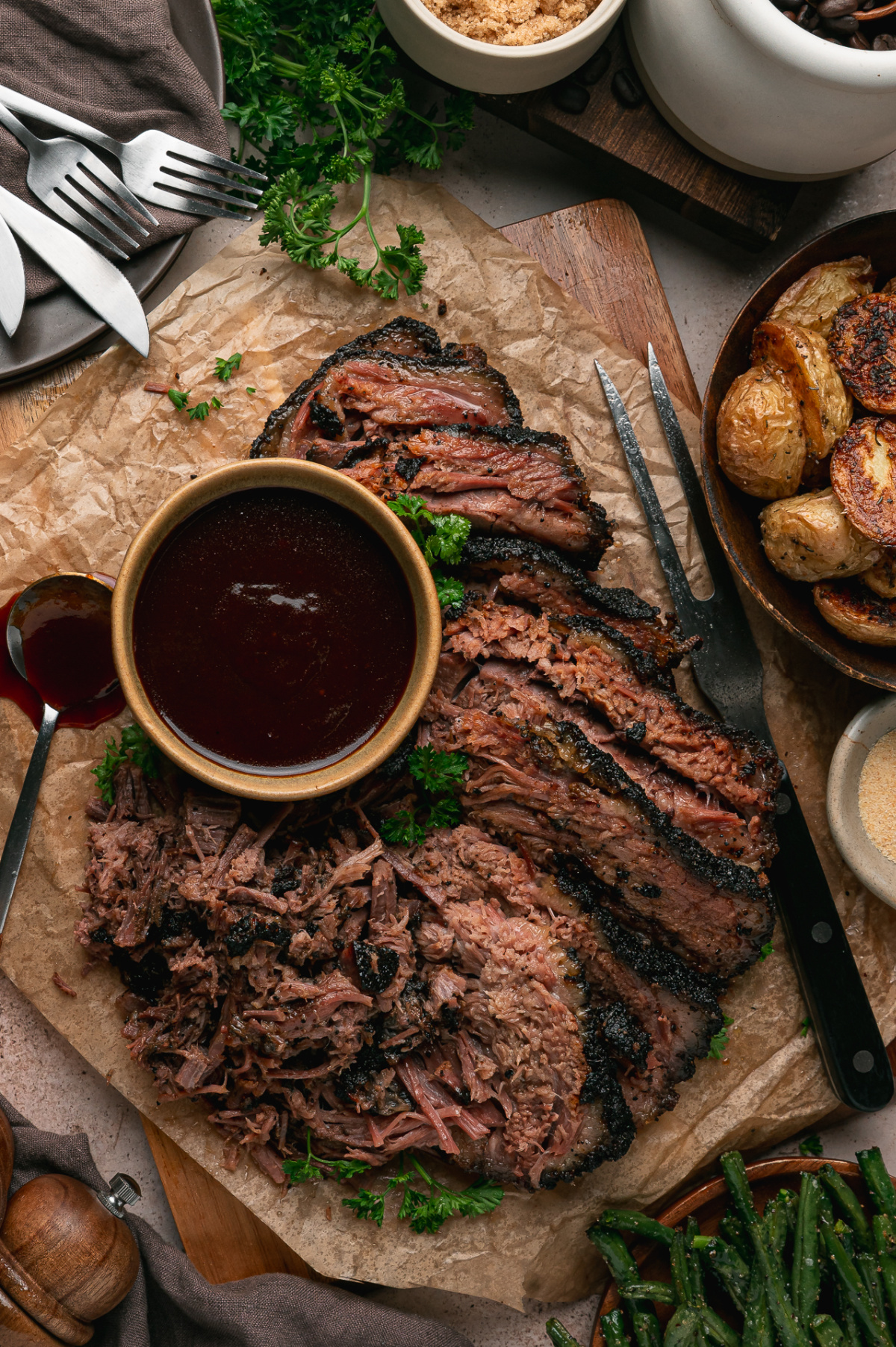
This coffee rubbed oven brisket gets its nearly black crust from dark roast coffee, chipotle, and brown sugar, with no smoker required. I cook a whole packer brisket until the flat is ready to slice and the point pulls apart for dinner, sandwiches, tacos, and whatever happens after that.
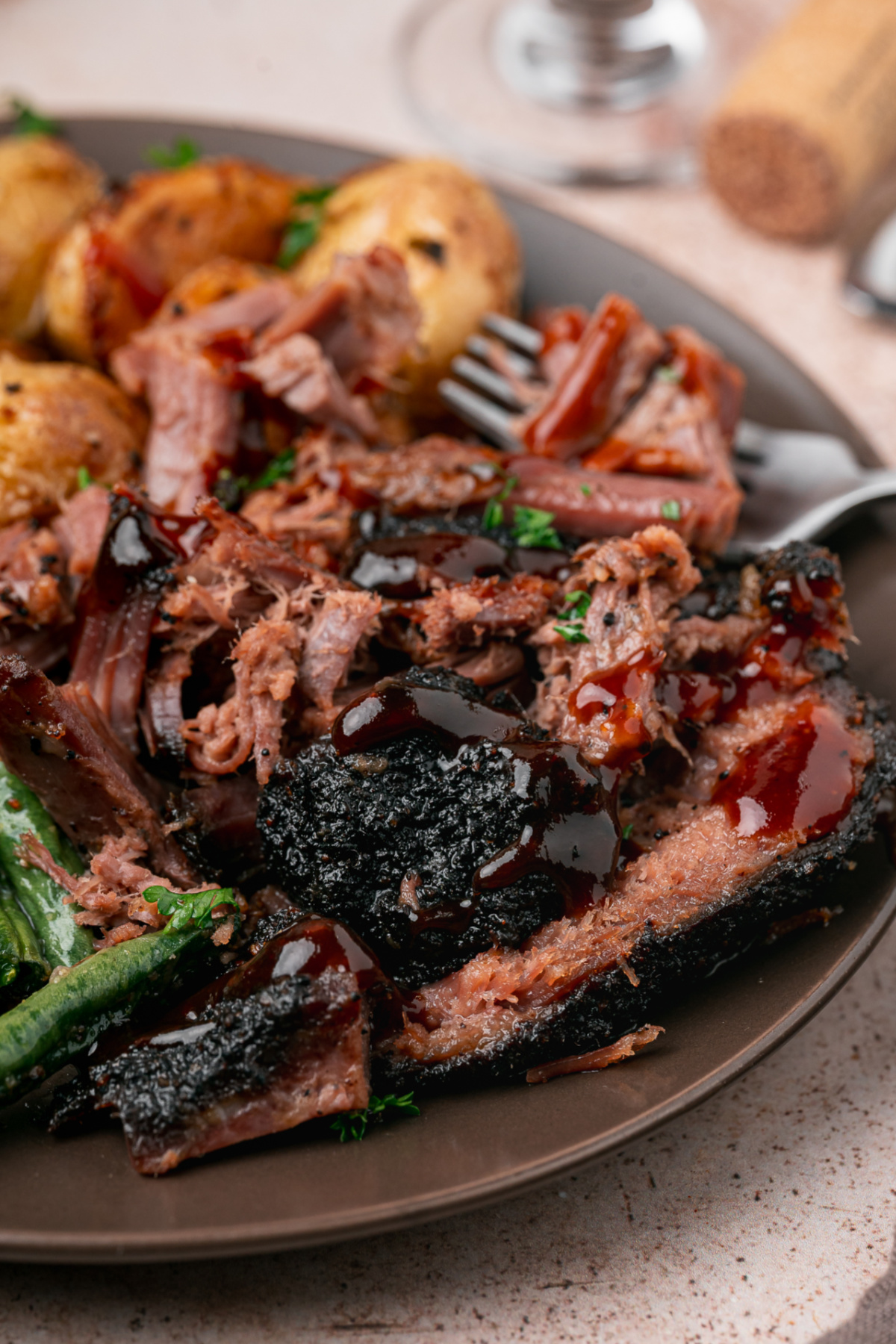
Coffee Rubbed Oven Brisket with a Dark Coffee and Chipotle Crust
I love the look of a brisket that’s been in the smoker for hours because my brain already connects thedark crust with how good it’s going to taste. But keeping a smoker at a consistent temperature, especially when it’s cold out, isn’t my favorite way to spend an afternoon. I wanted to see how close I could get to that look in my oven, and it turned out the answer involved a lot of coffee, some patience, and a brisket big enough to make me rearrange the refrigerator.
The coffee is what I like the most about this. I use finely ground dark roast coffee beans, not brewed coffee, and mix them with brown sugar, chipotle, smoked paprika, black pepper, garlic powder, and onion powder. After a few hours in the oven, the outside gets really dark and it looks like it spent the day in a smoker. I do use a teaspoon of liquid smoke in the mustard coating, but I’m not going to act like oven brisket tastes like brisket cooked over wood. It’s still delicious, just different.
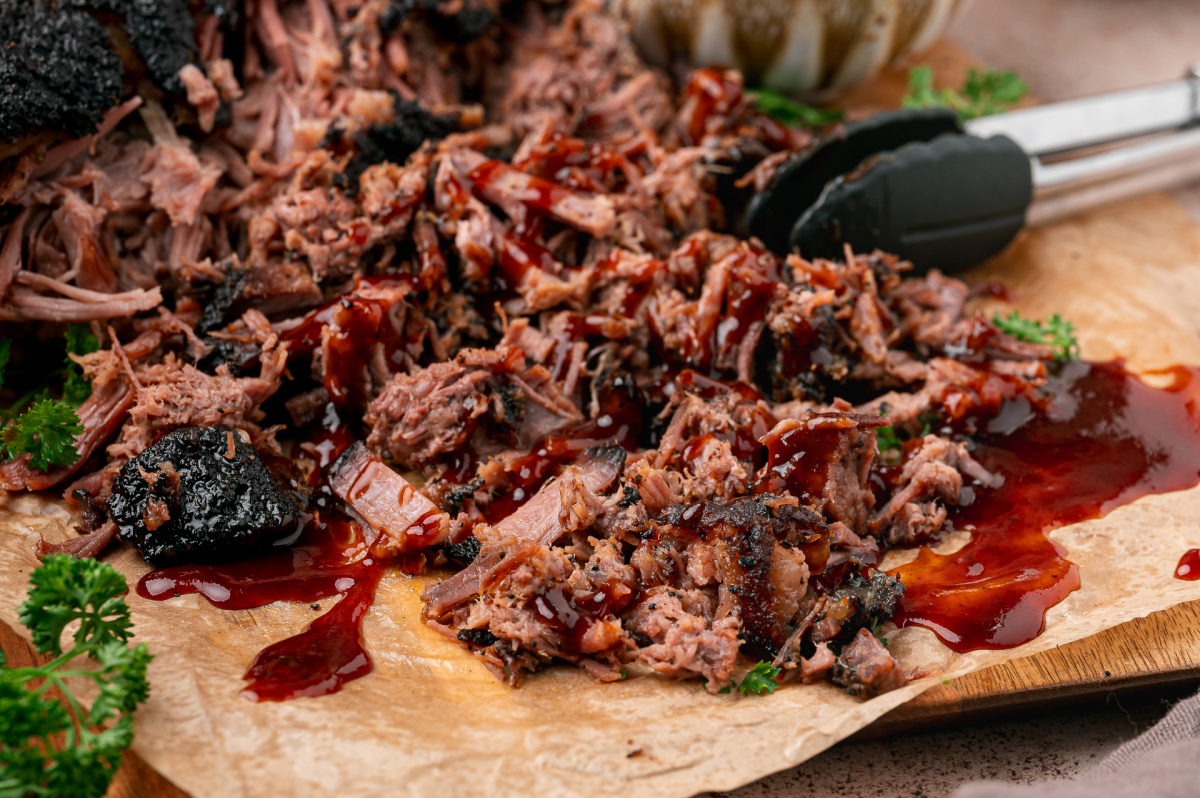
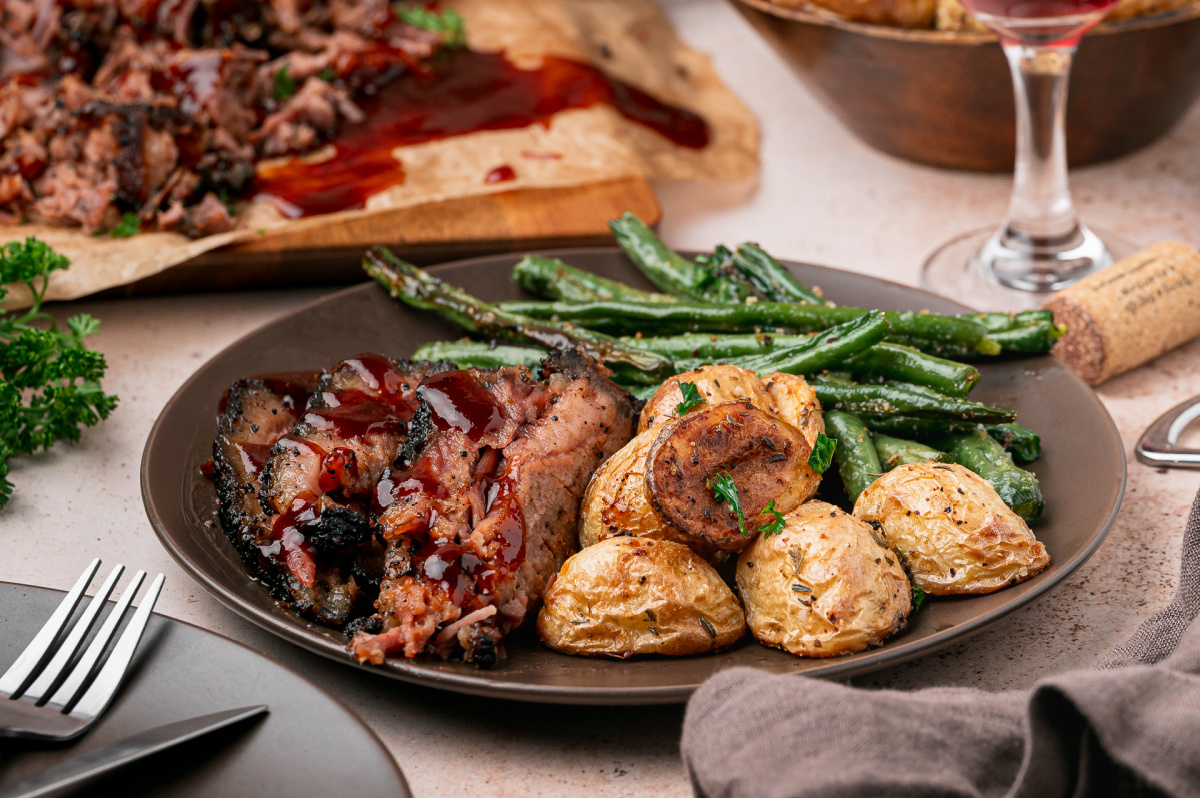
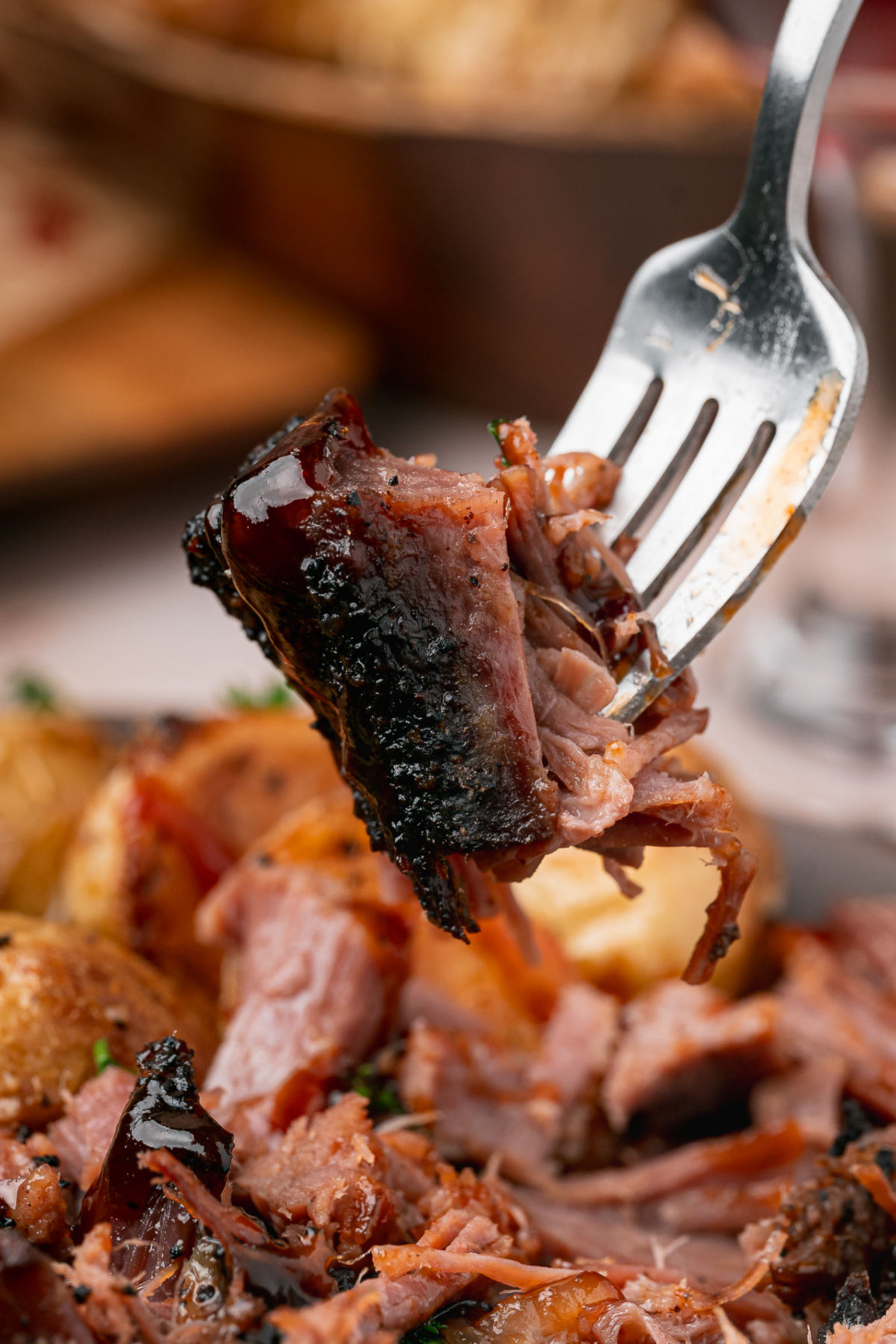
I use a whole packer brisket instead of buying only the flat because I want both parts. I slice the leaner flat against the grain, while I pull the thicker, fattier point apart and mix it with the cooking juices. I like having both on the platter, and the pulled point is good the next day when a brisket sandwich feels necessary.
This is NOT a dinner-for-tonight-in-an-hour recipe. The seasoned brisket is going to spend the night uncovered in the refrigerator, then most of the next day in a low oven. Once it goes in, there’s very little to do except wait for the crust to form, wrap it when it’s ready, and let the meat get tender.
The Decisions Behind This Recipe
- I use a whole packer brisket because I want both the flat and the point. The flat is the leaner, flatter section that slices nicely, while the point is thicker, fattier, and made for pulling apart. I trim off the hard fat and silver skin, but leave about ¼ inch of the softer fat cap because I don’t want to take away the part that helps protect the beef through a long cook.
- The dark roast coffee is responsible for most of the crust that turns almost black in the oven. I mix finely ground coffee with brown sugar, chipotle, smoked paprika, black pepper, garlic powder, and onion powder, then let it do its thing in the oven. The coffee adds a roasted, slightly bitter edge that I like with the beef, and the brown sugar keeps it from going too harsh. It does get darker than a normal spice rub, so don’t freak out when it looks almost black. That’s the assignment.
- Because we’re cooking this in the oven and not over wood, I cheat a little by stirring a teaspoon of liquid smoke into yellow mustard before the rub goes on. The mustard gives the seasoning something to stick to, and mixing the liquid smoke into it means it gets spread over the brisket instead of showing up in one weird spot. You won’t taste mustard in the finished brisket, and I’m not using enough liquid smoke to make anyone think fire was involved in the making.
- The seasoned brisket stays uncovered in the refrigerator overnight so the surface can dry before it goes into the oven. I give it at least eight hours, but it can stay there for up to 24. The salt has time to season the meat, and I’m trying to get the coffee mixture to form a firm crust, not stay damp on the surface of the beef. I know an uncovered eight-pound brisket takes up a lot of refrigerator space. It’s still worth it.
- I cook the brisket uncovered first, then wrap it once the crust is dark and dry. Around 165°F is usually when I’m ready to wrap, but I’m really looking at the outside too. If the seasoning still smears or looks wet, it needs more time. Wrapping helps the brisket finish cooking without losing too much moisture, but wrapping too early would soften the crust you’ve just spent hours waiting for.
- I use a thermometer to tell me when to start checking, not when to declare the brisket finished. Once the internal temperature gets close to 200°F, I start poking both the flat and point with a probe or thin skewer. If either one still pushes back, I leave it in the oven. I want the probe to slide through with barely any resistance. Brisket never seems to care what time you’ve scheduled dinner for.
Ingredients
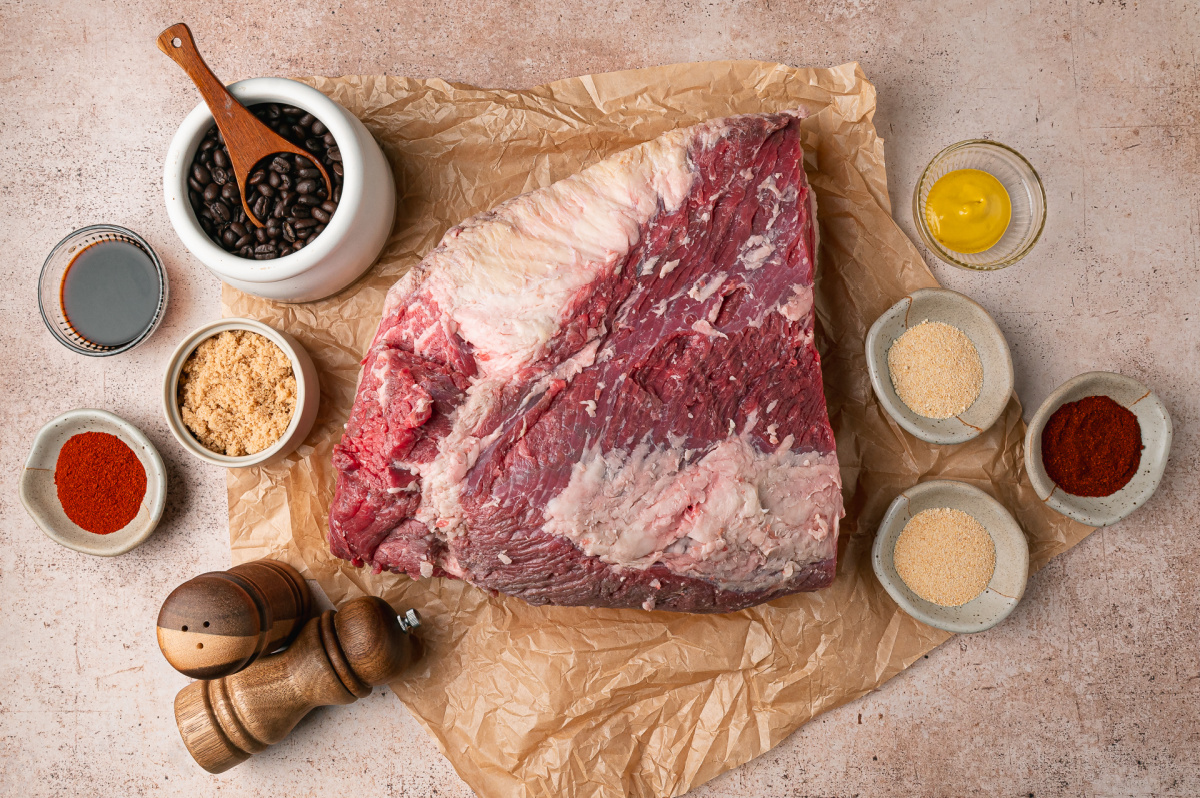
- Whole packer beef brisket – Look for an 8- to 9-pound brisket with both the flat and point attached. I trim away the hard fat and silver skin, but leave about ¼ inch of the softer fat cap. Don’t buy a small flat and expect it to cook the same way or give you the same amount of meat.
- Yellow mustard and liquid smoke – I mix the liquid smoke into ordinary yellow mustard before it goes on the brisket. The mustard helps the rub stick, and the liquid smoke gets spread evenly across the beef instead of concentrating in one spot.
- Kosher salt and brown sugar – The salt seasons the brisket while it sits in the refrigerator overnight. I use Diamond Crystal kosher salt, which is less dense than Morton. If you’re using Morton, use the weight in the recipe orreduce the volume so the brisket doesn’t get too salty. Brown sugar keeps the coffee and chipotle from getting too intense and helps with the dark crust. If you’re out, make a batch of my homemade brown sugar.
- Finely ground dark roast coffee – Use plain dark roast coffee, finely ground. Don’t brew it first, and don’t use instant or flavored coffee. Vanilla-hazelnut brisket is not the plan.
- Black pepper, smoked paprika, chipotle, garlic powder, and onion powder – This is the rest of the rub. The chipotle adds heat, smoked paprika contributes a smoky flavor, and garlic powder and onion powder make sure the coffee isn’t the only thing you taste.
How to Make Coffee Rubbed Oven Brisket
Find the complete printable recipe with measurements in the recipe card at the BOTTOM OF THE POST.
- Step One (trim the brisket)
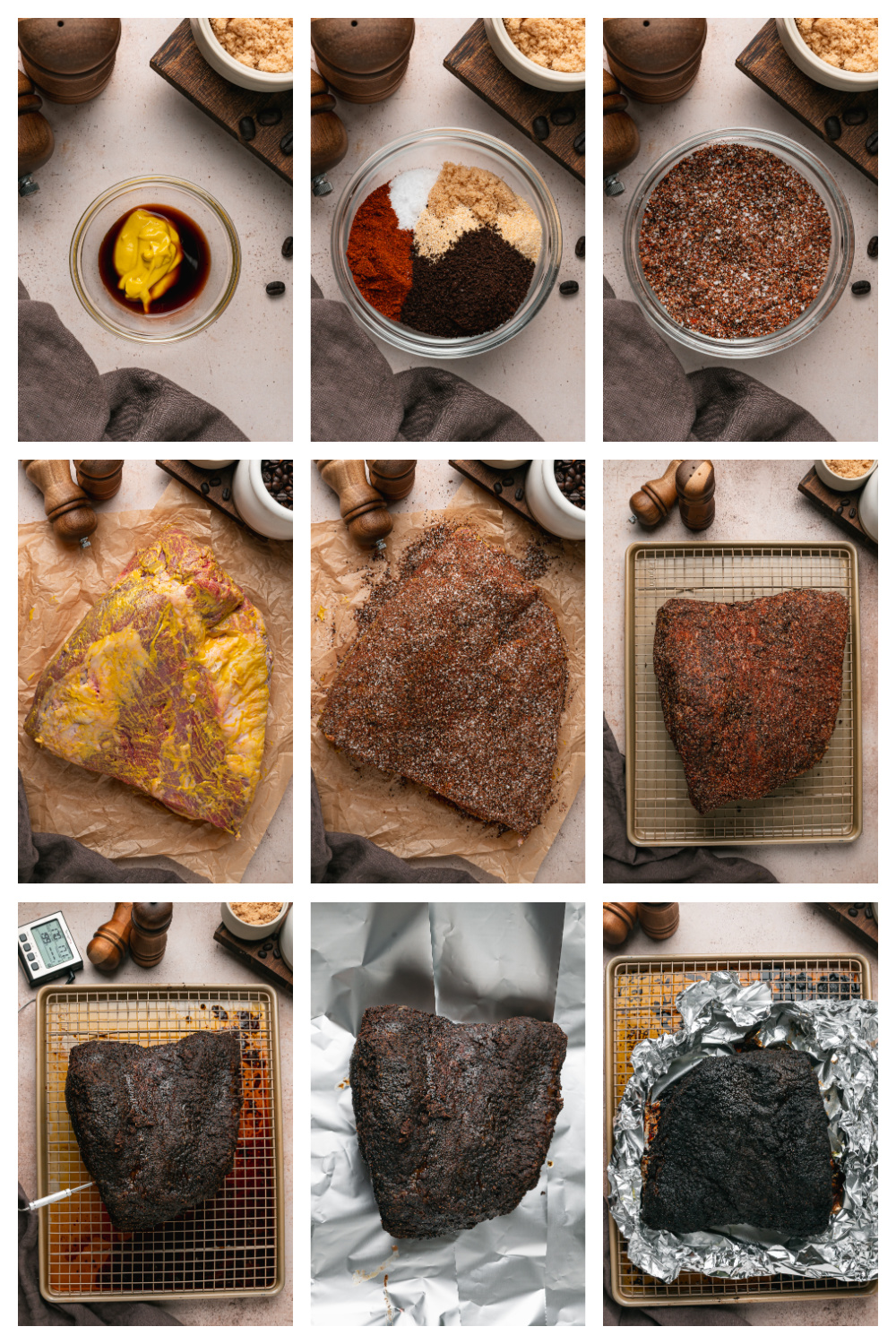
Set the brisket on a large cutting board and trim away the silver skin and any thick, hard pieces of exterior fat. Leave about ¼ inch of the softer fat cap to help protect the beef during the long cook. Before the rub goes on, look at the direction of the grain on the flat. It gets harder to find once the crust forms, so I cut a small notch across one corner as a reminder for later. Pat the brisket dry with paper towels. - Step Two (make the coffee rub)
Stir the yellow mustard and liquid smoke together in a small bowl, then spread a thin layer over the top, bottom, and sides of the brisket. In another bowl, mix the salt, brown sugar, coffee, black pepper, smoked paprika, chipotle, garlic powder, and onion powder. Press the rub firmly onto the top, bottom, and sides of the brisket. It’s a big piece of meat. Don’t leave the edges living an unseasoned life. - Step Three (refrigerate overnight)
Set a wire rack inside a roasting pan or large rimmed baking sheet, then put the brisket on top fat side up. Refrigerate it uncovered for at least 8 hours or up to 24 hours. I know it takes up an irritating amount of refrigerator space, but the outside needs time to dry. By the next day, the rub should look darker and feel less tacky than when you first applied it. - Step Four (roast uncovered)
Take the brisket out of the refrigerator about 30 minutes before cooking. Preheat the oven to 275°F and insert an oven-safe probe thermometer into the thickest part of the meat, avoiding any big pockets of fat. Roast uncovered until the internal temperature reaches approximately 165°F, usually 3 to 4 hours. The coffee rub should have formed a very dark crust that stays attached when touched, with rendered fat visible on the surface. It may look almost black. That’s coffee, not a disaster. - Step Five (wrap and finish cooking)
Take the brisket out of the oven and place it on overlapping sheets of heavy-duty foil. Spoon some of the pan juices over the meat, then wrap it tightly so the juices stay inside. Return it to the oven and cook until it reaches around 200–205°F, usually another 2 to 3 hours. Start checking both the flat and point for tenderness when the internal temperature approaches 200°F. If the probe doesn’t slide through both sections with very little resistance, keep cooking. The number gets you close. The tenderness gets you dinner. - Step Six (rest, slice, and pull)
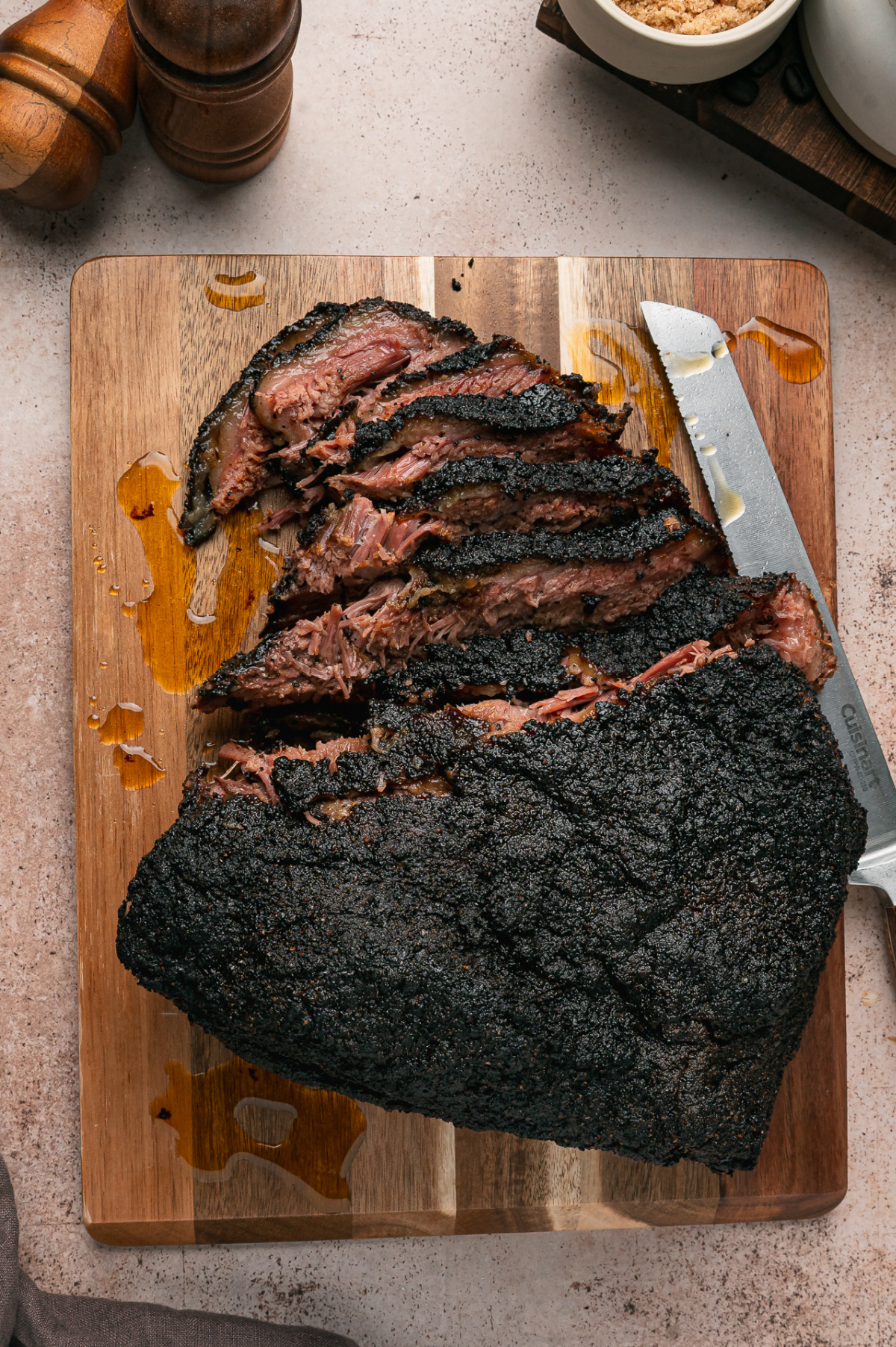
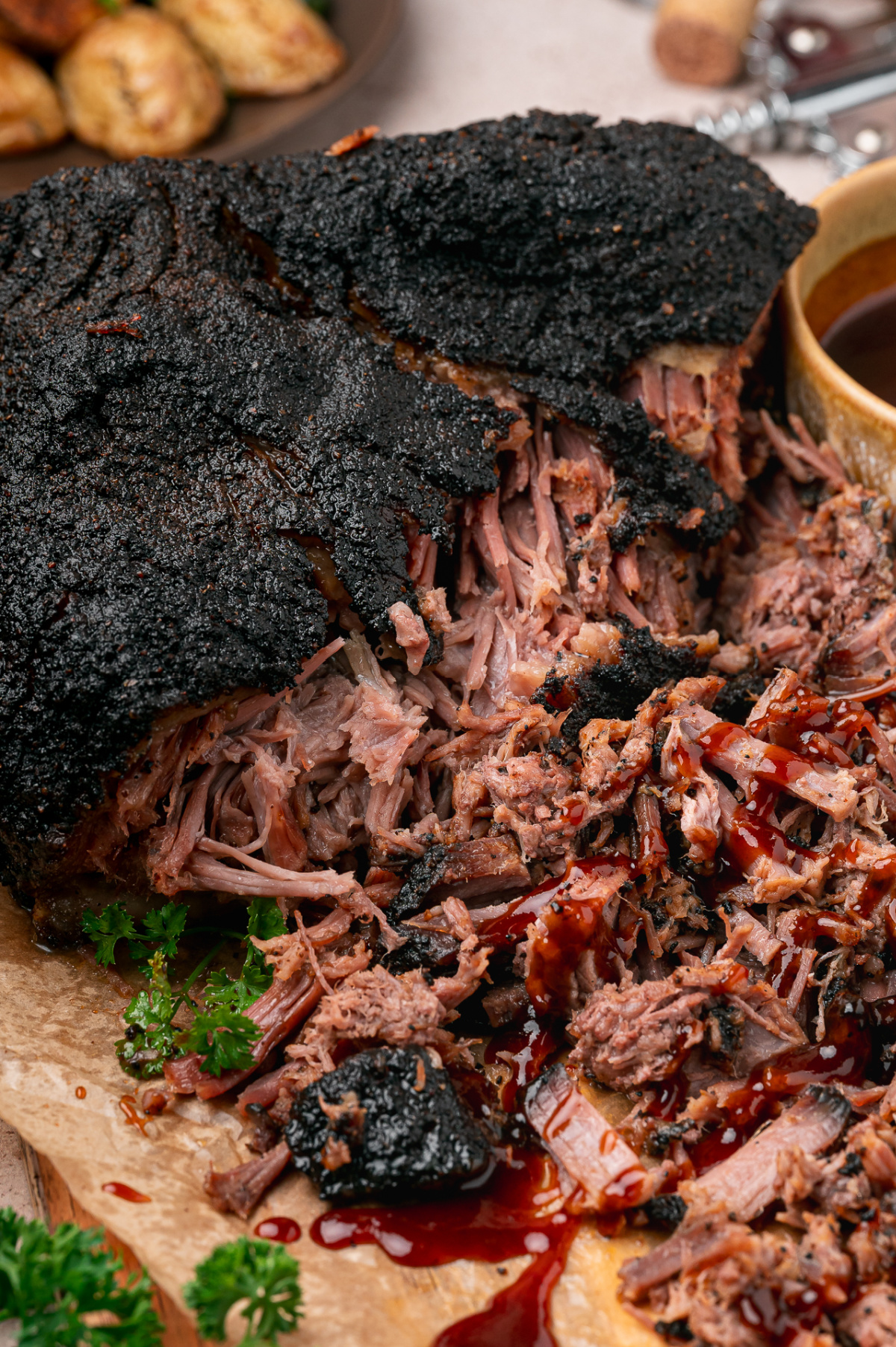
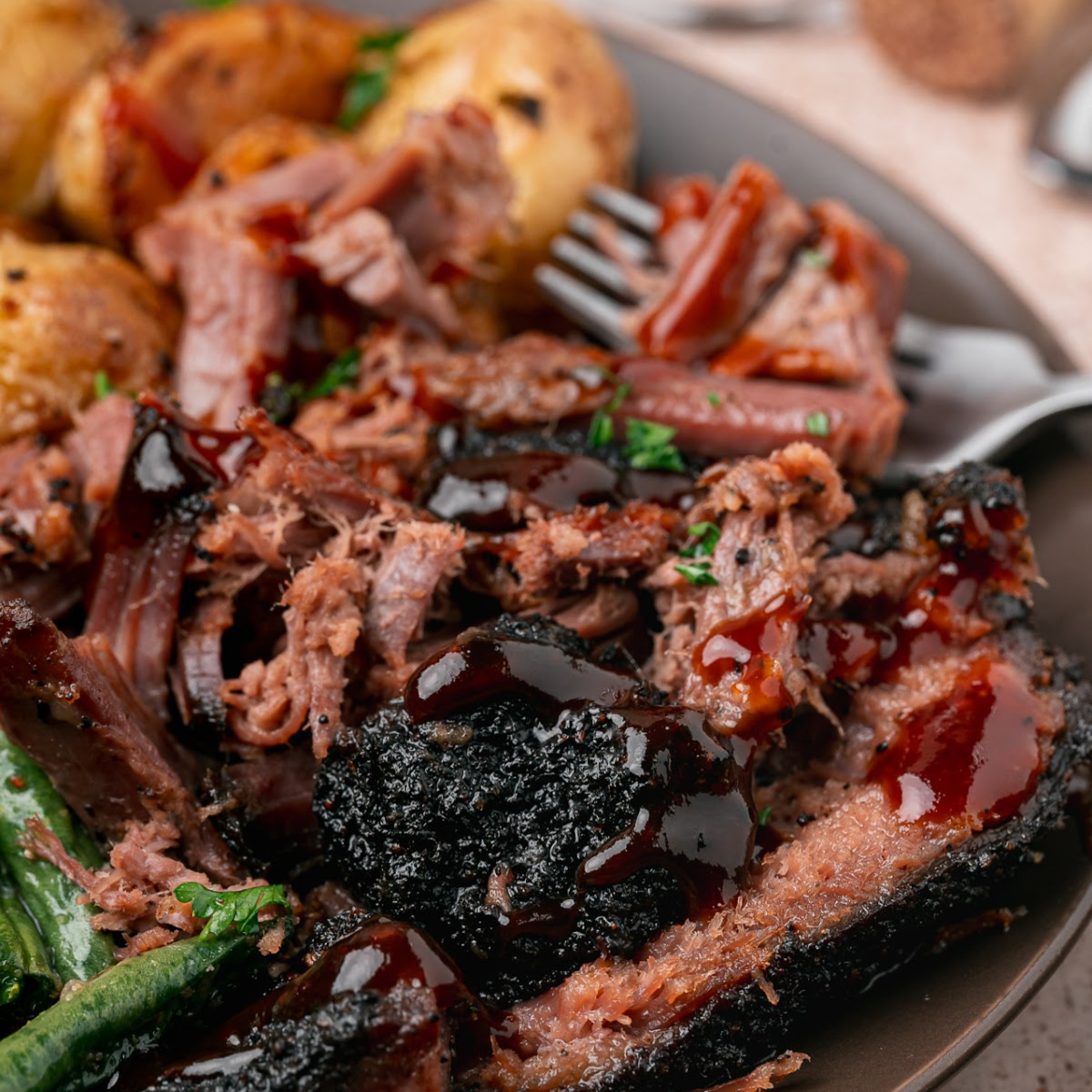
Let the brisket rest, still wrapped, for at least 1 hour before opening it. Be careful when you unwrap it because there will be hot steam and juices waiting to make their escape. Save the juices, then find the seam of fat between the flat and point and separate the two muscles with a sharp knife. Slice the flat against the grain into ¼-inch slices. Pull the point apart with forks or meat claws, discard any big pieces of fat, and mix in some of the reserved juices. Spoon more juices over the sliced brisket and serve with barbecue sauce if you want it.
Recipe Tips
- Never assume every brisket will be ready on the same schedule. An 8-pound brisket and a 9-pound brisket can cook differently, and two briskets that weigh the same can still decide to be difficult in completely different ways. Give yourself extra time, especially if you’re cooking for company. It’s better to have brisket finished early and resting than have everyone waiting around for it to finish.
- Watch the crust before you wrap it. The coffee rub gets extremely dark, which is correct. What you want is a firm crust that stays attached when you touch it, even if there’s some rendered fat on the surface. If the surface still looks wet or smears easily, leave it uncovered a little longer. It should smell roasted and seasoned, not burned.
- Check the flat and point separately once the brisket reaches about 200°F. The point has more fat and may become tender before the flat does. I poke around in both sections with a probe or thin skewer. If the flat still pushes back, it needs more time.
- Save the juices that collect inside the foil. I mix some into the pulled point and save the rest for reheating the sliced flat. If there’s a lot of fat floating on top, skim some off first.
- Slice the flat against the grain. Even a tender brisket can seem chewy if you cut it the wrong direction. The grain changes between the flat and point, which is one more reason to separate them before serving.
Storage, Freezing and Reheating
- Store leftover brisket in an airtight container in the refrigerator for up to 4 days. I keep some of the reserved juices with the meat, especially the sliced flat, because it helps keep it from drying out later.
- To reheat brisket, put it in a baking dish with a few spoonfuls of the juices and cover it tightly with foil. Warm it in a 300°F oven until heated through. Leaving it uncovered is how you end up with brisket that’s hot around the edges and sad in the middle.
- Brisket freezes well for up to 3 months. If I know I’m freezing some, I leave the flat in larger sections instead of slicing everything before it goes into the freezer. Wrap it tightly, add a little of the cooking juice if you have it, and thaw it in the refrigerator before reheating.
- Leftovers are great in sandwiches, brisket tacos, quesadillas, breakfast hash, loaded baked potatoes, grilled cheese, nachos, and macaroni and cheese. I’ve also been known to eat it cold from the refrigerator while deciding what to make for lunch.
FAQs
- Does coffee rubbed brisket taste like coffee?
You can taste the roasted flavor in the crust, but it doesn’t taste like someone poured coffee over a roast. The coffee cooks with brown sugar, chipotle, pepper, garlic, and onion, so it becomes part of the whole rub. I wouldn’t leave it out because it’s a major reason this brisket looks and tastes the way it does. - Can I make brisket that looks smoked without a smoker?
You will get a very dark, crusty exterior in the oven, which was the plan. Coffee, chipotle, smoked paprika, and brown sugar all contribute to the color, and the uncovered roasting time lets the surface dry out. It won’t have the smoke flavor or smoke ring of brisket cooked over wood, but the dark coffee crust can look remarkably similar. - Is coffee rubbed brisket spicy?
It has some heat from the chipotle, but I wouldn’t call it extremely spicy. If chipotle makes you pause, use ancho chile powder for a milder brisket. You’ll still get the dark color and roasted flavor from the coffee. - Why does the brisket need to sit uncovered in the refrigerator overnight?
The salt has time to season the beef, and the surface has time to dry out. The dry surface helps the coffee rub form a firm crust in the oven. I wouldn’t skip it. - Should I cook brisket fat side up or down?
I cook it fat side up on a wire rack set inside a roasting pan. The rack keeps the brisket above the juices while the outside roasts. I leave the fat cap facing up, although the rack and the way the brisket cooks matter more than expecting melting fat to soak into the meat. - Why do you wrap brisket at 165°F?
Around 165°F is usually when the crust has set and the brisket is ready to be wrapped. The foil helps it finish cooking without losing too much moisture. If the surface still looks wet or the rub comes off easily, give it more time before wrapping. - What if my brisket reaches 205°F and still isn’t tender?
Keep cooking it. I know it’s annoying, but brisket is done when a probe slides in with very little resistance, not when the thermometer lands on a number you had emotionally prepared for. I know this feeling well. Check both the flat and point, then give it more time if either one still feels firm. - Can I use a brisket flat instead of a whole packer?
You can use the coffee rub on a brisket flat, but you’ll need to reduce the seasoning and watch the cooking time closely. A flat is leaner and dries out more easily, plus you won’t get the fattier point to pull apart for sandwiches. - Can I use decaf coffee in the brisket rub?
Yes. Plain decaffeinated dark roast coffee works just fine. You’re using it for its roasted flavor and dark color, not because anyone needs an 8-pound piece of beef to start making eye contact at 2 a.m. It will be fine. - Can I make this brisket a day ahead?
Yes. Cook it until tender, let it rest, then refrigerate it with the reserved juices. I would keep the flat in a larger piece and slice it after reheating because it stays juicier that way. Reheat the brisket covered in a 300°F oven, then separate the flat and point, slice the flat against the grain, and pull the point apart when you’re ready to serve.
From My Kitchen Notes
Small observations from the margins.
- I can always tell the difference between dark and ruined.
- I’ve learned not to wrap something up before it’s ready. I’m patient. Mostly.
- Some things need a long, quiet night before they’re ready to face the heat.
- I don’t confuse resistance with depth anymore.
- There is a point where waiting stops being patience and starts being a refusal to see what’s true.
- I know better than to call something tender when it’s still resisting me.
- The parts that hold the most weight don’t always get served the same way.
- I can always keep the good parts without acting like the rest didn’t leave a mark.
- I don’t need smoke in the room to know something’s burning.
- A dark crust can still hold a very soft center.
More Reasons to Buy the Good Meat
- Cocoa Rubbed Steak with Dark Stout Pan Sauce – Cocoa, chili spices, dark stout.
- Korean Braised Short Ribs – Gochujang, garlic, ginger, soy sauce.
- Oven Braised Short Ribs – Slow-braised beef, tender short ribs.
- Chile Colorado Beef – Beef, red chile sauce, slow cooker.
- Carne Adovada – Pork shoulder, guajillo, ancho, chipotle.
This post may contain affiliate links. Please read my disclosure policy.
Coffee Rubbed Oven Brisket
Equipment
- wire rack with rimmed baking sheet Elevates brisket for even roasting. Catches rendered fat and cooking juices.
- 18" Heavy Duty Aluminum Foil Wraps brisket to retain moisture.
- instant-read thermometer Monitors internal temperature without opening the oven.
- Cutting board Provides room for slicing and separating the brisket.
- meat shredders Shreds the tender point.
- sharp carving knife Slices brisket against the grain.
- mixing bowls For mustard mixture and coffee rub.
Ingredients
- 1 (8-9 lbs / 3.6 - 4.1 kg) whole packer beef brisket including flat and point, trimmed to a ¼-inch (6-mm) fat cap
- 2 tbsps (30 g) yellow mustard
- 1 tsp (5 ml) liquid smoke
- 2 tbsps kosher salt (approximately 18 g Diamond Crystal or 30 g Morton)
- 2 tbsps (25g) light brown sugar or dark brown sugar
- ¼ cup (~20 g) finely ground dark roast coffee unbrewed
- 1 tbsp (7 g) ground black pepper
- 1 tbsp (7 g) smoked paprika
- 1 tbsp (7 g) chipotle chile powder
- 1 tbsp (9 g) garlic powder
- 1 tbsp (7 g) onion powder
Instructions
- Trim away the silver skin and any thick, hard exterior fat from the whole packer brisket, leaving approximately ¼ inch (6 mm) of the softer fat cap intact. Pat the meat dry with paper towels. Identify the direction of the grain on the flat before seasoning, since the dark coffee crust can make it difficult to see after roasting.1 (8-9 lbs / 3.6 - 4.1 kg) whole packer beef brisket
- Stir the yellow mustard and liquid smoke together in a small bowl. Spread a thin, even coating over the top, bottom, and sides of the brisket, making sure the liquid smoke is distributed across the beef.2 tbsps (30 g) yellow mustard, 1 tsp (5 ml) liquid smoke
- Mix the kosher salt, brown sugar, finely ground dark roast coffee, black pepper, smoked paprika, chipotle powder, garlic powder, and onion powder in a bowl. Coat the brisket on all sides, pressing the seasoning firmly onto the surface.2 tbsps kosher salt, 2 tbsps (25g) light brown sugar, ¼ cup (~20 g) finely ground dark roast coffee, 1 tbsp (7 g) ground black pepper, 1 tbsp (7 g) smoked paprika, 1 tbsp (7 g) chipotle chile powder, 1 tbsp (9 g) garlic powder, 1 tbsp (7 g) onion powder
- Place the brisket fat side up on a wire rack set inside a large roasting pan or rimmed baking sheet. Refrigerate uncovered for at least 8 hours or up to 24 hours. The salt will season the beef while the exposed surface gradually dries, helping the coffee rub develop a firmer crust during roasting.
- Remove the brisket from the refrigerator approximately 30 minutes before cooking. Preheat the oven to 275°F (135°C). Insert an oven-safe probe thermometer into the thickest portion of the brisket, avoiding large deposits of fat.
- Roast uncovered until the internal temperature reaches approximately 165°F (74°C), about 3–4 hours. The coffee rub should have formed a very dark, firmly attached crust, with rendered fat visible on the surface. The exterior may look almost black, which is expected with the coffee and chipotle seasoning.
- Remove the brisket from the oven and place it on overlapping sheets of heavy-duty aluminum foil. Spoon some of the accumulated pan juices over the meat, then wrap tightly to enclose the brisket completely.
- Return the wrapped brisket to the 275°F (135°C) oven and continue cooking until the internal temperature reaches approximately 200–205°F (93–96°C), usually another 2–3 hours, although larger briskets may require additional time. Begin checking tenderness at 200°F (93°C), testing both the flat and point with a thermometer probe or thin skewer. Continue cooking until the probe passes through the meat with very little resistance, even if the internal temperature exceeds 205°F (96°C).
- Remove the brisket from the oven and leave it wrapped for at least 1 hour before cutting. Carefully open the foil, watching for hot steam, and collect the accumulated cooking juices for serving.
- Locate the natural seam of fat separating the flat from the point. Follow the seam with a sharp knife to separate the two muscles, trimming away any large deposits of excess fat.
- Place the flat on a cutting board and identify the direction of the muscle fibers. Slice against the grain into approximately ¼-inch (6-mm) slices.
- Use two forks or meat claws to shred the point, discarding any large deposits of fat. Toss the pulled beef with some of the reserved cooking juices. Spoon additional juices over the sliced flat and serve with BBQ sauce on the side, if desired.
Notes
- Use plain, finely ground dark roast coffee. The recipe calls for ground coffee, not brewed coffee, instant coffee, or flavored coffee.
- The uncovered refrigerator rest is necessary for the dry brine. Allow at least 8 hours, although the brisket can be seasoned up to 24 hours before cooking.
- The cooking times are estimates. Brisket thickness, fat content, starting temperature, and individual oven performance can affect how long it takes. Plan for additional cooking time when serving at a specific hour.
- The coffee rub will become extremely dark during roasting. The nearly black crust is expected and doesn't automatically mean the seasoning has burned.
- Begin checking tenderness at approximately 200°F (93°C). Both the flat and point should offer very little resistance when tested with a thermometer probe or thin skewer. Some briskets may need to cook beyond 205°F (96°C).
- Rest the brisket wrapped for at least 1 hour before separating the flat and point.
- Refrigerate leftover brisket in an airtight container for up to 4 days. Reheat covered at 300°F (150°C) with some of the reserved cooking juices until heated through.
- Freeze brisket for up to 3 months. Larger portions retain moisture better than thin slices, so freeze in thicker sections when possible.
- Nutritional information is provided as a courtesy only and should be construed as an estimate rather than a guarantee. Ingredients can vary, and Noble Pig makes no guarantees to the accuracy of this information.
Nutrition
Have you made this Coffee Rubbed Oven Brisket? I’d love to hear how it turned out – leave a comment below and let me know.
As an Amazon Associate and member of other affiliate programs, I earn from qualifying purchases.
Leave a Reply