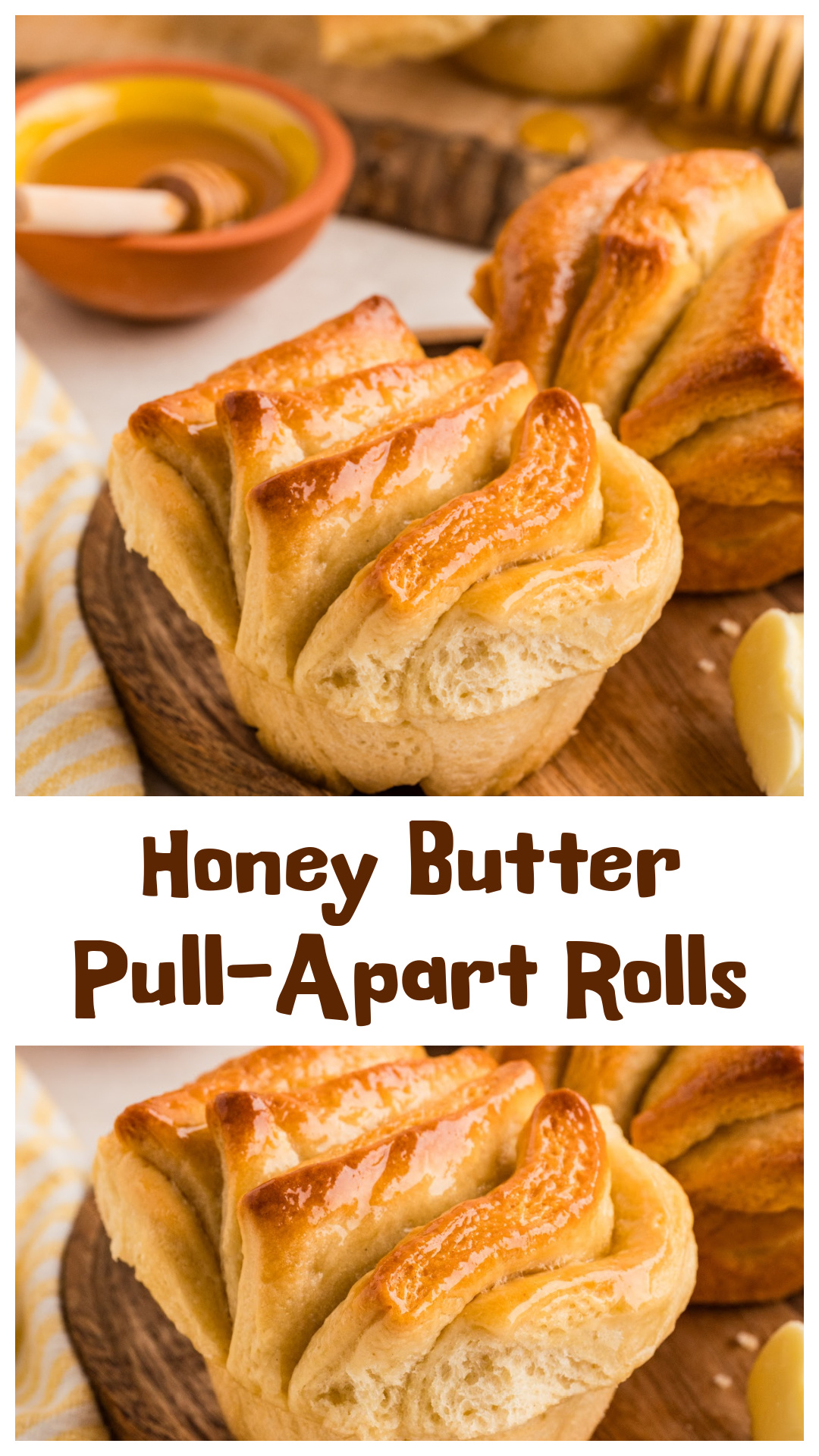
Honey butter pull-apart rolls baked in a muffin tin, layered with butter and honey all the way through. Soft, warm, and taken apart the way comfort usually is.
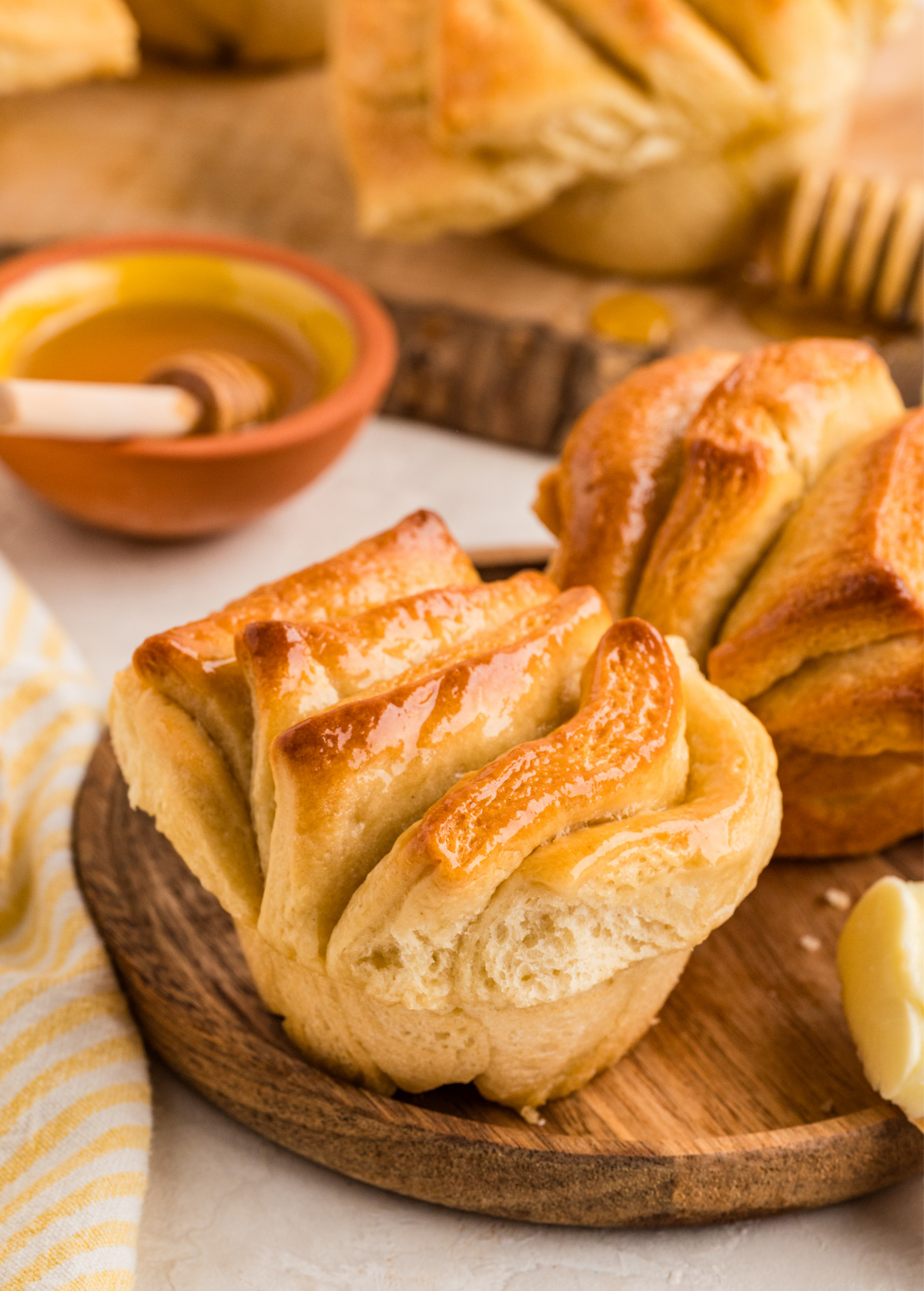
Honey Butter Pull-Apart Rolls, Baked on Christmas Eve
These are Christmas Eve rolls.
The kind you bake while the house is still lit with twinkle lights and nothing is finished yet. There’s wrapping paper on the floor, a fire that keeps needing attention, a glass of wine that’s been set down and forgotten. The oven’s on for no good reason except that bread smells like comfort when it starts to rise.
The dough is soft from the start, honey worked straight into it so the sweetness lives inside the bread instead of sitting on top of it. Yeast wakes up and does what it always does best, turning time into something edible. Butter gets pressed between the layers on purpose so every pull carries weight and warmth with it.
They bake in a muffin tin, packed close, edges touching, helping each other along. When they come out, steam lifts as you separate them, honey holding on where it should, fingers getting a little sticky whether you meant to touch them or not. These are rolls that don’t wait for dinner. One goes missing before the pan even hits the counter.
Leftovers get split the next morning and buried under jam while gifts are opened. The kitchen smells like bread again, softer this time, slower. That’s how you know they were made right.
Why I Love This Recipe
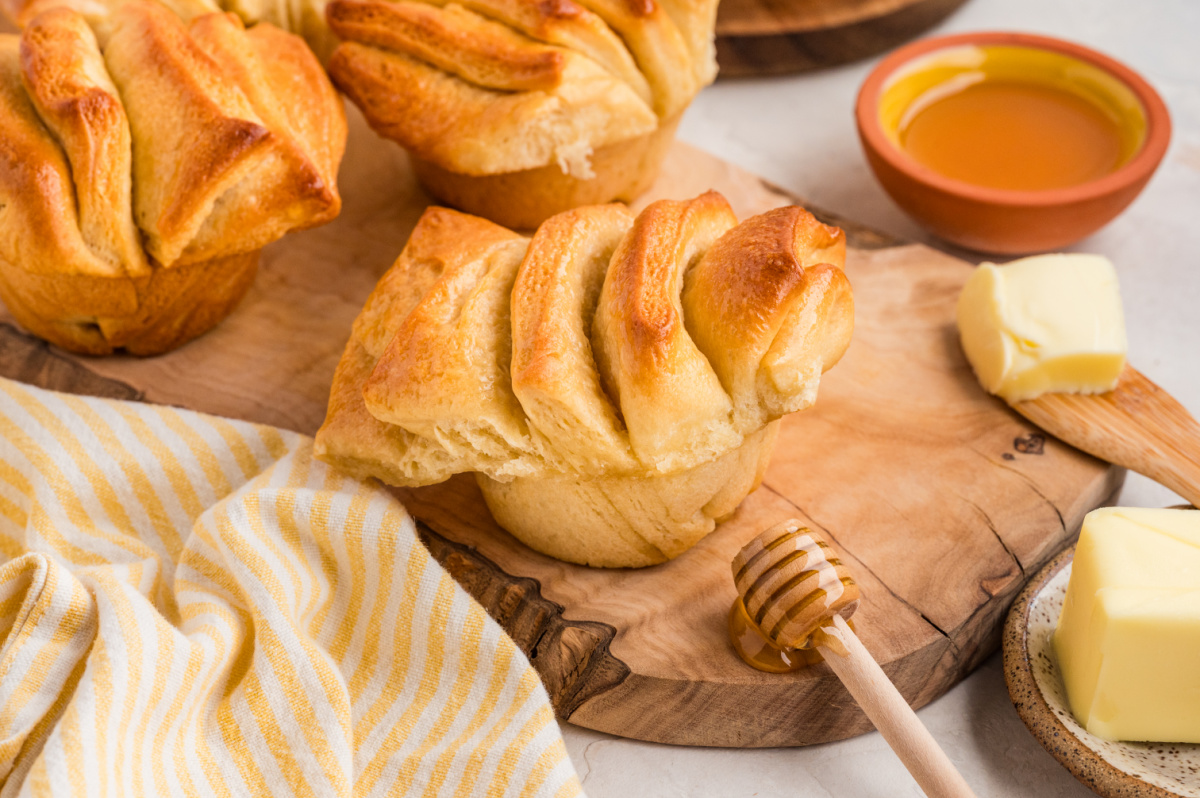
- These rolls understand proximity. They’re made to be close, baked tight together so the warmth carries from one to the next. You don’t portion them out or line them up. You pull where there’s give, where the butter has pooled, where the honey has settled into the seams. They disappear unevenly, the way good things do when no one is managing the moment.
- The honey exists inside the dough instead of being saved for the finish (unless you want a final drizzle), which means the sweetness isn’t something you notice first. It’s something you feel as you pull the layers apart, warm and faintly sticky, already woven into the layers. The butter follows the same rule. Pressed between folds, it melts where it’s needed, not just where it shows.
- This dough understands patience. It rises faithfully, holds its shape, and doesn’t need coaxing once it gets going. Yeast does what it has always done, turning a quiet stretch of time into something generous and tangible. Nothing showy. Nothing rushed.
- Baking them in a muffin tin keeps everything contained and purposeful. Each roll has edges to soften against its neighbors, a place to rest, a reason to stay close. They bake evenly, pull apart cleanly, and end up somewhere between bread and indulgence without going too far in either direction.
- These are rolls that disappear without conversation. One goes missing before the pan is fully set down. Another gets split open later, reheated just enough, smeared with jam. No one mentions it. No one needs to.
- They’re dependable in the way good bread should be. Warm without demanding anything. Sweet without asking to be praised. And they taste amazing.
Ingredients
Every ingredient in these honey butter pull-apart rolls bends toward comfort. Familiar staples softened by time, warmth, and closeness to one another.
- Milk + Water – The starting point. Combined just warm enough to loosen honey and invite everything else in. This isn’t about waking yeast dramatically. It’s about making the bowl feel hospitable from the beginning.
- Honey – Folded straight into the dough, not saved for the finish, unless you want that. It sweetens from the inside out, sweetening the bread instead of glazing it. The flavor stays close, never sticky.
- Eggs – They bring tenderness and richness, giving the dough that pliable, almost satiny feel once it comes together. The kind of dough that doesn’t fight back when you touch it.
- Instant Yeast – Reliable and unshowy. It does its work without applause, letting the dough rise evenly while you move on to other things.
- All-Purpose Flour – Added gradually, feeling your way through it. Enough to give the dough strength, not so much that it stiffens. This is a dough meant to stay pliable.
- Kosher Salt – Just enough to keep the honey from drifting too far into sweetness. It holds the line without being noticed.
- Salted Butter (for the dough) – Softened and worked in early, so it becomes part of the bread itself. This is where the rolls get their softness, the reason they pull apart instead of tear.
- Salted Butter + Honey (for finishing) – Painted on at the end, but that is a choice. This is where the rolls can take on character. Every fold carries it. Every separation reveals it.

How to Make Honey Butter Pull-Apart Rolls
Find the complete printable recipe with measurements in the recipe card at the BOTTOM OF THE POST.
- Step One (mix and knead)
Everything comes together in the mixer, the way dough usually does. Milk, water, honey, eggs, and instant yeast relax first, just enough to become cooperative. Flour follows, then salt, then butter, and the hook takes over. At first it looks uncertain, then it gathers itself, wrapping close and pulling cleanly from the bowl. The dough should feel warm when you touch it, soft, slightly tacky, like it wants to stay with you. If it’s too loose, a little flour reins it in. Stop early. Dough remembers how you treat it. - Step Two (first rise)
The dough goes back into its bowl, covered, left somewhere it won’t be bothered. An hour later it’s taller, fuller, changed. While it’s doing its own work, butter melts into honey and the muffin tin gets ready. Nothing heavy. Just setting the table for what comes next. - Step Three (shape the rolls)
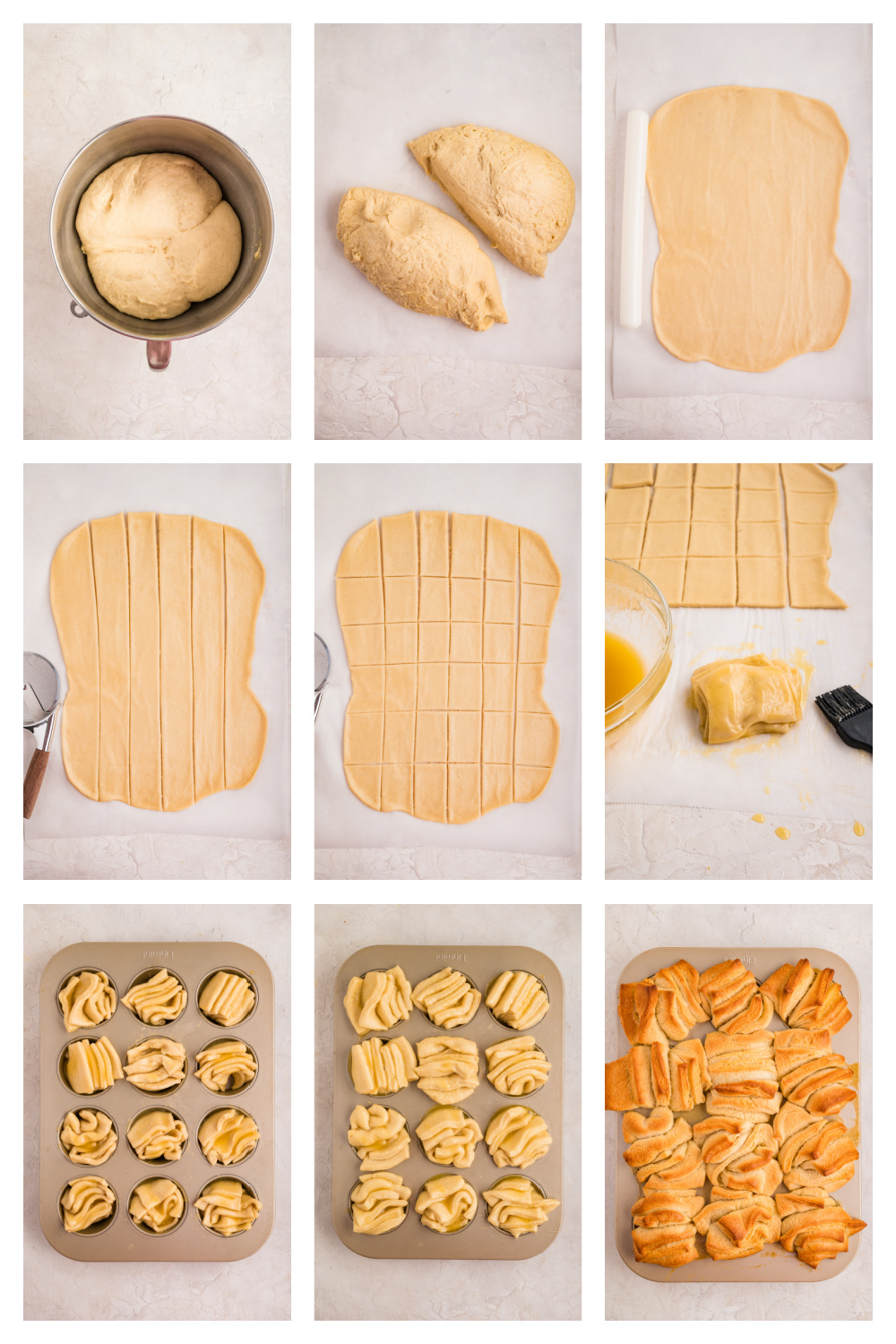
The risen dough is divided and rolled out, broad and even. It’s cut into strips, then into smaller pieces, each one brushed with honey butter and stacked like cards in a deck. Those stacks are placed sideways into the muffin tin, close enough to know each other. It looks imperfect at this stage, a little rough even, but that’s part of the point. Layers find their place later. - Step Four (second rise and bake)
They rise again, briefly, just until they look awake. The oven’s hot, the muffin tin sits on a lined sheet because honey rarely stays where it’s told. In the oven, the rolls swell and brown, edges turning sticky and fragrant. The smell alone makes people wander in. - Step Five (finish)
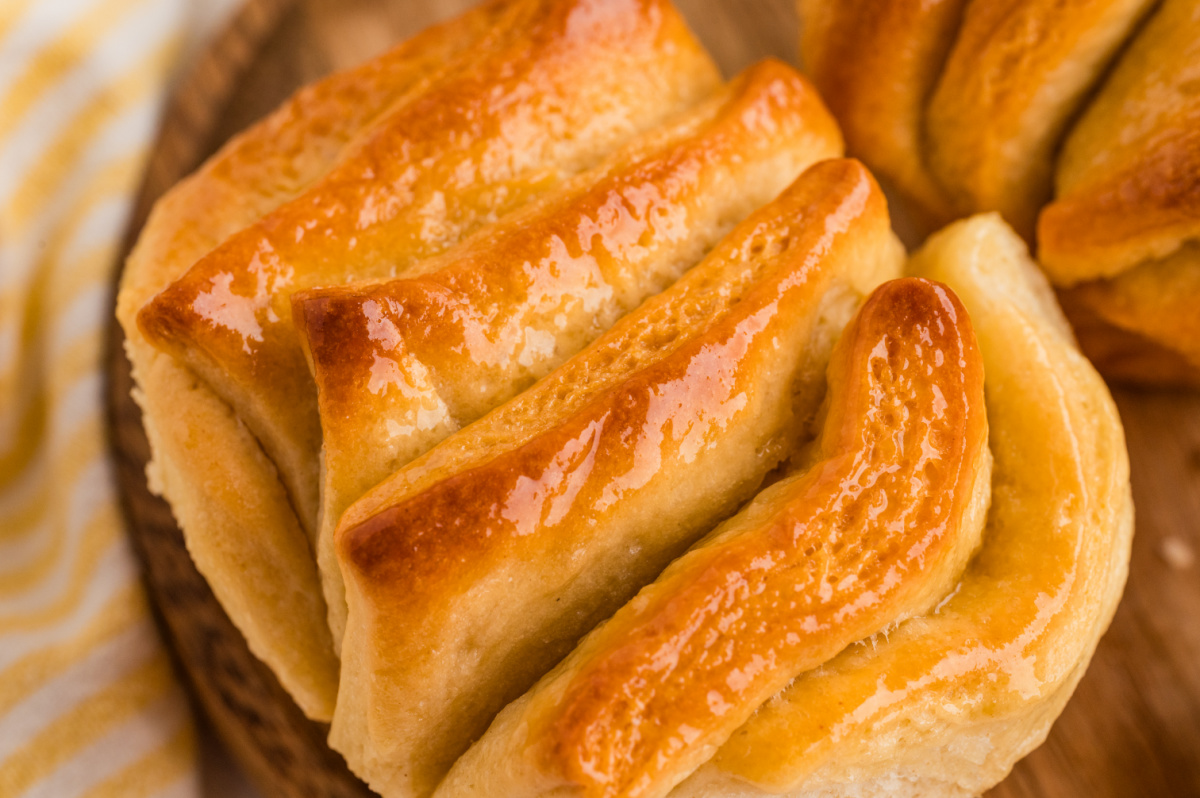
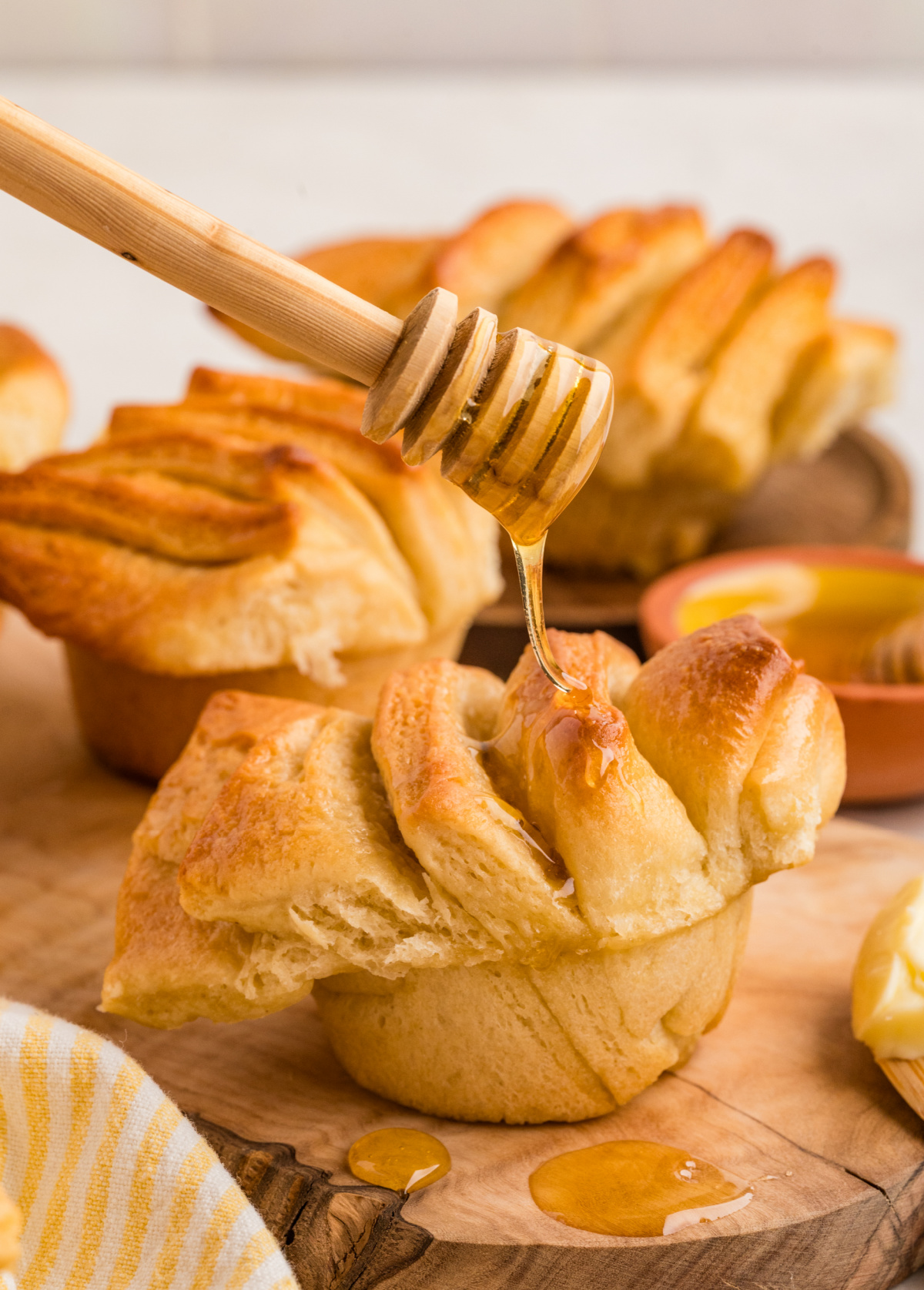
After a short rest, the rolls come out easily. A final brush of butter while they’re still warm is optional, but it feels right. A drizzle of honey, only if you want. They separate without effort, steam escaping, honey in every fold. This is the moment they were made for.
Recipe Tips
These rolls respond best when you trust your hands and stop just before you think you should.
- The dough should feel soft and pliable early on, not tight, not dry. If it pulls cleanly from the bowl and still holds on lightly to your fingers, you’re exactly where you want to be. Adding too much flour at the start is the fastest way to lose what makes these special.
- Instant yeast doesn’t need persuasion. It’s ready to work the moment it touches moisture. The warmth here is about comfort, not chemistry. Think body temperature, not precision.
- When you roll and cut the dough, don’t chase perfect edges. The layers don’t need symmetry to find their way. A little unevenness is what creates those pockets where the honey butter seeps in later.
- Stacking the pieces on their sides in the muffin tin matters. That orientation is what gives you visible layers and that pull-apart moment when they’re still warm. If they look slightly crowded going in, that’s a good sign.
- The second rise is shorter on purpose. You’re not waiting for volume, you’re waiting for softness. When they look fuller and relaxed, they’re ready.
- Always bake the muffin tin on a lined sheet pan. Honey butter has no respect for oven floors, and this saves you from learning that the hard way.
- If you brush them with butter at the end, do it while they’re still hot. That’s when it sinks in instead of sitting on top.
- These rolls don’t require a lot of forethought. Make them with pure desire, then let the oven finish the story.
Storage & Freezing
These rolls are at their best the day they’re baked, when the butter is still soft inside them and the honey hasn’t finished settling. That said, they don’t fall apart the moment the night moves on.
- Once completely cooled, any extras can be put into an airtight container and kept at room temperature for up to 2 days, or in the refrigerator for up to 4 days. Warm them gently before serving, just enough to bring the softness back and wake up what’s already there.
- They also freeze well, which feels fitting for something made ahead on purpose. Let the rolls cool completely, then wrap them tightly and freeze for up to 2 months. Thaw at room temperature, then warm through in a low oven until they’re soft again and the honey comes back into the layers.
- These aren’t rolls that need rescuing or reinventing the next day. They just need warmth and a little time, the same way they did at the beginning.
FAQs
- Can these be made ahead?
Yes. And they like knowing that. The dough can be shaped, covered, and placed into the refrigerator overnight, already stacked, already waiting. The next day, you let them come back to themselves while the oven heats. It takes the edge off the evening, which is usually the point. - Why bake them in a muffin tin instead of a pan?
Because adjacency matters. The tin keeps them close, edges touching, holding each other in place while they rise and bake. They don’t spread out. They stay vertical. It’s what gives them that pull-apart tension when you separate one from the rest. - Do I have to use honey, or can I switch it?
Honey belongs here. Not for sweetness alone, but for the way it moves through the dough and the butter. Sugar would sweeten. Honey softens. It stays. - What kind of yeast works best?
Instant yeast keeps the pace steady and uncomplicated. It folds straight into the dough and does its work. That matters on a night when there’s already enough happening. - Do they need the extra butter brushed on at the end?
They don’t need it. But they welcome it. The brush is less about richness and more about sealing the moment while they’re still warm. - Are these sweet or savory?
They live in the middle. Sweet enough to eat on their own, but can sit next to dinner without feeling out of place. They don’t pick a side. They don’t have to. - How do you serve them?
You don’t arrange them. You set the pan down and step back. Someone pulls one free. Then someone else does. That’s the order of things.
From My Kitchen Notes
These are the things I notice once the rolls are already out of the oven and no one is really paying attention to me anymore.
- There’s a moment when someone pulls one apart and the steam rises, and the room changes. Not quieter. Not slower. Just closer. People come nearer to the counter without realizing why. I know why.
- I’ve noticed that no one ever takes just one. They take one, then stand there longer than they meant to, tearing off another piece from the same roll, like it still belongs to them. Like sharing doesn’t always require permission.
- Honey has a way of making people slow down with their food. Fingers get sticky. Napkins get used and then ignored. Someone always wipes their hands on their jeans and doesn’t care. That feels right to me. Food that leaves evidence usually means people were comfortable.
- These rolls don’t wait for a plate. They get pulled apart standing up, leaning in, talking over each other. They live in the middle of things, not at the end. That’s where I prefer them.
- I’ve watched the muffin tin sit empty on the stove while ribbons and wrapping paper still cover the floor, while a fire is slowly extinguishing, while someone asks if there’s more wine. The pan gets forgotten quickly. That’s how you know it worked.
- The next morning, the leftovers get split open and smeared with the blackberry jam I made over the summer, eaten half-present while gifts are opened. The sweetness changes then. Softer. Familiar in a different way. Less celebration, more comfort.
- What stays with me most is how little explanation they need. No one asks what’s in them. No one compliments them properly. They just keep disappearing, piece by piece, until there’s nothing left but the smell of bread and honey still caught in the kitchen.
- These rolls feed people without asking them to stop what they’re doing, which is the kind of food I enjoy making.
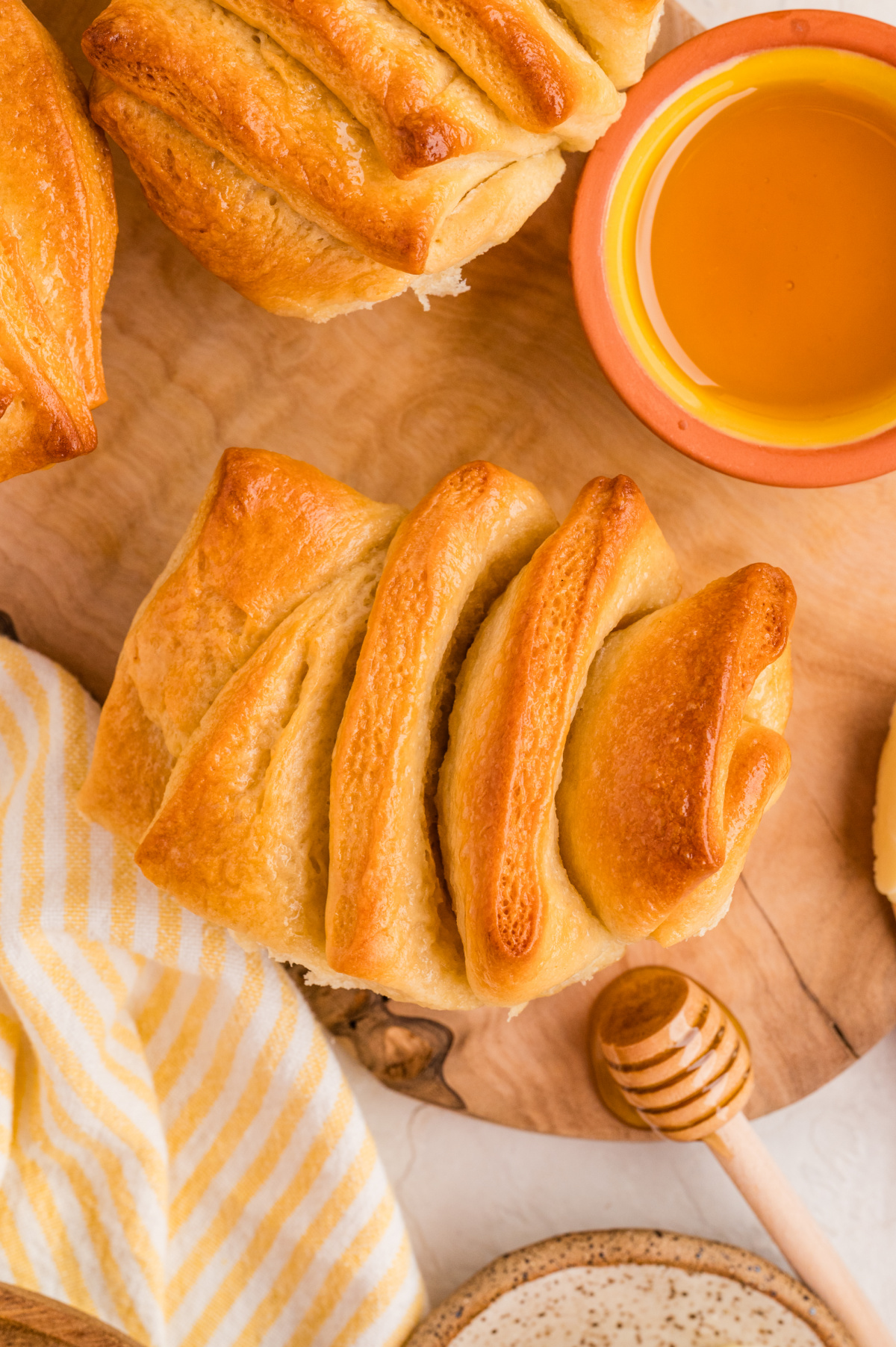
More Rolls to Bake on Christmas Eve
If the oven’s already on and people are already there, these are the other rolls that belong in the room.
- Baked Camembert in a Bread Roll Wreath – Soft rolls rising around a molten center, meant to be pulled apart slowly while everyone pretends they aren’t circling it.
- Parker House Rolls – Classic, folded, and so buttery. The kind of roll that holds itself next to anything else on the table.
- Orange Knot Rolls – Light, tender knots brushed with citrus glaze. Solid enough to cut through all the butter without breaking the mood.
- Cinnamon-Cranberry Dinner Rolls – Warm-spiced and gently sweet, with just enough fruit to feel seasonal. The ones that easily wander into breakfast the next morning.
This post may contain affiliate links. Please read my disclosure policy.
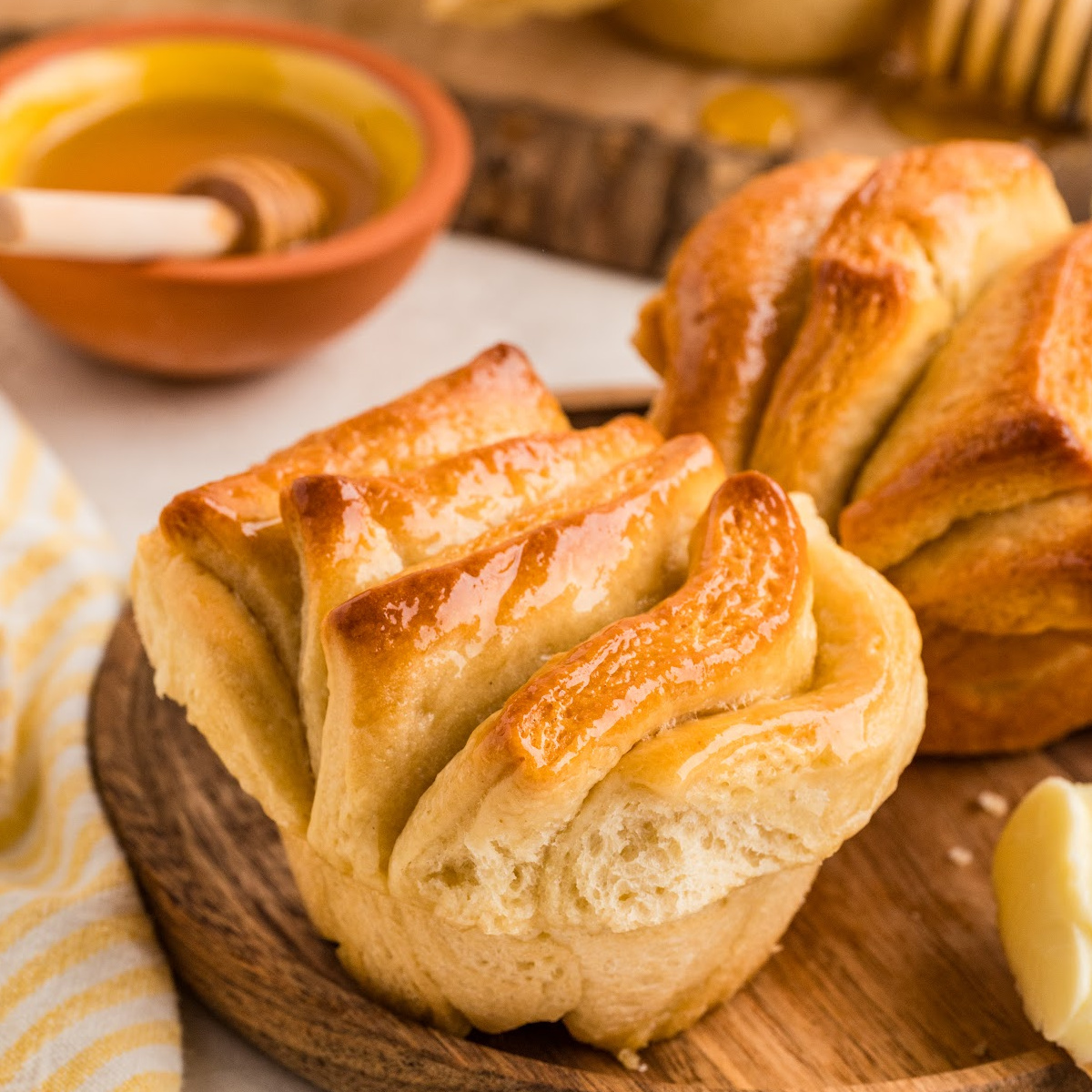
Honey Butter Pull-Apart Rolls
Equipment
- Stand Mixer with dough hook. For kneading evenly without overworking the dough.
- 12-Count Muffin Tin Keeps the rolls close so they rise and bake together.
- baking sheet Catches honey butter between layers.
- pastry brush For brushing honey butter between layers.
- cooling rack Allows the wolls to cool without steaming the bottoms.
Ingredients
Dough:
- ½ cup (120 ml) warm milk
- ¼ cup (60 ml) warm water
- ¼ cup (85 g) honey
- 2 large eggs room temperature
- 1 tbsp (about 1¼ standard yeast packets) RapidRise yeast
- 3½-4 cups (420-480 g) all-purpose flour
- 1 tsp (5 g) kosher salt
- ½ cup (113 g) butter softened, cut into tablespoons
Optional Finish:
- Additional melted butter for brushing after baking
- Additional honey for drizzling
Instructions
- Add the warm milk, warm water, honey, eggs, and instant yeast to the bowl of a stand mixer and whisk briefly to combine. Attach the dough hook and add 3½ cups (420 g) of the flour, the salt, and the softened butter. Mix on low speed until the dough begins to come together, then increase the speed slightly and knead until the dough clears the sides of the bowl and wraps around the hook, about 3–4 minutes. If needed, add additional flour 1 tablespoon (8 g) at a time just until the dough comes together. Continue kneading for 4–5 minutes more. The dough should be soft and supple, slightly tacky but not sticky. Avoid over-flouring, as this will result in dry rolls.½ cup (120 ml) warm milk, ¼ cup (60 ml) warm water, ¼ cup (85 g) honey, 2 large eggs, 1 tbsp (about 1¼ standard yeast packets) RapidRise yeast, 3½-4 cups (420-480 g) all-purpose flour, 1 tsp (5 g) kosher salt, ½ cup (113 g) butter
- Transfer the dough briefly to a clean surface. Lightly spray the mixing bowl with nonstick cooking spray, return the dough to the bowl, and cover tightly with plastic wrap. Let rise in a warm place until doubled in size, about 1 hour.
- Whisk together the melted butter and honey for the filling and set aside. Spray a 12-cup muffin tin with nonstick cooking spray.6 tbsps (85 g) butter, 6 tbsps (127 g) honey
- Turn the risen dough out onto a clean work surface and divide it in half. Roll one half into a rectangle approximately 14 × 16 inches (36 × 41 cm). Cut into 6 long strips, then cut each strip into 6 pieces, for a total of 36 rectangles. Brush each piece with the honey butter, stack in groups of 6, and place each stack on its side into a muffin cup. Repeat with the remaining dough to fill all 12 muffin cups.
- Cover loosely and let rise again until noticeably puffy, about 20–30 minutes. They do not need to double during this second rise. Meanwhile, preheat the oven to 350°F (175°C).
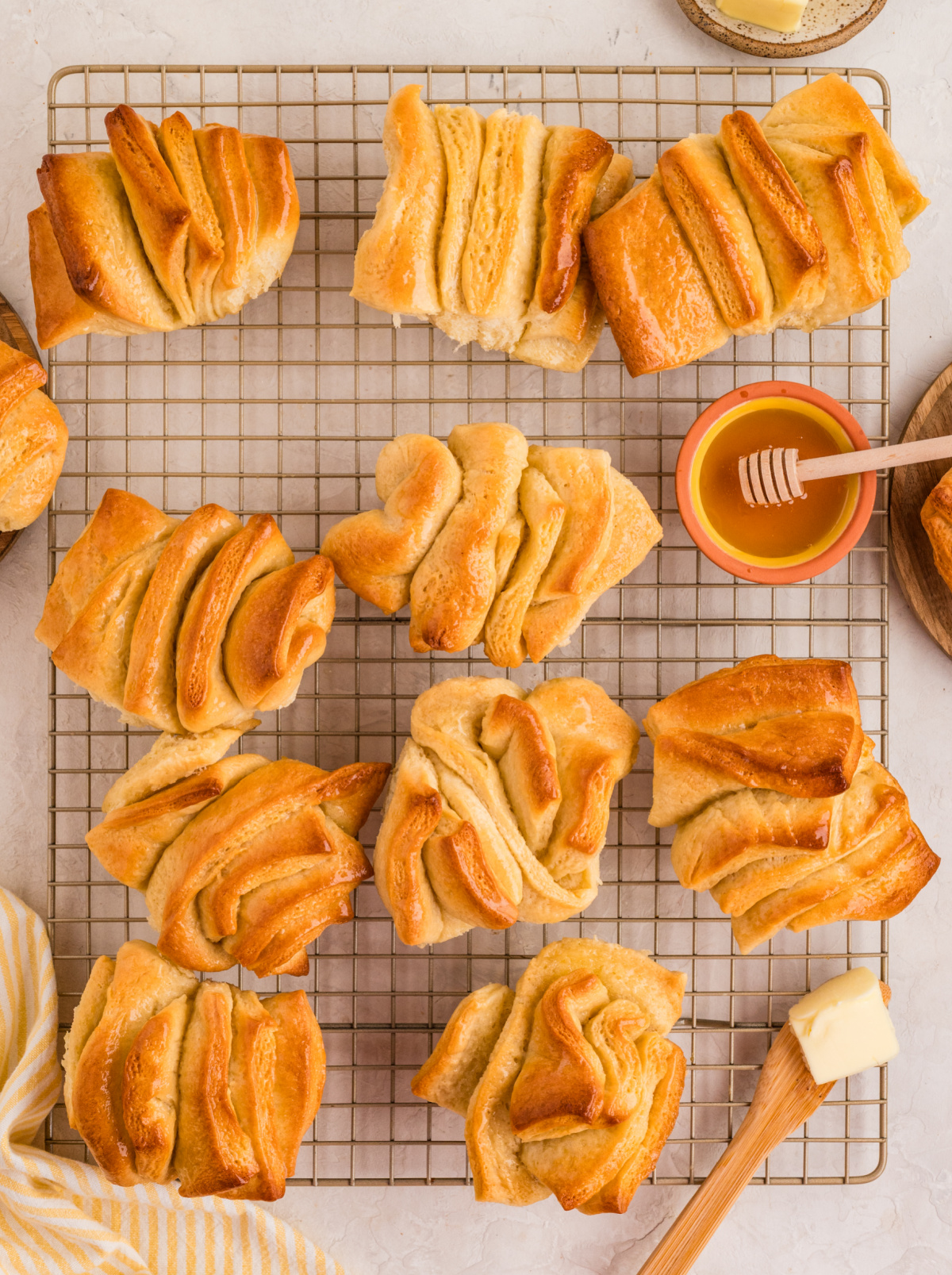
- Place the muffin tin on a rimmed baking sheet lined with parchment paper to catch any honey butter that may bubble over. Bake for 18–22 minutes, or until the rolls are golden brown. Let rest in the pan for 5 minutes, then carefully transfer to a wire rack. If desired, brush the warm rolls with additional melted butter and drizzle with honey before serving.Additional melted butter for brushing after baking, Additional honey for drizzling
Notes
- Dough feel matters more than exact flour amounts. Stop adding flour as soon as the dough clears the bowl and feels soft and slightly tacky.
- Instant yeast can be mixed directly into the dough. If using active dry yeast, dissolve it in the warm milk and water first. Let it bloom before proceeding.
- Baking the muffin tin on a lined sheet pan prevents honey butter from dripping onto the oven floor.
- Nutrition values are calculated based on ingredient weights and divided evenly per roll.
Nutrition
Have you made these Honey Butter Pull-Apart Rolls? I’d love to hear how they turned out – leave a comment below and let me know.
As an Amazon Associate and member of other affiliate programs, I earn from qualifying purchases.
Bales G says
Baked these up this morning and they are beautiful and taste so good.
Ksenia says
Would it work if I made the dough in a bread machine?
Cathy Pollak says
Yes, that should work.
Use the bread machine for the dough cycle only. Add the ingredients according to your machine’s instructions for enriched doughs, usually liquids first, then honey, eggs, flour, salt, butter, and yeast last. Let the machine mix and knead until the dough is smooth, then let it complete the first rise in the machine.
Once the cycle finishes, take the dough out, shape the rolls as written, and continue with the second rise and baking in the oven. The pull-apart layering and muffin tin bake are what matter here. The machine is just doing the early work.
Bonnie says
I don’t usually take the time to review recipes, but this one truly impressed me, so I felt compelled to share my thoughts. As someone who’s been cooking and baking my whole life, I often find that the end result doesn’t live up to the enticing pictures. However, this recipe completely changed that perception.
Overall Impressions:
**Ease of Preparation**: The recipe was straightforward and surprisingly forgiving. I was in a rush with a toddler helping out, and I didn’t have time to roll the dough into a perfect square or cut uniform pieces. Despite my less-than-ideal execution, the results were phenomenal.
**Taste** I made these for lunch with friends, and they were an absolute hit! Everyone loved them so much that I ended up sharing the recipe and sending rolls home with everyone. The addition of honey brushed on top adds a delightful sweetness that sets it apart from typical bread recipes.
**Not Everyday Bread**: While it does contain more sugar than your average bread, making it a bit indulgent, it’s perfect for special occasions or when you want something a little unique.
I highly recommend this recipe if you’re looking for something that adds a sweet touch to your table. It’s a fantastic option when you want to impress without spending too much time in the kitchen!
Cathy Pollak says
I’m so glad you enjoyed them and I really appreciate you taking the time to say so.