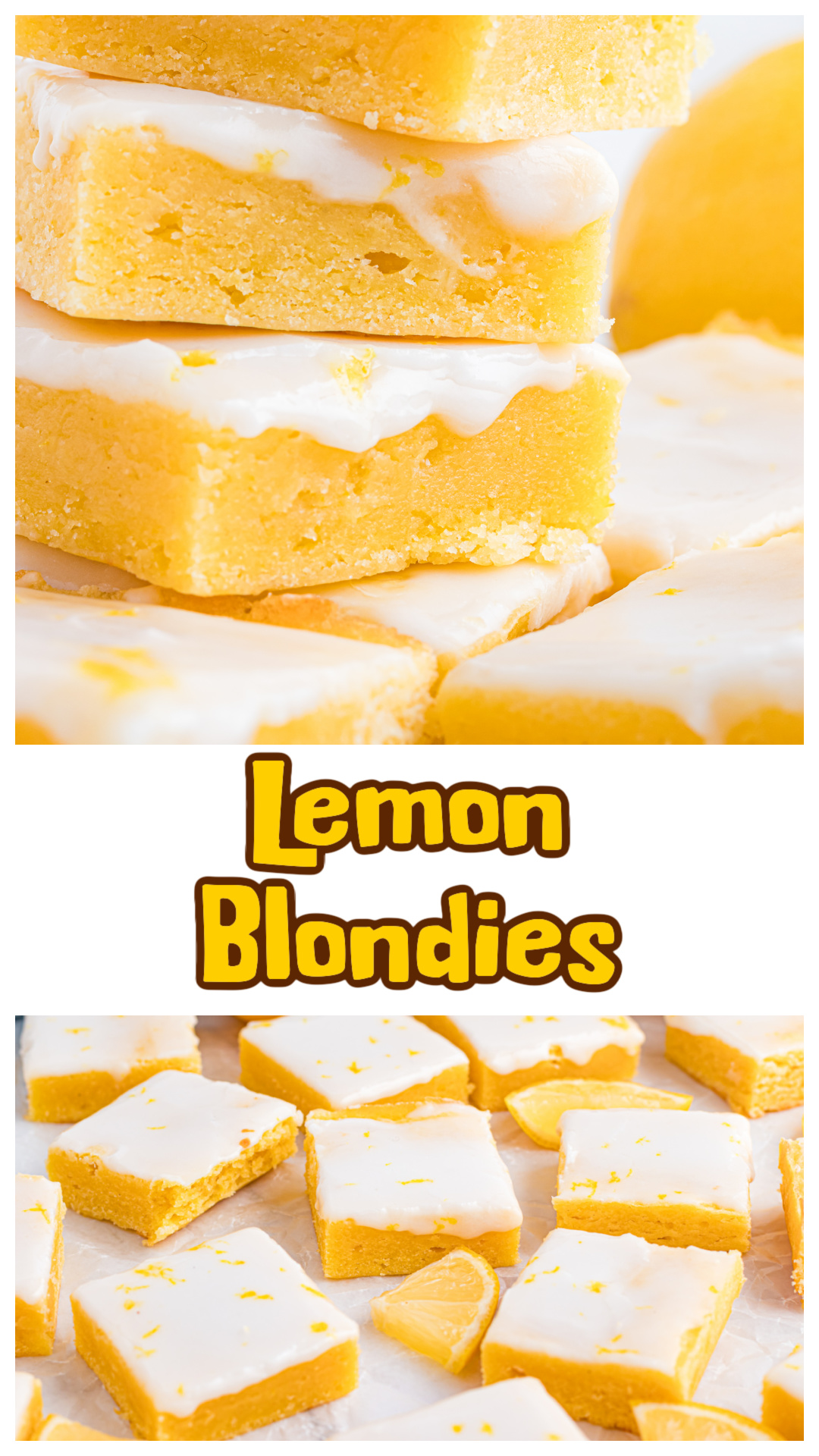
Lemon blondies belong to this part of the year, when citrus is in season and chocolate has already said enough. They’re buttery, soft through the middle, glazed enough to leave a trace on the plate.

Lemon Blondies, Because Not Everything Has to Be Chocolate
Some months have a way of putting everything in the same key. Chocolate on chocolate. Dark on dark. Rich stacked on richer until the table starts to feel a little monotone. That’s when citrus steps in and changes the channel.
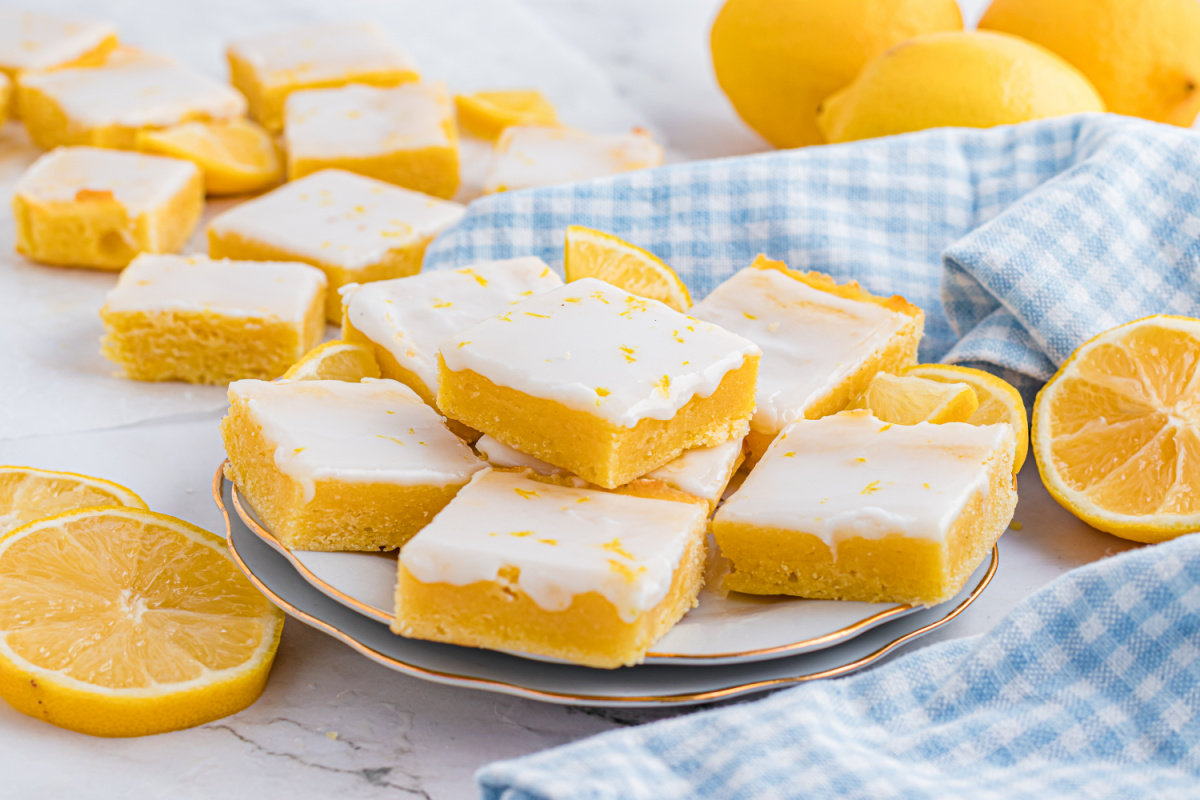
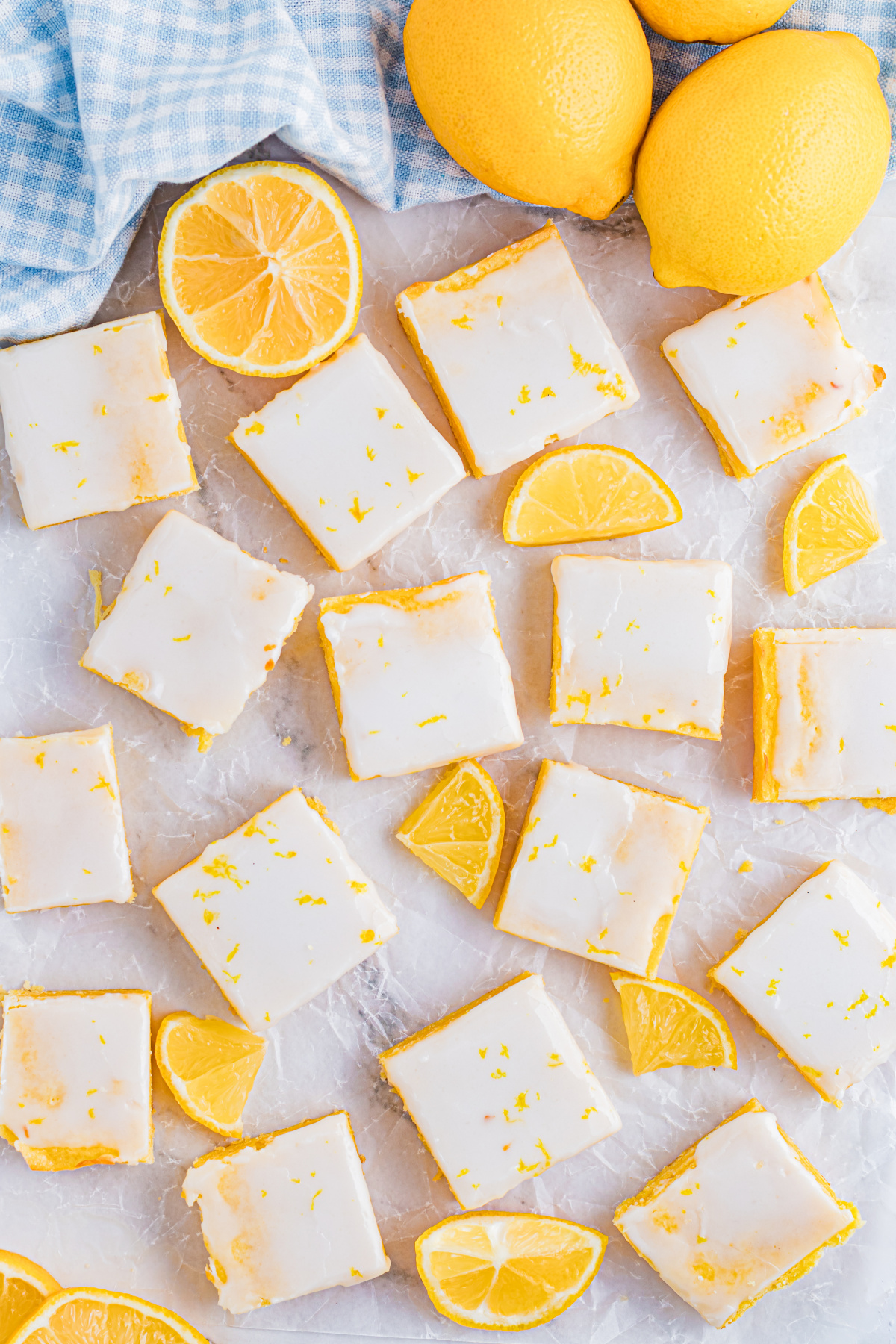
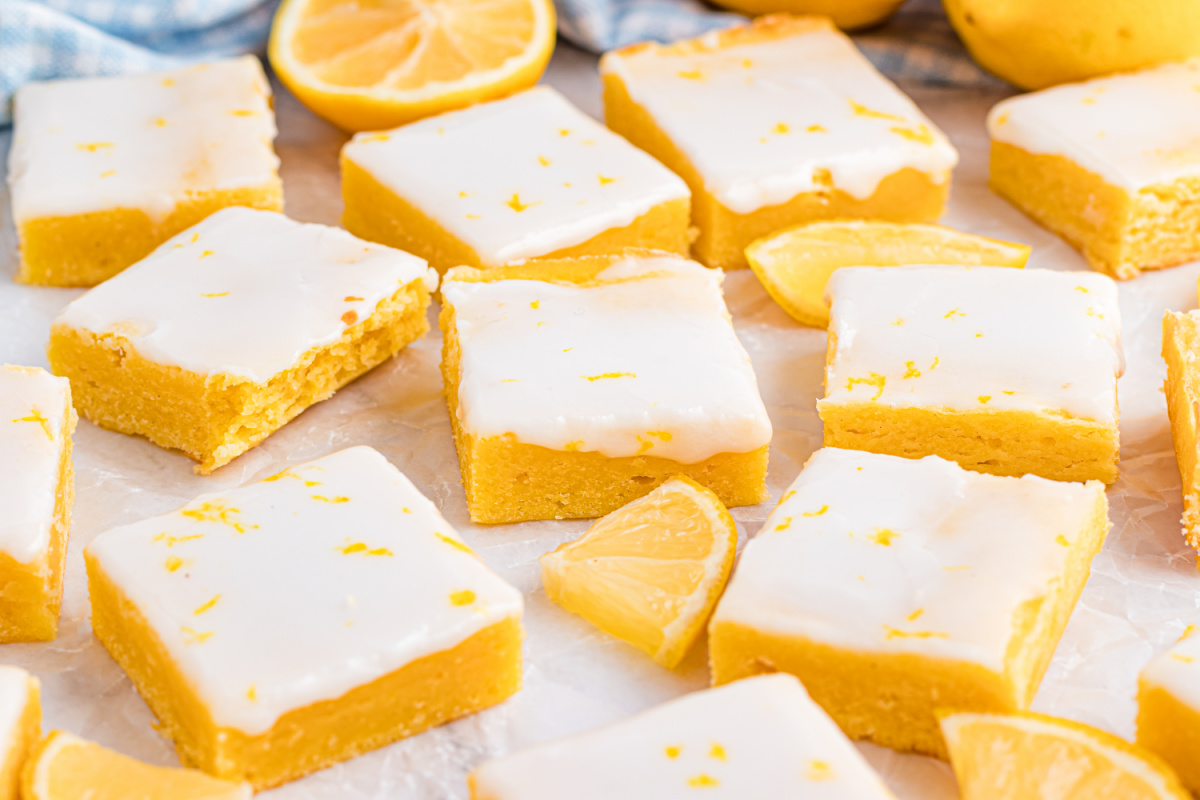
These lemon blondies are that moment when someone switches the station and the whole room levels up. Bright yellow bars, sharp lemon edge, a thin glaze that catches the light through my kitchen window just enough. They slice perfectly, stack neatly, and wake up a dessert spread that’s been living in cocoa land for a little too long.
This is full citrus season, whether anyone remembers it or not. I feel like everyone forgets. Lemons are at their best right now, firm and fragrant, made for baking. In blondie form, they keep their sturdiness but trade sweetness for clarity. Butter gives them body, lemon keeps everything pinging, and vanilla rounds the corners so nothing feels harsh or unfinished.
They belong on a table next to darker desserts, the counter before a late dinner, or packed up when you want something that resets the palate instead of weighing it down. Not a bar pretending to be a brownie. Not a lemon bar with custard ambitions. Just a clean, confident square that knows exactly what it’s here to do.
Why I Love This Recipe
- Lemon cuts through December the way fresh air cuts through a crowded room. Everything refines. Everything wakes up.
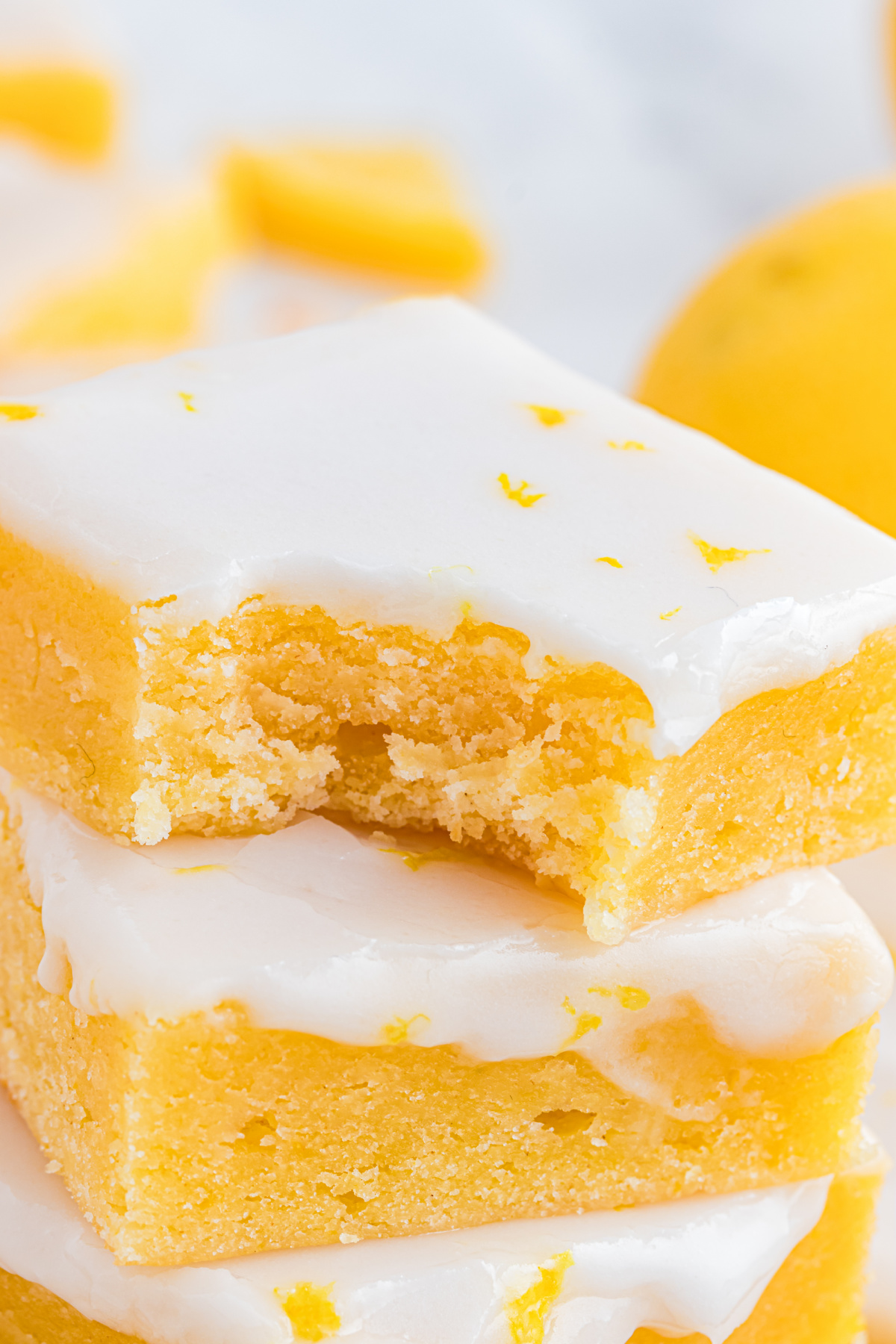
- The texture holds like a good promise: soft in the middle, safe at the edges, confident enough to be sliced without permission.
- Butter gives these bars their cornerstone, while citrus keeps them from ever feeling weighed down or stuck in place.
- They belong on a holiday table without trying to dress like one. Bright yellow, glazed, absolutely themselves.
- The glaze stays on top like the final note in a chord, sweet enough to soften the bite, thin enough to let the lemon speak first.
- These don’t compete with chocolate. They clear the air after it.
- Every square tastes like a reset. Not dessert as an ending, but dessert as continuation.
- They pack up well and hold together in unfamiliar kitchens, which is exactly what you want this time of year.
- The flavor is somewhere between familiar and unexpected, the way citrus always does when people forget it’s at its best.
- This is the kind of bake that simply gets eaten, leaving empty parchment and a lighter room behind.

Ingredients
Think of these like a string of lights going up around a room right before a party. Each one clicks into place, not competing, just making the whole thing glow a little more.
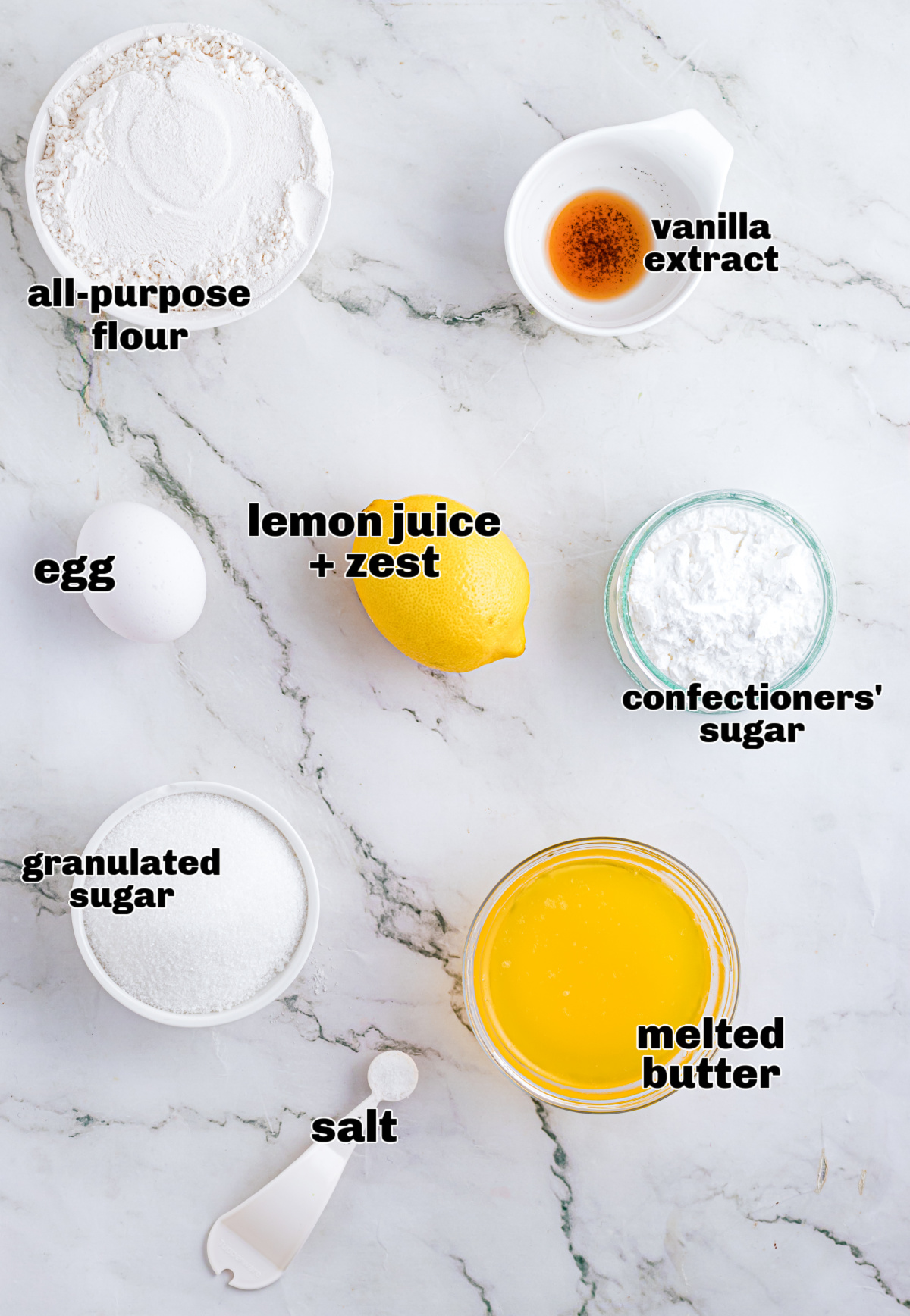
- Unsalted butter – Melted down and ready, this is the electrical current. It moves through everything, loosening the sugar, carrying flavor, giving the blondies their soft bend instead of stiffness.
- Granulated sugar – This is the glass in the bulbs. It catches the butter, reflects the lemon, and gives the bars their sheen without turning them into candy.
- Vanilla extract – A background flavor that rounds the edges. It keeps the citrus from feeling bare and makes the sweetness feel expected instead of abrupt.
- Egg – One, and only one. It holds the whole strand together, flexible enough to bend, firm enough to keep its shape once cooled.
- Fresh lemon juice and zest – The switch flipped on. Juice with pull. Zest with aroma and presence. Together they make the blondies feel present instead of sugary.
- All-purpose flour – The frame everything wraps around. Enough to give stability, not enough to get in the way of the butter.
- Salt – A small adjustment that keeps the sweetness from derailing. You don’t notice it directly. You notice when it’s not there.
- Confectioners’ sugar – For the glaze, sifted and smooth. This is the final layer, softening the top and catching the shimmer once the bars are cut.
How to Make Lemon Blondies
Find the complete printable recipe with measurements in the recipe card at the BOTTOM OF THE POST.
- Step One (set the stage)
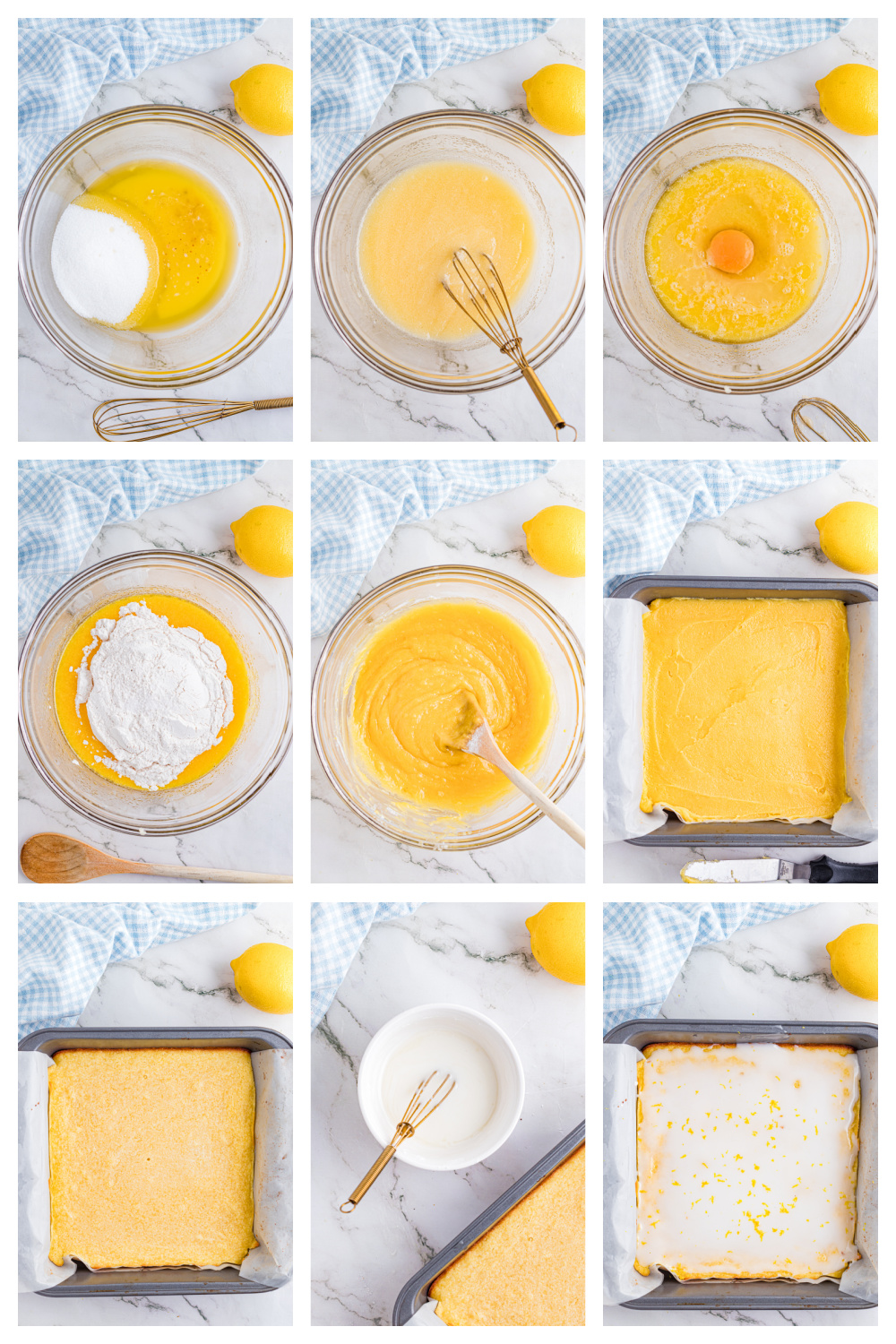
Set the oven to 350°F. Line an 8×8-inch pan with parchment, leaving enough overhang to lift everything out later. Lightly grease it. Think of this as opening the house and setting the furniture where it belongs. Nothing dramatic yet. Just making space for what’s coming. - Step Two (build the base)
In a bowl, whisk the melted butter, sugar, and vanilla until the mixture looks unified and glossy. Add the egg and keep whisking until it disappears completely, no trace left behind. Then stir in the lemon juice and zest. This is the first true note of citrus, not aggressive, just clear and unmistakable, like sunlight moving across your countertop. - Step Three (fold, don’t force)
Add the flour and salt and fold them in gently. The batter thickens quickly here. Use a spatula and stop as soon as everything comes together. This part rewards holding back. You’re guiding, not forcing, letting the batter keep its density instead of turning airy. - Step Four (bake with care)
Spread the batter evenly into the pan, easing it into the corners with the back of a spoon. Slide it into the oven and bake for 20 to 22 minutes. Watch the edges. They should set and turn lightly golden while the center stays tender. A toothpick should come out with crumbs. Take them out sooner rather than later. They finish becoming themselves once the heat is gone. - Step Five (let it settle)
Let the pan cool completely. No shortcuts here. Cooling is where the blondies gain confidence, where the texture firms and the surface readies itself for what comes next. - Step Six (finish with glaze)
Whisk the confectioners’ sugar with a tablespoon of lemon juice until smooth, then add more juice gradually until the glaze moves easily but still holds together. Spread it across the cooled blondies, guiding it where it wants to go. Add extra zest if you feel like it. This is the final tilt, the citrus rising again, brighter this time. - Step Seven (set and serve)
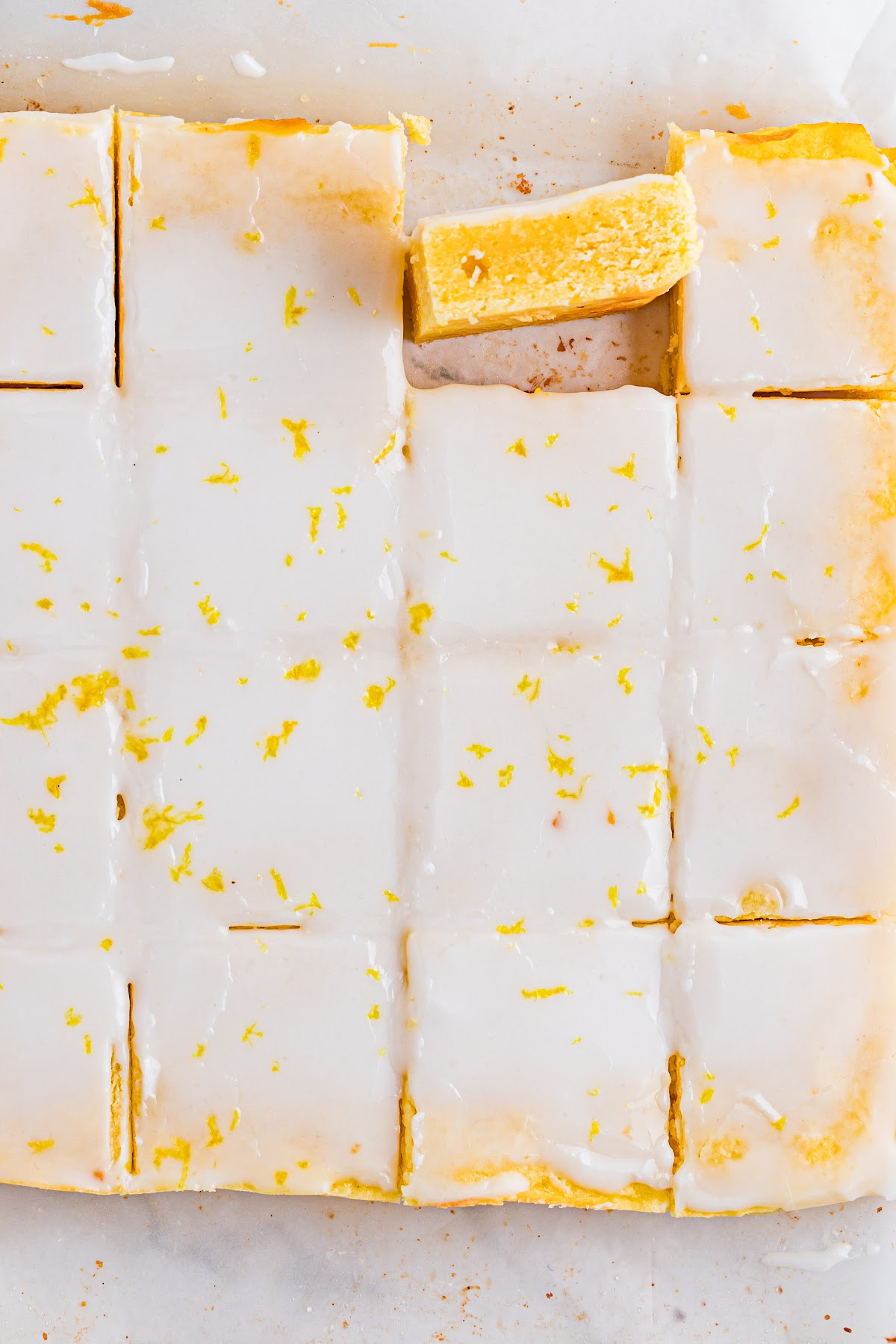
Let the glaze set for 20 to 30 minutes at room temperature, or chill briefly if time is tight. Lift the slab out using the parchment, slice into sixteen squares, and serve. The house should smell different now. Like something has passed through and left the place better than it found it.
Recipe Tips
- Melt the butter fully before you start, then let it cool just enough that it feels friendly to the bowl. Too hot and everything rushes ahead of itself. Too cool and it never quite blends the way it should.
- Whisk the sugar in until the mixture turns shiny and loose. This is where the blondies decide they’re going to be dense instead of cakey. If it looks fluid and unified, you’re on the right track.
- When the egg goes in, give it time to disappear completely. You’re not beating air into this. You’re smoothing everything into one direction so the texture stays tight and buttery later.
- Combine the lemon juice and zest with care. The juice brings clarity. The zest brings aroma. Together they accentuate the batter without turning it sour or aggressive. This isn’t a punch of citrus. It’s a change in temperature.
- Fold in the flour and salt until the last dry streak gives up. Then stop. The batter should feel thick and cooperative, like it knows where it’s going. Any more stirring and it starts drifting toward cake.
- Use the parchment. The batter spreads slowly and the clean edges matter here. They make the squares look deliberate instead of improvised when it’s time to cut.
- Pull the pan while the center still has a few moist crumbs. The blondies finish coming together as they cool, and that pause is what keeps them dense instead of dry.
- Let them cool all the way before glazing. Warm bars blur the line between glaze and batter. Cool ones keep that bright top layer distinct, which is the whole point.
- Mix the glaze thicker than you think you need, then thin it a touch at a time. It should move across the surface without running off the edges. You want contrast, not a soak.
- Slice once the glaze has set and the surface feels smooth under the knife. These squares look best when the cuts are edged and the lemon stays right where you put it.
Storage
- Leave them covered at room temperature for a day if the kitchen stays cool. The glaze firms and the lemon softens just enough to feel rounded instead of urgent. By the second day, they’re less bracing but still generous.
- For longer keeping, refrigerate them well wrapped. Let them come back to room temperature before serving. Cold dulls the citrus. Warmth brings it back where it belongs.
- They freeze without the glaze better than with it. Wrap the slab tightly, then thaw uncovered so moisture doesn’t collect on the surface. Glaze them after, once they’re fully awake again.
- These are bars that understand patience. They don’t rush you. They don’t fall apart if plans change. They wait, and they’re still good when you return.
FAQs
- Are lemon blondies the same thing as lemon bars?
No. Lemon bars are all custard and chill time. These come from butter and sugar, baked until they hold themselves together. They slice like a blondie, eat like something richer, and never ask you to wait for them to set their mind. - Do they need the glaze?
They don’t need it. They look finished without it. But the glaze does something useful. It draws a clean line between sweet and citrus and gives the top a place to pause. People notice it even if they don’t mention it. - Can I make them ahead?
Yes. They’re calmer the next day. The lemon settles into the bars. If you’re bringing them somewhere, bake them earlier and glaze closer to the moment. That’s when they taste most like themselves. - Why an 8×8 pan instead of something larger?
Thickness matters here. Too shallow and they lose the dense center that makes them satisfying. This pan keeps them tall enough. - Are these meant for holidays or just anytime?
Both. They sit easily next to chocolate without competing with it. They work when people are tired of richness and want something that clears the air a little. Citrus knows when to show up. - How do you serve them?
On a platter that doesn’t feel too showy. They get picked up with fingers more often than forks. Someone will say they’re not a lemon-dessert person and take one anyway. That’s usually the first one gone.
From My Kitchen Notes
These are the things I see while the pan is already emptying itself and no one is asking how they were made.
- Lemon does something different to a room than chocolate does. People don’t tilt back when they eat these. They tilt forward. Plates drift closer to the edge of the counter. Someone always says, oh, like they weren’t expecting to like them as much as they do.
- I’ve noticed people cutting smaller squares than they intended. Lemon makes some cautious at first. Then they come back without comment and take another piece from the middle, where the glaze pooled a little thicker.
- These blondies don’t end the night. They interrupt it. They show up while drinks are still being poured and the music hasn’t quite moved to the background yet. They stay in motion.
- Lemon zest leaves its mark longer than sugar does. Way after the pan is empty, the kitchen still smells lemony. Like something was peeled here. Like something bright has come through. I like that.
- I’ve watched people eat these standing up, fork in one hand, phone in the other, talking through the bite. They don’t slow anyone down. They keep pace with whatever the night is already doing.
- There’s usually a moment when someone says they don’t care for lemon desserts. They say it lightly, almost as a disclaimer. Then later, quietly, they take another square. I never mention it.
- By the end, the pan is bare and slightly tacky where the glaze once was. Fingers have been there. That matters to me. Desserts that leave traces usually mean people felt at ease, which is always my goal.
- These blondies don’t hang around long. And somehow that makes them easier to remember.
More Ways Lemon Shows Up
- Lemon Tiramisu – Layers of lemon curd, mascarpone, and syrup-soaked ladyfingers, chilled and composed. Cold, creamy, and useful when no one wants another baked square.
- Limoncello Syrup Lemon Bundt Cake – A golden Bundt soaked all the way through with limoncello syrup. The lemon stays present without getting sharp, which matters late in the season.
- Lemon Buns with Lemon Cream Cheese Icing – Soft, buttery buns finished with lemon cream cheese icing. Familiar in shape, brighter in feeling, and hard to ignore once they hit the table.
- Coconut-Lemon Loaf with Coconut Lemon Glaze – Tender, fragrant, and balanced. The coconut softens everything and keeps the citrus from feeling exposed.
- Lemon Pop Tarts with Glaze – Flaky pastry filled with lemon curd and finished with a simple glaze. A reminder that citrus still knows how to be playful.
This post may contain affiliate links. Please read my disclosure policy.
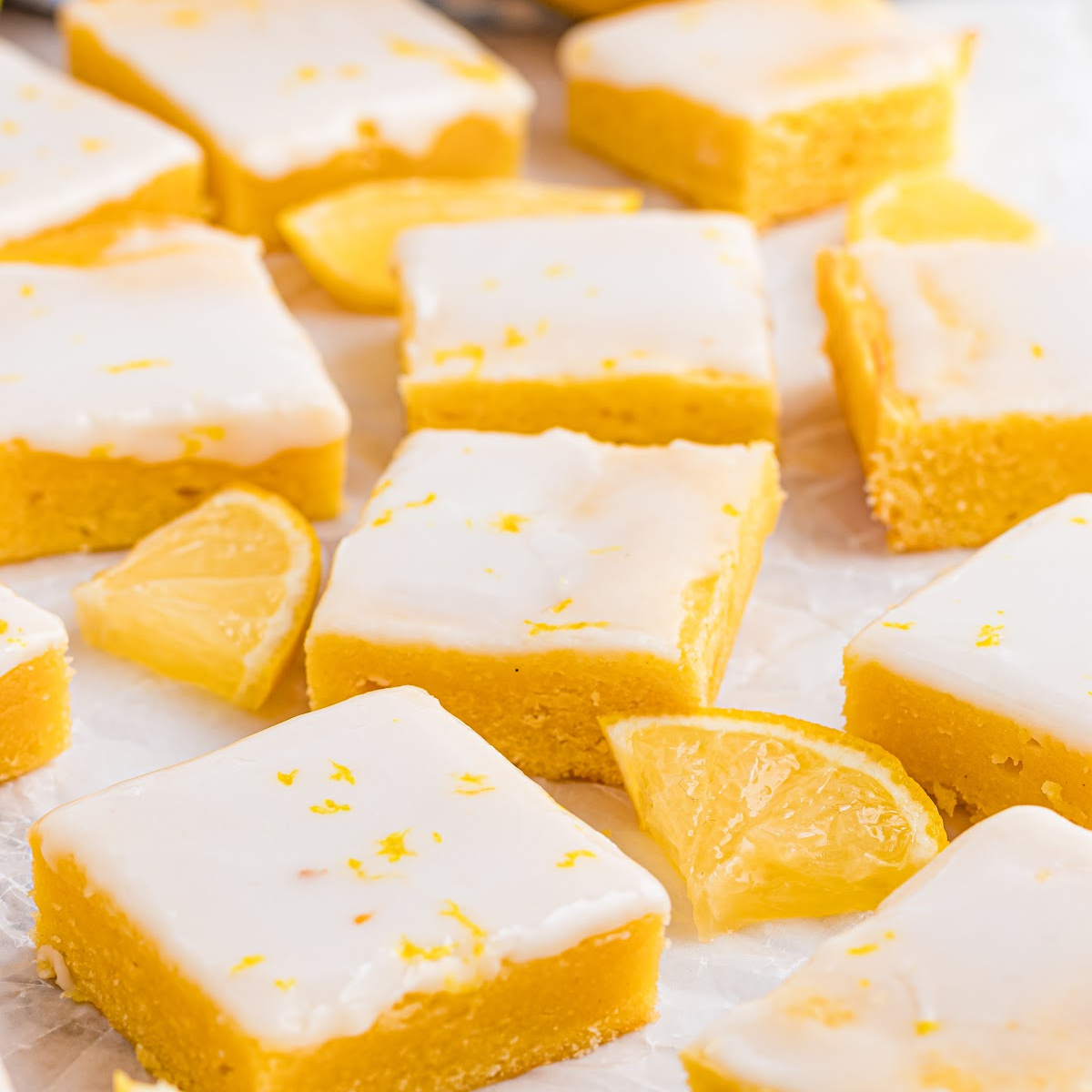
Lemon Blondies
Equipment
- baking dish 8x8 (20x20 cm) lined with parchment. Keeps the blondies thick and dense rather than thin and cakey.
- mixing bowls For making the batter.
- whisk Helps fully emulsify butter, sugar and egg.
- rubber spatula For folding and spreading the batter evenly.
Ingredients
Blondies:
- ½ cup (113 g) unsalted butter melted
- ¾ cup (150 g) granulated sugar
- 1 tsp (5 ml) vanilla extract
- 1 large egg room temp
- 1 tbsp (6 g) lemon zest
- 2 tbsps (30 ml) fresh lemon juice
- 1 cup (120 g) all-purpose flour
- ¼ tsp (1.5 g) table salt
Glaze:
- ½ cup (60 g) confectioners' sugar
- 1-2 tbsps (15-30 ml) fresh lemon juice
Instructions
- Preheat the oven to 350°F (177°C). Line an 8x8-inch (20x20 cm) baking pan with parchment paper, leaving an overhang on two sides for easy removal, and lightly grease the parchment.
- In a medium mixing bowl, whisk together the melted butter, granulated sugar, and vanilla extract until smooth. Add the egg and whisk until fully emulsified, then whisk in the lemon zest and lemon juice until evenly combined.½ cup (113 g) unsalted butter, ¾ cup (150 g) granulated sugar, 1 tsp (5 ml) vanilla extract, 1 large egg, 1 tbsp (6 g) lemon zest, 2 tbsps (30 ml) fresh lemon juice
- Add the flour and salt and stir gently with a spatula just until no dry streaks remain. The batter will be thick. Avoid overmixing, which can lead to a cakier texture.1 cup (120 g) all-purpose flour, ¼ tsp (1.5 g) table salt
- Spread the batter evenly into the prepared pan, smoothing the top with an offset spatula or the back of a spoon to reach the corners. Bake for 20 to 22 minutes, until the edges are set and lightly golden and a toothpick inserted in the center comes out with moist crumbs, not wet batter. Do not overbake, as the blondies will continue to set as they cool.
- Let the blondies cool completely in the pan. This allows the structure to firm up and makes glazing and slicing cleaner.
- To make the glaze, whisk the confectioners’ sugar with 1 tablespoon (15 ml) of lemon juice until smooth. Add additional lemon juice a little at a time until the glaze reaches a thick but pourable consistency. Spoon or drizzle the glaze evenly over the cooled blondies and spread gently if needed.½ cup (60 g) confectioners' sugar, 1-2 tbsps (15-30 ml) fresh lemon juice
- Allow the glaze to set at room temperature for 20 to 30 minutes, or refrigerate for 10 to 15 minutes to speed the process. Lift the blondies out using the parchment overhang, slice into 16 squares, and serve.
Notes
- Fresh lemon juice and zest are essential for clarity and aroma. Bottled juice dulls the flavor.
- Pull the blondies while the center still shows moist crumbs. They continue to firm as they cool.
- For freezing, skip the glaze and add it after thawing.
Nutrition
Have you made these Lemon Bars? I’d love to hear how they turned out – leave a comment below and let me know.
As an Amazon Associate and member of other affiliate programs, I earn from qualifying purchases.
Leave a Reply