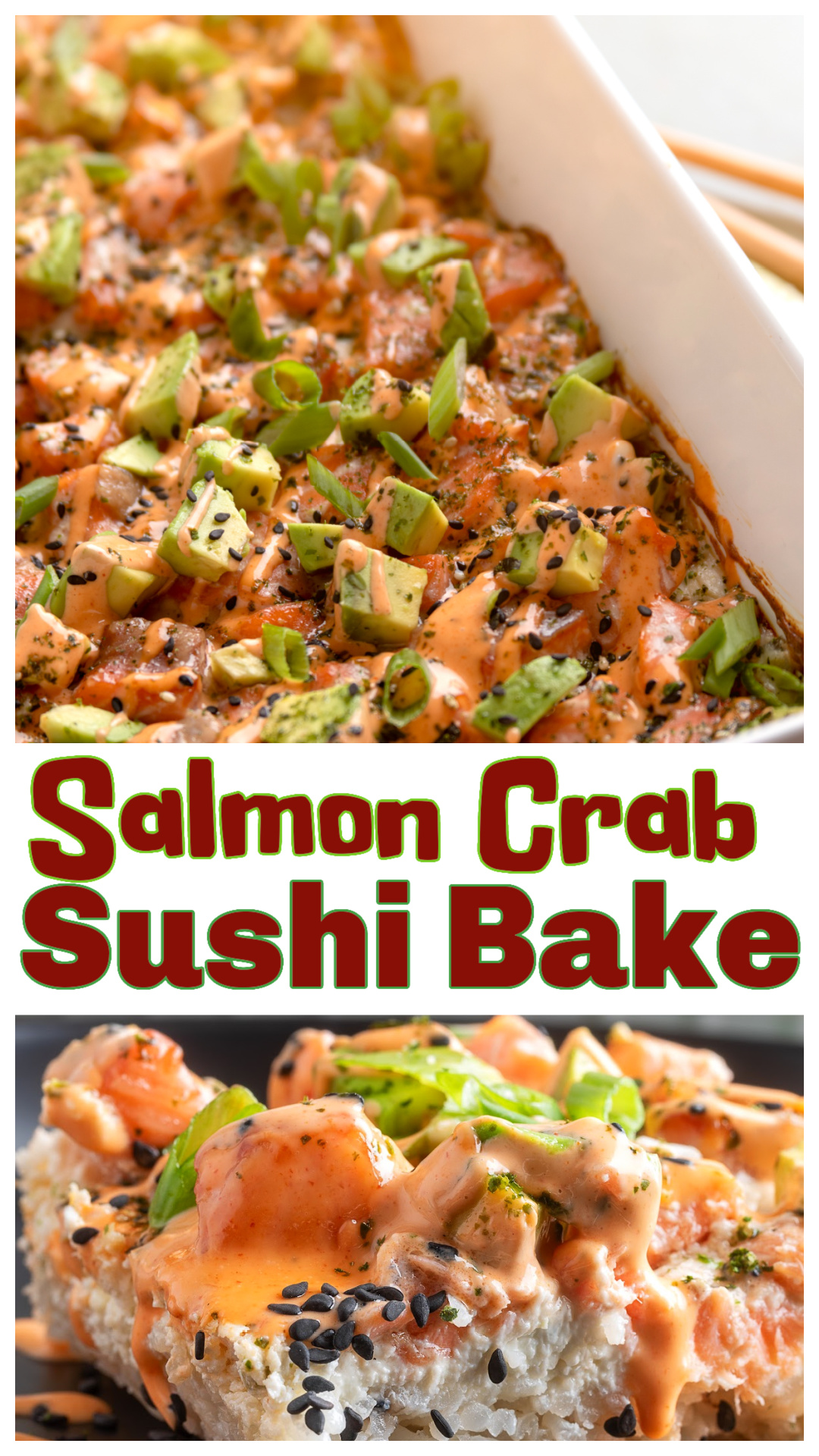
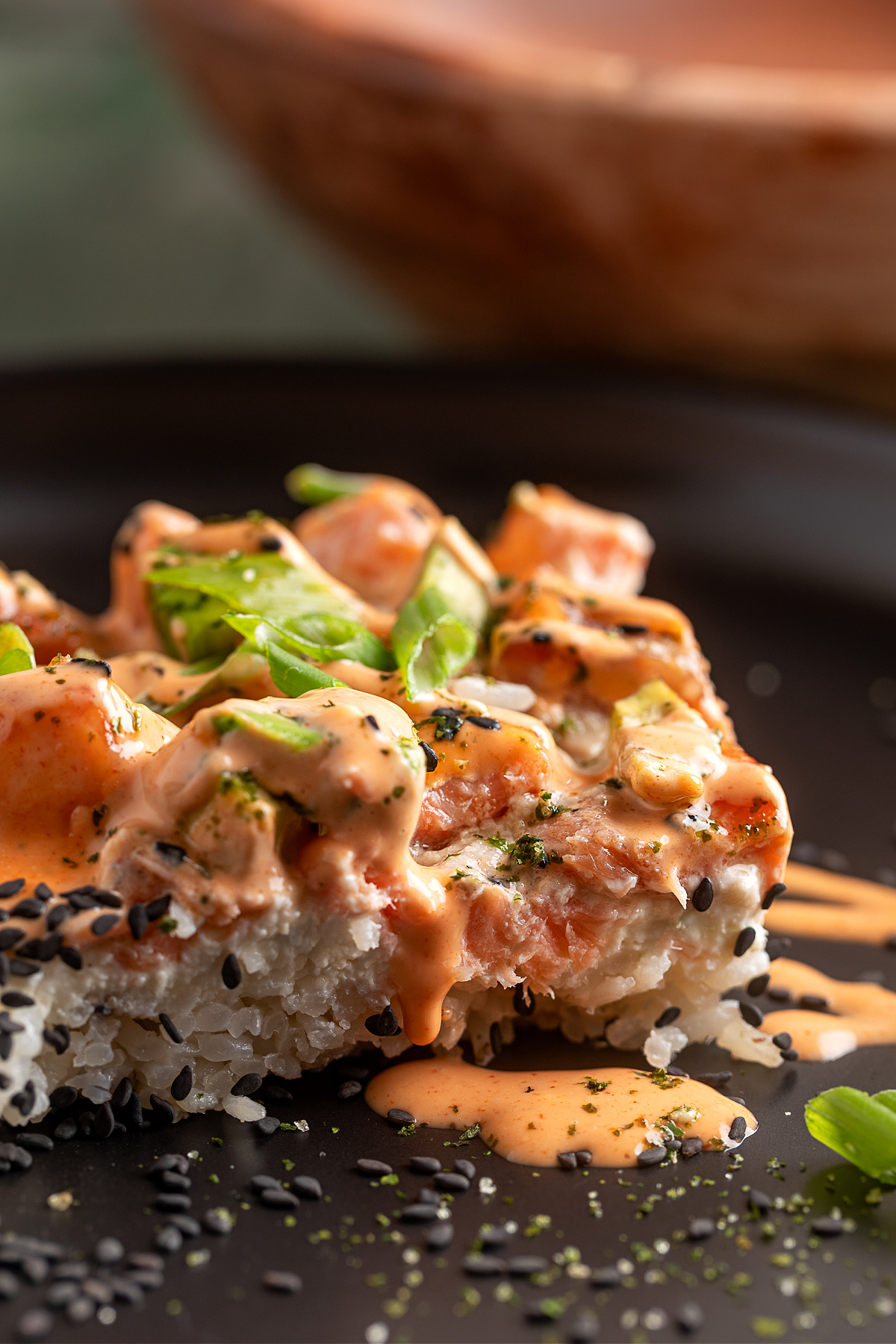
A layered salmon crab sushi bake with seasoned rice, creamy crab, and baked salmon, finished with spicy mayo and nori for scooping. All the flavor of a sushi roll, none of the execution stress.
Salmon Crab Sushi Bake, Without Correction
I would have rather been eating something like this salmon crab sushi bake than listening to adults argue about how I held a pencil.
Parent-teacher conferences happened every November when I was in elementary school, always on a Thursday, and my family always took the opportunity to make this into a four-day weekend in Palm Springs. This meant whatever was said in that little chair across from my desk didn’t stay limited to the classroom. It came with us.
In second grade, my teacher, an older woman who treated cursive like a moral code, became deeply disturbed by the fact that my lowercase r’s and s’s looked too similar, that I wasn’t closing the loop on my s’s, which made them look like r’s. She attributed this not to the speed at which I wrote or the fact that I’d already taught myself long before she got to me, but to the way I held my pencil. She said it with the kind of certainty that suggested lifetime consequences. That I would not pass the private high school essay entrance exam with this type of penmanship, and other ridiculous life-ruining consequences that included academic exile. She would grab my hand, point to the callous on my ring finger, and explain, again, that this was the source of everything that was wrong.
The timing made it worse. We didn’t even go home after those conferences. We got back in the car and drove straight to Palm Springs, which meant no buffer, just hours of desert highway devoted entirely to this indulgent EMERGENCY PEN GRIP INTERVENTION, my parents freshly convinced they’d just been handed a crisis that needed immediate correction.
And the funniest part wasn’t even my pencil grip, it was the adult spiraling around it. The way I was a perfectly fine, well-behaved kid that suddenly needed a “problem” so everyone could feel busy and important.
I distinctly remember my mom turning around in the station wagon like she was about to stage an intervention over the alphabet and said, “How did you get here, to this point of no return?” As if there was a secret fork in the road where I chose crime, disorder, and a lifetime of questionable cursive. I was seven.
All I wanted was Palm Springs and the hotel pool. The moment when you drop your bag and run straight for the water. Instead, we stopped at a store so my parents could buy special cursive paper, the kind with extra lines, because somewhere between the conference table and the freeway, my lowercase s’s that looked like r’s were going to be dealt with this weekend. I remember sitting there thinking that none of this mattered, that I didn’t care, and I was going to miss pool time for something that was not real. I have never been the type to panic when other people are panicking. I’m still not.
Way before kindergarten, my dad spent at least an hour every night teaching me to read, write, and do math, which meant I learned to write when my hands were still small enough that the “correct” grip wasn’t practical. I rested the pencil on my ring finger instead of my middle finger because it worked, it was fast, and I loved copying whole pages out of books and it was the most efficient way for me to write. What I didn’t know then was that I was building a completely different motor map, one that would stick. I never changed how I held a pencil. I am still here. My life turned out okay.
What I did get was a lifelong struggle to use chopsticks without looking completely inept.
Chopsticks require something very specific. Independent movement of the index and middle fingers, stabilization through the ring finger, minimal thumb dominance. My pencil grip flips that entire hierarchy, which means every time I pick up chopsticks my brain tries to assign roles that are already taken. My ring finger is busy. My middle finger doesn’t want it, nor can it do the job. It’s awkward, slow, and completely ungraceful. I have watched so many videos trying to figure this out and correct what I thought was my own issue. I still love Asian food anyway. I keep trying with chopsticks and keep laughing about it. Writing won.
What complicates this, and made the chopsticks situation even worse later, is that I also had a significant hand injury as a child. The worst of it happened to my middle finger. I never regained full sensation there. The two small scars across my knuckle tell the story. And once you know that, you understand that pressure and feedback were never fully available in that finger after, making it even harder to hold two tiny sticks properly while picking up food. It is curious that the chance I would naturally build a grip that avoided relying on that finger exists. It started to feel less like defiance and more like, just wow. I don’t believe in coincidences. I never have.
Which brings me, inevitably, to food.
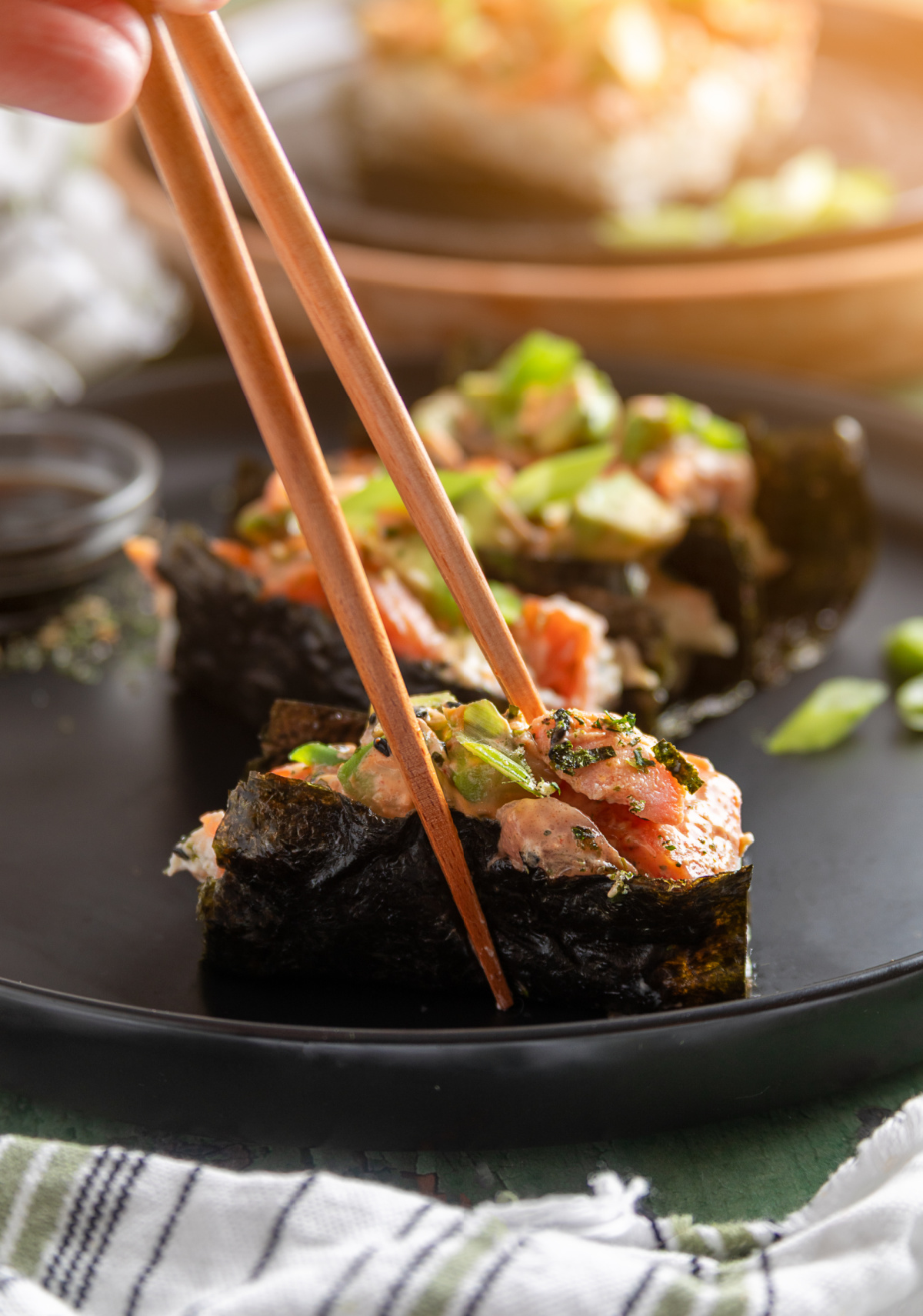
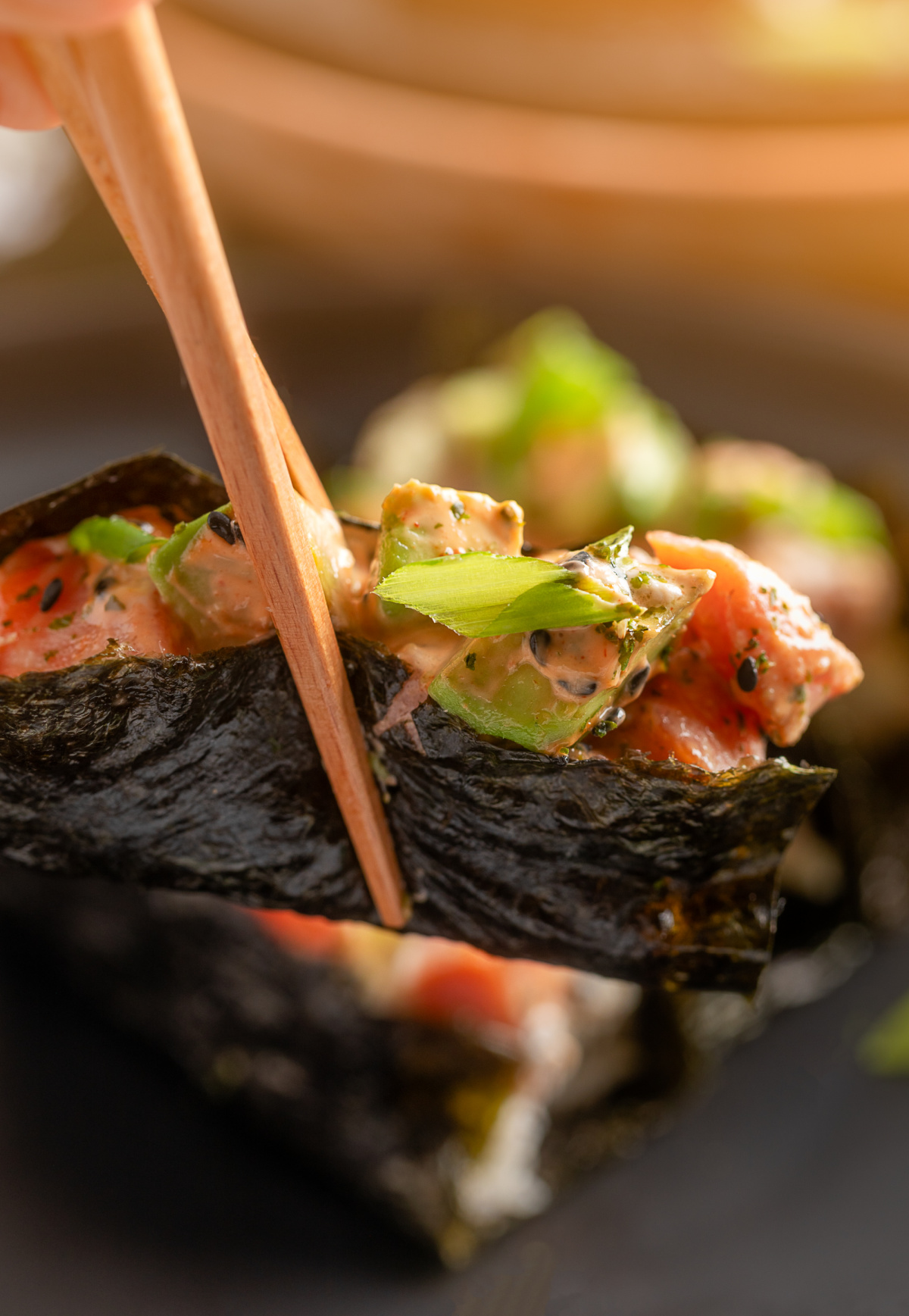
This salmon crab sushi bake is a layered dish I can eat slowly because my chopsticks don’t quite cooperate. I’ve made sure the rice is pressed just enough that even I can manage picking it up most of the time. This meal also rewards lots of adaptations. I like wrapping it in nori, grabbing it piece by piece, and accepting that this is how my hands work and that nothing bad happens if I let them.
Every time I make this, I think about how often I learned things different from the norm, and how long it took anyone to realize that the problem wasn’t inability but misinterpretation, and how funny it is that my body had already solved something my brain wouldn’t understand until decades later.
I was never defiant, confused, or unable to hold the pencil the “correct” way. I tested it after everyone lost their minds, but I also evaluated the cost. It made me slower, clumsier, less myself, so I opted out. Permanently. I like to think of it as my own internal authority forming early, most would call it stubbornness. I’ve always chosen efficiency over approval.
And I never changed it. I’m still here. Alive. Shockingly, still living a full life and writing cursive s’s that don’t completely close the loop and look like r’s. Which feels like a small but satisfying victory.
Why I Love This Recipe
- I made sure this is a chopsticks-optional situation. You can use them if you want, and fail with them in private. You can switch to your hands without anyone making it weird. Wrapped in nori, it’s forgiving. It doesn’t expose you.
- The rice gets pressed into place, not fluffed or coaxed. It stays where you put it. For the chopsticks people, it’s easy to lift.
- The crab layer doesn’t need sculpting or improving. It’s there to soften the center and absorb whatever comes at it next, which feels familiar in a way I didn’t recognize until now.
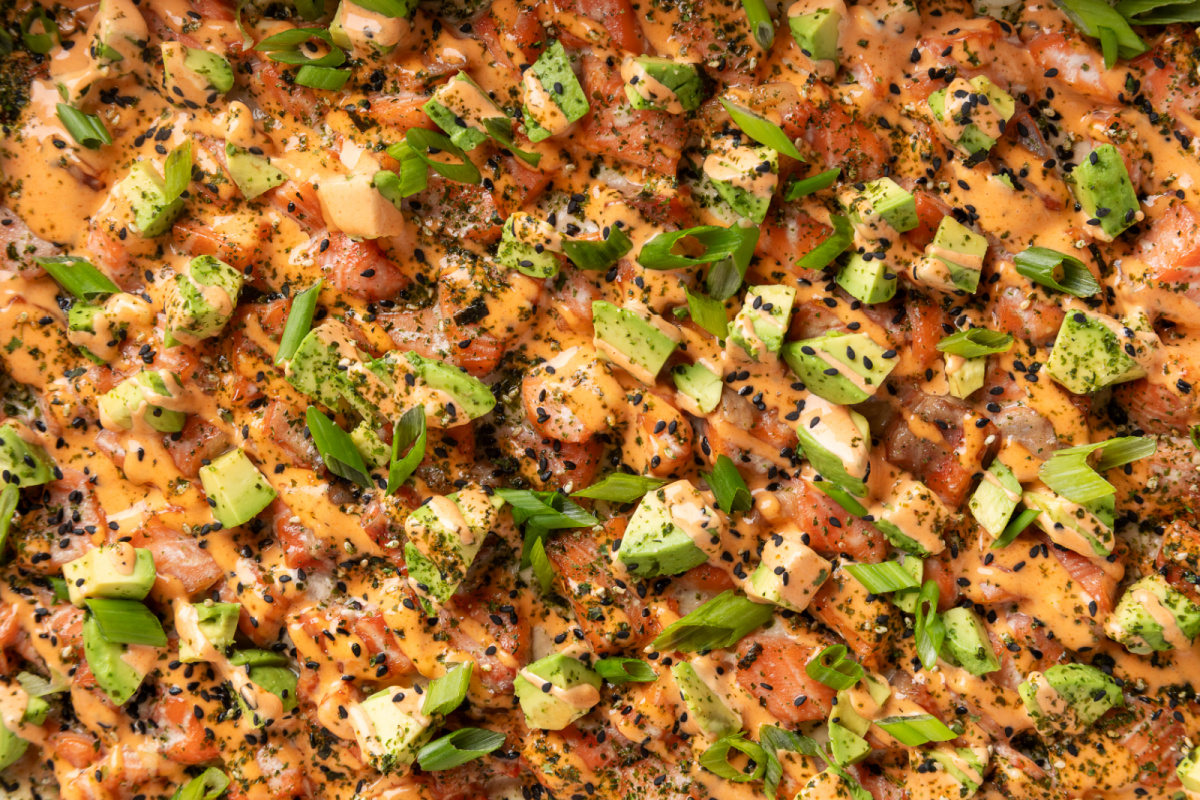
- The salmon goes on last and gets left alone. Cubed. Seasoned. Placed. Finished.
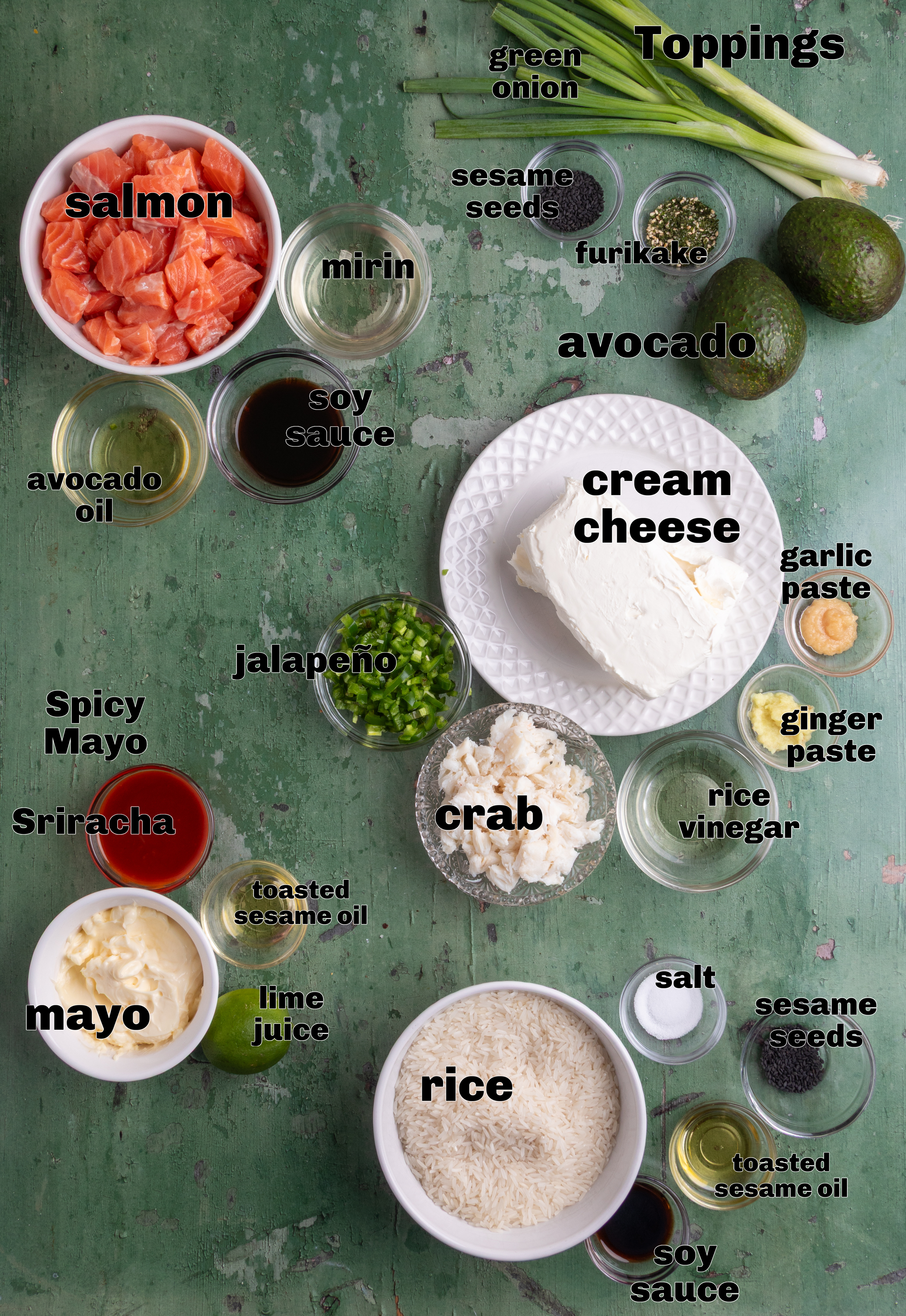
Ingredients
- Jasmine rice – cooked ahead, cooled slightly and already resigned to being pressed into place. Jasmine rice works better than short grain in a baked format.
- Rice vinegar – the reminder that rice can be disciplined without being punished.
- Soy sauce or tamari – used more than once because some habits stick.
- Toasted sesame oil – a small amount, because too much can be too much.
- Sesame seeds – texture matters when everything else is soft.
- Fresh salmon – skin removed, cut into cubes.
- Mirin – sweetness with context.
- Neutral oil – only here so nothing sticks.
- Lump crab meat (pasteurized) – drained thoroughly, pressed gently, and treated with respect. Gives better texture than imitation crab.
- Cream cheese – full-fat, because this dish is not a moral exercise.
- Jalapeño – finely diced, seeds removed, because learning happens faster without unnecessary suffering.
- Ginger paste – warmth without strings attached.
- Garlic paste – because effort should be focused where it matters.
- Salt – necessary.
- Mayonnaise – of course there is.
- Sriracha – you can use regular Sriracha, but I am loving the Tabasco Sriracha Sauce. I’ll link it in the recipe card. It has really good flavor for this dish.
- Lime juice – acid that shows up late and fixes things anyway.
- Green onions – for contrast.
- Furikake seasoning – optional, but it understands the assignment. And it’s my fave.
- Avocado – sliced however your hands decide that day.
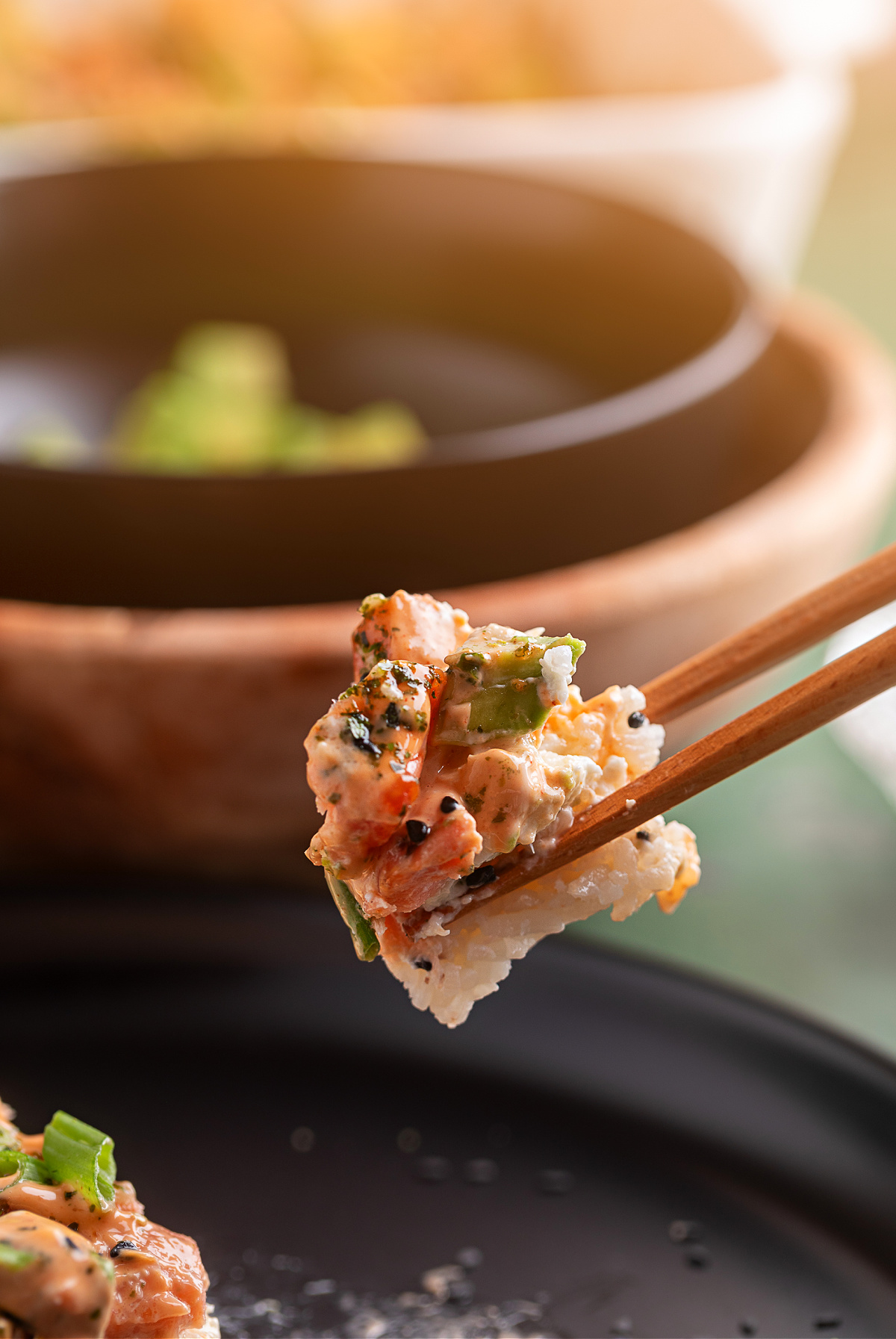
- Nori sheets – torn, wrapped, scooped, or ignored entirely, depending on how cooperative your fingers feel.
How To Make Salmon Crab Sushi Bake
Find the complete printable recipe with measurements in the recipe card at the BOTTOM OF THE POST.
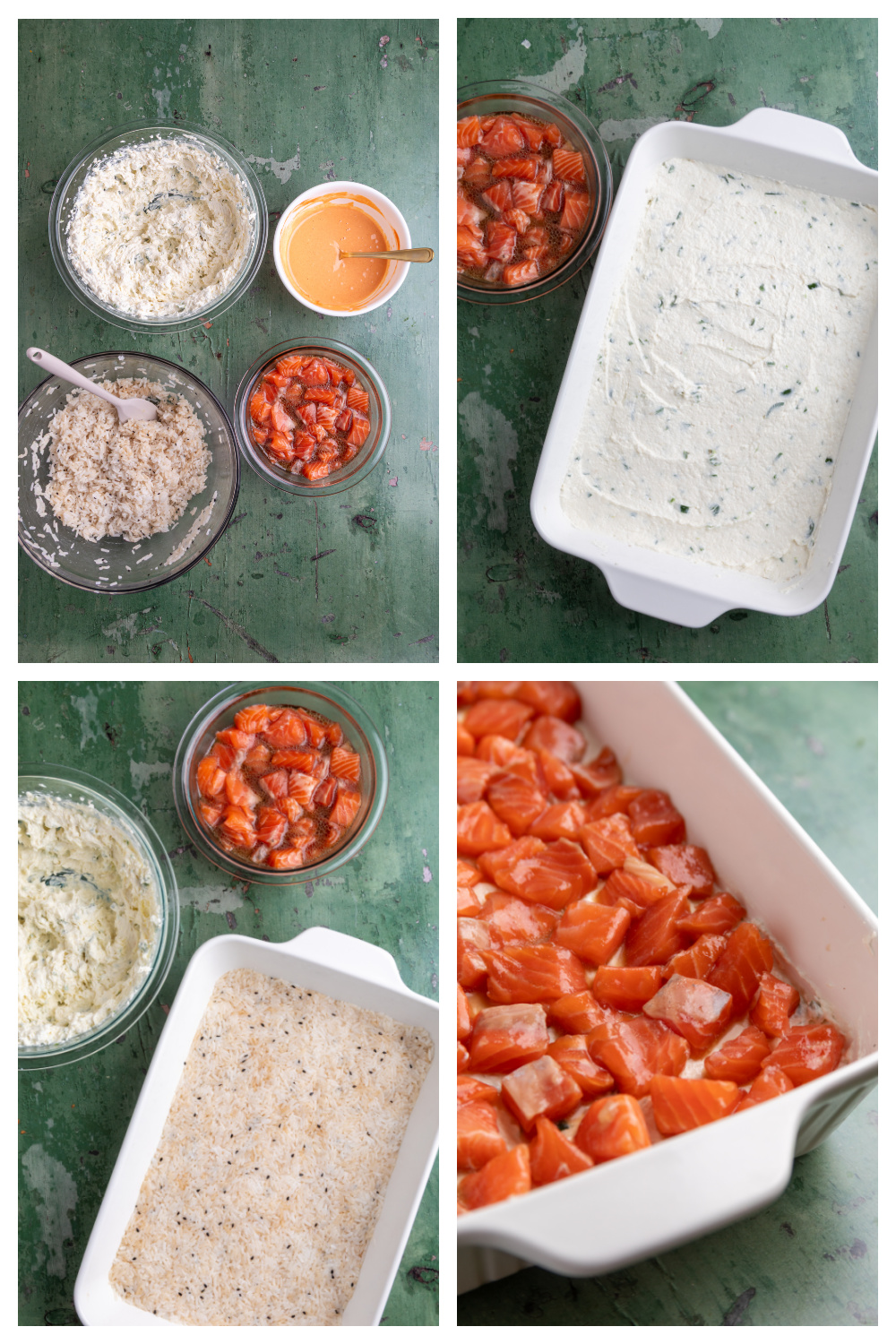
- Step One (marinate the salmon)
Heat the oven to 350°F. Spray a 9×13 baking dish and forget about it for a minute. In a bowl, toss the salmon cubes with soy sauce, mirin, and oil and let them sit while you do everything else. This isn’t a long soak, just enough time for the salmon to understand what’s coming. - Step Two (make the spicy mayo)
Stir together the mayonnaise, Sriracha, toasted sesame oil, and lime juice until smooth, then put it in the fridge so it stays cool and thick. This is not the moment to taste and adjust repeatedly. Make it once, trust it, and move on. - Step Three (season and press the rice)
In a large bowl, gently mix the cooked jasmine rice with rice wine vinegar, sesame oil, sesame seeds, and soy sauce or tamari until everything is evenly distributed and still intact. Spread the rice into the baking dish and press it down firmly into an even layer. I use a small piece of parchment so it doesn’t stick to my hands, and because pressing the rice matters more than people think. This is what keeps everything together later when you cut it. - Step Four (make the crab layer)
In another bowl, mix the drained crab with softened cream cheese, finely diced jalapeño, salt, ginger paste, and garlic paste until smooth. Spread it over the rice in one steady motion, edge to edge. This layer is doing more labor than it lets on. - Step Five (add the salmon)
Arrange the marinated salmon cubes over the crab layer in a single, even layer. Don’t pile them, or mess with the spacing, just make sure every part of the dish gets some attention. - Step Six (bake, then wait)
Bake for 20 to 25 minutes until the salmon is cooked through and opaque (internal temperature of 145°F). When it comes out of the oven, don’t touch it yet. Let it sit for 15 to 20 minutes so it comes together. This is the difference between scooping and slicing. Patience wins. - Step Seven (finish and serve)
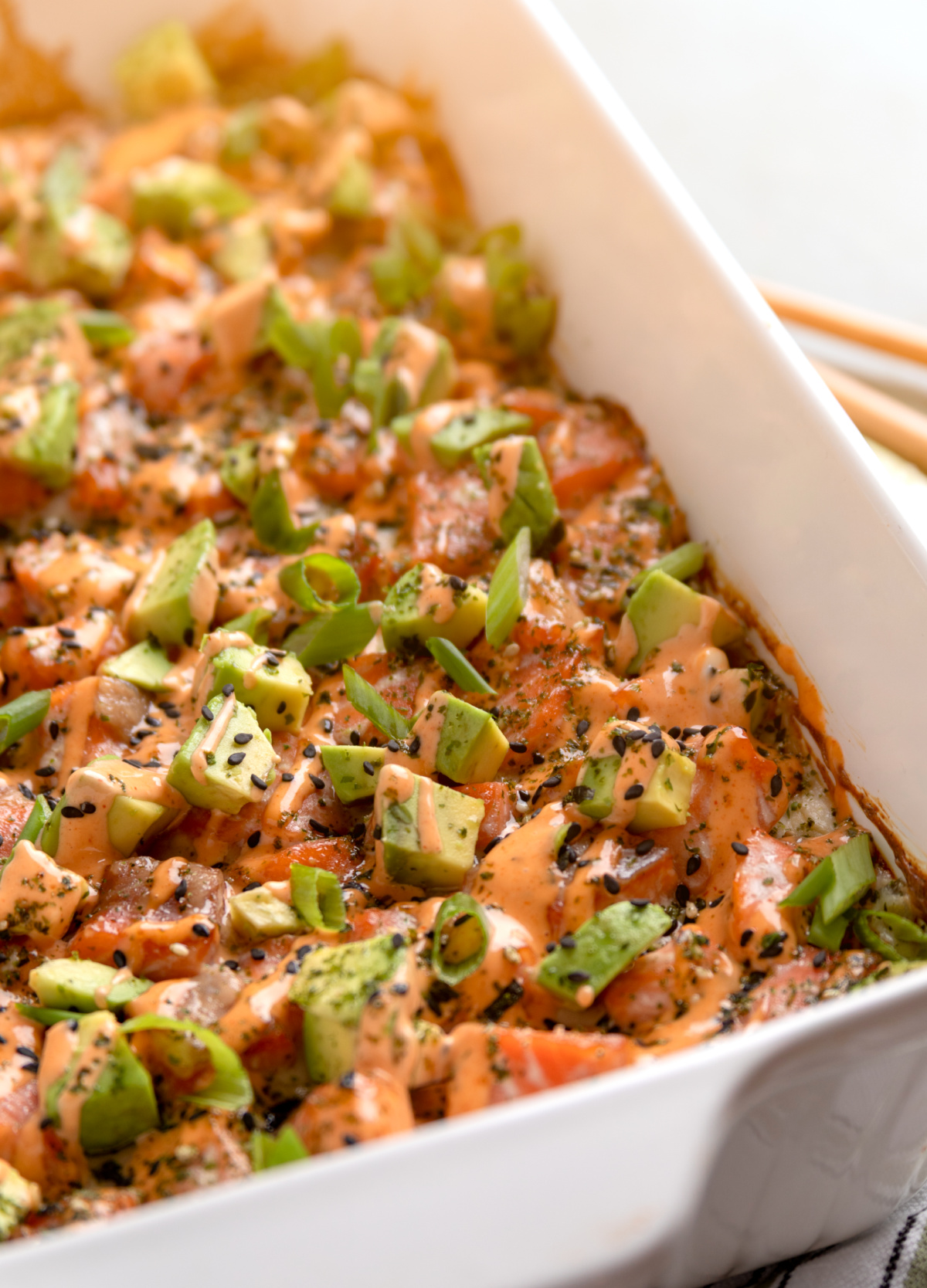
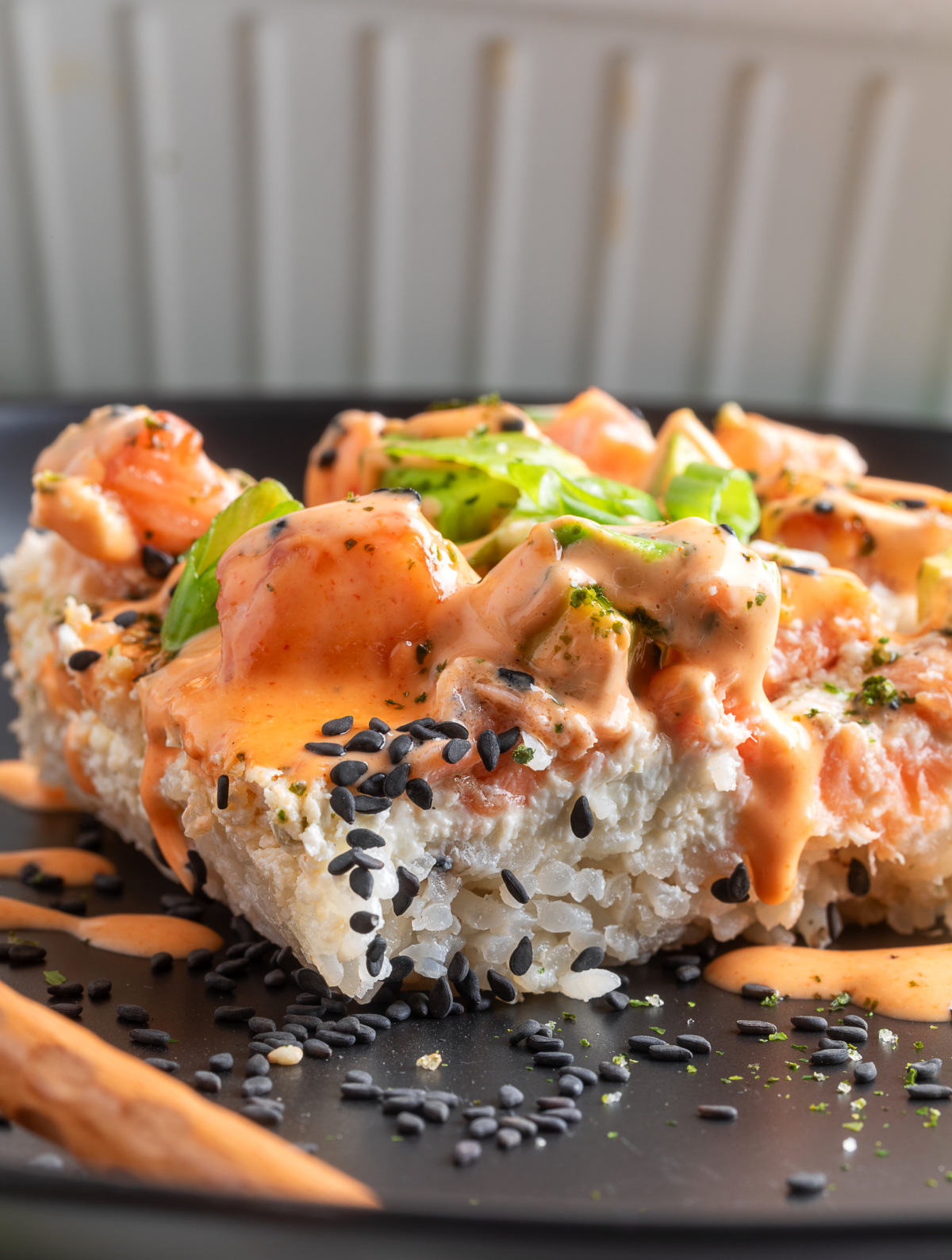
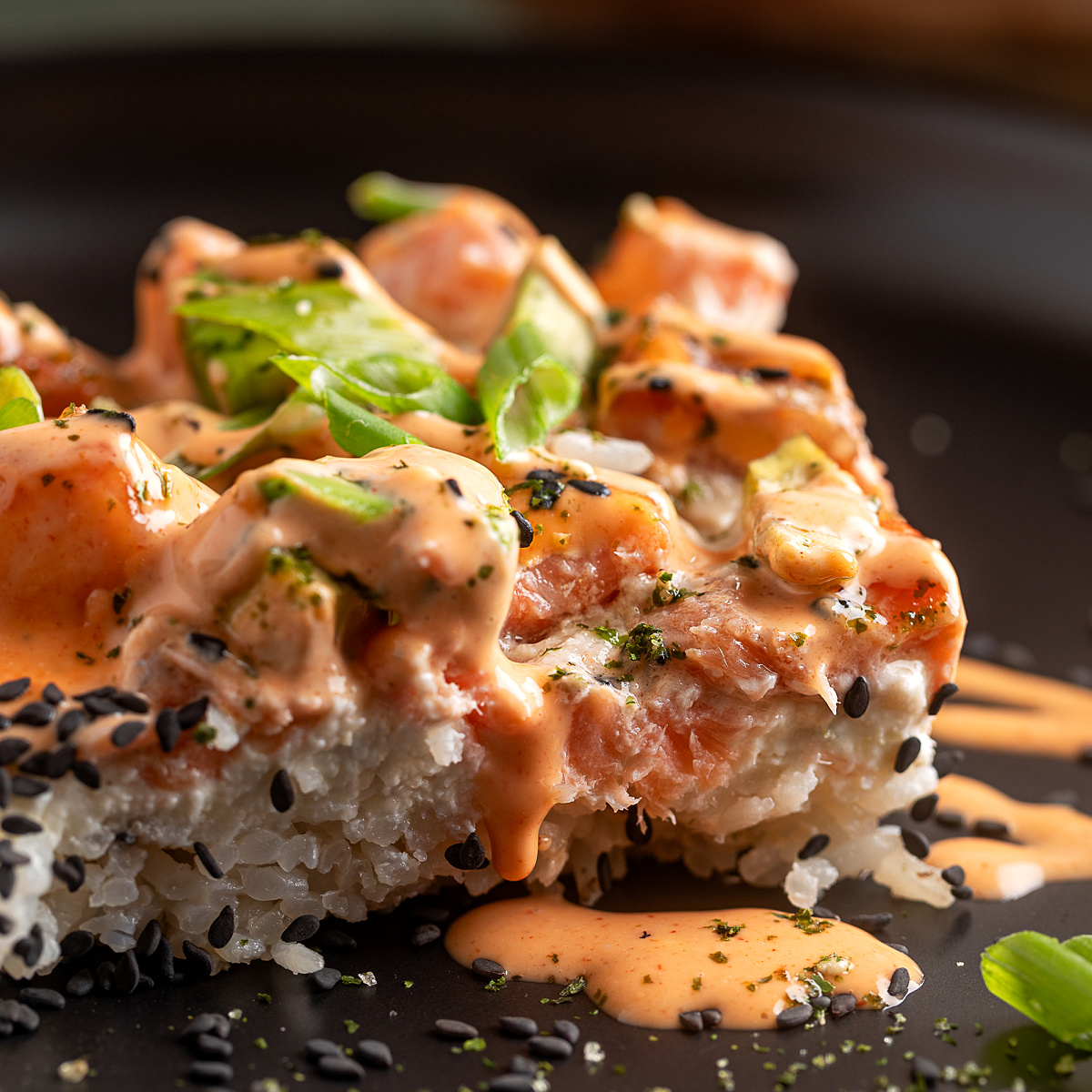
Drizzle the spicy mayo over the top, then add green onions, sesame seeds, avocado, and furikake. Cut into squares and serve warm, room temperature, or slightly chilled. It works all three ways, which feels appropriate.
Recipe Tips
- Press the rice firmly into the pan. Not gently, or “evenly with love.” Press it like you really mean it. This is what keeps the layers from sliding around later when you cut it.
- Drain the crab well and then drain it again. Any extra moisture loosens the middle. This dish works best when the layers know their roles.
- Let the salmon marinate while you make everything else, but don’t give it more time than that. You want flavor, not cured fish.
- The cream cheese must be fully softened before mixing. If you try to hurry this, you’ll spend way too long chasing lumps that never really go away.
- The rest time after baking isn’t optional. The dish will look done when it comes out of the oven, but it isn’t finished yet. Give it the extra minutes so it holds together when sliced.
- This cuts best once it’s no longer hot. Warm is ideal. Hot is when everything still wants to move.
- If you’re serving it with nori, let people wrap their own. It keeps the rice from steaming itself soft and gives everyone a moment to slow down.
- If you struggle with chopsticks, this is a forgiving place to practice. The rice is compact, the bites are decent, and no one is grading you.
Storage
- Let it cool completely before you cover it. If you trap heat, the rice hardens, the top sweats, and then everyone’s annoyed.
- Once it’s cool, cover the pan and keep it in the fridge. It holds well for up to three days, and honestly, day two is when it’s really my favorite.
- For the best texture, take it out of the fridge about 20 minutes before serving. Cold rice is fine, but room temperature is better.
- If you’re storing individual portions, keep toppings separate and add them right before eating. Avocado in particular does not enjoy being planned for.
- This isn’t a microwave dish unless you truly don’t care. Gentle reheating in the oven or eating it as-is works better.
- If you’re serving leftovers with nori, wait until the last second. Nori plus fridge air equals regret.
FAQs
- Can I make this ahead of time?
Yep, make it earlier in the day or the night before, then add the spicy mayo and toppings right before serving. - Is this better warm or cold?
Somewhere in between. Hot is fine, cold is fine, but slightly warm or room temperature is where everything lines up. - Do I have to use lump crab?
You don’t have to, but it’s worth it. What you want is pasteurized lump crab. It’s already fully cooked, shelf-stable, and widely available. It bakes well and reduces food safety risk. Pasteurized crab can handle the heat of the oven and not turn watery. It’s the best controlled option. - Can I use imitation crab?
You can, but it changes the whole thing. Sweeter, softer, more California roll energy. That’s a different dish. - Does this really slice nicely?
Yes, if you let it rest. If you rush it, you’ll get a scoop instead of squares. - What do I eat it with?
Nori sheets, cucumbers, or straight from the pan if no one’s watching. Chopsticks optional. - Can I make it less spicy?
Yes, reduce the Sriracha or leave it out. The dish doesn’t fall apart without it. - Can I freeze it?
Technically yes, emotionally no. The texture won’t love you back. - Is this sushi?
No, it’s more of a deconstructed sushi roll, but baked. It knows what it is. - Why jasmine rice instead of sushi rice?
Because it holds up better in the oven and doesn’t turn gluey. This isn’t a roll-it-up recipe.
From My Kitchen Notes
A few thoughts and observations, not tips or instructions. Read them or don’t.
- Some things only make sense after you stop trying to fix them. The way I hold a pencil, eat with chopsticks, and the way this dish ends up being easier to eat once it’s cooled and held together. It doesn’t feel random.
- To the waiters who clock the chopstick struggle and have wordlessly deployed the children’s set of chopsticks, you are the heroes of my story.
- I don’t think of adaptation as a flaw. It’s how most of us end up surviving long enough to cook something good or maintain other things in our lives.
- I am deeply suspicious of anything that claims there is only one correct way to do it. Writing. Eating. Folding a fitted sheet.
- I have spent a lifetime being told certain things should be fixed. Meanwhile, I keep doing things the way I want, and everything keeps working out.
- Chopsticks and I are not enemies. We’re just not collaborators. This dish has become a very patient mediator.
- If your pencil rests on your ring finger, you have a lateral or adapted grip. If your pencil rests on your middle finger, you have a dynamic tripod grip. Now you know.
- There is something comforting about food that holds together even when you don’t. Pressed rice and creamy layers. It’s the type of organizational integrity I personally aspire to.
- Somewhere along the way, I stopped believing elegance was the goal. Function, joy, and getting a good bite out of it ranks higher on my list.
- If you need grace, eat this with chopsticks. If you need speed, use a fork. If you need both, scoop it up with nori and move on with your life.
- If you sit at my table, I will give you chopsticks and a fork because I know the struggle, and you don’t have to tell me about yours for me to provide for it.
- This is a classic example of how you really don’t know what someone else is struggling with. I can sit down at a table, look completely fine, and be handed chopsticks without anyone knowing that my middle finger doesn’t have full sensation, and my hand learned how to work around that years ago. That I adapted early and privately and never thought it was worth explaining. It’s just how I eat.
- I was warned about my cursive. I never fixed the thing everyone was worried about. Nothing bad happened.
More Salmon for the Rice Loyalists
- Salmon Poke Bowls – sushi rice, marinated salmon, mango, crisp vegetables.
- Spicy Salmon Sushi Bowls with Crispy Rice – bold flavor, fresh vegetables, creamy heat.
This post may contain affiliate links. Please read my disclosure policy.
Salmon Crab Sushi Bake
Equipment
- baking dish 9x13 (23x33 cm). Holds and shapes the layers.
- mixing bowls (medium and small). For seasoning, pressing the rice, marinade and crab mixture.
Ingredients
Rice Layer:
- 6 cups (900 g) cooked jasmine rice cooked from 2 cups / 370 g uncooked rice
- 2 tbsps (30 ml) rice vinegar
- 1 tsp (5 ml) toasted sesame oil
- 1 tsp (3 g) sesame seeds
- 1 tsp (5 ml) low sodium soy sauce or tamari (for gluten free diet)
- cooking spray
Salmon Layer:
- 1 lb (454 g) fresh salmon skin removed, cut into 1-inch (2.5 cm) cubes
- 2 tbsps (30 ml) low sodium soy sauce
- 3 tbsps (45 ml) mirin
- 1 tbsp (15 ml) neutral oil
Spicy Mayo:
- ½ cup (120 g) mayonnaise
- 3 tbsps (45 ml) Sriracha sauce (my preferred for this recipe) or regular Sriracha
- ½ tsp (2.5 ml) toasted sesame oil
- 1 tsp (5 ml) fresh lime juice
Crab Layer:
- 1 (6 oz / 170 g) can pasteurized lump crab meat drained very well
- 2 (8 oz / 454 g total) packages cream cheese softened
- 1-2 jalapeños seeds and ribs removed, finely diced
- ½ tsp (3 g) table salt
- 1 tsp (5 g) ginger paste
- 1 tsp (5 g) garlic paste
Toppings: (optional)
- sliced green onions
- sesame seeds
- sliced avocado
- Furikake seasoning
- Nori sheets for serving
Instructions
- Make your rice first. In a large mixing bowl, combine the cooked jasmine rice, rice wine vinegar, toasted sesame oil, sesame seeds, and soy sauce (or tamari). Mix gently until evenly seasoned. Set aside.6 cups (900 g) cooked jasmine rice, 2 tbsps (30 ml) rice vinegar, 1 tsp (5 ml) toasted sesame oil, 1 tsp (3 g) sesame seeds, 1 tsp (5 ml) low sodium soy sauce
- Preheat the oven to 350°F (177°C). Lightly coat a 9x13-inch (23x33 cm) baking dish with nonstick spray and set aside.cooking spray
- In a medium bowl, combine the cubed salmon, soy sauce, mirin, and oil. Toss gently to coat and set aside to marinate while preparing the remaining layers.1 lb (454 g) fresh salmon, 2 tbsps (30 ml) low sodium soy sauce, 3 tbsps (45 ml) mirin, 1 tbsp (15 ml) neutral oil
- In a small bowl, whisk together the mayonnaise, Sriracha, toasted sesame oil, and lime juice until smooth. Refrigerate until ready to use.½ cup (120 g) mayonnaise, 3 tbsps (45 ml) Sriracha sauce (my preferred for this recipe), ½ tsp (2.5 ml) toasted sesame oil, 1 tsp (5 ml) fresh lime juice
- Transfer the rice mixture to the prepared baking dish. Using a piece of parchment paper to prevent sticking, press the rice firmly and evenly into the bottom of the dish to create a compact base.
- In a medium bowl, mix the drained lump crab meat, softened cream cheese, finely diced jalapeño, salt, ginger paste, and garlic paste until smooth and evenly combined.1 (6 oz / 170 g) can pasteurized lump crab meat, 2 (8 oz / 454 g total) packages cream cheese, 1-2 jalapeños, ½ tsp (3 g) table salt, 1 tsp (5 g) ginger paste, 1 tsp (5 g) garlic paste
- Spread the crab mixture evenly over the pressed rice layer.
- Arrange the marinated salmon cubes evenly over the crab layer, distributing them in a single layer.
- Bake for 20 to 25 minutes, or until the salmon is fully cooked and reaches an internal temperature of 145°F (63°C).
- Remove from the oven and allow the sushi bake to rest for 15 to 20 minutes to help the layers set before slicing.
- Drizzle the prepared spicy mayo over the top. Garnish with sliced green onions, sesame seeds, avocado, and furikake seasoning as desired. Cut into portions and serve warm or at room temperature with Nori sheets if you like.sliced green onions, sesame seeds, sliced avocado, Furikake, Nori sheets
Notes
- For best slicing, allow the bake to cool slightly before cutting.
- Drain crab thoroughly to prevent excess moisture in the middle layer.
- To make gluten free, use tamari or coconut aminos in place of soy sauce.
- Serve with nori sheets for scooping if desired.
Nutrition
Have you made this Salmon Crab Sushi Bake? I’d love to hear how it turned out – leave a comment below and let me know.
As an Amazon Associate and member of other affiliate programs, I earn from qualifying purchases.
Katie Reezer says
That teacher was a nut! Was this at public or private school?
Cathy Pollak says
Private.
Shelly says
I ran to the store after you posted, wanted for dinner last night. It tuened out exactly like I imagined. So perfect and delicous. Greta recipe.
Felipe K says
My kids love sushi and I tried this on them last night. They loved it! Lots of flavor fun to eat. They liked with nori. Great idea.
Devin says
Made this for my girlfriend and her kids last night and they loved it. I’ve been making lots of your recipes lately and she thinks I am some kind of chef now. Thanks.
Nancy says
My kids loved this one and so did I. Just the best flavor.