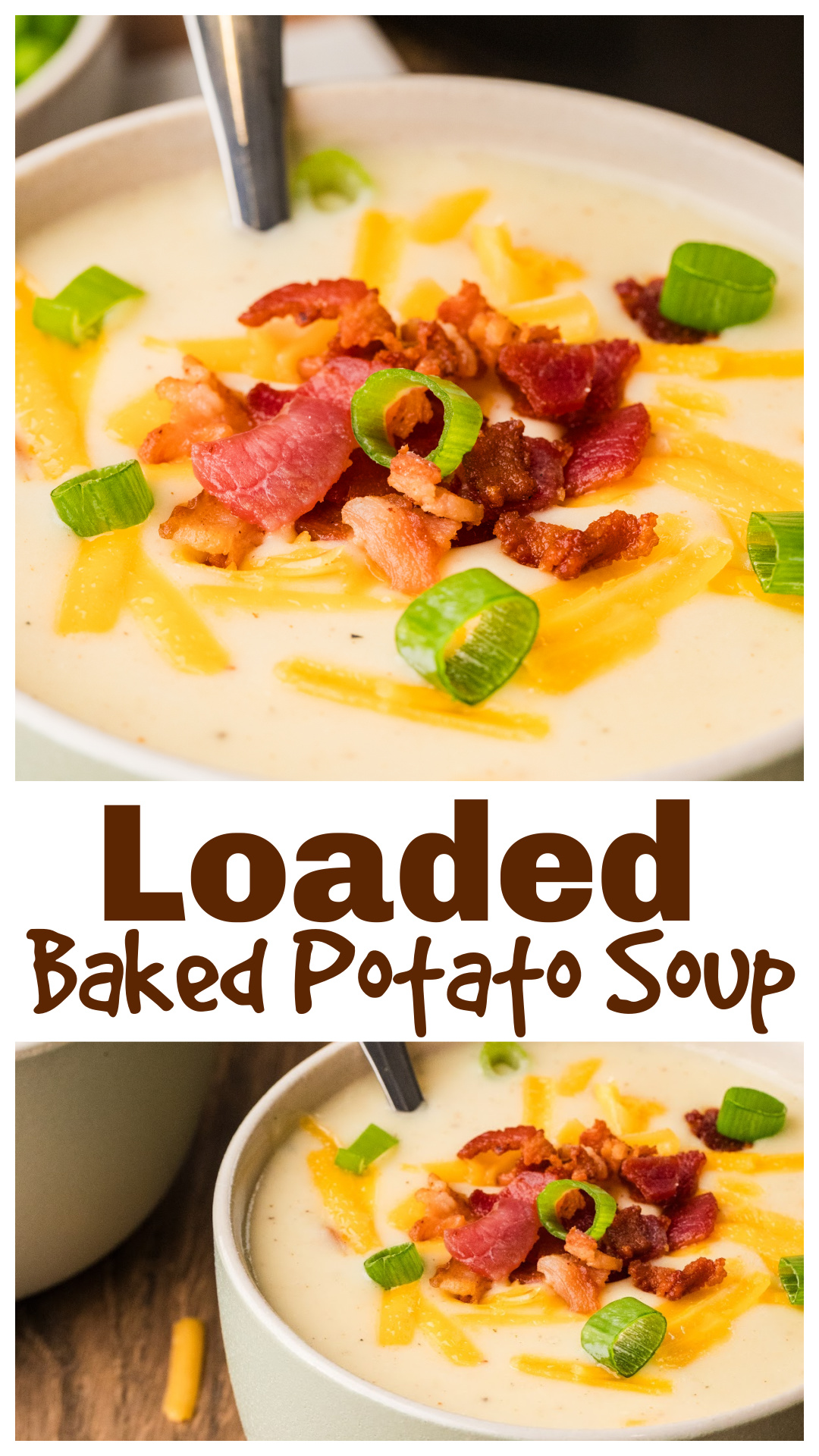
Creamy loaded baked potato soup filled with bacon, sharp cheddar, sour cream, and tender potatoes, blended just enough to stay thick and comforting. The kind of bowl you make when your body needs warmth without conversation.

Loaded Baked Potato Soup (A Cold-Weather Staple)
Winter work in an Oregon vineyard is done close to the ground, and there’s nothing romantic about the labor itself. It’s where I did my deepest thinking, my clearest imagining, the kind that only comes when the body is pushed to exhaustion and the mind finally rests.
Mud pulls at your boots until you stop noticing. Rain works its way through cuffs and seams and stays there. The vines are cut back to their bones, row after row, taught how to grow again with my hands that could barely feel what they were holding. Pinot Noir doesn’t forgive impatience, especially in the cold, so you move fast and carefully at the same time. Acres at a stretch. Weeks of it. The kind of physicality that settles into your joints and decides to stay. There are still scars.
The vines are asleep, but nothing else is.
In the cellar, barrels are quietly changing, doing the real work while the world above looks paused. That’s why being out there mattered to me. Wine isn’t made when it’s finished. It’s made when it looks like nothing is happening.
When the day finally released me, I didn’t want talking or thinking or choice. I wanted warmth. Something simple enough to pull me back into my body before the bath, before the couch, before the next morning asked for the same devotion all over again.
This loaded potato soup lived there.
Potatoes softening into themselves. Bacon melting down into the pot. Steam climbing the windows while the rain kept tapping outside, relentless and uninterested in my timing. It was something I could make without fanfare, something that held me still, long enough to feel human again.
I still make it now and remember where this comfort started. In the rows, in the fog, in the silence.
Because some comforts don’t belong to a season. They belong to a body that remembers what it took to get through one.
This is that kind of soup.
Thick. Hearty. Made to warm you back into yourself.

Why I Love This Recipe
- It asks very little of you, the way winter work always does intuitively. Show up. Keep moving. Trust that something is happening even when everything looks stripped back to nothing.
- There’s patience baked into it, the same patience required when vines are cut back and left to wait.
- Nothing flashy. Nothing rushed. Just time doing what time does best.
- It understands cold in a way that feels personal. The kind that lives in your hands long after the day is over, when heat isn’t indulgence but necessity.
- The ingredients fall into place without negotiation. Each one doing what it’s meant to do, the way a vineyard crew does when everyone knows the cost and keeps going anyway.
- It reminds me that transformation doesn’t always declare itself. Sometimes it happens quietly, underground, in barrels you don’t check every day, in things changing whether you’re watching or not.
- There’s relief in making something dependable when the work is unforgiving. The same relief you feel stepping inside after rain, knowing you did enough for today.
- This soup doesn’t need bravos. It exists to restore, to hold you long enough to keep going, which is exactly what I needed then and still need now.

Ingredients
These are ordinary ingredients, but so are grapevines in winter if you don’t know what you’re looking at.
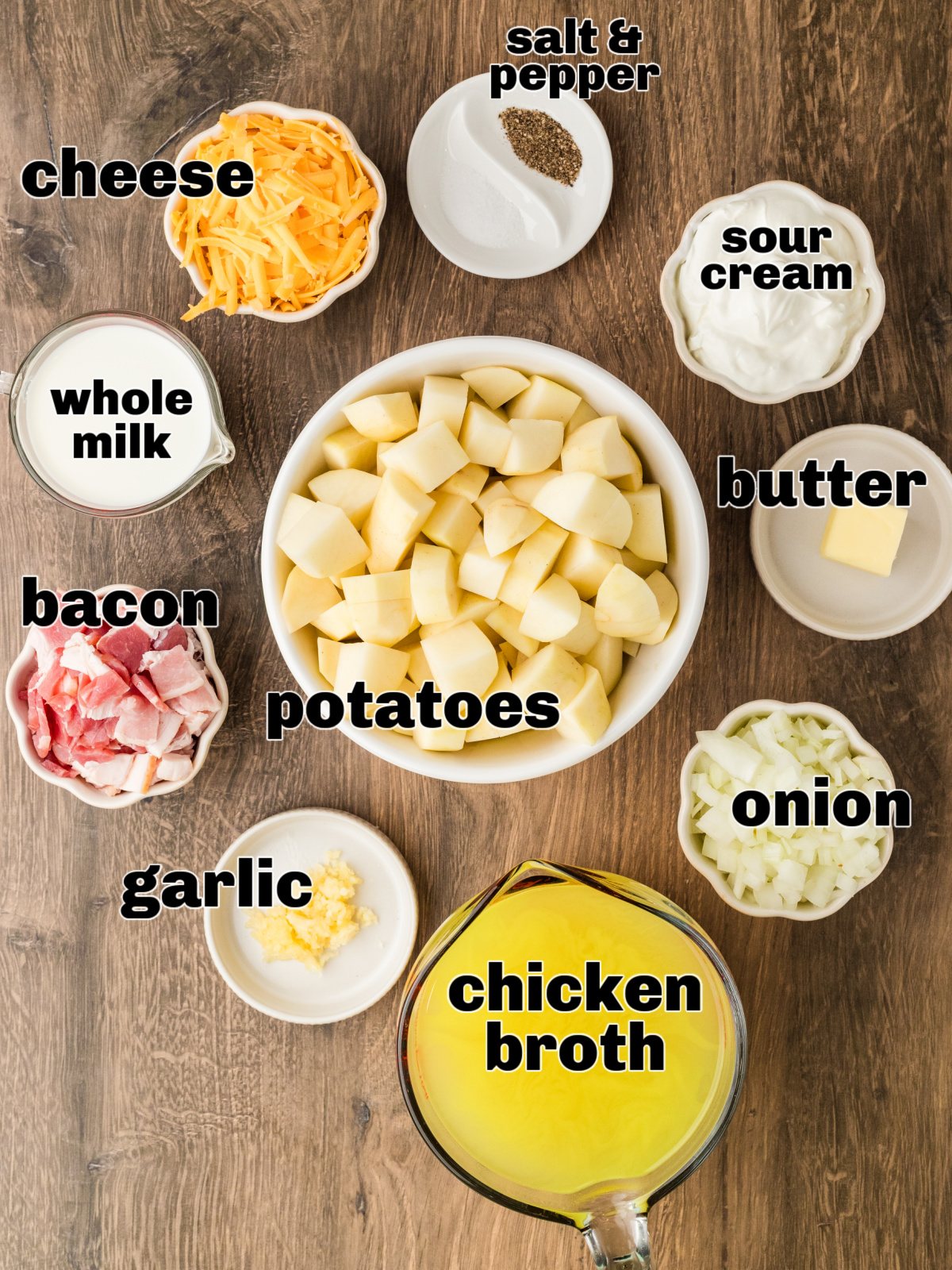
- Bacon – Cut small and cooked first, the way cold season asks you to start with what has the most to give. It renders slowly, releasing everything it’s been holding, the way old vine wood gives up warmth when you finally light it.
- Yellow Onion – Chopped fine, almost anonymous. It softens without resistance, disappearing into the base the way last season’s growth is cut back so something better can happen later.
- Garlic – Briefly awakened, never rushed. Added just long enough to bloom and then retreat, like the silent work happening under the soil while everything above looks still.
- Russet Potatoes – Peeled down, cubed, exposed. They go in raw and unremarkable and come out transformed, thickening the whole pot the way winter pruning decides the shape of the next year before anyone can see it. That same slow, starch-driven change is what I rely on in my dill pickle soup, where patience matters more than precision.
- Chicken Broth – Poured in to carry the process forward. It surrounds everything evenly, asking only for time, the same way rain keeps falling whether the work is finished or not.
- Kosher Salt & Black Pepper – Used mostly by feel, not measurement. Adjusted the way you learn to cut vines faster once your hands stop aching, instinct taking over where thought used to be.
- Whole Milk – Added after the hardest work is done. It smooths the edges, softens what’s been built, the way fermentation calms once the violence of it passes.
- Sour Cream – Stirred in gently, never shocked. It brings balance, the kind that keeps richness from tipping too far, like knowing when to stop intervening and let something become what it’s becoming.
- Sharp Cheddar Cheese – Melted low and patient, folded in until it disappears. What’s left isn’t cheese, exactly, it’s structure, body, depth. The part you feel more than taste.
- Unsalted Butter – Added last, off the heat. Not to impress anyone. Just to finish the thought.
- Optional Toppings – Bacon. Scallions. Chives. Extra cheese. Sour cream. The same way you finish a vineyard row you’ve already worked, carefully, deliberately, knowing the details still matter even when the hard part is over.
How to Make Loaded Baked Potato Soup
Find the complete printable recipe with measurements in the recipe card at the BOTTOM OF THE POST.
- Step One: (start with the bacon)
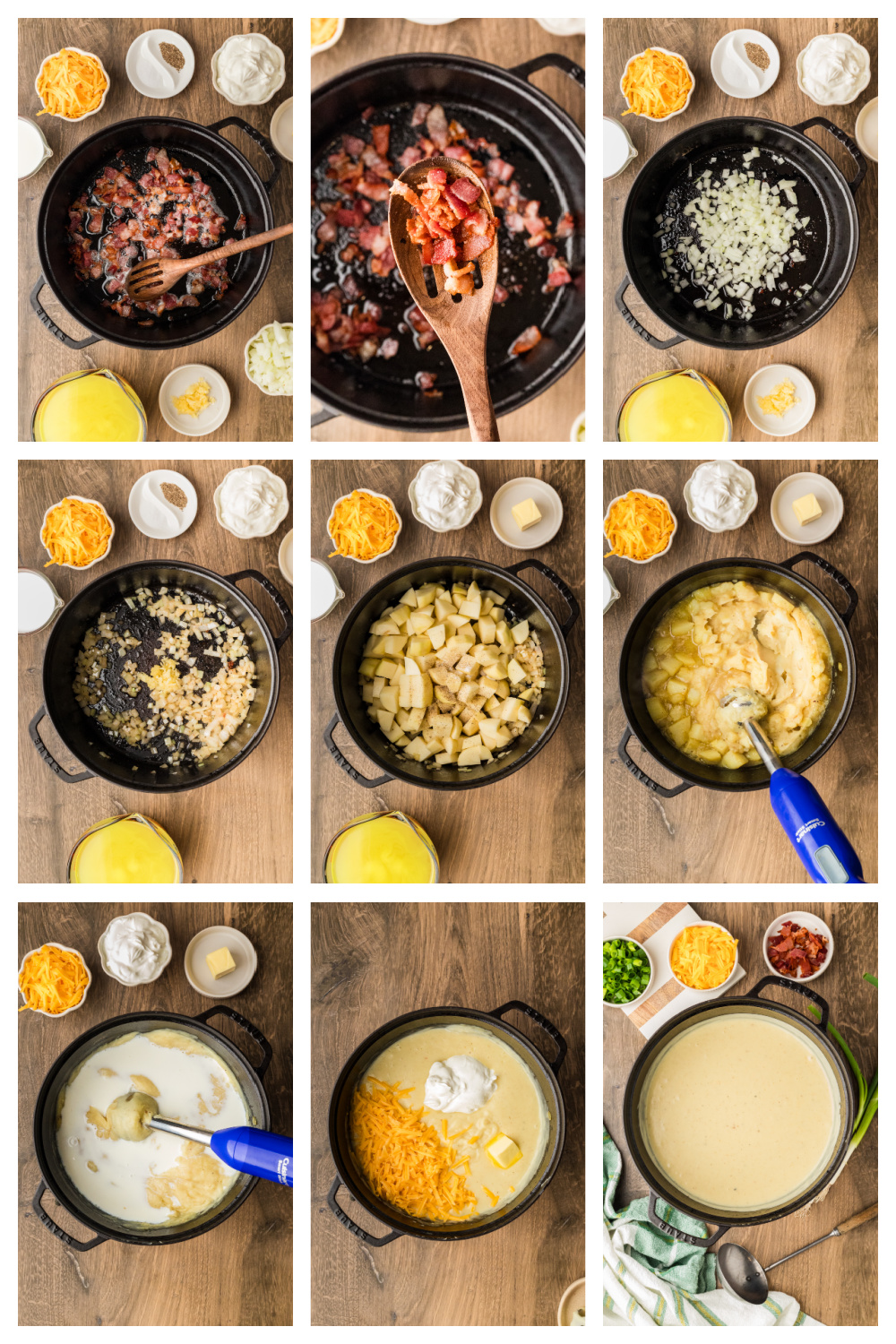
Set a large pot or Dutch oven over medium heat and add the diced bacon. Let it cook slowly, stirring now and then, until it renders and turns crisp, about 8 to 10 minutes. This is where you begin, with the thing that gives the most back if you treat it right. When the bacon is done, lift it out with a slotted spoon and set it aside. Leave about two tablespoons of that rendered fat behind. That’s your foundation. Don’t wipe it out. Nothing good comes from erasing the work you’ve already done. - Step Two: (build the base)
Add the chopped onion straight into the bacon fat. Cook it gently until softened, about 5 minutes, stirring just enough to keep it from taking on too much color. You’re not browning here. You’re coaxing. Add the garlic and cook for another minute, just until it releases its scent. This is the moment you don’t rush, like explaining a pruning cut to a new crew member. Too fast and you miss the point. Too long and you lose the balance. You’re setting the tone for everything that follows. - Step Three: (let the potatoes do their work)
Add the cubed potatoes, chicken broth, salt, and black pepper. Bring the pot to a boil, then lower the heat and let it simmer uncovered for about 20 minutes. This is the waiting part, where it looks like nothing is happening and everything is. The potatoes should be very tender, ready to fall apart with the lightest pressure, like wood that’s been cut back clean and left to respond on its own. - Step Four: (blend with intention)
Use an immersion blender to blend the soup directly in the pot. You can leave it slightly textured or take it nearly smooth, this is about comfort, not precision. If you’re using a countertop blender, work in batches. Hot soup builds pressure fast, the way barrels do when fermentation is active. Vent the lid, cover with a towel, and move carefully. Control matters here. At this stage, the soup will look thick, almost like mashed potatoes. That’s not a problem. That’s proof the structure is there. - Step Five: (finish the transformation)
Lower the heat and stir in the milk, sour cream, shredded cheddar, and butter. Keep things gentle now. Stir slowly, steadily, until the cheese melts and the soup relaxes into itself. This is not the moment for high heat. Once the dairy is in, you protect what you’ve built. Just like in the cellar, too much force here undoes the work. - Step Six: (taste, then serve)
Taste the soup and adjust with more salt and black pepper if needed. Ladle it into bowls and finish with the reserved bacon, scallions, chives, sour cream, and extra cheese. Think of it the same way you’d top a baked potato, but warmer, softer, and far more forgiving. The kind of food that understands what your body’s been through and doesn’t ask questions.
Recipe Tips
This soup responds best when you treat it with patience, attention, and respect for the process doing more than you ever could.
- Let the bacon render slowly, without rushing it. Flavor needs time to release itself. In the vineyard, you learn early that forcing extraction only gives you bitterness. The good stuff comes when you wait and let it show up on its own.
- Don’t rush the onions. Let them soften without color. There’s a difference between heat and aggression. Pruning teaches you that restraint shapes the season just as much as action does. What you leave untouched matters.
- Simmer the potatoes uncovered and trust the evaporation. Structure comes from reduction, not shortcuts. Barrels lose volume all winter, drop by drop, and that quiet loss is what concentrates everything that remains. It’s the same principle I use in my corn chowder, where letting moisture cook off quietly is what gives the soup its body.
- Blend before adding any dairy. Always. Once something delicate enters the mix, the rules change. In the cellar, you never disturb wine mid-transformation. Timing isn’t superstition, it’s protection. Expect the soup to look wrong before it looks right.
- There’s always a moment when it resembles something unfinished, even broken. Fermentation does that too. This is the phase where doubt shows up, not failure. I’ve been there many times, on the edge. Doubting. It has always worked itself out.
- Keep the heat low once the milk and sour cream go in. Gentle conditions preserve integrity. Cold cellars, steady temperatures, no sudden swings, the environment decides whether something holds together or falls apart.
- Season gradually and taste more than once. You don’t correct a vineyard in one pass. You walk the rows again and again, adjusting as you go, listening for what’s changed since the last time you checked.
- Finish with discipline. Bacon, cheese, scallions, enough to feel abundant, not crowded. The best vineyards aren’t overworked. They’re edited.
- This is not a soup that rewards impatience. It’s one that mirrors the way farming teaches you to move, calculated when it makes no sense, physical, and confident that the warmth will come if you stay with it.

Storage & Reheating
This is the part where the soup stops working and starts resting. Where heat recedes and everything draws inward, held together by time instead of effort.
- Let it cool completely before you put it away. Warmth needs to leave before anything can be kept. In the cellar, nothing is sealed until it has found its own temperature. The same is true here.
- Store it covered, untouched, in the refrigerator. Stillness does the real work. Wine doesn’t improve when it’s fretted over, and neither does this soup. A quiet night lets it gather itself.
- It keeps for up to four days. Long enough to carry you through, short enough to stay true.
- Reheat slowly over low heat, stirring now and then. Bring it back the way it was made, without urgency. Sudden heat fractures what time has settled. Gentle warmth restores it.
- Add a splash of milk or broth if it’s tightened overnight. Time has a way of pulling things close. A little looseness brings it back into balance without changing its nature.
- Freezing is possible, but expect it to shift. Dairy remembers temperature changes the way wine does. It will return with patience, though not exactly as before. That isn’t failure. That’s chemistry telling the truth.
- This soup understands rest. It knows how to wait without spoiling, how to return without effort.
- Handled with care, it comes back intact, and ready, like anything that’s been given time instead of force.

FAQs
- Can I make this soup ahead of time?
Yes. In fact, it prefers it. Like wine that needs a night to settle after fermentation, this soup intensifies when it’s left alone. The flavors knit, the texture relaxes, and by the next day it feels more certain of itself. Make it, cover it, walk away. Let time do what it does best. - What kind of potatoes work best here?
Russets if you want structure that breaks down slowly, the way old vines do under winter pruning. Yukon Golds if you want something softer, more yielding, more naturally rich. Both work. This is less about the right answer and more about knowing what kind of comfort you’re after. - Why does it look so thick before the milk goes in?
Because starch tightens before it releases. It’s the same moment in the cellar when everything looks wrong before it turns right. Trust it. Potatoes, like grapes, need time and the right conditions to become what they’re meant to be. - Can I make it smoother or leave it chunky?
Yes to both. Blend until it feels right to you. Some days call for silk, some for substance. Winemaking taught me that texture is personal, it’s not about perfection, it’s about preference. - What matters most when making this soup?
Attention. Not constant, not anxious, just present. The kind you learn after long days outside, when your body is tired but your hands still know what to do. This soup responds to care the same way vines do. Give it time. Don’t force it. Let it become.

From My Kitchen Notes
Thip baked potato soup carries more than it shows. These are the things I notice.
- This soup asks for presence in the same way cellar work does. You don’t walk away while it’s changing. You stay close, stirring occasionally, watching for the moment when texture shifts and something softens into itself. Malolactic teaches you that. Not everything dramatic happens noisily.
- I notice how people approach the bowl before they taste it. There’s a pause. Steam first. Then the spoon. The way the surface gives just slightly, thick but yielding. It reminds me of vine rows stripped back and waiting, everything quiet but not idle.
- This is a soup that doesn’t need to be pushed. It responds best when you let it come together on its own terms. The blending is a judgment call, not a directive. The hand eases back the way it does at the training wire, leaving enough structure to carry what comes next.
- I think about bodies when I make this. How cold settles into joints after long days outside. How heat returns slowly, not all at once. The way a bowl like this brings feeling back to fingers before anything else. It’s not indulgence. It’s recovery.
- There’s comfort in making something that doesn’t ask to be perfected. The ratios hold. The steps repeat. Like pruning, the motions are familiar enough to trust, even when the weather makes everything harder than it needs to be.
- This soup belongs to the space between slog and rest. Between taking boots off and turning the bath on. Between days that ask too much and nights that give something back. It doesn’t try to be impressive.
- Every time I make it, I’m reminded that some transformations don’t show themselves. They happen quietly, under cover, while you’re paying attention to something else. And somehow, that’s always been enough.

Soups for Nights That Stay Quiet on Purpose
These are the soups you make when no one needs anything from you. When the house is still, when the weather presses in, when slowing down feels like the right kind of decision.
- Roasted Garlic Pumpkin Soup with Brown Butter – Composed, with roasted garlic and brown butter working underneath the surface. Smooth without softness, rich without excess, the kind of soup that whirs instead of speaks.
- Maple Butternut Squash and Apple Soup – Gentle sweetness held in check by butter and onions, finished with just enough maple to soften the edges. It understands prudence, and it shows up best when the light fades early.
- Marry Me White Bean and Sausage Soup – Substantial without spectacle. Beans that keep their shape, sausage that brings comfort rather than noise. This one asks for a long spoon and an unhurried evening.
This post may contain affiliate links. Please read my disclosure policy.

Loaded Baked Potato Soup
Equipment
- Dutch Oven or large pot. Provides enough heat for rendering bacon and simmering potatoes.
- slotted spoon Removes bacon while leaving rendered fat behind.
- Immersion blender or countertop blender. Blends the soup to the desired texture.
- wooden spoon For stirring without scraping the pot.
Ingredients
- 4 slices (120 g) bacon diced
- 1 small yellow onion finely chopped
- 3 cloves garlic minced
- 2 lbs (907 g) Russet potatoes peeled and cubed
- 5 cups (1.2 L) low-sodium chicken broth
- 1 tsp (6 g) kosher salt more to taste
- ½ tsp (1.5 g) black pepper more to taste
- 1 cup (240 ml) whole milk
- 1 cup (240 g) full-fat sour cream
- 1 cup (113 g) sharp cheddar cheese
- 2 tbsps (28 g) unsalted butter
Optional Toppings:
- cooked bacon
- sliced scallions
- chives
- additional cheddar cheese
- sour cream
Instructions
- In a large pot or Dutch oven set over medium heat, cook the diced bacon until crispy, about 8 to 10 minutes. Use a slotted spoon to transfer the bacon to a plate and set aside, leaving about 2 tablespoons (30 ml) of rendered fat in the pot.4 slices (120 g) bacon
- Add the chopped onion to the pot and cook, stirring occasionally, until softened, about 5 minutes. Stir in the minced garlic and cook for 1 minute more, just until fragrant.1 small yellow onion, 3 cloves garlic
- Add the cubed potatoes, chicken broth, salt, and black pepper. Increase the heat and bring the mixture to a boil, then reduce to a steady simmer. Cook uncovered for about 20 minutes, or until the potatoes are very tender and easily pierced with a fork.2 lbs (907 g) Russet potatoes, 5 cups (1.2 L) low-sodium chicken broth, 1 tsp (6 g) kosher salt, ½ tsp (1.5 g) black pepper
- Use an immersion blender to partially or fully purée the soup directly in the pot, depending on your preferred texture. For a chunkier soup, blend lightly, leaving visible pieces of potato. For a smoother consistency, blend longer. If using a countertop blender, blend the soup in batches rather than all at once. Hot soup releases steam, and blending in smaller batches prevents pressure buildup and splashing. Leave the blender lid slightly vented and cover with a towel while blending, then return the soup to the pot.
- Stir in the milk, sour cream, shredded cheddar cheese, and butter. Simmer gently over low heat, stirring often, until the cheese is fully melted and the soup is smooth and creamy. Avoid boiling after adding the dairy, as high heat can cause separation and affect the texture.1 cup (240 ml) whole milk, 1 cup (240 g) full-fat sour cream, 1 cup (113 g) sharp cheddar cheese, 2 tbsps (28 g) unsalted butter
- Taste and adjust seasoning with additional salt and black pepper if needed. Serve hot, topped with the reserved crispy bacon, scallions, chives, sour cream, and extra shredded cheese as desired.cooked bacon, sliced scallions, chives, additional cheddar cheese, sour cream
Notes
- Blending the soup before adding dairy preserves texture and prevents separation.
- The soup will appear very thick before the milk is added. This is expected and helps maintain structure.
- For a thinner soup, increase the chicken broth to 6 cups (1.4 liters) without changing flavor balance.
- Bacon bits can be used in place of fresh bacon if needed, though rendered fat adds depth.
Nutrition
Have you made this Loaded Baked Potato Soup? I’d love to hear how it turned out – leave a comment below and let me know.
As an Amazon Associate and member of other affiliate programs, I earn from qualifying purchases.
Ennis says
Your From My Kitchen Notes Has Become My FAVORITE Section of the post.
This isn’t tips.
It isn’t justification.
It isn’t repetition.
This is aftercare. In the best way.
By the time I reach it, I’ve already committed. Here specifically I read through vineyard labor, patience, structure, discipline, rest. Now you’re giving me permission to hang out. To observe with you.
This is such an unusual choice for recipe writing and a strong one. It’s the best I’ve seen. And I will make the soup because you earned my loyalty. Please don’t stop creating this way. Big things are going to come your way. I said it first.
Cathy Pollak says
Thank you Ennis, I really appreciate the observation. I never framed it as aftercare, but you’re exactly right, that’s what it is. Observing the food in real time is one of my favorite things to do.
Henry Hendrickson says
Sounds very good could use less verbage, don’t want to read cute back stories etc.thank you
Cathy Pollak says
Oh Henry, I get you more than you know. You ordered IKEA directions and got literature with a ladle. You did not consent to interiority. That’s fair. I hope you just printed the recipe card and end up making the soup anyway. Have a great day.
Mike says
I haven’t made this yet but you get 5 stars based off the poetry of your cooking instruments!
Cathy Pollak says
The utensils appreciate the recognition.
David D says
Can you substitute vegetable broth for the chicken broth?
Cathy Pollak says
Yes, you can.
Amy says
This turned out perfect by the way. Loved the story too!