
This tender eggnog bread is full of nutmeg, cinnamon and real eggnog, with a simple eggnog glaze over the top. The batter comes together quickly, but a light hand with the mixing and enough cooling time before glazing make all the difference.

Eggnog Bread with a Simple Eggnog Glaze
I make this eggnog bread because there are only so many weeks of the year when putting eggnog in both the batter and the glaze feels completely reasonable. It’s soft, heavy on the nutmeg and cinnamon, and very much a Christmas loaf.
It also gets me thinking about waiting, which was probably inevitable.
I was the kid who sat on the floor with a Rubik’s Cube after the house slowed down in the evening. And it was never about solving the cryptic puzzle, because I never could . I just didn’t know how to stop once I’d started.
I had the regular cube, the pyramid and the round one that never felt right in my hands. I would sit there turning them over and over, convinced that if I stayed with one long enough, eventually I’d understand what I was doing. Sometimes I’d get one whole side lined up and immediately ruin it trying to fix another. That was the worst part.
I could see that I’d gotten something right, but I couldn’t leave it alone. Another turn always felt like progress, then another, and then the blue side was gone, the red corner was somewhere else and I was farther away than when I started.
The Rubik’s Cube never responded to my force. I didn’t understand that as a kid. I think it’s funny now. I was convinced more effort would improve the outcome because otherwise what was the point of all of it? It took me a long time to learn that doing more and helping are not always the same thing. There are things that need another turn and things I ruined because I couldn’t tolerate leaving them alone. I still don’t always know which moment I’m in, and I’m much better at recognizing these things in the kitchen.
Quick breads are also unforgiving about unnecessary enthusiasm with a wooden spoon. Once the flour goes into the wet ingredients, I fold just until it disappears and then I put the spoon down. Eggnog makes this loaf really rich, with butter, eggs and sugar already involved, so I don’t want to beat the life out of it before it gets anywhere near the oven.
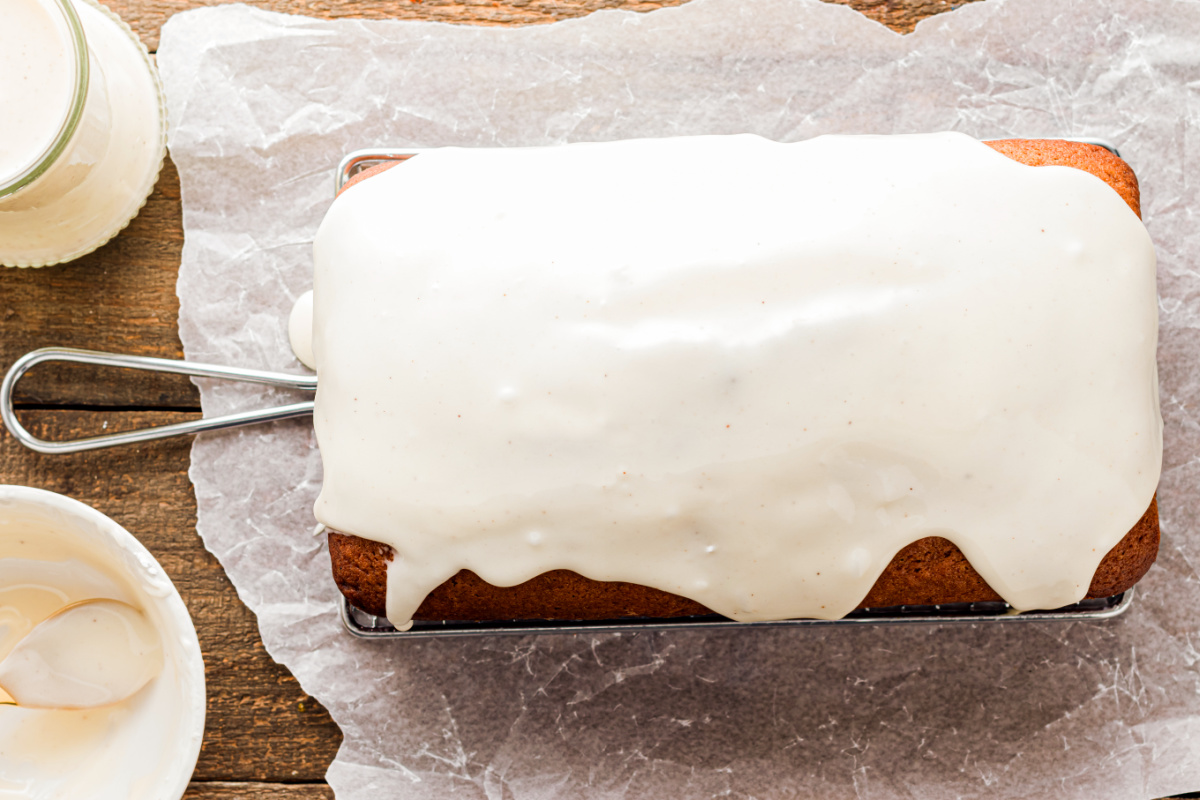
Then there’s another stretch of doing absolutely nothing while it cools. I know. It’s terrible. But if I pour the glaze over a warm loaf because I’ve decided we’ve all waited long enough, it melts into the top and runs down the sides. So I leave the bread alone until it’s completely cool, make the glaze with more eggnog and pour it over the top.
Nutmeg goes on last. And then, finally, I’m allowed to touch it again.
The Decisions Behind This Recipe
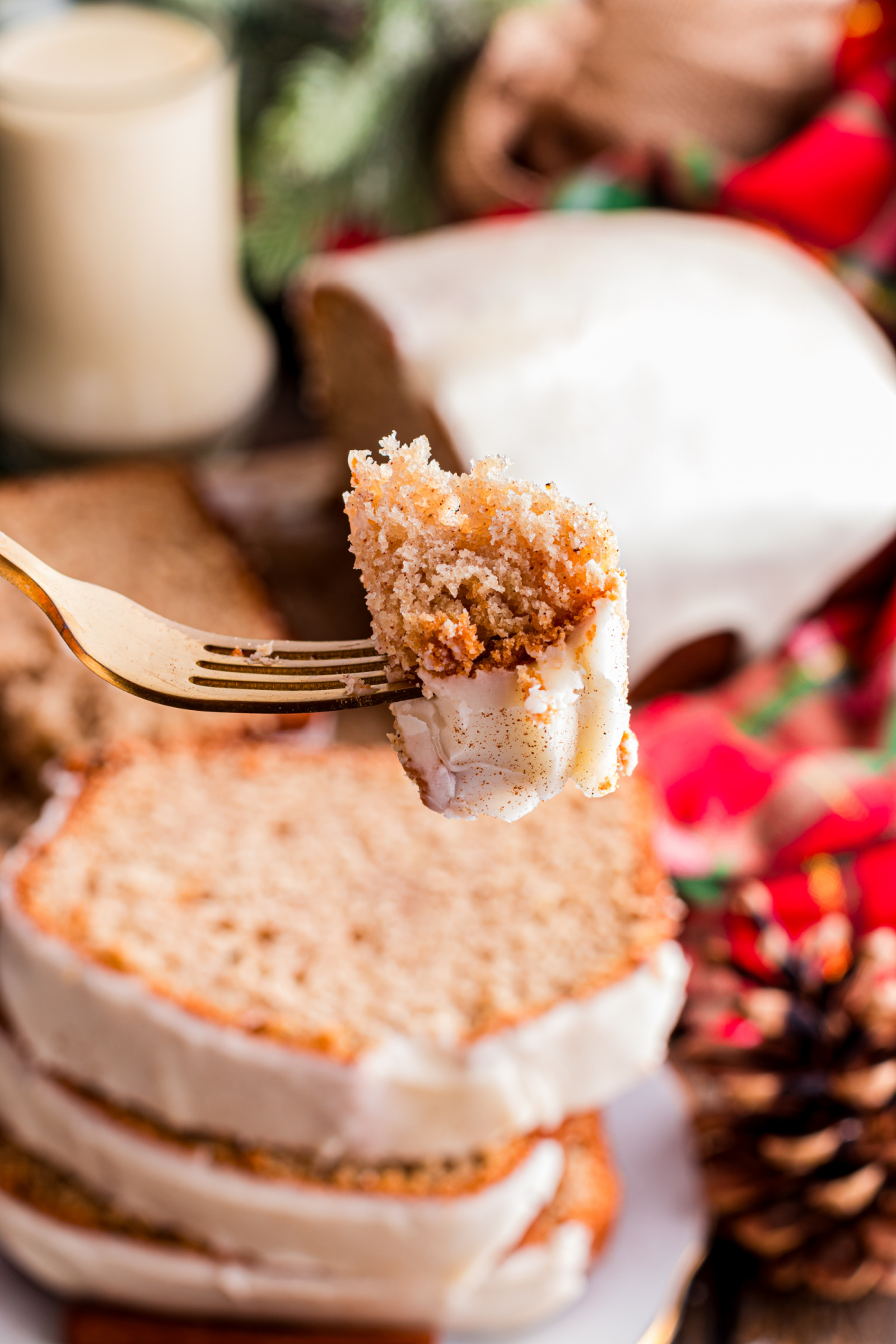
- I wanted this to taste like eggnog without turning into the usual holiday loaf. A full cup of eggnog gives the bread its flavor and richness, while nutmeg and cinnamon reinforce what’s already there instead of making it taste like a generic spice cake.
- I use melted butter because I want the flavor of butter without needing to cream it with the sugar first. That’s what keeps it in quick-bread territory. Whisk the wet ingredients, fold in the dry ingredients and get it into the oven.
- The rum extract is a small amount, but I like what it does. Eggnog is already associated with rum, and just ¼ teaspoon gives the loaf more of the familiar holiday flavor without making it taste like extract. You can leave it out, but I use it.
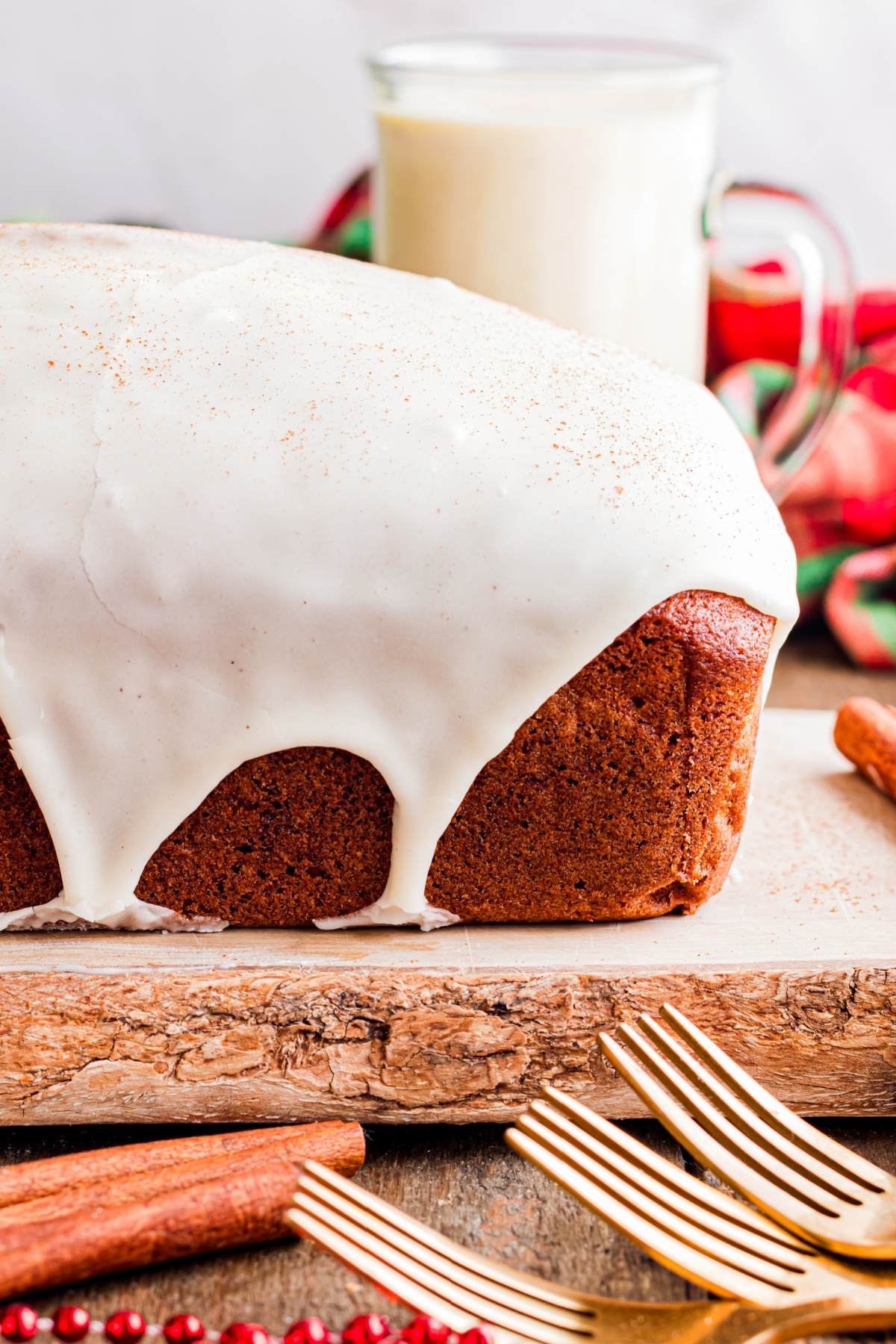
- The glaze is eggnog and confectioners’ sugar, nothing more complicated. I like another hit of eggnog on the outside of the loaf, and I keep the glaze thick enough to stay visible once it sets. Nutmeg over the top makes it look finished and tells everyone what they’re about to eat.
Ingredients
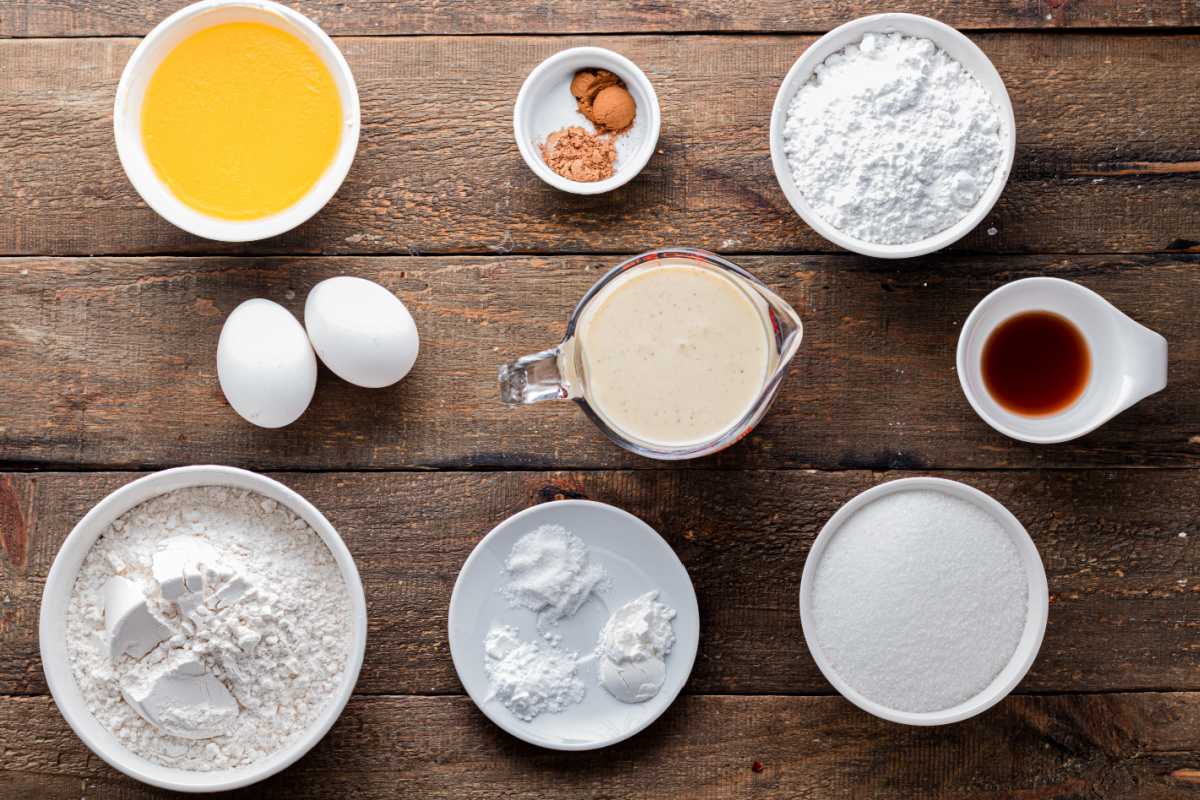
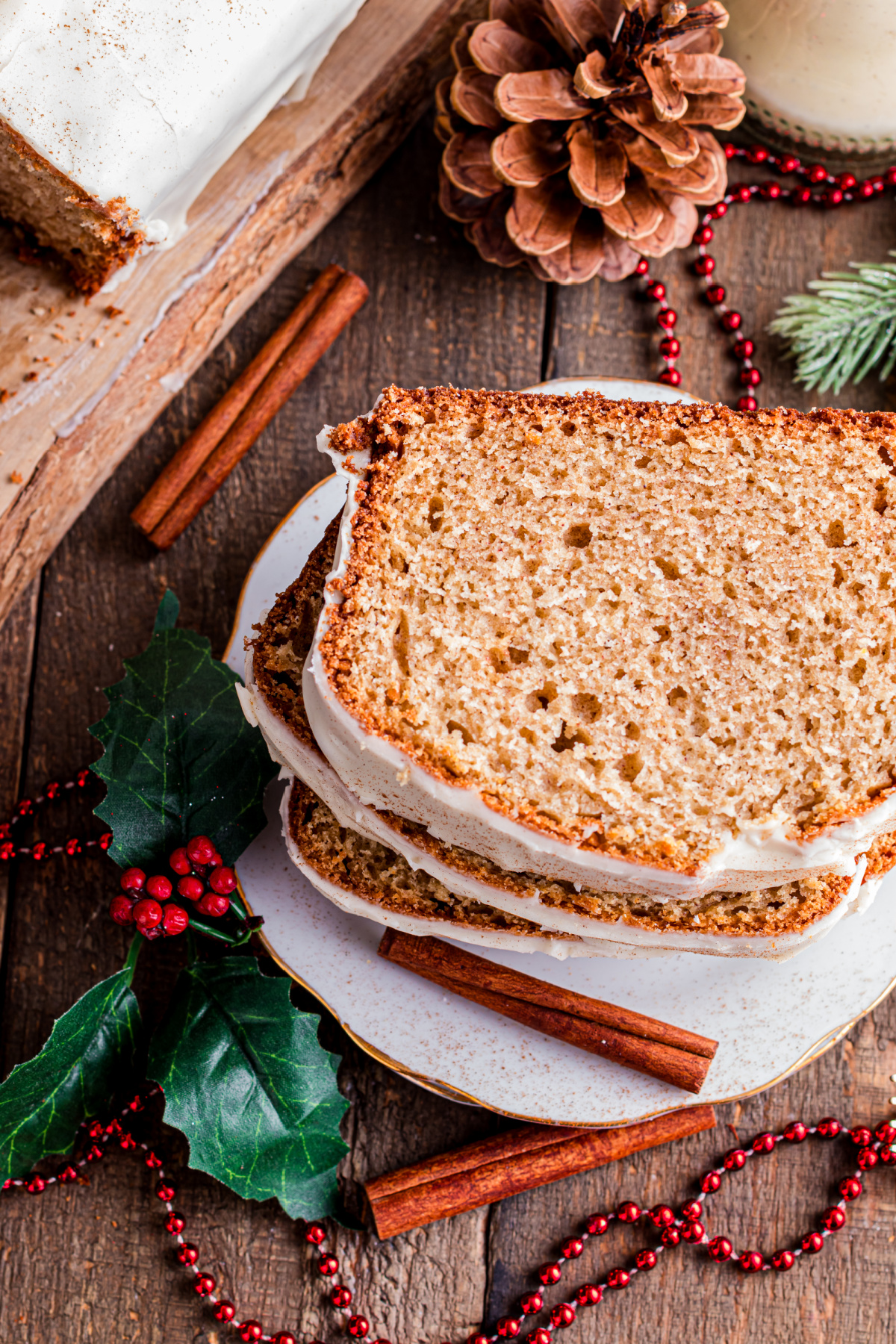
- All-purpose flour – Two cups gives this loaf enough body to slice well while keeping the texture tender. Weigh it if you can. Too much flour is one of the fastest ways to turn a good quick bread dense.
- Baking powder and baking soda – I use both for enough lift with a batter that has plenty of richness from the eggnog, butter and eggs.
- Table salt – A small amount keeps the sugar and dairy from tasting dull.
- Ground nutmeg – Eggnog always needs nutmeg. I use it in the batter and add another sprinkle over the glaze.
- Ground cinnamon – Enough to add some flavor without turning this into cinnamon bread.
- Unsalted butter – Melt it and let it cool slightly before mixing. I like butter instead oil because its flavor goes better with eggnog and other holiday spices.
- Granulated sugar – One cup gives the loaf enough sweetness to work as a holiday treat without making the eggnog glaze completely unnecessary.
- Eggs – They give the bread richness and help everything hold together. Room-temperature eggs incorporate more easily into the melted butter mixture.
- Eggnog – Use the regular full-fat kind you like drinking. A full cup goes into the bread, and you’ll need another couple tablespoons for the glaze.
- Vanilla extract – Fits right in with the eggnog and spices without distracting from them.
- Rum extract – I use only ¼ teaspoon. It gives the bread the extra holiday-eggnog something without claiming itself as rum cake.
- Confectioners’ sugar – The base of the glaze. Start with less eggnog and add more only until you get the consistency you want.
How to Make Eggnog Bread
Find the complete printable recipe with measurements in the recipe card at the BOTTOM OF THE POST.
- Step One (prep the pan and dry ingredients)
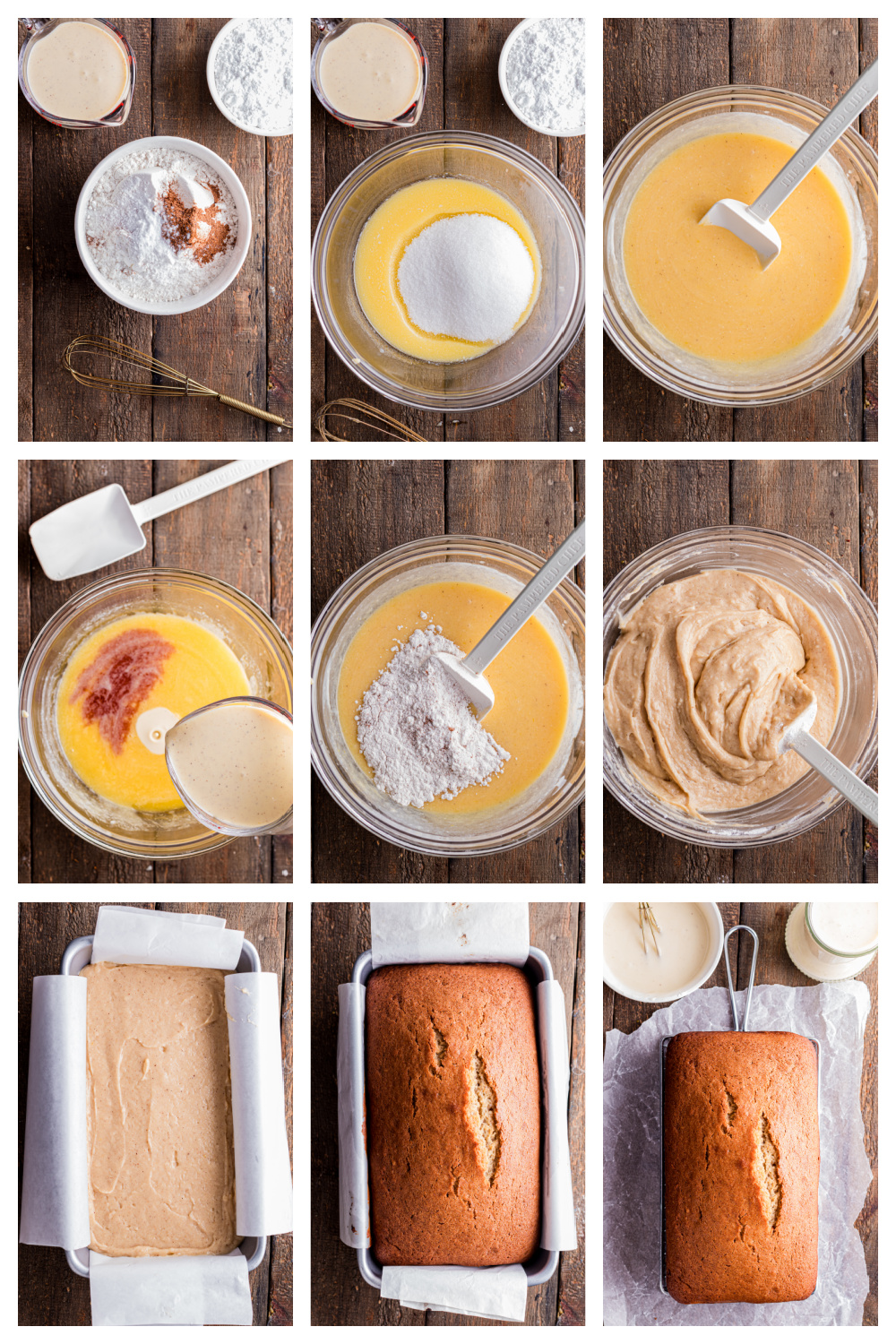
Preheat the oven to 350°F (177°C). Grease a 9 x 5-inch loaf pan and line it with parchment paper, leaving enough hanging over the long sides to lift the bread out later. In a medium bowl, whisk together the flour, baking powder, baking soda, salt, nutmeg and cinnamon. I like getting all of this thoroughly combined before it goes anywhere near the wet ingredients because once the two mixtures meet, I want as little stirring as possible. - Step Two (mix the wet ingredients)
In a large bowl, whisk the melted and slightly cooled butter with the granulated sugar until well combined. Add the eggs one at a time, whisking after each addition. Stir in the eggnog, vanilla and rum extract. The mixture may not look particularly exciting at this point. That’s fine. We’re making bread, not asking it to audition. - Step Three (finish the batter)
Add the dry ingredients to the wet ingredients and switch to a rubber spatula. Fold everything together just until you can no longer see dry streaks of flour. Scrape the bottom of the bowl as you go because flour likes to hide down there and make a liar out of you. Then stop. This is not the time to give the batter a few extra turns for good measure. There’s no good measure because the flour disappeared. Our work is done. - Step Four (bake)
Transfer the batter to the prepared loaf pan and smooth the top. Bake for 50–55 minutes, until a toothpick inserted into the center comes out clean or with a few moist crumbs attached. If your oven tends to brown quick breads aggressively, check
the top toward the end and loosely tent it with foil if needed. Let the bread cool in the pan for about 10 minutes, then use the parchment to lift it onto a wire rack. And now leave it there until it’s completely cool. Yes, completely. - Step Five (glaze)
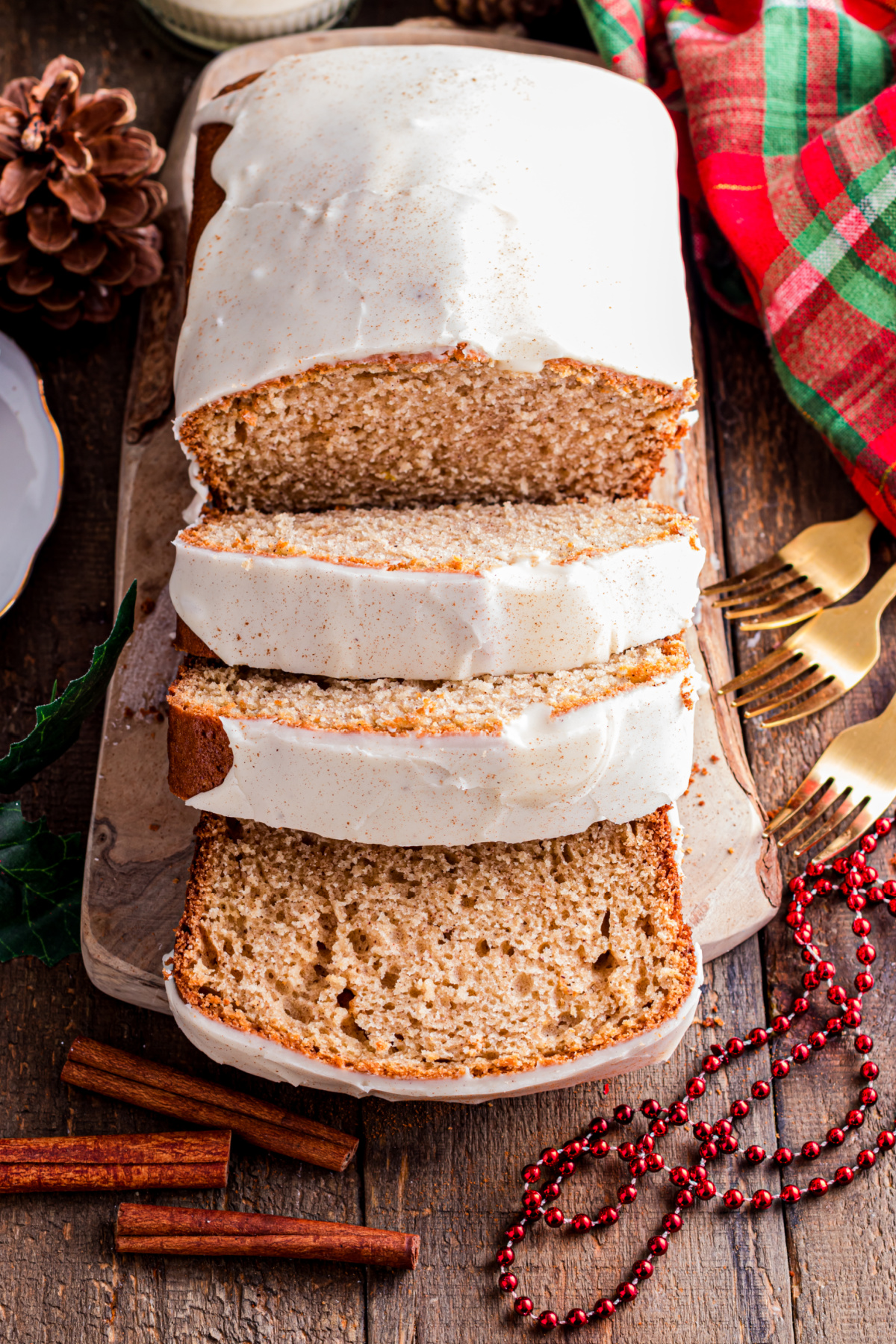
Whisk the confectioners’ sugar with 2 tablespoons of eggnog. If the glaze is thicker than you want, add more eggnog a little at a time. It changes quickly, so don’t dump in the entire third tablespoon unless you know you need it. Drizzle the glaze over the completely cooled loaf and finish with a light sprinkle of nutmeg. Let the glaze set before slicing, unless somebody is standing beside ready to slice it and absolutely no interest in your standards.
Recipe Tips
- Measure the flour carefully. If you aren’t using a scale, spoon the flour into the measuring cup and level it rather than scooping directly from the bag. Packed flour can make this loaf much denser than it should be.
- Let the melted butter cool slightly before adding the eggs. It can still be warm, but it shouldn’t be hot enough that you start wondering whether you’re making scrambled eggs.
- Don’t use ice-cold eggnog if you can help it. Letting it sit out briefly takes the chill off and helps it combine more easily with the melted butter and eggs.
- Once the flour goes in, use a spatula rather than a whisk. Fold only until the dry streaks disappear. Overmixing develops more gluten and will give you a tougher, denser loaf.
- Start checking the bread around 50 minutes. Ovens and loaf pans vary, and quick breads can look completely baked on top while the very center still needs a few more minutes.
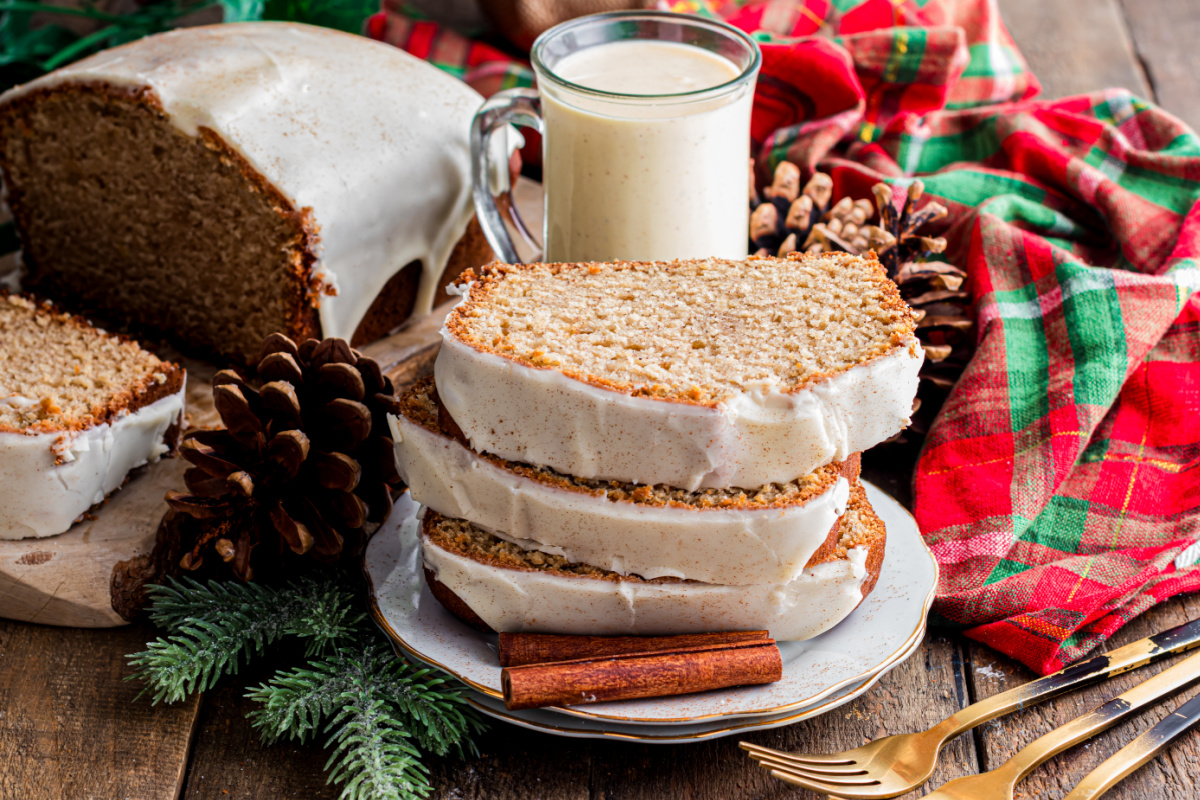
- Cool the loaf completely before glazing. Warm bread turns a thick white glaze into a translucent slide directly onto your cooling rack, which is probably not the holiday effect you were after.
- For a thicker glaze, stay close to 2 tablespoons of eggnog. For a thinner drizzle, work your way toward 3 tablespoons.
Storage and Gifting
- Let the glaze set completely before storing the bread. Keep the loaf in an airtight container at room temperature for up to 3 days.
- If you want to keep it a little longer, refrigerate it for up to 5 days. I like bringing individual slices back to room temperature before eating because the texture softens and the eggnog flavor comes through better.
- For freezing, I would freeze the loaf without the glaze. Wrap the completely cooled bread tightly, then freeze for up to 2 months. Thaw it overnight and add the glaze once it has returned to room temperature.
- This also makes a great holiday gift. Let the glaze set before wrapping it so you don’t hand someone a beautifully packaged loaf with half the frosting attached to the paper.
FAQs
- Can I use store-bought eggnog?
Yes. That’s what I use. Choose a regular full-fat eggnog with a flavor you like because there’s a full cup of it in the batter and more in the glaze. - Can I leave out the rum extract?
Yes. The bread will still have plenty of eggnog flavor from the eggnog, nutmeg, cinnamon and vanilla. I like the little bit of rum extract because it makes the flavor more recognizable to me, but it isn’t required. - Why did my eggnog bread turn out dense?
The two first things I would look at are flour and mixing. Too much flour can make any quick bread dense, and continuing to stir after the dry ingredients have been incorporated develops more gluten than you want. Also make sure your baking powder and baking soda are still active. If they’ve been sitting in the pantry for awhile, this may be their fault. - How do I know when the bread is done?
Insert a toothpick into the center of the loaf. It should come out clean or with a few moist crumbs, but not wet batter. Start checking around 50 minutes. - Can I make eggnog bread ahead of time?
Yes, and I like it the next day. Bake and cool the loaf completely, then store it airtight. You can glaze it the same day or wait and glaze it before serving. - Can I add nuts or chocolate chips?
You can. Chopped pecans or walnuts would be the first direction I’d go. Fold them in with the last few strokes of the batter so you don’t add a bunch of extra mixing just trying to distribute them. - Why does the bread need to cool before I add the glaze?
Because warm bread melts the glaze. If you want that opaque white finish sitting over the top of the loaf, the bread needs to be completely cool first.
From My Kitchen Notes
Small observations from the margins.
- I spent a lot of my childhood believing more effort could fix almost anything.
- Doing something and helping are not always the same thing.
- I’ve ruined things because I couldn’t tolerate leaving them alone.
- I’ve also waited too long because I mistook doing nothing for patience.
- Knowing when to stop is useless if you don’t also know when to move.
- There are times when another turn changes everything and when it only undoes what was already working.
- Patience and avoidance can look remarkably similar from the outside.
- So can persistence and refusal to accept an answer.
- Sometimes I keep working because the work is necessary and other times I keep working because stopping would require me to find out what happens without me.
- There’s a certain kind of confidence in knowing you’ve already done enough.
- Leaving something alone is easier when you trust what you already put into it.
- Not every unfinished feeling means something is unfinished.
- I still think effort matters enormously. I’m just less impressed by effort that isn’t changing anything.
- There are things I’m glad I stayed with after they became difficult.
- There are other things I wish I’d put down three turns earlier.
- The hardest part was never learning persistence. I came with plenty of that.
- The harder lesson has been knowing when my hands are no longer helping.
More Ways To Love Eggnog
- Overnight Panettone Eggnog French Toast Casserole – Soaked panettone pulled apart instead of sliced.
- Eggnog Banana Bread Muffins – Soft, almost withholding their eggnog note.
- Eggnog Snickerdoodles – Soft spiced centers, cookie platter worthy.
- Chai Eggnog – From scratch, holiday bliss.
- No-Bake Eggnog Cream Pie – Eggnog filling, cookie crust.
This post may contain affiliate links. Please read my disclosure policy.

Eggnog Bread
Equipment
- loaf pan 9x5 (23x13 cm) Standard size for even baking and proper structure.
- parchment paper Allows clean removal and prevents sticking.
- mixing bowls One medium, one large.
- whisk For even emulsification.
- rubber spatula Helps fold gently without overmixing.
- cooling rack Supports proper cooling before glazing.
Ingredients
For the Bread:
- 2 cups (240 g) all-purpose flour
- 2 tsps (8 g) baking powder
- ½ tsp (2 g) baking soda
- ½ tsp (3 g) table salt
- ½ tsp (1 g) ground nutmeg
- ½ tsp (1.5 g) ground cinnamon
- ½ cup (113 g) unsalted butter melted and slightly cooled
- 1 cup (200 g) granulated sugar
- 2 large eggs room temp
- 1 cup (240 ml) eggnog (not freezing cold from the fridge, let the temp come up slightly)
- 1 tsp (5 ml) vanilla extract
- ¼ tsp (1.25 ml) rum extract
Glaze:
- 1 cup (120 g) confectioners' sugar
- 2-3 tbsps (30-45 ml) eggnog
- pinch ground nutmeg for garnish
Instructions
- Preheat the oven to 350°F (177°C). Grease a 9×5-inch (23×13 cm) loaf pan and line it with parchment paper, leaving an overhang on the long sides for easy removal.
- In a medium bowl, whisk together the all-purpose flour, baking powder, baking soda, salt, ground nutmeg, and ground cinnamon. Set aside.2 cups (240 g) all-purpose flour, 2 tsps (8 g) baking powder, ½ tsp (2 g) baking soda, ½ tsp (3 g) table salt, ½ tsp (1 g) ground nutmeg, ½ tsp (1.5 g) ground cinnamon
- In a large mixing bowl, whisk the melted butter and granulated sugar until smooth and fully combined. Add the eggs one at a time, whisking well after each addition so the mixture emulsifies evenly. Stir in the eggnog, vanilla extract, and rum extract, if using.½ cup (113 g) unsalted butter, 1 cup (200 g) granulated sugar, 2 large eggs, 1 cup (240 ml) eggnog, 1 tsp (5 ml) vanilla extract, ¼ tsp (1.25 ml) rum extract
- Add the dry ingredients to the wet ingredients and gently fold with a silicone spatula just until no dry streaks remain. Do not overmix, as this can lead to a dense loaf.
- Pour the batter into the prepared loaf pan and smooth the top with an offset spatula or the back of a spoon.
- Bake for 50 to 55 minutes, or until a toothpick inserted into the center comes out clean or with a few moist crumbs attached.
- Let the bread cool in the pan for 10 minutes, then use the parchment overhang to lift it out and transfer it to a wire rack. Allow the loaf to cool completely before glazing.
- To make the glaze, whisk the confectioners’ sugar and eggnog together in a small bowl until smooth and pourable. Drizzle the glaze over the cooled bread and finish with a light sprinkle of nutmeg, if desired.1 cup (120 g) confectioners' sugar, 2-3 tbsps (30-45 ml) eggnog, pinch ground nutmeg
Notes
- Fold the batter gently and stop as soon as the flour disappears. Overmixing makes the final loaf dense.
- Room temperature eggs blend more smoothly and help the batter emulsify evenly.
- Let the loaf cool completely before glazing so the glaze sets cleanly instead of melting into the surface.
- For a thicker glaze, use closer to 2 tablespoons of eggnog. For a lighter drizzle, use 3 tablespoons.
Nutrition
Have you made this Eggnog Bread? I’d love to hear how it turned out – leave a comment below and let me know.
As an Amazon Associate and member of other affiliate programs, I earn from qualifying purchases.
Sal says
I am looking forward to making this over the weekend, but needed to stop by and mention how much I enjoy your posts, yes the recipes, but the writing is really some of the best. I’ll be the first one in line at your book signing if you ever write one. Please do. I don’t even care what you write about, I will be there. First. With roses.