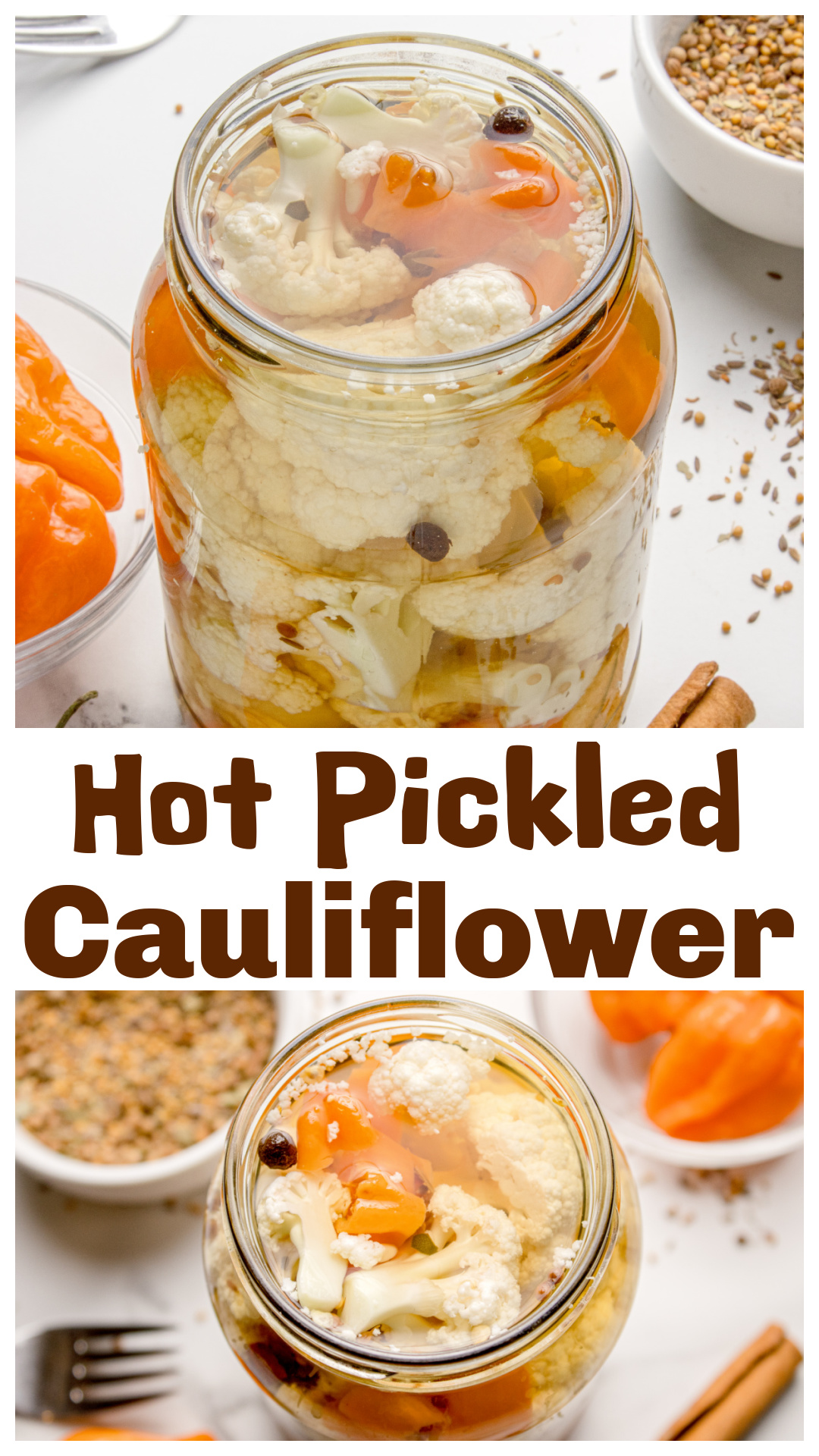
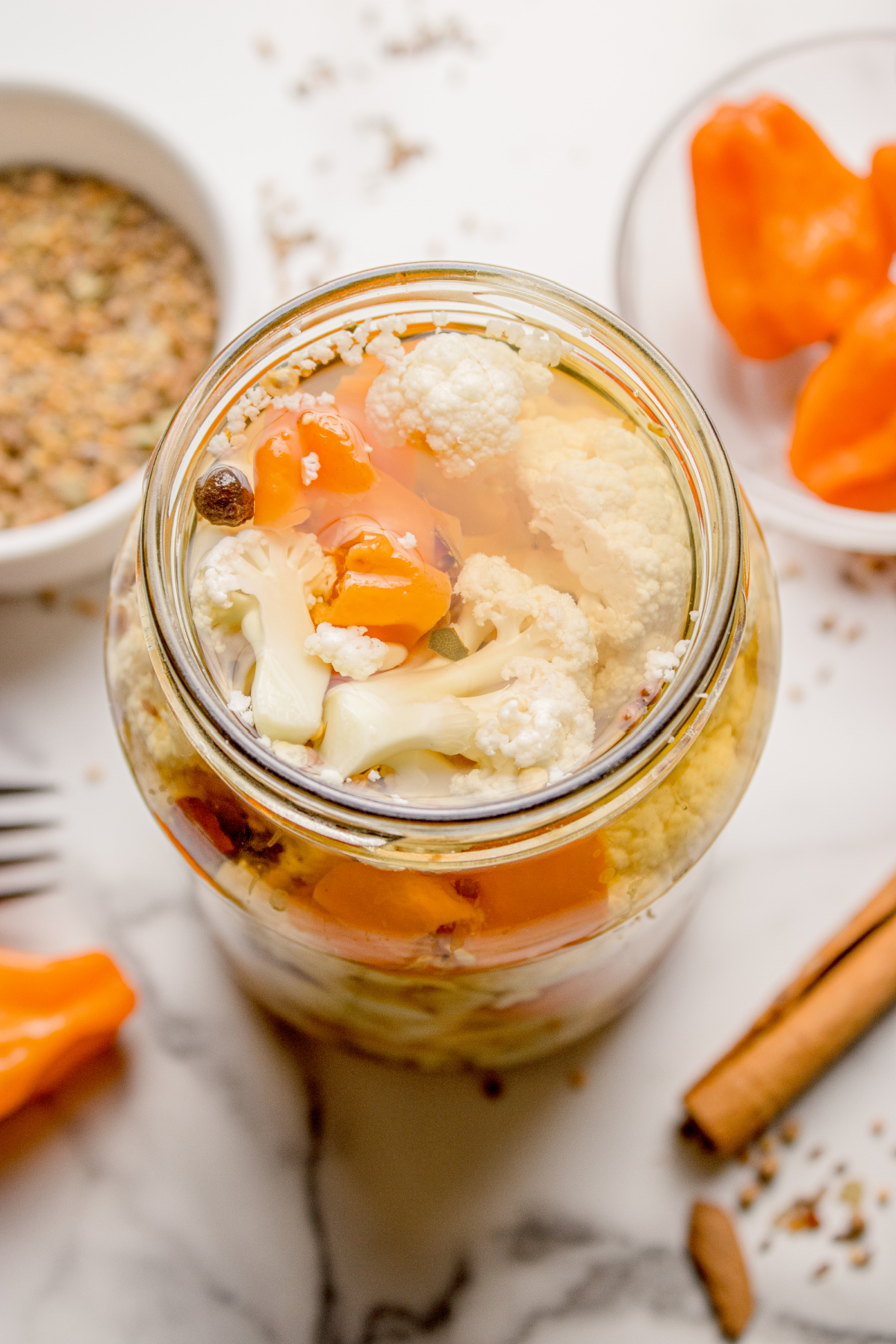
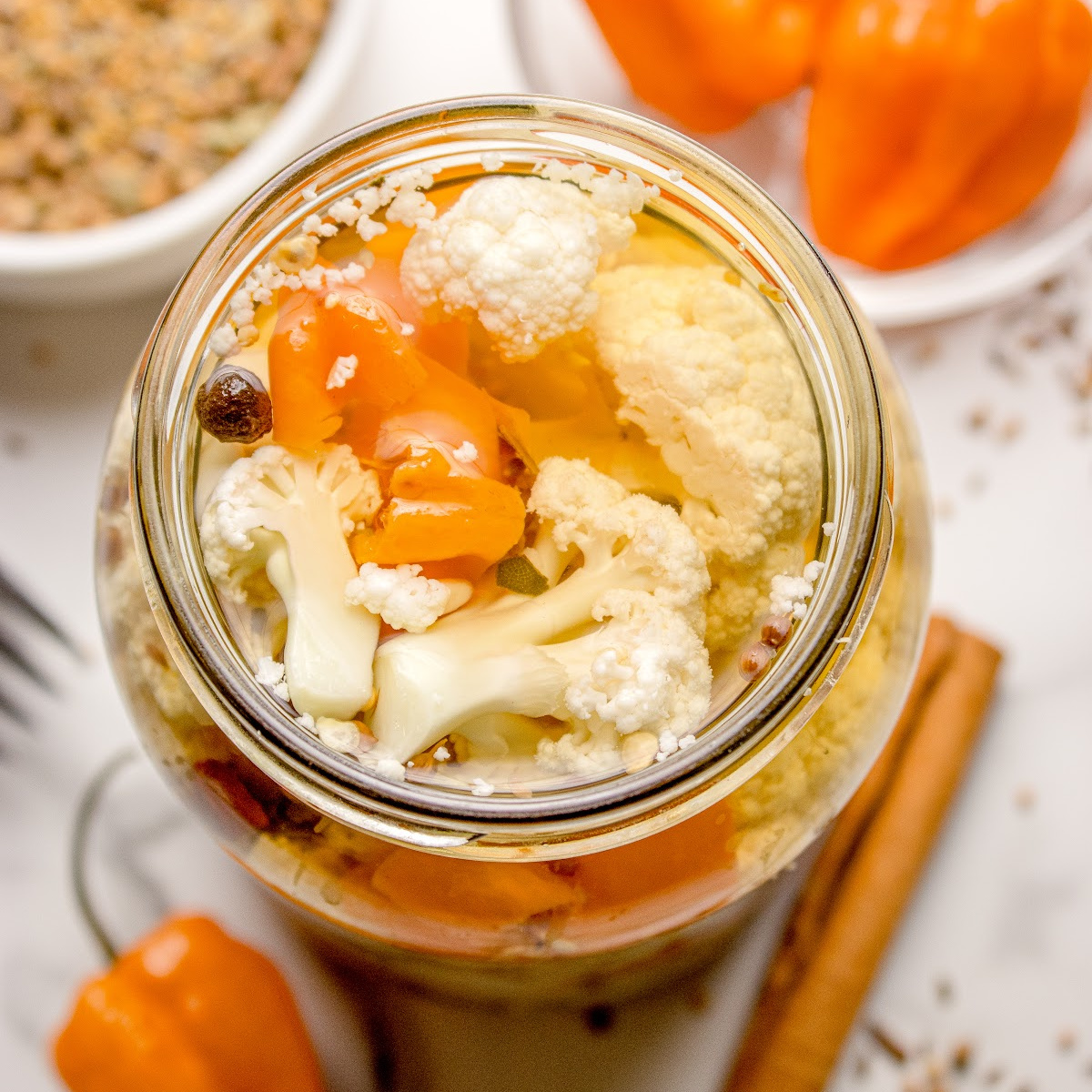
Hot pickled cauliflower made with fresh florets, habaneros, and a spiced vinegar brine for spice and serious crunch. A quick refrigerator pickle that comes together over a couple of days and keeps its tang.
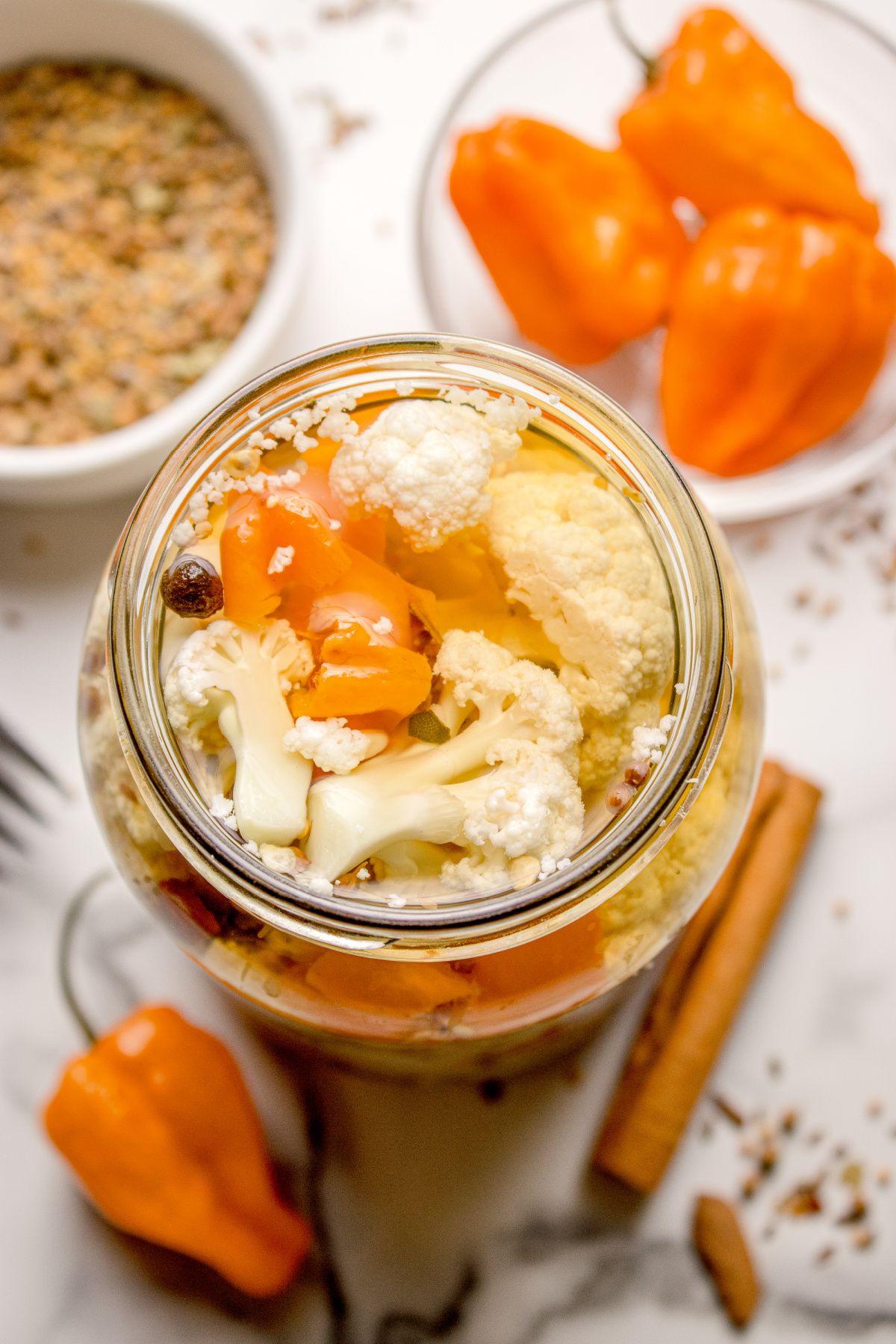
Hot Pickled Cauliflower, After the Impact
I’m naturally drawn to things that have already been opened by force.
Specifically, the thick, dark blue-black mussel shells I find scattered all over Oregon beaches, mostly clustered around the rocky, high-energy stretches I frequent. The shells are coarse, ridged, and dense, made to withstand pounding surf. I’m never looking for pristine shells, they’re not very interesting. I want the broken ones that have already done their job and don’t need to be admired to matter.
I have bowls and bowls of them at home now. On coffee tables, pushed into cabinets, and collected in glass jars. Living a perfectly happy second life that has nothing to do with décor, just my noticing. They make me smile.
I look at broken mussel shells as evidence of pressure, impact, feeding, tide, weather, teeth, birds and time. They’re records of something having happened.
Hot pickled cauliflower is the same character in food form.
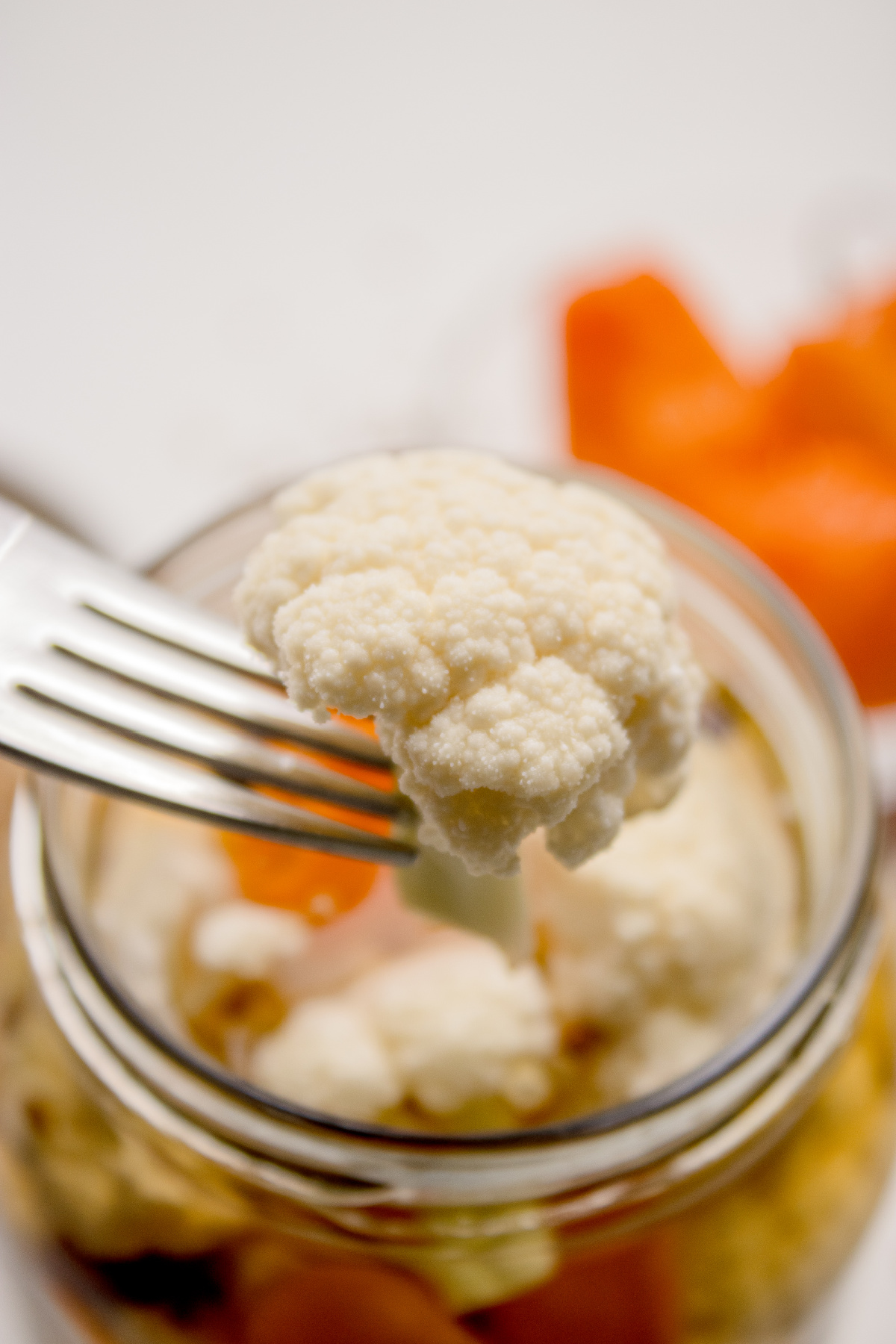
If you look at cauliflower, it’s really blunt, pale and stubborn by nature. It doesn’t just soften on its own, it has to be pushed, shocked even with hot water, hit with acid, and spiced. You have to move it past neutrality before it becomes anything interesting with heat, vinegar, time and pressure again.
It’s not so much that I thrive on pickling and beachcombing, it’s more that I’m intrigued by things altered by their own reality.
Broken mussel shells aren’t ornate on their own, even though I find them beautiful. They’re likely fragments of a meal, some kind of fight, a tide cycle, or just a bird’s success. They are proof that something fed, survived, or ended, and then something else continued. There’s no fantasy attached to that life cycle. It’s rough.
I think about hot pickled cauliflower the same way. Raw cauliflower by itself is all potential and has no real game. Pickling is the intervention part. The heat, acid, and spice don’t change its nature, they make it tell the truth faster.
Mussel shells only show their pearly interior once they’ve been cracked open. Cauliflower only becomes interesting once it’s been pushed. The vinegar doesn’t ruin it, it reveals it. The ocean doesn’t erase shells, it finishes them.
I like food and objects changed just enough to show the realness about what they’re made of.
Why I Love This Recipe
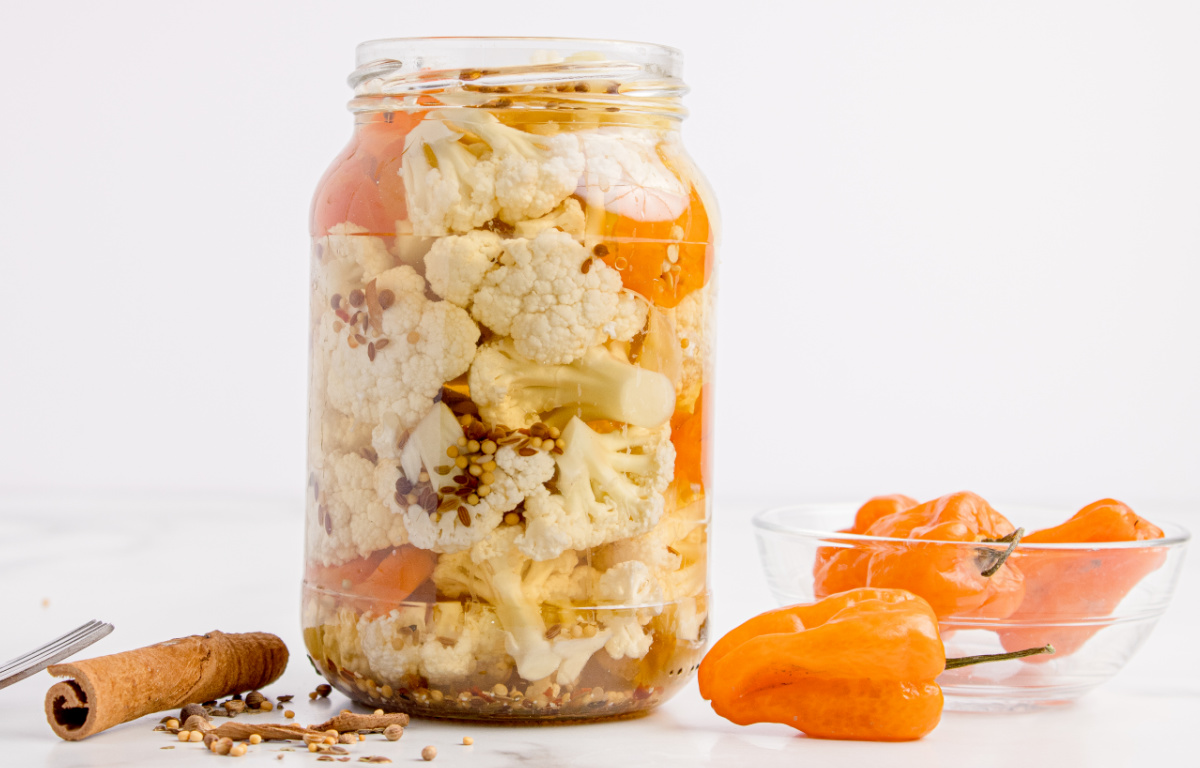
- This is cauliflower that has been through something. The heat and vinegar don’t soften it into submission. It wakes it up and by day three, it feels lived-in.
- Veggies that stay neutral are a little yawn-worthy to me. Personality shows up with brine, spice, and time, which is especially true for this recipe.
- The habanero is not here for show, it’s a consequence. Once you taste it, you know exactly what happened in that jar. It’s the fun kind of drama.
- When your charcuterie board needs impact, this cauliflower is the disruption it needs.
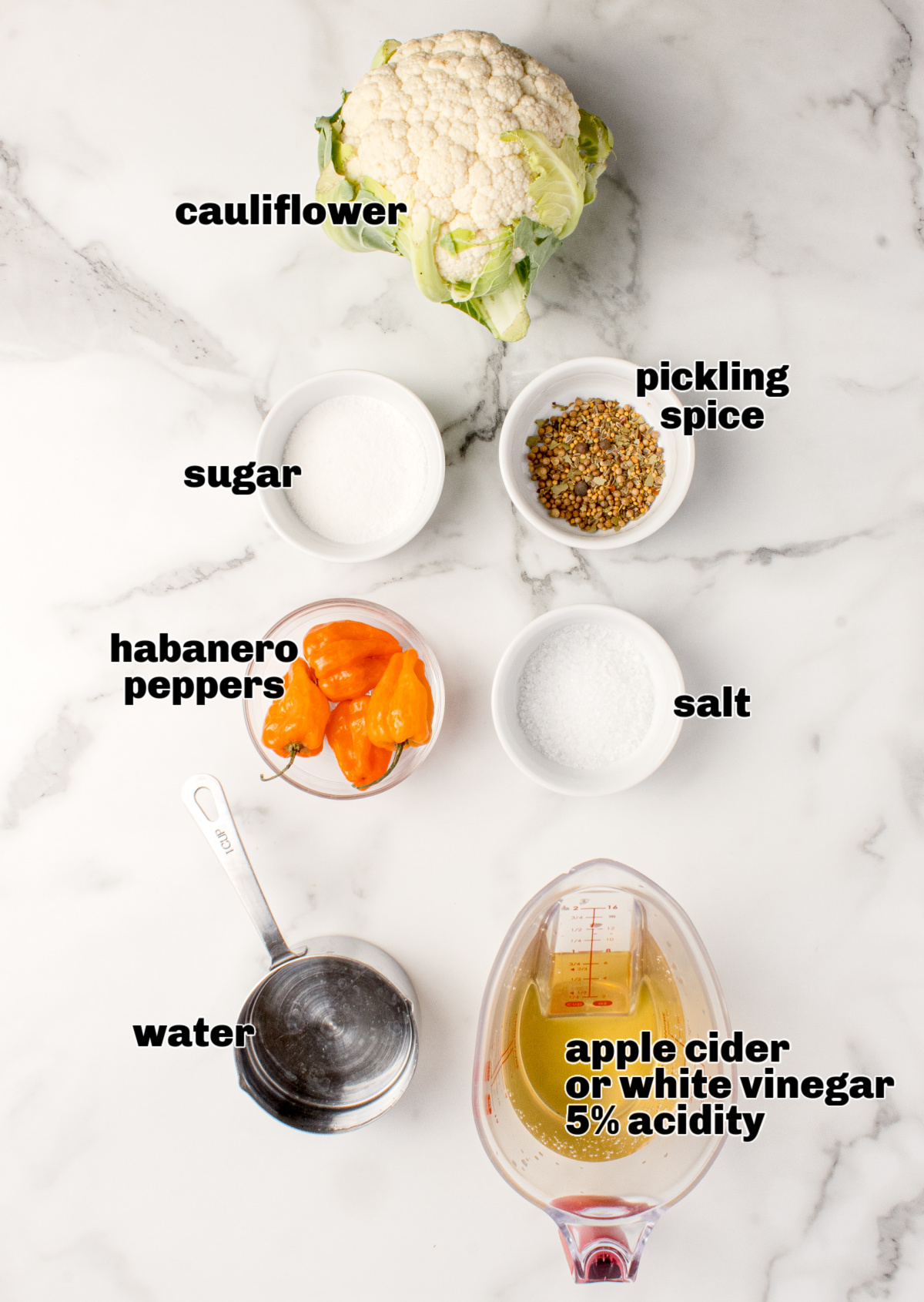
Ingredients
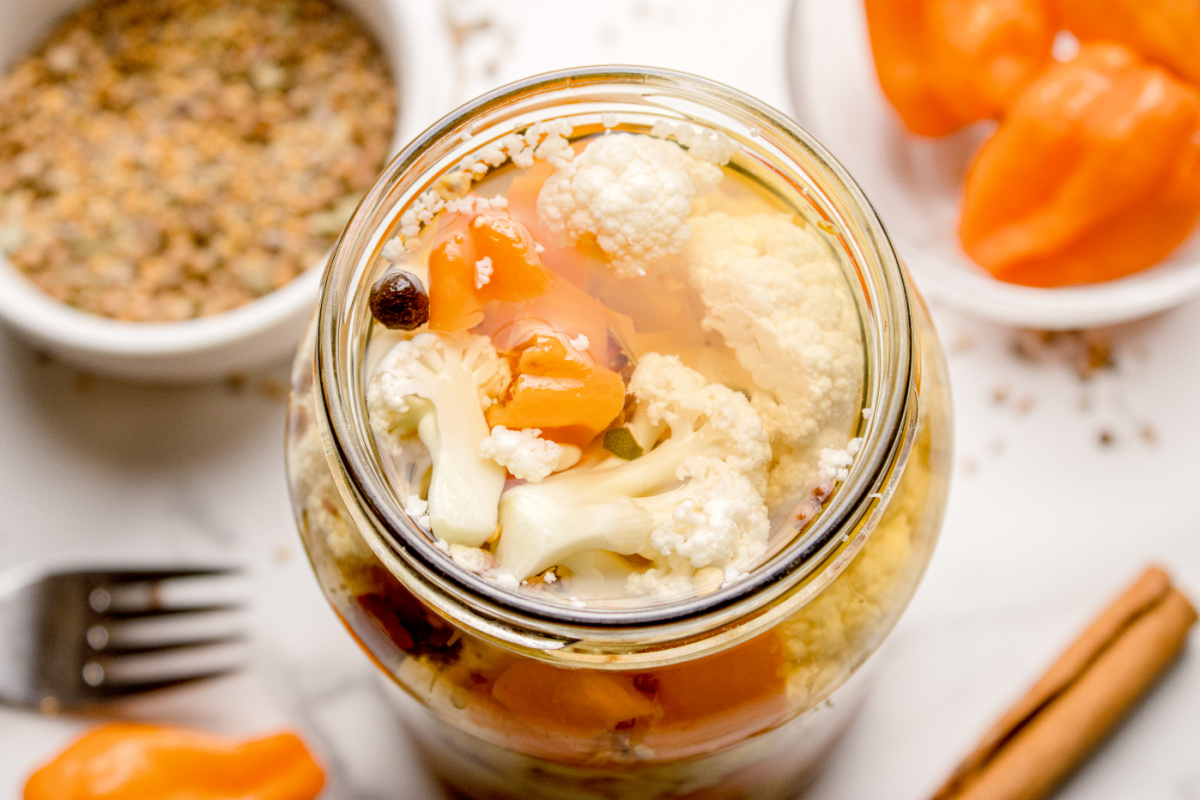
- Cauliflower – This is the part that has to meet heat and acid before it tastes like anything interesting.
- Water – The neutral carrier, pressure without noise.
- 5% acidity vinegar (apple cider or white) – The true intervention and the moment things separate and definition shows up.
- Sea salt – Focuses the flavor.
- Sugar – It’s just enough to keep the heat from going off the rails.
- Pickling spice – The undercurrent of flavor and the record of what happened in the jar.
- Habanero peppers – Fruity and floral. You’ll know they were there.
How to Make Hot Pickled Cauliflower
Find the complete printable recipe with measurements in the recipe card at the BOTTOM OF THE POST.
- Step One (break it down)
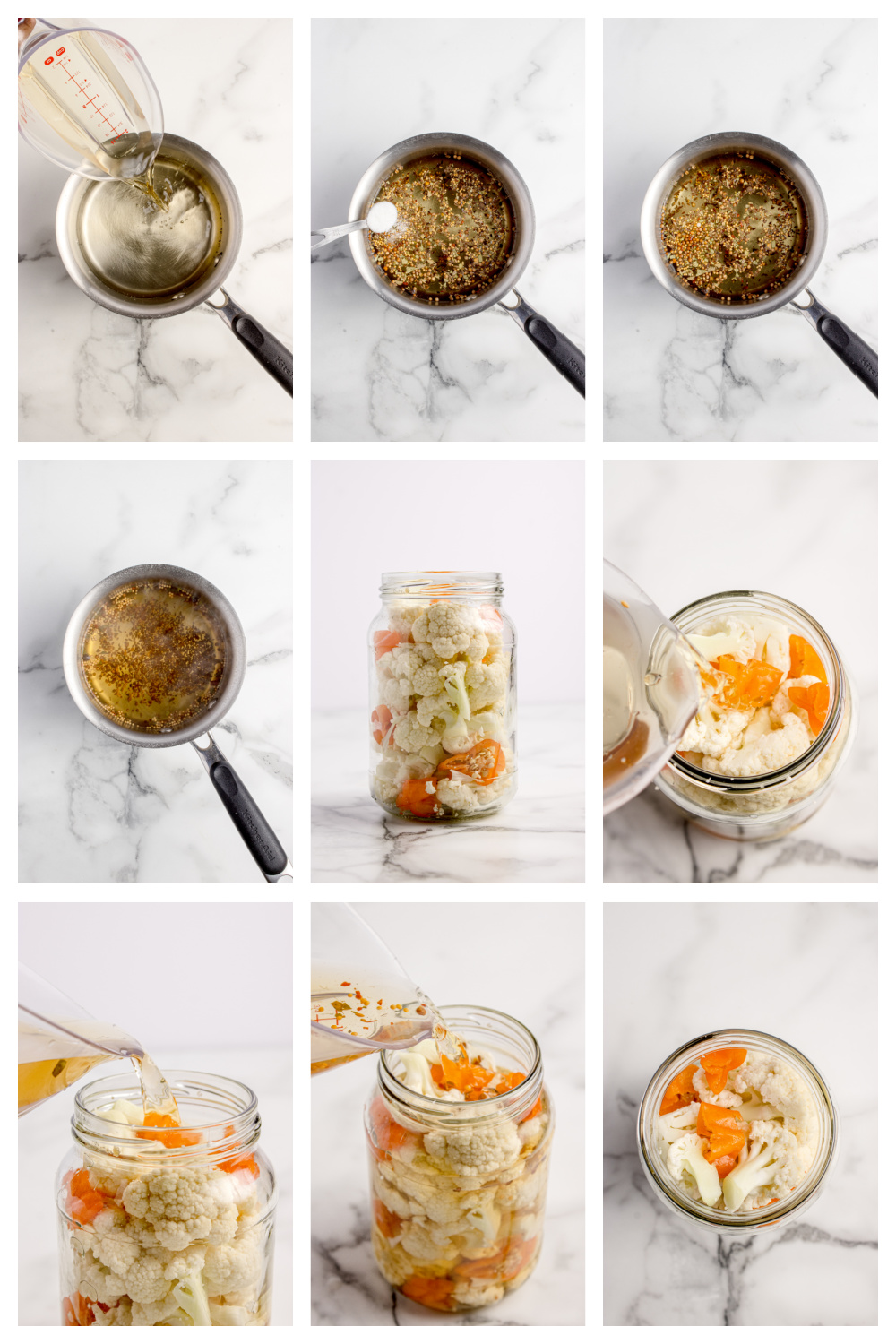
Wash the cauliflower and cut it into bite-size florets. Not little dainty ones, just pieces that feel right in your hand. This is the first intervention. Put on gloves and slice the habaneros into thin rounds. If you want less fire, remove the seeds, if you don’t, leave them. You already know your spice tolerance. - Step Two (make the brine)
In a medium saucepan, combine the water, vinegar, sea salt, sugar, and pickling spice. Bring it to a rolling boil and stir until the salt and sugar dissolve. The heat isn’t just dissolving things, it’s activating them. - Step Three (pack with purpose, not force)
Add the cauliflower and habanero slices to a clean 1-pint jar. Pack them snugly, but don’t crush them. They need space for the brine to move through, to reach everything. This type of pressure works better when it’s evenly distributed. - Step Four (pour the impact)
Carefully pour the hot brine over the vegetables until they’re completely submerged. If you’re short on liquid, top it off with a simple 50/50 mix of vinegar and water. Let it cool slightly before sealing. This is the moment where the shift begins. - Step Five (let time do its part)
Seal the jar and refrigerate. This is not a pantry project, you need to keep it cold. The flavor starts developing in 24 to 48 hours, but days three to five are where it really tastes like it should. The cauliflower holds together, the heat threads through, and the brine finishes what it started.
Recipe Tips
- Cut the cauliflower small enough (but not too small) that the brine can reach the center quickly. Large chunks stay pale in the middle and miss the flavor.
- Use gloves with habaneros unless you enjoy learning lessons the long way. Heat holds on in places you didn’t plan for, and it’s a painful realization.
- The brine needs to come to a full boil. That heat dissolves the salt and sugar fully and wakes up the spices instead of just soaking them.
- Pack the jar tightly, but don’t crush the florets. There’s a difference between pressure and damage, and the brine needs room to do its thing.
- Make sure everything stays submerged. Exposure to air is where things go sideways.
- Day five is where the crunch and heat really begin to understand each other. Try to resist snacking on them until then.
- If you prefer a slightly softer bite, flash-blanch the cauliflower for 60 seconds before packing. It changes the texture without dulling the result.
- This is refrigerator-only, not a shelf-stable preserve, and pretending it is won’t end well.
- I will sometimes drop a cinnamon stick into the brine while it boils. The final flavor does not taste like cinnamon, but it does change the spice profile in a way I can’t quite explain. It’s not in the recipe because it’s a personal preference. You can also add a little turmeric if want the cauliflower to have some color.
- The broken mussel shells I collect have already survived the tide and time. This cauliflower does something similar in miniature. It holds itself together after the boil, acid, and heat. If it turns to mush, something went wrong upstream. Respect the process and it will hold.
Storage
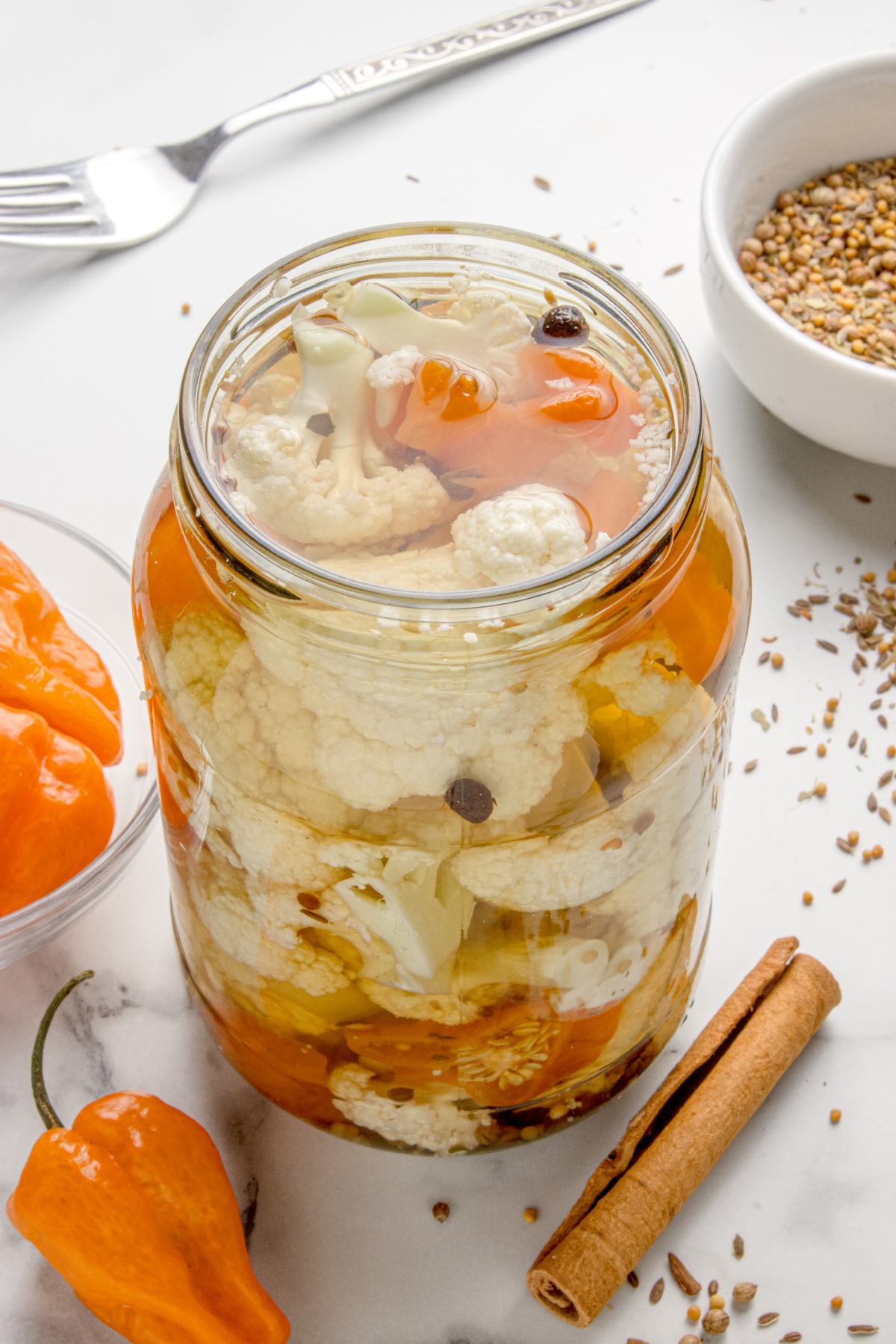
- This is a refrigerator pickle, not a long-term preservation project. Keep the jar sealed and cold, and give it at least 24 hours before you start dipping into it. It hits its stride somewhere around day three, when the heat gets into the cauliflower instead of sitting on top of it. But day five is the sweet spot.
- It will keep for up to a month in the fridge, as long as everything stays submerged and the brine stays clear. If the liquid turns fizzy, cloudy in a strange way, or the cauliflower feels slippery, it’s done. Toss it.
- I like pulling pieces out cold, straight from the jar, the same way I sort through my bowls of shells. Some batches are hotter than others, some are brighter. They all tell you what they’ve been through.
FAQs
- Can I use frozen cauliflower?
No, don’t do that. Frozen cauliflower has already been fractured by ice crystals. Once you bathe it in hot brine, it goes soft in a way that really isn’t redeeming. This recipe depends on a clean break, not one that’s already been weakened. - Does the brine really need to boil?
Yes, heat is part of the transformation here. Tepid will not change anything. - Can I make this shelf-stable?
No, this is a refrigerator pickle. It’s meant to exist cold, not sealed away on a pantry shelf. - How spicy is it with habaneros?
It can get serious. Habaneros are known for their fruit and fire. Remove the seeds if you want something milder, or sub in Fresno or jalapeño if you want to tame it. - The brine didn’t reach the top of the jar. What now?
Top it off with a simple 50/50 mix of vinegar and water until everything is submerged. Exposure to the air will lead to soft spots, and this recipe is really about contact.
From My Kitchen Notes
Just a few things that surface once the jar is sealed and the shells are back in their bowl.
- Some ingredients don’t really become themselves until they’ve been overwhelmed a little. Cauliflower needs heat and acid before it stops being neutral. The same principle applies to people.
- Pickling is a decision followed by limit. You choose the amount of pressure to apply, then you stop touching it.
- The florets always look completely shocked when the hot brine hits. That phase passes, but under my breath I always say, “sorry little ones, but you are transforming today.”
- There’s something to learn about foods that don’t soften emotionally. They either hold it together or fall apart, and cauliflower has always been very honest about which direction it’s going.
- Broken shells and pickled vegetables both end up smoother where they fractured. That’s not cosmetic, it’s chemistry.
- A jar of this pickled cauliflower doesn’t need shaking, and broken mussel shells don’t need polishing. Both have already survived what mattered.
- I have never made this to preserve cauliflower as it was. I make it to see what it becomes once reality has its turn.
- Some things are only interesting after effect. I’m comfortable admitting that.
- Every jar is just cauliflower meeting some force and deciding to hold its shape. That happens to us as individuals too. It all depends on what you can withstand to become what you need to be.
More Things That Don’t Stay Neutral
- Pickled Red Onions – Piercing, fast, electric color.
- Easy Homemade Dill Pickles – Cold brine, classic crunch.
- Pineapple Habanero Hot Sauce – Fruit, vinegar, controlled fire.
- Pickle de Gallo – Fresh acid with bite.
This post may contain affiliate links. Please read my disclosure policy.
Hot Pickled Cauliflower
Equipment
- Saucepan (medium) For boiling the brine.
- pint glass jar (16 oz / 473 ml) with lid. For refrigerator storage.
Ingredients
- 1 small (1 lb / 454 g) head cauilflower cut into bite-size florets
- 1-3 habanero peppers thinly sliced
- 1 cup (240 ml) water
- 1 cup (240 ml) apple cider or white vinegar 5% acidity
- 1 tsp (6 g) sea salt
- 1 tsp (4 g) granulated sugar
- 1 tbsp (8 g) pickling spice
Instructions
- Wash the cauliflower and cut it into small, bite-size florets. Wearing gloves, slice the habanero peppers into thin rounds, removing the seeds if you prefer a milder heat.1 small (1 lb / 454 g) head cauilflower, 1-3 habanero peppers
- In a medium saucepan, combine the water, vinegar, sea salt, sugar, and pickling spice. Bring the mixture to a rolling boil over medium-high heat, stirring until the salt and sugar have fully dissolved.1 cup (240 ml) water, 1 cup (240 ml) apple cider , 1 tsp (6 g) sea salt, 1 tsp (4 g) granulated sugar, 1 tbsp (8 g) pickling spice
- Place the cauliflower florets and sliced habaneros into a clean 1-pint (16-ounce / 473 ml) glass jar, packing them snugly without crushing.
- Carefully pour the hot brine over the vegetables until they are fully submerged. If needed, top off the jar with a 50/50 mixture of vinegar and water to cover completely.
- Allow the jar to cool slightly at room temperature, then secure the lid and refrigerate. Chill for 24 to 48 hours before serving to allow the flavors to develop fully.
Notes
- Use vinegar labeled 5% acidity for proper brine balance.
- Keep all vegetables fully submerged during storage.
- Flavor peaks between days 3 and 5.
- This recipe is refrigerator-only and not shelf-stable.
Nutrition
Have you made this Hot Pickled Cauliflower? I’d love to hear how it turned out – leave a comment below and let me know.
As an Amazon Associate and member of other affiliate programs, I earn from qualifying purchases.
Kate says
Turned out excellent. Great recipe.
Kiki says
I made these and used them on our party charcuterie board last night and they were so good. Love the little spice and we really enjoyed the pop of flavor.