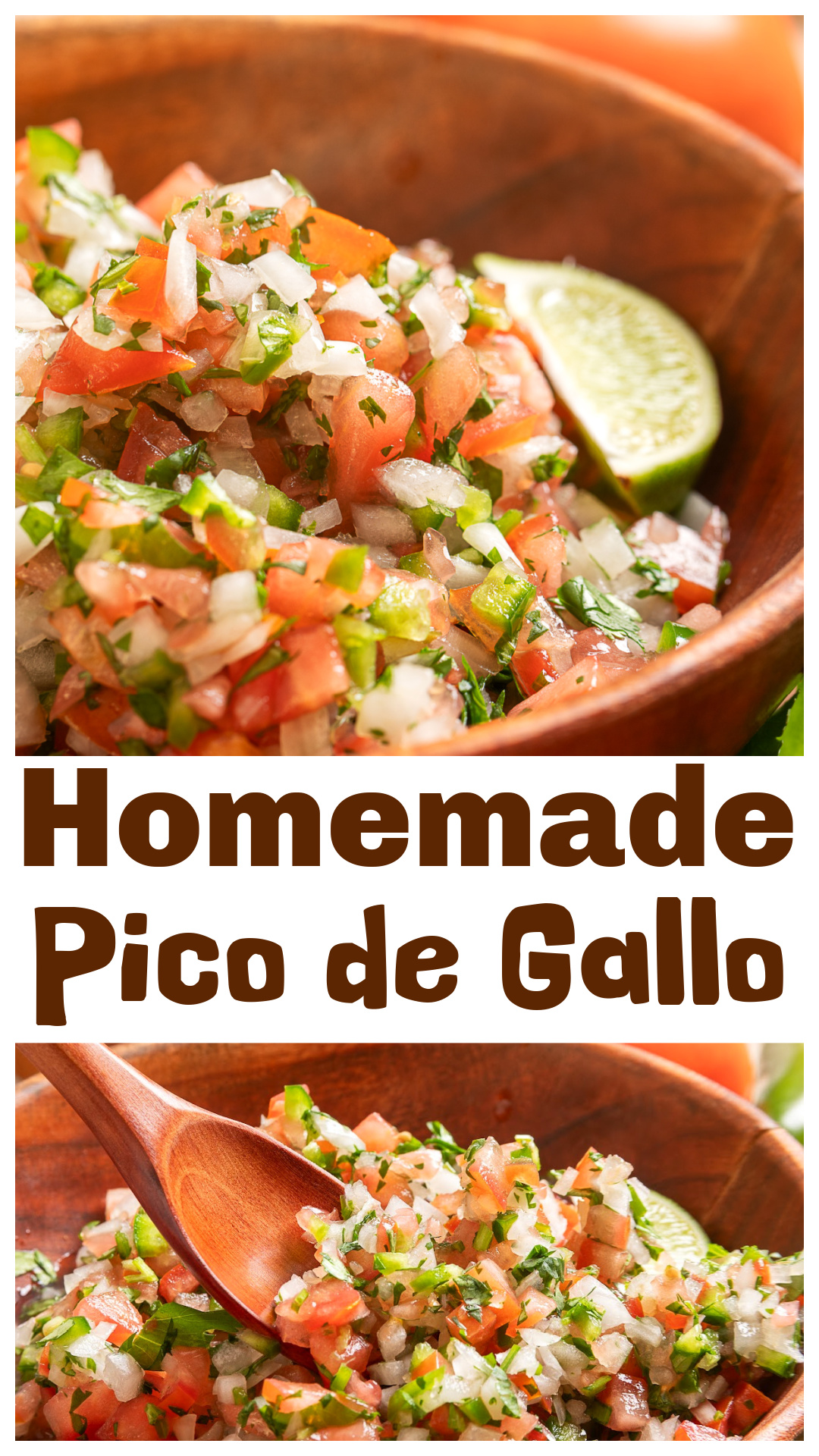
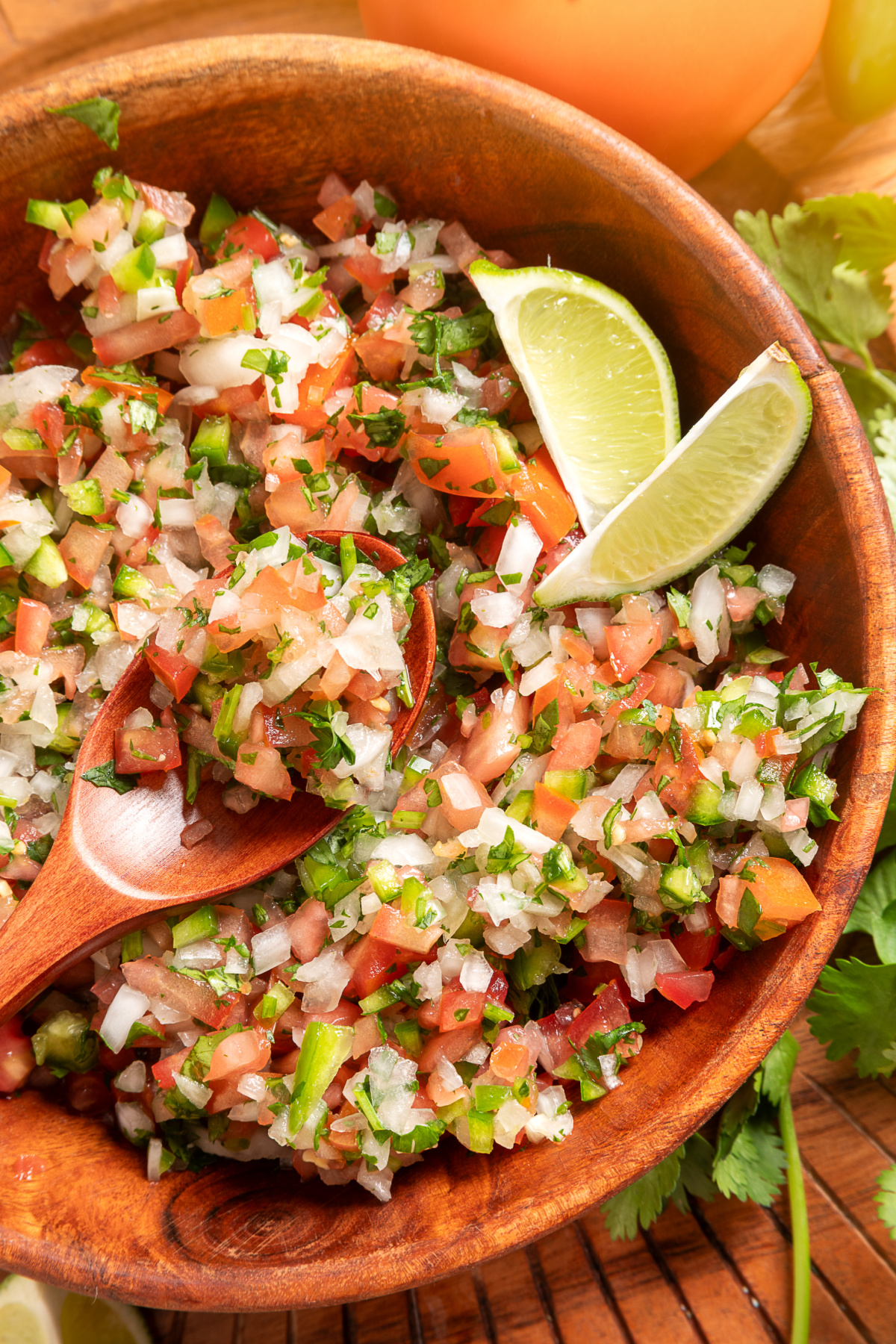
This homemade pico de gallo uses seeded ripe tomatoes, lime juice, cilantro, garlic, and jalapeño for a chunky salsa that stays fresh instead of turning watery. The jalapeño ribs let you control the heat without guessing.
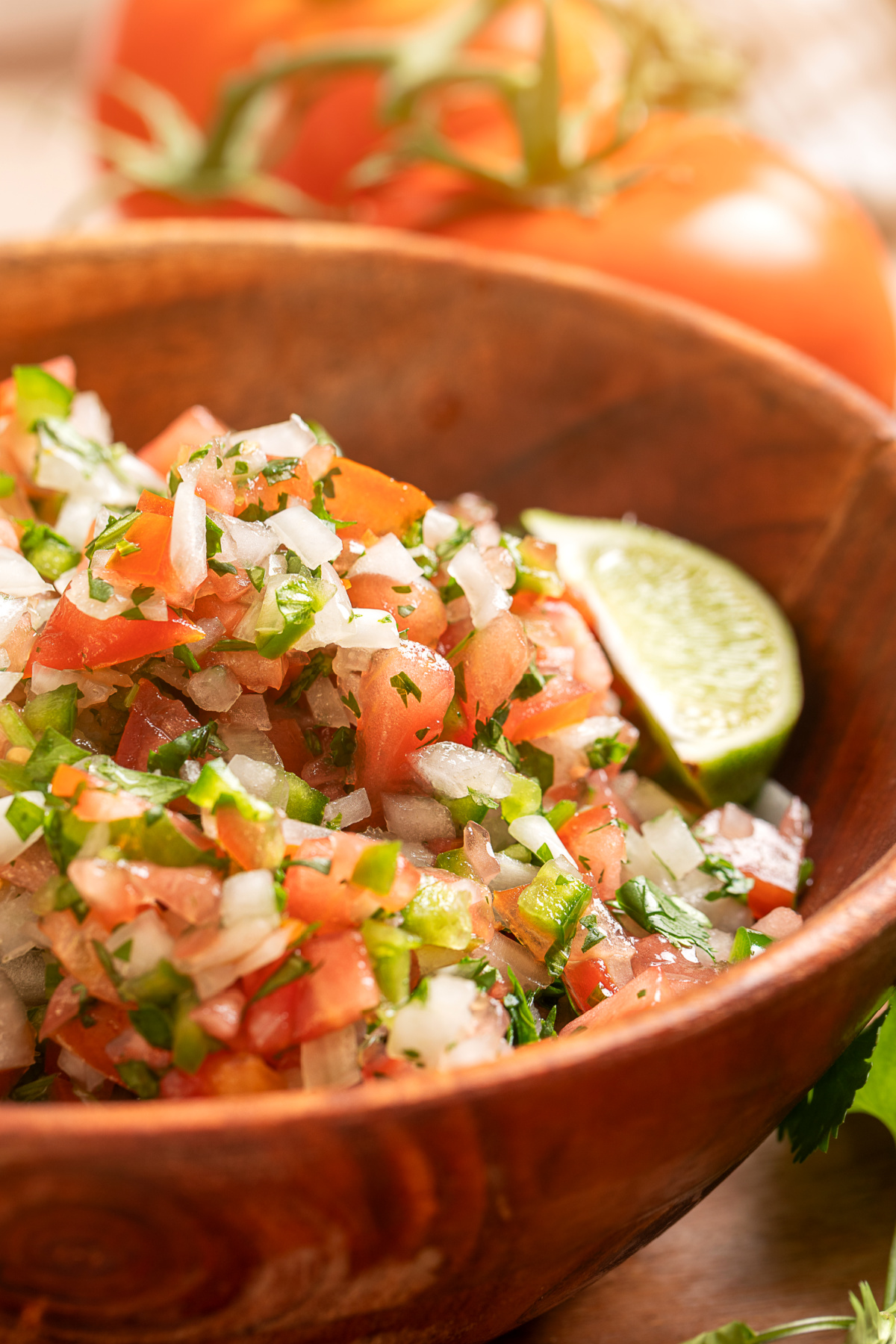
Fresh Homemade Pico De Gallo with a Better Tomato Prep
Pico de gallo is one of those things you don’t assume needs a recipe until you eat one that turns watery five minutes after hitting the table. Mine stays chunky instead of becoming tomato soup because I seed the tomatoes first and let the lime juice, onion, jalapeño, garlic, cilantro, and salt sit together for a little while before serving. The flavors work their way through everything without turning the tomatoes into a puddle of juice at the bottom of the bowl.
When I was little, probably six or seven, my dad planted an unusual amount of giant beefsteak tomatoes along the sunny fence line on one side of our house in Southern California. By late summer there were more tomatoes than anyone knew what to do with. They ended up in salads, and I’m pretty sure this is when I got hooked on dill pickle and tomato sandwiches, and eventually pico de gallo, because having that many tomatoes in SoCal was basically a gateway to salsa.
But my strongest tomato memory is tomato hornworms.
If you’ve never seen one before, congratulations on your peaceful life. They are enormous green caterpillars that blend perfectly into tomato plants until suddenly you notice one the size of a bratwurst hanging underneath a leaf while casually destroying an entire branch. Every single day there were more of them. We’d inspect the plants, remove what seemed like all of them, then go back out the next evening and find a gazillion more hiding perfectly in plain sight like these tiny agricultural criminals. Because that’s what they were.
Every night I would wait for my dad to get home from work because together we would go hunt hornworms before dinner, while he picked tomatoes for the salad. I refused to look for them alone because they terrified me, but with my dad there it somehow became a treasure hunt. He’d bring a mason jar full of soapy water and we’d search through the tomato plants, dropping each one into the sudsy water for an instant demise.
And these things got massive if you missed them for even a day or two because they were feeding on the leaves, branches, and tomatoes.
I also knew exactly what happened when you squeezed one because they’d release this horrifying bright green goo from all the tomato leaves they’d been eating. It was completely disgusting, which is a very important detail for what happened next.
One night after a very successful hornworm hunt, my dad decided to make pico de gallo. I remember staring into the bowl asking what the green pieces were.
My dad was a huge jokester and without missing a beat, he told me he chopped up the hornworms because we had so many of them. Why waste them.
This was hilarious to him.
Meanwhile I was already eating the pico when he said it, so I immediately imagined biting into giant juicy caterpillars filled with warm green slime. I had an instant breakdown, complete with screaming, crying, spitting pico de gallo across the table while my dad laughed so hard he could barely breathe. The “hornworms” were jalapeños.
This was very 1970s parenting.
And somehow now, decades later, pico de gallo still reminds me of standing outside beside tomato plants with my dad looking for giant camouflage worms like we were handling our own suburban agricultural emergency.
Good pico de gallo should stick to the chip with some level of dignity. It needs lots of lime, onion, cilantro, jalapeño and tomatoes that still taste like tomatoes instead of watery grocery store salsa that tastes like confetti and rolls off the chip before it reaches your mouth.
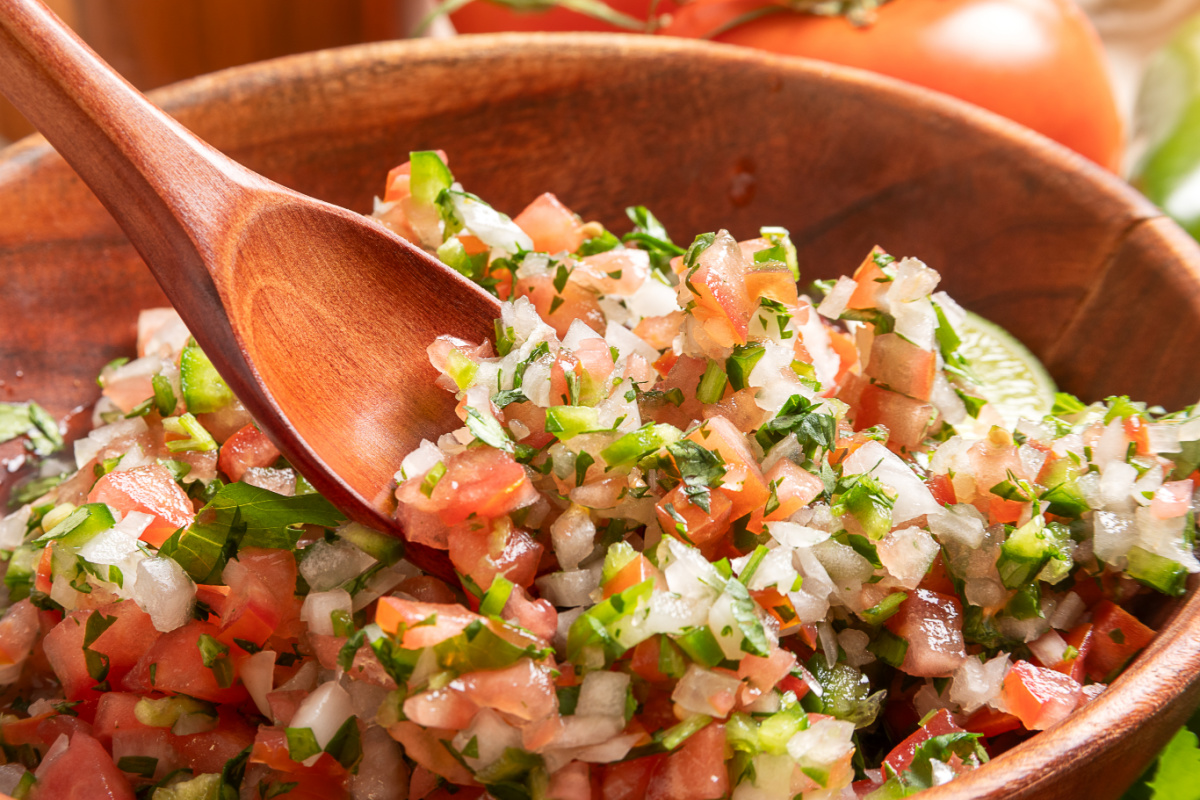
Now I make this pico de gallo year-round because it goes with everything. It’s good piled onto tacos, scooped up with salty tortilla chips, spooned over grilled chicken, and especially eaten straight out of the bowl. The seeded tomatoes are what keep it from turning watery overnight, which means the leftovers still taste good the next day instead of becoming tomato juice.
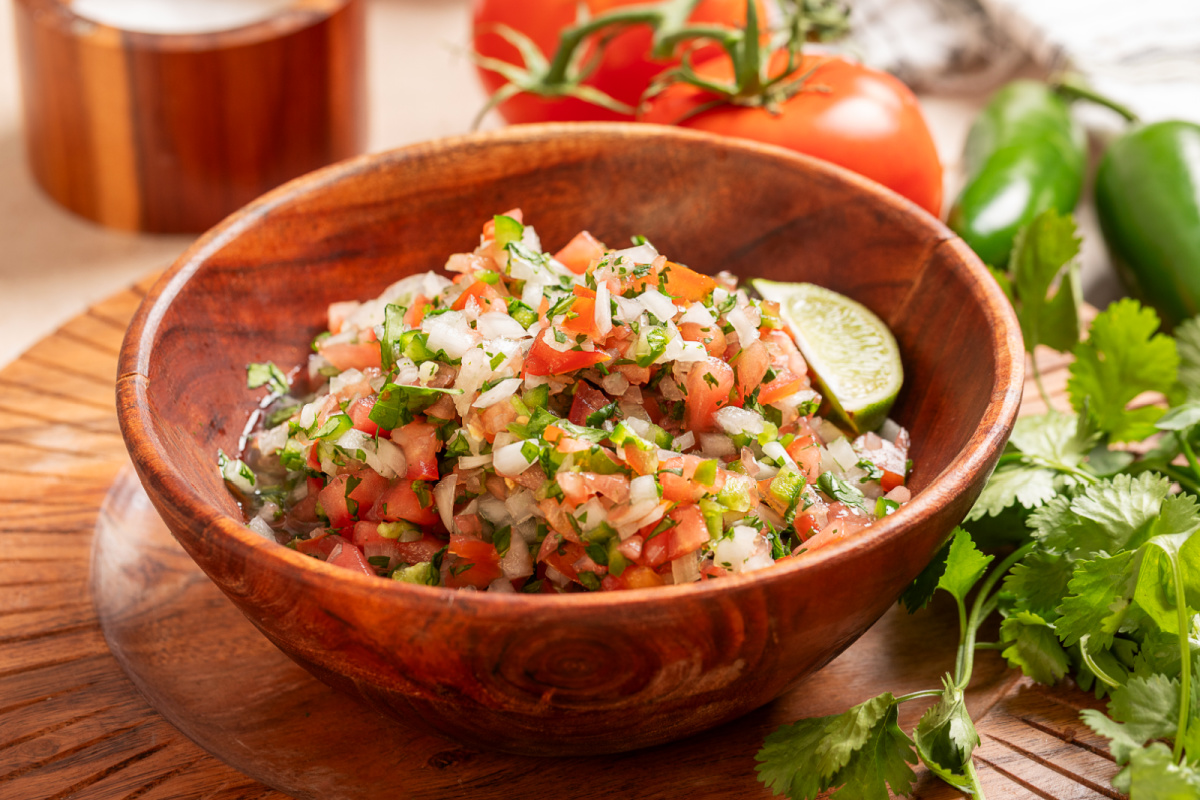
The Decisions Behind This Recipe
- Most watery pico de gallo problems start with the tomatoes. The second lime juice and salt hit the bowl, the tomatoes start releasing liquid, which is why pico can go from fresh and chunky to watery tomato soup surprisingly fast. Seeding the tomatoes first keeps the texture much firmer and helps everything hold together longer instead of becoming liquid salsa after sitting for ten minutes.
- And here’s the thing about jalapeños, most of the heat lives in the ribs, not necessarily the seeds. I know people diligently remove the seeds while leaving a lot of the ribs behind, then wonder why the pico is still so spicy. Removing the ribs gives you a milder pico without completely losing the fresh jalapeño flavor. And don’t forget to wear gloves while you do this.
- I also always add garlic, which I’m aware is not standard, but without it the whole bowl can taste oddly dull to me, even with good tomatoes and fresh lime juice. I find the garlic helps the onion, cilantro, jalapeño, tomatoes, and lime taste more connected instead of like separate ingredients awkwardly sharing the same bowl.
- And pico tastes better once it sits for a little bit. Right after mixing, everything tastes separate, like yes, we’re in this bowl together, but we’re not talking. Give it 15–30 minutes in the fridge and the onion will soften slightly, the lime makes its way into the tomatoes, and everything starts tasting like pico de gallo instead of chopped veggies having an argument.
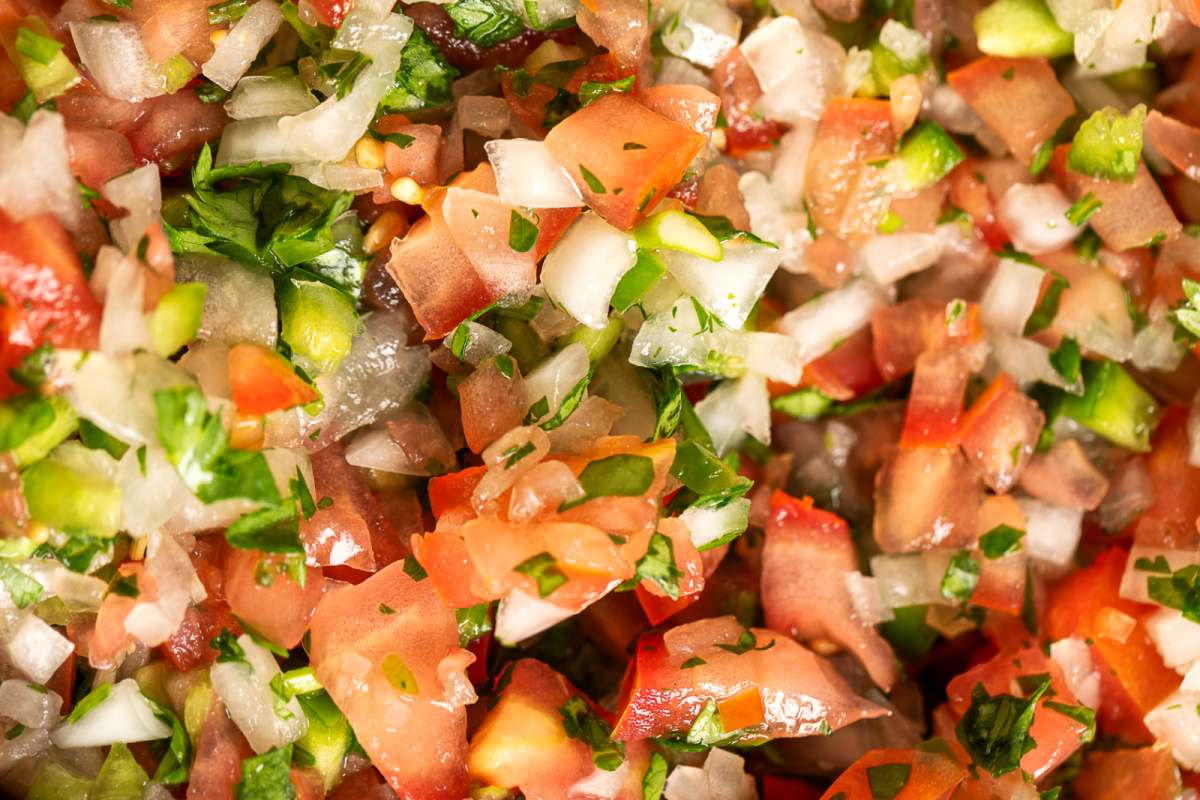
Ingredients
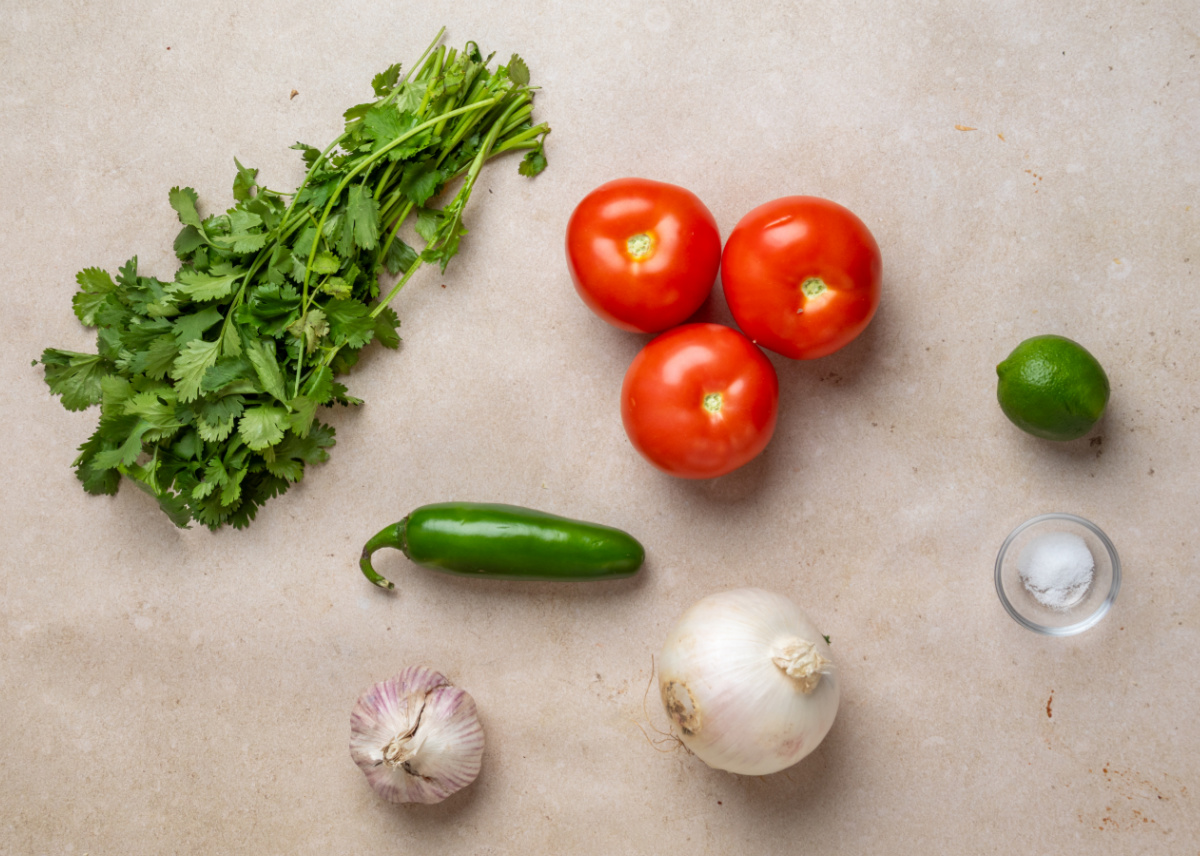
- Tomatoes – Firm ripe tomatoes hold together much better once the lime juice and salt are added. Seeding them first keeps the pico chunky instead of watery.
- White onion – This is where the restaurant-style pico flavor comes from. Red onion is fine if you want it, but it changes the entire personality of the bowl. The difference between white and red onion is like getting a salute instead of a handshake.
- Jalapeño – Most of the heat comes from the ribs, which is why removing them gives you a milder pico without completely losing the fresh jalapeño flavor. Leave them in completely if you like the burn.
- Garlic – A small amount gives the bowl that little something without turning it into garlic salsa.
- Fresh lime juice – Lime juice is necessary, but it also starts pulling extra liquid from the tomatoes pretty fast, which is exactly why seeding the tomatoes becomes important if you want the pico to stay chunky longer.
- Cilantro – Keeps the pico tasting fresh instead of dull.
- Sea salt – Under-salted pico loses flavor fast, but too much salt also pulls extra liquid from the tomatoes while everything sits. There’s a balance.
How To Make Homemade Pico De Gallo
Find the complete printable recipe with measurements in the recipe card at the BOTTOM OF THE POST.
- Step One (deal with the tomatoes first)
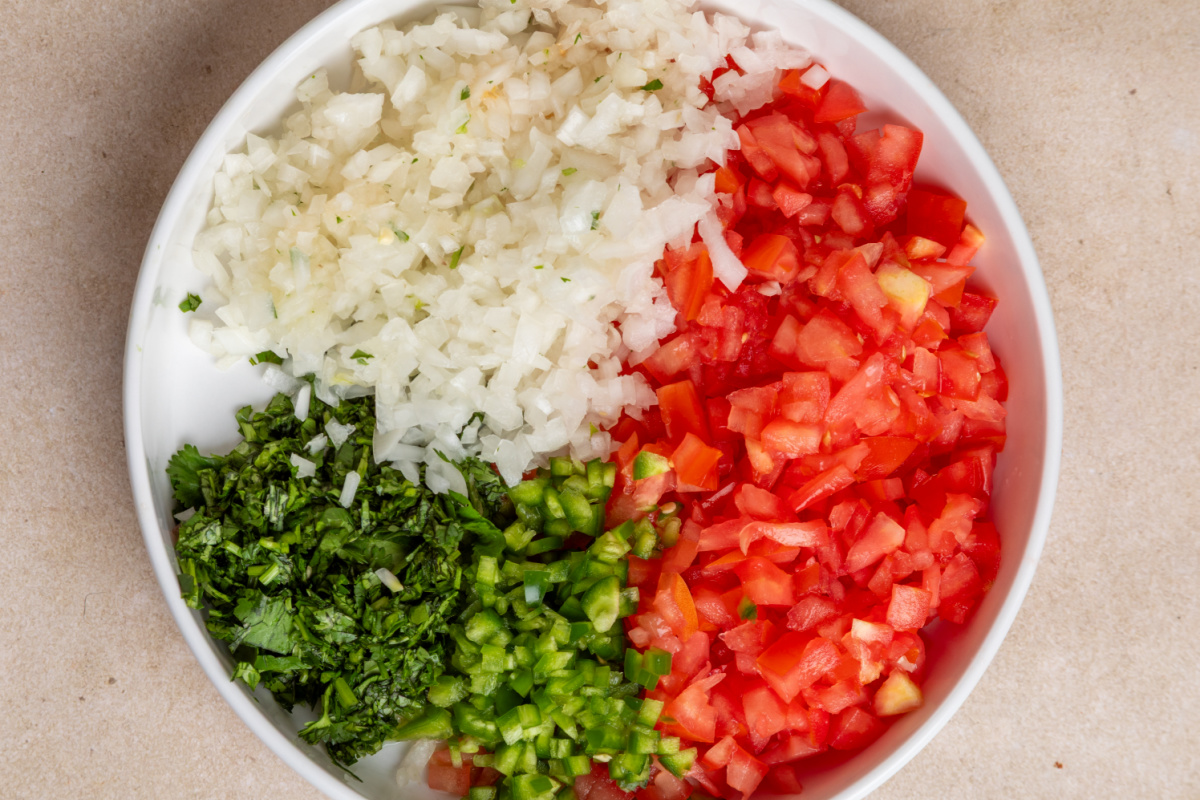
Finely dice the white onion and jalapeño, mince the garlic, chop the cilantro, and dice the tomatoes. Scoop out and discard the tomato seeds and excess tomato liquid first because this is how you avoid watery pico later. If you want more heat, leave some of the jalapeño ribs intact. If you enjoy suffering, leave all of them. - Step Two (throw everything into a bowl)
Add the onion, jalapeño, garlic, tomatoes, and cilantro to a large mixing bowl. Pour in the fresh lime juice, sprinkle over the sea salt, and gently toss everything together until the tomatoes are coated and the whole bowl starts smelling fresh. - Step Three (leave it alone for a minute)
Taste the pico and adjust the salt if needed. Then let it sit in the refrigerator for about 15–30 minutes before serving because pico tastes better once everything hangs out for a minute. The lime juice softens the onion while the garlic moves through the tomatoes. - Step Four (bring tortilla chips immediately)
Serve with anything you love, but especially tortilla chips.
Recipe Tips
- Try to dice everything roughly the same size so you get tomato, onion, cilantro, and jalapeño together in each bite instead of random mouthfuls that mostly taste like onion.
- Letting the pico sit for 15–30 minutes before serving makes a huge difference because the lime juice, salt, garlic, and onion finally stop tasting separate.
- The tomatoes will naturally keep releasing liquid while the pico sits, so give everything a quick stir before serving.
- If the pico has been refrigerated overnight, using a slotted spoon helps keep things chunkier while serving.
- Under-salted pico is its own kind of disappointment.
Storage
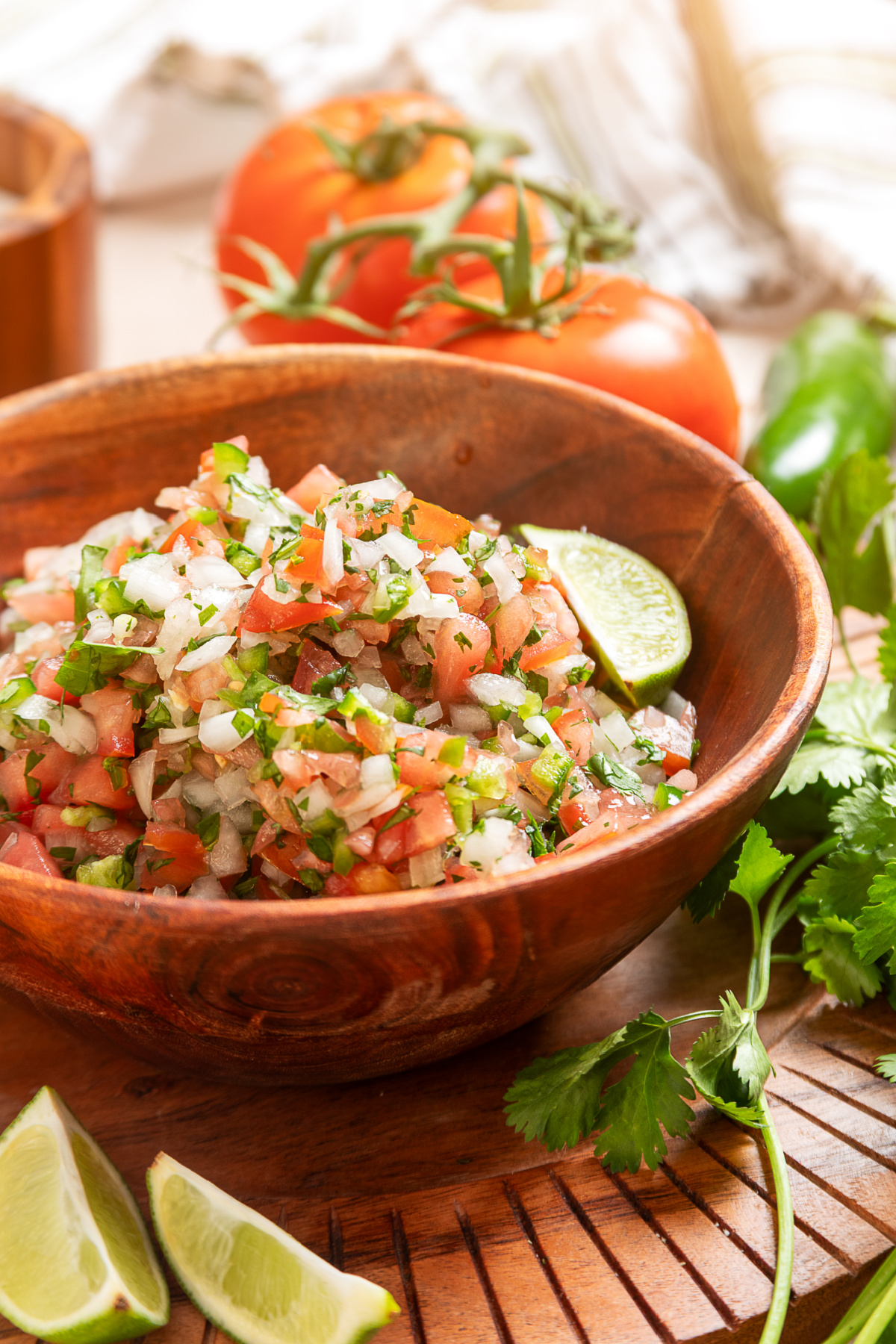
- Store the pico de gallo in an airtight container in the refrigerator for up to 3 days. I prefer glass because plastic containers tend to absorb the onion smell.
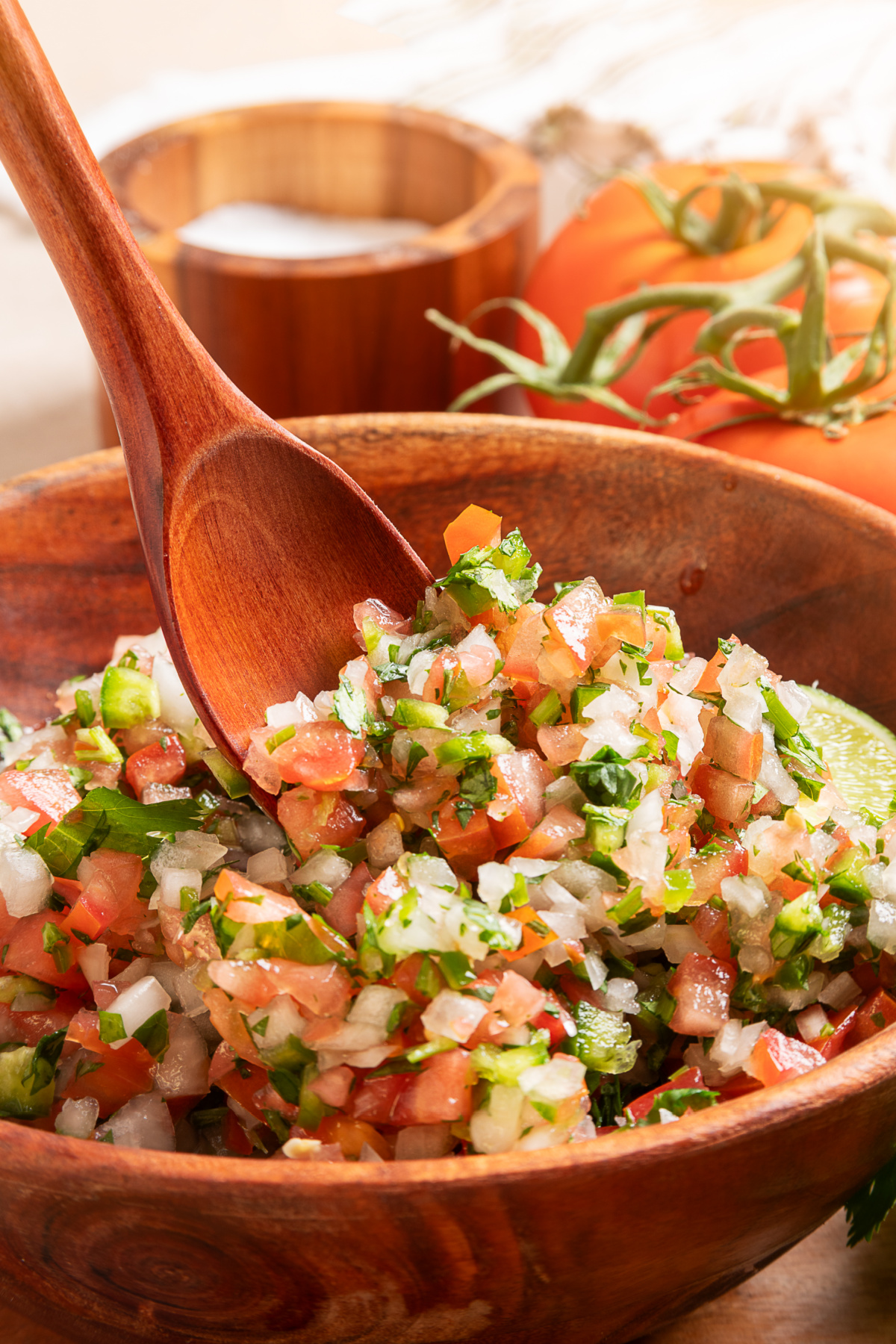
- The tomatoes will keep releasing liquid as the pico sits, so give everything a quick stir before serving.
- Pico tastes best before the tomatoes completely fall under the control of the lime and salt.
FAQs
- Why does pico de gallo get watery?
Tomatoes naturally start breaking down once the lime juice and salt are introduced. Removing the seeds and excess tomato gel first helps the pico hold its texture longer. - Do jalapeño seeds make pico spicy?
Not as much as you would think. The seeds do not produce capsaicin and are fairly mild. They only taste spicy because they sit pressed against the hot ribs and absorb some of the oil. The heat comes from the ribs where the capsaicin is produced and stored. - What tomatoes work best for pico de gallo?
Firm ripe tomatoes work best because they stay together better after mixing with lime juice and salt. - Can pico de gallo be made ahead?
Yes, although it tastes freshest the first day. Give it a quick stir before serving since the tomatoes naturally soften as it sits. - Is pico de gallo the same as salsa?
Not really. Pico de gallo stays more textured because the ingredients are diced instead of blended smooth. - Why do restaurants seed tomatoes for pico de gallo?
Because seeded tomatoes hold together better once the lime juice and salt are added.
From My Kitchen Notes
Some observations from my kitchen.
- There were probably easier ways to build character than convincing your child she just ate the face of a hornworm in homemade pico de gallo, but the 1970s operated under different parental management.
- I will still inspect tomato plants like something devastating might be hiding underneath the leaves.
- Some people camouflage themselves, just like tomato hornworms.
- I learned very early that fear becomes much easier to approach when somebody walks into it with you.
- I still think tomato hornworms are one of the most upsetting garden creatures on earth.
- It’s the fake leaf camouflage, the giant segmented body, the little horn, the weird gripping feet and the way you suddenly notice one after staring directly at the plant for five minutes. It’s sinister behavior from a green, goo-producing worm.
- Because pico is chunky, my childhood imagination easily believed there were visible caterpillar pieces in it.
- The idea of being terrified of something, but also loving the ritual around facing the horrifying tomato monsters together tells me something about being human. Scared alone, brave together.
- There’s a very specific kind of trust involved in eating something somebody else chopped for you.
- Some people would rather create an elaborate joke than say one vulnerable thing directly.
- It’s kind of disturbing how something can blend perfectly into the environment while actively destroying the entire plant.
- The phrase “I made this for you” carries an unreasonable amount of power.
- Silent agricultural assassins that somehow regenerate no matter how many you remove.
- It’s fascinating how the childhood brain immediately believes internalizing chopped parasites is a real possibility and not just your dad generating comedy.
- The phrase “we got them all yesterday” never once held up in terms of finding tomato worms.
- I think some things become part of your internal landscape before you consciously realize they live there.
- There are moments that rearrange you so gently nobody else notices when it happens.
- I remain unconvinced that hornworms operate under normal biological rules. They are freaks.
- Some relationships begin the exact same way hornworms appear. One day there’s nothing there and the next day something enormous is attached to your entire life.
- People underestimate how revealing shared food can become.
- I’ve seen enough human behavior at this point to know consistency and inconsistency usually means something.
- Sometimes the thing destroying your peace is also the thing making you walk outside every evening hoping to see it again.
- I still wash tomatoes like someone who once believed she accidentally ate the faces of chopped-up caterpillars. I’m okay now.
More Things To Pile Pico Onto
- Street Corn Chicken Rice Bowls – grilled chicken, charred corn, creamy lime sauce.
- Easy Fried Tortilla Chips – crisp, golden, and made for salsa.
- Chipotle Beef Tostadas – crunchy tostadas loaded with smoky beef.
- Slow Cooker Shredded Taco Chicken – juicy shredded chicken for tacos, bowls, and nachos.
- Sheet Pan Chicken Nachos – loaded nachos with creamy lime drizzle.
This post may contain affiliate links. Please read my disclosure policy.
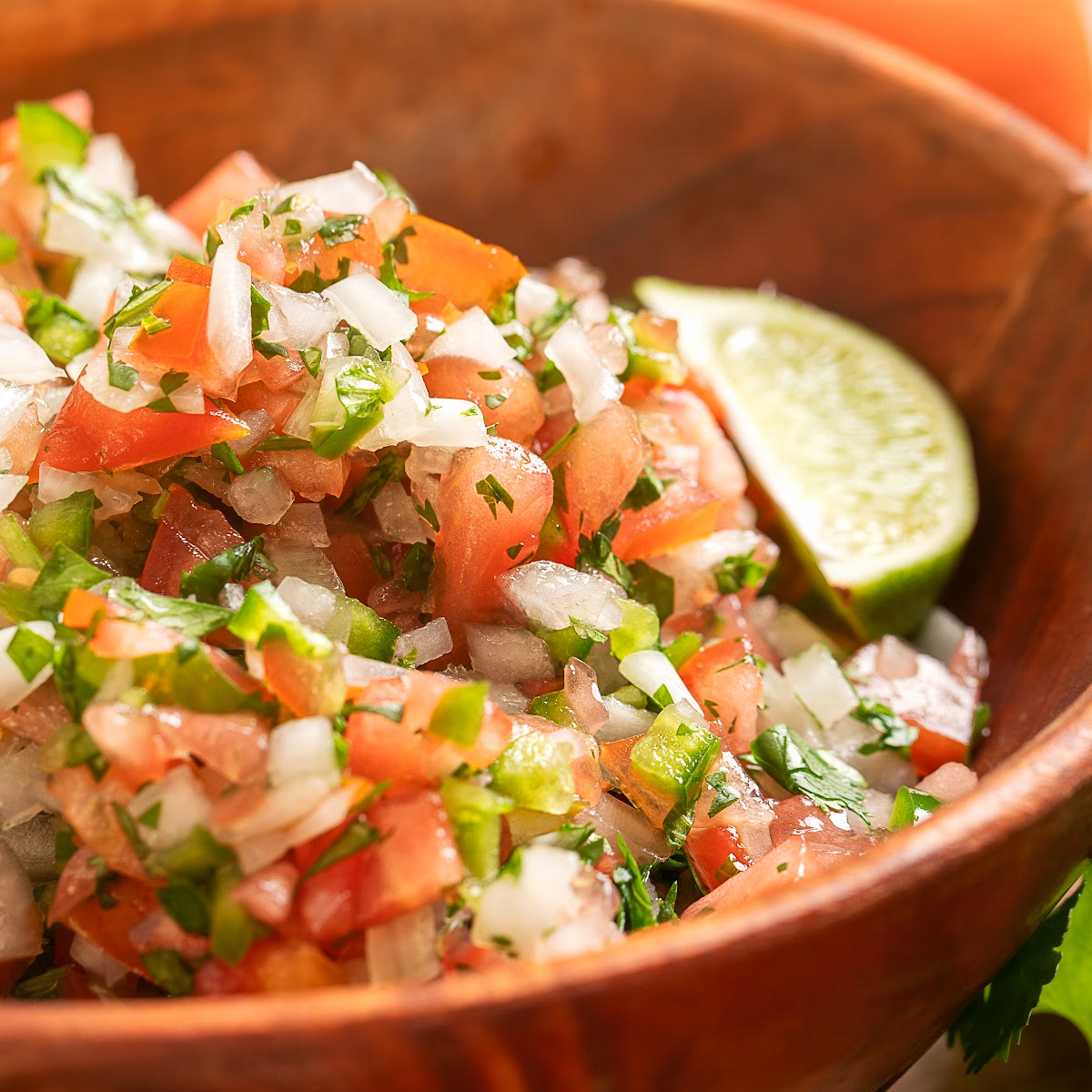
Homemade Pico de Gallo
Equipment
- Cutting board For prepping the vegetables.
- mixing bowls For combining the pico de gallo.
- Citrus Juicer Makes juicing the limes easier.
Ingredients
- 1 cup (150 g) finely diced white onion
- 1 large (20 g) jalapeño finely diced, seeds and ribs removed for milder pico
- 2 cloves garlic minced
- 1 lb (454 g) ripe red tomatoes diced and seeded
- ½ cup (15 g) chopped fresh cilantro
- ¼ cup (60 ml) fresh lime juice
- ½ tsp (3 g) sea salt plus more to taste
Instructions
- Add the diced white onion, jalapeño, garlic, tomatoes, and cilantro to a large mixing bowl.1 cup (150 g) finely diced white onion, 1 large (20 g) jalapeño, 2 cloves garlic, 1 lb (454 g) ripe red tomatoes, ½ cup (15 g) chopped fresh cilantro
- Pour in the fresh lime juice and sprinkle with sea salt. Gently toss until evenly combined and the tomatoes are fully coated.¼ cup (60 ml) fresh lime juice, ½ tsp (3 g) sea salt
- Taste and adjust with additional salt if needed. For the best flavor and texture, refrigerate the pico de gallo for 15–30 minutes before serving so the lime juice, onion, jalapeño, garlic, and salt have time to combine wih the tomatoes without making the salsa watery.
- Serve immediately with tortilla chips, tacos, burrito bowls, grilled meats, or scrambled eggs.
Notes
- Use ripe but firm tomatoes for the best texture. Softer tomatoes release excess liquid more quickly and can make the pico watery.
- Removing the tomato seeds helps the pico de gallo stay chunky instead of becoming soupy as it sits.
- Most of the jalapeño heat comes from the ribs rather than the seeds. Remove the ribs for a milder pico or leave them in for more heat.
- Store leftovers in an airtight container in the refrigerator for up to 3 days. Stir before serving since the tomatoes will naturally release liquid over time.
Nutrition
Have you made this Homemade Pico de Gallo? I’d love to hear how it turned out – leave a comment below and let me know.
As an Amazon Associate and member of other affiliate programs, I earn from qualifying purchases.
Adella says
As a Texan, I appreciate an excellent Pico de Gallo! Your recipe looks spot on–and I WILL be trying it soon. The main reason for this comment is because you had me howling with laughter reading about you and those gross horn worms. I feel the same way!!! And yes, I am primarily a “let thiings live” person, but when one of those hornworms ate $20 worth of peppers overnight, I promptly dispatched it–after using chopsticks to try to get it off the nub of the plant. Green goo out the wazoo!!!
You want to rant with me about Squash Bugs?
Thanks for making my afternoon one of gory delight!!! You validate me!!! My cats have long vacated this room because Mom was making funny noises and wet stuff was coming out of her eyes!!!!
Cathy Pollak says
I kind of love that this might be a universal experience. They are disgusting little creepsters. The chopsticks thing is a great idea, I used my fingers.
And as far as me validating you, thank you for meeting my energy at the exact same frequency with your own garden trauma, wazoo fluids, pest warfare and vegetable-based suffering. People like you are rare.
Have a great day.
Larry says
So I put this together and served with tacos last night and it was excellent and very simple to make. I liked the garlic addition. I had never put that in my pico before.
Susie says
I loved this. This is the first time I ever seeded the tomatoes, which yes, duh, that made it so much better. We ate it with chips and put lots on our tacos. Thank you.