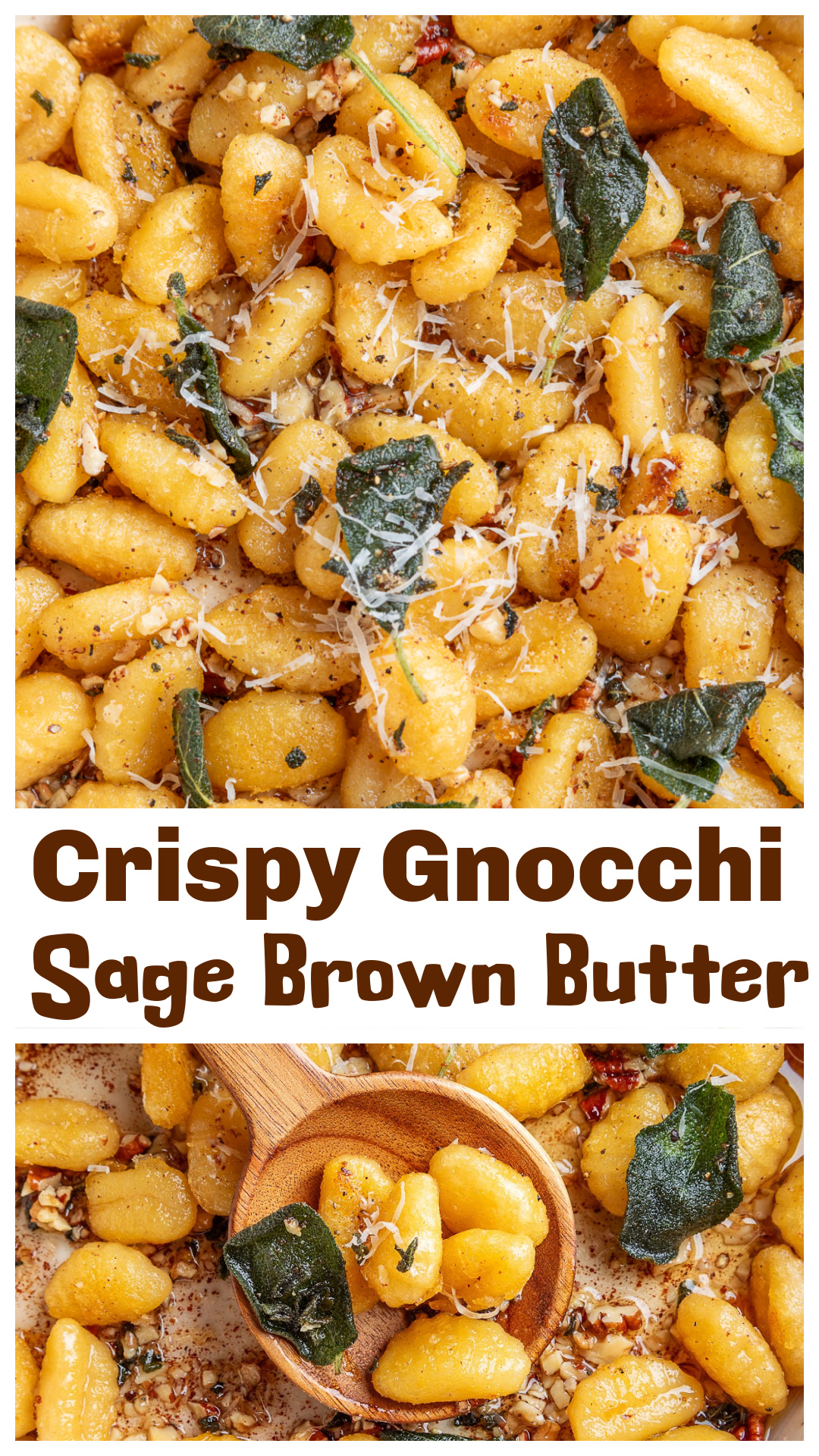
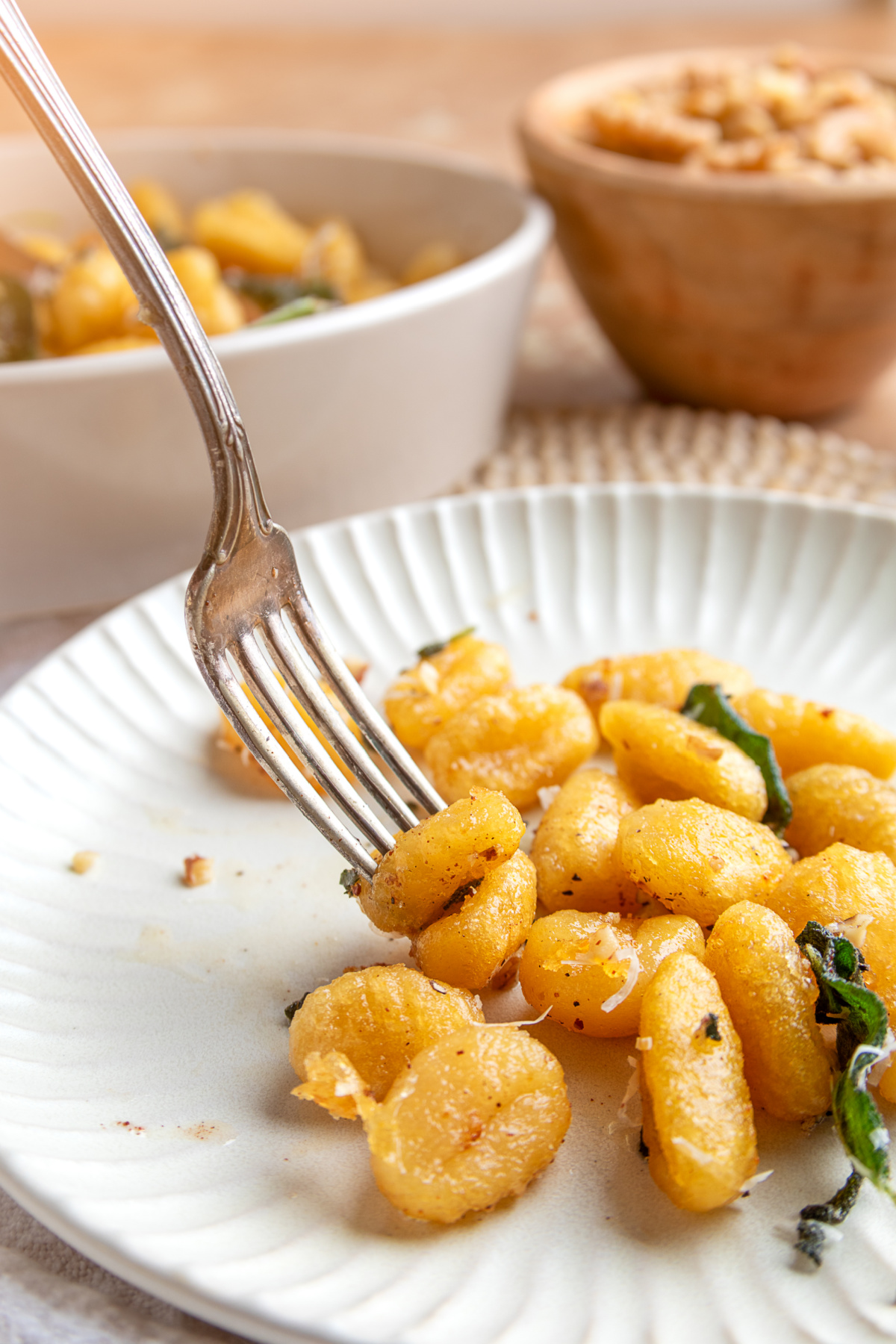
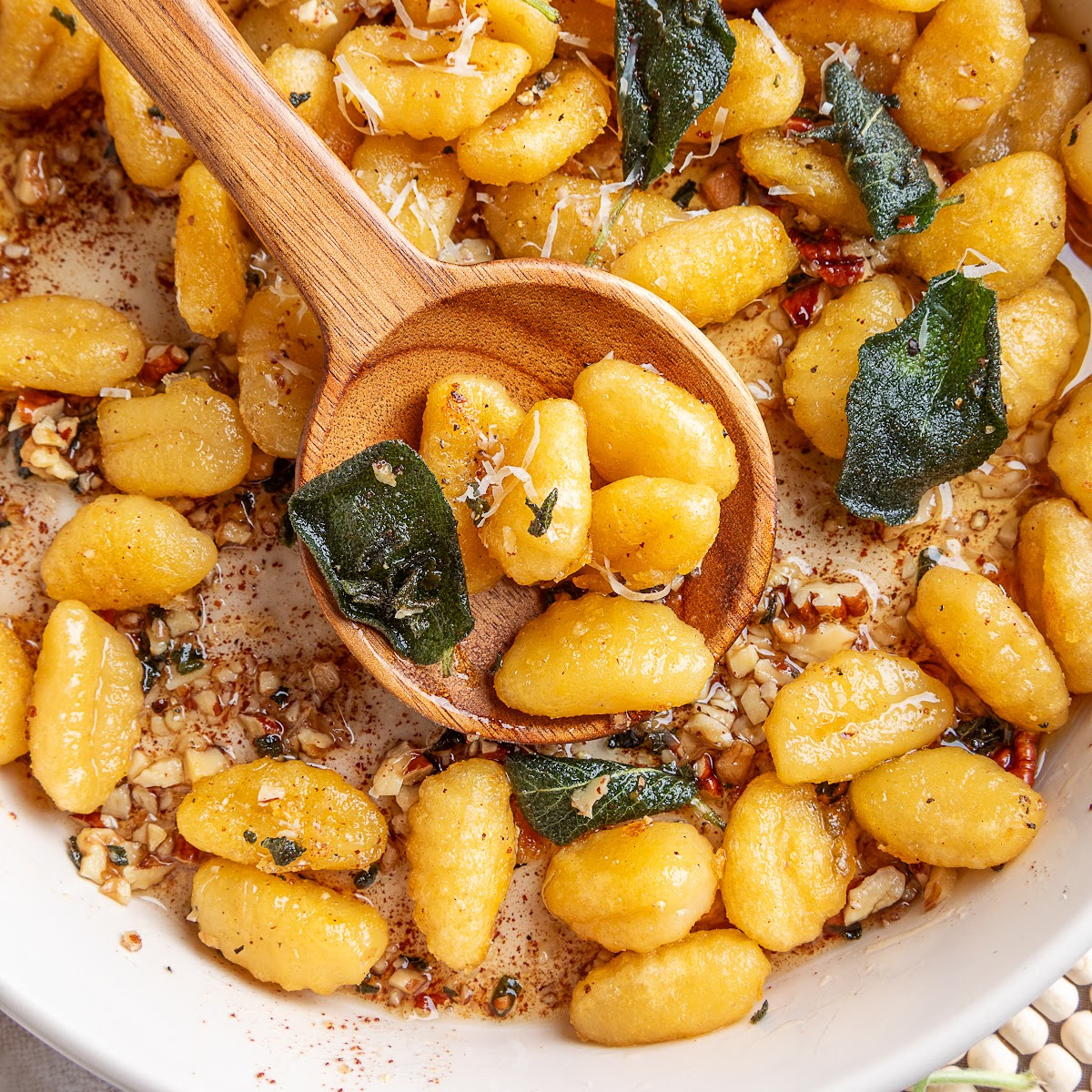
Crispy gnocchi with sage brown butter starts with tender potato gnocchi pan-fried until it’s golden, then finished with garlic, nutmeg, toasted walnuts and pecans, Parmesan and crisp sage leaves. Browning the gnocchi, nuts and butter separately gives each one the time it needs before the brown butter is spooned all over the finished dish.
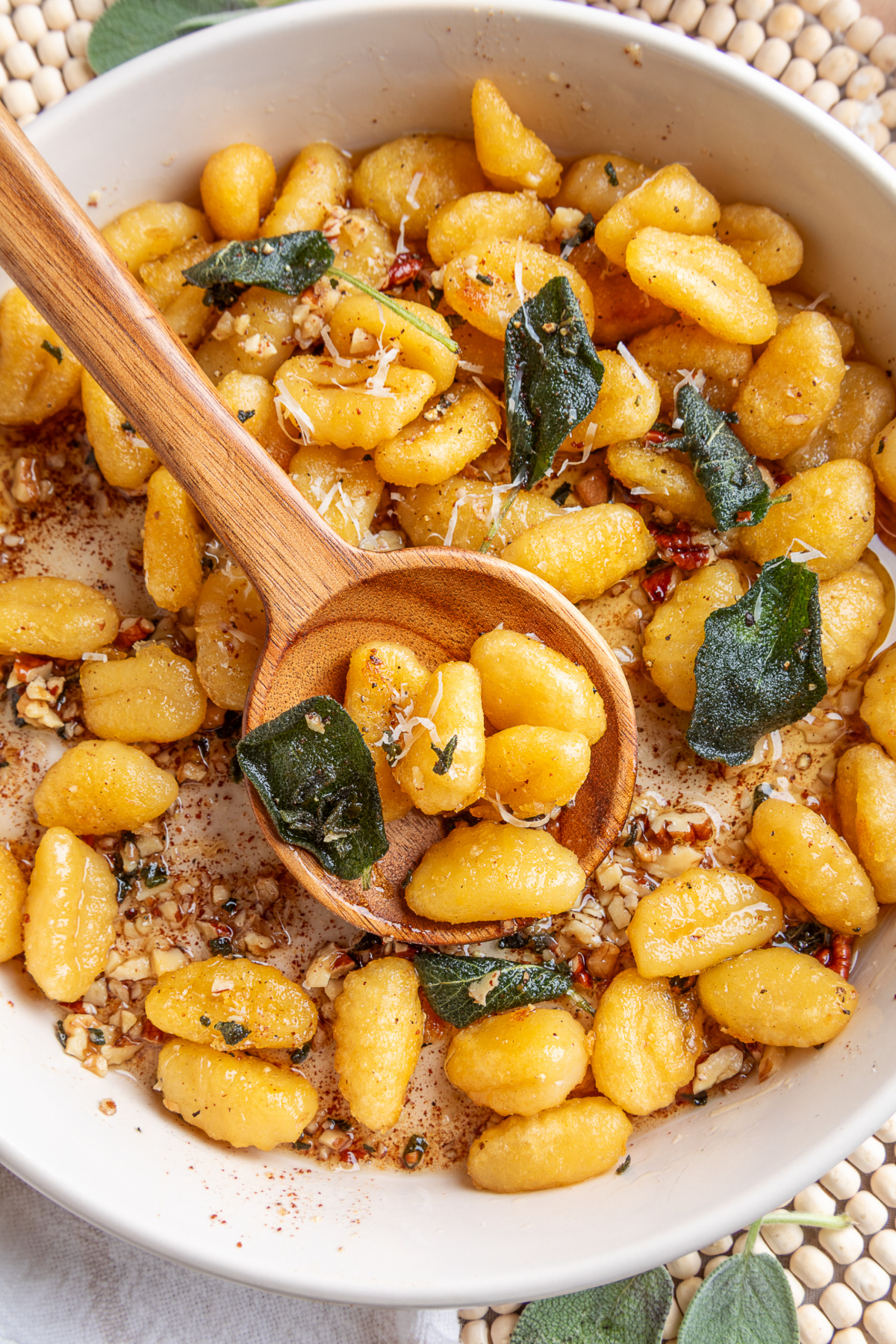
Pan-Fried Potato Gnocchi with Brown Butter, Sage and Toasted Nuts
This crispy gnocchi with sage brown butter is one of the dinners that makes me unofficially decide fall has arrived, even if the calendar says otherwise. Yes, it’s warm outside, and tomatoes and late summer fruit are still everywhere, but I don’t really care. The minute I put brown butter in a skillet with sage, I’m mentally done with summer. Brown butter and sage are two of my favorite cooler weather flavors, especially once the sun is hanging a tiny bit lower in the sky.
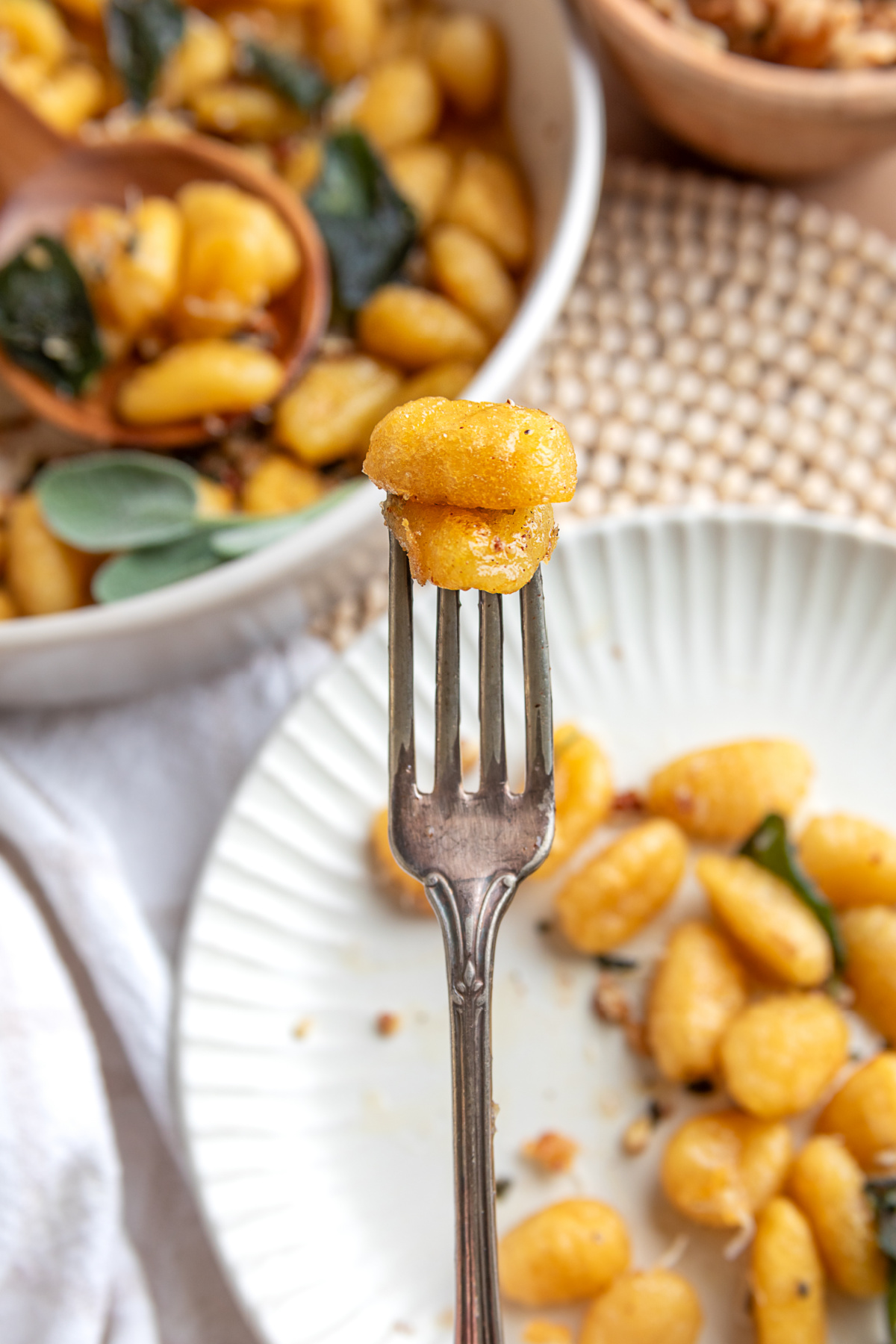
I make gnocchi a bunch of different ways, but this is the one I want when dinner needs to happen without spending a good portion of the night on it. I like to brown my gnocchi first because I want the golden sides and slight crispness before I spoon anything over them. The centers stay soft and tender this way. The browning is important once the brown butter goes over them because I want the pan-fried texture under the sauce.
There’s also something about potato gnocchi that makes me think of my grandmother’s pierogi, even though they come from completely different culinary worlds. I think it’s the potato dumpling, and even more than that, the way she would fry her pierogi in butter until the outside was very brown. Gnocchi is hardly pierogi, but the combo of soft potato inside and buttery, browned dough reminds me of hers.
And then there’s the sage, which is the bigest reason I love this recipe as much as I do. I chop some of it into the butter, then fry whole leaves until they’re crisp, which means I eat a couple before the rest ever make it onto the plate. Try it. I toast the walnuts and pecans separately, because I want their flavor to match what the butter is doing without relying on the butter to toast them. Garlic and nutmeg go into the brown butter at the end, followed by Parm and black pepper once the gnocchi is ready to serve.
By the time I’m craving anything even remotely fall-ish, this recipe is usually where my mind goes. I’ll never complain about a skillet of browned gnocchi, enough fried sage, and a decent amount of brown butter on top is pretty much all I need during the ber-months.
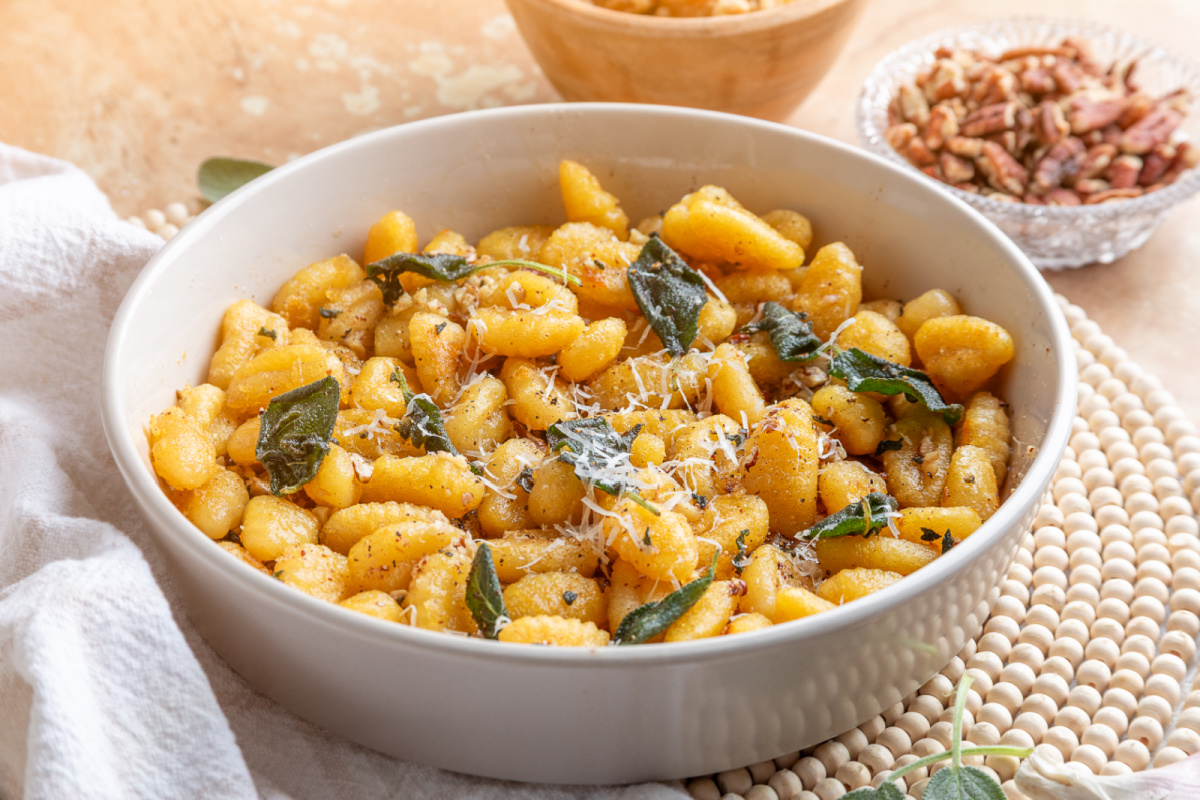
The Decisions Behind This Recipe
- I brown the gnocchi, toast the walnuts and pecans, and brown the butter separately because each one needs different timing. The gnocchi needs uninterrupted contact with the pan to develop color and the nuts only require a short toast. The butter needs absolute attention once the milk solids begin to brown. Keeping them separate means I can stop each one when it’s ready.
- I divide the sage before it goes into the butter because the chopped and whole leaves give different results. The chopped sage goes into the brown butter, while the whole leaves fry until they’re brittle and crisp. Those whole leaves aren’t decoration. They’re meant to be eaten with the gnocchi and toasted nuts. They’re so good. And my favorite.
- I wait until the butter is browned and off the heat before adding the grated garlic. Garlic paste has a lot of surface area that it can burn quickly, while the residual heat of the brown butter is enough to soften its raw flavor and distribute it through the sauce. Grating it works out really well for this recipe from a flavor perspective.
- The nutmeg goes in after browning for a different reason. I’m watching the milk solids on the bottom of the pan to tell me when the butter is ready, and adding nutmeg earlier puts additional brown specks in the pan when I’m trying to see that color. I use only 1/8 teaspoon, enough to season the brown butter without making the sauce taste primarily of nutmeg. The visual clues are everything when making this.
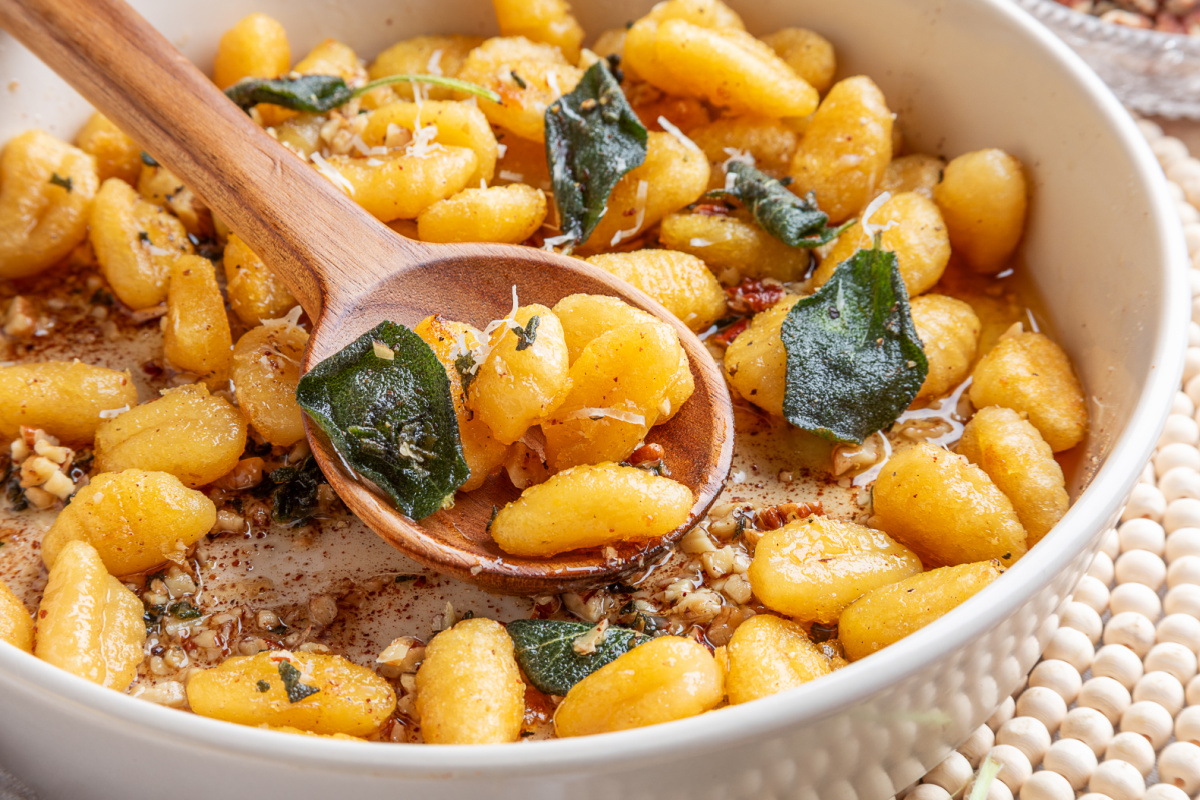
Ingredients
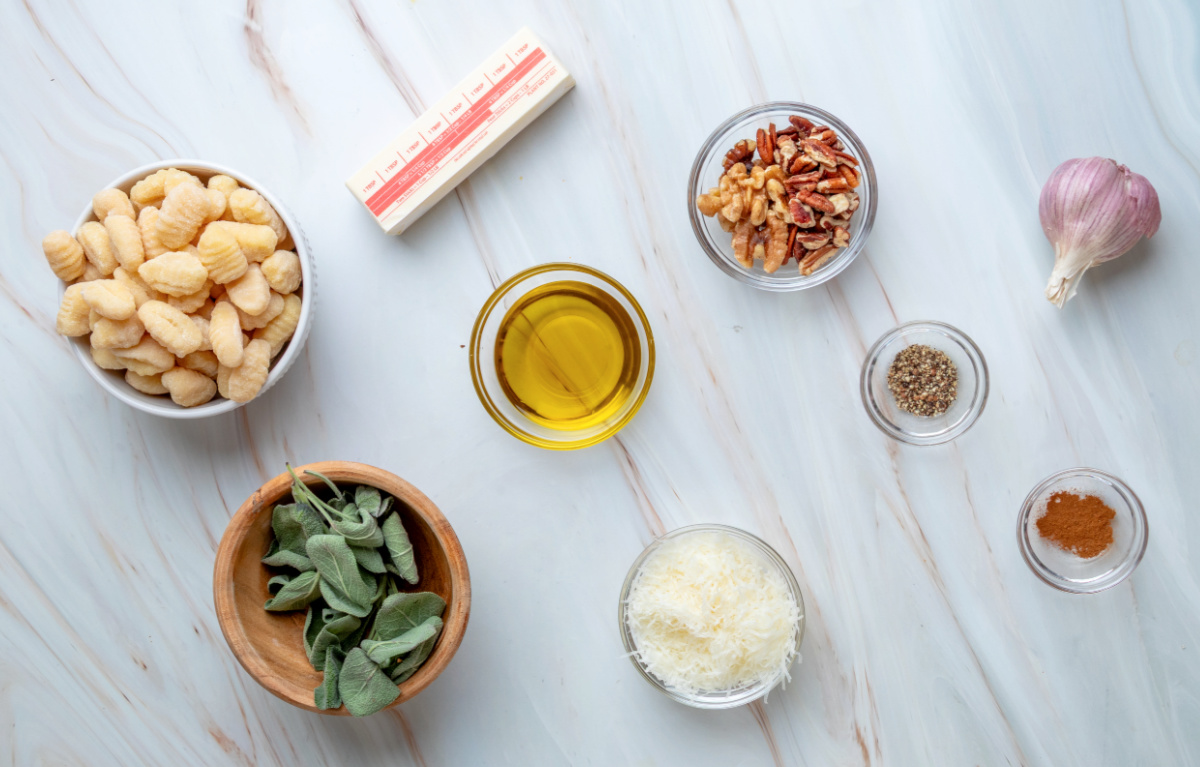
- Potato gnocchi – I use a 16-ounce package of potato gnocchi because this isn’t one of those times when I feel the need to make gnocchi from scratch. Refrigerated or shelf-stable potato gnocchi are both fine, so use whichever you normally buy. Can you make your own? Yes. But store-bought keeps this in the weeknight dinner category.
- Olive oil – You only need a small amount for browning the gnocchi. I usually start with 1/2 teaspoon and add more between batches if the pan needs it.
- Salted butter – This is what becomes the brown butter sauce, so use one you like.
- Fresh sage – Definitely fresh for this recipe. You need enough leaves to chop some into the butter and leave the rest whole for frying, so dried sage isn’t a substitute.
- Ground nutmeg – There’s only 1/8 teaspoon in the entire sauce. I want the nutmeg in the background with the brown butter and sage without making the finished dish taste distinctly of nutmeg.
- Walnuts – Finely chopped and toasted. I love walnuts with sage and brown butter because of their earthy flavor, and to me they make the dish feel more like fall than pine nuts ever could.
- Pecans – I use these with the walnuts because they’re sweeter and more buttery. You can use all walnuts or all pecans if that’s what you have, but I really love having both.
- Fresh garlic – I grate it into a paste so there aren’t bigger pieces of garlic scattered through the gnocchi. One teaspoon is enough because the garlic is going directly into the brown butter.
- Parmesan Cheese – Freshly grated is best, and I use about 1/4 cup over the finished gnocchi. I want Parmesan on top, but this is still very much a brown butter sauce instead of the cheesy sauce I use in my gnocchi mac and cheese.
- Freshly cracked black pepper – Use as much as you like. I’m pretty liberal with it because black pepper with brown butter, sage and Parmesan is very hard to turn down.
How to Make Crispy Gnocchi with Sage Brown Butter
Find the complete printable recipe with measurements in the recipe card at the BOTTOM OF THE POST.
- Step One (boil and dry the gnocchi)
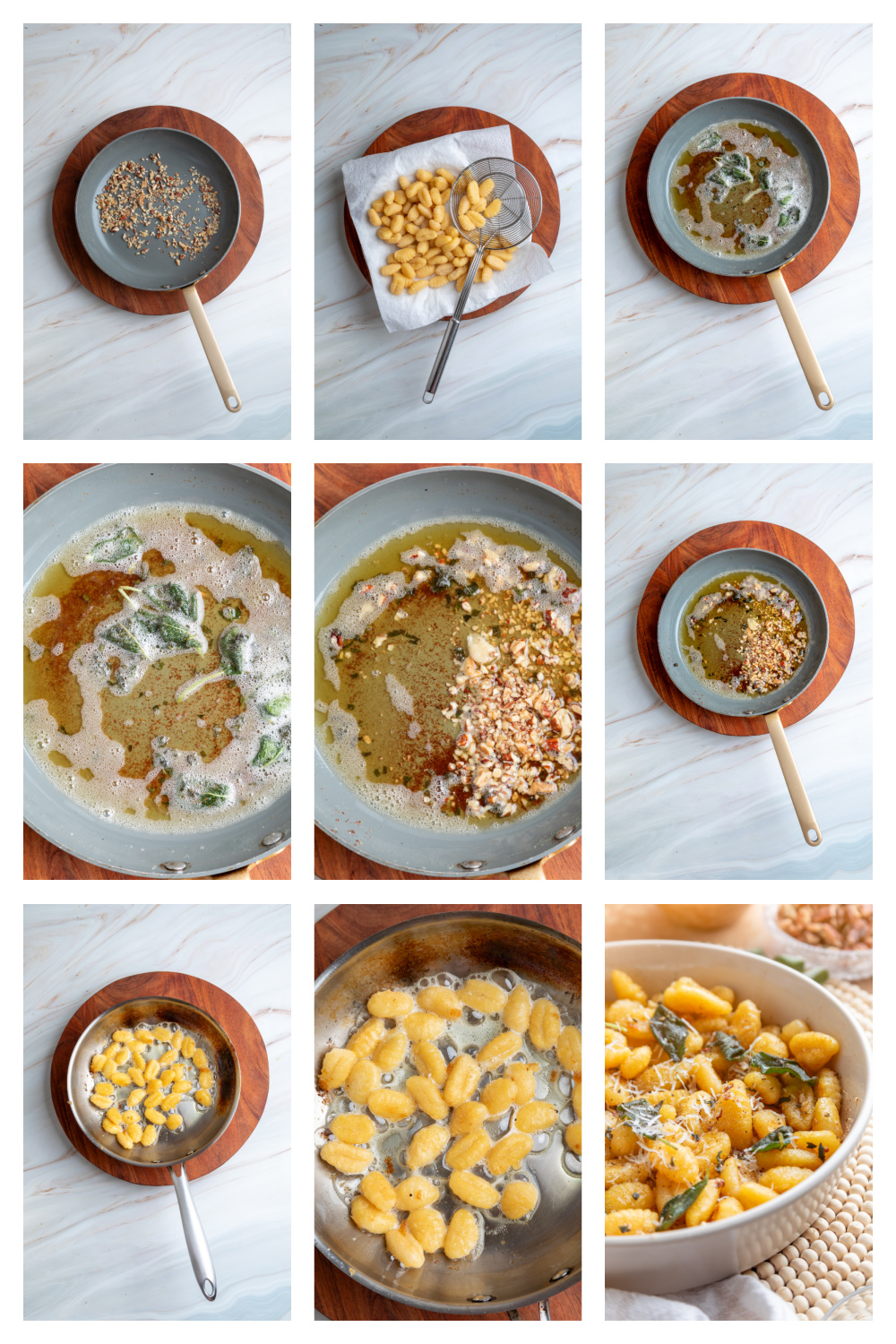
Bring a large pot of salted water to a boil, add the gnocchi and cook for 2-3 minutes, or until they float to the top. Drain them really well, then spread them out on a paper towel-lined plate and pat away as much moisture as you can. They’re going into a hot skillet next, and the drier the surface is, the better chance they have of turning golden instead of steaming in the pan. - Step Two (get the sage and nuts ready)
Finely chop 5 of the sage leaves and leave the other 10 whole. Add the walnuts and pecans to a dry skillet over medium heat and toast them for 1-2 minutes, stirring often, until they smell really good and have darkened slightly. Get them out of the pan and into a bowl as soon as they’re done because nuts can go from toasted to burned while you’re standing there thinking about something else. - Step Three (crisp the gnocchi)
Heat 1/2 teaspoon olive oil in a large sauté pan over medium heat, then add the gnocchi in a single layer. Try not to mess with them too much at first. Give them some time in the hot pan so they can brown, then turn them and keep going for about 5-7 minutes, until you have good color on several sides. If your pan is not big enough, do this in batches and add more olive oil if you need it. Once they’re browned on several sides, take the pan off the heat and leave them alone while you make the butter. - Step Four (make the sage brown butter)
Add the cubed butter to a light-colored sauté pan over medium heat and stir as it melts and starts to foam, then add both the chopped sage and the whole leaves. Keep stirring and watch the bottom of the pan as the foam begins to subside and golden-brown flecks appear in the butter. Once you see those flecks, everything moves pretty fast. When the butter smells nutty and toasted, pull it off the heat. If the flecks turn very dark brown or black, you’ve gone too far, and sadly, that butter needs to go because there’s no fixing burned brown butter. - Step Five (finish everything)
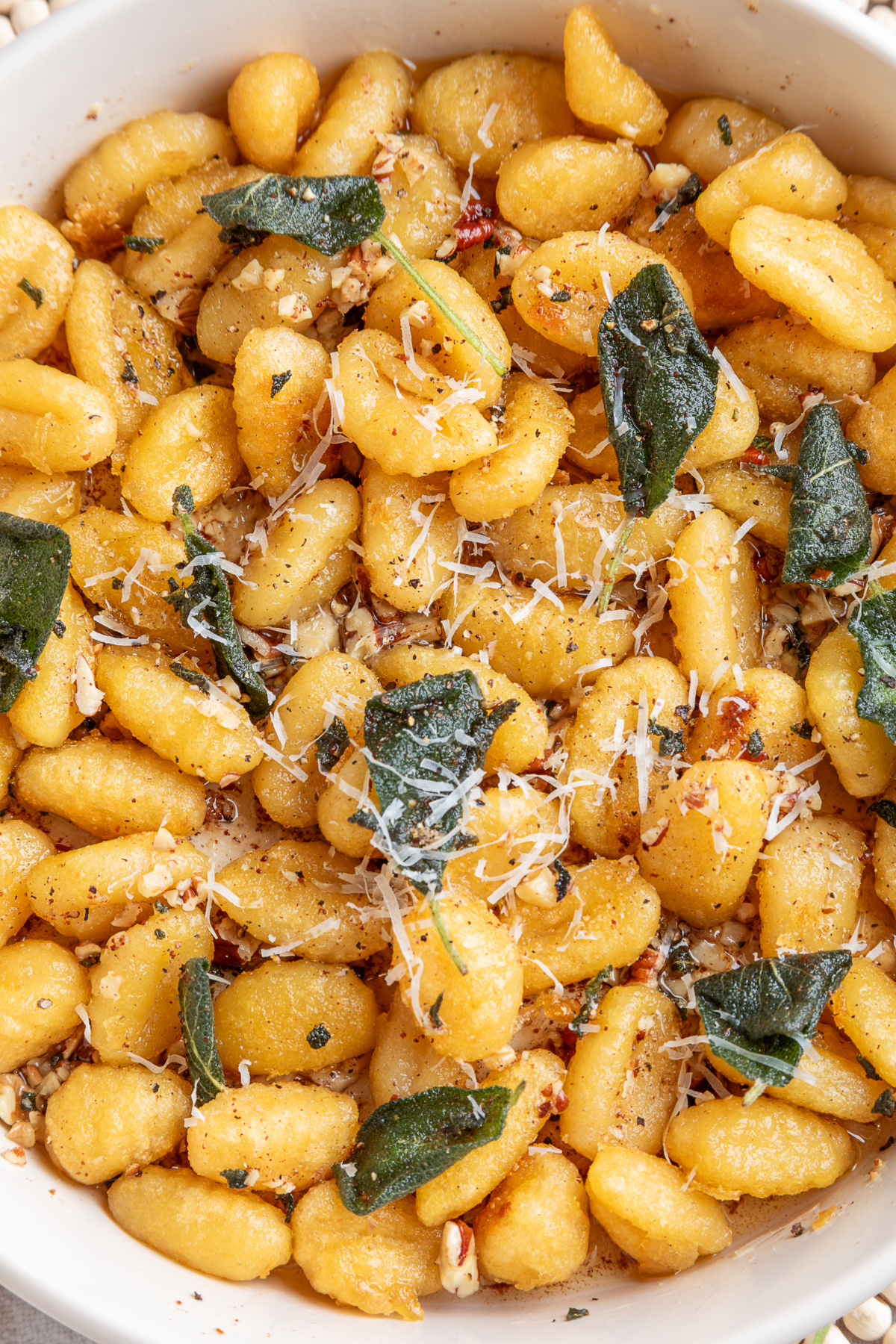
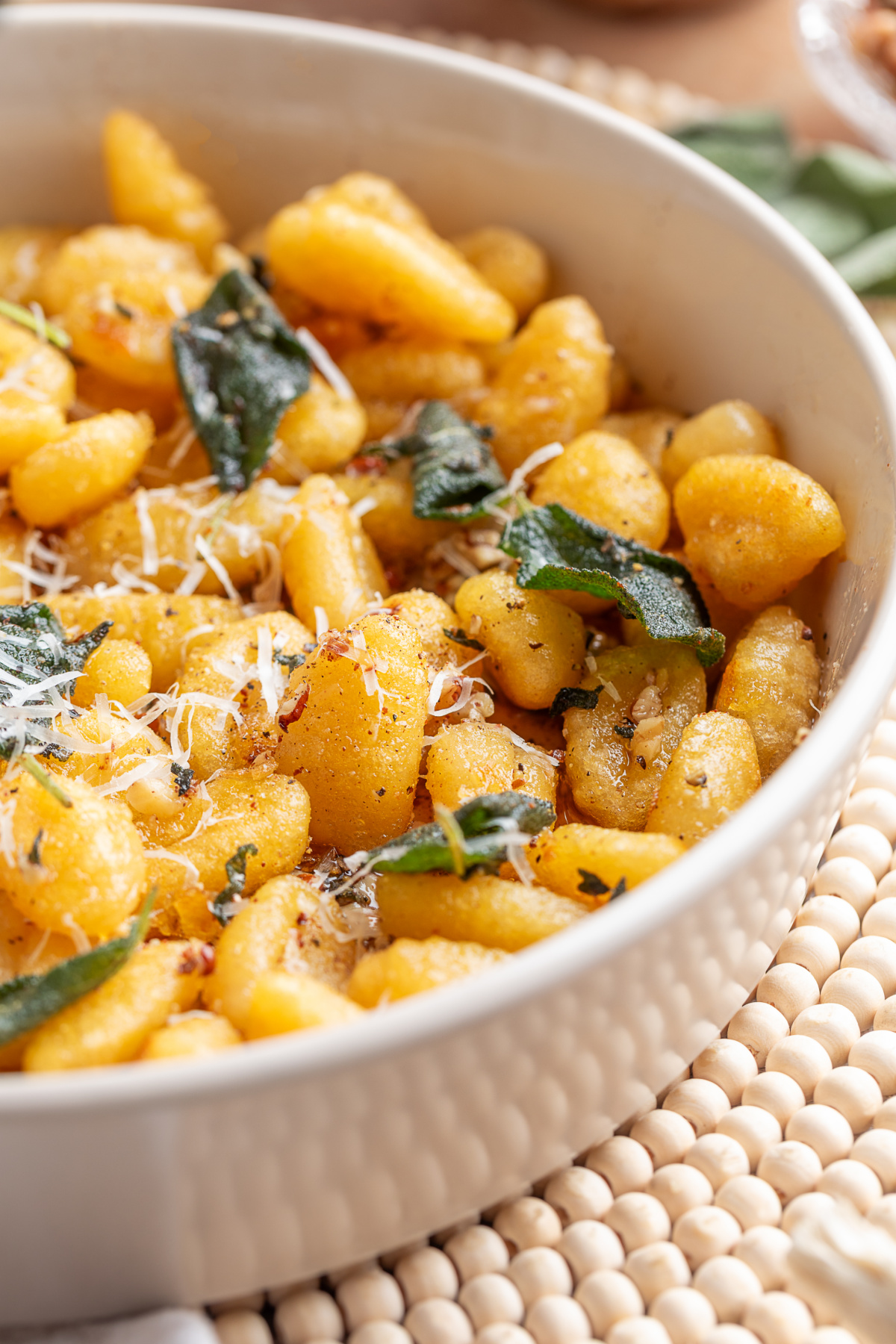
Stir the nutmeg into the brown butter, pull out the whole fried sage leaves and set them aside for the top, then stir in the grated garlic, walnuts and pecans. The garlic goes in while the butter is still hot but off the heat because it’s grated so finely that the residual heat is enough to take away its rawness without risking burned garlic. Transfer the crispy gnocchi to a serving dish, spoon all the sage brown butter and the toasted nuts over the top, then finish with the fried sage leaves, Parmesan and lots of cracked black pepper.
Recipe Tips
- Make sure the gnocchi is really well dried after boiling before it goes into the skillet. Water left on the surface works against browning, but it also makes the oil spit, which is another good reason to spend an extra minute with the paper towels.
- Give the gnocchi enough room in the pan that most of the pieces can make direct contact with the skillet. If that means two batches, it’s a better choice than crowding them into one.
- Use a light-colored pan for the brown butter if you have one. Brown butter is better judged by color and smell than by a timer, and a pale pan makes the milk solids on the bottom much easier to see.
- Don’t walk away from the butter once the milk solids begin changing color. The heat in the pan doesn’t disappear the second you remove it from the burner, which is why I pull mine as soon as the flecks are golden brown and the butter smells toasted.
- Once the walnuts and pecans smell toasted, get them out of the skillet and into a bowl. Leaving them in the hot pan while you move on to the gnocchi can continue cooking them past the point you wanted.
Storage and Reheating
- Store leftovers in an airtight container in the refrigerator for 3 to 4 days. The gnocchi will lose a lot of its crisp exterior as it sits in the brown butter, so leftovers are still very good, but don’t expect the same texture you had when it first came out of the skillet.
- For reheating, I like a skillet over the microwave. Warm the gnocchi over moderate heat so the outside has a chance to brown again, but keep the heat under control because the butter, garlic, sage and nuts are already cooked and can burn. The microwave works if you’re in a hurry, but the gnocchi will be softer.
- I would not freeze the finished dish. Freezing and thawing works against the tender-inside, crisp-outside texture that makes this gnocchi worth pan-frying in the first place.
FAQs
- Do I have to boil gnocchi before pan-frying it?
For this recipe, yes. I want the gnocchi cooked and tender first, then I use the skillet specifically for browning the outside. Some packaged gnocchi can be prepared without boiling, but that isn’t the method I use for this recipe. - Can I use refrigerated gnocchi instead of shelf-stable gnocchi?
Yes. I use packaged potato gnocchi, and either refrigerated or shelf-stable is fine. Follow the package directions for boiling if they differ from the timing in the recipe, then drain and dry the gnocchi well before browning. - Can I use gluten-free gnocchi?
Yes, although I would expect some variation in texture and browning between brands. Follow the package directions for boiling, then drain and dry the gnocchi well before it goes into the skillet. - Can I use unsalted butter?
Yes. Taste the finished dish and add salt as needed. Parmesan adds salt at the end too, so I would wait until after it goes on before deciding how much additional salt the gnocchi needs. - How do I know when brown butter is done?
The butter will melt, foam and then develop golden-brown flecks on the bottom of the pan. It should smell nutty and toasted. Once the milk solids turn very dark brown or black, the butter has burned. - Why did my gnocchi not get crispy?
The first things I would look at are surface moisture and pan contact. Gnocchi that’s still wet can steam, while an overcrowded pan or constant turning keeps the pieces from spending enough uninterrupted time in the hot skillet to brown. - Can I use dried sage instead of fresh sage?
I wouldn’t for this one. Fresh sage is doing two things, including the whole leaves that get fried until crisp, so dried sage really cannot give you the same result. - Can I make Crispy Gnocchi with Sage Brown Butter ahead of time?
You can prep parts of it ahead, but I would save crisping the gnocchi and browning the butter until close to serving. The walnuts and pecans can be toasted and the sage can be chopped earlier, but once the browned gnocchi sits in the sauce, the exterior begins to soften.
From My Kitchen Notes
Small observations from the margins.
- Some things are better once they’ve been in the heat.
- You can ruin a good thing by trying to improve it past the point where it was already perfect.
- There’s a point where giving something more time stops helping it. Knowing when you’ve reached it can be harder than getting there.
- A soft center doesn’t need a soft exterior.
- Does everything need a sauce thick enough to hide in? I don’t think so.
- Sometimes, everything that needs time, doesn’t always need distance.
- Holding back can be useful. Too much and dinner gets cold.
- I’ve found that giving everything the same amount of time usually means at least one thing gets more than it needed.
- I don’t mind watching something closely when there’s a small window for getting it right.
- There comes a point when what hasn’t happened is saying more that what has.
When Brown Butter Changes the Recipe
- Gnocchi with Burrata, Pesto, and Brown Butter – Burrata, pesto, brown butter, toasty nuts.
- Roasted Garlic Pumpkin Soup with Brown Butter – Pumpkin, roasted garlic, brown butter, fall spices.
- Brown Butter Carrot Bundt Cake – Brown butter, warm spices, cream cheese frosting.
- Brown Butter Peach Coffee Cake Muffins – Fresh peaches, brown butter, cinnamon streusel, vanilla glaze.
- Cabernet Sauvignon Brown Butter Brownies – Red wine, brown butter, dense fudgy chocolate.
This post may contain affiliate links. Please read my disclosure policy.
Crispy Gnocchi with Sage Brown Butter
Equipment
- large pot For boiling the gnocchi with enough water to cook freely.
- Colander For draining the cooked gnocchi before drying.
- paper towels Removing surface moisture helps the gnocchi brown in the pan instead of steam.
- large sauté pan For pan-frying the gnocchi in a single layer. A large surface area also makes crowding less likely.
- light-colored sauté pan or skillet. For browning the butter. The pale interior makes it much easier to see the milk solids turn golden brown before they burn.
- skillet (small). For toasting the walnuts and pecans separately.
Ingredients
Gnocchi:
- 1 (16 oz / 454 g) package potato gnocchi
- ½ - 1 tsp (2.5 - 5 ml) olive oil plus more as needed
Sage Brown Butter Sauce:
- 15 fresh sage leaves
- 2 tbsps (15 g) finely chopped walnuts
- 2 tbsps (14 g) finely chopped pecans
- ½ cup (113 g) salted butter cubed
- ⅛ tsp ground nutmeg
- 1 clove, fresh garlic grated into a paste
Toppings:
Instructions
- Bring 4 quarts (3.8 L) of salted water to a rolling boil. Add the gnocchi and cook for 2-3 minutes, or until they float to the surface. Drain well, then transfer the gnocchi to a paper towel-lined plate and pat dry. Removing the surface moisture helps the gnocchi brown instead of steam in the pan.1 (16 oz / 454 g) package potato gnocchi
- Finely chop 5 sage leaves, leaving the remaining 10 leaves whole. Set aside.15 fresh sage leaves
- Add the walnuts and pecans to a dry skillet over medium heat. Toast for 1-2 minutes, stirring frequently, until lightly toasted and fragrant. Transfer to a small bowl and set aside.2 tbsps (15 g) finely chopped walnuts, 2 tbsps (14 g) finely chopped pecans
- Heat ½ teaspoon (2.5 mL) olive oil in a large sauté pan over medium heat. Add the gnocchi in a single layer without crowding the pan, working in batches if necessary. Cook for 5-7 minutes, allowing the gnocchi time against the hot pan before turning, until browned on multiple sides. Add additional olive oil as needed. Remove from the heat and set aside while preparing the brown butter.½ - 1 tsp (2.5 - 5 ml) olive oil
- Add the cubed butter to a light-colored sauté pan over medium heat. Cook, stirring frequently, as the butter melts and begins to foam. Add the chopped and whole sage leaves and continue cooking as the sage fries and the milk solids begin to brown.½ cup (113 g) salted butter
- Watch the bottom of the pan closely as golden-brown flecks appear and the butter develops a toasted, nutty aroma. Remove the pan from the heat as soon as the milk solids are golden brown. Very dark brown or black flecks mean the butter has burned and should be remade.
- Immediately stir in the nutmeg. Remove the whole fried sage leaves and set them aside for serving.⅛ tsp ground nutmeg
- Stir the grated garlic and toasted walnuts and pecans into the hot brown butter off the heat. The residual heat is enough for the finely grated garlic without risking burning it.1 clove, fresh garlic
- Transfer the crispy gnocchi to a serving dish and spoon the sage brown butter, garlic and toasted nuts over the top. Finish with the reserved fried sage leaves, Parmesan cheese and freshly cracked black pepper.¼ cup (25 g) freshly grated Parmesan cheese, freshly cracked black pepper
Notes
- Use a light-colored pan for the brown butter so you can clearly see the milk solids changing color.
- Don't crowd the gnocchi while pan-frying. Work in batches when necessary so the gnocchi have enough contact with the pan to brown.
- Fresh sage is important in this recipe because some of the leaves are fried whole and reserved for serving.
- Gluten-free potato gnocchi can be substituted, although the texture and browning may differ depending on the brand.
Nutrition
Have you made this Crispy Gnocchi with Sage Brown Butter? I’d love to hear how it turned out – leave a comment below and let me know.
As an Amazon Associate and member of other affiliate programs, I earn from qualifying purchases.
Leave a Reply