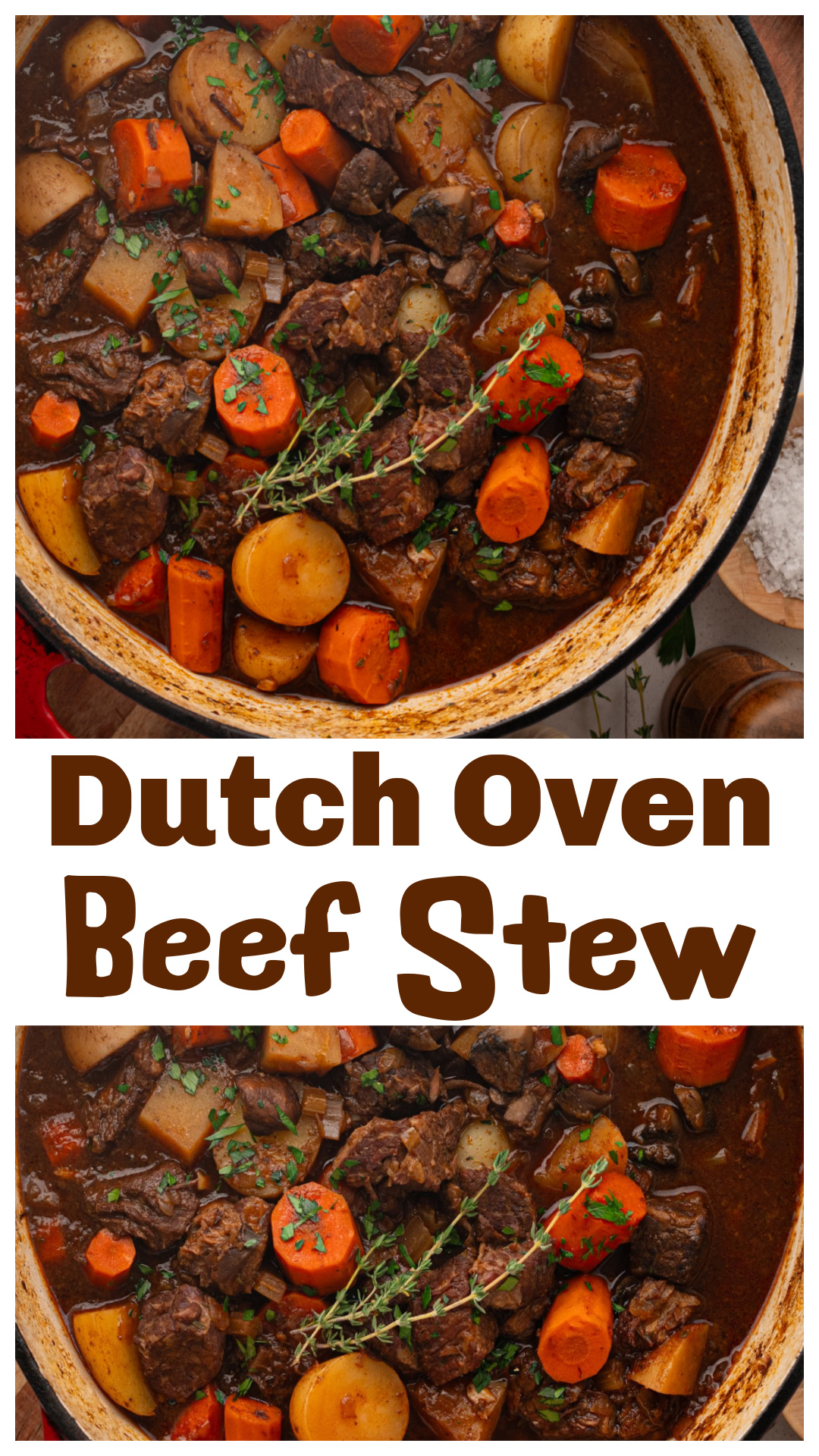
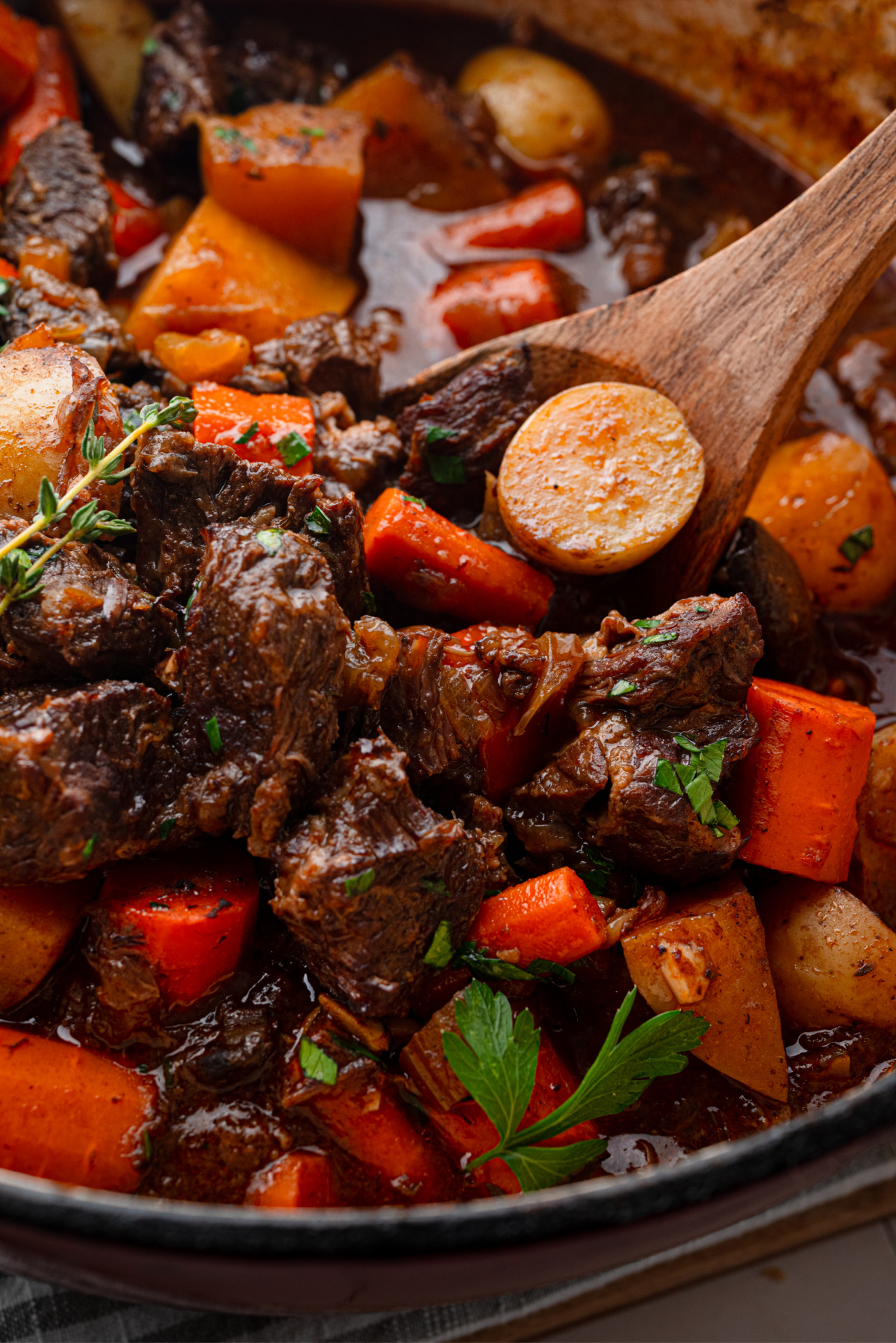
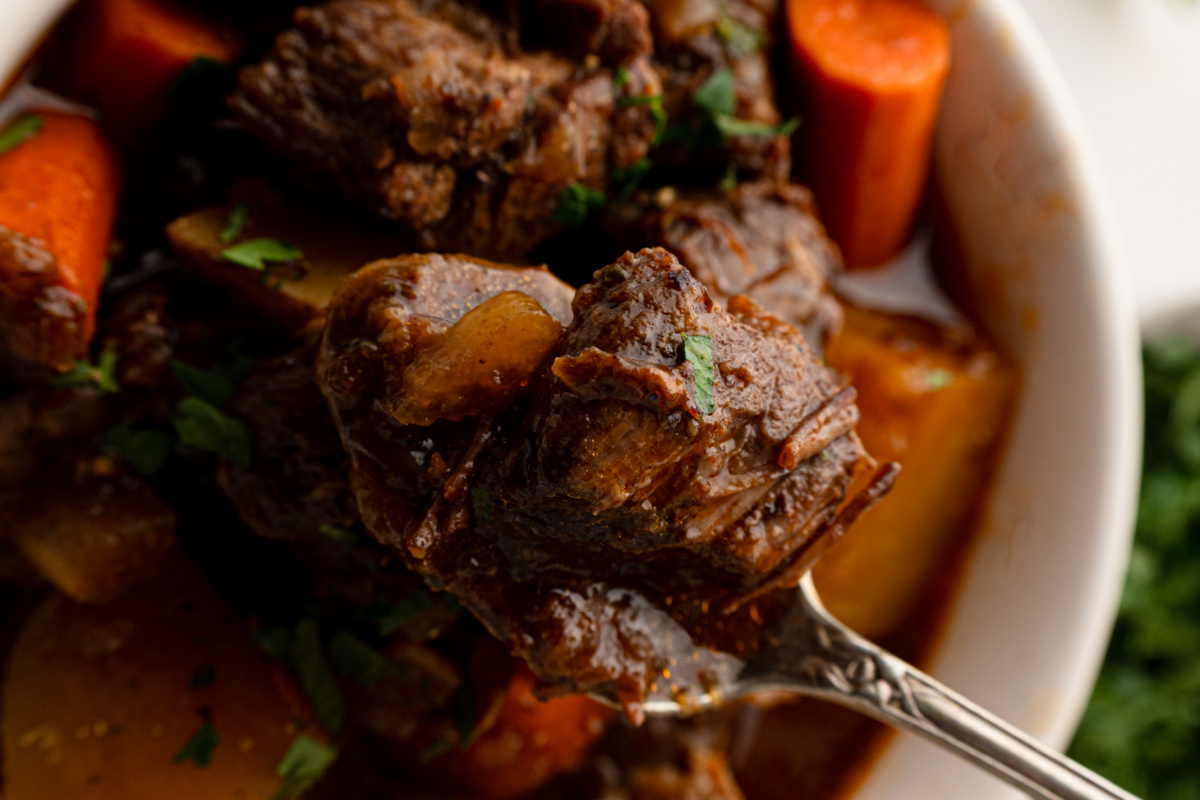
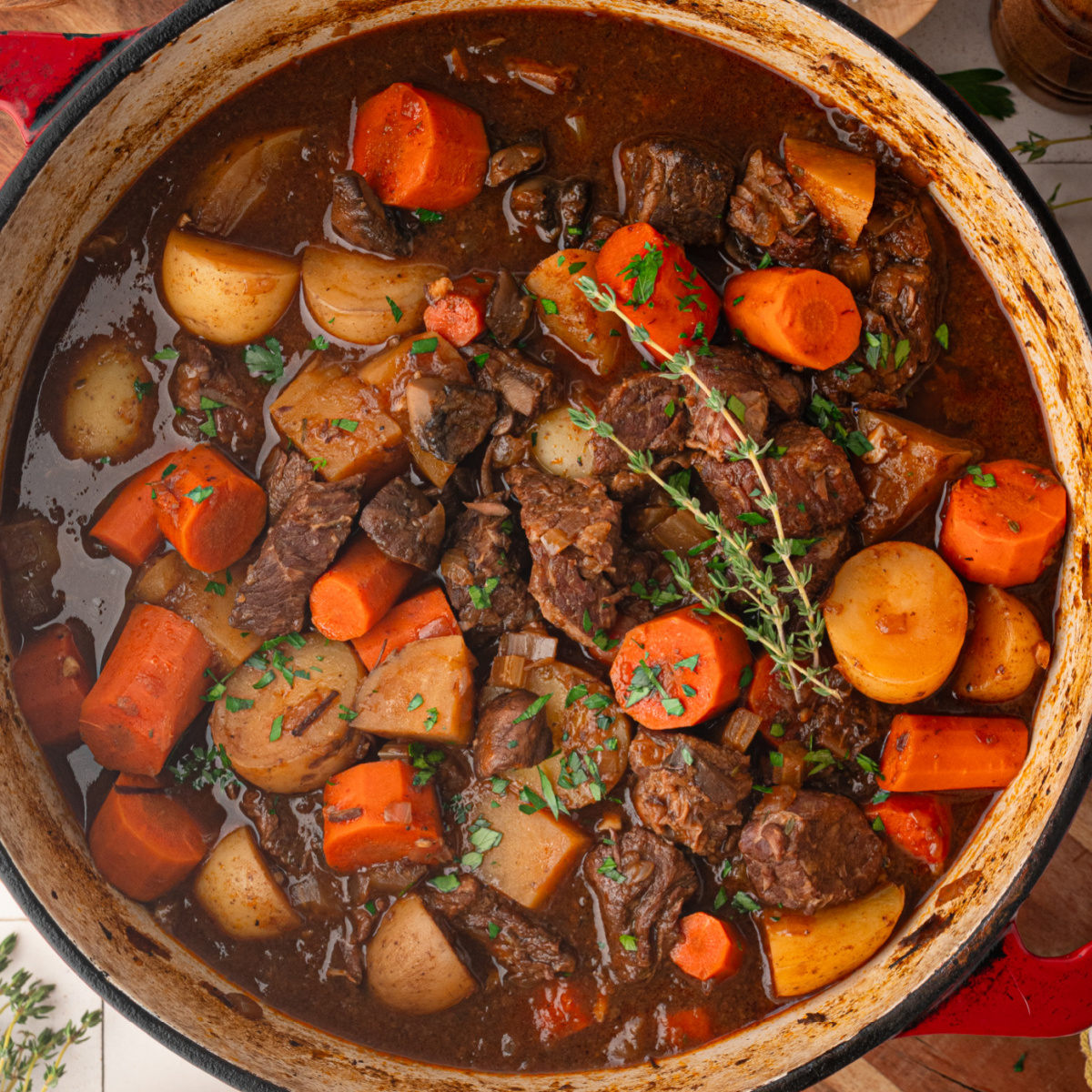
The beef in this Dutch oven beef stew gets a 90-minute head start before the potatoes, carrots, and mushrooms are added. I brown the meat and mushrooms separately, reduce a full cup of red wine, and finish with a rich gravy.
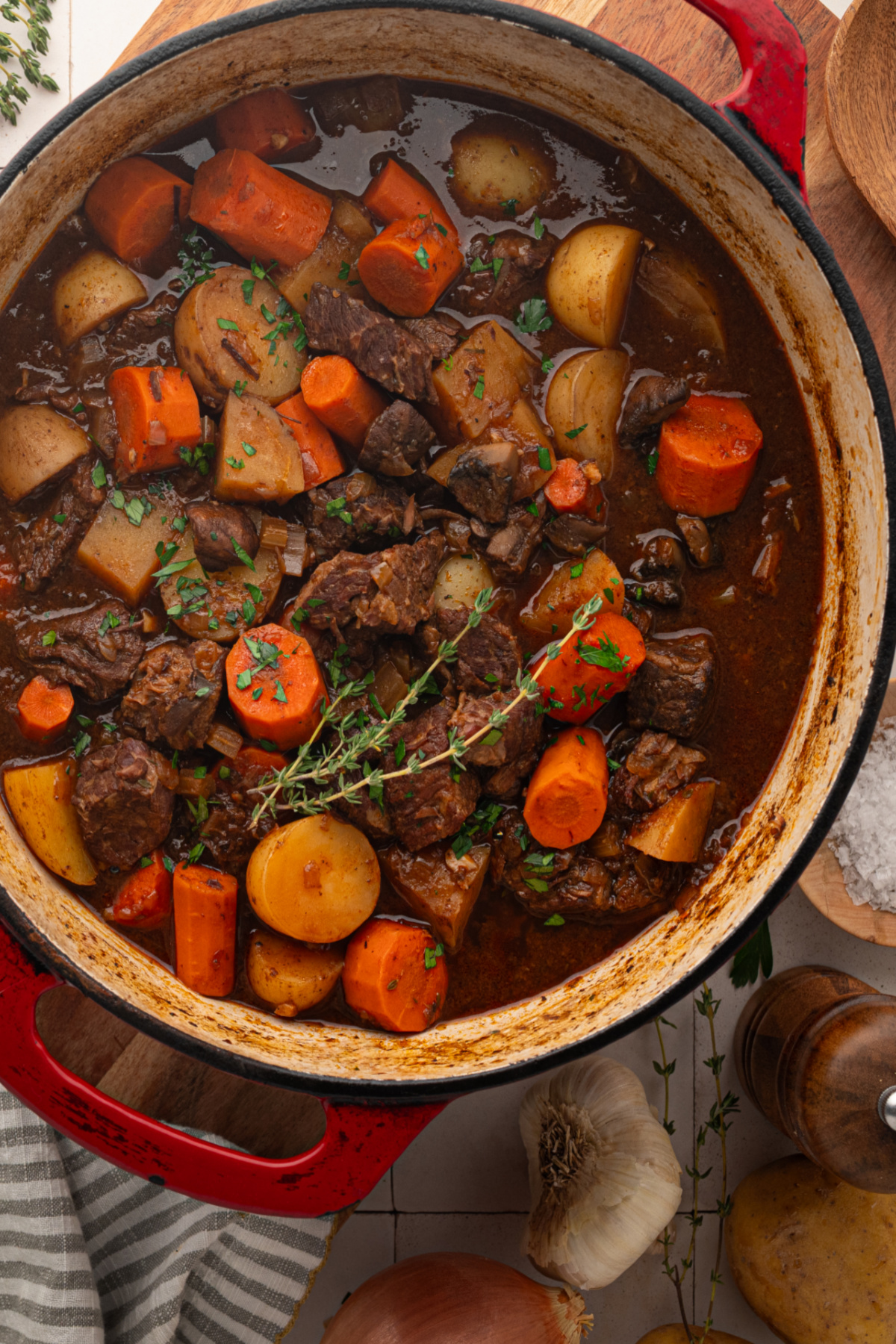
Dutch Oven Beef Stew with Red Wine and Mushrooms
The truth is, not everything in a beef stew belongs in the pot at the same time. And it makes me wonder why this method is treated as sacred. The beef needs more time than potatoes and carrots, and even mushrooms need better cooking conditions than sitting in broth for three hours until they’ve given up. I like browning the beef and mushrooms separately, then letting the chuck roast braise for 90 minutes before the veggies go in. It turns out so much better this way.
There’s a full cup of red wine in this stew, and taking the time to reduce it before the stock goes in is worth it. I like cooking the tomato paste until it gets that darkened look, and I scrape the bottom of the Dutch oven as the wine reduces to get the browned flavor into the gravy. I want the gravy to start getting its flavor before it goes in the oven. None of this is difficult, but spending a few extra minutes at the beginning instead of at the end of cooking, trying to fix something I could have done earlier, is my preferred workflow.
Also, I don’t think beef stew needs to be thick enough to stand a spoon in. I want gravy, but not one that’s thick and pasty. And I never do a final seasoning adjustment until it’s out of the oven and has cooled a bit. That’s when I decide if it needs more salt, some vinegar, or cold butter. Butter is usually a yes for me.
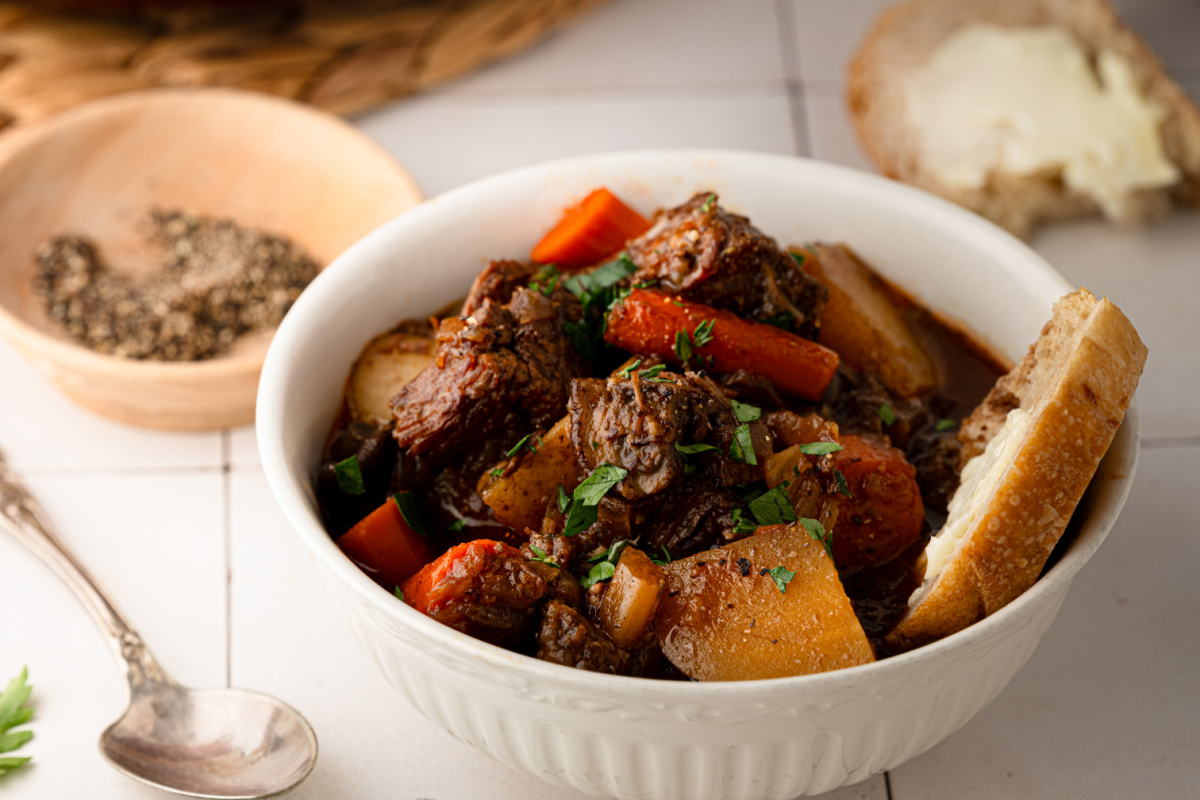
The Decisions Behind This Recipe
- Using boneless chuck roast because it gets better with time in the oven, and I’m willing to give it that time. Chuck has enough connective tissue that it gets really tender and richer after a long braise, but it’s not usually ready when potatoes and carrots would be done. So, I’ve found giving the beef 90 minutes in the oven before adding the veg is best. By then, the meat has already had a good amount of cooking time, and the potatoes and carrots aren’t spending hours in the pot waiting for it.
- You want the beef dry, so pat it down well with paper towels. Trust. Give it a light coating of flour, then brown it in batches because if you crowd the pot, the beef will steam instead of brown. You’ll give the mushrooms their own turn in the Dutch oven after the beef comes out. This is where they pick up browned flavor, then wait until later to go back in. This keeps them from becoming little brown sponges.
- Tomato paste, red wine, beef stock, beef base, Worcestershire, and herbs make the braising liquid way more interesting than plain stock. I like cooking the tomato paste until it gets darker to get rid of that canned taste, then reduce a full cup of dry red wine by about half before the stock goes in. That wine deglazes the bottom of the pot, and it has time to concentrate before the stew starts braising. I use low-sodium stock because the beef base and Worcestershire are already salty, and I keep the rosemary to one small sprig because it can be too much otherwise.
- The potatoes and carrots go in after the beef has had its head start. I leave the thin skins on Yukon Gold potatoes because they help them stay together while the middles get tender. I cut both the potatoes and carrots into bigger pieces, about 1½ inches, so they don’t disappear into the gravy. The mushrooms go back in at the same time.
- The gravy gets good as the stew cooks. The small amount of flour on the beef helps thicken it, and the tomato paste and reduced cooking liquid contribute to its consistency and flavor. I don’t make a roux or a cornstarch slurry because I want the gravy to come from the stew itself. If it needs to thicken more after braising, I simmer it uncovered for a few minutes. In the end it should be rich and spoonable, but still have movement.
- I never decide on the final seasoning until the beef is done and it’s out of the oven. The stock, beef base, Worcestershire, and evaporation affect what the finished gravy needs. It might need more beef base or salt, a teaspoon of vinegar, or some cold butter. You’ll know once you taste it.
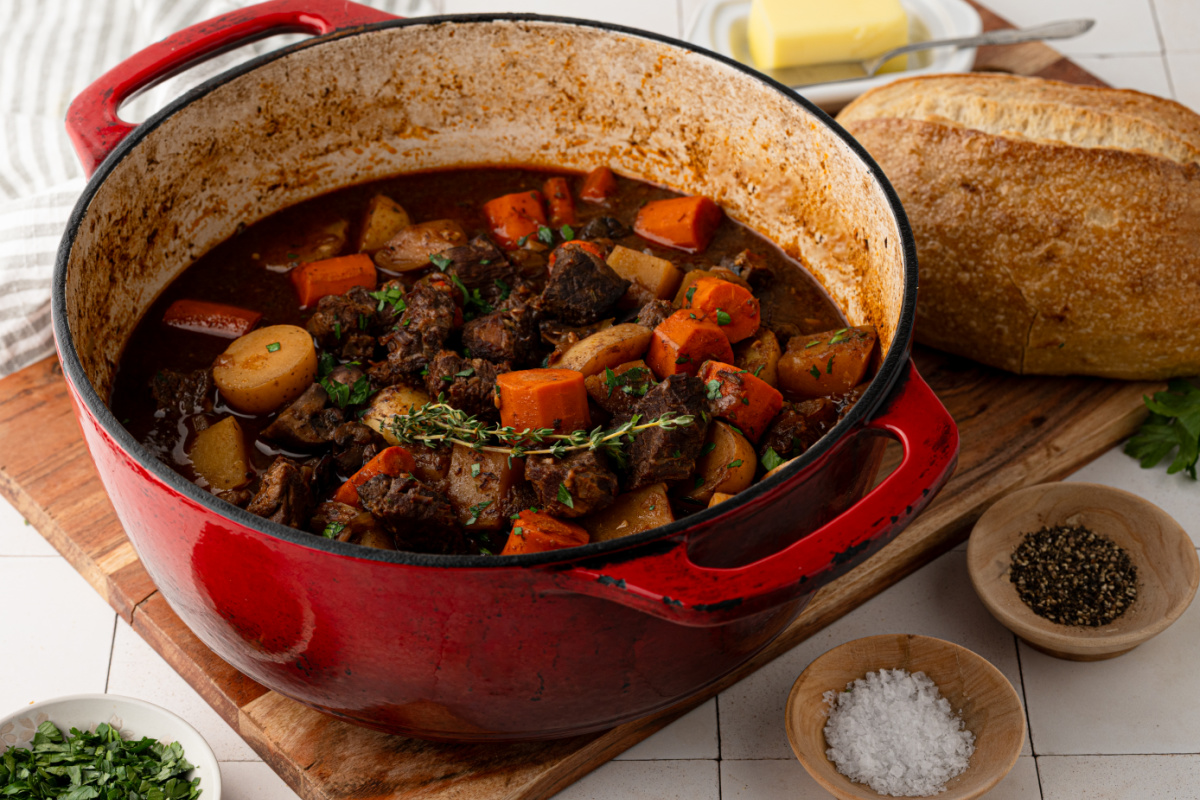
Ingredients
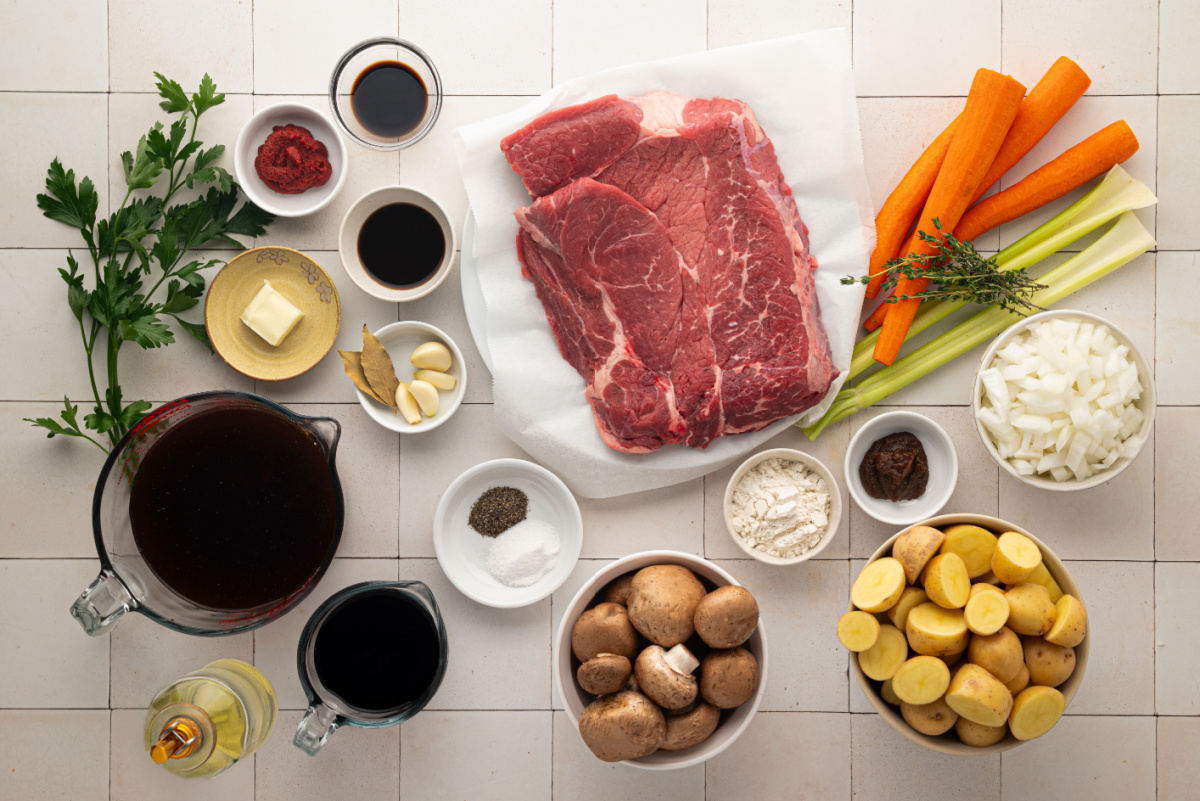
- Boneless beef chuck roast – Chuck has the fat and connective tissue that are made for a long braise. Cut it into decent-sized pieces so the beef doesn’t fall apart once it’s tender.
- Kosher salt, black pepper, and all-purpose flour – Season the beef, and give it a light coating of flour before browning. The flour helps the beef brown and gives the gravy some body as it cooks.
- Neutral oil – Use avocado, vegetable, or canola oil for browning the beef and mushrooms.
- Cremini mushrooms – Brown them separately for more flavor, then add them back later so they don’t spend the entire braise in the pot.
- Yellow onion, celery, and garlic – These make the savory base of the stew. The onion and celery cook first, then the garlic goes in once they’ve softened.
- Tomato paste and dry red wine – Cook the tomato paste until it darkens, then reduce the wine before the stock goes in. This is where the gravy starts getting its flavor.
- Low-sodium beef stock, roasted beef base, and Worcestershire sauce – The stock makes up the braising liquid, and the beef base and Worcestershire help develop the beef flavor even more. Taste before adding extra beef base because the gravy concentrates as it cooks.
- Fresh thyme, rosemary, and bay leaves – Thyme is giving most of the herb flavor and it’s the least overpowering, while one small sprig of rosemary is all you need. The bay leaf does it’s thing, which is still a mystery to most of us.
- Carrots and Yukon Gold potatoes – Cut both into big pieces so they don’t fall apart during the final part of the braise. Leave the thin Yukon Gold skins on.
- Cold unsalted butter and balsamic or red wine vinegar – Optional for finishing. Add butter if the gravy needs more richness or a vinegar if it needs brightness.
- Fresh parsley – Stir it in at the end, then scatter more over each bowl if you want.
How to Make Dutch Oven Beef Stew
Find the complete printable recipe with measurements in the recipe card at the BOTTOM OF THE POST.
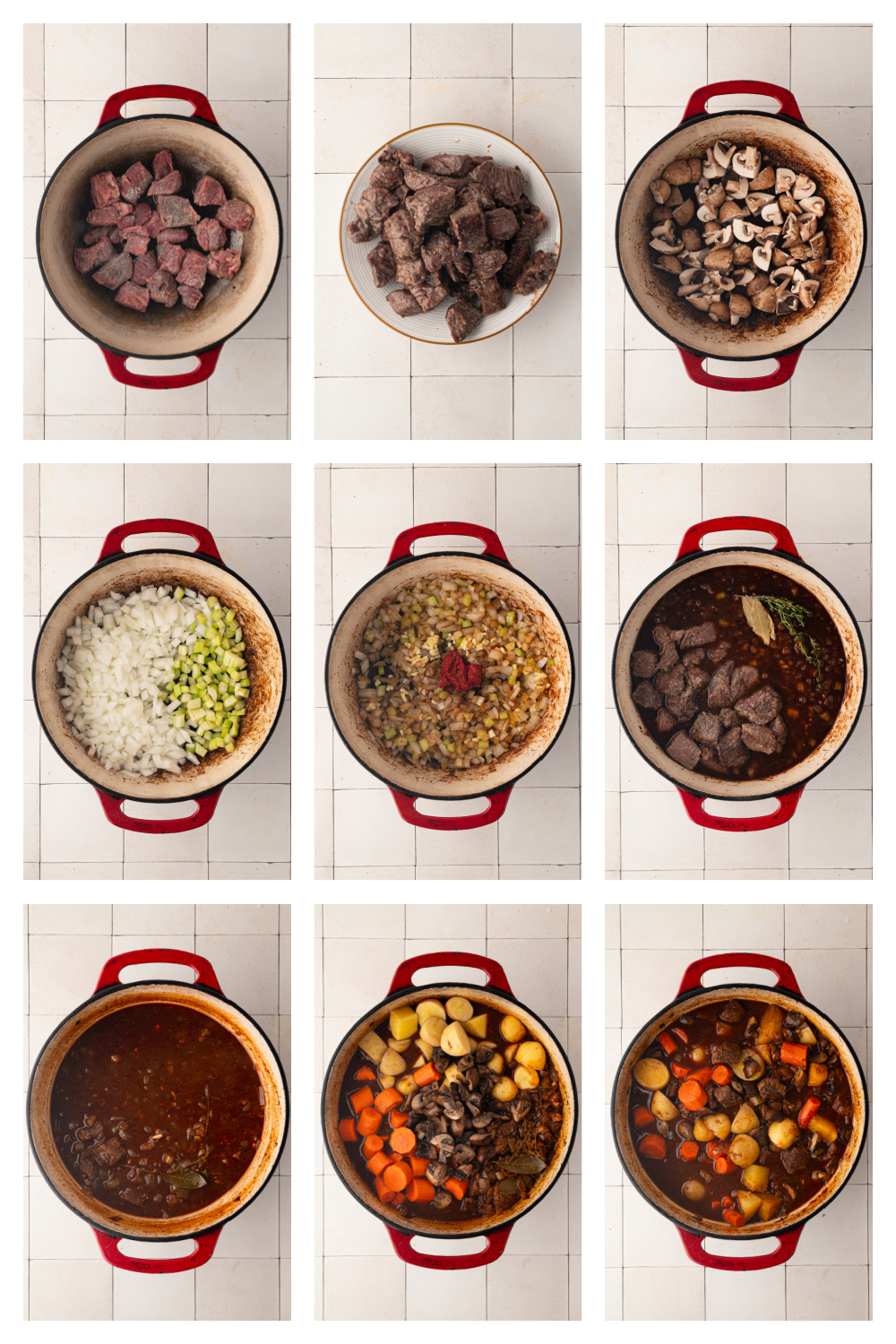
- Step One (prepare the beef)
Preheat the oven to 325°F. Pat the chuck roast dry with paper towels and cut it into 1½–2-inch pieces. Season it with kosher salt and black pepper, then toss it with the flour until the beef has a light coating. You want a light coating, not big patches of flour stuck to the meat. - Step Two (brown the beef and mushrooms)
Heat the oil in a 5½–6-quart Dutch oven over medium-high heat. Brown the beef in three batches, giving each batch about 6–8 minutes and turning the pieces so they get good color on more than one side. Give the beef room in the pot. If you crowd it, it steams. Move the browned beef to a plate, then turn the heat down to medium and add the mushrooms. Cook them for 5–7 minutes, until they’ve released most of their moisture and started browning. Move them to a separate bowl. They will get their turn in the oven later. - Step Three (make the braising liquid)
Add the onion and celery to the Dutch oven and cook for 5–7 minutes, until softened. Add the garlic and stir for about 30 seconds, until it smells good. Stir in the tomato paste and cook it for 1–2 minutes, until it turns a deeper brick red. Pour in the red wine and scrape the bottom of the pot to get up all the browned flavor left from the beef and mushrooms. Let the wine simmer until it has reduced by about half, around 5–7 minutes. Add the beef stock, 1 teaspoon of roasted beef base, Worcestershire sauce, thyme, rosemary, and bay leaves. Put the beef and any juices from the plate back in the pot, then bring it all to a slow simmer. - Step Four (braise the beef)
Cover the Dutch oven and put it in the oven for 1½ hours. The beef gets its 90-minute head start before the potatoes, carrots, and mushrooms go in. - Step Five (add the vegetables and finish braising)
Carefully take the Dutch oven out of the oven and remove the lid. Add the carrots, unpeeled Yukon Gold potatoes, and reserved mushrooms, then gently stir everything together. The potatoes and carrots should be in roughly 1½-inch pieces so they cook through without falling apart. Cover the pot and return it to the oven for another 45–60 minutes. The beef should pull apart easily with a fork, and the potatoes and carrots should be tender but still in one piece. If the beef needs more time, give it more time. Fork-tender beef gets the final vote. Always. - Step Six (finish the gravy and serve)
Remove the thyme and rosemary stems and fish out the bay leaves. Check the gravy. If it’s thinner than you want, put the uncovered Dutch oven over medium-low heat and let it simmer for 5–10 minutes until it reduces a little. Taste the stew before adding more beef base, salt, or pepper. If it needs some acidity, stir in 1 teaspoon of balsamic or red wine vinegar, taste, and add another teaspoon if you want. If you want a richer gravy, take the pot off the heat and stir in the cold butter. Finish with chopped parsley and make sure every bowl gets beef, potatoes, carrots, mushrooms, and lots of gravy.
Recipe Tips
- The pot needs to be hot enough to brown the beef, and the beef needs room to do it. If the pot is too crowded, the beef will release moisture and steams instead. A dark brown crust is what you’re after.
- Keep the flour coating light. Toss the seasoned beef until it has a thin dusting, then shake off any obvious patches before browning. Any stray flour can burn on the bottom of the pot, and that can make the gravy bitter.
- The browned flavor on the bottom of the Dutch oven is useful, but any black burned leftover bits aren’t. Adjust the heat if the flour or fond is getting too dark while you brown the beef and mushrooms. The wine will help lift up the good browned stuff once it goes in, so scrape the bottom of the pot well.
- Let the wine reduce by about half before adding the stock. The timing I gave is a guide, but how much wine is left in the pot is what really tells you it’s ready. You want the wine flavor concentrated and the pot mostly deglazed before the braising liquid goes in.
- Keep the Dutch oven covered while it braises at 325°F. Leave the lid on during both oven stages so the liquid stays in there and the beef has a chance to get tender.
- Check the beef with a fork before thinking the stew is done. It should pull apart easily. The potatoes and carrots should be tender but still holding together. If the beef needs more time, cover the pot and keep cooking.
- If the gravy needs help at the end, simmer it uncovered for a few minutes if it’s too thin. If it gets too thick, add a splash of beef stock or water. Taste before adding extra beef base or salt, then decide if it needs vinegar or butter. Don’t throw everything in at once and hope for the best.
Storage and Reheating
- Let the stew cool a bit, then move it to covered containers and refrigerate it within two hours. Shallow containers help it cool faster. It keeps for 3–4 days in the refrigerator, and the gravy will thicken as it chills.
- Reheat the stew gently in a covered pot over medium-low heat, stirring now and then. Add a splash of beef stock or water if the gravy has thickened up too much. Heat it until it reaches 165°F, but don’t keep it bubbling forever or the potatoes will start losing their fight to stay together.
- You can freeze the stew for 2–3 months. The beef and gravy freeze well, but the potatoes may be a little softer or slightly grainy once thawed. It will still taste good, but the potatoes won’t have quite the same texture as they did on day one.
- Thaw frozen stew overnight in the refrigerator when you can, then reheat it gently on the stove. You can also reheat frozen portions straight from the freezer in a covered pot over low heat with a splash of stock or water. Once it can be stirred, bring it up to temperature and serve.
FAQs
- What is the best cut of beef for Dutch oven beef stew?
Boneless chuck roast is my pick. It has the fat and connective tissue to turn tender during a long braise. A leaner cut can end up dry or chewy. Buy a roast and cut it yourself so you know you’re getting all chuck. - Can I make Dutch oven beef stew without red wine?
Yes. Replace the wine with more beef stock. The stew will still be good, but it won’t have the same depth from the reduced wine. If your finished gravy needs some brightness, a small splash of red wine vinegar or balsamic vinegar can help, but it won’t replace the wine exactly. - Why is my beef stew meat still tough?
It needs more time. Chuck roast gets tender when its connective tissue has enough time to break down, and that doesn’t always happen on the same schedule from one roast to the next. Keep it covered and continue cooking until the beef gives easily when you test it with a fork. - Can I make this beef stew on the stovetop instead?
Yes. Keep the stew at a very gentle simmer in a covered Dutch oven, and stir it more often so the bottom doesn’t scorch. The oven is easier because it gives you more even heat without needing as much attention. - Can I use a different kind of potato?
Red potatoes are a good substitute for Yukon Golds. Russets will break down and thicken the gravy, which is fine if you want that, but they won’t stay together reliably. - Can I make Dutch oven beef stew a day ahead?
Yes, and it reheats well. Make it, cool it, and refrigerate it overnight, then warm it before dinner. The potatoes will be softer after reheating, but the stew will still be delicious, and I think the gravy tastes even better the next day. - Can I use frozen or pre-cut stew meat instead of chuck roast?
You can, but I prefer buying a chuck roast and cutting it myself. Packages labeled stew meat can have different cuts, so some pieces may get tender sooner than others. If you use frozen beef, thaw it safely in the refrigerator first, then dry it well before seasoning and browning.
From My Kitchen Notes
Small observations from the margins.
- Crowding something has never made it come together faster for me.
- The bottom of the pot has always remembered more than I wanted it to.
- Not every piece has been ready at the same time in my life.
- I’ve learned that giving something room can change what happens under pressure.
- Setting something aside has never meant I forgot about it.
- Having a dark beginning doesn’t always mean I ruined the whole thing.
- Depth and being in over my head have never been the same thing to me.
- The person asking me to be done on their schedule has clearly never tested me with a fork.
More Beef Dishes For Cold Weather
- Classic Stovetop Pot Roast – Tender beef, carrots, potatoes.
- Oven Braised Short Ribs – Slow-braised beef, rich gravy.
- Slow-Braised Beef Ragù – Tender beef, tomato sauce, pappardelle.
- Korean Braised Short Ribs – Gochujang, garlic, ginger, soy sauce.
- Coffee Rubbed Oven Brisket – Dark roast coffee, chipotle, brown sugar.
- Cocoa Rubbed Steak with Dark Stout Pan Sauce – Cocoa, chili spices, dark stout.
Dutch Oven Beef Stew
Equipment
- Dutch Oven 5½–6-quart (5.2–5.7-liter). Enameled cast iron is good for browning beef and maintaining steady temperatures during braising.
- Chef's knife For cutting chuck roast into even pieces and chopping the vegetables.
- Cutting board A sturdy surface for preparing the beef, potatoes, and other vegetables.
- wooden spoon For loosening the browned bits from the Dutch oven when reducing the red wine.
- measuring cups and spoons For measuring the braising liquid, flour, and seasonings.
Ingredients
Beef:
- 2½ lbs (1.13 kg) boneless beef chuck roast
- 1½ tsps (9 g) kosher salt plus more to taste
- ¾ tsp (2 g) freshly ground black pepper
- 3 tbsps (24 g) all-purpose flour
- 2 tbsps (30 ml) neutral oil plus more as needed
Stew:
- 8 oz (225 g) cremini mushrooms quartered or halved if small
- 1 large yellow onion diced
- 2 celery ribs finely diced
- 4 large cloves garlic minced
- 2 tbsps (30 g) tomato paste
- 1 cup (240 ml) dry red wine
- 3 cups (720 ml) low-sodium beef stock
- 1-2 tsps roasted beef base such as Better Than Bouillon, divided
- 1 tbsp (15 ml) Worcestershire sauce
- 4-5 sprigs fresh thyme
- 1 small sprig fresh rosemary
- 2 bay leaves
- 1 lb (454 g) carrots peeled and cut into approximately 1½-inch (3.8-cm) pieces
- 1½ lbs (680 g) Yukon Gold potatoes npeeled and cut into approximately 1½-inch (3.8-cm) pieces
- 1-2 tsps (5-10 ml) balsamic vinegar or red wine vinegar, optional
- 1 tbsp (14 g) cold unsalted butter optional
- 2 tbsps (8 g) chopped fresh parsley plus more for serving
Instructions
- Preheat the oven to 325°F (163°C). Position a rack in the lower third of the oven to accommodate a covered 5½–6-quart (5.2–5.7-liter) Dutch oven.
- Pat the chuck roast dry with paper towels and cut into 1½–2-inch (3.8–5-cm) pieces. Season evenly with the kosher salt and black pepper, then sprinkle with the flour and toss until the beef is lightly coated. There should be no thick patches of flour on the meat.2½ lbs (1.13 kg) boneless beef chuck roast, 1½ tsps (9 g) kosher salt, ¾ tsp (2 g) freshly ground black pepper, 3 tbsps (24 g) all-purpose flour
- Heat 1 tablespoon of the neutral oil in the Dutch oven over medium-high heat. Working in three batches, arrange the beef in a single layer with space between the pieces. Sear for approximately 6–8 minutes per batch, turning to develop a deep brown crust on multiple sides. Adjust the burner as needed to prevent the flour and browned bits from burning, and add more oil between batches if necessary. Transfer the browned beef to a plate, reserving any juices.2 tbsps (30 ml) neutral oil
- Reduce the heat to medium and add the cremini mushrooms to the same Dutch oven. Cook for 5–7 minutes, stirring occasionally, until the mushrooms have released their moisture and developed browned surfaces. Transfer to a separate bowl and reserve. They will be added back toward the end of braising.8 oz (225 g) cremini mushrooms
- Add the diced onion and celery to the Dutch oven, using a small amount of additional oil if the pot appears dry. Cook for 5–7 minutes, stirring occasionally and scraping up any loosened browned bits, until the vegetables have softened. Add the minced garlic and cook for approximately 30 seconds, stirring constantly, until fragrant.1 large yellow onion, 2 celery ribs, 4 large cloves garlic
- Stir in the tomato paste and cook for 1–2 minutes, stirring frequently, until it darkens to a deeper brick-red color. Pour in the dry red wine and scrape the bottom of the Dutch oven thoroughly with a wooden spoon to release the browned bits from the beef, mushrooms, and vegetables. Simmer uncovered for approximately 5–7 minutes, or until the wine has reduced by about half. Use the reduction in volume rather than the cooking time as the final guide.2 tbsps (30 g) tomato paste, 1 cup (240 ml) dry red wine
- Pour in the low-sodium beef stock and stir in 1 teaspoon of roasted beef base and the Worcestershire sauce. Add the fresh thyme, rosemary, and bay leaves. Return the browned beef and any accumulated juices to the Dutch oven, stirring gently to distribute the meat throughout the braising liquid. Bring to a gentle simmer over medium heat.3 cups (720 ml) low-sodium beef stock, 1-2 tsps roasted beef base, 1 tbsp (15 ml) Worcestershire sauce, 4-5 sprigs fresh thyme, 1 small sprig fresh rosemary, 2 bay leaves
- Cover the Dutch oven with its lid and transfer to the preheated oven. Braise for 1½ hours at 325°F (163°C), allowing the chuck roast to begin tenderizing before the potatoes, carrots, and mushrooms are added.
- Remove the Dutch oven from the oven and carefully lift the lid away from you to release the steam. Add the carrots, unpeeled Yukon Gold potatoes, and reserved browned mushrooms, gently stirring to distribute them through the stew. Keep the potatoes and carrots in approximately 1½-inch (3.8-cm) pieces so they can cook through without breaking apart. Cover and return to the oven for another 45–60 minutes, or until the beef yields easily to a fork and the potatoes and carrots are tender.1 lb (454 g) carrots, 1½ lbs (680 g) Yukon Gold potatoes
- Remove the Dutch oven from the oven and discard the thyme and rosemary stems and bay leaves. Check the consistency of the gravy. If it's thinner than you want, place the uncovered Dutch oven over medium-low heat and simmer gently for 5–10 minutes, stirring occasionally, until some of the liquid has evaporated and the gravy has thickened. Avoid vigorous boiling, which can break down the cooked potatoes.
- Taste the finished stew before making any seasoning adjustments. Add more roasted beef base, up to 1 additional teaspoon, if the beef flavor needs reinforcing, and adjust the kosher salt and black pepper as needed. If the gravy tastes overly rich or needs acidity, stir in 1 teaspoon of balsamic vinegar or red wine vinegar, taste, and add up to 1 additional teaspoon if necessary. For a richer finish, remove the Dutch oven from the heat and stir in the cold unsalted butter until melted and incorporated.1-2 tsps (5-10 ml) balsamic vinegar, 1 tbsp (14 g) cold unsalted butter
- Stir in the chopped fresh parsley. Ladle the stew into bowls, making sure each serving includes beef, potatoes, carrots, mushrooms, and gravy. Garnish with additional parsley if desired and serve warm.2 tbsps (8 g) chopped fresh parsley
Notes
- The recipe was developed for a 5½–6-quart (5.2–5.7-liter) Dutch oven. The beef needs a 1½-hour head start before the vegetables are added so the chuck roast can become tender without overcooking the potatoes and carrots.
- Leave the Yukon Gold potatoes unpeeled. Their thin skins help the pieces stay together during braising.
- Brown the beef in three batches and avoid overcrowding the Dutch oven. The mushrooms should also be browned separately before being reserved for the final stage of cooking.
- Reduce the red wine by approximately half before adding the beef stock. The reduction in volume is more important than the exact number of minutes.
- Cooking time may vary depending on the size of the beef pieces and the chuck roast itself. Continue braising until the beef is fork-tender.
- If the finished gravy needs thickening, simmer it uncovered for 5–10 minutes rather than adding additional flour. Taste before adding more beef base, salt, vinegar, or butter.
- Nutritional information is provided as a courtesy only and should be construed as an estimate rather than a guarantee. Ingredients can vary, and Noble Pig makes no guarantees to the accuracy of this information.
Nutrition
Have you made this Dutch Oven Beef Stew? I’d love to hear how it turned out – leave a comment below and let me know.
As an Amazon Associate and member of other affiliate programs, I earn from qualifying purchases.
Leave a Reply