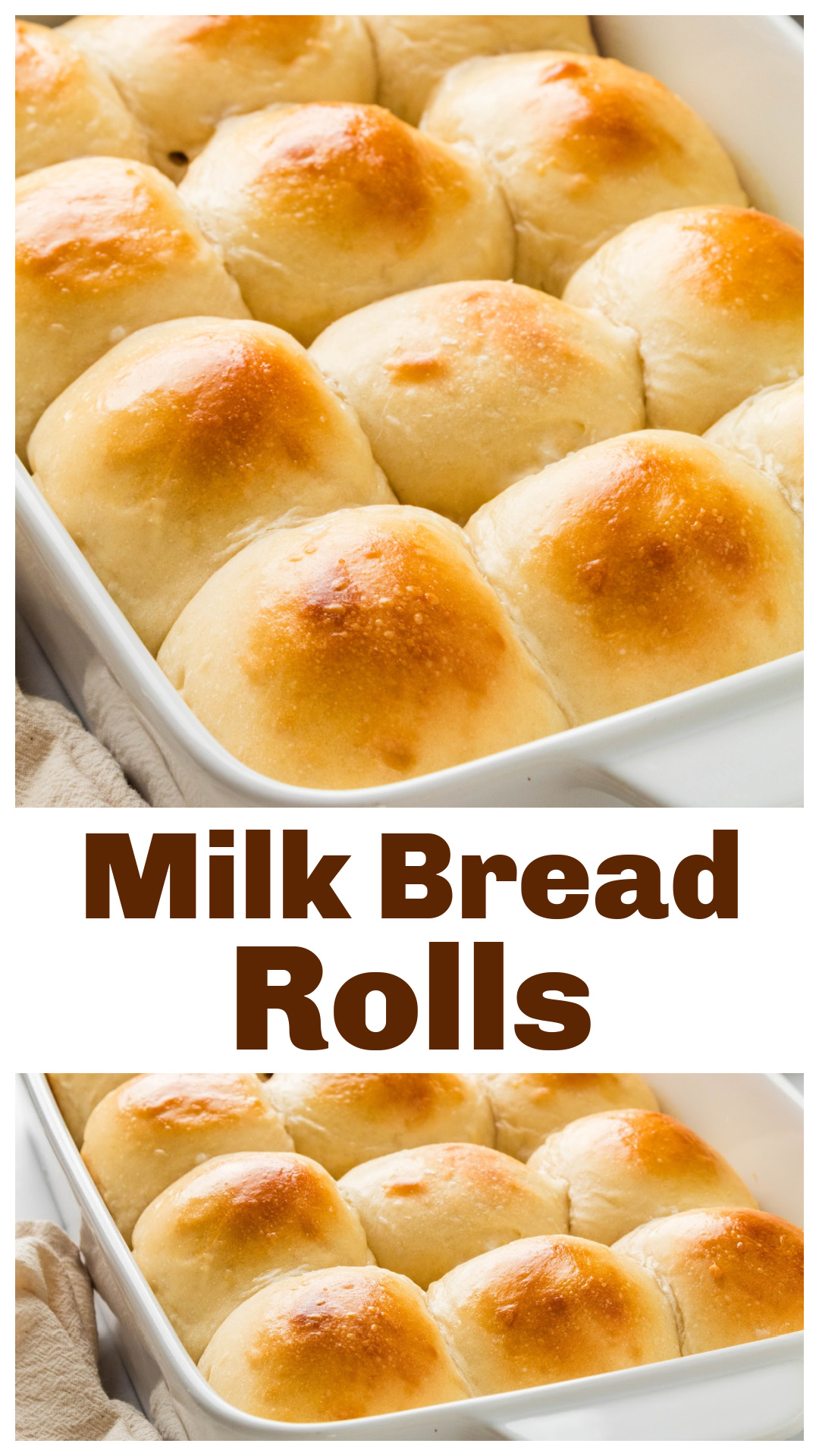
These soft milk bread rolls use a 90-second microwave tangzhong, a long knead for proper gluten development, and a final bake to temperature so they stay tender without becoming too delicate.
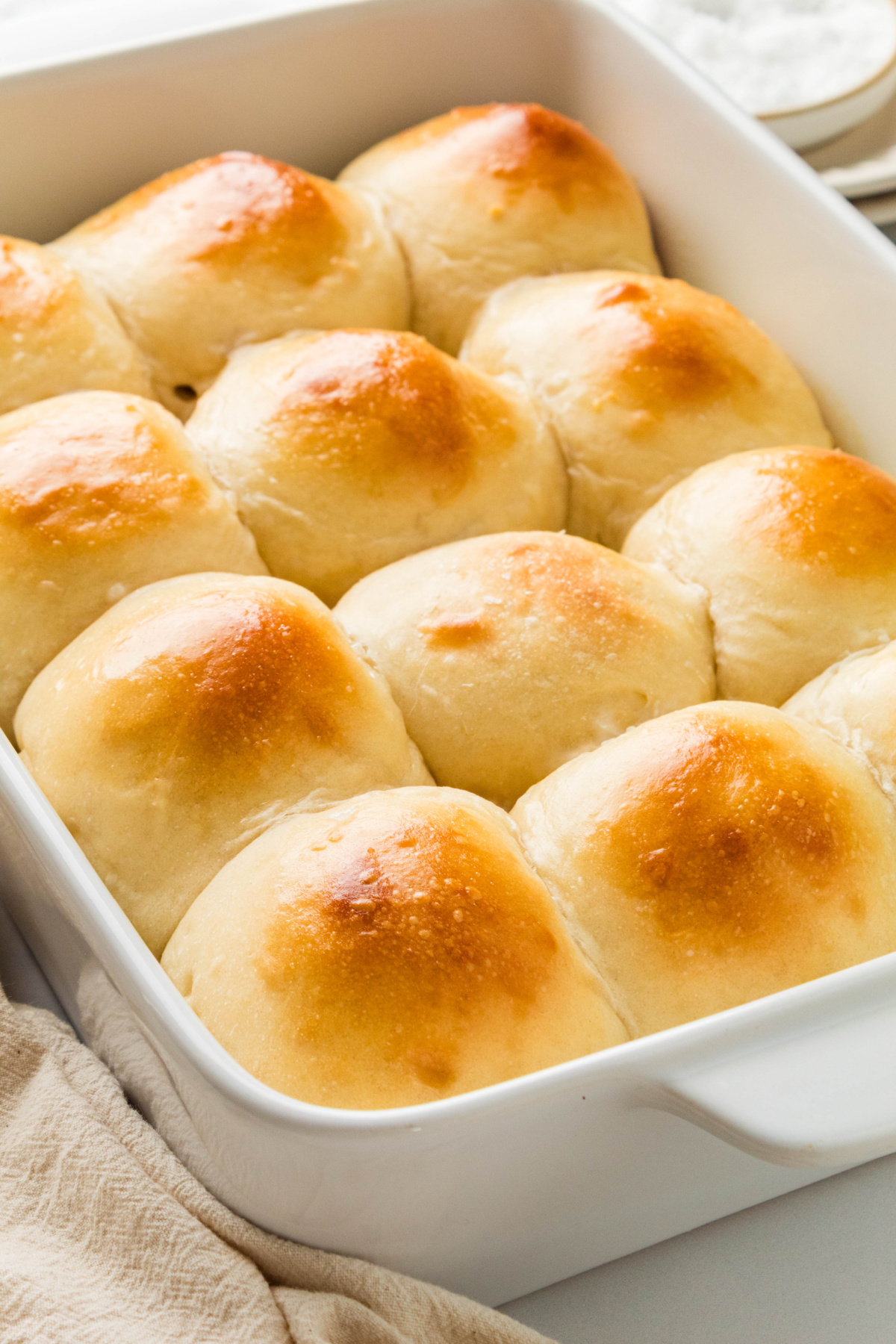
Homemade Milk Bread Rolls Made with Tangzhong
I found milk bread because I got into a line in Vancouver, British Columbia without knowing what I was standing in line for.
It was outside a Japanese bakery on Hastings Street, and the line was long enough that I figured everybody else knew something I didn’t. This is nothing new for me. I see a long food line and decide I also need whatever is at the other end of it. Many people have suffered through this behavior with me in more than one city.
Inside were all these adorable Japanese pastries, including the cutest pull-apart buns made to look like bears that I think had Nutella inside. I bought way more than I meant to because by then I had already stood in the line and I was committed. But it was the milk bread I kept thinking about afterward.
It’s not like milk bread was some new discovery. I had never really paid attention to it before, and once I did, I started noticing it everywhere. What I wanted was to understand why the texture was so different from the dinner rolls I was used to making. And that was what sent me down the tangzhong rabbit hole.
Traditional tangzhong is usually cooked on the stovetop for several minutes and then cooled before it goes into the dough. I started out making it that way, then eventually realized I could do the same thing in the microwave in about 90 seconds. From there, I stirred room-temperature milk directly into the warm tangzhong, which meant there was no separate cooling period either.
Then I kept changing the rest of the process to fit what I wanted. I wasn’t interested in a traditional milk bread loaf. I wanted pull-apart dinner rolls. So I made them over and over, adjusted the dough, changed the way I added the egg and butter, tested the kneading time, weighed the portions, and kept going until they came out the way I imagined.
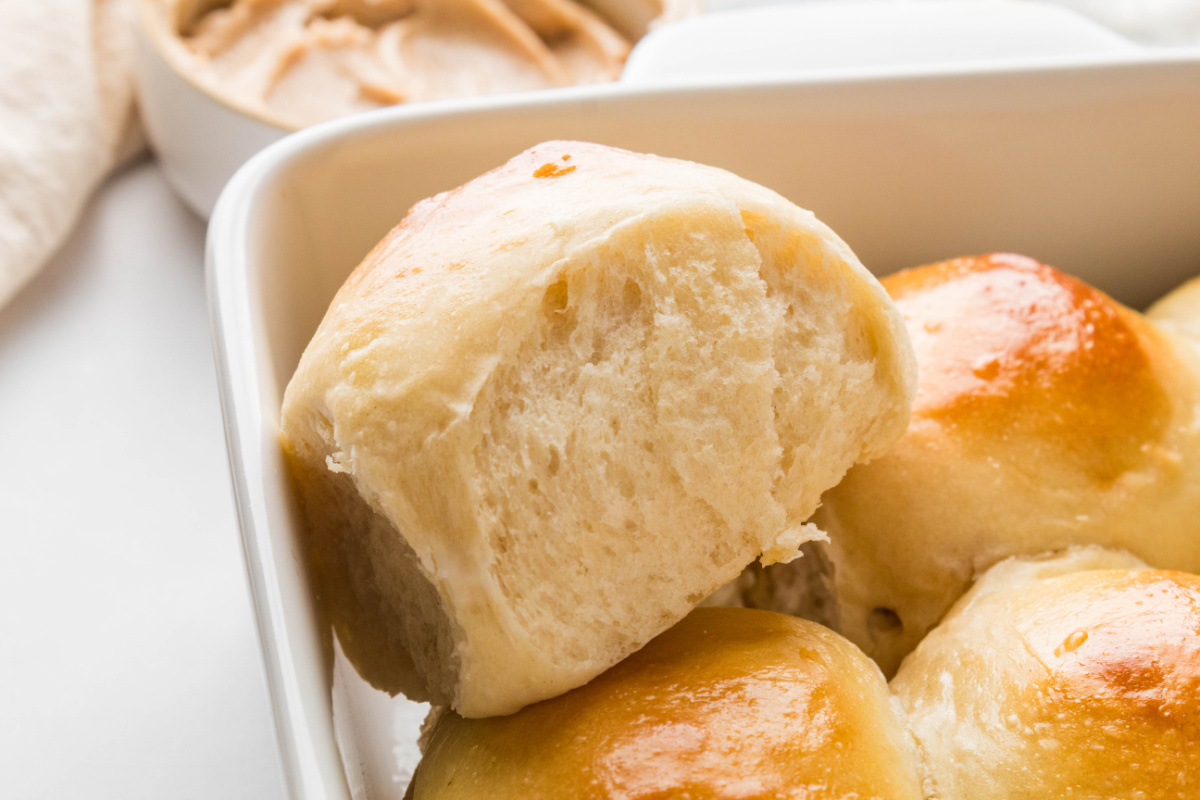
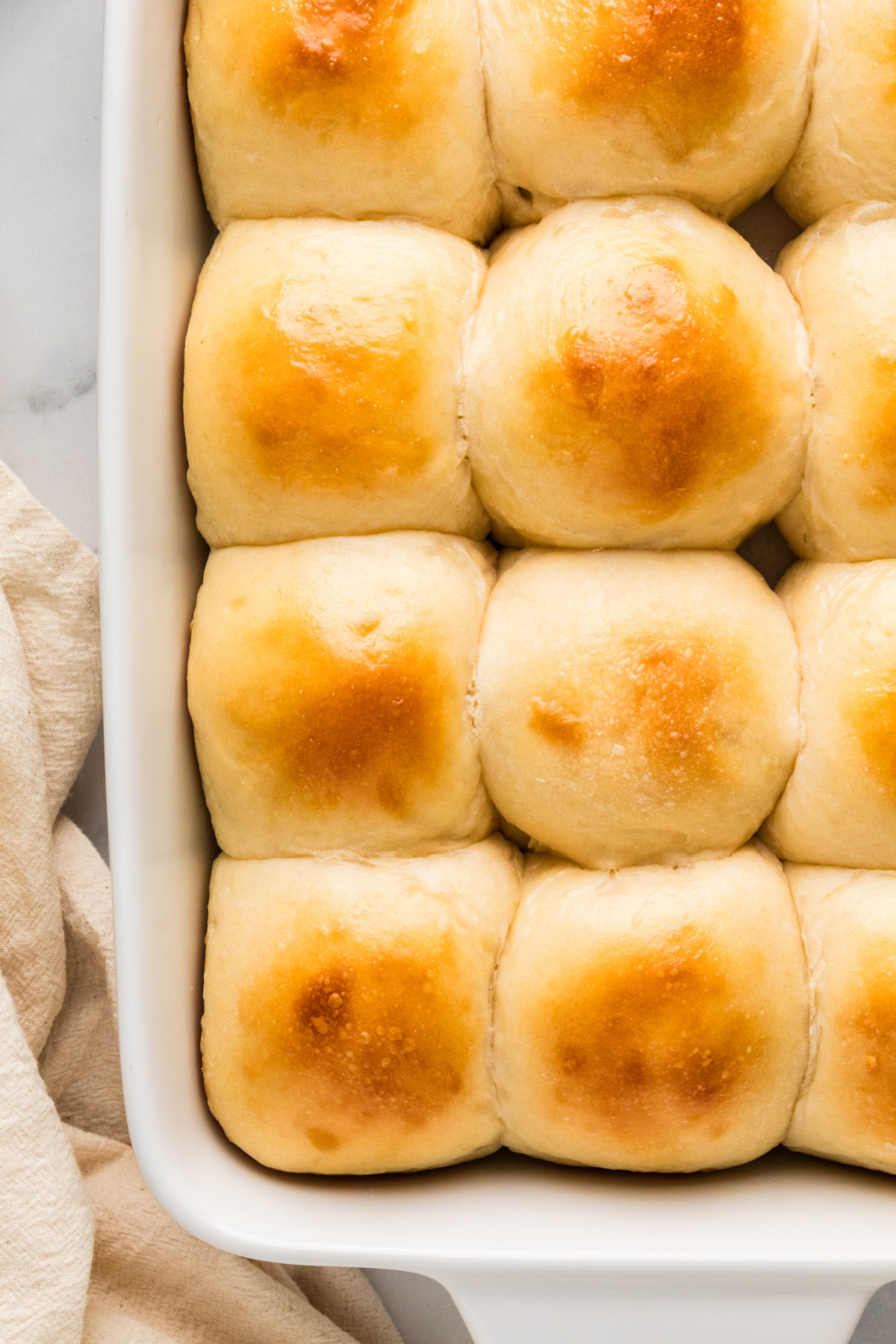
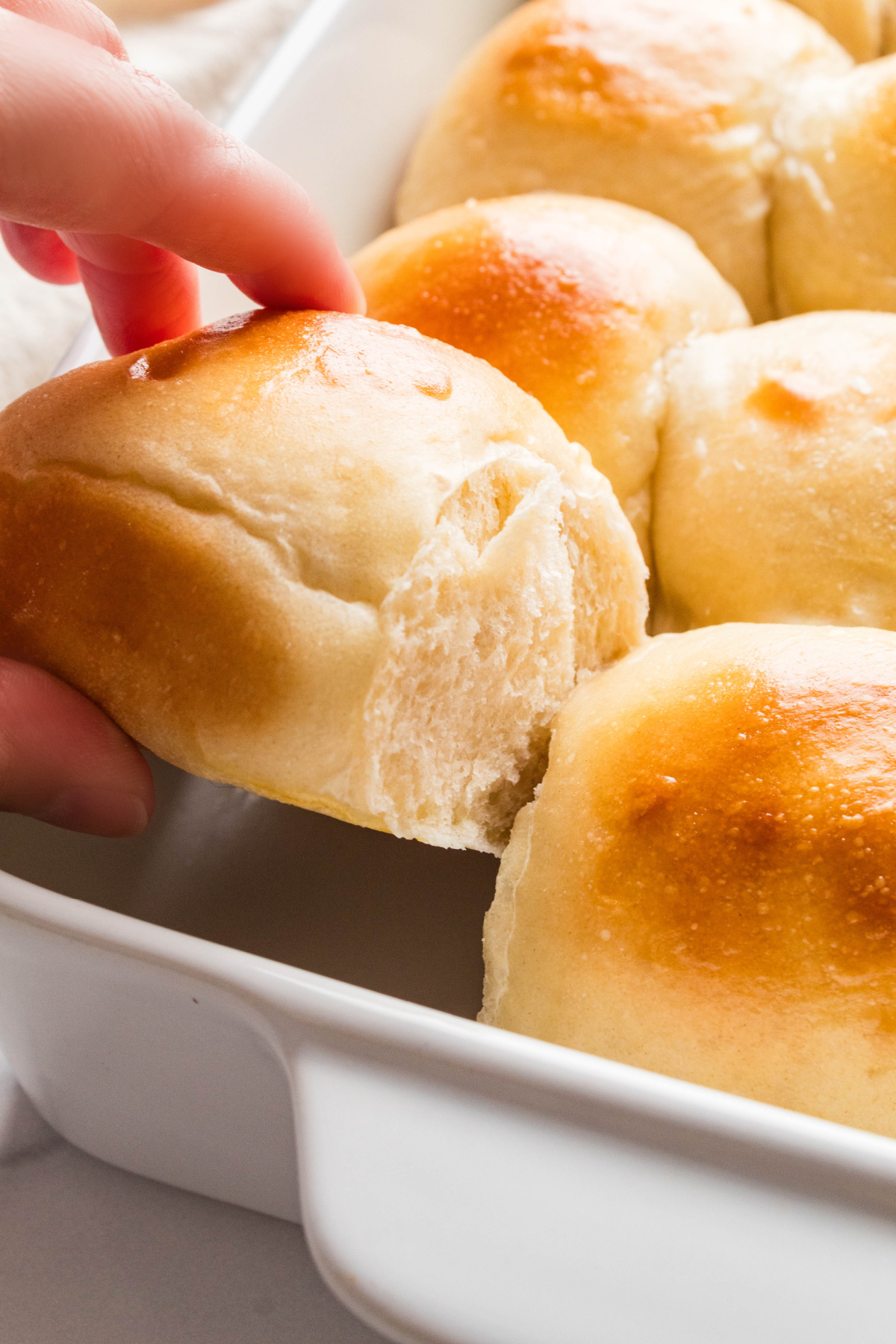
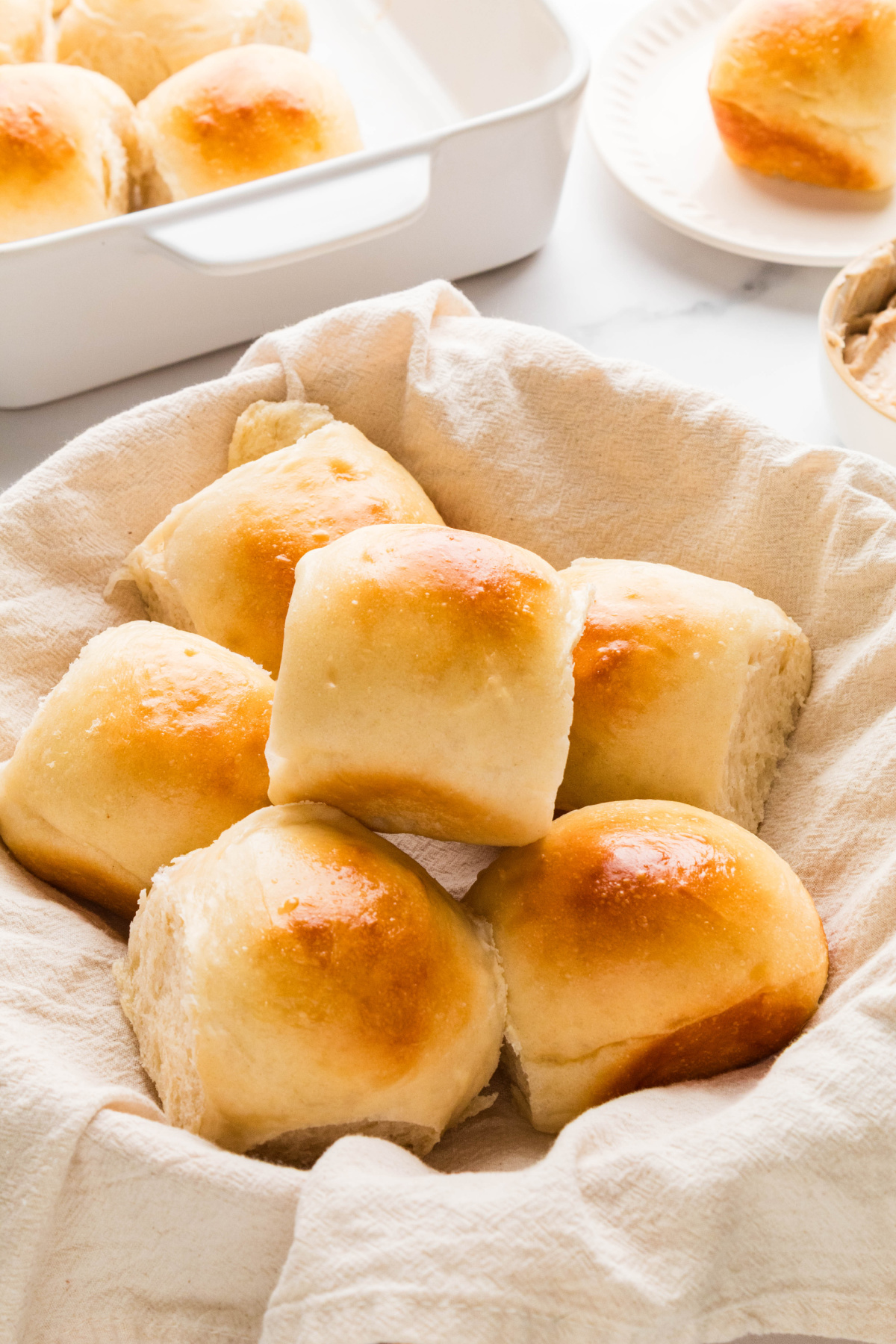
The rolls I ended up with are soft and buttery, golden on top, pale where they bake against each other, and strong enough to split and butter without falling apart in your hand.
The Decisions Behind This Recipe
- I make the tangzhong in the microwave because I got tired of treating it like a separate stovetop project. In my 1,000-watt microwave, it takes about 90 seconds total in 30-second increments, whisking between each one. That saves the saucepan, the standing-and-whisking part, and the separate cooling time that usually comes afterward.
- I also don’t cool the tangzhong on its own before making the dough. I transfer it straight to the mixer, stir in the room-temperature milk and sugar, and that cools the mixture enough to add the yeast. It’s a small change, but it makes the whole process feel much less elaborate.
- I prefer bread flour for these rolls because I like the extra strength it gives the dough, especially once the egg and butter go in. I tested them with all-purpose flour too, and they’re still very good, so if that’s what you have, you can use it. My preference is still bread flour.
- The order of the ingredients is more important than it is in a basic dinner roll. I let the flour start forming the dough first, then add the egg, then the butter one tablespoon at a time. I wait until each tablespoon of butter has worked into the dough before adding the next. When I dumped all the butter in at once, the mixer spent a long time chasing it around the bowl and the dough became much harder to read.
- The salt goes in after the egg and butter, and then I give the dough a long knead. Ten to fifteen minutes sounds like a lot until you see what happens to the dough. It goes from soft and somewhat messy to smooth, elastic and slightly tacky. I stop when a small piece stretches thin enough to pass the windowpane test.
- I also weigh the rolls. About 70 grams each gives me twelve rolls that fit well in a 9 x 13-inch pan and bake to the size I wanted for dinner rolls and sliders. You can divide the dough by eye, but weighing them is the easiest way to keep one giant roll from eating the other eleven.
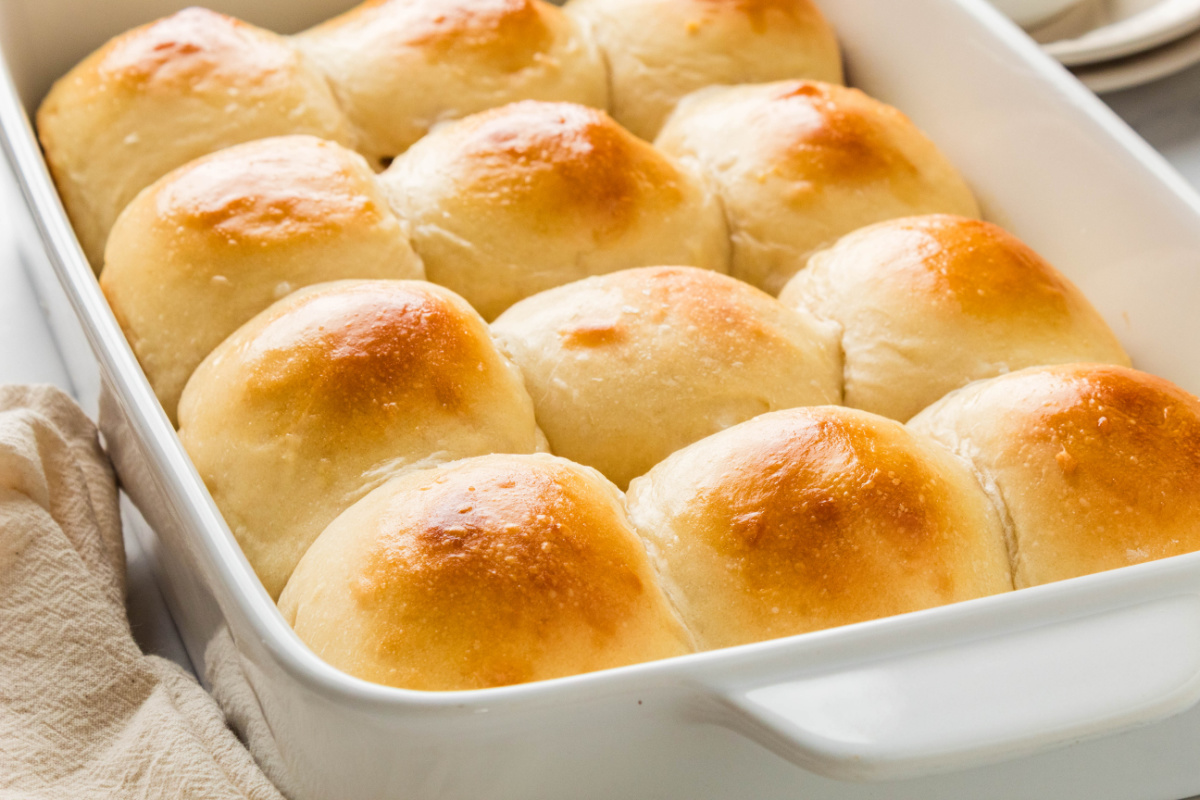
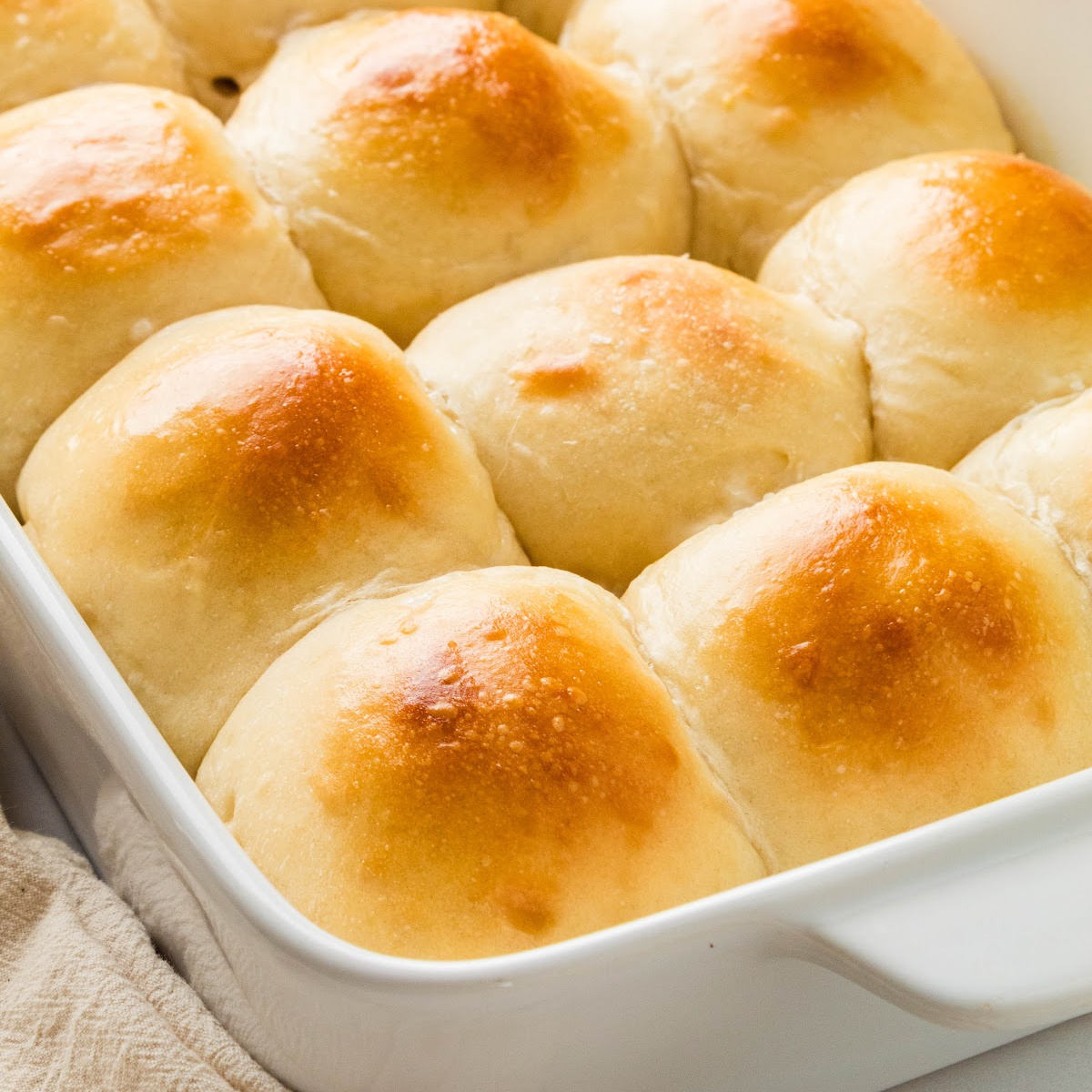
- And I bake them together rather than spacing them out individually. That’s what gives you the browned tops and the pale, very soft sides where the rolls touch each other. I still check a center roll with a thermometer, though. I’m looking for about 190°F, not just a pretty top.
Ingredients
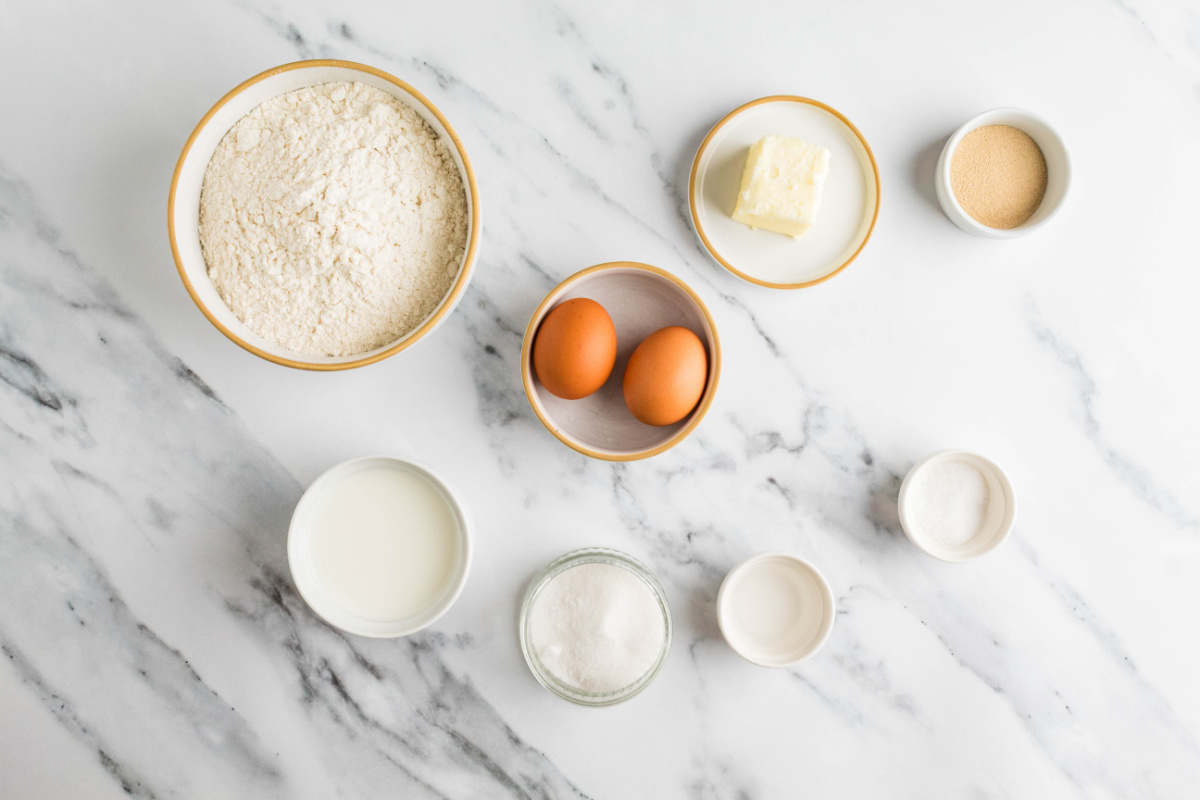
- Bread flour – This is my first choice because the higher protein gives the dough more strength once the egg and butter go in.
- Whole milk – Milk is used twice, once in the tangzhong and again in the dough. Whole milk is my preference because it gives the rolls more richness, but I also tested 2% successfully.
- Granulated sugar – There’s enough here to give the rolls a slight sweetness.
- Active dry yeast – This is what I used for testing. It should foam after sitting in the warm milk mixture for about 5 minutes, which confirms the yeast is active before you continue with the dough.
- Egg – This enriches the dough with additional fat and protein and contributes to the soft, tender interior.
- Unsalted butter – Make sure it’s very soft before it goes into the mixer. It should mash easily with a finger, not be melted or greasy.
- Fine sea salt – Besides seasoning the dough, salt helps regulate yeast activity and supports gluten development during kneading.
- Egg wash – An egg beaten with water gives the exposed tops of the rolls their golden brown finish as they bake.
How to Make Milk Bread Rolls
Find the complete printable recipe with measurements in the recipe card at the BOTTOM OF THE POST.
- Step One (make the tangzhong)
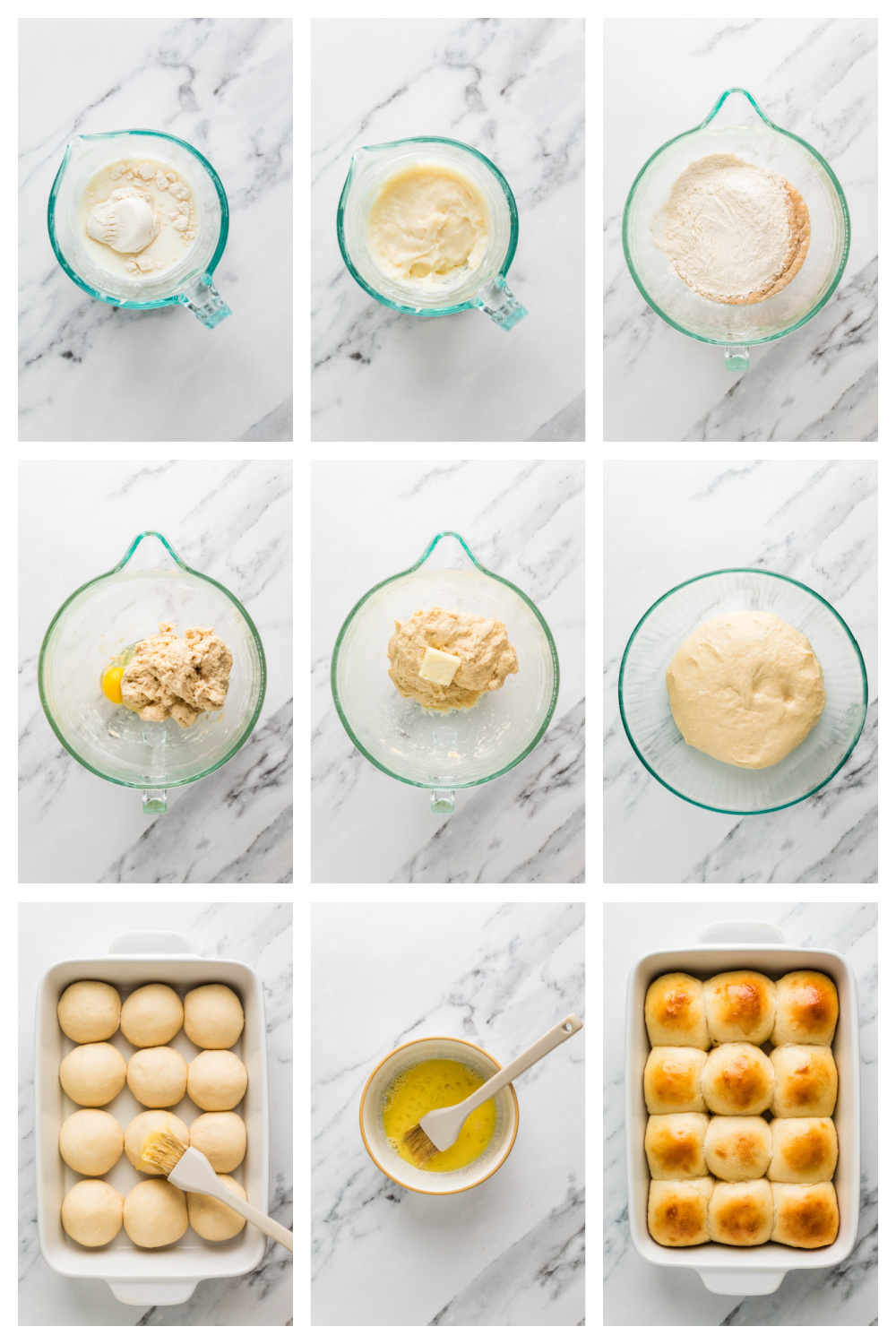
Whisk the bread flour and milk together in a microwave-safe measuring cup, then microwave in 30-second increments, whisking well after each one, until the mixture becomes a smooth, thick paste. Mine takes about 1 minute 30 seconds total in a 1,000-watt microwave. Scrape the warm tangzhong into the bowl of your stand mixer, stir in the room-temperature milk and sugar, then sprinkle the yeast over the top and let it sit for about 5 minutes, until visibly foamy. If nothing happens, start again with fresh yeast. - Step Two (mix the dough)
Fit the mixer with the dough hook and add the bread flour, mixing on low until the dough comes together and starts pulling away from the sides of the bowl. Add the beaten egg and mix until incorporated, then add the very soft butter 1 tablespoon at a time, waiting until each addition has worked into the dough before adding the next. Once all the butter has worked into the dough and it begins pulling away from the bowl again, add the salt. - Step Three (knead and let it rise)
Keep the mixer on low and knead for 10 to 15 minutes, until the dough is soft, smooth and still slightly tacky. Don’t keep adding flour trying to make it dry. Pinch off a small piece and stretch it between your fingers. When it stretches thin enough for light to pass through without tearing, the dough has passed the windowpane test. Transfer it with damp hands to a lightly oiled bowl, cover and let it rise in a warm place until doubled in size, about 1 hour. The doubling is more important than the time it took to get it there. - Step Four (shape the rolls)
Turn the dough onto a lightly floured surface and divide it into 12 portions, about 70 grams each if you’re using a scale. Pinch the underside of each piece together, then pull the dough ball toward you against the counter a few times to tighten and smooth the top. Arrange the rolls evenly in a lightly greased 9 x 13-inch baking dish. - Step Five (let them rise again)
Cover the baking dish and let the rolls rise until doubled in size again, about 1 hour. Once they’re getting close, position a rack in the center of the oven and preheat to 350°F. Whisk the egg and water together for the egg wash while the oven heats. - Step Six (bake the rolls)
Brush the risen rolls lightly with the egg wash and bake for 20 to 23 minutes, until the tops are golden brown. I still check one of the center rolls with an instant-read thermometer rather than relying on color alone. I take them out when the center reaches about 190°F. Let the rolls cool in the pan for about 10 minutes before serving.
Recipe Tips
- The finished tangzhong should look like a smooth, thick paste without any loose milk around it. Microwave timing will vary by wattage, so consistency is the better indicator. If it becomes very stiff or rubbery, it has gone too far.
- After about 5 minutes, look for obvious foam across the surface of the milk mixture. A few random bubbles aren’t what I’m looking for. If it still looks basically the way it did when you sprinkled in the yeast, use fresh yeast and start again.
- This dough is supposed to remain slightly tacky even after it becomes smooth. It’s never going to feel like a dry dough that leaves nothing on your fingers, so resist adding flour until it does. Extra flour changes the hydration of the dough and can leave you with firmer rolls.
- A warm kitchen may get you to doubled dough sooner than an hour, while a cool kitchen can take considerably longer. For both rises, use the change in volume as your endpoint rather than the time it takes.
- When shaping the rolls, use only enough flour on the counter to keep the dough manageable. Too much flour makes it harder to get enough friction against the counter to smooth the tops.
Storage and Reheating
- Let the rolls cool completely before storing them, then keep them in an airtight container or well-sealed bag at room temperature for up to 3 days. Putting them away while they’re still warm traps condensation and gives you damp rolls instead of soft ones.
- For one roll, about 15 to 20 seconds in the microwave is usually enough to warm it without turning it chewy. For several rolls, wrap them loosely in foil and warm them in a 300°F oven until heated through.
- You can freeze these baked milk bread rolls for up to 2 months. Cool them completely, wrap them well so as little air reaches them as possible, then put them into a freezer bag or container. Let them thaw at room temperature and warm them briefly before serving if you want them soft and warm again.
- You can also freeze the shaped dough before the second rise. Freeze the rolls on a lined baking sheet until firm, then transfer them to a freezer bag. When you want to bake them, arrange them in the greased baking dish, cover and let them thaw completely and rise until properly doubled before adding the egg wash and baking. Give yourself lots of time because cold dough can be slow.
FAQs
- What is tangzhong?
Tangzhong is a mixture of flour and liquid that is heated until the starch in the flour gelatinizes. That allows the flour to absorb and retain more liquid, which is one of the reasons milk bread stays tender after the day it’s baked. In this recipe, I use milk rather than water for the tangzhong. - Can I use all-purpose flour instead of bread flour?
Yes. I tested these rolls with all-purpose flour and they were still very good. Bread flour remains my preference for the additional strength it gives this enriched dough, but all-purpose flour works. - Can I use 2% milk instead of whole milk?
Yes. I tested these rolls successfully with 2% milk. Whole milk is still my first choice for the additional dairy fat, but there’s no need to buy it specifically for this recipe if you already have 2%. - Can I use instant yeast instead of active dry yeast?
Yes. Instant yeast can be mixed into the dry ingredients rather than waiting for it to foam first. Just remember that you lose the early visual check that tells you your active dry yeast is alive, and the rise will move faster, so watch the dough rather than relying on the suggested times. - Can I make milk bread rolls without a stand mixer?
You can, but this is a recipe where I strongly prefer a stand mixer, unlike my no-knead onion rolls, which don’t require one. The dough is enriched, tacky and needs substantial kneading to reach good gluten development. By hand, expect considerably more work and possibly around 30 minutes of kneading. I’d still use the windowpane test as the endpoint rather than deciding you’re finished based on time alone. - Why didn’t my milk bread rolls rise?
The first thing I’d suspect is the yeast, particularly if it never became foamy at the beginning. Temperature is important too. Enriched dough will move slowly in a cool kitchen, so a dough that hasn’t doubled after an hour isn’t automatically a failure. Give it more time somewhere comfortably warm before deciding there’s a problem. - Why are my rolls dense instead of soft?
The three things I’d look at are too much flour, insufficient kneading or not enough rise time. This dough should remain slightly tacky, it needs enough kneading to pass the windowpane test, and both rises should be judged by how much the dough has grown rather than by an exact number of minutes.
From My Kitchen Notes
Small observations from the margins.
- Some things become obvious to me after I’ve made them badly a few times.
- I see the difference between making something easier and making it careless.
- Not every one of my shortcuts is a compromise.
- I can spend a long time learning the traditional way before realizing which part I really need.
- Knowing when something is ready is more useful than knowing how long it took last time.
- There are things that need more time than attention.
- Resistance is sometimes the only proof that I’m getting somewhere.
- Some things are worth learning even if no one asked you to.
- I have never kept something in its original form just because that’s how I first found it.
- Sometimes the thing I bring home from a trip is not something I bought.
More Reasons to Make the Bread Yourself
This post may contain affiliate links. Please read my disclosure policy.
Milk Bread Rolls
Equipment
- microwave-safe measuring cup For preparing the tangzhong in the microwave.
- whisk For keeping the tangzhong smooth as it thickens.
- Stand Mixer with dough hook. For mixing and developing the enriched yeast dough.
- mixing bowls (large) For the first rise.
- kitchen scale (digital). Helpful for dividing the dough into 12 equal portions of approximately 70 grams each.
- baking dish 9x13 (23x33 cm). Allows the rolls to proof and bake together for the soft pull-apart sides.
- pastry brush For applying the egg wash.
- instant-read thermometer For confirming the center rolls have reached 190°F (88°C).
Ingredients
Tangzhong:
- 3 tbsps (24 g) bread flour
- ½ cup (121 g) whole milk
Rolls:
- ⅔ cup (147 g) whole milk room temperature
- ¼ cup (49 g) granulated sugar
- 2¼ tsps (7 g or 1 packet) active dry yeast
- 3¼ cups (420 g) bread flour
- 1 large egg lightly beaten
- 4 tbsps (58 g) unsalted butter very soft
- 1½ tsps (8 g) fine sea salt
- neutral oil
Instructions
- Prepare the tangzhong by whisking the bread flour and milk together in a microwave-safe measuring cup. Microwave in 30-second increments, whisking well after each, until the mixture thickens into a smooth paste. In a 1,000-watt microwave, this takes about 1 minute 30 seconds.3 tbsps (24 g) bread flour, ½ cup (121 g) whole milk
- Transfer the warm tangzhong to the bowl of a stand mixer. Add the room-temperature milk and sugar and stir until well mixed. Sprinkle the active dry yeast over the mixture and let stand for about 5 minutes, until visibly foamy. If the yeast does not foam, discard the mixture and begin again with fresh yeast.⅔ cup (147 g) whole milk, ¼ cup (49 g) granulated sugar, 2¼ tsps (7 g or 1 packet) active dry yeast
- Fit the stand mixer with the dough hook. Add the bread flour and mix on low speed, level 2 on a KitchenAid, until a dough forms and begins releasing from the sides of the bowl.3¼ cups (420 g) bread flour
- Add the beaten egg and continue mixing until fully incorporated.1 large egg
- With the mixer running on low, add the very soft butter 1 tablespoon (14 g) at a time, allowing each addition to become fully incorporated before adding the next. Continue mixing until the dough begins pulling away from the sides of the bowl again.4 tbsps (58 g) unsalted butter
- Add the salt and knead with the dough hook for 10 to 15 minutes, until the dough is soft, smooth and slightly tacky. Check for sufficient gluten development using the windowpane test: a small piece of dough should stretch thin enough for light to pass through without tearing.1½ tsps (8 g) fine sea salt
- Lightly oil a large bowl. With damp hands, transfer the dough to the bowl and cover with plastic wrap or a clean kitchen towel. Let rise in a warm place for about 1 hour, or until doubled in size. Use the increase in volume rather than time as the final indicator.neutral oil
- Turn the dough onto a lightly floured surface and divide into 12 equal portions, approximately 70 grams each.
- Shape each portion into a smooth ball by pinching the dough together underneath, then pulling the ball toward you against the lightly floured surface to create tension across the top.
- Lightly grease a 9 x 13-inch (23 x 33 cm) baking dish (oil or cooking spray) and arrange the 12 shaped rolls evenly inside.
- Cover and let rise for about 1 hour, or until the rolls have doubled in size.
- Position an oven rack in the center of the oven and preheat to 350°F (177°C).
- Whisk the egg and water together with a fork until evenly mixed. Brush the risen rolls lightly with the egg wash.1 large egg, 1 tbsp (15 ml) water
- Bake for 20 to 23 minutes, until the tops are golden brown and the center of the rolls registers 190°F (88°C) on an instant-read thermometer.
- Let the milk bread rolls cool in the pan for about 10 minutes before serving.
Notes
- Microwave wattage affects how quickly the tangzhong thickens. The 1 minute 30 second timing is based on a 1,000-watt microwave, so use the smooth, thick paste consistency as the endpoint rather than time alone.
- Bread flour weight varies by brand.
- The finished dough should be soft, smooth and slightly tacky. Avoid adding additional flour solely to make the dough feel dry.
- Rising times are approximate. Both rises are complete when the dough has doubled in size, which may take more or less than 1 hour depending on room temperature.
- Add the butter gradually and allow each tablespoon to incorporate before adding the next.
- Use the windowpane test to confirm sufficient gluten development after kneading.
- For evenly sized rolls, weigh the divided dough and portion it into approximately 70-gram pieces.
- Bake to an internal temperature of 190°F (88°C), checking a roll near the center of the baking dish.
Nutrition
Have you made these Milk Bread Rolls? I’d love to hear how they turned out – leave a comment below and let me know.
As an Amazon Associate and member of other affiliate programs, I earn from qualifying purchases.
Leave a Reply