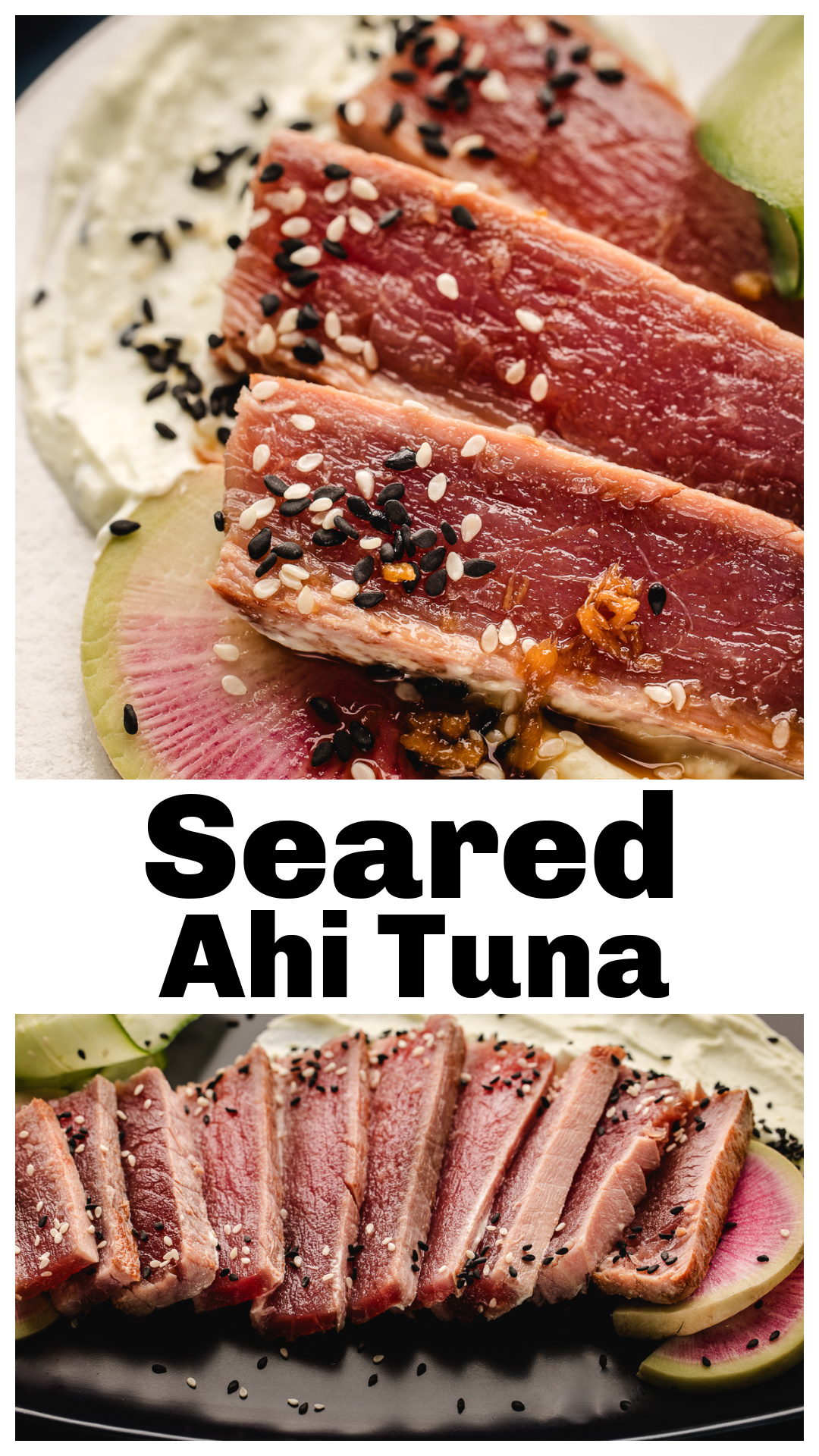
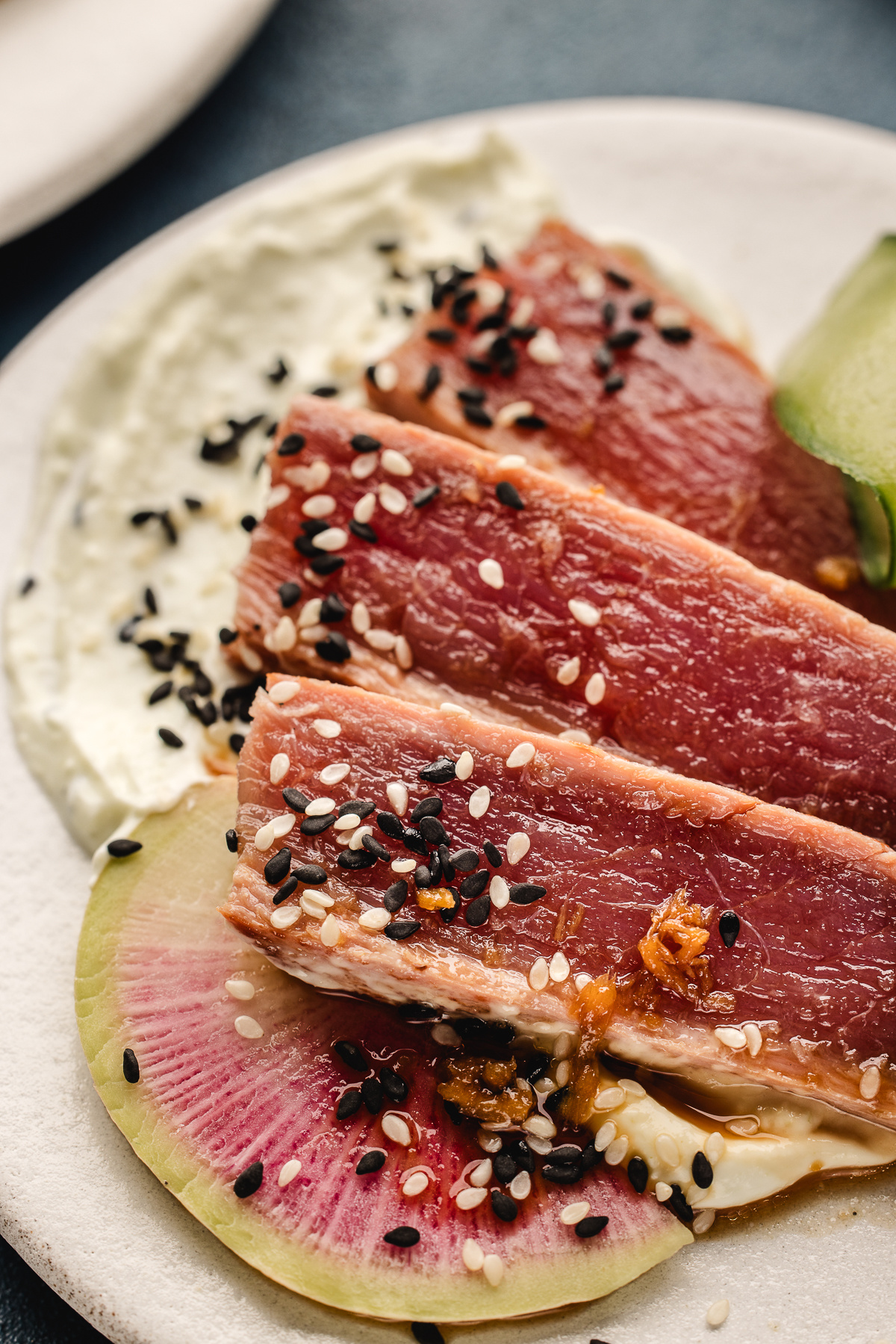
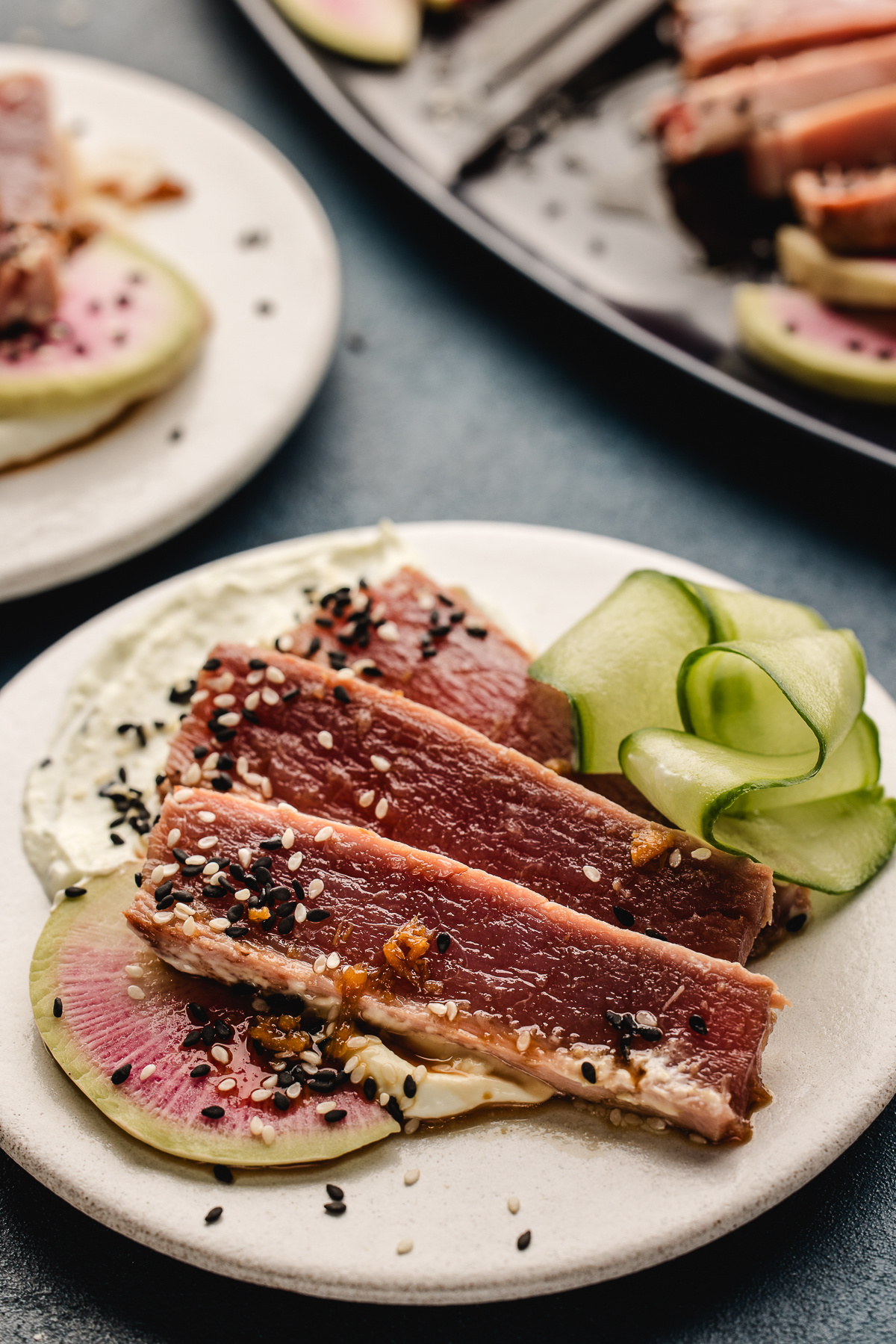
Seared ahi tuna with a rare center, a cool wasabi–Greek yogurt smear, ginger–soy drizzle, crisp cucumber ribbons, and watermelon radish. This is fast, exact cooking with enough contrast to make every piece matter.
Seared Ahi Tuna, From Years of Paying Attention
I think a vineyard is one of the clearest examples of structured wildness humans have ever made. At first glance it looks mostly controlled: rows, posts, wires, repetition and order, all of it only working because managing it means you’re constantly responding to something that doesn’t care what you planned. Seared ahi tuna is kind of in that same space. You set the boundary, make one exact move in a hot pan, and then step back and let what is alive stay alive.
A vineyard only appears controlled. We train the vines, they are never forced. We tie the canes to the trellis system, they are never commanded to grow a certain way. We align the rows for sun, slope, drainage and maximum airflow. Everything about the way it looks says we thought about every detail meticulously. And then nature answers back, and rarely with a sense of humor. One cold spell rewrites the whole year. A heat wave changes the ripening schedule. The mythic Oregon fog hangs around a few minutes too long and fungus appears. A vine pushes where it was never supposed to. These things can be prepared for, but they cannot be controlled.
A vineyard thrives in the space between the discipline we give it and allowances we let it have. It takes self-control, listening, patience and time to get it right. Grapes are not grown by imposing our human will upon them. They grow well because we take the time to observe their most minute patterns and respond to their needs. That’s why vineyards have always felt different to me in comparison to orchards or fields. They require microscopic farming decisions at a very intimate level. They are not industrial crops, and they are not casual either. They are something in between.
Winter comes along and exposes every decision you made in the prior seasons. The good ones and the bad ones become visible. Spring is complete chaos weather masquerading as hope. Summer is when you hold back and remove what the vines cannot hold on to (leaves and grapes). In the fall we have to stop intervening altogether and accept what arrived. Every year has taught me something I did not know I needed to learn.
That kind of guided aliveness taught me that beauty does have its limits, and abundance often means cutting back. None of it is about controlling something. Farming never is. It took years to understand and accept that patience is often active, not a passive state. It’s not growth at all costs, but more of a guiding something that is very much alive toward its own expression. A vineyard waits, adjusts itself, responds to your tweaks, and when conditions align, it shows you exactly what it is. That is the kind of wildness that lasts. But you have to be ready to see it.
Seared ahi tuna is its own structured wildness condensed into a minute. The part you control is the quality of the fish, which matters more than anything. You dry it, season it simply, and place it into a pan that is already aggressively hot and ready. The timing is measured in seconds, not minutes.
The wildness is that the fish was alive until very recently and carries the ocean with it. The heat of the pan acts differently every time too. You can’t control it. The fat renders, sugars react, and proteins tighten, all of it happening faster than you expect. One second too long and it’s ruined. You don’t really cook ahi so much as pass it briefly through fire.
In both the vineyard and the ahi, the center remains untouched. The edges are where the real transformation happens. If we intervene too much, we destroy what makes it special. Timing matters way more than force ever could.
I’m naturally drawn to making foods that trust my senses to get them just right. That self-trust didn’t just arrive. It took time to develop it. I’m still working on it. But seared ahi is going to assume that kind of confidence already lives in you. That you know when to walk away. For me that feels no different than pruning a vine. You have to know when enough is enough.
The most important part of seared ahi is not the sear, it’s leaving the middle raw. Ahi is not about showing off your cooking skills, it’s about respecting the vitality of the fish. You do not dominate it, you frame it and then stop.
That’s structured wildness on a plate.
Why I Love My Recipe
- I made this dish around timing rather than technique. Ahi tuna cooks in seconds, not minutes, and everything on the plate exists to protect that rare center. The fish should stay cool in the middle, no earlier and no later.
- I didn’t want the wasabi–Greek yogurt to mimic mayo or cream. It gives the tuna something cool to pass through. The way shade matters in a place that gets too much sun.
- The ginger–soy drizzle goes a long way and ends up where it’s needed instead of coating everything evenly. It seasons the slices without overwhelming the clean flavor of the tuna.
- Cucumber ribbons and watermelon radish are here for contrast and temperature. They help reset your palate between bites so each slice tastes as distinct as the first.
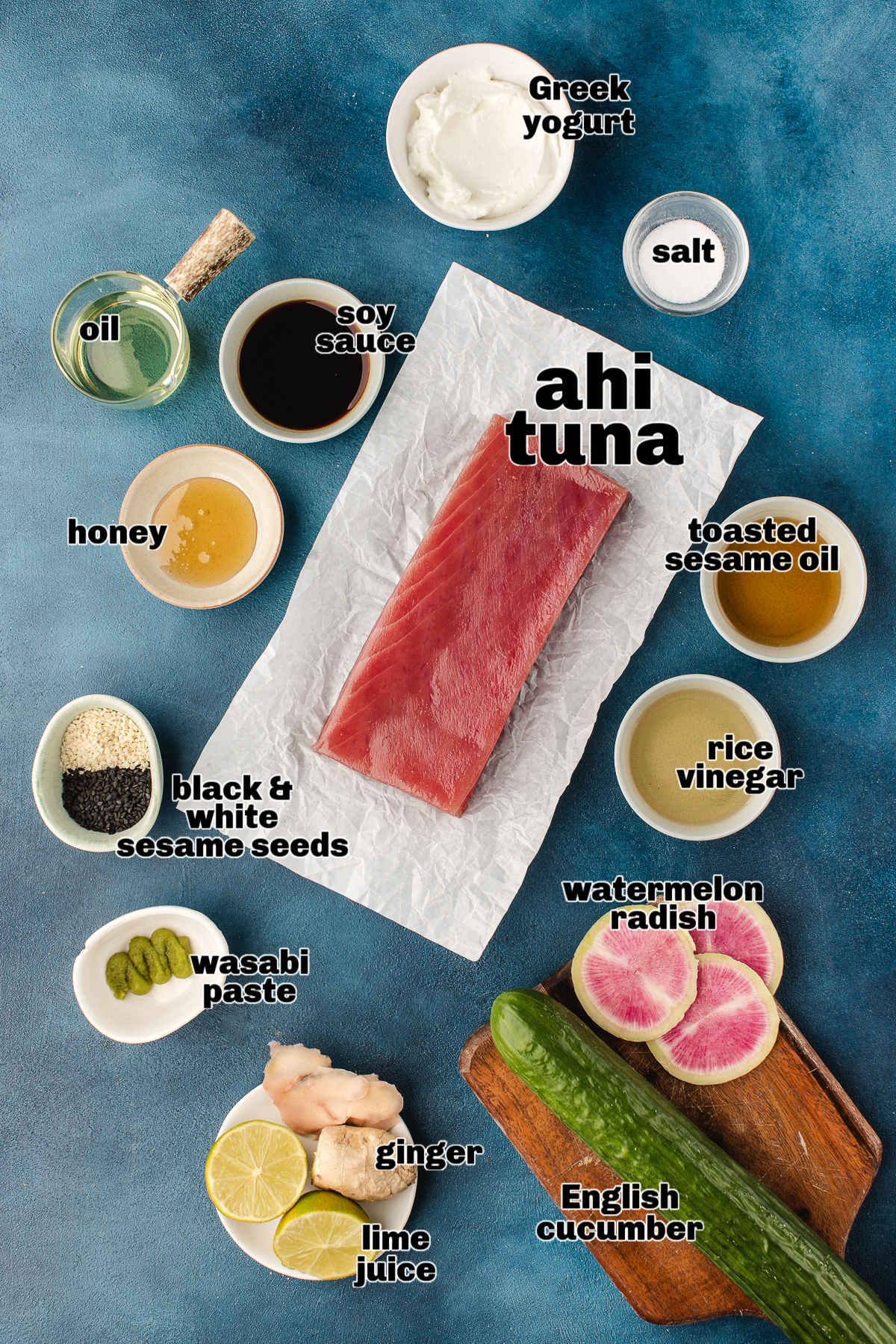
Ingredients
Wasabi–Greek Yogurt Smear
- Full-fat Greek yogurt – thick enough to hold a swipe on the plate. I prefer full-fat Fage.
- Wasabi paste – start light, then adjust. It should register, not rule.
- Fresh lime juice – keeps the yogurt feeling light.
- Kosher salt – just enough.
Ginger–Soy Drizzle
- Soy sauce – depth and umami.
- Rice vinegar – keeps the sauce from drifting sideways.
- Honey or maple syrup – a small amount to take the edge off.
- Freshly grated ginger – aromatic and present.
- Toasted sesame oil – distinctive, used sparingly.
Cucumber Ribbon Salad
- English cucumber – shaved into long ribbons for contrast.
- Kosher salt – draws out excess moisture.
- Rice vinegar – keeps it fresh.
- Honey or sugar – a subtle counterpoint.
- Toasted sesame oil – just enough to connect it back to the plate.
For the Ahi Tuna
- Ahi tuna steak – sushi-grade.
- Avocado or canola oil – neutral, high smoke point.
- Kosher salt – light, even seasoning.
- Black and white sesame seeds – for finish and contrast.
- Watermelon radish – thinly sliced for color, beauty and crunch.
How to Make Seared Ahi Tuna
Find the complete printable recipe with measurements in the recipe card at the BOTTOM OF THE POST.
- Step One (make the sauces)
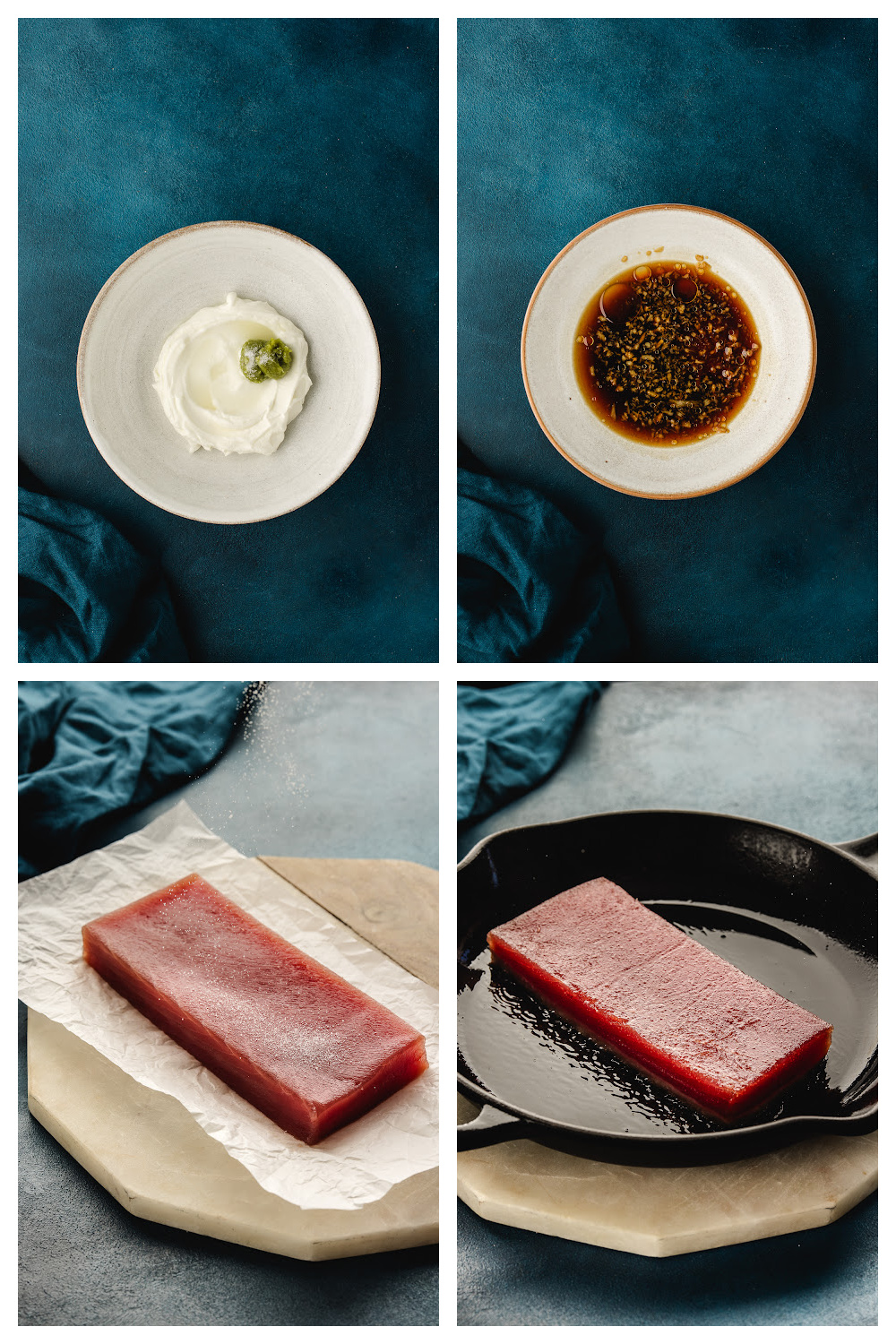
Whisk together the Greek yogurt, wasabi paste, lime juice, and a small pinch of kosher salt until smooth and thick enough to hold a clean swipe on a plate. Cover and refrigerate. In a separate bowl, whisk the soy sauce, rice vinegar, honey, grated ginger, and toasted sesame oil until combined. Set it aside so the ginger has time to infuse while everything else comes together. - Step Two (prep the cucumber ribbons)
Use a Y-peeler to shave the cucumber lengthwise into long ribbons, stopping before the seeded center. Toss the ribbons with a pinch of salt and let them sit for about five minutes, just long enough to soften and release some moisture. Gently squeeze them, then toss with the rice vinegar, honey, and sesame oil. Keep chilled until it’s time to plate. - Step Three (dry and season the tuna)
Pat the ahi tuna completely dry with paper towels. Any surface moisture will interfere with the sear and prevent proper browning. A dry exterior allows the fish to form a quick crust while the center stays cool and rare. Season lightly and evenly on all sides with kosher salt. Nothing more is needed here. - Step Four (sear)
Heat a cast iron skillet over high heat for three to five minutes, until very hot. Cast iron retains heat well, which helps the ahi tuna develop a fast, caramelized exterior without cooking through the middle. Add the oil and swirl to coat the pan. Place the tuna in the skillet and leave it alone. Sear for 45 to 60 seconds per side for a rare pink center, up to about 75 seconds per side for a thicker cut. Briefly sear the edges, about ten seconds each, to give the exterior a clean finish while preserving the rare interior. - Step Five (rest and slice)
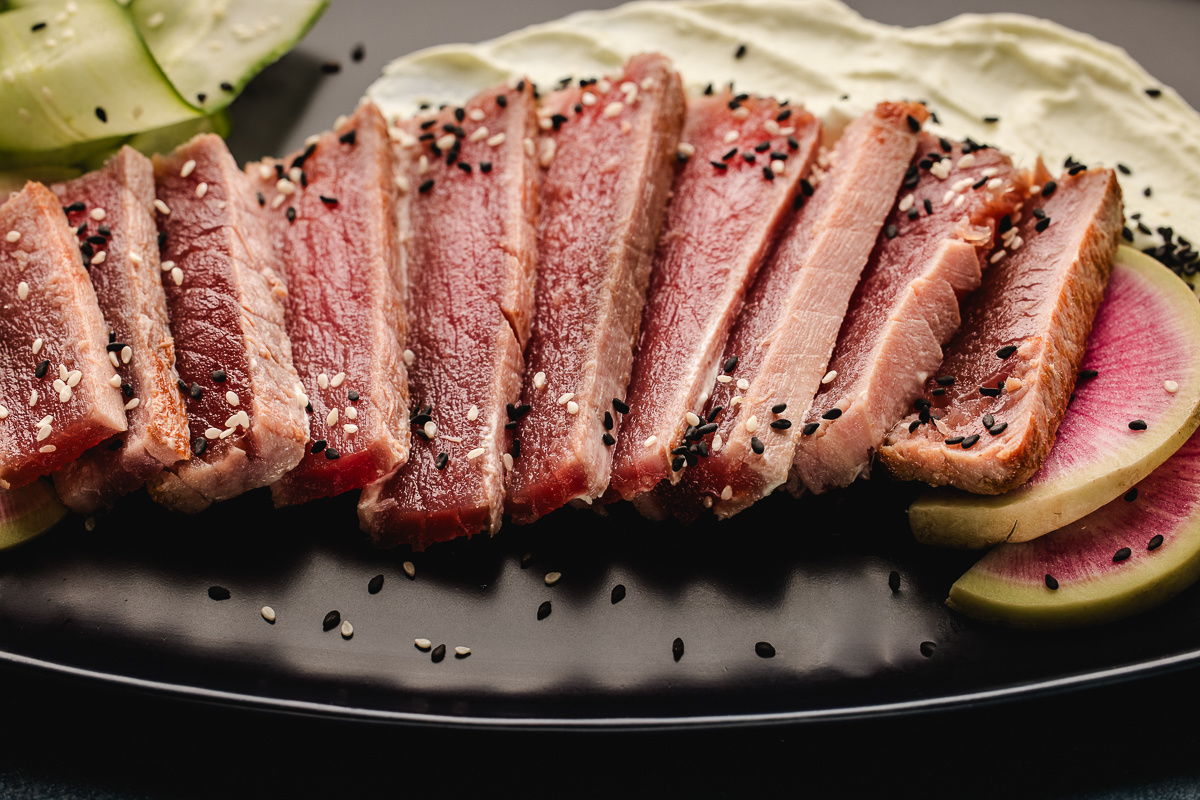
Transfer the tuna to a cutting board and let it rest for two minutes. Resting allows the exterior heat to settle and makes slicing cleaner. Slice the ahi tuna against the grain into ¼- to ½-inch pieces, wiping the knife between cuts to keep the edges clean and precise. - Step Six (plate and serve)
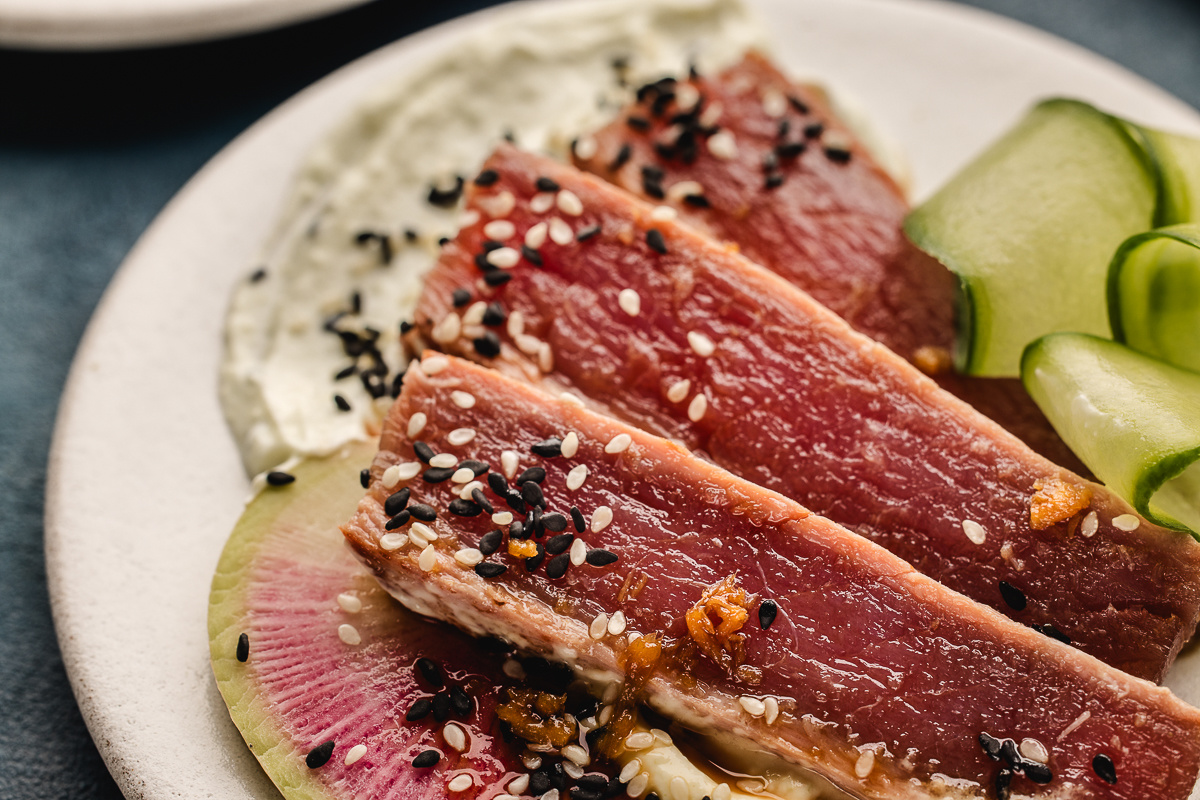
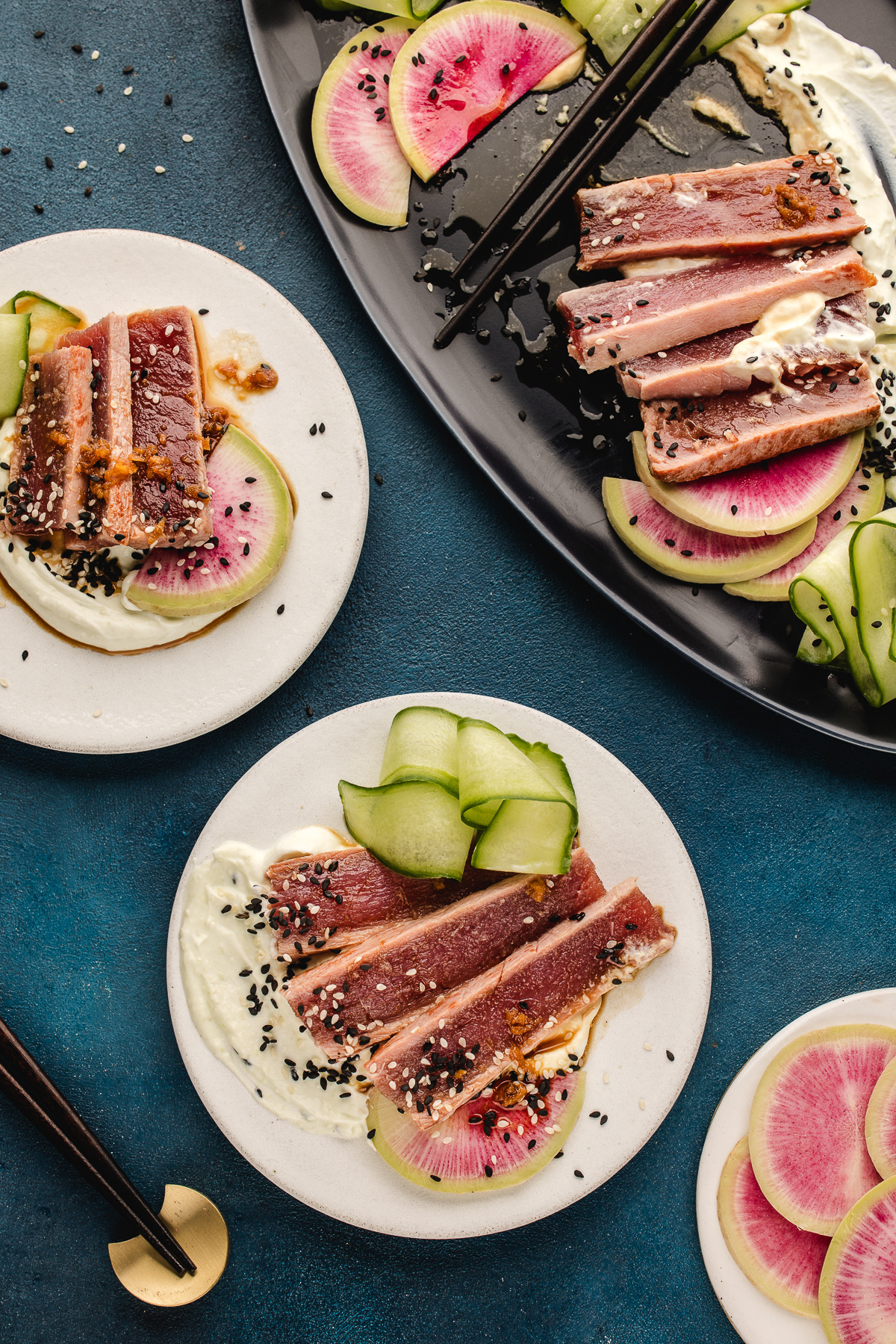
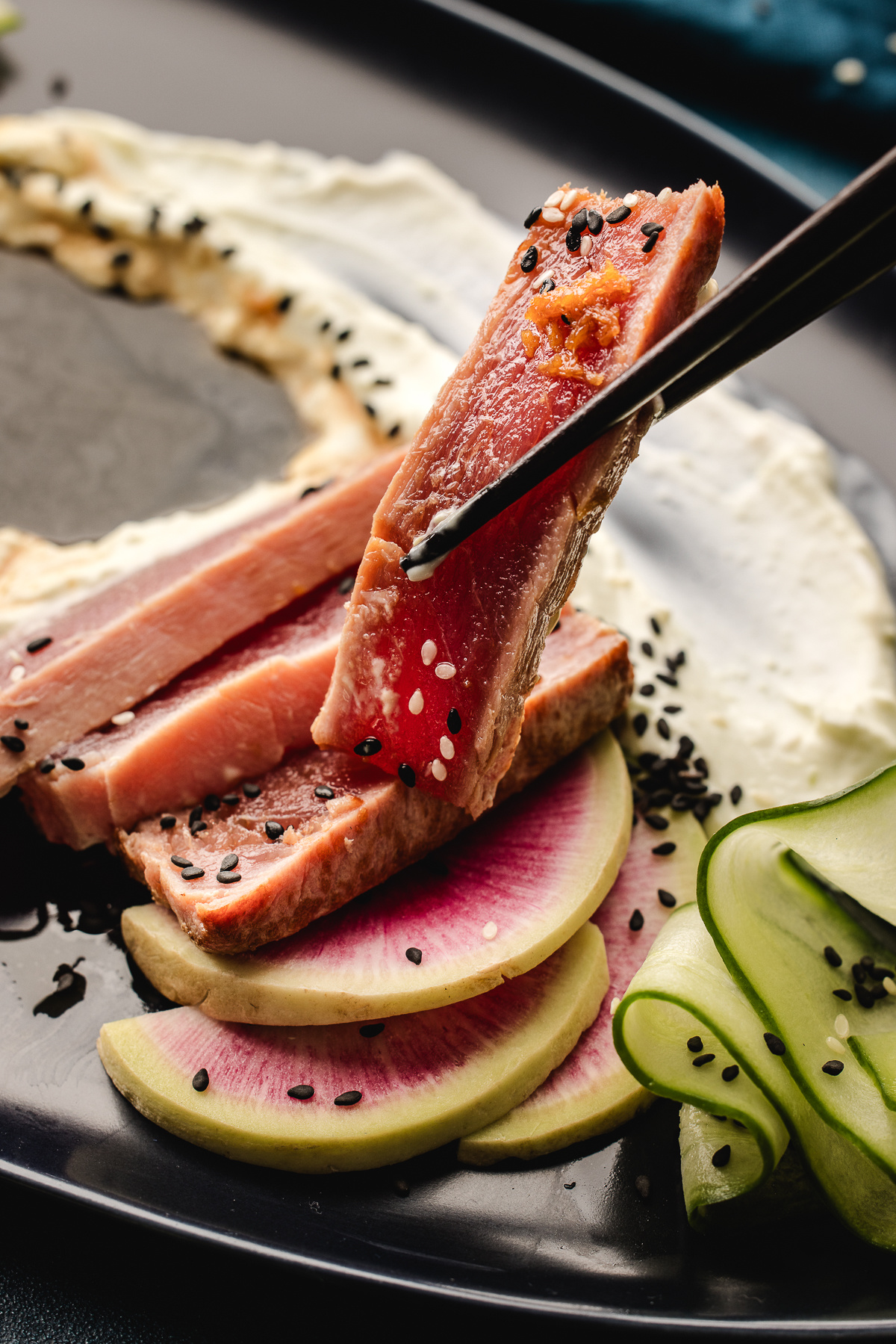
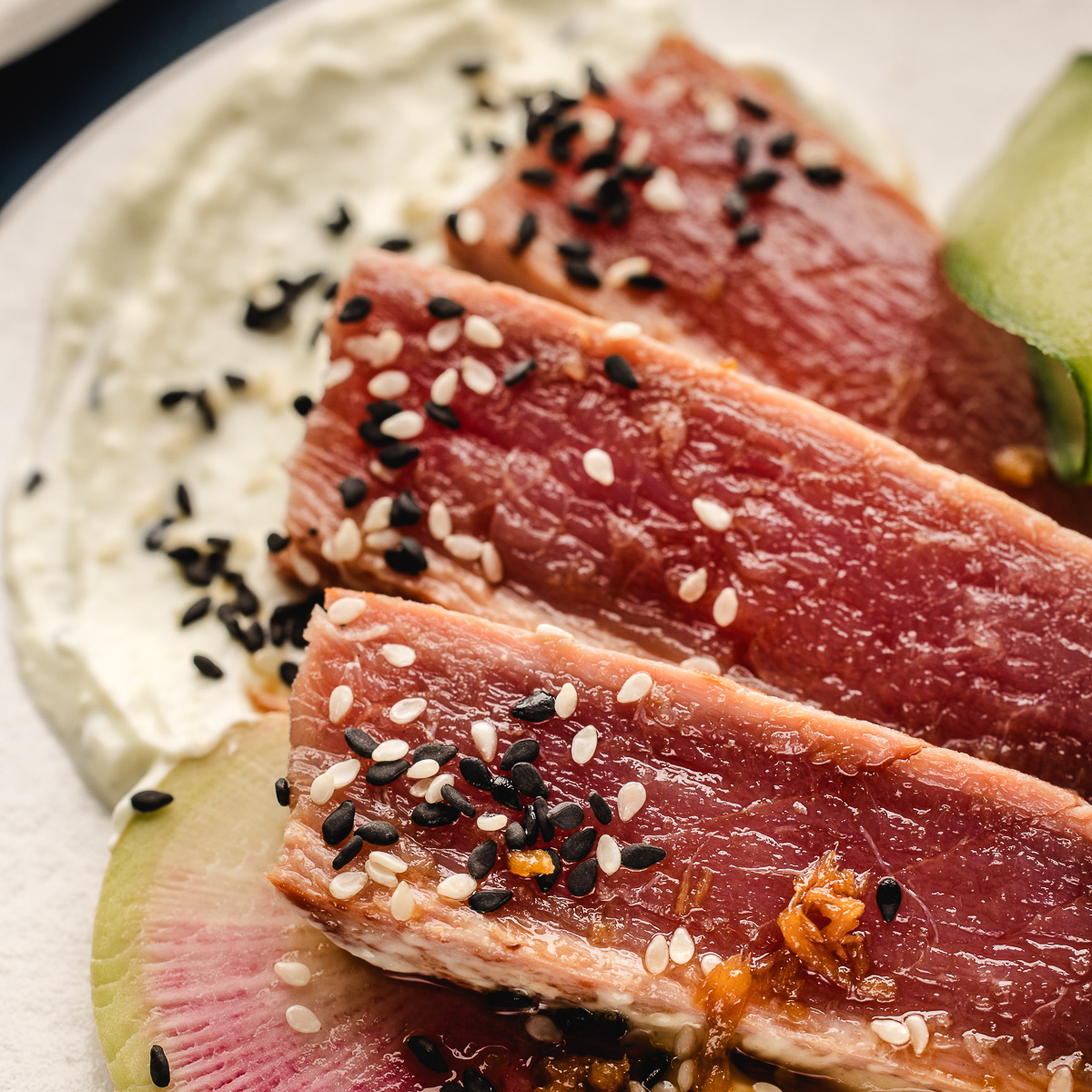
Swipe the wasabi–Greek yogurt across the plate. Layer thin slices of watermelon radish on top, then arrange the tuna so the pink center is visible. Add a small mound of cucumber ribbons alongside. Finish with a light drizzle of the ginger–soy sauce and a scattering of black and white sesame seeds. Serve immediately, while the contrast between the warm exterior and cool rare center is still intact.
Recipe Tips
- This dish begins before the pan ever gets hot. Quality matters more here than almost anywhere else because there’s nowhere to hide. Sushi-grade ahi that’s been handled well tells on itself immediately, in the way it smells clean, the way it firms under your fingers, the way it takes salt evenly. If something feels off at the start, it won’t improve later.
- Drying the tuna is not optional. Any surface moisture turns the pan into a steamer and that’s how you lose the contrast this dish depends on. A clean, dry surface lets the exterior take color quickly while protecting the rare center.
- The pan needs to be genuinely hot before the fish goes in, not warming up or almost there. Cast iron retains heat long enough to form a fast crust without driving heat deep into the middle. Once the ahi hits the pan, the timing shifts from minutes to seconds. Everything else should already be finished.
- Pull the tuna off the pan sooner than feels reasonable. Ahi continues to change from residual heat after it leaves the pan, and that brief rest is enough for the exterior to settle without pushing the center past rare. If it looks perfect in the skillet, it’s already gone too far.
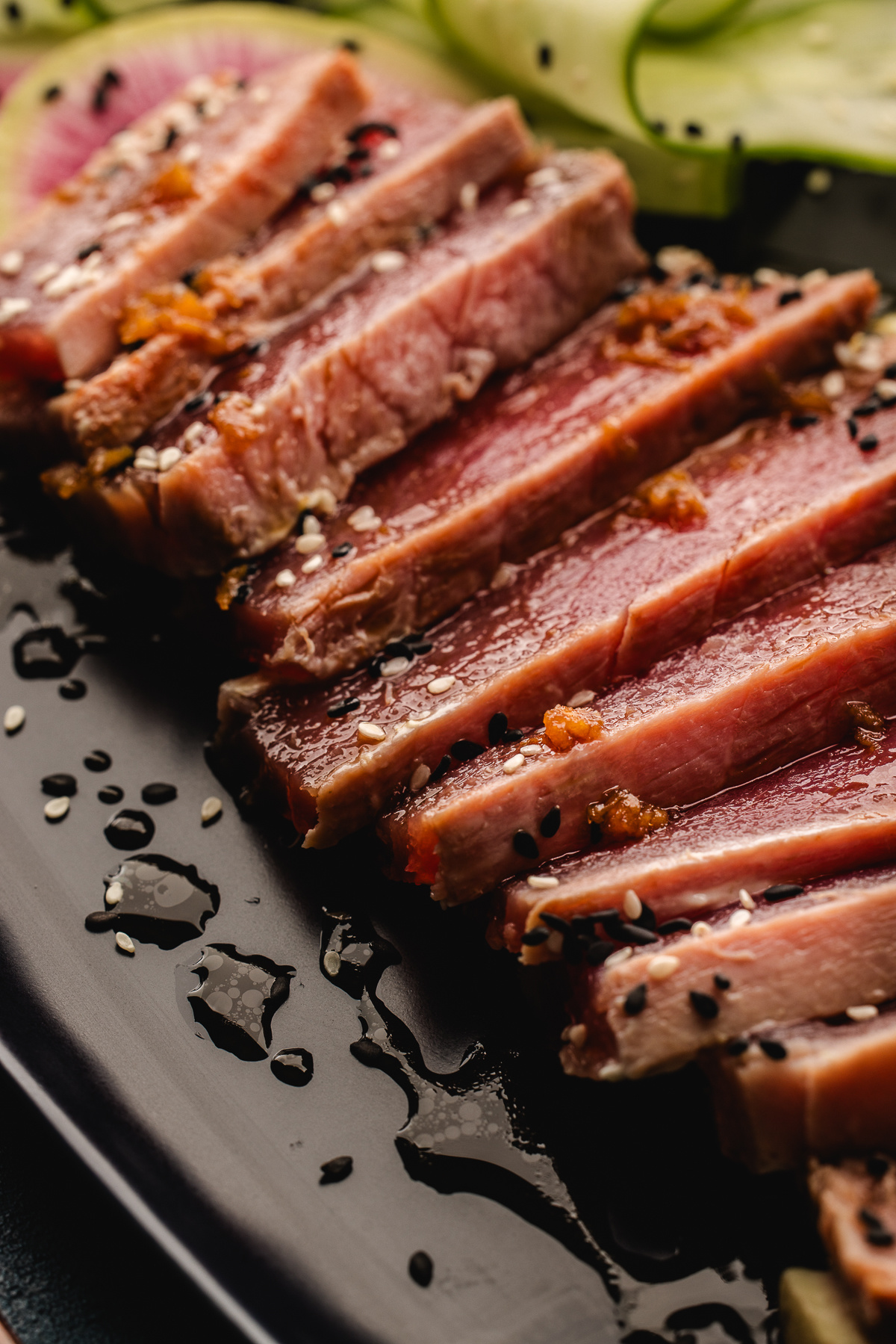
- Slice with purpose and a very clean knife. Wiping between cuts isn’t about perfection, it’s about preserving the structure of the fish. The slices should show a clear transition: caramelized edge giving way to a cool, pink interior.
- Plate and serve it immediately. The contrast between warm exterior and chilled center, creamy yogurt and crisp vegetables, salt and citrus is short-lived. This is a dish defined by timing, and timing does not wait.
Storage
Seared ahi tuna is meant to be eaten the day it’s made, while the tuna is still clean and the contrast between the warm exterior and cool center is intact. That said, how well anything keeps comes down to how the fish was handled long before it ever reached your kitchen.
- Seared ahi tuna – If there are leftovers, store the sliced tuna in an airtight container in the refrigerator and plan to eat it within 24 hours. The texture will change, and that’s unavoidable. Rare tuna firms up and loses its silk once it’s fully chilled. It’s still edible, just no longer the dish you originally made. Reheating isn’t recommended. This one doesn’t come back once it’s crossed that line.
- Wasabi–Greek yogurt – This can be made up to a day ahead and kept covered in the refrigerator. Give it a quick stir before using to smooth it back out. The flavor holds well and comes together in a nice way overnight.
- Ginger–soy drizzle – Stores well in an airtight container for up to 2 days in the refrigerator. Stir before using.
- Cucumber ribbon salad – Best made fresh, but the cucumber ribbons can be shaved and stored undressed for up to 24 hours. Keep them dry and sealed, then toss with the dressing just before plating so they stay crisp.
- Freezing – Nope, not worth it here. Tuna, yogurt sauces, and cucumbers all lose what makes them good once frozen. This is a make-it, eat-it, remember-it kind of dish.
FAQs
- What does “sushi-grade” really mean?
“Sushi-grade” is a market term, not a regulated label. What matters is the handling of it. High-quality ahi tuna is typically frozen shortly after being caught to reduce parasite risk and preserve its texture. That freezing step is why yellowfin tuna can be safely served raw or rare. Source, storage temperature, and time since thaw matter way more than the words on the package. If anything feels off, or your questions cannot be answered, don’t buy it. - Does ahi tuna need to be fully cooked to be safe?
No. Safety with tuna is about quality and handling, not doneness. Ahi is served raw, seared, or rare because its muscle structure and fat content hold up well that way. Overcooking doesn’t make questionable fish safer. It only destroys good fish faster. - Why is drying the tuna before searing so important?
Surface moisture will cause steaming instead of searing. A dry exterior allows direct contact with the pan, which is what creates a quick outer transformation while the center stays cool and completely intact. This single step determines whether the dish works. - Why keep the center rare?
This is where ahi’s texture shines. Once you take it too far, it tightens up and loses its softness. The goal is not doneness, but contrast. It’s like training a vine along a wire, you guide the edges and leave the center untouched. - Can this dish be made ahead of time?
The sauces can, the tuna cannot. The wasabi–Greek yogurt and the ginger–soy drizzle hold well in the refrigerator for up to two days. The tuna should be seared, sliced, and served immediately. This dish depends on a narrow window where everything aligns. - Why use a cast iron skillet?
Cast iron holds onto the heat you expose it to. That matters when the entire cook happens in under two minutes. A pan that drops temperature when the fish hits it is going to work against you. Cast iron keeps the conditions fixed long enough to do the job correctly. - Is previously frozen tuna acceptable for this recipe?
Yes, most sushi-grade tuna has been frozen at some point. Thaw it slowly in the refrigerator, keep it cold, and use it quickly. Once it’s thawed, treat it like fresh fish with a short clock. - Why slice the tuna against the grain?
Slicing against the grain shortens muscle fibers, which keeps the texture tender. This dish has very little margin, so these details carry the weight. - Is this dish about technique or instinct?
I think both. The preparation is straightforward, but the timing is not forgiving at all. This is the kind of cooking that rewards your attention and then asks you to stop. Too much interference ruins it.
From My Kitchen Notes
Just a few observations, not tips or instructions.
- Some recipes need you to intervene constantly. This is not one of them. The work happens before the pan, not during it.
- I learned a long time ago that knowing when to stop matters more than knowing what to do next. Vineyards taught me that first. Tuna reinforced it.
- Vineyards also taught me that timing is not intuition until you’ve ruined a few things first. Tuna is less patient.
- Ahi will not reward your hesitation. You either respect the timing, or you don’t get invited back.
- I’m always a little doubtful of approaches that insist more intervention equals better results. In food, in farming, in life. That hasn’t matched my experience.
- Structured wildness is not chaos. It’s knowing exactly where to stop touching something that’s alive.
- This is one of those dishes where the mistake isn’t subtle. You know immediately.
- If you’re nervous while making this, you’re already late.
- Most damage happens after the moment was already right.
More Seafood Where Timing Matters
- Salmon Poke Bowls – marinated salmon, sushi rice, mango.
- Spicy Salmon Sushi Bowls with Crispy Rice – bold heat, crisp rice texture.
- Salmon Crab Sushi Bake – layered rice, spicy seafood.
- Perfect Air Fryer Salmon – 7 minutes, precise every time.
This post may contain affiliate links. Please read my disclosure policy.
Seared Ahi Tuna
Equipment
- cast iron skillet Retains high heat for fast exterior carmelization without overcooking the center.
- Chef's knife Essenital for precise slicing.
- mixing bowls For the sauces.
- Y-peeler For the cucumber ribbons.
Ingredients
Wasabi-Greek Yogurt Smear:
- ¼ cup (60 g) full-fat Greek yogurt I prefer full-fat Fage.
- ½-1 tsp (3-6 g) wasabi paste to taste
- 1 tsp (5 ml) fresh lime juice
- pinch kosher salt
Ginger-Soy Drizzle:
- 3 tbsps (45 ml) low sodium soy sauce
- 1 tbsp (15 ml) rice vinegar
- 1 tbsp (21 g) honey or maple syrup
- 1 tsp (5 g) freshly grated ginger
- 1 tsp (5 ml) toasted sesame oil
Cucumber Ribbon Salad:
- 1 large English cucumber
- pinch kosher salt
- 1 tbsp (15 ml) rice vinegar
- 1 tsp (7 g) honey or granulated sugar
- 1 tsp (5 ml) toasted sesame oil
Ahi Tuna:
- 1 large (12-14 oz / 340-400 g) ahi tuna steak sushi grade
- kosher salt
- 2 tsps (10 ml) avocado oil or canola oil
- watermelon radish thinly sliced, for serving
- black sesame seeds for serving
- white sesame seed for serving
Instructions
- Whisk the Greek yogurt, wasabi paste, fresh lime juice, and a pinch of kosher salt in a small bowl until completely smooth and thick but spreadable. Cover and refrigerate until ready to use.¼ cup (60 g) full-fat Greek yogurt, ½-1 tsp (3-6 g) wasabi paste, 1 tsp (5 ml) fresh lime juice, pinch kosher salt
- In a separate bowl, whisk together the soy sauce, rice vinegar, honey or maple syrup, freshly grated ginger, and toasted sesame oil until fully combined. Set aside to allow the ginger to infuse while you prepare the remaining components.3 tbsps (45 ml) low sodium soy sauce, 1 tbsp (15 ml) rice vinegar, 1 tbsp (21 g) honey, 1 tsp (5 g) freshly grated ginger, 1 tsp (5 ml) toasted sesame oil
- Using a Y-peeler, shave the English cucumber lengthwise into long ribbons, stopping when you reach the seedy center. Place the ribbons in a bowl, sprinkle lightly with kosher salt, and let sit for 5 minutes. Gently squeeze out excess moisture, then toss with the rice vinegar, honey or sugar, and toasted sesame oil. Refrigerate until ready to plate.1 large English cucumber, pinch kosher salt, 1 tbsp (15 ml) rice vinegar, 1 tsp (7 g) honey, 1 tsp (5 ml) toasted sesame oil
- Pat the ahi tuna steak completely dry with paper towels. Season lightly on all sides with kosher salt.1 large (12-14 oz / 340-400 g) ahi tuna steak, kosher salt
- Heat a cast iron skillet over high heat for 3 to 5 minutes, until very hot. Add the avocado or canola oil and swirl to coat the surface. Place the tuna in the skillet and sear without moving for 45 to 60 seconds per side for a rare center, or up to 75 seconds per side for a slightly thicker cut. Briefly sear the edges for about 10 seconds each to create a clean finish without increasing doneness.2 tsps (10 ml) avocado oil
- Transfer to a cutting board and rest for 2 minutes. Slice against the grain into 1/4- to 1/2-inch (6–12 mm) slices, wiping the knife between cuts for clean edges.
- To plate, swipe a generous layer of the wasabi–Greek yogurt onto each plate. Arrange thinly sliced watermelon radish over the yogurt, then place the tuna slices slightly overlapping so the rare pink interior is visible. Add a small mound of the cucumber ribbon salad alongside. Finish with a light drizzle of the ginger–soy sauce and a scattering of black and white sesame seeds. Serve immediately.black sesame seeds, white sesame seed, watermelon radish
Notes
- Use sushi-grade ahi tuna that has been previously frozen to reduce parasite risk.
- Tuna should remain cold before searing to help preserve the rare center.
- Patting the fish completely dry is critical for proper browning.
- Searing happens quickly; do not multitask during this step.
- Pull the tuna slightly before it looks done. Carryover heat continues briefly after removal.
- Always slice against the grain for the most tender texture.
- This dish is designed to be served rare. Overcooking will result in a firm, chalky texture.
- Plate and serve immediately for best contrast and texture.
- Sodium is primarily from soy sauce.
- Protein is driven almost entirely by the 7 oz tuna per serving.
- Carbohydrates come mostly from honey and yogurt.
- Fat includes sesame oil and avocado/canola oil (full 2 teaspoons included in calculation).
- Fiber comes from cucumber and watermelon radish.
- This is a high-protein, moderate-fat, low-carb dish with strong omega-3 contribution from the tuna.
Nutrition
Have you made this Seared Ahi Tuna? I’d love to hear how it turned out – leave a comment below and let me know.
As an Amazon Associate and member of other affiliate programs, I earn from qualifying purchases.
Mike says
Your brain is structured wildness. Respect.
Pam says
I have used a similar side using sour cream. I first had this in a restaurant with an ahi tuna steak and was delighted. I went home and developed the sauce with sour cream (will now use yoghurt). I found it is also great on steak, baked potatoes, pork and the only one not recommended would be chicken. It just didn’t fit but had to try it on grilled chicken. Just experiment if you don’t have ahi tuna (which is hte best with this) try other meats, fish (grilled) and vegetables that just need a zing!! Sorry just love this recipe and smear recipe!! If you love wasabi try this, just be careful it should not overwhelm the meat or vegetable it is used on.
Grayson says
This was great to make at home, much more affordable. I was even able to find the watermelon radish. Turned out great.
Hattie says
I can’t believe I was able to make something so good. Thank you. It turned out so nice.
Reese says
this was incredible and very easy to make. really enjoyed doing this at home.
Nan says
This was wonderful, really. I loved the cool sauce with it and we really enjoyed the simplicity.