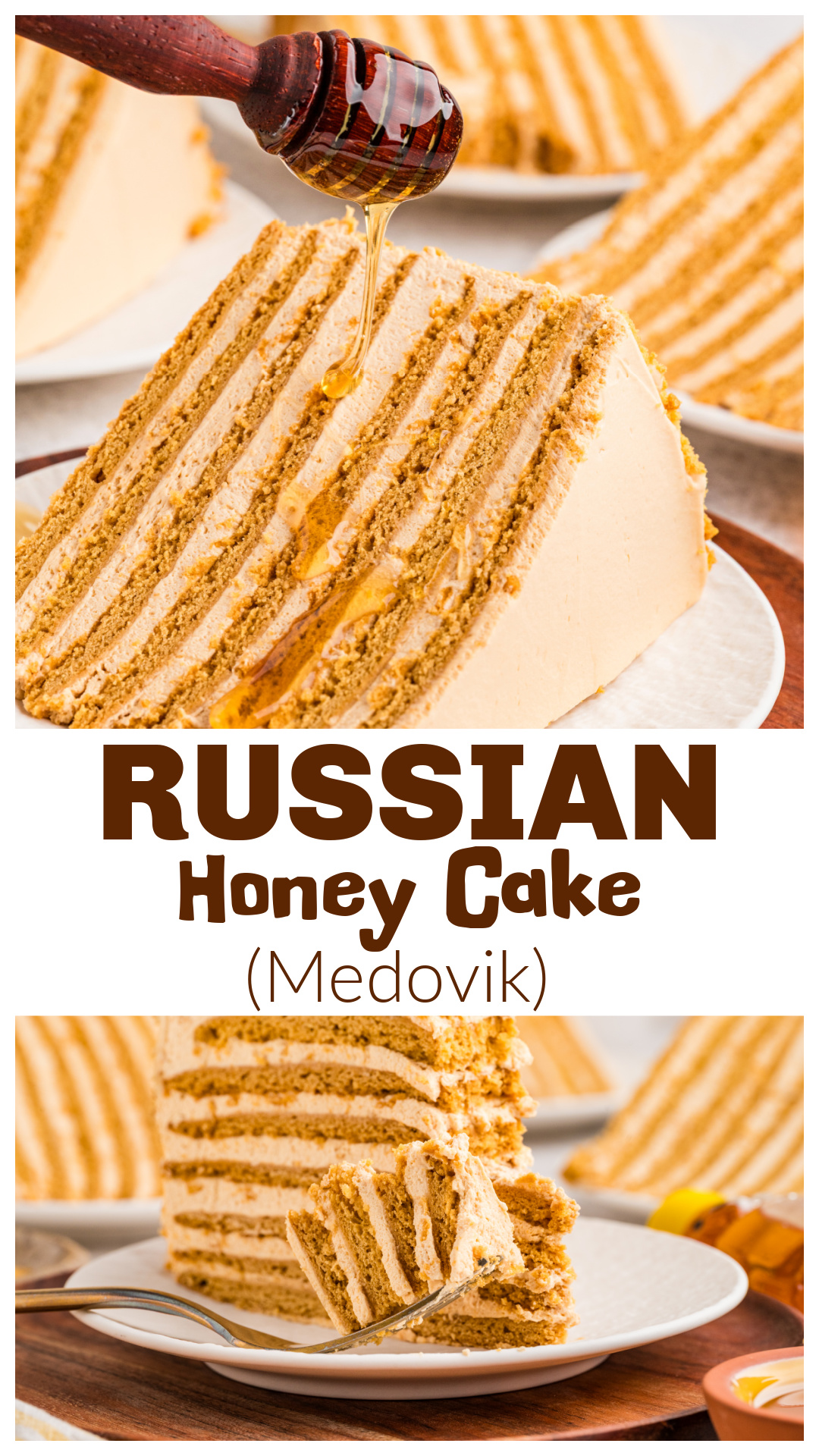
Russian honey cake (Medovik) with baked honey layers and a whipped dulce de leche frosting that softens the cake during refrigeration. Best when it’s sliced cold after a full overnight rest.

Russian Honey Cake (Medovik), As I Was Taught
This cake is based on the Russian honey cake my grandmother taught me to make.
She left Poland alone (age 17, 1914-ish), when she was still a girl, and arrived deep in the interior of Mexico instead of America. It definitely wasn’t the plan and ended up not being just temporary. It was just where she landed during the war years, when borders were shifting and young women disappeared into other people’s houses to work.
She never really told stories about that part, and it didn’t make it into the family narrative. But I’ve learned that silence like that doesn’t mean nothing happened. It usually means too much did.
What did survive was language.
She spoke to me in what I thought was distinctly Polish. Only later did I realize I understand Russian when I hear it, and Ukrainian too. The borders where she came from were never clean, and apparently neither was the language she spoke. I realize now how layered, braided, and unfinished it was.
And then there was Spanish. I didn’t grow up speaking it, but she did. When I needed it years later, it came faster to me than it should have, already living somewhere in my brain.
I wanted this cake to hold all of that.
Russian honey cake is traditionally simple in flavor: thin honey layers, lots of cream, and the time and commitment it takes to put it together. I do keep that architecture in this recipe, but I add dulce de leche to the frosting. Not because it’s traditional, but because I’m paying homage to something not spoken about in her history.
Dulce de leche comes from milk and sugar left too long on the stove, originally by accident, from domestic work. From a kitchen that belonged to someone else and from something forgotten on the stove becoming richer instead of ruined. So many good things seem to come from mistakes.
My grandmother worked as a housekeeper in Mexico, in someone else’s kitchen. That chapter of her life never got preserved or told, but it shaped everything that came after, including the way I cook, and hear language, and especially the way I understand the inheritance of things. Lineage, to be specific, and the heaviness that often comes with it.
This cake is layered and becomes soft only after resting, and it’s better once it’s had time to absorb everything it’s holding together, just like life.
That feels right.
Why I Love This Recipe
- This is a cake you assemble one layer at a time, not something you mix and pour and walk away from.
- The dough teaches timing through your hands. Too warm and it stretches too far, too cool and it refuses you. The learning happens when you stop checking the clock and start paying attention.
- There is rolling, trimming, saving the scraps, baking them separately, and crushing them back into crumbs. Nothing disappears in this recipe and everything comes back changed.
- The layers are thin on purpose, so no single bite that dominates. You don’t understand this cake until the layers are stacked together, rested, and allowed to soften.
- You cannot hurry the resting part. If you try to shortcut the chill, the cake lets you know you misunderstood the assignment.
- I’ve made sure the dulce de leche is kept in proportion. Whipping it with cream and honey keeps it from taking over.
- Every slice tastes like an accumulation of flavors, which I really prefer and notice.
- This dessert holds a lot of history, Russian and mine, whether you’re aware of it or not.
Ingredients
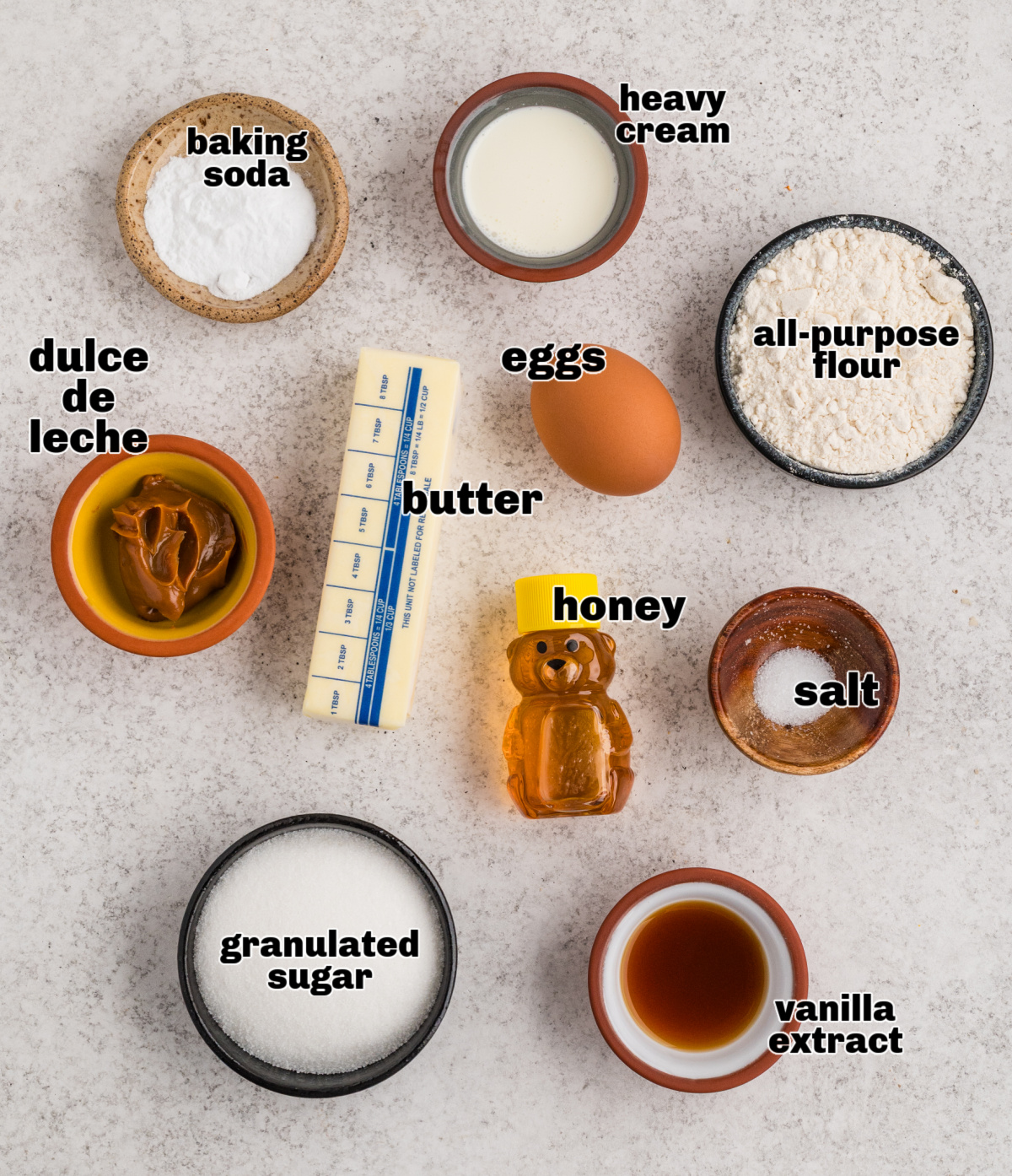
- Honey – This is the point of the whole cake. It’s cooked, warmed, transforms, and shows up again later with full commitment energy.
- Granulated sugar – Used more for balance, not sweetness. It also keeps the honey from going too dark.
- Salted butter – Melted into the honey so nothing stays separate and where the dough gets its body.
- Vanilla extract – Not a background flavor, but used twice on purpose in the cake and cream.
- Baking soda – Activated by the heat and honey. This is the chemistry part my grandmother cared about most, even though she never used that word. “You don’t skip it” is what she really said.
- Salt – Just enough to keep the sweetness from feeling bland.
- Eggs – Stirred in slowly, after the honey mixture cools enough. Your attention with this part matters.
- All-purpose flour – Added last, stirred in by hand.
- Dulce de leche – This is not traditional, but very intentional by me. My subtle nod to a part of her life that never made it into stories but left its fingerprints everywhere.
- Heavy whipping cream – Cold, whipped just enough to hold everything. This cake doesn’t want stiff peaks.
- More honey – Folded into the cream so the frosting doesn’t feel like an interruption from the layers.
- More salt – Because you need it.
How to Make Russian Honey Cake (Medovik)
Find the complete printable recipe with measurements in the recipe card at the BOTTOM OF THE POST.
- Step One: (set things where they belong)
Put the unopened can of dulce de leche in the refrigerator and an empty stand mixer bowl in the freezer. This is one of those preparations that matters later. Heat the oven to 350°F (177°C). Line one baking sheet with parchment and set four more sheets aside for rolling. - Step Two: (cook the honey)
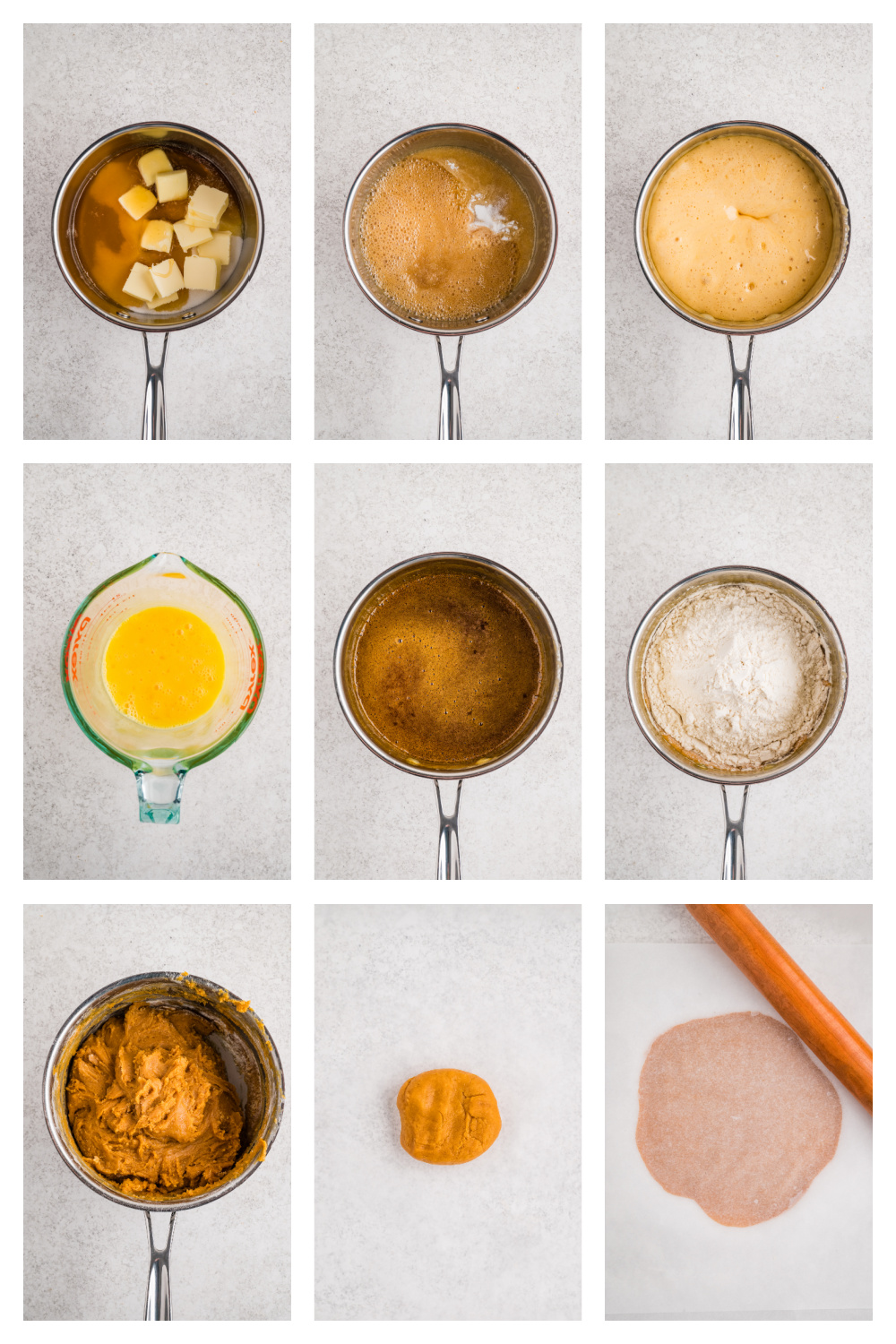
In a large saucepan over medium heat, combine the honey, sugar, and butter. Once it starts to simmer, whisk continuously for 4 minutes.
This is the step my grandmother refused to hurry through. Honey changes when you heat it properly by darkening slightly. Again, she didn’t talk about chemistry, but she knew when it was ready.
Remove the pan from the heat and whisk in the vanilla, baking soda, and salt. Let it sit for a couple of minutes, stirring often, so it calms down without cooling too much. - Step Three: (eggs, carefully)
Whisk the eggs together in a measuring cup with a spout. Slowly pour them into the warm honey mixture, whisking constantly so they blend in smoothly and don’t scramble.
She always added eggs this way. Not fast. Not timid. Just paying attention, her way of tempering.
Switch to a wooden spoon and stir in the flour until it’s fully incorporated. The dough should feel thick and closer to cookie dough than cake batter. If it sticks to everything, add a little more flour. - Step Four: (roll while it’s willing)
Divide the dough into 8 equal portions. Work with one piece at a time while the dough is still warm, rolling it between two sheets of parchment into a circle slightly larger than 9 inches.
The warm dough is easy to roll, while cold dough resists the process. This is one of those lessons you only learn by doing it wrong once.
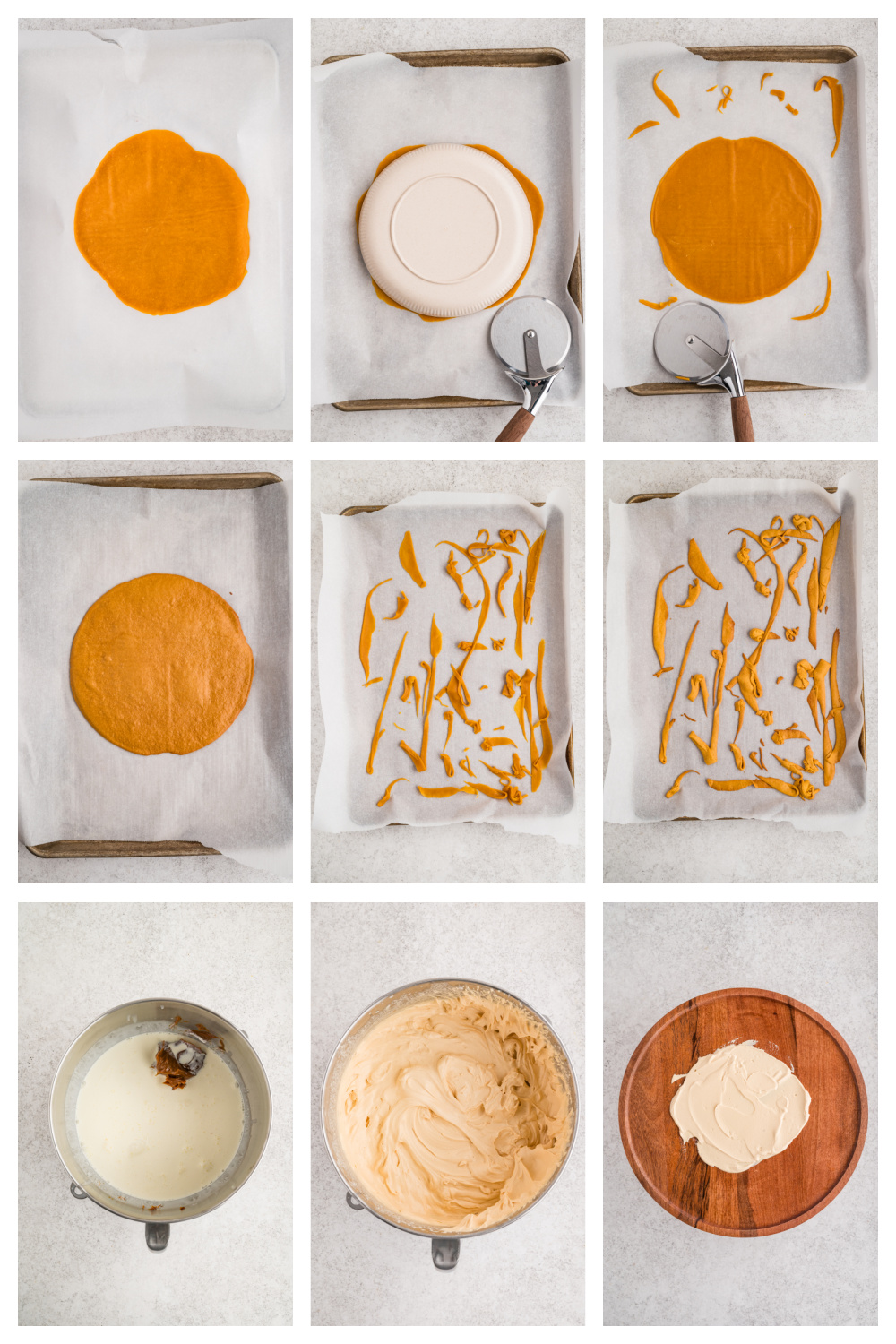
Remove the top parchment and trim into a clean round using a 9-inch pan or plate. Move the scraps to the lined baking sheet. Transfer the cake round, still on its parchment, to a separate baking sheet. - Step Five: (bake and repeat)
Bake each layer for 6 to 7 minutes, just until the edges turn lightly golden. Transfer to a wire rack to cool. They cool really quickly.
While one layer bakes, roll the next one. This cake is repetitive by nature and how it’s taught.
Bake all the scraps for 3 to 5 minutes until pale golden, watching closely. Once cool, crush them into fine crumbs. - Step Six: (whip the frosting)
Take the chilled mixer bowl from the freezer. Add the dulce de leche, heavy cream, honey, and salt. Whip with the whisk attachment until medium peaks form.
Make sure to stop before stiff peaks. This frosting isn’t meant to stand tall, but to sink in. - Step Seven: (assemble, simply)
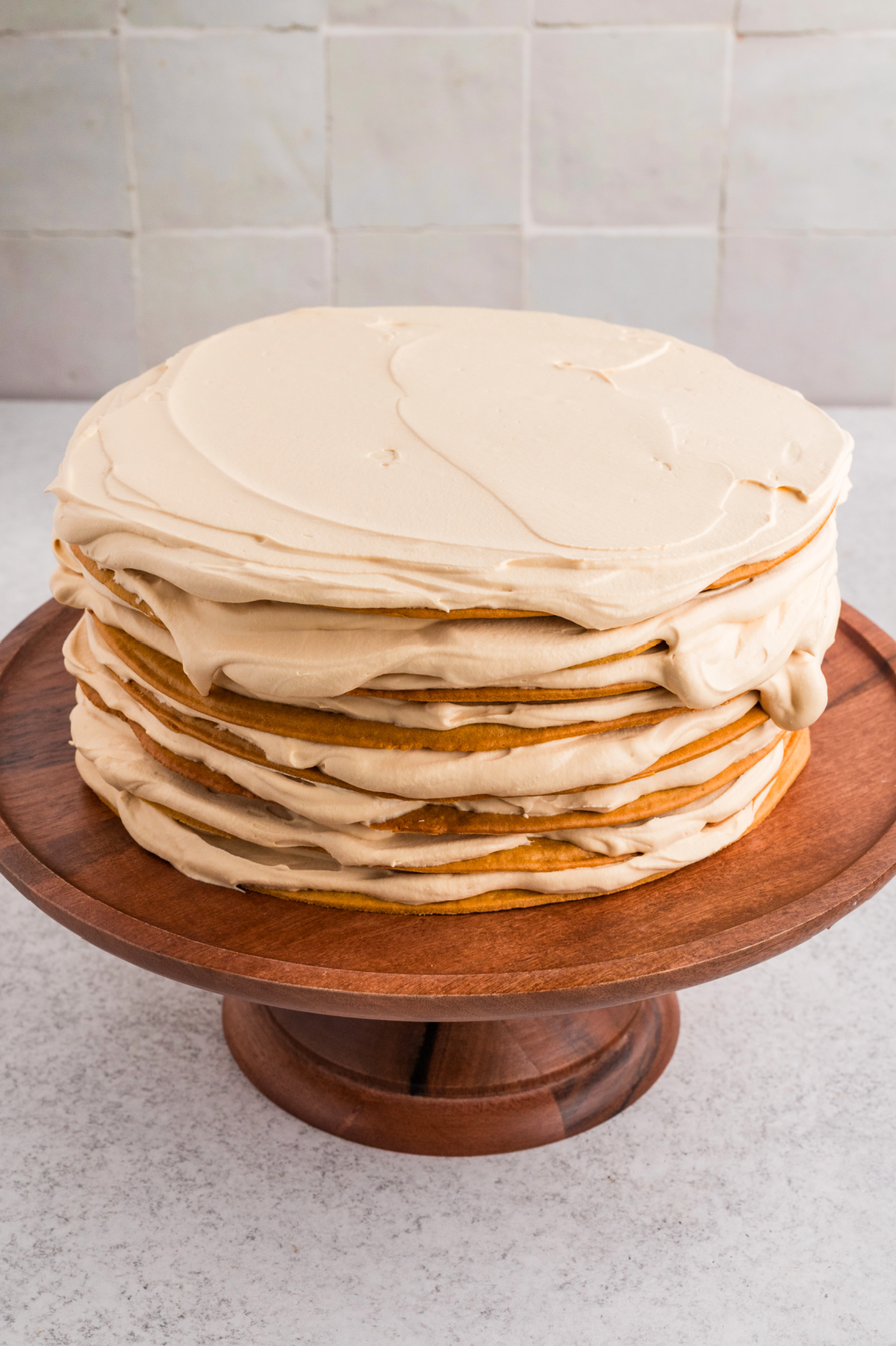
Place a small dab of frosting on a cake stand and set the first layer on top. Spread about ⅔ to ¾ cup frosting evenly over the layer. Repeat with the remaining layers.
Use the rest of the frosting to coat the outside of the cake. Press the crumbs onto the sides and top if you like the traditional finish.
My grandmother always used the crumbs. Nothing went to waste, and the cake looked finished when it was done. - Step Eight: (let time do its part)
Refrigerate the cake for at least 12 hours, or up to 2 days.
This rest is essential and should never be skipped. The cake layers start out crisp and thin, then soften as the frosting works its way in. If you cut it too soon, you miss the whole point.
Slice it cold into about 12 pieces and serve it straight from the fridge. Honey on top is optional, but a very nice ending.
Recipe Tips
- Roll the dough while it’s still warm, this part isn’t optional. Warm dough stretches easily, and cold dough will fight you every step of the way. If a portion cools down too much, a few seconds in the microwave brings it back.
- Don’t overbake the layers, they should look almost underdone when they come out. Your goal is pale edges and flexible centers. They’re not meant to be impressive on their own, and they finish becoming cake later, in the fridge.
- Expect the layers to feel wrong before they feel right. Right after baking, they’re thin and crisp and a little sad. That’s exactly how they’re supposed to be. Medovik only reveals what it’s supposed to be after its refrigerator rest.
- Medium peaks are important with this frosting and it’s important. Too soft and it won’t hold the layers, but too stiff and it won’t sink in. You want it to spread easily and then slowly disappear into the cake overnight.
- Cold matters more than speed. You want cold cream, a cold bowl, and a cold cake.
- Use the cake scraps, always. The crumbs aren’t decoration here, they’re part of the finish. They cover imperfections and show that nothing was wasted along the way.
- Let the cake sit overnight, twelve hours minimum. It’s not patience for patience’s sake, but how the cake turns from a stack of baked sheets into one cohesive thing. Cutting it early just gives you proof you didn’t listen.
- Slice it when it’s cold. The cold slices show you exactly what you made. And you’re going to love it.
- If the cake feels better on day two than day one, that’s not an accident. That’s the whole design.

Storage
This cake lives its life in the refrigerator, not briefly or as a suggestion. It needs cold temperatures to finish what it needs to be.
- If you’ve already assembled it, store it uncovered for the first day if you can. It will be fine. The surface sets, the crumbs hold on, and nothing sticks where it shouldn’t. After that, you can cover it loosely.
- Leftovers keep well for several days, and the texture improves before it declines. Day two is usually the sweet spot, and day three still holds on. It’s backwards from what we’re used to with other baked goods.
- If you need to cover it tightly, use toothpicks or skewers to give the wrap some height. I know smearing frosting across the top isn’t tragic, but it’s unnecessary suffering for sure.
- This cake doesn’t freeze well once assembled. The frosting changes and the layers lose the plot, and it comes back as a lesser version of itself. Don’t do it.
- If you want to plan ahead, bake the layers and store them at room temperature in an airtight container for up to three days. Assemble it later.
- Serve it cold, straight from the fridge. It doesn’t need time to “come to temperature.” Cold is the whole point.

FAQs
- Do I really have to let this cake chill overnight?
Yes. This is not negotiable. My grandmother would have looked at you like you’d just suggested skipping sleep. The layers need to soften into the frosting, and this can only happen in the fridge, slowly, while no one is touching it. - Why are the cake layers so thin and firm when they come out of the oven?
They are supposed to be. This isn’t a sponge cake, and the layers start firm and become cake later. If they come out soft, something went wrong upstream in your process. - Can I make this cake ahead of time?
You have to. This cake only improves with rest. One day ahead is ideal, two days is still excellent. It was designed for patience, not a day of panic baking. - Why dulce de leche instead of traditional sour cream frosting?
This is my version. It keeps the honey forward but adds nuance without taking over the cake. I do think traditions, even in recipes, evolve when they’re updated by real people, not museums. - My dough is hard to roll. What did I do wrong?
Nothing. It cooled. Warm dough rolls easily. Cold dough fights back every single time. A few seconds in the microwave brings it back where it needs to be so you can flatten it. - Do I need special tools to make this?
No, you don’t. A rolling pin, parchment paper, and your patience. This cake was made long before stand mixers and silicone mats existed. Think early 1800s. - Why does this recipe feel so specific?
You’re not imagining it. This is a cake that has been passed through time, not optimized for shortcuts. I’ve tried to come up with some, until I realized the details matter because someone stood there teaching them once.

From My Kitchen Notes
Just a few of my obsevations.
- This cake takes long enough that my thoughts start wandering, whether I want them to or not.
- I didn’t learn this recipe by way of instructions. I learned it by watching the same motions repeat until my hands remembered them. My grandmother used to say, your hands will remember this, and they do.
- The layers look wrong every single time until they don’t. That feels familiar.
- Rolling the dough thin forces me to slow down. I can’t outwork it, like so many other things.
- I grew up thinking I understood exactly she was saying. It took years to realize I was absorbing more than one language at once.
- This cake doesn’t reward any sort of urgency. If you push it, it pushes back, and it wins.
- When I make this now, I don’t think about the recipe. I think about what I’m not supposed to interfere with. That turns out to be a lot.

More of My Grandmother’s Recipes
These aren’t the same kind of recipe, but they were taught the same way. Slowly, by watching, and by learning when to stop interfering.
- Poppy Seed Roll (Makowiec) – A thin, rolled coffee cake filled with dense poppy seed paste with just enough sweetness.
- Pierogi – Polish dumplings with a soft, cheesy potato filling, shaped and sealed by hand.
- Babka – A beloved learned recipe, braided and sweet, made with patience and repetition.
- Sauerkraut (Kapusta) – Not the usual version. Deeper, slower, and very much its own thing.
This post may contain affiliate links. Please read my disclosure policy.

Russian Honey Cake (Medovik)
Equipment
- Saucepan (large) Used to cook honey, sugar and butter mixture.
- Stand Mixer or hand mixer. For whipping the frosting to medium peaks.
- rolling pin For rolling the dough into thin layers.
- parchment paper Prevents sticking while rolling out thin layers.
- baking sheet For baking cake layers and scraps.
- cooling rack For layers to cool quickly.
- food processor Used to crush baked scraps into crumbs.
Ingredients
- 1 can (13.4 oz / 380 g) dulce de leche cold
Cake Layers:
- ½ cup (120 g) honey
- ½ cup (100 g) granulated sugar
- 8 tbsps (113 g) butter
- 2 tsps (10 ml) vanilla extract
- 1⅛ tsps (6 g) baking soda
- ⅛ tsp (0.75 g) table salt
- 3 large eggs room temperature
- 4 cups (480 g) all-purpose flour
Frosting:
- 4¾ cups (1140 ml) heavy whipping cream
- ½ cup (120 g) honey
- ¼ tsp (1.5 g) table salt
Instructions
Prepare the equipment and oven
- Place the unopened can of dulce de leche in the refrigerator and an empty stand mixer bowl in the freezer. Preheat the oven to 350°F (177°C). Line one baking sheet with parchment paper and set four additional sheets of parchment aside on a clean work surface.1 can (13.4 oz / 380 g) dulce de leche
Make the honey dough base
- In a large saucepan over medium heat, combine the honey, granulated sugar, and butter. Once the mixture begins to simmer, whisk continuously for 4 minutes. Remove from the heat and whisk in the vanilla extract, baking soda, and salt. Let the mixture rest for 2 to 3 minutes, stirring frequently to allow it to settle slightly.½ cup (120 g) honey, ½ cup (100 g) granulated sugar, 8 tbsps (113 g) butter, 2 tsps (10 ml) vanilla extract, 1⅛ tsps (6 g) baking soda, ⅛ tsp (0.75 g) table salt
Incorporate the eggs and flour
- Whisk the eggs together in a small liquid measuring cup with a spout. Slowly pour the eggs into the warm honey mixture in a steady stream, whisking constantly. Switch to a wooden spoon and stir in the flour until fully incorporated. The dough will be thick and similar to cookie dough. If the dough feels overly sticky, add a small amount of additional flour.3 large eggs, 4 cups (480 g) all-purpose flour
Roll the cake layers
- Divide the dough into 8 equal portions. Working with one portion at a time while the dough is still warm, roll it between two sheets of parchment paper into a circle slightly larger than 9 inches (23 cm). Remove the top parchment sheet and use a 9-inch (23 cm) cake pan or plate to trim the dough into a clean circle. Transfer the trimmed scraps to the parchment-lined baking sheet in a single layer. Place the cake round, still on its parchment, onto a separate baking sheet.
Bake the layers and scraps
- Bake each cake layer for 6 to 7 minutes, until the edges are lightly golden. Remove from the oven and gently transfer the layer to a wire rack to cool completely. While one layer bakes, roll out the next portion of dough. Repeat until all layers are baked, reusing parchment sheets as needed. Bake the dough scraps for 3 to 5 minutes, until pale golden brown, watching closely as smaller pieces bake faster. Cool the scraps completely, then crush into fine crumbs using a food processor or a zip-top bag and rolling pin.
Make the frosting
- Remove the chilled mixer bowl from the freezer and add the cold dulce de leche, heavy cream, honey, and salt. Using the whisk attachment, whip on medium speed until medium peaks form. Do not whip to stiff peaks.4¾ cups (1140 ml) heavy whipping cream, ½ cup (120 g) honey , ¼ tsp (1.5 g) table salt
Assemble the cake
- Place a small dab of frosting on a cake stand or serving plate and set the first cake layer on top. Spread about ⅔ to ¾ cup (160–180 ml) frosting evenly over the layer. Repeat, alternating cake layers and frosting, until all layers are used. Use the remaining frosting to coat the outside of the cake evenly. Press the reserved cake crumbs onto the sides and top, if desired.
Chill and serve
- Refrigerate the cake for at least 12 hours or up to 2 days before slicing. Slice into 12 portions or to desired thickness and serve cold. Drizzle with additional honey, if desired.
Notes
- A full overnight chill is required for the layers to soften properly.
- Roll the dough while warm; rewarm briefly if it becomes stiff.
- Layers will bake firm and soften only after resting in the frosting.
- Whip the frosting to medium peaks, not stiff.
- Serve cold. Do not freeze once assembled.
Nutrition
Have you made this Russian Honey Cake? I’d love to hear how it turned out – leave a comment below and let me know.
As an Amazon Associate and member of other affiliate programs, I earn from qualifying purchases.
Jalisca Bonovitz says
This story! Just stunning. What a beautiful way to preserve a memory. I can feel your depth.
Rita Gorski says
Oh this reminds me of my childhood too. Love your grandmother story, mine used to make this cake, but she did not teach me. What a way you are honoring her legacy. I am going to make this soon.
Rach says
Loved taking the time to make this cake. Brought back a lot of family memories and turned out very good.
Sally says
This is such a beautiful cake recipe. I’ve made it twice. And I love your grandmother’s story.
Jenna says
Do you have advice on how to properly do the crumb coat on the sides? My amateur first try did not turn out very pretty and I made quite the mess 🤣 otherwise loved this recipe and all of your helpful tips!
Cathy Pollak says
The easiest way is to work with the cake cold. I press the crumbs onto the sides with my hand rather than trying to spread them on. Put the cake on a large sheet pan or piece of parchment to catch the mess, then take a small handful of crumbs and gently press them against the frosting, working your way around the cake. The frosting is intentionally soft, so don’t worry about getting the sides perfectly smooth first. And yes, it’s definitely a messy process, even when you’ve done it before.
Miyuki says
I have been meaning to try making a Russian Honey Cake ever since a friend told me that it is his all-time favourite cake ever. I will be making it very soon so wish me luck!
I just had to comment here and thank you soooooo much for including the ingredients in each step!
Saves me from scrolling back up 100 times while baking 🙂