
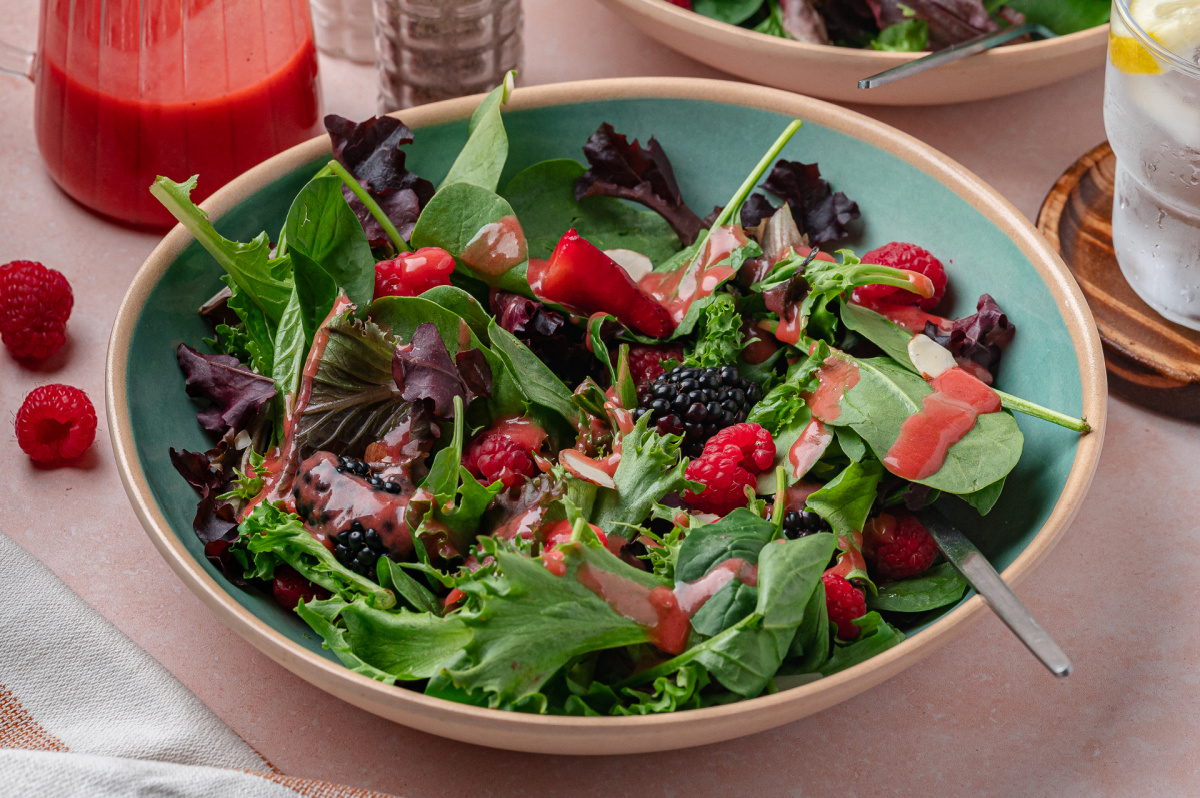
This raspberry vinaigrette starts with fresh or frozen berries to create a bright, red-kissed dressing that makes even basic greens feel dressed for the holidays. Smooth, balanced, and sort of romantic, it makes any table feel more inviting.

Raspberry Vinaigrette for the Hours That Feel a Little Bit Like December
There’s a kind of red that only belongs to December, not bright, not playful, but slow and sultry, the kind that blooms when raspberries meet cold air and warm kitchens. Purée them, and the color turns almost physical, like something meant to be held rather than tasted.
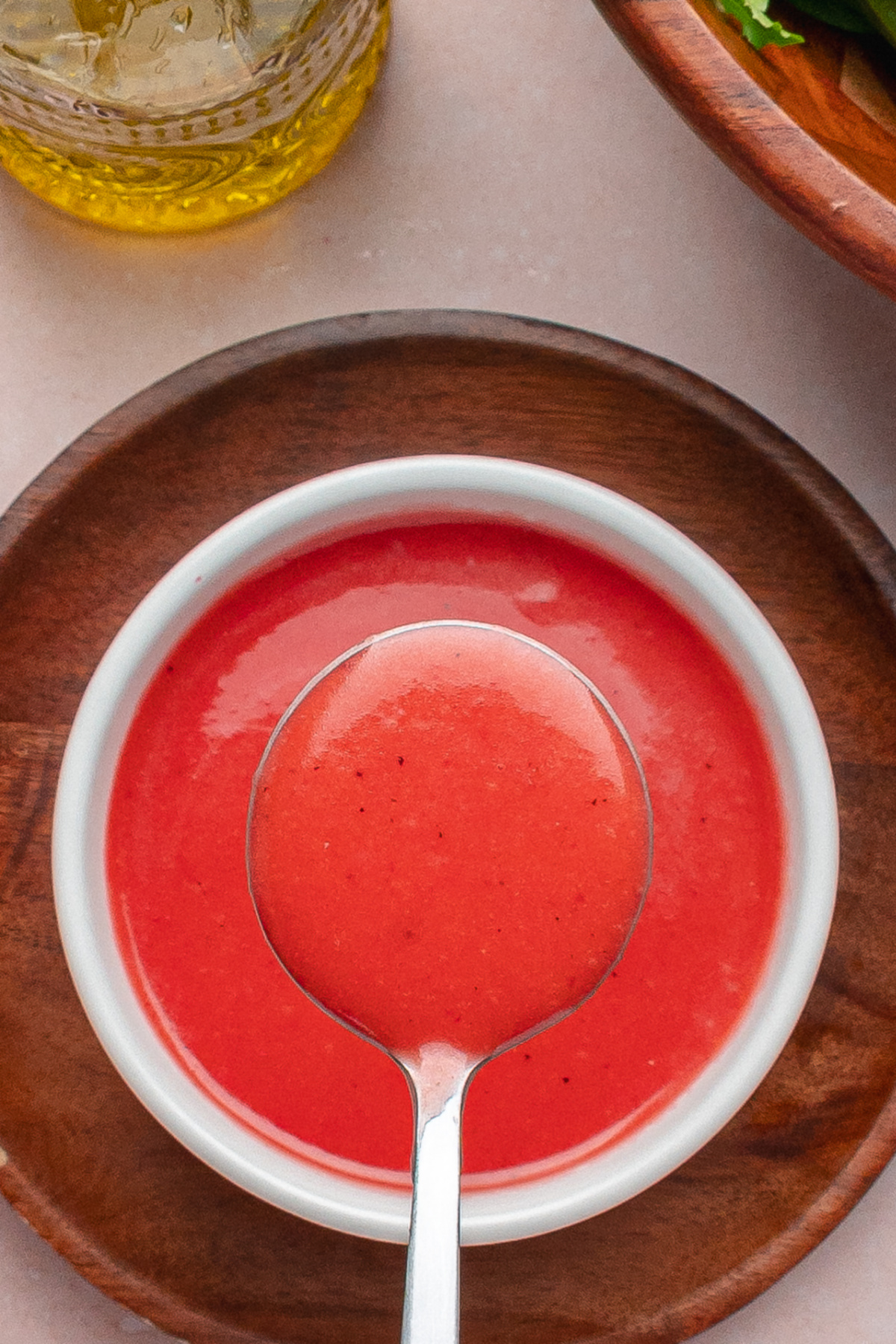
They don’t need to be perfect berries for this. That’s the part I secretly love, the soft ones, the bruised ones, the freezer-saved stragglers all melt the same way. They all surrender to the blade, collapsing into a velvet-red tide that clings to the glass like a blush rising under candlelight.
White wine vinegar cuts through it with a sharp little kiss, and the honey pulls the edge back with something sweeter, slower, the kind of sweetness that lingers on the bottom lip. Then the olive oil streams in, thin, patient, intimate, and the whole mixture shifts. It thickens, turns shiny, the texture of silk warming under a palm.
Pour it over winter greens and it does not act like a salad dressing. It’s more of an invitation. It slides through dark leaves and jeweled berries the way a quiet hand slides along a waist, unhurried, certain, knowing exactly what it’s doing. It tastes like winter evenings when the house is dim and soft music lulls somewhere out of sight, and the person across the table can’t quite hide the way they’re watching you.
It’s a holiday vinaigrette, technically. But it feels like a moment. A little indulgent, even though it’s not.
A streak of red that turns even an ordinary dinner into something you’ll think about later.

Why I Love This Recipe
- The raspberries don’t have to be perfect, fresh or frozen, they all turn lush once blended, the way certain colors only glow after dusk.
- The vinaigrette emulsifies into something velvety and ruby-soft, a texture that feels almost too elegant for how fast it comes together.
- A spoonful tastes bright at first, then warm and rounded, the honey settling behind the berries like a low hum.
- The shallot disappears into the purée, leaving just enough edge to make every bite taste more alive.
- Straining the seeds turns it into a smooth, pourable ribbon, the kind of dressing that slips across a salad the way satin slips across skin.
- It chills beautifully, deepening in flavor the way December deepens once the lights come on.
- It dresses winter greens without weighing them down, turning a simple bowl of leaves into something that feels arranged, not tossed.
- And it’s a holiday vinaigrette that looks like a jewel in the jar, bright, romantic, jewel-toned, and somehow more intimate than it has any right to be.
Ingredients
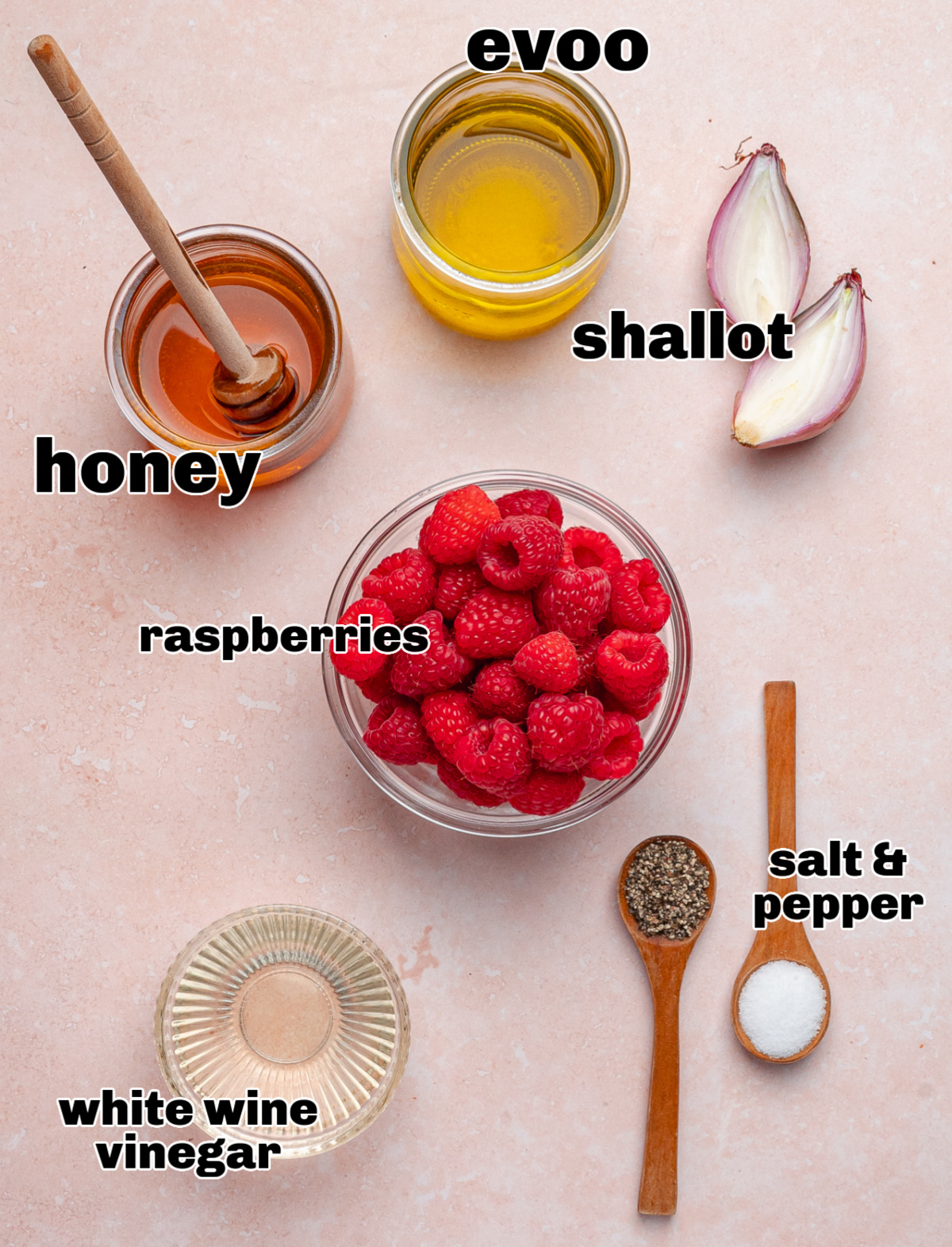
Each one brings its own kind of glow and falls together beautifully.
- Raspberries – Deep red and softly crushed, like something cherished.
- White wine vinegar – A pale spark that wakes everything up.
- Honey – Warm, slow sweetness that feels almost tender, the same softness I try to create in my honey champagne vinaigrette.
- Shallot – A quiet depth, the kind that stays close.
- Sea salt – Accentuates every note the way winter sharpens the night air.
- Black pepper – A faint heat, barely more than a breath.
- Extra virgin olive oil – Silky and steady, the kind of richness that settles in, and the part that helps the vinaigrette hold its creamy, emulsified shape.
How to Make Raspberry Vinaigrette
Find the complete printable recipe with measurements in the recipe card at the BOTTOM OF THE POST.
- Step One (purée the base):
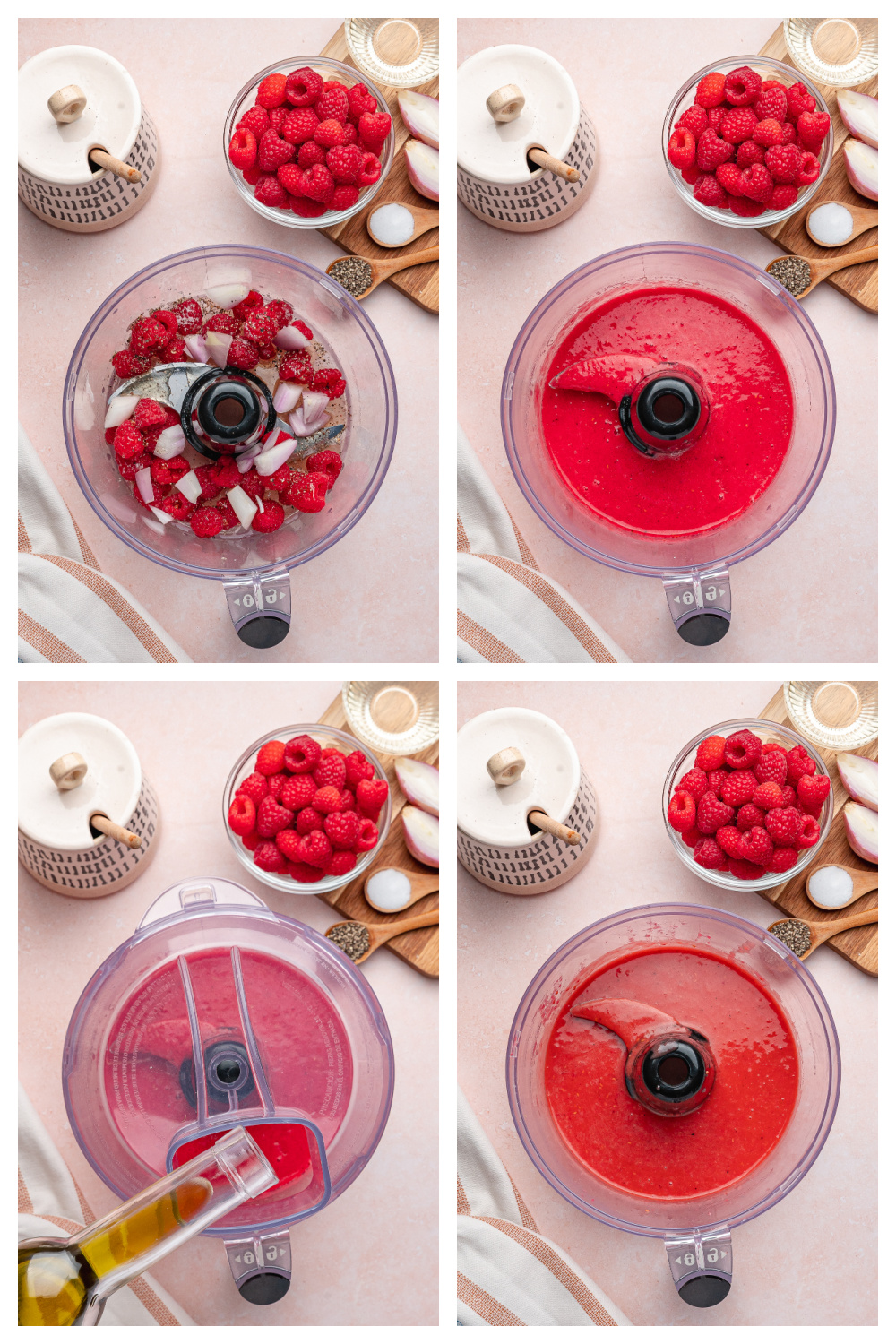
Raspberries, vinegar, honey, shallot, salt, and pepper go into the processor, a small winter choir gathered in the bowl. Let it run until everything collapses into a deep red purée, the kind that clings to the sides like it knows what it’s becoming. Fresh or frozen berries act the same once they soften; December never cares where the sweetness came from. - Step Two (bring in the olive oil):
Turn the motor low and ease in the olive oil in the thinnest stream you can manage. The mixture thickens almost immediately, drawing the oil close the way a hand finds a waist in slow dance light. - Step Three (fine-tune the flavor):
Taste. If it tastes sharp, a little honey softens the edges. If it tastes sweet, a splash of vinegar brings it back into line. And salt always wakes everything up, the way a quiet room brightens when someone you love steps in. - Step Four (strain for smoothness):
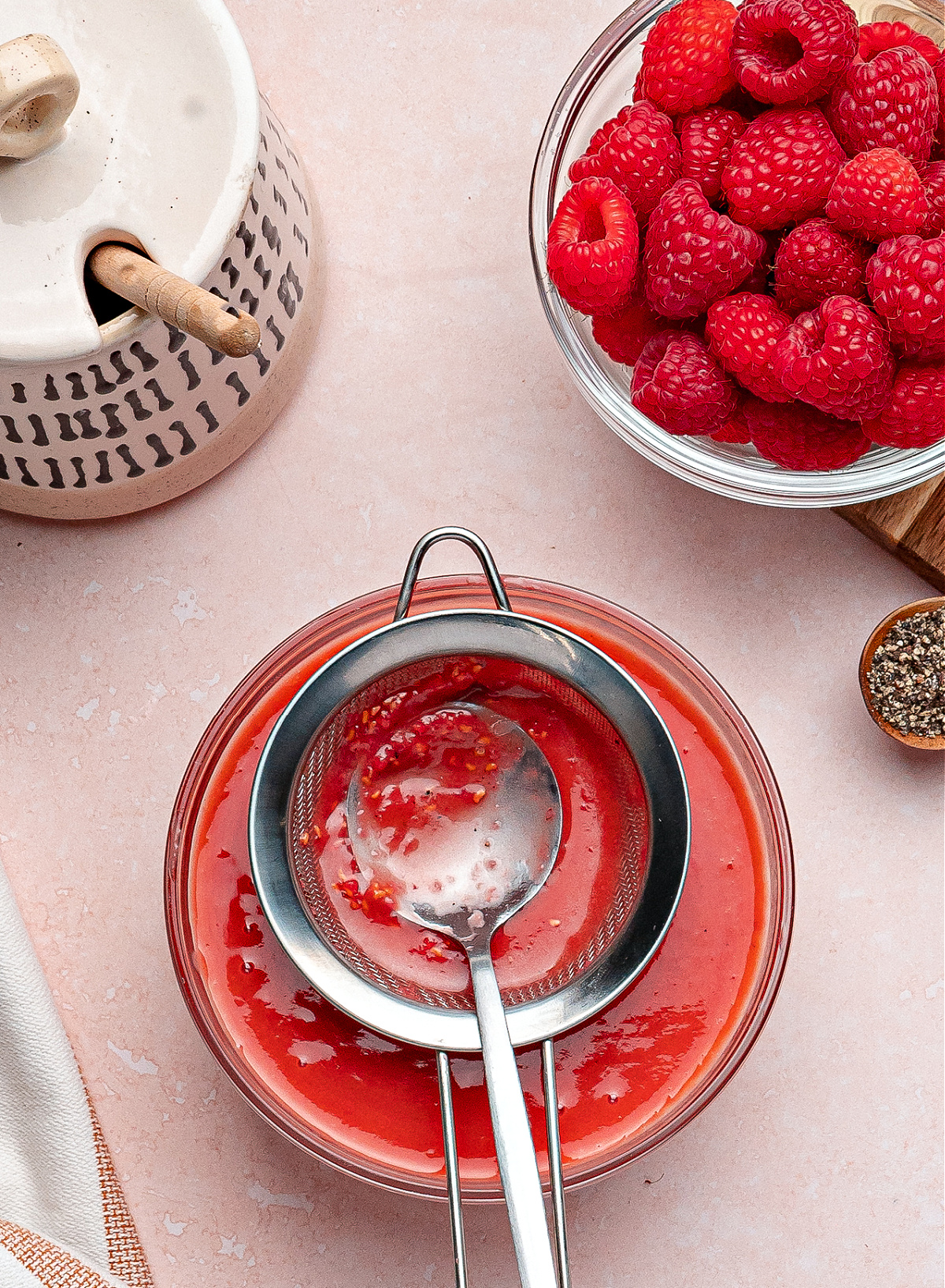
Press the dressing through a fine sieve set over a bowl. The seeds stay behind; what slips through is ruby and clean, a soft, uninterrupted pour. It’s optional, but the texture becomes something you feel before you taste. - Step Five (let it settle):
Pour the vinaigrette into a jar and let it rest in the refrigerator for at least 30 minutes. The color deepens, the flavors knit together, and the dressing drapes instead of drips. When you’re ready, shake the jar and pour. It will look like a little ribbon of holiday light.
Recipe Tips
The kind of guidance that feels less like “tips” and more like someone standing close enough to murmur them, low, calm, utterly certain.
- Add the oil slowly, slower. Imagine someone guiding your hand, thumb brushing your wrist, saying, “Not yet… just a thin ribbon… there. That’s when it comes together.” That’s how emulsions work. Patience creates the luxury.
- Let the berries collapse on their own time. No forcing, no rushing. Fresh or frozen, they break down the same way, softening easily when they’re ready, like something relaxing under a steady touch.
- Taste for balance the way you’d read someone’s expression. A little more honey if it needs warmth, a little vinegar if it needs clarity. Tiny shifts change the whole mood, and you’ll know when it’s right.
- Strain if you want something smoother, quieter. Pressing it through a sieve leaves behind anything sharp, anything distracting, and what slips through feels refined, intentional, almost intimate against the spoon.
- Give it time to settle. Chill it and let the flavors find each other. It’s the culinary version of taking a breath together before stepping into something deeper.
Storage
Even after the last salad bowl is rinsed and the candles are low, this vinaigrette keeps its charm; it just needs to be stored the right way.
- Keep it close for up to a week. Pour the vinaigrette into a sealed jar and let it rest in the fridge. The color settles, the flavor holds, and it keeps that holiday-red glow.
- A little separation is part of the ritual. Raspberry dressings soften in the cold. The oil drifts upward, berries slip downward. Before using, give the jar a slow, purposeful shake, the kind that brings everything back together in one smooth sweep.
- The flavor gets even better overnight. The berries and vinegar settle into each other the way warmth settles into a quiet room. Tomorrow’s pour is always a little softer, a little rounder.
- Skip the freezer. The texture loses its finesse there. This is a dressing meant to stay close, not forgotten in ice.
FAQs
- Can I use frozen raspberries?
Yes. Once they thaw, frozen berries turn tender and vivid, and they purée like fresh, no loss of color, no loss of charm. In a vinaigrette, they’re indistinguishable from berries picked in July. - Do I have to strain out the seeds?
You don’t have to, but I prefer it. Straining makes the texture smoother, more elegant, the kind of pour that glides. If you like a little rustic texture, keep the seeds; the flavor stays the same. - Can I make this without a blender or food processor?
Yes, but it is more challenging. Press the raspberries through a fine mesh sieve, then whisk everything together in a bowl. Stream in the olive oil slowly, slower than you think, and whisk until the dressing thickens. It won’t be as creamy, but it will still taste like a small luxury. - What vinegar works best?
White wine vinegar keeps the berries bright and soft. Champagne vinegar gives a delicate sparkle. Apple cider vinegar makes it cozier, rounder, the holiday version, really. - Why is my vinaigrette separating in the fridge?
It’s normal. Cold temperatures relax an emulsion. One shake, a few seconds of coaxing, and it comes back together like it never drifted. - Is it better to store it in glass or plastic?
Glass is best. It keeps the flavor clean and the color true, while plastic can take on the scent of the berries and vinegar over time. A simple jar makes the vinaigrette feel fresher each time you shake it. - Does it work on greens other than spinach?
Yes, mixed greens, arugula, goat cheese salads, chicken salads, grain bowls. Anywhere you want a splash of ruby sweetness and a little holiday glow.

From My Kitchen Notes
Sometimes it isn’t the dish, but the way it’s made, slowly and deliberately, that tells someone they matter. These are the thoughts I’ve jotted down in the margins of my recipe card over the years.
- Frozen berries purée softer. They collapse instantly, blending into a deeper red, almost like they’ve already given in before the blades even touch them. Fresh works just as perfectly, but frozen always feels a little more willing and makes this perfect for winter.
- Sweeteners shift the mood. Honey makes the vinaigrette warm and round; maple syrup folds itself in differently, adding a gentle, woodsy sweetness that feels almost wintry. Both work. Both change the story just a bit.
- Shallots are stronger than they look. A little goes far. When you want something softer, red or yellow onion has a quieter edge, disappearing into the berries without taking over.
- Heat has its place. A pinch of cayenne or red pepper flakes adds the faintest warmth, not spicy, just a little heartbeat under the fruit, the kind of detail people can’t name but always notice.
- The honey changes after chilling. It mellows in the cold, settling into the vinaigrette the way lights settle into a room at dusk. Day two always tastes fuller, deeper, more certain of itself.
- The emulsion never lies. Pour the olive oil too quickly and the dressing pulls away from itself. Stream it in slowly, almost tenderly, and it turns creamy without ever needing cream.
- The sieve step is mood-based. Some days I want the clean, seedless pour that slips onto a plate like a ruby ribbon. Other days I keep the seeds, just to remember the raspberries were real.
- The jar tells you when it’s ready. After chilling, the color deepens into something jewel-like. One shake wakes it up again, bringing it back to its soft, draping consistency.
- Dress the greens gently. This vinaigrette isn’t meant to drown anything. It’s meant to cling lightly, brighten the edges, and taste like something you’d serve when the evening wants a little warmth.
More Ways to Dress a Winter Salad
Dressing recipes that glow the way December does.
- Strawberry Spinach Salad with Strawberry Vinaigrette – berry-bright, sweet as holiday lights.
- White Balsamic Vinaigrette – crisp, pale gold, quietly celebratory.
- Honey Dijon Dressing – warm, mellow, winter-evening soft.
- Greek Salad Dressing – lemony, steady, bright against the dark.
This post may contain affiliate links. Please read my disclosure policy.

Raspberry Vinaigrette
Equipment
- food processor or blender. Purées the berries smoothly and helps the vinaigrette emulsify.
- large fine mesh sieve Optional, for removing seeds and creating a smoother texture.
Ingredients
- 1 cup (140 g) fresh or frozen raspberries thawed if frozen
- 2 tbsps (30 g) white wine vinegar
- 2 tbsps (30 ml) honey
- 2 tbps (20 g) shallots peeled and roughly chopped
- ½ tsp (3 g) sea salt
- ¼ tsp (2.5 g) black pepper
- ½ cup (120 ml) extra virgin olive oil
Instructions
- Combine the raspberries, white wine vinegar, honey, shallot, salt, and pepper in the bowl of a food processor. Secure the lid and process on high for 30 to 45 seconds, or until the mixture is completely puréed. Stop and scrape down the sides as needed to ensure an even blend. A blender may also be used for this step if preferred.1 cup (140 g) fresh or frozen raspberries, 2 tbsps (30 g) white wine vinegar, 2 tbsps (30 ml) honey, 2 tbps (20 g) shallots, ½ tsp (3 g) sea salt, ¼ tsp (2.5 g) black pepper
- Reduce the speed to low. With the motor running, remove the feed tube insert and slowly stream in the olive oil. Continue processing for about 30 seconds, or until the vinaigrette is fully emulsified and lightly thickened. Adding the oil gradually helps stabilize the emulsion and prevents separation.½ cup (120 ml) extra virgin olive oil
- Taste and adjust the seasoning with additional salt, vinegar, or honey to balance sweetness and acidity.
- Pour the vinaigrette through a fine-mesh sieve set over a bowl or jar, using the back of a spoon to press the liquid through and leave the seeds behind. This step is optional but produces a smoother, more consistent dressing.
- Transfer the vinaigrette to a jar or airtight container and chill for at least 30 minutes before serving to allow the flavors to meld and the emulsion to settle.
Notes
- Frozen raspberries break down quickly and work just as well as fresh.
- Add the olive oil slowly to help stabilize the emulsion.
- Straining creates a smooth dressing but is optional.
- Chill the vinaigrette before serving for the best flavor and texture.
- Store in the refrigerator for up to one week; shake before using.
- Do not freeze.
Nutrition
Have you made this Raspberry Vinaigrette? I’d love to hear how it turned out — leave a comment below and let me know.
As an Amazon Associate and member of other affiliate programs, I earn from qualifying purchases.
Allen says
I will be making this for the holidays, but I wanted to say, the writing kept me reading, every section, I felt as if I were in the kitchen with you, this part right here…”Add the oil slowly, slower. Imagine someone guiding your hand, thumb brushing your wrist, saying, “Not yet… just a thin ribbon… there. That’s when it comes together.” Do you know, I do, how hard it is to create voice like that, that sounds real? Bravo for the extraordinary vision.
gina says
I made a batch this morning, it’s flawless. Love the color. You need to write a book, your descriptions, the cadence, the slow-burn, the warmth is perfection.
Tally says
Made this dressing today and love it. Going to use it for the holiday meal because it’s so festive!
Kim says
Turned out great, thanks for the recipe.
Laurie says
I’ve been reading here and I love the recipes, but as a dabbling novelist myself, I see what you do here. I am most impressed by your ability to walk right up to lyrical language, but stop short of indulgence. That’s hard to do. You could teach a class in it. I made this dressing and it is perfect in the way I love a dressing to be. And unique.