
This is how you get a serious puff from your Dutch baby pancake. Make the perfect oven-baked pancake with crisp edges and a soft, custardy middle.
Master the Perfect Dutch Baby Pancake
There’s nothing quite like pulling a Dutch baby out of the oven. It puffs up dramatically, gets those crisp edges, and sinks into this soft, custardy middle that’s impossible to ignore. I’ve made a lot of them over the years, and this version nails that over-the-top rise every single time.
I use a cast iron skillet, room temp ingredients, and just the right batter-to-pan ratio to get that lift. Nothing over-the-top—just what works. No need for tricks, just a few solid details that make all the difference.
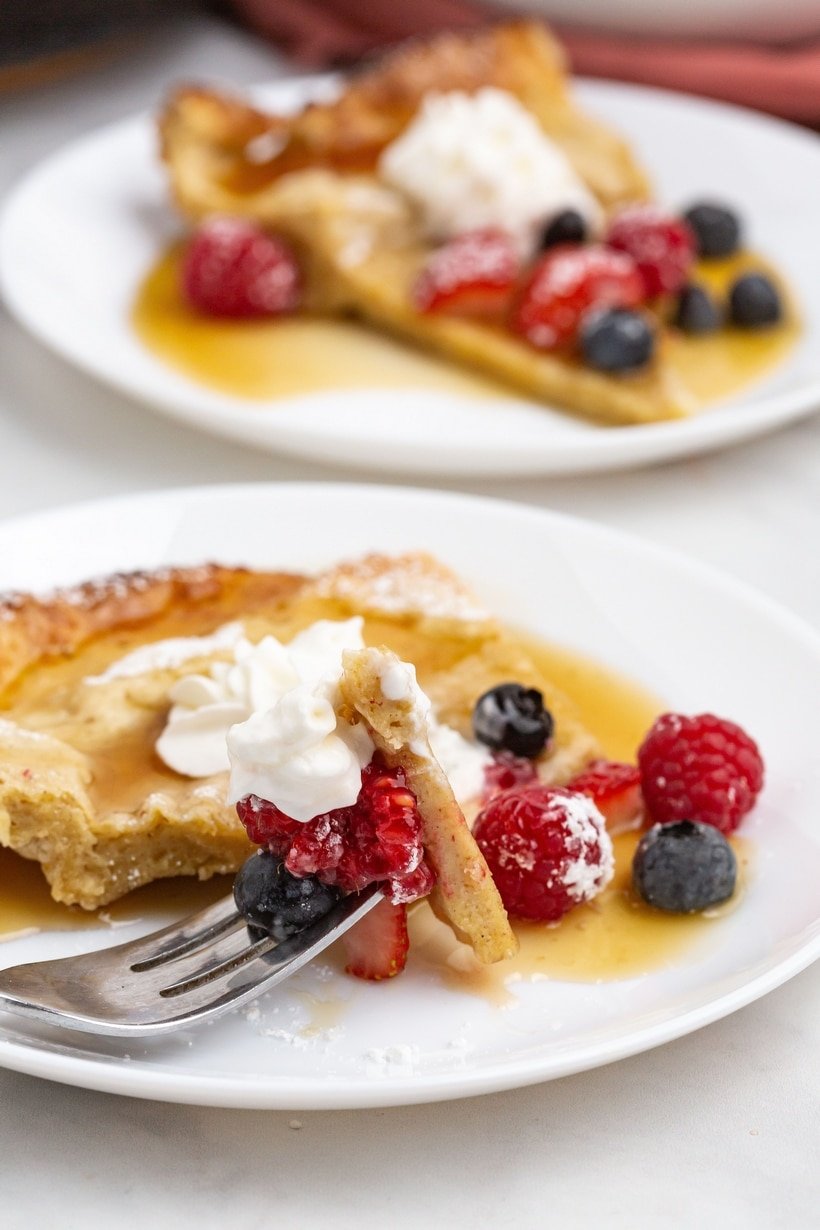
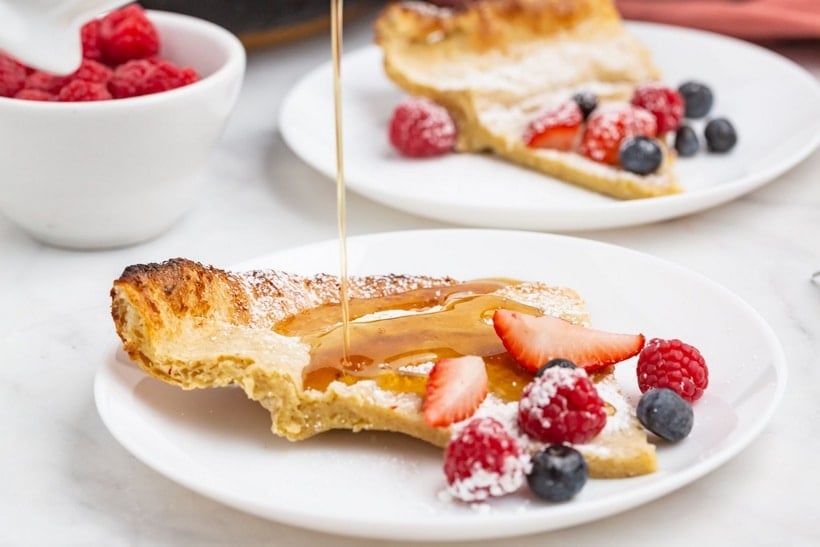
This Dutch baby comes out hot and golden, ready for whatever you want to throw on top. I usually go for powdered sugar and lemon, or some berries and syrup.
What Makes This Dutch Baby Pancake Extra Billowy
The big puff happens when the pan is screaming hot and the batter hits it fast. I use a cast iron skillet and let it preheat with the butter in the oven—this is key. That sudden blast of heat turns the moisture in the batter into steam, and that’s what pushes everything up the sides.
Room temperature eggs and milk help keep things smooth. If they’re too cold, the batter won’t react the same way in the pan, and you’ll lose some of that lift. I also let the batter sit for five minutes before pouring—it gives the flour a chance to hydrate, which helps with texture.
What comes out of the oven is crisp around the edges and light in the center, with that golden, inflated look that feels like a party trick. The contrast—edges plus puff—is what makes a Dutch baby great, and when everything lines up, it’s dramatic in the best way.
Why You’ll Love Making This Dutch Baby Pancake Recipe
- Simple method with big results—just blend, pour, and bake.
- Oven-baked pancake, so no standing over a hot griddle.
- Easy to dress up—lemon and powdered sugar, berries, preserves, you name it.
What You’ll Need for Your Perfect Dutch Baby
This combo gives you the lift, the texture, and the flavor that make this pancake worth making.
- Butter – Gets nice and browned in the pan for flavor and helps with that amazing puff.
- All-purpose flour – The base for that signature Dutch baby texture.
- Granulated sugar – Just enough sweetness for balance.
- Whole milk (room temperature) – Key for a smooth batter and a consistent puff.
- Large eggs (room temperature) – Gives the pancake its rich, custardy structure.
- Vanilla extract – Adds a warm, classic flavor.
- Ground cinnamon – A touch of spice that works perfectly.
- Table salt – Brings out all the other flavors.

How to Make Your Extra Billowy Dutch Baby
Find the complete printable recipe with measurements in the recipe card at the BOTTOM OF THE POST.
- Step one (preheat the oven and pan)
Set your oven to 400°F (200°C). Toss the butter into your 10–12 inch (25–30 cm) cast iron skillet and slide the whole thing into the oven. The butter will melt while the pan gets hot—don’t skip this part, the heat is what gives you that big puff. - Step two (make the batter)
Add the flour, sugar, milk, eggs, vanilla, cinnamon, and salt to a mixing bowl. Whisk it up until smooth—just don’t go overboard. You want it mixed, not foamy or overworked. - Step three (let it rest)
Give the batter five minutes to sit. It helps the flour soak up the liquid and makes the texture way better. - Step four (pour and bake)
Take the hot skillet out of the oven and pour the batter right in. Be careful—it’ll sizzle. Then bake for 25 minutes until it’s puffed and golden. - Step five (serve it up)
Slice and serve while it’s still warm. I like mine with powdered sugar and lemon juice, but syrup, berries, or preserves all work too.

Pro Tips for a Perfect Dutch Baby
This pancake only needs a few ingredients, but technique makes all the difference. Here’s what I’ve learned from making more Dutch babies than I can count.
- Hot pan is non-negotiable. That 10–12 inch (25–30 cm) cast iron pan needs to be blazing hot when the batter goes in. It’s what creates that sudden burst of steam that pushes the pancake sky-high.
- Room temperature rules. Don’t use cold eggs or milk. Let them sit out so they mix better and react the right way when they hit the pan.
- Don’t overmix the batter. Whisk until smooth, then stop. Overmixing can make the texture tough instead of soft and custardy.
- Rest the batter. Letting it sit for five minutes gives the flour time to fully absorb the liquid, which helps the structure and keeps things from getting soggy.
- Baking precision matters. Measuring flour the right way makes a difference here. Since the flour-to-liquid ratio affects the rise and texture, even a little extra can throw things off. Here’s a quick guide on how to measure flour properly—worth bookmarking if you bake a lot.
- Resist opening the oven door. That dramatic puff depends on steady heat. Cracking the door early lets in cold air and messes with the rise.
- Serve it right away. Dutch babies start to fall as soon as they leave the oven. Have your toppings ready so you can slice and serve while it’s still puffed and golden.
- Make it a full breakfast. This Dutch baby pairs well with my crispy breakfast potatoes (home fries) or honey lime fruit salad on the side.

Your Favorite Dutch Baby Toppings
Once your extra billowy Dutch baby comes out of the oven, it’s ready for toppings. The classics are always solid: a dusting of confectioners’ sugar, a drizzle of maple syrup, or a spoonful of your favorite preserves.
If you want to take it further, try fresh berries, sliced bananas, a dollop of whipped cream, or a squeeze of lemon juice. Cinnamon sugar adds a nice touch too. I also like pouring over some of my homemade strawberry sauce—it’s sweet, tangy, and made for this kind of thing.

Troubleshooting Common Dutch Baby Issues
Even with a simple recipe, a few small things can throw off your Dutch baby. Here’s how to fix the most common problems.
- Why didn’t my Dutch baby puff? The most common reasons are a pan that wasn’t hot enough, cold ingredients, or opening the oven door too early. Make sure the pan is preheated and the oven is fully hot before you add the batter—and keep that door shut.
- My Dutch baby has a soggy bottom. This usually means it didn’t bake long enough or it sat too long in the pan after coming out. Make sure the pancake is deeply golden, and serve it right away to avoid steam making the base soggy.
- The edges burned before the center was done. Your oven might run hot or have uneven heat. Try rotating the pan halfway through or lowering the temp slightly next time.
- My Dutch baby came out flat. Check that your baking pan was hot enough and that your ingredients weren’t cold. Also make sure you didn’t overmix the batter—too much gluten development can weigh it down.
- It collapsed as soon as I pulled it from the oven. That’s normal. Dutch babies are meant to puff dramatically and then fall. Just serve it immediately for the full effect.
- Can I make this in a stainless steel or nonstick pan? A cast iron pan is best for that dramatic puff, but a heavy oven-safe skillet or baking dish can work in a pinch. Just know the rise might not be quite as tall.
- Can I use plant-based milk? Yes, but the texture might be a little different. Whole milk gives the richest, puffiest result.
- Can I make the batter ahead of time? You can mix it a few hours ahead and keep it in the fridge, but bring it to room temp and give it a quick whisk before baking.

Storing and Reheating Dutch Baby Pancakes
This pancake is best right out of the oven, but leftovers still work.
- Store leftovers in an airtight container in the fridge for up to 2 days.
- Reheat in a 300°F (150°C) oven until warmed through—about 8–10 minutes. The edges won’t be as crisp, but the flavor holds up.
- You can also use a toaster oven or air fryer for a quicker reheat with better texture. Microwave if you have to, but expect it to be soft.

More Pancakes to Keep in Rotation
If you liked this Dutch baby, here are more pancake recipes I created that cover all kinds of moods—from rich and chocolatey to light and citrusy:
- Chocolate Pancakes – Rich, fluffy, and full of melty chocolate.
- Strawberry Buttermilk Pancakes – Tender and packed with juicy strawberries.
- Banana Blender Pancakes – Quick, easy, and surprisingly good.
- The Fluffiest Pancakes – A couple tricks make these extra tall.
- Lemon Ricotta Pancakes with Blueberry Sauce – Light, airy, and not too sweet.
- Pumpkin Pancakes – Best with homemade cinnamon syrup.
Bake Your Perfect Dutch Baby
This pancake doesn’t take much—just a hot pan, a few ingredients, and the right timing. Once you see that puff, you’ll want to make it again. Keep it simple or pile on the toppings—it’s a good one for a slow morning.
This post may contain affiliate links. Please read my disclosure policy.

Perfect Dutch Baby Pancake Recipe (Extra Billowy)
Equipment
- measuring cups and spoons For accurate measurements.
- mixing bowls To mix the batter smoothly without overworking it.
- whisk To mix the batter.
- cast iron skillet It retains the heat for that signature puff.
Ingredients
- 2 tbsps. (28 g) butter
- 1 cup (120 g) all-purpose flour
- 2 tbsps. (25 g) granulated sugar
- ½ cup (120 ml) whole milk room temperature
- 3 large (150 g) eggs room temperature
- ½ tsp. (2.5 ml) vanilla extract
- ½ tsp. (1.3 g) ground cinnamon
- ¼ tsp. (1.5 g) table salt
Instructions
- Preheat the oven to 400°F (200°C).
- Place the butter in a 10–12 inch (25–30 cm) cast iron pan (the smaller the pan, the bigger the puff) and put it in the oven to melt while the pan heats.2 tbsps. (28 g) butter
- Add all remaining ingredients to a bowl. Whisk or until smooth, being careful not to overmix.1 cup (120 g) all-purpose flour, 2 tbsps. (25 g) granulated sugar, ½ cup (120 ml) whole milk, 3 large (150 g) eggs, ½ tsp. (2.5 ml) vanilla extract, ½ tsp. (1.3 g) ground cinnamon, ¼ tsp. (1.5 g) table salt
- Let the batter rest for 5 minutes to allow the flour to absorb the liquid—this improves the texture.
- Carefully remove the hot pan from the oven and pour in the batter.
- Bake for 25 minutes.
- Remove from the oven, slice into wedges, and serve hot with your favorite toppings: berries, syrup, preserves, confectioners’ sugar, or cinnamon-sugar.
Notes
- Be sure your milk and eggs are at room temperature. Cold ingredients can prevent the pancake from rising properly.
- Letting the batter rest helps the flour hydrate and improves texture.
- Serve immediately—Dutch babies deflate quickly.
- Try it with powdered sugar, lemon juice, berries, jam, or even my homemade strawberry sauce.
- For a full breakfast, serve with crispy breakfast potatoes or honey lime fruit salad.
- Nutrition is estimated and based on 4 servings. The amount accounts for pan browning and assumes full use of batter and butter.
Nutrition
Have you made this perfect Dutch baby pancake recipe? I’d love to hear how it turned out — leave a comment below and let me know.
As an Amazon Associate and member of other affiliate programs, I earn from qualifying purchases.
LAUREN KELLY says
I made this for my kids and drizzled nutella on top! Amazing!
Cathy says
Yay!
Toni says
This is such a delicious pancake!! My kids really enjoyed it!
Cathy says
Awesome.
Kelli says
I love me some Dutch baby! I ate it with blueberries, lemon & honey this time.
Cathy says
Awesome.
kate says
Loved this Dutch baby pancake recipe!
Sable says
This recipe was amazing, my kids went crazy for it. Such a great presentation.