
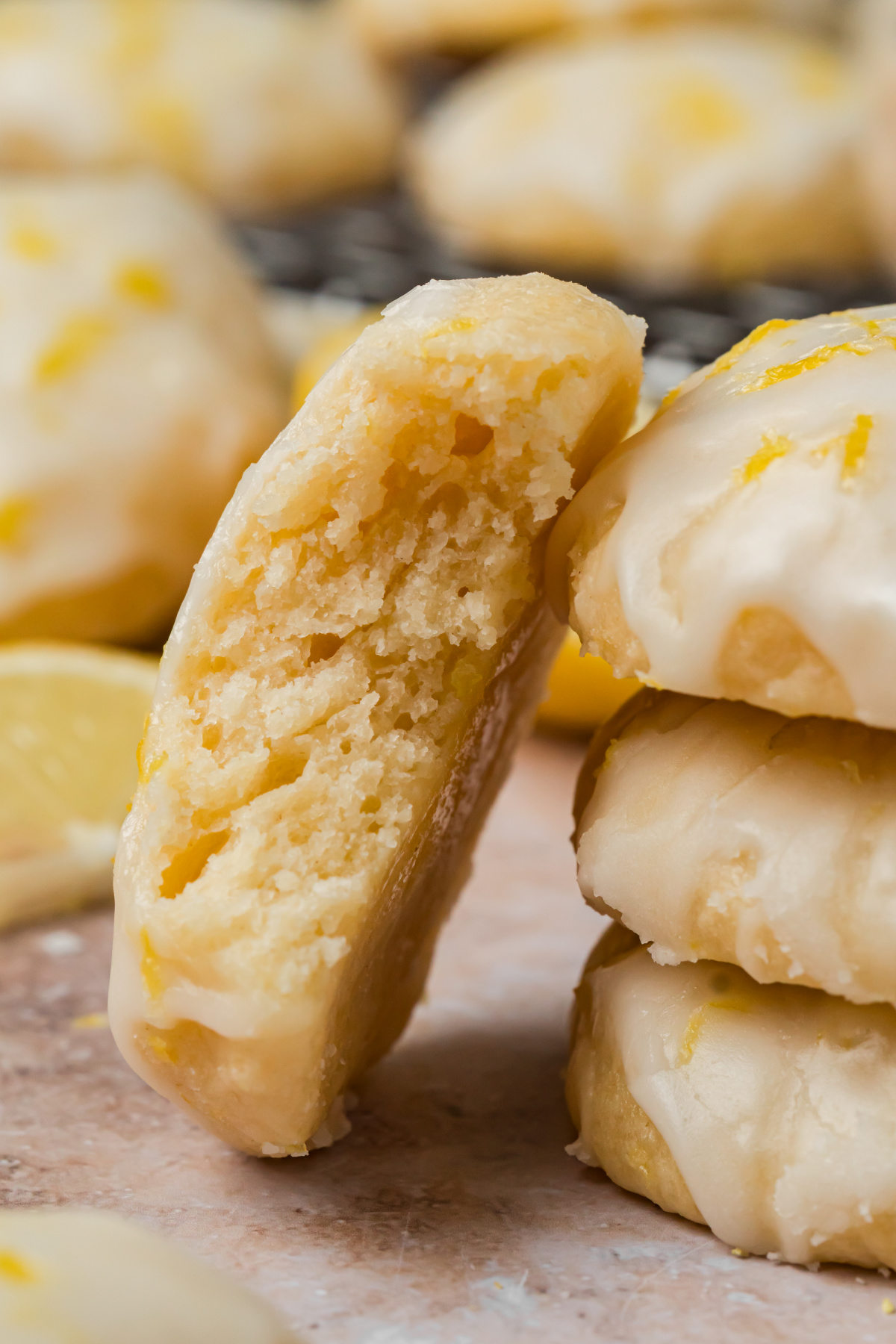
These lemon ricotta cookies are soft and cake-like with fresh lemon in the dough and a thick lemon glaze over the top. Ricotta keeps the centers tender, while lemon zest and juice make the cookies taste as lemony as they look.

Lemon Ricotta Cookies with Fresh Lemon Glaze
I worked at Nordstrom on and off in high school, mostly during summers and over the holidays. Everyone back then was obsessed with the Nordstrom Café, but I was specifically obsessed with their lemon ricotta cookies. I had one almost every time I worked, and I never got over them because I can still remember how they tasted. Do they still have them? I have no idea. I haven’t been in a Nordstrom in a long time.
Years later, when my son was in college in Boston, I started looking for lemon ricotta cookies in Italian bakeries whenever I visited. There were the usual ricotta cakes, pastries, cannoli, and every other ricotta dessert imaginable, but never the cookie I was looking for. I always thought that was strange. And I didn’t go to one or two bakeries and call it a day. I went to all of them. Okay, lots of them. Bakery visits in other cities are a serious undertaking for me.
Eventually, I started making my own, trying to get as close as I could to the Nordstrom cookies I remembered. They were extremely soft and cake-like, very lemony, with a thick lemon glaze over the top. By then I had started making homemade ricotta cheese too, which you can use in these cookies if you feel like it. I don’t always. A good whole-milk ricotta from the grocery store works great, and that’s what I use most of the time.

The Decisions Behind This Recipe
- Whole-milk ricotta is what gives these cookies the soft, tender centers. Part-skim is not the answer. You don’t need to drain it through cheesecloth or turn this into an all-day project. Just pour off any obvious liquid sitting on top when you open the container. The amount of flour accounts for the moisture in whole-milk ricotta. I do the same with my homemade ricotta too and drain off any excess liquid. But most of the time I use a good grocery-store ricotta, and the cookies come out the way I want them.
- I use two full tablespoons of finely grated lemon zest because “zest of two lemons” is not really a measurement. Lemons can be tiny or the size of a softball, and I wanted the lemon flavor to be the same every time I made these. That much zest means the cookies already taste like lemon before the glaze ever gets involved.
- The zest goes into the bowl with the butter and sugar right at the beginning. As they cream together, the sugar helps work the fragrant oils out of the zest and into the butter. I’ve done this in enough cookie recipes to know it makes a difference.
- I also add fresh lemon juice to the dough, not just the glaze. I want the cookie and the thick white top to taste like lemon. The glaze is definitely part of the experience, but it’s really there to reinforce what’s already going on.
- The dough is very soft and sticky once it is mixed. That’s normal, and it’s not a sign to start adding flour. Cover it and let it chill for an hour instead. The refrigerator makes the dough easy to scoop and helps the cookies stay rounded and puffy in the oven.
- These cookies are supposed to stay pale. I bake them until they’re puffed and set around the edges. The tops will spring back lightly when touched. If you wait for them to turn golden, they will have spent too long in the oven, and you’ll lose some of the soft, cake-like center.
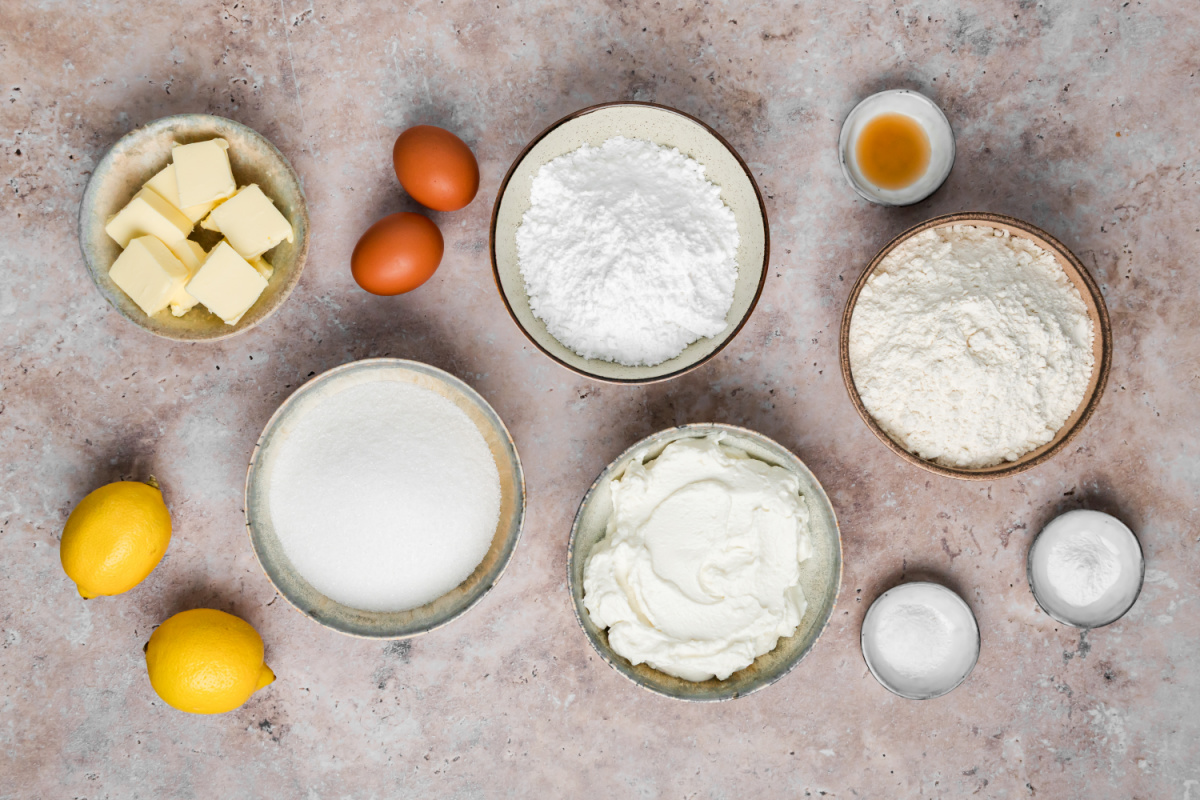
Ingredients
- All-purpose flour – The soft dough needs enough flour to bake up puffy while keeping the finished cookies tender and cake-like.
- Baking powder – Helps these very soft cookies bake up puffy instead of spreading into flat lemon puddles.
- Salt – Keeps all the sugar from making the lemon and ricotta taste dull.
- Unsalted butter – Let it soften before you start, but don’t let it get melted or greasy. It needs to cream properly with the sugar and zest.
- Granulated sugar – Besides sweetening the cookies, the sugar helps work the lemon zest into the butter while everything is beaten together.
- Fresh lemon zest – I use two measured tablespoons so the lemon flavor doesn’t depend on whether the lemons at the store are tiny or enormous. Zest the lemons before you juice them.
- Eggs – Room-temperature eggs mix into the creamed butter and sugar more easily.
- Whole-milk ricotta – Pour off any liquid visibly sitting on top, but don’t strain it dry. The dough is meant to have the moisture from regular whole-milk ricotta.
- Fresh lemon juice – This goes into both the cookie dough and the glaze, so the lemon flavor isn’t limited to the top of the cookie. Since you’re already buying lemons for the zest, this isn’t the moment for bottled juice.
- Vanilla extract – You won’t taste the vanilla on its own, but I still want a small amount in the dough.
- Confectioners’ sugar – This is the base of the lemon glaze. Once mixed with fresh lemon juice, it should be fluid enough for dipping but thick enough to stay on top of the cookies.
How to Make Lemon Ricotta Cookies
Find the complete printable recipe with measurements in the recipe card at the BOTTOM OF THE POST.
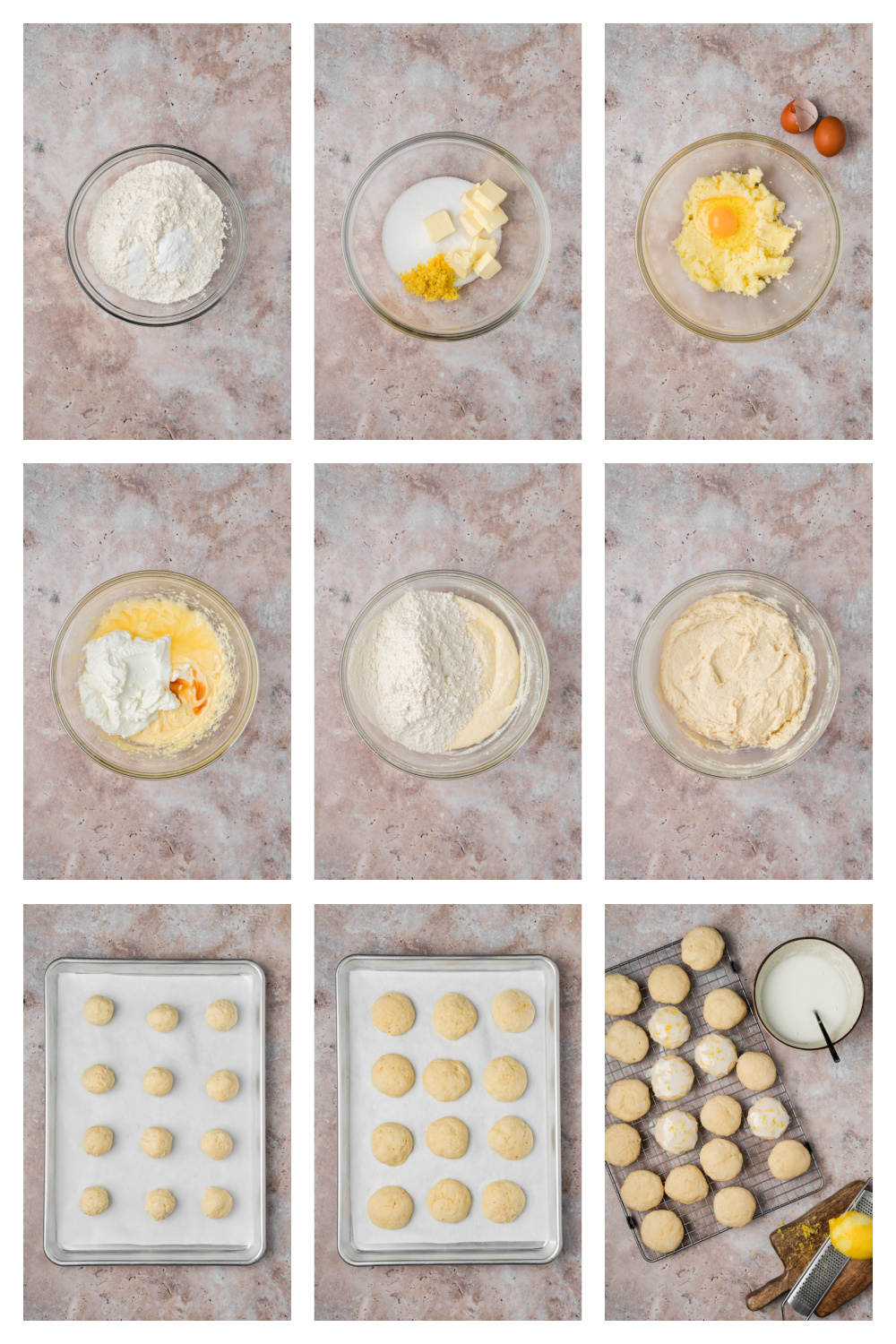
- Step One (mix the dry ingredients)
Whisk the flour, baking powder, and salt together in a medium bowl, then set it aside. I like having this done before I start with the butter and sugar, so I’m not stopping to measure anything once I get into mixing the dough. - Step Two (cream the butter, sugar, and lemon zest)
Beat the softened butter, sugar, and lemon zest for 2–3 minutes, until it looks light and creamy. The zest goes in now instead of later because the sugar helps work it into the butter while everything mixes, releasing more of the fragrant lemon oils before the rest of the dough goes in. - Step Three (finish the dough)
Beat in the eggs one at a time, then mix in the ricotta, lemon juice, and vanilla. It may look a little curdled at this point, which is normal and not a reason to keep beating it. Add the dry ingredients and mix until you can’t see any flour. The dough will be very soft and sticky, which is how it should be, so don’t add more flour to make it feel like regular cookie dough. - Step Four (chill and scoop)
Cover the bowl and refrigerate the dough for at least 1 hour. Once it’s chilled, scoop about 1½ tablespoons of dough per cookie onto parchment-lined baking sheets, leaving about 2 inches between them. That hour in the refrigerator makes the soft dough much easier to scoop and helps the cookies stay rounded and puffy instead of spreading all over the pan. - Step Five (bake the cookies)
Bake at 350°F for 12–14 minutes. Don’t wait for browning with these. Take them out when they’re puffed and set around the outside, and the pale tops spring back lightly when touched. Let the cookies sit on the baking sheet for 5 minutes, then move them to a wire rack to cool completely. - Step Six (glaze the cookies)
Whisk the confectioners’ sugar and fresh lemon juice until smooth. You want a glaze that coats the top of the cookie but is still fluid enough for the excess to drip back into the bowl after dipping. If it’s too thick, add lemon juice ½ teaspoon at a time. If it gets too loose, whisk in more confectioners’ sugar. Dip the tops of the completely cooled cookies, put them back on the rack, and let the glaze set before serving or storing.
Recipe Tips
- The butter, eggs, ricotta, lemon juice, and vanilla can look a little strange together before the flour goes in. Slightly curdled is the best way to describe it, although I would probably just call it unsettling if I had not made the recipe before. Leave it alone. Once the flour goes in, it looks like cookie dough again.
- Let the cookies cool completely before you glaze them. A warm cookie will thin the glaze on contact, and instead of getting the thick lemon cap over the top, you’ll have glaze running down the sides and barely anything left where you want it.
- Add extra lemon juice to the glaze in very small amounts. A ½ teaspoon at a time is enough to change it quickly. You want it thin enough to dip the cookies, but not so loose that it slides right back off again. If you go too far, confectioners’ sugar will bring it back.

Storage and Freezing
- Once the glaze has fully set, keep the cookies in an airtight container at room temperature for up to 2 days, with parchment between layers if you are stacking them. They are best the first day, but still very good the next day. The centers stay soft.
- For longer storage, refrigerate them in an airtight container for up to 5 days. Let them sit out for a bit before eating if you can. Cold cookies are still cookies, obviously, but the lemon flavor and soft ricotta texture are better once they’re not refrigerator-cold.
- You can freeze the cookies for up to 2 months. I prefer freezing them unglazed, then thawing them at room temperature and dipping them in fresh glaze. Glazed cookies can be frozen too, but the glaze may get sticky after thawing. It’s not a crisis. It’s just not the prettier option.
- The dough can also be made a day ahead and kept tightly covered in the refrigerator for up to 24 hours. Scoop and bake it straight from the refrigerator, adding another minute or two if the cookies need it.

FAQs
- Do I need to drain ricotta for lemon ricotta cookies?
No. Pour off any liquid visibly sitting on top of the ricotta, but don’t strain it dry. The amount of flour in the recipe accounts for the normal moisture in whole-milk ricotta, and removing too much of it changes the soft texture of the cookies. - Can I use homemade ricotta?
Yes. I have used my homemade ricotta in these cookies, and it works really well. If yours is really runny or has a lot of liquid sitting on top, pour that off first, just as you would with grocery-store ricotta. - Can I use part-skim ricotta?
I don’t recommend it. It doesn’t give me the same cake-like texture. Stick with whole-milk ricotta if the texture shown here is what you want. This isn’t the ingredient to freelance in. - Why is my lemon ricotta cookie dough so sticky?
Because it’s supposed to be. Ricotta and lemon juice make this a softer dough than regular cookie dough, and adding extra flour will make this a totally different cookie. Refrigerate it for at least an hour, then scoop it while cold. - How do I know when lemon ricotta cookies are done?
Look for puffed cookies that are set around the outside and pale on top. The tops should spring back lightly when touched. Don’t wait for them to turn golden. - Do lemon ricotta cookies need to be refrigerated?
Once the glaze has set, they can stay in an airtight container at room temperature for up to 2 days. After that, I move them to the refrigerator. - Can I make lemon ricotta cookie dough ahead of time?
Yes. Keep it tightly covered in the refrigerator for up to 24 hours, then scoop and bake it directly from cold. You may need an extra minute or two in the oven. - Can I freeze lemon ricotta cookies?
Yes. They freeze for up to 2 months. I like to freeze them unglazed, then thaw them at room temperature and add the lemon glaze afterward.

From My Kitchen Notes
Small observations from the margins.
- I don’t wait for color when I already know what I’m looking at.
- Separation doesn’t always need to be fixed.
- I don’t add more because I’m impatient to handle it.
- I use more zest when I want the point to be clear.
- I’ve never had an interest in anything that only tastes good on the surface.
- Lack of color doesn’t mean lack of substance.
- I like knowing what’s below before I decide how much to put on top.
- I can let something cool completely before I decide what it needs next.
The Cookie Tin Has Room
- Glazed Lemon Sugar Cookies – Fresh lemon, thick glaze, sugar-coated cookie.
- Italian Cookies – Anise, sweet glaze, colorful sprinkles.
- Amaretti Cookies – Almond, soft centers, powdered sugar.
- Danish Wedding Cookies – Buttery cookies, powdered sugar, holiday favorite.
- Panko Cookies – Buttery meltaway cookies, crisp panko crumbs.

Lemon Ricotta Cookies
Equipment
- hand mixer or stand mixer. For creaming the butter, sugar, and lemon zest and mixing the cookie dough.
- mixing bowls (large and medium). For mixing the lemon ricotta cookie dough and whisking the dry ingredients.
- baking sheet For baking the cookies in batches.
- parchment paper Keeps the cookies from sticking and makes cleanup easier.
- cookie scoop (1½ tbsps) Keeps the cookies evenly sized for consistent baking.
- cooling rack Allows the cookies to cool completely before glazing.
- microplane grater or fine grater. For finely grating the fresh lemon zest.
Ingredients
Cookies:
- 3 cups (360 g) all-purpose flour
- 1 tsp (4 g) baking powder
- 1 tsp (5 g) table salt
- ½ cup (113 g) unsalted butter softened
- 1½ cups (300 g) granulated sugar
- 2 tbsps (12 g) finely grated lemon zest
- 2 large eggs room temperature
- 1 (15 oz /425 g) container whole milk ricotta cheese
- 2 tbsps (30 ml) fresh lemon juice
- 1 tsp (5 ml) vanilla extract
Lemon Glaze:
- 1½ cups (180 g) confectioners' sugar
- 3 tbsps (45 ml) fresh lemon juice
Instructions
- In a medium bowl, whisk together the flour, baking powder, and salt. Set aside.3 cups (360 g) all-purpose flour, 1 tsp (4 g) baking powder, 1 tsp (5 g) table salt
- In a large bowl, beat the butter, granulated sugar, and lemon zest with an electric mixer on medium-high speed for 2–3 minutes, until light and creamy.½ cup (113 g) unsalted butter, 1½ cups (300 g) granulated sugar, 2 tbsps (12 g) finely grated lemon zest
- Add the eggs one at a time, beating well after each addition. Add the ricotta, lemon juice, and vanilla extract and mix on low speed until incorporated. The mixture may look slightly curdled at this point; this is normal.2 large eggs , 1 (15 oz /425 g) container whole milk ricotta cheese, 2 tbsps (30 ml) fresh lemon juice, 1 tsp (5 ml) vanilla extract
- Gradually add the dry ingredients and mix on low speed until no streaks of flour remain. The lemon ricotta cookie dough will be very soft and sticky. Cover the bowl and refrigerate for at least 1 hour.
- Preheat the oven to 350°F (175°C). Line two large baking sheets with parchment paper.
- Scoop about 1½ tablespoons of chilled dough per cookie onto the prepared baking sheets, spacing the cookies about 2 inches (5 cm) apart.
- Bake for 12–14 minutes, until the cookies are puffed and set around the edges. The tops should remain pale and spring back lightly when touched. Don't wait for the cookies to brown.
- Cool the cookies on the baking sheets for 5 minutes, then transfer them to a wire rack to cool completely.
- Whisk together the confectioners’ sugar and fresh lemon juice until smooth. The glaze should be thick enough to coat the tops of the cookies but fluid enough for dipping.1½ cups (180 g) confectioners' sugar, 3 tbsps (45 ml) fresh lemon juice
- If the glaze is too thick, add additional lemon juice, ½ teaspoon (2.5 ml) at a time. If the glaze is too thin, whisk in additional confectioners’ sugar until the desired consistency is reached.
- Dip the top of each completely cooled cookie into the lemon glaze, allowing the excess to drip back into the bowl. Return the cookies to the wire rack and allow the glaze to set completely before serving or storing.
Notes
- Pour off any visible liquid sitting on top of the ricotta before using. There's no need to thoroughly drain it.
- The dough will be very soft and sticky before chilling. Don't add additional flour.
- The dough can be refrigerated, tightly covered, for up to 24 hours. Very cold dough may need an additional minute or two in the oven.
- Add sprinkles immediately after glazing, while the glaze is still wet.
- Store in an airtight container at room temperature for up to 2 days or refrigerate for up to 5 days. Place parchment paper between layers once the glaze has set.
- Freeze baked cookies for up to 2 months, preferably without the glaze. Thaw at room temperature before glazing.
- Nutritional information is provided as a courtesy only and should be construed as an estimate rather than a guarantee. Ingredients can vary, and Noble Pig makes no guarantees to the accuracy of this information.
Nutrition
Have you made these Lemon Ricotta Cookies? I’d love to hear how they turned out – leave a comment below and let me know.
As an Amazon Associate and member of other affiliate programs, I earn from qualifying purchases.
shelley says
Absolutely pefect little bites of lemon! I had never had the pleasure of these before and you’re right have never seen them at the Italian bekeries. But they were so good and are going on my Christmas cookie list for sure.