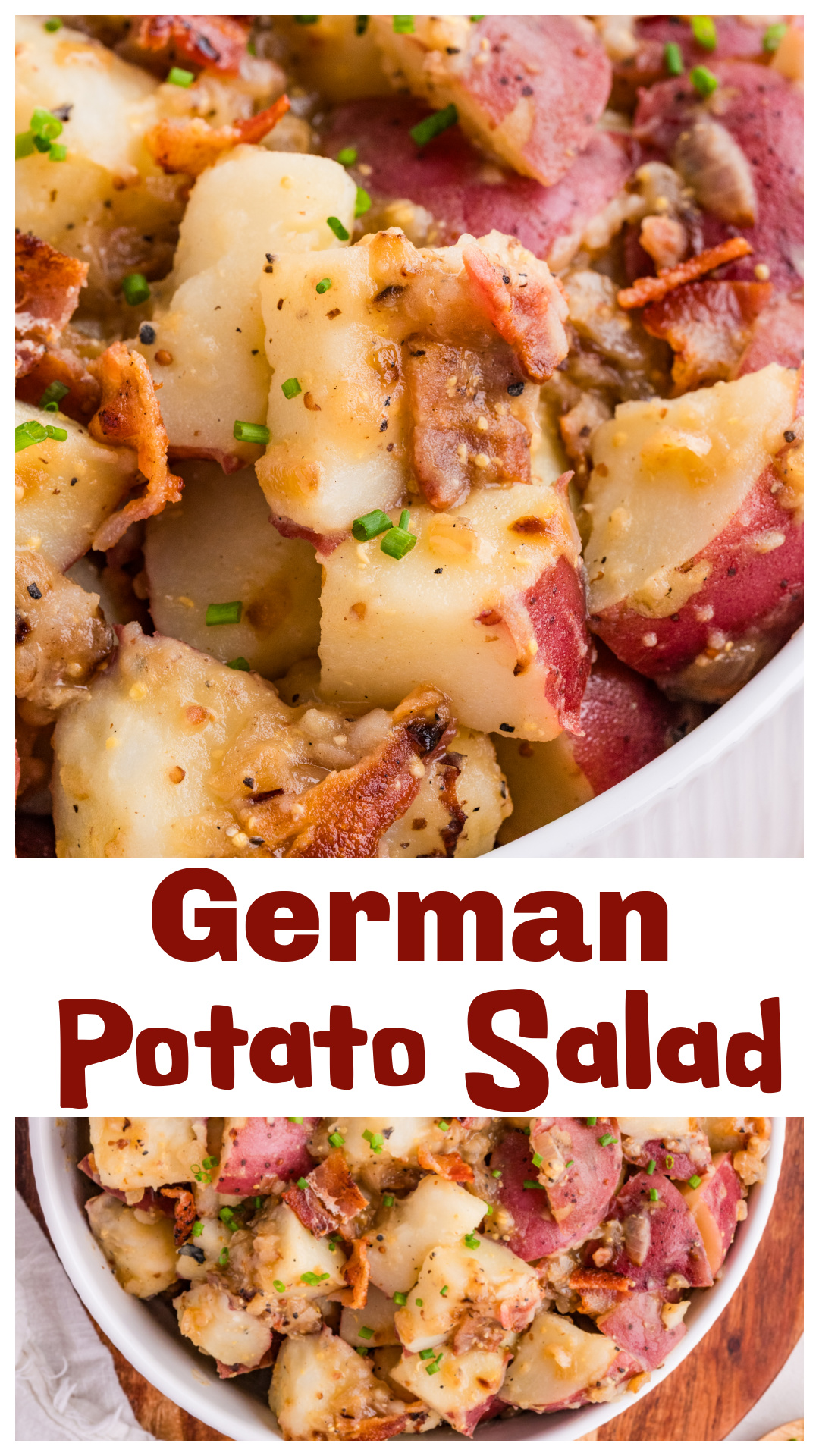
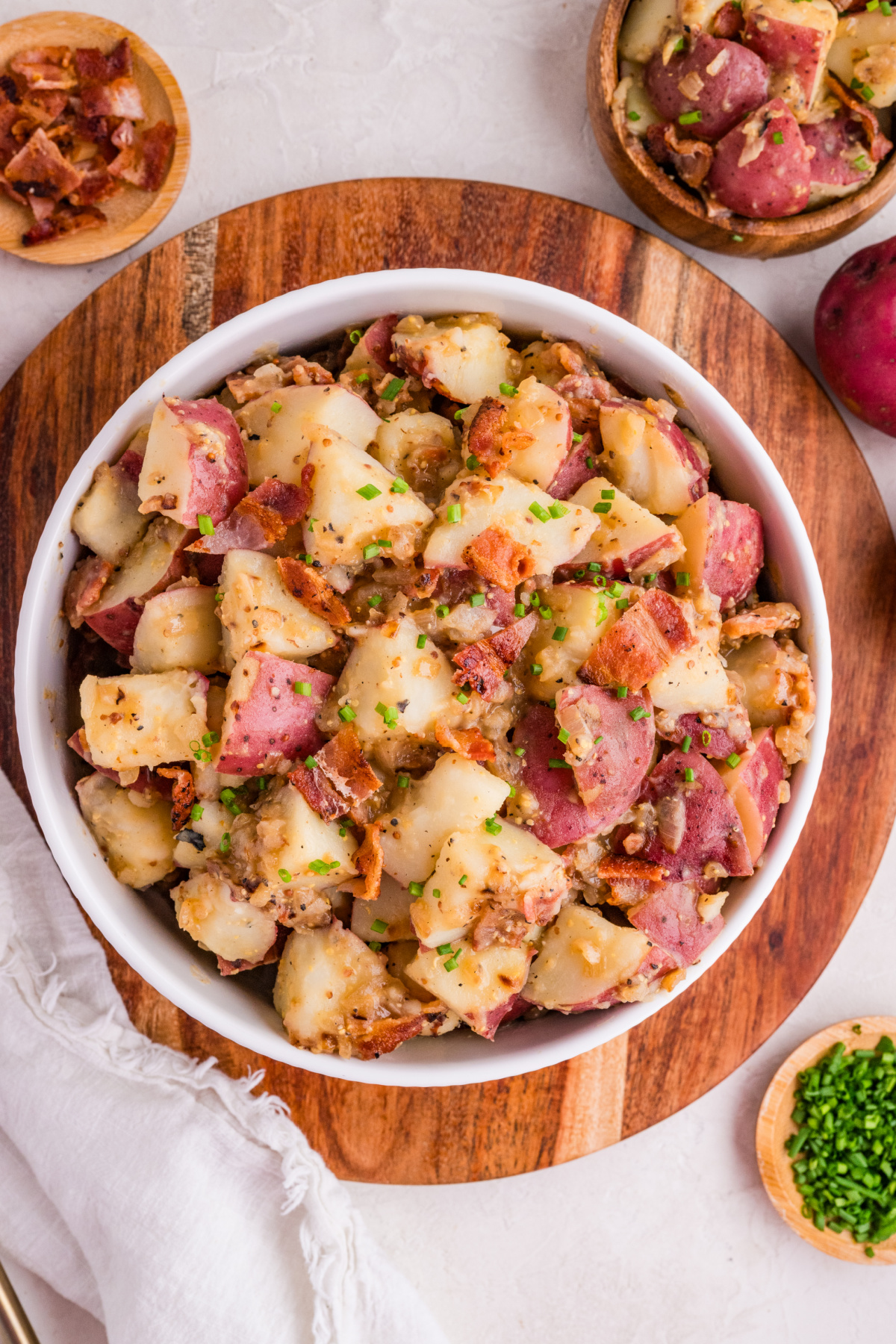
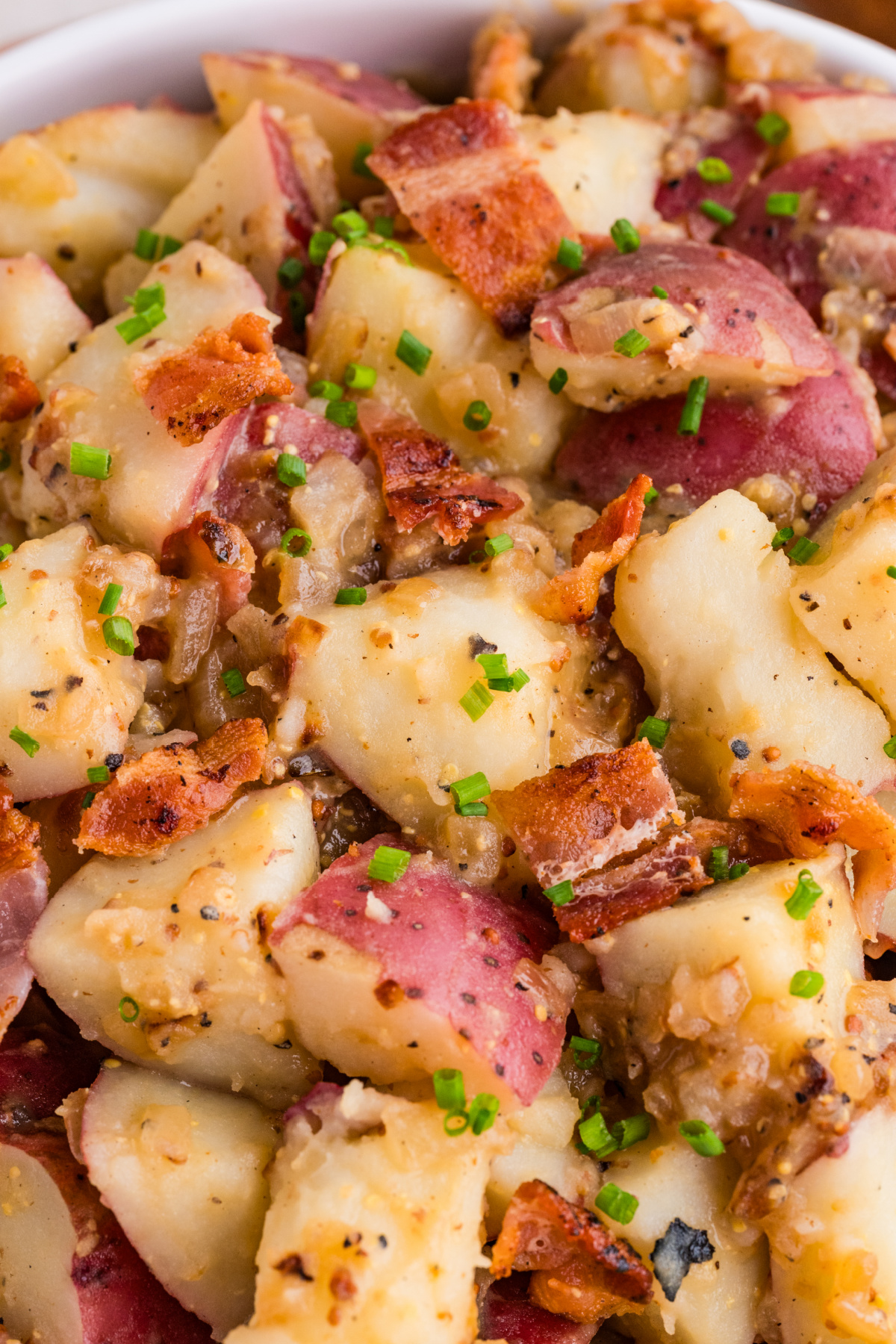
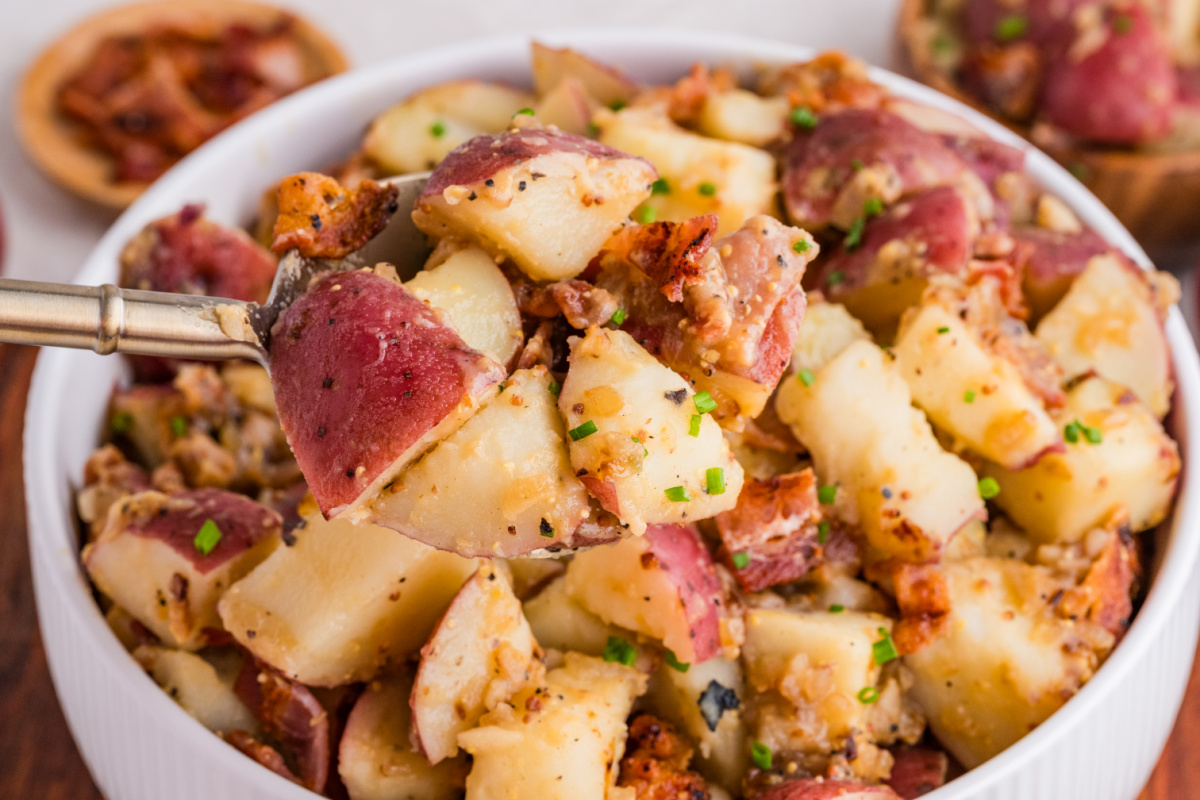
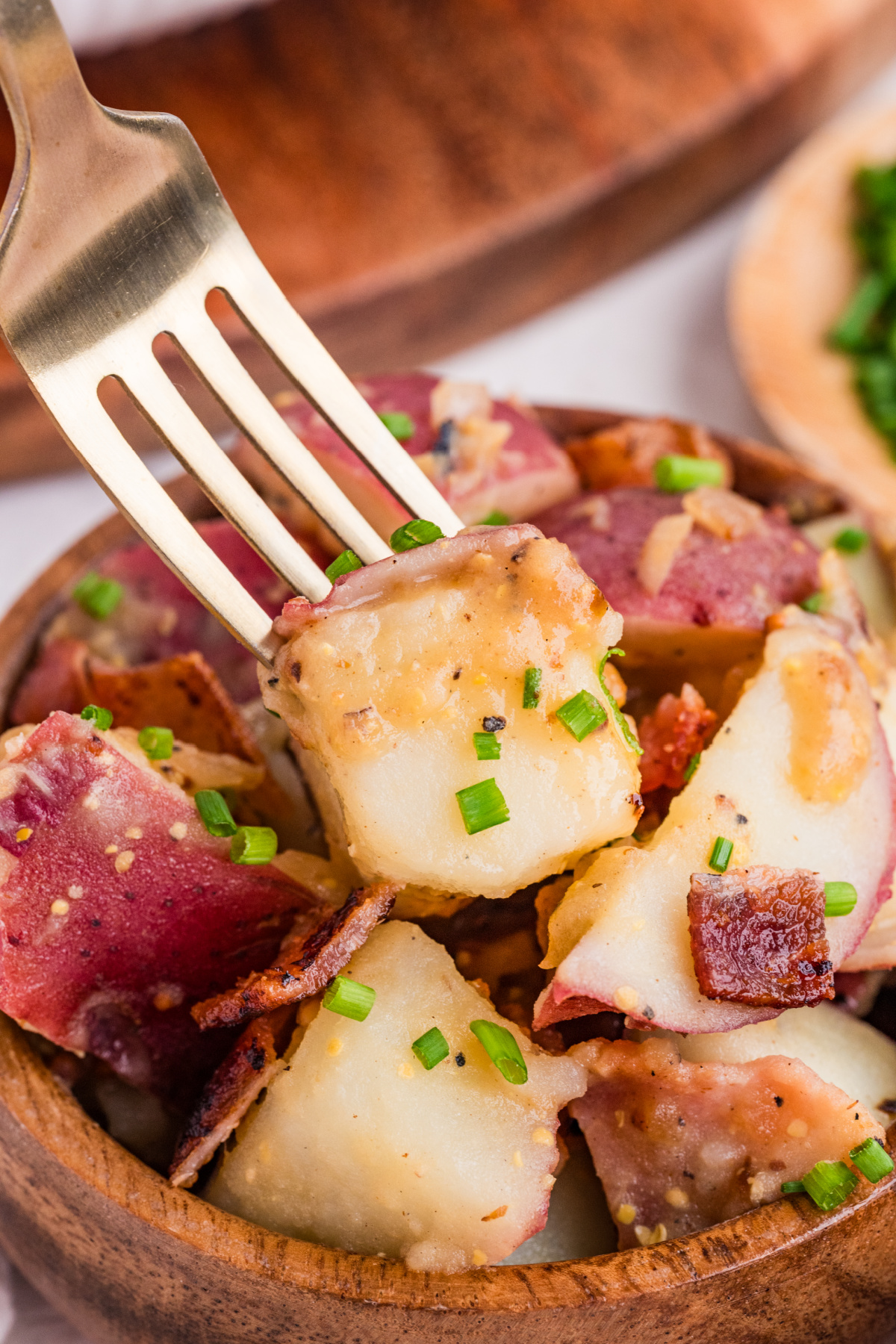
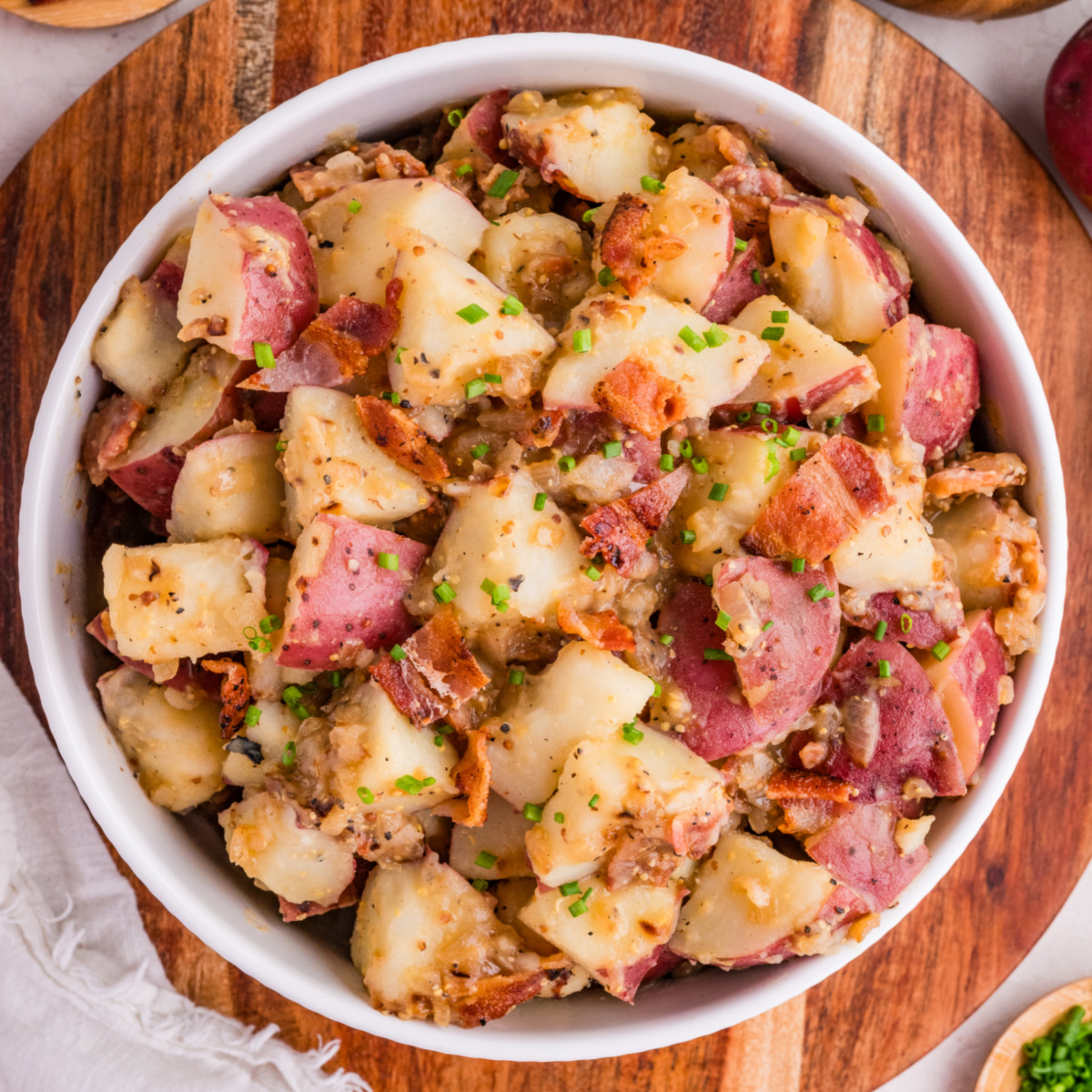
German potato salad with crispy bacon and a dressing made with both whole grain and Dijon. Whole grain adds texture, Dijon smooths it out, and together they give the dressing more body.
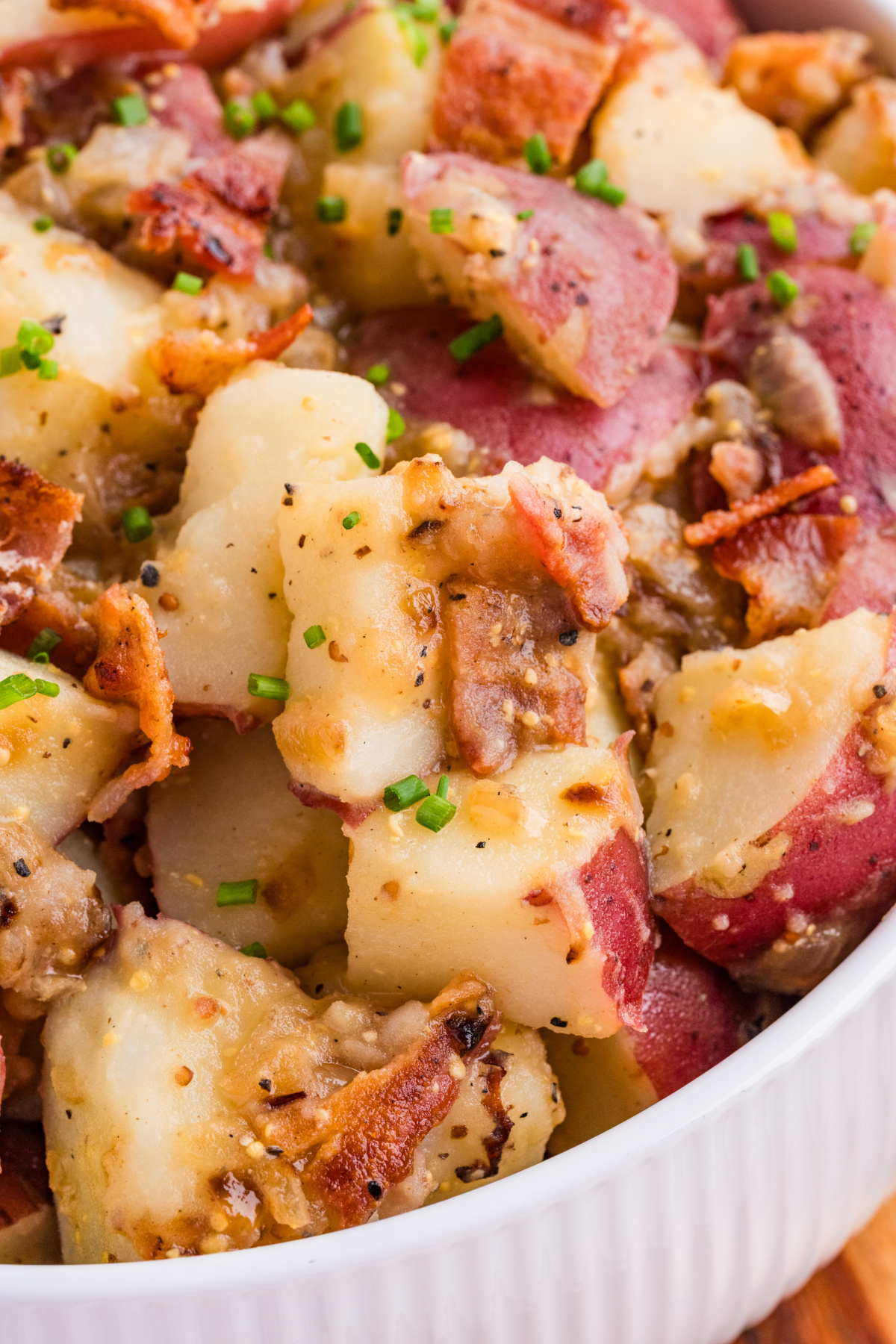
Warm German Potato Salad with Bacon and Mustard Dressing
German potato salad with bacon and a mustard dressing is the one I enjoy making now. I like that it’s warm, has a vinegar base, with bacon worked through it, and uses both whole grain and Dijon so the dressing has more to it than the really thin ones.
When I was a kid, I didn’t like potato salad at home, the cold, American version. It was the hard-boiled eggs and celery that turned me off. I thought it was the eggs that ruined it. I hated biting into something that wasn’t a potato. I felt the same way about a Jell-O salad where someone would put mayo or sour cream over the top. But you thought it was whipped cream until you bit into it. Yuck. Same crime, different dish.
During a summer trip, I remember being in Austria with a plate of Wiener schnitzel served with potato salad that didn’t look anything like the American version. I remember pushing my fork around in it and asking, “Where are the eggs?”
My dad looked back at me. “What eggs?”
“The eggs. In the potato salad.”
“There aren’t any.”
So, I tried it, and it was warm, a little tangy, no eggs, no celery, and I ate it and liked it.
On that same trip, we ended up in Germany, and out came bratwurst with potato salad that looked completely different on the side. I took a bite and that one was warm, had lots of bacon in it and more flavor, and I thought, this is the best potato salad I’ve ever had. The. Best.
That’s when I said it.
“You’re making potato salad wrong.”
My mom looked at me. “Excuse me?”
“It’s not supposed to have eggs or celery. It’s supposed to be like this. Better.”
That did not go well at all, especially because I didn’t back off. Good manners were everything in that world then and clearly, I was being rude. Yes, I was a kid, said something completely out of line, but I still stand by it because the potato salad was better.
So, over the years I’ve fiddled with it and this is how I make German potato salad now, with bacon, onions, and a mustard dressing made with both whole grain and Dijon so it coats the potatoes and has more to it than just vinegar and bacon sitting on the surface.
What Makes This Different
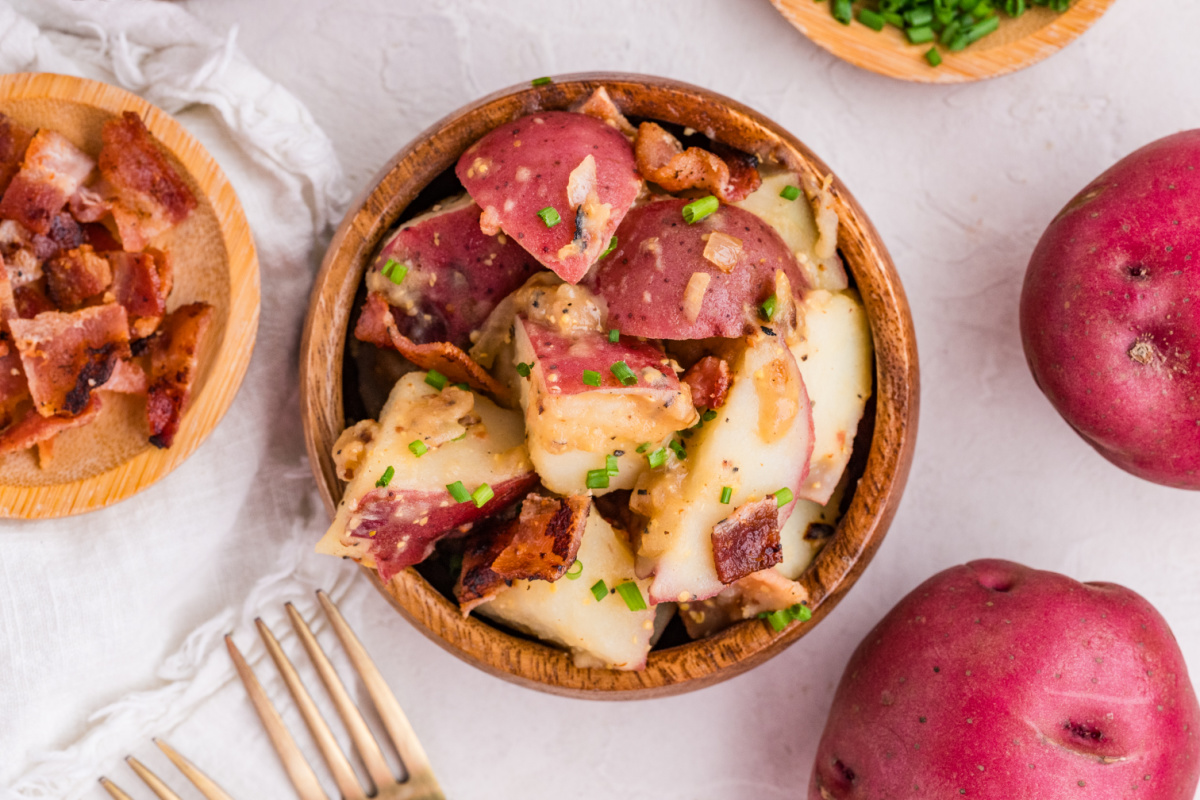
- Most German potato salads keep the dressing minimal, usually vinegar, bacon, and sometimes a little mustard. I took mine a little further because I wanted the bacon and mustard to drive.
- I use both whole grain and Dijon, and they’re not doing the same thing. The whole grain adds texture throughout, and the Dijon smooths it out so it doesn’t feel like straight vinegar and bacon on the potatoes.
- The bacon and onions are cooked together first, then added while everything is still warm so they blend into the salad instead of feeling separate.
- I add the dressing while the potatoes are still warm, which makes a difference. They take it in without getting saturated.
- It still tastes like a German style potato salad, but the dressing has more going on than what you usually get.
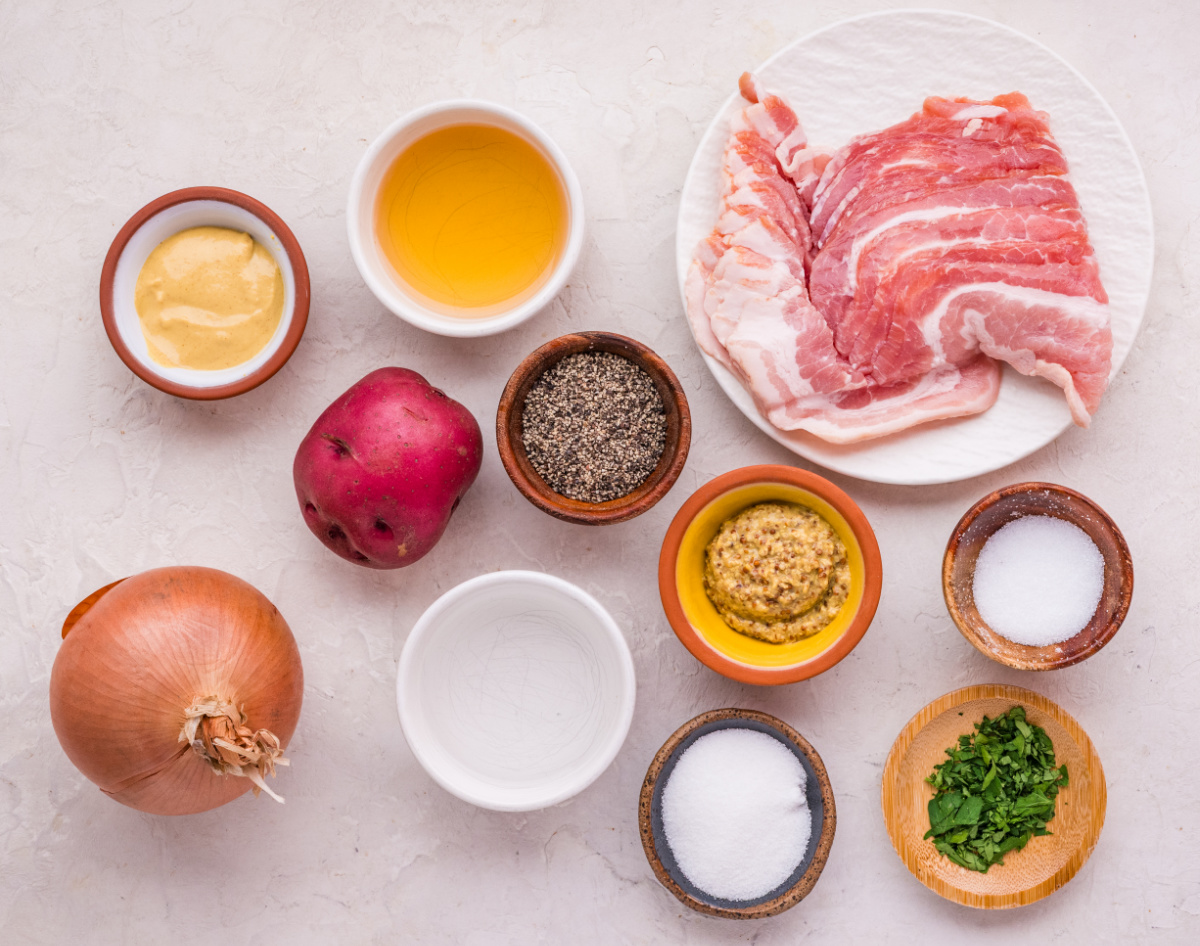
Ingredients
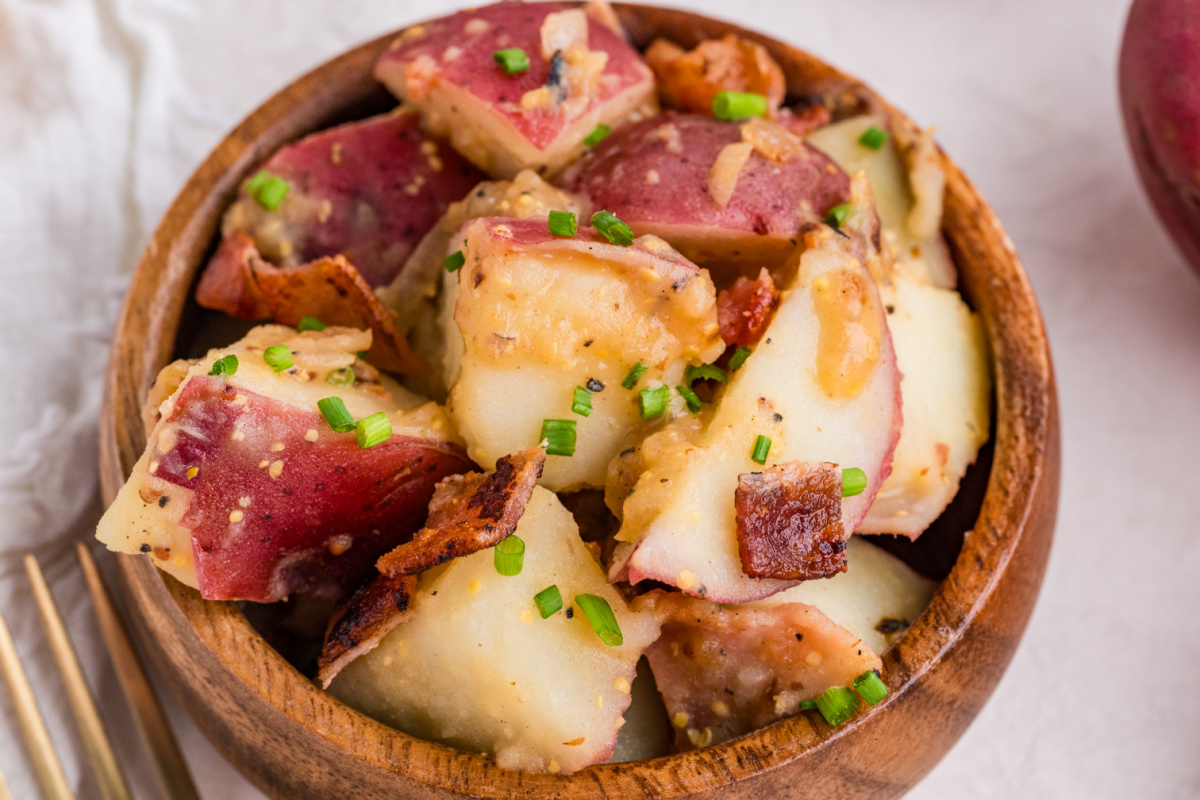
- Red potatoes – Stay together after boiling and continue to stay intact when everything gets tossed together.
- Bacon – Adds salt and richness, and you’re using the fat from it, so it finds its way through the entire dish.
- Bacon grease – Used to cook the onions and take that flavor into the dressing.
- Yellow onion – Cooked in the bacon fat until softened so it blends in instead of standing out raw.
- Apple cider vinegar – The main acid in the dressing, not as harsh as white vinegar.
- Granulated sugar – Balances the vinegar without making it sweet.
- Whole grain mustard – Adds texture throughout the dressing.
- Dijon mustard – Smooths the dressing out so it holds the dressing together.
- Kosher salt + coarse black pepper – Season both the potatoes and the dressing.
- Parsley – Added at the end to cut through the richness.
- Chives (optional) – Adds a little extra onion flavor at the finish.
How to Make German Potato Salad with Bacon and Two Mustards
Find the complete printable recipe with measurements in the recipe card at the BOTTOM OF THE POST.
- Step One (cook the potatoes)
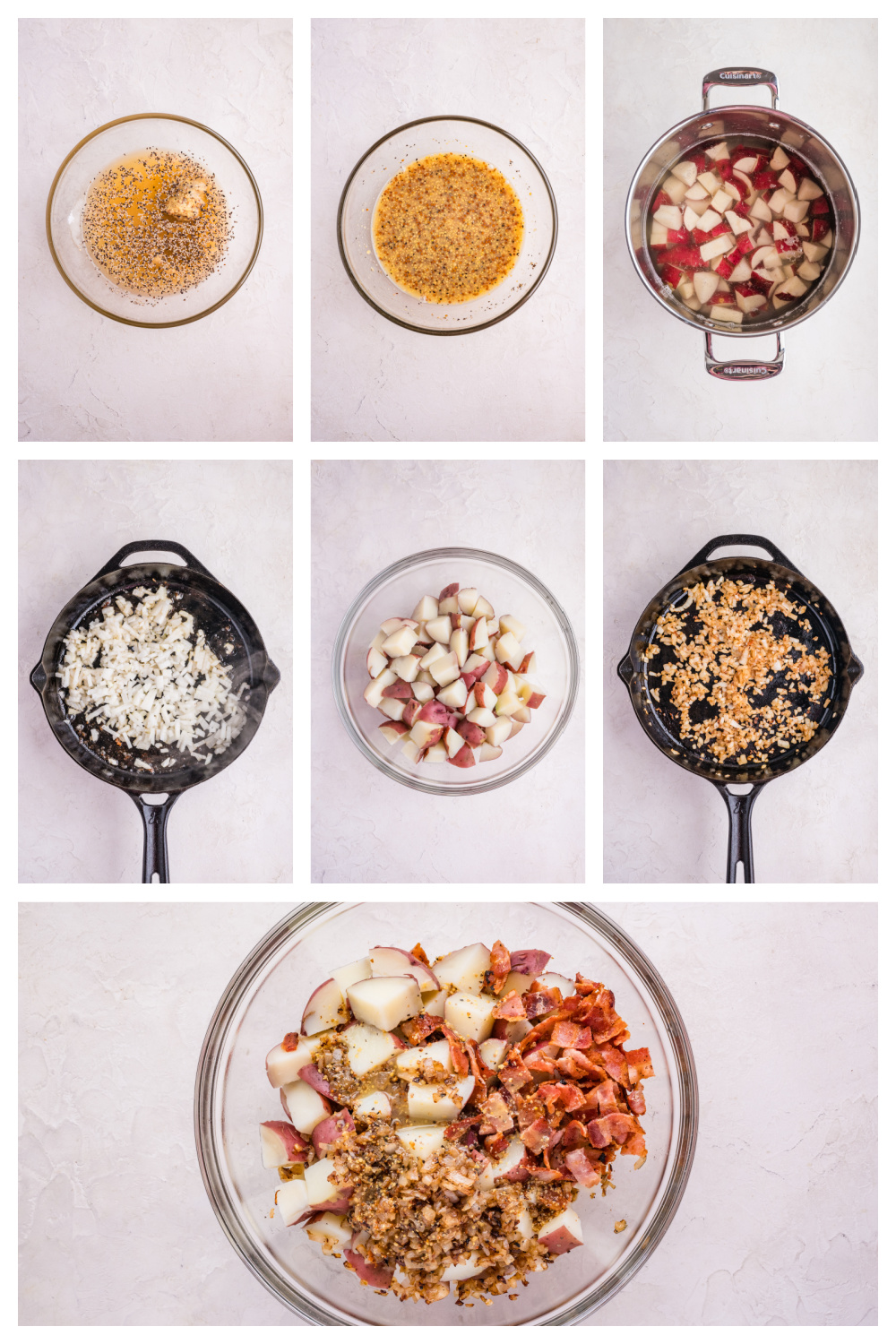
Start with your potatoes. Add them to a big pot, cover with cold water by an inch or two, and salt it well. Like, don’t be shy with the salt. Bring it up to a boil and let it go for about 9 to 12 minutes. You want them tender, but still holding together. Drain them, get them into a bowl, and let them sit for a bit. You don’t want them cold, but not steaming either. That’s when they take the dressing the best. - Step Two (cook the bacon and onions)
While that’s going, cook your bacon until it’s crisp. Set it aside, and leave a couple tablespoons of bacon grease in the pan. Add your minced onion and cook it for a few minutes until it softens. You don’t need to brown it, just take that raw edge off so it blends in. - Step Three (make the dressing)
In a small bowl, whisk together the apple cider vinegar, granulated sugar, both mustards, salt, and pepper. The two mustards do different things. The whole grain gives you texture, and the Dijon smooths everything out so it feels like one dressing instead of separate parts. - Step Four (bring it together)
Add the bacon, onions, and parsley to the warm potatoes. Pour the dressing over and toss it gently. Enough to coat everything without breaking the potatoes apart. - Step Five (serve it your way)
You can serve it warm right here, or cover it and chill it for a few hours if you want it cold.
Recipe Tips
- Make sure not to overcook the potatoes. If they start falling apart in the water, they’ll fall apart in the bowl.
- Salt the water really well. It’s the only time you season the potatoes from the inside, not just on the outside.
- Let them sit briefly after draining. If they’re too hot, they’ll break when you toss them. If they’re too cold, the dressing won’t do much.
- Cook the onions in the bacon grease until they’re soft. That’s all you’re after. You don’t need color, just get rid of that raw edge.
- Toss everything gently once the dressing goes in. You want coated potatoes, not mashed potatoes.
Storage
- Store covered in the fridge for up to 3 days.
- You can have it cold straight from the fridge, or let it sit out for a bit to take the chill off. If you want it warm again, heat it gently so the potatoes don’t break apart. If I had to choose, I’d eat this warm.
- This isn’t something I freeze. Ever.
FAQs
- Can I make this ahead of time?
Even though I do prefer it warm, you can make it ahead of time. It comes down to preference, and you won’t know how you like it until you try it warm, room temp, and cold. It’s different for everyone. - Do I have to use both mustards?
You don’t have to, but I’ve found that’s the key difference in my recipe. They do different things, and using both gives a better result than picking one. - Can I use a different type of potato?
You can, but stick with something waxy like Yukon Gold. They’ll hold together better than russets. - Why add the dressing while the potatoes are still warm?
They take it in better that way. If they’re cold, it sits on the outside and doesn’t do much. - Can I reduce the sugar?
Yes. It’s there to balance the vinegar, not make it sweet, so adjust it to your taste.
From My Kitchen Notes
A few observations.
- In case you’re wondering, I like the American version of potato salad now, and I especially love hard-boiled eggs and have no problem with celery. But the sour cream and mayo thing on top of Jell-O is still absolute jail time.
- I don’t need every variety of something to do the same job.
- There’s a difference between something being good and something belonging here.
- Warm potato salad doesn’t need to be rescued.
- Two mustards aren’t extra. Not everything that looks like more is unnecessary.
- I knew what I liked early. My delivery improved. My opinion didn’t.
- Some things absorb what you give them. Others sit there no matter what you do.
- There’s always that first bite where you know if you’re going to stay with it or not.
- Texture changes everything whether people notice it or not.
- Some things don’t need to be explained. You know it before you can explain it.
- I can tell what’s staying together and what’s not.
- There’s a moment where you realize you’re not going to adjust your taste to make something easier for everyone else, and it doesn’t come with a speech.
- I don’t confuse liking something with choosing it.
- I’ve watched myself keep the same preference while everything around it changed, which is a strange kind of consistency.
- Some decisions don’t look like decisions from the outside. They just repeat.
- I don’t soften a strong preference to make it more acceptable. I find a better use for it.
More Cookout Sides
- Tennessee-Style Mustard Coleslaw – classic slaw with mustard kick.
- Old-Fashioned Cauliflower Salad – simple with a different dressing.
- Bacon Broccoli Salad – crunchy, creamy, with bacon.
- Deviled Egg Pasta Salad – creamy, tangy, filling side.
- Spicy Horseradish Macaroni Salad – horseradish, herbs, pickled vegetables.
This post may contain affiliate links. Please read my disclosure policy.
German Potato Salad with Bacon and Two Mustards
Equipment
- large pot For boiling the potatoes.
- skillet To cook bacon and soften onions in the rendered fat.
- mixing bowls (large and small). For tossing and the dressing.
- whisk To fully combine the dressing.
Ingredients
- 2 lbs (900 g) red potatoes cut into 1-inch (2.5 cm) cubes
- cold water enough to cover potatoes by 1-2 inches (2.5-5 cm)
- 1½ tbsps kosher salt (for boiling water)
- ½ lb (225 g) bacon cooked and crumbled
- 2 tbsps (30 ml) bacon grease
- 1 cup (150 g) yellow onion minced
- ⅓ cup (80 ml) apple cider vinegar
- 3 tbsps (38 g) granulated sugar
- 1 tbsp (15 g) whole grain mustard
- 1 tbsp (15 g) Dijon mustard
- 2 tsps (6 g) kosher salt
- ¾ tsp (2 g) coarse ground black pepper
- ½ tbsp (2 g) finely chopped fresh parsley
- fresh chives optional for garnish
Instructions
- Add the cubed red potatoes to a large pot and cover with cold water by 1–2 inches (2.5-5 cm). Season the water generously with kosher salt. Bring to a boil over medium-high heat, then reduce slightly to maintain a even boil. Cook for 9–12 minutes, or until the potatoes are tender when pierced but still hold together. Drain well and transfer to a large mixing bowl. Let the potatoes cool for about 15–20 minutes so they are no longer steaming hot but still warm enough to take on the dressing.2 lbs (900 g) red potatoes, cold water, 1½ tbsps kosher salt
- While the potatoes cook and cool, cook the bacon in a skillet over medium heat until crisp. Transfer the bacon to a paper towel-lined plate and reserve about 2 tablespoons (30 ml) of the bacon grease in the pan. Add the minced yellow onion to the warm bacon grease and cook for about 4 minutes, stirring occasionally, until softened. Remove from heat.½ lb (225 g) bacon, 2 tbsps (30 ml) bacon grease, 1 cup (150 g) yellow onion
- In a small bowl, whisk together the apple cider vinegar, sugar, whole grain mustard, Dijon mustard, kosher salt, and coarse black pepper until smooth and fully combined. Using both mustards provides texture from the whole grain and a smoother base from the Dijon, allowing the dressing to come together more completely than a vinegar-only mixture.⅓ cup (80 ml) apple cider vinegar, 3 tbsps (38 g) granulated sugar, 1 tbsp (15 g) whole grain mustard, 1 tbsp (15 g) Dijon mustard, 2 tsps (6 g) kosher salt, ¾ tsp (2 g) coarse ground black pepper
- Add the cooked bacon, softened onions, and chopped parsley to the bowl of warm potatoes. Pour the dressing over the top and gently toss until the potatoes are evenly coated, taking care not to break them apart. Top with fresh chives if you like.½ tbsp (2 g) finely chopped fresh parsley, fresh chives
- Serve warm, or cover and refrigerate for at least 3 hours before serving cold.
Notes
- Potatoes should be tender but still intact before tossing. Overcooking will cause them to break apart.
- Dressing the potatoes while still warm helps them absorb the flavor more evenly.
- Whole grain and Dijon mustard serve different roles in the dressing and are recommended together for best results.
- Adjust sugar slightly to taste if you prefer a more or less balanced vinegar profile.
- If using table salt instead of kosher salt, reduce the amount by half.
Nutrition
Have you made this German Potato Salad? I’d love to hear how it turned out – leave a comment below and let me know.
As an Amazon Associate and member of other affiliate programs, I earn from qualifying purchases.
Barbara says
This sounds incredible, I’ve never made it this way. I know exactly what you mean with the jello salad, that was always so wrong and still is. Going to try this over the weekend.
Sally says
Made it and served with burgers last night and it was so delicous. I had never tried the German version and I think I prefer it over the American anyday. Very nice.
Grace says
I made it and loved it. Loved the bacon and mustard dressing.