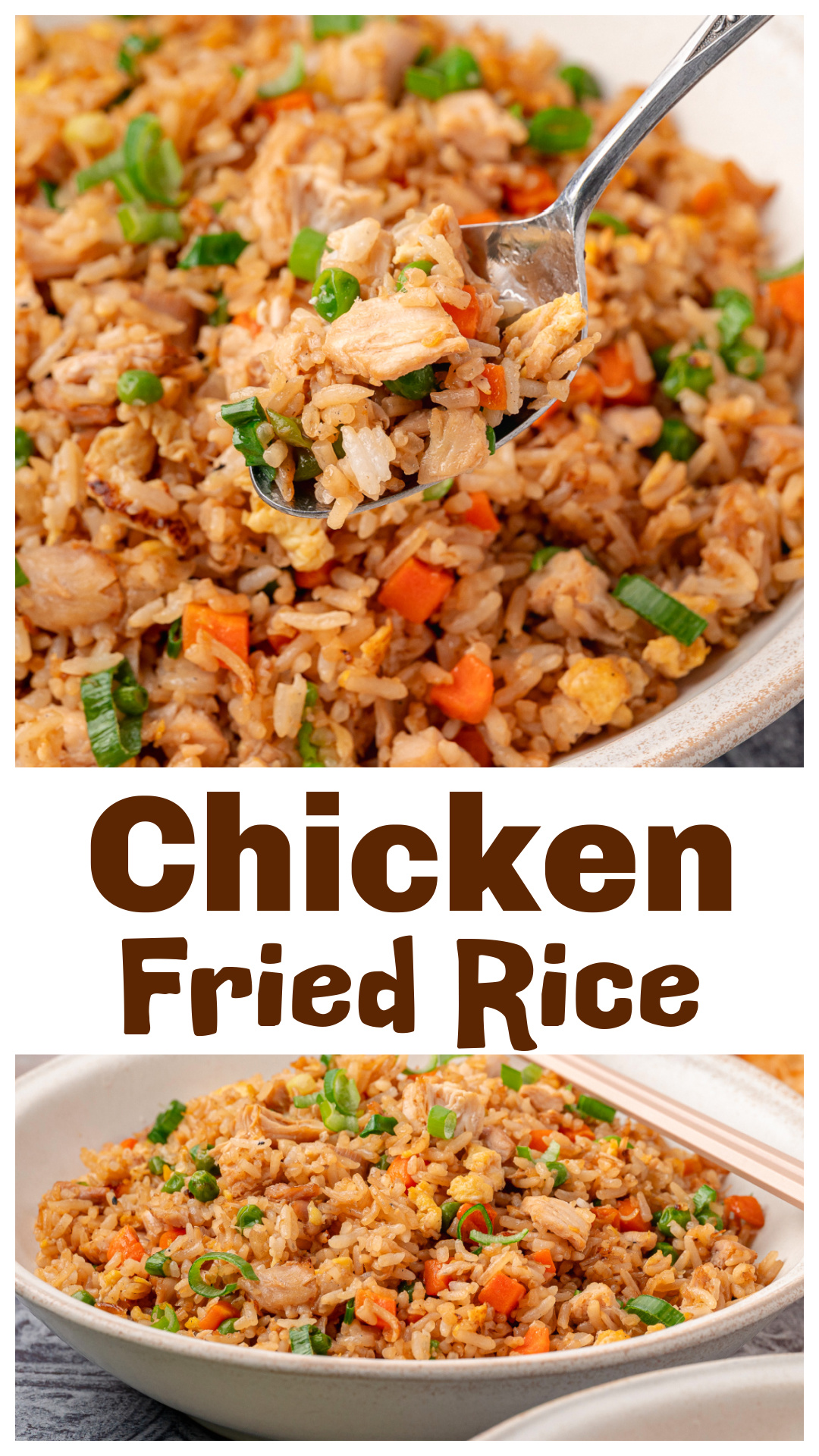
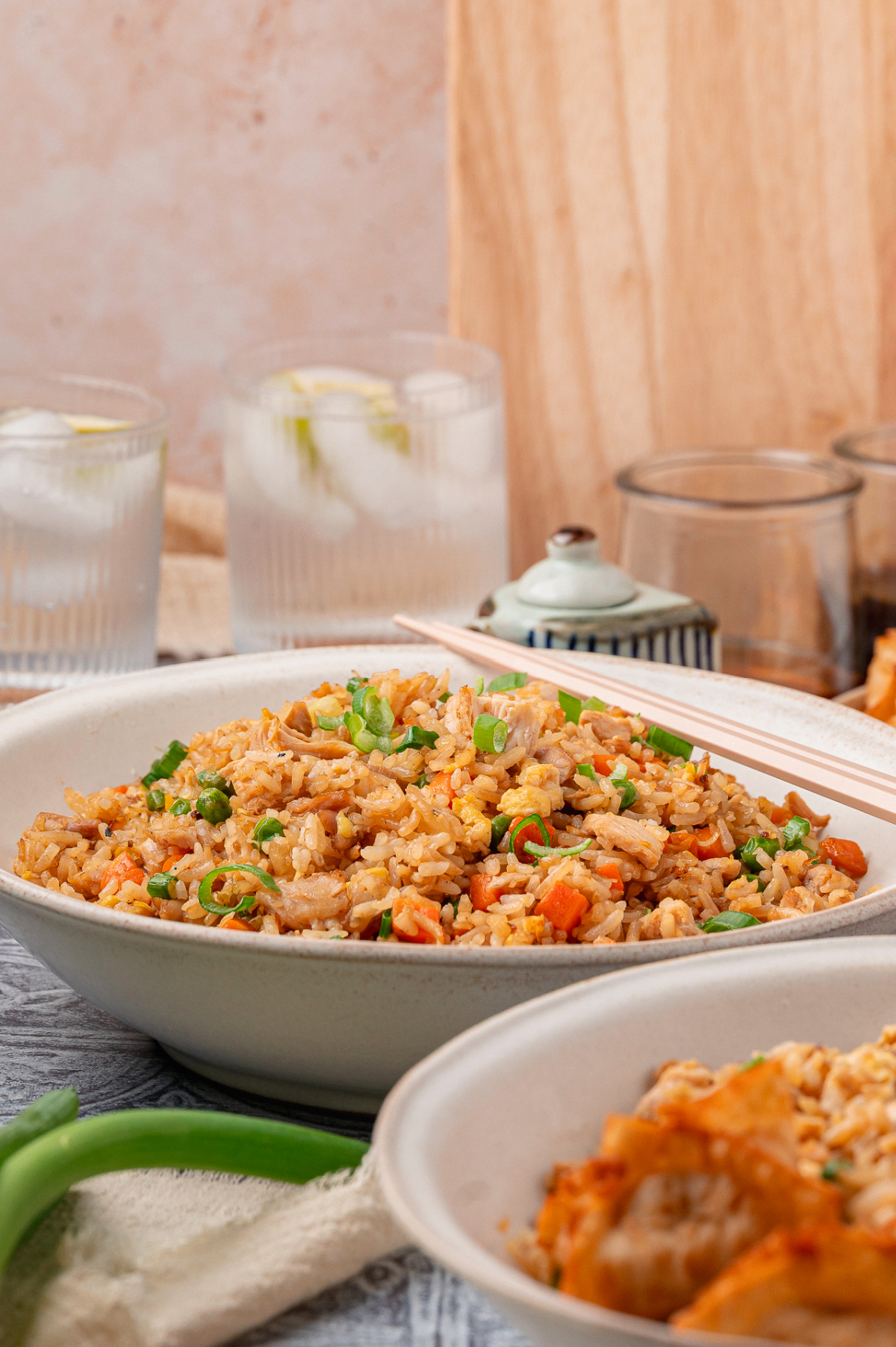
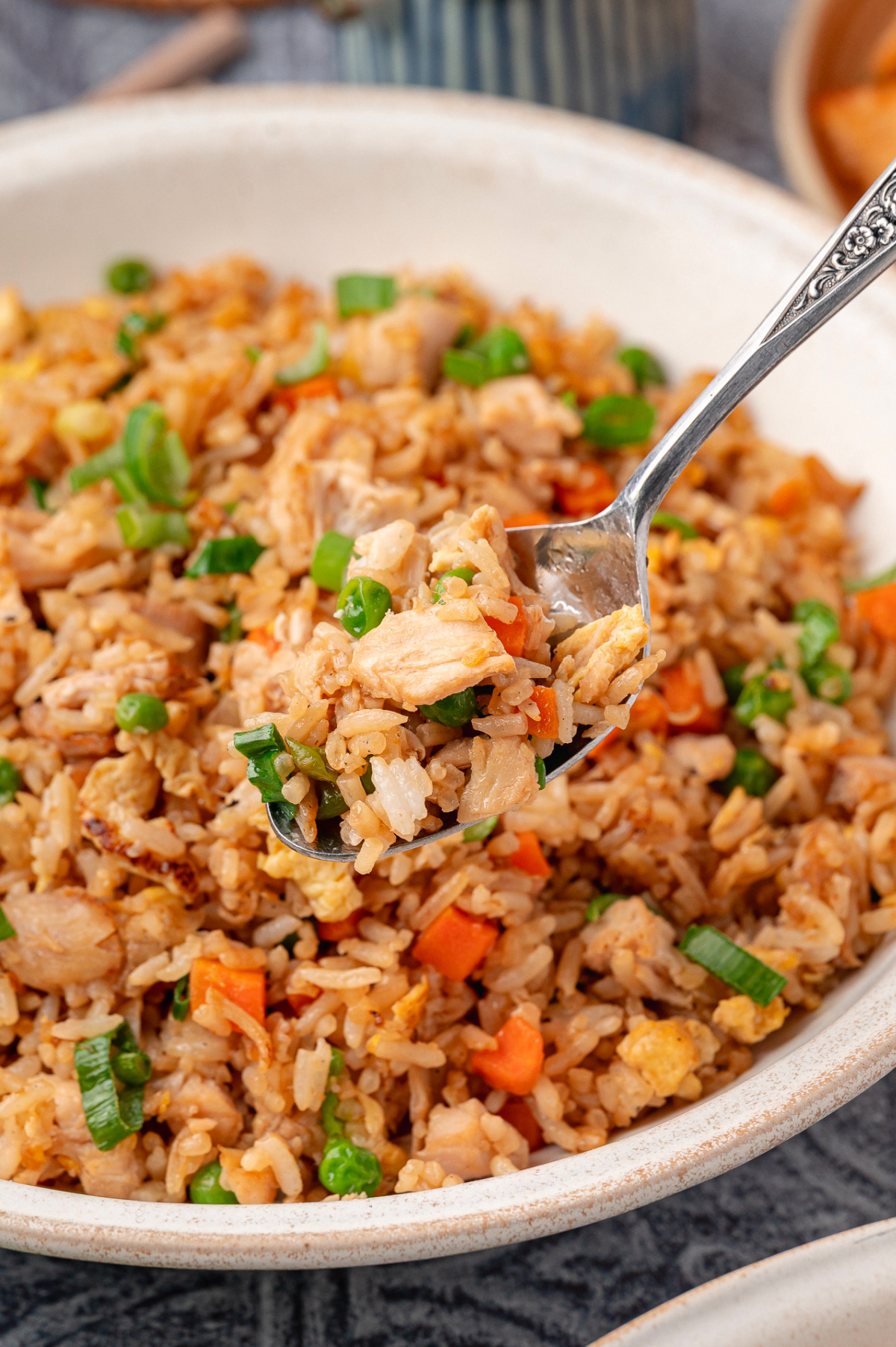
Chicken fried rice made with cold rice, rotisserie chicken, eggs, and frozen vegetables, finished with soy, oyster sauce, and sesame oil. A straightforward, flexible recipe that’s good in that everyday, dependable way.
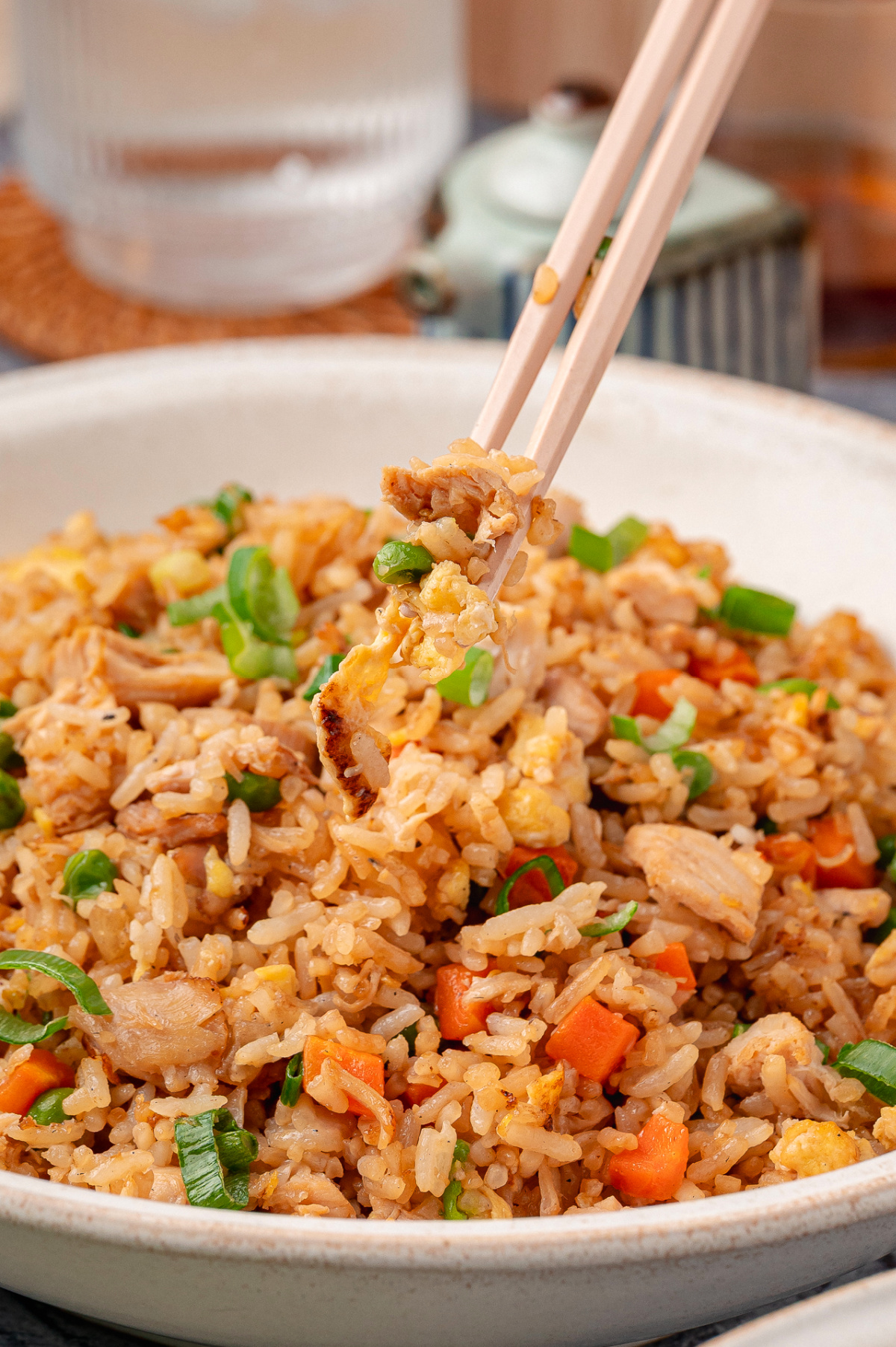
Chicken Fried Rice, A Survival Meal
I moved into my current home in the summer of 2011. I had been here maybe five days. Everything was still a mess in that just “moved in” kind of way. Nothing was unpacked or oriented. I was just technically living here, with boxes stacked everywhere and piles of things I hadn’t even looked at yet because I didn’t have the bandwidth.
I had a young vineyard coming online that fall, a wine label to run, two small kids, and this website that was turning into something that needed more attention than I was giving it. Everything already felt like too much, and I remember thinking at the time that I would deal with the house later. Much later.
It was a nice day and I decided to step outside and take a picture. I grabbed my big camera, opened the slider, and walked out. There’s a shallow step down to the deck, which I wasn’t used to yet, and I stepped right over it.
My only thought was, save your camera, and I put my arm up as I fell, so my face hit the deck first and my foot twisted underneath me in a way that was so violent and wrong my brain basically shut off for a second.
The pain was immediate and intense in a way that I couldn’t make a sound even if I wanted to. I remember lots of tears, but I don’t think I was breathing normally at that point. I was just lying there thinking, this is bad.
Without even looking at it, it was obvious I wasn’t going to be able to stand up or walk. My brain already knew.
The kids were somewhere else in the house or out front or both. I don’t even remember. I just recall lying there alone on the deck with my camera still in my hand (I saved it!) and this immediate sinking realization that I had just seriously hurt myself and I had absolutely no room in my life for that to be true.
I don’t know how long it was before the boys found me. Long enough for my foot to start swelling inside my shoe and for the pain to settle into that nauseating, pulsing place that doesn’t spike and pass. It just sits there and throbs and makes time feel unbearable.
At some point I was able to crawl back inside and get myself onto the couch. I asked for ice and took a pile of ibuprofen. I stared at my foot and kept telling myself it was a bad twist, a really bad twist, because if I let myself consider that it might be more than that, I could feel my mind starting to wander to a place I didn’t want to go.
I had a vineyard. It was late summer and harvest was approaching. I had physical work I absolutely had to be able to do, and kids, and no backup plan for being suddenly immobile. So I told myself, you’ll be fine, it will be better in the morning, you don’t need to go to the ER.
I didn’t want to deal with the logistics of any of it. Dragging the kids with me, sitting in the ER all night, because we all know this would not be considered an emergency.
Eventually I managed the pain enough to go to bed. Around four in the morning, before I could even move, this situation was not improving. I pulled the sheets back and looked at my leg and it was dramatically worse than it had been earlier. It was more swollen, angrier looking, and the kind of swelling that doesn’t look like “oops, I hurt myself.” It looks like “you seriously screwed something up.”
When you show up to a hospital with an injury like that, especially when it didn’t happen five minutes ago, and when you’re a woman, you are immediately isolated and asked very direct questions. Who did this to you? Are you safe? Are you sure? Are you positive this was an accident?
I understand why they do it and I’m glad they do it. DV is a real thing. But sitting there exhausted and in pain, trying to convince people that no one hurt me, that I had just fallen out of my own house, felt surreal.
Once that was cleared, they did X-rays. Nothing was broken, which should have been good news.
The ER doctor came in, looked at the films, looked at my foot, looked at me, and said very plainly, you would have been better off if it were broken. Broken bones heal. What you’ve done is tear the hell out of your ligaments. This is one of the worst sprains I’ve seen in a long time.
He told me I was looking at a long recovery. Not weeks or “take it easy for a bit.” More like a year. He said the first month I probably wouldn’t be able to walk without crutches, even with a boot, and after that it would still be tentative and slow, depending on how well things healed.
He also added, almost casually, that you’re not twenty anymore, so it’s not going to bounce back quickly. Cool. Thanks for that one.
I was fitted for a boot, they handed me crutches, and sent me home. I remember getting back into my house and just sitting there with the boot on and crutches leaning against the wall and staring at nothing. My brain running eight hundred different scenarios on a loop. Harvest. The vineyard My first estate harvest (brain explodes).
Up until then I was purchasing grapes to make wine. This was the first year my own vineyard was old enough to produce fruit I could make wine from. Three years of planting, tending, training, waiting. Harvest breathing down my neck.
There was so much money on the line, I couldn’t even go there without freaking out about all of it. The situation felt enormous and fragile, and I felt very exposed.
That night, lying in bed, is when it really hit, that’s when darkness does its best work. I remember lying there with sober tears running down my face, staring at the ceiling fan going around, thinking about everything that could go wrong, all that I couldn’t physically do, and depended on me being able to move my body. The whole nauseating sense of, I am completely screwed.
At some point I fell asleep. Not because I felt better, but because exhaustion eventually wins. I woke up in the dark with this very blunt, very clear realization. No one was coming to save me from this. No one was going to step in and make this easier, rearrange my responsibilities or take this on for me. I was not interchangeable in this situation. And right alongside that thought was another one. You were made for this, and not in a motivational poster type of way. More like, you have been forged sideways your entire life and handling complicated, high-pressure, messy situations for a very long time.
This is not a new category of problem for you, it’s just a new flavor. This is your situation and you have to deal with it. You don’t get to opt out or fall apart and you MUST figure it out. That was it. Very non-comforting, non-soothing and very, very clear self-talk.
I remember thinking, I need to do something that feels like me, not something productive in a big-picture sense, something small, that I know how to do without thinking, that I’ve done a thousand times. For me, that has always been cooking, and specifically, I thought about chicken fried rice, because I knew I had leftover rice, leftover chicken, and that’s what I make when it’s available.
I got out of bed, got the boot on, grabbed my crutches, and started the slow, ridiculous process of getting myself into the kitchen. Everything took forever because every movement hurt, standing hurt, balancing hurt, but I did it anyway. I stood at that stove, which I had only used once at that point, and made fried rice the same way I always had, on autopilot, by memory, not from a recipe or experimenting.
I did this against all medical advice, obviously, and common sense because I needed to know that I was still capable of doing something and executing a simple sequence of steps and that I wasn’t suddenly helpless.
I ate that chicken fried rice for breakfast while I sat down with my laptop and started trying to sketch out a plan for how I was going to survive the next few months. What I did not know, at that moment, was that I was walking straight into one of the most difficult growing seasons Oregon had seen in a very long time.
Spring had already been cold, which meant I was already dealing with late bud break, pushing possible harvest dates into October. Then came more cold and lots of rain, which meant disease pressure was high. And bird pressure would become even more of a problem. It required constant attention and evaluation of what fruit had to be dropped, what had a chance, what didn’t.
You cannot ripen everything when the season goes completely off the rails. It requires ruthless decisions about what stays on the vine and what gets cut so the remaining fruit even has a chance. This is even more important at a higher elevation vineyard like mine was.
Ironically, 2011 had a robust crop, a very insane amount of fruit, even for my young vines. I dropped a lot of clusters. A painful amount, and the grapes just weren’t ready when they’re supposed to be. Early October came and went, and the grapes were not finished becoming themselves until well into November, which is almost unheard of.
There was a kindness inside that delay, even though I didn’t recognize it at the time. The delay gave me more time to heal, not healed, but less destroyed. Still, the weeks leading up to harvest are the most important part. The vineyard is where wine is made, you have to be present. Walking rows, checking clusters, looking for rot, managing disease, making judgment calls every single day. And I was doing all of that in a boot, on a leg that had no interest in cooperating.
Once the grapes did come into the winery, it was immediately clear this was not a normal year and not a normal set of grapes. Everything about them required winemaking skills I was versed in, but had never had to apply.
The fruit was lower alcohol. The chemistry was different. The fermentations were slow, stubborn, and delicate. And because it was already November, everything was happening in much colder weather, which complicates things in ways you don’t really get to opt out of.
Normally, during harvest, I’m managing heat, in 2011, I was trying to create it, to keep fermentations warm enough to stay alive and coax them along instead of holding them back. Then came pressing in the cold, working in the rain, long days that slid straight into longer nights.
Fermentations happening through Thanksgiving. Nothing wrapped up neatly or finished on schedule. Every step took more attention than it should have, and every decision felt heavier because there wasn’t much margin for error.
On top of all of that, there was still all the physical cellar work. Winery work is constant cleaning, constant disinfecting. Bins, pumps, hoses, barrels, shovels, it’s endless. And everything is wet, always.
Late one night, I was inside one of the fermentation bins shoveling out grape skins after a press. By then my leg was better enough that I wasn’t in the boot anymore, but it was still something I was constantly aware of. I was being careful, or I thought I was. I lost my footing and fell straight backward, without hands free to catch myself or slow it down. I landed hard on my tailbone, the same kind of pain as the deck, where it knocks the air out of you and leaves you staring at nothing for a second, waiting for your nervous system to come back online.
So now I had a badly injured ankle that was still healing and a fresh tailbone injury layered on top of it, and a winery full of partially fermenting fruit that didn’t care.
And then there was me, back in bed that night, running every possible interpretation through my head. Maybe I’m not supposed to be doing this. This is my body telling me to stop. I am in over my head. Maybe I’m an idiot. Or maybe I’ve been romanticizing a life that is just too physically demanding for me. None of those thoughts came with solutions. They just showed up..
Morning came, as it always does. There was still wine in bins and barrels that needed my full attention and daily decisions. So I kept going and finished the vintage.
I did not release this wine on a normal timeline. It was young estate fruit, high acid, lower alcohol, and structurally intense. It needed time, and these were not traits you could just blend out.
I was lucky enough, financially, to be able to give it that time instead of forcing it out into the world before it was ready. It took about four years before I felt good about it. Not “fine.” Good.
A couple of months ago I opened a bottle, I still have a few left. It’s excellent. Very elegant, food-driven, and soft in the way serious wines tend to be.
It makes a lot of sense now, which feels almost absurd, considering how close I came to thinking that year had broken me.
Every time I make this chicken fried rice, I think about 2011 and give it a small internal nod.
I stood at a stove on crutches and made myself breakfast when everything felt impossible. I made the wine anyway, survived, and I’m still here. Sometimes that’s the whole sentence.
It’s probably worth mentioning that I’ve never shared this chicken fried rice here before, which feels odd when I think about it. Not because it’s secret, or because it’s special in any sense. Mostly because I’ve never really thought of it as a “recipe.” It’s just something I make. It’s when there’s leftover rice and chicken and I need food. It’s what I make when I don’t want to decide anything or prove to myself that I can still do small, normal, human things even if everything else feels unmanageable.
I do realize everyone makes fried rice all the time, this is just my simple version. But it’s also the version I made on one of the hardest mornings of my life, and if I’m being honest, it’s still the kind of meal I want when things feel intolerable.
Maybe that’s why I never wrote it down. Because in my head it lives in the category of survival, not performance, but survival counts.
So here it is.
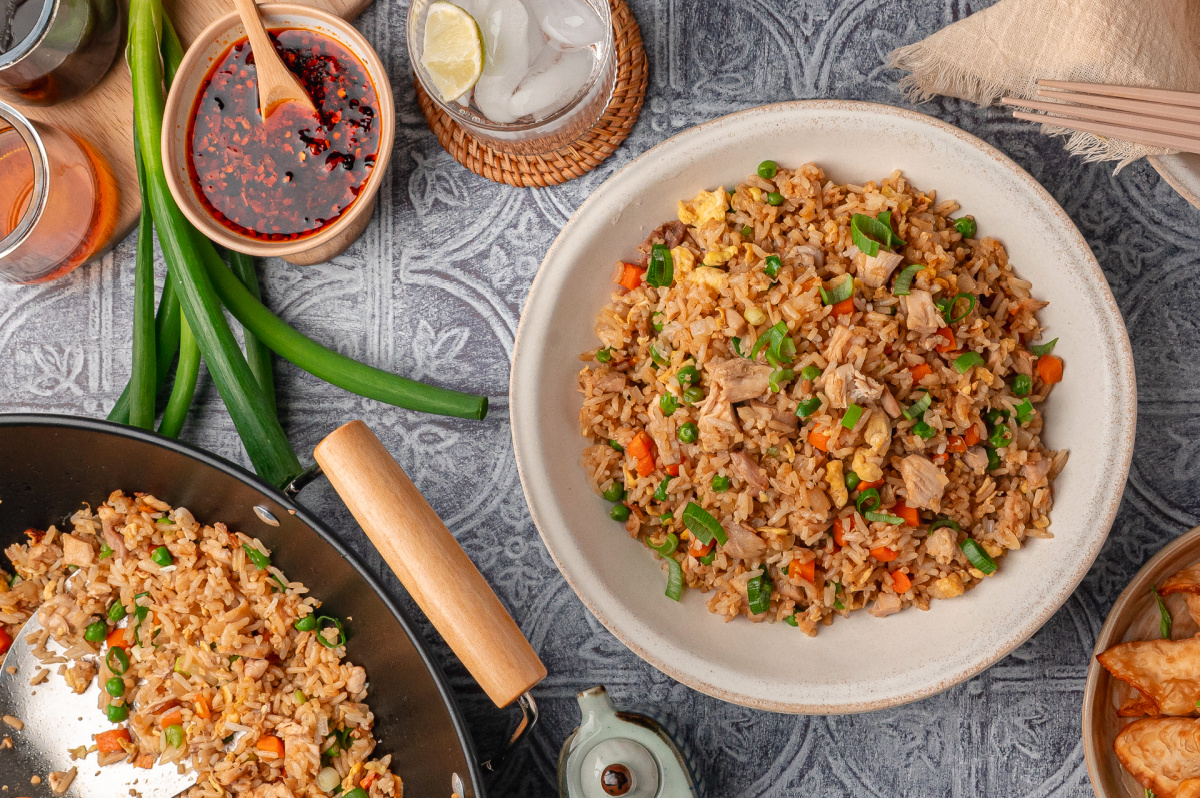
Why I Love This Recipe
- It turns leftovers into a real meal instead of a placeholder, which still feels a little bit magical to me.
- It’s fast, but not sloppy. There’s a small sequence to it, and I’ve always liked that rhythm.
- I keep this chicken fried rice in the same mental category as that 2011 vintage: simple on the surface, technically straightforward, and completely dependent on paying attention.
- This dish looks ordinary, but for me, it holds history.
- It’s flexible in the way food needs to be when life is busy.
- It reminds me that I’ve been taking care of myself longer than I give myself credit for.
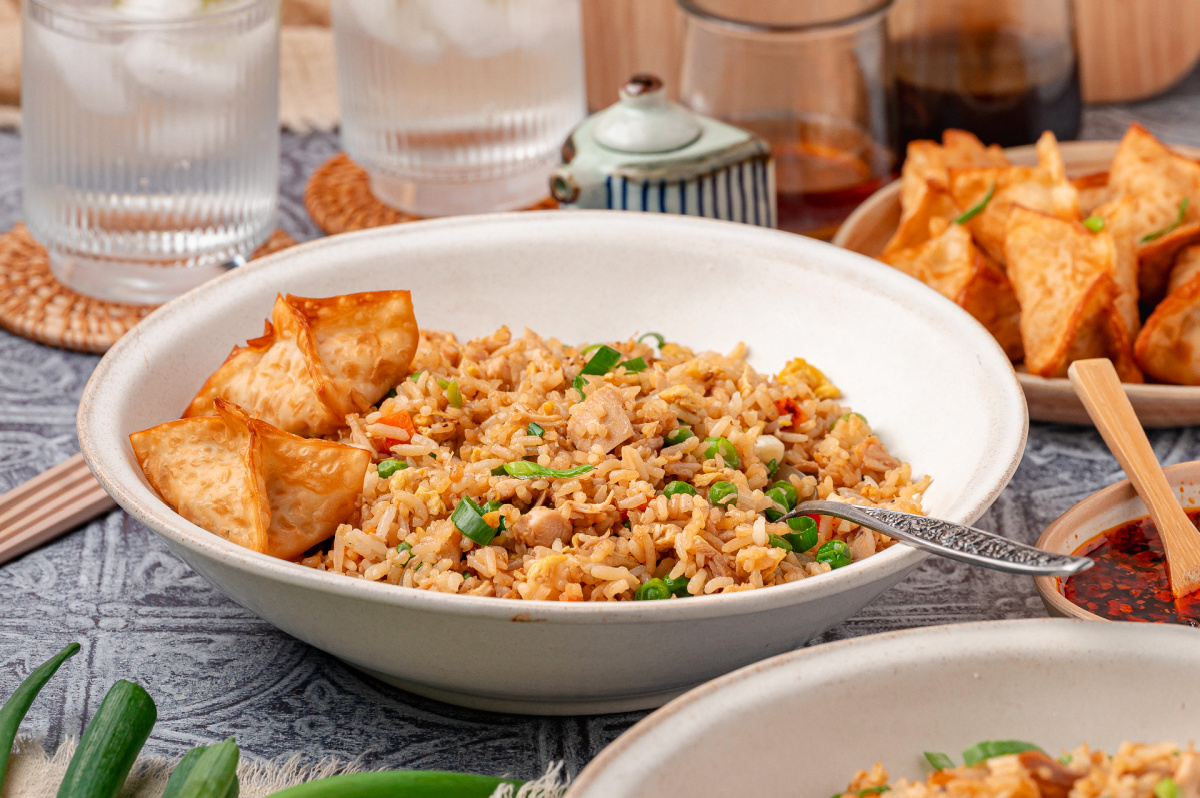
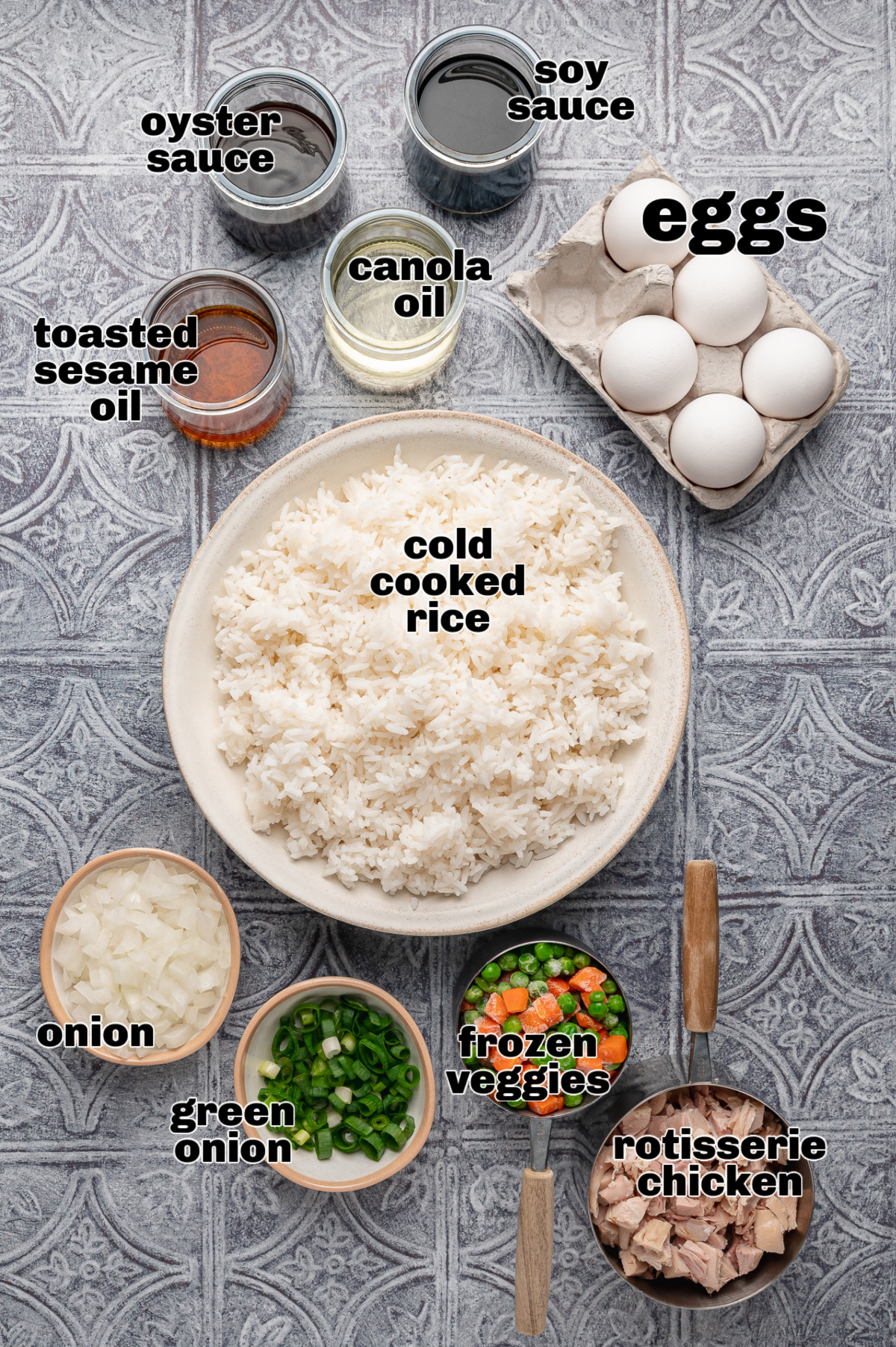
Ingredients
- Canola oil – Neutral, high heat, doesn’t leave any fingerprints.
- Eggs – Softness that weaves through instead of sitting on top.
- Yellow onion – The kind of base layer when you need something to work.
- Frozen mixed vegetables – From the freezer, always there, which matters more than it gets credit for.
- Rotisserie chicken – Already cooked, already useful, already past the hard part.
- Soy sauce – Salty, familiar, dependable.
- Cold cooked rice – Cold is the difference between fried and steamed, and between frustration and success.
- Oyster sauce – Savory depth.
- Toasted sesame oil – Not just an honorable mention.
- Green onions – A little freshness at the end, mostly because it feels right.
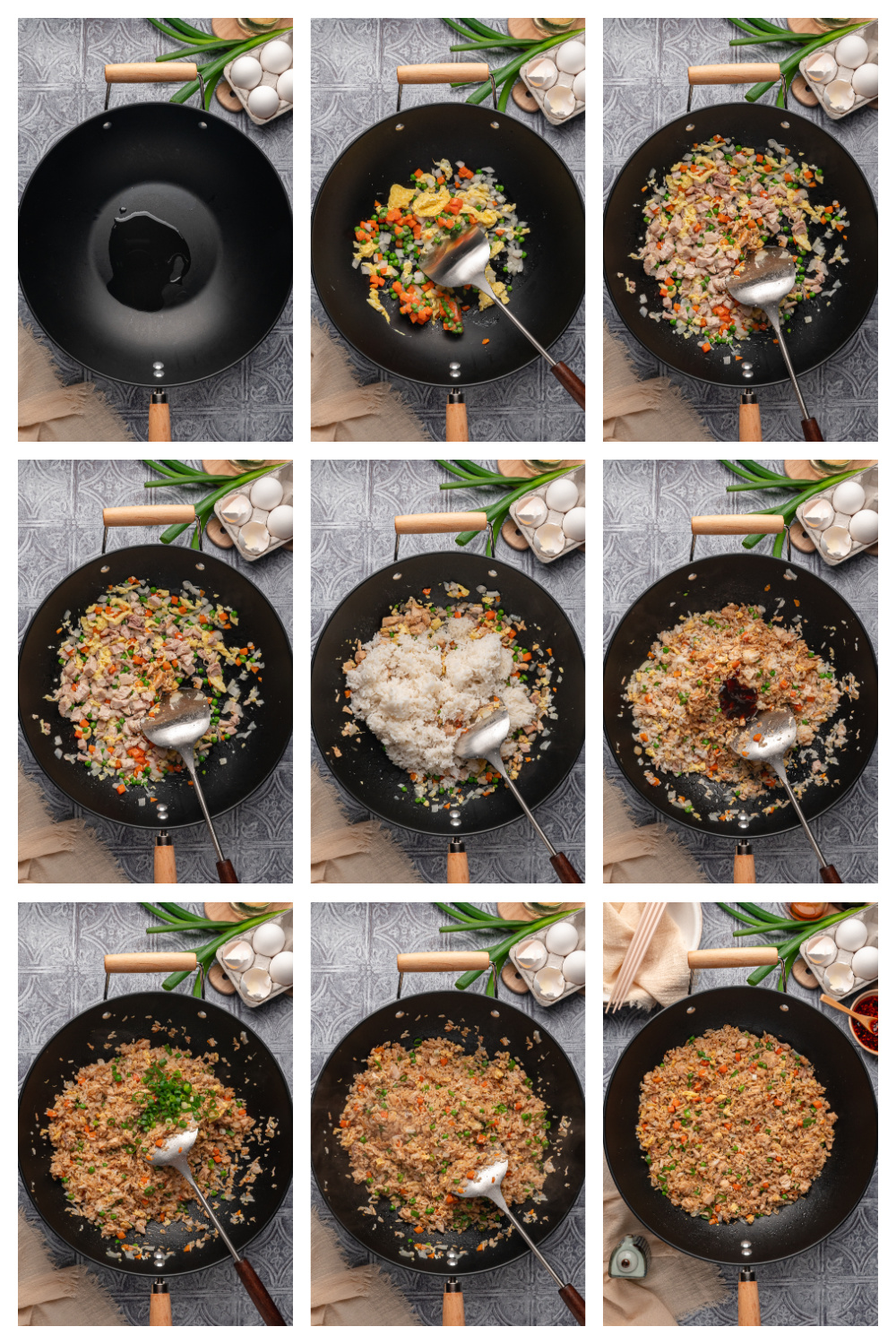
How to Make Chicken Fried Rice
Find the complete printable recipe with measurements in the recipe card at the BOTTOM OF THE POST.
- Step One (scramble the eggs)
Get your wok or largest skillet ripping hot and add a tablespoon of oil. Pour in the beaten eggs and gently scramble them just until they’re mostly set, but still soft. Pull them out onto a plate. They’ll finish later and stay tender instead of rubbery. - Step Two (build the base)
Add another tablespoon of oil to the pan, then the diced onion and frozen vegetables. Stir fry until the onion softens and the vegetables are hot, about two to three minutes. This step cooks off moisture early, which matters once the rice goes in. - Step Three (season the chicken)
Add the rotisserie chicken and stir it around until it’s warmed through. Splash in a tablespoon of soy sauce and toss so the chicken gets seasoned before it meets the rice. This small step keeps the whole dish from tasting blah. - Step Four (fry the rice)
Add the final tablespoon of oil, then the cold cooked rice. Use your spatula to press and break up clumps right in the pan. Let it sit for a moment, then stir fry until the rice is hot and starting to fry, about two to three minutes. You’re aiming for separation, not nonstop stirring. It’s a little like waiting on grapes that don’t look ready yet. Nothing dramatic is happening, but a lot is happening. - Step Five (sauce and finish)
Slide the eggs back into the pan. Add the oyster sauce, toasted sesame oil, and the remaining soy sauce. Toss everything until the rice is evenly coated and glossy, with no pale patches left. - Step Six (green onions and adjust)
Add the sliced green onions and toss once more. Taste and adjust with a little more soy sauce if needed. Serve it hot, straight from the pan, while the rice still has texture.
Recipe Tips
- Use cold, day-old rice if you can. Freshly cooked rice holds too much surface moisture and tends to steam instead of fry, which changes the texture.
- Break up the rice in a bowl with your hands before it ever hits the pan. Smaller clumps separate faster and fry more evenly.
- Let the rice sit against the hot pan for brief moments before you stir. That pause is where texture develops. Not everything needs to be constantly moved.
- Seasoning the chicken before adding the rice makes a difference. It layers flavor instead of requiring the sauce at the end to fix everything.
- Keep the pan hot and keep moving. Fried rice is less about being precise and more about momentum.
- If the rice looks a little underwhelming at first, keep going. A lot of good things don’t look finished until they are. I learned that long before I learned to cook.
Storage
- Let the fried rice cool, then store it in a sealed container in the refrigerator for up to 4 days.
- Reheat in a skillet over medium-high heat with a small splash of water, then stir fry until hot. This brings the texture back better than the microwave.
- You can microwave it in a covered bowl with a damp paper towel, stirring once halfway through, until heated through.
- Freezing technically works, but the texture changes and it never quite comes back to what it was. It’s up to you.
FAQs
- Can I use freshly cooked rice if I didn’t plan ahead?
Yes, but spread it on a sheet pan and refrigerate it uncovered until cold and dry. Warm rice holds too much moisture and turns sticky instead of frying. - Why does cold rice matter so much?
Cold rice has less surface moisture, which lets the grains stay separate and fry instead of steam. That separation is most of what everyone says when they say “good fried rice.” - What does oyster sauce add here?
Oyster sauce adds a little savoriness plus a small amount of natural sweetness. Not sugary, not dessert-sweet, but enough to balance the soy sauce so you don’t need to start adding sugar separately. - Can I skip the oyster sauce?
You can. The fried rice will still be good. It just won’t have quite the same depth. - Why season the chicken before adding the rice?
It adds flavor earlier instead of the rice having to carry everything later. It’s a small step I’ve found to make a noticeable difference. - My rice keeps turning mushy. What’s going wrong?
Usually one of three things: warm rice, too much moisture, or not enough cooking heat. Starting with cold rice, a hot pan, and a brief rest between stirs fixes most of it. - Can I switch the protein?
Yes. Leftover chicken thighs, chicken breast, pork, shrimp, or tofu all work. The method matters more than the protein. - Is this meant to be “authentic”?
I like to think of it as useful and that it exists to feed you.
From My Kitchen Notes
- Some foods are forever tied to a year, even if you only cooked them once inside the disaster. This chicken fried rice still holds 2011 for me.
- Feeding yourself when everything feels unstable is a form of self-trust that doesn’t get enough credit.
- Simple recipes do not mean unserious.
- Fried rice is forgiving, but timing still matters. So does cooking heat, and knowing when to stop touching it.
- This rice reminds me how often I’ve been handed situations I didn’t feel ready for, and how often I went anyway.
- This is the kind of meal that exists outside of ambition. I like that.
- Survival recipes don’t usually look important while you’re collecting them.
- Some dishes mark time and show up when you needed proof you could keep going.
- There’s something about watching raw ingredients slowly become usable that mirrors vineyard years, where nothing moved fast, nothing was guaranteed, and I learned patience whether I wanted to or not.
- Every time I make this, I remember that I survived something I did not feel equipped for.
- I remember a version of myself who was injured, terrified, financially exposed, exhausted, responsible for too much, and still stood in a kitchen and fed herself anyway.
More Recipes That Show Up When You Need Them
- Egg Drop Soup – Five minutes, one pot.
- Mongolian Beef Noodles – Sticky sauce, tender noodles.
- Ground Turkey Stir-Fry – Tastes like you planned it, even when you didn’t.
This post may contain affiliate links. Please read my disclosure policy.
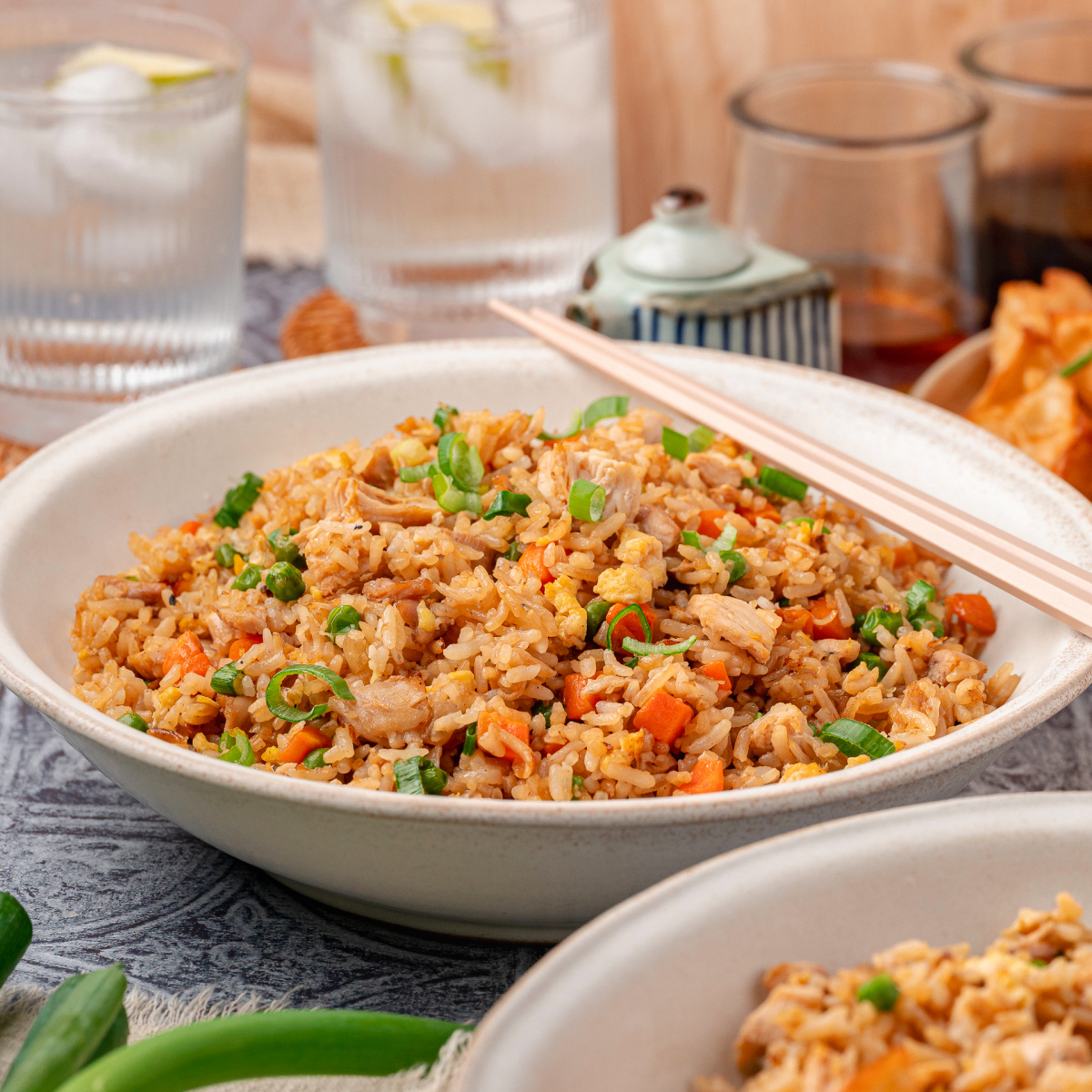
Chicken Fried Rice
Equipment
- wok or large skillet. High heat and surface area help the rice fry instead of steam.
Ingredients
- 3 tbsps (45 ml) canola oil divided
- 2 large eggs beaten
- ½ cup (75 g) diced yellow onion
- 1 cup (140 g) frozen mixed vegetables
- 2 cups (280 g) diced rotisserie chicken
- 4 tbsps (60 ml) low sodium soy sauce divided
- 4 cups (720 g) cold cooked rice
- 1 tbsp (15 ml) oyster sauce
- 1 tsp (5 ml) toasted sesame oil
- ½ cup (50 g) sliced green onions
Instructions
- Heat 1 tablespoon (15 ml) of the canola oil in a wok or large skillet over high heat. Add the beaten eggs and cook, stirring gently, until mostly set but still soft. Transfer the eggs to a plate and set aside.3 tbsps (45 ml) canola oil, 2 large eggs
- Add another tablespoon (15 ml) of canola oil to the wok. Add the diced onion and frozen mixed vegetables and stir fry until the onion is softened and the vegetables are heated through, about 2 to 3 minutes.½ cup (75 g) diced yellow onion, 1 cup (140 g) frozen mixed vegetables
- Add the diced rotisserie chicken and cook, stirring constantly, until warmed through, about 1 minute. Drizzle in 1 tablespoon (15 ml) of the soy sauce and toss to evenly coat the chicken.2 cups (280 g) diced rotisserie chicken, 4 tbsps (60 ml) low sodium soy sauce
- Add the remaining tablespoon (15 ml) of canola oil, followed by the cold cooked rice. Use a spatula to press and break up any clumps. Stir fry until the rice is heated through and beginning to fry, about 2 to 3 minutes.4 cups (720 g) cold cooked rice
- Return the scrambled eggs to the wok. Add the oyster sauce, toasted sesame oil, and remaining 3 tablespoons (45 ml) of soy sauce. Toss well until the rice is evenly coated and everything is well combined.1 tbsp (15 ml) oyster sauce, 1 tsp (5 ml) toasted sesame oil
- Add the sliced green onions and toss to combine. Taste and adjust seasoning with additional soy sauce if needed. Serve immediately.½ cup (50 g) sliced green onions
Notes
- Cold rice is essential for proper texture and prevents steaming.
- Breaking up rice clumps in the pan improves separation and even frying.
- Seasoning the chicken before adding the rice builds flavor early.
Nutrition
Have you made this Chicken Fried Rice? I’d love to hear how it turned out – leave a comment below and let me know.
As an Amazon Associate and member of other affiliate programs, I earn from qualifying purchases.
Kim Chavard says
Loved the simplicity of this, you made me feel confident enough to make it. Turned out great and felt nourishing. Your story is compelling.
Krissa says
This cam out so good. Best thing to make with leftovers.
Mark Met says
Turned out really well. Made it for the kids and their friends tonight. Really simple.
Karen says
Thank you for teaching finally how to make fried rice. I had never used cold rice before and that was the problem. This turned out really good.
Bonnie in St. Loius says
Love this little recipe. Made twice now and it’s great.
Jancey says
Thsi was really easy, which I like. I had lots of leftover rice from my son’s visit and I bought a rotisserie chicken. Perfect little me for me.