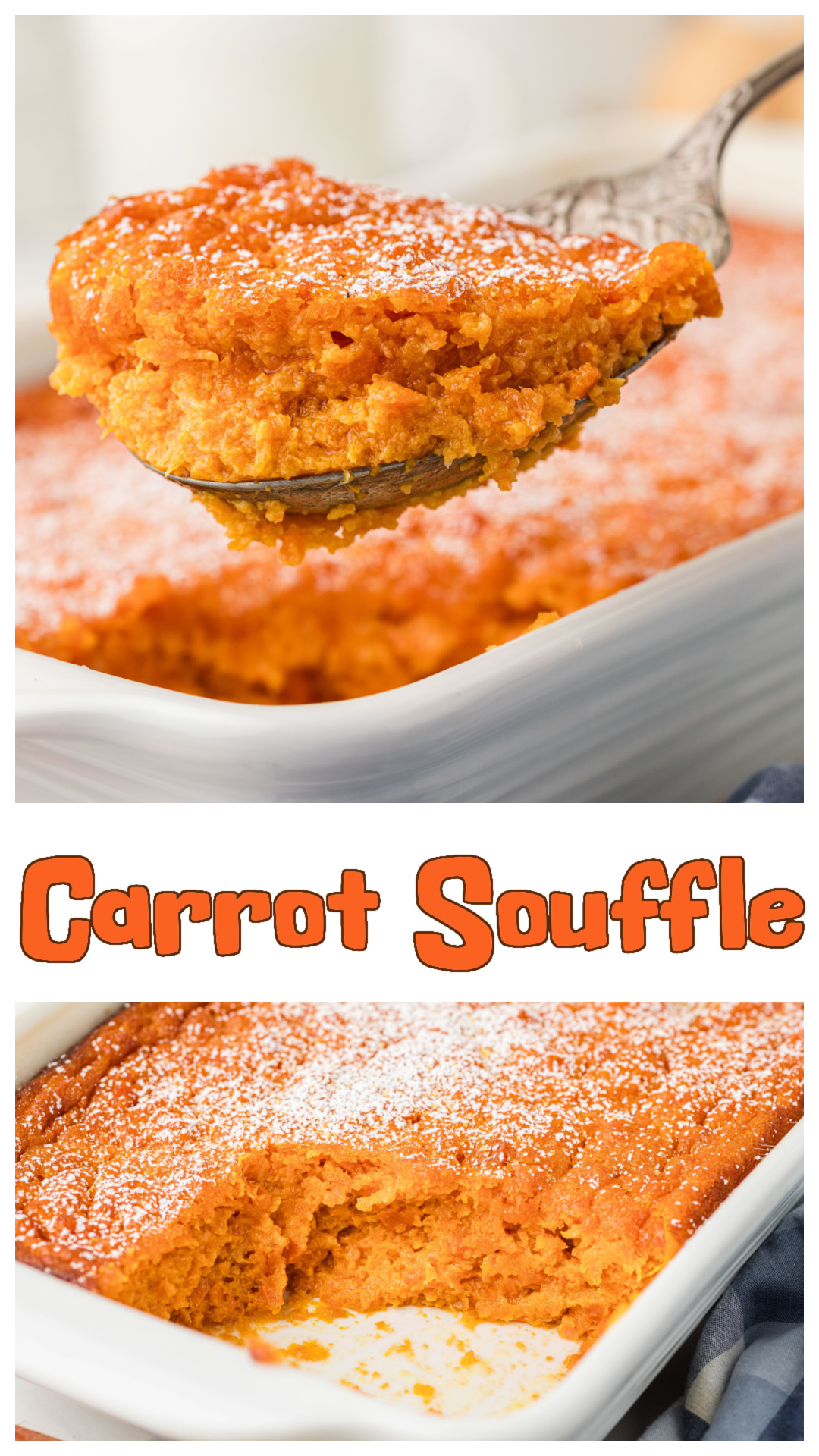
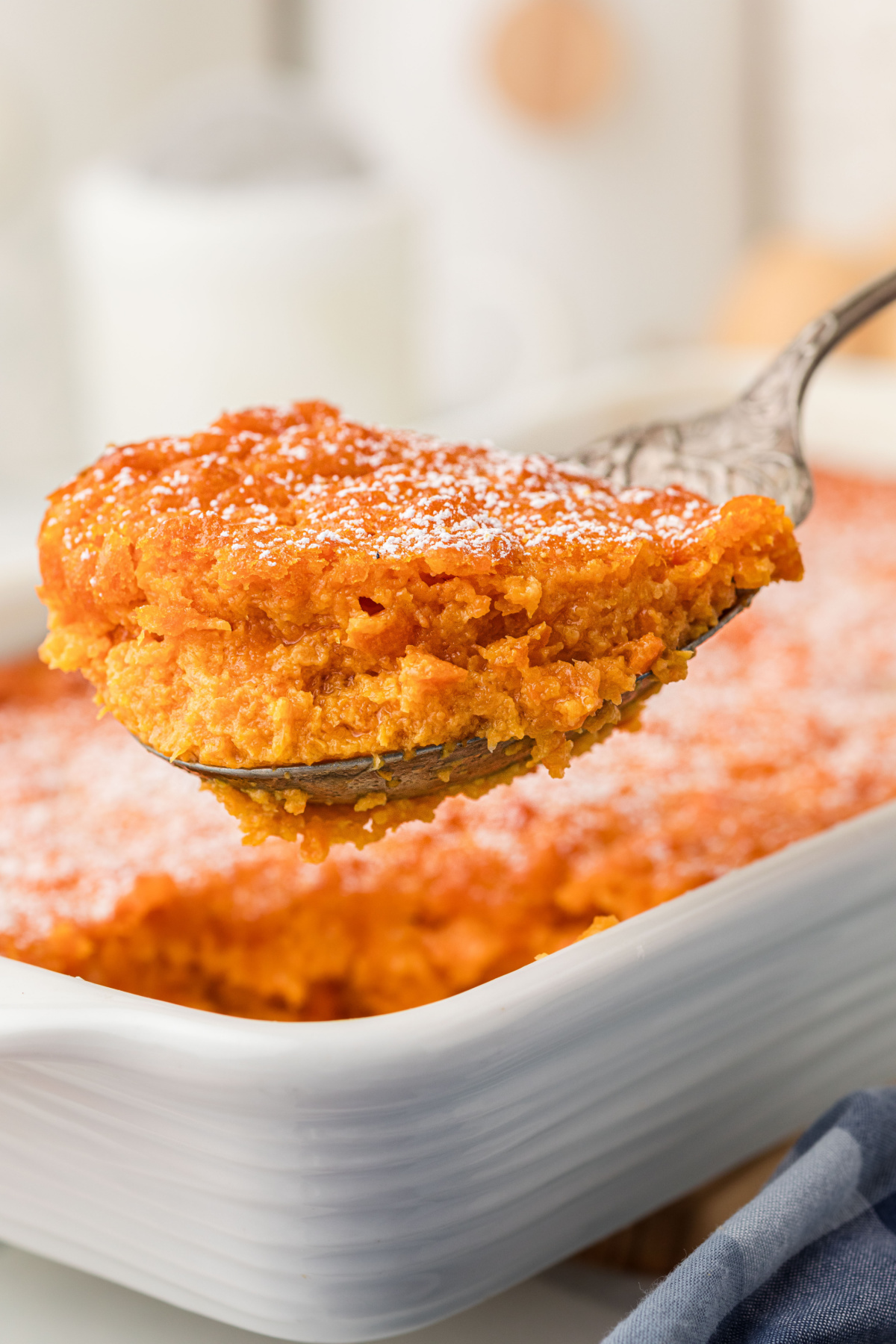
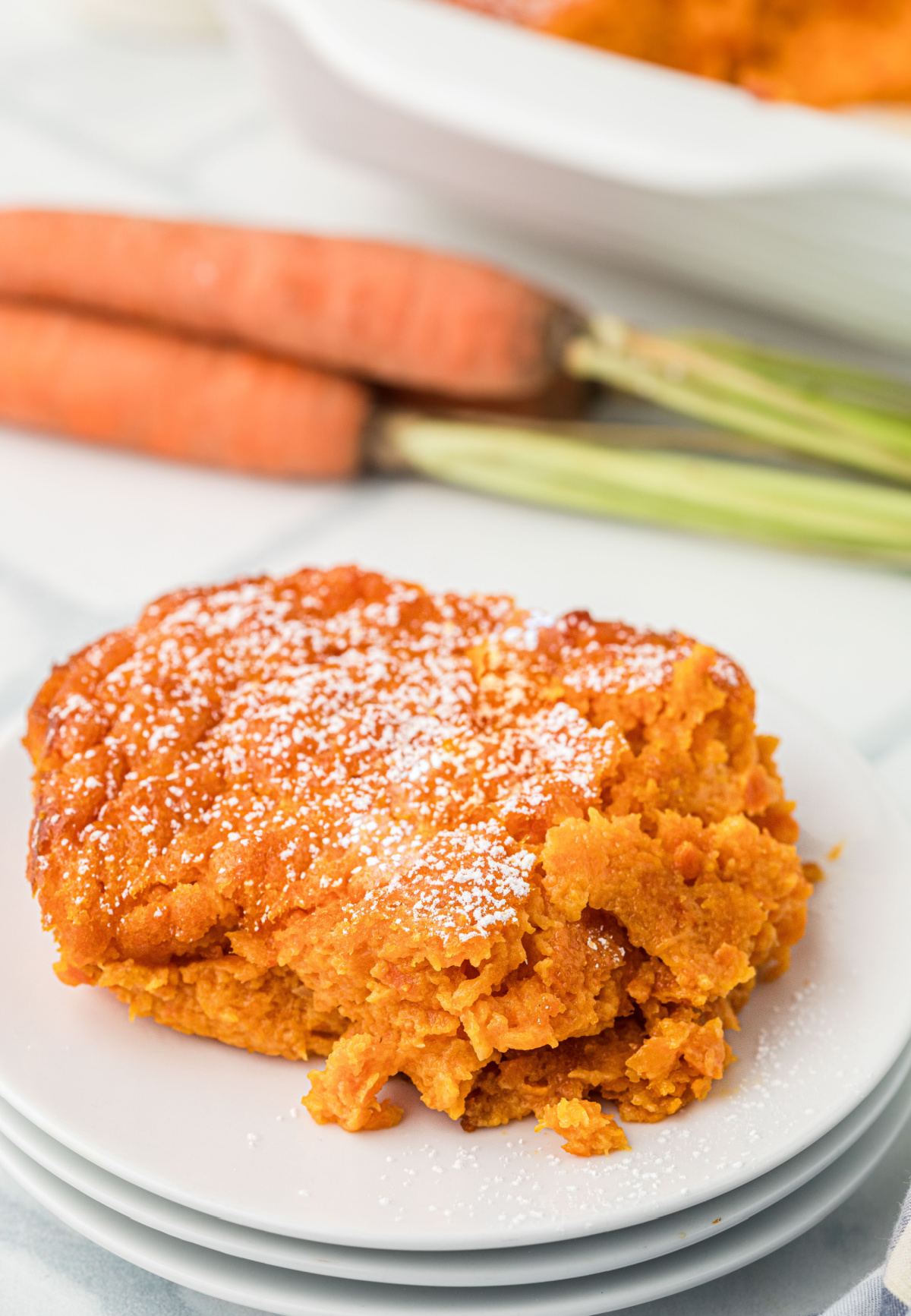
Carrot souffle is a classic Southern carrot souffle, a lightly sweet carrot casserole made with fresh carrots, eggs, butter, and warm spice. Smooth and custard-like once baked, it’s the kind of side dish that sits somewhere between sweet potato casserole and dessert, perfect beside ham, turkey, holiday meals, or Sunday dinner.
Carrot Souffle and My Lowcountry Problem
If you ever stood in line at a Piccadilly Cafeteria years ago, sliding your tray down that stainless rail past the mac and cheese and squash casserole, you probably remember the carrot souffle sitting there in the steam table looking suspiciously fluffy for something made mostly out of carrots. Which is the kind of thing that makes you pause for a second and think, wait…is this a vegetable or dessert? For kid me it was dessert. For adult me, I pretend it’s a veggie.
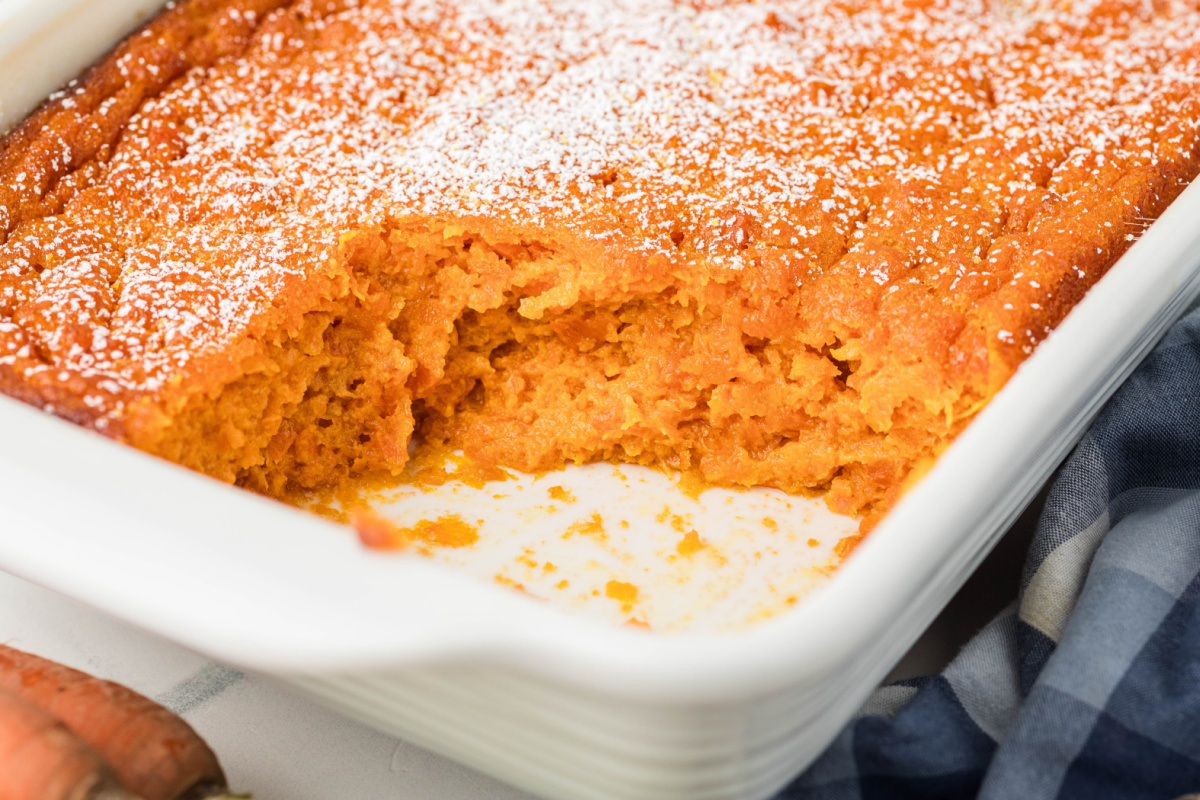
Soft, lightly sweet, made with carrots, eggs, butter, and sugar, it puffs in the oven before turning into that smooth, custard-like texture as it cools. Which is why it belongs in that strange middle territory between side dish and dessert.
Recipes differ slightly depending on who’s making them, but my goal is always the same: carrots transformed into something very spoonable and kind of unexpected the first time you try it.
Piccadilly was the kind of place where a dish like this made perfect sense, because when I think about it, the South has always had this category of food that sits happily between restaurant cooking and home cooking. If you’re a visitor to the South, as I have always been, you really only come across a recipe like this under cafeteria heat lamps, but this clearly came from somebody’s grandmother’s kitchen originally.
And maybe that’s part of why I’ve always had this odd pull toward the American South in general, and the Lowcountry in particular. I think Savannah is charming, I genuinely love it, but if I had to choose, Charleston is the place that has stuck itself in my brain and never really leaves.
I catch myself doing late-night Zillow searches. And by “catch myself,” I mean I have absolutely spent an embarrassing amount of time looking at houses there.
Not out in the suburbs either. I want to live right in town, which of course makes the entire idea way more complicated. I want the walking everywhere part of the city. The iron gates, hidden gardens, and the architecture. I’m extremely susceptible to good architecture, which is both a personality trait and a logistical problem. I want my own piazza.
I want dinner reservations that are only five minutes away. I like living near food. Markets, bakeries, oysters, shrimp, wine bars, music. It’s the kind of place where evening meals still feel like an event instead of something you hurry through before answering emails.
There’s something about Charleston that feels intensely refined to me. Everyone still dresses well when they go out. Hello linen and seersucker. Men show up to breakfast in sports coats and women wear dresses to dinner, and it makes me remember that hospitality and good manners used to function like real social currency in parts of the world, which is something I’m in favor of.
And then there’s the food culture there, which is so tied to place. That’s catnip to me. It’s very ingredient-driven and historical. My tendency is to think about food through a terroir lens and flavor schemes (thank you wine, food science and flavor chemistry), and I can’t turn it off. The food there doesn’t just feel beautiful to me, it feels intellectually alive in a way that’s hard to ignore once you notice it.
Of course, then all the practical questions eventually show up in my thoughts.
The funny thing, it would be okay if my work wasn’t tied to a specific location anymore. I can walk away from anything tied to wine, which means I can technically live anywhere and still do what I do. Recipes, writing, photographing food…that travels pretty well.
What I think about is the heat, humidity, and bugs. I know it’s punishing in a way I’m not used to. The palmetto bugs are basically flying monsters I don’t want to share a space with.
But the real question is whether I really have the courage to uproot my life again. Moving always sounds romantic and adventurous when you imagine it, but after you’ve done it a few times you realize it mostly involves logistics, disruption, expense, and the exhausting process of figuring out where the good grocery store is all over again.
Maybe what I feel isn’t fear. Maybe it’s just earned fatigue.
My dream version would be moving there while somehow keeping this place in Oregon too. Which sounds lovely in theory and wildly complicated in practice, because this house requires constant attention and there is absolutely no scenario where I would ever rent it out.
So Charleston mostly lives in the space of imagination for now.
I daydream about writing and cooking there, hosting dinners, falling completely into Southern hospitality. Long evenings on my piazza with wicker ceiling fans turning slowly overhead while everyone stays at the table longer than they planned to.
I know myself well enough to admit that I would fully become that person.
Part of the pull is the landscape itself. Those marsh waterways that wind through the grass (I love them). The shrimp boats making their way along the tidal creeks. And the light. The way the light reflects everywhere. It gets me.
Because I photograph food, my brain immediately starts thinking about how dishes would look under that light. It’s a switch I genuinely cannot turn off. The land there is so flat the sky feels enormous, and the sunsets stretch out in a way that makes the evening feel longer than it probably is.
And anywhere a five-plus-layer coconut cake is a standard menu item is automatically working in its favor for my tastes.
I’ve noticed that the places that inspire me the most aren’t necessarily the ones I’ve built my entire life around. They’re places that expand how I see food, coming together, and daily life.
Until I figure out what Charleston is supposed to be in my life, I’ll keep making dishes like this carrot souffle. The kind that showed up in Piccadilly cafeterias years ago and still finds its way onto Southern tables today. You would likely not see this dish at a restaurant in Charleston. You’d have to get yourself invited to a church potluck for that.
And for reasons that go back much further than this recipe, carrots have always been a big part of my life. More on that some other time.
Why I Love This Recipe
- It really refuses to decide whether it’s a vegetable or dessert, so of course I’m drawn to it. Carrot souffle sits right in the weird in-between where it shows up next to ham or roast chicken, like a decent side dish, but if someone told you it belonged on the dessert table nobody would question that either.
- The recipe will make you suspicious the first time you read it. You’re going to look at the amount of butter and sugar involved in comparison the amount of carrots and start wondering how this is still technically classified as a vegetable dish. It’ll be fine.
- This turns a very ordinary ingredient into something people talk about. Carrots spend most of their lives being chopped into salads or roasted on sheet pans, so giving them an entire dish to themselves almost feels like a promotion. People will notice.
- I swear everyone underestimates this until they taste it. There’s always that one person at the table who takes a gracious scoop and then immediately comes back for more like they just discovered something they weren’t expecting.
- This is the type of recipe that has been circulating for decades without anyone trying to improve it. Which in my experience is usually a sign that the recipe already has weight. Spring it on your non-Southern friends for full effect.
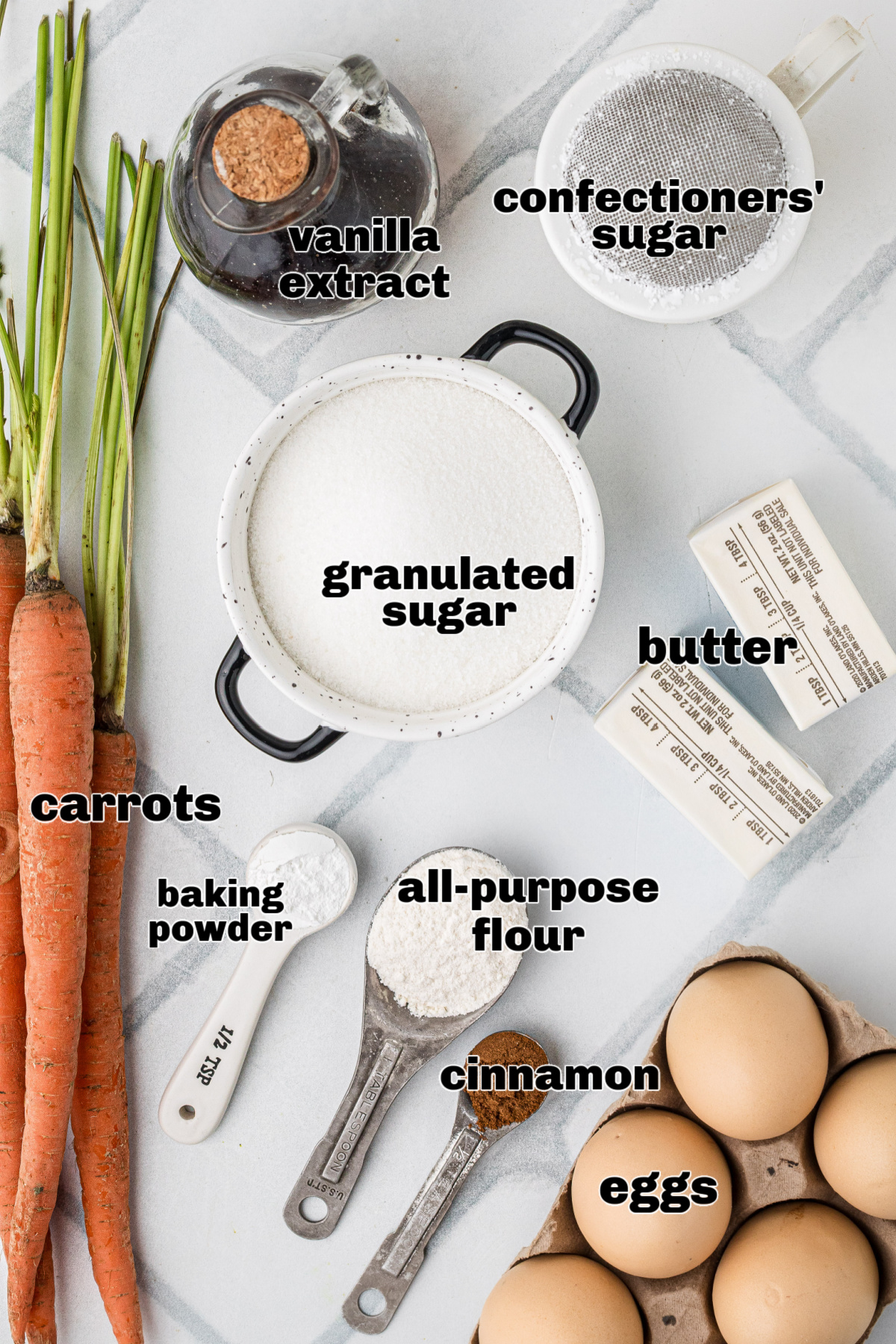
Ingredients
- Carrots – This whole thing starts with carrots boiled until they completely give up. Not just “tender.” I mean the point where a fork slides through and they basically admit defeat. That’s when they’re ready.
- Granulated sugar – Yes, sugar. Carrot souffle has never been interested in acting like it’s a responsible vegetable dish. It sits on the plate next to ham, and everyone playacts that this is normal.
- Vanilla extract – I love what vanilla does to carrots. Instant dessert territory.
- Ground cinnamon – Just enough to make the carrots feel like they belong in the room with the butter and sugar, but not enough to taste like carrot cake.
- All-purpose flour – This keeps it from turning into carrot pudding. If you leave it out, you’ll be serving sweet orange mush with confidence. Trust.
- Baking powder – This is what makes the casserole ambitiously puff in the oven. It does come back down to life eventually.
- Eggs – Holds it all together. Otherwise you’ll be in baby food territory.
- Butter – There’s a noticeable amount of butter involved here. Very on brand for me.
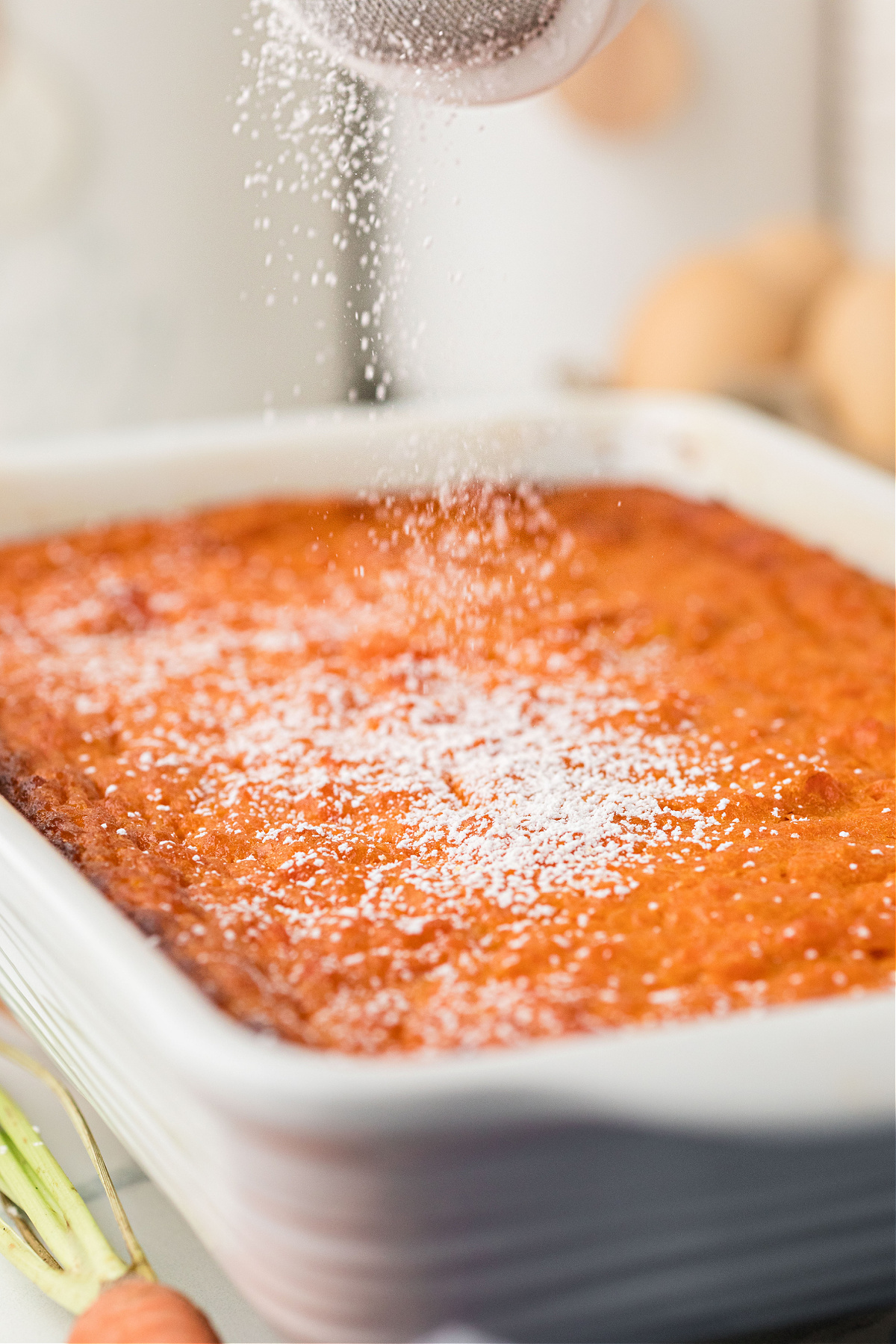
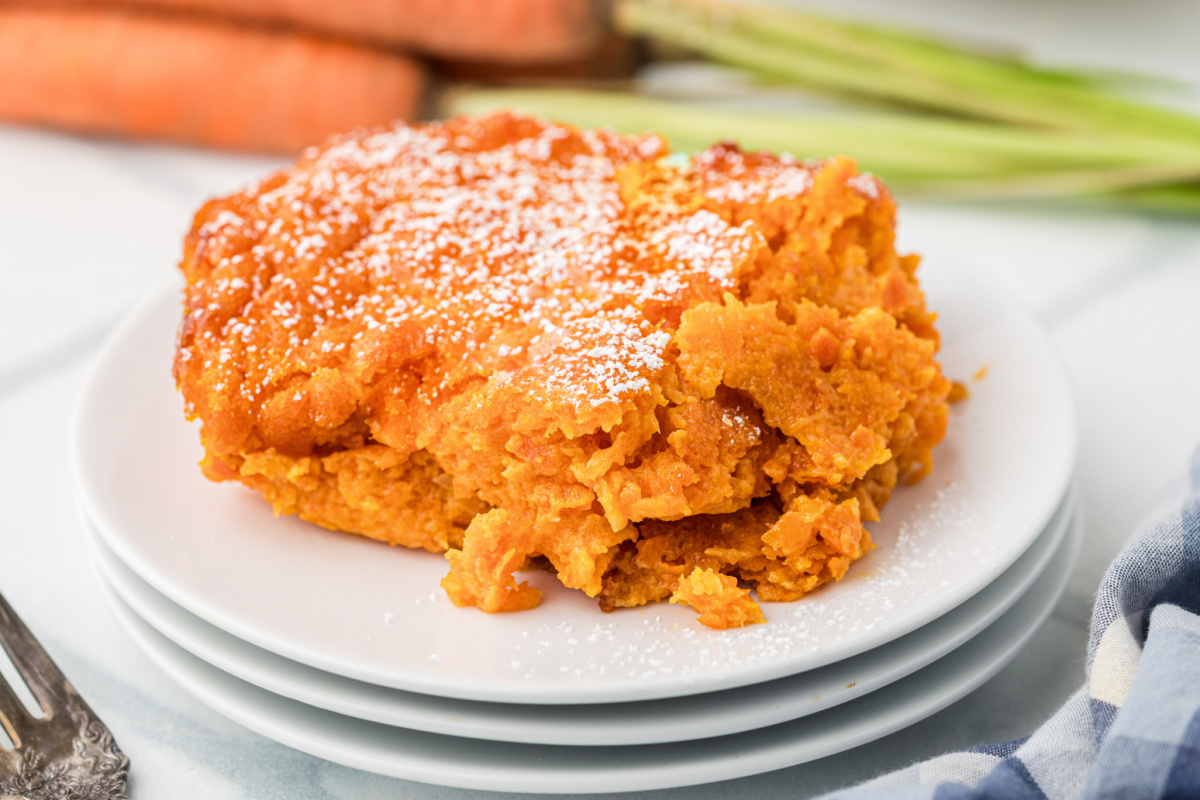
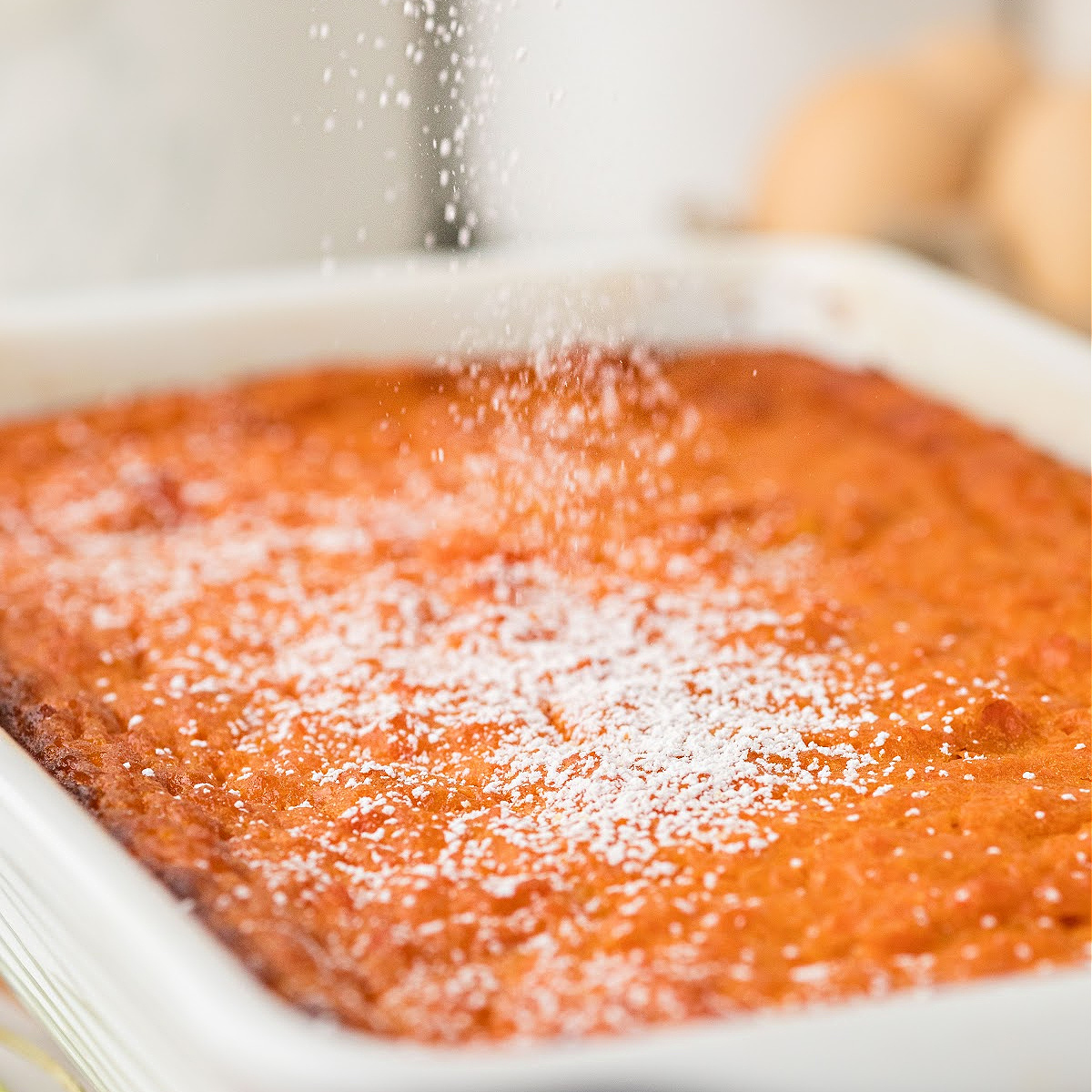
- Confectioners’ sugar (optional) – I like a little dusting on top before serving. It’s not required, but it does make the whole thing look like it belongs on a Southern church-buffet table.
How To Make Carrot Souffle
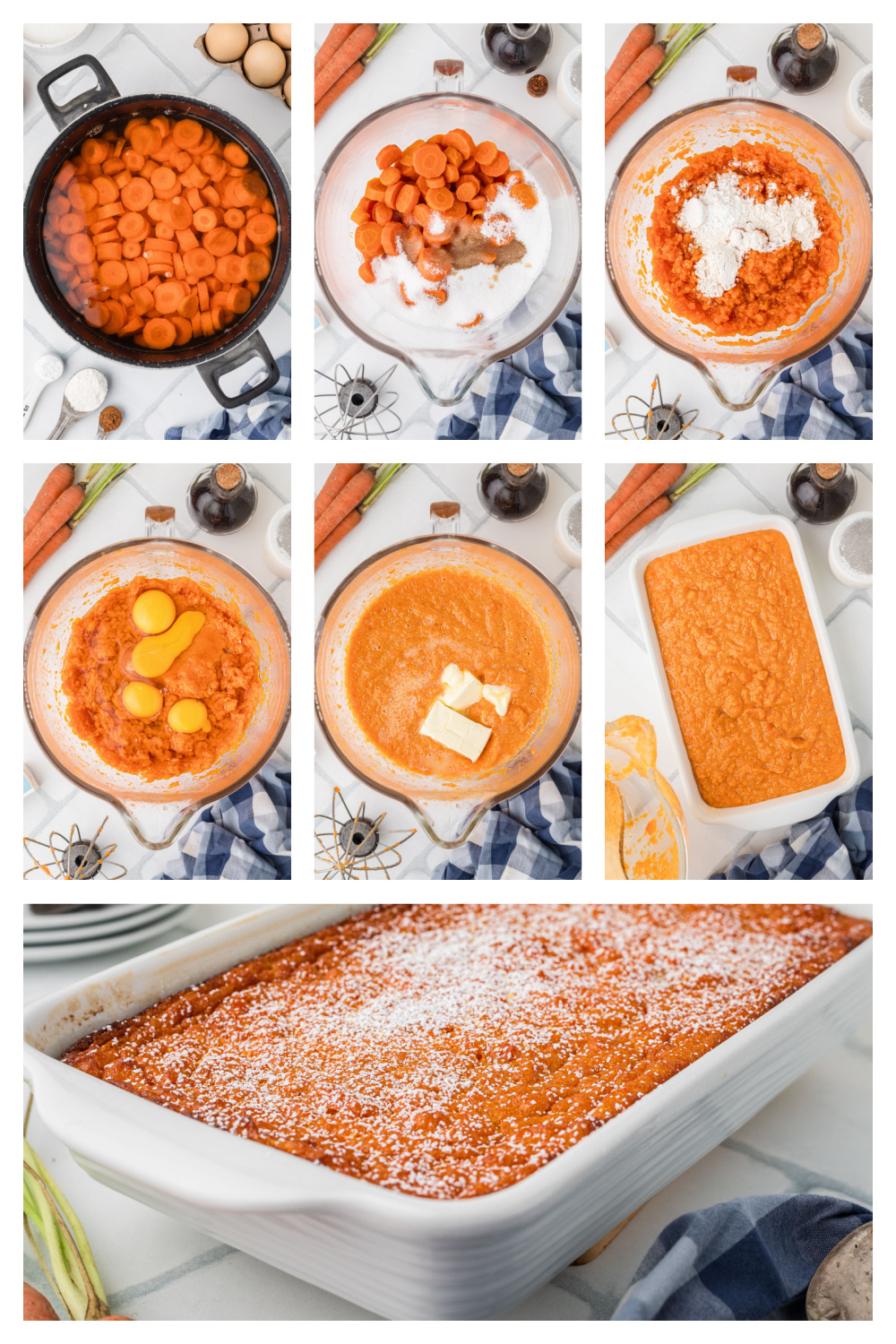
Find the complete printable recipe with measurements in the recipe card at the BOTTOM OF THE POST.
- Step One (cook the carrots)
Add the sliced carrots to a large pot and cover them with water. Bring it to a boil and cook until the carrots are completely tender. As in, the fork slides straight through without resistance soft. That usually takes around 15–20 minutes, and this is what makes the final texture smooth instead of chunky. - Step Two (prep the oven and dish)
Heat the oven to 350°F (177°C) and lightly grease an 11×7-inch baking dish. Set it nearby so you’re not scrambling for it later once the mixture is ready. - Step Three (start the carrot mixture)
Drain the carrots very well and transfer them to a large mixing bowl while they’re still hot. Add the sugar, vanilla, and cinnamon, then beat everything together with an electric mixer. The carrots will start breaking down into a smooth mixture. A few tiny bits are completely fine, this is not meant to be perfectly pureed. - Step Four (finish the mixture)
Add the flour and baking powder and mix until combined. With the mixer running, add the eggs one at a time, letting each one blend in before adding the next. Add the butter and continue mixing until the whole thing looks creamy and evenly blended. At this point it will already smell suspiciously like dessert, which is completely normal for carrot souffle. - Step Five (bake and serve)
Pour the carrot mixture into the prepared baking dish and smooth the top. The souffle will puff up a bit while baking, so give it a little room. Bake uncovered for about an hour, until the center is set and the top has taken on a little color. Let it sit for 5–10 minutes before serving so everything settles slightly. Dust the top with confectioners’ sugar if you like right before bringing it to the table.
Recipe Tips
- Make sure to cook the carrots all the way through. The entire texture of carrot souffle depends on this one thing. If the carrots still have a little bite when you drain them, the mixture will never get as smooth as it should be. Let them cook until they’re completely soft.
- Drain the carrots really, really well before mixing. Water is the enemy of a good carrot souffle. If the carrots go into the bowl dripping even slightly, the mixture gets watery and the casserole takes forever to set. Let them sit in the colander for a minute or two so most of that water disappears. You can even pat them dry for extra insurance.
- Don’t stress too much about the texture. It should be mostly smooth, but this is also not a baby food puree. A few tiny carrot flecks in the mixture are perfectly normal and honestly part of the deal.
- Use a dish that gives it a little space at the top. Carrot souffle rises a bit while it bakes and then relaxes again once it comes out of the oven. If the dish is filled right to the top it has nowhere to go, which makes things messy quickly.
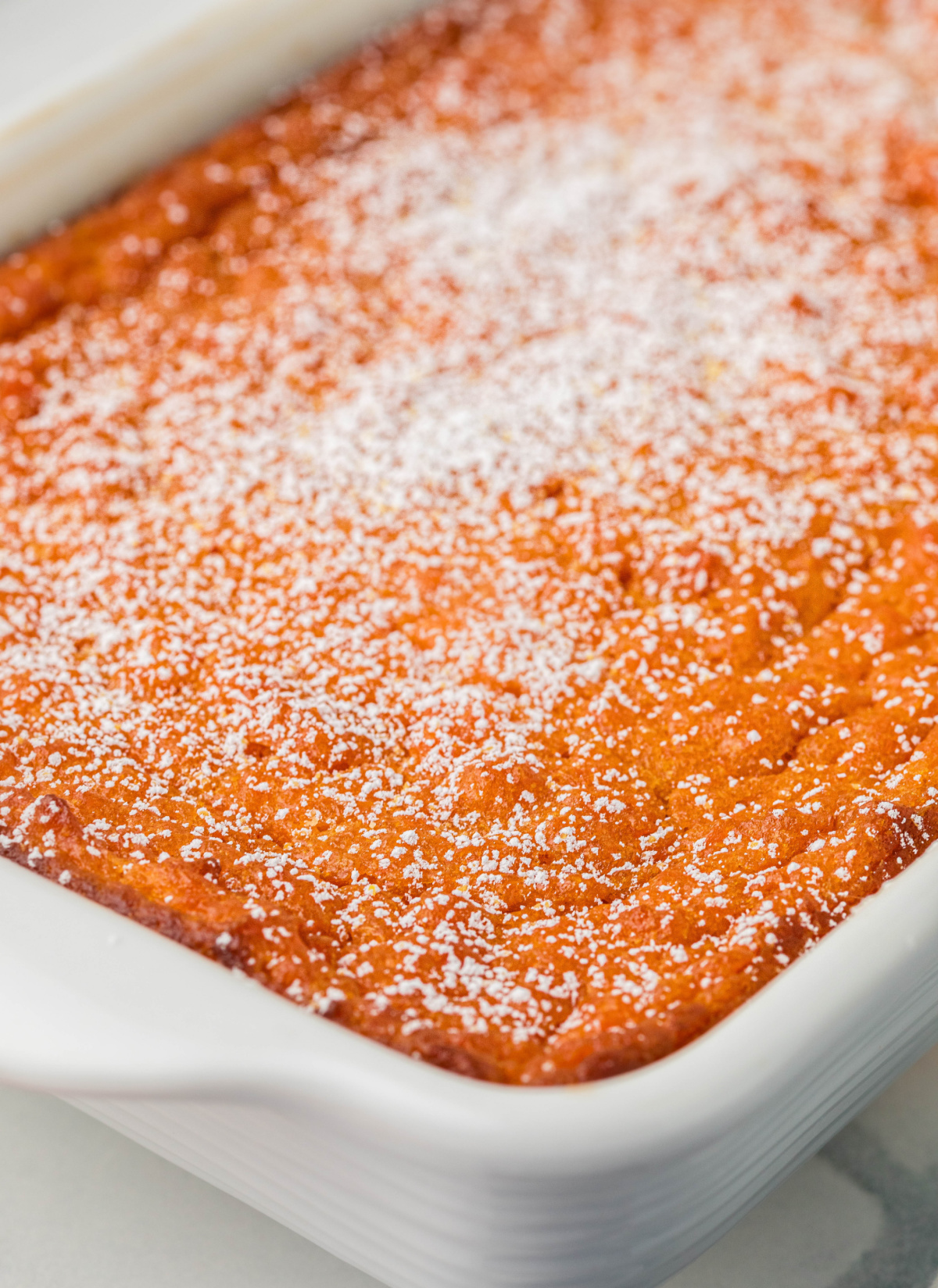
- Let it rest before serving. It’s going to look a little puffed and dramatic coming out of the oven, and then it sets as it sits for a few minutes. That short rest is what gives it the soft, spoonable texture you’re expecting.
- This dish fits between being a side dish and dessert. It’s the perfect handshake between the savory items on the plate and the need for something sweet.
- Don’t even consider skimping on the butter. There are recipes that benefit from that type of holding back. This is not one of them.
Make Ahead + Storage
- You can make this ahead. Carrot souffle is very cooperative when it comes to timing. You can mix everything together, spread it into the baking dish, cover it, and keep it in the refrigerator until you’re ready to bake it later. I’ve done it many times.
- Let it lose its chill before baking. If the dish goes straight from refrigerator to oven, the center can take forever to cook through. Let it sit on the counter for a bit while the oven heats so it isn’t ice cold going in.
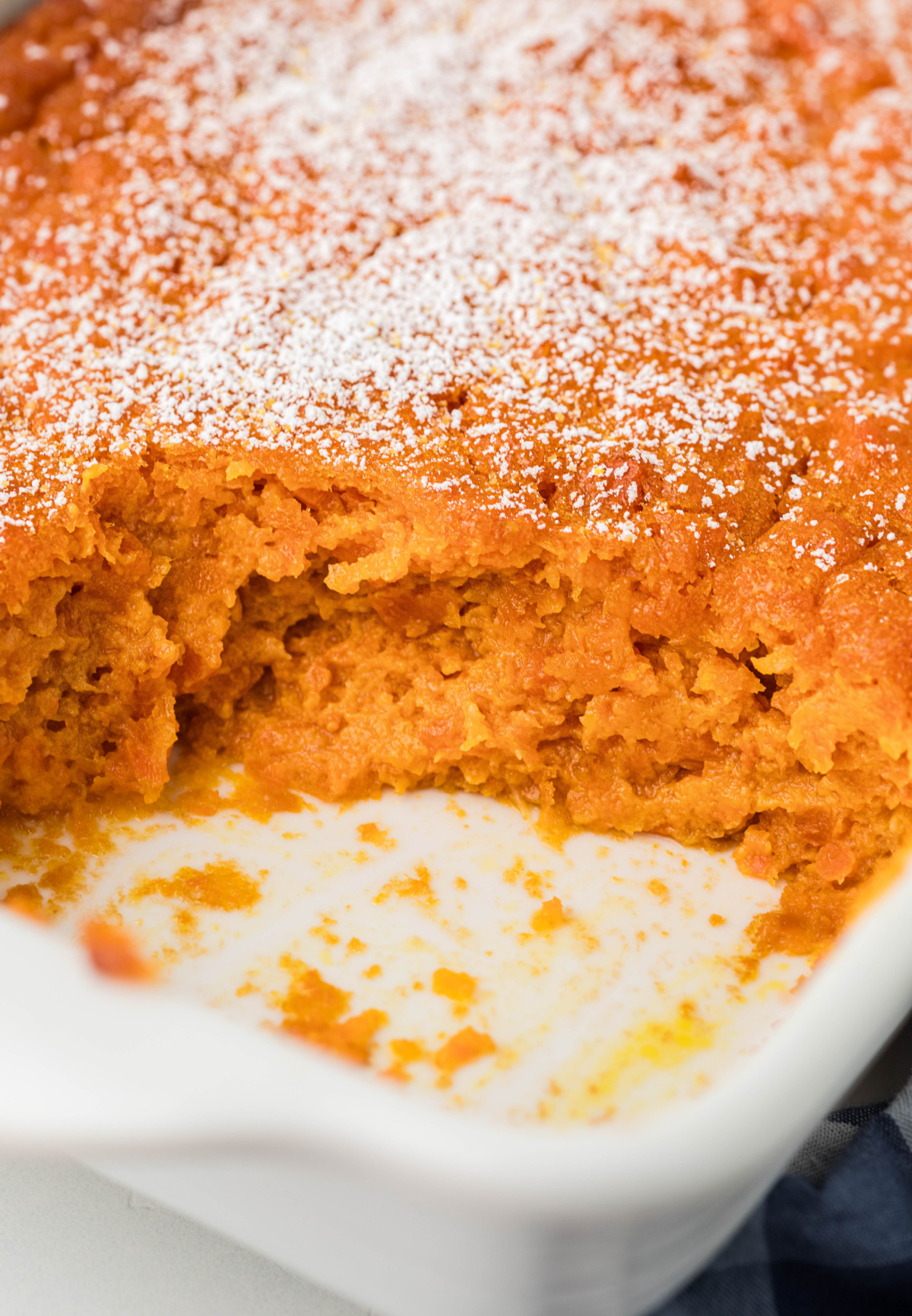
- Leftovers do keep really well. Cover the dish or transfer the leftovers to a container and store it in the refrigerator. It reheats nicely and the texture stays soft.
- Reheat gently. I usually warm individual portions in the microwave or place the dish back in the oven until it’s heated through. It doesn’t need high-powered reheating, just enough to take the chill off.
- Freezing is possible, but not ideal. You can freeze carrot souffle if you really want to, but the texture softens a little after thawing. If you go that route, bake it first, let it cool completely, then wrap it well before freezing.
FAQs
- Is this like the Piccadilly carrot souffle?
Piccadilly Cafeteria made carrot souffle famous across the South. Their version was lightly sweet, very smooth, and baked until it puffed slightly before settling into a custard-like texture. This recipe follows that same style, using fresh carrots, eggs, butter, and sugar to create the soft, spoonable casserole many people remember from the cafeteria line. - Why did my carrot souffle turn out runny?
The usual reasons are carrots that weren’t drained well, not baking it long enough, or using too many carrots compared with the rest of the mixture. The center should be set when it comes out of the oven. - Why didn’t my carrot souffle rise very much?
It’s not meant to rise dramatically. It will puff a little in the oven and then come back down as it cools, which is how it’s supposed to act. - Can I reduce the sugar?
You can lower it slightly if you prefer since carrots already have natural sweetness, but removing it completely changes both the flavor and the texture. - Can I use canned carrots instead of fresh?
You can, and some older recipes do, but fresh carrots give the best flavor and texture. - Is carrot souffle the same as carrot casserole?
Pretty much. “Souffle” just sounds a little fancier, but the idea is the same as a traditional Southern carrot casserole. - What should I serve carrot souffle with?
It goes well with salty, savory dishes like ham, roast chicken, turkey, or pork. It shows up a lot at holiday meals like Easter and Thanksgiving and Sunday dinners for that reason.
From My Kitchen Notes
A few notes from the kitchen that probably have more to do with life than carrots.
- One of the biggest stressors while writing this post was deciding whether to spell soufflé with the little accent mark or not. But then I decided that, since this isn’t a delicate French soufflé and instead a Southern casserole made mostly of carrots and butter, the accent is completely unnecessary.
- Some places don’t feel new when you find them. They feel like something you were always going to end up in eventually.
- I’ve learned that some things in life take a long time to line up properly, and trying to hurry them usually just makes the whole situation worse.
- There’s a difference between liking a place and feeling strangely comfortable there the first time you visit. I’ve learned to pay attention to the second one.
- I’ve noticed that the places that stay in your imagination the longest are rarely the ones you expected.
- Every once in a while, you come across something that makes no logical sense on paper but feels perfectly obvious the moment you experience it.
- Easter is the natural habitat for carrot souffle. But when I make it in the fall, I trade the cinnamon for pumpkin pie spice and it instantly feels like it was meant for that season all along.
- I’ve learned that the things that keep returning to my thoughts year after year usually aren’t random. This carrot souffle is one of them.
- Charleston consistently sits in the back of my mind and makes me think of things like porch culture, huge skies, watching the dolphins pop up in the rivers, she-crab soup, church bells, all the live-oak-lined streets, carriage houses, slower living, good manners, jasmine in the spring, spartina grass, the mud flats that become visible at low tide and all the oysters just sitting there, gas lanterns… as you can see, I’m in deep. So deep.
- Be aware that there’s a brief moment when you pull this out of the oven and it looks impressively tall and you think you’ve achieved something spectacular, and then five minutes later it comes down like it never meant to show off in the first place. Don’t be sad.
- I’ve realized I have a weakness for places with an atmospheric landscape. I already live in fog most of the year here and love the dramatic Oregon coast. So Charleston with its marsh grass, tidal rivers and those giant skies with unreal sunsets feel inevitable.
- Sometimes life asks you to become a completely different version of yourself before it hands you the thing you wanted in the first place.
- I want to live where dinner is still treated like the main event of the day.
- Carrots have spent their entire existence being underestimated. Not by me though.
- I keep looking at houses in Charleston like someone who has already decided something but hasn’t admitted it yet.
- There’s a difference between something you admire and something that refuses to let go of you.
- Sometimes the hardest decisions aren’t about what you want. They’re about whether you’re willing to rearrange your life to meet it.
- The question isn’t whether I could live there, it’s more if I’m brave enough to find out.
- I’ve found that I try to recreate a dish because it was extraordinary. But mostly it’s because it refuses to leave my head.
- Occasionally you realize that a recipe has been patiently waiting for you longer than you’ve been aware of it.
A Few Southern Table Regulars
- Pineapple Casserole – sweet, cheesy Southern side dish.
- Western Carolina BBQ Sauce – tangy Lexington-style vinegar barbecue sauce.
- Slow Cooker Mississippi Pork – buttery, pepperoncini shredded pork.
- Carolina Brown Sugar Vinegar BBQ Sauce – sweet, tangy Carolina barbecue sauce.
- Low Country Shrimp Boil – shrimp, corn, sausage, Southern coastal classic.
- Chicken Fried Steak with White Gravy – crispy steak with creamy gravy.
- Pimento Macaroni and Cheese – Southern macaroni with pimento cheese.
- Sausage Balls (Smoked Cheddar & Chipotle) – classic Southern party snack.
This post may contain affiliate links. Please read my disclosure policy.
Carrot Souffle
Equipment
- large pot Used to boil carrots until completely tender before mixing.
- mixing bowls (large). Needed to combine and whip the carrot mixture evenly.
- baking dish 11x7 Provides the right depth so the souffle rises properly while baking.
- hand mixer or stand mixer. Helps create the smooth, whipped texture that gives the souffle its light set.
Ingredients
- 2½ lbs (1134 g) carrots sliced
- ¾ cup (150 g) granulated sugar
- 1½ tsps (7 g) vanilla extract
- ½ tsp (1 g) ground cinnamon or pumpkin pie spice would be nice for the fall season.
- 3 tbsps (24 g) all-purpose flour
- 1½ tsps (6 g) baking powder
- 4 large eggs
- ½ cup (113 g) butter softened
- confectioners' sugar for dusting (optional)
Instructions
- Add the sliced carrots to a large pot and cover them completely with water. Bring to a boil over medium-high heat and cook until the carrots are very soft and easily pierced with a fork, about 15–20 minutes.2½ lbs (1134 g) carrots
- Preheat the oven to 350°F (177°C). Lightly grease an 11x7-inch (28 x 18 cm) baking dish and set aside.
- Drain the cooked carrots thoroughly and transfer them while still hot to a large mixing bowl.
- Add the granulated sugar, vanilla extract, and cinnamon to the hot carrots. Beat with an electric mixer until the carrots are mostly smooth.¾ cup (150 g) granulated sugar, 1½ tsps (7 g) vanilla extract, ½ tsp (1 g) ground cinnamon
- Add the flour and baking powder and continue mixing until fully incorporated.3 tbsps (24 g) all-purpose flour, 1½ tsps (6 g) baking powder
- Add the eggs one at a time while mixing, allowing each egg to blend completely before adding the next.4 large eggs
- Add the softened butter and continue beating until the mixture becomes smooth, creamy, and evenly combined.½ cup (113 g) butter
- Pour the mixture into the prepared baking dish and spread the top evenly with a spatula.
- Bake uncovered for about 1 hour, until the center is set and the top begins to lightly brown.
- Allow the carrot souffle to rest for 5–10 minutes before serving. Dust lightly with powdered sugar if desired.confectioners' sugar
Notes
- Drain the carrots very well to prevent a runny casserole.
- The souffle will puff slightly while baking and settle as it cools.
- Fresh carrots give the best flavor, but canned carrots can be used if drained thoroughly.
- If preparing ahead, assemble the mixture and refrigerate up to 24 hours before baking.
Nutrition
Have you made this Carrot Souffle? I’d love to hear how it turned out – leave a comment below and let me know.
As an Amazon Associate and member of other affiliate programs, I earn from qualifying purchases.
Janice says
Made for Sunday supper. Can confirm, tasted just as good as Picadilly used to taste. Loved it and have not had it since childhood. So good.
Carol says
Cannot wait to make this again. We loved it and it was or first time trying this type of dish.