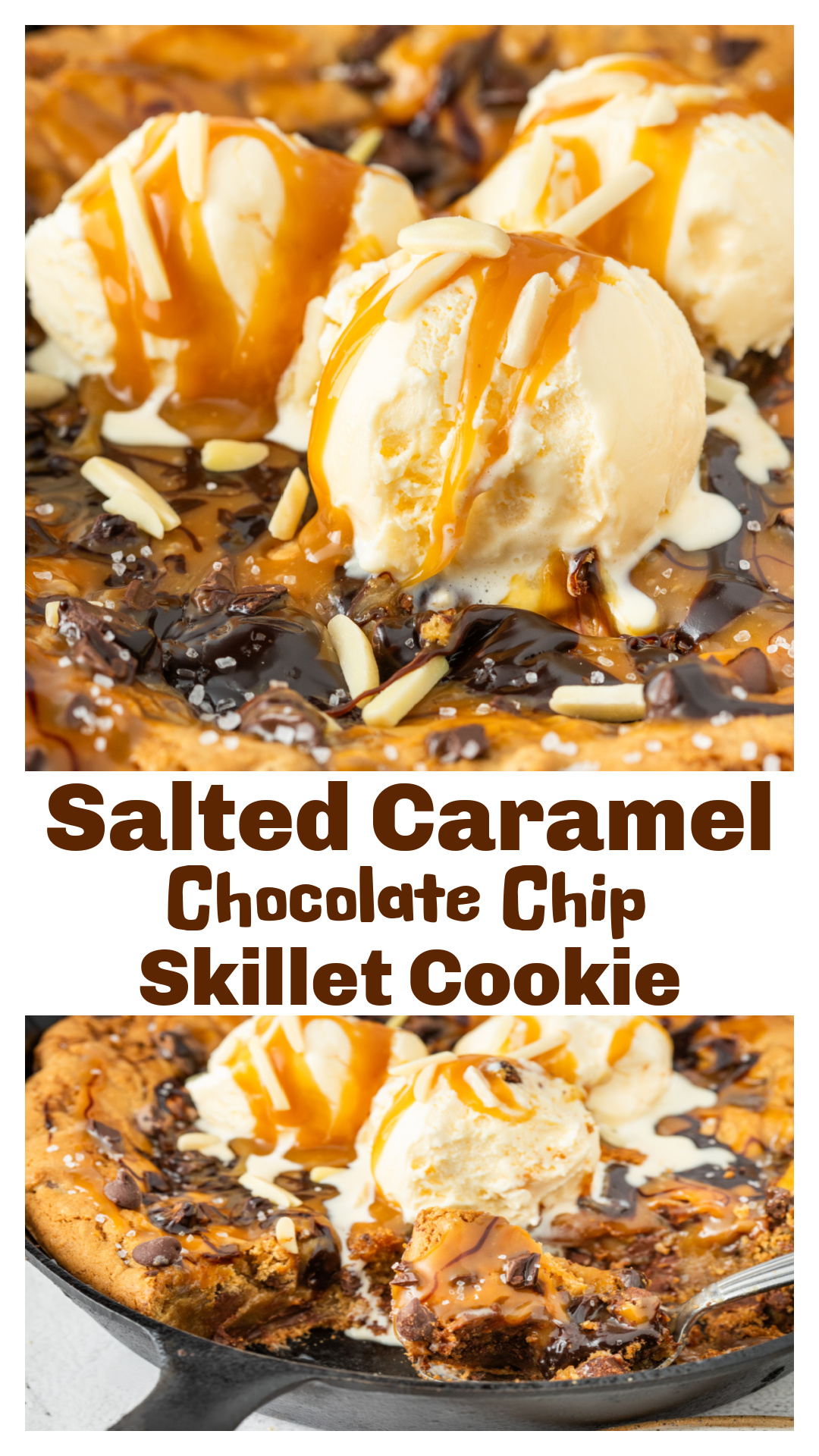
This salted caramel chocolate chip skillet cookie bakes up with crisp golden edges, a gooey center, and salted caramel layered straight through the middle. Serve it warm with melting ice cream and prepare for the spoons to show up immediately.
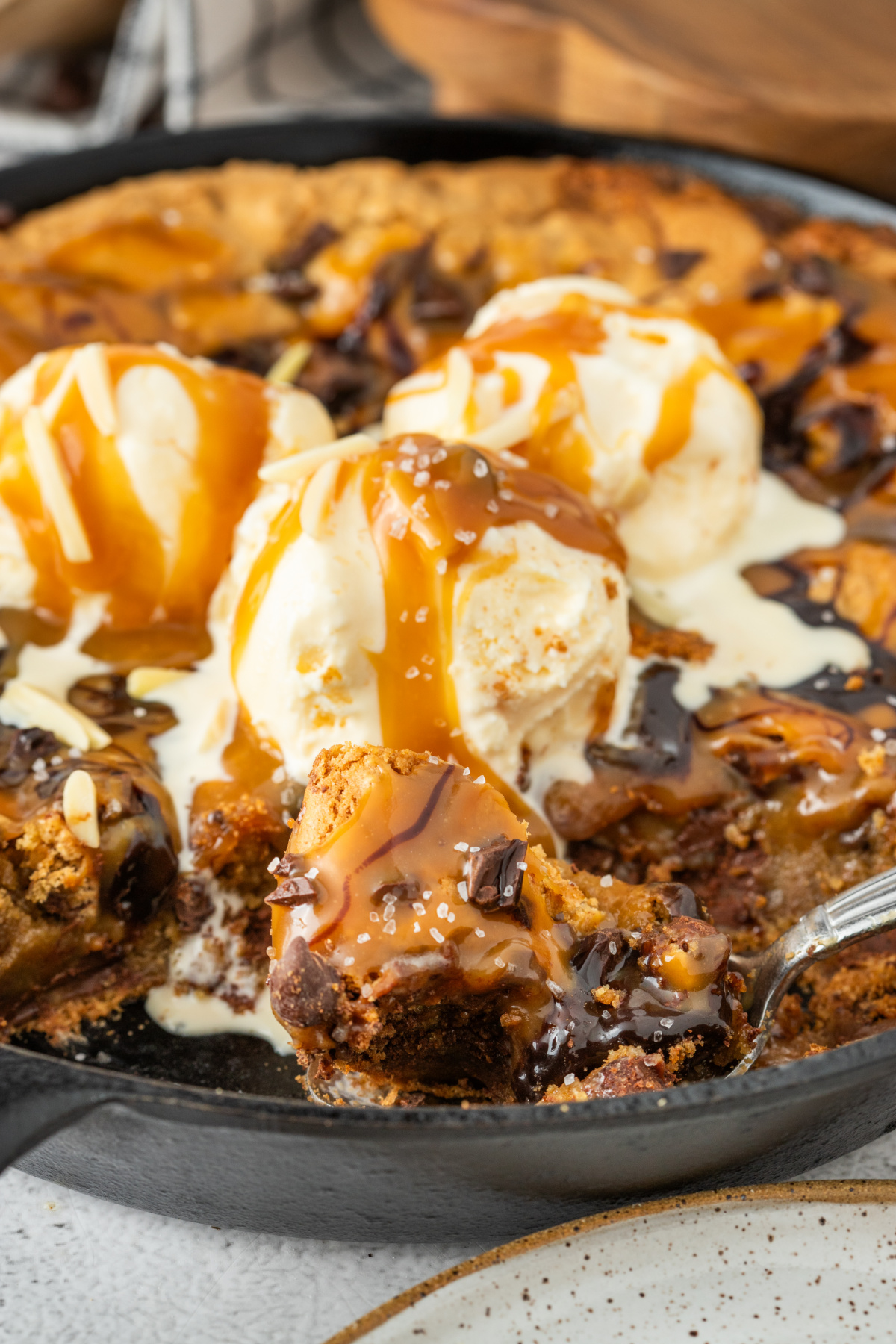
Salted Caramel Chocolate Chip Skillet Cookie “Lava Style”
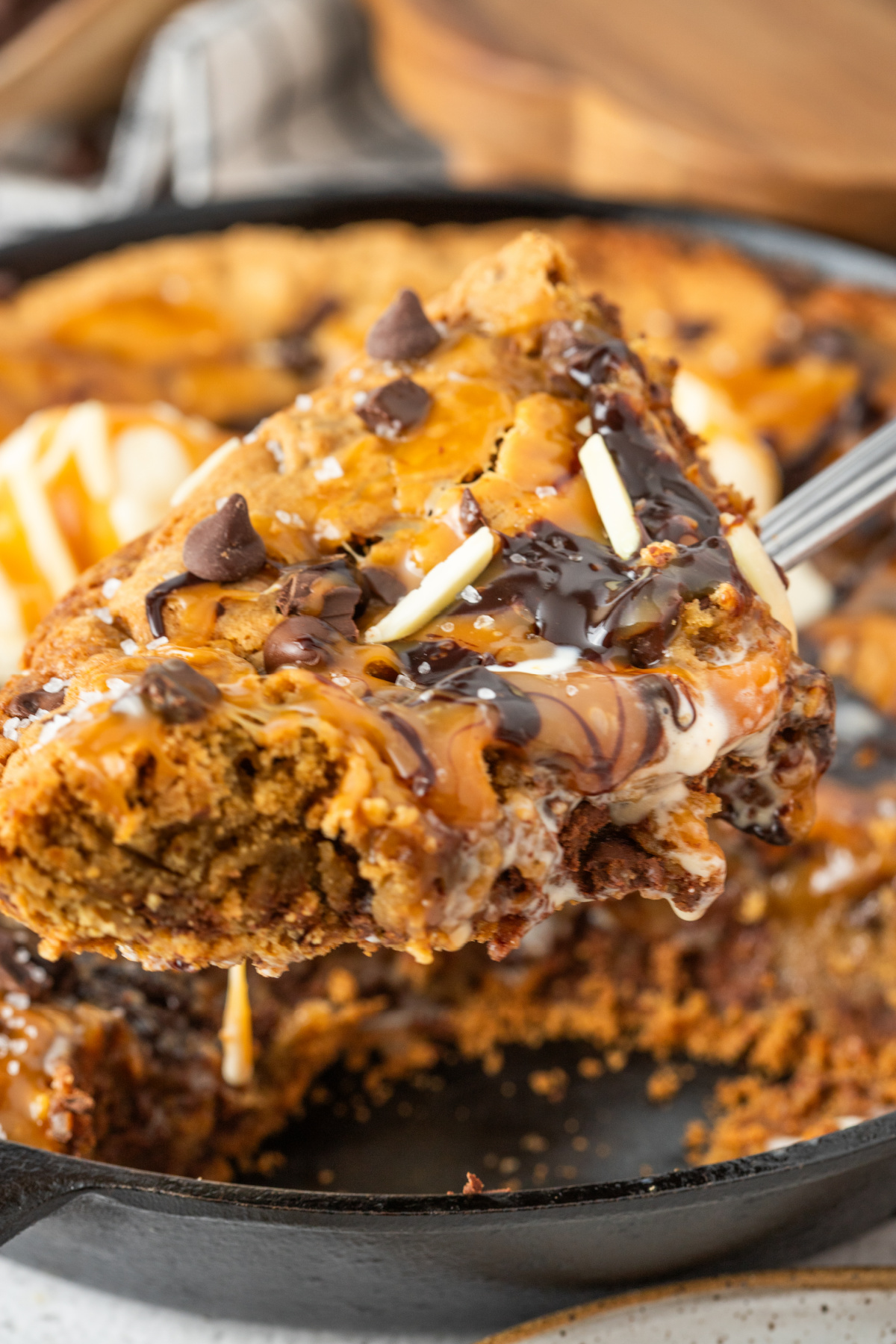
A salted caramel chocolate chip skillet cookie already comes with a certain amount of drama, but that wasn’t enough for me. I wanted a caramel river layered through the middle to make sure this went into full dessert theater mode. The edges crisp up and turn golden in the cast iron skillet while the center stays soft enough for the salted caramel to melt into gooey pockets that beg for a scoop of ice cream on top.
I’ve been making this skillet cookie since my house was full of high school kids. I still live pretty far out of town, which never stopped this house from being the hangout house. The kids ruled the first and third floors while the middle level was where I mostly existed. My end of the bargain was keeping the drinks fridge stocked, the storage room full of new and interesting snacks, and movie candy bought in bulk while the house somehow survived the constant rotation of everyone coming through. Sleepovers turned into entire weekends, school projects were filmed on the decks and in the forest, giant groups watching movies, and enough tennis shoes by the front door that eventually I stopped trying to make them trip hazards. I miss it.
Skillet cookies were the easiest thing to make because they fit into the unpredictable nature of kids showing up. And, if you bake even a little, you already have everything sitting around for them anyway. Butter, sugar, chocolate chips, vanilla ice cream. They didn’t require planning ahead, which was important because half the time kids were already downstairs before I even realized how many were here, or if more were coming.
And they never even wanted plates. I learned quickly that teenagers do not care about presentation when something is hot and gooey and immediate.
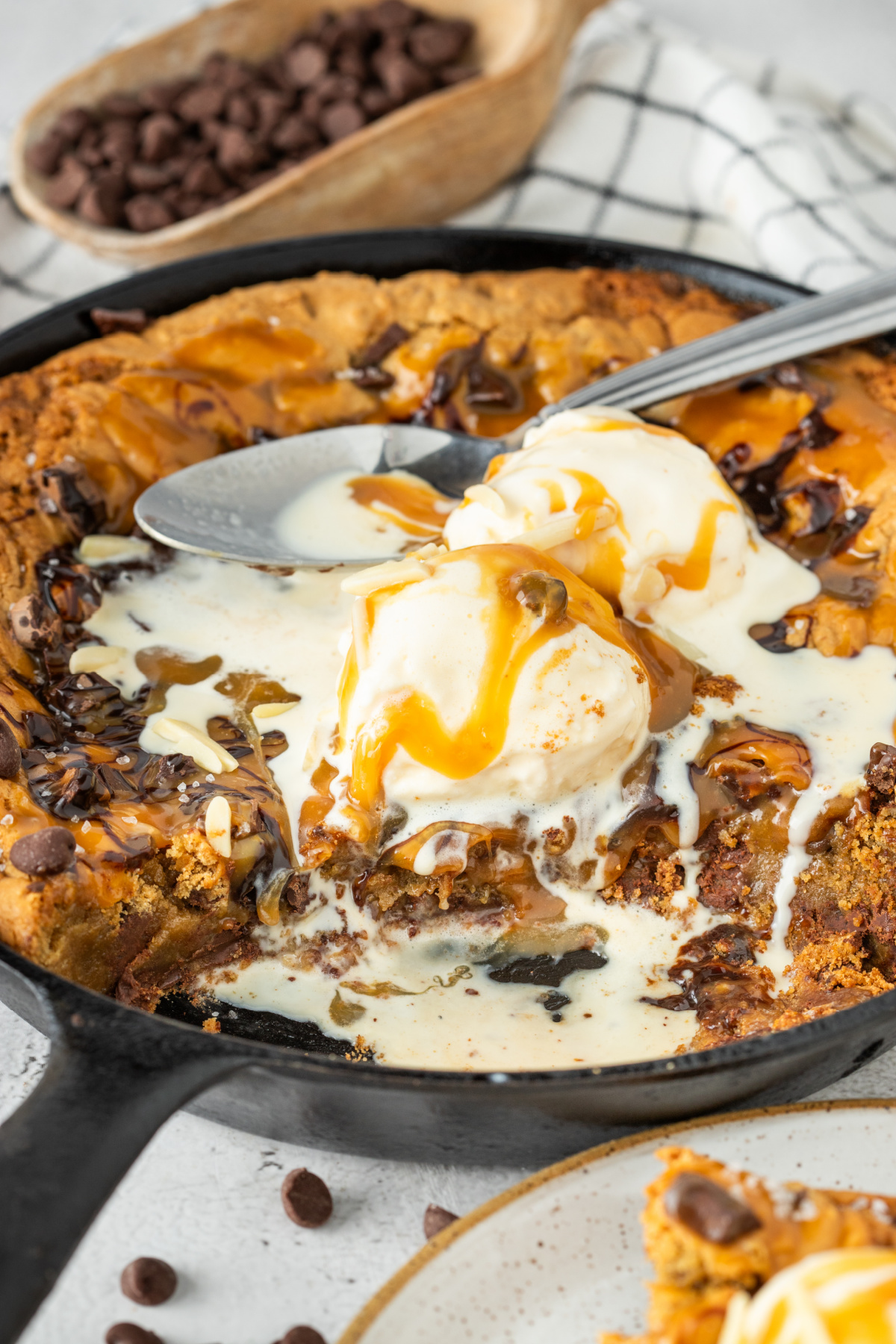
I’d carry a cast iron skillet downstairs during a ping pong-air hockey-video game rally or upstairs to the theater for a movie marathon and everyone would grab a spoon and dig in while the ice cream melted straight into the middle. Nobody was trying to eat with manners. The skillet itself was the serving dish. The kids stayed and I never freaked out about extras showing up because there was room here, and they stayed. The house just absorbed it all somehow.
I still think that’s what skillet cookies are for.
I layer the salted caramel through the middle instead of mixing it into the dough because otherwise it melts straight into the cookie while it bakes. Keeping it concentrated in the center gives you gooey caramel pockets instead of vague caramel flavor. The cast iron skillet holds heat long after the cookie comes out of the oven, which is how the crisp golden edges appear while the middle stays soft enough for the caramel and chocolate to melt into the center instead of setting up too quickly. It ends up somewhere between a skillet cookie and the restaurant pizzookie that had a hold on us in the 90s.
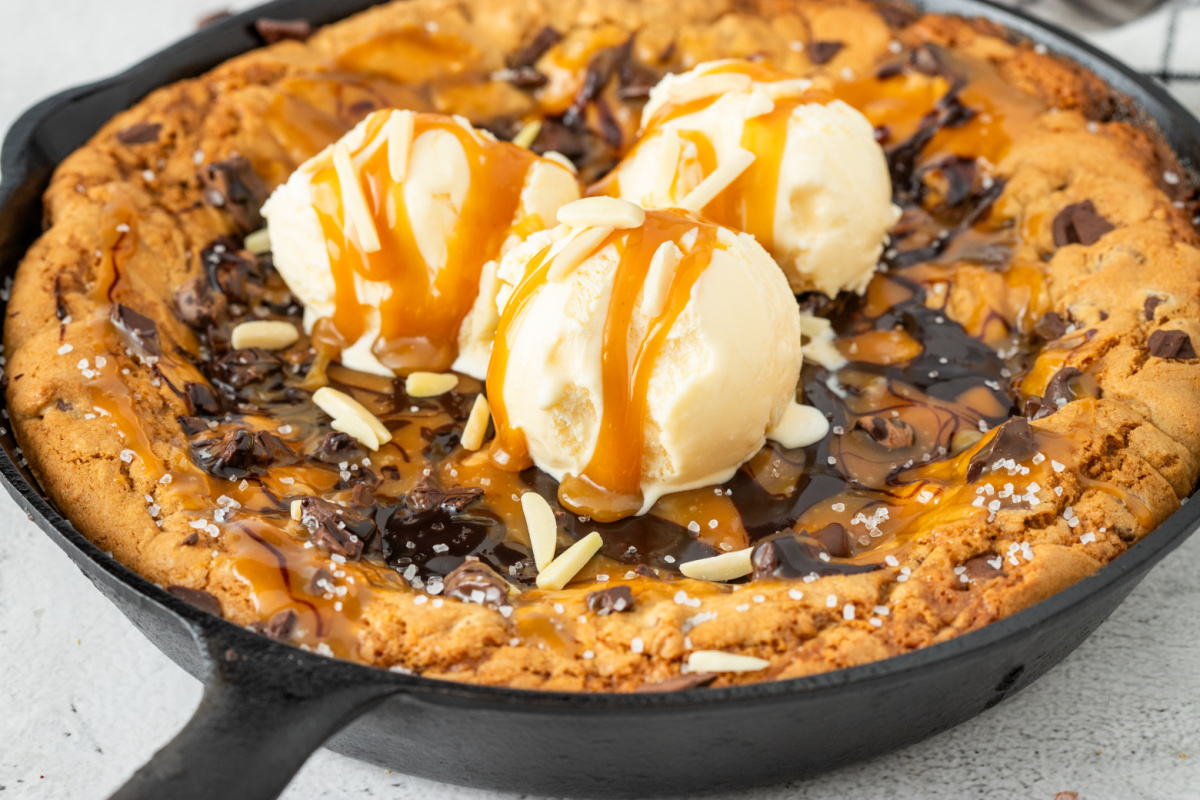
What Makes This Skillet Cookie Different
- I didn’t want a giant chocolate chip cookie baked in a skillet, which is why I layered the salted caramel through the middle instead of mixing it into the dough. I wanted the full lava-style center. This keeps the caramel from disappearing into the cookie while it bakes and creates molten pockets throughout the center.
- The cast iron skillet creates the crisp golden outer ring while the middle stays soft enough for the caramel and melted chocolate to stay gooey underneath without turning cakey or dry. It’s meant to be served warm straight from the skillet with melting vanilla ice cream on top, much closer to a hot restaurant dessert than a cookie bar.
- A thicker salted caramel sauce works best because thinner caramel mostly melts into the dough instead of staying in visible caramel ribbons. The flaky sea salt on top is mandatory. It gives the whole skillet the salty-sweet contrast that makes the center disappear first. Because that’s why you’re here.
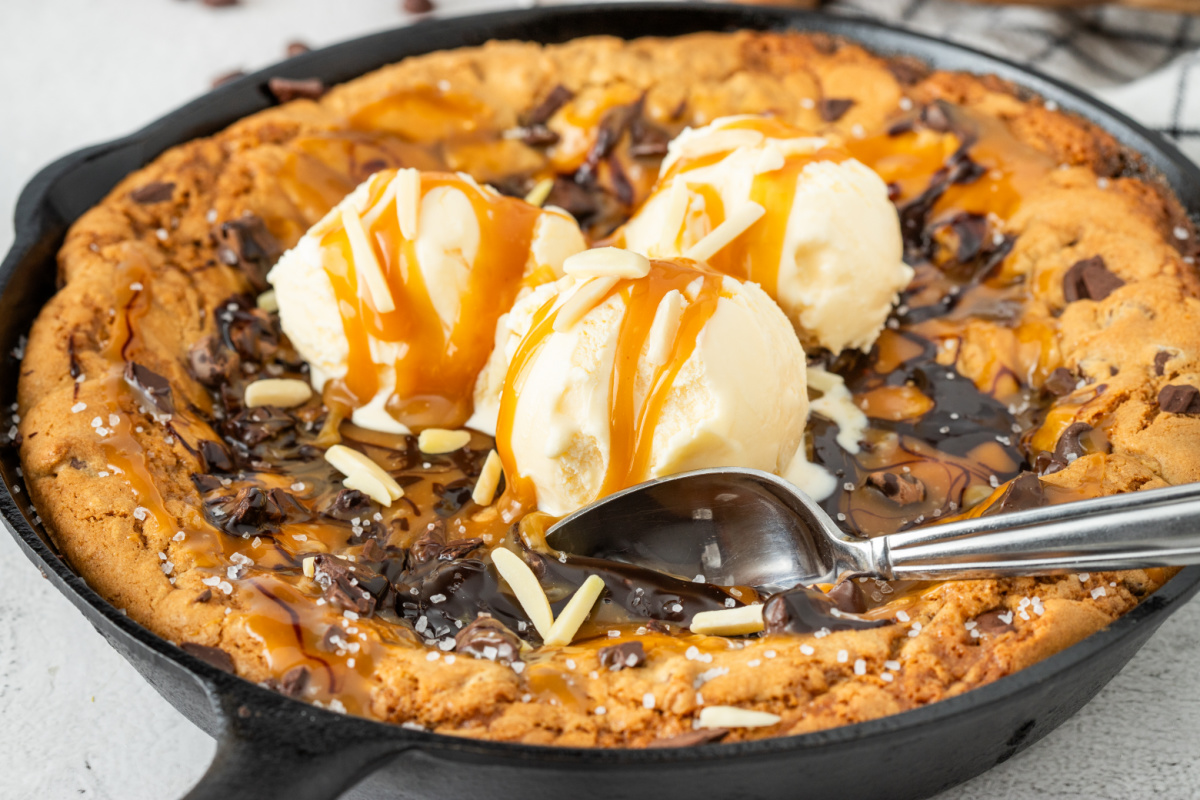
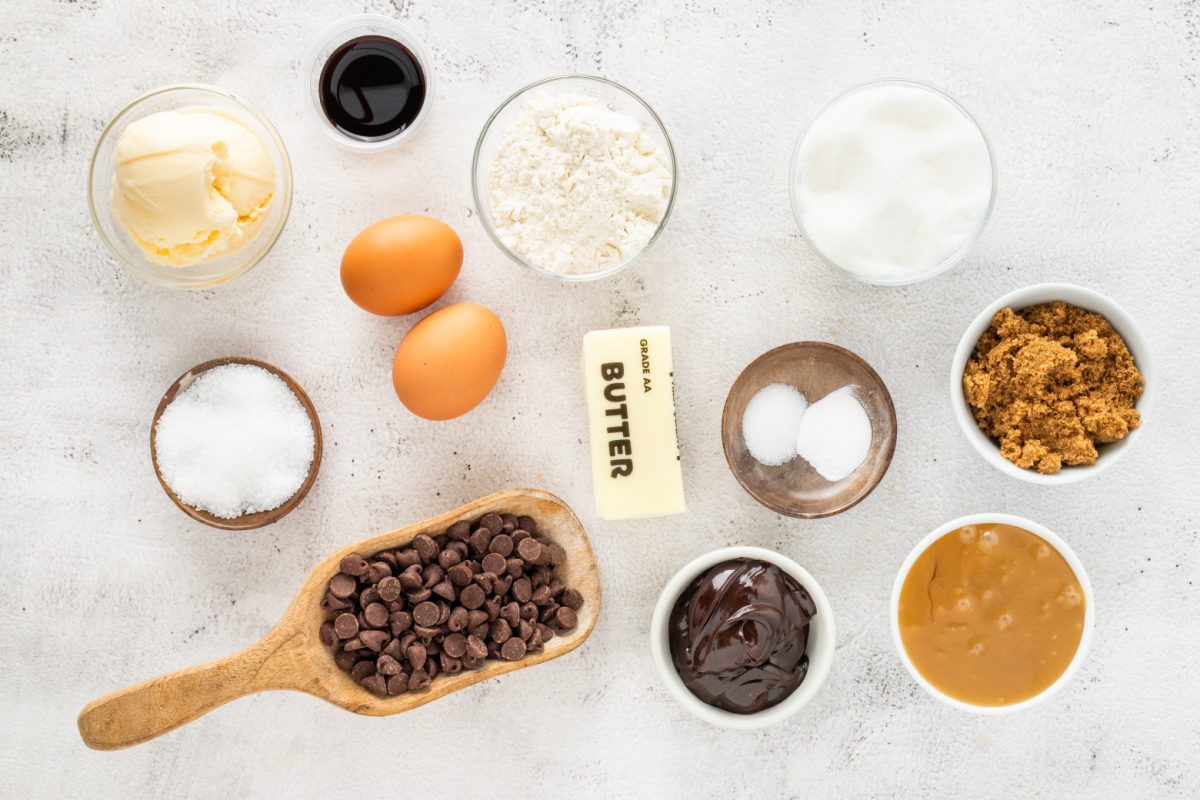
Ingredients
- Unsalted butter – Softened butter helps the edges brown in the cast iron skillet instead of turning dry.
- Brown sugar – Creates a softer and chewier cookie while adding deeper caramel flavor.
- Granulated sugar – Helps the outer edge turn crisp while the middle stays softer through the center.
- Eggs – The glue that holds it all together.
- Vanilla extract – Makes everything better.
- All-purpose flour – Enough to support the molten caramel center without turning the cookie cakey.
- Baking soda + baking powder – Keep the skillet cookie thick enough to support the caramel layer.
- Kosher salt – Balances the sweetness in the dough.
- Semi-sweet chocolate chips – Melt into pockets throughout the skillet while the extra chips on top create glossy chocolate pools across the surface.
- Salted caramel sauce – A thicker sauce stays layered through the middle instead of melting completely into the dough while baking. Low-quality versions are thin. This is where it’s worth going higher end.
- Flaky sea salt – There is no version of this dessert where you leave it out.
- Vanilla ice cream – This is made for melting ice cream straight into the middle while the skillet is still warm.
- Warm chocolate sauce – Turns it even further into full restaurant-style skillet dessert territory. A good chocolate sauce makes a noticeable difference.
How to Make Salted Caramel Chocolate Chip Skillet Cookie
Find the complete printable recipe with measurements in the recipe card at the BOTTOM OF THE POST.
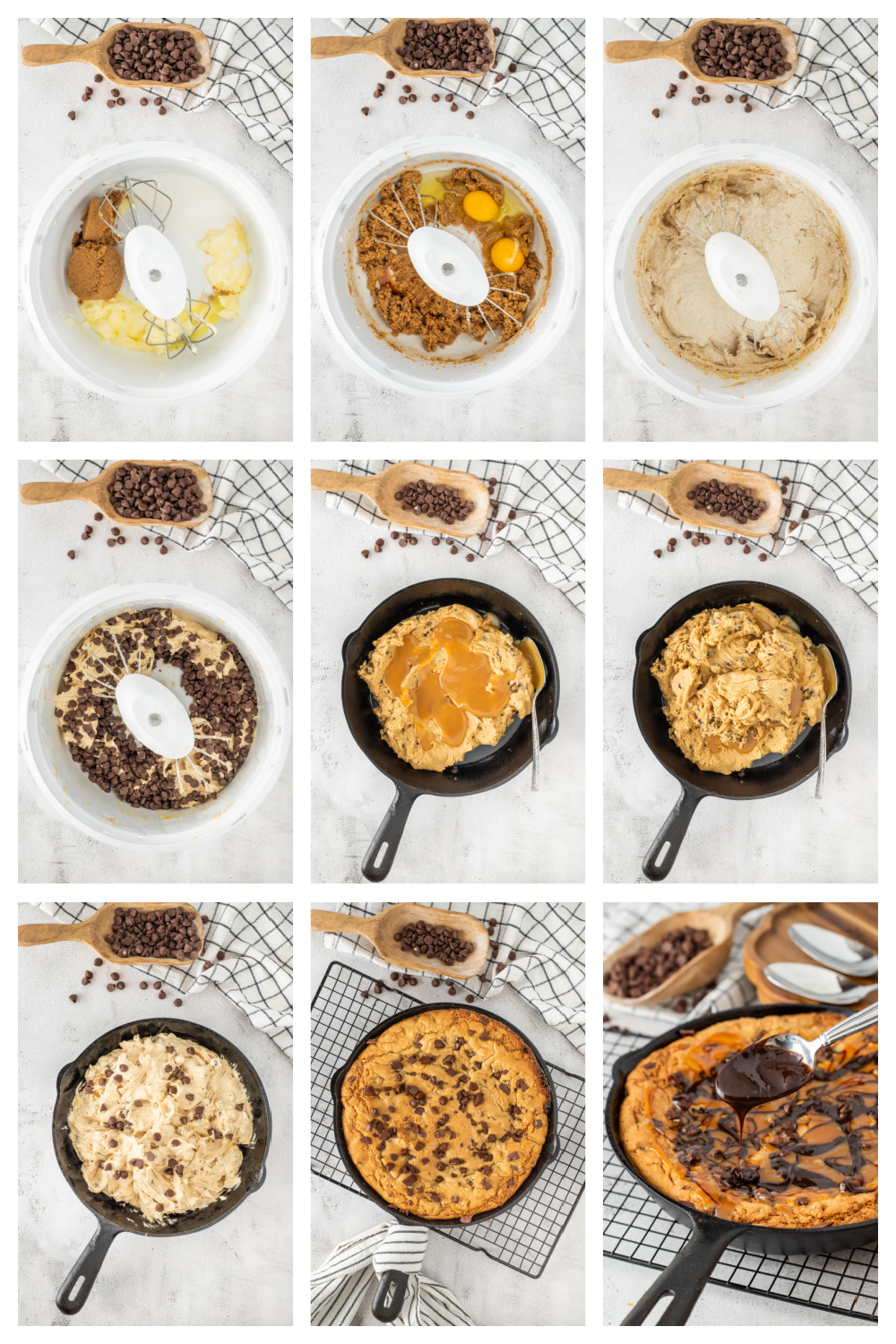
- Step One (make the dough)
Preheat the oven to 350°F (175°C) and lightly grease a 10-inch cast iron skillet. Whisk the butter, brown sugar, and granulated sugar together until smooth, then add the eggs and vanilla. Stir in the flour, baking soda, baking powder, and salt until the flour disappears, then fold in most of the chocolate chips. The dough should stay thick and soft looking. - Step Two (make the caramel layer)
Spread half the dough into the skillet, then spoon the caramel mostly through the center instead of taking it all the way to the edges. Add the rest of the dough over the top in spoonfuls, drizzle over more caramel, and lightly swirl a few spots so you get molten caramel pockets through the middle instead of one fully blended caramel cookie. Scatter the remaining chocolate chips across the top. - Step Three (bake until the middle stays soft)
Bake for 20–25 minutes, until the edges are golden and the center still looks slightly underdone. That part is important. The cast iron skillet keeps holding heat long after it comes out of the oven, so the middle stays molten as it cools instead of staying raw or turning dry. Let it sit for about 5–10 minutes before serving so the caramel thickens slightly underneath. - Step Four (bring ice cream immediately)
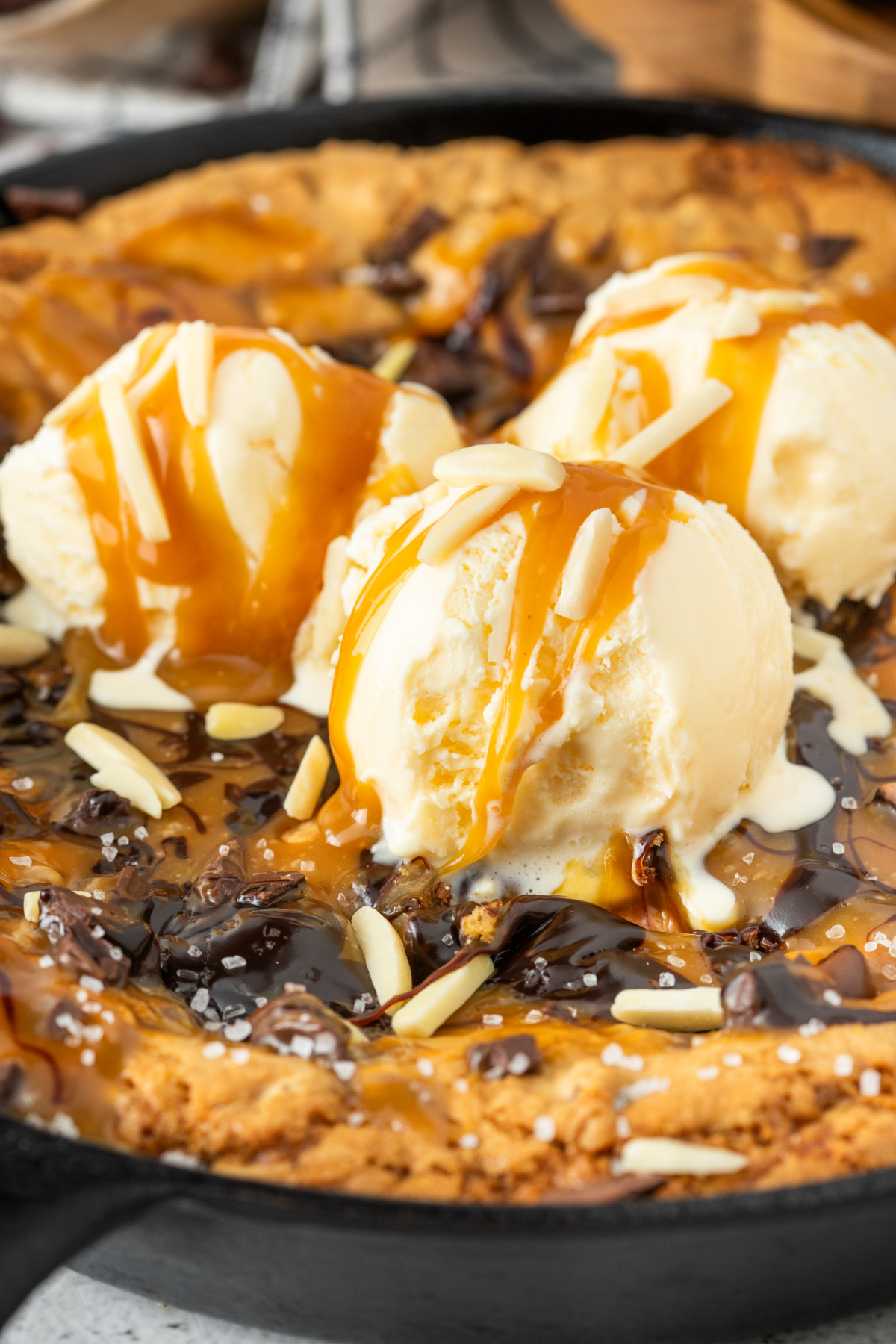
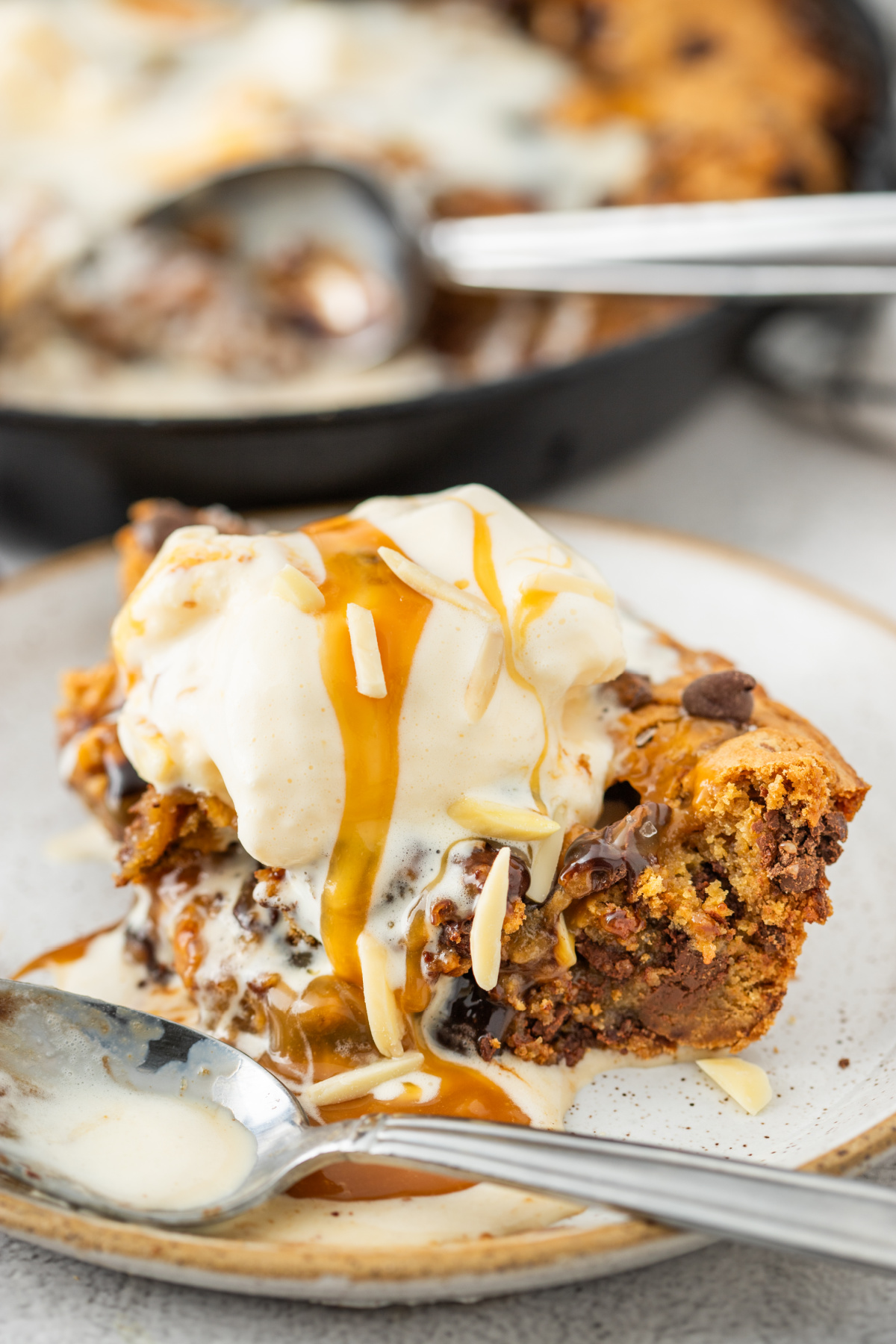
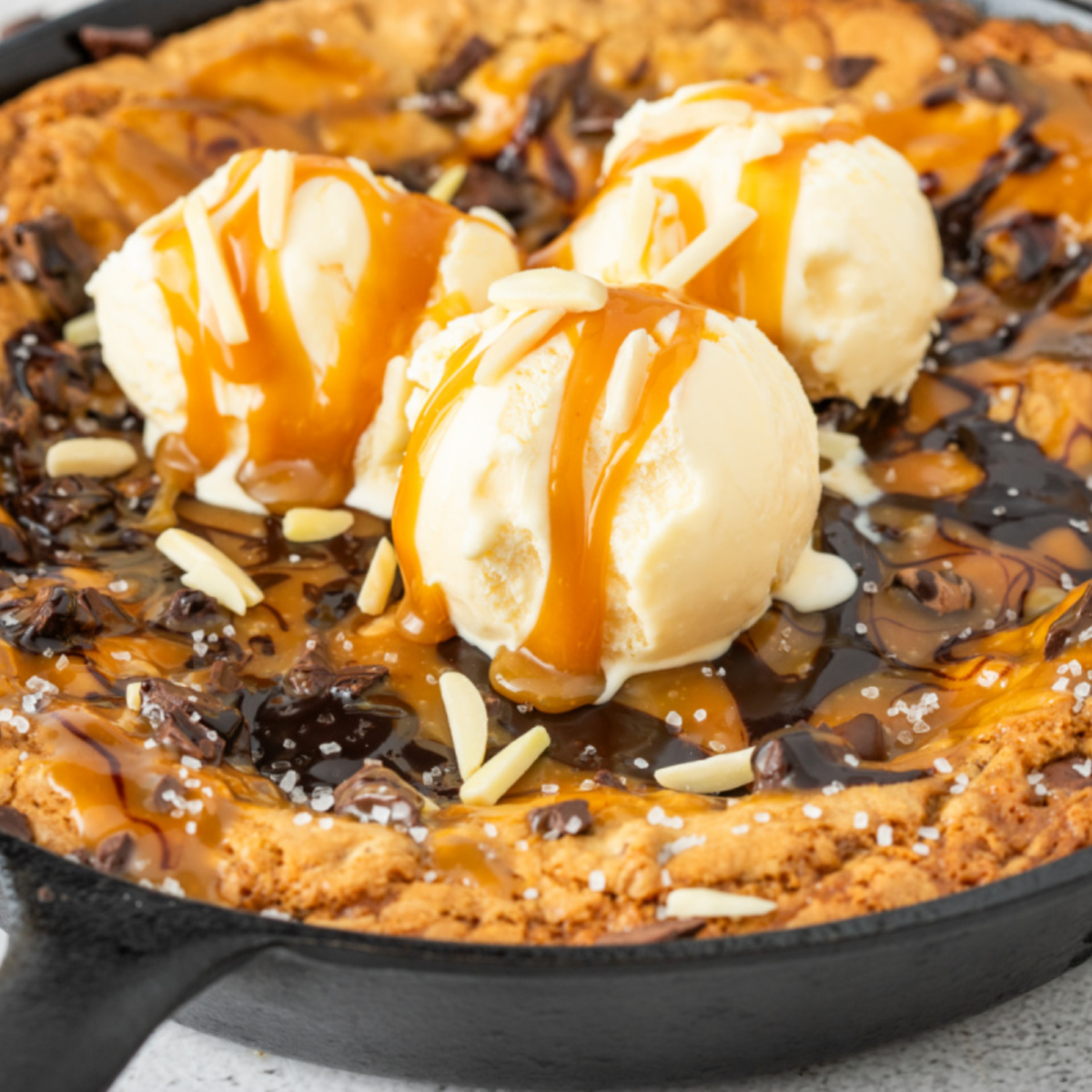
Top the warm skillet cookie with vanilla ice cream, extra caramel sauce, warm chocolate sauce, and flaky sea salt. Then put the skillet in the middle of the table because nobody wants this plated individually once the ice cream starts melting into the center.
Recipe Tips
- The center should still look slightly soft when the skillet comes out of the oven.
- Use a thicker salted caramel sauce if possible. Thin caramel will disappear into the dough while baking, while thicker caramel stays in ribbons and gooey pockets instead.
- Warm caramel sauce layers much easier between the dough than cold caramel straight from the refrigerator.
- Don’t spread the caramel all the way to the edges. Keeping most of it through the center helps create the softer middle instead of caramel bubbling out around the sides.
- Let the skillet cool for about 5–10 minutes before serving. The caramel thickens slightly during that time and the cookie holds together better underneath the melting ice cream.
- Reserve some chocolate chips for the top. They melt into chocolate pools across the surface while the skillet finishes baking.
- This is best eaten warm straight from the skillet. Once the ice cream hits the center, the whole thing turns into more of a hot cookie sundae than a regular chocolate chip cookie.
Storage
- Store leftovers covered in the refrigerator for up to 4 days. The edges stay firmer once chilled while the caramel underneath thickens considerably in the refrigerator.
- To reheat, microwave individual portions for about 20–30 seconds or warm the whole skillet in a low oven until the center softens again. The caramel loosens back up once warm and the chocolate softens again.
- I still think this is best fresh from the oven with melting ice cream on top, but cold bites straight from the refrigerator are also a very solid life decision.
FAQs
- Can I make this without a cast iron skillet?
Yes, but cast iron gives the best edge texture and heat retention. A regular baking dish works, but the edges won’t get quite as crisp and the middle won’t stay quite as soft underneath. - Why does cast iron work so well for skillet cookies?
Cast iron holds heat longer than a regular baking pan, which is what gives the skillet cookie crisp edges while keeping the center softer underneath. It also keeps the dessert warmer longer once it hits the table. - Why does the center still look underbaked?
Because it should. The skillet keeps baking the cookie after it comes out of the oven. Pulling it while the center still looks slightly soft is what keeps the middle from turning dry later. - Can I use homemade salted caramel sauce?
Yes, but make sure it’s thick enough to stay layered through the center instead of completely melting into the dough. - Is this supposed to be served warm?
Very much yes. This is a warm skillet dessert with melting ice cream, not as a cooled cookie bar. - Can I make this ahead of time?
You can make the dough ahead and refrigerate it, but the skillet cookie itself is best baked fresh right before serving while the caramel is still warm. - Why layer the caramel instead of mixing it into the dough?
Layering keeps the caramel concentrated so you get actual gooey pockets instead of the caramel disappearing completely into the cookie while baking.
From My Kitchen Notes
Some observations from my rural house kitchen.
- I no longer think the skillet cookie is about the cookie. It’s about being the house that absorbed adolescence. And I love that.
- I do think some desserts become part of the architecture of a house.
- A skillet cookie is emergency hospitality, teenage gravity, sleepover currency, and the thing that meant nobody had to leave yet. I can’t think of another dessert with that much ROI.
- There’s something oddly emotional about seeing a completely destroyed skillet cookie and realizing everybody had a good night.
- A cast iron skillet can survive an astonishing amount of life.
- The first sign your house has become “the house” is when extra people stop feeling unexpected.
- My kitchen operated for years as an unofficial community center.
- The line between “sleepover” and “temporary civilization” gets thinner with enough teenagers involved.
- A front door covered in shoes always made me smile.
- There’s something very specific about hearing an entire lower floor laughing while you’re upstairs cleaning a kitchen.
- Some forms of caring for others become so routine nobody notices they’re happening until years later.
- There’s probably still movie candy hidden somewhere in this house from 2014.
- Nobody ever says, “I came over specifically hoping somebody made a skillet cookie,” but certain patterns become obvious after enough years.
- There’s something very revealing about who automatically grabs spoons and who waits to be invited.
- A cast iron skillet full of melted chocolate turns fully grown human beings into opportunists almost immediately. Including me.
- It’s interesting how often people return to the exact same places during phases of life when they feel uncertain about everything else.
- There are houses people still think about twenty years later without fully understanding why.
- There are people who would rather burn the roof of their mouth than wait five more minutes for something they want.
- The middle-of-nowhere house with wraparound decks, movie candy, giant TVs and kids spread across three floors like a living organism are still some of my favorite memories.
- The phrase “I’m fine” becomes dramatically less convincing around hot caramel.
- Real motherhood for me was not Pinterest-hostess, it was stocked fridges, noise, extra blankets, late-night movie candy, kids everywhere, people staying longer than expected, and knowing instinctively how to feed twelve teenagers with no warning.
- A surprising amount of human behavior can be explained by proximity and timing.
- I no longer believe consistency is accidental.
- There are people who can spend an entire evening pretending they aren’t waiting for something while clearly tracking it the whole time.
- I think a lot of human behavior comes down to finding reasons to stay near what feels good without having to explain yourself too much.
- Somehow through skillet cookies I figured out how much I value participation, presence, shared space, real life, and people feeling safe enough to stay.
- The skillet itself became my own maternal infrastructure.
More Desserts Worth Fighting Over
- Blackberry Cobbler – cast iron and summer berries.
- Grilled Pineapple Rum Sundaes – hot buttered rum sauce, melting ice cream.
- Strawberry Banana Crumble – crispy oat topping, gooey fruit center, in cast iron.
- German Chocolate Poke Cake – caramel-soaked with chocolate drizzles throughout
- Butterscotch Bananas with Vanilla Ice Cream – gooey bananas in cast iron.
This post may contain affiliate links. Please read my disclosure policy.
Salted Caramel Chocolate Chip Skillet Cookie
Equipment
- cast iron skillet 10" (25 cm). The right size for crisp golden edges while keeping the center soft.
- mixing bowls One large bowl is enough for the dough.
- whisk Helps create the the dough base.
- rubber spatula For folding and spreading the dough.
- measuring cups and spoons For accurate baking measurements.
Ingredients
Skillet Cookie:
- ½ cup (113 g) unsalted butter softened
- ¾ cup (150 g) packed light brown sugar
- ½ cup (100 g) granulated sugar
- 2 large eggs room temperature
- 1 tsp (5 ml) vanilla extract
- 2 cups (250 g) all-purpose flour
- ½ tsp (3 g) baking soda
- ½ tsp (2.5 g) baking powder
- ½ tsp (2.5 g) kosher salt
- 1¼ cups (300 g) semi-sweet chocolate chips divided
- ½ cup (160 g) thick salted caramel sauce divided
Serving:
- extra salted caramel sauce
- warm chocolate sauce (use the best quality you can)
- vanilla ice cream
- flaky sea salt for finishing
Instructions
- Preheat the oven to 350°F (175°C). Lightly grease a 10-inch (25 cm) cast iron skillet or other oven-safe skillet.cooking spray
- In a large mixing bowl, whisk the softened butter, brown sugar, and granulated sugar together until smooth. Add the eggs and vanilla extract, then whisk again until fully combined and slightly thickened.½ cup (113 g) unsalted butter, ¾ cup (150 g) packed light brown sugar, ½ cup (100 g) granulated sugar, 2 large eggs, 1 tsp (5 ml) vanilla extract
- Add the flour, baking soda, baking powder, and salt. Stir just until the flour disappears. Avoid overmixing once the dry ingredients are added so the cookie stays soft through the center instead of turning dense.2 cups (250 g) all-purpose flour, ½ tsp (3 g) baking soda, ½ tsp (2.5 g) baking powder, ½ tsp (2.5 g) kosher salt
- Fold in 1 cup (240 g) of the chocolate chips, reserving the remaining chips for the top.1¼ cups (300 g) semi-sweet chocolate chips
- Spread half the dough into the prepared skillet. Spoon or drizzle half the salted caramel sauce over the dough, keeping it mostly through the center rather than all the way to the edges. Add the remaining dough on top in spoonfuls, then gently spread it to cover most of the caramel layer. Drizzle the remaining caramel sauce over the top and lightly swirl in a few spots to create molten caramel pockets throughout the cookie. Sprinkle the reserved chocolate chips across the surface.½ cup (160 g) thick salted caramel sauce
- Bake for 20–25 minutes, or until the edges are deep golden brown and the center still looks slightly soft. The cast iron skillet will continue holding heat after baking, which helps the middle settle into a gooey lava-style texture without overbaking.
- Let the skillet cool for 5–10 minutes before serving. This gives the salted caramel time to thicken slightly while keeping the center warm and soft.
- Finish with extra caramel sauce, warm chocolate sauce if desired, and a light sprinkle of flaky sea salt. Serve warm with scoops of vanilla ice cream while the caramel is still molten and the chocolate remains melted.extra salted caramel sauce, warm chocolate sauce, vanilla ice cream, flaky sea salt
Notes
- A thicker salted caramel sauce works best because it stays in visible ribbons and gooey pockets instead of disappearing into the dough while baking. This is my absolute favorite salted caramel sauce. Some nicer grocery stores do carry it or you can order it. This one has the best flavor, with the best ingredients.
- The center should still look slightly soft when the skillet comes out of the oven. Cast iron holds heat longer than a regular baking pan, so the middle continues settling as it cools.
- For the strongest lava-style texture, serve the skillet cookie warm while the caramel is still soft and the ice cream melts into the center.
- Leftovers can be reheated in the microwave for 15–20 seconds to soften the caramel and warm the middle again.
Nutrition
Have you made this Salted Caramel Chocolate Chip Skillet Cookie? I’d love to hear how it turned out – leave a comment below and let me know.
As an Amazon Associate and member of other affiliate programs, I earn from qualifying purchases.
kelly says
We made this last night for a few friends and yeah, omg it was so good! I mean wow. That salted caramel sauce, the one you love is at my grocery store and well, the whole thing was incredible.
Jasmine Shariff says
I can’t wait to try this!!! I just need a few warm bodies! lol!
Is this a cold weather thing or year round? With spring here I’m more inclined towards light fruity and citrus desserts….
Since I haven’t made it yet I can’t really rate it. Looking forward to it though!
Thank you for a great recipe and a very entertaining blog!
Cathy Pollak says
I fully support using this skillet cookie as a reason to gather warm bodies.
And for me it works year-round. It’s all about your tolerance for turning on the oven. In cooler months it feels great with everyone gathered around close, but it’s also perfect for long summer weekends, especially holiday ones, bbqs, especially with cold ice cream melting everywhere. No one has ever rejected based on the weather outside.
Kayal says
Made this for my daughter’s study group last night for finals and they polished it off! They loved it.