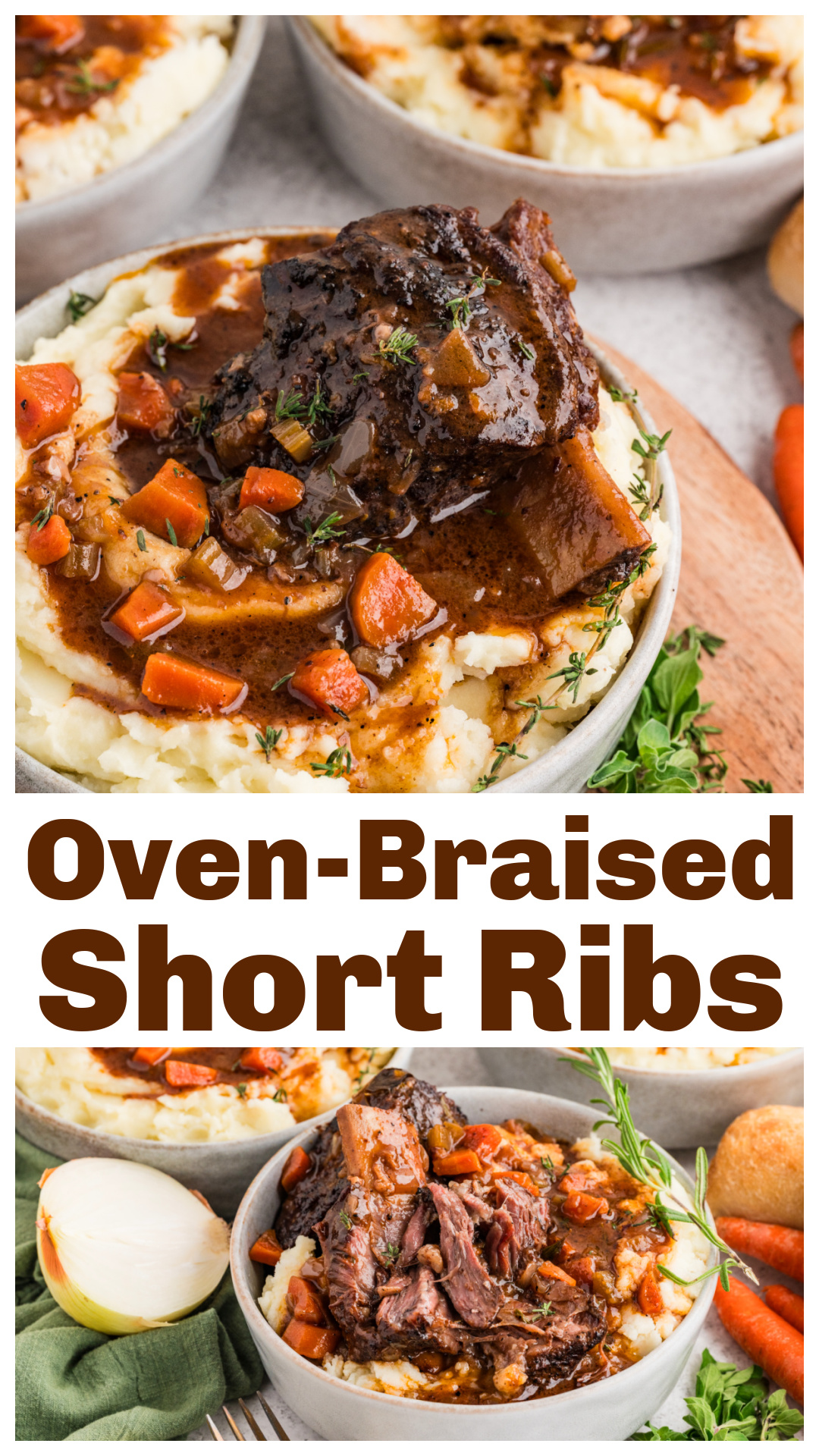
Short ribs braised slowly until the meat gives in on its own. A cold-weather dish that warms the house first, then the table.
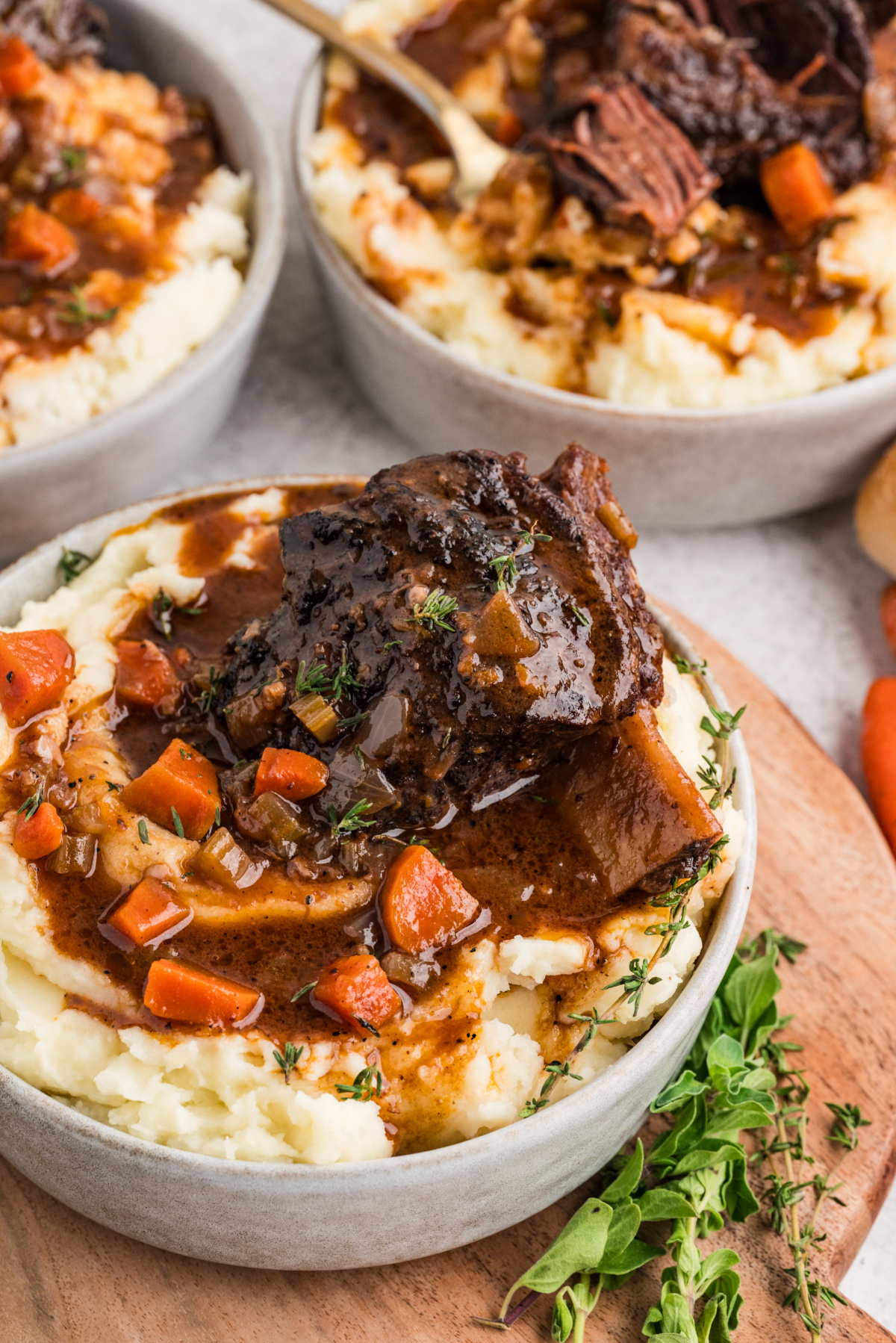
Oven-Braised Short Ribs That Change the Room
There are dishes that belong to winter the way certain stillness belongs to night. Oven-braised short ribs are one of them. They don’t rush. They don’t ask for attentiveness. They take their time transforming, filling the house with a depth that feels less like cooking and more like a low, expected presence settling into the walls.
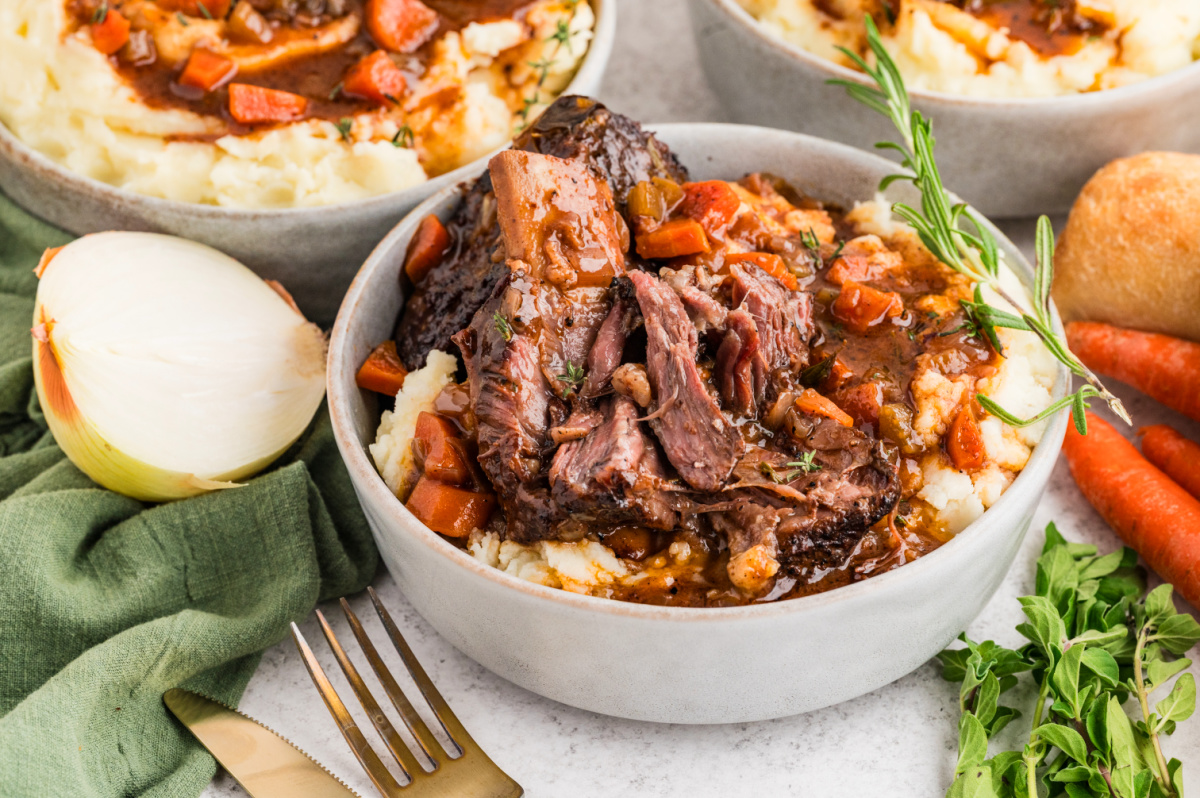
Short ribs start dense and unyielding, all bone and muscle and promise. They ask for patience, not precision. Hours later, they give themselves back entirely, meat loosening from bone the way tension leaves a body once it finally feels safe enough to let go. This is not a meal for quick hunger. This is a meal for the long evening, for cold windows, for the kind of quiet that asks to be filled with something substantial and undeniable.
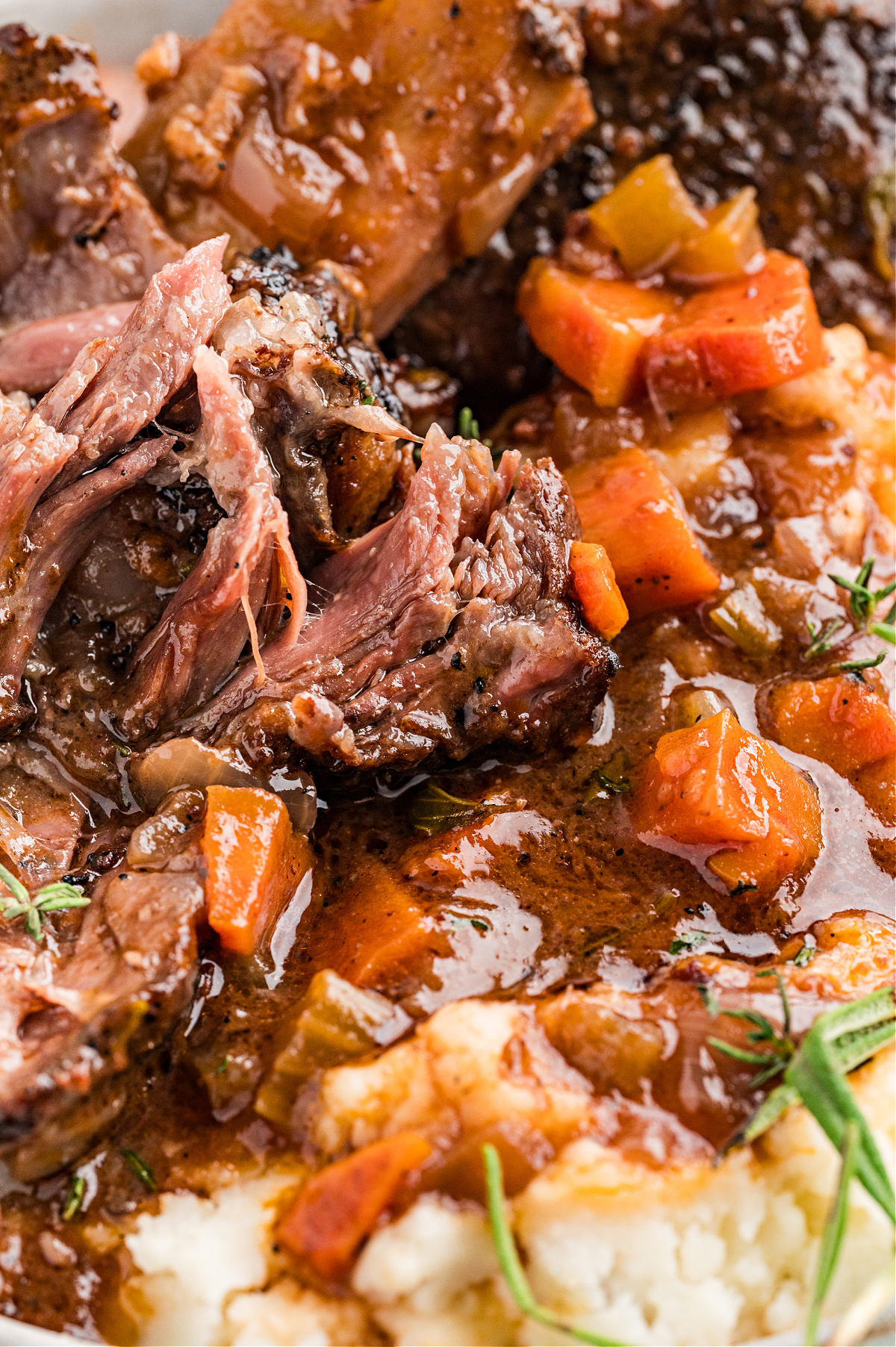
Red wine moves through this dish like blood warmed by fire, dark and generous, carrying herbs and marrow and sweetness until everything tastes like it belongs together. The sauce thickens into something you don’t pour so much as drape, holding on to the ribs and whatever waits beneath them, mashed potatoes, polenta, a spoon you didn’t mean to lick but do anyway.
This is home cooking at its core. Deep. Slow. Undeniable.
Why I Love This Recipe
- Short ribs ask for time the way cold season asks you to stay. They don’t hurry, don’t adapt, don’t accommodate. They insist on slowness, and the house changes because of it.
- There’s something deeply comforting about a dish that works while you’re doing other things, quietly transforming in the oven as if it understands patience better than you do.
- The meat softens the way cold hands soften near a fire, gradually, without asking, until resistance simply isn’t there anymore.
- The sauce grows richer the longer it’s left alone, absorbing marrow and wine and herbs until it feels inevitable, like it was always meant to taste this way.
- I love how the bones stay present, anchoring the dish, reminding you that this is food with structure, history, and weight.
- The kind of meal that makes people sit back after the first bite, not because they’re full, but because they feel held.
- It’s generous without being showy. Deep without effort. The kind of cooking that feeds more than hunger and doesn’t need to be thanked.
Ingredients
Every ingredient here is chosen for how it softens, deepens, and gives itself over with time.
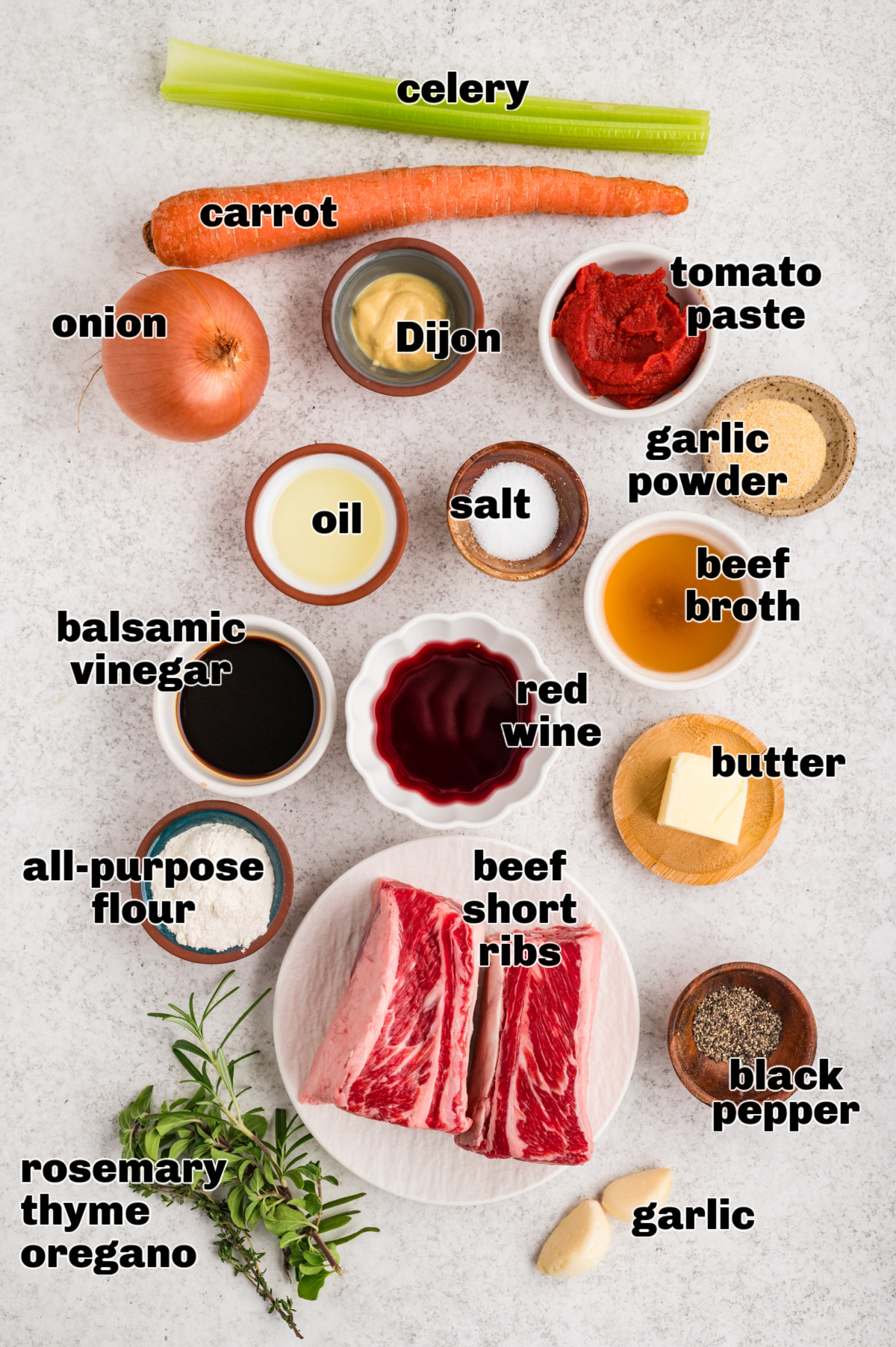
- Beef short ribs – Bone-in, heavy, and very physical. This is meat that wants time and heat and a vessel that can hold it. Short ribs don’t rush. They soften slowly, releasing richness a little at a time, until the bone stops being structure and starts being memory.
- Kosher salt, coarse black pepper, garlic powder – A simple seasoning, applied early, before anything else happens. This is the first contact, the first layer. Enough to wake the meat without asserting itself later.
- Neutral oil – Just enough to get the pan hot and receptive. It disappears once its purpose is served.
- Salted butter – Added after the sear, when the pan has something to say. Butter takes the edge off the heat and gives the vegetables somewhere to go.
- Onion, carrots, celery – Diced small and cooked until they give up their resistance. This trio forms the low undertow underneath everything else, sweetening, rounding, and thickening the base without ever stepping forward.
- Garlic – Minced fine and added last, so it flares briefly and then dissolves into the sauce instead of dominating it.
- Flour and tomato paste – Stirred together in the pan and cooked until they darken slightly. This is where the sauce learns its depth. The flour gives it body. The tomato paste gives it shadow.
- Red wine – Bold and dry, poured in slowly and allowed to reduce. The alcohol burns off, leaving behind structure and a faint bitterness that keeps the richness from closing in on itself.
- Low-sodium beef broth – Enough to surround the ribs without drowning them. It carries everything forward while letting the meat remain the point.
- Balsamic vinegar and Dijon mustard – Small additions that reveal the edges and keep the sauce awake. You don’t taste them individually. You notice when they’re missing.
- Thyme, oregano, rosemary – Whole sprigs, tucked into the liquid. They perfume rather than flavor, releasing themselves gradually as the ribs give way.
- Mashed potatoes or polenta, fresh parsley – Optional, but useful. Something soft to receive the sauce. Something green to cut through the depth at the very end.
How to Make Oven-Braised Short Ribs
Find the complete printable recipe with measurements in the recipe card at the BOTTOM OF THE POST.
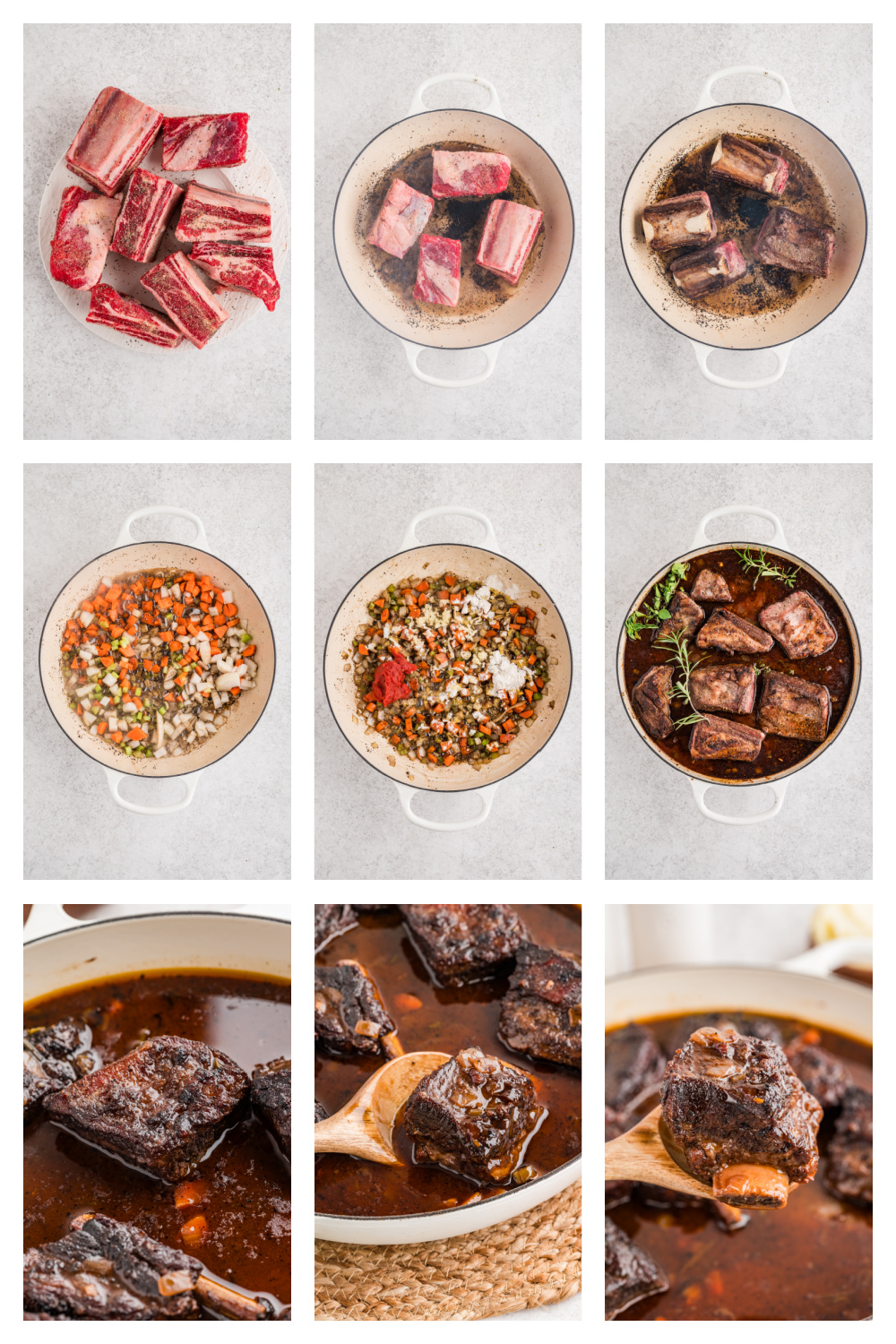
- Step One (get the oven and ribs ready)
The oven goes to 350°F first. This dish needs the room set before anything else happens.
Season the ribs with salt, pepper, and garlic powder, enough to wake the surface. Oil heats in a heavy pan until it feels ready, not screaming. The ribs go in and stay. Each side takes on real color. No flipping for reassurance. When they’re done, they come out and wait. - Step Two (build the base)
Butter follows in the same pan. Then onion, carrot, celery. Cut small. Cook slowly. Let them soften and darken until the pan smells rounded and sweet. Garlic goes in last, just long enough to leave its trace behind. - Step Three (deglaze and braise)
Flour and tomato paste are pressed into the pan and worked together briefly, until the raw edge disappears.
Wine enters slowly, loosening everything the ribs left behind. It simmers until the sharpness eases. Broth follows, then balsamic and Dijon. Salt. Pepper. The herbs are tucked in whole.
The ribs return to the pan, mostly submerged, fully claimed. The lid goes on.
The oven takes over for three to three and a half hours, until the meat releases itself without persuasion. - Step Four (rest and serve)
When the pan comes out, nothing happens right away. The ribs rest. The sauce draws closer to itself. The room adjusts.
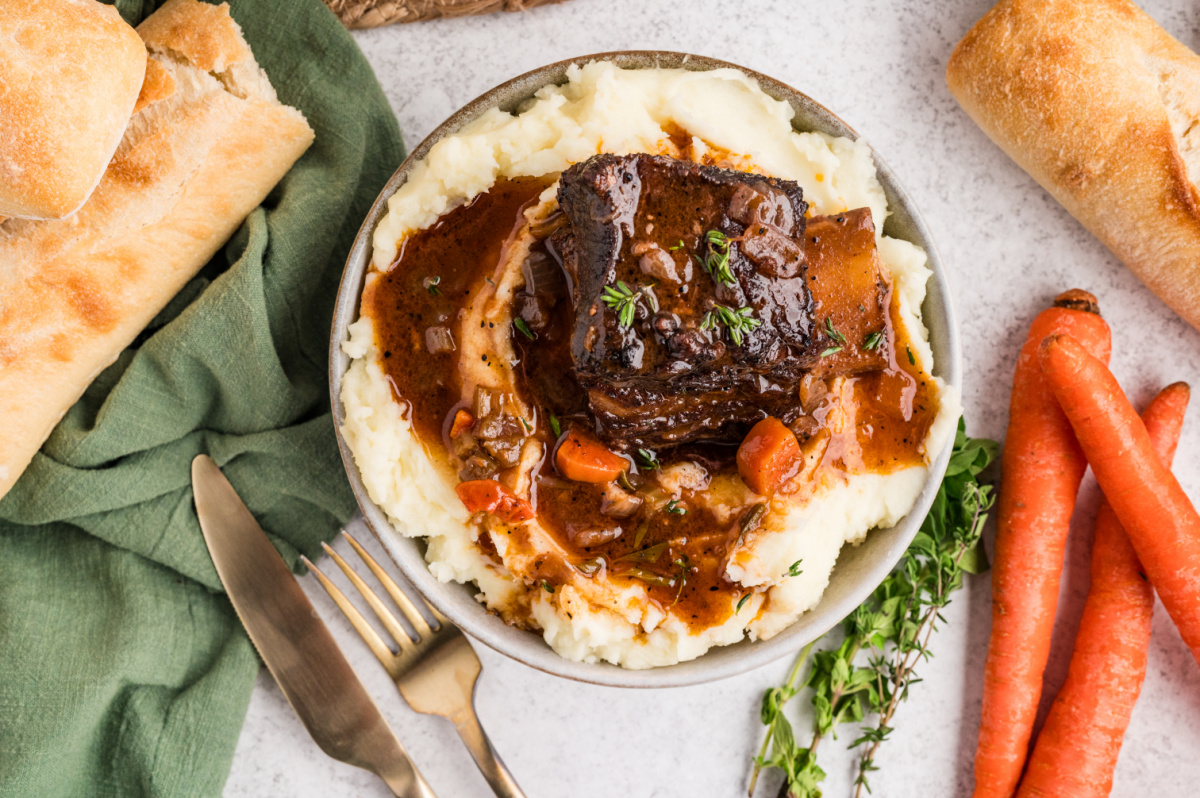
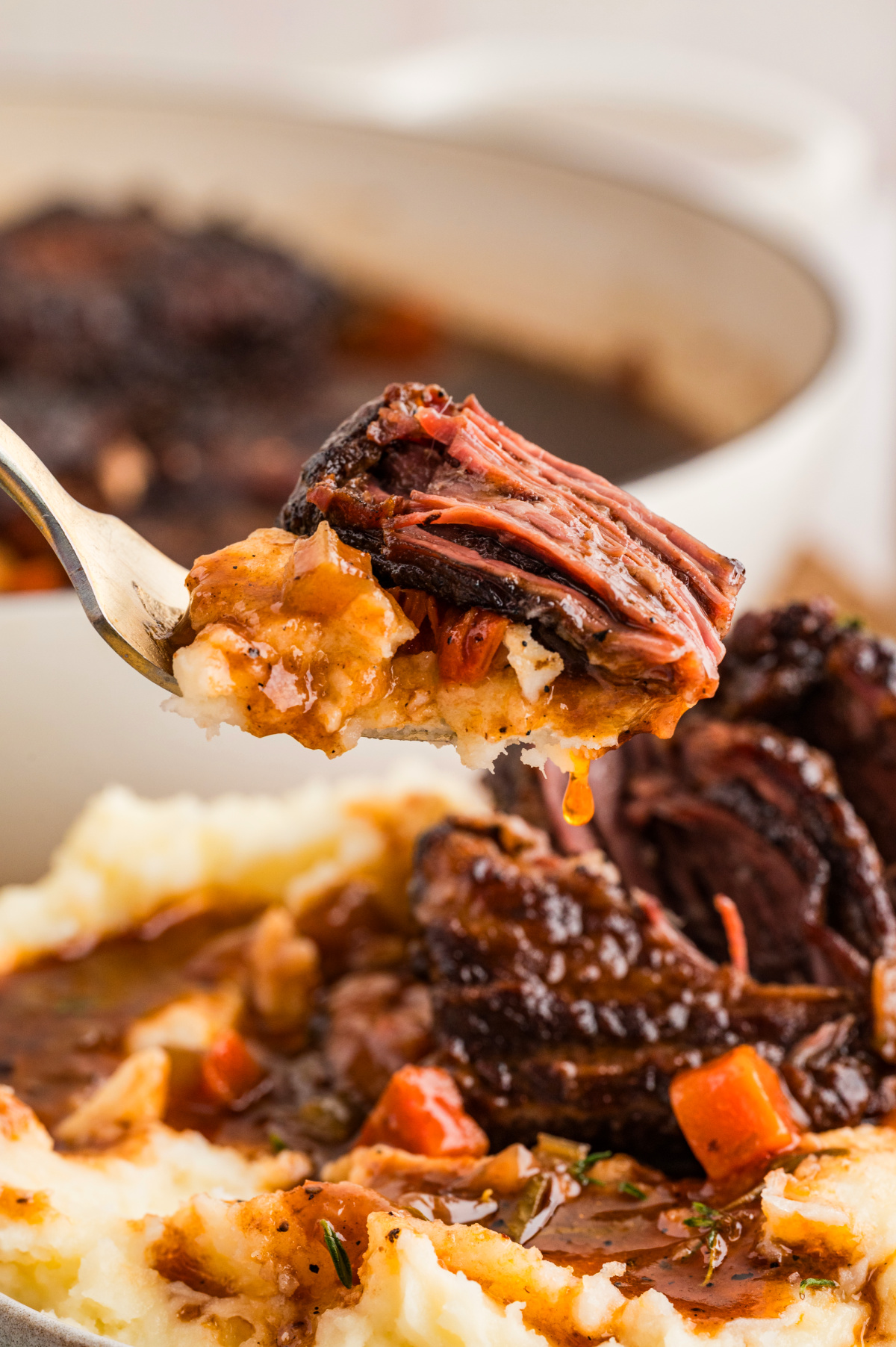
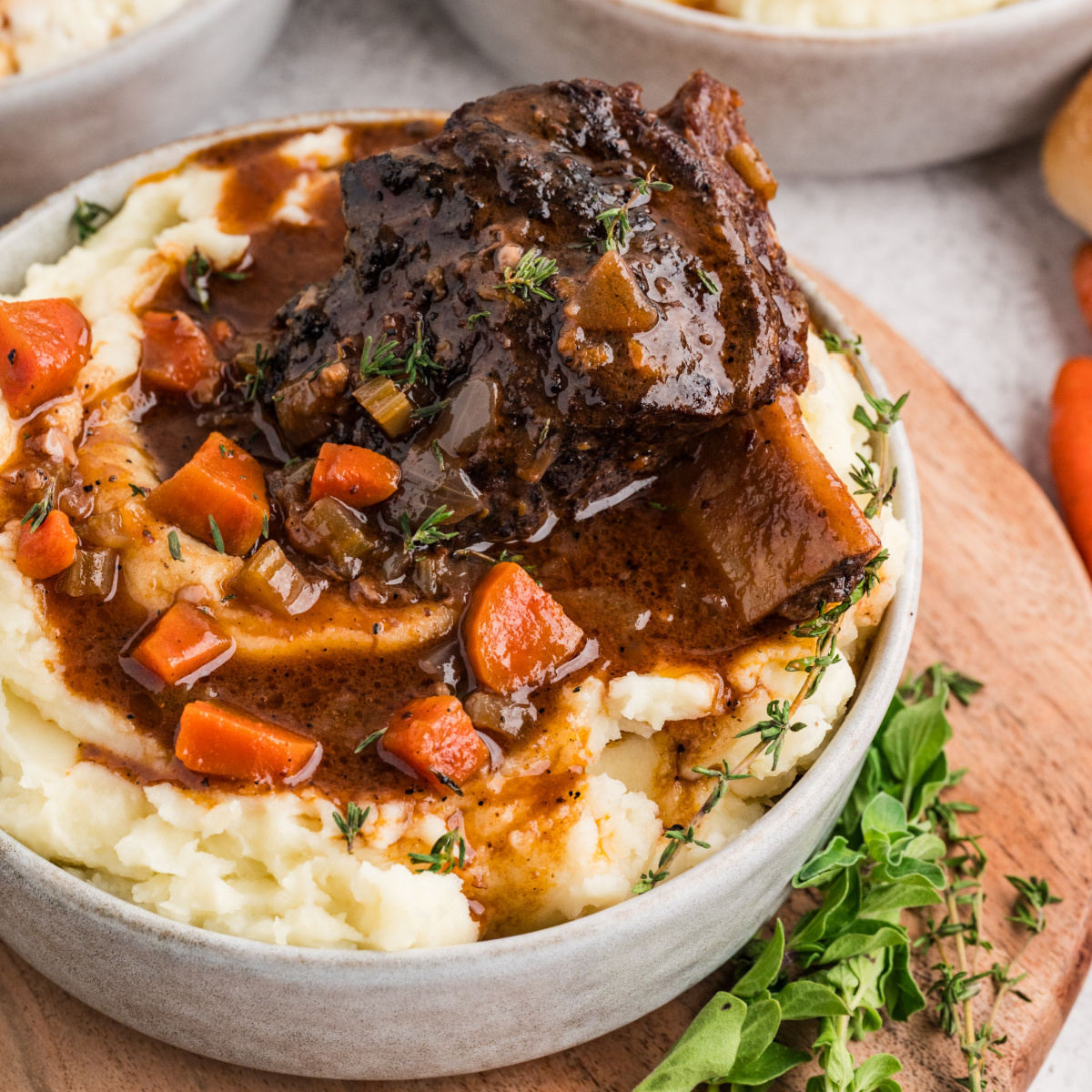
Serve with something soft, mashed potatoes, polenta, something that understands how to hold what it’s given. The rest doesn’t need instruction.
Recipe Tips (The Part Where You Stay With It)
Braised short ribs don’t want to be accelerated or corrected. They want slow-cooking. Heat you can trust. Hands that don’t fidget.
- Give the ribs real color at the start. Not a polite sear. Not a quick pass. Let the fat meet the pan and take its time. That early contact is where the depth comes from, the kind that carries through hours later when everything else has softened. If you move them too soon, the sauce will always feel like it’s missing something it can’t name.
- When you build the base, stay close. Onions, carrots, celery, butter, they don’t need encouragement, just attention. Let them soften fully, let their sweetness come forward on its own. This is where the kitchen starts to feel warm in a way that has nothing to do with temperature.
- Wine goes in slowly. Always slowly. Give it a moment to lose its edge before you ask anything else of it. Scrape the pan like you’re gathering history, not rescuing scraps. Everything stuck there earned its right to be there.
- Once the ribs are nestled back into the pot, resist the urge to check on them too often. Braising works because it’s uninterrupted. Covered. Contained. The oven does the holding so you don’t have to. Opening the lid too much breaks the spell.
- Toward the end, trust your senses more than the clock. The meat should pull away from the bone without persuasion. The sauce should coat the back of a spoon and feel generous, not heavy. If it’s thinner than you want, uncover the pot for the last stretch and let it concentrate naturally. No shortcuts. No thickening tricks.
- And when it comes out of the oven, let it rest. This part matters. The ribs need a moment to relax back into themselves, the way people do after being held for a long time. The sauce finds its final shape here. Don’t skip it.
- This is not a dish you pause over at the table. You serve it and step back. It will take care of the rest.
Storage (After the Table Goes Quiet)
Braised short ribs are generous that way. They don’t mind being carried forward.
- Once cooled, store the ribs submerged in their sauce in an airtight container in the refrigerator. They’ll keep well for up to four days, and they often taste even better on the second or third night, once everything has had time to meld into itself. The sauce intensifies. The meat softens further. Nothing hurries anymore.
- To reheat, do it slowly. A covered pan over low heat, or the oven at a gentle temperature, just until warmed through. Add a splash of broth or water if the sauce has thickened too much. Don’t boil it back to life. Let it wake gradually.
- Short ribs also freeze beautifully. Cool them completely, then transfer the ribs and sauce together into freezer-safe containers or bags. Freeze for up to three months. Thaw overnight in the refrigerator before reheating, again gently, again without forcing it. This is not food that responds well to impatience.
- These are the kind of leftovers that feel intended. The kind you’re pleased to remember are waiting for you.
FAQs
- Can I make oven-braised short ribs ahead of time?
Yes. In fact, they like it that way. Make them a day in advance, cool them in the sauce, and reheat gently when you’re ready. Time does some of the work for you here. - How long do short ribs need to cook to get tender?
Three to three and a half hours in an even temperature oven is usually right. You’ll know they’re done when the meat gives up without a fight and slips easily from the bone. - Do I have to use red wine?
It’s strongly recommended. The wine brings depth and structure to the sauce that broth alone can’t replace. If you must skip it, use more beef broth and a touch of balsamic for balance, but know the flavor will be quieter. I’ve written more about the science of cooking with alcohol and when it can be left out if that’s helpful. - Can I make these in a slow cooker instead of the oven?
You can. Sear the ribs and build the sauce on the stovetop first, then transfer everything to the slow cooker and cook on low for 7 to 8 hours. The texture will be softer, less sculpted, but still comforting. - Why are my short ribs tough?
They haven’t gone long enough. Toughness here isn’t a mistake, it’s a stage. Give them more time and they’ll relax on their own. - Should the ribs be fully submerged while braising?
Mostly, but not completely. You want the liquid to come up around the meat, not drown it. The oven heat and lid do the rest. - Can I skim the fat from the sauce?
Yes, if you want to. After chilling, the fat will rise and firm up, making it easy to remove. Or leave it. It’s part of the richness. - What’s the best thing to serve with them?
Something soft and willing. Mashed potatoes, polenta, or even buttered noodles. You want a surface that understands sauce. - What wine should I use for braised short ribs?
My first pick is a California Syrah. It’s structural, not delicate, and it understands time. Syrah doesn’t disappear after three hours in the oven. It holds its shape against marrow, herbs, and long cooks, bringing pepper, savory depth, and dark fruit without tipping off to sweetness (this is important). After reduction, it’s still present, still legible, doing exactly what the ribs are doing alongside it.
If I were choosing an equivalent, I’d look for a Northern Rhône Syrah or an Australian Shiraz that isn’t jammy. A Malbec works if you want something softer at the edges. Cabernet Sauvignon can step in too, as long as it isn’t aggressively oaked. That part matters. But a well-made Syrah is the one that stays with you. With this dish. It doesn’t cover the flavor. It doesn’t flatten it out. It knows how to endure, and that is what to keep in mind here.
From My Kitchen Notes
These are the things I notice once the oven door closes and the house begins to rearrange itself around the aroma.
- There’s a point, about halfway through, when the ribs stop feeling like dinner and start feeling like company. The air changes. People move differently through the room. Coats get set down instead of kept on. Voices lower without anyone deciding to lower them.
- This is food that asks for patience without making a speech about it. You don’t focus on it. You don’t meddle. You trust that something unseen is happening behind the lid, and that trust becomes part of the meal.
- I’ve noticed people sit longer at the table when this is served. Not because they’re full, but because there’s no reason to get up yet. Plates stay warm. Glasses get refilled. The conversation drifts sideways instead of forward.
- The sauce has a way of gathering everything toward the center. It doesn’t sprawl. It doesn’t separate. It keeps itself together in a way that feels reassuring, like a hand placed firmly where it belongs.
- There’s something deeply maternal about braised food done well. Not demanding. Not watchful. Just loved. You’re fed. You’re held. No one checks in to see if it worked.
- I’ve also noticed that no one explains this dish while eating it. No one asks what’s in it. They know better than to interrupt something that’s already doing its job.
- The bones tell the truth when it’s over. Clean, exposed, nothing left. The work is finished. The effort has already left the room.
- This is the kind of meal that doesn’t follow you after it’s done. It stays right where it happened, warming the evening it was made for, and nowhere else.
That’s why it works.
More Slow-Braised Dishes That Stay With You
These are the meals I return to when I want the house to change while I’m not looking. Food that asks for time, holds it gently, and gives something back that feels earned.
- Guinness-Braised Brisket – Brisket cooked low and slow in stout until the bitterness softens and the meat loosens into itself. Aromatics, a little acid, and a long, patient heat keep the richness honest. This one fills the evening, not just the plate.
- Slow-Braised Beef Ragù with Pappardelle – Beef seared deeply, then left alone long enough to forget its edges. The sauce doesn’t flood the bowl. It stays close, holding on to wide noodles the way good things do when they know where they belong.
- Root Beer Short Ribs – An unexpected braise that is warm and spiced rather than sweet. The root beer reduces into something dark and rounded, the ribs giving up completely. Especially good over mashed potatoes, when life feels still and you want it to stay that way.
- Beef Bourguignon – A classic that earns its reputation every time. Beef, vegetables, and red wine cooked until the sauce feels composed rather than busy. The kind of comfort that doesn’t perform, it just shows up and stays.
This post may contain affiliate links. Please read my disclosure policy.
Oven-Braised Short Ribs
Equipment
- braising pan with tight fitting lid or Dutch Oven. Holds steady heat and retains moisture during lon cooking.
- whisk Helps deglaze and smooth the sauce.
Ingredients
Short Ribs:
- 1 tbsp (15 ml) neutral oil
- 8 (4 lbs / 1.8 kg) bone-in-beef short ribs
- 1 tbsp (15 g) kosher salt
- 1 tsp (2 g) coarse ground black pepper
- 1 tsp (3 g) garlic powder
Sauce:
- 2 tbsps (28 g) butter
- 1 medium yellow onion diced (about 1½ cups / 225 g)
- 2 medium carrots diced (about 1 cup / 120 g)
- 1 medium celery stalk diced (about ½ cup / 60 g)
- 2 cloves garlic minced
- 2 tbsps (16 g) all-purpose flour
- 3 tbsps (45 g) tomato paste
- 2 cups (480 ml) dry red wine
- 2 cups (480 ml) low-sodium beef broth
- 1 tbsp (15 ml) balsamic vinegar
- 2 tsps (10 g) Dijon mustard
- ½ tsp (3 g) kosher salt plus more to taste
- ½ tsp (1 g) coarse ground black pepper plus more to taste
- 4 sprigs fresh thyme
- 4 sprigs fresh oregano
- 2 sprigs fresh rosemary
For serving (optional):
- mashed potatoes or polenta
- fresh parsley chopped
Instructions
- Preheat the oven to 350°F (177°C).
- Heat the oil in a large braising pan or oven-safe Dutch oven over medium-high heat. While the pan heats, season the short ribs on all sides with the kosher salt, pepper, and garlic powder. When the oil is shimmering, add the ribs in batches and sear for 2 to 3 minutes per side until deeply browned. Transfer the ribs to a plate and set aside.1 tbsp (15 ml) neutral oil, 8 (4 lbs / 1.8 kg) bone-in-beef short ribs, 1 tbsp (15 g) kosher salt, 1 tsp (2 g) coarse ground black pepper, 1 tsp (3 g) garlic powder
- Reduce the heat to medium and add the butter to the same pan. Once melted, add the onion, carrots, and celery and cook for 5 to 6 minutes, stirring occasionally, until softened and lightly browned. Add the garlic and cook for about 30 seconds, until fragrant. Sprinkle in the flour and add the tomato paste, stirring constantly and pressing the paste into the pan for 2 to 3 minutes.2 tbsps (28 g) butter, 1 medium yellow onion, 2 medium carrots, 1 medium celery stalk, 2 cloves garlic, 2 tbsps (16 g) all-purpose flour, 3 tbsps (45 g) tomato paste
- Slowly pour in the red wine while whisking, scraping up the browned bits from the bottom of the pan. Let the wine simmer for 2 to 3 minutes so the alcohol cooks off and the liquid reduces slightly. Stir in the beef broth, balsamic vinegar, Dijon mustard, salt, and pepper. Add the thyme, oregano, and rosemary sprigs, then return the short ribs to the pan, nestling them into the liquid so they are mostly submerged.2 cups (480 ml) dry red wine, 2 cups (480 ml) low-sodium beef broth, 1 tbsp (15 ml) balsamic vinegar, 2 tsps (10 g) Dijon mustard, ½ tsp (3 g) kosher salt, ½ tsp (1 g) coarse ground black pepper, 4 sprigs fresh thyme, 4 sprigs fresh oregano, 2 sprigs fresh rosemary
- Cover the pan with a tight-fitting lid and transfer to the oven. Cook for 3 to 3½ hours, or until the meat is fork-tender and beginning to pull away from the bone.
- Remove the pan from the oven and let the ribs rest, covered, for 20 to 30 minutes before serving. Spoon the sauce over the ribs and serve with mashed potatoes or polenta. Finish with fresh parsley if desired.mashed potatoes or polenta, fresh parsley
Notes
- Nutrition information was calculated using the edible portion of the ribs and sauce. Bone weight is excluded, and values reflect typical fat rendering during searing and braising.
- If using table salt or fine sea salt instead of kosher salt, reduce the amount by half.
- Low-sodium broth gives better control over seasoning as the sauce reduces.
- Do not skip the sear. Rendering the fat and building color at the start is essential to the final depth of the sauce.
Nutrition
Have you made these Oven-Briased Short Ribs? I’d love to hear how they turned out – leave a comment below and let me know.
As an Amazon Associate and member of other affiliate programs, I earn from qualifying purchases.
Jessica says
I made this for Christmas dinner and have yet to stop thinking about it. I could drink that sauce in a glass. Holy cow. I can’t wait to make them again on the next special occasion I have.
Cathy Pollak says
So happy you loved it. Thank you!
Ashleigh says
One of my husband’s favorite meals I’ve ever made for him. And the leftovers are just as amazing!!! He immediately requested I make it again. Can’t recommend this recipe enough.
Cathy Pollak says
Thank you so much, I really appreciate that. Glad he enjoyed it.
Dann says
Made this twice in the last 30 days- family and friends have raved!! An absolute favorite now that will go into my rotation. Completely agree that one of the key steps is high heat braising to ensure the Maillard reaction infuses the entire dish with to-die-for flavors
Cathy Pollak says
So happy to hear it!