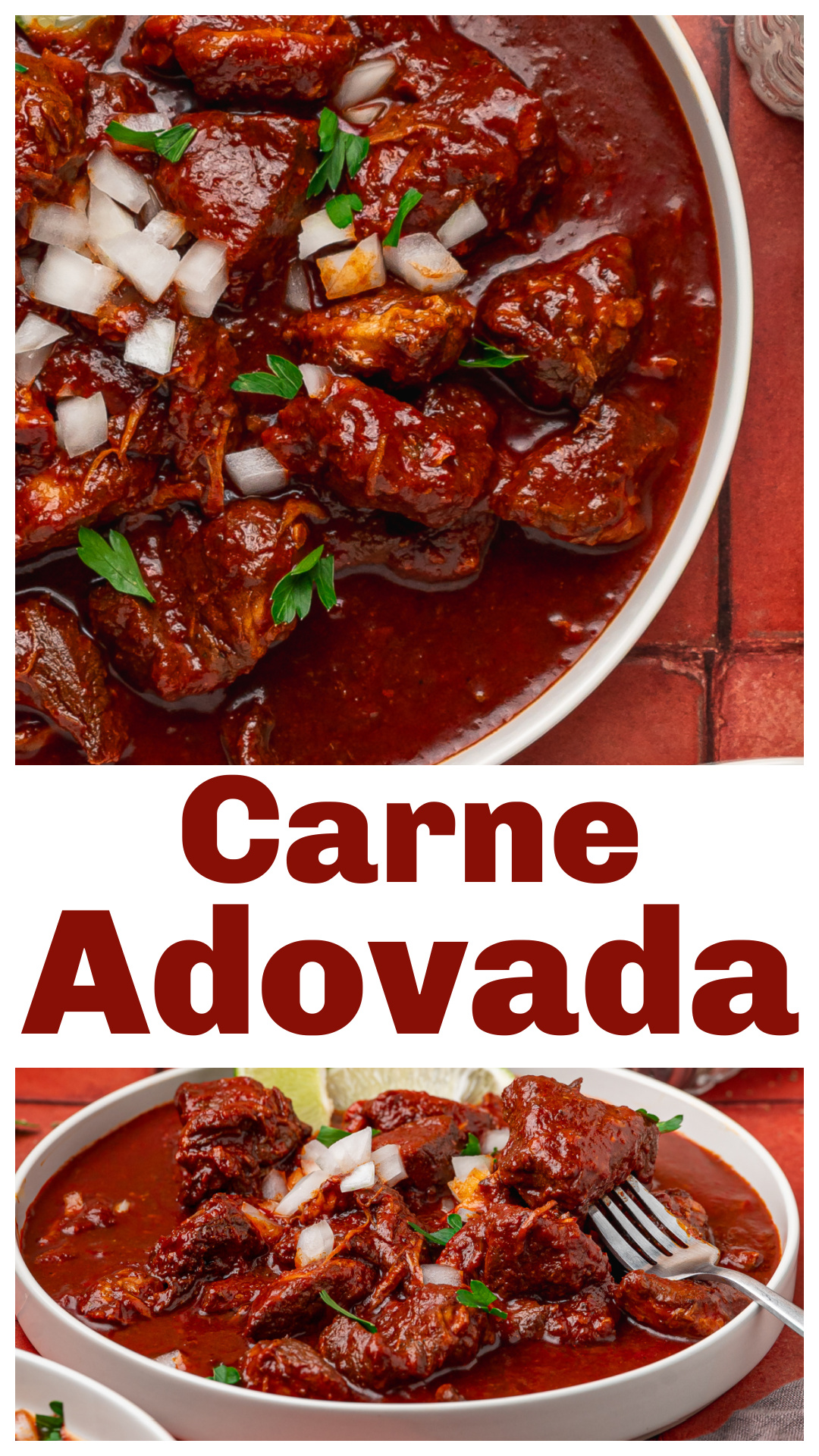
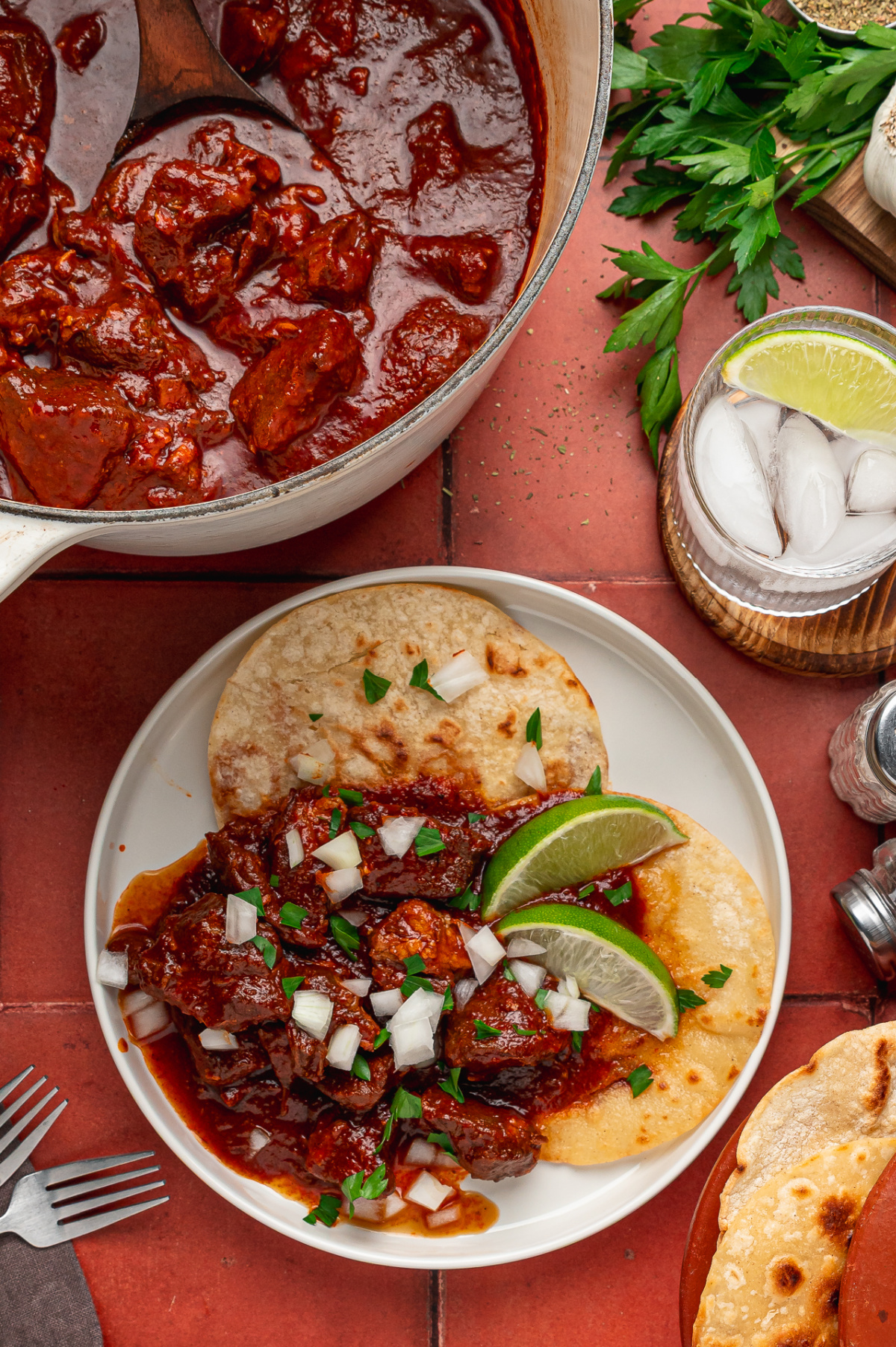
I make my carne adovada with pork shoulder and a red chile sauce made from guajillo, ancho, and chipotle chiles. The pork gets fork-tender, and the sauce cooks down dark and concentrated enough that you’re going to want warm tortillas nearby.
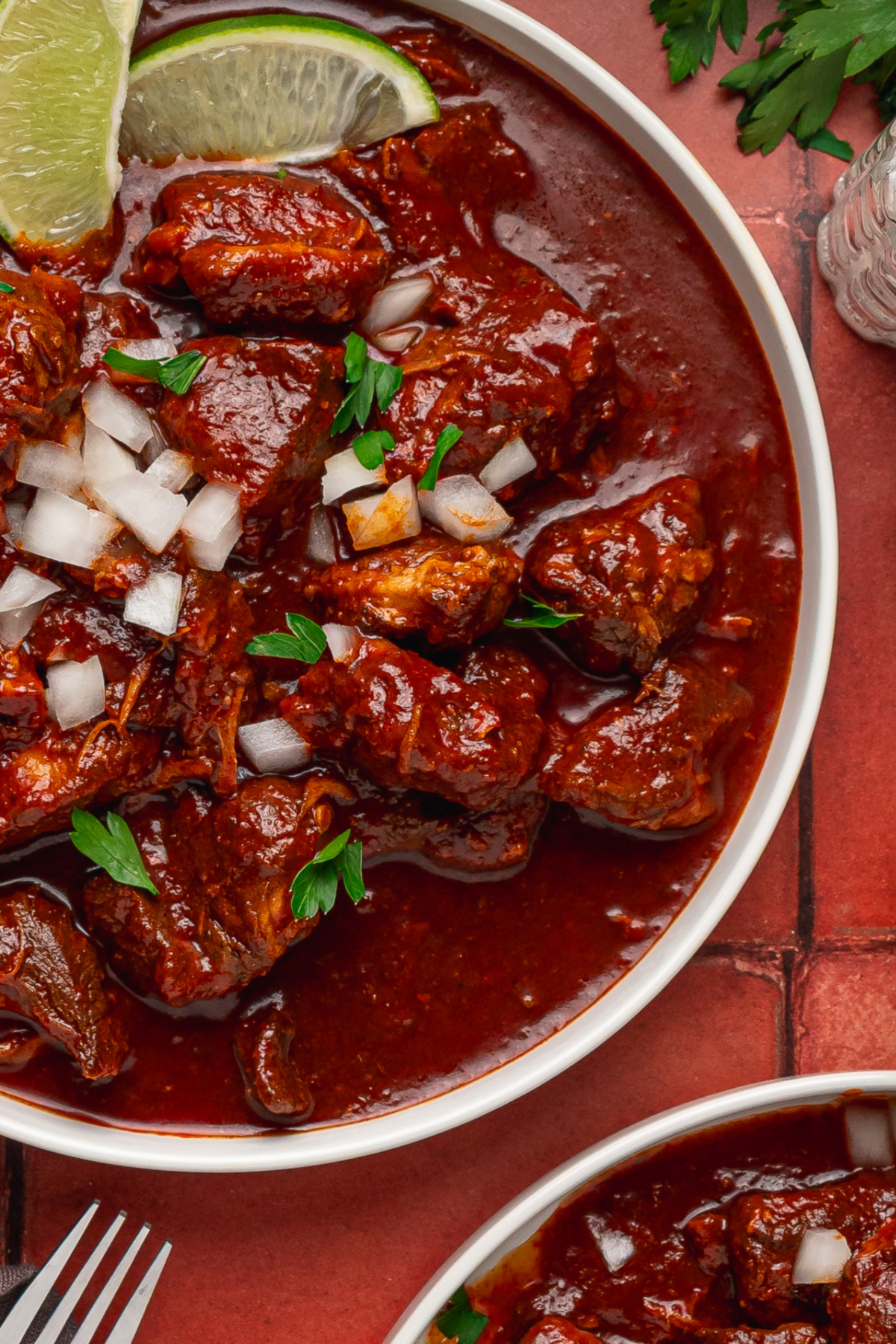
Carne Adovada with Pork Shoulder, Guajillo, Ancho and Chipotle Chiles
If you’ve never had carne adovada, it’s a New Mexican dish of pork cooked in red chile sauce. Traditional versions are made with New Mexico red chiles, and that’s how they should be made. But I like changing things and I kept wanting a different chile flavor for mine, and that’s true of lots of other things I cook.
After messing with it for a while, I ended up on a trio of guajillo, ancho, and chipotle chiles. They’re so good together. The guajillos are where the red color comes from, the anchos, believe it or not, add sweetness in their own way, and the chipotles come in with smoke and heat without owning the room.
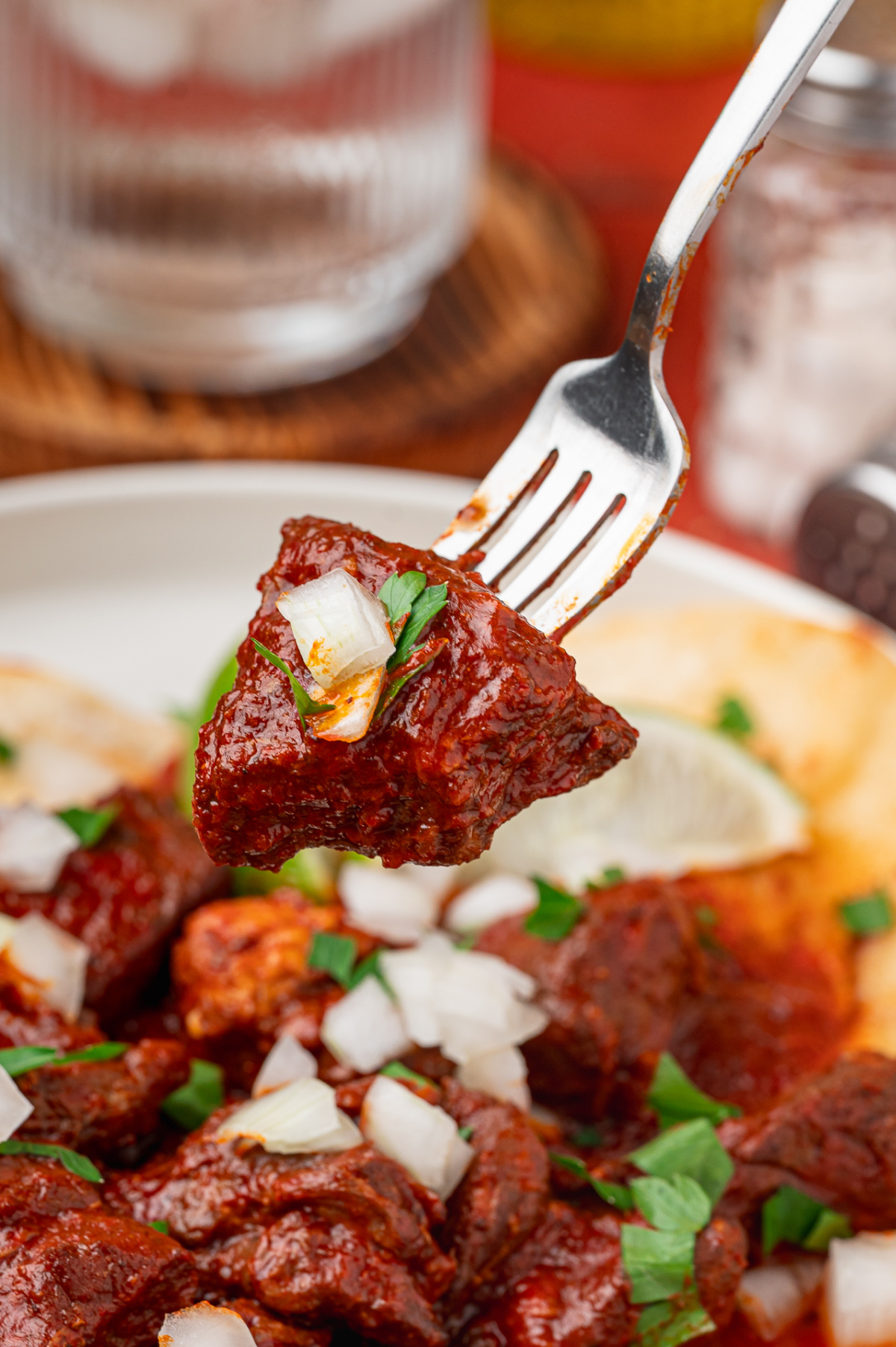
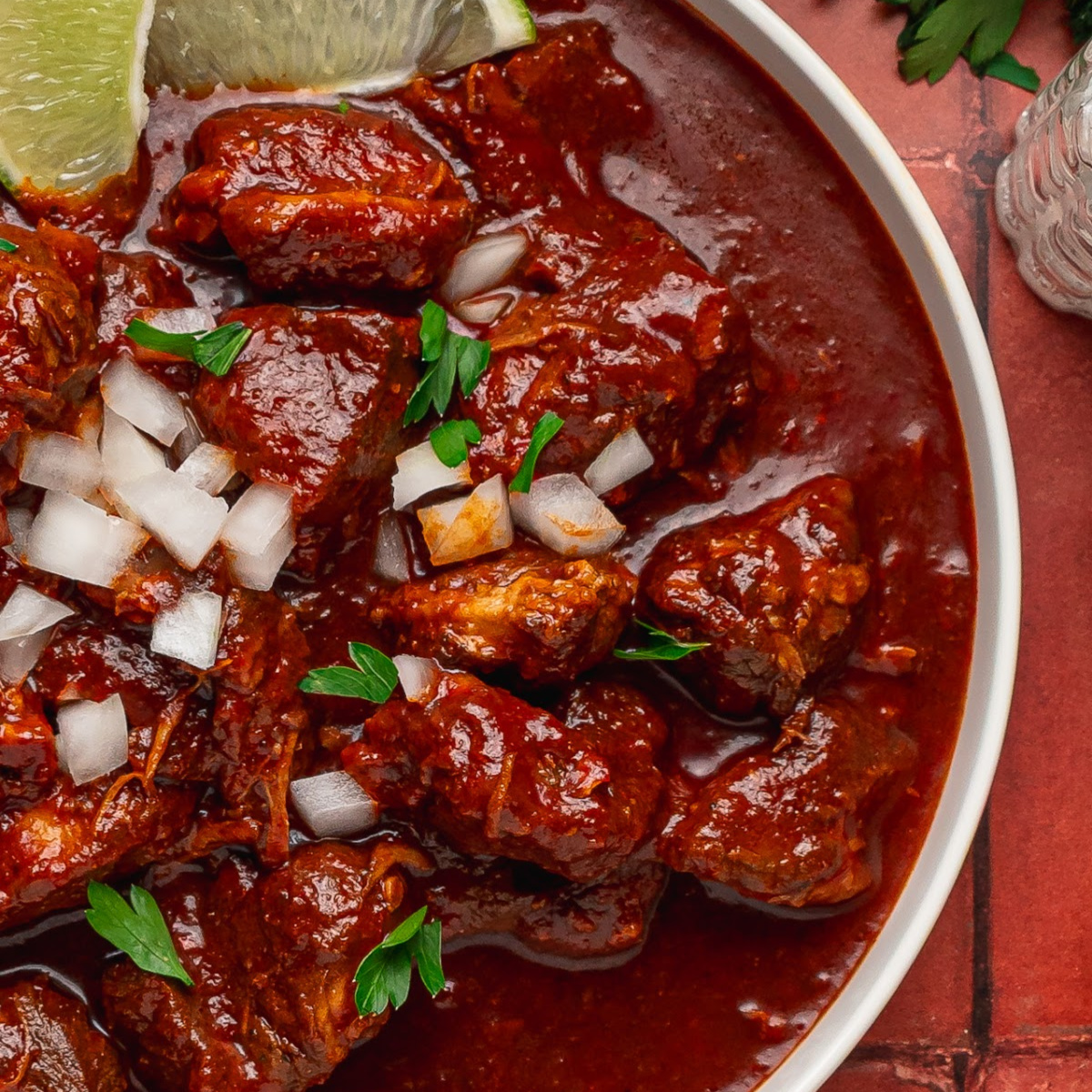
I like lots of sauce with this carne adovada, and I want the pork tender enough to pull apart with a fork without turning into shredded meat. I keep the pieces big enough that I’m still eating chunks of pork, and by the time they’re ready, the sauce is darker, thicker, and very much worth the tortillas I’m going to eat with it.
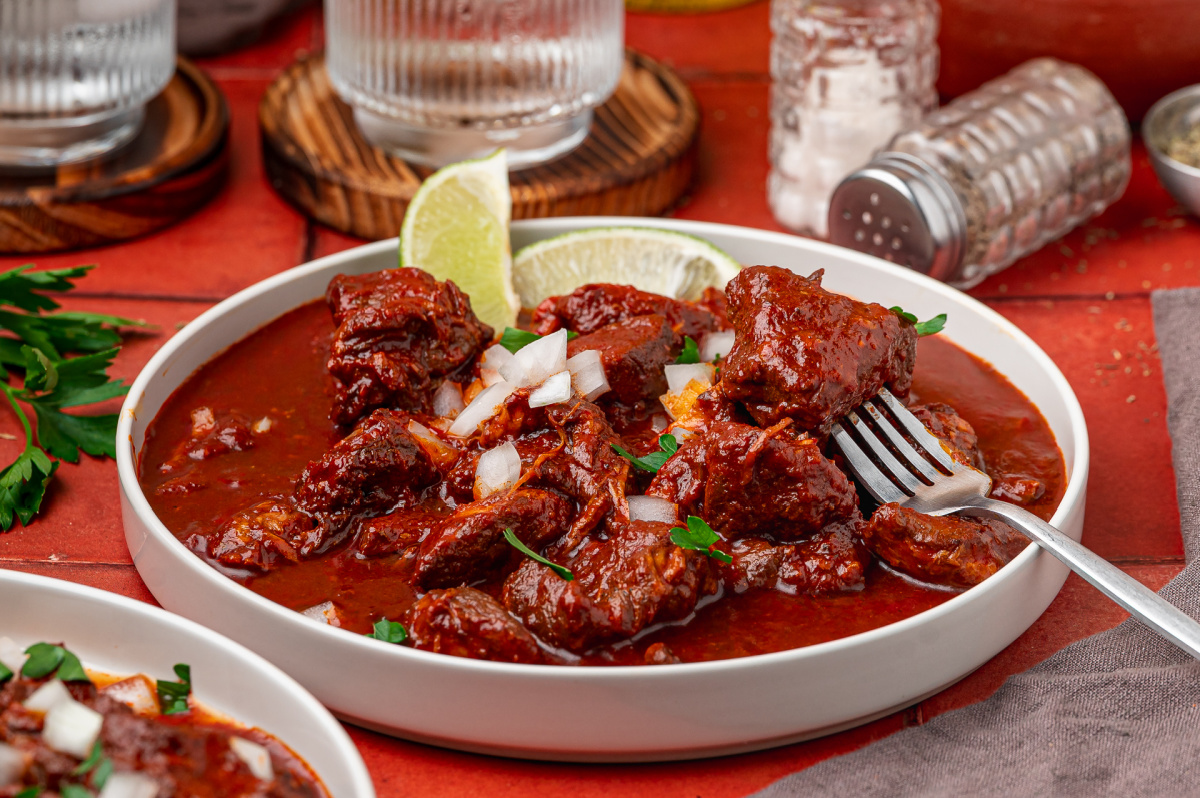
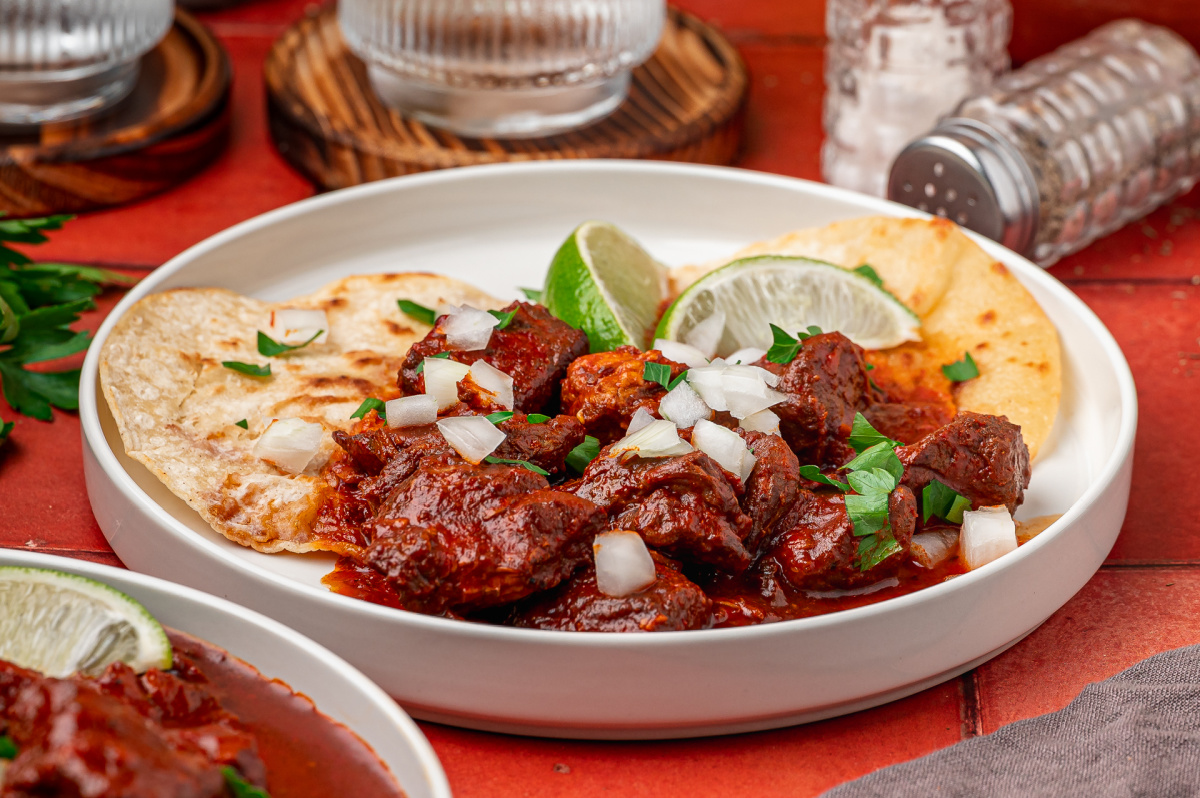
I’ll put the Dutch oven on the table with warm tortillas, chopped onion, and lime wedges, and that’s dinner. The leftovers are even better because the pork and sauce can go straight into breakfast burritos, tacos, quesadillas, or next to eggs and potatoes. This is a recipe I never mind having extra of.
The Decisions Behind This Recipe
- Figuring out which chile combo I liked best took some time. I like guajillo, ancho, and chipotle chiles together in this sauce more than any other combination I tried. New Mexico red chiles are traditional for carne adovada, but I like the color, sweetness and spice I get from these three together.
- Traditional carne adovada often starts with pork that has marinated in red chile sauce, sometimes overnight. I wanted to see if I could skip that without sacrificing the chile flavor. I make the sauce fresh and let the pork braise directly in it until the pieces are tender and the sauce has cooked down around them. By the time it comes out of the oven, I don’t miss the overnight head start.
- Only half of the pork gets browned, which saves me from searing three pounds of it in batches. Three pounds of pork shoulder means a lot of batches if you try to sear every piece, and eventually the pot gets crowded enough that the pork starts steaming instead of browning anyway. Browning half leaves enough behind on the bottom of the Dutch oven for the sauce, and the rest of the pork gets all the time it needs in the chile braise.
- I soak the dried chiles to soften them, then toss the soaking water. It can pick up a bitterness and dustiness from the chiles, even after rinsing them. I use chicken broth for the sauce instead of putting the soaking water back in.
- Straining the chile sauce after blending is an extra step I don’t skip. Guajillo skins can stay noticeable no matter how long you run the blender, and I like this sauce completely smooth. It takes an extra minute, but it gives me the completely smooth sauce I want.
- The vinegar goes in at two different times for a reason. One tablespoon gets blended into the sauce before the pork goes in the oven, then I stir in the second one after the braise is finished. The first cooks with the sauce, while the tablespoon at the end adds acidity after two hours in the oven.
Ingredients
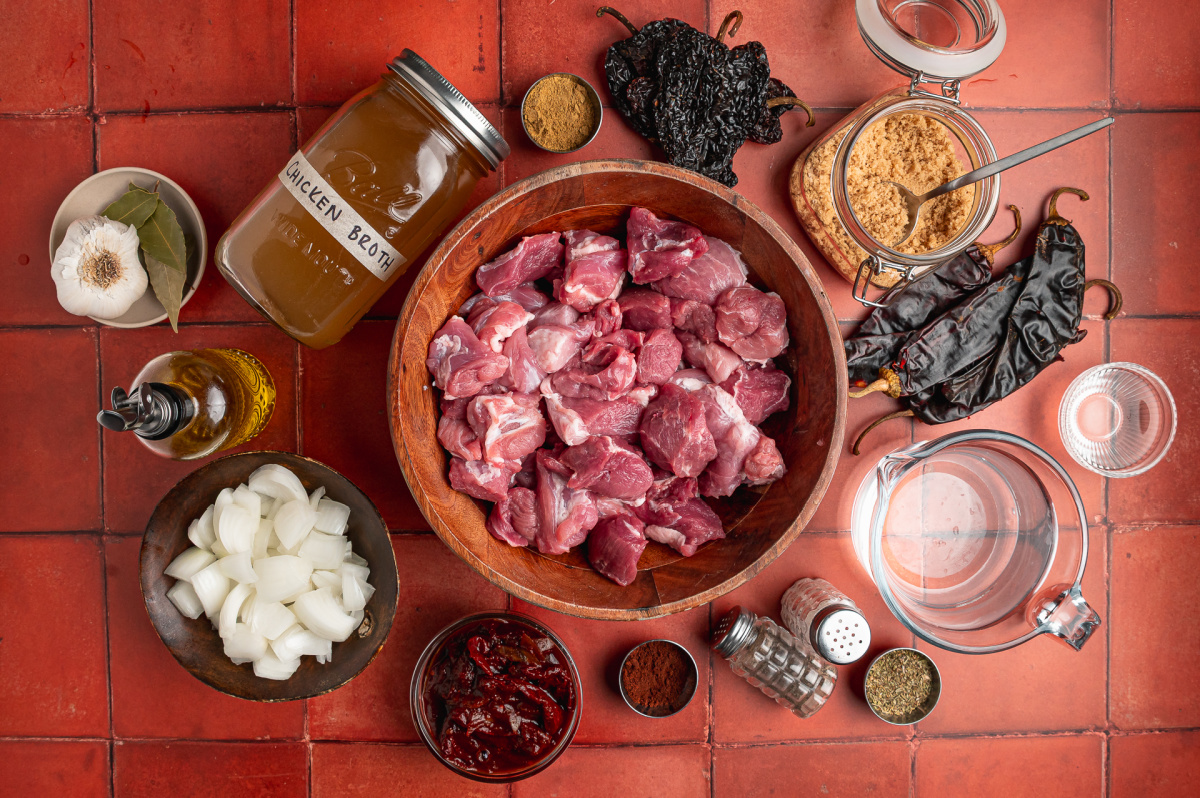
- Dried guajillo chiles – Look for chiles that still feel flexible instead of dry enough to crack apart in the bag. They account for the red color in the sauce and most of the dried-chile flavor.
- Dried ancho chiles – These are darker and slightly sweeter than guajillos, which is why I use both instead of making the sauce from only one kind of chile.
- Pork shoulder – This cut is made for a long braise. It has enough fat and connective tissue to turn tender without drying out, and I cut it into 1½-inch pieces so it stays in chunks instead of becoming shredded pork. Boneless country-style ribs from the shoulder could also be used.
- Kosher salt and black pepper – Season the pork before it goes into the pot so the meat itself is seasoned, not only the sauce around it.
- Avocado oil – I use this for browning because it has a neutral flavor and handles the heat well. Any neutral high-heat oil will do the same thing.
- Yellow onion and garlic – These cook in the Dutch oven after the pork and become part of the blended chile sauce, along with what’s left behind from browning the pork.
- Chipotle peppers in adobo – Use three peppers from the can, not three tablespoons of adobo sauce and definitely not three cans. They bring smoke and heat to the sauce. Use two for less heat, or four if you want it hotter.
- Low-sodium chicken broth – This adds liquid to help braise the pork and lets you stay in control of the salt as everything cooks down.
- White vinegar – It goes into the sauce before braising and again at the end, so the finished carne adovada has some acidity left after all that oven time.
- Light brown sugar – One tablespoon is enough to soften any bitterness from the dried chiles without making the pork or sauce taste sweet. If you’re out, make a batch of my homemade brown sugar.
- Dried oregano, ground cumin, and ground cloves – These season the chile sauce without any one of them taking over. The cloves are only a quarter teaspoon. It’s not going to taste like Christmas dinner.
- Bay leaves – They simmer with the pork and sauce, then come out before serving.
How to Make Carne Adovada
Find the complete printable recipe with measurements in the recipe card at the BOTTOM OF THE POST.
- Step One (soak the chiles)
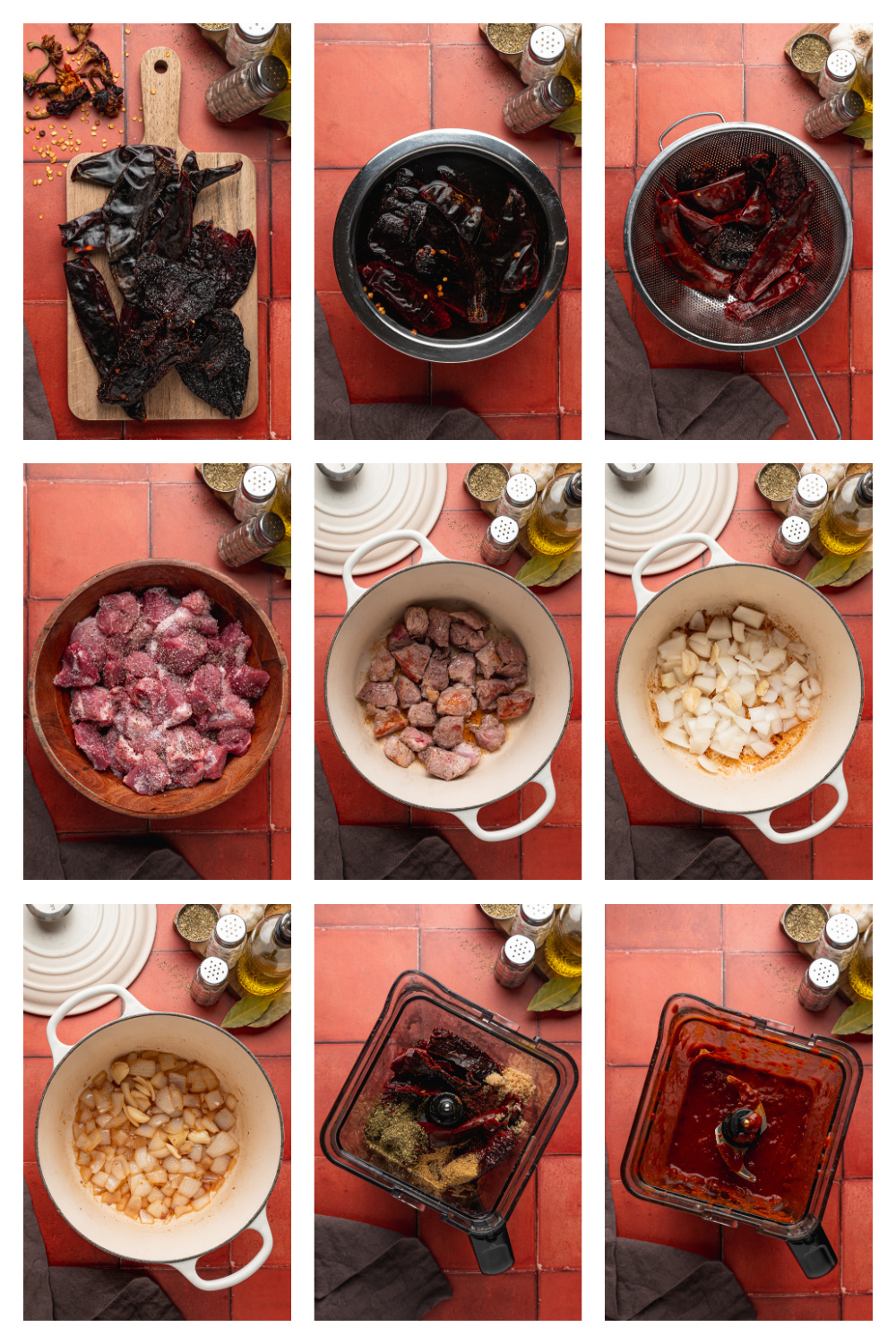
Remove the stems and seeds from the guajillo and ancho chiles, then give them a good rinse under cool water to get rid of any dust. Cover them with hot water and set a small plate on top so they stay submerged. Let them soften for 20 to 25 minutes, then drain them and throw out the soaking water. I don’t use it in the sauce. - Step Two (brown some of the pork)
Pat the pork shoulder dry and season all of it with the salt and pepper. Heat half of the avocado oil in a Dutch oven over medium-high heat, then brown half of the pork in a single layer for 2 to 3 minutes per side. Once it’s browned on several sides, move it to a plate. The other half stays uncooked. It might look like I forgot about it, but I didn’t. I only need enough browned pork to leave some fond on the bottom of the pot for the sauce. - Step Three (make the red chile sauce)
Turn the heat down to medium, add the remaining avocado oil, and cook the onion until softened, about 5 to 6 minutes. Add the garlic for the last 30 seconds. Pour in ½ cup of the chicken broth and scrape up everything left from browning the pork. Transfer that to a blender with the softened chiles, chipotle peppers, remaining chicken broth, 1 tablespoon of the vinegar, brown sugar, oregano, cumin, and cloves. Blend for 1 to 2 minutes, until you’re not seeing large pieces of chile skin. - Step Four (strain the sauce)
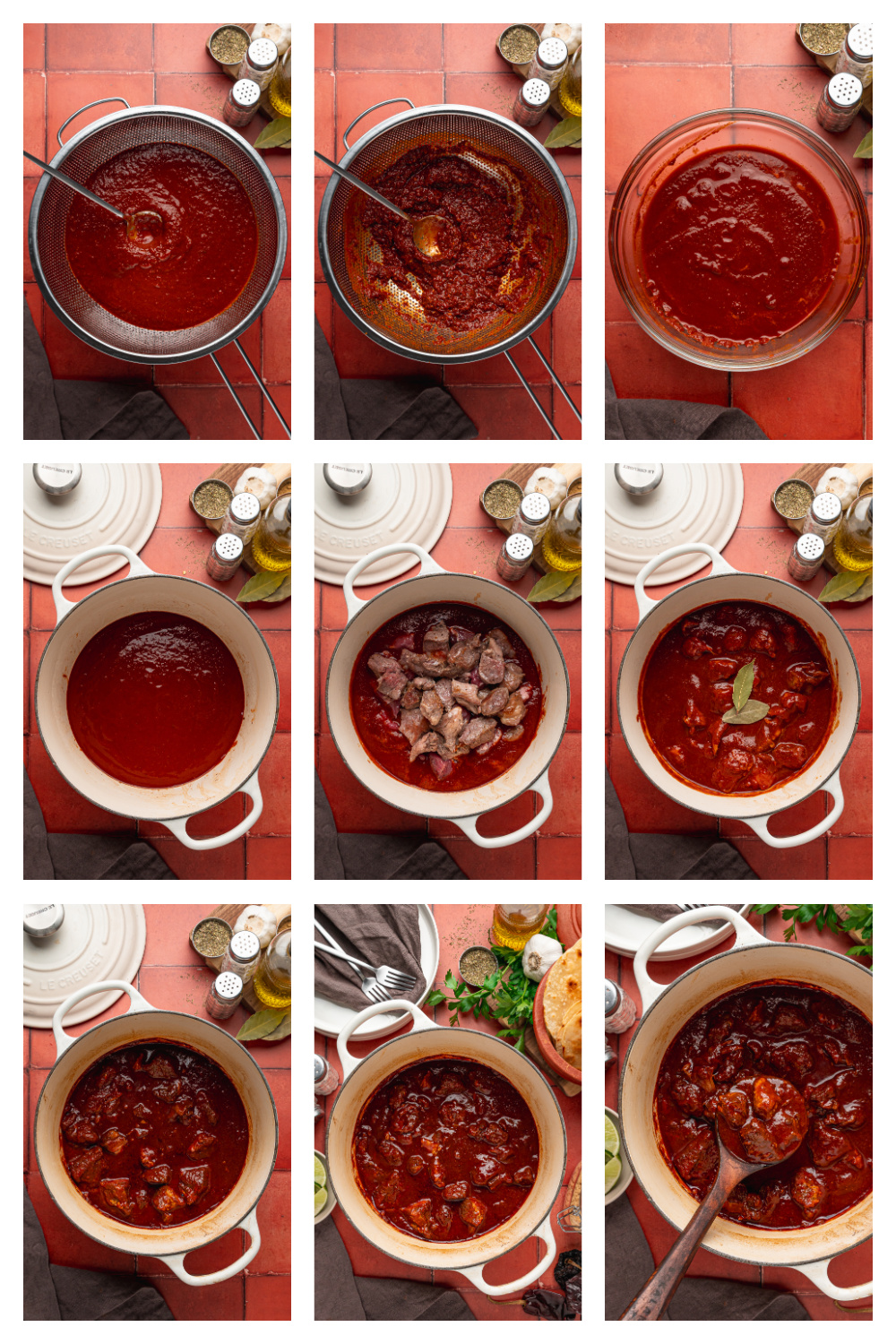
Pour the chile sauce through a fine-mesh strainer set over a bowl and press it through with a spoon or flexible spatula. I take the time to do this because guajillo skins can survive a surprisingly long trip through a blender. Once you’ve pressed through as much sauce as you can, throw away what’s left in the strainer. - Step Five (braise the pork)
Pour the strained chile sauce back into the Dutch oven and bring it to a simmer, stirring often. Add the browned pork, the uncooked pork, and any juices on the plate, then add the bay leaves. Stir so the pork is coated, bring the sauce back to a simmer, cover the pot, and transfer it to a 325°F oven. Let it braise for 1½ to 2 hours, stirring after about an hour. - Step Six (check the pork and finish the sauce)
Start checking the pork at 1½ hours. I want a fork to slide into it easily and the pieces to pull apart with light pressure without completely falling apart. If the pork is still putting up a fight, cover the pot again and give it another 15 minutes before checking. Once it is ready, remove the bay leaves and stir in the remaining tablespoon of vinegar. Taste the sauce for salt before serving.
Recipe Tips
- Even though you’re only browning half the pork, don’t crowd it into the pot. Give the pieces enough room in a single layer so they can brown instead of sitting in the liquid they release. You want color on the pork, not gray pork having a sauna.
- Don’t start adjusting the salt or vinegar while the pork is still braising. The sauce reduces and concentrates in the oven, so something that seems like it needs help after 30 minutes can be completely different by the time the pork is tender. Wait until the end, add the last tablespoon of vinegar, then taste it.
Storage, Freezing and Reheating
- Keep leftover carne adovada in an airtight container with all of its sauce in the refrigerator for up to 4 days. It’s very good after a night in the fridge, once the pork has spent even more time in the sauce.
- When it’s cold, you may see a layer of pork fat firm up on top. You can remove some of it before reheating if you want, but there’s no need to perform surgery on the container.
- Reheat the pork gently in its sauce in a covered pan over low heat, stirring now and then, until it’s hot. You can also reheat it in a covered baking dish in a 325°F oven. If the sauce has thickened more than you like in the refrigerator, add a small splash of chicken broth to loosen it.
- Freeze the pork and sauce together in an airtight container for up to 3 months. Thaw it overnight in the refrigerator, then reheat it gently with the sauce.
FAQs
- Is carne adovada spicy?
It does have spice from three chipotle peppers in adobo, but it’s not heat for the sake of making everybody miserable. But spice is very subjective, so you have to know where you are with that. The guajillo and ancho chiles aren’t very hot, and the amount of heat can vary from one can of chipotles to another. - Can I make it less spicy?
Yes. Use two chipotle peppers instead of three for a milder carne adovada. I wouldn’t leave them out completely because they also bring smoke to the sauce, but you are allowed to make dinner according to your own life. - Can I use New Mexico red chiles instead of guajillo and ancho chiles?
You can, but it will be a different sauce from this one. New Mexico red chiles are traditional in carne adovada, while I made this recipe around the flavor of guajillo and ancho chiles with chipotle added in. I haven’t tested an exact substitution, so I wouldn’t substitute them blindly and promise the same result. - Can I make carne adovada ahead of time?
Yes. Make it a day ahead, cool it, and refrigerate it in the sauce. Reheat it when you’re ready to eat. - What should I serve with carne adovada?
Warm flour or homemade corn tortillas are my first choice, with chopped onion, lime wedges, and cilantro if you have it. It’s also good with rice and beans, or you can add it to eggs the next morning.
From My Kitchen Notes
Small observations from the margins.
- I don’t need every part of something to go through the same thing to end up in the same place.
- I know when I’ve taken enough from something.
- I’m aware of the difference between tenderness and falling apart.
- I can leave something alone until it stops resisting me.
- I don’t have to use everything I have at the beginning.
- I don’t need to take every rough edge with me.
- I know better than to decide what something needs before it’s finished.
I’d Stay for This Kind of Dinner
- Instant Pot Barbacoa – Beef, chipotle, cumin, oregano.
- Slow Cooker Chipotle Chicken – Chicken, chipotle, tomato, lime.
- Chile Colorado Beef – Beef, red chile sauce, slow cooker.
- Mexican Street Corn Stuffed Poblano Peppers – Poblanos, chorizo, corn, three cheeses.
- Slow Cooker Pulled Pork Chile Verde – Pork, green chiles, garlic, spices.
This post may contain affiliate links. Please read my disclosure policy.
Carne Adovada
Equipment
- Dutch Oven A 6 to 7-quart (5.7 to 6.6-liter) Dutch oven gives the pork enough room for browning and braising.
- Blender Used to purée the softened dried chiles, aromatics, broth and seasonings into the red chile sauce.
- large fine mesh sieve Removes pieces of chile skin that remain after blending.
- mixing bowls Large enough to soak the dried chiles while keeping them submerged.
- wooden spoon Useful for scraping the browned bits from the bottom of the Dutch oven.
Ingredients
- 8 dried (56 g) guajillo chiles stems and seeds removed
- 4 dried (48 g) ancho chiles stems and seeds removed
- 4 cups (960 ml) hot water
- 3 pounds (1.36 kg) boneless pork shoulder cut into 1½-inch (4 cm) pieces
- 2 tsps (6 g) kosher salt
- 1 tsp (2 g) ground black pepper
- 2 tbsps (30 ml) avocado oil divided
- ½ large yellow onion chopped
- 6 large cloves garlic smashed
- 2½ cups (600 ml) low-sodium chicken broth divided
- 3 chipotle peppers in adobo sauce
- 2 tbsps (30 ml) white vinegar divided
- 1 tbsp (13 g) packed light brown sugar
- 2 tsps (2 g) dried oregano leaves
- 2 tsps (4 g) ground cumin
- ¼ tsp (0.5 g) ground cloves
- 2 bay leaves
Instructions
- Remove the stems and seeds from the guajillo and ancho chiles. Rinse the chiles under cool running water, rubbing the surfaces to remove any dust.8 dried (56 g) guajillo chiles, 4 dried (48 g) ancho chiles
- Place the chiles in a heatproof bowl and cover with the hot water. Set a small plate over the chiles to keep them submerged. Soak for 20 to 25 minutes, or until soft and flexible. Drain well and discard the soaking water.4 cups (960 ml) hot water
- Pat the pork shoulder dry with paper towels and season evenly with the salt and black pepper. Preheat the oven to 325°F (163°C).3 pounds (1.36 kg) boneless pork shoulder, 2 tsps (6 g) kosher salt, 1 tsp (2 g) ground black pepper
- Heat 1 tablespoon (15 ml) of the avocado oil in a large Dutch oven over medium-high heat. Add half of the pork in a single layer and brown for 2 to 3 minutes per side, until browned on several sides. Transfer the browned pork to a plate. Leave the remaining seasoned pork uncooked. Browning half of the pork creates enough fond for the red chile sauce without having to sear all 3 pounds (1.36 kg) in batches.2 tbsps (30 ml) avocado oil
- Reduce the heat to medium and add the remaining 1 tablespoon (15 ml) avocado oil. Add the onion and cook for 5 to 6 minutes, stirring occasionally, until softened. Add the garlic and cook for 30 seconds.½ large yellow onion, 6 large cloves garlic
- Pour ½ cup (120 ml) of the chicken broth into the Dutch oven and scrape the bottom with a wooden spoon to loosen the browned bits. Transfer the onion, garlic, broth and browned bits to a blender.2½ cups (600 ml) low-sodium chicken broth
- Add the softened guajillo and ancho chiles, chipotle peppers, remaining 2 cups (480 ml) chicken broth, 1 tablespoon (15 ml) vinegar, brown sugar, oregano, cumin and cloves. Blend for 1 to 2 minutes, or until the red chile sauce is smooth and no large pieces of chile skin remain.3 chipotle peppers in adobo sauce, 2 tbsps (30 ml) white vinegar, 1 tbsp (13 g) packed light brown sugar, 2 tsps (2 g) dried oregano leaves, 2 tsps (4 g) ground cumin, ¼ tsp (0.5 g) ground cloves
- Pour the chile sauce through a fine-mesh strainer set over a bowl, pressing it through with a spoon or flexible spatula. Discard the solids remaining in the strainer.
- Return the Dutch oven to medium heat. Pour in the strained chile sauce and bring to a simmer, stirring frequently.
- Add the browned pork, uncooked pork and any accumulated juices to the Dutch oven. Add the bay leaves and stir to coat the pork in the sauce. Return to a gentle simmer.2 bay leaves
- Cover the Dutch oven and transfer to the oven. Braise for 1½ to 2 hours, stirring once after about 1 hour. Begin checking the pork at 1½ hours. The carne adovada is ready when a fork slides easily into the pork and the pieces pull apart with light pressure without completely falling apart.
- Remove the Dutch oven from the oven and discard the bay leaves. Stir in the remaining 1 tablespoon (15 ml) vinegar. Taste and adjust the salt, if needed, before serving.
Notes
- Use 2 chipotle peppers for less heat or 4 for a hotter, smokier sauce.
- If the pork is still tough after 1½ hours, cover and continue braising in 15-minute intervals until fork-tender.
- Refrigerate leftovers with the sauce for up to 4 days or freeze for up to 3 months.
- Nutritional information is provided as a courtesy only and should be construed as an estimate rather than a guarantee. Ingredients can vary, and Noble Pig makes no guarantees to the accuracy of this information.
Nutrition
Have you made this Carne Adovada? I’d love to hear how it turned out — leave a comment below and let me know.
As an Amazon Associate and member of other affiliate programs, I earn from qualifying purchases.
larry says
I really like Carne Adovada and yours looks and sounds delicious.
Cathy Pollak says
Thank you, I hope you try my version.