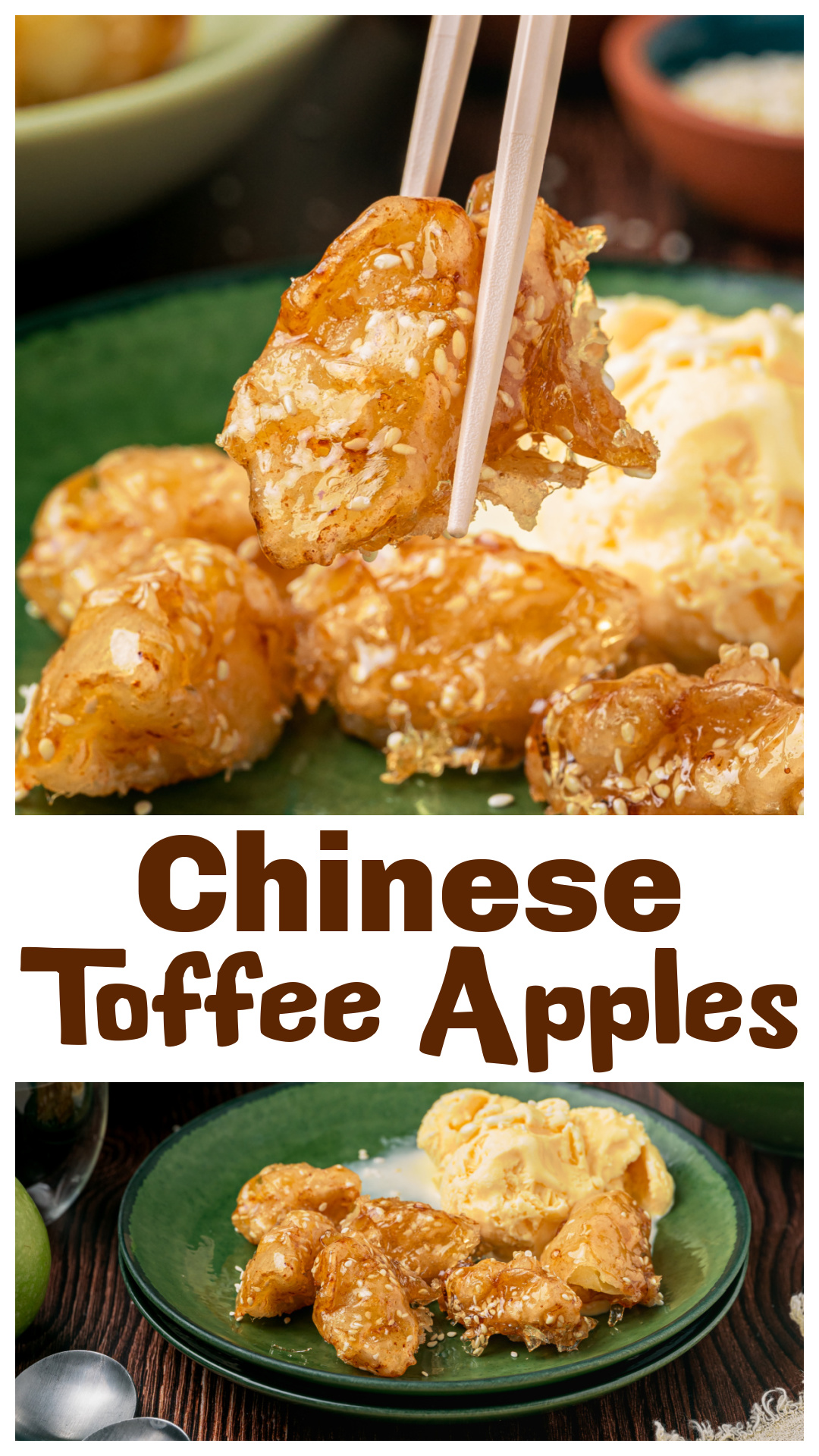
Chinese toffee apples are battered and fried twice before being coated in hot sesame caramel and dipped into ice water at the table. The cold water turns the caramel into a thin, brittle shell around the crisp fried coating and tart Granny Smith apple underneath.
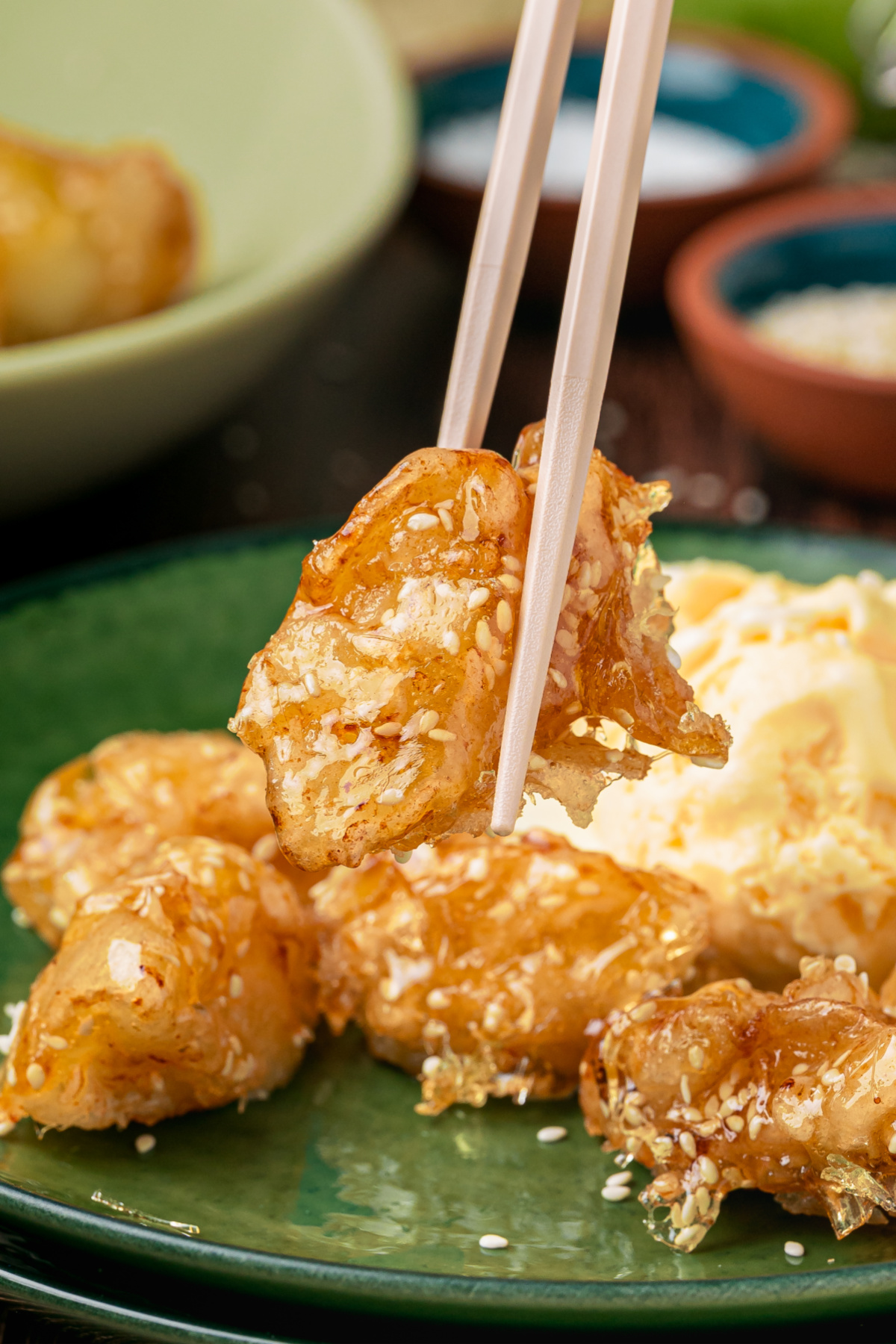
Chinese Toffee Apples with a Glass-Like Caramel Shell
I was doomscrolling through Chinese food videos one night when I saw someone lift a piece of fried apple, pull a trail of hot sugar behind it, and dip the thing into ice water. My first thought was, What the heck are they doing? My second was, I want that.
So obviously I went looking. One search turned into another, I figured out I was watching Chinese toffee apples, or basi pingguo, and then I went far enough down the spiral to realize I was going to have to make them. There weren’t that many recipes to begin with, and a lot of what I could find left out the details I needed to understand how to get from a raw apple to the brittle sugar shell I’d watched crack between someone’s teeth.
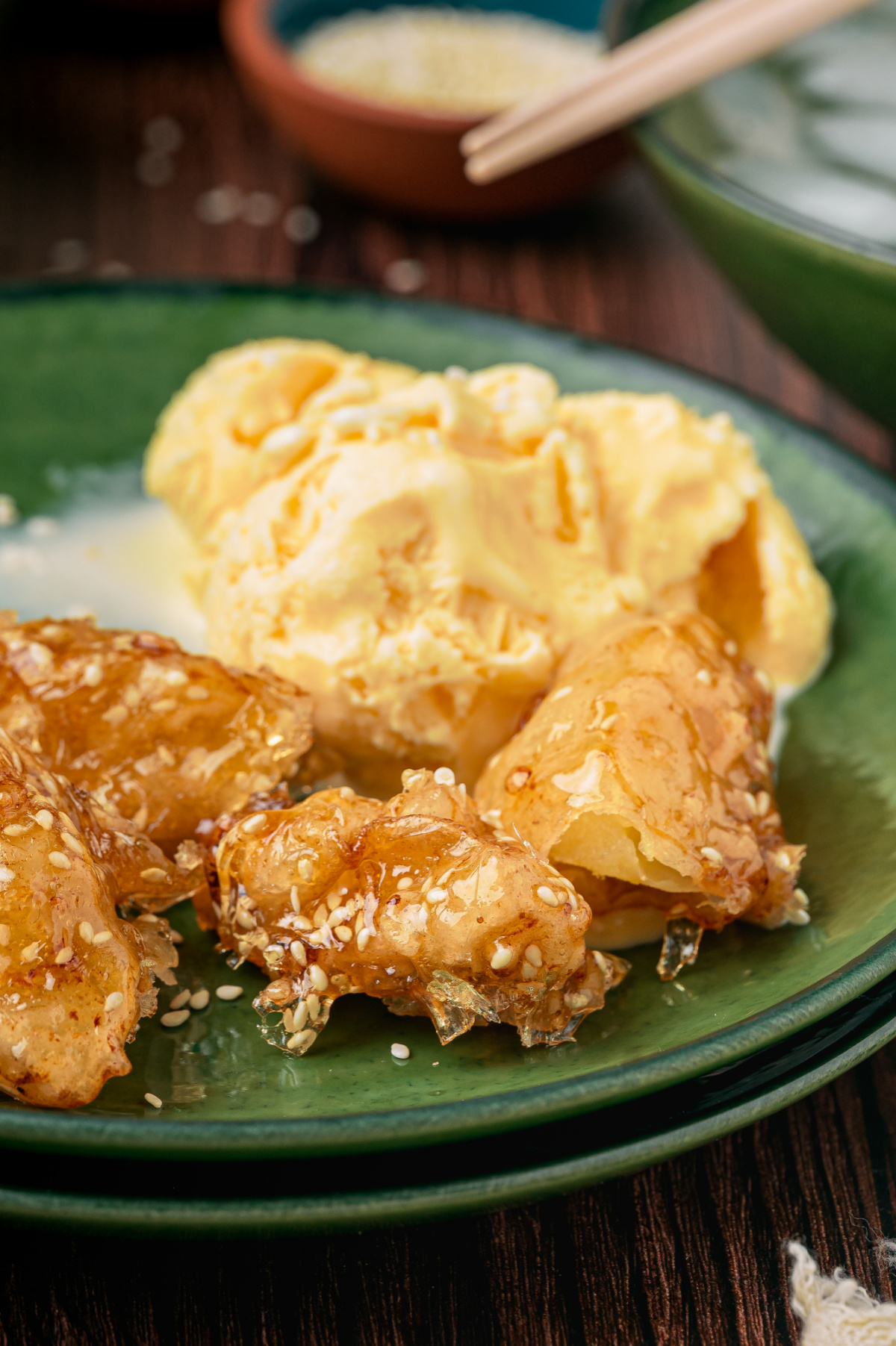
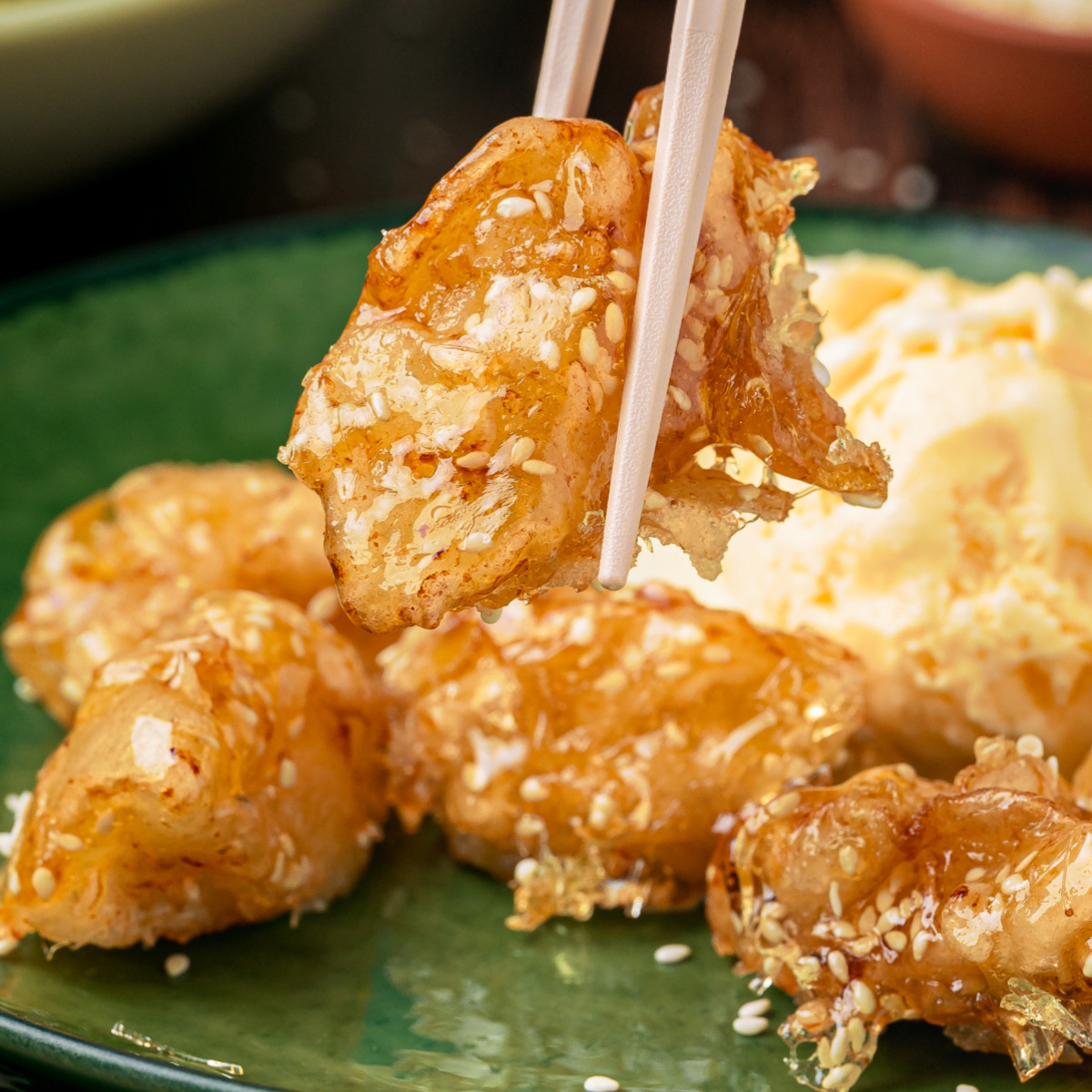
That took months. I tested the batter, the frying, and the caramel until I could make the apples come out the way I’d seen them, with tart fruit under the crisp coating, wrapped in a thin layer of sugar that pulled into threads when you pick up a piece. Then you dip it in ice water for a second or two, let it drip, and bite through the brittle shell.
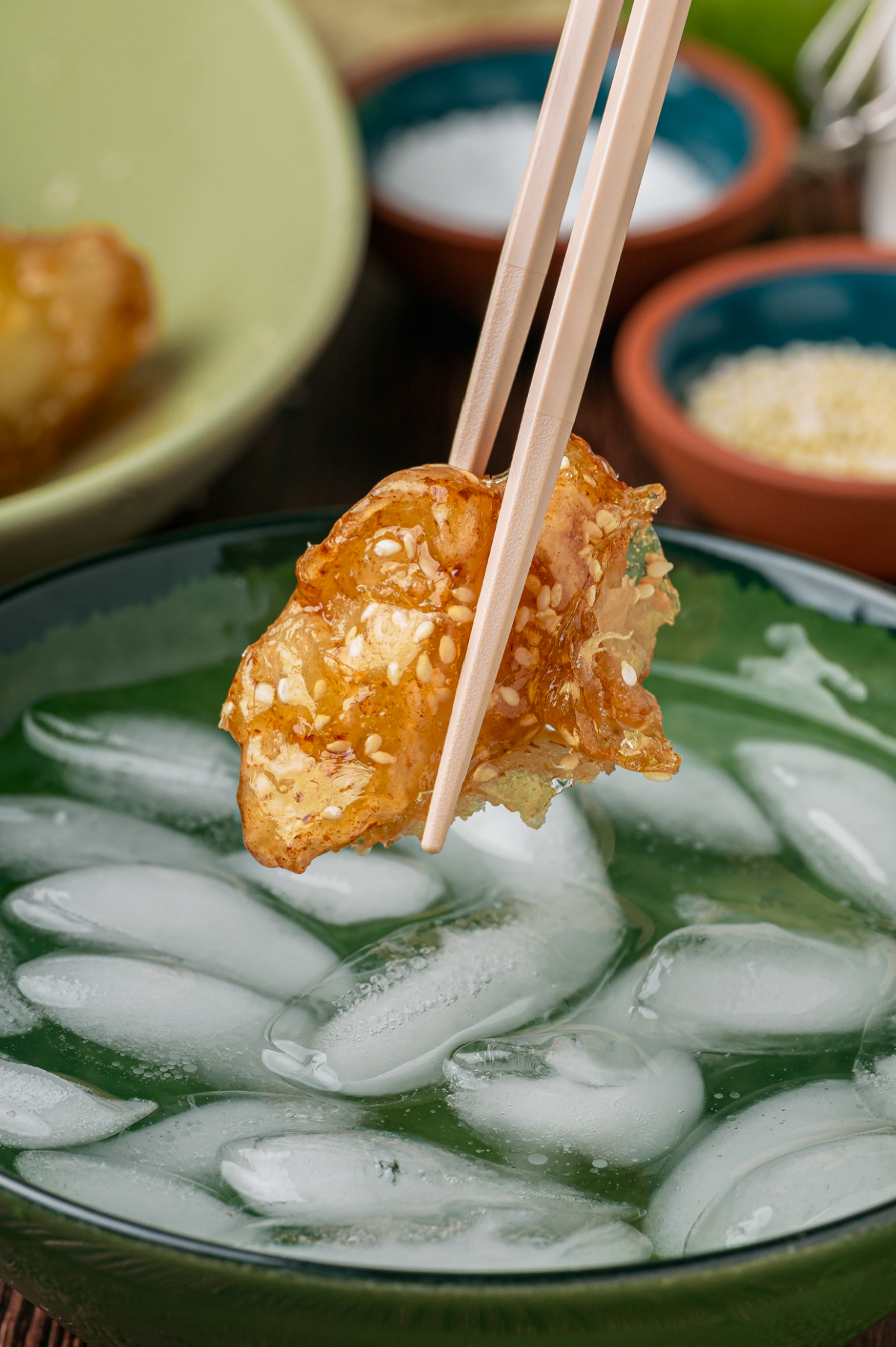
And yes, now I know why they dip them in ice water. A one- or two-second dip rapidly cools the hot caramel, turning it into a thin, brittle shell before you eat it. That is what sent me down a rabbit hole in the first place, and after all the testing, it’s still my favorite part.
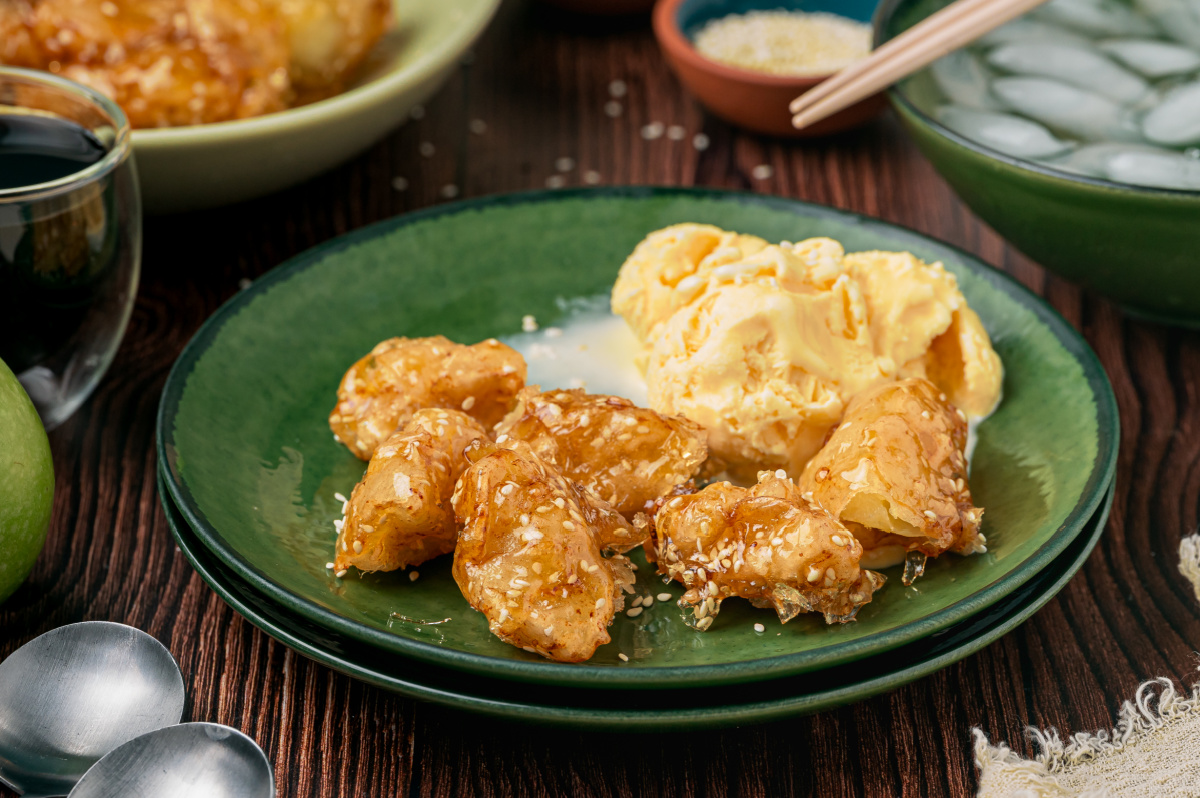
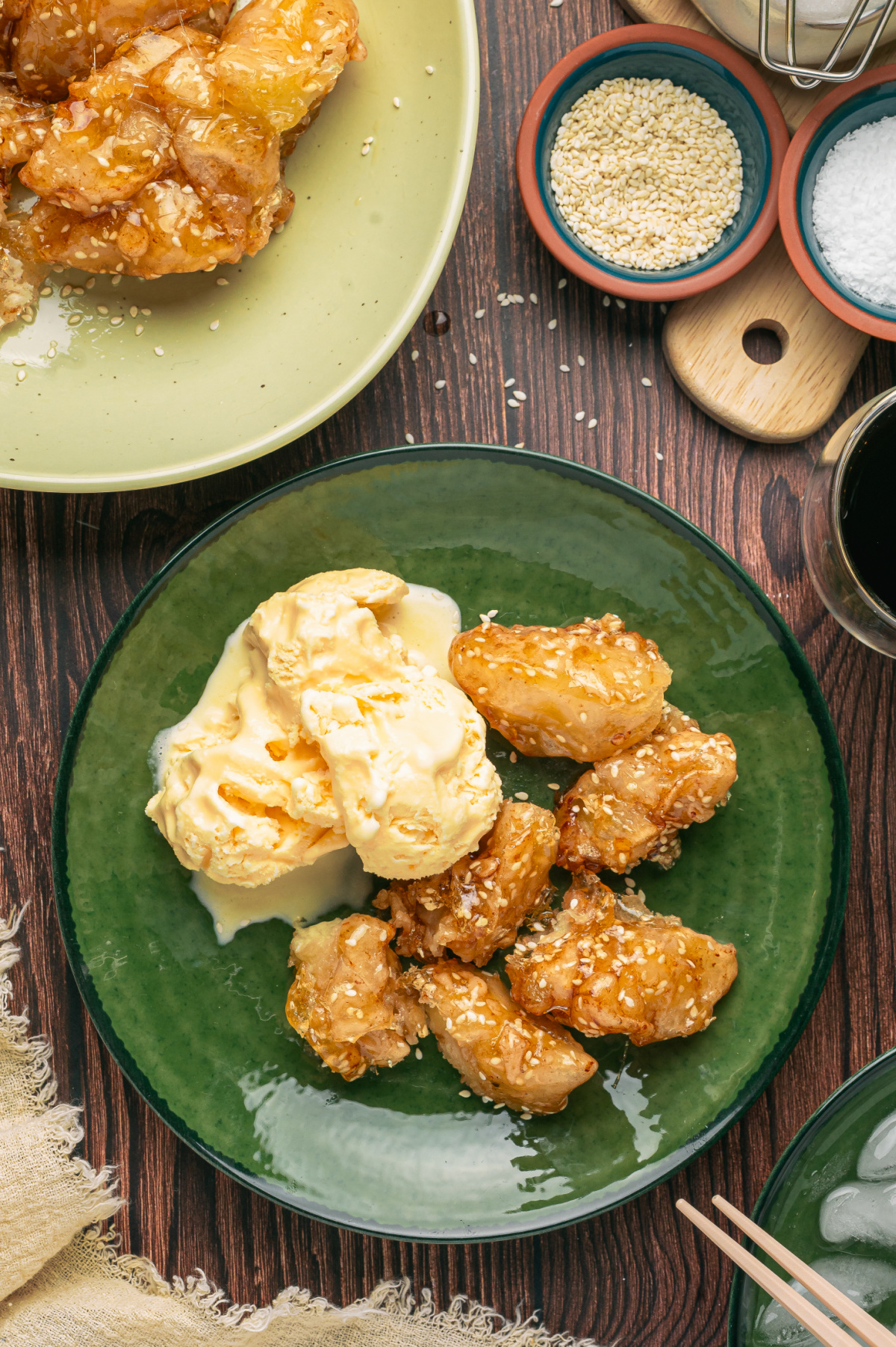
And sure, it’s not traditional to serve this with a side of ice cream, but I am who I am.
The Decisions Behind This Recipe
- Granny Smith apples are the tartness you need under all the batter and sugar. I cut them into 1½ to 2-inch chunks because I want a decent bite of apple in the middle, not a small piece of fruit lost inside its coating.
- Wet batter and peeled apples are almost at war with each other. Even after I dry the pieces well, I toss them in a thin layer of cornstarch first. It gives the batter something to grab, which makes a difference once the apples go into the oil.
- I left egg and leavening out of the batter because I wasn’t trying to make apple fritters. Flour, cornstarch, salt and ice-cold water make a thinner coating that can crisp in the fryer and still stick when I toss them in hot caramel.
- The double fry was more important than I originally expected. At 350°F, the first fry cooks the apple and sets the batter. A short second fry at 375°F crisps the outside and drives off more surface moisture. If the coating goes into the caramel soft, the ice water at the end cannot fix it.
- I also stopped waiting for the sugar to look like caramel. Mine can still be pale at 300–305°F, which is where I need it for a brittle shell. Waiting for a deep amber color took it too far. I use a thermometer for this one, and the light corn syrup helps keep the sugar from crystallizing while it cooks.
- Warm fried apples cool the caramel as soon as they go in, so I coat them in two batches. Before I start cooking the sugar, I put the apples, greased platter, ice water and two heatproof spatulas where I can reach them. There is time to warm the caramel briefly if it firms up. There isn’t time to discover the platter is still in a cabinet. This is a recipe where mise en place matters.
- And after all of that, yes, the ice water is so important. Each apple gets a one- or two-second dip just before you eat it. The hot sugar turns thin and brittle, and you get the crack that sent me looking for this recipe in the first place.
Ingredients
Apples
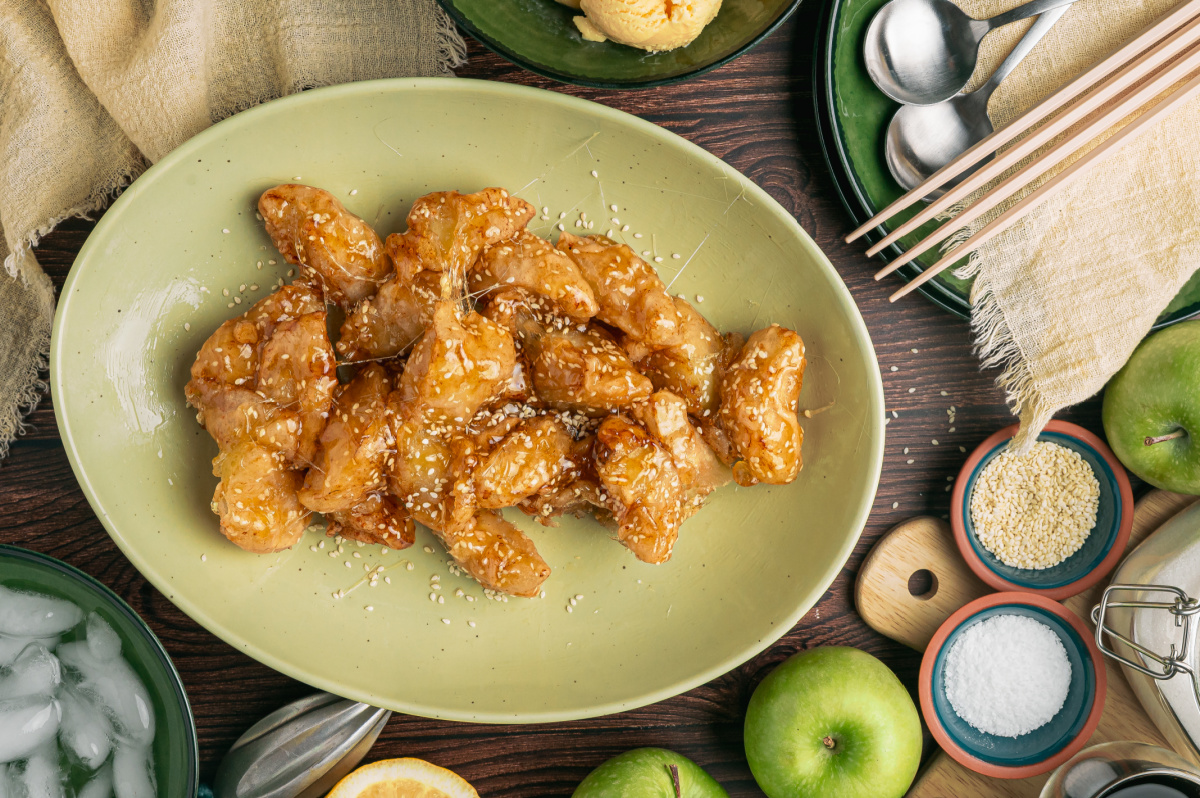
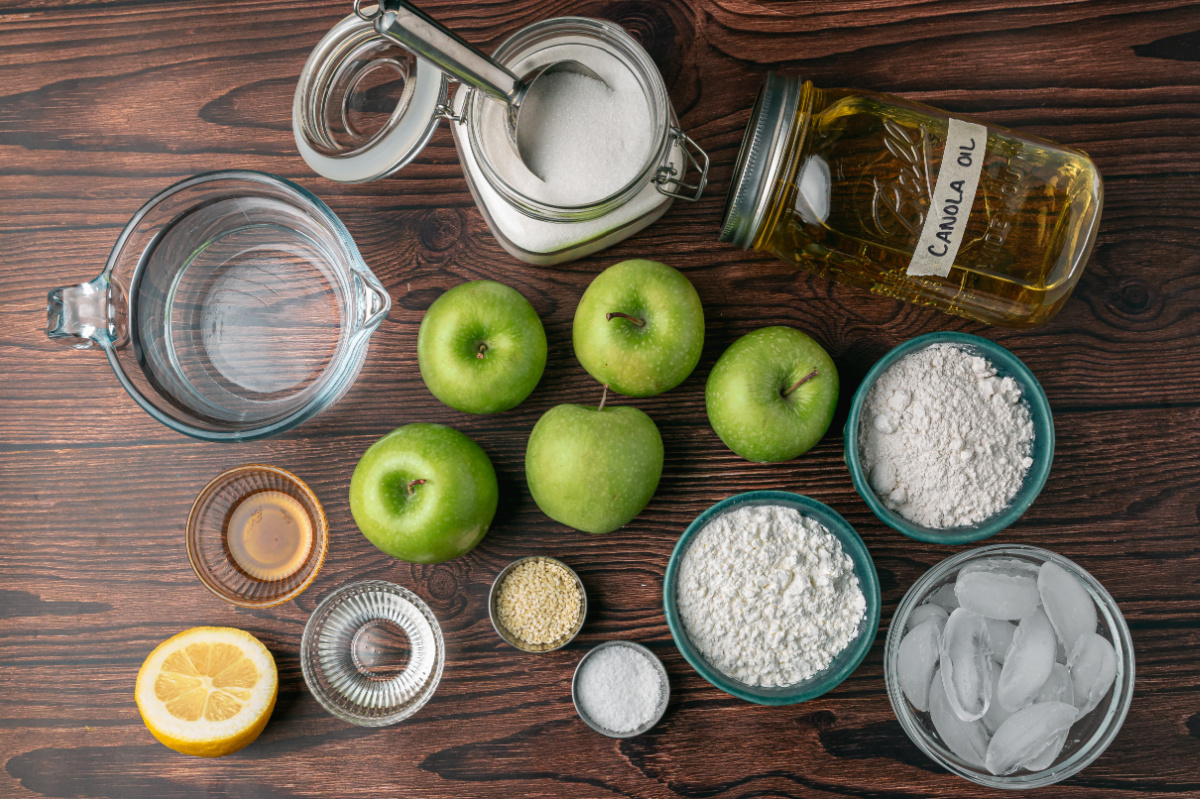
- Granny Smith apples – They’re tart and sturdy, which is what you want. Cut them into 1½ to 2-inch chunks. Tiny pieces give you too much coating and not enough fruit.
- Lemon juice – The cut apples sit in cold lemon water while you prepare the batter. It keeps them from browning, but that water has to come off before frying, so dry them thoroughly.
- Cornstarch – This is the dusting that goes directly on the dried apples. Without it, wet batter has a habit of sliding off the fruit.
Batter and Frying
- All-purpose flour and cornstarch – Flour gives the batter enough body to coat the apples, while cornstarch helps the coating fry up crisp. I want a layer around the fruit, not an apple buried in fritter batter.
- Diamond Crystal kosher salt – There’s lots of sweetness coming later, so I season the batter. If you use a different salt, keep in mind that the same volume may be saltier.
- Ice-cold water – The batter will look thinner than you might expect. That’s right for this recipe. Resist the urge to keep adding flour until it looks like pancake batter.
- Canola oil – I use it for both fries because it’s neutral and handles the heat. Vegetable or peanut oil can be used instead.
Caramel and Serving
- Granulated sugar, water and light corn syrup – These cook together until the syrup reaches 300–305°F. The water helps the sugar dissolve at the start, while the corn syrup helps keep it from crystallizing. Go by the thermometer, because the syrup may still look pale when it’s ready.
- Toasted sesame seeds – They go into the hot sugar right before the apples. I like the toasted flavor against the tart apple, and the specks look good on the glassy coating.
- Sesame oil or neutral oil – A very thin film on the serving platter keeps the apples from becoming part of the platter. Sesame oil adds more toasted flavor, and neutral oil is fine too.
- Ice water – Set out a wide bowl for the table. This isn’t a bowl the apples pass through on their way to the platter. Each person dips a piece for a second or two just before eating it, which cools the hot sugar into the brittle shell.
How to Make Chinese Toffee Apples
Find the complete printable recipe with measurements in the recipe card at the BOTTOM OF THE POST.
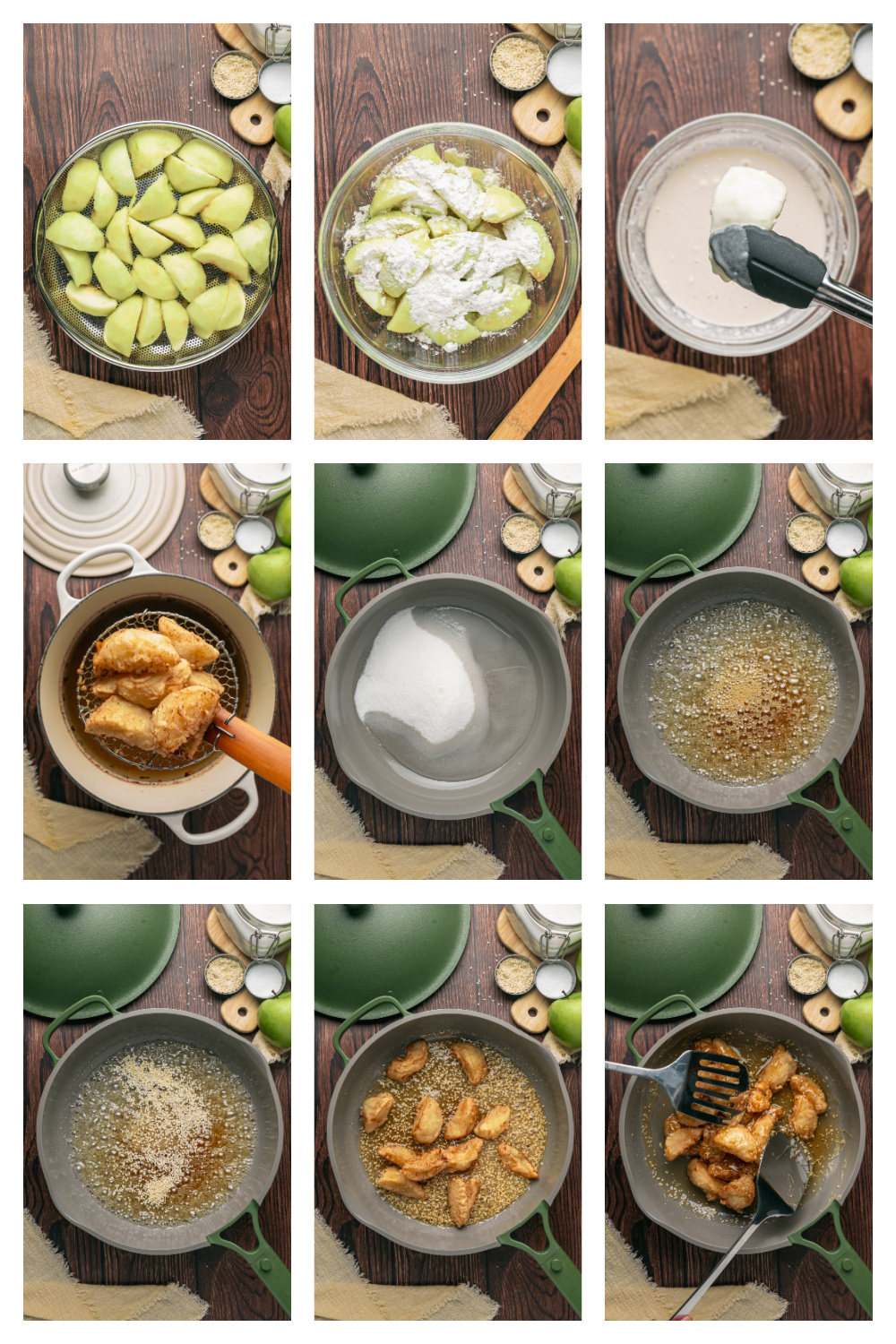
- Step One (prep the apples and batter)
Keep the apple chunks in lemon water while you make the batter, then drain them and pat them very dry before tossing them with cornstarch. Water left on the apples makes it harder for the cornstarch to stay put, which means the batter won’t have much to grab onto either. In a separate bowl, whisk the flour, cornstarch, salt and ice-cold water together. It should be fluid enough to coat the apples without piling up on them, so don’t add more flour just because it looks thinner than fritter batter. - Step Two (fry the apples)
Heat the oil to 350°F and set a wire rack over a baking sheet. Batter the apples in small batches, lifting out one piece at a time and letting the excess batter drip back into the bowl before lowering it into the oil. Fry for 4 to 5 minutes, turning occasionally, until the coating is set and pale golden. Give the oil time to come back to 350°F between batches. I know it’s tempting to keep going, but colder oil does this batter no favors. - Step Three (fry them again)
Once all the apples have had their first fry, raise the oil to 375°F and fry them again in batches for 45 to 60 seconds, until the coating is crisp and golden. The apple is already cooked at this point. The second fry is for the coating. Put the pieces back on the rack, then move the baking sheet to a very low oven so the apples stay warm while you make the caramel. If your oven only goes down to 200°F or so, warm it first, turn it off, and then put the apples inside. - Step Four (get everything within reach)
Lightly grease the serving platter and fill a wide bowl with cold water and ice. Set out the warm apples and two heatproof spatulas, too, and make sure you can reach all of it from the stove. Do this before you start the sugar. Once it reaches temperature, you’ll be coating apples, not opening cabinets and wondering where you put the platter. - Step Five (cook the caramel and coat the apples)
Put the sugar, water and light corn syrup in a large nonstick skillet and stir just enough to moisten the sugar. Bring it to a gentle boil over medium heat, then stop stirring and swirl the skillet only if you need to. Cook to 300–305°F, even if the syrup is still pale, then take it off the heat and stir in the sesame seeds. Add half the warm apples and use both spatulas to coat them quickly before moving them to the platter. Coat the second half in the remaining caramel. If the caramel has become too firm, give it a few seconds over very low heat to loosen it, then take it straight back off. - Step Six (dip and eat)
Pick up one caramel-coated apple with chopsticks or tongs, dip it in the ice water for 1 to 2 seconds, and let the extra water drip off before you eat it. Do the same with each piece as you go, rather than dunking the whole batch. You want the quick crack of sugar, the crisp coating underneath, and an apple that hasn’t been sitting around waiting for everybody to finish dinner.
Recipe Tips
- Make sure the tip of your candy thermometer sits in the syrup without touching the bottom of the skillet. With a target of 300–305°F, I need to know how hot the sugar is, not how hot the pan is.
- The apples need room during both fries. Too many pieces at once bring down the oil temperature, and trying to turn them becomes a demolition project for the batter. Smaller batches are easier to manage.
- Stick with the wire rack instead of draining the fried apples on paper towels. The rack lets air move underneath them, while paper towels hold steam against the coating you just worked to make crisp.
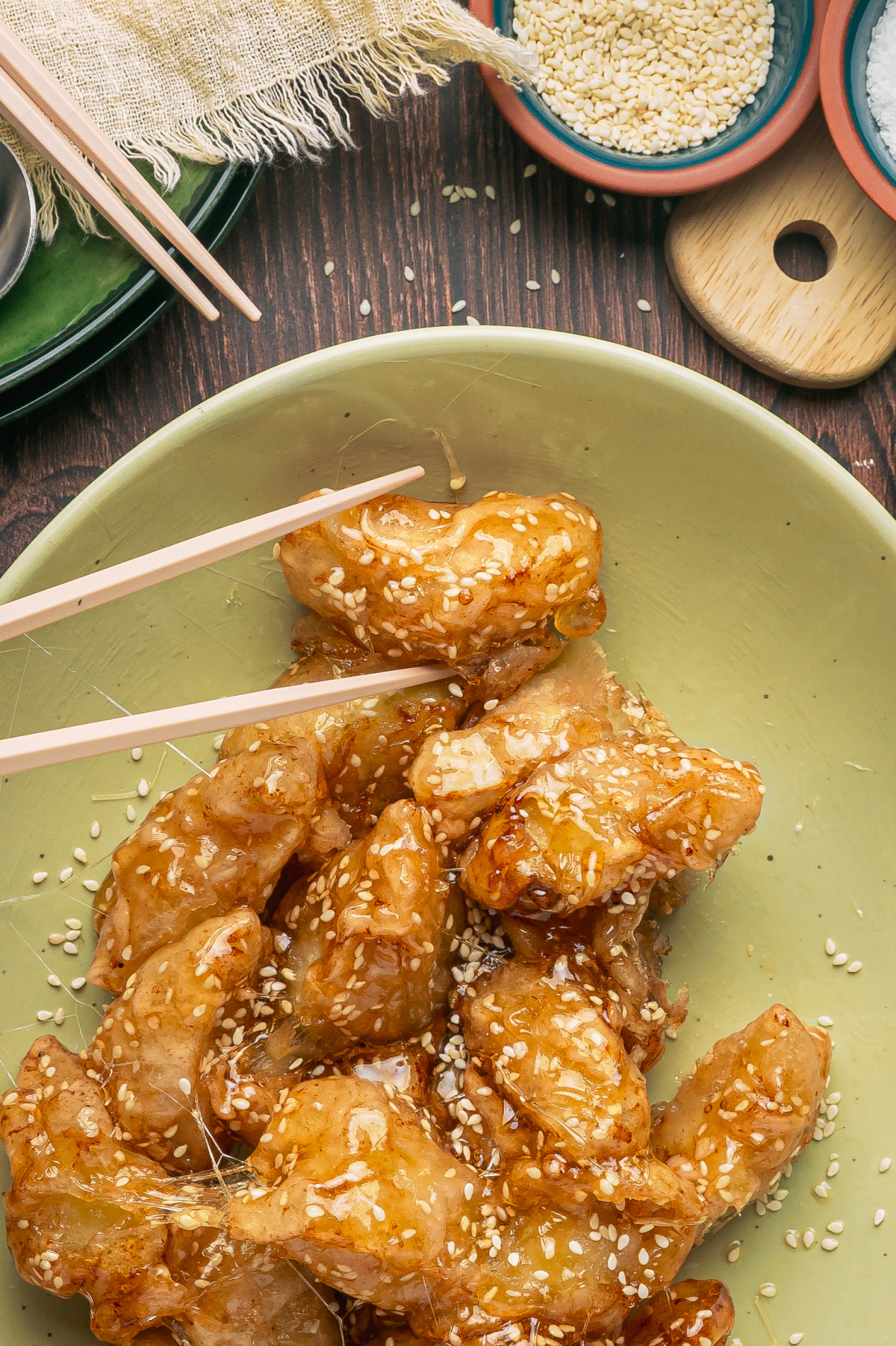
- If thin strands of sugar stretch between the apples as you move them to the platter, that’s a good thing. That pulled sugar is the basi in basi pingguo, and it’s part of what made me want to make these in the first place.
Storage
- Chinese toffee apples need to be made and eaten right away. As they sit, moisture from the apples and the air softens the caramel and the fried coating, and those are the two textures I spent months trying to get right. I wouldn’t make a finished batch ahead.
- I wouldn’t refrigerate leftovers, either. Condensation makes the sugar sticky even faster. If you’re serving these to other people, plan to do the final fry, coat the apples and serve them in one stretch.
FAQs
- What does basi pingguo mean?
Basi pingguo is often translated as “pulled-silk apples” or “apples with pulled sugar.” The name refers to the fine strands of hot sugar that stretch from the apples when you lift them from the platter. - Are Chinese toffee apples the same as caramel apples?
They’re quite different from the whole caramel apple on a stick. These are chunks of apple coated in batter, fried, and tossed in hot sugar. After a quick dip in ice water, the sugar is thin and brittle rather than soft and chewy. - Can I make Chinese toffee apples without a candy thermometer?
You can judge cooked sugar by how it looks and acts, but I recommend a thermometer for this recipe. The syrup can still be pale when it reaches the 300–305°F I need, so color alone can talk you into cooking it longer than you should. - Can I use a different apple?
Yes. Pink Lady, Honeycrisp or Fuji are good alternatives if they’re firm, though I prefer the tartness of Granny Smith with the caramel. Whatever apple you use, keep the chunks large enough that there’s still a good bite of fruit inside the coating. - Why is my caramel chewy instead of brittle?
First, check the temperature. If the syrup didn’t reach at least 300°F, it won’t set into a brittle shell. Make sure the thermometer tip was in the syrup and not against the skillet, too. If the apples were brittle at first and softened later, time and moisture are the likely culprits, which is why I serve them as soon as they’re coated. - Why did my caramel turn grainy?
Sugar can crystallize if you stir the syrup after it boils or knock crystals from the sides of the skillet back into it. Once it’s boiling, leave the spoon alone and swirl the skillet only when you need to. The corn syrup helps, but it cannot rescue a pan of sugar that’s being stirred the whole way through. - Can I leave out the sesame seeds?
Yes. They add toasted flavor and specks in the coating, but the caramel will still set without them.
From My Kitchen Notes
Small observations from the margins.
- A pale color doesn’t always mean it isn’t ready.
- I’ve learned not to hurry something that needs time to come back to temperature.
- Sometimes it’s necessary to take things through the heat twice.
- Threads can appear when I pick something up and try to move it.
- Leaving things alone is a decision, too.
- If I wait for it to look the way I imagined, it may be too late to recover it.
- I went looking for an explanation and came back with something that took months.
It’s Obvious I’ll Do Anything to an Apple
- Apple Pie Baked Beans – Bacon, barbecue sauce, mustard, apple filling.
- Air Fryer Apple Pie Chimichangas – Apple pie filling, tortillas, cinnamon sugar, crisp air-fried shell.
- Apple Pie Samosas – Granny Smith apples, cinnamon sugar, flaky phyllo.
- Apple Pie Cinnamon Roll Monkey Bread – Cinnamon rolls, apple filling, pull-apart bread.
- Apple Snickerdoodles – Apples, cinnamon sugar, soft cookies.
This post may contain affiliate links. Please read my disclosure policy.
Chinese Toffee Apples
Equipment
- Dutch Oven or wok. Provides enough room and depth to fry the apples safely in batches.
- thermometer for frying Needed to monitor both the frying oil and the caramel temperatures accurately.
- wire rack with rimmed baking sheet Allows air to circulate around the fried apples and keeps the coating from steaming while the remaining batches cook.
- mixing bowls (large) For soaking the apples, mixing the batter and coating the apples with cornstarch.
- nonstick skillet (large) Gives the apples enough room to be quickly tossed through the hot caramel.
- 2 heatproof spatulas Make it easier to turn and coat the fried apples quickly before the caramel firms.
- wide serving bowl Holds the ice water used for dipping each apple immediately before eating.
- serving platter Lightly greased before the caramel is prepared so the coated apples release easily.
- chopsticks For safely dipping individual caramel-coated apples into the ice water.
Ingredients
Apples:
- 4 small Granny Smith apples about 1¼ pounds (567 g), peeled, cored and cut into 1½ to 2-inch chunks
- cold water enough to cover the apples
- 2 tbsps (30 ml) fresh lemon juice
- ¼ cup (32 g) cornstarch
Batter and Frying:
- ¾ cup (90 g) all-purpose flour
- ¼ cup (32 g) cornstarch
- ½ tsp (1.5 g) kosher salt
- ⅔ cup (160 ml) ice-cold water
- 6 cups (1.4 L) canola oil for frying
Caramel and Serving:
- 1 tsp (5 ml) sesame oil or neutral oil, for greasing the platter
- 1¼ cups (250 g) granulated sugar
- ⅓ cup (80 ml) water
- 2 tbsps (40 g) light corn syrup
- 1 tbsp (9 g) toasted sesame seeds
- cold water for serving
- ice cubes for serving
Instructions
- Place the cut apples in a large bowl and cover with cold water. Add the lemon juice and keep the apples submerged while preparing the batter. The lemon water prevents the cut surfaces from browning.4 small Granny Smith apples, cold water, 2 tbsps (30 ml) fresh lemon juice
- Whisk the flour, cornstarch and salt together in a large bowl. Add the ice-cold water and whisk until combined. The batter should be fluid enough to coat the apples easily while still leaving a visible layer on the surface.¼ cup (32 g) cornstarch, ¾ cup (90 g) all-purpose flour, ⅔ cup (160 ml) ice-cold water, ½ tsp (1.5 g) kosher salt
- Preheat the oven to its lowest setting. Pour the canola oil into a Dutch oven or wok and heat over medium heat to 350°F (177°C). Set a wire rack over a rimmed baking sheet.6 cups (1.4 L) canola oil
- Drain the apples and pat them very dry with paper towels. Transfer to a clean bowl, add the cornstarch and toss until every piece has a thin, even coating.¼ cup (32 g) cornstarch
- Add about one-third of the apples to the batter. Lift out one piece at a time, allow the excess batter to drip back into the bowl, then carefully lower it into the 350°F (177°C) oil. Fry for 4 to 5 minutes, turning occasionally, until the coating is set and pale golden. Do not crowd the pot.
- Transfer the fried apples to the wire rack. Allow the oil to return to 350°F (177°C), then batter and fry the remaining apples in two more batches.
- Increase the oil temperature to 375°F (191°C). Fry the apples a second time in batches for 45 to 60 seconds, until the coating is crisp and golden. Transfer to the wire rack, then place the baking sheet in the warm oven while preparing the caramel.
- Lightly grease a serving platter with sesame oil or neutral oil. Fill a wide serving bowl with cold water and ice. Place the platter, ice water, warm fried apples and two heatproof spatulas within reach of the stove before making the caramel. Once the caramel reaches temperature, work without pausing.1 tsp (5 ml) sesame oil, cold water, ice
- Combine the sugar, water and light corn syrup in a large nonstick skillet. Stir gently until the sugar is evenly moistened.1¼ cups (250 g) granulated sugar, ⅓ cup (80 ml) water, 2 tbsps (40 g) light corn syrup
- Place the skillet over medium heat and bring the sugar mixture to a gentle boil. Once boiling, do not stir. Cook, gently swirling the skillet only when needed, until the caramel reaches 300–305°F (149–152°C) and is pale golden.
- Remove the skillet from the heat and immediately stir in the toasted sesame seeds.1 tbsp (9 g) toasted sesame seeds
- Immediately add half of the warm fried apples to the caramel. Using two heatproof spatulas, toss quickly until the pieces have a thin, even coating of caramel. Transfer immediately to the greased platter.
- Add the remaining fried apples and quickly coat them in the remaining caramel. If the caramel becomes too firm to coat the apples, return the skillet to very low heat for a few seconds, only until it becomes fluid again, then immediately remove it from the heat. Transfer the coated apples to the platter.
- Serve immediately with the bowl of ice water alongside. Using chopsticks or tongs, dip one caramel-coated apple piece into the ice water for 1 to 2 seconds. The ice water rapidly cools and sets the hot caramel into a thin, brittle shell. Allow the excess water to drip off before eating. Repeat with each piece as it is eaten.
Notes
- If your oven's lowest setting is 200°F (93°C) or higher, warm the oven and turn it off before placing the fried apples inside. You want to keep them warm without continuing to cook them.
- Chinese toffee apples should be served immediately. Dip each piece in the ice water for 1 to 2 seconds immediately before eating. Finished apples don't store or refrigerate well because moisture softens the caramel and fried coating.
- Use caution when working with the caramel. Molten sugar can cause serious burns.
- For nutrition calculations, oil absorption is estimated at 10% of the weight of the fried batter and apple rather than including the full amount of frying oil, most of which remains in the pot.
- Nutritional information is provided as a courtesy only and should be construed as an estimate rather than a guarantee. Ingredients can vary, and Noble Pig makes no guarantees to the accuracy of this information.
Nutrition
Have you made these Chinese Toffee Apples? I’d love to hear how they turned out — leave a comment below and let me know.
As an Amazon Associate and member of other affiliate programs, I earn from qualifying purchases.
Leave a Reply