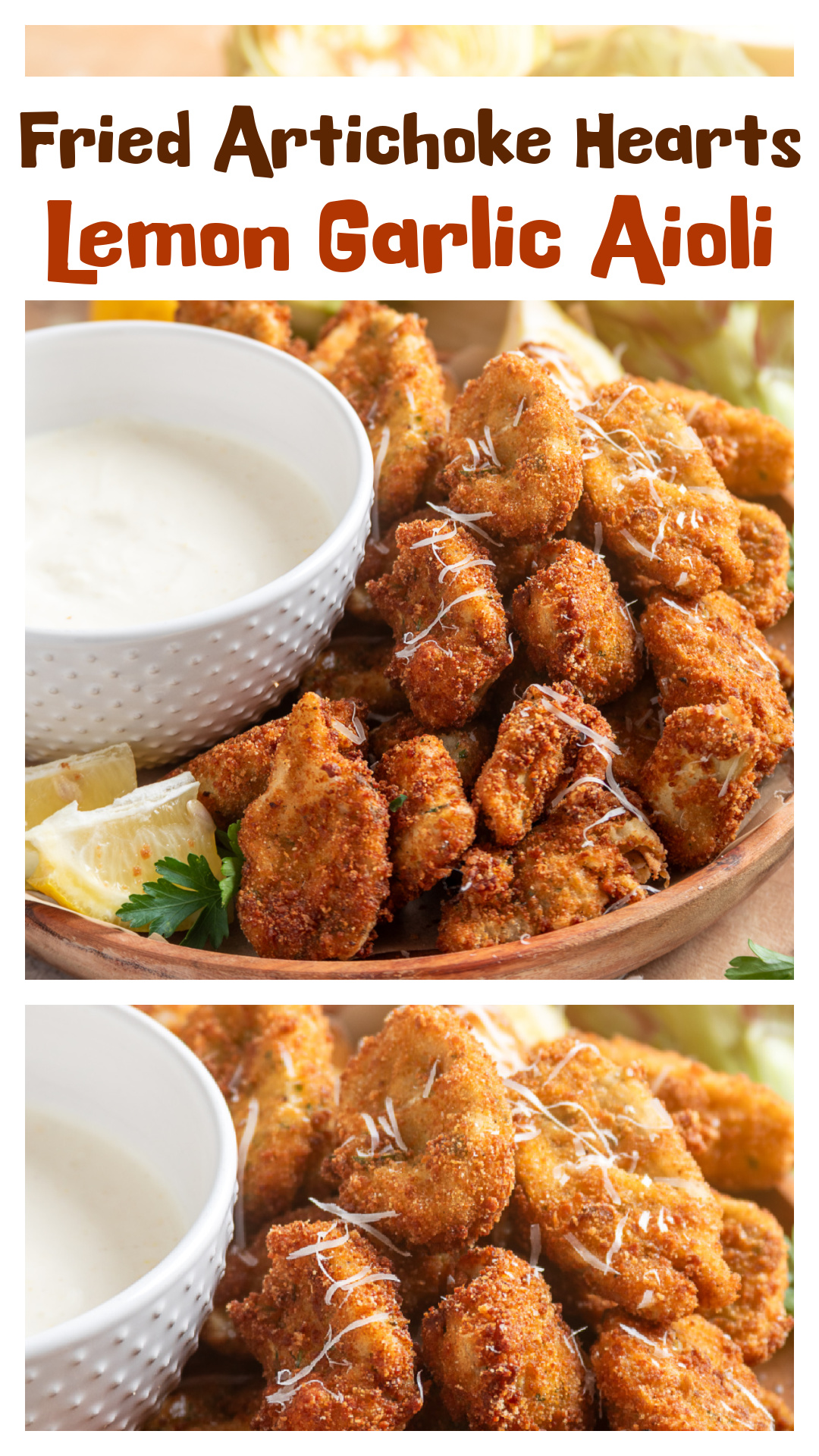
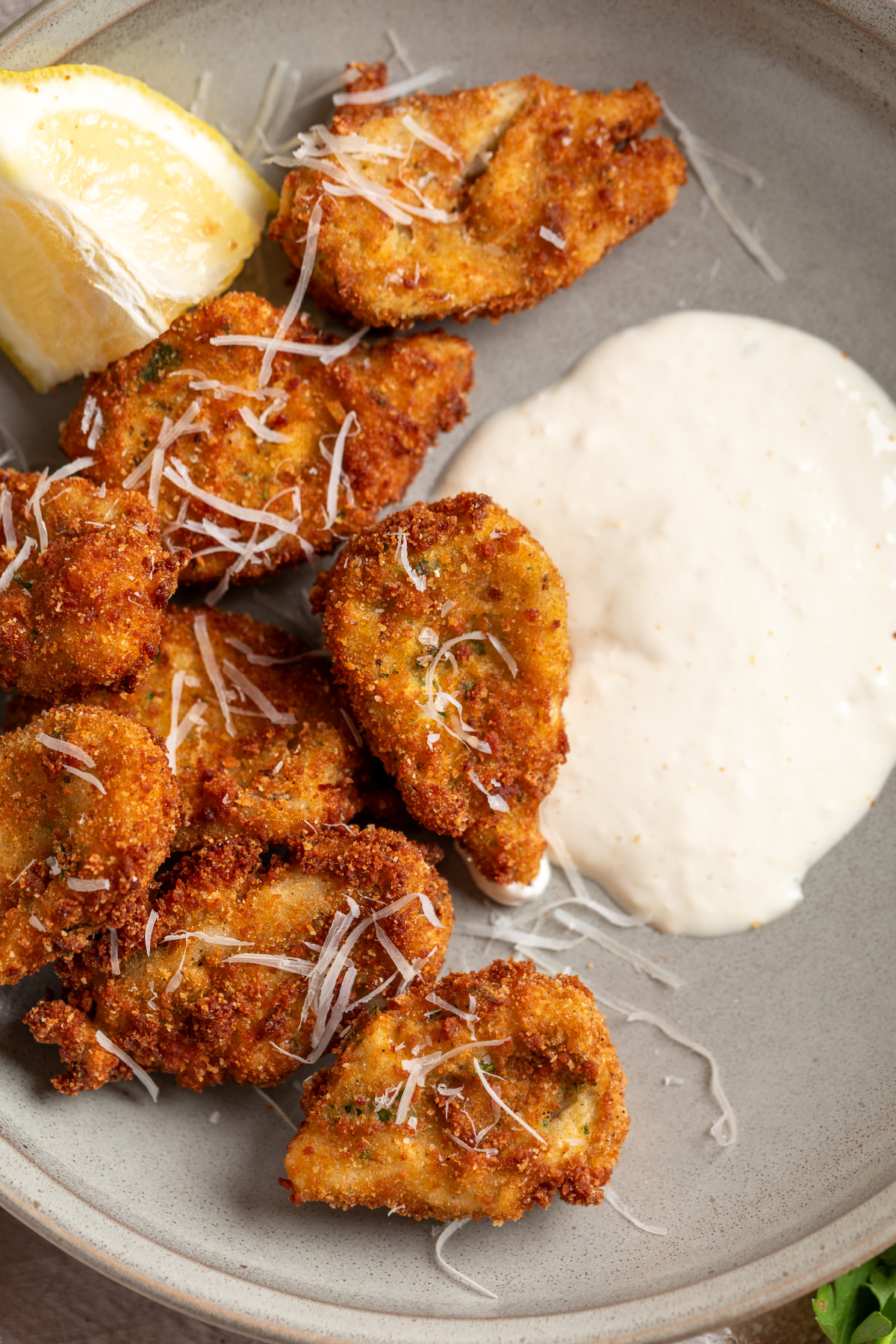
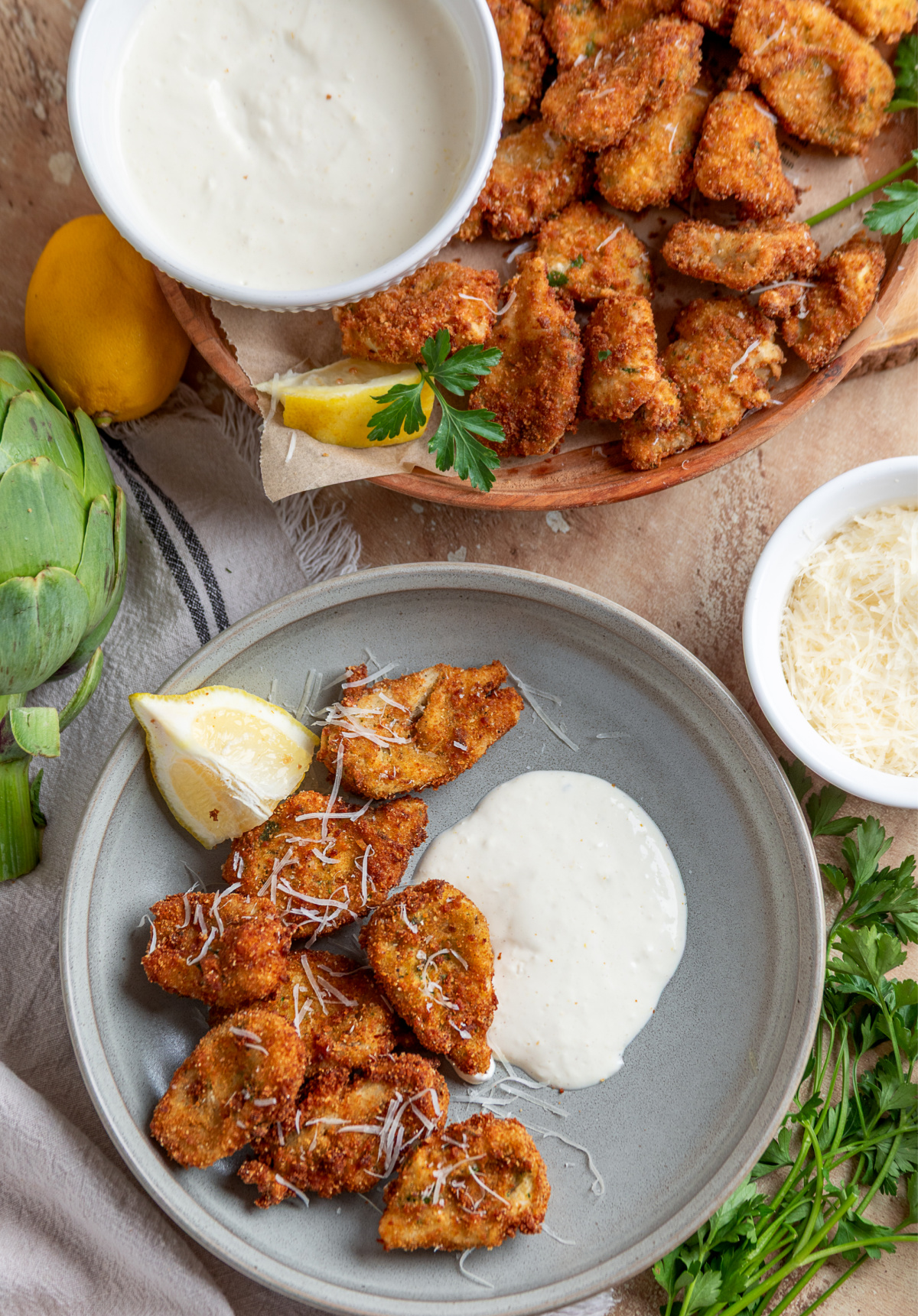
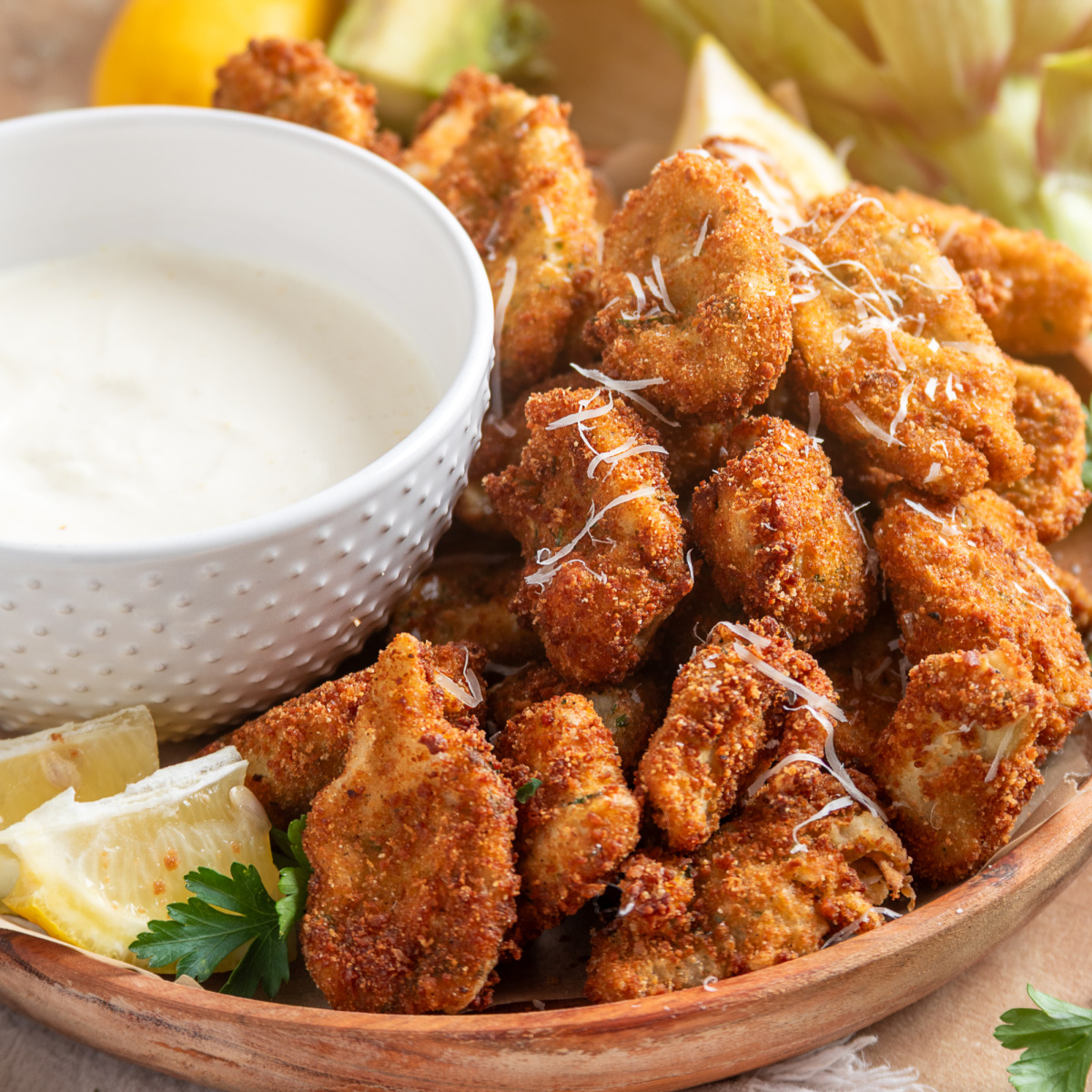
Crispy fried artichoke hearts with a full, golden crust and a soft center. Served with a creamy lemon garlic aioli for dipping, with just enough tang and garlic.
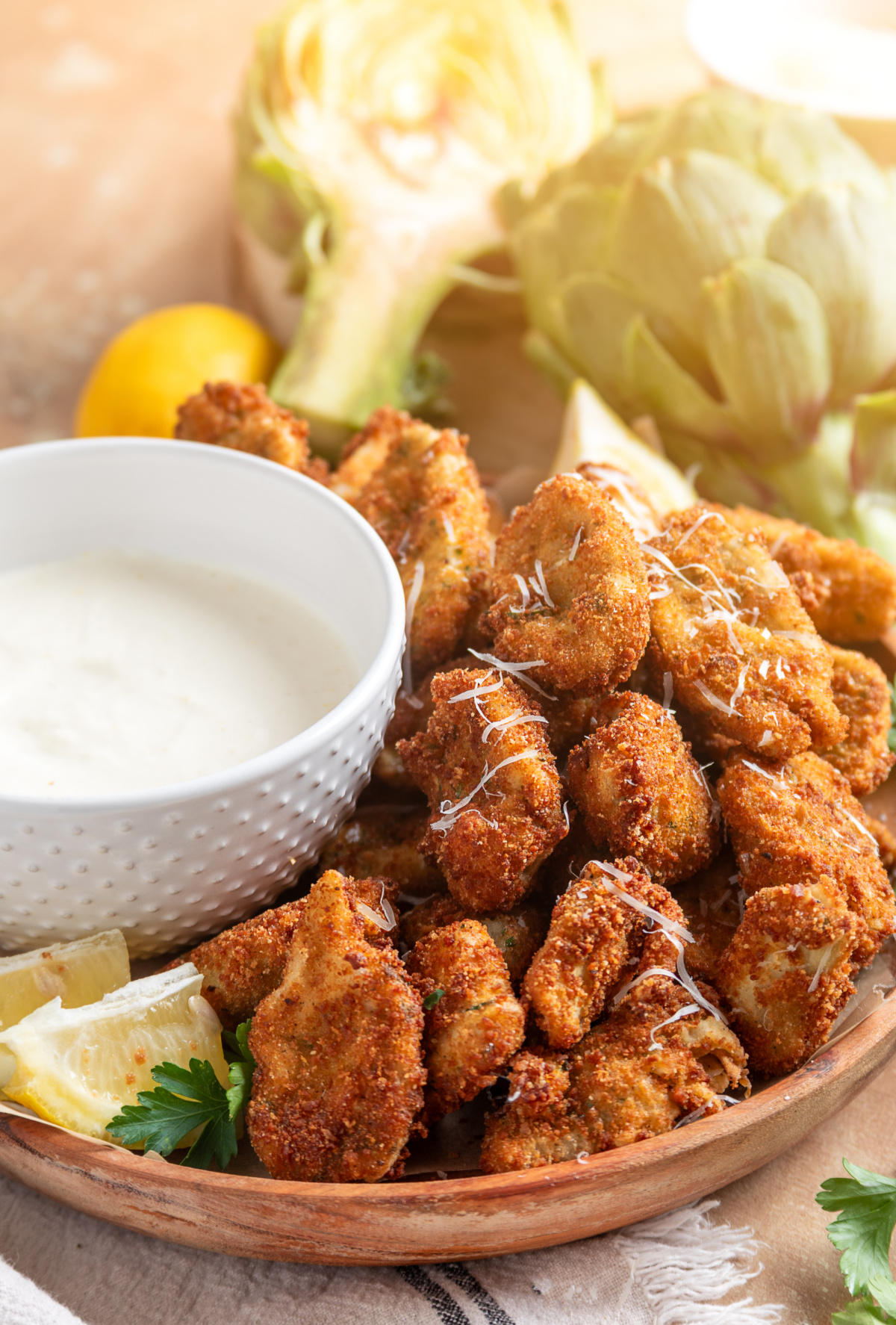
Fully Breaded, Extra Crispy Artichokes (Not a Light Fry)
I wanted fully breaded fried artichoke hearts, not a lighter fry, and I’m using canned artichoke hearts on purpose because they’re already tender, which means I could focus on getting the outside right without worrying about anything else. I dredge them in flour with a little cornstarch, then into eggs with Parmesan mixed in, then breadcrumbs, so they come out with a thick, crisp crust instead of something thin that falls apart the second it hits the oil.
When I first started in the wine business, I didn’t have a distributor, so everything went through me. I was selling out of the tasting room, loading up my car, and driving cases out to restaurants, wine shops, grocery stores, everywhere I had placements. The coast was always a full day, and I didn’t mind it because that’s where a lot of my accounts were, and honestly, I liked being in it this way.
I would go in, open bottles, and do full-scale server education presentations, have them taste everything, talk through the wines, point out what was unique, what they liked, what they didn’t, and what it paired with on their menu. I’d work with the chef, look at the dishes, and we’d try it with this, try it with that, we’d go back and forth until something clicked. That’s how you have to sell wine. If the servers know what to do with it, it gets ordered. If they don’t, it just sits there. So, I kept going back, hustling, same places, same conversations, over and over, especially as the menus changed with the seasons. There were always new dishes, new pairings, and the same process repeated.
It was the same thing at grocery stores, the nicer ones that had someone running the wine section. I’d go in, pour for them, talk through the wines, do tastings so when customers came in and asked what to buy, they had something to say besides reading the label. But the label did pretty well on its own.
Somewhere along those drives, there was this place I kept passing, a little shack that didn’t look like much, and the smell of the fry oil mixed with the ocean air hit you immediately as you got out of the car. The place looked like it should’ve been knocked down years ago, but it was always packed, and not with tourists. It was the same group of guys every time, locals, fishermen mostly, sitting there like this was the place to eat. So, eventually I stopped to try it.
I went in fully expecting to order fish and chips, and I did. But while sitting there, I kept watching what everyone was getting instead, and it wasn’t fish. It looked like baskets of fried oysters, and I finally said to one of them, “You all really like oysters this much?” “Yeah, no. We come for the fried artichoke hearts.” Oh, okay, interesting.
I found it kind of funny that all these craggy-looking fishermen were here for that. I was a little surprised, but ended up ordering my own basket.
After that, it turned into a habit. I’d finish my last stop, get back in the car, and think, alright, I’m stopping. I’d order the same thing every time, a basket of fried artichokes and whatever their mayo-based sauce was that nobody could really explain and nobody really wanted to know. It was just there, and it was good.
Eventually I stopped making those drives once I got a distributor, and that place kind of disappeared from my routine, so I had to start making my own fried artichoke hearts at home, the way I remembered them, but a little more dialed in, with a lemon garlic aioli-style sauce that has that same creamy, tangy taste.
So this is what I ended up with. I’m not trying to recreate that place, because I don’t even know what they were doing back there, but I do know I liked it. It wasn’t a lightly fried or delicate dish at all. Those artichoke hearts had a full coating that stayed on, and a real crunch on the outside, with a soft center that artichokes already have if you don’t mess with them.
I use canned artichoke hearts here because they’re consistent, already tender, and they stay together when you bread and fry them. I give them a full coating, not just a quick dredge, so you get something that’s substantial. I add the Parmesan into the egg layer so it melts into the coating instead of sitting on top, and keep the oil hot enough that the outside sets before anything has a chance to be overdone.
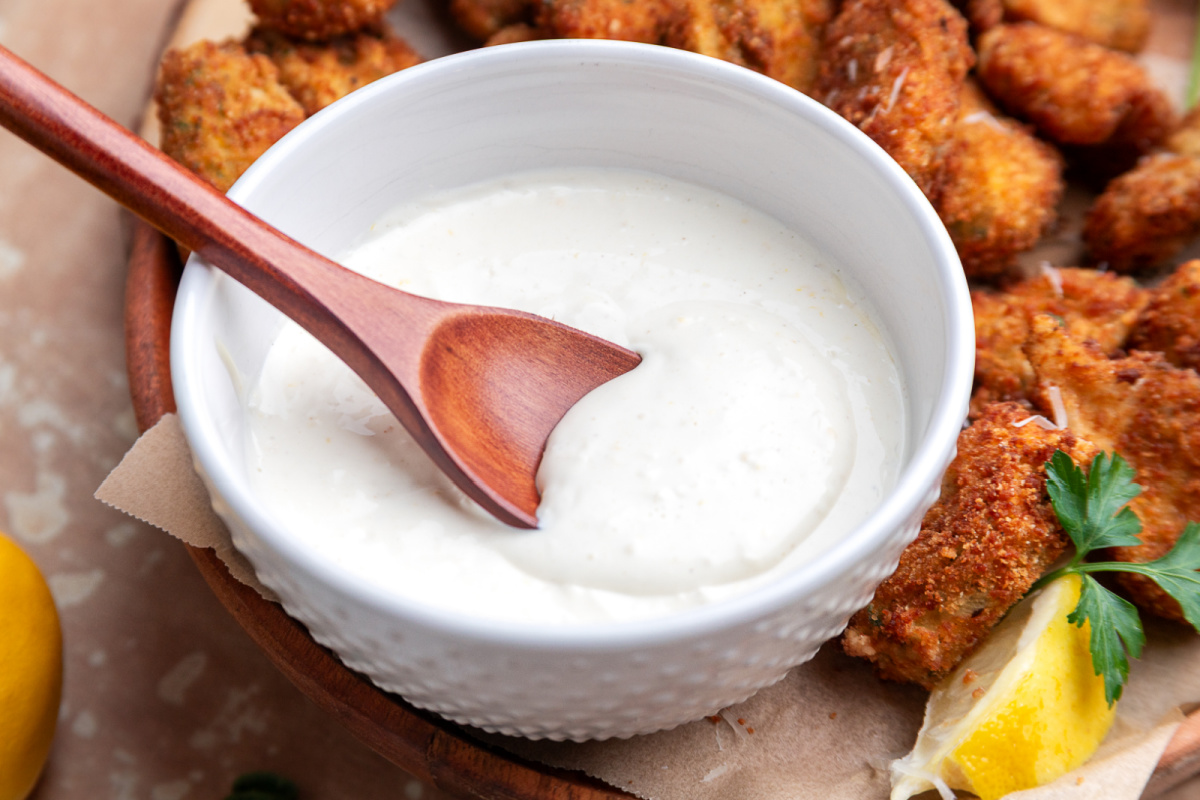
And then there’s the sauce. I’m not doing a classic aioli, I wanted something creamy with enough lemon and garlic to cut through everything, and pull each piece through without much thought.
My whole setup is the same idea as that greasy fish-fry stop on the coast. The only thing you’re going to wonder about is why you didn’t make more.
What Makes These Different
- These are not the kind of fried artichoke hearts you dust in flour and call done. I wanted a full coating, the kind you hear when you bite into it.
- I use canned artichoke hearts on purpose. They’re consistent and already tender. You’re not trying to cook them through. You focus on what happens on the outside, so everything stays even from batch to batch instead of guessing where you’re at.
- I layered the coating for a reason. Flour with a little cornstarch first so it fries up light instead of dense. Then eggs with Parmesan mixed in, not sprinkled after. That part is more critical than it sounds. It melts into the coating and seasons everything all the way through.
- Breadcrumbs finish it and are pressed in so they stick and don’t come off in the oil. The goal is coverage, not bare spots or thin patches.
- This is not a tempura-like batter, a Roman-style dish, or a lightly fried version. I wanted a thick crust that stays crisp, even when it sits for a minute.
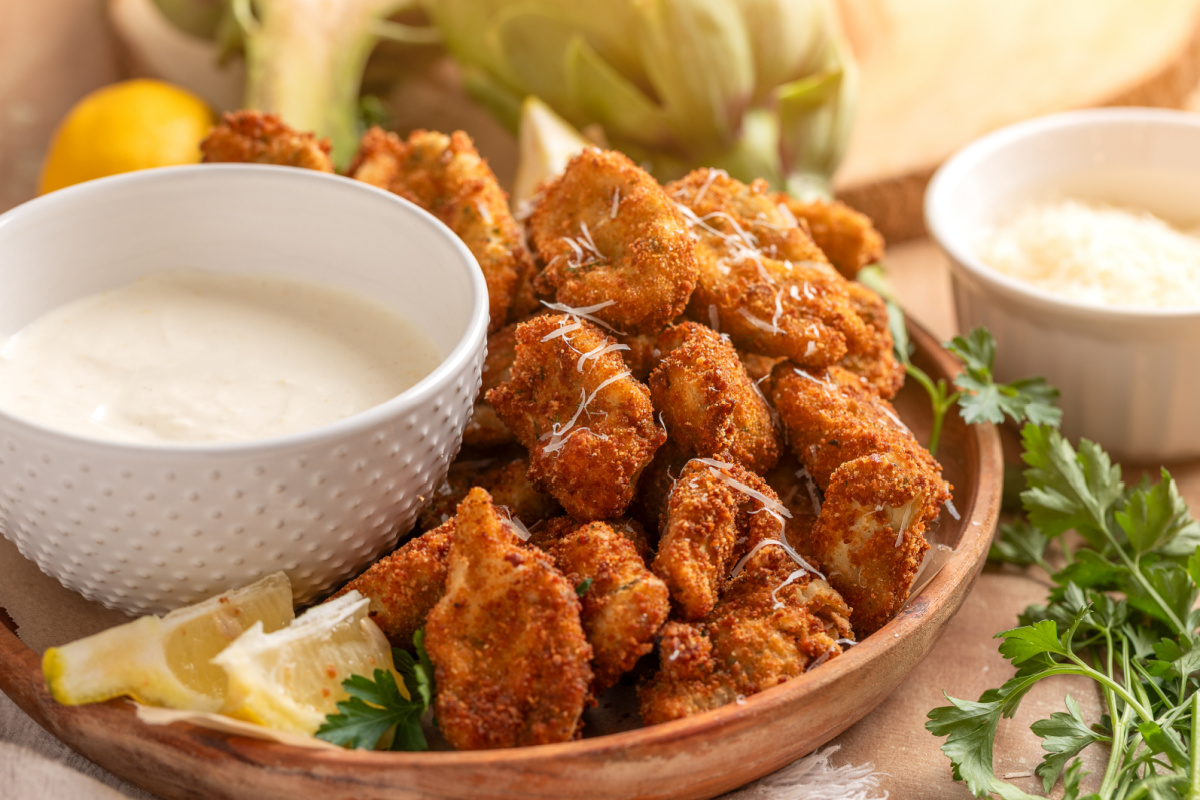
- If the oil is right, they come out golden, with the contrast you want, crisp outside, soft center, there’s nothing heavy about it, but enough to make you go back for the next one before you’ve finished the first.
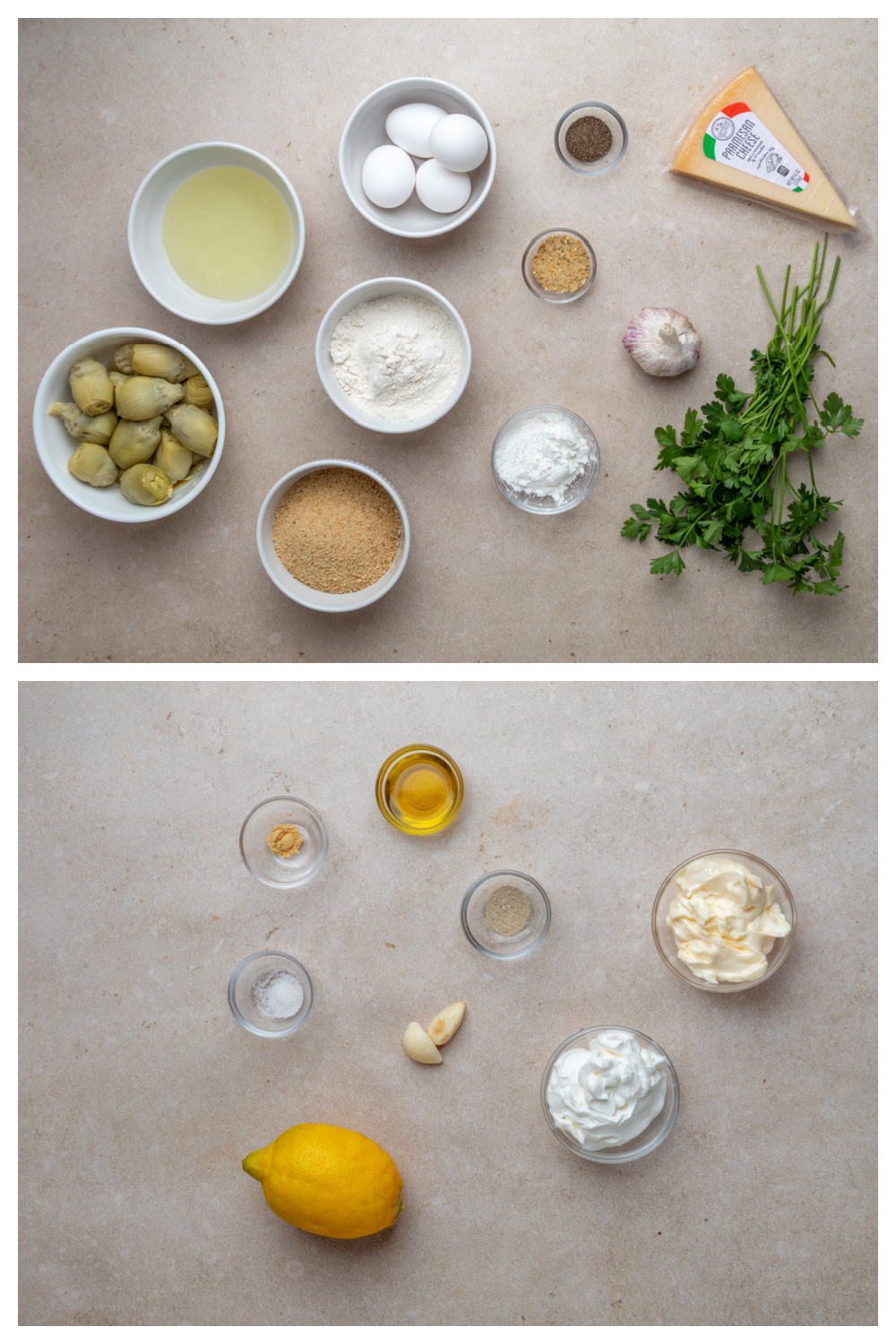
Ingredients
- Canned artichoke hearts – Drained and dried well. These are already tender, so the focus stays on the coating, not trying to cook them through.
- All-purpose flour + cornstarch – This is your first layer in the coating. Flour gives it shape, cornstarch keeps it from turning heavy so the crust stays crisp instead of dense.
- Garlic powder + onion powder – Mixed into the flour so the flavor starts early, not just at the end.
- Sea salt + black pepper – Seasoning in the base layer so every bite has it, not just the finish.
- Eggs – This is what everything sticks to. Without it, the coating slides off the second it goes into the oil.
- Parmesan cheese – Mixed into the eggs, not added later. It melts into the coating and adds salt and depth all the way through.
- Fresh parsley – A little color and freshness in the middle of all the fried, not a garnish afterthought.
- Breadcrumbs – Final layer that gives you that full crunch. This is what makes it a real fried appetizer instead of something light.
- Vegetable oil – Neutral and stable for frying. Keep it at 350°F so the coating crisps instead of soaking.
- Mayonnaise + sour cream – This isn’t traditional aioli, and that’s intentional on my part. It’s thicker, a little tangy, and works better with fried food.
- Fresh lemon zest + lemon juice – Zest brings the aroma, juice brings the acid. You need both.
- Garlic – Grated into a paste so it blends in, not little chunks hitting all at once.
- Olive oil – Smooths everything out.
- Dry mustard – This does more than you think.
- Sea salt + white pepper – Seasoning without dark specks in the sauce. And white pepper is worth seeking out if you don’t have it in the pantry. It’s a whole different flavor profile.
- Lemon wedges – For squeezing over the top right before eating.
How to Make Fried Artichoke Hearts with Lemon Garlic Aioli
Find the complete printable recipe with measurements in the recipe card at the BOTTOM OF THE POST.
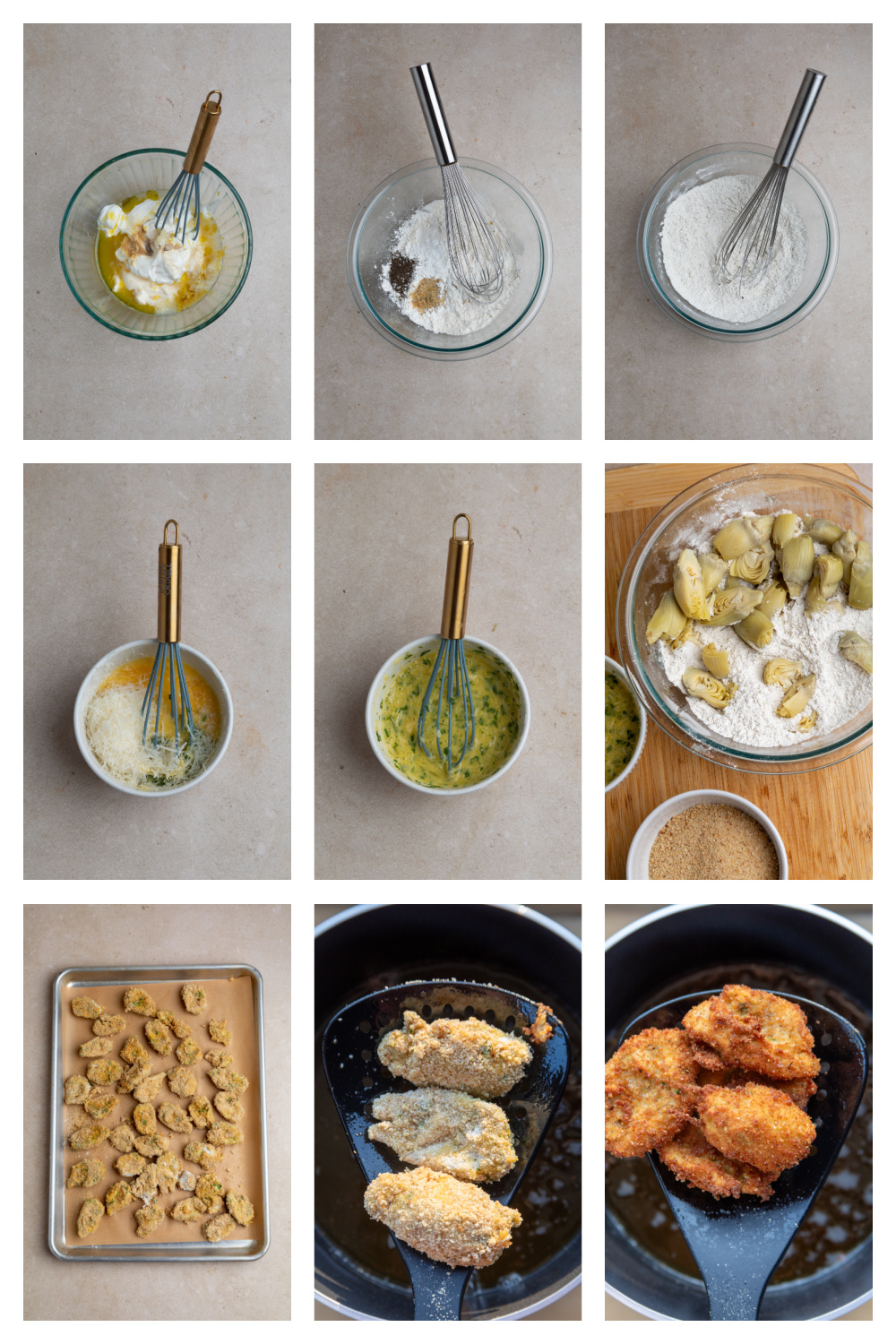
- Step One (make the lemon garlic aioli)
Stir together the sour cream, mayonnaise, lemon zest, lemon juice, olive oil, garlic, dry mustard, salt, and white pepper until smooth. This isn’t a traditional aioli. It’s thicker, tangy, and made for dipping. Cover it and put it in the fridge so it can meld and the garlic calms down. - Step Two (prep and dry the artichokes)
Drain the artichoke hearts, cut them in half lengthwise, and dry them really well with paper towels. If they’re damp, the coating won’t stick and the oil will let you know right away. - Step Three (set up the breading)
In one bowl, whisk together the flour, cornstarch, garlic powder, onion powder, salt, and black pepper. In another bowl, mix the eggs with the Parmesan and parsley. Breadcrumbs go in a third bowl. This is how you get to a full coating instead of something thin. - Step Four (bread the artichokes)
Coat each piece in the flour, shake off the extra, dip it in the egg, then into the breadcrumbs. Press it in a little so it sticks, then set it on a baking sheet while you finish the rest. Take your time doing this properly. - Step Five (heat the oil)
Heat the oil to 350°F in a Dutch oven or heavy pot with about 2 inches of oil. Let it come all the way up to temperature before you start frying. - Step Six (fry in batches)
Fry the artichokes in batches for 2 to 4 minutes, until golden and crisp. Don’t crowd the pot or the temperature drops and the coating softens. - Step Seven (drain and serve)
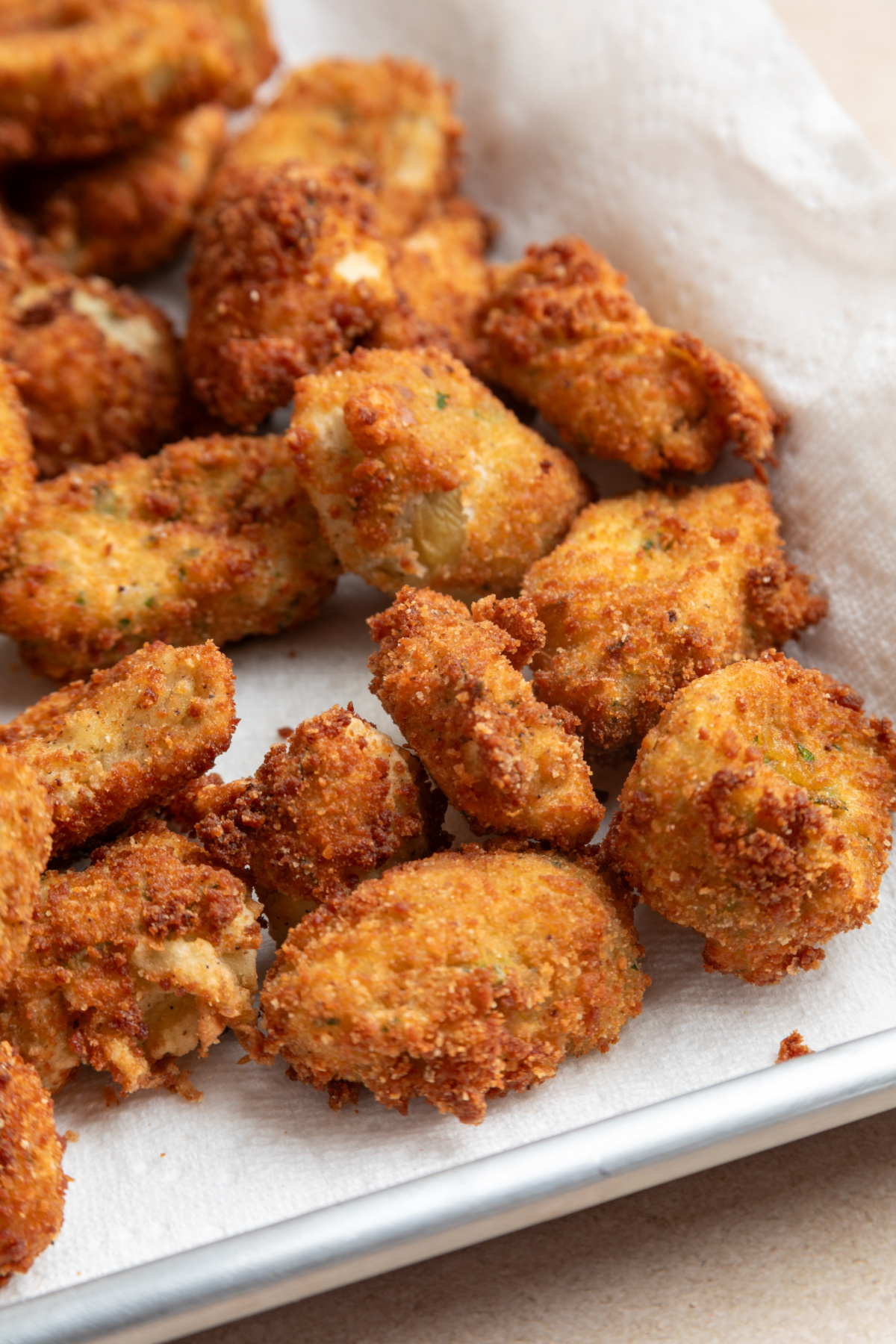
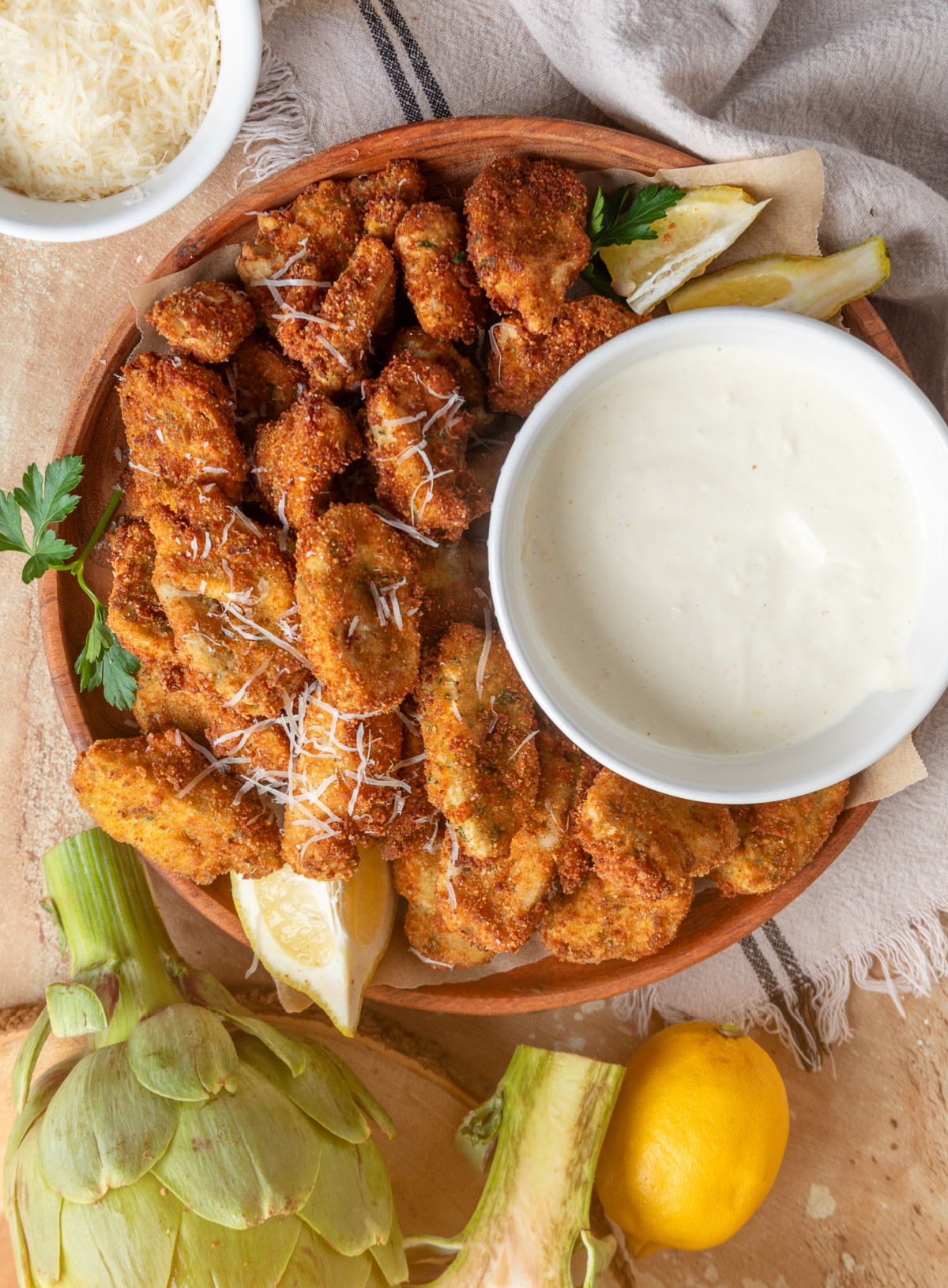
Move them to a paper towel-lined baking sheet to drain. Serve them warm with the lemon garlic aioli and lemon wedges. Crisp outsides with soft centers.
Recipe Tips
- Take the time to dry the artichokes really well before you start, because even a little moisture will keep the coating from sticking.
- When you get to the breadcrumb step, press them in instead of just tossing them, because that’s what keeps the coating in place and gives you that full crust instead of pieces breaking off.
- After everything is breaded, let the artichokes sit on the tray for a few minutes before frying so the coating sets and stays where you put it.
- Keep the oil right around 350°F and give it a minute to come back up between batches. If it drops too low, the coating soaks instead of crisping, and if it’s too hot, the outside gets dark too fast.
- Fry in smaller batches even if you’re tempted not to, since adding too many at once drops the temperature and affects the texture.
- Pull one from the first batch and taste it before you keep going so you can adjust the salt while you still have time.
- Plan on serving these while they’re still hot, because that’s when the outside stays crisp and the inside is at its best.
Storage and Make-Ahead
- If you end up with leftovers, let them cool completely and then store them in an airtight container in the fridge. They’ll keep for a couple of days, but they lose that fresh-out-of-the-oil texture, so don’t expect that first-bite crunch.
- To reheat, use the oven or an air fryer at around 375°F until they’re hot and the coating crisps back up. Skip the microwave unless you’re fine with them going soft.
- If you want to get ahead, you can bread the artichokes and keep them on a tray in the fridge for a few hours before frying. Just don’t stack them, and don’t leave them overnight, or the coating starts to get soggy.
- The lemon garlic aioli can be made ahead and kept in the fridge for a day or two. It’s better after it sits a bit, since the garlic softens and everything comes together.
- You can also mix the dry coating and egg mixture earlier in the day, then set up your dredging station when you’re ready to fry so you’re not doing everything at once.
- As far as freezing, I wouldn’t.
FAQs
- Can I use fresh artichokes instead of canned?
You can, but it’s a completely different process. Fresh artichokes need to be trimmed, cleaned, and cooked until tender before you get to the frying part, and the size and texture won’t be as consistent. Canned artichoke hearts are already tender, which means you can focus on the coating. - Why isn’t my coating sticking?
Most of the time it comes down to moisture. If the artichokes aren’t dry enough, the flour won’t grab, and everything slips off once it hits the oil. It can also happen if you hurry through the steps or skip pressing the breadcrumbs. - Can I air fry these instead of deep frying?
You can, but the texture won’t be the same. You’ll get some crisping, but not that full, even crust you get from frying. If you go that route, spray them lightly with oil and cook in a single layer so they have room to crisp. - What oil is best for frying artichokes?
Use a neutral oil that can handle higher heat, like vegetable oil. You want something that won’t compete with the flavor and can stay steady around 350°F. Peanut oil also works. - Why did my artichokes turn out greasy?
That usually means the oil temperature was too low. When the oil isn’t hot enough, the coating absorbs it instead of setting right away. Keeping the temperature even and frying in batches helps avoid that. - Can I make these ahead of time?
They’re best fresh, but you can bread them a few hours ahead and keep them in the fridge until you’re ready to fry. You can also make the dipping sauce ahead, which gives it time to come together.
From My Kitchen Notes
Just a few observations.
- Fried food changes the atmosphere. People stop acting like they’re not hungry.
- We don’t go to the beach in Oregon. We go to the coast.
- There’s always someone who says they’ll just try one. That person is never telling the truth.
- Hot oil rewards timing, not hesitation.
- Some things only work if you stop overthinking them. If you have to ask whether it’s too much, it isn’t.
- Everyone at that fish shack never asked what was in the sauce. No one wanted to know. There’s a point where you stop needing an explanation and decide you’re in.
- Wine sells faster when someone knows what to say about it. Same goes for everything else.
- I used to stand in restaurant kitchens with a bottle open and watch how quickly someone decided whether they trusted me.
- If you stand behind something long enough and let people taste it, they stop questioning it and start repeating it back.
- There’s a time when everyone says they’re there for one thing. They’re not.
- The first bite tells you what kind of night it’s going to be. After that, you’re just following it.
- Some things don’t need a plan, but they do need someone who knows when to step in and when to leave it alone.
- Heat exposes everything. Too soon, it falls apart. Too late, it’s already gone.
- You can feel when something is about to change. That’s when most people either hurry it or walk away.
- There’s a difference between watching something happen and deciding to be part of it.
- The best tables are never the loudest ones. They’re the ones where nobody’s checking the time.
- You don’t need a full plate to know if something’s good. One bite is enough.
- Familiarity is a strange thing. It can feel like safety, or it can feel like something you recognize too late.
More Crispy, Dippable Appetizers
- Crisp Fried Crab Rangoon – crispy shells, dipping sauce.
- Air Fryer Pork Belly Bites – crispy, rich, sweet chili dip.
- Easy Fried Tortilla Chips – crisp, golden, made from scratch.
- Homemade Soft Pretzel Bites – chewy, buttery, salted.
- Oven Fried Dill Pickle Chips – crisp coating, bold dill flavor.
This post may contain affiliate links. Please read my disclosure policy.
Crispy Fried Artichoke Hearts with Lemon Garlic Aioli
Equipment
- Dutch Oven or heavy pot. Holds the heat for frying.
- thermometer for frying Helps maintain oil at 350°F (175°C).
- 3 mixing bowls For dredging and breading.
- slotted spoon or spider. Lifts artichokes safely from oil.
- baking sheet lined with paper towels. Drains excess oil.
Ingredients
Lemon Garlic Aioli Dipping Sauce:
- ½ cup (120 g) full-fat sour cream
- ½ cup (120 g) full-fat mayonnaise
- zest of 1 lemon
- 2 tbsps (30 ml) lemon juice
- 1 tbsp (15 ml) olive oil
- 2 cloves garlic grated into a paste
- ¼ tsp (1 g) dry mustard
- ¼ tsp (1.5 g) sea salt plus more to taste
- ¼ tsp (0.5 g) white pepper
Fried Artichokes:
- 2 can (14 oz / 396 g each) whole artichoke hearts drained
- 1 cup (125 g) all-purpose flour
- ¼ cup (30 g) cornstarch
- 1 tsp (3 g) garlic powder
- 1 tsp (3 g) onion powder
- 1 tsp (6 g) sea salt
- 1 tsp (2 g) ground black pepper
- 4 large eggs beaten
- ⅓ cup (35 g) Parmesan cheese freshly grated
- 2 tbsps (8 g) fresh parsley finely chopped
- 1 cup (100 g) plain breadcrumbs
- 3 cups (720 ml) vegetable oil for frying
Instructions
- In a medium bowl, stir together the sour cream, mayonnaise, lemon zest, lemon juice, olive oil, garlic, dry mustard, salt, and white pepper until smooth and creamy. Taste and adjust seasoning as needed, then cover and refrigerate until ready to serve.½ cup (120 g) full-fat sour cream, ½ cup (120 g) full-fat mayonnaise, zest of 1 lemon, 2 tbsps (30 ml) lemon juice, 1 tbsp (15 ml) olive oil, 2 cloves garlic, ¼ tsp (1 g) dry mustard, ¼ tsp (1.5 g) sea salt, ¼ tsp (0.5 g) white pepper
- Drain the artichoke hearts, cut them in half lengthwise, and pat them very dry with paper towels so the coating adheres properly and the oil does not splatter.2 can (14 oz / 396 g each) whole artichoke hearts
- In a large bowl, whisk together the flour, cornstarch, garlic powder, onion powder, salt, and black pepper.1 cup (125 g) all-purpose flour, ¼ cup (30 g) cornstarch, 1 tsp (3 g) garlic powder, 1 tsp (3 g) onion powder, 1 tsp (6 g) sea salt, 1 tsp (2 g) ground black pepper
- In a separate bowl, combine the beaten eggs, Parmesan cheese, and chopped parsley.4 large eggs, ⅓ cup (35 g) Parmesan cheese, 2 tbsps (8 g) fresh parsley
- Place the breadcrumbs in a third bowl.1 cup (100 g) plain breadcrumbs
- Dredge each artichoke piece in the flour mixture, coating evenly and shaking off any excess. Dip into the egg mixture, then coat thoroughly in the breadcrumbs. Arrange the breaded artichokes on a baking sheet while finishing the remaining pieces.
- Heat the vegetable oil in a Dutch oven or heavy pot to 350°F (175°C), with the oil about 2 inches (5 cm) deep.3 cups (720 ml) vegetable oil
- Fry the artichokes in batches, being careful not to overcrowd the pot. Cook for 2–4 minutes, or until golden brown and crisp.
- Transfer the fried artichokes to a paper towel-lined baking sheet to drain. Serve warm with the lemon garlic aioli dipping sauce and lemon wedges, if desired.
Notes
- Use freshly grated Parmesan for the best melting and coating texture.
- Keep the oil temperature even at 350°F (175°C) to avoid greasy or uneven results.
- Fry in small batches to maintain crisp texture and even cooking.
- The aioli can be made up to 2 days ahead and stored in the refrigerator.
- Reheat leftovers in a 375°F (190°C) oven or air fryer until crisp again.
- Nutrition is estimated and assumes approximately 10–15% of the frying oil is absorbed during cooking; actual amounts will vary.
Nutrition
Have you made these Fried Artichoke Hearts? I’d love to hear how they turned out – leave a comment below and let me know.
As an Amazon Associate and member of other affiliate programs, I earn from qualifying purchases.
Darcy says
We made these gems tonight. OMG they were so good. Who knew. Well those fisherman I guess. And you.
Leyla says
We loved the crunch. Had never thought about frying them before. What a treat they were.
Gayle says
I made these last night with a big salad and they were a hit. Very good recipe.