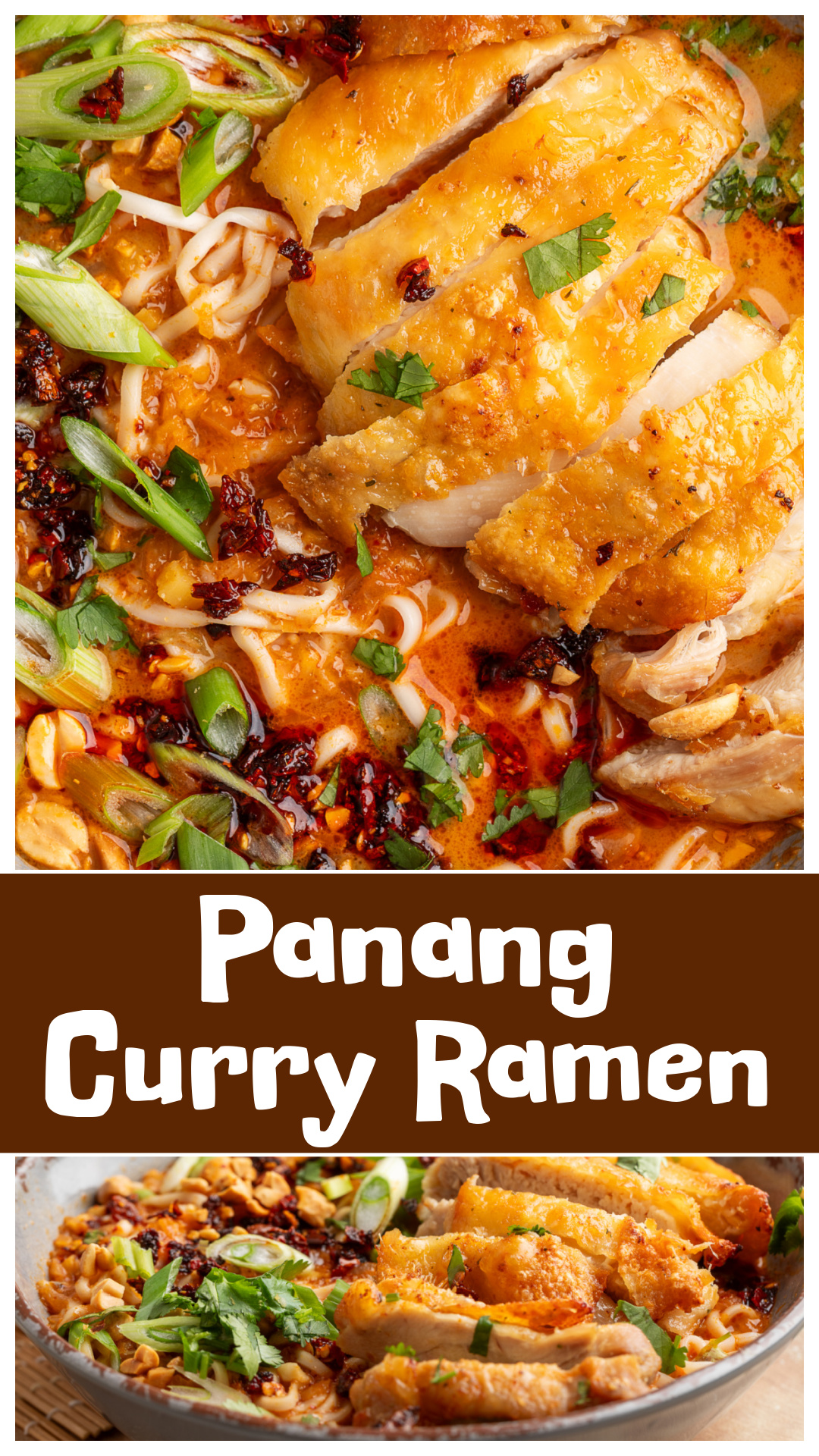
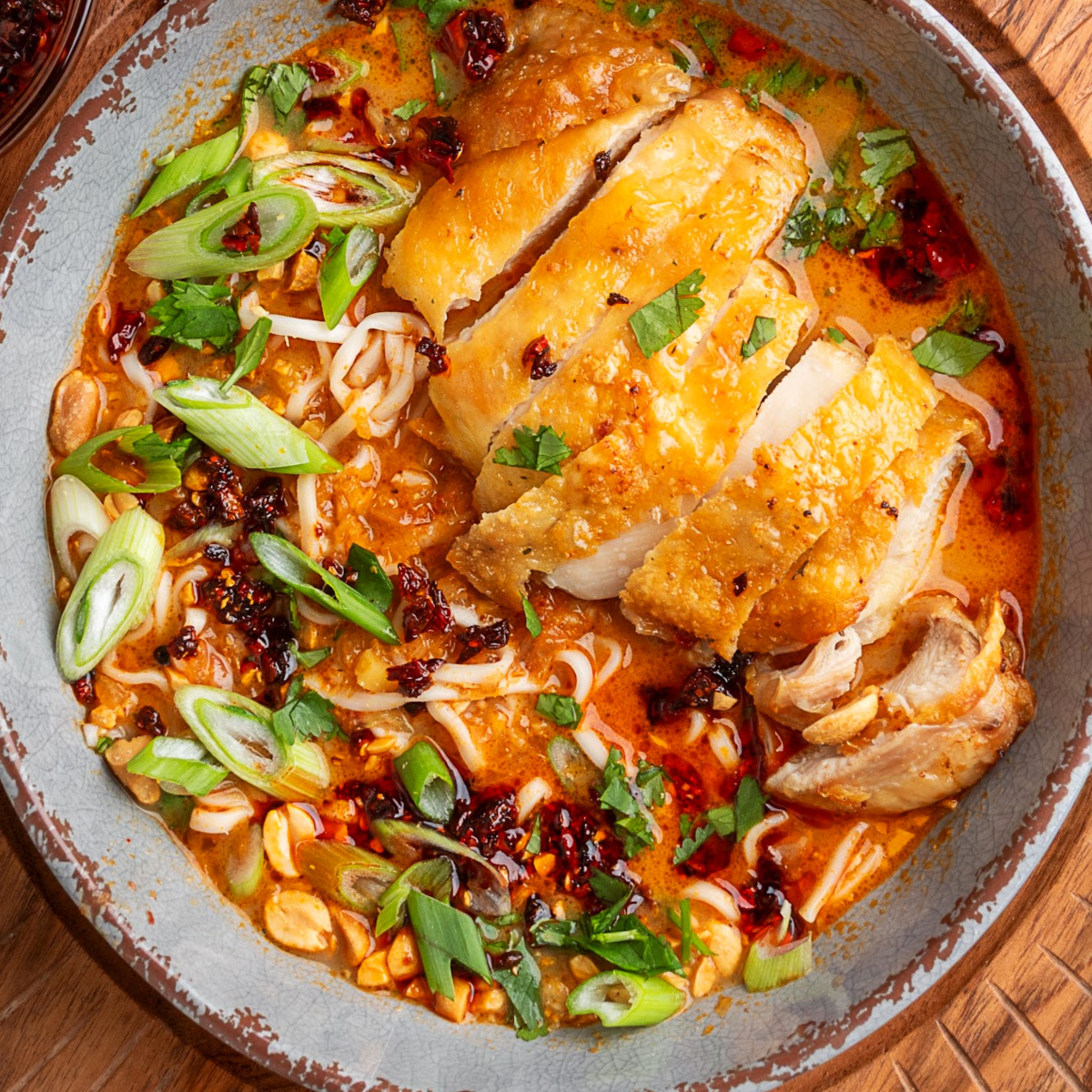
Panang curry ramen with crispy chicken and a rich coconut broth layered with ginger, garlic, and a Thai curry paste. Warm, filling, with real depth and enough substance to keep every bite interesting.
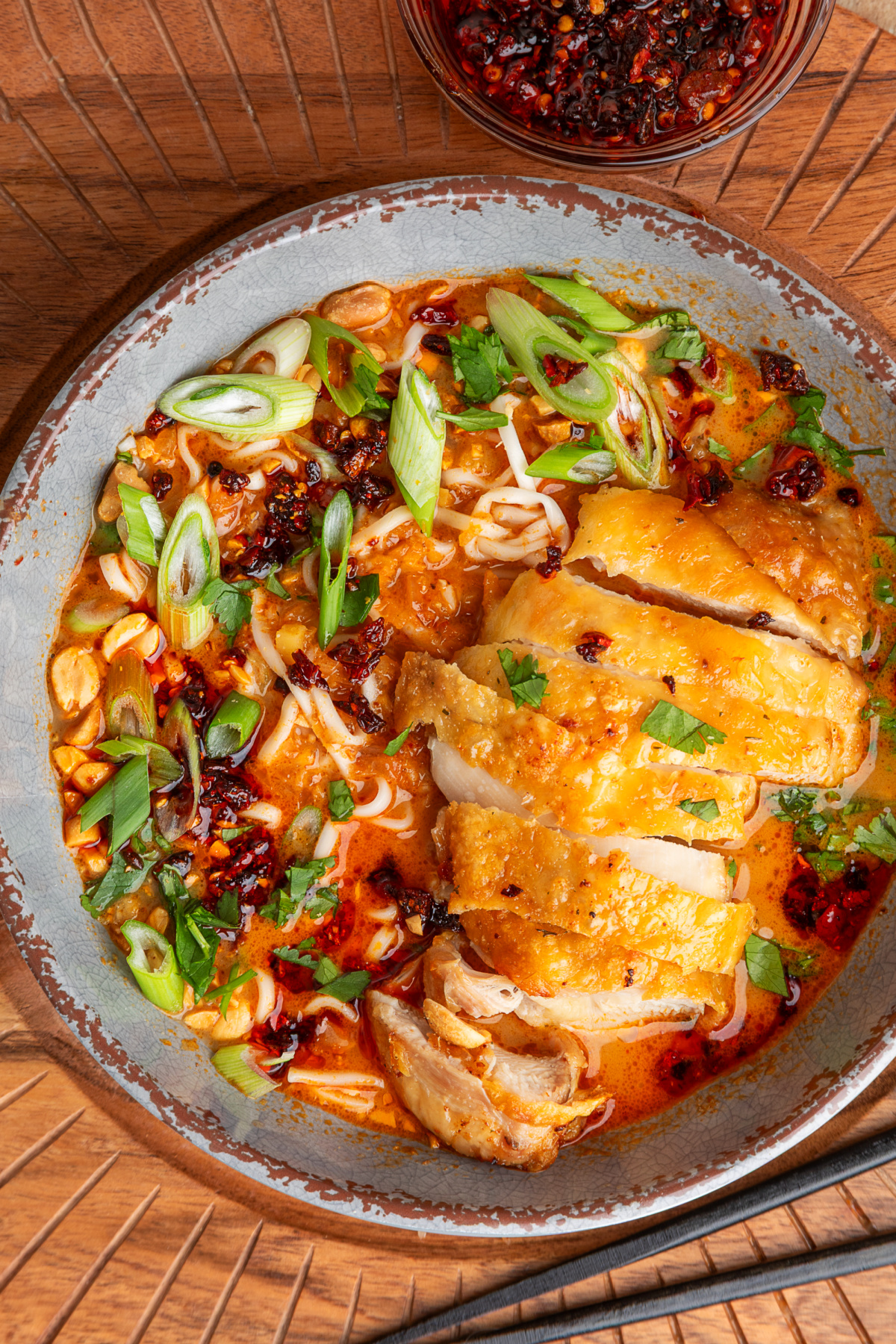
Panang Curry Ramen with Crispy Chicken, Landing
There’s a Boeing 747 sitting on top of a water park here in my town. It’s not parked beside it, or nearby, it was hoisted up with cranes and bolted to the top of the roof. I’m thinking about it alongside this Panang curry ramen with crispy chicken, which may sound unrelated until you understand how things this large really arrive.
You walk into the building, and above you is the belly of an airplane that has literally crossed oceans (I looked up the tail number, was an originally in service with Pan Am), likely carried hundreds of passengers and cargo, and moved through the air at a scale that required miles of runway with entire systems created around it. Now it’s fixed in place, hollowed out, repurposed, and somehow still itself. To experience it, you don’t board it the way you would expect. You take the stairs to the roof, enter the fuselage and slide down the waterslides through it.
That part is important, because that plane didn’t get to my town intact.
To land here at our regional airport, they had to strip it. The seats, the interiors, the things that made it usable in its former life all had to be removed. It wasn’t downsized or diminished, but emptied to lighten it, just enough to survive the landing on a runway that was never designed for something of its size. After that, it wasn’t flown at all. It was towed across the highway slowly and very carefully, over terrain that couldn’t support its original way of moving.
It didn’t arrive because it forced itself in. It landed because the conditions finally matched what it really was.
Right next door to the water park sits the Spruce Goose, another aircraft that feels impossible in a different way. That one didn’t land here at all. It was brought piece by piece, dismantled in Long Beach, California, a place I lived once, and reassembled here, inland, far from the water it was meant to skim. It took years and so much patience, along with the kind of belief that something large can still belong somewhere unexpected if you’re willing to move it honestly, instead of imagining it fits as-is.
I think about those two planes every time I drive by them, and not because they’re notable, but because neither of them shrank, expressed regret or tried to be shrewd about where they ended up. One of them was taken apart and rebuilt, while the other was emptied and rerouted. Both still take up space and draw people in, and require you to adjust how you approach them…which feels familiar.
For a long time, I thought the question I was circling was whether I was “too much.” Too big, intense, layered, specific, and unwilling to sand myself down into something easier to manage. But that was never really the problem. The issue was always logistics, just like the shorter airport runway. Where can something like me really land, and what do I have to remove before I too can arrive safely? What can stay with me because it’s foundational, and what is just my own survival furniture that filled the space when I had to keep flying?
I realized I can let the noise go and allow roles to disappear, while also letting the framework fall apart.
My essence cannot.
I’ve lived long enough now to know that the things that matter most in my life don’t broadcast themselves noisily. They repeat and expand, while becoming dependable without asking for anyone’s consent. That’s also how food happens and how meaning finds its way in to everything.
Which brings me to this bowl of ramen.
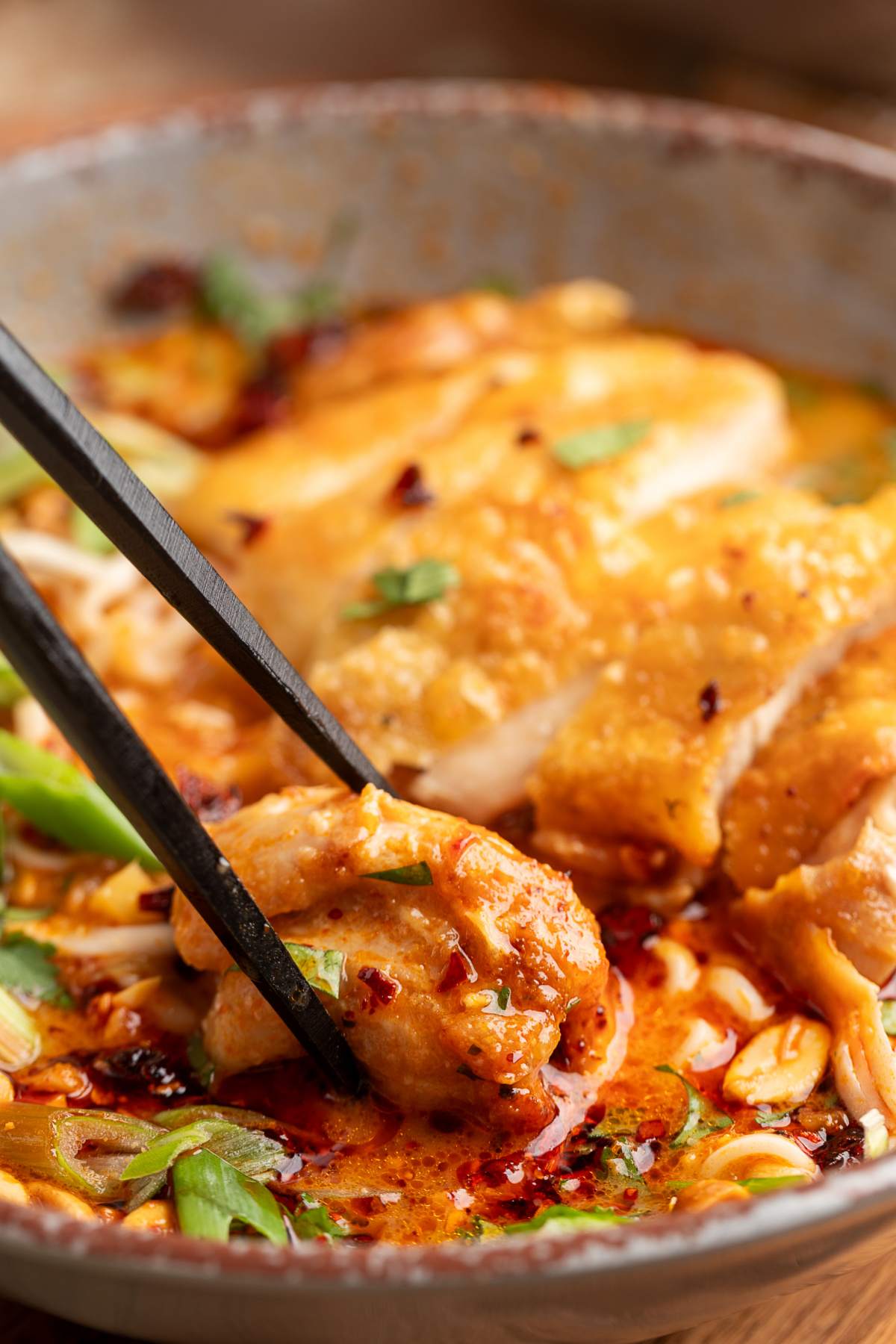
My Panang curry ramen is not an extravagant recipe. It’s layered, sure, but it’s not trying to move you. The broth is rich because it’s made patiently. Coconut milk, curry paste bloomed in oil (that’s important), ginger and garlic given time to soften instead of being hurried through the process. The chicken is cooked separately so it can stay crisp and whole, not soggy and sacrificed to the broth. Everything is handled separately, then meets in the bowl.
This is the kind of dinner you make when you’re done trying to force landings. When you understand that some things don’t need to be smaller. They just need something underneath them that can hold them. This type of comfort doesn’t come from simplicity, it comes from consistency.
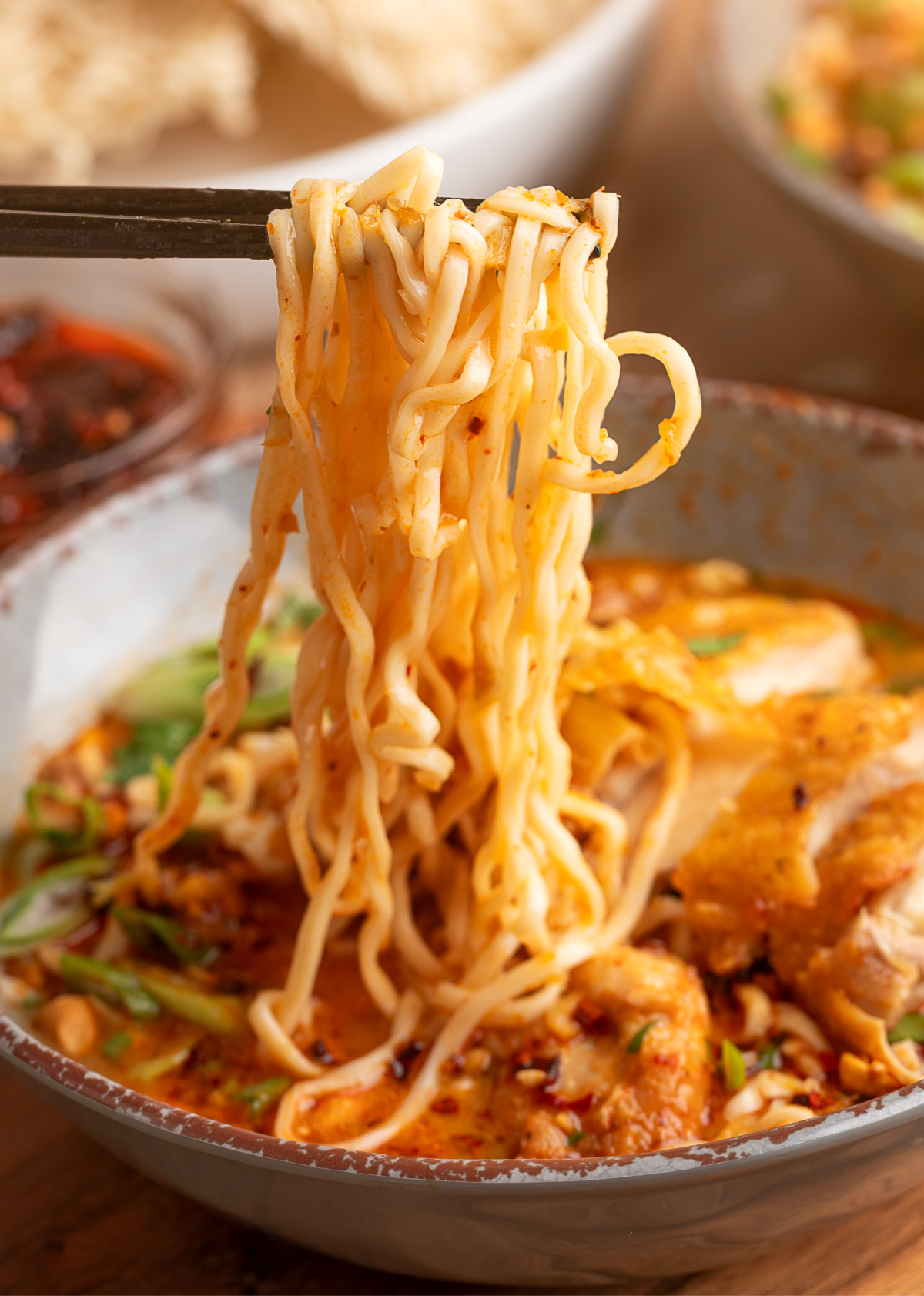
This isn’t a meal you eat quickly, and it’s not one you forget immediately either. You sit with it, noticing how the broth coats the noodles. The sweetness balances the heat and the crunch of the chicken holds instead of becoming one with the background. It’s warm and bold, not soft, and it tastes lik what you’re probably expecting.
So yes, there’s a 747 on the roof of a water park in my town. And a wooden plane rebuilt inland from a coastal life I once lived. Both arrived only after being dismantled, emptied, and slowed enough to survive where they were going.
I recognize that now because I’ve lived it.
There were years I thought arrival meant effort. If I just kept flying, adapting, and rearranging myself midair, eventually the ground would meet me. It doesn’t work like that. You either remove what isn’t essential, or you never touch down at all.
This bowl of Panang curry exists because nothing here is acting like it’s lighter than it is. The broth is made slowly and the chicken stays together. I balanced the heat, but did not tame it. Everything comes together the way it’s meant to and stays.
Some things never arrive because you keep insisting they stay airborne.
This bowl doesn’t do that.
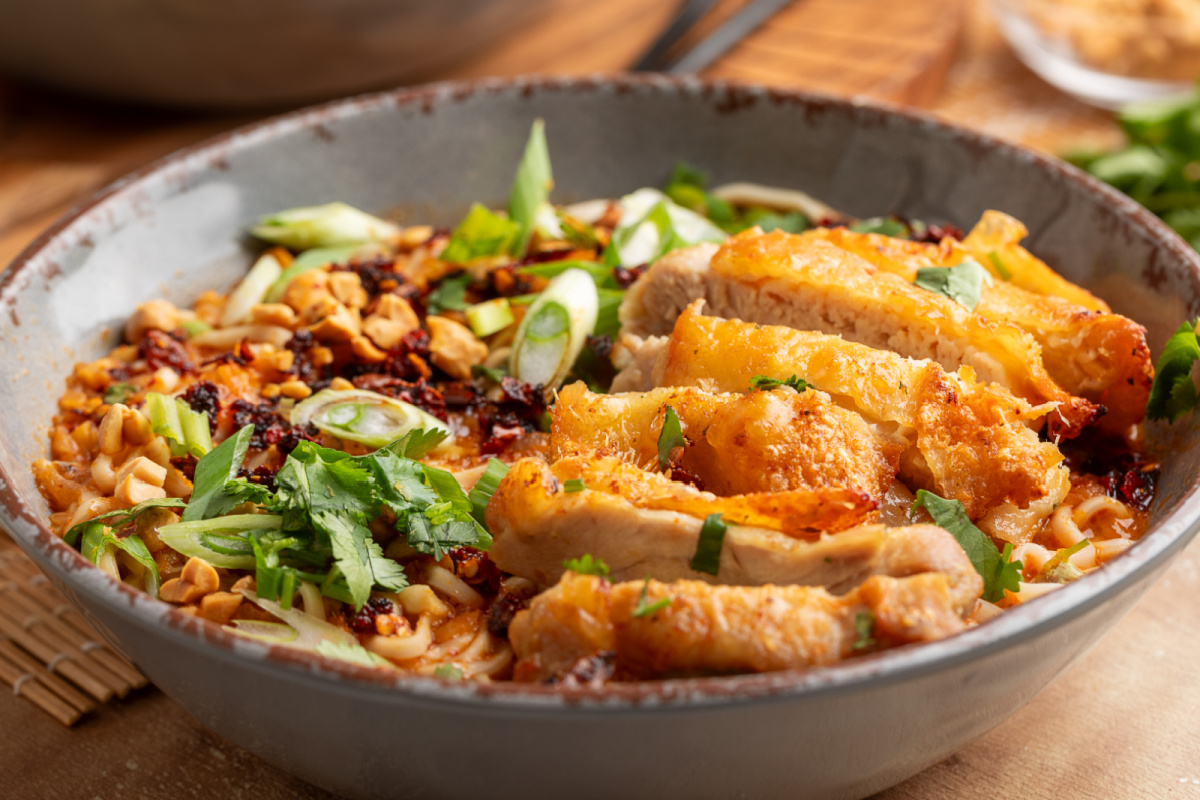
Why I Love This Recipe
- It feeds people whether or not you feel inspired.
- The chicken stays crispy and intact, not sacrificed to the broth or boiled into anonymity.
- It’s filling without asking you to recover afterward.
- It gets better overnight, which feels like you planned it that way.
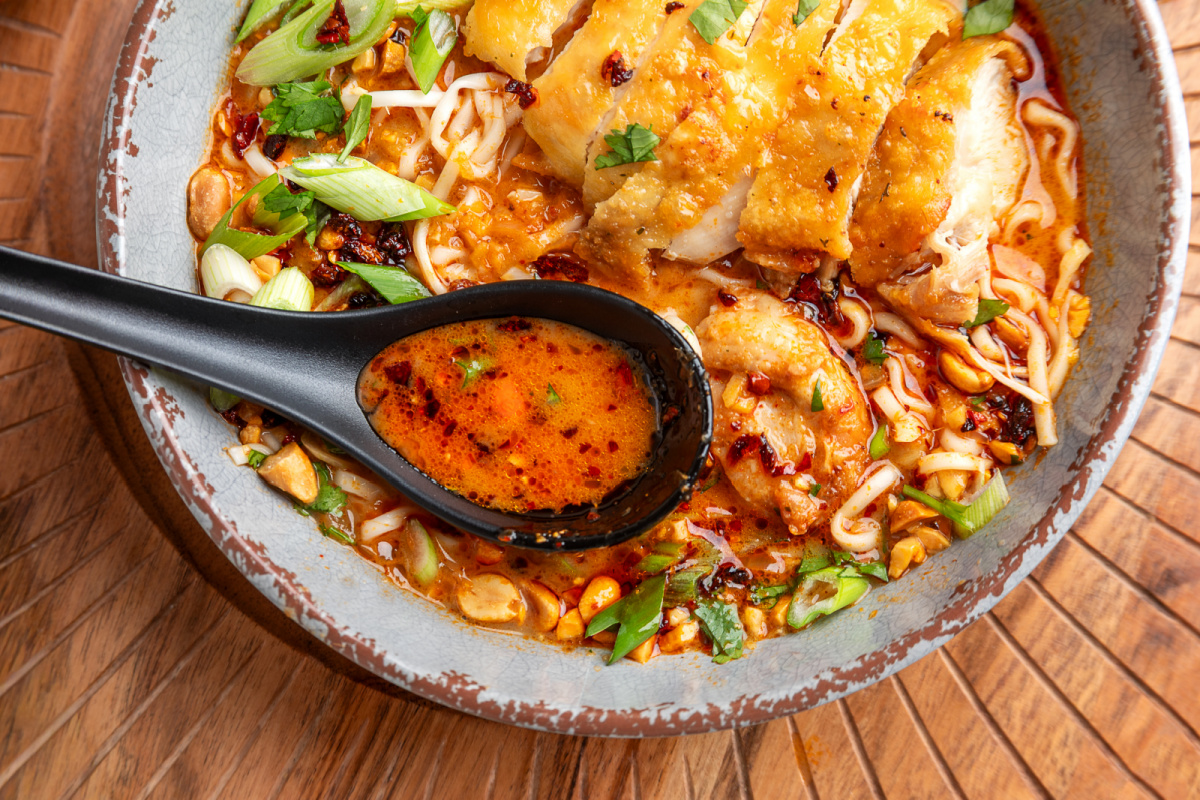
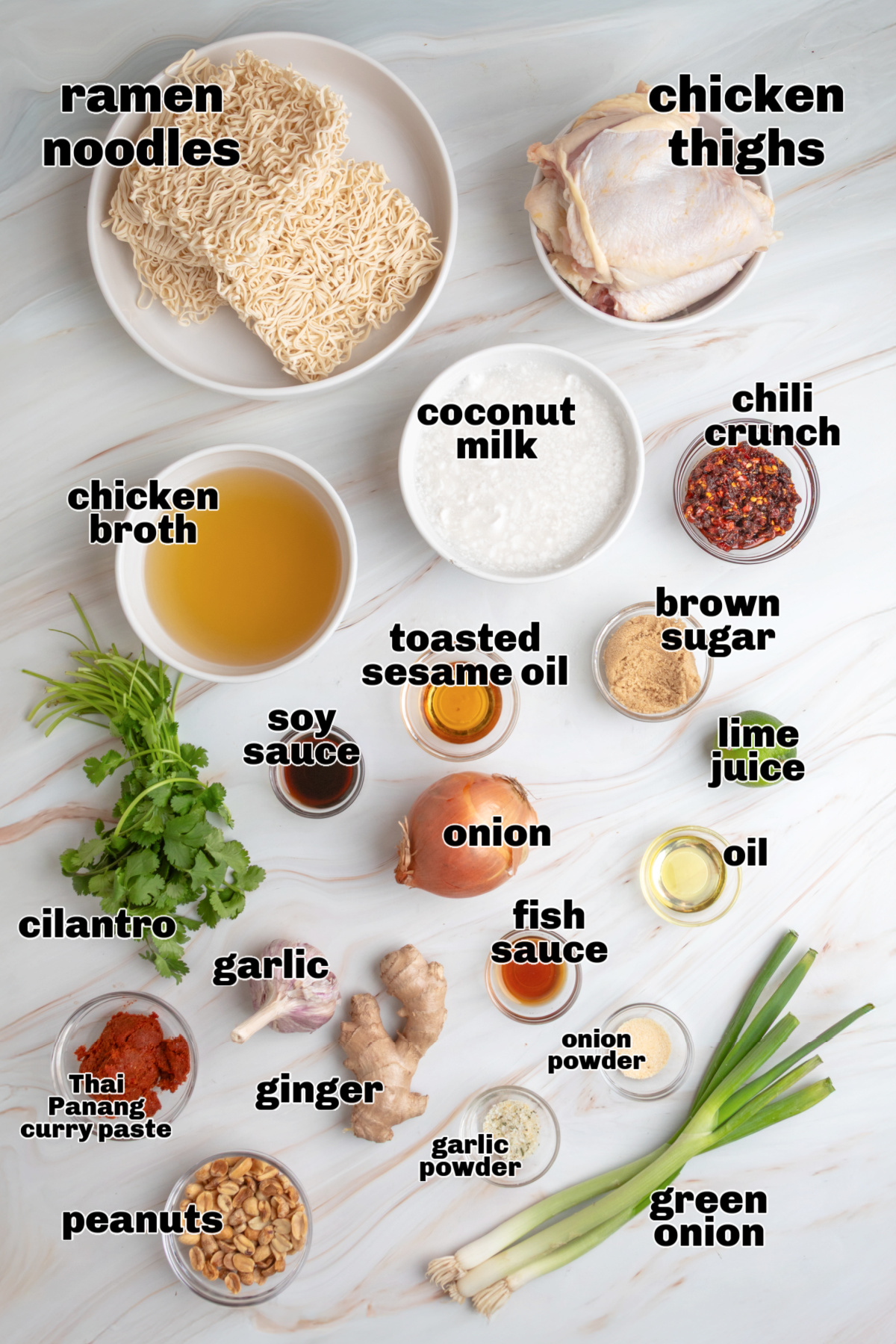
Ingredients
- Chicken thighs (skin-on, bones removed) – Thigh meat stays tender no matter what, which is what you want. The higher fat content keeps it from drying out.
- Onion powder + garlic powder (for the chicken) – These go on the chicken before it cooks, not to complicate things, but to give it a sense of direction.
- Thai Panang curry paste – Dense and concentrated. A small amount is all you need, but only if you bloom it in oil at the beginning. Dropped in too late, it never fully integrates.
- Olive or avocado oil – The initial runway. Nothing moves without it.
- Yellow onion – Melts into the ramen.
- Fresh ginger – Don’t leave this out. It changes the direction of the dish without dominating it.
- Garlic – Adds to the momentum.
- Low-sodium chicken broth – The volume. You need it. Ramen absorbs more than you think. Keep some extra around if you plan to have leftovers. The ramen noodles will drink some of the broth, so a splash of broth the next day fixes that.
- Full-fat canned coconut milk – This is what gives the broth its body. Use full-fat canned, not the refrigerated kind. This is not for sweetness or richness. Without it, the curry is never quite the same.
- Brown sugar – I use it to keep the spice from running unchecked, not to make it sweet.
- Fish sauce – Makes the ramen taste finished.
- Soy sauce – Salty flavor with range.
- Toasted sesame oil – A nuance, not a statement.
- Lime juice – Comes in for acidity.
- Ramen noodles (dried, discard the seasoning packets) – These need boundaries. Cooked separately so they don’t cloud the broth, added only when it’s time. They absorb whatever you give them, for better or worse.
- Green onions, cilantro, chopped peanuts, chili crunch – None of these are required, but every one of them reminds you that this bowl is finished, not improvised.
How to Make Panang Curry Ramen with Crispy Chicken
Find the complete printable recipe with measurements in the recipe card at the BOTTOM OF THE POST.
- Step One (make the curry base)
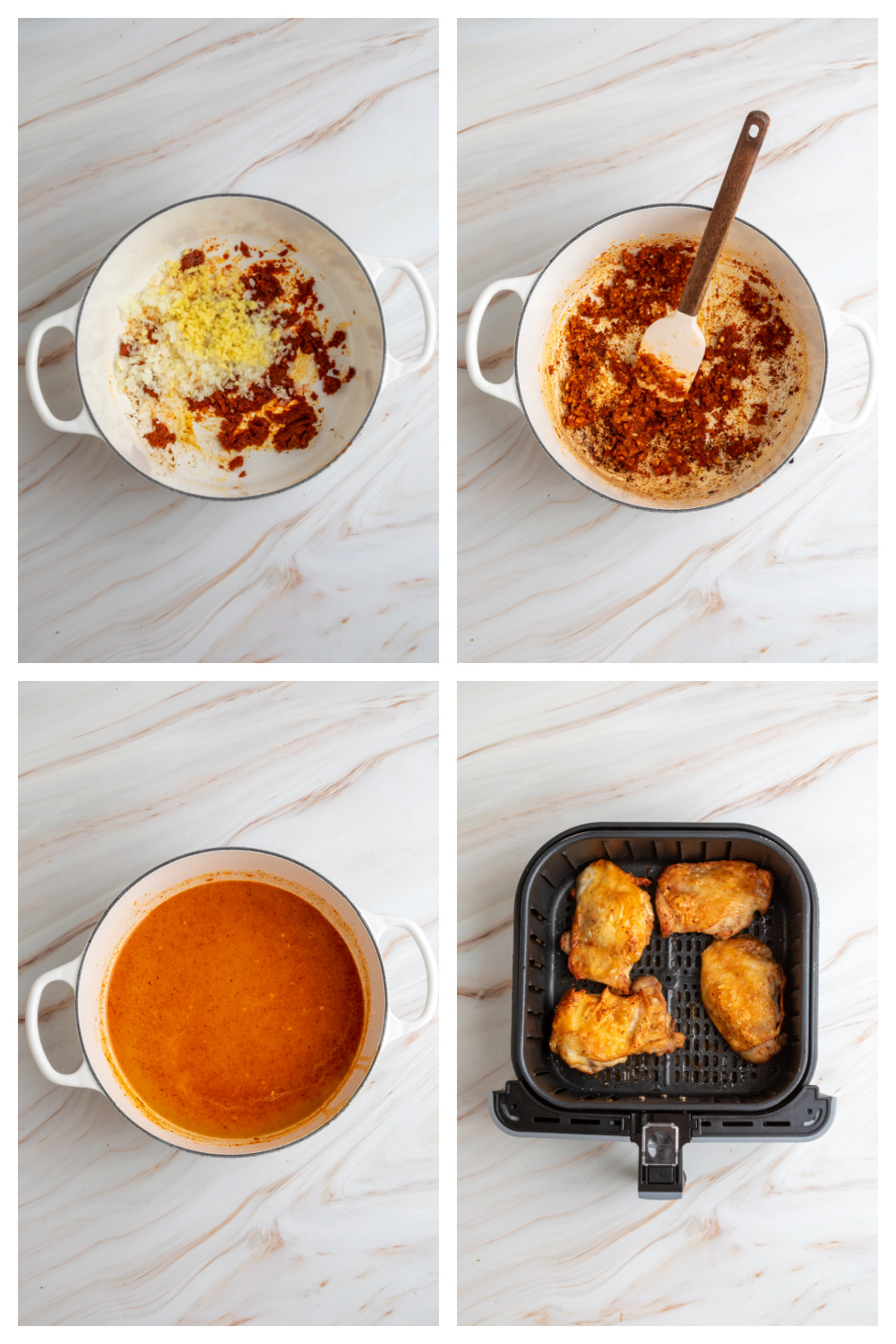
Heat the oil in a large Dutch oven over medium heat. Add the diced onion and let it cook until it loosens and turns slightly translucent, about 4 to 5 minutes. Stir in the garlic and ginger and cook briefly, just until fragrant. Add the Panang curry paste and cook for 1 to 2 minutes, stirring constantly, until it darkens slightly. Curry paste varies in heat by brand, so adjust early while it’s still concentrated. - Step Two (create the broth)
Pour in the chicken broth and coconut milk, stirring until the curry paste is fully dissolved. Add the soy sauce, sesame oil, fish sauce, brown sugar, and lime juice. Bring the broth to a gentle simmer and let it cook for 10 to 15 minutes so the flavors develop and the broth thickens slightly. Taste here and adjust salt before the noodles go in. - Step Three (cook the noodles)
While the broth simmers, cook the ramen noodles in a separate pot of boiling water according to the package directions, but do not add the seasoning packet. Drain and set aside. Cooking separately keeps starch from clouding the broth. Keeping the noodles separate prevents them from overcooking before everything else is ready. - Step Four (crisp the chicken)
Pat the chicken thighs dry, rub them with olive oil and season them with salt, garlic and onion powder, and cook them in an air fryer at 375°F for 16 to 20 minutes, until the skin is crispy and the chicken is cooked through. Let the chicken rest for a few minutes before slicing. Resting keeps the juices from running into the broth too early. Thighs can also be cooked in the oven or in a skillet. The goal is crispy skin regardless of the method you choose. - Step Five (assemble and serve)
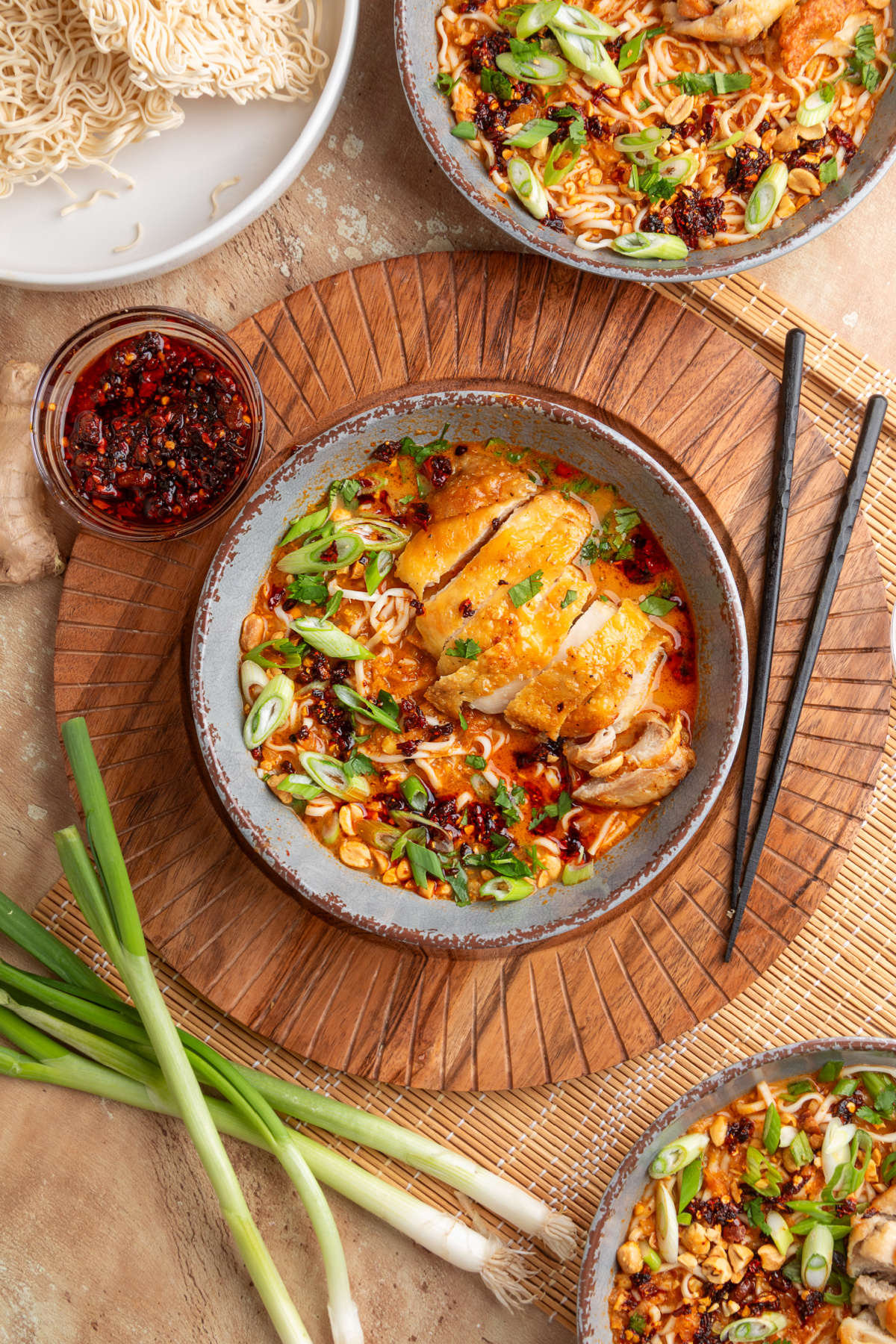
Divide the noodles among serving bowls and ladle the hot Panang curry broth over the top. Arrange the sliced chicken over the noodles rather than mixing it in. Finish with green onions, cilantro, peanuts, and chili crunch, if using. Layering instead of stirring keeps the textures distinct. Serve immediately while the chicken is still crisp.
Recipe Tips
- Bloom the Panang curry paste in oil before anything else goes in. This activates the aromatics before liquid dulls them. Curry paste straight into liquid never develops the same way. Cooking it briefly in oil lets the spices open up before the coconut milk ever touches it.
- The broth needs body to carry the curry paste, ginger, and garlic without thinning out. Full-fat canned coconut milk is what holds everything together so the ramen noodles don’t end up swimming in something forgettable.
- Cook the chicken separately so it stays crisp. Let the fat render fully before flipping so the skin crisps instead of steams. Let it rest, then slice.
- Keep the noodles out of the broth until the end. They absorb more than you think and faster than you expect. They continue absorbing even off heat.
- Sugar, fish sauce, and lime all belong, even if they seem small. Each one controls a different edge of the broth. Remove any of them and the broth loses its direction.
- Remove the bones from skin-on chicken thighs yourself. You want the skin for crispness and the thigh meat for tenderness. Taking a minute to debone them gives you exactly what this bowl needs without sacrificing texture. You control the trim and the texture.
Storage
- Store it in an airtight container in the refrigerator, and it will keep for up to four days. The noodles will keep absorbing broth as it sits, so when you reheat it, add a splash of chicken broth or water and warm it gently until it loosens back up. Stir once or twice and it comes right back.
- I don’t freeze this as-is. Coconut milk and ramen don’t love being frozen together. If you know you want to freeze it, freeze the broth only, then make fresh noodles and chicken when you’re ready to eat.
- This is one of those soups that’s better the next day, once everything has had time together.
FAQs
- What does Panang curry taste like?
Panang curry paste is a Thai red curry variation, but it’s warmer than you might expect, not aggressively spicy. It’s made with dried chiles, garlic, lemongrass, galangal, and spices that have a subtle nuttiness that shows up once it’s cooked in oil. When you bloom it slowly, it smells rich and slightly sweet, not hot. The coconut milk smooths everything out in the end. - Is this ramen spicy?
Not in a “clear your sinuses” way, but it definitely has presence. The level of heat depends entirely on the brand of Panang curry paste you use and how much you add. One tablespoon is mild and three tablespoons is noticeable but still controlled. - How do I remove the bone from a chicken thigh?
It’s easier than it sounds. Lay the thigh skin-side down and feel for the bone with your fingers. Run a sharp knife along one side of the bone, then the other, staying close to it. Once it’s exposed, you can lift it out with your fingers or the tip of the knife. Trim any excess cartilage, keep the skin intact, and you’re done. No finesse required. This isn’t surgery. - Why cook the chicken separately instead of in the broth?
Because skin and broth want different things. Cooking the chicken on its own lets the fat render and the skin crisp, which gives you texture you don’t lose the second it hits the bowl. The broth stays shiny, and the chicken stays together. They meet when they’re ready. - Can I put the noodles directly into the broth?
You can, but they’ll keep drinking liquid long after you’re done eating. Cooking them separately gives you control, especially if you want leftovers that don’t turn into a single mass by morning. - Does this taste better the next day?
Yes. Some things improve once they’ve had time to sit. This is one of them. - Can I make this dairy-free or gluten-free?
It already is dairy-free. For gluten-free, use gluten-free ramen noodles and a gluten-free soy sauce or tamari. Nothing else needs changing.
From My Kitchen Notes
Not tips, just things I scribble about and overthink.
- Chicken skin doesn’t crisp if it’s crowded. I feel like that applies elsewhere too.
- Ramen noodles are happier when they’re not asked to absorb everyone else’s problems.
- It’s interesting how often the things that last are the ones that weren’t slammed together.
- Some meals fail because you try to make everything happen in one place at one time. This one doesn’t do that. The broth develops on its own terms and the chicken stays separate until the end. Nothing gets erased to make room.
- Ramen is not a casual dish. It looks casual, but really, it’s engineered. If you don’t respect the order of operations, the whole thing turns muddy. That’s not a punishment, it’s physics.
- Some things aren’t meant to land until the path is clear.
- This bowl of curry doesn’t need you to believe in anything. It just shows you what happens when you let things come into view the way they need to.
- The 747 didn’t stop being a plane because it landed differently. And this isn’t “just ramen” because it’s familiar.
- This ramen does not try to be understated, and it also doesn’t spiral. That combo is rare and worth keeping around.
Aromatic Broths, Properly Handled
- Thai Chicken Curry Soup – Coconut curry, rice noodles.
- Slow Cooker Thai Chicken Noodle Soup – Ginger broth, hands-off simmer.
- Creamy Red Pepper Coconut Soup – Velvety coconut, subtle heat.
- Carrot–Parsnip Ginger–Lime Soup – Root vegetables, ginger lift.
This post may contain affiliate links. Please read my disclosure policy.
Panang Curry Ramen with Crispy Chicken
Equipment
- Dutch Oven or heavy-bottomed pot. For making the curry base and simmering.
- Air Fryer or skillet, oven. For the crispiest chicken skin.
- Saucepan (medium-sized). For cooking ramen noodles separately.
Ingredients
Chicken:
- 4 large (~2 lbs/ 900 g) chicken thighs skin-on, bones removed
- 1 tbsp (15 ml) olive oil or avocado oil
- salt
- ½ tsp (1.5 g) garlic powder
- ½ tsp (1.5 g) onion powder
Broth and Noodles:
- 2 tbsps (30 ml) olive oil or avocado oil
- ⅓ cup (50 g) yellow onion
- 3 cloves garlic minced
- 3 tbsps (45 g) Thai Panang curry paste
- 1 tbsp (6 g) fresh ginger grated
- 3 cup (720 ml) low-sodium chicken broth
- 1 can (13.5 oz / 400 ml) full-fat coconut milk
- 1 tbsp (15 ml) low sodium soy sauce
- 1 tsp (5 ml) fish sauce
- 2 tbsps (30 ml) toasted sesame oil
- 2 tbsps (25 g) light brown sugar
- 2 tsps (10 ml) fresh lime juice
- salt to taste
- 1 package (8-9 oz / 250 g) ramen noodles seasoning packet not used
Toppings:
- green onions sliced
- fresh cilantro chopped
- roasted, salted peanuts
- Chili Crunch (optional)
Instructions
- Heat the oil in a large Dutch oven or heavy-bottomed pot over medium heat. Add the diced onion and cook for 4 to 5 minutes, stirring occasionally, until softened and lightly translucent.2 tbsps (30 ml) olive oil, ⅓ cup (50 g) yellow onion
- Stir in the minced garlic and grated ginger and cook for 30 seconds, stirring constantly, until fragrant.3 cloves garlic, 1 tbsp (6 g) fresh ginger
- Add the Thai Panang curry paste and cook for 1 to 2 minutes, stirring frequently, until the paste darkens slightly and becomes aromatic.3 tbsps (45 g) Thai Panang curry paste
- Pour in the chicken broth and coconut milk, stirring to fully dissolve the curry paste. Add the soy sauce, sesame oil, fish sauce, brown sugar, and lime juice. Bring the mixture to a gentle simmer and cook for 10 to 15 minutes to allow the flavors to develop. Taste and adjust with salt if you like.3 cup (720 ml) low-sodium chicken broth, 1 can (13.5 oz / 400 ml) full-fat coconut milk, 1 tbsp (15 ml) low sodium soy sauce, 1 tsp (5 ml) fish sauce, 2 tbsps (25 g) light brown sugar, 2 tsps (10 ml) fresh lime juice, salt , 2 tbsps (30 ml) toasted sesame oil
- While the broth simmers, cook the ramen noodles in a separate pot of boiling water according to package directions. Drain and set aside. Do not use the seasoning packet.1 package (8-9 oz / 250 g) ramen noodles
- Pat the chicken thighs dry with a paper towel, especially the skin. Rub each thigh lightly with olive oil, then sprinkle evenly with garlic powder and onion powder. Cook in an air fryer at 375°F (190°C) for 16 to 20 minutes, or until the internal temperature reaches 165°F (74°C) and the skin is crisp. Let rest for 5 minutes, then slice. If you don't have an air fryer, thighs can be made in the oven or in a skillet on the stove.4 large (~2 lbs/ 900 g) chicken thighs, 1 tbsp (15 ml) olive oil, salt, ½ tsp (1.5 g) garlic powder, ½ tsp (1.5 g) onion powder
- To assemble, divide the cooked noodles between serving bowls. Ladle the hot Panang curry broth over the noodles. Top with sliced crispy chicken, chopped green onions, cilantro, chopped peanuts, and a spoonful of chili crunch, if desired. Serve immediately.green onions, fresh cilantro, roasted, salted peanuts, Chili Crunch
Notes
- Blooming the curry paste in oil prevents a flat or raw flavor in the broth.
- Adjust the heat by increasing or decreasing the amount of Panang curry paste. This dish is a little spicier than mild.
- Full-fat canned coconut milk provides body and emulsifies with the curry paste.
- Cooking noodles separately prevents starch from clouding the broth.
- Resting the chicken preserves crisp skin and prevents juices from thinning the broth.
- The broth can be made ahead and refrigerated for up to 4 days.
- If you don't have an air fryer for the chicken, preheat the oven to 400º. Place a wire rack on a baking sheet. Place the chicken skin side up and cook for 25-30 minutes. Broil: If the skin is not as crispy as desired, turn on the broiler for the last 1–2 minutes, watching closely to prevent burning. Remove from the oven and let rest for a few minutes before slicing.
Nutrition
Have you made this Panang Curry Ramen with Crispy Chicken? I’d love to hear how it turned out – leave a comment below and let me know.
As an Amazon Associate and member of other affiliate programs, I earn from qualifying purchases.
Ricki says
Made this tonight for dinner. Did the chicken in the oven, turned out great. So much flavor. Love this kind of recipes.
Tina Wiley says
So this was really flavorful. Loved the crispy chicken and all the flavor.
kiki says
Loved having that crispy chicken on top.