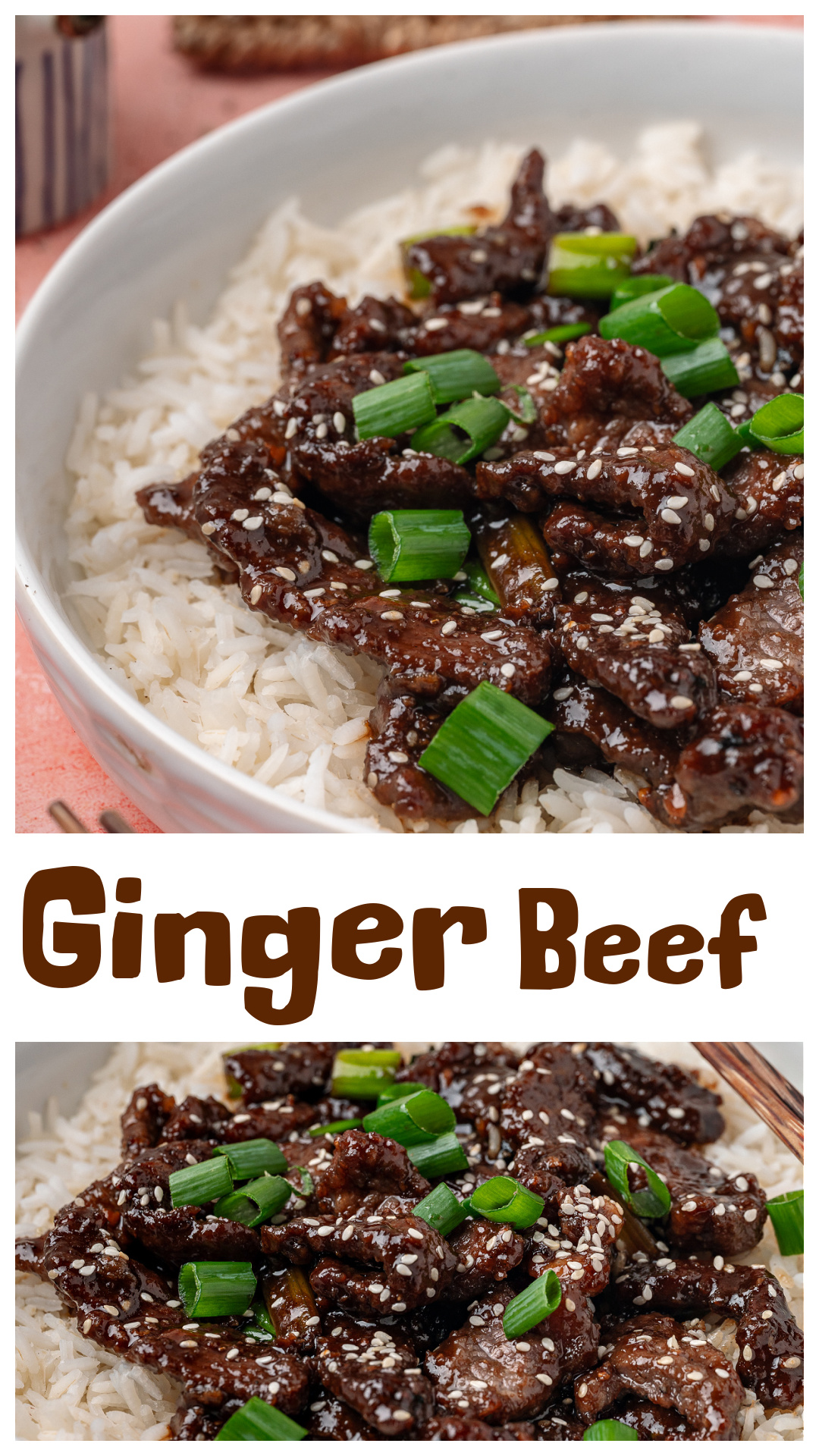
Sirloin sliced thin, velveted lightly, and finished in a ginger-soy sauce that moves quickly and doesn’t overstay. A ginger beef recipe for nights when you want depth without drama and dinner without delay.
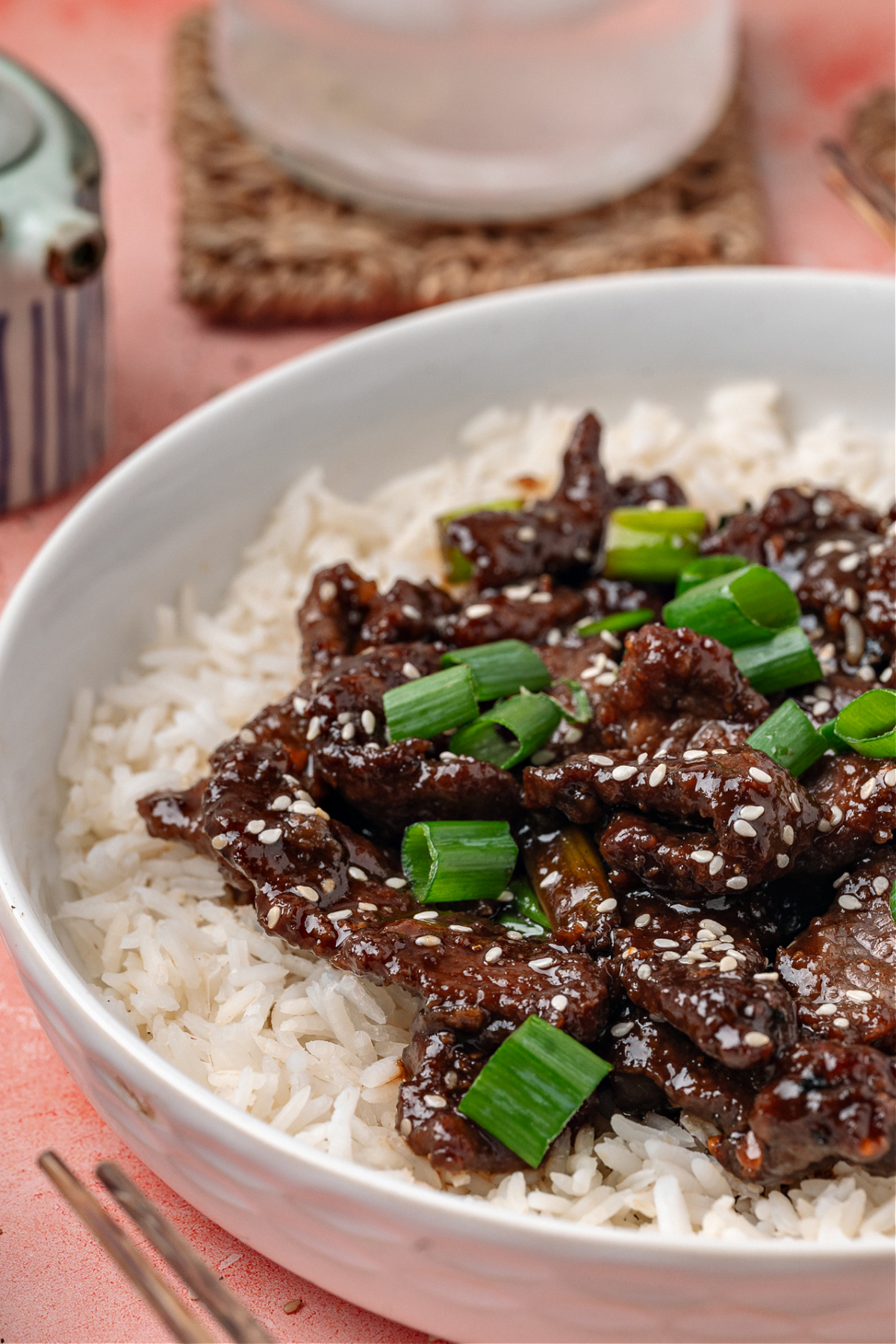
Ginger Beef Is Chic
I know what chic is because my body reacts before my mind does.
On a man, it’s weight.
Not size, gravity.
The way he stands still and lets the room orient around him.
An ivory tuxedo jacket with just enough black trim (not black lapels), worn once, remembered forever.
A forearm revealed by accident, not invitation.
The certainty of someone who doesn’t hurry because nothing is chasing him.
And then the cuff, that precise inch of white linen revealing itself past the sleeve of a suit jacket, like a secret you weren’t meant to notice but can’t unsee. My kryptonite.
The collar doing the same thing at the back of the neck.
Not styled. Not shown off. Just there. Peeking out, one half inch.
Masculinity like that doesn’t ask.
It decides.
And then acts.
On a woman, chic lives lower.
In the hips.
In the throat.
In the pause before she speaks when she already knows the answer.
It’s not softness.
It’s command wrapped in warmth.
Femininity that could undo you, without ever touching you.
The kind that sits back and lets the wanting come to her.
This is the energy I cook from.
Ginger beef doesn’t plead.
It doesn’t perform.
It doesn’t circle you.
Thin slices of beef, cut with intention.
Fresh ginger that hits first, bright and unavoidable.
Soy and sugar pulling against each other until neither wins.
The pan is hot.
The moment is short.
You stop exactly when it’s right.
When it reaches the table, it carries its own authority.
Dark. Rich. Complete.
It doesn’t need explanation. It doesn’t wait for permission.
You take a bite.
Someone else does too.
No one speaks.
That’s chic.
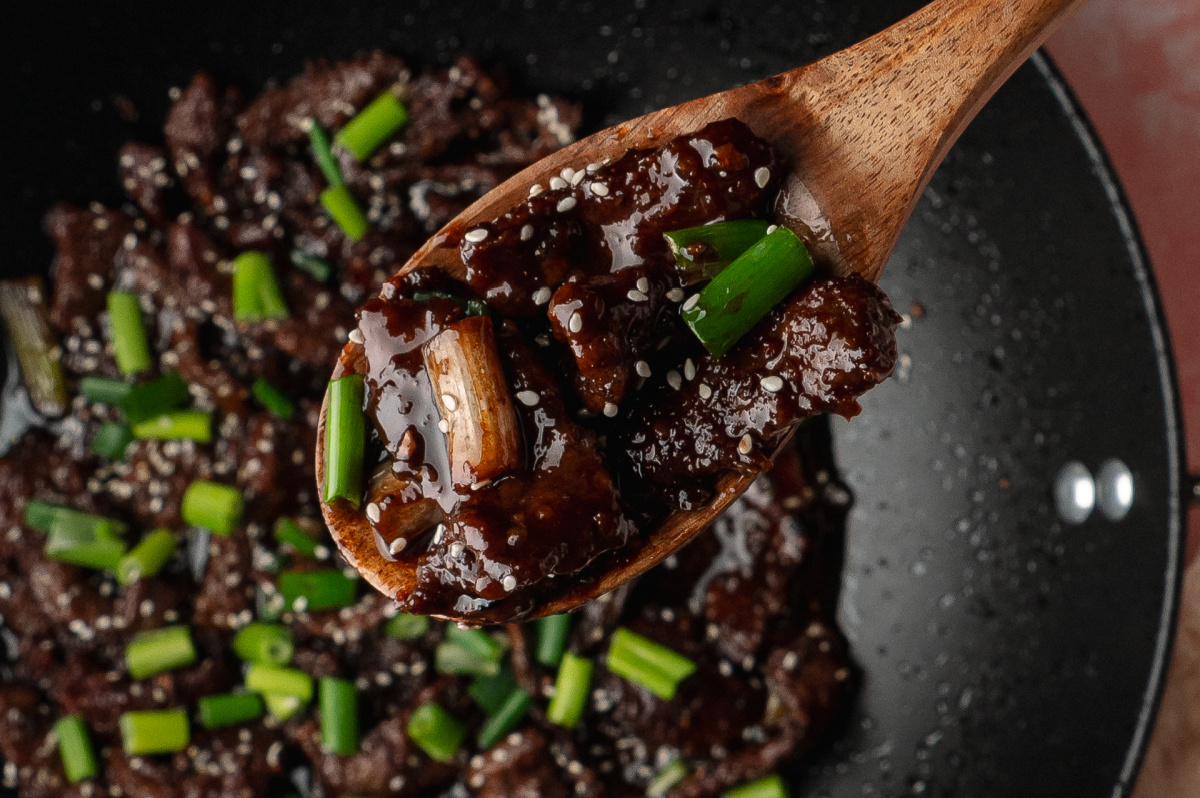
Why I Love This Recipe
- The ginger moves through the pan the way warmth travels through a room when someone you trust walks in, subtle at first, then unmistakable, settling without asking permission.
- The beef cooks quickly and stays tender, like a man who knows when to step forward and when to hold, acting decisively without needing to stay in the room afterward. That’s chic.
- The sauce receives it all at the end, warm and waiting, folding around the meat without rushing, without pulling, without asking for more than what’s given.
- Soy and brown sugar meet like familiarity rather than effort, the kind of pairing that feels inevitable once it happens and obvious only in hindsight.
- There’s a moment when everything could tip too far and doesn’t, when timing holds instead of collapses, and that holding back feels like intelligence, not caution.
- The pan carries a closeness that never touches, a charged space where nothing reaches and nothing retreats, and somehow that makes it more intimate.
- Eating it feels composed and indulgent at the same time, chic in the way that leaves room between bodies and lets the wanting stay alive.
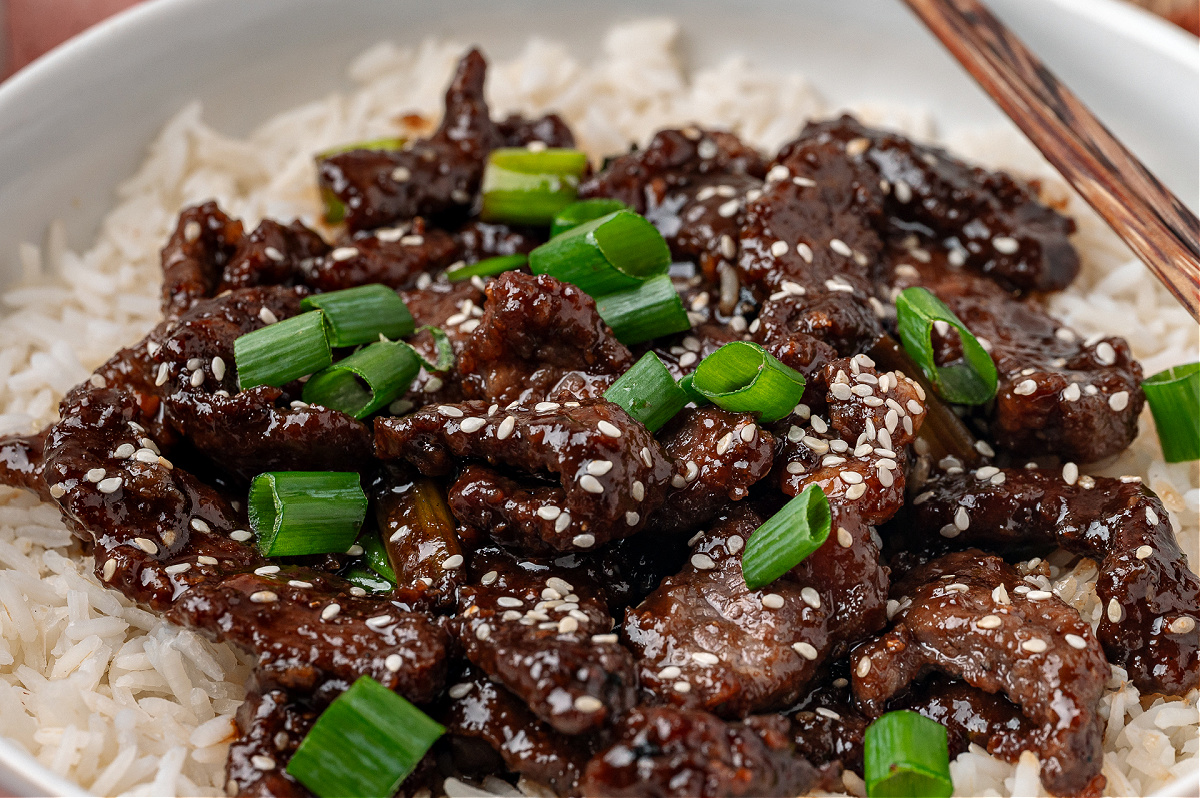
Ingredients
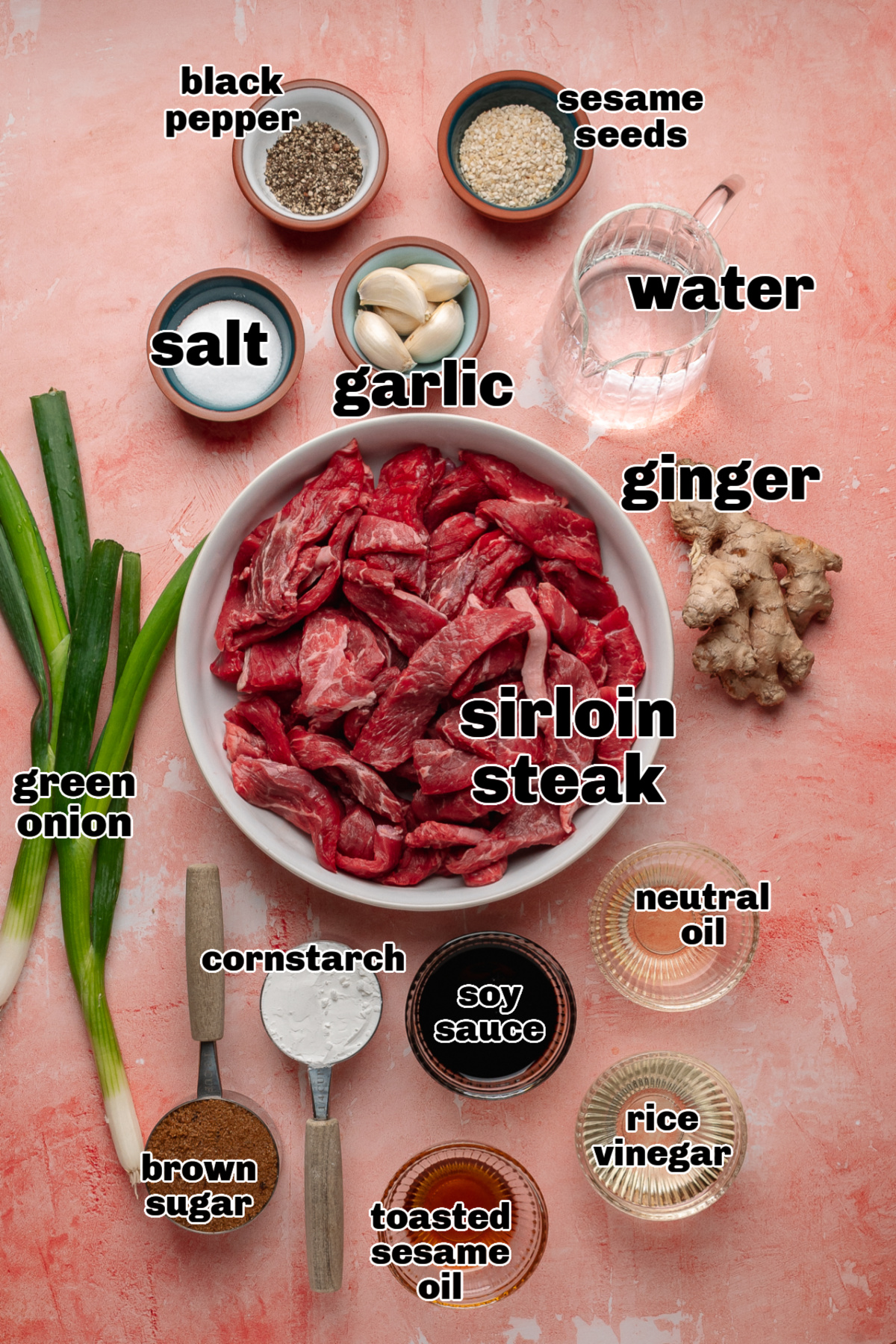
Chic lives in discernment you don’t have to name. In knowing exactly what belongs and refusing to add anything else. This dish works because nothing here is trying to impress you. Everything knows why it’s present.
- Sirloin steak – Cut thin, always against the grain, the way you learn to read a body by paying attention to where it yields. Sirloin has just enough discipline to stay intact and just enough softness to reward care.
- Cornstarch – A light coating, barely there. It’s not about crispness or crunch. It’s about giving the beef a second skin so the sauce can stay close without gripping too hard.
- Fresh ginger – Finely grated until it disappears into the sauce and leaves only warmth behind. This is the point of attraction. Everything else arranges itself around it.
- Garlic – Minced small and used with intention. It doesn’t lead. It darkens what’s already there.
- Low-sodium soy sauce – Brooding. Anchoring. It brings gravity without heaviness, the way a voice does when it doesn’t rush to fill the room.
- Brown sugar – Packed, measured, and used sparingly. Just enough sweetness to round the edges, never enough to soften the line.
- Rice vinegar – A quiet interruption. It keeps the sauce awake, keeps it from drifting too far into comfort.
- Toasted sesame oil – A final note that lasts longer than it should. Warm, nutty, unmistakable. You only need a little. You always do.
- Neutral oil – For the pan. It does its work and leaves no record of itself.
- Green onions – The whites soften and give themselves to the pan. The greens stay fresh, added at the end, like something you don’t reveal until it matters.
- Sesame seeds (optional) – Not necessary. Still worth it.
- Cooked rice (optional) – Something simple to hold what spills. Or not. This dish doesn’t require permission to stand alone, it’s chic enough by itself.
How To Make Ginger Beef
Find the complete printable recipe with measurements in the recipe card at the BOTTOM OF THE POST.
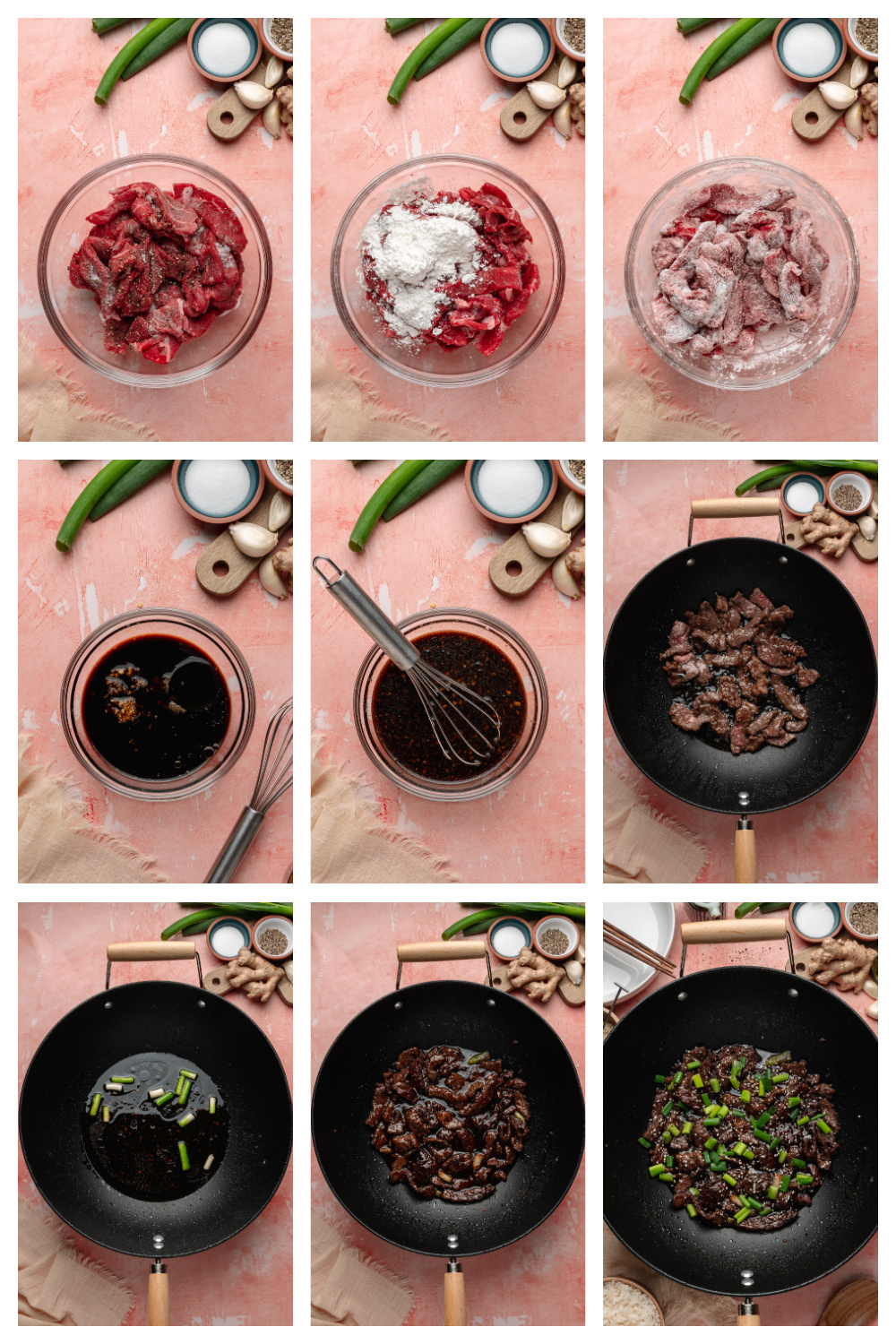
- Step One (slice and coat the beef)
Slice the steak thin and against the grain and place it in a bowl. Season with salt and pepper, then toss once so everything’s evenly touched. Add the cornstarch and turn the beef again, lightly. You’re not burying it. Chic lives in just enough coverage to matter and nothing extra. - Step Two (mix the sauce)
Whisk together the water, soy sauce, rice vinegar, brown sugar, sesame oil, ginger, and garlic. The sauce should smell confident, not sweet. Ginger goes first here. That’s a choice. The rest supports it. - Step Three (prep the green onions)
Slice the green onions and separate the whites from the greens. The whites are allowed into the pan early. The greens wait their turn. Knowing when something belongs is most of the work. - Step Four (sear the beef)
Heat a wide skillet or wok over medium-high heat and add the oil. When it shimmers, lay the beef in an even layer. Do not crowd it. Crowding is never chic. Cook just until the beef loses its raw look, then remove it. Browning can wait. Control always looks better than force. - Step Five (build the base)
Pour off excess oil, leaving about two tablespoons behind. Add the white parts of the green onions and stir briefly, just until they soften and release their scent. This is not a moment to wander away. Chic pays attention. - Step Six (thicken the sauce)
Whisk the sauce again and add it to the pan. Stir as it comes to a simmer and tightens. There’s a narrow window where it looks exactly right. Catch it. Letting it go too far is how things start to feel cheap. - Step Seven (finish and serve)
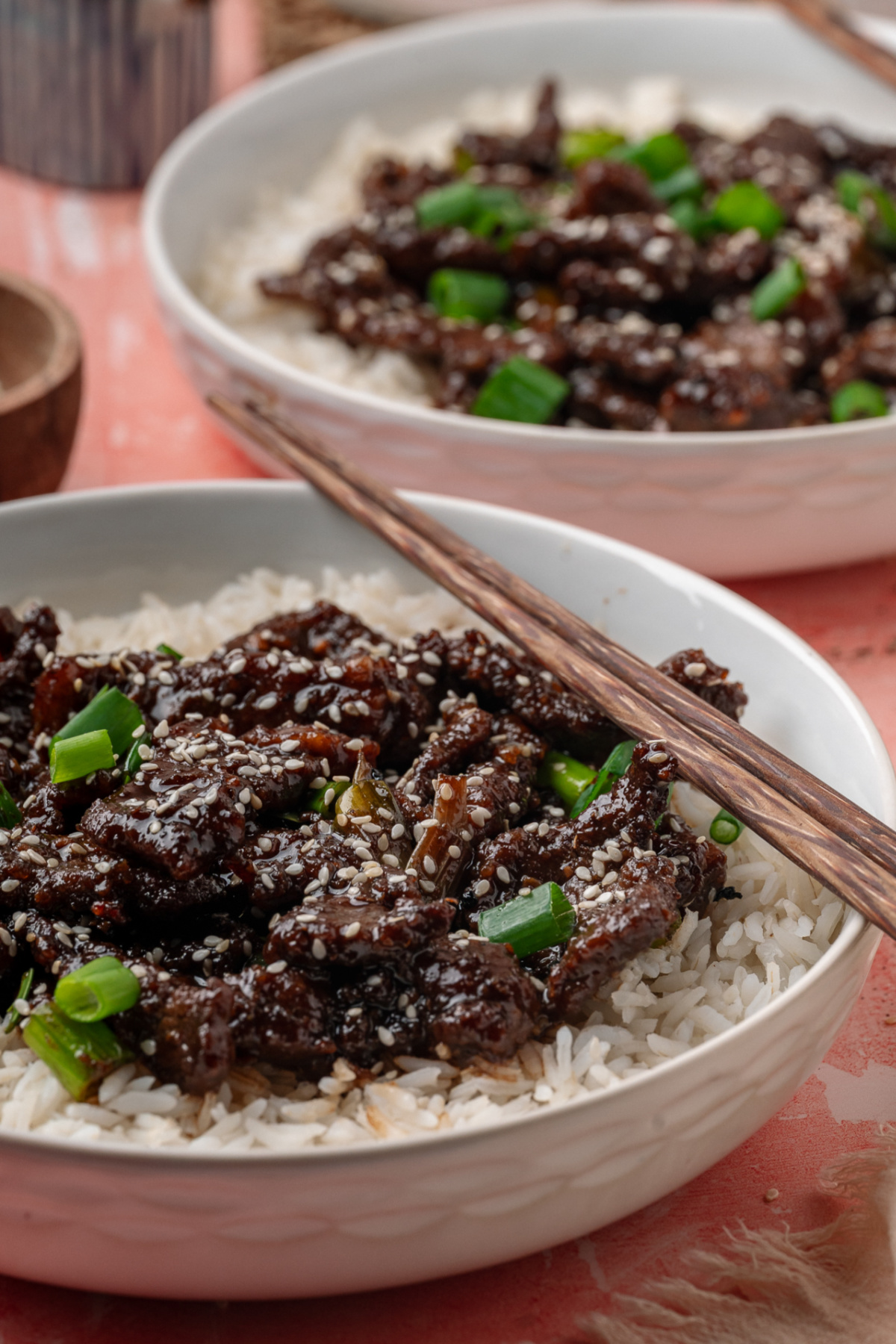
Return the beef to the pan and turn it through the sauce until everything is evenly coated and warmed. Turn off the heat. Add the green onion tops and sesame seeds if you want them. Serve immediately, preferably over rice that doesn’t compete. The dish should feel finished without explanation.
Recipe Tips (The Things You Don’t Rush)
This is not a recipe you talk your way through. It’s one you stay close to.
- The cut matters more than the pan. Slice the beef thin, always against the grain, the way you would lower your voice when something delicate is in front of you. If you rush this, you’ll feel it later. If you take your time, the bite gives in without resistance.
- Cornstarch isn’t a coating. It’s a second skin. Just enough to let the sauce stay near, to follow the meat instead of sliding away. Too heavy and it feels wrong immediately. Too light and nothing holds.
- The pan should already be ready. When the beef hits the oil, it should respond right away. No hesitation. No waiting around. This is contact, not conversation. You place it, you let it be, and you don’t crowd the moment.
- Pull the beef before it looks finished. This is where people lose their nerve. It comes out early on purpose. It returns later, changed. Ginger beef is built in passes, not all at once.
- The sauce thickens faster than you expect. Stay there. Watch the surface. When it shifts, it’s telling you something. Don’t argue. Don’t adjust. Let it become what it’s becoming.
- When everything comes back together, stop. Beef back in. Heat off. Green onions scattered over the top. Not stirred into submission. The dish finishes itself if you don’t interfere.
- This recipe isn’t about doing more. It’s about knowing when you’ve done enough. And then letting it stand.
If you’re someone who cooks with ginger the way others cook with salt, my gingery pork ramen carries that same steady warmth in a completely different direction.
Storage (After Everything Has Settled)
This dish knows when it’s done. How you hold it afterward matters.
- If you’re storing leftovers, let the ginger beef cool first. Not all the way to cold, just enough that it isn’t still giving off heat. Sealing it too soon traps what should be allowed to leave.
- Transfer it to an airtight container and refrigerate for up to three days. The flavors deepen overnight. Ginger softens. The sauce relaxes into the meat. It’s different the next day, not worse. Quieter. More composed.
- To reheat, use a pan, not the microwave. Low heat. A small splash of water if needed. You’re waking it, not forcing it. Stir gently and stop as soon as it’s warm through. Too much heat tightens everything back up.
- This isn’t a dish that wants to be rushed twice. Treat it the way you did the first time. Let it come back on its own terms.
FAQs
- Can I use a different cut of beef?
Yes. Sirloin is steady and forgiving, but flank, skirt, or flat iron all work if you slice them thin and against the grain. What matters most isn’t the cut, it’s the way you approach it. Thin. Clean. No rushing. - Why cornstarch instead of flour?
Cornstarch gives the beef a silent armor. It keeps the surface tender and lets the sauce stay close without overwhelming the meat. Flour dulls things. Cornstarch keeps the edges clear. - Do I have to remove the beef before adding the sauce?
Yes. Leaving it in while the sauce cooks tightens it too fast. Pulling it early keeps the beef relaxed so it finishes gently once everything comes back together. - Can I add vegetables?
You can. Bell peppers, snap peas, or broccoli work if you add them after the beef comes out and before the sauce goes in. Keep them crisp. This dish doesn’t want softness everywhere. - Is this spicy?
No. It’s ginger-forward, savory, and balanced. If you want heat, add a pinch of red pepper flakes or a small spoon of chili crisp at the end. Let it be your choice, not the default. - Can I make it ahead?
Yes, but it’s best the day it’s made. If you do make it ahead, reheat slowly and stop the moment it loosens. This is one of those dishes that tells you when it’s ready again. - Why does homemade ginger beef taste better than takeout?
Because it hasn’t been sitting around waiting to be noticed. It goes from pan to plate without interruption. You taste the ginger. You taste the soy. Nothing has gone flat yet.
From My Kitchen Notes
There’s a moment after ginger beef leaves the stove where the room recalibrates. Not excitement. Recognition. Like something well-dressed has just entered and everyone felt it at once.
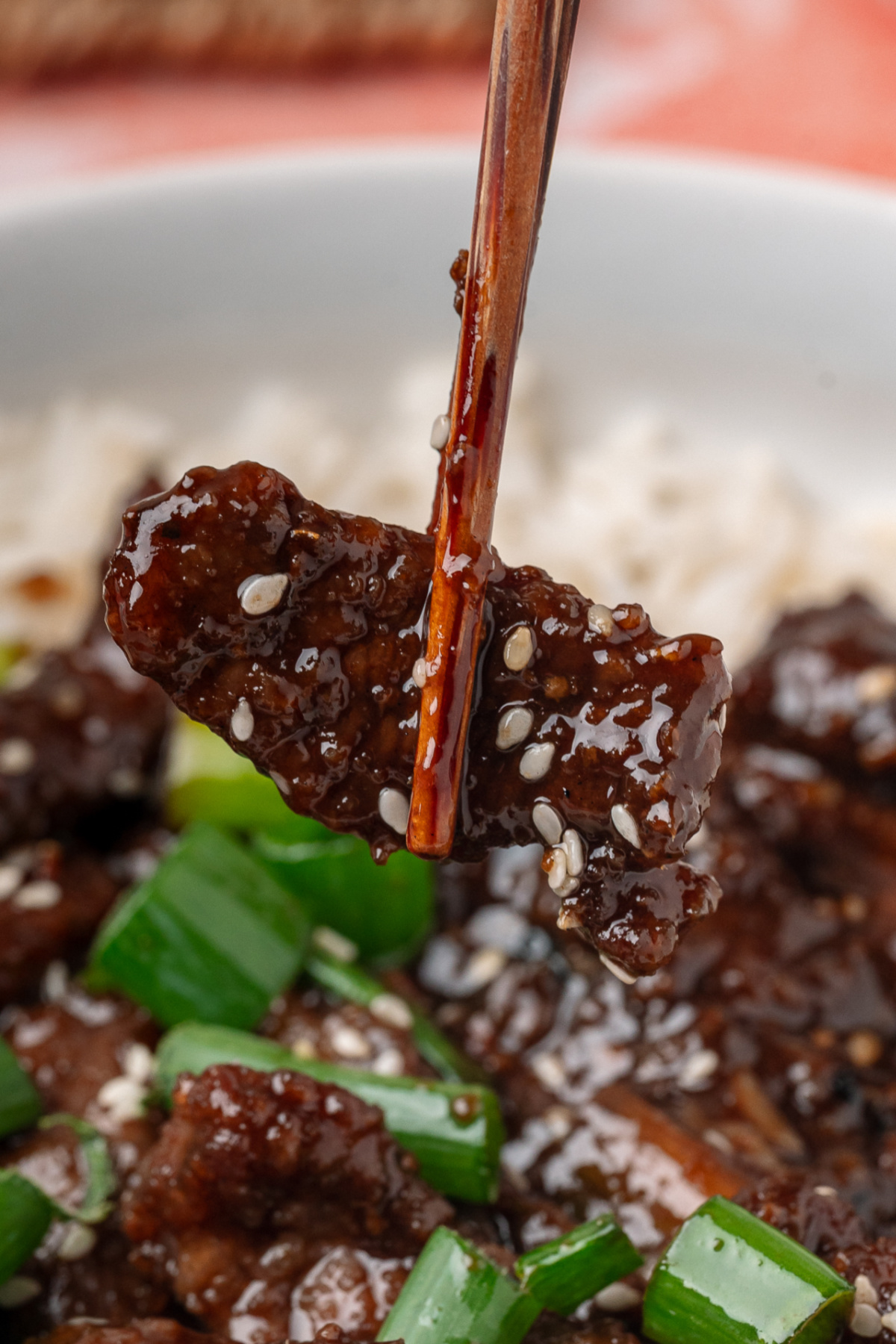
- The sauce settles close, not loose, not needy. It knows where it belongs. It doesn’t run. It stays.
- People don’t ask questions when this hits the table. Hands move before language does. Conversation thins, then lowers into something more private.
- Ginger leads the way a steady presence does. Not sharp. Not boisterous. Just unmistakable. Sweetness follows behind it, measured, aware it’s not the point.
- This is food that doesn’t describe itself. It doesn’t seek approval. It assumes you’ll understand.
- There’s something deeply maternal about that confidence. The kind that feeds without commentary, without correction, without watchfulness. You’re nourished. That’s the contract.
- I’ve watched shoulders drop when the first bite touches down. No one reaches for seconds right away. Something holds for a moment before appetite resumes.
- There’s a masculinity here too, decisive, contained, already finished before anyone thought to question it. Nothing forced. Nothing tentative.
- When it’s gone, the pan tells the truth. A thin trace of sauce. Heat held, then released. Nothing scrambled. Nothing left behind that asks to be justified.
- Ginger beef works because it knows when it’s finished. It doesn’t overstay. It doesn’t explain. It feeds. It leaves. And the room feels altered in a way that’s hard to name but impossible to ignore.
If You’re Cooking Instead of Ordering
These are the nights when delivery feels like too much conversation and you want dinner to move with you instead of against you. Food that comes together simply, finishes when it’s ready, and doesn’t need to be managed once it’s on the table.
- Easy Beef Teriyaki Stir Fry – Familiar in the best way. Beef, vegetables, and a sauce that tightens quickly and knows when to stop. It’s steady, reliable, and done before you have time to second-guess it.
- Sticky Cashew Chicken Stir-Fry – Sweet, savory, and textured just enough to hold your attention. The cashews toast where they land, the sauce stays close, and everything feels considered without feeling worked.
- Thai Chicken Noodle Soup – Warm and mooring. Ginger, coconut milk, and noodles that absorb what they’re given without caving in. This is the bowl you make when the house feels soft and you want to keep it that way.
This post may contain affiliate links. Please read my disclosure policy.

Ginger Beef
Equipment
- large skillet or wok. Provides enough surface area to sear the bef quickly without crowding.
- mixing bowls Used for coating the beef and mixing the sauce separately.
- whisk Helps dissolve the sugar and evenly combine the sauce.
- tongs Makes it easier to move the beef quickly without tearing it.
Ingredients
Beef:
- 1 lb (454 g) sirloin steak thinly sliced against the grain
- 1 tsp (5 g) kosher salt
- ½ tsp (1 g) black pepper
- ¼ cup (32 g) cornstarch
Sauce:
- ¼ cup (60 ml) water
- ⅓ cup (80 ml) low-sodium soy sauce
- 1 tbsp (15 ml) rice vinegar
- ⅓ cup (70 g) packed dark brown sugar
- 1 tsp (5 ml) toasted sesame oil
- 1 tbsp (15 g) fresh ginger finely grated
- 2 cloves garlic minced
For cooking and serving:
- 4-6 green onion stalks sliced, white and green parts separated
- ¼ cup (60 ml) neutral oil
- 1 tsp (3 g) toasted sesame seeds optional
- cooked rice optional for serving
Instructions
- Slice the steak into thin strips against the grain and place them in a medium mixing bowl. Season evenly with the kosher salt and black pepper, tossing so the beef is coated on all sides. Add the cornstarch and toss again until each piece is lightly coated. This coating helps keep the beef tender and allows the sauce to cling later.1 lb (454 g) sirloin steak, 1 tsp (5 g) kosher salt, ½ tsp (1 g) black pepper, ¼ cup (32 g) cornstarch
- In a small mixing bowl, combine the water, low-sodium soy sauce, rice vinegar, brown sugar, toasted sesame oil, grated ginger, and minced garlic. Whisk until the mixture looks smooth and the sugar begins to dissolve. Set aside.¼ cup (60 ml) water, ⅓ cup (80 ml) low-sodium soy sauce, 1 tbsp (15 ml) rice vinegar, ⅓ cup (70 g) packed dark brown sugar, 1 tsp (5 ml) toasted sesame oil, 1 tbsp (15 g) fresh ginger , 2 cloves garlic
- Slice the green onions, keeping the white parts separate from the green tops. This allows the whites to soften in the pan while the greens stay fresh for finishing.4-6 green onion stalks
- Heat a large skillet or wok over medium-high heat. Add the neutral oil and let it heat until shimmering. Add the coated beef in an even layer, working in batches if needed to avoid crowding. Cook, stirring occasionally, just until the beef is no longer pink. Transfer the beef to a clean plate.¼ cup (60 ml) neutral oil
- Carefully spoon off excess oil from the pan, leaving about 2 tablespoons (30 ml) behind. Add the white parts of the green onions and cook, stirring, until they begin to soften, about 30 seconds to 1 minute.
- Whisk the sauce again, then pour it into the pan. Cook, stirring frequently, until the sauce comes to a simmer and begins to thicken slightly.
- Return the beef to the pan and stir until the meat is evenly coated in the sauce and heated through. Turn off the heat. Sprinkle the green onion tops over the beef and garnish with sesame seeds, if using. Serve immediately, over cooked rice if desired.1 tsp (3 g) toasted sesame seeds, cooked rice
Notes
- Slice the beef thin and against the grain or it will turn chewy.
- Use a light hand with the cornstarch. Enough to coat, not enough to cake.
- Heat the pan fully before adding the beef so it cooks fast and stays tender.
- Pull the beef early. It finishes cooking when it goes back into the sauce.
- Watch the sauce closely. It thickens quickly and doesn’t need fixing.
- Turn off the heat as soon as everything is coated and warmed through.
Nutrition
Have you made this Ginger Beef? I’d love to hear how they turned out – leave a comment below and let me know.
As an Amazon Associate and member of other affiliate programs, I earn from qualifying purchases.
Mark says
Made it last night. I ended using flank steak since that’s what I had. Excellent.
Barbara says
This dish sounds amazing. I’m going to make it on Christmas eve. I do like the things you notice, very obsevational. The cuff, the collar. I’m right there with you.
Mark Pline says
I want to have dinner at your house.
Carol Kizer says
Made it this afternoon and it was perfection. Thank you for the recipe.
sussy says
Made it for dinner. Loved it over jasmin rice.
John Greys says
You’re chic. That’s what chic.