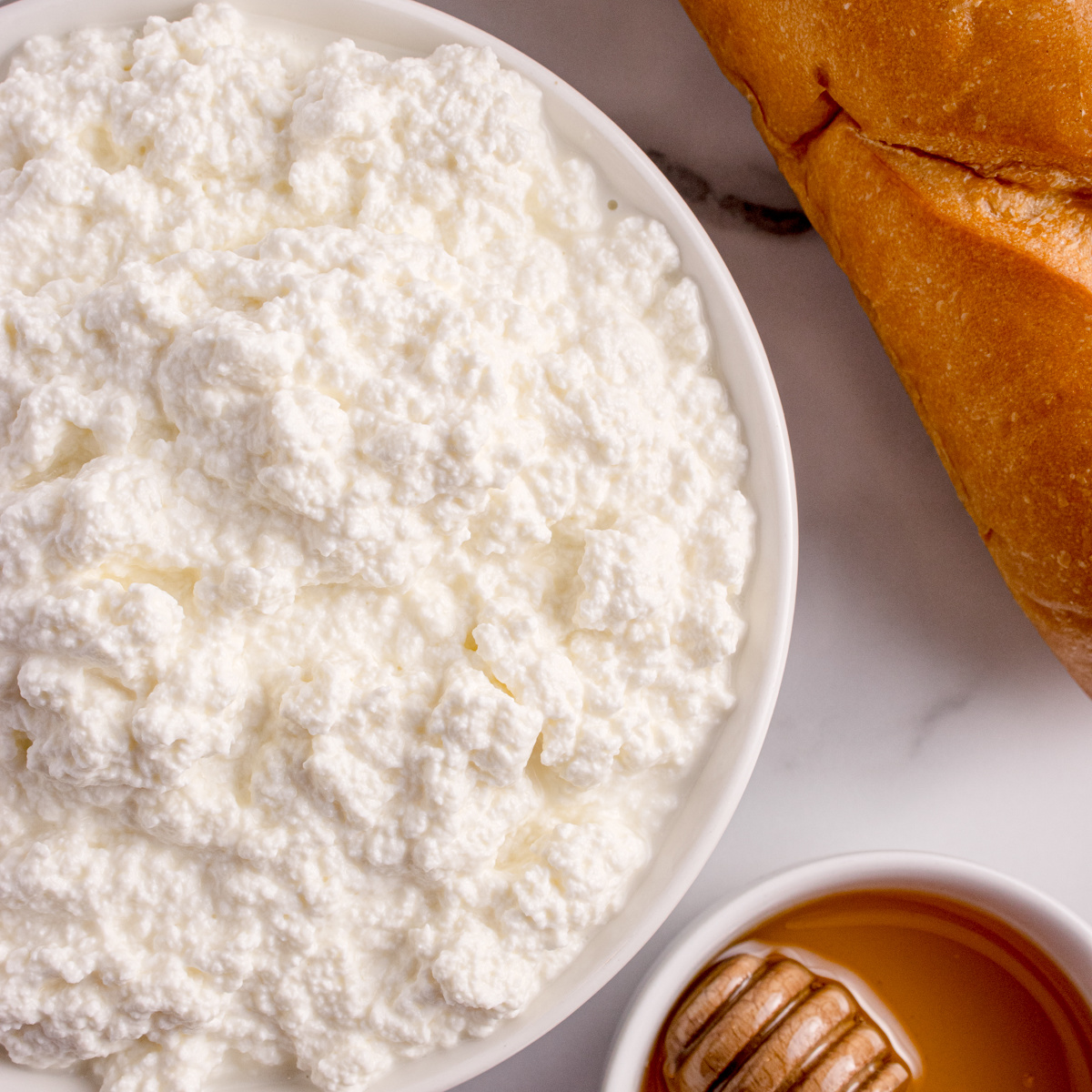
Homemade Ricotta Cheese
Homemade ricotta cheese made with whole milk, cream, vinegar, and salt. Gently heated and drained for a soft, fresh texture you can adjust for spreading, whipping, or baking.
Servings 2 to 3 cups
Calories 215kcal
Equipment
- heavy based pot (large) Prevents scorching and allows even heating.
- digital thermometer Essential for hitting the correct curd-forming temperature.
- mixing bowls (small and large) For dissolving the acid and salt and catching the whey during draining.
- cheesecloth or clean kitchen towel. For gentle draining.
- Colander Holds curds while whey drains.
Ingredients
- 8 cups (1.9 L) whole milk (not ultra-pasteurized)
- 2 cups (480 ml) heavy cream
- ¼ cup (60 ml) white vinegar
- 1½ tsps (9 g) kosher salt
Instructions
- Add the milk and cream to a large heavy-bottomed pot. Heat over medium-low heat, stirring occasionally to prevent scorching, until the mixture reaches 180–185°F (82–85°C). Do not allow it to boil.8 cups (1.9 L) whole milk, 2 cups (480 ml) heavy cream
- While the dairy heats, whisk the vinegar and kosher salt together in a small bowl until the salt is fully dissolved.¼ cup (60 ml) white vinegar, 1½ tsps (9 g) kosher salt
- Once the dairy reaches the target temperature, remove the pot from the heat. Slowly pour in the vinegar mixture and give one gentle stir with a spoon to distribute it.
- Let the mixture sit completely undisturbed for 10–15 minutes, allowing the curds to fully separate from the whey.
- Line a large colander with 2–3 layers of fine-mesh cheesecloth or a clean kitchen towel and place it over a large bowl. Carefully ladle or pour the curds and whey into the lined colander.
- Allow the ricotta to drain for 10–15 minutes for a creamy, spreadable texture, or 20–30 minutes for a firmer ricotta suitable for baking.
- Transfer the drained ricotta to an airtight container and refrigerate. Use within 5 days.
Notes
- Ultra-pasteurized milk will not reliably form curds.
- Temperature matters more than timing; watch the thermometer.
- Do not stir after adding the acid or the curds will break.
- Drain time determines final texture and the amount of ricotta you are left with.
Nutrition
Serving: 120g | Calories: 215kcal | Carbohydrates: 3g | Protein: 10g | Fat: 17g | Saturated Fat: 11g | Polyunsaturated Fat: 1g | Monounsaturated Fat: 5g | Cholesterol: 55mg | Sodium: 180mg | Potassium: 140mg | Sugar: 3g | Vitamin A: 650IU | Calcium: 260mg | Iron: 0.1mg